 Login

How Many Patriot Missiles Does the U.S. Transfer to Ukraine Every Month?
U.S. assistance remains essential to Ukraine’s defence against Russian ballistic missile attacks. This is a difficult reality for

 An uninvited encounter in orbit exposes a new vulnerability in the war over satellite intelligence.
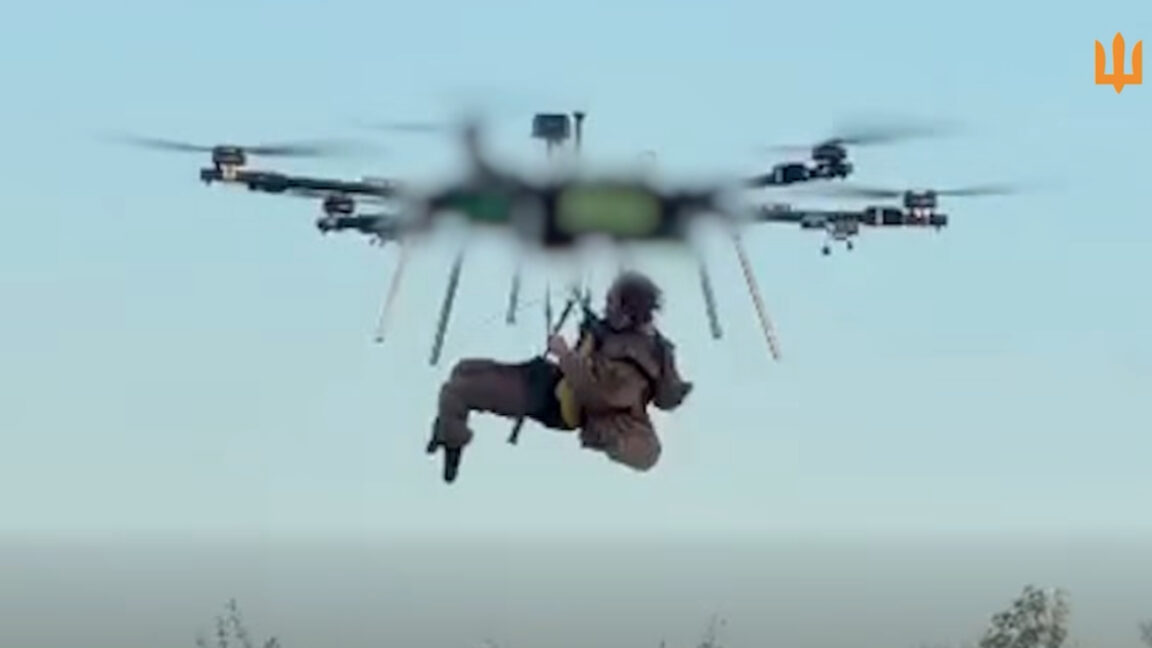
Ukraine’s unprecedented drone rescue of a wounded soldier from the battlefield has shown once again how battlefield necessity can spur innovation. The operation was revealed just days after separate Ukrainian drones designed for casualty evacuation were deployed for frontline testing—taking a step beyond the US military’s decades of experimentation with similar concepts.
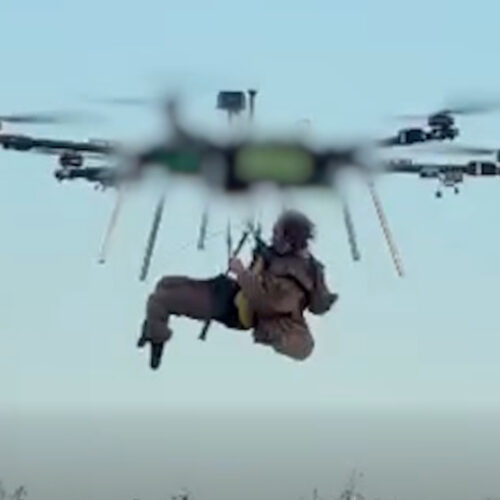
The drone evacuation of the injured soldier took place at an undisclosed time and place on the frontline where the presence of Russian drones and landmines made it impractical to send in a wheeled ground robot, according to The Kyiv Independent. On October 19, Ukraine’s Army shared a video of the drone evacuation, showing the wounded soldier securing himself in a harness suspended beneath a heavy hexacopter drone with six rotors before being flown to safety.
“This is a historic event, the next stage of evacuating the wounded, which we will all come to,” said Napalm, a programmer of the 92nd separate assault brigade's unmanned ground systems company, who went by his callsign per Ukrainian military practice, in a statement. “Now the serious systematic work begins, so that such missions are carried out constantly.”
© 92nd Separate Assault Brigade of the Ukrainian Ground Forces
 In a reported world first, a modified military drone carried a wounded soldier to safety.
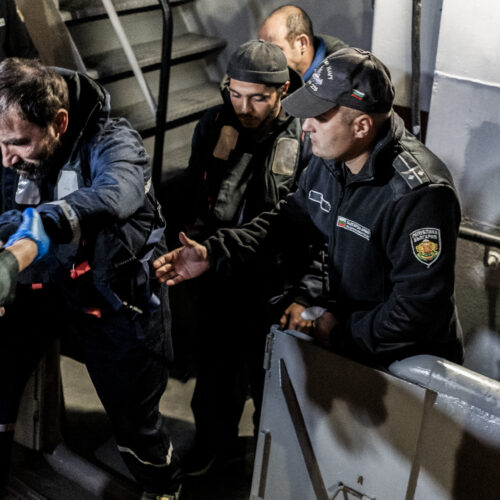
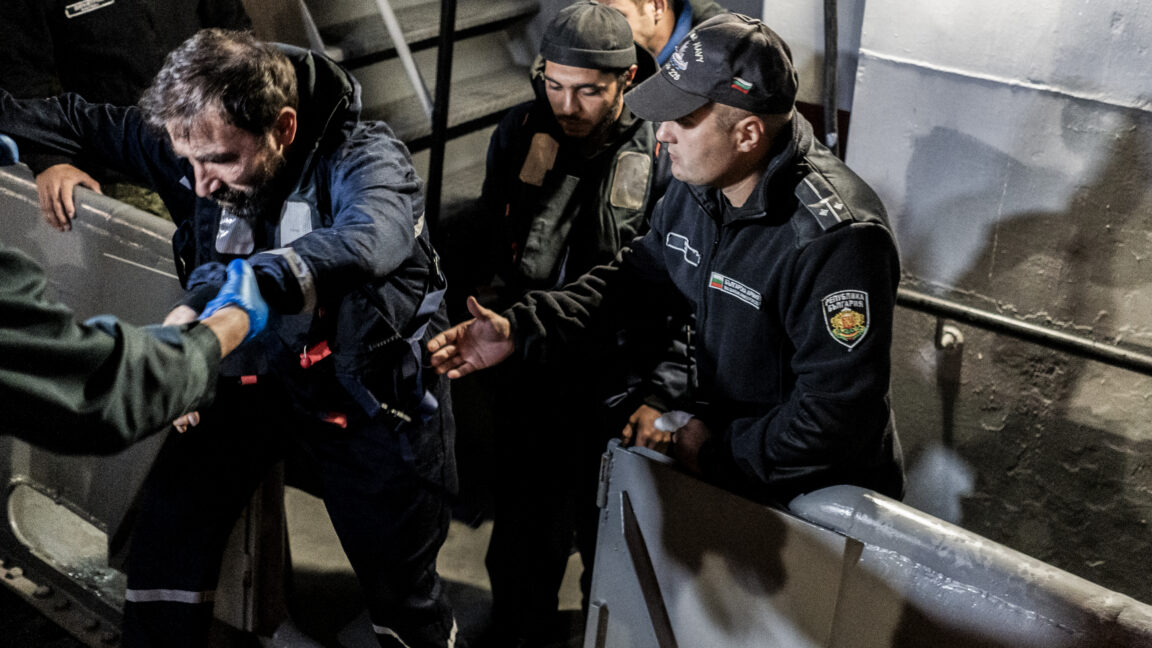
Russian drones are suspected of sinking a cargo ship and leaving chemical tankers ablaze near the Black Sea coasts of Bulgaria and Romania, respectively. The latest attacks mean that at least seven ships have been attacked in the exclusive economic zones of NATO member countries—and even within Romania's territorial waters if Russian involvement is confirmed in the case of the chemical tankers.
Such attacks have spurred requests for NATO to redeploy counter-drone systems to provide more protection. In a social media post on October 15, NATO Secretary General Mark Rutte stated that NATO had increased "counter-drone capabilities" along the alliance's eastern flank after meeting with the leaders of Bulgaria and Romania.
The latest attacks this week occurred within 24 hours between October 14 and October 15, when the two chemical tankers were set afire after Russian drones were detected in Romanian airspace, according to Deutsche Welle. Both ships were sitting at anchor near the mouth of the Sulina canal that connects the Black Sea to the Danube River, which has become a crucial shipping export route for Ukraine, Reuters reported.
© Hristo Rusev/Getty Images
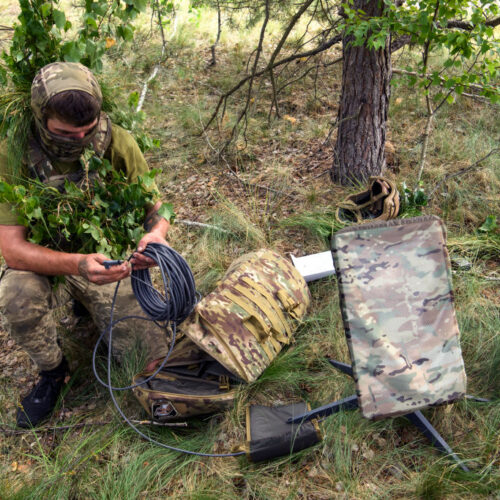
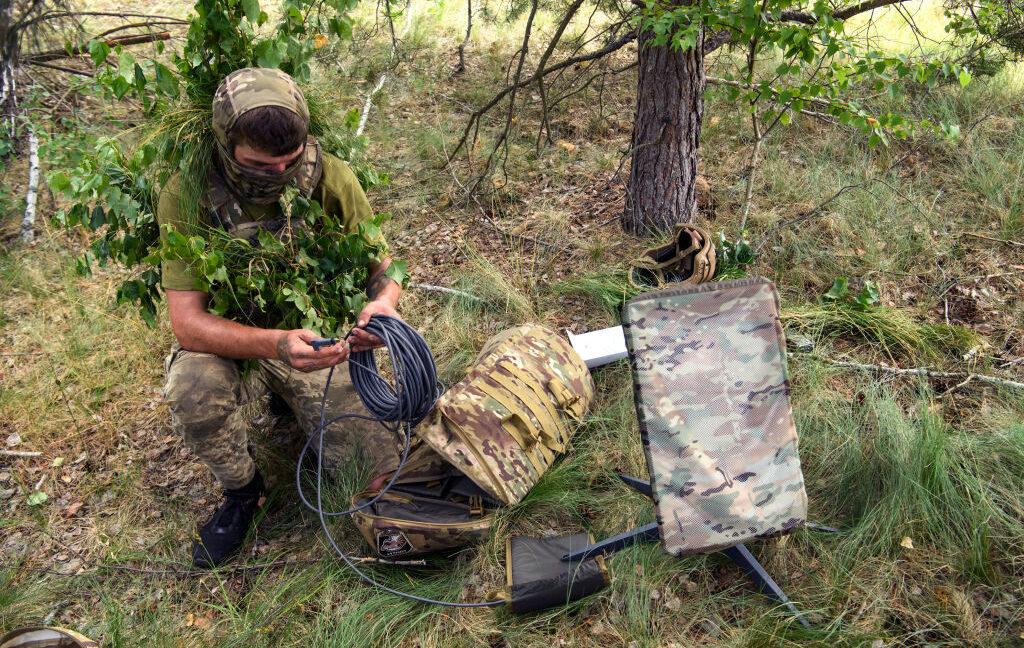
Ukrainian troops have been caught off guard by restrictions on Elon Musk’s Starlink satellite Internet systems that disrupted frontline operations, while Kyiv received no warning from its partners of a Russian missile attack on its energy facilities for the second day running, according to Ukrainian officials.
Starlink terminals used by Ukrainian drone units began experiencing signal failures at speeds above 160 km/h, disrupting several missions early on Wednesday morning, according to military personnel and senior Ukrainian officials.
“Logistics at the frontline and middle strikes are badly limited,” one senior official familiar with the situation on the front told the FT. Ukraine’s middle strikes target Russian military supply lines and logistics. The limitations came with “no warning, just in the middle of the night,” the official said.
© NurPhoto / Contributor
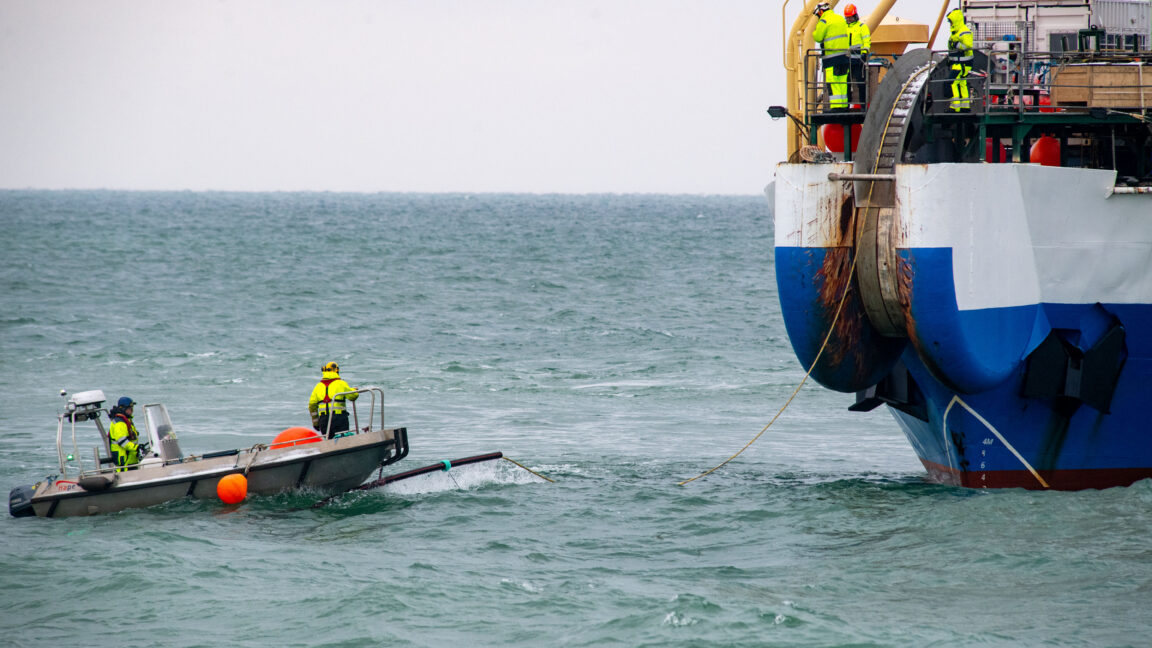
Despite the expansion of Starlink and other communications satellite services, most of the world’s Internet traffic still travels through subsea cables crisscrossing the ocean floors. Those fiber-optic cables coexist with a network of oil and gas pipelines and submarine power cables—and all these crucial links connecting countries and continents now face growing sabotage risks as gray-zone warfare and open conflicts have become widespread.
The rising risks to the world’s invisible infrastructure beneath the waves are the main subject of a new book by Elisabeth Braw, a senior fellow at the Atlantic Council who leads the Threats to the Global Maritime Order Initiative. Her book, titled Undersea War, explores the modern rise in suspicious incidents in which ships dragging their anchors for unusually long periods have cut or damaged undersea cables and pipelines, from the Baltic Sea to the Pacific Ocean.
Braw acknowledges that about 60 percent of undersea cable damage is primarily due to human error during fishing and shipping activities, when weighted nets or anchors drag across the seabed. Natural hazards like storms and undersea landslides also account for a smaller proportion of such incidents. In total, between 150 and 200 cables are damaged each year and usually repaired quickly.

© Stefan Sauer/picture alliance via Getty Images
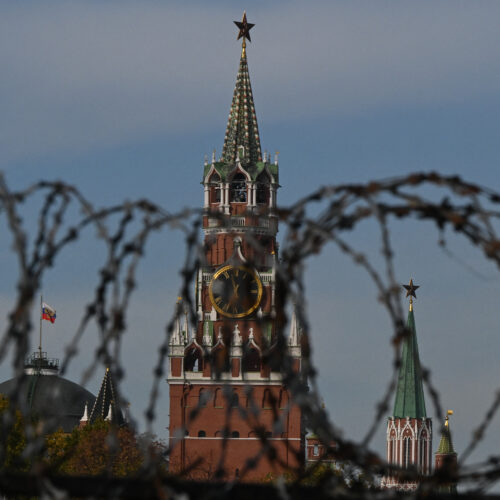
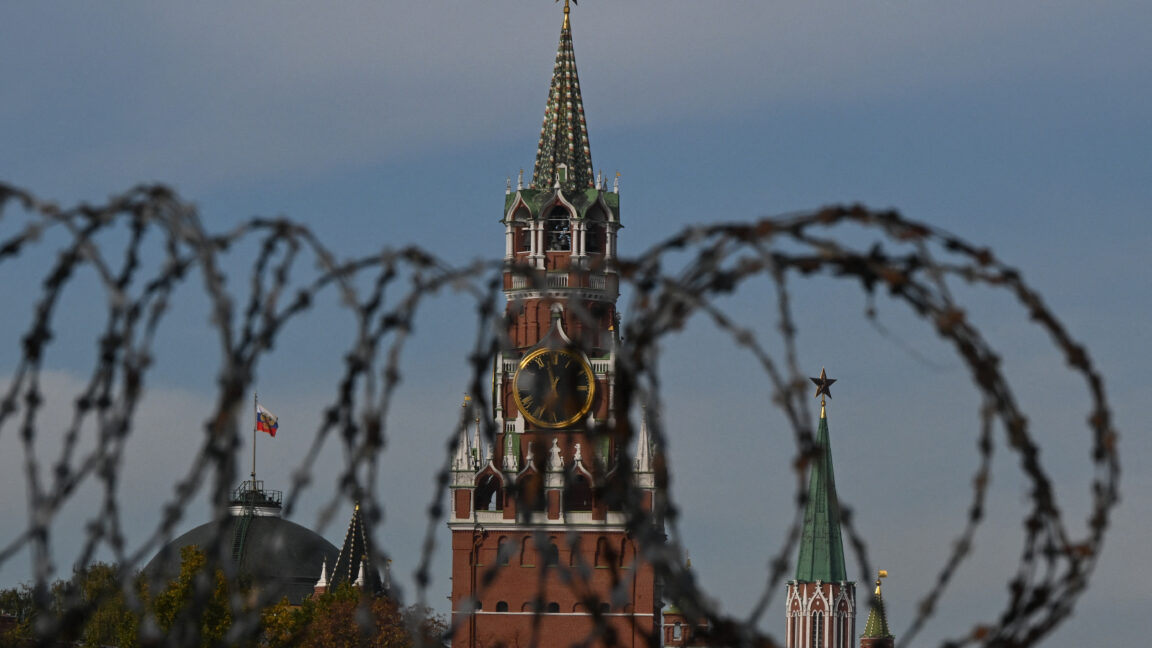
When Russia began attacking Ukrainian data centers and telecommunication infrastructure, it apparently failed to prepare for possible retaliation. Now Russia’s digital services are facing widespread outages after Ukrainian drone strikes knocked out three of the largest data centers owned by Russian tech giant Yandex within several days.
Pro-Kremlin bloggers are warning that Russia’s centralized digital economy could collapse because the country is not prepared for the “data center war” it started, according to posts translated by the pseudonymous independent researcher ChrisO_wiki. The Russian commentators also suggested that Ukraine’s decentralized digital services could prove more resilient than Russia’s system if the countries continue trading such blows.
Russia initially launched a drone strike campaign targeting Ukrainian data centers and mobile phone networks in late September. The attacks temporarily disrupted Internet and cell phone service for up to 100,000 households in the Ukrainian capital of Kyiv and came as part of a broader long-range strike campaign that has involved Russian missiles and jet-powered drones hitting Ukraine’s power grid infrastructure, transportation hubs, and even residential apartment building blocks.
© Igor IVANKO / AFP via Getty Images

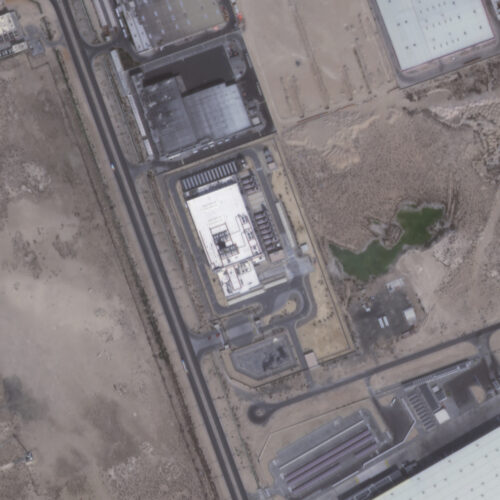
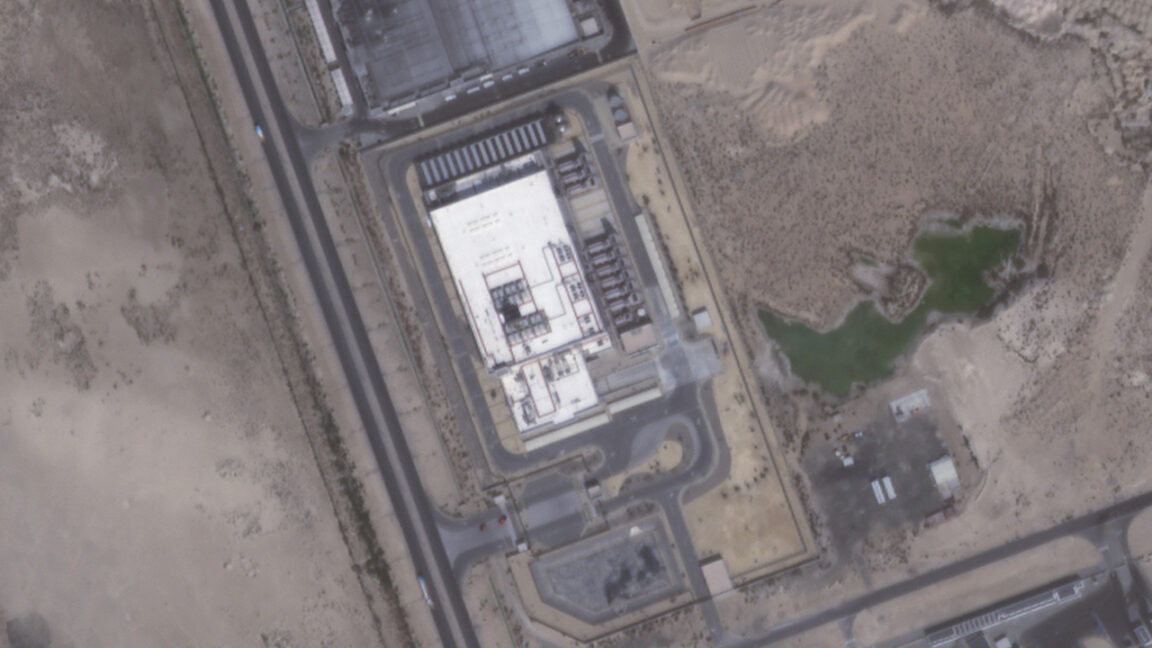
Half a year after Iranian drone strikes knocked out multiple Amazon data centers, the US tech company has acknowledged the permanent loss of some customer data that was hosted in Bahrain and the United Arab Emirates.
Amazon Web Services was “unable to restore access to the resources and data” hosted in some of the war-damaged data centers, according to an AWS dashboard update posted on September 15. The development was first reported by Reuters and suggests that the Iranian strikes inflicted catastrophic damage on the data centers.
Customer data was irretrievably lost in one of three AWS availability zones in the United Arab Emirates region, specifically the mec1-az2 availability zone. Each availability zone is serviced by one or more Amazon data centers.
© Planet Labs PBC
Half a year after Iranian drone strikes knocked out multiple Amazon data centers, the US tech company has acknowledged the permanent loss of some customer data that was hosted in Bahrain and the United Arab Emirates.
Amazon Web Services was “unable to restore access to the resources and data” hosted in some of the war-damaged data centers, according to an AWS dashboard update posted on September 15. The development was first reported by Reuters and suggests that the Iranian strikes inflicted catastrophic damage on the data centers.
Customer data was irretrievably lost in one of three AWS availability zones in the United Arab Emirates region, specifically the mec1-az2 availability zone. Each availability zone is serviced by one or more Amazon data centers.
© Planet Labs PBC
A new legal waiver allows current and former U.S. government personnel to disclose information related to unidentified anomalous phenomena (UAP) to representatives of the government’s Presidential Unsealing and Reporting System for UAP Encounters (PURSUE) initiative.
The waiver “establishes an authorized, legally protected disclosure mechanism for current and former personnel to provide UAP-related National Defense Information (NDI) to designated representatives of the PURSUE effort,” the U.S. Department of War announced on Monday.
The PURSUE initiative, initiated earlier this year by the Trump administration, is not a UAP investigative office like the All-domain Anomaly Resolution Office (AARO), but rather an effort to identify, review, declassify, and publicly release UAP-related records held by U.S. federal agencies.
According to the Department of War, the waiver supports President Donald Trump’s mandate for greater transparency surrounding UAP by creating a protected channel for military and government personnel to provide UAP-related National Defense Information (NDI) to designated PURSUE representatives. The directive applies to current and former Department of War service members, veterans, civilian employees, and contractors who currently have or previously had access to UAP-related NDI.
For covered disclosures made to designated PURSUE representatives, the waiver provides targeted relief from certain civil and administrative enforcement provisions contained in Non-Disclosure Agreements (NDAs) and Special Access Program Indoctrination Agreements (SAPIAs). The waiver applies specifically to authorized communications with PURSUE representatives.
Michael Gold, President of Civil and International Space Business Development at Redwire and a former NASA official who supported the efforts of AARO’s predecessor office, the UAP Task Force, and NASA’s UAP Independent Study Team, told The Debrief the move was “unprecedented.”
“To the best of my knowledge, this action by the Department of War is nearly, if not entirely, unprecedented,” Gold said. “I have never seen anything like this before on any topic, and it demonstrates the seriousness with which the Department of War and the Trump administration are treating UAP transparency.”
“This administration’s handling of UAP transparency has been extraordinary and should be applauded by all of those who care about the issue and good government generally,” Gold added.
The new PURSUE order comes after several UAP whistleblowers have come forward with allegations that the government possesses more information about UAP than has been publicly disclosed. Individuals who have claimed knowledge of UAP-related programs have also cited legal and professional risks as barriers to publicly discussing what they say they know. Those concerns have included potential violations of nondisclosure agreements, loss of security clearances, and administrative or legal consequences for revealing protected information.
The Department of War says the new waiver is designed to address some of those barriers. Importantly, however, the waiver does not mean that previously classified UAP information has been declassified or cleared for public release. Instead, it creates an authorized pathway for individuals with relevant information to provide it to PURSUE for review.
The Department of War says information submitted through PURSUE will undergo security review and, where appropriate, potential declassification before it can be publicly released.
“Disclosures of any kind made to PURSUE would need to be reviewed and classified information redacted before such information could be released publicly,” Gold told The Debrief. “The administration, through the National Archives and other executive branch agencies and departments, has already gone through this process to release information in the various tranches, and the same could be done for information disclosed via this waiver,” Gold said.
Gold said he was “optimistic that some very significant information could be publicly released through this process,” says Gold.
Gold also argued that members of Congress involved in UAP oversight should eventually be given access to information provided under the waiver.
“In addition to select representatives of PURSUE, I think it would be very beneficial if Members of the House UAP caucus and other select Representatives and Senators would be granted access to whatever information is provided under the waiver. For example, Representatives Burlison, Luna, Burchett, and others have been fearless champions for UAP transparency, and including them in this process would substantially bolster the credibility and efficacy of the overall effort.”
The change could provide former government personnel with an authorized route to disclose UAP-related information to PURSUE without triggering certain civil or administrative enforcement provisions that might otherwise apply under NDAs or Special Access Program agreements.
However, the waiver is specifically directed at authorized disclosures to PURSUE representatives. It does not provide blanket authorization for individuals to publicly reveal protected or classified information.
The potential implications for the commercial and private sectors also remain unclear. Gold, however, believes greater UAP transparency could have consequences for aerospace and aviation.
“UAP transparency could have tremendous beneficial impacts on the aerospace sector,” Gold said in an email to The Debrief.
“Understanding what the phenomenon is could lead to new scientific discoveries and technologies,” he said, adding that a better understanding of UAP “will benefit the safety of air traffic and space operations.”
Fundamentally, Gold says that any new information whistleblowers may now be willing to provide could also help reduce stigmas surrounding the topic that have impeded U.S. progress in the past, and which may even have aided foreign adversaries.
“By diluting the stigma surrounding UAP, it will close a loophole that I suspect is being used by adversary nations to hide advanced drone activity around critical American national security and civil infrastructure and facilities.”
Whether this new pathway produces substantive new information and opens the door for legitimate whistleblowers remains to be seen. As with previous UAP disclosure efforts, distinguishing well-supported testimony and documentation from misinformation, disinformation, or unsubstantiated claims will remain an important part of that process.
If the waiver results in significant new information reaching the public, it will depend on what is submitted to PURSUE, how that information is evaluated, and what can ultimately be cleared for public release following the security review process.
Chrissy Newton is a PR professional and the founder of VOCAB Communications. She currently appears on The Discovery Channel and Max and hosts the Rebelliously Curious podcast, which can be found on YouTube and on all audio podcast streaming platforms. Follow her on X: @ChrissyNewton, Instagram: @BeingChrissyNewton, and chrissynewton.com. To contact Chrissy with a story, please email chrissy @ thedebrief.org.
Nearly every displaced woman in Gaza surveyed in a new study screened positive for severe post-traumatic stress symptoms, a finding researchers describe as an unprecedented psychological toll linked directly to hunger, overcrowded displacement, and the collapse of everyday life under war.
The study, published in the International Journal for Equity in Health, assessed 503 displaced women in the Gaza Strip during the 2023–2025 war using a mixed-methods design that combined a structured quantitative survey with in-depth qualitative interviews. The average participant was 29.4 years old, with a standard deviation of 7.3 years, and the majority were married, unemployed, and living below the deep poverty line. Most had been displaced for nearly a year, and the overwhelming majority were sheltering in tents under conditions of severe overcrowding and acute food shortage.
When researchers measured post-traumatic stress symptoms using the Impact of Event Scale–Revised, a widely used screening instrument that evaluates intrusion, avoidance, and hyperarousal symptoms following traumatic exposure, they found that 98.2 percent of participants scored in the severe range. The mean IES-R score across the sample was 61.5, with a standard deviation of 9.5 — a figure far above the thresholds typically used to flag clinically significant trauma-related distress. The authors are careful to note that because symptoms were assessed with a screening tool rather than a formal diagnostic clinical interview, the results should be interpreted as reflecting an extremely high burden of trauma-related distress within the study sample rather than confirmed clinical diagnoses. Even with that caveat, the near-universality of severe scores stands out even against the backdrop of other conflict-affected populations, where severe symptom prevalence rarely approaches such levels.
Food emerged as one of the strongest statistical correlates of psychological suffering. Severe food insecurity, measured with the Food Insecurity Experience Scale developed by the Food and Agriculture Organization, affected approximately 71 percent of participants. Women experiencing severe food insecurity had significantly higher PTSD symptom severity scores, an association that held at a p-value below 0.001. The researchers also identified a cluster of socioeconomic and living-condition factors associated with worse outcomes: being divorced or widowed, living in an extended-family household, sheltering in a tent or collective shelter during displacement, and reporting that food was simply unavailable were all significantly linked to elevated symptom scores.
These quantitative patterns were given texture and depth by the qualitative arm of the study, in which trained researchers conducted semi-structured, face-to-face interviews in Arabic with 34 of the women. Analysis of the transcripts revealed five overarching themes: poverty and inequity; food as a luxury; wounds you cannot see; on the move, nowhere to belong; and small acts of resilience. Together, the themes trace an arc from material deprivation to psychological injury and, ultimately, to the fragile coping strategies women deployed to keep themselves and their families functioning.
The theme of food as a luxury captured how a basic biological need had been transformed into an object of obsession and grief. Women described rationing scraps, skipping meals so children could eat, and the humiliating experience of standing in lines for aid that never arrived. The researchers note that this chronic preoccupation with food security operated on two fronts — it was simultaneously a source of traumatic stress in its own right and an amplifier of existing war trauma, since hunger stripped away one of the last remaining domains in which mothers could still protect their children.
The “wounds you cannot see” theme speaks directly to the invisible nature of psychological injury in wartime. Women recounted nightmares, intrusive memories of bombings and the deaths of relatives, hypervigilance, emotional numbness, and an inability to feel safe even in moments of quiet. Several described the stigma of admitting psychological suffering, or the sense that mental distress was a luxury they could not afford to acknowledge while survival demanded constant action. The researchers interpret these accounts as illustrating how trauma in this context is not a discrete event but a continuous condition, woven into the fabric of daily life.
Displacement itself — the theme of being “on the move, nowhere to belong” — emerged as a distinct psychological stressor. Women described repeated forced evacuations, the loss of homes that anchored family identity and memory, and the corrosive instability of living in tents that leaked in rain, baked in heat, and offered no privacy for grieving or for motherhood. The loss of place, the authors suggest, compounds the loss of people, producing a grief that has nowhere to settle.
Yet the final theme, small acts of resilience, complicates a narrative of pure victimhood. Women described prayer, mutual aid among neighbors, storytelling with children, and small rituals of domesticity — making tea, arranging a tent, celebrating a birthday with almost nothing — as deliberate acts of psychological resistance. The researchers frame these behaviors as adaptive coping mechanisms that, while insufficient to protect against severe trauma symptoms, sustained a sense of agency and dignity under conditions designed to strip both away.
Methodologically, the study relied on a convenience sample recruited through structured surveys administered via Google Forms, a pragmatic choice given the destruction of infrastructure and the impossibility of random sampling in an active war zone. The authors acknowledge this limitation, along with the screening-based measurement of PTSD and the absence of consistent formal referral pathways for psychological care during data collection, which meant that women who became distressed during interviews could not always be directed to clinical services. Interviews followed strict ethical protocols approved by the Institutional Review Board at An-Najah National University, with verbal informed consent, anonymization, and trained interviewers instructed to pause or terminate any conversation that caused visible distress.
The demographic profile of the sample underscores the socioeconomic dimension of psychological vulnerability. That most participants were unemployed and living below the deep poverty line before and during the war reflects broader patterns in which economic deprivation and mental health outcomes are tightly intertwined in conflict settings. Divorced and widowed women — those without a partner’s social and economic support — fared significantly worse, as did women in extended-family households, possibly reflecting crowded conditions and multiplied caregiving burdens.
The study carries a sobering human footnote. The acknowledgments honor the memory of co-author Ayman S. Abutair, a clinical nutrition researcher at Al-Azhar University-Gaza, who lost his life during the war before the paper’s publication. His death stands as a stark reminder that the researchers documenting these invisible wounds were themselves living within the same catastrophe.
The authors argue that their findings demonstrate an urgent and unmet need for comprehensive humanitarian and psychosocial support tailored to displaced women — support that integrates mental health care with food assistance, shelter improvement, and protection for female-headed households. They emphasize that because caregiving responsibilities fall disproportionately on women during war and displacement, their psychological deterioration radiates outward to children and entire family systems, making women’s mental health a strategic priority for any humanitarian response rather than an afterthought.
What the study ultimately documents is the entanglement of hunger and trauma at a scale rarely captured in research. Where most studies of conflict-related PTSD examine populations after violence has subsided, this research measured psychological injury while bombs were still falling, while displacement was ongoing, and while food systems had collapsed. The result is a portrait of a population in which severe trauma symptoms are not an unfortunate consequence of war but, in effect, a near-universal condition — visible not in wounds, but in sleepless nights, interrupted meals, and the quiet endurance of half a million women carrying burdens that remain, for now, largely untreated.
Article Title: War’s invisible wounds: prevalence and determinants of post-traumatic stress disorder among Gaza women amidst the war: a mixed-method study
Article References: Al-Amouri, F. M., Abutair, A. S., Morjan, S., Anabtawi, O., Ali, D. O., Faris, M., & Badrasawi, M. (2026). War’s invisible wounds: prevalence and determinants of post-traumatic stress disorder among Gaza women amidst the war: a mixed-method study. International Journal for Equity in Health. https://doi.org/10.1186/s12939-026-02952-6
Image Credits: AI Generated
DOI: 10.1186/s12939-026-02952-6
Keywords: Gaza, post-traumatic stress disorder, displacement, food insecurity, women’s mental health, war trauma, famine, humanitarian crisis, IES-R, psychosocial support
