How fast can a kettle boil water for your cup of tea, or a refrigerator cool down a bottle of beer? The answer depends on the details of the machines, but according to new work published in Nature Physics, the minimum wait time does not. Instead, it’s quantum mechanics that imposes a limit on how fast something can thermalize to a particular temperature.
Objects thermalize, or reach a state of thermal equilibrium, when they no longer exchange any net heat with their environment. Physicists already suspected that this process couldn’t happen arbitrarily quickly. “There was suggestive evidence from experiments, numerical simulations and analytical calculations that a physical system can’t be made to thermalize faster than some fundamental limit,” says Martí Perarnau-Llobet, a quantum scientist in the Quantum Information Group at the Autonomous University of Barcelona, Spain, and one of the paper’s authors.
Although the exact conditions under which thermalization is always guaranteed remain an unanswered puzzle, the researchers chose to focus on systems that do have this feature. To guarantee thermalization, Perarnau-Llobet and colleagues in Barcelona; Vienna, Austria; and Geneva, Switzerland came up with the mathematical notion of a thermalization machine. Given a quantum system in some initial state, this thermalization machine evolves it to a thermal state (that is, one that doesn’t spontaneously exchange net heat with its environment) at a particular well-defined temperature. In the previous example, the refrigerator and kettle would be considered thermalization machines, and your beer and water would be the systems.
No cheating
In some cases, one can engineer a machine that takes a particular system to its equilibrium state arbitrarily fast. For instance, a machine might quickly swap a hot cup of coffee for an iced one. But that would be cheating, says team member Pavel Sekatski, a researcher at the University of Geneva. “Such examples where you can finely tune your algorithm to thermalize a specific system can be avoided by carefully defining thermalization,” he tells Physics World.
Your quantum system is ready: A visualization of a thermalization machine that takes some quantum system in some initial state as input and outputs the system in its thermal state. (Courtesy: Paolo Abiuso, Alberto Rolandi, John Calsamiglia, Pavel Sekatski and Martí Perarnau-Llobet).
The researchers did this using a mathematical object called a Hamiltonian, which describes the possible energies a system can have. If a quantum system has a Hamiltonian that is close to the original one, then they require that the thermalization machine must be able to thermalize that system, too. In other words, the same thermalization machine that cools your cup of coffee must also be able to cool down other cups of coffee that may have slightly different amounts of sugar or milk. This rules out the instant swap tricks as the machine can no longer be tailored to a specific cup of coffee.
Based on the assumptions that such a thermalization machine is consistent with laws of quantum mechanics and that it works for some quantum systems that are close to each other, the researchers show that, away from absolute zero, the fastest thermalization time is approximately ℏ/(2kBT), where ℏ is Planck’s constant and kB is Boltzmann’s constant. “These restrictions on these thermal machines are actually very weak, and the notion is very general,” notes Perarnau-Llobet.
Related problems in computer science
The researchers note that their work is closely related to interesting tasks in computer science. One such task, known as Gibbs state sampling (GSS), involves taking a known Hamiltonian and using it to work out the corresponding thermal state at a particular temperature. This task can be performed arbitrarily fast. In contrast, if you have access to the quantum system, but you don’t know its mathematical description (that is, its Hamiltonian) you must perform a task called Hamiltonian learning (HL). This task admits a bound on the time taken for it to be solved.
“The task that we considered was somewhere in between the two,“ explains team member Paolo Abiuso, a physicist at the Institute for Quantum Optics and Quantum Information in Vienna. “We don’t know what the Hamiltonian of the quantum system is, but we do have access to the quantum system, and we want to produce the thermal state.” His Barcelona co-author John Calsamiglia adds that while the task they considered is “harder than GSS, it is still easier than HL”.
Beyond these connections to computer science, the researchers say their strategy could lead to insights on broader questions in physics. “We are now investigating what this approach can tell us about the fundamental limits imposed by the second and third laws of thermodynamics,” says Alberto Rolandi of TU Wien.
This episode of the Physics World Weekly podcast features Ignacio Cirac, who has won the 2026 Isaac Newton Medal and Lecture for his “pioneering contributions that founded modern quantum information science, uniting profound theoretical insight, experimental vision, and exceptional scientific leadership shaping quantum physics and technology worldwide”.
Cirac is director of the theory division at the Max-Planck-Institute for Quantum Optics in Germany.
In conversation with Physics World’s Michael Banks, Cirac explains how an early interest in mathematics and science fiction drew him to quantum information – along with the field’s potential to create new technologies.
He talks about his collaboration in the 1990s with Peter Zoller to design quantum simulators and computers based on trapped-ion qubits. Cirac weighs up the pros and cons of the qubit technologies available today and highlights the benefits of systems based on Rydberg atoms.
Looking to the future, Cirac cautions against quantum hype and points out that it is still not clear how quantum technologies will be used in the future. He also calls on European academics to maintain their scientific excellence and for more money to be invested in the continent’s quantum industries.
This podcast is supported by American Elements, the world’s leading manufacturer of engineered and advanced materials. The company’s ability to scale laboratory breakthroughs to industrial production has contributed to many of the most significant technological advancements since 1990 – including LED lighting, smartphones, and electric vehicles.
The particle-physics process of string breaking has been modelled on a trapped ion quantum computer by researchers in the US. The results are similar to previous findings obtained independently using neutral atom quantum simulators and superconducting quantum computers. The result suggests that traditional models of string breaking need to be modified slightly.
The strong interaction is the force that binds quarks together inside hadrons such as protons and neutrons. Unlike gravity, electromagnetism and the weak interaction, which all diminish with distance – its effect becomes stronger as particles are pulled apart. In quark–gluon plasma, where quarks and antiquarks swim in a sea of gluons, they are effectively free. However, when an isolated quark is pulled away from an isolated antiquark (or a proton, for example), the energy in the gluon field increases indefinitely. At some point, this energy grows large enough to create a new quark and antiquark. These bind to the original particles, leaving two hadrons. Free quarks are therefore never observed.
This process, in which the potential energy in the gluon field grows and grows until it is released with the creation of new matter, is known as string breaking. The theory of this mechanism was first outlined in 1951 by the future Nobel laureate Julian Schwinger. The process often underpins the formation of new particles in colliders, but its fundamental details remain poorly understood.
Superconducting and atomic qubits
The notion of simulating experimentally inaccessible quantum processes using quantum processors has been discussed – and implemented for some systems – in the past few years. In 2025 scientists at Google Research in California and colleagues performed simplified calculations of the dynamics of string breaking using their Sycamore processor, which uses superconducting qubits, obtaining new insights into the process.
Also in 2025, researchers at the University of Innsbruck in Austria, together with colleagues at Harvard and the commercial company QuEra, took a slightly different tack. Instead of breaking the underlying quantum chromodynamic equations down into a series of discrete time steps and calculating their evolution, they used lasers to initialize the states of rubidium atoms such that their interaction would be analogous to quarks. This allowed them access to the dynamics of the string breaking process that would otherwise remain hidden.
Now, quantum-computing pioneer Christopher Monroe at Duke University in North Carolina and colleagues in the US and Belgium have achieved similar results to the QuEra group using trapped ions instead of neutral atoms. Monroe’s team modelled the behaviour of quarks using “domain walls” – regions where adjacent ions have opposite spins.
“You initialize the system with a certain number of domain walls, and then you apply the Hamiltonian – which means you do this QCD process – and you see how many domain walls you end up with. We show that the number actually increases.” Explains Arinjoy De, who was Monroe’s PhD student and now works at QuEra. To simulate the increasing energy in the gluon field as a quark is pulled away, the researchers used an external magnetic field: “We show that once you go beyond a certain threshold of the magnetic field, you go from two domain walls – or two particles – to create more particles,” says De.
Modifications needed
The results suggest some modifications to the canonical theories of string breaking. Notably, they found that, contrary to the predictions of Schwinger, string breaking is initiated at the edges, where coupling to the quantum vacuum reduces the energetic cost of new particle creation, before propagating inwards to the bulk.
The researchers are now hoping that, with more qubits and greater circuit depth, they will be able to look at domain walls farther apart. This would allow them to study the inverse problem of string formation when particles collide: “Our theory colleagues Alexey Gorshkov and Zohreh Davoudi at the University of Maryland are really thinking a lot about these meson scattering experiments,” says Monroe.
Quantum computing researcher Boris Blinov of the University of Washington in Seattle says that the work is “significant in its own right as a demonstration of the potential of a quantum simulator in the future to do things faster than any classical analogue of it.” He says the current system is too small to outperform what can be achieved with a supercomputer but “with more qubits and this technology, this way of controlling qubits would be of significance at the very least for quantum chromodynamics, gauge theories and fundamental physics.”
Monroe and colleagues describe their work in Nature Physics.
The Spanish quantum physicist Ignacio Cirac from the Max Plank Institute of Quantum Optics in Garching, Germany, has won the 2026 Isaac Newton Medal and Prize for his “pioneering contributions that founded modern quantum information science, uniting profound theoretical insight, experimental vision, and exceptional scientific leadership shaping quantum physics and technology worldwide”. Presented by the Institute of Physics (IOP), which publishes Physics World, the international award is given annually for “world-leading contributions to physics by an individual of any nationality”.
Born in 1965 in Barcelona, Spain, Cirac earned a PhD in physics from the Complutense University of Madrid in 1991. After a stint at the University of Castilla-La Mancha, he then moved to Leopold-Franzens University of Innsbruck in 1996. In 2001 Cirac became director of the Max Planck Institute of Quantum Optics the US.
Cirac is best known for his work in the 1990s in which he co-developed a proposal for building a quantum computer using trapped ions with Peter Zoller from the University of Colorado at Boulder.
The “Cirac–Zoller” proposal provided an experimentally plausible route from the theoretical idea of a quantum computer to an actual machine with trapped ions remaining one of the leading quantum-computing platforms today.
He also showed how controlled quantum many-body systems can act as simulators to solve difficult problems in physics, chemistry, and materials science.
Cirac and collaborators also pioneered long-distance quantum communication, which included the idea of a quantum repeater that offers a way of distributing entanglement across distances despite losses and imperfections.
Cirac told Physics World that he is “deeply honoured” to receive the award. “I’m very thankful to the people who have made this prize possible – it’s a team working for many years,” says Cirac. “I am immensely grateful to all of them for the privilege of having worked together and for everything we have accomplished along the way.”
Professor Cirac’s pioneering work has helped shape modern quantum information science
IOP president Paul Howarth
Cirac has many other honours to his name including the Wolf Prize in Physics in 2013, the Max Planck Medal in 2018, as well as the inaugural ICTP-IBM Richard Feynman Prize in Quantum Computing.
IOP president Paul Howarth offered his congratulations to Cirac, noting that the Spanish physicist is “hugely deserving” of the award and that his influence can be seen not only in the development of quantum science, but “in the generation of researchers who have followed”.
“Professor Cirac’s pioneering work has helped shape modern quantum information science, providing crucial theoretical foundations for advances in quantum computing, simulation and communications,” adds Howarth. “His achievements demonstrate how fundamental physics can expand our understanding of the world while opening up new possibilities for technology.”
Celebrating success
Cirac’s honour forms part of the IOP’s wider 2026 awards, which recognize everyone from early-career scientists and teachers to technicians and subject specialists. Other winners include the school engagement programme Orbyts, which received the Lawrence Bragg Medal and Prize for “outstanding work empowering girls and students from socioeconomically disadvantaged backgrounds in physics education through cutting-edge research partnerships, and supporting physics teachers with novel teaching materials”.
Sarah Bohndiek from the University of Cambridge has been awarded the Rosalind Franklin Medal and Prize for “pioneering the use of light and sound in early disease detection, with a focus on clinical translation and equitable healthcare outcomes”.
Natalie Lines, a PhD student at the University of Portsmouth, meanwhile, has won the Jocelyn Bell Burnell Medal and Prize for “exceptional early-career contributions to observational cosmology and the application of machine learning to large-scale astronomical surveys, with particular distinction in the field of strong gravitational lensing”.
The full list of 2026 award winners is available here.
Scottish artist Gregor Harvie has created a new artwork to mark 100 years since Erwin Schrödinger published his famous equation that governs how the wave function of a physical system changes over time.
Dubbed Superposition, the piece has been created in collaboration with the quantum theory group at the University of Glasgow.
The installation explores two of features of quantum physics: superposition and entanglement.
It does so via 16 aluminium panels that each have hundreds of holes drilled through them, forming complex patterns.
One side is white while the other is coloured and when someone approaches, the panels begin to spin at 400rpm so that their forms “dissolve into shifting three-dimensional illusions”.
The panels are arranged in eight pairs and the stopping positions of the panels are random but over time seven pairs show the same side as their partner half the time. This is an analogy for superposition, where the spinning stops is akin to the collapse of the wavefunction.
Yet the eighth pair is different. Individually, its two panels still appear to stop randomly, but when seen together they show the same side three quarters of the time – an analogy for entanglement.
Harvie, who has a PhD in computational fluid dynamics and previous work Beyond Absolute Zeromarked the bicentenary of the birth of Lord Kelvin in 2024, says the artwork puts people inside the quantum universe.
The panels are arranged in eight pairs (courtesy: Gregor Harvie)
“I wanted to make something you could stand in front of and genuinely not know what you are looking at,” notes Harvie. “The artworks are made of holes, so in a way there is nothing there, but spun fast enough they transform into something remarkable, something the eye can’t quite hold onto. Their form changes depending on where you are looking at them from, and one pair behaves in a way that defies logic.”
Theoretical physicist Stephen Barnett at the University of Glasgow says the artwork allows everyone to experience the “strangeness” of quantum mechanics and to question what they are seeing. “Quantum physics challenges our most basic ideas about what it means for something to have a definite state,” he says. “It tells us reality is stranger than anything we encounter in everyday life.”
If you want to experience the artwork for yourself, Superposition will be displayed at the Technology and Innovation Centre at the University of Strathclyde during weekdays from 20 to 29 October.
Towards quantum advantage Elham Kashefi, director of the QSL and chief scientist of theNQCC, speaks at the third annual showcase of the lab. (Courtesy: QSL)
The Quantum Software Lab (QSL) at the University of Edinburgh is going from strength to strength. Buoyed by its strategic partnership with the UK’s National Quantum Computing Centre (NQCC), in just three years the lab has become a globally recognized hub for creating software solutions that generate practical value from emerging quantum computers. With more than 70 researchers working across applications, algorithms and the underpinning theory and software, the QSL is also poised to lead a £20m project that will drive the delivery of tools, methods and systems for useful quantum computing.
The growing momentum at the QSL has also provided the impetus for the Quantum Fringe, a festival of events that debuted in 2025 to mark UNESCO’s International Year of Quantum Science and Technology. Modelled on Edinburgh’s world-famous Fringe festival, the programme provides a showcase for quantum-inspired events that have been convened by different organizations for a diverse range of audiences.
“The Quantum Fringe belongs to everyone who takes part, whether they are researchers, scientists in government and industry, or students at university or school,” says Elham Kashefi, director of the QSL and chief scientist of the NQCC. “That’s the whole point: no-one can do this alone, and each of the 16 events in this year’s festival provided an opportunity for the community to come together.”
That cross-cutting ethos was evident in several collaborative workshops. As an example, a two-day event organized by the research hub for Integrated Quantum Networks (IQN) enabled scientists from different sectors and backgrounds to share expertise on the authentication requirements that will be needed to ensure the security of future quantum communications. Tutorial sessions enabled a broad spectrum of experts to engage meaningfully in technical discussions, while informal networking helped to establish new connections between the research and business communities.
Another workshop, this time organized by the QCi3 research hub, encouraged interactions between academics and industry experts by exploring the applications and integration challenges for quantum computing in the defence sector. Meanwhile, the aptly named TartanQEC workshop, organized by the Universities of Edinburgh and Strathclyde, welcomed more than 120 researchers from the UK and Europe to discuss practical methods for quantum error correction (QEC). Talks spanned hardware co-design, implementations, and software development, and the event was headlined with a keynote on QEC schemes for superconducting quantum computers by Andreas Wallraff of the ETH Zürich in Switzerland.
Building the ecosystem
Experts from start-up companies were involved too, with the QSL convening a workshop that brought together hardware vendors and the research community to discuss scalable frameworks for verifying and benchmarking the performance of rapidly evolving hardware architectures. Legal firm Simmons + Simmons offered start-up firms an insight into the legislation that can protect their core technology and guide their future growth plans, while the regular AIMday provided an opportunity for companies of all sizes to work with academics to explore a series of industry-relevant challenges. This year’s event was the largest yet, with more than 60 participants tackling such problems as using quantum optimization to design a multi-hub logistics network for the UK.
Scottish software The TartanQEC workshop enabled researchers from across the UK and Europe to explore the rapid convergence between theory and experiment in quantum error correction. (Courtesy: QSL)
QSL also organized two educational events to inspire the next generation of quantum researchers. A three-day summer school enabled high-school students to find out what a research career might look like, learn the basics of quantum computing from practising scientists, and gain hands-on experience in coding techniques. Meanwhile, a week-long event offered postgraduate students and early-career researchers a deep-dive into quantum informatics within the stunning and peaceful surroundings provided by the Isle of Skye.
Reflecting the eclectic nature of the Edinburgh Fringe, the programme also featured an evening of music and poetry inspired by key concepts in quantum physics. Performed by Erika Andersson, a quantum researcher at Heriot-Watt University, along with computer scientist Ruth Aylett and a group of professional musicians, “Quantum Worlds” offered the audience a creative exploration of complex scientific ideas such as superposition, wave-particle duality, and quantum entanglement. The response was enthusiastic, with audience members commenting that the performance “helped to understand the science” and “made quantum physics feel more approachable”.
Making an impact
Among this multitude of events, the Quantum Fringe offered an opportunity for QSL to mark three years since its launch in 2023. In that time the team has grown from around 15 members to almost 100 researchers working across all facets of quantum software, ranging from foundational quantum theories through to the development of powerful quantum algorithms and real-world applications. “Quantum computing is almost always told as a hardware story, but a machine only matters if it can give you an answer that is useful and that can be trusted,” says Kashefi. “That is a software problem.”
The QSL’s anniversary event showcased some of its key achievements, and highlighted how the lab’s strategic partnership with the NQCC has shaped and enriched its research agenda. One particular benefit has been the opportunity for software specialists at the QSL to work directly with quantum hardware, with the NQCC now hosting seven testbed platforms based on all the leading qubit modalities.
“It is really important for us to build the engineering knowledge and skills needed to work with these machines,” says Caitlin Jones, a senior QSL researcher. “The hardware may not yet be perfect, but if we don’t try to use real devices we might come across unforeseen bottlenecks or miss opportunities that we might not have considered.”
As an example, PhD student Mario Herrero Gonzáles is investigating the use of quantum machine learning to generate new samples that are similar to an existing dataset. Herrero Gonzáles uses a classical computer to train the model and a quantum machine to generate the samples, with the aim of optimizing the quantum part of the solution to run on a neutral-atom platform from Infleqtion. “The Infleqtion team helped Mario to understand the timings of the gate operations and the sources of errors,” explains Jones. “That allowed him to reduce the noise by recompiling the programme to exploit the gate fidelity and connectivity offered by neutral-atom systems.”
Community building Around 170 people from all parts of the quantum ecosystem attended the QSL’s third annual showcase. (Courtesy: QSL)
Another project is developing an adaptable computational approach to the problem of classically hard sampling, which is a good match for quantum photonic platforms. A team led by Leo Monbroussou has been working with two of the testbed providers, ORCA Computing and Aegiq, that have developed photonic platforms with different architectures and control mechanisms. “Having a direct dialogue with the hardware experts has really helped to push the research forwards,” says Jones. “Through the collaboration with the NQCC we have been able to embed that knowledge into the way that we approach software development.”
This established operating model provides a strong starting point for the new research programme, called QATCH (short for Quantum Advantage TurboCHarger), that is worth £20m from the UK government over the next four years. “We have an existing body of knowledge on how to run software on real quantum systems, which is really valuable and hard to create from scratch,” says Jones. “QATCH gives us more runway to design more ambitious experiments, such as developing code that will run on different hardware devices for cross-platform benchmarking and optimisation.”
QATCH also marks a change of emphasis for the QSL team. While the first three years focused on exploring potential routes to achieving quantum advantage, QATCH has a clear mission to deliver the tools, methods and systems that will drive real and evidenced impact from quantum computing in the UK. “The QATCH programme will launch the UK’s first full-stack feedback loop, serving as the software engine that translates fundamental theory into verified applications,” says Kashefi. “Through daily co-creation between our researchers, hardware vendors, and industry end-users on the national testbeds, we are ensuring that software actively drives forward the design and utility of these new quantum machines.”
This year’s Quantum Fringe was supported by the NQCC, Infleqtion, Quantinuum, Riverlane, Classiq, IBM, Institute of Physics, National Physical Laboratory, Nu Quantum, with input from Edinburgh Innovations, the Centre of Doctoral Training in Quantum Informatics, the QCi3 and IQN hubs, the Quantum Software Alliance, and Quantum Computing Application Cluster
The gravity from entropy (GfE) theory has been used to explain how low-entropy structures such as galaxies emerge and endure in a universe in which entropy increases with time. Using the theory, Ginestra Bianconi of the UK’s Queen Mary University of London has shown how entropy density can decrease locally, while the total entropy of the universe increases.
The laws of thermodynamics are arguably among the most fundamental principles in most areas of physics. Perhaps none more so than the second law of thermodynamics, which states that the entropy of a system must increase over time. Uniquely, it is the only law of physics that captures the direction of time we experience.
Fundamentally, entropy is a measure of disorder: lower entropy means more structure and higher entropy means a less structured system. Increasing entropy is the reason diffusion occurs from a high concentration to a low concentration, gases expand, and coffee goes cold.
Cosmological paradox
It is believed that the evolution of the universe also follows the second law. The early universe was in a state of low entropy, and it has evolved to states of high entropy. It is also true that during this evolution, the universe has given rise to some incredibly complex structures. Galaxies are a prime example of one of these structures, which are low in entropy but have formed in a high-entropy environment. Their creation seemingly violates the second law. This is a longstanding contradiction in the field of cosmology that is motivating the gravitational framework proposed by Bianconi.
In a recent paper called “Thermodynamics of the gravity from entropy theory”, Bianconi, built on her previous work on the GfE theory and applied it to the whole universe to tackle this challenging paradox.
In Einstein’s general theory of relativity, the metric mathematically describes how the space–time of a universe is curved. Mass follows this curvature, and this is how a gravitational force is realized. In quantum mechanics, operators are mathematical objects that can be applied to physical quantum states to transform them (for example the time evolution or reflection of a quantum state).
Quantum relative entropy
The key insight of the GfE theory is that these metrics are treated as quantum operators which encode the geometry of space–time. Quantizing the geometry of space–time in this manner leads to two notions of the metric – one that is the “true” metric, and one that is induced via mass and energy. The distinguishability between the true manifold metric and one that is induced from the mass, and energy is measured by a quantity rooted in quantum information theory, called quantum relative entropy (QRE). It is this interplay between the two geometries measured through QRE that, in this scenario, defines the dynamics of the space–time.
In other words, the QRE leads to equations of motion that describe gravity. Bianconi found that in the low curvature limit, classical general relativity is reproduced exactly from these equations. However, outside of this limit, the equations must be modified by a mathematical object called the ‘G-field’. This G-field generates a dark-energy term that is surprisingly dynamical. Dark energy is thought to drive the universe’s expansion directly. In standard general relativity, dark energy is driven by the static cosmological constant, which is why a surprising dynamical dark energy term from the G-field is an avenue that has the potential to be testable.
Preserving the second law
In a recent paper, Bianconi describes how the GfE theory can be applied to a Friedmann–Robertson–Walker (FRW) metric universe. The FRW model is one from general relativity that provides a first approximation to the universe’s behaviour, displaying simple characteristics such as isotropy (it looks the same in all directions when observed from a single point), homogeneity (globally uniform in distribution of its contents) and expansion (a property observed in the universe).
The expansion is driven by the dominant composition of the universe, such as dark matter, matter, or radiation. As the universe expands, its volume also increases, along with its total entropy. Due to this growth, the local entropy per unit volume decreases over time, as there is the same amount of entropy contained in a now larger unit volume; the entropy density decreases (along with similar decaying behaviour for the local energy density). This decrease in local entropy in a universe of entropy growth provides a mechanism for low-entropy structures such as galaxies and even life forms to be created in an expanding universe.
The question then remains: does this mechanism violate the second law of thermodynamics? Thankfully, Bianconi also answered this question for a non-empty universe described by the FRW metric. To find the total entropy of such a universe, the entropy density must be integrated over a space–time region, which, due to the fact that the volume increases, is a time-dependent quantity. This is a result of the expansion being faster than the decay of the entropy density. For radiation- and matter-dominated universes, then, the entropy is increasing in time, specifically following the second law of thermodynamics even when the entropy density is decreasing locally. To summarize, while entropy density decreases locally, the total entropy of the universe is still increasing in this model.
Bianconi emphasizes that the GfE theory is still in its infancy, and experimental verifications are required. However, this work highlights the intrinsically thermodynamic nature of the GfE theory, which opens new avenues for both classical and quantum gravity. By framing gravity in terms of quantum information and entropy, the theory may offer an alternative route towards quantizing gravity—one of the longstanding challenges in fundamental physics.
Kiefer Vermeulen studied applied physics at Delft University of Technology in the Netherlands, where he did his master’s thesis at its QuTech research institute on the topological properties of Majorana quantum bits. He is now head of research at Delft Circuits, where he leads a team of quantum engineers developing the cabling and wiring needed for quantum-based devices.
What skills do you use every day in your job?
When I was at QuTech, I’d work on qubit systems using equipment that was sometimes worth several hundreds of millions of dollars. It’s now very different at Delft Circuits, which is a start-up company, where I have to get by with budgets that may be as little as few hundred dollars. So I need to take problems and condense them down into manageable work packages. After being a junior and then senior researcher at the company, I now lead a team of eight fantastic scientists and one of the most important skills for me is talking. I don’t just mean chatting – but really trying to figure out a problem by talking and listening to different stakeholders.
It’s vital to be able to communicate what might be a very niche understanding of a specific field to a wider audience
If you’re in academia and want to go into industry, it’s vital to be able to communicate what might be a very niche understanding of a specific field to a wider audience. If you can do that, then you can solve problems, which is what being in industry is all about.
What do you like best and least about your job?
I really like innovation. For anyone in industry, the aim is to make money, which means developing and selling products. At Delft Circuits, we make cryogenic cabling for quantum computing, but none of that technology previously existed. We had to do it all ourselves – figuring everything out on a shoestring budget and on a really challenging timescale. That to me is super exciting especially when you’re doing something for the first time ever. As for the least favourite part of the job, raising money – whether it’s to build a lab or a factory – is tough. I’m currently in Denver, I was in Taiwan a few weeks ago, I’ve got three or four meetings coming up elsewhere in the next few weeks because the speed at which you need to do things might even outpace the money you can get for selling the things you have. I also don’t like the sheer amount of e-mails I have to deal with. When I started at Delft Circuits, there were just four members of staff. But now we’re so much bigger, I might get 50 or 100 e-mails a day. I guess I could speed things up by feeding them all into AI but I can’t really do that as a lot of work is confidential.
What do you know today that you wish you knew when you were starting out in your career?
I wish I’d known how important communication is, whether that’s getting your ideas across – or understanding those of other people – and really being able to frame your expertise and explain it to potentially non-technical people. Trust is important too because in start-up companies you all need to rely on each other and work through problems together so that things come to fruition. I also wish I’d known to talk a bit less – and let the other person in a conversation come up with the answers that might be different to your own. When I started out, I always wanted to answer problems quickly – in fact, I had to do that because it was expected of me. But as I’ve started managing and leading teams, I’ve learned to give others the opportunity to go through the same type of brain puzzles and thinking that I went through myself.
The best moment in my quantum-computing class often comes when something fails. A student writes a short quantum circuit – a program that tells qubits what operations to perform – then runs it on an ideal simulator and gets the clean answer theory predicts. Yet when the same circuit runs on real quantum hardware, unexpected results appear.
What once looked certain now becomes messy. The student may think the machine has failed but this is, in fact, when the real lesson begins. A run on a quantum processor is a physical experiment that produces a computational result.
Quantum education is expanding rapidly. A recent analysis of course catalogues from 1456 US institutions identified more than 8000 courses the titles or descriptions of w hich mentioned “quantum”. That growth is welcome, but it also carries a risk. Many students on such courses first meet quantum computing as a perfect cartoon: ideal qubits, flawless gates and clean probabilities.
Such idealization can be useful with computer simulators – ordinary software that imitates a quantum computer without real qubits. Simulators make excellent first classroom tools because they let students grasp three basic quantum ideas: superposition, where several outcomes remain possible before measurement; interference, where those possibilities strengthen or cancel one another; and entanglement, where two qubits become linked so measuring one helps predict the other.
Students should feel the shock of an imperfect result
Simulators also let students debug code and see the mathematics clearly. That matters in my classroom, because many students arrive with more confidence in Python than in quantum mechanics.
Useful as those abstractions are, they are not enough: students should learn not only the algorithm but also the machine that runs it. Real hardware exposes the gap between an ideal circuit and a physical device. A qubit is not a tiny coin showing heads and tails at once. It is a fragile physical system that gives different answers with varying probabilities when measured. Qubits lose information, gates make small mistakes, measurements misread states and nearby qubits can disturb one another.
The educational goal is to connect a quantum circuit to a real device – one in the lab, or one reached through the cloud. Yet that same circuit can behave differently after a recalibration, or after the device has “drifted”.
Students should see this as soon as possible. Teaching noise early shows students that quantum computing is an experimental science. If universities buy or rent quantum computers merely so that students can press “run”, they miss the best part of the lesson.
Intel inside
At Florida International University, this view shapes how I teach quantum computing. My students use Python, Qiskit, Jupyter notebooks, simulations and cloud quantum systems. My students have cloud access to an IonQ quantum computer that uses trapped-ion qubits, charged atoms confined by electromagnetic fields and manipulated with lasers. For now, our teaching uses cloud access to a quantum processing unit (QPU), raising a useful question: what does that access teach well, and what does it hide?
What cloud access teaches best is comparison. Students can run the same circuit on a simulator and a real QPU, then ask why the histograms – bar charts of measured output strings – differ. On platforms that expose device details, students can compare connectivity maps and calibration data such as coherence times, readout error rates and gate error rates.
Cloud systems, however, can still hide too much. A polished interface can make a QPU look like a web service rather than a delicate machine. Students may not see the lasers that control ions or atoms, the cryostat that cools a superconducting chip, the microwave electronics that drive gates, or the human work behind calibration, where engineers tune the machine to keep it reliable. Cloud access teaches students to submit and analyse circuits. Access to hardware, control settings and error data helps them understand how the processor operates.
Yet the educational value of any system depends less on qubit count than on what students can inspect, control and measure. A modest, accessible teaching platform – such as a photonic testbed that uses light to process information, a cryogenic set-up for testing devices at extremely low temperatures or a control-electronics lab that shows how signals drive qubits – can often teach more than a larger system that students cannot inspect.
Universities then should judge quantum-computing investments by learning outcomes, not headlines. Can students compare simulation and hardware? Can they test how a quantum computer changes over time by running the same circuit in the morning, afternoon and again the next day? Can they keep a notebook of circuits that worked in simulation but failed on hardware? Can they explain why one qubit pair works better than another? Can they connect algorithms to measurement, control, optics, microwaves, cryogenics and error reduction?
The experience has an emotional dimension too: a beautiful circuit on the whiteboard can become a difficult experiment on the chip. Students need to ask, “What algorithm did I write, and what physical experiment did the machine actually run?”
Students should feel the shock of an imperfect result, the frustration of a circuit that should have worked and the satisfaction of tracking down the physical cause. That experience turns quantum computing from a diagram into a craft.
A university quantum computer should be a teaching instrument that reveals the machine behind the calculation. Its purpose is to train people who can question claims, understand the hardware, and build the technology with sound judgement. The field needs graduates who understand the algorithm, the machine and the gap between them.
A voting system with a high level of security intrinsically guaranteed by quantum mechanics has been demonstrated by two independent teams – one led by Federico Centrone at the Barcelona Institute of Technology and the other led by Rob Thew at the University of Geneva.
Their systems employ a quantum protocol that was first proposed by Centrone and colleagues in 2022 and uses a system of entangled qubits to ensure every voter has complete anonymity.
A conventional voting system – paper or electronic – could be hacked or corrupted at the counting stage, resulting in a rigged outcome or lack of anonymity. In 2007, Anne Broadbent and Alain Tapp at the University of Montreal proposed a possible solution: an e-voting protocol in which an election is broken into as many rounds as there are voters.
Before anyone casts a vote, Broadbent and Tapp’s system secretly assigns each participant to be the “real” voter in exactly one designated round. In that round, the chosen voter picks a value (either 0 or 1) representing their actual choice.
Secret ballot
In every other round, the system automatically submits a pre-assigned value on the voter’s behalf, engineered so the round’s total has a fixed parity – either always odd or always even. The real voter’s free choice then either flips this total to the opposite parity or leaves it unchanged, and the final odd or even result is recorded. Once every round is complete, each voter will have had their real say – but from the outside, the identity of the real voter in any given round is completely hidden.
Although this scheme is watertight in principle, there is still no guarantee that the e-voting system itself can be fully trusted. In 2022, a team led by Centrone proposed how this loophole could be closed by harnessing entanglement between quantum bits, or qubits.
In the quantum protocol, each voter is assigned a single qubit, prepared as part of one joint entangled state spanning all voters together. When measured, each qubit is randomly either a 0 or 1, But, because of the type of entanglement between the qubits, the total number of 1s across all voters is guaranteed to have the expected parity. Since not even the e-voting system itself can know the outcome of any individual measurement in advance, the protocol removes the need to trust whoever is distributing the values.
Easily adapted
Thew’s team realised that it could create this protocol in the lab. “We had just finished another experiment concerning distributed polarization entanglement and realized we could ‘easily’ adapt our setup to produce the entangled states required for the voting protocol,” says Geneva’s Joey Marcellino.
Both teams used spontaneous parametric down-conversion (SPDC) to create the entangled qubits, which were photons. Here, a laser is fired into a nonlinear crystal, splitting single photons into pairs of lower-energy photons that are entangled in terms of their polarization states.
SPDC is then repeated using the newly-entangled photons, chaining pairs together until reaching the same number of entangled photons as there are voters – albeit a small number in these demonstrations. The result is one single, large entangled state. Each individual photon then passes through a 50/50 beam splitter, is coupled into an optical fibre, and sent to a detector, where its state is measured.
Fidelity and success
In their first experimental tests of the technique, Centrone and colleagues were able to create the entanglement required for the voting protocol at success rate of about 96%. Meanwhile, Thew’s team achieved an 87% success rate.
Commenting on his colleagues’ result, Marcellino says, “This suffices as a proof-of-principle for the protocol and our modified approach, although obviously we would want to improve these numbers significantly for real-world applications”.
For now, the result demonstrates that e-voting systems with quantum-guaranteed security are achievable, using existing technologies including single-photon sources, detectors, and entanglement generation schemes.
“Moreover, in the end the protocol is just a way to anonymously distribute a bit with perfect security,” Marcellino adds. “While this is obviously useful for voting, it could also work as an anonymous message board, or to enable anonymous distributed computation.”
How many times have you wanted to throttle a journalist? Do you ever get incensed about articles, podcasts or videos that simplify, dumb down or belittle your research? Don’t you ever want to teach a science writer the basics?
Earlier this summer the US quantum physicist Christopher Fuchs got the chance. Thanks to some funding at the end of a grant cycle, Fuchs arranged a face-off between science journalists and writers, and a philosopher (me) at Royal Holloway, University of London. But the meeting wasn’t all about Fuchs having a big fat moan; he also gave the journalists the chance to push back.
Fuchs, who is from the University of Massachusetts, Boston, is the principal expositor of QBism, originally an acronym for “Quantum Bayesianism”, a research programme devoted to trying to figure out what the world must be like if quantum formalism is correct. But even top-flight writers, Fuchs thinks, get it wrong. And so emerged his idea for the workshop, called “Communicating QBism”.
Attendees at the workshop, besides Fuchs himself, included his collaborator Rüdiger Schack from Royal Holloway – the gracious host of the meeting. There was also John DeBrota, who’s a postdoc at Ludwig Maximilian University, Munich, and Matthew Liefer, associate professor at the Institute for Quantum Studies at Chapman University, California.
The science writers were all experienced. One was Philip Ball, the author of some 30 books who has a PhD in physics and contributes regularly to Physics World. Jo Marchant, the sole female writer to attend, has a PhD in genetics and medical microbiology and is a New York Times bestselling author who recently wrote for New Scientist on QBism.
The four other writers were Robert Henderson, who has a PhD in quantum field theory; George Musser, who has a PhD in planetary science and is a contributing editor at Scientific American; Ulf von Rauchhaupt, a science editor at the Frankfurter Allgemeine Zeitung who has a PhD in extraterrestrial physics; and Zack Savitsky, a physics correspondent for Science.
I was invited at the last minute as a philosopher and writer who might find value in the event. I did.
Pugnacious and self-deprecating
Royal Holloway’s wooded campus on the western outskirts of London is dominated by the Founder’s Building, a beautifully ornate late-19th-century red-brick castle-like structure modelled on a French chateau with a central courtyard. But that’s only where we ate. Fuchs’s face-off, which took place on June 18–19, was holed in a modest modern science building down the hill.
Fuchs, whom I’ve met and written about several times, including for Physics World and a philosophy journal, is charmingly pugnacious. He approaches talks and conversations with unwavering zest and easily out-talks critics. He is relentless in pointing out even years-old mistakes to journalists and writers [editor’s note: I can confirm this]. Yet Fuchs can also be endearingly self-deprecating.
If you didn’t know Fuchs, you might be forgiven for thinking that he had an inquisition in mind. “I explain the ideas until I’m blue in the face,” the invitation ran, but you journalists are “pretty deficit in getting QBism right”. He continued, “What is it that makes QBism so damned hard to understand for journalists and the lay public?”
Fuchs then described himself as “communication impaired” – which was disingenuous. Based on Shack’s estimate, he’s sent about 150,000 QBism-related e-mails, he’s got “3 Million Miler” status from American Airlines thanks to his trips to give talks, and he was a lead speaker at the Helgoland conference on the centenary of quantum mechanics last year.
Some invitees were cautious, even sceptical. “QBism isn’t just another quantum physics interpretation”, Marchant replied to Fuchs’s invitation. “You’re challenging ideas of what physics is even about and requiring a radically different conception of what nature is”. Ball, meanwhile, perceptively reminded Fuchs that QBism is so novel that “the misrepresentations don’t just come from journalists”.
As for Musser, he warned Fuchs that the encounter may not be pleasant. “We will need to have free, open and frank discussions”, he responded, that may be “infuriating to you”. He counselled Fuchs to bring “plenty of plushy toys” for participants to safely throw at each other.
Fuchs’s invitation, however, also expressed warm and genuine respect for the coterie of science writers, who all agreed to come. Still, Fuchs brought a box of plushies just in case.
Speaking about science
On the meeting’s first day, the writers listened and learned. Schack opened the workshop by going over QBism’s vocabulary. “Probability” is not a property of things but refers to the expectations that an experimentalist has about outcomes of an action they are about to take. “Measurement” is that outcome.
“Quantum formalism”, meanwhile, is a tool that any experimentalist can use for making the best estimate they can about which outcome they will get. “Quantum states” are not properties of the world but compendia of probabilities to inform the agent about which actions they ought to take to achieve their goals.
Scene of the action Royal Holloway, University of London, was the venue for the stand-off between scientists and science journalists. (Courtesy: Robert P Crease)
After Schack, Fuchs gave a talk showing that QBism is neither a philosophical add-on to quantum theory nor something motivated by an attempt to resolve issues to do with entanglement, Bell inequality violations, and so on. Rather, QBism is the only satisfactory coherent account of what the world must be like if the quantum formalism is correct.
Fuchs quashed the idea that QBism is solipsistic; quantum formalisms, he pointed out, have been hammered out for a century and can be picked up by anyone as the best guide to their laboratory experience. He vented ire over stories that use the word “observe” and visual images to characterize what experimentalists do as if they were flies on the wall rather than actors in measurement events.
When Fuchs complained about a clause in an article by Savitsky which suggested such an interpretation, the writers cried “Foul!”. They accused Fuchs of “niggling” about a few words in a lengthy 4000-word article. When Fuchs replied, “I want to niggle over words!” he dodged a plushie.
Learning about writing
On the second day of the meeting, it was the scientists’ turn to listen and learn. Henderson talked about his struggle to “think like a QBist”, explaining how, during the Covid-19 pandemic, he joined Fuchs’s weekly Zoom sessions known as “QBukis”. These made him feel like he had come across “a more advanced civilization of aliens maybe, to whom premises I’d never thought to question were deemed antiquated and naïve”.
Henderson had an epiphany one day when he saw a bird hopping across his snow-covered lawn. The bird, he realized, was not a thing-in-itself but “the designation of a bundle of expectations” that he was bringing to bear to recognize it. What’s most challenging in learning to think like a QBist, Henderson concluded, is that QBism is “playing a different game than the rest of physics, or even science”.
Marchant followed with a talk entitled “Why QBism keeps getting misheard”, in which she showed a picture of a tennis player about to smash a rocketing tennis ball. What was happening, she said, wasn’t just body movements and ball trajectories – but a process of unfolding and continually updated predictions of actions.
QBism sees experimentalists like that tennis player, Marchant said, shepherding new events into the world, but it’s unintuitive to think that way. “QBism isn’t just another quantum physics interpretation,” Marchant said; “you’re challenging ideas of what physics is even about and requiring a radically different conception of what nature is and how we are related to it”. This, she concluded “is always going to be difficult”.
Ball pointed out that journalists are forced to keep in mind “mental attractors” that entice the public, journalists and even scientists to think in classical rather than quantum terms.
Between talks, the writers cited other constraints, such as time, money, audience and the space allotted by editors, all of which shape and dictate their output. Furthermore, writers are sometimes forced to use words whose meanings vary from their technical use.
At one point Fuchs showed a slide of Marchant’s New Scientist article and complained about the word “perspectives” in the standfirst. But Marchant and others objected that Fuchs’s “Gotcha!” play was again committing a foul; writers must lead readers gently into difficult stories with prose that sometimes must violate what researchers mean. “We have to write so people keep listening,” Marchant pointed out.
Impressed, Fuchs had to admit that he does something similar in his lectures, not leading with his most radical ideas but holding off until later.
One scientist then asked why writers don’t routinely run stories by sources before publication. Even if you accurately regurgitate the sources’ words, the writers replied, they often insist on changes, demand that their editors alter or retract the story, heap abuse on you, or even threaten to sue, causing the magazine to drop your article.
Tread carefully QBism is an alternative interpretation of quantum mechanics, but woe betide anyone whose explanation of it fails to live up to Christopher Fuchs’s standards. (Courtesy: Robert P Crease)
When a writer asked why scientists should even care about representations of their work in the media, the answers were difficult to synthesize. They ranged from the noble wish to nurture a scientifically literate public to the self-interested hope that good coverage might influence public perceptions and thus lead to more money from funding agencies.
But what’s hardest writing about QBism, explained the writers, has to do with Henderson’s “civilization of aliens” and Marchant’s “keep ‘em listening” points. Readers instinctively think, contra QBism, that the world has permanent residents and chiselled-in laws. The tennis player’s dive for the ball can always be reconstructed afterwards from a god’s-eye perspective in terms of classical physics, and it’s second-nature for both the public and even scientists to assume that the end of physics is to make such reconstructions.
The critical point
Years ago I wrote a column “The press is a foreign country” whose message was that communicating science is like engaging with another culture. Science and the media, I wrote, are separate institutions with different values, traditions and methods and reasons for seeking and justifying knowledge. The cross-cultural interaction, though, cannot always be made trouble-free, with all conflicts reconcilable by facilitators or relationship counsellors.
Given the qualifications of the participants at “Communicating QBism” – all but Zack had PhDs – one might have thought that the cross-cultural interaction at the workshop would be relaxed. It was, for the most part. But good scientific communication, it emerged, is not always a matter of clear explanations, demonstrations of relevance, dazzling imagery, or scientifically literate journalists.
Positive interactions may require constantly negotiating trade-offs between accuracy and comprehensibility, as well as setting up flinty encounters in which both scientists and writers actively hunt down and expose their own assumptions. These encounters must risk conflict and discomfort on both sides. Good science communication, in short, can use some genial pugilism, and Fuchs’s workshop was an excellent example.
The quantum tunnelling of hydrogen atoms plays a central role in many physical, chemical and biological process, but a practical means of controlling it has proved elusive. Researchers from the University of Tokyo, Japan have now demonstrated that the way hydrogen permeates through a material depends on the degree of symmetry in the material’s crystal structure. By controlling this symmetry, scientists could therefore gain control over hydrogen’s ability to tunnel, potentially leading to safer and more efficient media for storing this industrially important clean-burning fuel.
“We found that hydrogen undergoes pronounced quantum tunnelling in a highly symmetric crystal environment, whereas the tunnelling is strongly suppressed when the symmetry is lowered,” explains Katsuyuki Fukutani, who led the research together with colleagues Takahiro Ozawa and Sudhansu Sekhar Das. “This is particularly exciting because it identifies crystal symmetry as a fundamental principle for controlling the quantum behaviour of hydrogen in materials, opening new possibilities for tailoring hydrogen transport.”
A model hydrogen-storage material
The researchers, who work at Tokyo’s Institute of Industrial Science, obtained their results by studying how hydrogen atoms move through a model hydrogen-storage material, vanadium, at low temperatures. To do this, they combined two complementary techniques. The first is called nuclear reaction analysis and it measures the hydrogen’s depth distribution directly with high resolution. The second involves measuring electrical resistance, which sensitively monitors how the hydrogen redistributes itself over time.
These measurements revealed that at temperatures of around 70 K, hydrogen atoms begin to migrate through vanadium’s crystal lattice, hopping between its interstitial spaces. At low hydrogen concentrations, this hopping occurs within a highly symmetric structure known as α-phase vanadium, and the hydrogen atoms easily tunnel between neighbouring lattice sites. At higher hydrogen concentrations, however, vanadium’s crystal lattice distorts, forming a β-phase. Under these conditions, the hydrogen atoms must overcome an energy barrier (of 148 meV in this case) before they can tunnel to neighbouring sites.
Quantum tunnelling or classical thermal activation?
Based on changes to vanadium’s electrical resistance, the researchers were able to calculate the diffusion coefficient of hydrogen over a wide range of temperatures, including those for which quantum tunnelling is important. They then interpreted these results using quantum-mechanical calculations of hydrogen motion, which revealed that the crystal symmetry determines whether hydrogen moves by quantum tunnelling or by classical thermal activation. They found that in the α-phase, hydrogen’s ground states are delocalized over tetrahedral sites thanks to tunnelling. In the β-phase, in contrast, the uniaxial strain produced by the distortion of the crystal lattice leads the quantum states of the hydrogen atoms to localize around certain (Oz) sites in the material.
Hydrogen is the lightest element, so Fukutani says it’s not surprising that it exhibits pronounced quantum behaviour. However, while quantum tunnelling had long been assumed to play an important role in hydrogen diffusion, it was difficult to obtain direct experimental evidence for it because we cannot easily observe hydrogen inside materials using conventional techniques. “We wanted to clarify how hydrogen actually behaves in the quantum regime and identify the factors that control its tunnelling,” he explains.
New possibilities for controlling hydrogen permeation and storage
“Our findings suggest that hydrogen transport can be controlled by tuning quantum tunnelling through crystal symmetry — for example by applying external strain,” he adds. “This capability opens up new possibilities for controlling hydrogen permeation, storage and even catalytic reactions.”
More broadly, Fukutani says the team’s work establishes crystal symmetry as a new design principle for tailoring quantum hydrogen behaviour in functional materials. The Tokyo researchers now plan to extend their work to a wider range of hydrogen storage media, including metal alloys and oxide materials. “Ultimately, we hope to establish a universal framework describing how local atomic structure and crystal symmetry govern the quantum behaviour of hydrogen,” Fukutani tells Physics World.
Cold to hot: A visualization of using a quantum switch to implement anomalous heat flow. (Courtesy: Giulio Chiribella, Rosario Lo Franco and Zhong-Xiao Man)
Heat flows from hot objects to cold objects – or does it? Although unidirectional heat flow is a natural consequence of the second law of thermodynamics, which states that entropy must either increase or stay the same, an international team has experimentally demonstrated that a quantum mechanism can reverse this flow of heat while remaining consistent with the laws of thermodynamics. The team then used the same mechanism to design a quantum engine that acts as a refrigerator while simultaneously extracting work.
The demon in the details
Imagine two chambers of gas side by side, separated by a permeable membrane. If the gas in one chamber is hotter than the other, then as time passes, more particles from the hotter chamber will move to the cooler chamber than vice-versa and heat will flow from the hotter chamber to the cooler one.
Now imagine a small agent, or “demon”, standing next to the partition. What if the demon allows cold gas particles to move into the hotter chamber, but stops the hot gas particles from moving to the colder chamber? In this scenario, we have achieved something called anomalous heat flow: the transfer of heat from a cold object to a hot object.
But there’s a catch. For the demon to accomplish this task, it must have a finite memory. That means that eventually, its memory will need to be erased before it can store new information. And it turns out that the erasure of this memory, even when combined with the anomalous heat flow, increases the total entropy. Thus, the second law is not violated.
Quantum ideas: Team members Enrico Russo, Giulio Chiribella and Rosario Lo Franco. (Courtesy: Enrico Russo, HKU Faculty of Engineering and @onimicphotos)
In quantum mechanics, things don’t need to be in a definite state all the time. They can be in a superposition of multiple states. For instance, a cat in a box can be both dead and alive at the same time until you open the box (perform a measurement). Then the cat’s wavefunction “collapses” into a definite state of either dead or alive.
Similarly, quantum mechanics also allows superpositions in the order of events. In the classical world, event A might happen before event B or vice versa. However, in quantum mechanics, we can instead have a scenario where the orders of operations are in a superposition. This indeterminate sequence of events is known as indefinite causal order, and it was crucial for achieving anomalous heat flow.
“The direction of heat exchange is not determined only by temperatures,” explains Man, a physicist who studies quantum information and quantum optics at Qufu. “When the order of two thermalization processes is coherently controlled, a quantum system can show heat flows that would be impossible in an ordinary classical picture.”
Experimental implementation
The team implemented this control using a device called a quantum switch that has an extra input known as the control quantum bit, or qubit. If the control qubit is in a 0 state, the order of operations is A followed by B. If it is in a 1 state, the order of operations is reversed (B followed by A). However, because the control qubit is a quantum object, it can also be in a superposition of the 1 and 0 state, just like the cat in a box. It is this superposition that implements indefinite causality.
Experimental team: (left-right) Qi Zhang, Xu-Cai Zhuang, Zhong-Xiao Man and Qing-Feng Xue in their lab at Qufu Normal University (Courtesy: Wen-Zhen Li/Qufu Normal University)
To create this quantum switch, the experimentalists in the team used an interferometer to put light in a superposition of two different paths, with the photons experiencing a different order of events in each path. “A photonic set up…reproduces the effect of a quantum switch with modest resources,” explains Chiribella, a quantum information theorist at the University of Hong Kong.
The team also used this set-up to build a version of an engine that transfers heat from a cold body to a hot body while performing work. This is counterintuitive, given that in one framing of the second law of thermodynamics, heat transfer from a cold to hot body must be accompanied by work being done on the engine (rather than being done by it). However, the experiment didn’t break the second law because the control qubit of the quantum switch behaves like the memory of the demon. At the end of each engine cycle, the control qubit must be reset to its initial superposition state. In totality, the second law is obeyed.
“One of the most exciting aspects of this work is that a highly counterintuitive thermodynamic effect can be explored with photons in an optical laboratory,” observes Lo Franco, a quantum physicist in the Department of Engineering of the Università degli Studi di Palermo, Italy. “This makes the result not only conceptually interesting, but also experimentally accessible and relevant for future quantum technologies.”
Kristian Dominek Barajas is head of quantum theory at the UK-based quantum computing company Oxford Ionics, which merged with the US firm IonQ in 2025. Barajas got his PhD – which was focused on developing analytic methods for high-accuracy models of driven quantum systems beyond the rotating-wave approximation – at the University of California Los Angeles, US, via the American Physical Society’s Bridge Program. The programme provides pathways into research for qualified students who might not otherwise continue their physics education. He now serves as chair of the APS Committee on Minorities (2025–2026), where he helps shape national initiatives that support physicists from historically marginalized backgrounds – particularly people of colour, LGBTQIA+ physicists, and physicists with disabilities.
What skills do you use every day in your job?
Because I’m relatively new to the field, I often have to break difficult questions down into simpler ideas before I can grapple with them. That has trained me to take a really complicated problem and give it my best guess, and that first-pass intuition often gets me surprisingly close to the full solution.
The other thing I’d highlight is leadership skills. I come from an untraditional background – it took me a long time to do my undergraduate degree, and afterwards I worked in a lot of different jobs, including working at a pet store, where I was training to become a team lead. When I went to grad school, I applied through the APS Bridge Program, which is great, and it gave me an opportunity to get into research. But again, my path wasn’t traditional: I did soft condensed matter physics for four years, and then my advisor passed away unexpectedly, so I switched fields to trapped ions because I needed to graduate. I had no background in quantum physics at that point, so it was quite a transition.
Experiences like this added up. By the time I joined Oxford Ionics right before the merger with IonQ, even though I was the “greenest” person in my team in terms of being new to the field, I had the most leadership experience. That meant I went from being an entry-level quantum theorist to a senior quantum theorist in two or three months. A month and a half later, I became the atomic, molecular and optical (AMO) theory manager. The experience I’d gained made it easy to set priorities and get people to go in the correct direction.
What do you like best and least about your job?
My least favourite part of the job is that I don’t get to read much new research. The job is so fast-paced and there’s so many things happening every day that getting the chance to sit down and read an article is quite rare. I use AI tools to help me find and keep up with new research. Part of my workflow involves asking AI to identify relevant papers and give me an initial sense of what I need to know. I still skim the papers themselves as much as I can, but I don’t get the chance as often as I’d like to pick up a manuscript and spend a whole day working through it like I did in academia.
We also don’t always have the time to write papers about what we’re doing. It’s not that we aren’t allowed to – in fact, we’re encouraged to pursue that if we want to do it – but finding time is challenging.
I’m constantly getting to do new and interesting physics, and I absolutely love that about my job
The upside is that the pace at which I get to do research far, far outweighs what I experienced in academia. What we accomplish on our team in four to six weeks is comparable to the amount we would do in six months in academia. It is absurd how fast we get to move. I’m constantly getting to do new and interesting physics, and I absolutely love that about my job.
What do you know now that you wish you’d known at the start of your career?
I wish I’d known that feelings of imposter syndrome don’t always have to be something to fear. For me, they can also be a reminder that there is still so much more to learn, and that can be exciting. That’s why I was so excited for the opportunity to earn my PhD in physics: it gave me the chance to keep learning. Now, whenever that old imposter feeling comes up, I try to see it as an opportunity to learn rather than a reason to hold myself back. I wish I had embraced that earlier in my career and not been so afraid to try things.
Quantum theory is one of humanity’s great intellectual achievements, radically transforming our understanding of nature at the deepest level while delivering unprecedented technological advances. We have thus always felt it a great pity that most young people never get the opportunity to engage with the theory at a substantive level.
The solid-state physicist David Mermin, who has studied the fundamentals of quantum mechanics, once memorably wrote of quantum theory: “We now know that the Moon is demonstrably not there when nobody looks”. It was a comment that certainly captures the imagination, but it is difficult to appreciate what he meant meant without engaging with the mathematics that lies behind it.
In an attempt to see if we could change that, we ran our first Quantum in Pictures programme at the University of Hertfordshire earlier this month. A five-day, in-person course, it was attended by about 45 students aged 16–18 and was built around Quantum Pictorialism – a diagrammatic approach to quantum theory pioneered by Bob Coecke from the University of Oxford and collaborators.
Seeing for real Bob Coecke using his pictorial approach to the subject (Courtesy: Shanti Pise and Leron Borsten)
The crucial point is that the pictures aren’t illustrations of some more fundamental mathematics hidden underneath. The pictures are the mathematics. A rigorous graphical calculus built from spider diagrams enables students to reason directly about quantum processes. Since this diagrammatic formulation is fully equivalent to the usual Hilbert space formalism, the students were doing quantum mechanics for real.
We felt truly privileged to share the mysteries of quantum mechanics with a fantastically friendly, interested and diverse cohort from schools across south-east England. What struck me was how readily they engaged with the material: asking excellent (and sometimes rather challenging) questions, debating ideas and working collaboratively through the problem-solving sessions.
The graphical problems proved particularly popular, with repeated cries for “more spider diagrams!”. The course was deliberately ambitious, but by the end, they were able to work through the complete quantum teleportation protocol. Indeed, one student was confident enough to get up and reason through it for the whole class (something we certainly would not have dared to do at their age).
As Maya, a year-12 student from Highams Park Sixth Form in London, put it: “I really enjoyed seeing how ideas in quantum physics could be explained through simple pictures and diagrams. I was surprised that concepts like quantum teleportation, which seemed very complicated at first, could become much easier to understand through this approach. The programme has made me even more interested in studying physics and exploring quantum theory in the future.”
The approach also worked for students without a traditional mathematics or physics background, such as Andrew, a year-12 student from Sir John Lawes School in Harpenden.
“The programme was captivating,” he said. “The concept of using diagrams was innovative and explained things in a logical manner to help me understand topics such as quantum teleportation. The programme showed the stark differences between classical and quantum physics through real-world examples, enriched by talks from industry experts and pioneers with different backgrounds.”
Muhammad Hamza Waseem, who helped develop the programme and joined us on the final day, captured the atmosphere perfectly. “I found the enthusiasm, curiosity, and irreverence of the students very inspiring,” he said, “and I hope that they take the same spirit into their university education and beyond.”
That sense of joy and excitement was, for me, the lesson of the week. We’ve been thoroughly convinced that quantum theory isn’t intrinsically beyond the reach of curious 16-year-olds. We just need to give them the right mathematical language. The next step is an optional graduate-level exam, which will put that claim to the test. Watch this space.
The authors would like to thank staff, researchers and students from the University of Hertfordshire who volunteered their time to make the programme possible. They are also grateful to Ian Loffler, Bob Coecke and Muhammad Hamza Waseem for their support and inspiring contributions.
Simulating quantum systems is something that classical computers struggle with. Not surprisingly, quantum computers are expected to do a much better job – particularly when a quantum-computer’s architecture is designed to solve a specific type of physics problem.
My guest in this episode of the Physics World Weekly podcast is Ross Jenkinson of the UK’s University of Manchester. He talks about the challenges and rewards of using quantum computers in particle physics – a field where classical supercomputers can struggle to simulate simple systems.
We also explore how quantum information theory is being combined with Einstein’s general theory of relativity to shed light on the nature of space and time.
This podcast is supported by American Elements, the world’s leading manufacturer of engineered and advanced materials. The company’s ability to scale laboratory breakthroughs to industrial production has contributed to many of the most significant technological advancements since 1990 – including LED lighting, smartphones, and electric vehicles.
As I was strolling through Belfast’s Titanic Quarter last summer, I discovered with delight a road called Bell’s Theorem Crescent. It’s named in honour of the Belfast-born physicist John Bell, best known for his eponymous theorem. Despite not being as embedded in popular culture as Schrödinger’s cat, his theorem will certainly ring a bell (forgive the pun) with most physicists.
The story goes back to 1935 when Albert Einstein, Boris Podolsky and Nathan Rosen (EPR) came up with their now-famous thought experiment, which was designed to show that quantum mechanics was, as a description of nature, incomplete. In the EPR scenario, non-local influences can affect the measurement outcomes performed on spatially separated particles.
Given how odd that seemed, some physicists invoked what are known as “hidden variables” to get rid of these non-local correlations and restore local realism. It was in 1964, while working at the CERN particle-physics lab, that Bell showed that no local hidden-variable theory can be compatible with the predictions of quantum mechanics.
This result – Bell’s theorem – is something I was familiar with but I had paid little attention to where it had originally appeared. As I discovered, it was published in a paper called “On the Einstein Podolsky Rosen paradox” in the journal Physics (3 195) in 1964. Also known as Physics Physique Физика, this little-known publication existed only from 1964 to 1968. In fact, Bell’s theorem is the most important result published in it.
The journal was set up by two physicists at Bell Laboratories in the US – Bernd Matthias and future Nobel laureate Philip Anderson. According to A Mind Over Matter– Andrew Zangwill’s 2021 biography of Anderson – they were not too happy with conventional physics journals. “The referees,” Anderson said, “often did a bad job, the editors took too long to make decisions, and too much wrong physics got published.”
Those are complaints you’ll still hear in coffee breaks at most physics conferences today, and they prompted Matthias to contact the media magnate Robert Maxwell, who’d founded Oxford-based publishing house Pergamon Press. Maxwell had figured out that scientific publishing could be a very lucrative business so he helped the two physicists to set up the journal.
A publishing experiment
In their first editorial, Anderson and Matthias called Physics an “experimental journal”, which they hoped would solve the problem of there being “far more good physics written than any physicist can read”. Their solution was to pick only those papers worth the attention of all physicists, which the editors did by reviewing – then accepting or rejecting – every submission themselves. They even paid authors 10 cents a word if their paper appeared in print.
Anderson and Matthias admitted that many physicists had already written to them, criticizing their proposed selection model. They’d been told that their “judgements will be fallible”, that they might be “overimpressed by showiness”, and that they’d end up rejecting excellent work. In response, the pair promised to try their best, accepting they would make mistakes and that their “criteria will be, not better, but different”.
The journal’s criteria clearly succeeded, in that Anderson and Matthias identified the merits of Bell’s paper, which was far from mainstream
These criteria clearly succeeded, in that they identified the merits of Bell’s paper, which was far from mainstream. Keen to find out more about the events surrounding its publication, I contacted Zangwill, who had interviewed Anderson several times for his book. Zangwill shared the following quote, published here for the first time.
“One day,” Anderson recalled, “a paper came in from a guy neither of us had heard of – John Bell. It was about hidden variables in quantum mechanics. Bernd had no clue, but I accepted it with the hope that its publication would spell the death of Bohmian trajectory quantum mechanics. It’s a very famous paper today.”
In 1967 the quantum physicist John Clauser found Bell’s paper after stumbling uponPhysics Physique Физика, attracted by its unusual title. Clauser, who shared the 2022 Nobel Prize in Physics, carried out the first Bell test in 1972 with Stuart Friedmann. Their work triggered a long series of experiments that would deepen our understanding of quantum mechanics and catalyse the development of quantum technologies.
Over its short life, Physics did publish work from other notable physicists including Murray Gell-Mann, Leonard Susskind and Leo Kadanoff. In fact, the journal was ahead of its time, with the model of in-house editorial selection for broad interest returning in the 2000s with the Nature series of journals. The inclusive, multi-language title was also well ahead of its day.
Sadly, Physics Physique Физика was discontinued in 1968 after just three volumes
Sadly, Physics Physique Физика was discontinued in 1968 after just three volumes. According to what Anderson told Zangwill, it stopped “not because it lacked submissions, but because they had promised contributors rapid publication and Maxwell kept increasing the time between the appearances of successive issues”. Maxwell’s aggressive pursuit of profit might also have played a role.
The journal has since been archived by the American Physical Society and is freely accessible online. One can only wonder what might have happened if Anderson and Matthias had picked a different name for their journal.
Science fiction has long embraced the idea of travelling backward in time, but the advent of Einstein’s general theory of relativity transformed these ideas from fantasies into potential – albeit contested – realities. In particular, solutions to the equations of general relativity known as closed time-like curves (CTCs) seem to allow a system’s trajectory to return to a previous point in time. Although the existence of CTCs has never been proven, their admissibility within general relativity has inspired many physicists to study their implications, which include increases in information processing speeds as well as retrograde time travel.
Inspired by the 2014 film Interstellar, in which a father sends messages to his daughter in the past, Kaiyuan Ji and Mark Wilde of Cornell University, together with Seth Lloyd at the Massachusetts Institute of Technology, have now investigated the potential advantages of a retrograde messaging channel based on a CTC. As well as deriving an exact expression for the information capacity of such a channel, they showed that this capacity exceeds that of regular channels that do not involve backward time travel.
Post-selected CTC models
To model their CTC, the researchers used an approach that Lloyd and his then-collaborators developed 15 years ago. This approach exploits the mathematical equivalence between a CTC and the combined operations of quantum teleportation and post selection, so it is often referred to as a post-selected CTC model. Previous analyses established that this model disallows time-travel paradoxes such as going back in time to kill your grandfather, while still preserving correlations between the system that travels backward in time and the environment.
The latter feature is important, Ji notes, because quantum CTC models without it have a distinct drawback: “If you travel through that closed time-like curve, you end up in the past, but basically you lost all the memory of what has happened before you do time travel,” he explains.
A further advantage of the team’s chosen model is that it does not prohibit causal loops in which correspondents in the past and future influence each other. To return to the Interstellar scenario, Ji explains that while the daughter is influenced by her father’s message, she also influences her father, because he witnessed how she decoded the message and therefore used that information to optimize his encoding protocols.
The existence of causal loops in the model allowed Ji and his colleagues to formulate an expression for the channel’s bit capacity. It also pointed towards the best way of maximizing that capacity. The optimal strategy, Ji explains, would involve the father using his memory from the past when encoding his message to the past, which makes sending messages to the past more efficient (and capable of a higher bit capacity) than sending messages to the future. “The causal loop is essential to the design of the optimal communication protocol in this retro causal communication setting,” he tells Physics World. “It is not possible in standard communication from the past to the future.”
Capacity for messages
The CTC can also be used to form a quantum channel capable of transmitting either regular classical data or quantum data back in time. Using their expression for the channel’s bit capacity, the researchers were able to show that its classical bit capacity is twice that of its quantum counterpart.
Nicole Yunger Halpern, a theoretical physicist at the University of Maryland who has studied some implications of CTCs for metrology but was not involved in the current work, describes the research as “creative and technically impressive”. She points out that while calculating a communication channel’s capacity is a common challenge in the field of information theory, obtaining straightforward answers can be difficult. “The authors combined this workaday task with a highly unusual (retrocausal) setting and, moreover, obtained a simple solution,” Halpern says.
Not everyone is sold on the mathematical format of post-selected CTC models, though. Scott Aaronson, a computer scientist at the University of Texas at Austin, US, who has previously studied the speed advantages of information processing using CTCs, believes that studies with this approach “attempt to model time travel but don’t fully succeed at it”. However, with respect to the question of channel capacity, Aaronson concedes it may be “interesting to prove things”.
While the current model considered the effects of distortion (“noise”) on messages in the channel, Ji suggests it might be interesting to broaden this to include noise in the memory of the process – like the father in Interstellar having a hazy recall of his daughter’s decoding protocol. Ji also notes that the post-selection CTC model has some mathematical equivalence with black hole final state projections, and he says it might be interesting to explore these connections, too.
Quantum connections UTC Quantum Center brings together a cross-disciplinary mix of departments and colleges to support targeted development efforts in research infrastructure, translational R&D and education. (Courtesy: Angela Foster/UTC)
Think big, win big. The University of Tennessee at Chattanooga (UTC) is ticking both boxes, it seems, with a programme of strategic investments spanning quantum research, education, workforce development and academic-industry partnerships. By 2030, the hope is that those investments will pay out, putting Chattanooga on the fast-track to becoming the “Quantum Capital of the South” – a destination where researchers, students, entrepreneurs, industry leaders, national laboratories and public-sector partners work together to accelerate quantum discovery and deployment.
“Success will be measured not only through research funding and scholarly output, but also through the strength of the quantum ecosystem and the opportunities it creates throughout the region,” says Mina Sartipi, UTC’s interim vice-chancellor for research. Equally important, early-career faculty and researchers will have the opportunity to make an outsized impact. “They are not entering an environment where every role has already been defined,” she adds. “They are helping to build the future of quantum science and engineering in Tennessee, delivering a long-term vision that extends well beyond the university.”
Quantum excellence
The UTC Quantum Initiative got under way in 2022 and, two years later, was followed by the establishment of UTC Quantum Center. The latter provides the engine-room for UTC’s quantum ambitions, bringing together a cross-disciplinary mix of departments and colleges across the university to support targeted development efforts in research infrastructure, translational R&D and education. “Ultimately, we want UTC Quantum Center to be recognized as a destination for top quantum talent,” says Sartipi. “A virtuous circle that will see us attracting outstanding faculty, students and research partners from across the country and internationally.”
Mina Sartipi “Ultimately, we want UTC Quantum Center to be recognized as a destination for top quantum talent.” (Courtesy: Angela Foster/UTC)
As the inaugural director of UTC Quantum Center, Rick Mukherjee is tasked with implementing and delivering UTC’s quantum growth plan. “The priority is to put Chattanooga on the map in terms of quantum science and technology innovation,” he notes. “We’re creating a quantum centre-of-excellence at UTC where interdisciplinarity underpins everything we do, engaging associated faculty and research students from core disciplines like physics, mathematics, electrical engineering and computer science.”
Entangled pathways
If that’s the back story, what of the detail? The research effort at UTC Quantum Center is organized around four headline themes: quantum networking; quantum imaging and sensing; quantum information theory; and quantum simulation of many-body phenomena (using one quantum system to emulate another).
The collaboration with EPB is pivotal in each case, with UTC Quantum Center providing one of the nodes on the utility’s metro-area quantum network (the first commercial quantum network of its kind in the US) and, by extension, gaining priority access to EPB’s in-house quantum computer (an IonQ trapped-ion system with 36 physical qubits).
The EPB network, which runs across a pre-installed fibre-optic base, is effectively a proof-of-principle testbed for national and international quantum connectivity. “This is one brick in the wall towards next-generation quantum networking applications – from quantum key distribution and quantum cryptography to distributed quantum computing and the quantum Internet,” notes Mukherjee.
A case in point: one of the first experiments that UTC Quantum Center performed in collaboration with ORNL involved the development of an automatic system that continuously corrects for distortions in fibre-optic cables and, in so doing, allows quantum information to transit reliably across a city-scale network. The system maintained high-quality quantum entanglement for more than 30 hours, demonstrating a key capability for future quantum communication networks.
Rick Mukherjee “We’re creating a quantum centre-of-excellence at UTC where interdisciplinarity underpins everything we do.” (Courtesy: Angela Foster/UTC)
“Currently, our researchers are transmitting pairs of entangled photons across EPB’s fibre network and characterizing multipartite entangled states,” explains Mukherjee. “This work represents the next step toward realizing the potential of quantum networks for advanced communication, sensing and distributed quantum computing applications.”
Alongside his leadership role, Mukherjee remains an active researcher and oversees a group of research faculty, postdocs and graduate/undergraduate students who specialize in theoretical quantum physics, quantum algorithms and quantum machine-learning applications. Crucially, the team’s algorithms are designed to be hardware-agnostic, allowing them to run across diverse quantum computing architectures – from superconducting and neutral-atom systems to photonic platforms – regardless of the vendor.
By avoiding dependence on any one technology, the research is positioned to adapt versus a rapidly changing quantum landscape. “Whatever modality ultimately wins the race to deliver at-scale quantum computing,” Mukherjee says, “we’ll be ready to deploy our algorithms and unlock quantum advantage on those machines.”
The quantum connector
Alignment with industry is a defining theme at UTC Quantum Center, evidenced by a twin-track approach that aims to engage both technology developers and future end-users. On the one hand, Mukherjee and colleagues are initiating traditional academic-industry partnerships with hardware and software companies at all levels of the quantum supply chain; on the other, they are positioning UTC as a “quantum connector” to help businesses and public-sector organizations de-risk the early-stage adoption of quantum technologies and applications.
“Universities have an important role to play here,” says Mukherjee. As such, he sees UTC Quantum Center as an “honest broker”, providing specialist information in an unbiased manner to help engineering and management teams understand the commercial upsides of quantum technologies across sectors as diverse as finance, healthcare, telecoms and energy.
“We are working with the future adopters of quantum on their early-stage orientation and upskilling,” he explains. “Our professional development programmes – ‘Quantum 101’ if you like – will ensure Tennessee has a ‘quantum-ready’ workforce.”
Proof-of-concept R&D studies represent a natural progression of such partnerships, with UTC researchers addressing real-world problems that could potentially be better solved using quantum methods and applications. Joint projects with utilities like the Tennessee Valley Authority, for example, are developing quantum algorithms for power grid optimization and load management. Elsewhere, UTC Quantum Center recently published work on the gate-assignment problem (another quantum optimization challenge) with Lufthansa Industry Solutions (the research arm of Germany’s Lufthansa Airlines). A similar research collaboration is underway with the consultancy Deloitte.
Network effects
That engagement with industry is matched by UTC Quantum Center’s efforts to build bridges with other academic institutions. Over the past two years, Mukherjee and his team have put in place a network of collaborations with quantum researchers at top-tier universities, among them Harvard, Purdue, Texas A&M and the University of Tennessee at Knoxville in the US as well as the University of Hamburg in Germany.
Quantum discovery UTC Quantum Center’s research programme covers four main themes: quantum networking; quantum imaging and sensing; quantum simulation of many-body phenomena; and quantum information theory. (Courtesy: Angela Foster/UTC)
The recently announced UTC/ORNL Governor’s Chair in Quantum Information Science and Engineering reflects the momentum of these efforts. This senior faculty position will further strengthen ties between UTC and ORNL, with the eventual post-holder overseeing a joint team across both institutions to create new opportunities for collaborative research, student engagement and workforce development.
So what does success look like for UTC Quantum Center in 2030? “Ultimately,” concludes Sartipi, “success means that when people think about the future of quantum technologies in the US, they think of Chattanooga as the Quantum Capital of the South – a place where talent is cultivated, partnerships flourish and discoveries translate out of the laboratory into societal and economic impact.”

 Login

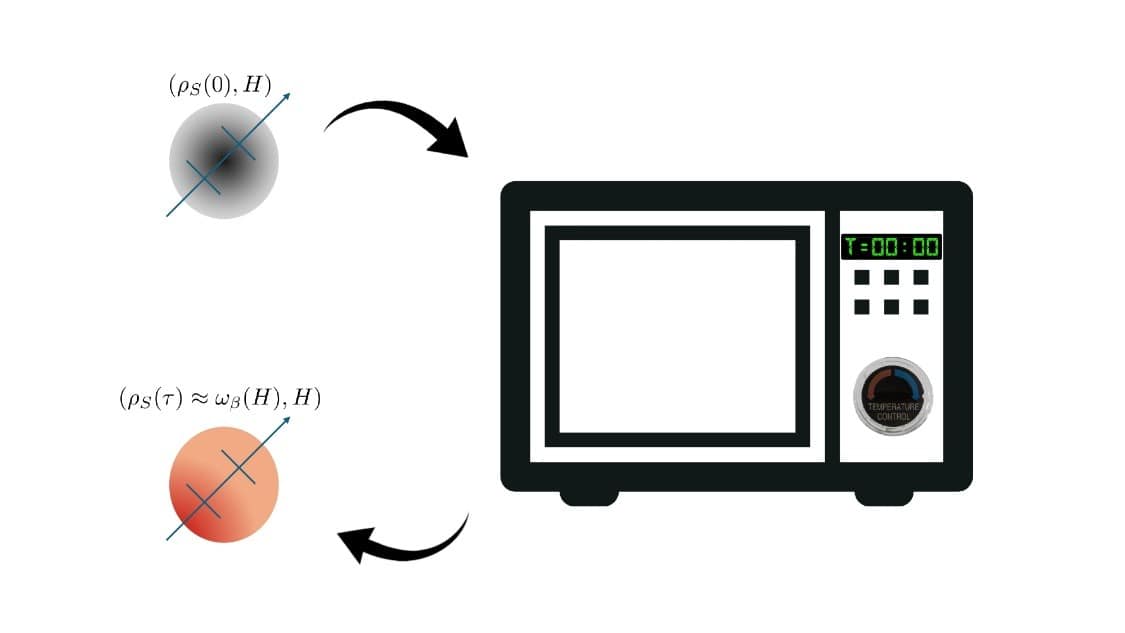


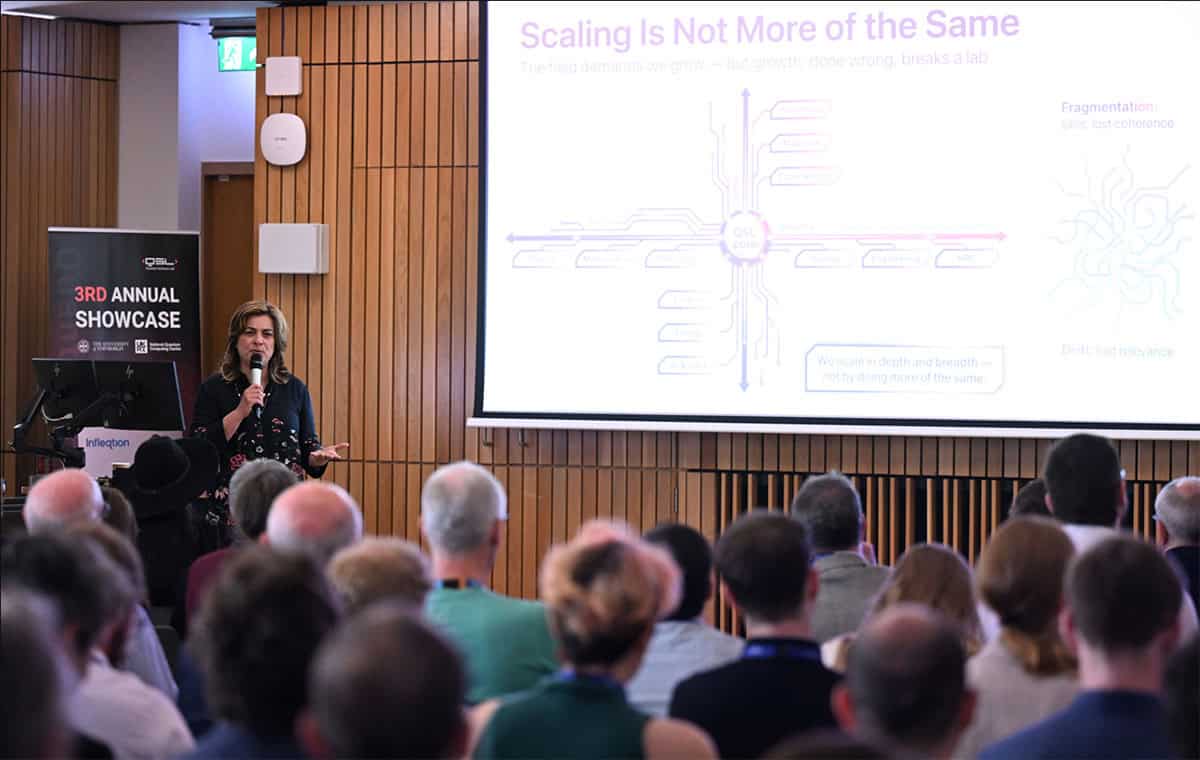
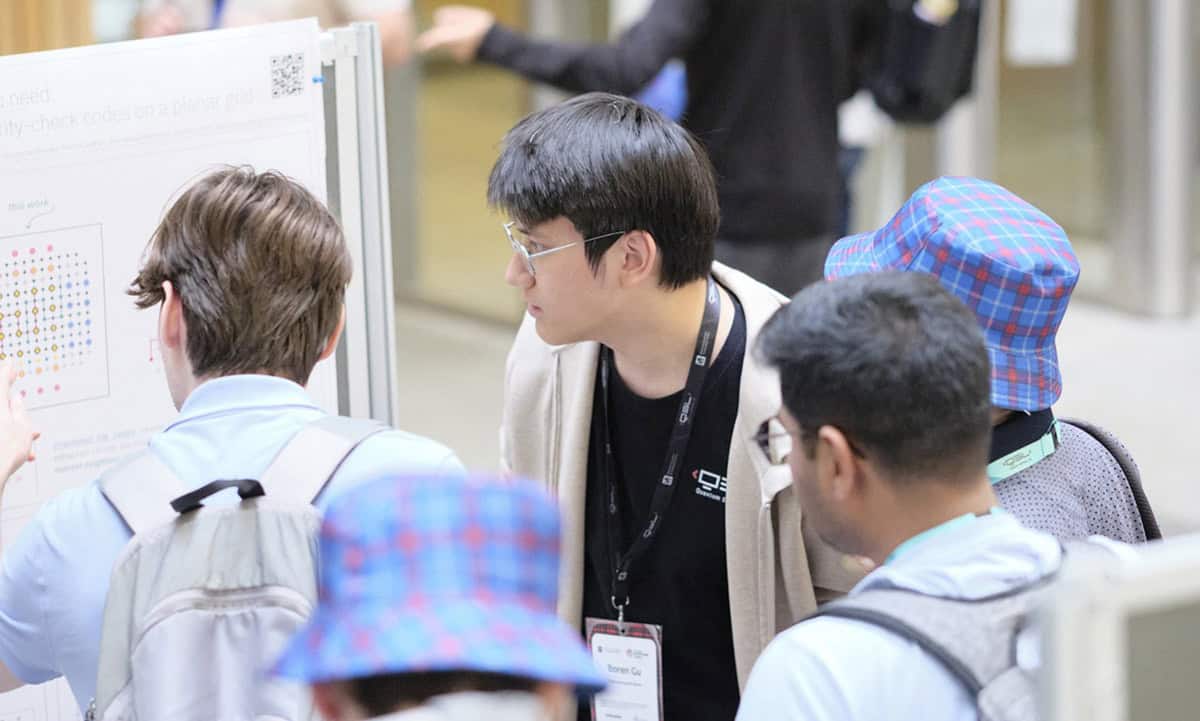
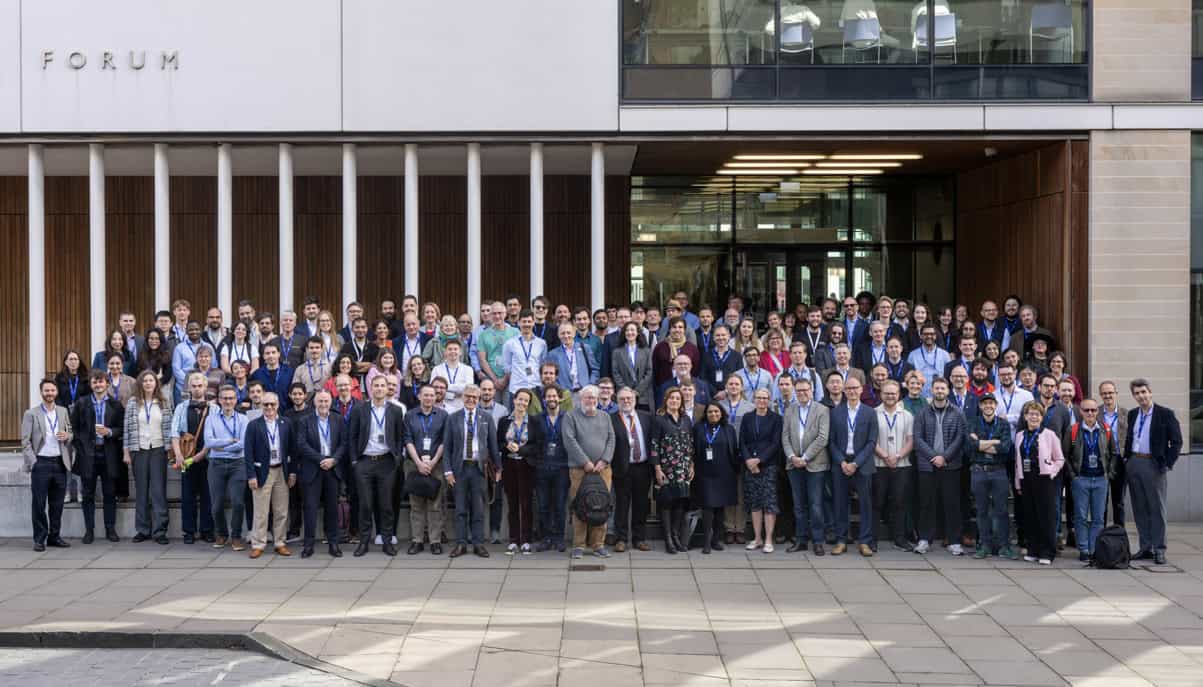
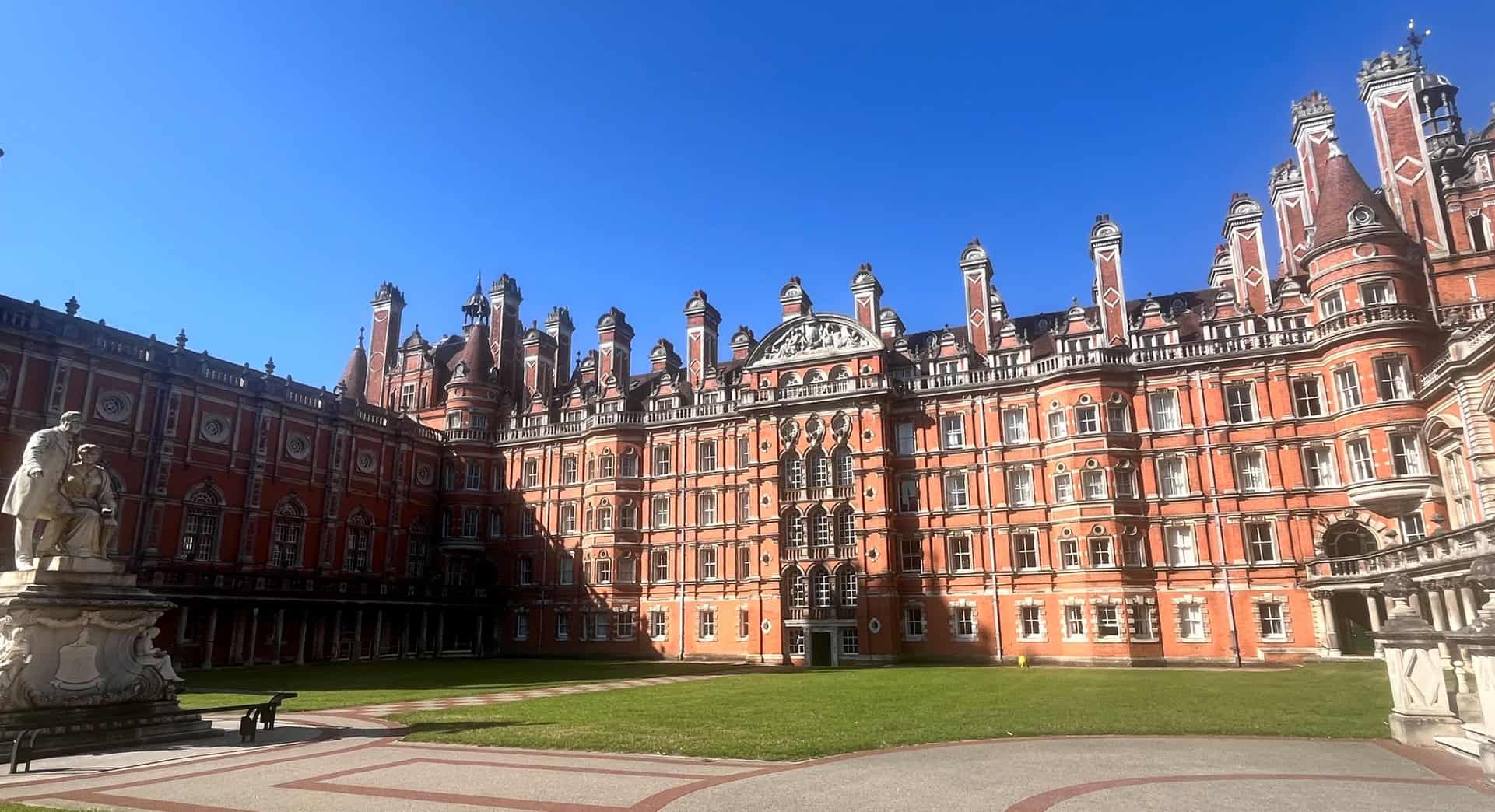
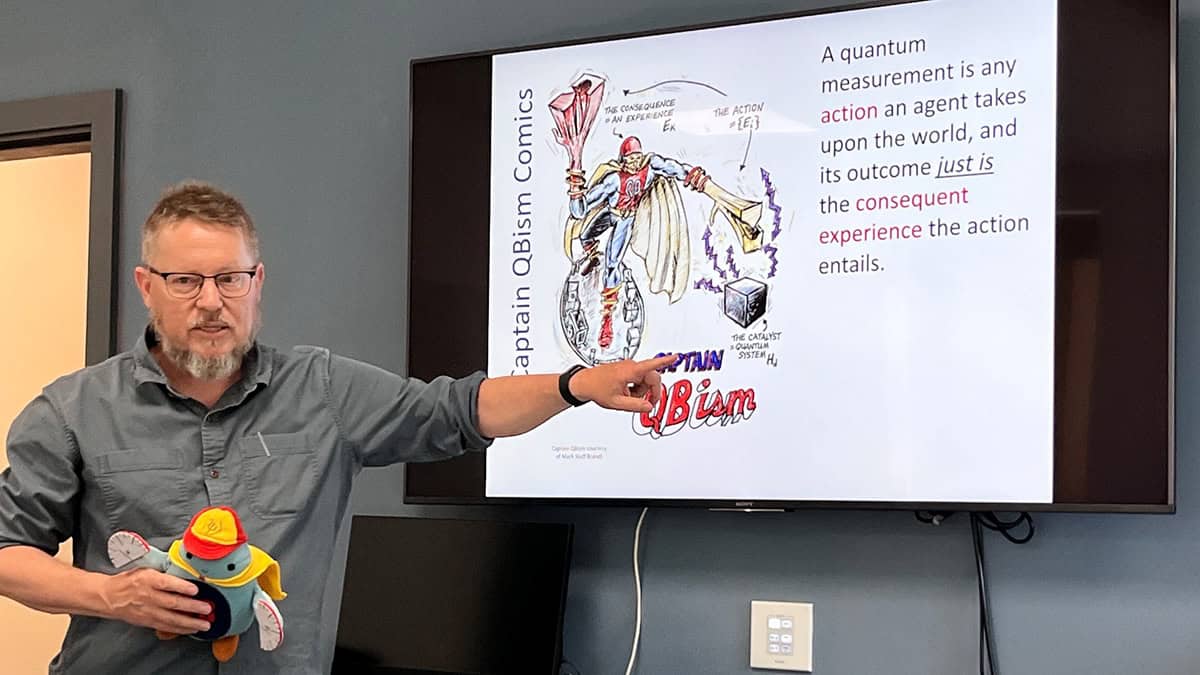
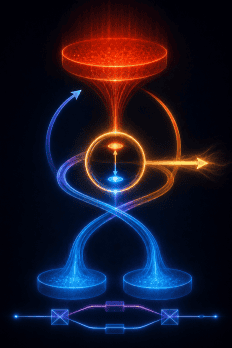

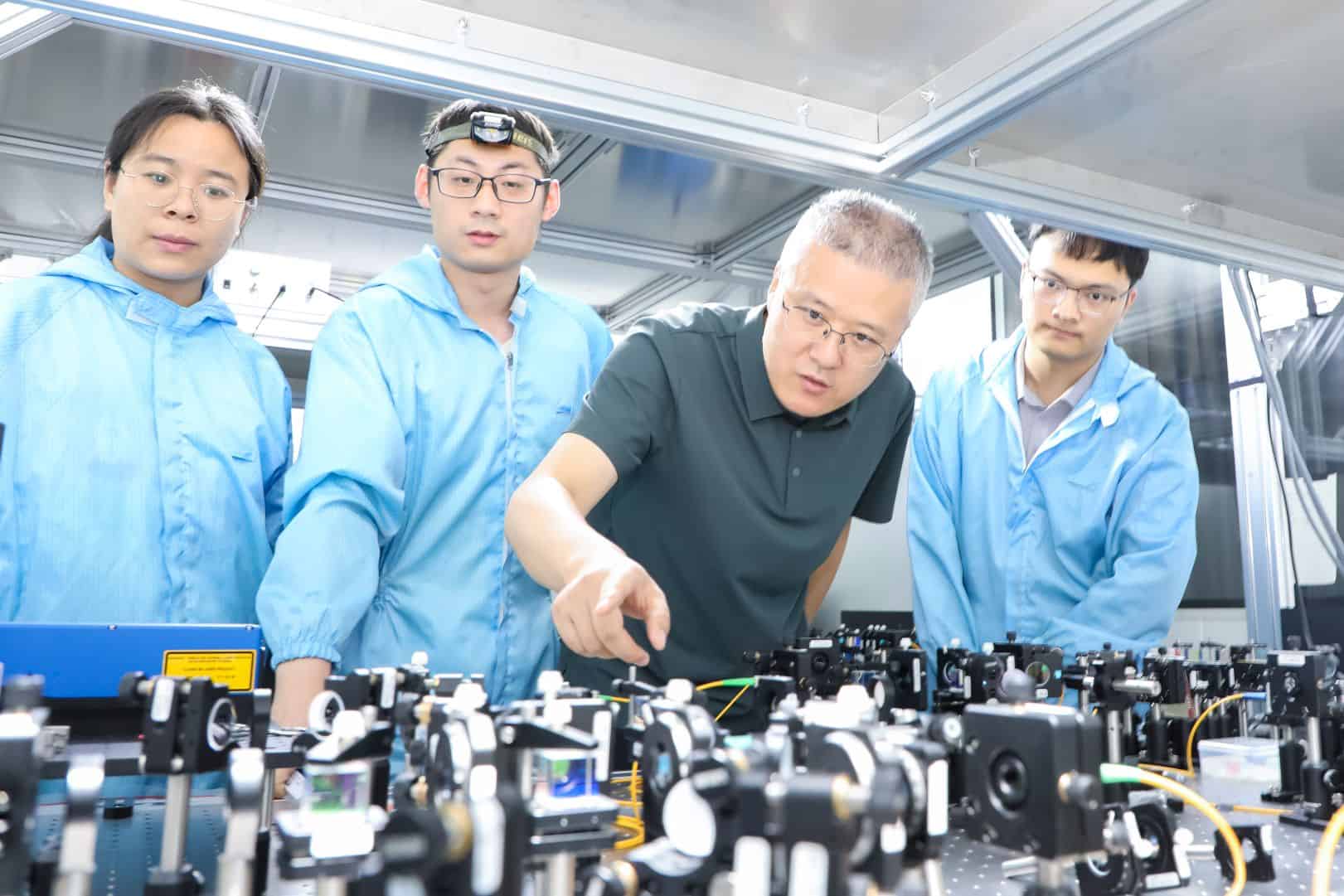
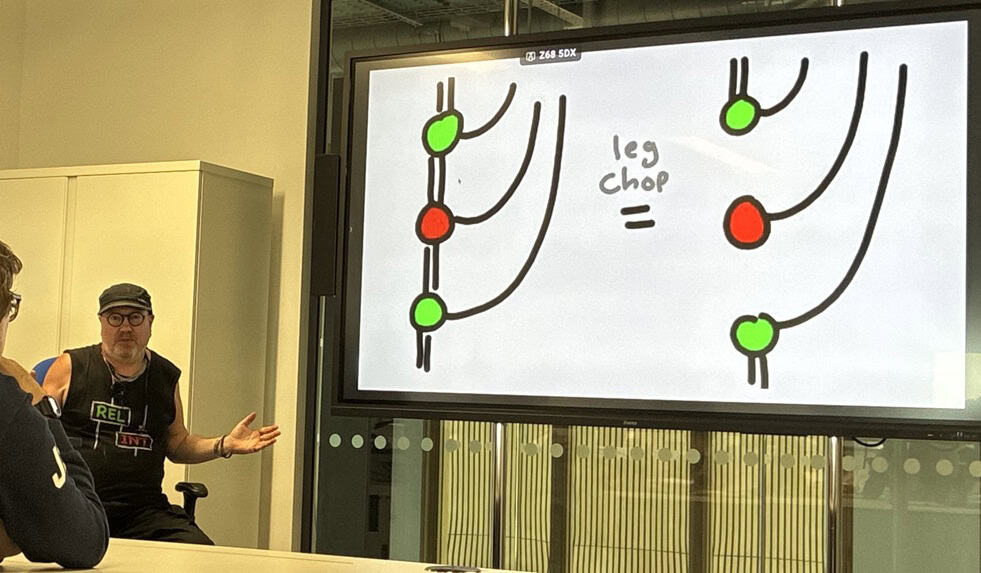
 This podcast is supported by