❌

Reading view

Just like a fruit fly, a new algorithm never forgets old scents

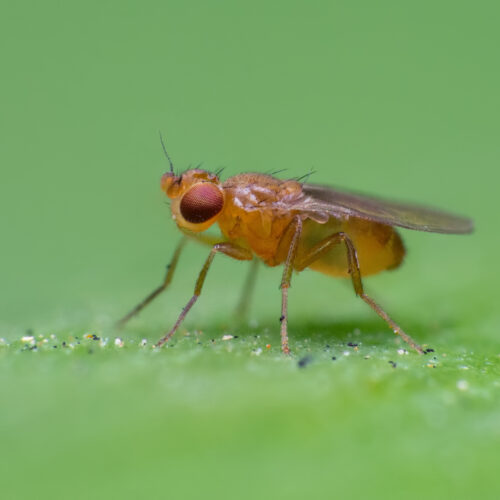
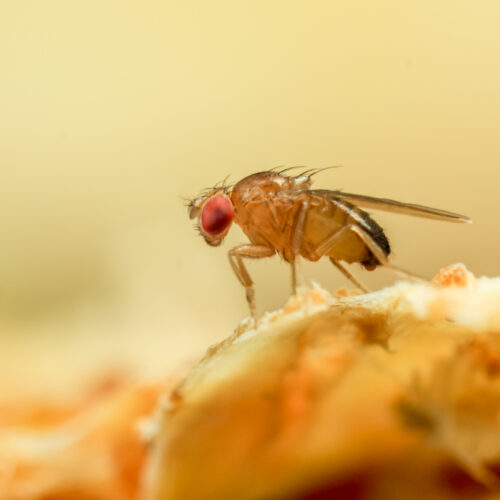
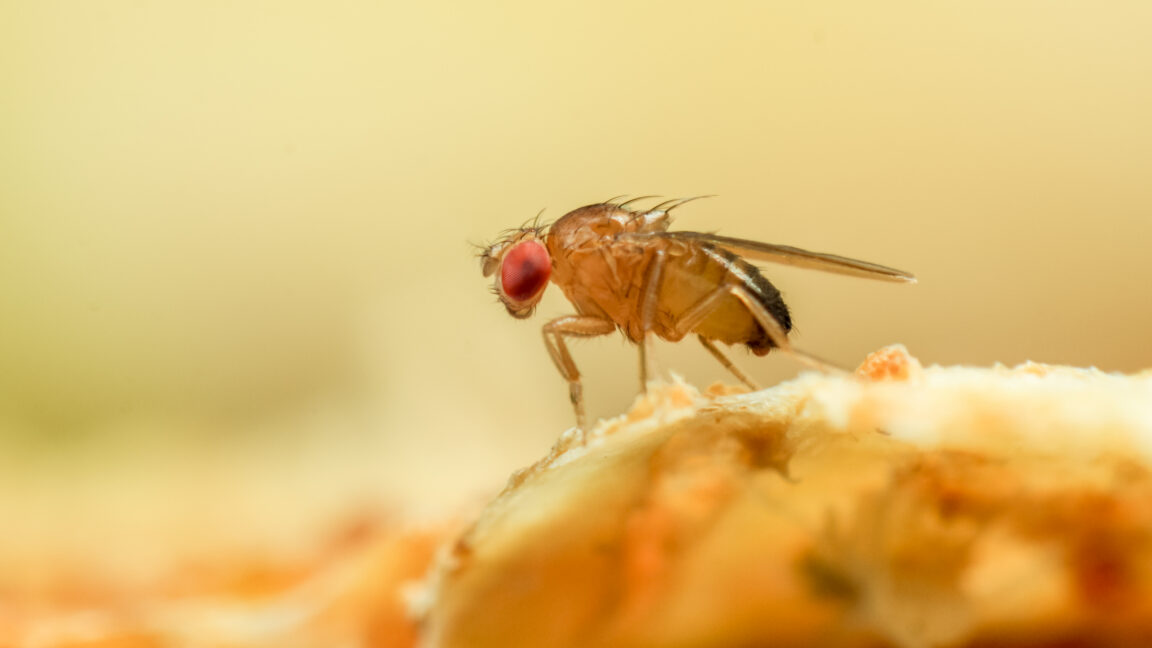
Fruit flies aren't exactly famous for their brainpower; you've probably drowned more than one in a wine glass left too long on the patio table. And yet, working with roughly 140,000 neurons—a brain smaller than a poppy seed—Drosophila can sort through a huge range of smells in a fraction of a second, and then retain the memory of that scent for a long time.

In this, they do much better than current "electronic noses." Even the most advanced ones on the market tend to be expensive, painfully narrow in what they can detect, and quick to forget an odor the moment they learn a new one.

So why not just copy the fly? That's the question a growing number of researchers have been asking—including Kevin Max and Yang Shen at the Okinawa Institute of Science and Technology, whose new algorithm, Spi-Fly, is described in a paper recently published in the journal Neuromorphic Computing and Engineering.
Read full article

Comments

© Joao Paulo Burini

  •  

Meet the 2026 Ig Nobel Prize winners

It's that time of year again, when we learn which lucky scientists are among the winners of the Ig Nobel Prizes. This year, the prizes honor research on designing the perfect splash-free urinal; using mosquito proboscises to "necroprint" tiny nozzles; studying composition rates of buried cotton underwear; and the aerodynamics of a healthy nose-blow, among other highlights.

Established in 1991, the Ig Nobels are a good-natured parody of the Nobel Prizes; they honor “achievements that first make people laugh and then make them think.” The unapologetically campy awards ceremony features miniature operas, scientific demos, and "24/7 lectures," whereby experts must explain their work twice: once in 24 seconds and the second in just seven words.

Acceptance speeches are limited to 60 seconds. And as the motto implies, the research being honored might seem ridiculous at first glance, but that doesn’t mean it’s devoid of scientific merit. In the weeks following the ceremony, the winners will also give free public talks, which will be posted on the Improbable Research website.

Read full article

Comments

© YouTube/Improbable Research

  •  

Dodo Had Surprisingly Keen Sense of Smell and Owl-Like Vision, New Study Reveals

The dodo (Raphus cucullatus) by Frederick William Frohawk, 1905.

New research led by University of Lethbridge scientists offers the most detailed look yet at how the dodo (Raphus cucullatus) -- the flightless bird driven to extinction by the 1600s -- actually perceived its world, suggesting the ‘stupid bird’ had a far more complex sensory life than its reputation implies.

The post Dodo Had Surprisingly Keen Sense of Smell and Owl-Like Vision, New Study Reveals appeared first on Sci.News: Breaking Science News.

  •  

How fruit flies chase invisible ribbons of smell to get to their source

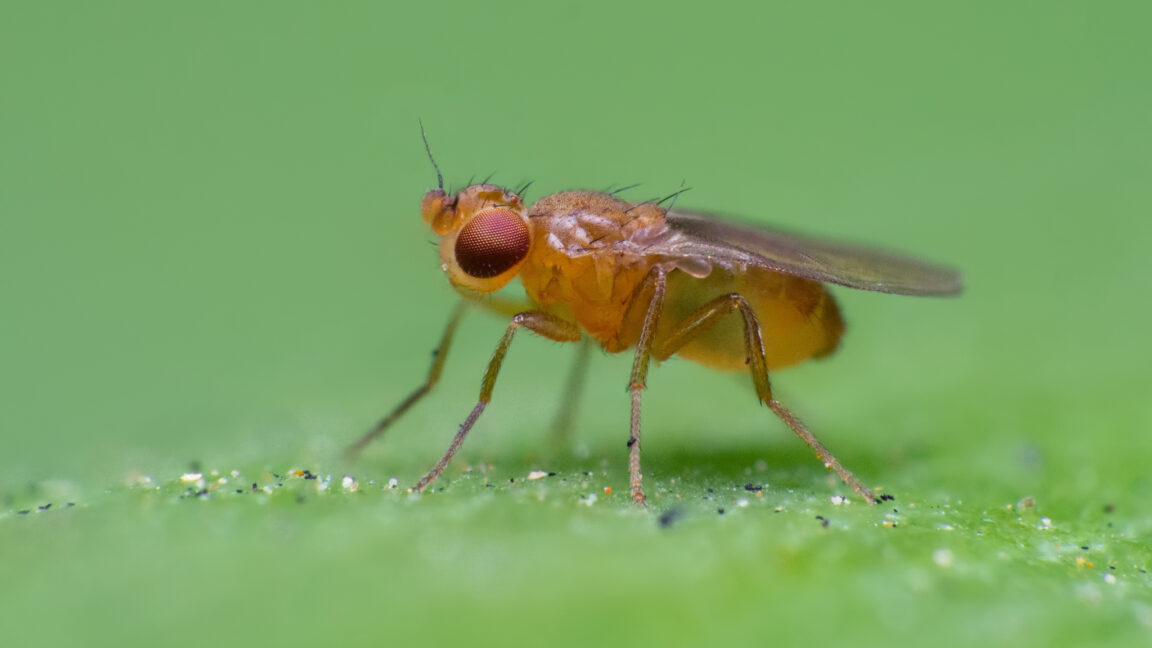
A fruit fly hunting a piece of rotting fruit or a mate navigates by smell, following plumes of odor. Out in the wild, turbulent air swirls these plumes into a chaotic, broken landscape—dense chemical filaments laced through long stretches of clean air. A fly trying to find the source gets the smell in stutters, from constantly shifting directions, with no guarantee that a next whiff is coming at all.

Scientist had little idea of how fruit flies manage this chaotic signal with a brain the size of a pinhead. For a long time, biologists stood by the “surge and cast” model, which posited that insects solved this with hardwired reflexes. The idea was that, when a fly registers the plume with olfactory neurons in its antennae, it simply flies upwind until it’s gone and then flies side to side attempting to catch it again. But now a team led by Vanessa Ruta, a neuroscientist at the Rockefeller University, has shown that fruit flies do something far more advanced.

A treadmill for flies

The trouble with the traditional surge and cast model is that it struggles to explain how an insect tracks a meandering plume across long distances. Chemical cues floating in the air in the natural environment are often sparse and unreliable. But those same features make the mechanism behind olfactory navigation notoriously difficult to test. "Odors are invisible," Ruta says, "and often they're carried along by turbulent airflow." We’ve got no way of knowing what the animal is smelling from one moment to the next.

Read full article

Comments

© Joao Paulo Burini

  •  

Moths Can Smell With Their Wings, Researchers Say

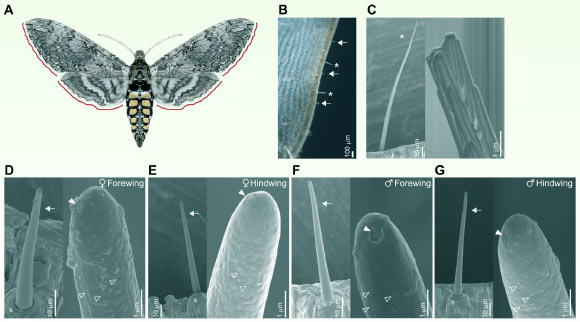
Reda Ismaieel et al. examined the olfactory capabilities of the wings of the tobacco hawkmoth (Manduca sexta). Image credit: Reda Ismaieel et al., doi: 10.1242/jeb.252047.

Scientists at the Max Planck Institute for Chemical Ecology have found that moth wings are equipped with odor-detecting receptors, suggesting the insects use their wings -- not just their antennae -- to sense chemical cues in the air while flying.

The post Moths Can Smell With Their Wings, Researchers Say appeared first on Sci.News: Breaking Science News.

  •  

Naked mole-rat queens use a chemical signal to suppress fertility in rivals

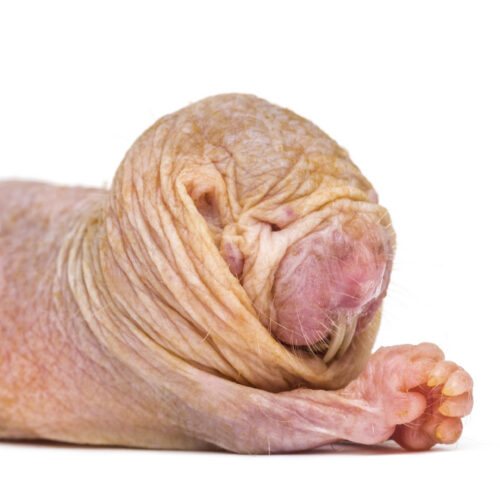
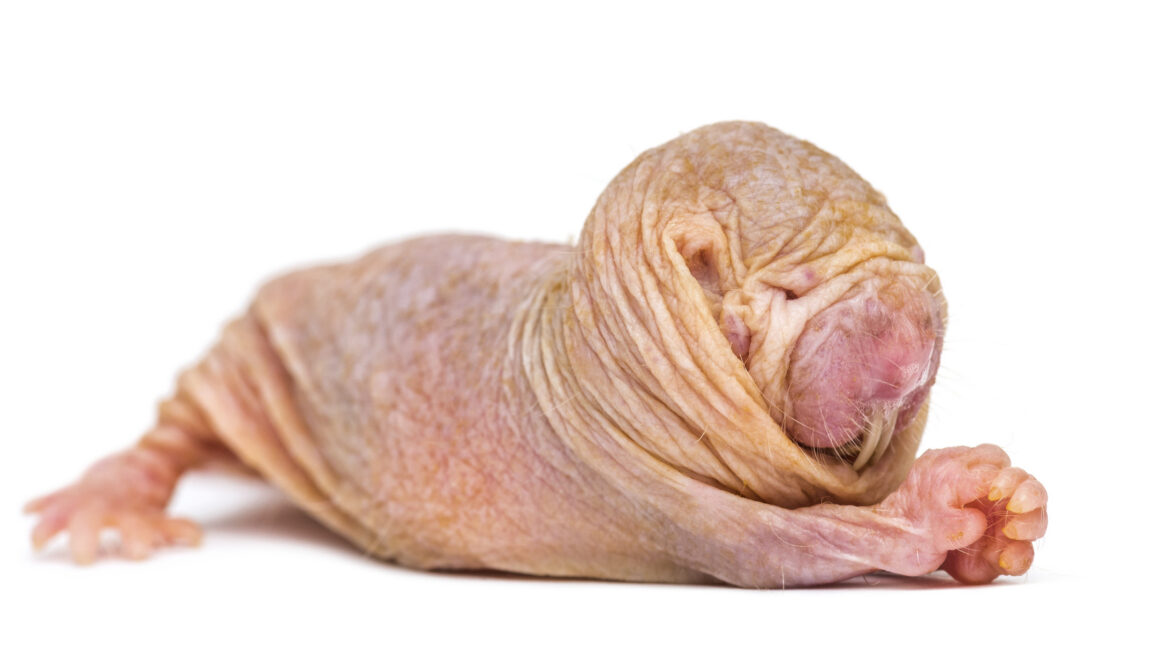
Naked mole rats are weird. They spend their lives almost entirely underground, are largely insensitive to some kinds of pain, can persist without oxygen for a long time, rarely develop cancer, and can live past 30 years, which is decades longer than similarly sized rodents. They are also eusocial, like ants, bees, or termites—in a colony that can hold more than a hundred animals, only one female, the queen, breeds.

We didn’t know how exactly naked mole-rat queens stop other females from breeding. For a long time, our leading hypothesis was bullying and violence, but that may be a bit impractical, given their kingdoms are vast networks of tunnels that can stretch for up to three kilometers. But now a team of Lewin Lab scientists at Max Delbrück Center for Molecular Medicine in Berlin discovered it’s actually just one part of a sophisticated olfactory signaling program.

Running on smell

"It's very clear that mole rats actually have quite big noses and smell a lot," says Gary Lewin, a neurobiologist at the Max Delbrück Center for Molecular Medicine and senior author of the study. Naked mole rats have around 1200 olfactory receptor genes, more than mice (which have roughly 1,000 of them) and way more than the few hundred in humans. They're also blind. "They have to be able to navigate and move around without vision, so smell is one of those things that’s enhanced," Lewin said.

Read full article

Comments

© imageBROKER/Eric Isselee

  •  
❌