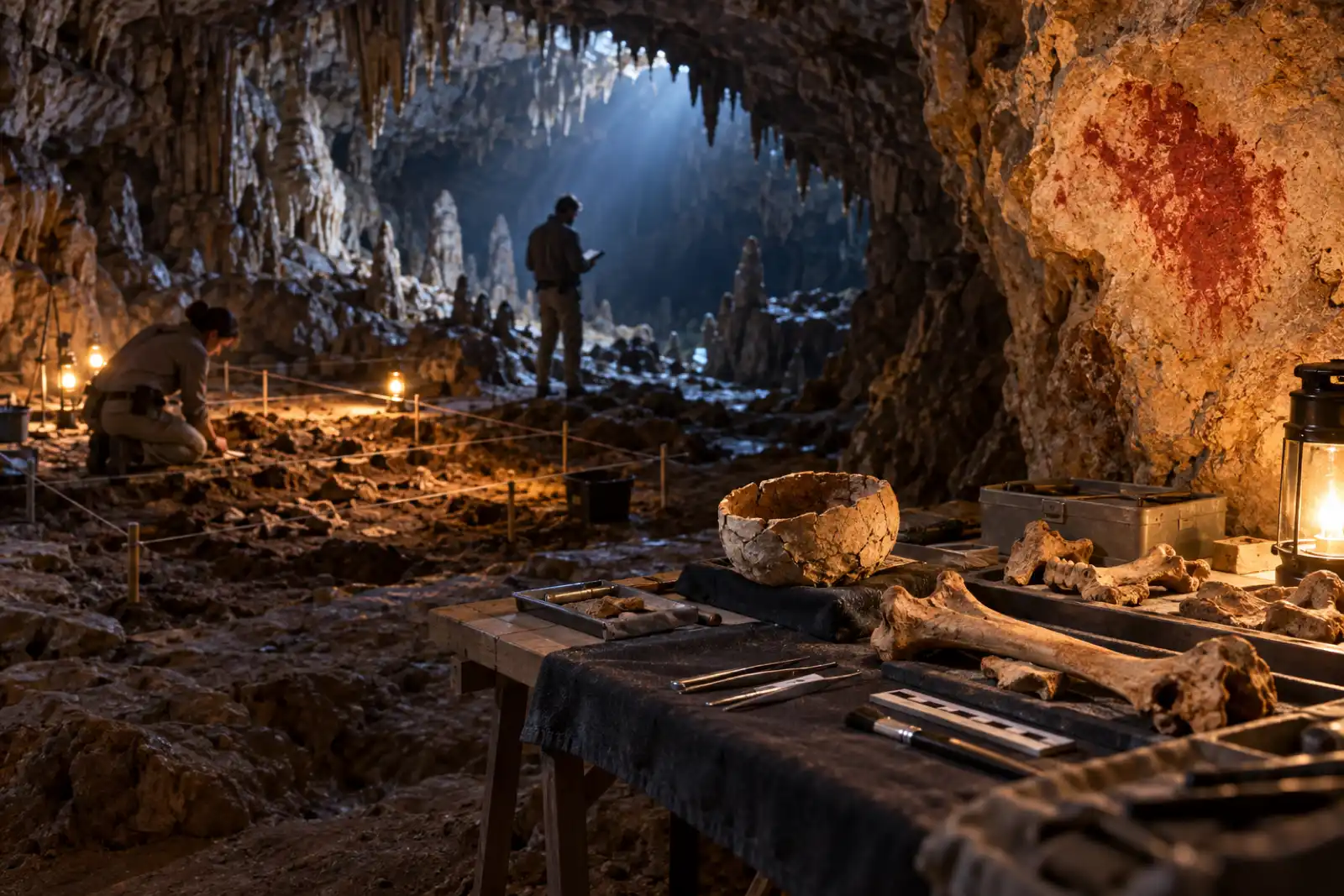
Nearly 1,000 bones and teeth from three Granada caves show that Neolithic cannibalism was not one practice or one event. The dates and traces point to different stories.
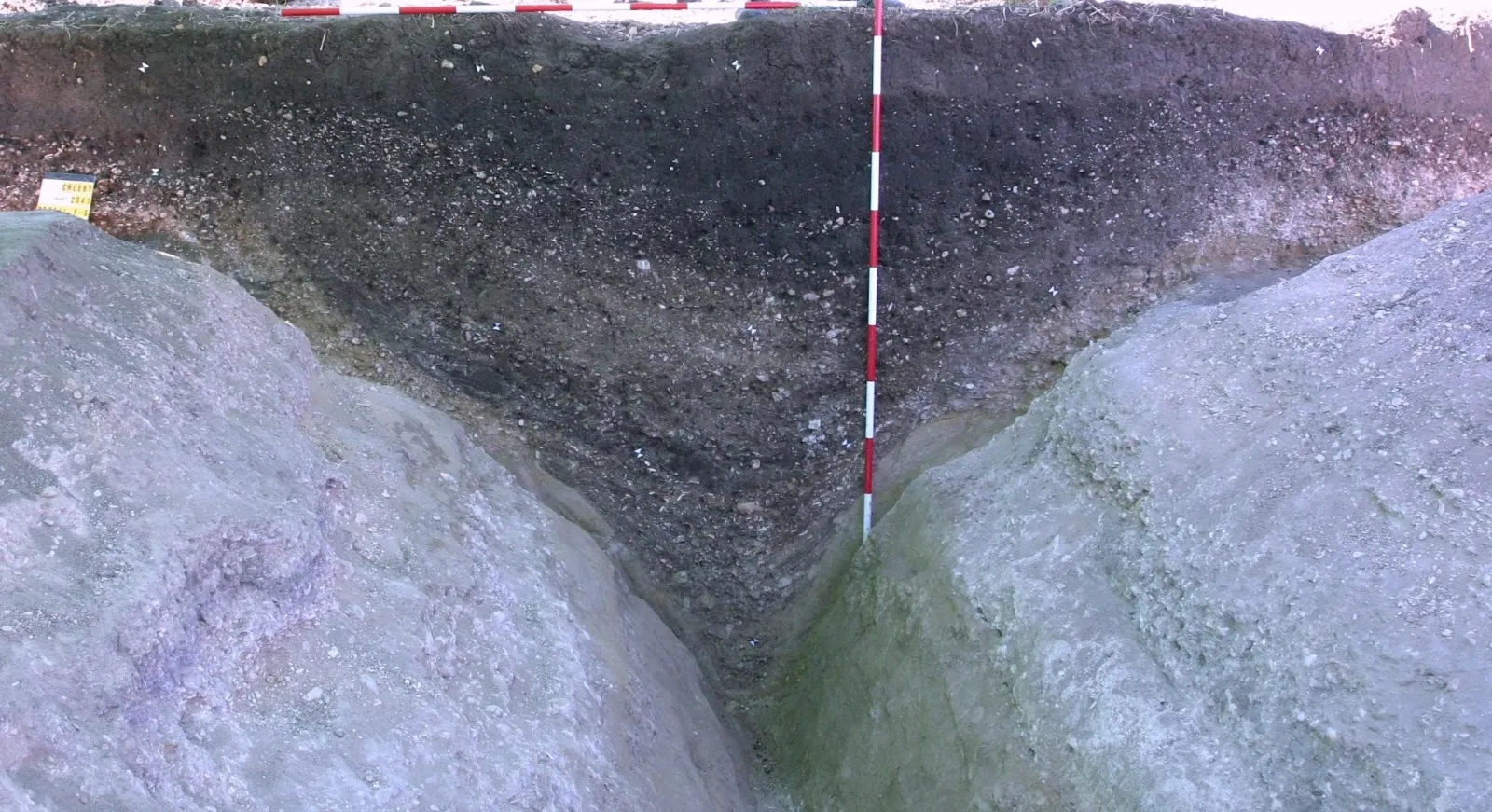
Twelve entrances opened onto the horizon at Chleby. The excavators link their directions to the Sun and Moon, raising questions about how people gathered there.
Stanford University scientists say experiments on ancient Chinesestone tools, including 15,000-year-old hand axes, have solved a longstanding mystery about the critical technological transition from rudimentary hand tools to more versatile ground-edged tools, suggesting these new technologies enabled uses beyond food harvesting.
The research team behind the new analysis said the discovery of ground-edged sickles and knives in Neolithic North China, likely used for fiber production and harvesting, combined with their replica-based experiments, highlights the growing technological capabilities of the transition between Paleolithic and Neolithic peoples.
“The combined experimental and archaeological evidence from the site of Peiligang indicates that the emergence of ground-edged tools marked a significant step in technological specialization from the Late Pleistocene to the Early Holocene,” the researchers write in a paper detailing the work.
Mysterious Technological Transition Hidden in 15,000-Year-Old Stone Tools
According to lead author Ran Chen and colleagues, archaeologists widely regard ground-edged cutting tools like the modern sickle as “technological hallmarks of early agriculture in North China.” However, they note, the functional foundations of this advanced toolmaking capability “remain insufficiently tested.”
The research team also noted that most analyses of the transition from the Upper Paleolithic to the Early Neolithic (ca. 15,000–8,000 BP) in ancient China have viewed tools through “the lens of food production.”
“Within this framework, cutting tools, including early flakes and blades and later ground-edged sickles and knives, are often interpreted primarily as implements for harvesting cereals through cutting stems and leaves,” they explained.
The researchers said these earlier findings made them wonder whether this “food-focused perspective” could have led researchers to miss the broader range of plant resource exploitation possibilities in some of the 15,000-year-old stone tools previously discovered, prompting their replica-based experiments.
“The development of stone tool technology in North China provides a framework for reassessing this long-term relationship between plant use and technological change,” they explained.
Experiments Reveal Ground-Edged Tools Were Multifunctional Implements
To test their hypothesis, Chen and colleagues analyzed 140 stone artifacts previously collected from the Peiligang site in Henan Province, China. This included some 15,000-year-old Upper Paleolithic flaked stone tools and several more advanced Early Neolithic flaked and ground-edged stone tools.
Rather than test irreplaceable artifacts, the study authors created realistic experimental replicas.
A researcher demonstrates the use of an experimental sickle replica to harvest velvet leaf (Image Credit: Ran Chen).
Testing the effectiveness of the oldest, most rudimentary stone flake designs and the more technologically advanced ground-edged tools for harvesting seed-bearing grasses, the researchers found little measurable advantage between the two designs.
However, when the researchers compared the 15,000-year-old stone flake tools against ground-edged tools made thousands of years later, they found the more technologically advanced tools were “significantly more efficient at cutting thick-stemmed weeds and fiber-yielding plants.”
“Upper Paleolithic flaked tools were multifunctional implements used for processing diverse plant and animal materials, and Early Neolithic flakes continued to serve similarly flexible roles,” the study authors explain. “In contrast, Early Neolithic ground- edged tools show marked specialization in plant- related tasks.”
More Advanced Tools Emerged Through Broader Functional Demands
When discussing the experimental results, the team noted that their findings were supported by microfiber and starch residues found on some of the ancient tools, suggesting that “ground- edged sickles and knives were used not only for plant foods but also for harvesting and processing fibrous plants.”
“These findings indicate that ground- edged cutting tools emerged through broader functional demands, including fiber production, and potentially vegetation clearance, rather than cereal harvesting alone,” they explained.
Beyond the food-harvesting uses of ground-edged tools, Chen and colleagues said their identification of non-food plant labor like fiber production as an important driver of technological evolution and specialization “reframes the emergence of ground- edged tools as part of a broader technological and economic reorganization in early Holocene East Asia.”
“These findings identify nonfood plant work as an important contributor to the adoption of ground-edged cutting tools and show that tools conventionally linked to early agriculture were shaped by broader demands than food production alone,” they explained.
Finally, the study authors suggested that their analysis of 15,000-year-old Chinese stone tools could “invite renewed attention” to ancient fiber-based economies and nonfood plant use during forager–farmer transitions and in early farming societies beyond China.
Christopher Plain has spent the last six years as Associate News Editor and Head Science Reporter at The Debrief. Follow and connect with him on X, learn about his novels at plainfiction.com, or email him at christopher@thedebrief.org.
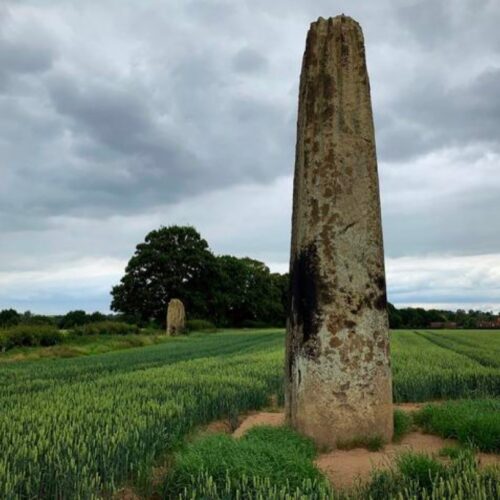
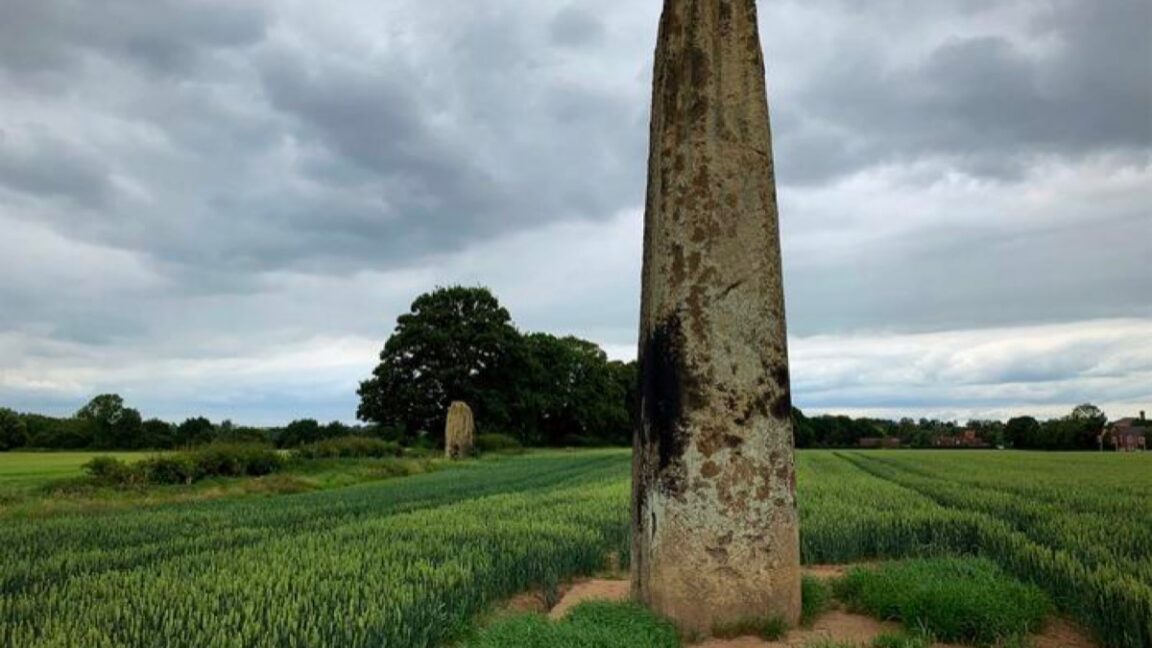
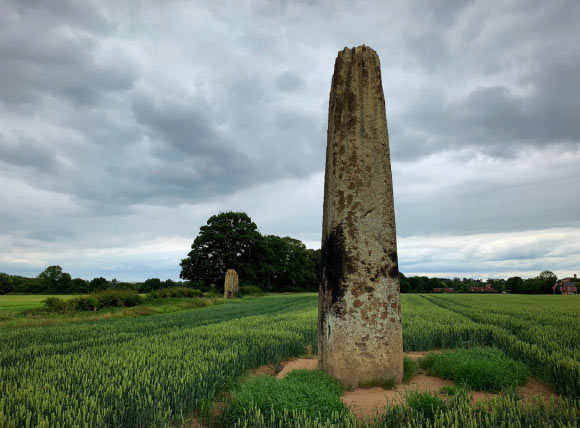
Stonehenge is the most famous example of megalithic architecture across Britain and Ireland, but there are plenty of others, including Calanais, Newgrange, and Avebury, as well as the Devil's Arrows. The latter is Britain's tallest standing stone alignment, yet little is known about the provenance of its stones. Scientists have confirmed that the stones came from a site 18 kilometers (11 miles) away, transported by humans rather than glacial movement, according to a paper published in the Proceedings of the Royal Society A: Mathematical, Physical and Engineering Sciences.
"Sites in southern England and Scotland receive considerable attention but monuments like the Devil's Arrows have remained comparatively understudied despite their significance," said co-author Jim Leary of the University of York. "We have now proved that Neolithic communities moved several 25-ton stones across Yorkshire, transforming a familiar site into an epic quest to create a sacred landscape."
Stonehenge has been the focus of recent chemical analyses identifying where all the stones that make up the structure came from, revealing that many originated in quarries a significant distance away. For instance, a 2019 study concluded that the 42 bluestones that make up the inner ring came all the way from western Wales. The outer layer of sarsen stones hails from much closer to home: Marlborough Downs, an area of round, grassy hills 25 to 30 km (17 miles) north of Stonehenge, which has the largest concentration of sarsen in the UK.
In the German state of Brandenburg, barely a hundred meters (about 330 feet) from the border with Saxony-Anhalt, the Havel River curls around a low rise of land that locals call the Pilatsch. For generations, a local legend held that a knight named Pilatus lived there, ambushing boats on the river and locking captured boatmen […]
A Curtin University-led research team has successfully identified the mysterious origin of several 4,000-year-old 25-ton stones, which ancient architects used to construct Britain’s iconic Devil’s Arrows, as Birmingham Rocks in North Yorkshire, over 11 miles (18 kilometers) from the monument’s location.
The researcher behind the first-ever geological source identification of the ancient stone monument said the quarry’s distance and the work required to move such massive stones suggest the ancient architects intentionally selected the material used to construct Devil’s Arrows.
Unraveling the Mysterious Origin of the 4,000-Year-Old Devil’s Arrows
Announcing the discovery, the research team, which included scientists from the University of York, UK, noted that the famous stone pillars stand up to seven meters (22 feet) tall. The team also said the site is unusual because such alignments are rare in lowland settings. Still, researchers have struggled to locate the mysterious origin of the massive stone pillars used to create the over 4,000-year-old monument.
The Curtin-led team noted that previous studies determined that the stones used in Devil’s Arrows were transported to the site during the Late Neolithic or Early Bronze Age. This range means the site could have been constructed as early as 2000 BC.
Lead author Dr Anthony Clarke, from Curtin’s School of Earth and Planetary Sciences, noted the significant challenges with moving the stones over such difficult terrain.
“Each stone weighs more than 25 tonnes, so moving them would have required incredible planning, coordination and engineering skill,” the researcher explained.
Dr. Clarke also highlighted the value this effort suggests these ancient Britons “placed real importance” on the material used in the monument’s construction and the landscape itself.
“It wasn’t just about convenience – the location the stones came from likely held meaning for them,” the researcher explained.
Low Impact Sampling Method Confirms Ancient Stone’s ‘Fingerprints’
To unravel the ancient site’s mysterious origin, the researchers placed tiny pieces of low-adhesion tape on the stones and then removed them. The team said this “low impact” sampling process collected several tiny mineral grains on the tape without measurable damage to the ancient monuments.
According to the statement announcing their solution to the Devil’s Arrows origin mystery, the team performed an analysis of the “fingerprints” of the selected grains. The results matched material from Brimham Rocks.
Critically, the mystery’s solution also addressed the possibility that glacial movement or other natural processes moved the stones over the needed distance. Instead, the team said their results demonstrated that “the stones were intentionally transported by people.”
“Our research shows these stones weren’t simply taken from the nearest available source – they were deliberately chosen from a challenging landscape 18 kilometers away,” Dr Clarke said.
Clarke also said that the results eliminate the nearer site of Plimpton Rocks, which “had previously been identified as the probable source of the stones.”
“Our findings instead point to Brimham Rocks, showing that prehistoric builders transported these enormous stones significantly further than thought,” he explained.
Solving Similar Stone Monument Origin Mysteries
After discovering the mysterious origin of the 4,000-year-old pillars, Dr Clarke said the team will apply its low-impact sampling method to similar stone monument origin mysteries. The team also hopes to conduct future “targeted excavations” at the Devil’s Arrows site and the newly identified source.
Dr. Clarke said that analysis might help explain how these ancient architects moved the massive stone pillars several miles over rugged terrain over 4,000 years ago. The research said the work could also unravel “how these extraordinary monuments were constructed.”
Co-author Dr Jim Leary from the University of York echoed Dr Clarke’s sentiments, while also suggesting that the team’s findings ‘reshaped’ how researchers understand the art of prehistoric monument-building.
“These results show that ancient communities were making deliberate and meaningful choices about where their stones came from,” Dr Leary explained.
The York researcher said their solution to the Devil’s Arrows origin mystery also “highlights the importance of landscape and shared belief systems, as well as the remarkable effort involved in transporting and raising stones of this size.”
Christopher Plain has spent the last six years as Associate News Editor and Head Science Reporter at The Debrief. Follow and connect with him on X, learn about his novels at plainfiction.com, or email him at christopher@thedebrief.org.
Scientists from Curtin University and the University of York have pinpointed the origin of the Devil’s Arrows, the three towering gritstone megaliths that have stood on the edge of Boroughbridge, Yorkshire, for roughly 4,000 years, ending a long-running archaeological debate.
A team from the University of York and Curtin University, in Australia, has settled one of the most persistent puzzles in British archaeology: the exact origin of the towering standing stones known as the Devil’s Arrows, near Boroughbridge, in North Yorkshire. High-resolution geological analysis of microscopic minerals has confirmed that the three surviving pillars — […]
The enigmatic Neolithic site of Göbekli Tepe in Turkey, home to some of the world’s earliest advanced megalithic construction and sophisticated symbolic art, continues to surprise archaeologists.
Since the discovery of megalithic features during excavations at the site led by archaeologist Klaus Schmidt in the 1990s, Göbekli Tepe has long been recognized as a ceremonial site, where its ancient builders might have gathered for ritual purposes under the site’s distinctive circles of T-shaped pillars.
At the time of its discovery, archaeologists had never found earlier examples of such sophisticated megalithic construction. Remarkably, Göbekli Tepe predated the appearance of monumental structures in Egypt, and even sites like Britain’s Stonehenge, by several thousands of years.
Yet despite the location’s impressiveness, its purpose seemed to be primarily a functional one: little evidence could be found that the ancient Neolithic site—built at a time that predates agriculture, and even the known use of pottery—had also been a dwelling place.
Now, new evidence suggests that parts of Göbekli Tepe may have indeed once been a habitation site, with the discovery of possible dwellings.
Possible Dwellings at the World’s Oldest Temple
Archaeologist Necmi Karul of Istanbul University and the Stone Hills Project recently revealed the results of geophysical surveys and new excavations being conducted at the ancient site, which have produced traces of several large structures that were long hidden beneath the ancient earth that still covers—and also protects—much of the site.
The Göbeki Tepe site near Şanlıurfa in Turkey (Image Credit: E. Kekikciler/Unsplash)
Although the purpose of these buildings remains unclear, evidence based on the internal arrangements within these ancient structures does seem to suggest they may have been living spaces, and even individual residences in some cases.
“Our first impression is that they [were] used as housing,” Karul said in a statement.
If confirmed, the discovery could add a new dimension to archaeologists’ understanding of the famous site, since it has long been presumed that its ancient inhabitants were primarily hunter-gatherers, who ranged throughout the region in search of sustenance during a time long before farming helped to facilitate the more sedentary lifestyle of later societies.
Göbekli Tepe: Reshaping Our Knowledge of the Ancient World
Although the discovery could change our understanding of Göbekli Tepe, it would align with past revelations about the site that have caused archaeologists to have to rethink things about the Neolithic world of ancient Anatolia, since it was also once presumed that hunter gatherers, due to their nomadic lifestyle, would have had little use for monumental architecture as far back as 11,000 years ago—and yet this is precisely what excavations at Göbekli Tepe revealed.
In a posting on social media, Turkey’s Minister of Culture and Tourism, Mehmet Nuri Ersoy, said that in addition to the discovery of the new possible habitation structures, ongoing work at the site continues to help ensure its conservation, and several of the structures at the site have been reinforced to help preserve them.
“We are also securing the monoliths against tremors using steel cables,” Ersoy said. “By simultaneously conducting excavation, restoration, and conservation work across various parts of Göbeklitepe, we are carrying this unique heritage into the future through a holistic approach.”
Micah Hanks is the Editor-in-Chief and Co-Founder of The Debrief. A longtime reporter on science, defense, and technology with a focus on space and astronomy, he can be reached atmicah@thedebrief.org. Follow him on X @MicahHanks, and at micahhanks.com.
The ancient Austronesian maritime civilization may have carried painted art on its journeys before developing its first Neolithic pottery, according to new study findings.
The Austronesian culture traveled from Easter Island to Madagascar and Taiwan to New Zealand, demonstrating their skill as advanced seafarers of the ancient world. In a recent paper published in the Proceedings of the National Academy of Sciences, researchers from The Australian National University (ANU) and Indonesia’s National Research and Innovation Agency (BRIN) describe a 4,000-year-old artifact displaying the Austronesian Painting Tradition (APT).
The find was made on Indonesia’s Wetar Island, at the Huknaur rockshelter, a site known for its prehistoric art, including cave art that has defied conclusive dating attempts.
Austronesian Culture
Roughly 4,200 years ago, the Austronesian people began their journeys across the sea, exploring large portions of their region. Technologically, they developed impressive boats with a focus on stability engineering to master harsh seas and highly efficient sails to travel great distances. Their success in venturing into these regions left them with a reputation as some of history’s greatest seafarers.
The defining feature of these peoples was the shared Austronesian language group, still spoken by some 386 million people across more than 1,200 languages today.
One of the primary methods archaeologists have used to trace how ancient Austronesian culture spread through the region is through traces of pottery. Surprisingly, a painted plaque was found on a preceramic layer, suggesting this intriguing artifact could predate the arrival of ceramic technology in the area, and potentially dates some of the earliest sea voyages to sometime between the Paleolithic and Neolithic eras.
A 4,000-year-old painted plaque discovered on Wetar Island, Indonesia, predates the culture’s Neolithic pottery. Credit: Shimona Kealy
Austronesian Painting Tradition
Elements common to the APT art style include geometric designs, small human figures, and the boats for which they are best known. The latest example of this art appears on a stone plaque, covered in a common APT motif: a red concentric circle with radiating sun rays. Archaeologists have found similar pieces in the West Pacific, but this one’s mobility makes it extraordinary.
“This is the first portable example of Austronesian painted art ever found archaeologically,” said lead author Professor Sue O’Connor of ANU. “Portable symbols could travel with people and may have helped communicate shared identities, affiliations and beliefs between island communities. Similar sun-like designs were historically painted on boats and other objects, where they could function as symbols of protection and group identity.”
“This discovery shows that the characteristic sun-ray motif was already part of the APT during the earliest Austronesian expansion into southern Wallacea,” explained co-author Dr Simona Kealy, of the ANU. “These people were extraordinary seafarers, rapidly dispersing across thousands of kilometres of ocean. The Wetar plaque shows that art and shared symbolic traditions were part of this great maritime dispersal from its earliest phases.”
A New Type of Art
Typically, APT work is discovered on rock shelters and cave walls. While interesting, archaeologists are often confounded by the difficulty in properly dating cave wall art. Typically, such paintings are created with inorganic mineral pigments, which cannot be carbon-dated.
Now, with the first portable object ever discovered bearing the APT style, the researchers can date such a piece for the first time. Their precise results place the object during the Austronesian spread throughout maritime Southeast Asia,sometime between 4,090 and 4,900 years ago.
“This discovery shows that Austronesian pioneers arrived with a compelling ideology represented by the APT paintings, prior to more extended contacts bringing pottery,” said co-author Dr Ceri Shipton of ANU. “People didn’t just carry technologies and possessions when they voyaged to new islands. They carried ideas, identities, and new ways of understanding the world.”
Ryan Whalen covers science and technology for The Debrief. He holds an MA in History and a Master of Library and Information Science with a certificate in Data Science. He can be contacted at ryan@thedebrief.org.
When archaeologists began excavating a large ancient settlement near Tel Aviv in 2012, among the many discoveries at the 9000-year-old site were as many as 400 locally crafted artifacts made from obsidian.
One reason this was so significant is that this dark volcanic glass is absent in Northern Israel, and discoveries in the region ultimately helped trace it back to quarry sites in central Turkey. Although the importation of non-local source materials in the ancient world is not particularly unusual, another discovery archaeologists soon made proved more baffling: the appearance of unusual engravings on several arrowheads produced from this ancient Anatolian obsidian.
Now, a rare collection of these uniquely engraved projectiles is providing archaeologists with deeper insights into the presence of a mysterious symbolic tradition that was practiced long ago by some of the earliest farming communities 9,000 years ago.
The Mystery of Anatolia’s Engraved Arrowheads
In a recent study published in Plos One, an international research team examined a collection of eleven previously undocumented arrowheads unearthed at Tepecik-Çiftlik, a Neolithic settlement in Cappadocia. These ancient projectiles are each decorated with carefully carved incisions, the purpose of which remains baffling to archaeologists.
The rare discoveries have been grouped with an exceptionally uncommon class of ancient stone artifacts, which have only been found in Central Anatolia, and were only known to have been produced during the late eighth and seventh millennia BCE. With the inclusion of the new set, which became the focus of the team’s study, the total number of these unusual artifacts rises to 43 that have been documented across the region.
(Image Credit: (Image Credit: A. Vinet, D. Guilbeau/ Balcı/Plos One/https://doi.org/10.1371/journal.pone.0354715).
These projectile points are unique among arrowheads, which are one of the most common artifacts from the ancient world, since the purpose of their engravings remains unclear. A range of theories have been proposed, which include the idea that some may have been personal identifiers; other theories propose clan symbols, hunters’ marks, or even ritual or symbolic reasons for their presence on the ancient obsidian weapons.
Unraveling the Mystery
Study authors Alice Vinet and Denis Guilbeau took a cautionary approach, warning that current evidence remains insufficient to draw any firm conclusions about the unusual markings.
“The analysis of these incised arrowheads, along with the limited archaeological and ethnographic comparisons available, calls for a cautious interpretation,” the authors write.
To try to understand the possible meaning behind these markings, the researchers conducted a detailed analysis that examined technological, functional, and iconographic aspects of the markings. Based on macroscopic evaluations, the source of the obsidian was determined to likely come from volcanic sources at Göllüdağ and Nenezi Dağ in Turkey, both of which are recognized by archaeologists as sources of high-quality volcanic glass during the Neolithic.
An example of an obsidian projectile point from Turkey’s Neolithic period (Image Credit: Zunkir/Wikimedia Commons/CC 4.0)
Despite their simplicity, the engraved designs on the samples the team examined showed significant diversity. However, no consistent relationship emerged between the incisions and the raw materials used to craft the arrowheads; nor were any connections apparent regarding manufacturing techniques, shapes, or in terms of use patterns.
One potentially important observation was that some of the engravings appear to have been made before the tools were completed, while other examples showed signs of engraving after completion. This suggests there had been no standardized stage during production when the markings were applied that may provide clues in terms of a possible meaning behind the markings (such as a kind of label or other marking that might have been used to designate individual samples before being knapped into projectiles).
Despite the variations between samples, their overall comparison with other samples recovered from Central Anatolian sites in the region did appear to show recurring design components, suggesting continuity that could indicate a shared visual tradition that was incorporated across multiple ancient communities in the area.
Location Offers Clues
Another intriguing aspect of the team’s study involves the locations where they were recovered. As opposed to simply being found in ceremonial contexts, some of the projectiles were found in the remnants of homes, while others were found in lithic production sites or during archaeological surveys, which seems to suggest the engraved obsidian arrowheads saw use in a wide range of everyday activities and practices.
Still, based on their rarity and constrained geographic distribution, the persistence throughout several centuries of Anatolian prehistory seems to point to a unique cultural practice in the region, the full significance of which remains unknown. For now, their presence offers a unique look at the ancient hunters and farmers from one of the earliest settled societies, suggesting that even artifacts with largely practical uses may have held greater significance in terms of the symbolic importance they held for their ancient makers.
Micah Hanks is the Editor-in-Chief and Co-Founder of The Debrief. A longtime reporter on science, defense, and technology with a focus on space and astronomy, he can be reached atmicah@thedebrief.org. Follow him on X @MicahHanks, and at micahhanks.com.
A discovery by archaeologists at the Pre-Pottery Neolithic site of Çemka Höyük in southeastern Turkey is extending the accepted timelines on the origins of ancient ceramic technology.
The discovery, detailed in a new study that appeared in the journal Antiquity, provides some of the earliest evidence yet uncovered for intentionally fired pottery in Southwest Asia. The findings appear to show that the first experimentation with ceramic technology began thousands of years earlier than once believed.
At the heart of the findings are a collection of more than 45 low-fired clay fragments, representing at least nine separate vessels, which researchers unearthed at the site of Çemka Höyük in Mardin Province. The fragments date to approximately 9,350 BC, placing them in a period that predates the widespread adoption of pottery during the seventh millennium BC by nearly two millennia.
The discovery offers an unprecedented glimpse into the earliest stages of ceramic innovation, adding to past discoveries that include early agricultural innovations and remarkably sophisticated monumental architecture associated with famous sites in the region like Göbekli Tepe.
An Ancient Experiment in Ceramics
Rather than evidence of full-scale pottery production, the new study by researchers Ergül Kodaş, Natalia Petrova, Maria Daghmehchi, and Rana Özbal argues that a period of experimentation seems to have begun around 11,500 years ago.
Clay fragments unearthed at Çemka Höyük in Turkey (Image Credit: Photos by N. Petrova/Antiquity/DOI: https://doi.org/10.15184/aqy.2026.10371)
The nine vessels represented by the fragments uncovered at Çemka Höyük showcase simple slab-building techniques, where plant material, and even animal dung was sometimes mixed into the source clay to help improve its performance during the firing process. Further analysis of the samples indicated that they were intentionally heated in controlled, low-heat fires that reached temperatures of roughly 600 to 700 degrees Celsius, which produced permanent ceramic transformation, rather than mere accidental burning.
A Surprise Discovery
Along with the pottery fragments, archaeologists also discovered an unusual variety of clay objects at Çemka Höyük: a type of clay coating that may have once covered organic objects, along with an attachment formed from the same material that seems to have been used for enlarging the capacity of a vessel made from another material, such as stone or wood.
Altogether, the diversity of the artifacts the team uncovered points to strong evidence that early Neolithic communities in the region were already experimenting with clay in a range of different ways, before the widespread adoption of ceramic technologies for pottery production.
This is significant, since the discoveries challenge existing ideas about the emergence of pottery, which suggested that it was quickly adopted as a fully developed technology.
“This new evidence points to an early implementation and demonstrates that ceramic innovation emerged before widespread production and adoption,” the team writes, “developing regionally and progressively rather than through a single invention event.”
“Our analysis of the fired clay items from Çemka shows that the inhabitants of the site experimented with pottery production by selectively using organic temper, low-temperature firing technologies, and slab-construction techniques,” they add.
Ceramic Technology in the Ancient World
The study also places Çemka Höyük within a broader network of early clay experimentation across Southwest Asia. While similar finds have been reported from sites in Türkiye, Syria, Jordan, Iran, and Israel, the Çemka discoveries are now recognized as being among some of the oldest known examples of intentionally fired ceramic technology ever identified in the region.
Even beyond the technical implications of what the team outlines, the new study offers deeper perspectives on the social aspects of such innovations in the ancient world. For instance, to become successful, technologies must offer more than just functionality by becoming ingrained in the everyday lives of a culture.
The evidence suggests that at Çemka Höyük, use of clay underwent gradual transitions from use as a construction material to a medium used for storage and food preparation. This reflects changes in the culinary practices of the era, as well as certain community activities right down to the daily routines of Çemka Höyük’s ancient residents.
Thus, the early experiments outlined in the new study helped to lay the foundation for the sophisticated pottery use and other traditions that would ultimately make their way throughout the region, revolutionizing the ancient Near East with the arrival of one of its earliest technological revolutions.
Micah Hanks is the Editor-in-Chief and Co-Founder of The Debrief. A longtime reporter on science, defense, and technology with a focus on space and astronomy, he can be reached atmicah@thedebrief.org. Follow him on X @MicahHanks, and at micahhanks.com.
Megaliths —those enormous stone blocks that have stood for millennia— continue to fascinate archaeologists and the general public. A recent compilation of books published between 2025 and 2026 shows that, although research has advanced by leaps and bounds thanks to new technologies, some fundamental questions remain without definitive answers. Who built these monuments? Why did […]
The death, which radiocarbon dating places between 3932 and 3653 B.C., surprised an individual at approximately forty weeks of gestation in the rock shelter of Ripari Altí, at 1,100 meters above sea level, within the current Dolomiti Bellunesi National Park. The archaeological context points to the final phases of the Neolithic, a period in which […]
The archaeological excavations currently being carried out at Kapellenberg, near Hofheim am Taunus in Germany, have provided new evidence during this summer campaign regarding the possible location of the central tomb of a large burial mound dating back approximately 6,000 years, as confirmed by the leaders of the research project directed by Professor Detlef Gronenborn […]
Today, humans speak or use signs in approximately 7,500 different languages. However, this figure, impressive as it may seem, represents only a snapshot of a constantly changing history, and questions about the evolution of linguistic diversity have remained among the most elusive for science for decades. How many languages existed before the appearance of written […]
Ancient DNA from Shimao reveals local origins, broad prehistoric connections, a patrilineal social structure, and gender-specific patterns of human sacrifice. At Shimao, a vast stone-walled settlement in northern China, ancient DNA is filling in details that archaeology alone could not fully resolve. The genetic evidence is helping trace where the people of this late Neolithic [...]
New radiocarbon dates from Sala Keimada, a hard-to-reach chamber of Cueva Palomera in the province of Burgos, northern Spain, suggest that generations of people returned to the sacred space from the end of the Ice Age through the Iron Age, leaving behind art, structures and offerings.

 Login