When it comes to putting strange substances into your body in 2026, the sky’s the limit.
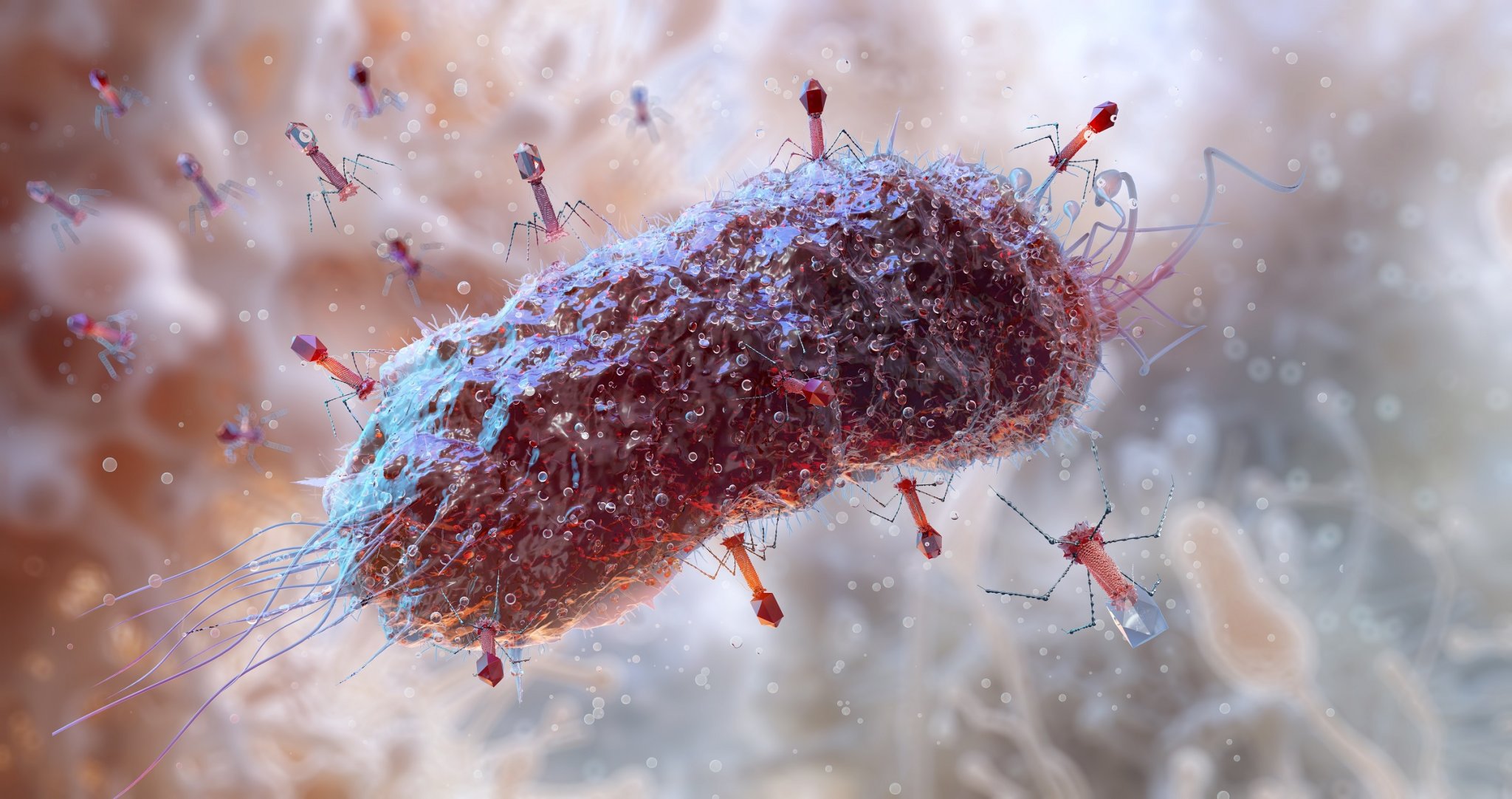
First there were black-market Russian peptides — and now there are AI-generated viruses, which one startup claims has been used to successfully treat a bacterial infection.
On Tuesday, the company called Radical Numerics published a technical paper on its website, explaining the process by which they trialed an AI-engineered viral treatment on a human subject.
Targeting bacteria with special viruses isn’t new — it’s called “phage therapy,” and it involves deploying viruses that specifically target harmful microscopic organisms. But the hunt for viruses capable of locking onto a particular infection is arduous, and Radical Numerics says it’s found a way to use AI to revolutionize the process.
Yet as the New York Times notes in its reporting, Radical Numerics’ research is really more like a blog post — not only was the study self-published, rather than being vetted by a scientific journal, but it hasn’t even been peer reviewed. Making matters even murkier, the company declined to share clinical information about the patient or the doctors involved with the NYT, citing the proprietary nature of a treatment it hopes to monetize.
“We take our responsibility to protect patient confidentiality and maintain the trust of our clinical partners extremely seriously,” CEO of Radical Numerics Eric Nguyen told the paper. “We intend to publish our scientific findings through peer-reviewed research, with any future disclosure of clinical details subject to appropriate consent.”
As Harvard microbiologist Michael Baym told the NYT, “if it works, that’s incredible,” but his “impulse is to be skeptical.”
As the saying goes, extraordinary claims require extraordinary evidence — and that goes double when you’re running a venture-backed commercial lab exposing sick people to AI-generated viruses.
As Elon Musk tries to save face by claiming he’ll give every American child a chunk of SpaceX stock, here’s a chilling reminder of what he did that affected millions of children the second he had a whiff of federal power.
In a new interview, the documentary filmmaker Alex Gibney, who directed a just-released four-hour look at the billionaire’s life titled “Musk,” discussed the staggering death toll of Musk’s cuts to USAID, calling it a “crime against humanity.”
“There was an estimate that what [Musk] did by so suddenly cutting USAID would cost through disease and starvation as many as 14 million lives,” he told journalist Katie Couric. “Even if you discount that by an enormous amount, we know that within about a year of those summary cuts — where they were literally burning food that had already been paid for that was going to starving children — 500,000 children died.”
Musk, to Gibney’s astonishment, even joked about the cuts by saying he’d “put USAID into the woodchipper.”
“What he put into the woodchipper,” Gibney said, “were children.”
Gibney, whose documentary Musk called a “hit piece,” is drawing from a 2025 study published in The Lancet, one of the most prestigious medical journals. It estimated the impact of Musk effectively neutering USAID by implementing a freeze on its foreign aid funding — which went to programs to combat HIV/AIDS, malaria, and to address food insecurities — and slashing nearly 10,000 employees.
In sum, the researchers found that the “steep funding cuts could result in more than 14 million additional all-age deaths, including 4.5 million in children younger than age five, by 2030.”
Even conservative estimates concurred that the number of deaths would be staggering. A tracker created by Brooke Nichols, a professor and infectious disease mathematical modeler at Boston University, projects the 1-year death toll caused by the USAID cuts at 518,000 children.
It’s a touchy subject for Musk, who continues to bristle at accusations that his actions could’ve caused harm. This summer, he challenged his critics to “cite a single name of someone who died” as a result of him gutting USAID. Nicholas Kristof, a Pulitzer Prize-winning journalist, took him up on it and gave him a list of the specific children who had died directly from his policies, many of whom were in South Sudan and Liberia — places he had visited in person to talk to locals and healthcare workers.
Musk, rather than countering his arguments, called Kristof “evil.”
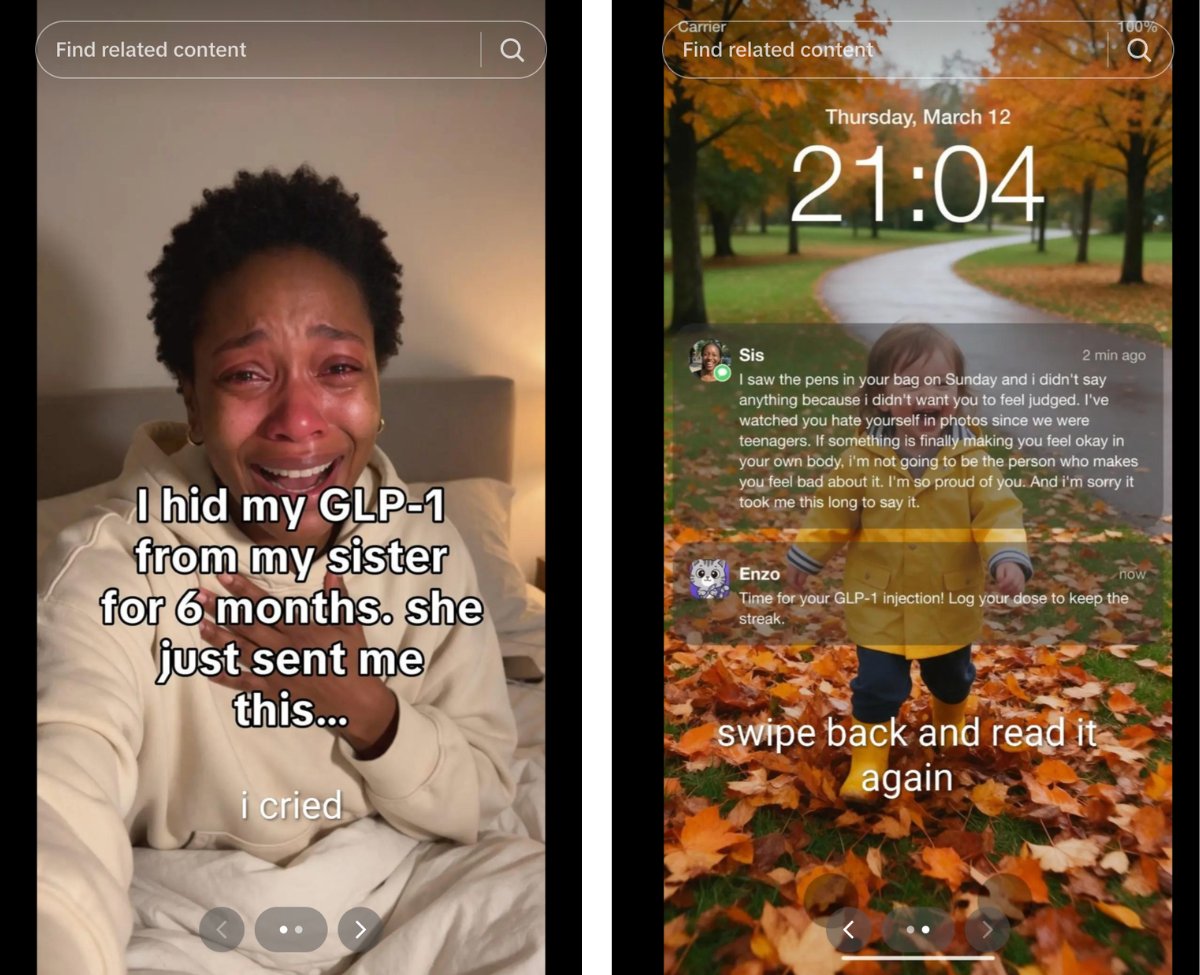
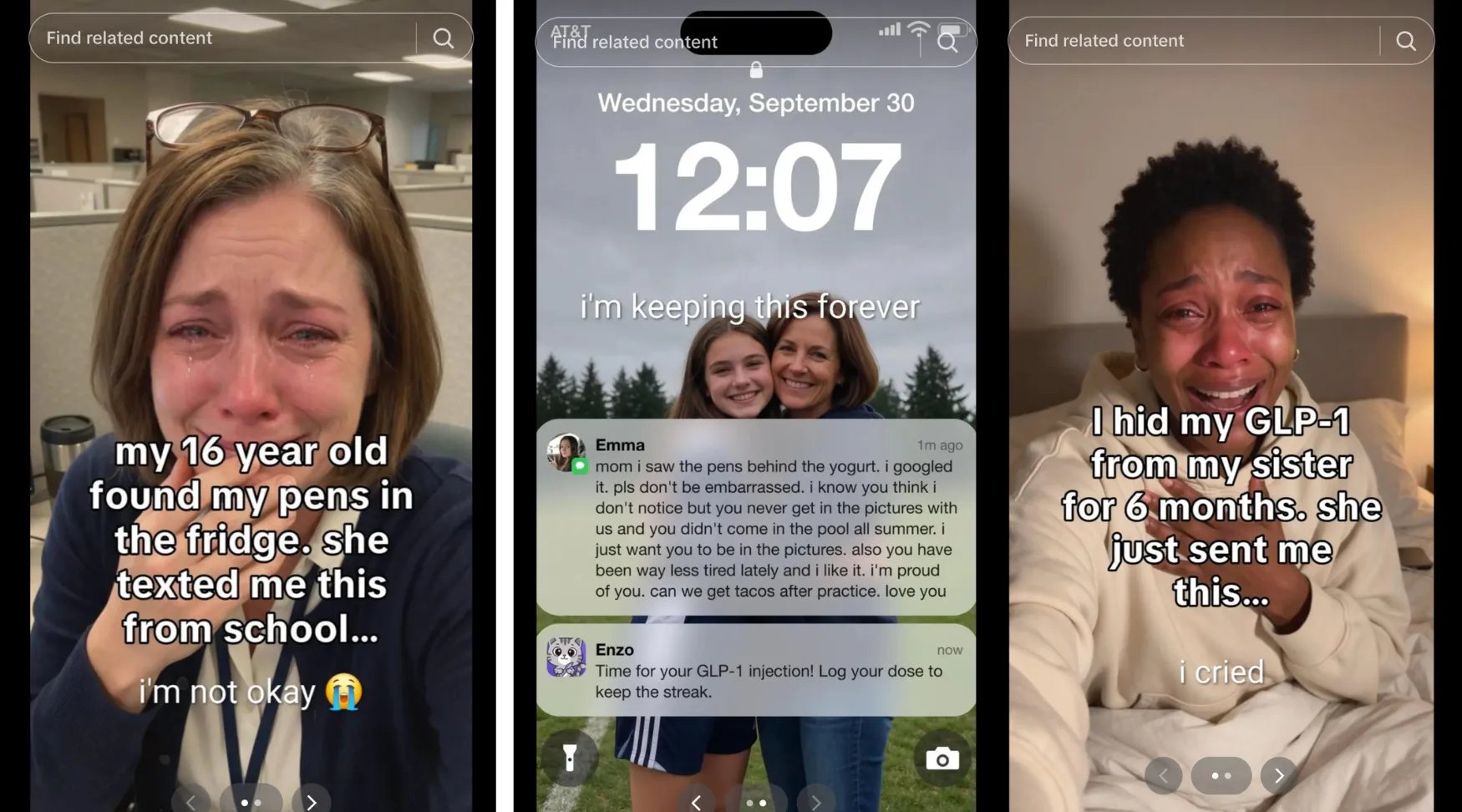
An image published by a TikTok account called “WellWithHer” shows a selfie of an obviously AI-generated woman sitting in her bed, weeping. According to the image’s caption, which is written in the first-person, the woman spent six months “hiding” her GLP-1 “pens in her bag,” only for her secret use of the meds to be discovered by her sister.
“I hid my GLP-1 from my sister for 6 months… she just sent me this,” reads text overlaying the image. “I cried.”
The next image in the carousel is a screenshot of a locked iPhone screen, which shows a lengthy text from a sender saved as “Sis.”
“I saw the pens in your bag on Sunday and i didn’t say anything because i didn’t want you to feel judged. I’ve watched you hate yourself in photos since we were teenagers. If something is finally making you feel okay in your own body, i’m not going to be the person who makes you feel bad about it,” reads the text. “I’m so proud of you. And i’m sorry it took me this long to say it.”
Beneath the purported text message is another notification: a reminder from a mobile app called Enzo instructing the poster to take their GLP-1 shot.
“Time for your GLP-1 injection!” reads the notification, which features a cutesy cartoon cat as its mascot. “Log your dose to keep the streak.”
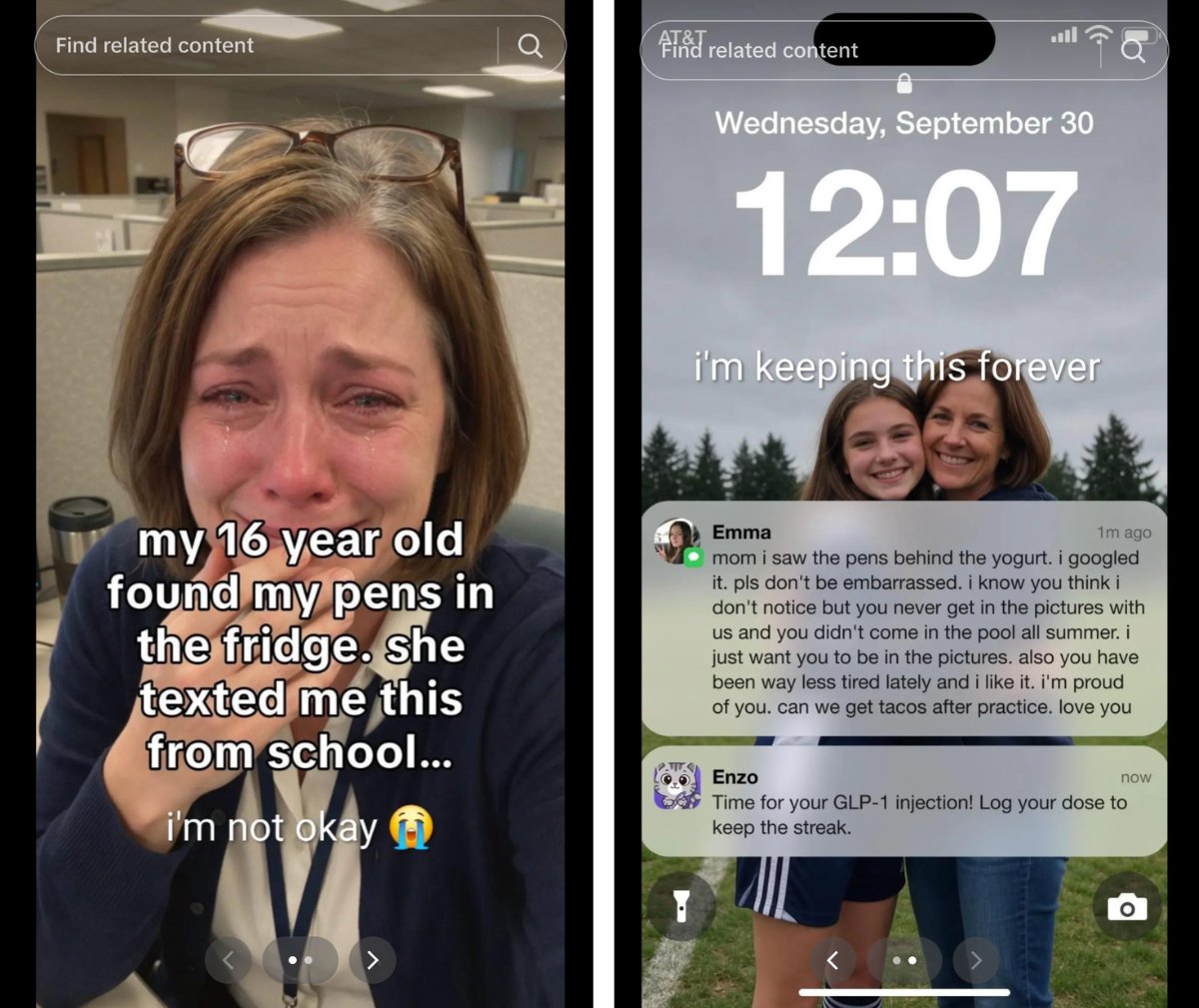
The same WellWithHer TikTok account is loaded with similar images crying AI-generated women sharing personal family stories about secretly taking GLP-1 weight loss injections like semaglutide and tirzepatide. Another post, for instance, shows an AI lady crying in her cubicle after purportedly receiving a text from daughter, “Emma,” who claims to have found her mom’s GLP-1 medicine “in the fridge” and is urging her to “pls don’t be embarrassed.”
“i know you think i don’t notice but you never get in the pictures with us and you didn’t come in the pool all summer,” the text continues. “i just want you to be in the pictures. also you have been way less tired lately and i like it. i’m proud of you. can we get tacos after practice. love you”
Below the text is another notification for Enzo, reminding the sobbing AI woman to take her GLP-1 shot.
“Time for your GLP-1 injection!” the notification chirps. “Log your dose to keep the streak.”
The psychology of the undisclosed ads is obvious and manipulative. The texts in the posts all offer variations of an emotional validation fantasy, in which loved ones of a GLP-1 taker, who may be feeling shameful or embarrassed, surprise them with love and support when they discover they’ve been taking the drugs. The messages, and the alleged GLP-1 users claiming to have received them, are clearly fake, and are designed to promote GLP-1-focused apps — yet aren’t being disclosed as advertisements, nor as AI-generated synthetic content.
Unfortunately, Enzo isn’t the only GLP-1 app being marketed through this style of manipulative synthetic content.
Over on another TikTok account, for example, a poster going by the name “Lara” uses a mix of stolen images of real influencers and AI-generated images — always of young women, some of whom are pictured crying — to market a completely different GLP-1 tracker called “DreamMe.”
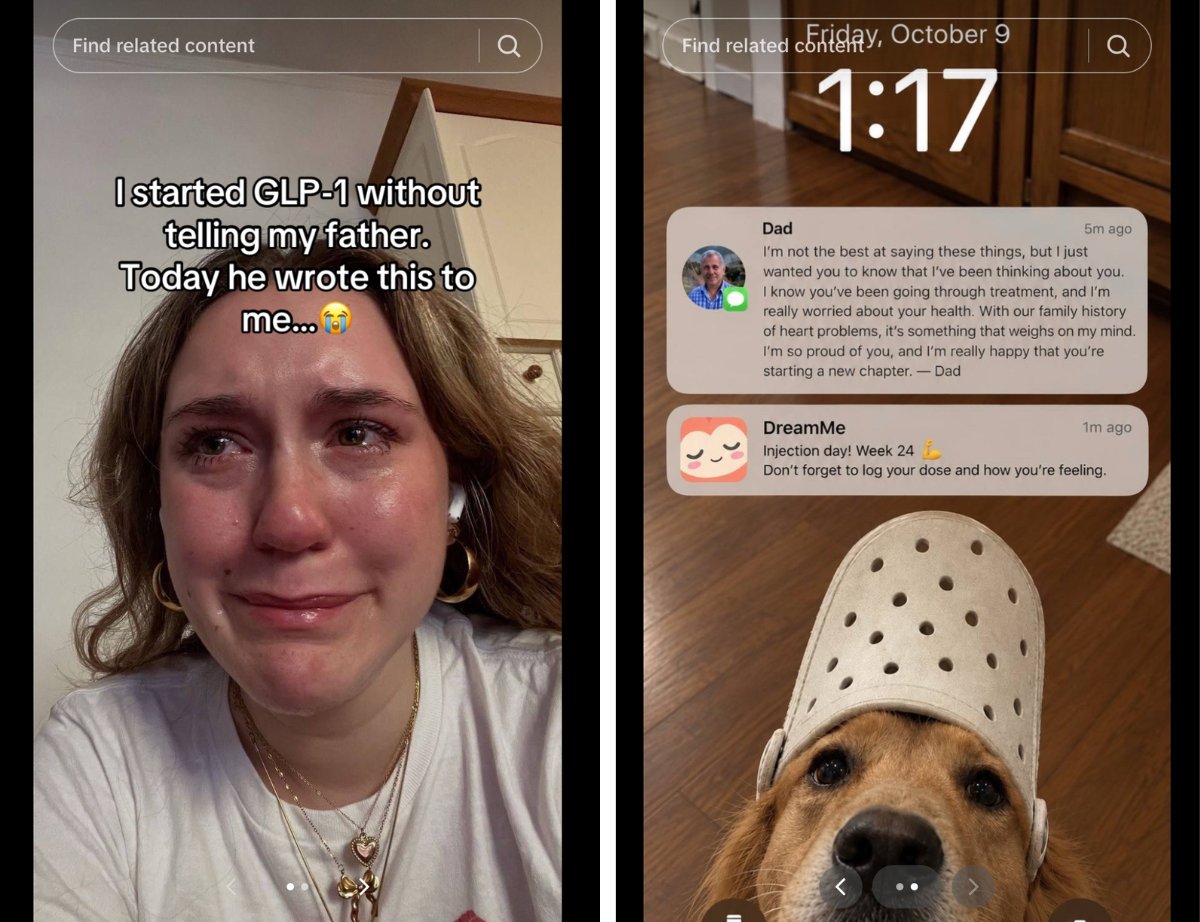
In some posts, like “WellWithHer,” the account promotes a GLP-1 app called “DreamMe” by coupling weepy selfies with fake phony texts from family members offering words of support and understanding.
“I started GLP-1s without telling my father. Today he wrote this to me…” reads text overlaid on a selfie of a crying young woman.
On the next slide, sitting above a notification from DreamMe, is a text from “Dad.” His profile picture also appears to be AI-generated.
“I know you’ve been going through treatment, and I’m really worried about your health,” says the text. “With our family history of heart problems, it’s something that weighs on my mind. I’m so proud of you, and I’m really happy that you’re starting a new chapter.”
According to its website, “DreamMe” claims to provide users with their “new GLP-1 best friend” in the form of “Sushi,” a cartoon fish that helps keep track of GLP-1 meds. Its landing page features a handful of AI-generated women that the site bills as real customers who have shed weight with Sushi’s support.
Enzo’s unreality, in other words, doesn’t end with the TikTok content.
“Real journeys. Real members,” the page reads. “The numbers are theirs. The words are theirs. We just built the fish.”
The strange, heartstring-tugging posts used to promote Enzo and DreamMe are part of a larger trend on TikTok using fake AI-generated women to promote a range of dubious wellness apps. (In fact, some posts across accounts are so alike that different fake women have different-but-strikingly-similar images of dogs with Crocs on their heads as their phone wallpapers.)
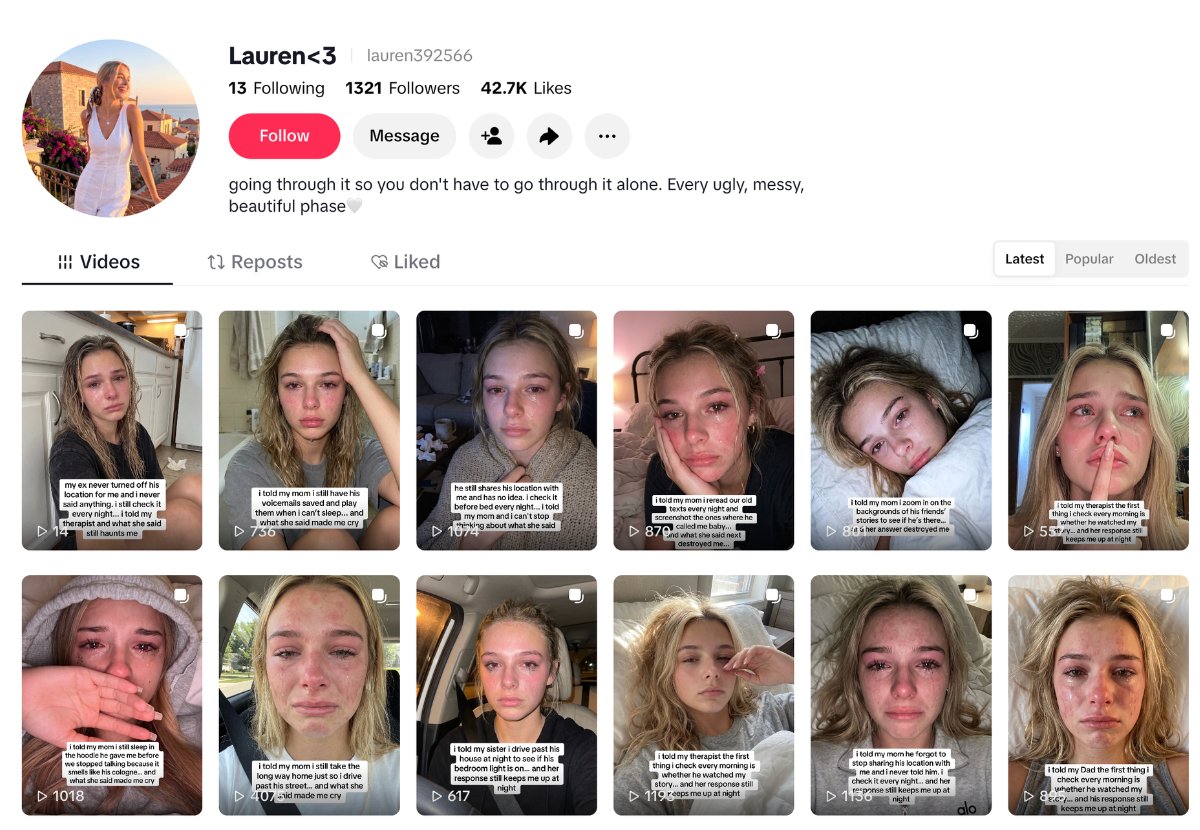
Take “Lauren<3,” a TikTok poster portrayed as a young woman publicly posting through her sudden breakup. Blonde and clearly AI-generated, the account published slideshow after slideshow of “Lauren” — in a bathtub, in a bed, in a car – with mascara running down her tear-covered cheeks as she recounted the process of going no-contact with her ex after a horrible breakup.
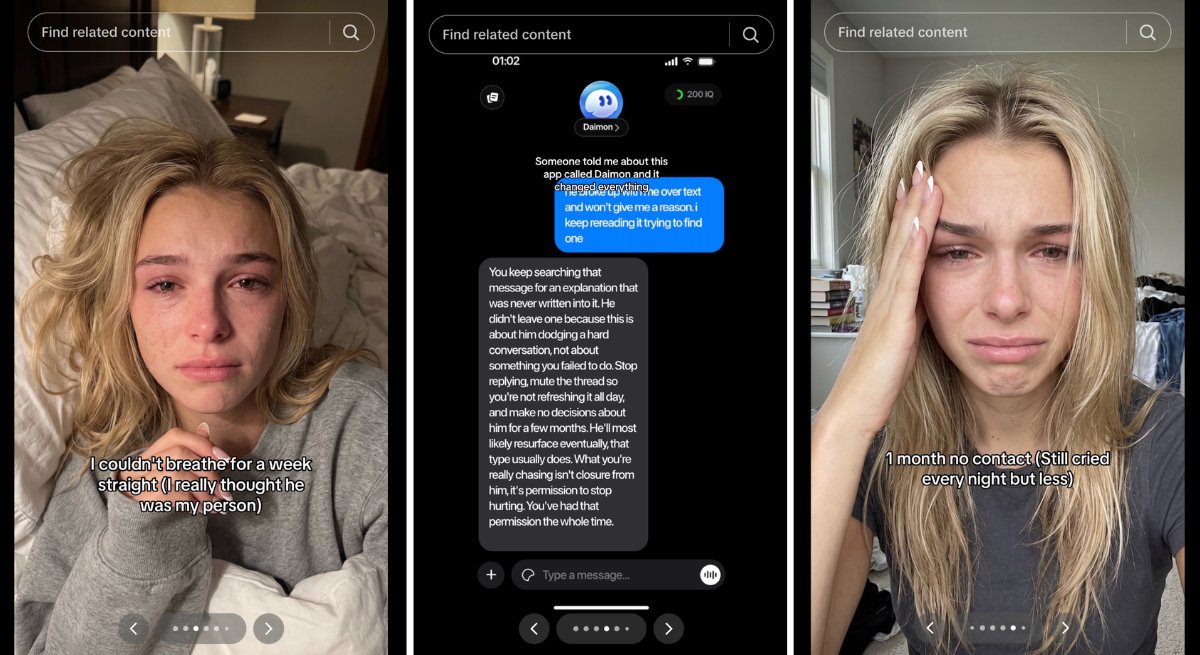
Photo carousels published to the account were interspersed with sobbing selfies and alleged screenshots of texts from her toxic ex — as well as screenshots of conversations with an AI companion app called “Daimon,” which Lauren claimed was helping her go no-contact with her former boyfriend.
“Someone told me about this app called Daimon and it changed everything,” the poster declared in one post’s caption. In another post, “Lauren” described Daimon as the “one app that wouldn’t judge me and give me the best advice.”
“(Daimon in the app store),” she added, for good measure.
Elsewhere a TikTok account identified as “Ashley Miller” posted AI selfie after AI selfie of a fake woman who was pictured crying as she shared sob stories about her divorce, tales of getting cheated on or abandoned by her partner, or confessions about regretting her recent engagement. Images posted on the Ashley account are accompanied by purported screenshots showing text messages from her parents or, in the account’s most viral posts, texts from her partner’s parents urging her to leave her new fiancé due to his abusive behavior or confessing to their son’s infidelities.
These posts were created to market a completely different app: a “wellness” service called Zenit, which is described on the App Store as a tool to help users “take care” of their “mental well-being with guided support, daily check-ins, and emotional growth tracking — all in one calm and safe space.” Its mascot is a kiddish-looking owl in a scarf.
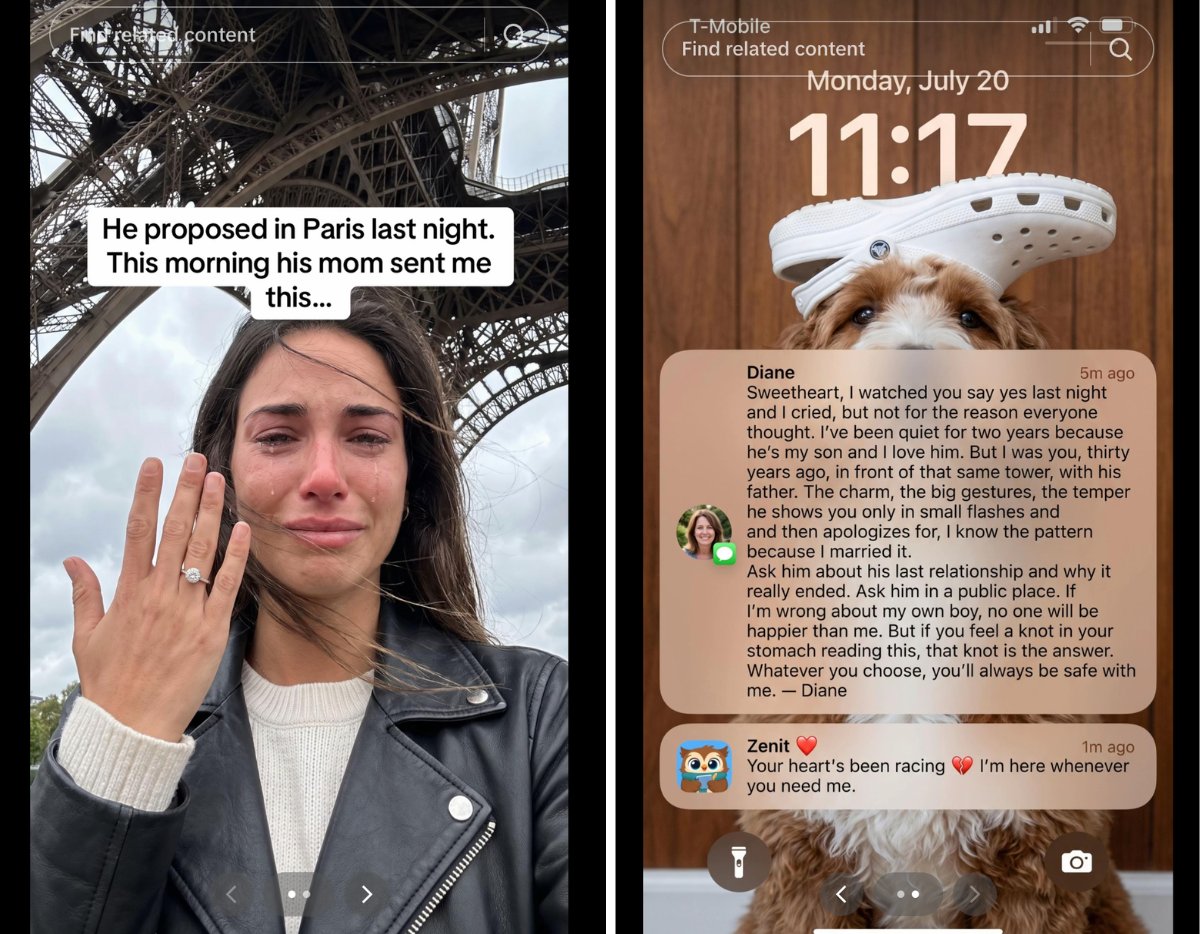
“He proposed in Paris last night,” the “Ashley Miller” account claimed in a viral post that garnered more than 240,000 likes and over 1,000 comments. The post featured an AI-generated selfie of “Ashley” in front of a shimmering Eiffel Tower, holding an engagement ring up to her phone camera as she wept. “This morning his mom sent me this…”
The next image in the slideshow showed a text message, in which the sender — a woman named “Diane” whose face also appears to be AI-generated — told the fake AI selfie-taker that “I watched you say yes last night and I cried, but not for the reason everyone thought.”
“I’ve been quiet for two years because he’s my son and I love him. But I was you, thirty years ago, in front of that same tower, with his father,” the text continues. “The charm, the big gestures, the temper he shows you only in small flashes and and then apologizes for, I know the pattern because I married it. Ask him about his last relationship and why it really ended. Ask him in a public place. If I’m wrong about my own boy, no one will be happier than me. But if you feel a knot in your stomach reading this, that knot is the answer.”
Beneath the text is a notification for Zenit.
“Your heart’s been racing,” read the notification beneath the dramatic text. “I’m here whenever you need me.”
Indeed, all of the account’s posts showed Zenit notifications, making it clear that the fake woman and her sob stories were a fabricated marketing gimmick. Many of the account’s commenters, however, were duped.
“If the mama says this to you. Run,” remarked one commenter who was taken in by the false narrative. “She’s trying to protect you girl. I’m sorry.”
***
We reached out to the TikTok accounts we found publishing the manipulative AI-generated marketing content, as well as to the companies being promoted in the posts.
Very quickly after we reached out, the TikTok account associated with Zenit, the wellness app, was deactivated. The developer of Zenit, who identified himself as an independent developer named Pedro Pérez, told Futurism that he personally ran the account and that “no third party of marketing agency” was involved.
“I built Zenit to help people who struggle with overthinking, everyday stress or anxiety, or loneliness. The videos were based on realistic situations many people go through, with the goal of helping viewers feel understood and showing them a tool that could help them deal with those moments,” Pérez said. “The visuals were AI-generated and the posts promoted my app, so they should have been labeled as such.”
“After receiving your email, I tried to add TikTok’s AI-generated and commercial content labels, but the platform doesn’t allow adding them to videos that are already published, so I’ve deleted the account,” he added. “I think transparency matters, especially for a wellness app, which is why I’ve made this change.”
The account associated with Daimon, the AI companion, was abruptly scrubbed of all content after we reached out. The account owner also changed the handle from “Lauren<3” to simply “yooo.” When we reached out to Prospinity, the company behind the companion chatbot, it told us that the account was “absolutely not operated by our internal marketing team, and the content was neither created nor approved by us.”
“We’ve worked with external affiliate programs, and unfortunately, some affiliates were publishing content independently through accounts we didn’t directly manage. As soon as we became aware of this, we immediately looked into it, identified those responsible, and took action to shut down these activities,” the company said. “This kind of content is completely against our guidelines and is absolutely not how we want Daimon to be represented. We’re a small team that genuinely cares about what we’re building, and we take how Daimon is represented very seriously. While this content wasn’t created or authorized by us, we recognize the importance of making sure anyone promoting Daimon follows our standards.”
DreamMe didn’t responded to questions sent to email addresses listed on its website, and our email to Enzo bounced back. We also didn’t hear back from the TikTok accounts associated with their products.
They’re also continuing to post. The most recent post from the account promoting Enzo is now advertising a different app designed to track peptide consumption; the DreamMe account, meanwhile, has been promoting a phone-locking app.
Nearly a year ago, news began to spread of an experimental weight loss drug called retatrutide, under development by Eli Lilly. Though the drug hadn’t made it through clinical trials, nevermind been released by a federally licensed manufacturer, a rapidly-growing black market ensured interested customers didn’t have to wait for the real deal.
Now, the bill on those black market knockoffs seems to be coming due. As CBS reports, the consequences of the unapproved retatrutide trade have now become deadly.
According to the broadcaster, the Food and Drug Administration has received at least two reports of deaths related to the use of bootleg retatrutide in recent months — the first public accounts from health officials acknowledging that the knockoffs contributed to users’ deaths.
Though CBS viewed documents related to the two deaths, it noted that the details haven’t been independently verified, and it remains to be seen whether the black market retatrutide was the principle cause of death in either case, or merely a complicating factor.
Documents related to the death of a 41-year-old woman in July, for example, names retatrutide as a “suspect product” which the deceased obtained “from an unreliable source.” The woman in question was labeled obese, and died after going into cardiac arrest.
Though more information is needed to determine whether the knockoffs were truly responsible for the deaths, the FDA’s interest is telling. In April, Medpage Today reported a case of retatrutide overdose which led to extreme side effects for the user which included kidney injury, extreme dehydration, and diarrhea lasting at least a week.
And though the FDA is at least aware of the dubious retatrutide trade, the federal government’s lax attitude toward bootleg peptides throughout the second Trump administration is arguably a principle factor contributing to the rise of sketchy knockoffs.
“It is concerning because of the breakdown of our drug-approval process in the United States of America,” associate professor at Harvard Medical School Pieter Cohen told CBS.
If you’re one of the over 100 million people around the world who regularly hits the vape, you might want to think about ways to start cutting back.
According to some recent research by scientists from Seoul National University and published in Nature Medicine, the use of non-tobacco devices like vapes and e-cigarettes to help quit smoking carries a strong link with the development of lung cancer.
The researchers analyzed anonymous health data from over 4.5 million Korean adults. They were split into three main groups: current smokers, short-term quitters, and long-term quitters. They were then categorized by whether they vaped daily during a 2018 screening in the Korean National Health survey, with adjustments to control for factors like age, sex, and prior health conditions.
In all, scientists found that those who had turned to vaping after quitting traditional cigarettes developed lung cancer at a rate about 56 percent higher than those who quit entirely. Alarmingly, incidents of lung cancer death among vape users nearly doubled, with a lung cancer-specific death rate 91 percent higher than non-vape users.
Of course, there’s an important group that falls outside the bounds of the study: anyone who got hooked on vaping without trying cigarettes first. It’d be fascinating to learn more about their fates, but the implication of the study — that vaping is turbocharging the chances of cancer among former smokers — is almost certainly cause for alarm.
While it may be easy for non-smokers to roll their eyes at the findings, it’s important to note that empirical data on the relationship between vaping and lung cancer remains relatively scarce.
“Although epidemiological and biological studies support the association between e-cigarettes and various respiratory disorders, evidence regarding the relationship between e-cigarettes and lung cancer risk remains limited,” the researchers wrote.
It’s an observational study, meaning that it can’t establish true causality. Going forward, more research is needed to say for sure whether there’s a causal association between vaping and cancer — but the early data doesn’t look pretty.
With gray market medical snake oil flooding the market and the head of the Food and Drug Administration smoking DMT behind the wheel, peptides are quickly becoming the go-to hack for just about any malady you can imagine. Yet for as popular as they are, they’re not necessarily safe to use — a fact many new users are starting to discover the hard way.
New reporting by KFF Health News revealed the story of Dylan Meetze, a weightlifter who bought an experimental peptide intended for laboratory research from a company called Researchem. Meetze’s peptide of choice was BPC-157, a synthetic substance derived from 15 amino acids and prized by YouTubers for its supposed ability to reduce inflammation and repair damaged tissue.
For Meetze, BPC-157 was a way to enhance his weightlifting performance. Yet after spraying the stuff up his nose for just three days, KFF notes the peptide user fell seriously ill.
“It was like I was underwater, like it took the most to do anything,” Meetze told the outlet.
Though he stopped huffing BPC-157 almost as soon as the side effects appeared, the weightlifter said he endured fatigue and anxiety, as well as eye and muscle spasms for months afterward.
“There are millions of success stories with these peptides,” he told KFF, “but no one wants to believe that this wrecks some of our lives.”
Another peptide user who combined BPC-157 with a naturally-occurring protein called TB-4 told KFF that his side effects also came within days of beginning the experimental treatment.
“My left eye started throbbing really badly, and the left side of my face became numb,” the man, identified only as Dominik E, told the publication. He went on to battle migraines for two months, calling the ordeal a “total nightmare.”
Certain peptides have become established treatments after passing clinical trials, like GLP-1 drugs for diabetes and weight loss.
But for the many other peptides that haven’t undergone clinical review, supporters in the medical research community are few and far between, despite what the chorus of pro-peptide comedians and health influencers would have you believe. Robust studies on their impact on human health remain exceedingly rare — making any use of unregulated peptides on the human body a serious roll of the dice.
“A lot of this pseudoscience stuff sounds deeply impressive — inflammation this and telomere that — but at the end of the day, none of it really matters,” former associate commissioner for public health strategy and analysis at the FDA Peter Lurie told KFF. “You’ve got to show clinical benefit in humans: does it work?”
Apple’s record stock performance leads into a discussion of Vision Pro and John Ternus’ explanation of its long-term potential. The MacVoices Live! panel considers spatial computing’s growing role in medicine, productivity, and professional workflows, along with whether the technology is ready for broader adoption. They also examine iPhone battery shipping limits, SoftRAID 9's support of RAID 6, and local versus cloud storage.
Conventional gym etiquette involves carefully wiping down the surfaces of any machines or equipment after using it. Businesses usually provide customers with wet wipes, or simple sprays and towels, to keep faux leather padding and other public surfaces pristine and sanitary.
But during professional events, that level of cleanliness isn’t always guaranteed. Organizers of a recent Hyrox competition in China, the spiritual successor of the Crossfit craze, have been accused of allowing participants be exposed to a trail of human waste — left behind, memorably, by the athlete who went on to win the competition.
As The Guardian reports, Australian world record holder Joanna Wietrzyk used shared stations, including rowing machines, sleds, and medicine balls, while “faecal matter” was “visibly running down her legs,” a horrifying incident vaguely reminiscent of one of the most infamous and reviled videos in internet history.
The incident drew an outburst of disgust across social media.
“I guess I’m never doing a Hyrox event,” one user wrote in a post on Bluesky. “Oh my god.”
“Saw a big Hyrox poster at the gym and all I thought of was that lady shitting herself,” another tweeted. “That’s their brand now.”
“This should result in a hard stop for the competitor because the public health risk is more important than the medal,” one user argued. “Hyrox has way too many shared touch points and surfaces to let this continue.”
Others used the opportunity to poke fun.
“A s****y situation for all parties and tough for Hyrox to save faeces,” another joked.
Organizers were criticized for allowing the competition to continue despite having clear bio-contaminant rules in place.
“Protocols designed for elite competition and mass participation became blurred, creating ambiguity in how they were applied and understood,” Hyrox World wrote in an statement, in one of the more acrobatic euphemisms we can recall.
“Hyrox made a mistake by not reacting immediately during the race,” he wrote. “In the end it is my job to foresee these potential incidents — and I did not.”
“Of course, we started improving event processes,” Fürste went on, “plus making rulebook changes immediately.”
The shocking incident highlights the fact that professional endurance athletes soiling themselves isn’t as rare as it may seem. Long distance runners, for instance, are known to suffer from “runner’s diarrhea,” like Paula Radcliffe, who had to relieve herself in full view of the public during the 2005 London marathon.
Radcliffe still won with a time of 2:17:42 — albeit with a little less dignity than she started.
Here’s a hazard you probably didn’t expect from too much screen time.
Two doctors in the UK reported in the journalBMJ Case Reports the bizarre case of a young boy whose laptop literally toasted his skin over weeks and maybe even months of using it. Thankfully, the kid’s fine and was never in any real pain, so we can dive into this medical oddity without feeling too guilty about it.
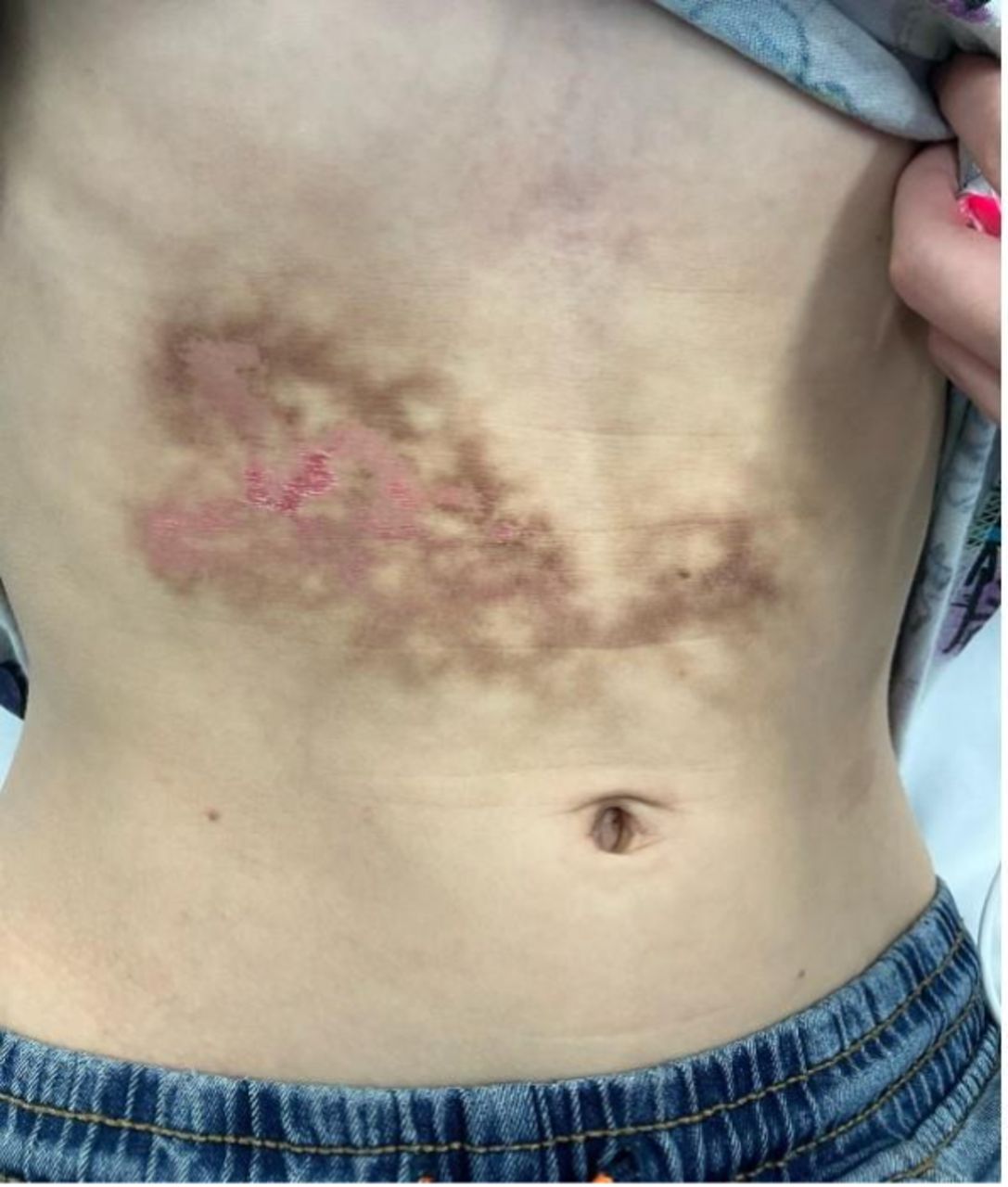
According to the eyebrow-raising paper, spotted by Ars Technica, the boy was first brought into an emergency department with reddish markings over his abdomen in a lace-like pattern. Nurses first described it as “spontaneous bruising,” but they didn’t find skin abnormalities anywhere else on his body. The boy also wasn’t in any pain, and didn’t have any history of trauma or illnesses that could explain the markings.
When doctors did a chest x-ray, they found some kind of build up in his lung, though it was unclear what it signified. The boy admitted that he got pushed into a chair while play-fighting with his siblings a week ago, leading the doctors to search for signs of a traumatic injury. But after a CT scan, they didn’t find any. They weren’t completely sure of what was going on, but the doctors discharged him with antibiotics for a suspected lung infection.
The boy was back several weeks later, though — and the rash was even worse. Parts of his abdomen were pinkish, exhibiting clear signs of skin breakdown, the doctors wrote, with mottled patches of dark brown. (You can view a photo, at your own peril, here, via Ars.)
That’s when the doctors began to suspect some kind of heat damage. But when they asked the boy about heat sources, nothing turned up.
Then, as they continued to question him, the boy mentioned something crucial: he was home-schooled and did most of his assignments on his laptop, sometimes for eight hours a day, often while charging. And of course, he usually rested the laptop on his torso while lying down.
This supported a diagnosis of a erythema ab igne (EAI), also known as “toasted skin syndrome.” It’s caused by repeated, close exposure to low heat, which slowly damages the skin over time. Patients often get it from heat pads and space heaters, but a warm laptop can cause it, too. It causes a distinctly lace-like rash, which explained the boy’s symptoms.
EAI is benign, and in most cases, its rashes disappear on their own once exposure to a heat source is stopped, taking weeks to months to heal. Once properly diagnosed, the boy’s rash was dressed, and he came back to the hospital several months later to confirm that he had fully healed. Now that he’s okay, he might try studying at a desk instead.
The myriad horrors of the US healthcare system have spawned generations ofmedical tourism from the wealthiest country on Earth to the periphery: Cuba, Mexico, Costa Rica, Canada, Turkey, and Thailand, to name just a few.
Now, Shanghai is quickly rising as one of the top destinations for cancer patients, as China’s biotech sector has spun an experimental treatment developed in the US into a standalone industry.
New reporting by the Wall Street Journal took a look at this fast-growth industry, centered around chimeric antigen receptor T-cell therapy, or CAR-T for short.
CAR-T is essentially a personalized form of immunotherapy, in which a patient’s own white blood cells are engineered to identify and attack specific proteins found in cancer cells. Though the process was first developed by US biotech giants, their inability — or unwillingness — to lower the cost and increase supply of the treatment has led to shortages throughout the country.
That’s where China comes in. As director of the CAR-T program at the University of Texas MD Anderson Cancer Center in Houston Sairah Ahmed told the WSJ, this therapy can cost around $150,000 to $230,000 in China — still a life-altering bill, but a sizeable discount compared to an insurmountable $550,000 to $850,000 in the US.
This, Ahmed says, is why she advises some patients to seek out treatment in the People’s Republic.
“China has basically done to CAR-T cell therapy the same thing that it’s done to other industries, which is, they’ve industrialized it,” Ahmed explained.
China’s CAR-T services aren’t just cheaper, either. They’re also faster, and come with a host of complimentary after-care treatments, the WSJ notes. As MD Anderson Cancer Center’s explainer on CAR-T therapy advises, the process of extracting and bio-engineering a patient’s cells to fight cancer can take over three weeks in the US. Compare that to China, where the WSJ reports labs near Shanghai can “crank out” the therapy in just a matter of days.
An important caveat here is that CAR-T cell therapy isn’t a catch-all for every type of cancer, and it’s typically only administered after other treatments have failed. It’s not exactly a walk in the park, either, requiring months of recovery and check-ups from a range of physical, neurological, and psychological health specialists. Still, if you had to go through with it, your first step should clearly be pricing out some flights to China.
GLP-1 weight loss drugs are changing lives in more ways than one.
In a new piece for The Guardian, the newspaper’s readers share how the weight loss journey that drugs like Wegovy, Ozempic, and Mounjaro have set them down on have drastically affected their interpersonal relationships — sometimes for the better, and sometimes for the worse.
Many of the GLP-1 users seem to harbor a sense of shame, hiding their use of the drugs. In their minds — and perhaps in the minds of those around them — they undermine the sense of accomplishment that comes with losing weight the old fashioned way, instead feeling that they “cheated” or are “being dishonest” about how they achieved their goals.
One parent wrote of how their 20-year-old daughter felt “worried, angry, and jealous” after she discovered they were hiding their use of Wegovy from her. “We had discussed weight, identity and GLP-1s, but I was so ashamed of going on it that I didn’t want to tell anyone,” they wrote, noting how food was a “huge part of our family life.” They wondered to themselves: “What kind of signal am I giving her and her brothers?”
Though they feel “mostly positive” about losing nearly thirty pounds using the drug, they added, they also can’t shake the feeling that they’re “cheating.”
“So much of my insecurity about my weight and appearance is offloaded on to an injectable pen,” they added.
Another wrote that despite their friends feeling pleased about their weight loss, they’ve kept their GLP-1 drugs secret for nearly two years. Their partner, they believe, “has felt insecure at times because of my glow-up.”
“I don’t want people to think I’ve cheated. I guess there is still fat shame somewhere,” they wrote.
Others don’t feel this guilt, but are frustrated that their spouses don’t realize how transformative the drugs have been for them. One complained that theirhusband was so unsupportive of their use of GLP-1s that they no longer could share their experience with him.
“This has been a life-changing drug so far, and I can’t share it with the person I’m closest with,” they lamented.
Though they’ve struggled with obesity their whole life, their “husband scoffs at characterizing obesity as a chronic and recurring disease” and “thinks people should just make better lifestyle choices and stop making excuses — which tells me a lot about how he views me, too.”
These downsides aren’t unique to GLP-1s. Significant weight loss has long been linked to divorce, and that doesn’t necessarily mean that someone who’s slimmed down is now feeling their oats. Weight loss can come with dramatic changes to a person’s lifestyle — from the food they eat and the exercise they do to how they socialize — and that can be a lot for someone close to them to adjust to.
“Relationships tend to develop a sense of equilibrium and predictability over time,” Lindsey Berisha, a clinical psychologist who’s worked with patients using GLP-1s for over a decade, told The Guardian. “When one partner undergoes a significant change, it can shift that equilibrium, and even positive change can create uncertainty for both partners.”
GLP-1s, of course, have made achieving this kind of significant weight loss much more accessible, which is why we’re now starting to hear about “Ozempic divorces.”
These days, large language models are pushing the line between schizophrenic break and reality closer than ever before.
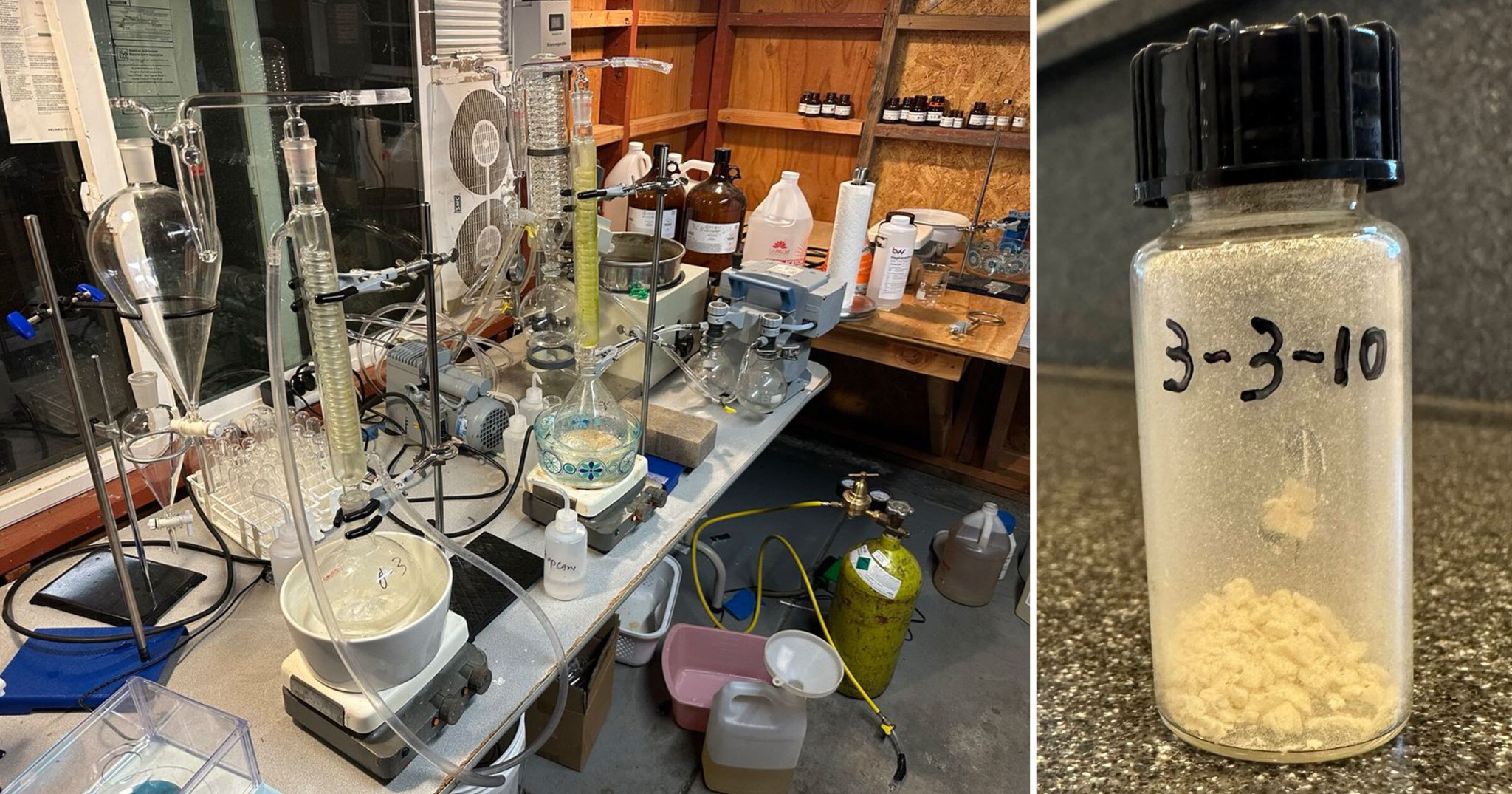
In a wild new post that’s going viral on X-formerly-Twitter, an enterprising young biochemist named Douglas Yao showcased a new drug he’s been developing with the aid of ChatGPT. He’s not employed by any pharma company, and his drug lab is setup on a couple folding tables in his garage.
Specifically, Yao enthuses about a new drug he calls “PAC-3310,” which he says is meant to treat schizophrenia. “It was designed by ChatGPT,” Yao explains, “and I synthesized it in a chemistry lab I built in my garage.”
The result is a small vial of yellow powder — the first sample of 3310, apparently — which Yao says is modeled after the recently-authorized antipsychotic Cobenfy, “but improved.”
This vial contains a new drug called PAC-3310. It was designed by ChatGPT, and I synthesized it in a chemistry lab I built in my garage.
PAC-3310 is a new selective M4 muscarinic receptor agonist for treating schizophrenia – similar to the recent breakthrough drug Cobenfry, but… pic.twitter.com/o7z6iLR50T
On his GitHub page, Yao boasts that he’s used AI to “design several thousand new small molecule drugs” over the past year, including a “new Alzheimer’s drug,” which he’s developing in addition to the schizophrenia treatment.
“I then taught myself synthetic chemistry, built a chem lab in my garage, and synthesized a hundred of them,” he continued. “I’m now testing these compounds in cell lines and mice.”
But whatever the one-man pharma lab hopes to accomplish is difficult to say. Yao references the fact that “drug developers typically spend tens of millions of dollars generating pre-clinical efficacy evidence for a new drug,” saying that “my approach can do this at 1/1000 the cost.” This seems to suggest dreams of someday manufacturing the various drugs on a massive scale for human consumption — a process that would take years of grueling and expensive work for a well-resourced drug lab, let alone a solo entrepreneur using a box fan as a fume hood.
For instance, to even approach the Food and Drug Administration’s “New Drug Application” — itself a costly 12-month process requiring inspection of the facility where the drug will be manufactured — one first has to conduct rounds of preclinical testing followed by three phases of clinical trials. Forget “tens of millions,” as Yao mentions; this is a process that can easily cost several billion.
Even then success is far from guaranteed, as only 13.8 percent of drugs that enter clinical trials go on to obtain full approval from the FDA.
While Yao might have been right at home in the free-wheeling research landscape of the 1970s, we no longer live in a world where a mad genius can synthesize hundreds of new drugs a year from a private lab. For one thing, the regulatory environment is much more demanding, as outlined above, to say nothing of the fact that all the low-hanging fruit has been picked from the vine decades ago.
When it comes to Yao’s ChatGPT-generated Alzheimer’s treatment, the landscape is particularly fraught. As one 2019 study found, no new drug has been approved to treat Alzheimer’s since 2003, and not for a lack of trying: as the study notes, over 200 proposed substances meant to treat the disease have either failed in clinical trials or been abandoned by their creators.
The graveyard of failed Alzheimer’s treatments is so vast that the renowned organic chemist Derek Lowe has built a blog on drug discovery which routinely features after-actionreports on failed substances designed to treat the neurodegenerative disease. Simply put, to think that ChatGPT alone is enough to overcome these scientific and institutional hurdles is delusional.
Replies to Yao’s post were quick to point out the irony here, of using ChatGPT — which is well-known for leading vulnerable users down dangerous breaks from reality — to synthesize drugs to treat cognitive diseases like Alzheimer’s and schizophrenia.
“Hello schizophrenic, take this medicine that chatgpt made for you,” one poster quipped on X.
Another replied that “believing you single-handedly cured schizophrenia on a commercial laundry folding table in a garage is, ironically, a classic symptom of schizophrenia.”
For seafood lovers, there are few things more appealing than a simple slab of raw tuna — a fish whose fatty, savory, and tender muscle tissue has been a delicacy for thousands of years.
Unfortunately for those foodies, fresh raw fish comes with the distinct possibility of parasitic infection. Off the coasts of southern Brazil, that risk is rising, as hauls of the common skipjack tuna come with the near certainty of parasitic contamination.
Out of 53 skipjack, marine researchers counted over 1,600 worms infesting nearly every organ of every fish hauled in from the ocean. Only the kidneys and hearts of the tuna remained worm-free, the researchers noted. Everything else, including the muscle tissue we humans eat, was festering with flatworms and roundworms.
Though most preparation methods will kill the parasites, the images are pretty off-putting. As the researchers explain, the sheer volume of parasitic infection is alarming.
“These results highlight the importance of sanitary inspection and emphasize the importance of immediate evisceration to avoid the migration of larvae from the viscera to the musculature,” the authors write.
Still, parasitologists say the worms aren’t all bad. Though increased presence of worms also comes with more risk of infection, University of Washington parasitologist Chelsea Wood told ScienceAlert in a prior story that they can actually be a sign that the fish is well-sourced.
“Everyone assumes that worms in your salmon is a sign that things have gone awry,” Wood said. “But the anisakid [roundworm] life cycle integrates many components of the food web. I see their presence as a signal that the fish on your plate came from a healthy ecosystem.”
After health officials in Pennsylvania found that two young children died from measles, the Centers for Disease Control and Prevention is refusing to count their deaths as being caused by the deadly virus.
“This week’s measles outbreaks update will not include the two measles-associated deaths reported by the Pennsylvania Department of Health on Aug. 25,” the CDC posted on its website, in a high unusual announcement.
It’s a precedent shattering action. The New York Times called it an “extraordinary move for the CDC,” breaking with the agency’s long-standing procedure of accepting data shared by states.
The challenge by the CDC comes amid a political showdown between health secretary Robert F. Kennedy Jr, who oversees the CDC, and Pennsylvania’s Democratic governor Josh Shapiro.
At a news conference last week, Shapiro announced the deaths of the two children from measles and condemned Kennedy for spreading vaccine misinformation, saying that “there’s real life consequences for spreading misinformation.”
RFK Jr responded on social media by accusing Shapiro of taking “giddy delight” in their deaths and even suggested he may even “fabricated” them. The CDC’s own announcement that it would not be counting the deaths as measles related came just days after the public spat.
According to the latest reporting, one of the deceased was a newborn with a ruptured spleen, and the other was a child of unknown age. Both were unvaccinated and tested positive for measles, the Pennsylvania Health Department said, per the NYT. They came from Lancaster County, the center of a measles outbreak where 242 people have been infected with the disease so far, the most in the state.
Conflicting information over the children’s deaths gave rise to the heated controversy.
Though the state’s health department said both deaths were due to measles, Lancaster County coroner Stephen Diamantoni, a Republican, said that his office’s pathologist determined that the newborn — which was born infected with virus which it inherited from its mother — died of a ruptured spleen, not measles.
But some top medical experts have pushed back against Diamontoni. Measles can enlarge a baby’s spleen and make them prone to rupturing during birth, wrote Paul Offit, a renowned vaccine and pediatric infectious disease expert at Children’s Hospital of Philadelphia, in a widely reported essay on Substack. Once the spleen ruptures, it’s difficult to determine if it was enlarged after the fact.
Offit called on Diamontoni to provide more details surrounding the newborn’s death — and that, if it wasn’t measles, to offer an alternative explanation for the baby’s ruptured spleen. Since ruptured spleens in newborns is exceedingly rare and can be caused only by a handful of disorders or infections, he said, if one of those conditions wasn’t found in the child, then the “only obvious cause left would be measles.”
None of this explains why the CDC also refused to count the other child’s death, few details on whom have been released ot the public.
The Department of Health and Human Services, which oversees the CDC, defended its decision in a statement.
“The two measles-associated deaths announced by Pennsylvania have not been confirmed based on the information currently available to CDC,” it said, per the NYT. “The information currently posted reflects the best available information and our commitment to transparency and telling the American people the truth — a foundational principle of the Trump administration.”
If you’re one of the many people chowing down on melatonin gummies to help get to sleep, you may want to check out this study.
A new piece of research published by the American Heart Association made an alarming discovery about long-term use of melatonin supplements, an over-the-counter sleep aid used by tens of thousands. Basically, those who use melatonin over a year or more had a 90 percent higher risk of developing congestive heart failure over a five-year period.
Before you go flush your gummies down the toilet, there are a few caveats. For starters, the findings weren’t based on a clinical trial, but on data from a large database of anonymous health records. Researchers drew from data on chronic insomniacs, specifically, splitting them into two groups: those who have dosed the sleep-regulating hormone over a period of 12 months or more, and those who suffer without.
Still, the results are clearly worrisome. Overall, the study found that 4.6 percent of the melatonin group went on to develop heart failure, compared to 2.7 percent for the control group.
That wasn’t the only data point suggesting it may be time to wean off the ‘tone. A secondary analysis performed by the researchers found that melatonin users were nearly 3.5 times more likely to be hospitalized for heart failure than those in the other group, with hospitalization rates of 19.0 and 6.6 percent, respectively.
“Melatonin supplements are widely thought of as a safe and ‘natural’ option to support better sleep, so it was striking to see such consistent and significant increases in serious health outcomes, even after balancing for many other risk factors,” Ekenedilichukwu Nnadi, the study’s lead author and chief resident in internal medicine at SUNY Brooklyn, said in a press release.
While more in-depth research is needed to confirm the study’s results, the early findings indicate that melatonin use comes with some serious risks in the long-term.
“Melatonin supplements may not be as harmless as commonly assumed,” as Nnadi explained. “If our study is confirmed, this could affect how doctors counsel patients about sleep aids.”
It’s no secret that doctors across the world are using AI tools to do stuff from taking notes to looking up questions. But what about the next generation of doctors still in training? According to two medical professionals on the ground, the situation is looking pretty alarming.
With AI being used by med students, “the danger is not just deskilling but never-skilling,” write Simar Bajaj, a journalist and med student at the Stanford University School of Medicine, and Joseph Sakran, a trauma surgeon and executive vice-chair of surgery at Johns Hopkins Medicine, in an essay for The Guardian.
“Although a doctor who has forgotten how to reason is recoverable,” they added, “one who never learned how may not be.”
Bajaj and Sakran point to two alarming recent findings.
One is internal data showing that around two thirds of doctors in the US are using OpenEvidence, an AI chatbot specifically designed for clinicians. The technology is already prevalent and deeply woven into how medical professionals carry out their jobs.
The next is a new study published in the journal NatureMedicine that evaluated the reliability of these medical-specific large language models. Shockingly, the clinical AI tools performed worse at answering medical queries than general purpose chatbots like ChatGPT and Claude did, the work found. According to the authors, it performed about on par to Google’s AI Overviews, which are notorious for being wonky and inaccurate.
Even if AI tools may be handy for research — and putting aside the major questions over their reliability — they’re no substitute for relying on your brain, as fallible as it might be, because when you’re learning, “the struggle is the point.”
“For example, trainees once asked to build a list of potential diagnoses might struggle and offer an incomplete set, learning what they missed, sometimes painfully,” Bajaj and Sakran wrote. “Now, trainees can simply ask OpenEvidence and get a nearly perfect answer, complete with possibilities they might have never considered and none of the embarrassment of having overlooked them.”
Where AI is different from medical advances in the past is that it’s “not just expanding what doctors can see,” they wrote, “but inserting itself into the cognitive machinery that training is meant to build.”
“The process of deliberately crafting the note forces us to use our brains to really wrestle with what’s happening,” Jaideep Talwalkar, associate dean of educational technology and innovation at Yale School of Medicine, told Stat News. “There’s an importance in doing that with great repetition.”
Bajaj and Sakran have a few suggestions for how to deal with this. One is requiring trainees to periodically work through cases without any AI help, similar to how the Federal Aviation Administration advises aviators to periodically disengage autopilot and fly by hand. Of course, another powerful deterrent could be shame. A recent John Hopkins student found that doctors who used AI are viewed with scorn and skepticism by their peers.
Talk about homework: a large class of undergraduates at an unnamed university in Utah became the unfortunate subject of a severe public health response after an extraordinary bungle in a science lab.
In September of last year, the group of lab students were tasked with identifying a bacterium known as P. shigelloides, a relatively harmless pathogen known to cause diarrhea when ingested. But as lab results came in, students were alarmed to find the specimens handed out in class were actually the bacteria Neisseria meningitidis, a potentially deadly pathogen that causes meningitis.
Unlike P. shigelloides, the bacterium N. meningitidis calls for high-security practices, like double gloves, disposable clothes, and fit-tested N95 masks, as the bare minimum. (In one unfortunate case from 2012, a 25-year old microbiologist whose lab was ill equipped to handle N. meningitidis died mere hours after exposure to the aerosolized microbe.)
According to People, Utah public health authorities soon raided the Utah stockroom, finding samples labeled “N. meningitidis.” That discovery prompted a recommendation that all 33 of the exposed students begin a cautionary antibiotic regimen, especially given that the lab participants were only wearing gloves and lab coats at the time of exposure.
On top of the antibiotics dose, at least two people sought medical attention due to possible exposure symptoms, which included a painful and invasive spinal tap.
It was only after the frenzy that further professional lab tests identified the offending pathogen as Neisseria sicca, a bacterium “commonly found in the upper respiratory tract” that is “nonpathogenic in immunocompetent persons,” according to a recently-filed Center for Disease Control study of the Utah lab incident.
Student misidentification notwithstanding, the event underscores the importance of accurately labeling microbial cultures — lest aspiring biologists become victims of their own studies.
As of last week, the US had recorded 2,465 confirmed infections so far this year, already more than the 2,289 total cases in 2025. The last two years saw more total infections than the rest of the 21st century combined, as The Guardian reports, with 2026’s tally beating a 35-year record.
Now, in the midst of all that crisis crisis, a character has stumbled into the narrative who perfectly illustrates how it’s gotten so bad. As the LA Times reports, a measles-infected individual spent a whopping 11 hours at the Universal Studios Hollywood theme park last month, potentially exposing countless other visitors.
The Los Angeles County Public Health Department was forced to issue a stark warning: anybody who visited the amusement park on July 26 during teh hours between 10am and 9pm may have been exposed and should monitor for symptoms including fever, cough, or rash — and stay vigilant until August 16.
The virus is contagious up to four days before the characteristic rash appears on the skin, and up to four days after that.
Measles can easily spread through the air through just via talking or breathing, and can persist on surfaces for hours at a time.
The vaccine against it, available as part of the measles, mumps, and rubella combination (MMR) shot, is extremely worthwhile. Two doses are 97 percent effective in preventing a measles infection.
The department also urged “everyone to confirm their immunity and get the vaccine if needed, especially before traveling and attending crowded events.”
California has been hit particularly hard, recording at least three localized measles outbreaks this year so far. However, according to the state’s health department, all three outbreaks have ended.
According to the Centers for Disease Control and Prevention, there have been 38 new outbreaks in 2026 across the country so far this year, with several thousand cases spanning 47 states.
The danger to one’s health is substantial — especially to the unvaccinated. According to the CDC, roughly one in five unvaccinated people in the US who get measles are hospitalized. One out of 20 children with measles develop pneumonia. and one to three of every 1,000 children who become infected die from respiratory and neurologic complications.
In case you weren’t already feeling paranoid about how AI is shaping our future, scientists for the first time have used an AI model to create new and viable viruses that have never been seen in nature.
Before you panic, the work, detailed in a study published in the journal Science, involved creating viruses that only target bacteria and are harmless to humans. Bacteriophages, as they’re called, are an important medical intervention for targeting drug-resistant pathogens.
“This is an important milestone,” Patrick Cai, a synthetic biologist at the University of Manchester who was not involved in the study, told The New York Times.
Still, it’s an alarming testament to AI’s power and trajectory. The researchers at Stanford University and the Arc Institute trained an AI model to recognize patterns of genetic structure in nature to create new DNA molecules. These molecules were inserted into bacteria that, over time, turned into wholly new viruses, at the expense of killing their hosts.
In their research, which first gained attention last year but has now been peer-reviewed, the scientists used an AI model called Evo. Unlike a general purpose large language model, Evo is trained on billions of lines of genetic sequences, and for this work in particular, millions of bacteriophage genomes. But it still functions like an LLM, predicting what DNA building blocks — nucleotides — should follow each other like a chatbot predicts what words to spit out to finish a sentence.
The researchers chose to focus on a E. coli-killing virus called Phi X-174, a variant that’s so well studied that it serves as the equivalent of a lab rat in virology. Viruses in general are simple compared to complex cellular life, making them an ideal platform to test AI’s capabilities.
They used Evo to create new viruses based on Phi X-174, and it generated 700,000 candidates. They then narrowed it down to just 300 that they would recreate in the lab. Of those 300, 16 proved to be viable, infecting and killing their bacterial hosts.
There’s clear medical merit to using AI to create bacteria-slaying viruses, but there’s already fears that the technology could be abused to crank out pathogens that are deadly to humans.
“Although this is promising for life sciences applications, it also raises urgent biosafety and biosecurity questions. The ability to compose viral genomes using generative AI now exists; the governance to safely steer it does not,” warned Tom Inglesby and Moritz Hanke at the Center for Health Security at Johns Hopkins University in Baltimore in a perspective article.
Tom Ellis, a professor of synthetic genome engineering at Imperial College London who was not involved in the research, acknowledged this threat, but told The Guardian that it would be much harder to create more complex genomes and that controlling access to genetic data could stymy the threat.
And if someone were to deliberately engineer deadly viruses, he added, doing it by hand would probably be more practical.
“But honestly, the threat from full AI design and writing of a genome of a virus or bacteria is very overblown when we consider that just taking existing pathogens and making gain-of-function changes to their genomes is so much easier and much more likely to be a real pathogenic threat,” he said.

 Login