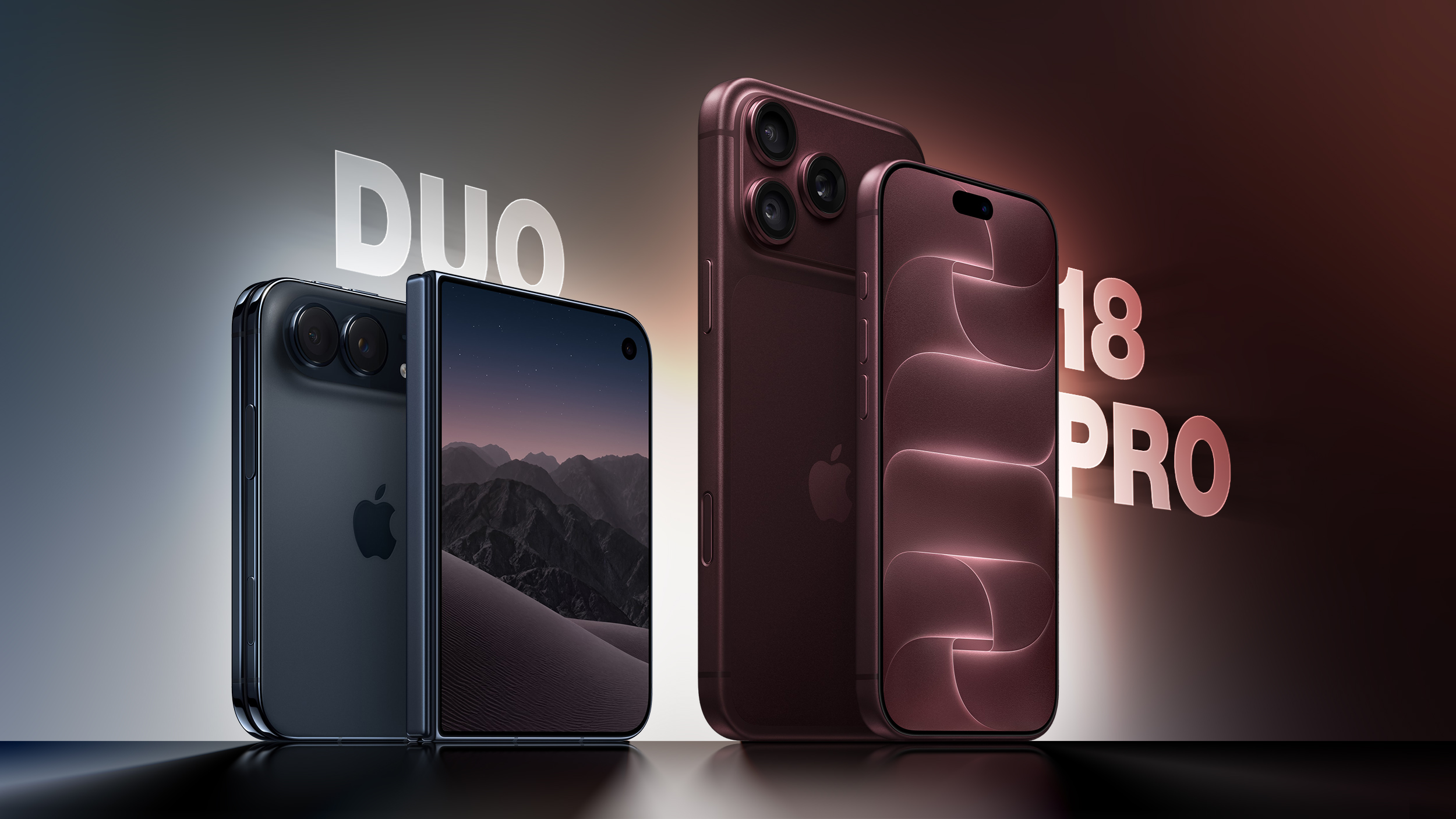
Em mais um aceno ao governo dos Estados Unidos, a Apple anunciou hoje novas parcerias com empresas do seu país natal para o fornecimento de materiais para os iPhones 18 Pro/18 Pro Max e Duo.
Parte do American Manufacturing Program (AMP), essas parcerias incluem companhias como a Perryman Company, produtora de titânio do estado da Pensilvânia, e a Qnity Electronics, fabricante de tecnologias para câmeras do estado do Delaware.
Sabih Khan, COO 1Chief operating officer, ou diretor de operações. da Apple, comentou o anúncio:
Estamos muito felizes em expandir nossa parceria com empresas que produzem materiais e componentes avançados para nossa nova linha de iPhones aqui mesmo nos Estados Unidos. A engenhosidade americana é vital para todos os nossos produtos, desde o titânio usado no iPhone Duo até as inovações revolucionárias em câmeras do iPhone 18 Pro. Temos orgulho de trabalhar com a Perryman e a Qnity Electronics para continuar expandindo nosso Programa de Fabricação Americana e apoiar a geração de empregos nos EUA.
Ainda segundo a Maçã, a Perryman receberá um investimento de US$100 milhões ao longo dos próximos três anos, que garantirá o fornecimento, para o iPhone Duo, de titânio de grau 5 com pelo menos 80% de material reciclado.
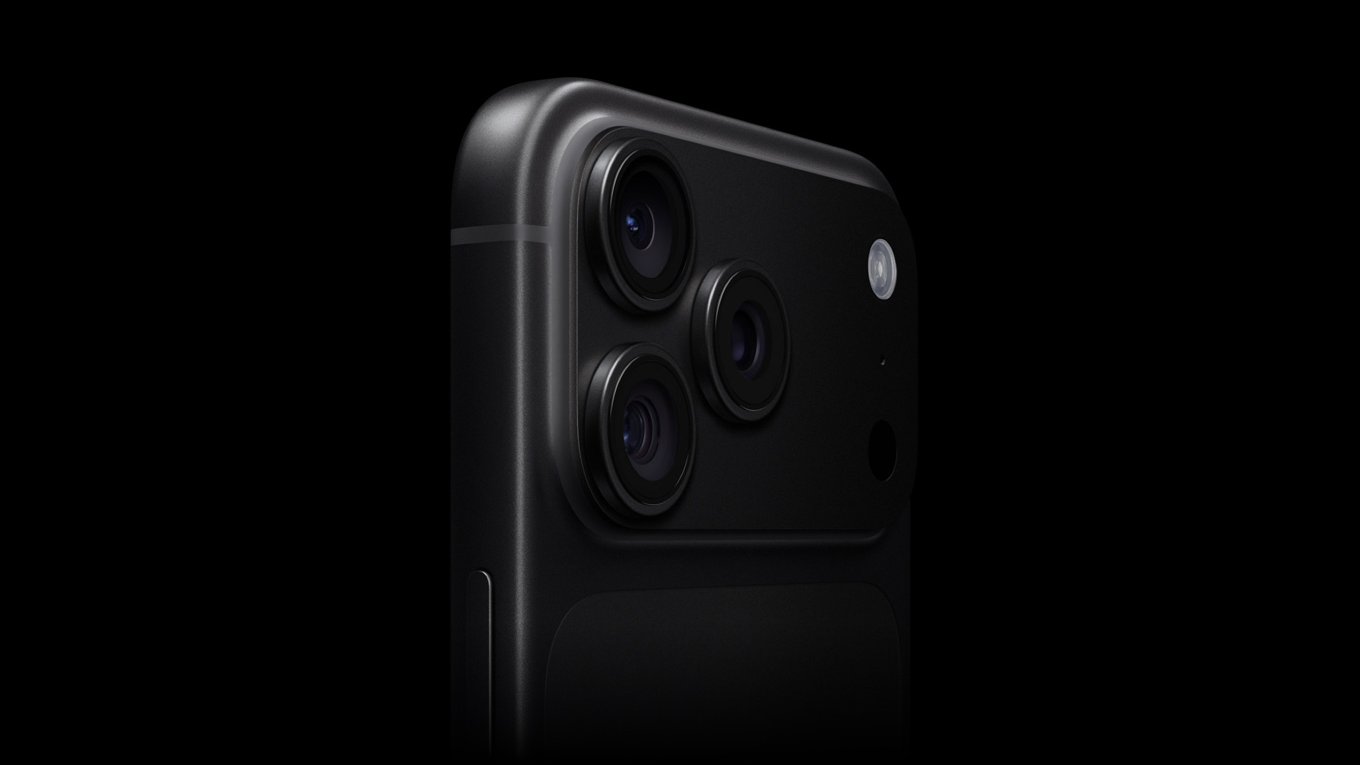
Parte do AMP desde março, a Qnity Electronics vai produzir filmes avançados para o novo sistema de câmera com abertura variável dos iPhones 18 Pro/18 Pro Max.
A Apple também aproveitou a oportunidade para relembrar outros investimentos em fabricantes americanos (ou com fábricas nos EUA), incluindo a Broadcom, que fornece chips de radiofrequência para seus dispositivos; a Corning, responsável pelos vidros Ceramic Shield; a Coherent, que produz componentes para o Face ID; a TSMC, que fabrica chips para todos os principais produtos da empresa; e a Amkor Technology, empresa de empacotamento de semicondutores.
New US partners like Perryman and Qnity Electronics have helped to make iPhone Duo and iPhone 18 Pro possible. https://t.co/12nNak07z6
Novas parceiras americanas, como a Perryman e a Qnity Electronics, ajudaram a viabilizar o iPhone Duo e o iPhone 18 Pro.
Anunciado em 2025, o AMP envolve um investimento de US$600 bilhões [1, 2] na economia dos EUA — e, segundo a Apple, já sustenta mais de 450 mil empregos. O programa, vale lembrar, surgiu em meio às ameaças tarifárias feitas pelo presidente Donald Trump a importações, com destaque para a China — principal polo de fabricação de iPhones.
O material parece confirmar um vazamento de julho, posicionando o dobrável da Apple entre os 4.288mAh do iPhone 18 Pro e os 5.567mAh do iPhone 18 Pro Max — ambos, vale notar, em suas versões sem bandeja para chip.
O dobrável da Apple tem capacidade ligeiramente superior à do Samsung Galaxy Z Fold8, que utiliza silício-carbono no bateria e conta com 4.800mAh, além de ser 36% maior do que o iPhone Air, o modelo mais fino lançado pela Apple até então (com 3.149mAh).
Embora não tenha a maior bateria entre os iPhones, o dobrável apresenta autonomia semelhante à do iPhone 18 Pro Max: pela métrica de reprodução de vídeo divulgada pela Apple, são até 44 horas na tela externa, contra até 45 horas do iPhone 18 Pro Max.
Já a tela interna do iPhone Duo tem uma autonomia de 31 horas, um pouco abaixo das 34 horas possíveis no 18 Pro.
iPhone Duo
Cores: branco-estrela ou céu noturno Armazenamento: 256GB, 512GB, 1TB ou 2TB
NOTA DE TRANSPARÊNCIA: O MacMagazine recebe uma pequena comissão sobre vendas concluídas por meio de links deste post, mas você, como consumidor, não paga nada a mais pelos produtos/serviços ao usar os nossos links de afiliado.
A matéria avalia que a investida da Apple no mercado de videogames ao longo da última década foi consistente o suficiente para conquistar de fato o público gamer. Oliver, vale lembrar, assumiu a liderança da loja de aplicativos do ecossistema da Apple, após Phil Schiller deixar o posto em agosto.
O executivo falou sobre os esforços da empresa no segmento, que, segundo ele, vão além da distribuição, e ressaltou a chegada de títulos AAA ao ecossistema:
O que está acelerando esse movimento hoje é a tecnologia que impulsiona esse ecossistema. Apoiamos os desenvolvedores na App Store com muito mais do que distribuição. Continuamos investindo pesadamente em gaming: de novas tecnologias de hardware que entregam o mais alto desempenho sustentado, como o ray tracing acelerado por hardware do A20 Pro e a câmara de vapor de última geração no iPhone 18 Pro; a ferramentas de desenvolvimento, como o Game Porting Toolkit 4, o Metal e os nossos plugins de código aberto da Unity.
Temos observado o crescimento no número de jogos que chegam à App Store, em geral, com mais títulos premium este ano do que no anterior. […] Enquanto muitos são indies, nós estamos vendo mais franquias de consoles e PC chegando ao mobile, já que é um público em expansão para esses jogos.
O executivo também falou sobre a relação da Apple com os desenvolvedores independentes, além de destacar as diferentes formas de levar os jogos a Macs, iPhones e iPads:
Desde o primeiro dia, a App Store foi pensada para equilibrar as condições de descoberta e distribuição, de modo que um título indie possa se equiparar às maiores franquias do entretenimento. […]
Nós queremos dar aos desenvolvedores um ambiente confiável para alcançar usuários ao redor do mundo, dar-lhes suporte em cada passo e ajudá-los a construir negócios bem-sucedidos. […] Para atingir esses objetivos, nós oferecemos modelos de negócio flexíveis. Isso significa que um fenômeno inovador como Balatro pode prosperar como um jogo premium, e também pode encontrar um espaço no serviço Apple Arcade. O importante é que damos aos desenvolvedores a flexibilidade para fazer a melhor escolha e, a todos os jogos e jogadores, a liberdade de jogar como quiserem.
O Apple Arcade conta com mais de 200 títulos no acervo (livres de propagandas ou compras internas), os quais podem ser acessados por até cinco membros de um Compartilhamento Familiar em iPhones, iPads, Macs, Apple TVs e/ou Apple Vision Pros. O serviço de jogos custa R$14,90 por mês e também faz parte do pacote de assinaturas da empresa, o Apple One.
NOTA DE TRANSPARÊNCIA: O MacMagazine recebe uma pequena comissão sobre vendas concluídas por meio de links deste post, mas você, como consumidor, não paga nada a mais pelos produtos/serviços ao usar os nossos links de afiliado.
Considerando que — ainda de acordo com ele — esse evento poderá revelar o “MacBook Ultra” (modelo com tela OLED 1Organic light-emitting diode, ou diodo emissor de luz orgânico. sensível ao toque), um novo iMac com o chip M6, a nova geração do iPad mini (com tela OLED) e uma nova versão do MacBook Pro de 14 polegadas com o chip M6, qualquer um desses produtos passa a ser candidato a esse lançamento — ou todos juntos, é claro.
Apple plans a retail store reset for Nov. 6, indicating potential new Mac release timing. More in Power On: https://t.co/imlJIzWeaS
Caso o rumor se concretize, a Apple terá um lançamento para cada sexta-feira pelas próximas quatro semanas, começando com o iPhone Duo e concluindo o cronograma com a chegada da nova Apple TV 4K e do HomeView, revelados junto com o HomePod mini 2 na última terça-feira (13/10).
A relação de lançamentos ficaria mais ou menos assim:
23 de outubro: iPhone Duo
30 de outubro: HomePod mini 2
6 de novembro: novos Macs e/ou novo iPad mini
13 de novembro: HomeView e Apple TV 4K
Falando em iPhone Duo…
Escassez do Duo pode aumentar as vendas do 18 Pro?
O jornalista também aproveitou o espaço para comentar a pré-venda do dobrável da Apple, classificada por ele como “desastrosa”, já que os prazos de entrega estão em janeiro (no caso dos Estados Unidos) ou em fevereiro (no caso do Brasil)!
Apple’s iPhone Duo preorders were an absolute disaster. That may help the iPhone 18 Pro. More in Power On: https://t.co/qX4Wp8R6sc
A pré-venda do iPhone Duo da Apple foi um desastre absoluto. Isso talvez ajude o iPhone 18 Pro. Mais em “Power On”.
Segundo ele, a Apple cometeu um “erro grave” ao manter o lançamento do Duo no início do primeiro trimestre fiscal sem ter um grande estoque do aparelho em escala global, em vez de lançar o produto inicialmente apenas nos Estados Unidos e na China. A empresa também poderia ter a intenção de oferecer os iPhones 18 Pro/18 Pro Max como alternativas ao Duo.
iPhone Duo
Cores: branco-estrela ou céu noturno Armazenamento: 256GB, 512GB, 1TB ou 2TB
NOTA DE TRANSPARÊNCIA: O MacMagazine recebe uma pequena comissão sobre vendas concluídas por meio de links deste post, mas você, como consumidor, não paga nada a mais pelos produtos/serviços ao usar os nossos links de afiliado.
Notas de rodapé
1
Organic light-emitting diode, ou diodo emissor de luz orgânico.
The smartphone market in India is going through a massive cool down, and even the biggest tech giants are feeling the chill. Overall phone shipments across the country dropped 26 percent in the third quarter of 2026, marking the lowest volume for this season in ten years. While Apple saw its iPhone sales in India […]
The smartphone market in China saw a massive drop during the third quarter of 2026. Total phone shipments fell by ten percent compared to last year, hitting the lowest point for this time of year since 2012. While most local phone makers struggled to find buyers, Huawei and Apple both managed to beat the downward […]
Tech fans are already looking ahead to the standard iPhone 18, and a recent design leak suggests the upcoming device might bring a major visual shakeup. While the fancy new iPhone 18 Pro models are already out in the wild, the base model is taking a little longer to arrive. Now, a supposed dummy unit […]
iPhone 18 Pro is at the center of What Holds Us, a new photography exhibition built around three very different approaches to image-making. Alex Prager, Jack Davison, and Jimmy Chin shot the entire project on Apple’s latest Pro iPhone, using the device in environments ranging from a Los Angeles soundstage to a London warehouse and the high-altitude terrain of British Columbia.
Curated by Kathy Ryan, the former longtime director of photography for The New York Times Magazine, the exhibition examines connection through touch, shared experience, physical environments, and human relationships.
It also gives Apple a more ambitious showcase for the iPhone 18 Pro camera than a conventional product demonstration. Rather than presenting standardized comparisons or individual sample images. What Holds Us asks three established photographers to work within their own visual languages while using the phone as their sole camera.
The exhibition opens in New York City on September 18 and runs through September 20 before traveling to London and Shanghai in the coming months.
Image Credit: Apple Inc.
iPhone 18 Pro takes three very different photographic approaches
The project works partly because the three photographers have little stylistically in common.
Jimmy Chin took iPhone 18 Pro into the Bugaboo Mountains of southeastern British Columbia, working around snow, ice, steep climbing terrain, and winds reaching as high as 70 miles per hour.
His series focuses on trust and connection within climbing, with veteran mountaineer Conrad Anker appearing throughout the photographs. Some images place Anker as a small figure against vast mountain landscapes, while others move much closer to rock, snow, and glacial textures.
Chin used both the 48MP Fusion Ultra Wide and Telephoto cameras to shift between those extremes. The practical appeal was also straightforward: carrying a phone instead of a full conventional camera setup reduced the equipment required in an environment where weight and mobility affect every decision.
Jack Davison took almost the opposite approach. Shooting inside a former sugar warehouse in London, he created intimate portraits built around people interacting with clay and chalk.
Davison is known for high-contrast black-and-white imagery, and his contribution emphasizes texture, shadows, highlights, skin, and physical contact with the material. Some subjects appear partly covered in clay, while others manipulate it directly, leaving fingerprints and marks across the compositions.
For Davison, the smaller camera changed the relationship between photographer and subject. Without a large camera constantly positioned in front of his face, he could maintain more eye contact and work at closer range.
His use of slower shutter speeds, RAW capture, and multiple lenses also illustrates how Apple increasingly wants the Pro iPhone camera to function as a configurable photographic tool rather than simply a computational point-and-shoot system.
Alex Prager pushes the phone into large-scale production
Alex Prager’s section places iPhone 18 Pro inside a much more elaborate production environment.
Working on a Los Angeles soundstage, Prager created color-heavy scenes filled with crowds, confetti, staged city elements, costumes, and loosely choreographed movement. Some images use high viewpoints to turn groups of people into a continuous visual pattern, while tighter photographs isolate individual figures within the same constructed world.
The visual approach resembles film production more than spontaneous mobile photography, which gives the project another test for the phone. The camera has to preserve detail across numerous faces, costumes, props, highlights, and areas of movement while operating within scenes deliberately designed for large-format presentation.
Prager also treated the camera’s immediacy as part of the creative process rather than simply a convenience. The ease of moving between perspectives and capturing repeated moments allowed the scenes to evolve through improvisation instead of being locked into a single carefully prepared frame.
That approach aligns with a recurring theme across the exhibition: the phone becomes less intrusive without requiring the photographers to abandon their existing visual standards.
For Apple, it is a useful distinction. Professional photography campaigns built around smartphones can easily become exercises in technical proof, where the central question is whether a phone can imitate equipment already available to photographers. What Holds Us is more interested in how a smaller camera changes the way an artist works.
Image Credit: Apple Inc.
Variable aperture gives the project a new technical foundation
The exhibition arrives alongside one of Apple’s most significant physical camera changes in years.
iPhone 18 Pro introduces variable aperture on its 48MP Fusion Main camera. The lens can operate at ƒ/1.48, ƒ/1.8, ƒ/2.8, or ƒ/4.0, changing both light intake and depth of field.
A wider ƒ/1.48 aperture is designed for stronger low-light performance, while narrower settings can retain more detail across different planes of an image. Apple also lets photographers select aperture settings manually through new Pro controls in the Camera app.
Those controls extend to shutter speed and white balance, with a histogram available for monitoring exposure. ProRAW remains available for photographers who want greater flexibility during post-production.
The rear camera system also includes 48MP Fusion Ultra Wide and 48MP Fusion Telephoto cameras, providing focal lengths from 13mm at the wide end through an optical-quality 8x option.
What Holds Us does not reduce the exhibition to those specifications, but the technical changes help explain why Apple chose photography, rather than video, for this particular campaign. Variable aperture affects choices that photographers traditionally make during capture, especially around available light and how much of a scene remains in focus.
What Holds Us extends the Shot on iPhone idea
Apple has spent years using Shot on iPhone campaigns to demonstrate camera quality through finished work rather than charts and controlled tests. What Holds Us pushes that format closer to a conventional curated exhibition.
Ryan connects the three bodies of work through the idea of human presence, but each artist interprets it differently. Chin finds it through dependence between climbers in hostile landscapes. Davison uses physical contact between people and clay. Prager builds populated fictional environments in which individual expressions emerge from larger crowds.
The images therefore function as an exhibition first and a hardware showcase second, even though the production is closely tied to the launch of iPhone 18 Pro.
That balance may be the most effective part of the campaign. Apple does not need to demonstrate that a modern iPhone can produce a technically competent photograph. The more interesting challenge is showing where its smaller size, computational processing, lens flexibility, RAW workflow, and new manual controls can alter the photographer’s decisions.
New York visitors will get the first opportunity to see how those images hold up away from a phone or computer display when What Holds Us opens September 18. After its three-day New York run, Apple says the exhibition will continue to London and Shanghai, giving the iPhone 18 Pro photography project a physical life beyond the launch campaign.
Apple's new iPhone lineup asks buyers a new and challenging question: Is a foldable display worth feature compromises?
Alongside the iPhone 18 Pro and iPhone 18 Pro Max, which start at $1,199 and $1,299 respectively, there is now the iPhone Duo, Apple's first foldable iPhone, which starts at $1,999. All three are brand new, all three feature the same A20 Pro chip, and all three sit at the top end of Apple's lineup.
The Duo is not a Pro model, though, and Apple's own wording makes that clear. For example, its rear camera array is branded the 48-megapixel Dual Fusion system rather than the Pro Fusion system, and the word Pro appears nowhere in its name. The $700 premium over the iPhone 18 Pro Max buys a folding 7.6-inch display, not a better camera.
All three models still share a large amount of hardware. The shared features include:
A20 Pro chip with a 6-core CPU, 7-core GPU with Neural Accelerators, dual 16-core Neural Engine, and hardware-accelerated ray tracing
Apple C2 modem (except on the Pro Max in the United States), N1 wireless networking chip, Wi-Fi 7, Bluetooth 6, Thread, and the second-generation Ultra Wideband chip
Super Retina XDR OLED displays with ProMotion up to 120Hz, Always-On display, Dynamic Island, and 3000 nits of peak outdoor brightness
Ceramic Shield 2 front with 3x better scratch resistance, Ceramic Shield back, and IP68 water resistance to a depth of 6 meters
Camera Control, a 48MP Fusion Ultra Wide camera at 13mm and f/2.2, Photographic Styles 3, Dual Capture, smart focus tracking, and 48MP macro photography
Compatible with MagSafe cases, wallets, and wireless chargers
Compatible with MagSafe cases and wireless chargers
Black, Silver, Glacier, and Burgundy options
Night Sky and Star White options
Made with 40% recycled content, including 85% recycled aluminum in the enclosure, 100% recycled rare earth elements in all magnets, 80% recycled steel in the battery enclosure and vapor chamber chassis, and 100% recycled tungsten in the Taptic Engine
Made with 35% recycled content, including 100% recycled aluminum in the internal structural frame, 85% recycled titanium in the enclosure, and 100% recycled titanium in the 3D-printed hinge cover
50% of manufacturing electricity sourced from renewable electricity
60% of manufacturing electricity sourced from renewable electricity
Dimensions and Weight
iPhone 18 Pro
iPhone 18 Pro Max
iPhone Duo
Height
5.91 inches (150.0 mm)
6.43 inches (163.4 mm)
4.64 inches (117.8 mm) closed
4.64 inches (117.8 mm) open
Width
2.83 inches (71.9 mm)
3.07 inches (78.0 mm)
3.31 inches (84.1 mm) closed
6.48 inches (164.6 mm) open
Depth
0.34 inch (8.75 mm)
0.34 inch (8.75 mm)
0.44 inch (11.3 mm) closed
0.21 inch (5.2 mm) open
48MP Fusion Main camera: 26mm, sensor-shift OIS, Hybrid Focus Pixels
Variable aperture on Main camera: f/1.48, f/1.8, f/2.8, and f/4.0
Fixed f/1.6 aperture on Main camera
12MP optical-quality 2x "telephoto" sensor crop at 48mm from the Main camera
12MP optical-quality 2x "telephoto" sensor crop at 52mm from the Main camera
48MP Fusion Telephoto camera: 100mm (4x), f/2.8, tetraprism, 3D sensor-shift OIS and autofocus
12MP optical-quality 8x Telephoto sensor crop at 200mm, f/2.8, from the Fusion Telephoto camera
LiDAR scanner
0.5x, 1x, 2x, 4x, and 8x optical zoom options
0.5x, 1x, and 2x optical zoom options
8x optical-quality zoom in, 2x optical zoom out, for a 16x optical-quality zoom range
2x optical-quality zoom in, 2x optical zoom out, for a 4x optical-quality zoom range
Digital zoom up to 40x for photos and up to 24x for video
Digital zoom up to 10x for photos and up to 6x for video
Adaptive True Tone flash
True Tone flash
Four studio-quality mics
Smart Take and Duo Preview
Pro Capture Features and Formats
iPhone 18 Pro and iPhone 18 Pro Max
iPhone Duo
Pro controls for lens aperture, shutter speed, white balance, and viewing histogram
ProRAW
Apple Reference Image (Fusion Main camera only)
Spatial photos
Spatial video recording at 1080p at 30 fps
ProRes video recording up to 4K at 120 fps with external recording
ProRes RAW video recording
Apple Log 2
Academy Color Encoding System (ACES)
Genlock
Image formats captured: HEIF, JPEG, and DNG
Image formats captured: HEIF and JPEG
Video formats recorded: HEVC, H.264, ProRes, and ProRes RAW
Video formats recorded: HEVC and H.264
Video playback formats include HEVC, H.264, AV1, and ProRes
Video playback formats include HEVC, H.264, and AV1
Front Cameras
iPhone 18 Pro and iPhone 18 Pro Max
iPhone Duo
18MP Center Stage front camera, f/1.9
12MP Center Stage outer camera, f/2.2
Autofocus with Focus Pixels on the front camera
Front camera Pro controls, ProRAW, ProRes, ProRes RAW, Apple Log 2, and Academy Color Encoding System
Kid Cue on the front camera
Under-display FaceTime camera on the inner display, f/1.8, limited to 1080p video at 30 or 60 fps with no Night mode, portraits, or Photographic Styles
Duo FaceTime
Optical zoom with the rear camera in FaceTime
Zoom with the rear camera in FaceTime
Battery and Charging
iPhone 18 Pro and iPhone 18 Pro Max
iPhone Duo
Built-in rechargeable battery
Dual built-in rechargeable batteries
iPhone 18 Pro: Up to 24 hours typical use
iPhone 18 Pro Max: Up to 30 hours typical use
Up to 24 hours typical use
iPhone 18 Pro: Up to 36 hours video playback
iPhone 18 Pro Max: Up to 45 hours video playback
Up to 44 hours using the outer display, up to 31 hours using the inner display
iPhone 18 Pro: Up to 33 hours streamed video playback
iPhone 18 Pro Max: Up to 40 hours streamed video playback
Up to 37 hours streamed using the outer display, up to 26 hours using the inner display
50% charge in around 15 minutes
50% charge in around 20 minutes
Price
iPhone 18 Pro
iPhone 18 Pro Max
iPhone Duo
256GB
$1,199
$1,299
$1,999
512GB
$1,399
$1,499
$2,199
1TB
$1,799
$1,899
$2,599
2TB
$2,399
$2,499
$3,199
For most buyers, the iPhone 18 Pro or iPhone 18 Pro Max is the better choice. They offer the same A20 Pro chip as the Duo, a more versatile camera system, and a lower price. Choose the Pro if you prefer a smaller, lighter phone, or pay $100 more for the Pro Max if you want a larger screen and longer battery life.
The camera system is the clearest reason to choose an iPhone 18 Pro over the iPhone Duo. Alongside a more advanced Main camera, the Pro models offer a variable aperture for greater control over depth of field and a dedicated Telephoto camera for subjects you cannot get close to. These advantages matter even if you never use professional capture formats: The Pro gives you more flexibility both when framing a shot and when controlling how it looks. If photography or videography is a priority, choose the iPhone 18 Pro. Buyers who also use ProRAW, ProRes, or manual controls have even more reason to do so.
The iPhone Duo is worth considering if you frequently wish your phone had a larger screen for reading, documents, taking notes, or watching video. Its 7.6-inch folding display and Apple Pencil support are unique in the iPhone lineup and could reduce the need to carry a separate tablet. If you would unfold it several times a day for those sorts of tasks, the benefit may outweigh the camera compromises and higher price. If most of your use involves messaging, social media, and taking photos, there is less reason to pay extra for the iPhone Duo.
The compromises also extend beyond the rear cameras. Both of its front-facing cameras are also inferior. The iPhone Duo also replaces Face ID with Touch ID and drops the Action button, so buyers will need to adjust. It also lacks the Pro models' LiDAR Scanner, adaptive True Tone flash, four studio-quality microphones, and spatial photo and video recording.
You also need to be comfortable with the Duo when it is closed. Despite its smaller outer screen, it is wider and thicker than either Pro model and slightly heavier than the Pro Max. Battery life is another reason to favor the Pro Max: The Duo matches the smaller Pro's rated typical-use battery life, and using its inner display reduces its video playback time substantially.
The price gap remains significant at every storage tier. A 1TB iPhone 18 Pro Max is only $100 cheaper than the entry-level iPhone Duo, but that Duo has just 256GB of storage. At the same capacity, you pay $700 more than the Pro Max or $800 more than the Pro. That premium needs to be justified by how much you would use the folding screen and how much you care about some of the device's compromises.
Buy the Duo if you have a clear idea of the things you would regularly unfold it to do, or if experiencing Apple's first foldable and a radically new kind of iPhone is itself worth the premium to you. If you are unsure how the larger screen would fit into your routine, the Pro models remain the stronger purchase with their traditional "slab" form factor and host of superior specifications.
The iPhone 18 Pro and iPhone 18 Pro Max are available to pre-order now. iPhone Duo pre-orders open on October 16 ahead of an October 23 release.
Our solution hinges on splitting the Apple Reference Image process into two phases: creating a secure digital negative, and developing that negative into a reference image. Each phase receives our strongest protections.
[…]
Apple Reference Image provides both a lower bound and an upper bound on capture time from Apple’s cryptographic timestamp service, and we guarantee the photo was taken between the two bounds. On a regular heartbeat, the device requests a cryptographic timestamp token, and retains the most recent one it has received. Globally this happens on average every 15 minutes, though the interval depends on local network conditions. This provides a proven lower bound timestamp for the photographic capture. After capture, the device requests a second timestamp to use as an upper bound, and both timestamps are embedded and signed with the sensor data.
[…]
When the user chooses to create a reference image, the device uploads the digital negative to PCC, which runs the processing steps needed to render the image — including demosaicing, tone mapping, and compression — in a highly secure, private, and verifiable environment. Experts can verify that PCC doesn’t alter a digital negative during development: they can examine the software that does the work.
[…]
Finally, as no security system is perfect, we created a revocation system that can revoke individual photos, as well as all photos from a specific sensor.
[…]
We built Apple Reference Image to avoid using an explicit, public credential for photographers, and to avoid even implicit public association between different photos taken by the same sensor. The final reference image is instead signed by Apple’s signing service, after validation by PCC.
The first iPhone 18 Pro and iPhone 18 Pro Max reviews have been published today by selected tech websites and YouTube channels, ahead of the devices beginning to arrive to customers and launching in stores this Friday, September 18.
While the iPhone 17 Pro models featured a major design overhaul last year, the iPhone 18 Pro models look the same overall and have a set of more incremental year-over-year upgrades related to the cameras, battery life, and performance.
With the new A20 Pro chip, the first 2nm chip in a smartphone, Apple said the iPhone 18 Pro models deliver up to 20% faster CPU performance and up to 40% faster graphics performance compared to the A19 Pro chip in the iPhone 17 Pro.
I ran Geekbench 7's CPU benchmark on the iPhone 18 Pro and compared results with the iPhone 17 Pro. Both phones were running the official iOS 27 release. The iPhone 18 Pro scored 4,027 for single-core and 11,540 for multi-core, and the iPhone 17 Pro mustered 3,258 on single-core and 9,167 on multi-core. That works out to a 24% boost for single-core performance and a 26% boost for multi-core.
A revamped vapor chamber cooling system in the iPhone 18 Pro models is three times larger than the one in the iPhone 17 Pro models, for better heat dissipation. This allows the A20 Pro to achieve peak, sustained performance for longer.
Wong on the iPhone 18 Pro's thermal management:
I don't think the iPhone 18 Pros got hot once doing anything normal that would cause it to heat up. Not even shooting 4K resolution video at 60 fps under the heatwave that baked Cupertino during the Apple launch event could overheat it.
Both of the iPhone 18 Pro models have longer battery life compared to the previous generation — especially the iPhone 18 Pro Max. If we go by Apple's offline video playback metric, the iPhone 18 Pro Max has up to 15% longer battery life compared to the iPhone 17 Pro Max. Fast charging to 50% now takes 15 minutes, down from 20 minutes.
Tom's Guide published its typical battery life test, in which the iPhone 18 Pro Max achieved around half an hour longer battery life compared to the iPhone 17 Pro Max:
OnePlus 15: 25 hours and 13 minutes
iPhone 18 Pro Max: 18 hours and 27 minutes
iPhone 17 Pro Max: 17 hours and 54 minutes
Galaxy S26 Ultra: 16 hours and 40 minutes
iPhone 18 Pro: 16 hours and 17 minutes
iPhone 17 Pro: 15 hours and 21 minutes
iPhone 18 Pro models have a slightly smaller Dynamic Island at the top of the screen that supports up to three Live Activities at once, up from two.
In my testing, what I've actually appreciated most is what happens when you have two Live Activities running at the same time. Thanks to the smaller Dynamic Island, the second Live Activity that appears on the right side can now show more information.
The popular flight-tracking app Flighty showed this off:
Flighty for iOS 27 is here
🏝️ Refined Dynamic Island 💫 New flight progress arc 📱 Support for all new sizes 🎨 New app icons ✨️ "Ask Flighty" with Siri AI
Flying's most useful Dynamic Island. Now even better.
The main 48-megapixel Fusion camera on both the iPhone 18 Pro and iPhone 18 Pro Max has variable aperture, allowing you to adjust the amount of light that reaches the image sensor for greater control over depth of field. Apple says this upgrade will allow for improved low-light photography and crisper details in the back of group photos.
Variable aperture options include ƒ/1.48, ƒ/1.8, ƒ/2.8, and ƒ/4.0.
I think Apple's choice not to lock us to the wider aperture was very smart, because sharpness takes a hit when shooting wide open. We noticed that while the center is about as sharp as last year's iPhone 17 Pro when shooting at night, the edges quickly degraded — this is not unusual for a wide-open lens, even on a full-size camera. When you're that wide open, image quality tends to fall off without a bunch of additional glass elements to counteract it. However, the image cleans up nicely at f/1.8 and sharpness peaks at f/2.8. At f/4, sharpness dips again, this time from diffraction, but not substantially. In order from sharpest to softest, it goes: f/2.8, f/1.8, f/4, and f/1.48.
In the Camera app, iPhone 18 Pro users can manually adjust shutter speed, white balance, and aperture, and there is an option to use a histogram. These new "Pro controls" are exclusive to the iPhone 18 Pro and iPhone 18 Pro Max.
I enjoy these controls, as I have when they've appeared on Android phones. My big criticism is how they're accessed: I use the lens aperture and shutter speed controls quite a bit, but they are located at the bottom of the camera controls drawer. When shooting one-handed, I have to tap, then expand the drawer to get to the bottom. I wish I could customize the position of the icons like I can with settings in the phone's control center. Also, why can't I assign any of these to the Camera Control button on the side of the phone? Imagine focus pulling in a video recording by sliding your finger.
For 5G and LTE, the iPhone 18 Pro is equipped with Apple's second-generation C2 cellular modem worldwide, while the iPhone 18 Pro Max has the C2 modem in every country except the U.S., where it is reportedly still equipped with a Qualcomm modem, perhaps for contractual reasons. Apple said the C2 modem delivers "meaningfully faster uploads" compared to its previous C1X modem while consuming 15% less energy. In the U.S., the C2 is Apple's first modem with mmWave 5G support.
We have not yet found any reviews that tested the C2 modem in a scientific way, but anecdotally most reviewers found 5G performance to be very adequate.
iPhone 18 Pro and iPhone 18 Pro Max color options: a classic Silver, the return of Black, and special new Burgundy and Glacier finishes.
In our view, there is no massive reason to upgrade to the iPhone 18 Pro models if you are coming from an iPhone 17 Pro or perhaps even an iPhone 16 Pro. If you have an iPhone 14 Pro or older, though, upgrading to the iPhone 18 Pro is worth it to catch up on years of enhancements and bump up to a model that supports the new-and-improved Siri, which truly is a lot better and is available on the iPhone 15 Pro and newer.
That's the reality with most iPhone launches nowadays: the devices remain excellent, yet the year-over-year upgrades can sort of feel "meh."
In the iPhone Duo's shadow, the iPhone 18 Pro certainly feels like an "S" device. But S-year iPhones were never bad iPhones. They were simply unexciting. Similarly, while none of the iPhone 18 Pro's latest features are things you should run out the door to spend money on, it's certainly a meaningful improvement for anyone on an iPhone 16 Pro or older. Of all the iPhones you can buy now, it has the best camera setup, and anyone with the slightest interest in manual photography will appreciate the new variable aperture controls.
Apple today announced "What Holds Us," a photography exhibition featuring work shot exclusively on the iPhone 18 Pro by Alex Prager, Jack Davison, and Jimmy Chin. Curated by Kathy Ryan, the exhibition explores human connection through crowd scenes, portraits involving clay, and mountain photography.
The exhibition will be on display in New York City from September 18 to 20, before traveling to London and Shanghai over the coming months. You can see many of the exhibition's images in Apple's Newsroom post.
A new iPhone 18 Pro starts out charging to 100 percent, with Optimized Battery Charging switched on. If you’d rather cap it, open Settings, tap Battery, tap Charging, and choose a limit between 80 and 100 percent in 5 percent steps. It’s worth deciding during setup. Charge limits aren’t new: Apple’s guide lists them for […]
iPhone 18 Pro and Pro Max will be available in four elegant finishes: black, silver, glacier, and burgundy.
Average wait times for Apple’s new iPhone 18 Pro models have lengthened to 2.6 weeks across eight countries just three days into pre-orders, a jump that veteran Apple watcher Gene Munster called a historically favorable sign for demand.
Munster, managing partner at Deepwater Asset Management, posted his latest tracker Monday. Lead times rose from 1.6 weeks the day before to 2.6 weeks, matching where last year’s Pro models stood at the same point in the cycle. Part of the one-day surge, he noted, came from buyers returning to their computers after pre-orders opened on Saturday rather than the usual Friday. The more important takeaway, he said, is that wait times are moving higher.
iPhone Lead Time Tracker 3 days into Pre-Orders: We’re seeing average lead times of 2.6 weeks across 8 countries. That’s in line with where the Pro models were last year.
My take: Most importantly, the lead times jumped from 1.6 weeks yesterday to 2.6 weeks today. Part of that jump is people are back in front of their computers (pre-orders started on Saturday). The important part is lead times are going up, which has historically been a favorable sign for demand.
Pre-orders for the iPhone 18 Pro and iPhone 18 Pro Max began September 12. The phones go on sale Friday, September 18. This year’s launch is unusually narrow: Apple skipped the standard iPhone 18 and iPhone Air, delaying those models until 2027 amid memory and chip shortages, and scheduled its first foldable, the iPhone Duo, for pre-order on October 16 and availability October 23. Only the two Pro models are available now, at starting prices of $1,199 and $1,299.
Some configurations, especially popular Pro Max storage and color combinations, already show delivery windows stretching into early October. That tightening inventory is what Munster’s tracker is capturing. Rising lead times have often preceded stronger-than-expected iPhone units in past cycles, which is why he flagged the move as constructive for Apple.
Not every analyst reads the same data the same way. Bank of America and JPMorgan have noted that some year-over-year comparisons look shorter than last year’s iPhone 17 Pro cycle, and GF Securities’ Jeff Pu described initial demand as “lukewarm,” citing limited spec upgrades, higher prices, and buyers who may be waiting for the Duo. Munster’s point is narrower and more sequential: the fact that waits lengthened from one day to the next still matters.
The Duo, starting at $1,999, is expected to siphon some high-end buyers who would otherwise have chosen a Pro Max. How large that substitution effect becomes will only become clear after October 16. For now, Munster’s tracker suggests the phones that are on sale are finding buyers quickly enough to push delivery dates later.
MacDailyNews Take: Munster’s data showing lengthening wait times is meaningful. The other analysts’ looking just at YoY lead times do not have enoguh data to draw any meaningful conclusions.
You cannot measure demand based on shipping times without knowing how much supply Apple has in hand… and where and how those supplies are allocated in each geographic area. – MacDailyNews, September 17, 2024
Please help support MacDailyNews — and enjoy subscriber-only articles, comments, chat, and more — by subscribing to our Substack: macdailynews.substack.com. Thank you!
Apple last week announced the iPhone 18 Pro and iPhone 18 Pro Max, arriving two years after the iPhone 16 Pro and iPhone 16 Pro Max. Skipping a generation means makes for a bigger upgrade, with more than 50 differences between the 2024 and 2026 models.
Most of the visible change arrived in between, with the iPhone 17 Pro replacing the titanium frame and glass back with an aluminum unibody and Ceramic Shield 2, adding vapor chamber cooling, and upgrading both the telephoto and front cameras. This year's update is largely focused on internal changes, centering on the A20 Pro chip, a variable-aperture Main camera, a smaller Dynamic Island, and a battery capacity increase that delivers the largest jump in battery life in the iPhone's history. For iPhone 16 Pro owners, the two sets of changes stack on top of each other.
The iPhone 18 Pro starts at $1,199 for 256GB, $200 more than the iPhone 16 Pro's $999 launch price, although the entry storage tier has doubled from 128GB. Apple no longer sells the iPhone 16 Pro directly, so any comparison now involves either a device you already own or a third-party listing. Here's everything that differs between the iPhone 16 Pro and iPhone 18 Pro:
Design and Display
iPhone 16 Pro (2024)
iPhone 18 Pro (2026)
Titanium frame with full glass back
Aluminum unibody with partial Ceramic Shield back
8.25mm thickness
8.75mm thickness
Glass rounded square camera bump
Full-width rounded rectangle aluminum camera plateau
Ceramic Shield front
Ceramic Shield 2 front with 3x better scratch resistance
Fingerprint-resistant oleophobic coating only
Apple-designed anti-reflective display coating to reduce glare
2,000 nits peak display brightness (outdoor)
3,000 nits peak display brightness (outdoor)
2x better outdoor contrast
Dynamic Island supports up to two simultaneous Live Activities
Smaller Dynamic Island, supports up to three simultaneous Live Activities
Built with TSMC's N2 process (2nm), Apple's first 2nm smartphone chip
6-core CPU with 2 performance cores and 4 efficiency cores
6-core CPU with 2 super cores and 4 efficiency cores
60GB/s memory bandwidth
~115GB/s memory bandwidth
8GB RAM
12GB RAM
6-core GPU
7-core GPU with Neural Accelerators
16-core Neural Engine
Dual 16-core Neural Engine (32 total cores)
Vapor chamber cooling with 3x more surface area than the iPhone 17 Pro
New chip packaging that places silicon die beside memory, allowing it to attach directly to the vapor chamber
Qualcomm Snapdragon X71 modem
iPhone 18 Pro: Apple C2 modem in all countries
iPhone 18 Pro Max: Apple C2 modem in all countries except the U.S., where it uses a Qualcomm modem
Broadcom Wi-Fi and Bluetooth chip
Apple N1 chip for Wi-Fi, Bluetooth, and Thread
Bluetooth 5.3 connectivity
Bluetooth 6 connectivity
Rear Camera
iPhone 16 Pro (2024)
iPhone 18 Pro (2026)
12-megapixel Telephoto camera
48-megapixel Fusion Telephoto camera
0.5x, 1x, 2x, and 5x optical zoom options
0.5x, 1x, 2x, 4x, and 8x optical zoom options
Fixed ƒ/1.78 aperture on the 48-megapixel Fusion Main camera
Variable-aperture 48-megapixel Fusion Main camera with four stops: ƒ/1.48, ƒ/1.8, ƒ/2.8, and ƒ/4.0, using six laser-cut blades
API available for developers to control the aperture range within their own apps
Faster Night mode, tied to the new variable-aperture lens
Pro controls in the Camera app: manual lens aperture, shutter speed, white balance, and histogram
New sensor and computational imaging pipeline on the Fusion Main camera, delivering around 50% better low-light performance and more detail in the back of group photos
Photographic Styles 2, adjusting tone and color
Photographic Styles 3, adding texture and grain controls alongside tone and color
Smart focus tracking
Cinematic mode recording up to 4K Dolby Vision at 30 fps
Cinematic mode recording up to 4K Dolby Vision at 60 fps
Cinematic mode effects can be applied after capture, on video shot at up to 60 fps
Improved low-light video
Time-lapse video recording with stabilization, up to 4K Dolby Vision
Apple Reference Image (Main camera only)
Audio Mix
Audio Mix with new algorithms for higher-quality voices, and the ability to isolate music
ProRes RAW capture support
Genlock support
Front Camera
iPhone 16 Pro (2024)
iPhone 18 Pro (2026)
12-megapixel TrueDepth camera
18-megapixel TrueDepth camera
Tap to zoom
Tap to zoom and rotate
Center Stage
Ultra-stabilized video
Dual Capture (up to 4K Dolby Vision at 30 fps)
Photographic Styles 2, adjusting tone and color
Photographic Styles 3, adding texture and grain controls alongside tone and color
Smart focus tracking
Cinematic mode effects can be applied after capture
Improved low-light video
Time-lapse video recording with stabilization, up to 4K Dolby Vision
Battery and Charging
iPhone 16 Pro (2024)
iPhone 18 Pro (2026)
iPhone 16 Pro: 3,582 mAh battery
iPhone 16 Pro Max: 4,685 mAh battery
iPhone 18 Pro: 4,056 mAh battery
iPhone 18 Pro Max: 5,391 mAh battery
iPhone 16 Pro: Up to 27 hours of video playback
iPhone 16 Pro Max: Up to 33 hours of video playback
iPhone 18 Pro: Up to 36 hours of video playback
iPhone 18 Pro Max: Up to 45 hours of video playback
iPhone 16 Pro: Up to 50% charge in 30 minutes with a 20W adapter or higher
iPhone 16 Pro Max: Up to 50% charge in 35 minutes with a 20W adapter or higher
Up to 50% charge in around 15 minutes with a 60W-capable adapter
iPhone 16 Pro: MagSafe wireless charging up to 22W with a 30W adapter or higher
iPhone 16 Pro Max: MagSafe wireless charging up to 25W with a 30W adapter or higher
MagSafe wireless charging up to 25W, reaching 50% charge in 30 minutes with a 35W adapter or higher
Storage and Pricing
iPhone 16 Pro (2024)
iPhone 18 Pro (2026)
iPhone 16 Pro: Available with 128GB, 256GB, 512GB, or 1TB storage
iPhone 16 Pro Max: Available with 256GB, 512GB, or 1TB storage
Available with 256GB, 512GB, 1TB, or 2TB storage
iPhone 16 Pro: Launched at $999 (128GB), $1,099 (256GB), $1,299 (512GB), $1,499 (1TB)
iPhone 16 Pro Max: Launched at $1,199 (256GB), $1,399 (512GB), $1,599 (1TB)
Now discontinued, only available via third-parties
iPhone 18 Pro: Sold directly by Apple, from $49.95 a month for 24 months via Apple Upgrade
iPhone 18 Pro Max: Sold directly by Apple, from $54.12 a month for 24 months via Apple Upgrade
Which to Choose?
For iPhone 16 Pro and iPhone 16 Pro Max owners, the iPhone 18 Pro is a worthwhile upgrade, and a far easier recommendation than it is for anyone coming from last year's model. Two generations of changes accumulate, touching almost every part of the device: an all-new aluminum unibody with Ceramic Shield 2 and three times better scratch resistance, a display that is 50% brighter outdoors at 3,000 nits and features an anti-reflective coating the iPhone 16 Pro lacks entirely, and a battery that runs for 36 hours rather than 27, rising from 33 hours to 45 hours on the Pro Max. Charging has changed most dramatically of all, dropping from 50% in 30 minutes to 50% in around 15 minutes.
The camera differences are also major. The telephoto camera moves from 12 megapixels at 5x to 48 megapixels with 4x and 8x optical options, the front camera jumps from 12 megapixels to 18 megapixels and gains Center Stage and ultra-stabilized video, and the Main camera trades its fixed ƒ/1.78 aperture for a four-stop variable aperture ranging from ƒ/1.48 to ƒ/4.0. Add ProRes RAW, Genlock, Dual Capture, Cinematic mode at 60 fps, and manual Pro controls, and the iPhone 18 Pro is a substantially different camera system.
Performance is the other argument for upgrading, particularly if you have noticed your iPhone 16 Pro throttling. The A20 Pro moves to a 2nm process, gains a seventh GPU core with Neural Accelerators, and doubles the Neural Engine to 32 cores, while the vapor chamber that the iPhone 16 Pro lacks entirely is now in its second generation. If you play demanding games, shoot long video clips, or expect to lean on on-device Apple Intelligence features for several more years, the extra 4GB of RAM and the doubled Neural Engine make the iPhone 18 Pro the more future-proof purchase.
That being said, the price has moved against you. The iPhone 18 Pro costs $200 more than the iPhone 16 Pro did at launch, even accounting for the doubled 256GB entry tier, and the iPhone 18 Pro Max is $100 more than its equivalent. The iPhone 18 Pro Max is also 22 grams heavier than the iPhone 16 Pro Max, which is noticeable in the hand, although it buys you the largest battery gain Apple has ever delivered on an iPhone and the option of a 2TB device.
A notable exception arises if you are upgrading primarily for the design, the telephoto camera, or the battery. Almost all of those enhancements arrived with the iPhone 17 Pro rather than this year's model, so an iPhone 17 Pro bought from a third-party retailer at a heavy discount will get you most of the way there for meaningfully less money. The iPhone 18 Pro's genuine exclusives over that model are the variable aperture and Pro controls, the C2 modem, the smaller Dynamic Island, and roughly three extra hours of battery life. If none of those matter to you, last year's model is the better value.
Pre-orders for the iPhone 18 Pro and iPhone 18 Pro Max opened on Saturday, September 12, with availability beginning Friday, September 18.
iPhone 18 Pro arrives with Apple concentrating its biggest changes in three areas: camera control, sustained performance, and battery life. The new Pro models retain familiar 6.3-inch and 6.9-inch display sizes, but introduce a variable-aperture main camera, the 2-nanometer A20 Pro chip, redesigned thermal hardware, and a smaller Dynamic Island.
The lineup consists of iPhone 18 Pro and iPhone 18 Pro Max, starting at $1,199 and $1,299 in the U.S., respectively. Both begin with 256GB of storage and are available in black, silver, glacier, and a new burgundy finish. Preorders opened September 12, with retail availability beginning September 18 in more than 65 countries and regions.
Rather than treating the Pro models as a cosmetic update, Apple has focused on changes that become more noticeable during demanding use, particularly photography, video work, gaming, AI processing, and long sessions away from a charger.
iPhone 18 Pro brings variable aperture to the main camera
The centerpiece is a new 48MP Fusion Main camera with a physical variable aperture, a first for the iPhone.
Six laser-cut aperture blades can adjust the amount of light reaching the sensor while also changing depth of field. The camera supports four aperture settings: ƒ/1.48, ƒ/1.8, ƒ/2.8, and ƒ/4.0.
At the wider end, the camera can gather more light in darker scenes. A narrower aperture can keep more people or background detail in focus, giving photographers another tool beyond computational depth effects and Portrait mode.
Apple also gives users direct access to those settings through new Pro controls in the Camera app. Aperture, shutter speed, and white balance can be adjusted manually, while a histogram provides a more conventional way to monitor exposure.
The feature is paired with a new main-camera sensor and updated computational imaging pipeline. Apple says the combination improves low-light performance and detail, while Photographic Styles gain texture and grain controls for additional control over an image’s appearance.
Video receives several additions as well. Cinematic effects can now be applied after recording to footage captured at up to 60 frames per second, while Time-lapse can record in 4K with Dolby Vision HDR. Audio Mix has also been updated with improved voice processing and the ability to isolate music.
For photographers who want more evidence of how an image originated, Apple is introducing Apple Reference Image. In Reference mode, the main camera signs sensor data, which Private Cloud Compute uses to create an unalterable reference version that can be compared with an edited image in Photos. Apple is also preparing support for the SynthID standard as another way of identifying AI-generated or altered content.
Image Credit: Apple Inc.
iPhone 18 Pro uses A20 Pro and a redesigned vapor chamber
A20 Pro is built using a 2-nanometer manufacturing process and contains a six-core CPU, seven-core GPU, and dual 16-core Neural Engine.
Apple says memory bandwidth is 50% higher than on A19 Pro, while GPU performance can be up to 40% faster. The Neural Engine provides 32 cores in total, doubling the AI processing capability of the previous Pro chip.
The silicon change is closely tied to a redesigned cooling system. Apple has rearranged the chip package so that the silicon die sits beside the memory rather than beneath it in the thermal path, allowing A20 Pro to connect more directly to a next-generation vapor chamber.
That vapor chamber has three times the surface area of the previous generation and uses new materials to move heat away from the processor more effectively. Apple claims the design can deliver up to a 40% gain in sustained performance compared with iPhone 17 Pro.
That distinction is more relevant than peak benchmark numbers for workloads such as extended gaming sessions, video editing, computational photography, and local AI models, where heat can force a phone to reduce performance over time.
Connectivity has also moved further toward Apple-designed silicon. The N1 wireless chip supports Wi-Fi 7, Bluetooth 6, and Thread, while the new C2 modem succeeds C1X. Apple says C2 uses 15% less energy while offering faster uploads and adds mmWave support in the U.S.
Image Credit: Apple Inc.
iPhone 18 Pro Max reaches 45 hours of video playback
Battery improvements are another major part of the new hardware.
Apple rates eSIM-only versions of iPhone 18 Pro for up to 36 hours of video playback, while iPhone 18 Pro Max reaches as much as 45 hours. Apple says Pro Max receives the largest battery-life increase ever delivered in an iPhone.
Some of that gain comes from using the space previously occupied by a physical SIM tray. In markets receiving eSIM-only models, including the U.S., Canada, Japan, Mexico, Saudi Arabia, and the UAE, the larger internal battery provides an additional two hours of rated video playback.
Charging has accelerated as well. iPhone 18 Pro can reach 50% charge in approximately 15 minutes using a supported wired setup, while wireless charging reaches 50% in around 30 minutes. Apple says five minutes of wired charging on iPhone 18 Pro Max can provide roughly seven hours of video playback.
Both devices use aluminum unibody construction with Ceramic Shield 2 on the front and Ceramic Shield on the back. Storage options run from 256GB through 2TB.
The iPhone 18 Pro weighs 211 grams, while iPhone 18 Pro Max weighs 249 grams. Display sizes remain 6.3 inches and 6.9 inches, respectively.
Image Credit: Apple Inc.
iOS 27 brings Siri AI and new Apple Intelligence tools
The hardware launches alongside iOS 27, which places Apple Intelligence and the new Siri AI more prominently across the system.
Siri AI can use personal context from information stored across apps, respond to onscreen content, perform actions in supported apps, and handle more open-ended questions. A new Siri mode in Camera lets users ask questions and take action based on objects or information visible through the viewfinder.
Photo tools include Spatial Reframing, Extend, and an upgraded Clean Up feature, while Safari can monitor selected webpages for changes such as a product restock or price adjustment.
The Dynamic Island has also been physically reduced and redesigned. It can display up to three Live Activities simultaneously while continuing to support Face ID.
Apple released iOS 27 on September 14, while Siri AI is rolling out initially as a beta in English, with additional language support planned. iPhone 18 Pro and iPhone 18 Pro Max reach stores September 18, giving Apple a Pro lineup whose most substantial additions are less about a new exterior shape and more about physical camera control, heat management, and how long the hardware can sustain demanding workloads.
iPhone Duo gives Apple its first foldable iPhone and introduces a hardware format that required considerably more than adding a hinge to an existing handset. The device combines a 7.6-inch inner display with a compact 5.4-inch outer screen, while iOS 27 has been adapted around the different positions, orientations, and multitasking possibilities created by the folding design.
Apple unveiled the device on September 9, positioning it above the conventional iPhone lineup with a starting price of $1,999 in the U.S. Preorders open October 16, followed by availability on October 23 in more than 70 countries and regions.
The pricing puts iPhone Duo firmly into premium-device territory, but the more significant distinction is how much of the underlying iPhone experience has been reconsidered around the larger display.
Image Credit: Apple Inc.
iPhone Duo turns one phone into two screen formats
When closed, iPhone Duo uses a 5.4-inch Super Retina XDR outer display intended to work much like a compact conventional smartphone. Apple says it provides more than 90% of the screen area of iPhone 18 Pro despite the smaller physical footprint.
Opening the device reveals a 7.6-inch OLED Super Retina XDR panel. The inner display is 50% larger than the screen on iPhone 18 Pro Max and uses a nano-texture finish intended to reduce reflections and make the crease less visually prominent.
Both displays support ProMotion refresh rates up to 120Hz, Always-On functionality, HDR, and peak outdoor brightness of 3,000 nits. Apple has also retained the same display aspect ratio between the inner and outer screens, allowing interfaces and content to resize proportionally when the phone is opened or closed.
The design results in some unusual dimensions for an iPhone. Duo measures 5.2mm thick when open and 11.3mm when folded, with a weight of 254 grams. Its frame and hinge cover use grade 5 titanium, while Ceramic Shield 2 protects the outer display, while Ceramic Shield covers the back of the device. The device carries an IP68 water- and dust-resistance rating.
Touch ID is built into the side button rather than relying solely on Face ID, giving users a consistent authentication point regardless of how the phone is positioned.
iPhone Duo makes iOS 27 part of the folding design
iPhone Duo would have limited value as a larger iPhone if applications simply stretched across the inner screen. Apple instead adapted iOS 27 to treat the additional space as a new working area.
Split View brings two applications side by side on an iPhone for the first time. Users can also open two windows from the same app, save pairs of applications for repeated use, and switch between tasks without collapsing everything back into a single full-screen view.
Interface elements have moved as well. Navigation controls, Lock Screen elements, and the Dock can appear along the side of the display to preserve vertical space, while Dynamic Island has been reworked for both screens. When the device is open, the Home Screen can display two pages alongside Today View.
Several physical positions have their own uses. The phone can sit partially folded on a surface for video playback, FaceTime calls, workouts, photography, or StandBy. Apple has also confirmed future support for Apple Pencil with USB-C on either display, extending the inner panel toward note-taking, markup, and sketching.
Third-party developers will determine how useful that larger canvas becomes over time. Netflix, Zoom, and Slack are among the companies already adapting their apps for the folding interface.
Image Credit: Apple Inc.
A20 Pro and dual batteries address foldable compromises
Foldable phones create difficult thermal and battery constraints because internal space is divided across two halves. Apple’s response is a custom hardware layout centered on A20 Pro, the same chip used in the iPhone 18 Pro family.
The 2-nanometer processor combines a six-core CPU, seven-core GPU, and dual 16-core Neural Engine. Apple says the chip can deliver up to 35% better sustained performance than iPhone 17 Pro when paired with Duo’s vapor-chamber cooling system.
A custom package connects A20 Pro directly to the vapor chamber, an arrangement designed to manage heat during gaming, AI processing, and prolonged multitasking on the larger display.
Battery capacity is similarly divided. iPhone Duo places a high-energy-density battery in each half of the enclosure and manages them as a single power system. Apple rates the phone for up to 31 hours of video playback using the inner display or up to 44 hours on the outer screen. With both displays used equally, the company estimates up to 24 hours of use per charge.
Wired fast charging can reach 50% in about 20 minutes, while MagSafe or Qi2 wireless charging can reach the same level in approximately 30 minutes.
The worldwide eSIM-only design also frees internal volume for battery capacity. Connectivity includes Apple’s N1 wireless chip with Wi-Fi 7, Bluetooth 6, and Thread, alongside the C2 cellular modem.Cameras use the iPhone Duo displays in new ways
Cameras use the iPhone Duo displays in new ways
The camera system consists of a 48MP Fusion Main camera and 48MP Fusion Ultra Wide. The main sensor also provides an optical-quality 2x option, while video recording reaches 4K Dolby Vision at up to 120 frames per second on the primary camera.
The folding design also gives the cameras capabilities that go beyond their conventional specifications. Users can shoot a selfie with the rear cameras while framing themselves on the outer display, while Duo Preview lets a subject see the live composition from the opposite side of the phone.
Smart Take uses on-device models running on A20 Pro to recognize when people appear ready for a group photo and automatically capture the image. Kid Cue can display Peanuts animations on the outer screen to attract a child’s attention toward the camera.
An under-display FaceTime camera sits beneath the inner panel, while the outer screen uses a 12MP Center Stage camera. Duo FaceTime can also place another participant on the outer display when people are gathered around the device.
Siri AI brings personal-context understanding and onscreen awareness to iOS 27, while the broader Apple Intelligence experience includes new photo-editing tools and other capabilities across apps. On the inner display, users can keep a Siri conversation visible alongside another app.
iPhone Duo will ship in Night Sky and Star White with 256GB, 512GB, 1TB, and 2TB storage options. iPhone Duo will ship with iOS 27.1 when it becomes available on October 23, while Apple says USB-C Apple Pencil support will arrive later in the year.
Esteja você de olho nos recém-anunciados iPhones 18 Pro e 18 Pro Max ou no badalado iPhone Duo, é bem provável que já tenha pensado em maneiras de economizar na hora de comprar um desses novos aparelhos. Como sempre, uma das melhores alternativas é optar por fazer isso nos Estados Unidos, com um cartão internacional da Nomad!
Parceira de longa data do MacMagazine, a Nomad está oferecendo 5% de cashback (limitado a US$100) para quem abrir uma conta até 30 de setembro com o cupom MAC26 e converter pelo menos R$3.500 (aproximadamente US$700/600€) — assim, você consegue adquirir seu iPhone novinho em folha com uma economia extra. 💵
Vamos usar como exemplo o iPhone 18 Pro de 256GB, que sai por US$1.200 nos EUA e por R$12.000 no Brasil. No momento da redação desta matéria, a cotação do dólar gira em torno de R$5,14, o que significa que, considerando encargos de 3,5% e uma taxa de serviço de 1,9%, o mais novo flagship da Maçã pode acabar saindo por ~R$6.504 — valor que cai para cerca de R$6.178 com cashback supracitado!
Vendido oficialmente por US$1.300/R$13.000, o iPhone 18 Pro Max pode acabar saindo por apenas ~R$6.693, enquanto o atual queridinho da galera, o iPhone Duo (preço tabelado de US$2.000/R$22.000), tem o potencial de lhe custar algo em torno de R$10.840!
Em outras palavras, caso você esteja planejando trocar de iPhone por agora, uma compra internacional com o cartão da Nomad torna-se uma das melhores opções — principalmente considerando que os preços no varejo nacional continuarão bem altos por um tempo.
Abra sua conta Nomad e ganhe até 5% de cashback!
Como dito, para aproveitar essa oferta, basta abrir sua conta internacional na Nomad até 30 de setembro e converter pelo menos R$3.500.
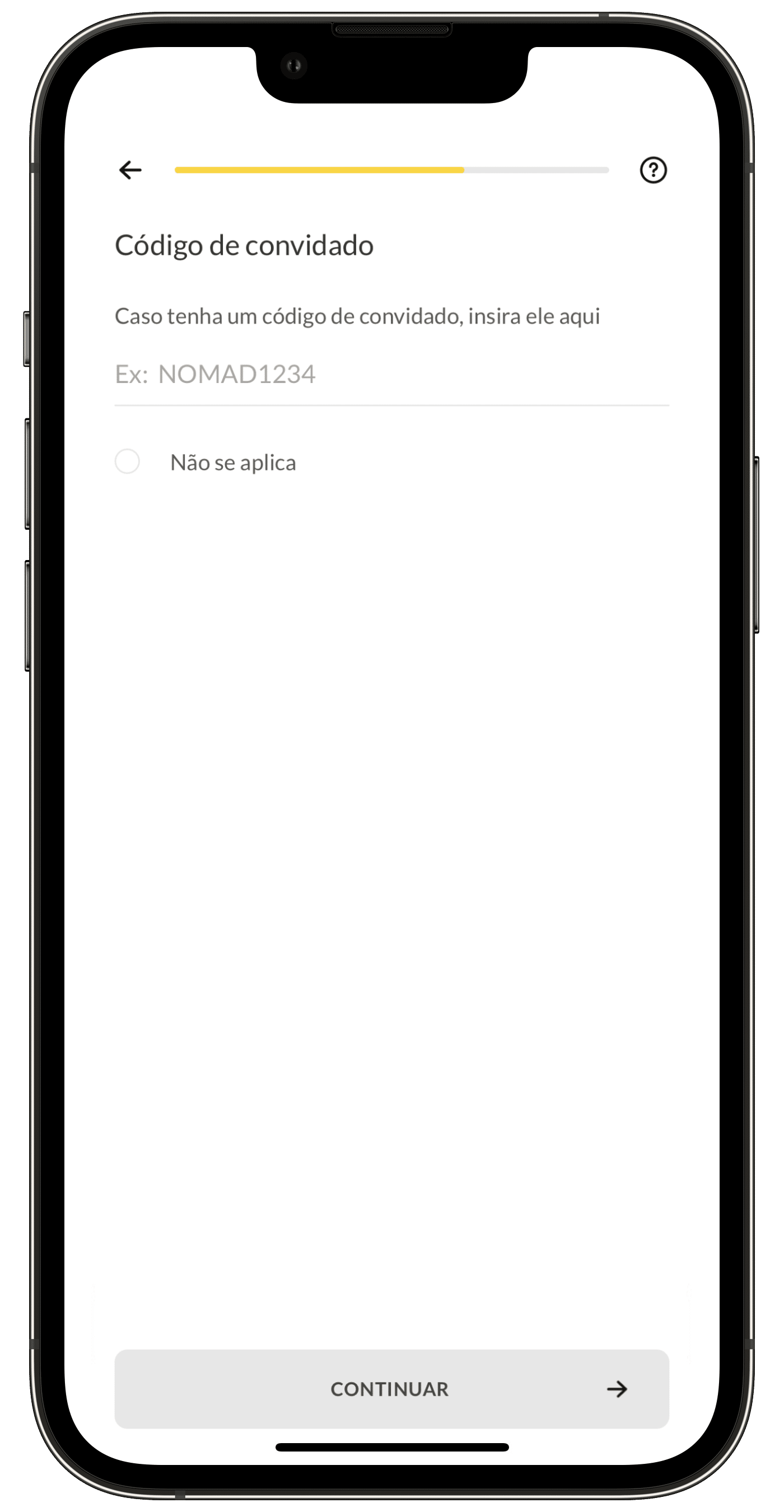
Para tal, baixe o app da Nomad e cadastre-se usando o código MAC26 no campo “Código de convidado”:
Nesta tela, digite o cupom MAC26 para ganhar 5% de cashback!
Sobre a Nomad
A Nomad foi a primeira a oferecer uma conta em dólar hospedada nos Estados Unidos, sem nenhuma taxa de abertura, anuidade ou manutenção. O cartão da empresa é aceito em mais de 180 países, oferecendo taxas bastante menores que as dos cartões de crédito internacionais.
A conta bancária da Nomad é assegurada em até US$250 mil pelo Community Federal Savings Bank, membro do fundo garantidor dos EUA (FDIC), para cada tipo de conta por titular, e permite que você faça/receba transferências de outras contas da Nomad sem nenhum custo, além de transferências para contas americanas (via Wire Transfer) e outras pagando bem menos do que as taxas cobradas nos EUA.
E não para por aí: com a sua conta Nomad você tem acesso a descontos em lojas parceiras e ainda pode aproveitar o Nomad Lounge, que concede acesso a uma das melhores salas VIP do Terminal 3 do Aeroporto Internacional de Guarulhos (SP).
Só na Nomad você tem uma conta internacional sem taxas mensais de manutenção, além de poder desfrutar de toda a praticidade e segurança que ela oferece!
NOTA DE TRANSPARÊNCIA: O MacMagazine recebe uma pequena comissão sobre vendas concluídas por meio de links deste post, mas você, como consumidor, não paga nada mais pelos produtos/serviços usando os nossos links de afiliado.

 Login


 Apple today