❌

Reading view

Could we ever create artificial gravity on a spaceship?

Among the many risks astronauts face during long-haul spaceflight, an extended stay in microgravity is one of the most consequential for long-term health, with effects on vision, bones, muscles and many other aspects of the body.

One solution might be artificial gravity —‬ some way to create forces similar to Earth's gravity on a spaceship, akin to the giant rotating ring from Stanley Kubrick's 1968 film "2001: A Space Odyssey."

But is that technology ever coming, or will it remain science fiction?

"There's really no reason it couldn't happen," Torin Clark, an associate professor of aerospace engineering at the University of Colorado Boulder, told Live Science. "From a technical perspective, this is something that could happen in the very near future."

In fact, artificial gravity has almost made its way to space before. The Centrifuge Accommodation Module was a planned 8.2-foot-wide (2.5 meters) centrifuge for the International Space Station (ISS), but the project was canceled in 2005 for budgetary reasons.

"[Artificial gravity] is one of those things ‪—‬ like all of a sudden, it's super popular, and then all of the scientists at NASA and everybody … have a lot of funding to understand how to actually implement this, and then it just dies," Ana Diaz Artiles, an associate professor of aerospace engineering at Texas A&M University, told Live Science. "And then it comes back, and dies, and comes back. I've been going through a couple of these cycles in the time that I've been doing this."

Besides budgetary concerns, there are questions about how such a solution would be implemented.

"Everybody agrees it's a good thing to do. The problem is that we don't know how to implement it," Diaz Artiles said. "How much gravity do you need? How big does [the device] have to be? How long do you need it to be? And how long do you have to use this? Should we use continuous gravity or a short-radius centrifuge, something where you go in and out?"

Researchers have three main approaches for creating artificial gravity. One is the classic sci-fi idea: a giant ring that rotates passengers' entire living quarters so they live and work under forces similar to Earth's gravity.

"You have a relatively long radius, which means you don't have to spin very fast to create gravity," Diaz Artiles said. "But this is massive. You can't get all the parts up there in the same spacecraft — you need multiple spacecraft and to assemble everything. So, of course, you can see what a big endeavor this is."

A short-radius centrifuge is a more feasible option. It's essentially a tube with a radius of 6 to 10 feet (1.8 to 3 m) that spins to simulate gravity. A passenger sits or stands inside, with their head closest to the center of rotation, so the spin generates the strongest pull down toward their feet.
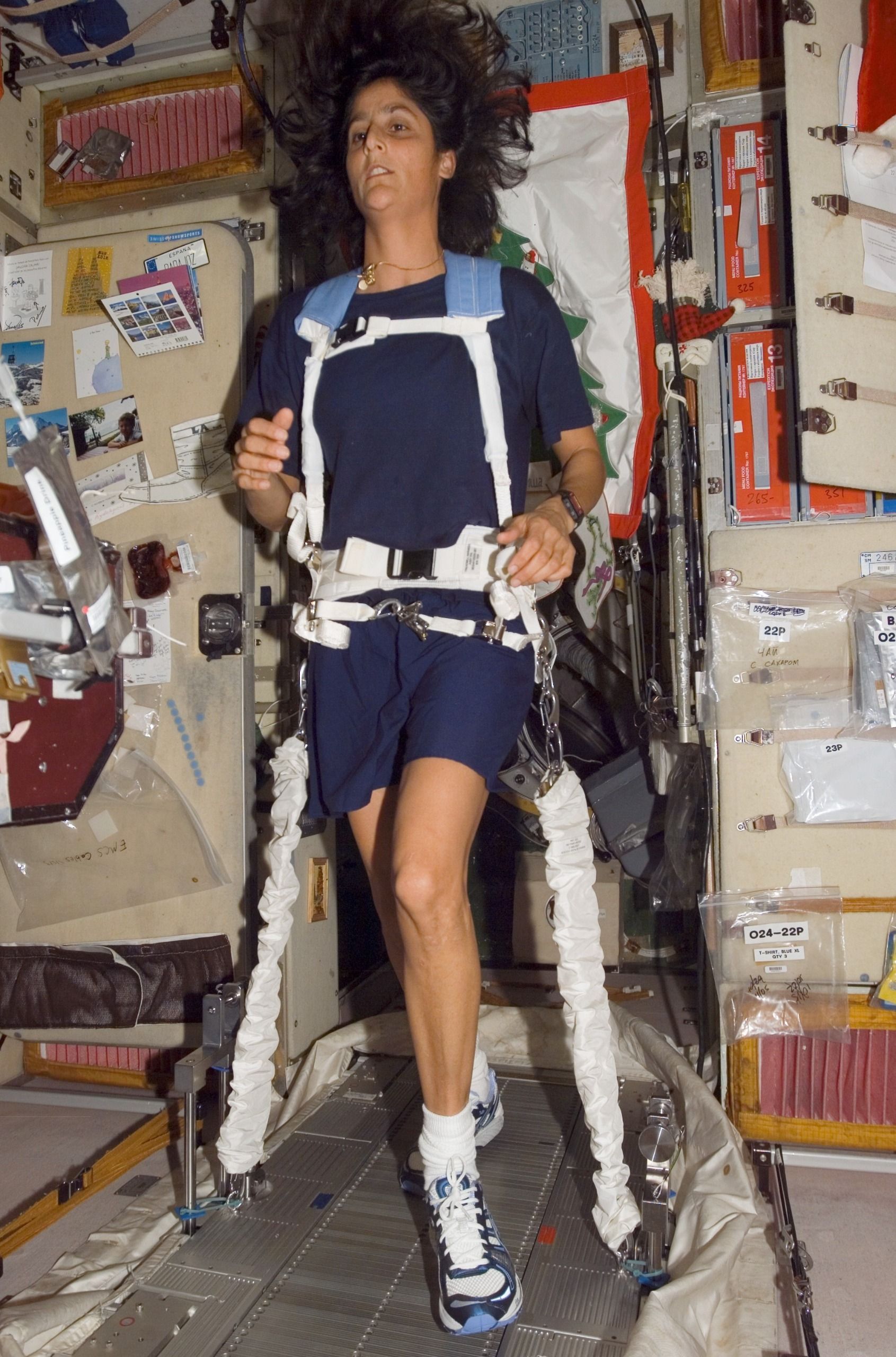
A woman walks on a treadmill in space.

Astronaut Sunita Williams, equipped with a bungee harness, exercises on the Treadmill Vibration Isolation System (TVIS) in the Zvezda Service Module of the International Space Station in 2006. (Image credit: NASA/Crew of Expedition 14, Public domain, via Wikimedia Commons)

Instead of allowing passengers to live in artificial gravity, this smaller device would be used in short daily sessions. "It's kind of like an exercise device," Diaz Artiles said. "In the ISS, you have a treadmill, you have this resistive exercise machine, so you go there for 30 minutes to do your exercise, and then you get out."

The final option is for spacecraft to create gravity via linear acceleration. This works in the same way that an accelerating car pushes passengers back into their seats, except the spacecraft would be oriented to push an astronaut's feet into the floor. To slow down, the spacecraft would turn around, firing its thrusters in the opposite direction to decelerate smoothly while maintaining a roughly similar gravity for its occupants.

"But then you need something like an engine that is able to accelerate all the time," Diaz Artiles said. "And propulsion-wise, I think we're not there yet."

Although a short-radius centrifuge is the most feasible approach in terms of both cost and engineering, it does have some drawbacks. For one, its fast spin can induce the Coriolis cross-coupled illusion ‪—‬ a sensation of tilting or tumbling that happens when you tilt your head off-axis while rotating.

This is the effect that causes motion sickness, Clark said.

However, Clark and his team have found that people can build a tolerance to the sensation with training, simply by being in a slowly spinning centrifuge and gradually increasing the speed when they no longer feel the sensation.

"If you very slowly, incrementally increase the spin rate … and do that not just over one session but over multiple sessions across multiple days, as far as we could tell, anyone can be made to incrementally acclimate to the rotating environment [of] up to 20 to 30 rotations per minute," Clark said.

Would artificial gravity prevent harmful effects on the body?

But researchers still don't know how fast the centrifuge would need to rotate, or how long someone needs to spend inside it, to benefit. Long periods in microgravity can lead to bone and muscle loss, loss of aerobic fitness, blood clots, and visual issues from fluid shifts in the eyes. The hope is that artificial gravity could prevent those effects, but exactly how much gravity is necessary remains an open question.

Studies of people on head-down tilt bed rest ‪—‬ the standard research method for simulating spaceflight deconditioning ‪—‬ have found that 30 minutes a day in a centrifuge did prevent some loss of muscle function.

"Thirty minutes a day … maybe is not enough," Clark said. "Maybe an hour or even two hours a day, and maybe at higher G levels, would be beneficial."

But these studies are expensive and time-consuming. "It's very difficult," Diaz Artiles said. "I think people are interested in this concept, but we just don't have a good answer."

In the end, it's not a technological challenge that's keeping artificial gravity from being used in space; it's knowing the best way to employ it and securing the budget for it.

"We know how to do this. As humans, we have done more difficult things," Diaz Artiles said. "We need the money, but we also need to better understand the need."

See how much you know about human exploration into space with our spaceflight quiz!
  •  

Study: Famous ‘Space Weather’ Train Delay Actually Happened Seven Years Later

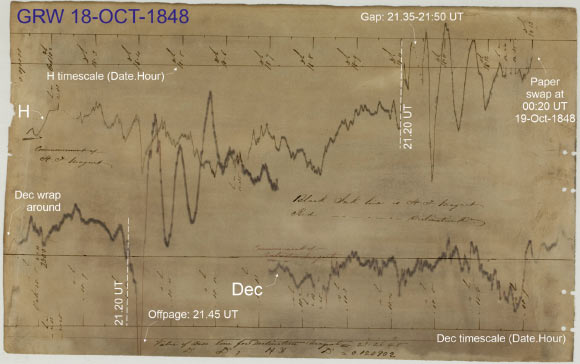
The magnetogram recorded at Greenwich Magnetic Observatory (London) from 11:20 UT on 18 October 1848 to 00:20 UT on 19 October 1848. Powerful geomagnetic disturbances are apparent on the evening of 18 October 1848 from 21:20 UT. Image credit: Wild et al., doi: 10.1029/2026SW005239.

Although the famous Carrington Event of 1859 is often described as the first major space weather event to affect technology, earlier incidents did occur. Historical records show that telegraph systems were disrupted by geomagnetic storms as early as the late 1840s.

The post Study: Famous ‘Space Weather’ Train Delay Actually Happened Seven Years Later appeared first on Sci.News: Breaking Science News.

  •  

SpaceX Falcon 9 rocket-landing team gets 1st-ever Neil Armstrong Space Prize

The winners of the first-ever Neil Armstrong Space Prize just got their hardware.

Those awardees — the people who developed and mastered the famous landing capability of SpaceX's Falcon 9 rocket — were announced in April. But they didn't actually receive the prize until Tuesday night (Sept. 15), when it was bestowed during a ceremony at the Cosmos Club in Washington, D.C.

And it was richly deserved, according to Purdue University, which created the international award and named it after perhaps its most famous alumnus. (Purdue is known as the "cradle of astronauts," because 30 of its graduates have flown in space or been selected as NASA astronaut candidates.)

"Neil Armstrong's achievement rested on extraordinary engineering, teamwork and the courage to attempt what had never been done before," Mark Lundstrom, the John A. Edwardson Dean of the College of Engineering at Purdue, said in a statement on Tuesday.

"The Falcon 9 Booster Landing Team carries that spirit forward," he added. "By making rocket reuse practical at unprecedented scale, they changed the economics of spaceflight and opened new possibilities for science, exploration and commerce. It is especially fitting that they are the first recipients of the Neil Armstrong Space Prize."

Purdue wants the annual prize to become a sort of Nobel for space science and exploration. The inaugural honorees are five SpaceX employees, who represent the much larger Falcon 9 landing team:

  • Lars Blackmore, senior principal Mars landing engineer
  • Shana Diez, senior director of Starship reliability
  • Jon Edwards, senior vice president of Falcon & Dragon projects
  • Yoshiaki Kuwata, principal guidance, navigation and control engineer
  • Eduardo Velazquez, director of Crew Starship engineering

The two-stage Falcon 9 debuted in June 2010. The rocket was always envisioned to have a reusable first stage, though making that happen took a while.

"On a simple hand calc, I thought, 'Oh, this would work,'" said Kuwata, who joined SpaceX in 2012.

"But then the difficult part is going from this hand calculation to the reality, and there are a lot of nuances that we learned on the way," he told Space.com. "And on paper, I think it would have been done in like six months. But it took like three, four years to actually get it to work."

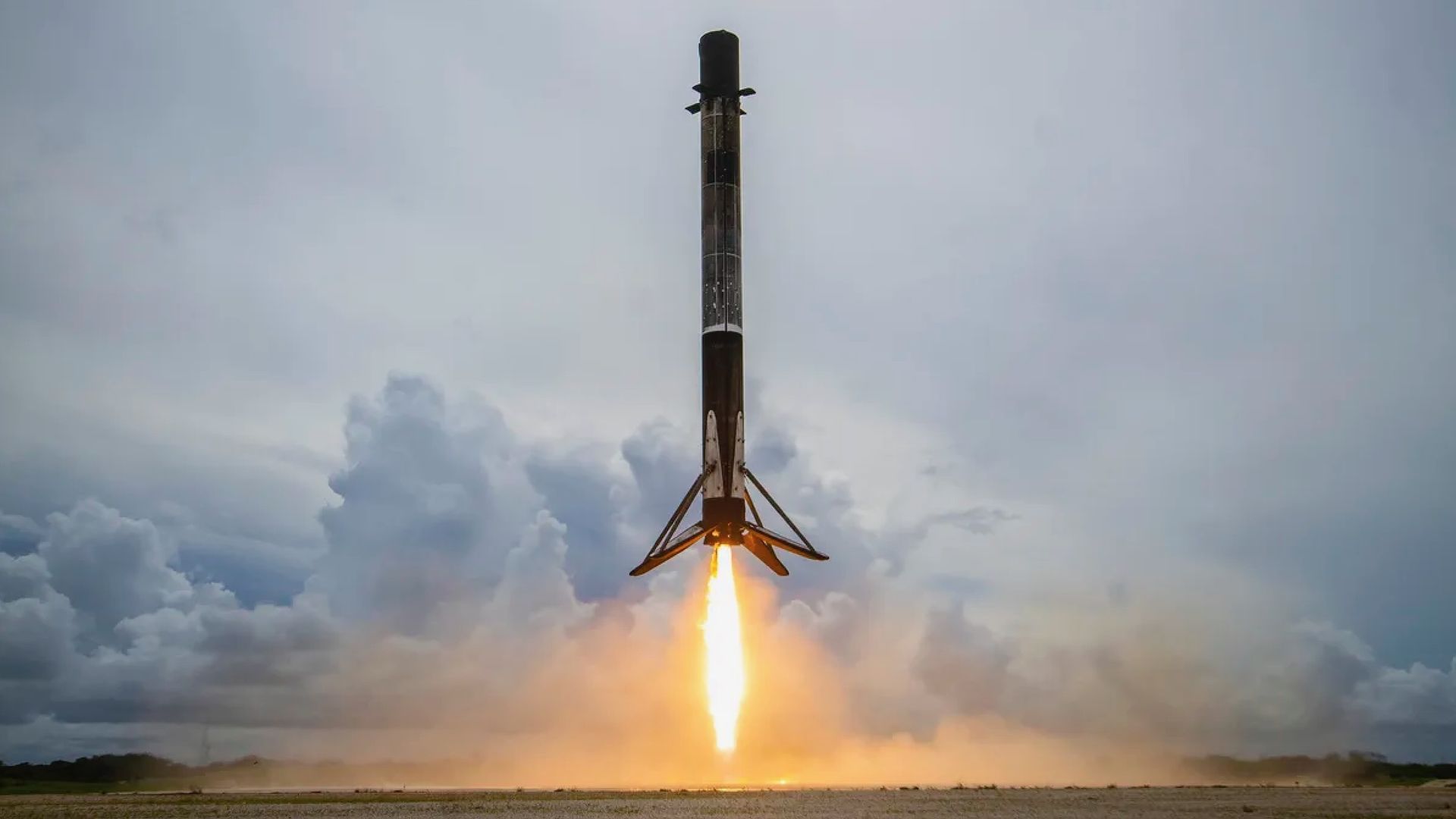
The milestone moment occurred on Dec. 21, 2015, on the 20th Falcon 9 flight to date: The rocket's first stage came back to Earth for its first-ever vertical touchdown, landing at Florida's Cape Canaveral Air Force Station (now known as Cape Canaveral Space Force Station) after sending 11 satellites to orbit for the company Orbcomm.

The Falcon 9 ticked another big box on April 8, 2016, acing a touchdown on a SpaceX "drone ship" stationed in the Atlantic Ocean.

These eye-popping sights have now become commonplace; to date, SpaceX has landed boosters more than 650 times during orbital missions. And these rockets don't stay on the ground for long. Six different Falcon 9 first stages now have more than 30 launches and landings under their belt, led by Booster 1067, which has flown a whopping 37 times.

Such extensive reuse has helped make the Falcon 9 the dominant rocket flying today. In 2025, the vehicle flew 165 missions — about half of the global total — and all of them were successful.

This success has inspired copycats. For example, two different Chinese rockets have landed successfully in the past few months, one of which employs foldable landing legs just like a Falcon 9 first stage.

But the imitation doesn't bother Velazquez.

"I think this is great," he told Space.com. "I mean, we didn't start from scratch, right? If you look at a cross section of our engines and the engines from the '60s, they're all very similar. So we're all kind of cribbing from the same place. But the fact that we are able to advance the bar so that everybody else is landing first stages is just great. I think we all move forward together, and we need more entrants in the field to really have a big kind of spacefaring economy and civilization."

a large silver rocket comes in for a landing on its launch pad near the sea

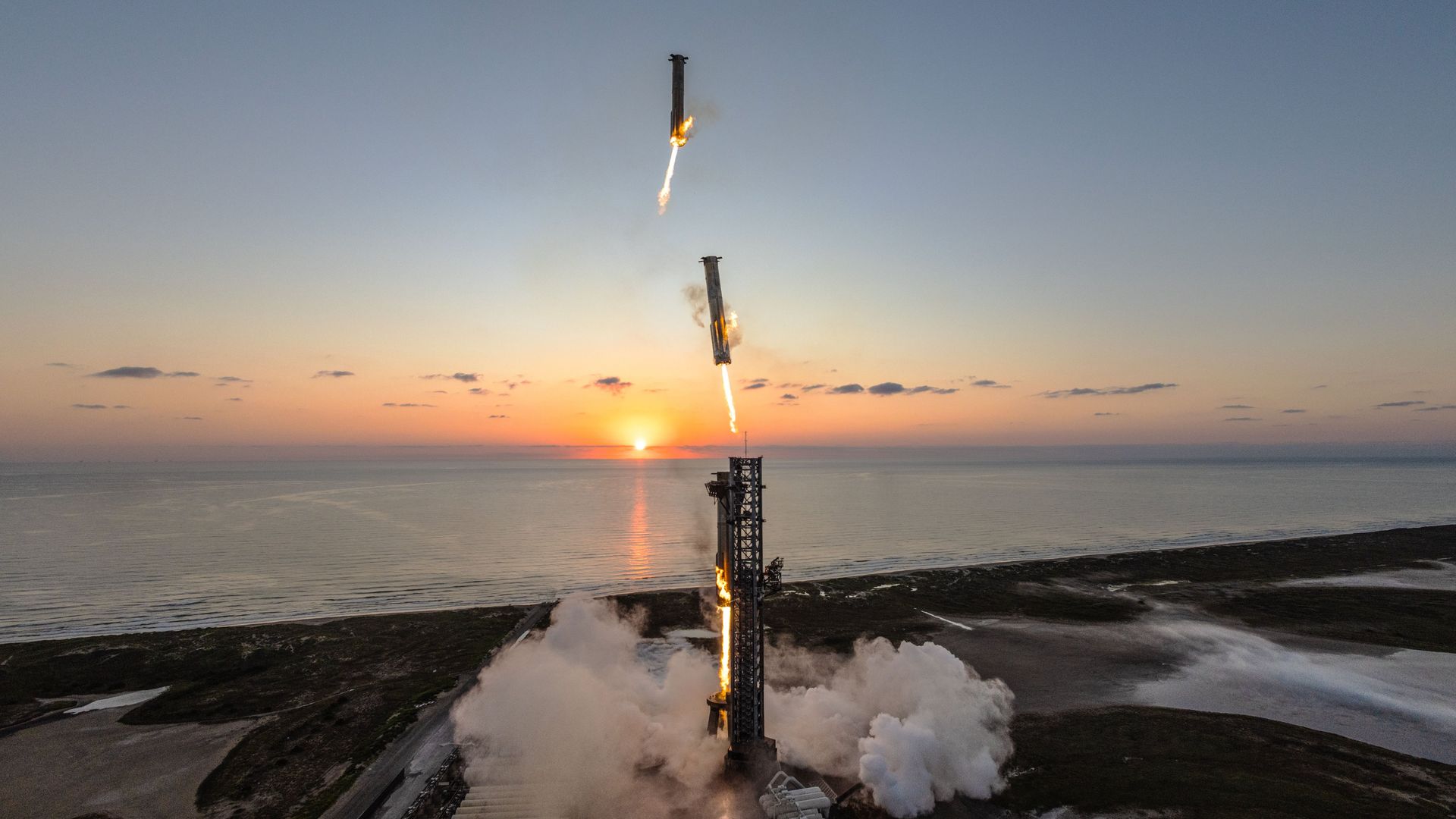
Composite photo showing the Super Heavy booster of SpaceX's Starship megarocket coming in for a landing on the launch mount on Oct. 13, 2024. (Image credit: SpaceX via X)

SpaceX is planning to sunset the Falcon 9 in the relatively near future in favor of Starship, the fully reusable megarocket it's developing to help humanity settle the moon and Mars, among other exploration tasks.

Starship has flown 13 test flights to date, all of them suborbital. SpaceX has already successfully recovered the giant vehicle's Super Heavy first stage on three occasions, catching the booster with the "chopstick" arms of the launch tower at its Starbase site in South Texas.

Such success follows quite naturally from the experience the company built up with the Falcon 9 (and its cousin the Falcon Heavy). But landing and reflying Starship's upper stage, known as Ship, is a different animal. (Falcon upper stages are expendable.)

"The bigger step change for Starship is the stage two — Ship upper stage — reusability," Kuwata said.

"In Monte Carlo simulations, [Ship landings] work well," he added. "And then we kind of demonstrated that pinpoint landing, precision landing, on the ocean many times. But I feel we will find out more things along the way by trying many times."

"Yeah, the 'trying many times' I think is kind of key," Velazquez said. "And I think we're getting pretty close to to catching a Ship."

  •  

On this day in space! Sept. 16, 1949: A US launch of a V-2 rocket explodes, killing its monkey passenger Albert III

On Sept. 16, 1949, the U.S. launched a V-2 rocket with a monkey named Albert III on board.

Albert III was the third monkey the U.S. attempted to launch to space. He was also the third one to be killed on the job. The U.S. precursor to NASA began launching monkeys into space in the 1940s to try to see what might happen to humans in space.

This testing started more than a decade before any humans were launched up there. The monkeys were all given anesthetics and covered with sensors and probes that monitored their vitals. While the other five Alberts that were launched on V-2 rockets were all rhesus monkeys, Albert III was actually a long-tailed macaque. Sadly, Albert III died when his rocket exploded 10 seconds after launch.

The two Alberts who came before him died differently, first by suffocation and then by a parachute that failed to deploy before landing. It wasn't until the Albert VI flew in 1961 that a test monkey survived a test launch. NASA stopped using monkeys for launch testing in the 1980s.

A title card with a small monkey who launched on a failed test flight in 1949

A small macaque monkey named Albert III was lost during a failed V-2 rocket launch test from White Sands Missile Range in New Mexico on Sept. 16, 1949. (Image credit: Future/NASA)

Why it mattered

In the late 1940s, the United States was just beginning to gain experience with large rocket and ballistic missile launches using a cache of V-2 rockets (and the German rocket scientists like Werhner von Braun that designed them). And while the U.S. military sought to develop rocket and missile weapons, animal launches like the failed flight of Albert III were aimed studying how the upper atmosphere and cosmic rays could affect living things (like future astronauts).

To do that, the U.S. Air Force formed Project Blossom, a series of V-2 rocket launches out of White Sands Missile Range in New Mexico that included five "biological flights" overseen by the Aero-Medical Laboratory at Wright-Patterson Air Force Base, according to a history by the White Sands Missile Range Museum.

Albert III's launch failed 24.7 seconds after liftoff, with the V-2 rocket flying at a slower speed than expected after liftoff, the museum account states. The rocket suffered an explosion in its tail section 10.7 seconds into the flight, then another one 14 seconds later (likely due to leaks in its alchol fuel system). It reached a maximum altitude of just 3 miles before the failure.

Despite the failure, military scientists took what they learned from Albert III's launch to make design improvements in future tests. There were still failures (the next monkey launch of Albert IV did not succeed), and three of the seven Project Blossom launch tests failed in all.

The first successful monkey launch carried Albert VI (and 11 mice) to suborbital space and back on a new Aerobee rocket on Sept. 20, 1951, NASA has said.

Want more space history? Check out our full On This Day In Space Story archive and watch our On This Day In Space videos on YouTube.

  •  

Where will the US Space Academy be based? NASA wants class to start by 2028

The hunt is on for a state to host the U.S. Space Academy.

NASA released a request for information on Sept. 9, following a meeting that NASA Administrator Jared Isaacman held in Washington for the occasion. The space agency has set a quick timeline for the project: States are encouraged to submit a proposal by Oct. 26, 2026.

"Now, with the RFI underway, states across the country have an opportunity to help us shape a legacy institution built for America's future in space," Isaacman said in a NASA statement on Sept. 10.

The U.S. Space Academy won't be a purely military institution in the mold of the Naval Academy or West Point. It will be led by NASA, and one of its core functions will be educating future scientists, engineers and astronauts, as well as warfighters.

If all goes to plan, the academy will welcome its first class of 300 students for instruction starting in 2028. Because that doesn't leave much time for planning and building, the RFI states that the academy may start before it has a permanent campus.

While the academy may rely on "one or more partner institutions" for facilities to start out, the RFI outlines plans for a big campus once everything is up and running.

A permanent campus will include buildings for teaching, research, administration, student residences, sports venues and gyms, dining halls and related facilities.

The purpose of the new space academy is to "encourage and guide the next generation of Americans to pursue cutting-edge, technical fields that currently do not have a sufficient amount of programs and graduates needed to ensure America maintains superiority in space," a White House fact sheet about the planned academy states.

The request calls for a groundbreaking by 2027, as well as a temporary campus for the first class of 300 students in 2028. The timeline in the RFI has the academy's permanent location in operation by 2031.

"The location of the U.S. Space Academy is foundational to its success," NASA Deputy Administrator Matt Anderson said in the Sept. 10 statement.

"We're asking states to bring their strongest vision — the infrastructure, the partnerships and the community that can compete with the elite options this caliber of student will have and match the boundless ambition of our future space leaders," he added.

  •  

Russia launches Progress 96 with 3 tons of cargo to the space station (video)

Russia launched a cargo mission toward the International Space Station today (Sept. 16), delivering the freighter spacecraft to orbit for a three-day rendezvous journey.

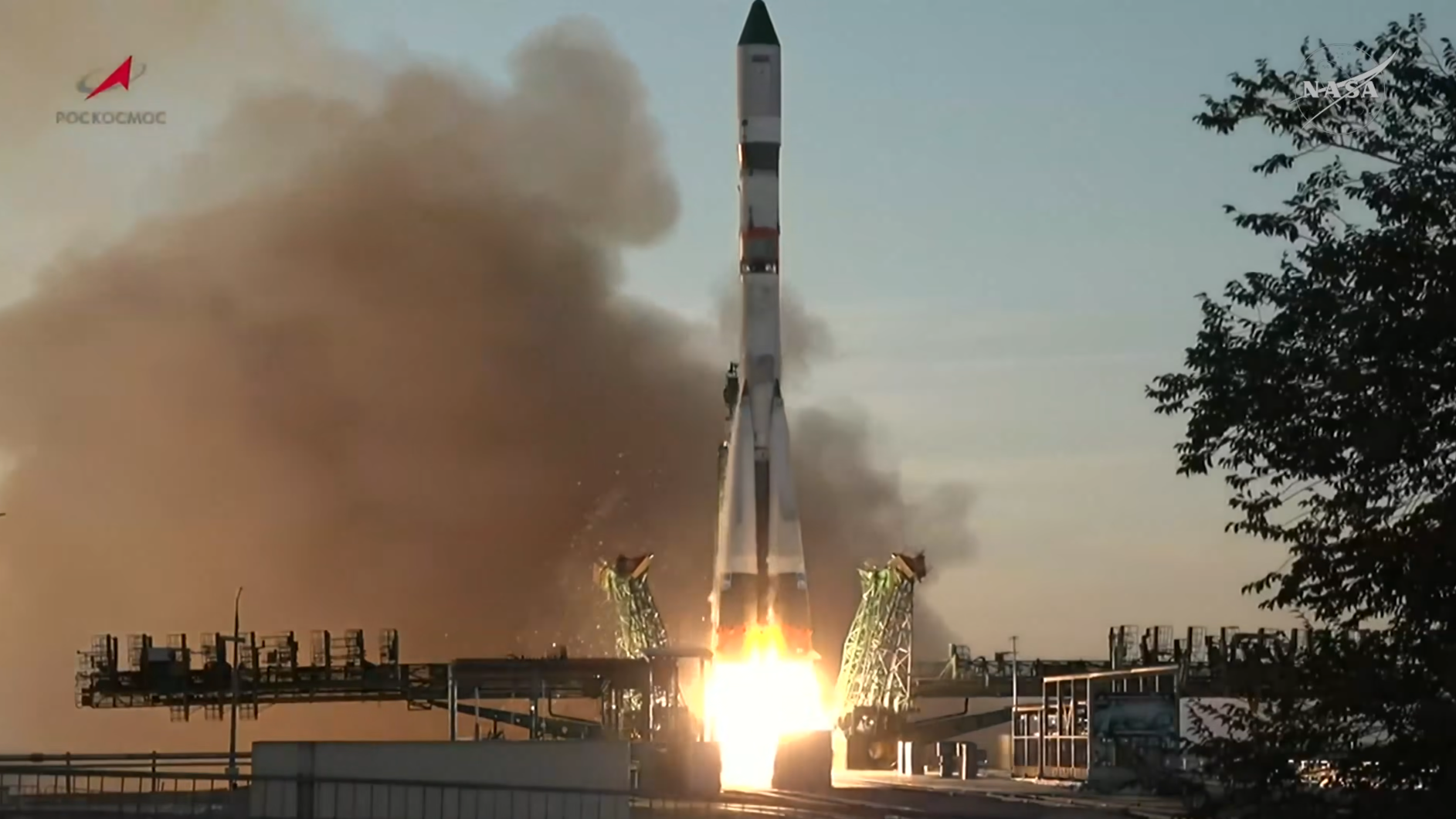
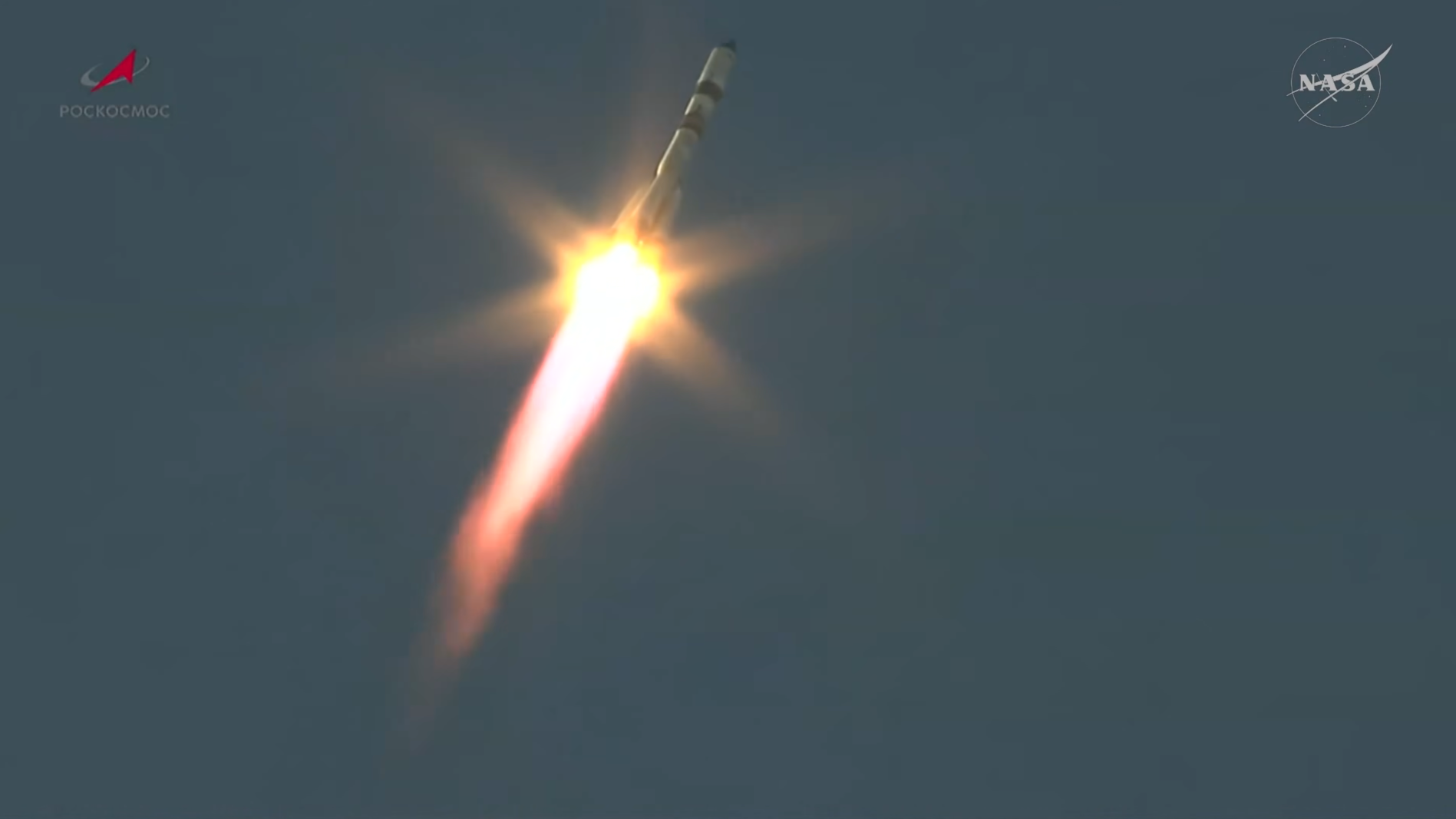
The robotic Progress 96 spacecraft lifted off atop a Soyuz rocket from the Russian-run Baikonur Cosmodrome in Kazakhstan today at 9:33 a.m. EDT (1333 GMT).

From engine ignition through solar array deployment on the spacecraft, the Progress 96 launch was completely nominal. It was "a flawless launch," said NASA's Rob Navias during the mission's livestream this morning, with "an excellent climb to orbit by the Soyuz booster."

A soyuz rocket launches from the Baikanour Cosmodrome.

Roscosmos' Progress 96 cargo spacecraft launches from the Baikanour Cosmodrome on a Soyuz rocket on Sept. 16, 2026. (Image credit: NASA)

Progress 96 is loaded with about 3 tons of food, propellant and other supplies for the astronauts aboard the International Space Station (ISS). The freighter will deliver this cargo three days after launch, if all goes according to plan. You'll be able to watch rendezvous and docking activities when the time comes.

The freighter will remain docked to the orbiting lab for about five months. It will then be loaded up with trash and sent down to a fiery death in Earth's atmosphere over the Pacific Ocean.

The Progress 94 spacecraft met this fate on Sept. 7, departing from ISS' Poisk module to make room for Progress 96.

A soyuz rocket launches from the Baikanour Cosmodrome.

(Image credit: NASA)

Progress is one of four spacecraft that fly operational cargo missions to the ISS these days, along with Japan's HTV-X, SpaceX's Dragon capsule and Northrop Grumman's Cygnus. All but Dragon are expendable, burning up in our air when their time in orbit is up.

There are currently seven people living aboard the ISS — NASA astronauts Jack Hathaway, Jessica Meir and Anil Menon; the European Space Agency's Sophie Adenot, who last month became the first French woman ever to perform a spacewalk; and Pyotr Dubrov, Andrey Fedyaev and Anna Kikina of the Russian space agency Roscosmos.

Editor's note: This story was updated at 10 a.m. ET on Sept. 16 with news of successful launch.

  •  

A world 20 light-years away reveals surprisingly organized, Jupiter-like weather

Scientists from Trinity College Dublin have developed a way to unravel changing weather patterns on distant worlds. Using this approach, they discovered that the weather on a well-studied brown dwarf, SIMP 0136, previously linked to northern lights-like phenomena, is largely shaped by just two dominant processes: changes in temperature and the vertical structure of its clouds.

  •  

US Space Force says it operates weapons in orbit: 'Our aim is deterrence'

The U.S. Space Force is opening up about its operation of orbital weapons, but not much beyond admitting that they exist.

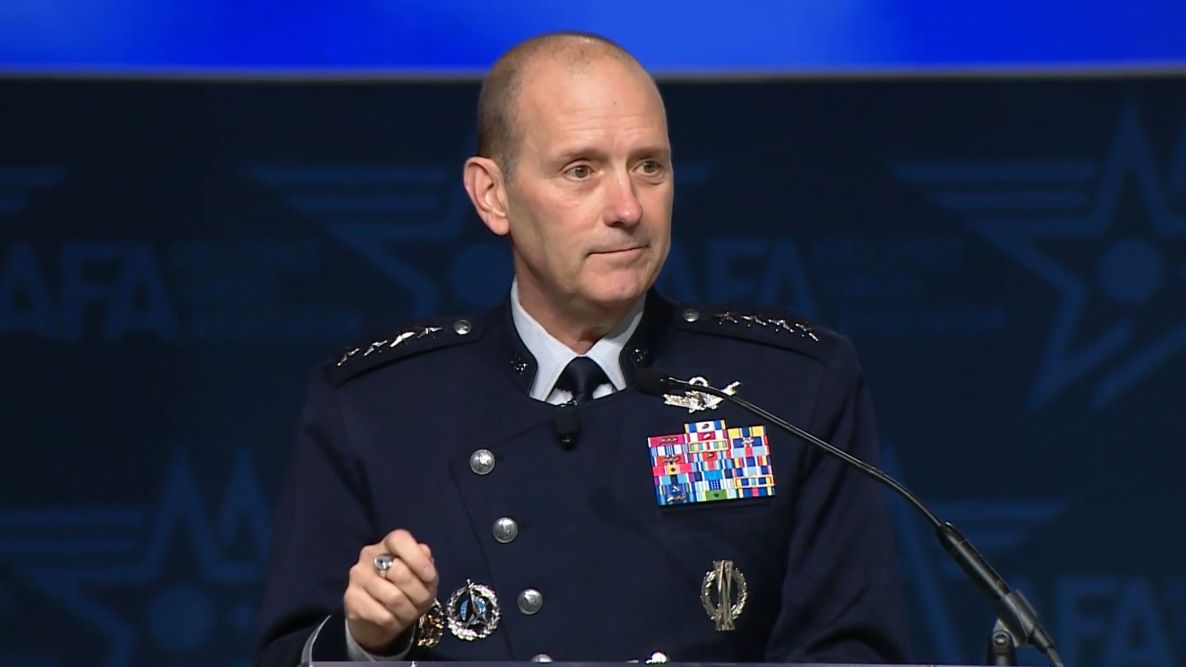
During a "State of the Space Force" address at the Air & Space Forces Association’s Air, Space & Cyber Conference in National Harbor, Maryland, on Tuesday (Sept. 15), Chief of Space Operations Gen. Douglas Schiess stated unequivocally that the Space Force uses active space-based weaponry to support United States national defense.

“Let me be crystal clear: Today, Guardians operate on-orbit weapons that can defend the joint force against space-enabled attacks,” Schiess said, referring to the official name for Space Force personnel.

Space is central to national security infrastructure and warfighting efforts, and serves a critical role in how the military communicates, navigates, conducts operations and tracks threats globally. It’s become an increasingly contested domain, with adversaries developing technologies designed to disrupt or destroy satellites in orbit as well as hypersonic weapons that challenge ground-based-only defenses.

Schiess didn’t specify what kind of weapons the U.S. operates in orbit, how many there are, or what exactly they do. But the revelation that the Space Force is operating those kinds of assets is by itself a pretty hefty admission. The news expands the known scope of U.S. military activity in the final frontier, which already included the use of satellites for GPS, communications, missile warnings and other targeting and intelligence operations.

“Space is both a battlefield and the backbone of our joint force,” Schiess said. “We face determined and credible adversaries who are building counter-space systems at incredible speeds to target directly the United States’ space advantage.”

The chief adversaries are China and Russia, experts have said. Both nations have developed a range of counterspace capabilities intended to threaten or interfere with other satellites, including through electronic warfare and anti-satellite (ASAT) systems. Russia demonstrated as much in 2021, when it destroyed one of its own spacecraft with an ASAT missile, which created a cloud of more than 1,500 pieces of orbital debris.

The U.S. has been rapidly expanding its own military presence in orbit over the past decade or so, and is ramping up those efforts even more with plans for the implementation of President Trump’s Golden Dome missile interception system. In the last year alone, the Space Force has awarded more than $12 billion in major contracts to companies like SpaceX, Rocket Lab, L3Harris and Boeing for a wide range of services, including national security launches, space-based tracking satellites and other defense technologies.

Schiess pointed to the Victus Haze mission as an example of how the Space Force is getting ready to react to orbital threats on short notice. Rocket Lab carried out Victus Haze in June, launching an Electron rocket and interceptor spacecraft within just 17 hours of receiving notice from the Space Force, setting a launch turnaround record.

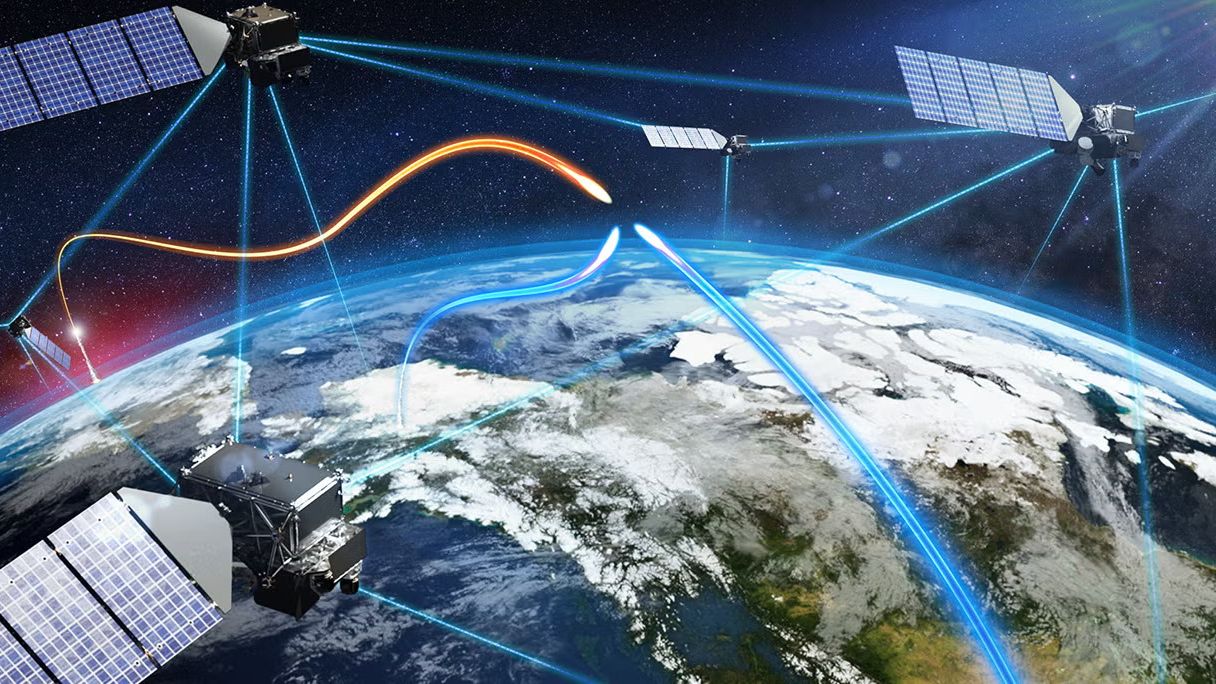
a constellation of satellites shoots beams to each other and down to Earth.

Illustration of part of a Golden Dome satellite constellation. (Image credit: L3Harris)

Schiess also highlighted the Space Force’s critical role in Operation Epic Fury and the ongoing engagement of U.S. military forces in Iran. “Guardians are not supporting from the sidelines as a nice-to-have, but we are delivering space power directly into the fight as a need-to-have,” he said. Schiess even gave an anecdotal example of the actions of one Guardian, “Specialist Gray,” in the heat of battle.

“Even as alarm red sirens were blaring and incoming missiles targeted her site, she courageously held the line, protecting forces, denying adversary capability, and delivering space effects until her commander had to literally pull her from the console to safety,” Schiess said.

Schiess described her operations before she was pulled from that console, giving some clue as to what exactly is meant by “on-orbit weapons.”

He said the Guardian in question needed to “reconfigure her weapon system and execute critical non-kinetic fires,” and went on to add, “She locked onto the target, optimized her weapon system and waged electromagnetic warfare against a determined adversary.”

Those descriptions offer at least some clues about the technologies involved. Phrases like “electromagnetic warfare” and “non-kinetic” could point to signal jamming technology or other non-physical means of disrupting a target.

Schiess said the Space Force intends to continue expanding its combat power with more robust architectures and the ability to respond with increasing speed to evolving threats. That proliferation on behalf of Golden Dome and other national security programs stands to deliver substantially more military hardware into orbit in the coming years, but Schiess framed the buildup around the prevention of conflict, rather than its provocation.

“Our aim is deterrence,” he said.

  •  

New Study Explains Why Venus Has No Moon

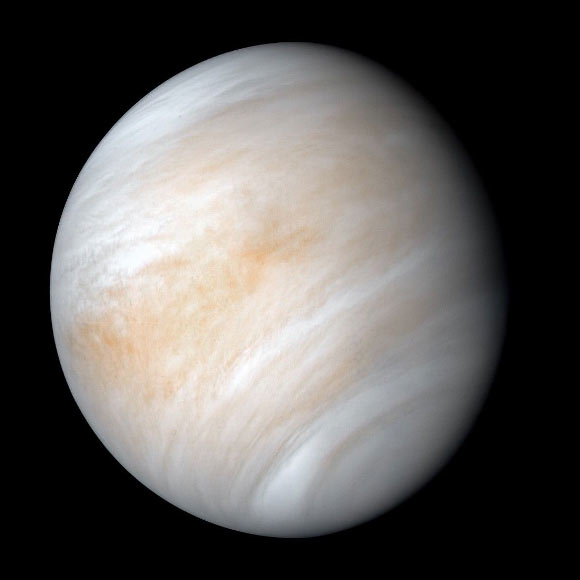
NASA’s Mariner 10 spacecraft captured this view of Venus in February 1974. Image credit: NASA / JPL-Caltech.

Dr. Stephen Kane from the University of California, Riverside and colleagues offer a tidy explanation for one of the Solar System’s enduring puzzles: why Venus, so similar to Earth in size and mass, has no moon at all.

The post New Study Explains Why Venus Has No Moon appeared first on Sci.News: Breaking Science News.

  •  

SpaceX's next Starship launch will lift off on Sept. 22 and aim to reach orbit for 1st time

We now have a launch date for Starship's most ambitious mission to date.

SpaceX announced today (Sept. 15) that it's targeting Sept. 22 for the first orbital flight of Starship, the fully reusable megarocket that the company is developing to help humanity settle the moon, Mars and more.

Liftoff, from SpaceX's Starbase site in South Texas, will occur during a 75-minute window that opens at 8:15 a.m. EDT (1215 GMT and 7:15 a.m. local Texas time). You can watch it live here at Space.com when the time comes.

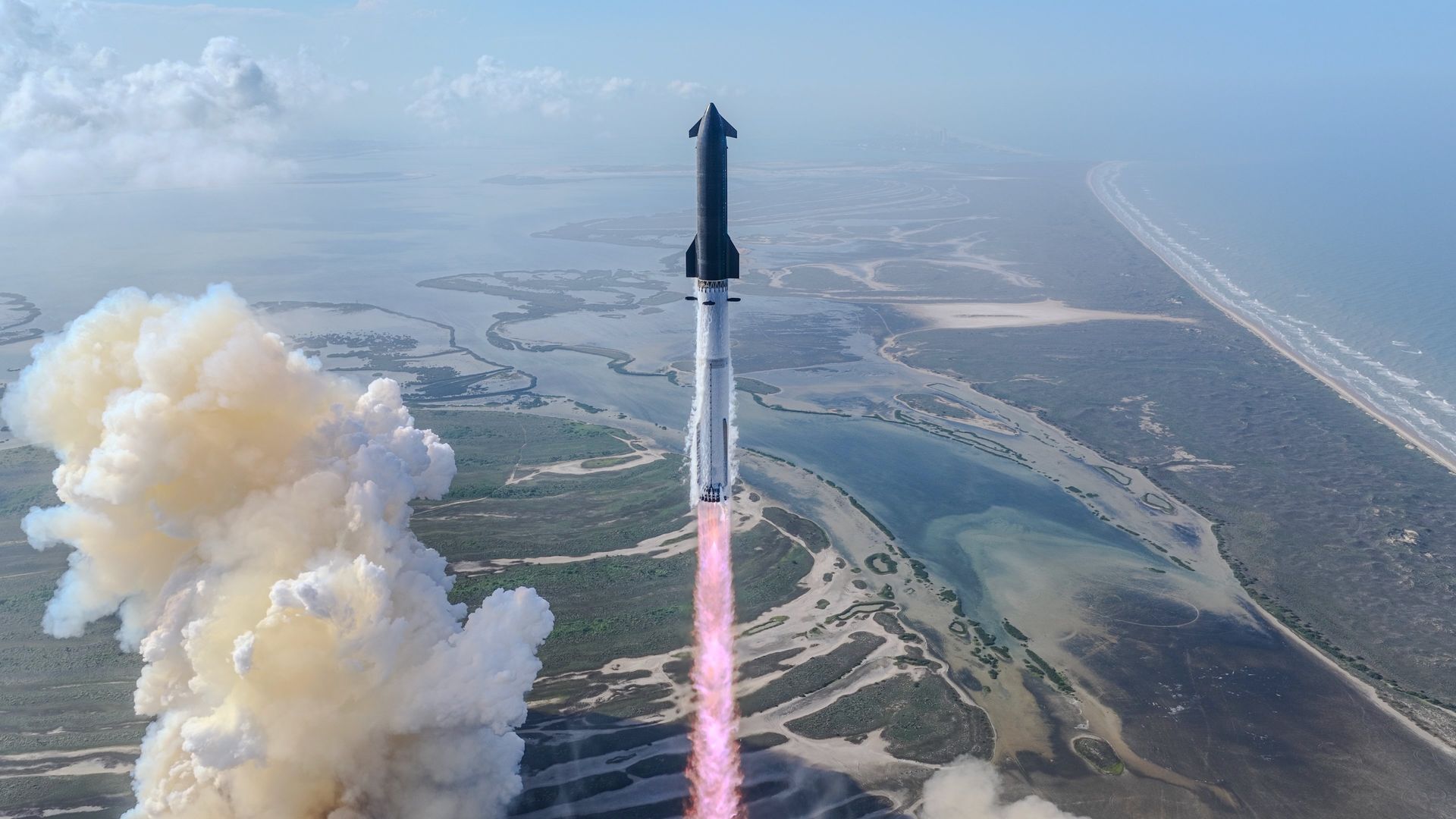
SpaceX's Starship megarocket launches on its 12th test flight, on May 22, 2026.

SpaceX is targeting Sept. 22 for Starship's first-ever orbital launch, a landmark flight that will deploy 26 Starlink satellites and last about 10 hours. (Image credit: SpaceX)

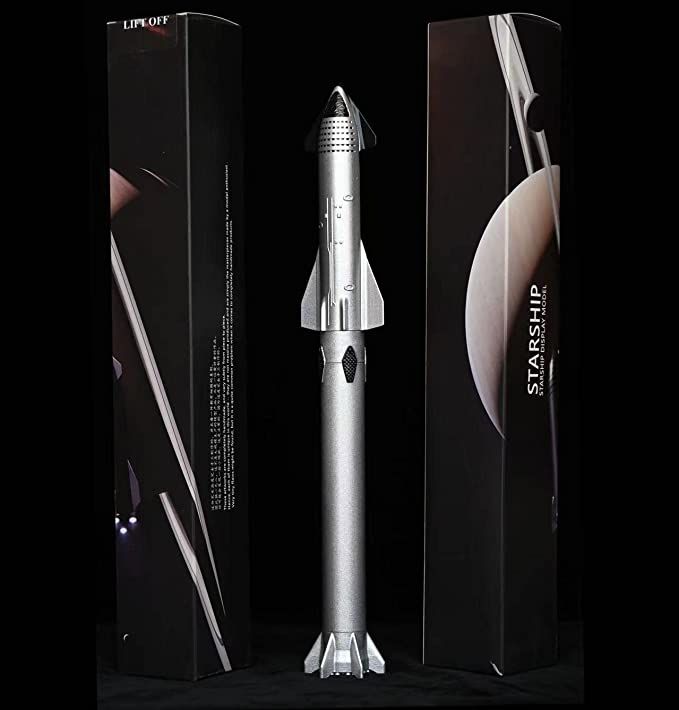
Starship Die Cast Rocket Model Was $47.99 Now $39.99 on Amazon.

Even if you can't see SpaceX's Starship in person, you can score a model of your own. Standing at 13.77 inches (35 cm), this is a 1:375 ratio of SpaceX's Starship as a desktop model. The materials here are alloy steel and it weighs just 225g.View Deal

The upcoming flight will be the 14th overall for Starship, which debuted in April 2023 and has flown twice so far in 2026. But the 408-foot-tall (124-meter-tall) vehicle's first 13 jaunts were all suborbital, so Flight 14 will be a landmark.

"By going to orbit, the next phase of developing Starship to be fully and rapidly reusable can begin," SpaceX wrote in a Flight 14 mission description.

"This will also mark the first time we plan to deploy Starlink V3 satellites into the constellation, delivering a payload that will dramatically expand connectivity speeds and reliability around the world," the company added.

Starlink, SpaceX's network of broadband satellites in low Earth orbit, currently consists of more than 11,000 active spacecraft. None of those are the larger, more capable V3 version, which are designed to launch on Starship.

Flight 14 will carry up 26 of these next-gen craft — the first of many, if all goes to plan. SpaceX founder and CEO Elon Musk has said the company wants the Starlink megaconstellation to eventually consist of 100,000 V3 satellites.

Three of the Starlink craft launching on Flight 14 have been outfitted with cameras and will photograph the heat shield on Starship's upper stage, known as Ship, after deployment. SpaceX will use this imagery to study and potentially improve the heat shield, which protects Ship during its return trip through Earth's atmosphere.

If all goes according to plan on Sept. 22, the 171-foot-tall (52-m-tall) Ship will complete six orbits of Earth at an altitude of about 171 miles (275 kilometers). The vehicle will then maneuver its way to a splashdown in the Pacific Ocean west of Chile about 10 hours after launch, SpaceX wrote in the mission description.

That's a very different plan than previous Starship flights. On those suborbital missions, Ship stayed aloft for just 65 minutes or so, did not complete an orbit of Earth and came down in the Indian Ocean, off the coast of Western Australia.

But Flight 14 will be more of the same for Starship's first-stage booster, known as Super Heavy. If all goes to plan, the giant rocket will splash down in the Gulf of Mexico about seven minutes after liftoff, as it has done on a number of previous flights.

So there will be no catch — of either Ship or Super Heavy — by the "chopstick" arms of Starbase's launch tower on Flight 14. SpaceX has pulled off tower catches of Super Heavy on three occasions to date but has never done so with Ship. This recovery method will eventually be the norm on Starship flights, leading to faster and more efficient reuse of the vehicle, Musk has said.

So, while Flight 14 aims to check a very big box — reaching orbit — other milestones will be reserved for future flights. A Ship tower catch will be among the most anticipated, along with refueling the vehicle in orbit, something that will be required for missions to the moon, Mars and beyond.

  •  

Microscopic alien technology may be hidden in moon dust, scientists say

Could we find alien technology embedded in moon dust?

The bold idea, not yet peer-reviewed, suggests checking out the lunar surface for "microscopic technosignatures." The SETI Institute — or the Search for Extraterrestrial Intelligence Institute — describes these technosignatures as "tiny engineered particles" that may have come from interstellar space before settling on the moon.

The institute recently highlighted a paper on the topic, published on arxiv in August, and added the research is undergoing peer review for consideration in the International Journal of Astrobiology. The study is led by SETI Institute Affiliate Scientist Lewis Pinault.

"The moon has been quietly accumulating material from space for billions of years, much of it likely billions of years older than the moon itself," said Pinault in a statement. "We're asking whether that ancient collection might contain microscopic traces of technologies that existed long before humans ever looked up at the sky."

Even if no aliens turn out to be there, the search could help advance models of how dust goes through interstellar space, as well as effects on lunar geology or impact science, the institute added.

"The study reports no evidence of extraterrestrial technology," the institute added in the statement. "Instead, it demonstrates that searching for these microscopic technosignatures is now scientifically testable."

That's in large part because the NASA-led Artemis program, which will ultimately bring astronauts to the moon, as well as China's Chang'e robotic series, would provide opportunities to return samples, the institute said. (China is also eyeing bringing its taikonauts to the moon by 2030.)

SETI is best known for looking for artificial radio signatures in space that may have come from extraterrestrials. This new study, the institute added, is focusing more on past alien communities that may have preserved their knowledge in "durable particles," even if the communities are no longer in existence.

The study examines how these particles could (in theory) move from star to star, stay viable over long distances and periods, embed themselves in the lunar surface and then — if humans could find them — use AI-assisted imaging, materials analysis and microscopy to take a closer look, among other techniques.

Helping in that search is the environment of the moon itself, which — compared with Earth, at least — has slow-moving geology. As the institute points out, the surface has no flowing water or substantial atmosphere like our planet does. What's more, the moon has picked up dust in its environment for about four billion years (from not long after the solar system was formed 4.5 billion years ago), presenting a potential archive of dust in the solar system and interstellar space.

"The researchers argue that if advanced civilizations produce durable microscopic debris — whether intentionally or as a byproduct of space exploration or large-scale engineering — a tiny fraction of those particles could eventually become embedded in the lunar regolith," the institute stated.

The goal is to start these studies with about 35 cubic feet (one cubic meter) of lunar regolith, which is maybe the equivalent size of a fridge. Researchers would try out a series of careful investigations using multiple tools to "begin placing meaningful limits on the amount of durable artificial material produced by technological civilizations over the history of the Milky Way."

And as mentioned, even if this small sample doesn't turn up technosignatures, the researchers say the work is still important. It's another way to search for "extraterrestrial artifacts," to look at various aspects of solar system science, and to try out newer tools for examining moon samples that weren't available in the Apollo years.

"This is a novel addition to the search methodologies applied to seeking evidence of technology as a proxy for life and intelligence beyond our solar system and we are excited at the prospect of bringing this to fruition," stated Bill Diamond, SETI Institute president and CEO.

  •  

'The violence leaves a mark': How satellites are helping the world monitor war and atrocities

For decades, researchers have been monitoring armed conflict around the world by analyzing news reports and collecting oral testimonies. This approach, while valuable, has its limitations. A new study suggests that a satellite's view from above might fill the gaps in our understanding of the grim realities of war.

In 2017, the Myanmar Army murdered several hundred Muslim Rohingya civilians in the village of Chut Pyin near the country's western coast. Reports of the massacre in the settlement of about 2,000 reached the world through the testimonies of survivors who fled to neighboring Bangladesh. The massacre was part of a years-long campaign of brutality against the Muslim minority conducted by the Buddhist-run state. Satellite data later showed that houses in the predominantly Rohingya neighborhood were burned down by the Myanmar military during the atrocity, providing undeniable proof that the ethnic minority was targeted.

The incident is one of many demonstrating the advantage of adding views from space into conflict research, study lead author Valerie Sticher, a political science researcher at the University of Zurich in Switzerland, told Space.com.

"We have huge data sets about wars around the world going back 40 years," Sticher said. "But those datasets are based mostly on media reports. And these reports are not always available and not always reliable. Media can have biases and often focus only on certain types of violence."

For example, human reporters are more likely to focus on the numbers of people killed rather than the number of houses destroyed, she said. Satellites, on the other hand, provide a broad sweep over vast areas of land and, crucially, revisit the same location repeatedly. They can reveal patterns in conflicts and trends that could otherwise go undetected, while providing an overview of areas controlled by authoritarian regimes.

The researchers are now developing a methodology to integrate satellite observations into conflict research and create automated image analysis pipelines that would generate early warnings and alert the world to what's happening on the ground.

"Automated satellite data analysis would allow us to respond faster," said Sticher. "For example, in Myanmar, the area affected by ethnic cleansing was closed to independent journalists and investigators. Satellite data was the earliest reliable information to reach the outside world."

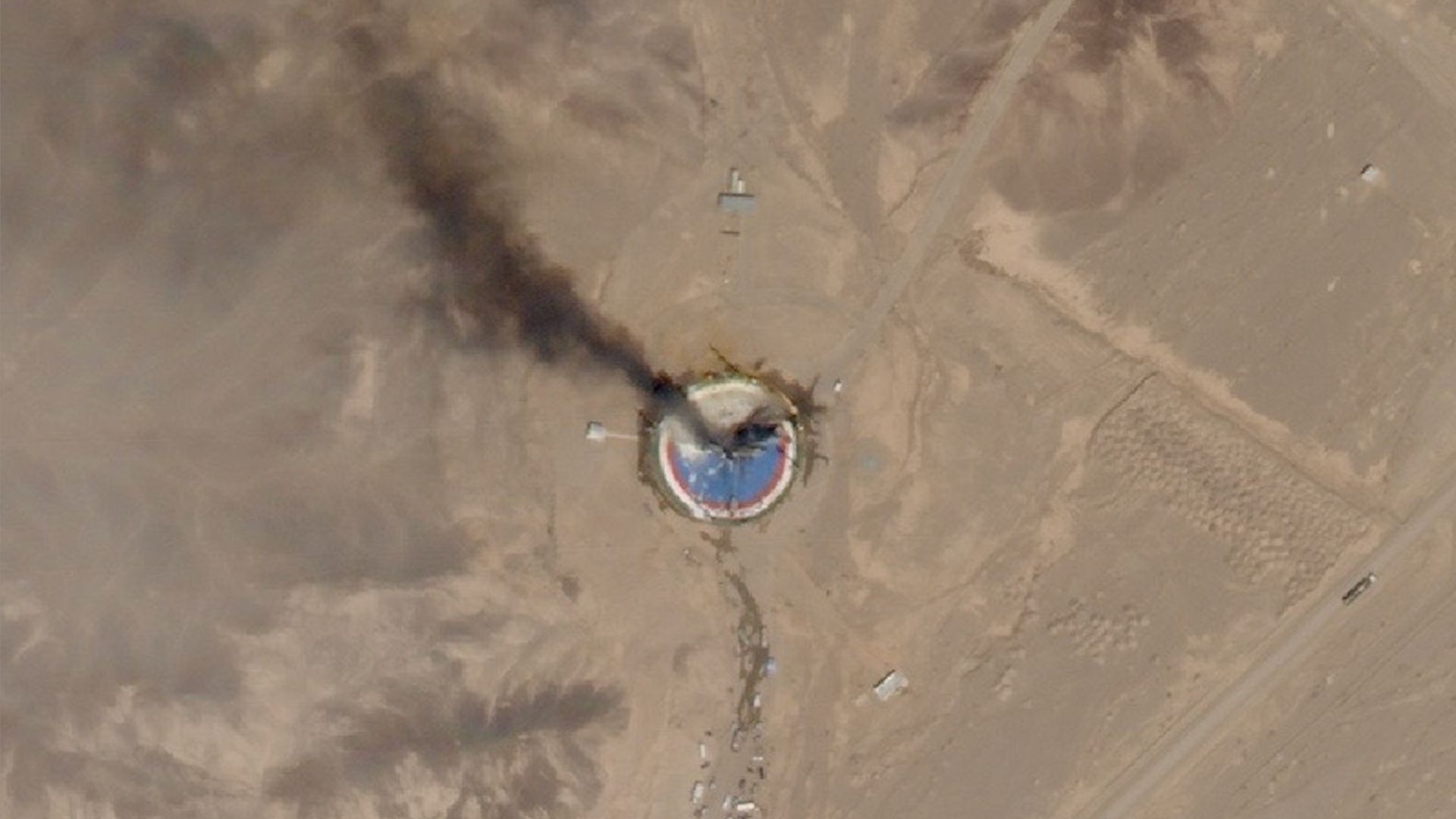
satellite photo of a circular, blue launch pad in the desert with black smoke rising from it

A SkySat Earth-observation satellite operated by the California company Planet spotted the wreckage of a failed launch out of Iran's Imam Khomeini Space Center on Aug. 29, 2019. (Image credit: Planet Labs, Inc.)

Hannes Mueller, a conflict researcher at the Spanish National Research Council, said that totalitarian governments can be very good at preventing information about atrocities from reaching the world. However, they can hardly fool satellites.

"In Myanmar, for example, when the military clears villages, they frequently kill everybody in those villages," he said. "Then you don't have any eyewitnesses for you to find out what's going on. But they usually also destroy the entire village, and so the violence leaves a mark from space."

Mueller was not involved in the new study but has used satellites in his work since the conflict in Syria in the early 2010s. He lauds the new paper for trying to "plot the road" for a more systematic integration of satellite data into conflict-monitoring data sets.

"Imagine we could generate a data stack of the entire world of all housing destruction since 2020 without any gaps in it," he said. "That would be a complete breakthrough!"

But satellites, too, have their limitations, he said. Currently, spacecraft must be tasked to take images and beam them to Earth. Because of the limited download availability, they can't image every spot they fly over, meaning they usually only reveal the aftermath of catastrophic incidents. For example, the Syrian city of Homs only became the focus of satellite imaging campaigns after the Syrian military attacked it with heavy artillery to suppress pro-democracy protests.

"There are no images of Homs before it got attacked," said Mueller. "There is no archival data of the city from before. Then, after the attack, you suddenly get lots."

In the future, onboard AI image processing — which some of the commercial satellite Earth-observation companies have already rolled out — might solve the problem. Machine learning algorithms running on computers on board the satellites will be able to detect incidents of potential interest and autonomously select significant images to send to the ground.

But there are other concerns. Just as authoritarian regimes can deny access to warzones to independent journalists, governments can order Earth-observation companies to restrict access to images of specific areas. In fact, the U.S. government did just that earlier this year when it ordered American commercial Earth-observation providers like Planet Labs to stop releasing high-resolution images of the Gulf of Oman and the Strait of Hormuz amid the escalating conflict in the region. The U.S also asked Europe to delay releasing images of that region captured by the European Sentinel satellites by 24 hours.

"With that, we are back to the same biases that we have with the news reporting," Mueller said. "We need to think about infrastructure that would provide us with transparency. That would really be a revolution in conflict research."

The new study was published in the journal Nature on Sept. 9.

  •  

On this day in space! Sept. 15, 1968: Russian tortoises (& other critters) launch around the moon on Zond 5 spacecraft in wild first circumlunar flight

On Sept. 15, 1968, the Soviet Union launched the Zond 5 spacecraft on a mission to loop around the moon and return to Earth. There were no cosmonauts aboard, but there were several smaller vertebrates — including the first two tortoises to ever go to space!

Other passengers included wine flies, mealworms, plants and seeds. These were the first animals in deep space and the first to travel around the moon.

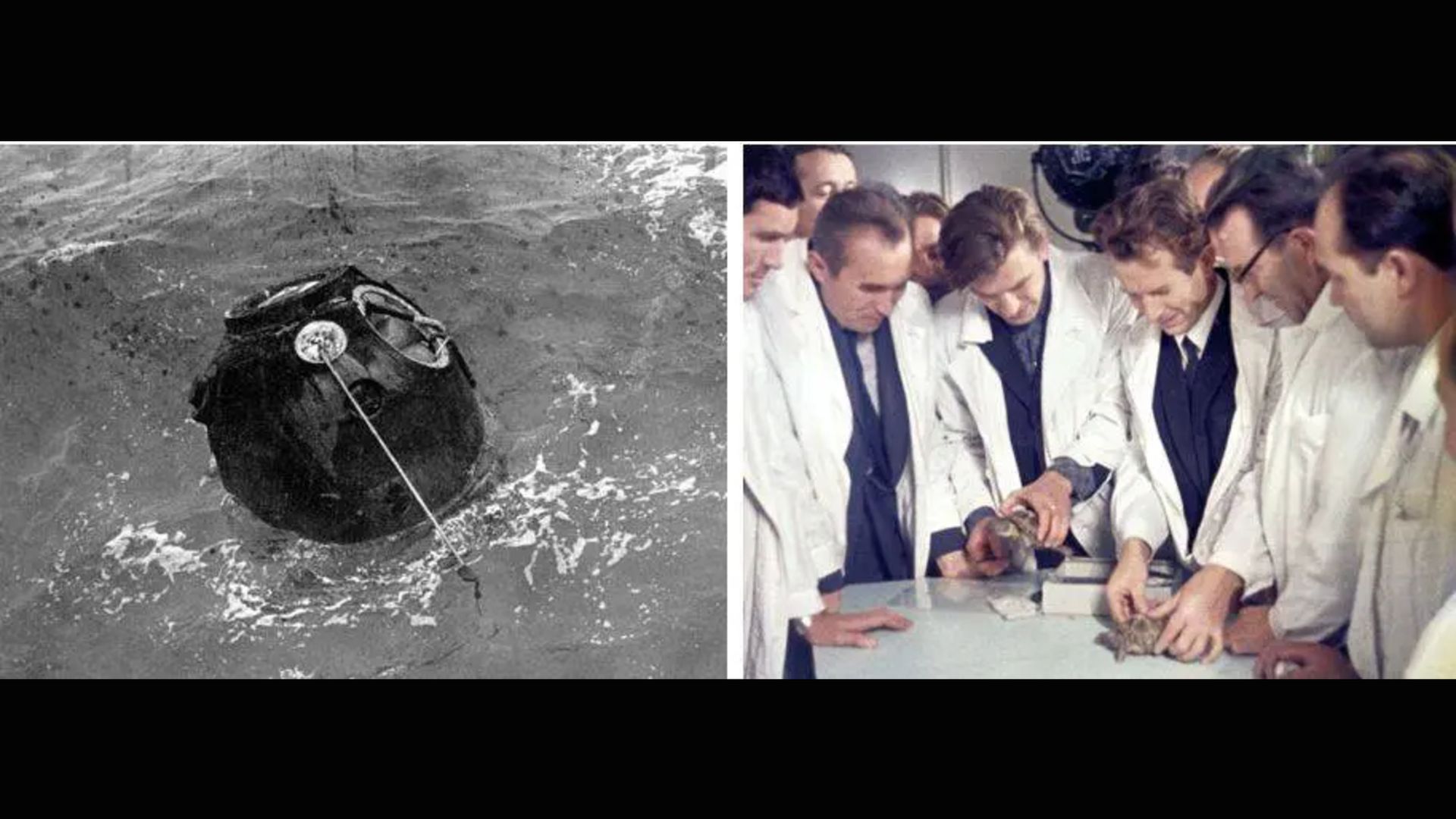
The Soviet Zond 5 rentry capsule in the ocean (left), Soviet scientists measure Zond 5 tortoises after their circumlunar flight in September 1968.

The Soviet Zond 5 rentry capsule in the ocean (left), Soviet scientists measure Zond 5 tortoises after their circumlunar flight in September 1968. (Image credit: RSC Energia)

After looping around the moon, the Zond 5 spacecraft turned around and came back to Earth. It was supposed to land in Kazakhstan on Sept. 22, but the spacecraft's guidance system failed, and it splashed down in the Indian Ocean instead.

The Soviets did recover the capsule and found that the tortoises and other critters were still alive, although they had lost some weight since the start of the mission.

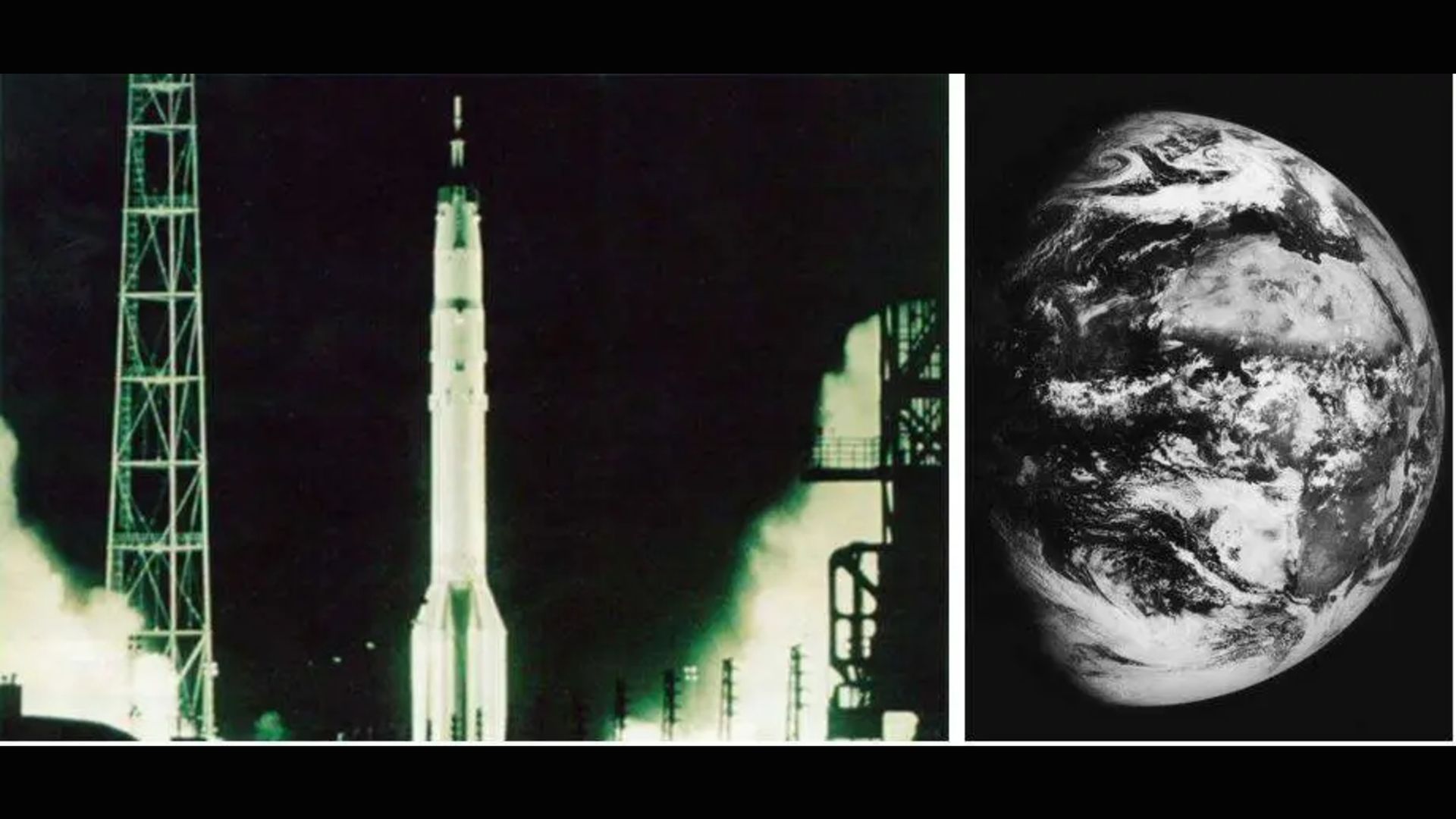
At left: The Soviet Union's Zond 5 mission launches on the first circumlunar flight on Sept. 15, 1968 from Baikonur, Cosmodrome. At right: A view of the Earth from deep space from Zond 5.

At left: The Soviet Union's Zond 5 mission launches on the first circumlunar flight on Sept. 15, 1968 from Baikonur, Cosmodrome. At right: A view of the Earth from deep space from Zond 5. (Image credit: RSC Energia)

Why it mattered

In September of 1968, the Space Race to the moon was in full swing. NASA was just three months away from the historic Apollo 8 mission, which sent the first astronauts around the moon in daring first-of-its-kind mission.

But with Zond 5, the Soviet Union scored an early win for the first circumlunar flight that launched from the Earth to the moon, then returned for a landing (or splashdown, in this case). In fact, the flight may have spurred NASA to launch Apollo 8.

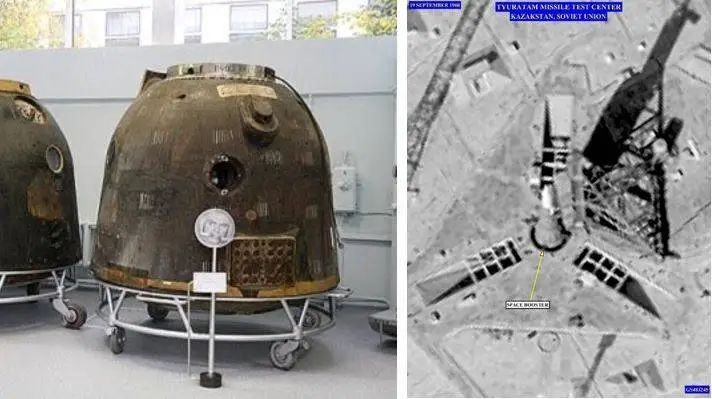
The Soviet Zond 5 rentry capsule (left) and a declassified U.S. reconnaissance photo of an N-1 moon rocket on the launch pad in September 1968.

The Soviet Zond 5 rentry capsule (left) and a declassified U.S. reconnaissance photo of an N-1 moon rocket on the launch pad in September 1968. (Image credit: NASA/RSC Energia/NRO)

"The flight of Zond 5 caused concern in the U.S. that the Soviets would place cosmonauts aboard the next Zond and complete the first crewed circumlunar mission. At about this time, a U.S. Corona reconnaissance satellite photographed an N-1 rocket on its pad at Baikonur," NASA wrote in a report, adding that NASA's then-chief James Webb likely saw those intelligence reports.

"The apparently successful Zond 5 mission coupled with the photos of the Soviet lunar booster on the launch pad may have contributed to the decision to send Apollo 8 on its circumlunar mission in December 1968, bringing the moon landing one step closer."

Zond 5 launched from Baikonur Cosmodrome atop a Proton rocket and took three days to reach the moon. The two tortoises on board were, appropriately, Russian steppes tortoises, NASA has said. After looping around the moon, the critters spent a few more days in transit for the trip home.

It was a guidance system error that led the Zond 5 capsule to splash down in the Indian Ocean instead of landing on land as planned. But the landing on Sept. 21 wasn't the end of the road for the Zond 5 tortoises and other animals.

The Soviet recovery ship Vasily Golovnin plucked the Zond 5 capsule from the ocean and returned to port in what is now Mumbai, India on Oct. 3, weeks later! They wer ethen flown to Moscow on an Antonov-12 cargo plane before the capsule was finally opened to find the tortoises alive and in good health. You can still view the Zond 5 capsule at the RSC Energia museum in Korolev.

Cassini's Grand Finale death dive at Saturn in 2017

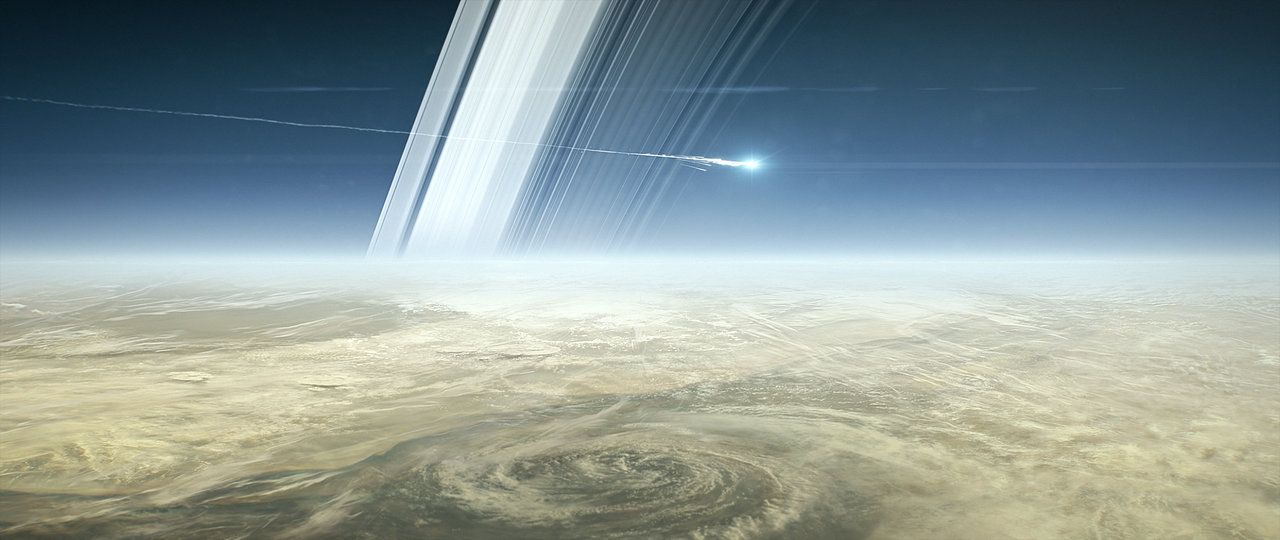
Artist's illustration of NASA's Cassini spacecraft plummeting through Saturn's atmosphere on Sept. 15, 2017.

Artist's illustration of NASA's Cassini spacecraft plummeting through Saturn's atmosphere on Sept. 15, 2017. (Image credit: NASA)

A bunch of space traveling tortoises and other animals aren't the only notable space event that happened today in history.

On Sept. 15, 2017, NASA's Cassini spacecraft died in a blaze of glory as it crashed into Saturn after 13 years orbiting the ringed planet. NASA ended the mission in a fiery plunge because Cassini was running out of fuel and the space agency wanted to ensure it wouldn't crash into one of Saturn's icy moons, like Enceladus, and contaminate them. They called it Cassini's Grand Finale.

Launched in 1997, the $3.26 billion Cassini mission entered orbit around Saturn in 2004 and dropped a European Huygens probe onto the cloudy moon Titan in early 2005. The mission was expected to last until 2008, but was extended twice, ultimately stretching through to September 2017.

During its mission life, Cassini discovered a trove if new Saturn moons, found a strange hexagon at the planet's north pole and tracked mesmerizing details of the planet's many rings.

"Congratulations to you all," Earl Maize, the Cassini program manager, said to the mission team after the spacecraft signal was lost."This has been an incredible mission, an incredible spacecraft, and you're all an incredible team. I'm going to call this the end of mission."

Want more space history? Check out our full On This Day In Space Story archive and watch our On This Day In Space videos on YouTube.

  •  
❌