❌

Reading view

Fossil Evidence Suggests Early Homo Had Abandoned Tree-Climbing by 1.8 Million Years Ago

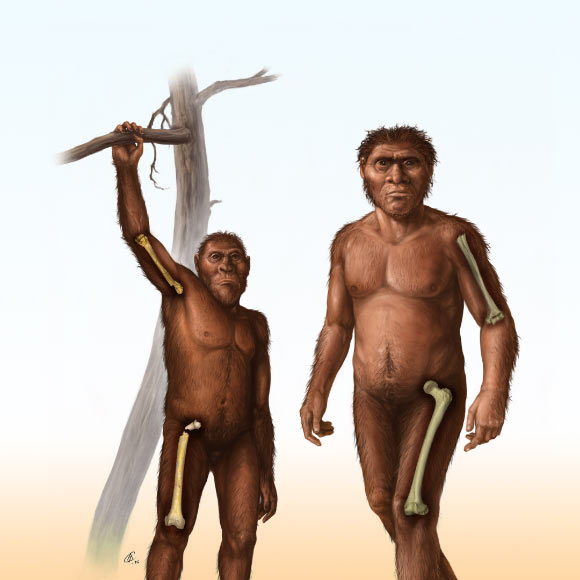
A depiction of an early Homo (right) characterized by relatively greater bone strength of the femur in the thigh compared to the humerus in the arm, and a depiction of an older human ancestor, Australopithecus (left), characterized by more equivalent strength in the bones of the arm and thigh. Image credit: Cullen Townsend.

New research led by University of the Witwatersrand and University of Southern California paleoanthropologists sheds more light on one of the most debated transitions in human evolution: when our ancestors stopped regularly climbing trees and committed fully to walking on two legs.

The post Fossil Evidence Suggests Early Homo Had Abandoned Tree-Climbing by 1.8 Million Years Ago appeared first on Sci.News: Breaking Science News.

  •  

Scientists develop new method for deciphering ancient scrolls

The Vesuvius Challenge is an ongoing project that combines "digital unwrapping" with crowdsourced machine learning to decipher the so-called Herculaneum scrolls, badly charred 2,000-year-old papyri too fragile to be physically unrolled. The effort just got an additional boost. A team of researchers created their own contemporary model papyrus scrolls—charring them just like the originals—to validate a screening method to determine which of the Herculaneum scrolls were written in lead-based ink and hence are the most promising candidates for further analysis. They described the process in a new paper published in the journal PLoS ONE.

As previously reported, the ancient Roman resort town of Pompeii wasn’t the only city destroyed in the catastrophic 79 AD eruption of Mount Vesuvius. Several other cities in the area, including the wealthy enclave of Herculaneum, were fried by clouds of hot gas, called pyroclastic pulses and flows. But still, some remnants of Roman wealth survived. One palatial residence in Herculaneum—believed to have once belonged to a man named Piso—contained hundreds of priceless written scrolls made from papyrus, singed into carbon by volcanic gas.

The scrolls stayed buried under volcanic mud until they were excavated in the 1700s from a single room that archaeologists believe held the personal working library of an Epicurean philosopher named Philodemus. The few opened fragments helped scholars identify various Greek philosophical texts, including On Nature by Epicurus and several by Philodemus himself, as well as a handful of Latin works. But the more than 600 rolled-up scrolls were so fragile that it was long believed they would never be readable, since even touching them could cause them to crumble.

Read full article

Comments

© Seiler et al., 2026, PLoS ONE/CC0

  •  

A 25,000-Year-Old Drug Habit Was Hidden in Ancient Teeth

CPL 2a SkeletonAncient teeth suggest humans were using psychoactive betel nuts 25,000 years ago, pushing the history of habitual drug use deep into the Ice Age. Archaeologists from Griffith University have found evidence suggesting that humans were using mind-altering substances far earlier than previously believed. The research team, led by Professor Adam Brumm of Griffith’s Australian Research [...]
  •  

Denisovans Once Roamed Southwest China, New Fossils Reveal

An artist’s concept of a Penghu Denisovan walking under the bright Sun during the Pleistocene of Taiwan. Image credit: Cheng-Han Sun.

Paleoanthropologists have identified a trove of Denisovan fossils from a cave in China’s Yunnan province, extending the known range of the elusive human relative and providing the first-ever direct evidence of what its forearm bones looked like.

The post Denisovans Once Roamed Southwest China, New Fossils Reveal appeared first on Sci.News: Breaking Science News.

  •  

For 15 Years We Knew Denisovans Only From Their DNA. A Chinese Cave Just Gave Them an Arm

In 2019, workers doing routine ecological restoration at a quarry in China’s Yunnan province hit something under the soil: bones and stone tools. Nobody realized at the time that this unassuming hole — known as Bianfu Cave, “bat cave,” after its former residents — would turn out to hold the largest collection of Denisovan remains […]

  •  

Scientists Discover the Earliest Evidence of Drug Use in Really Old Teeth

A hunter-gatherer who lived in Indonesia as early as 25,000 years ago may have regularly sucked on betel nuts to release their psychoactive properties.
  •  

Denisovans in southwestern China reveal their ancient subsistence strategies

The Denisovans, the enigmatic archaic human relatives first identified from a finger bone and a handful of teeth in a Siberian cave, have long been known almost exclusively through their DNA. Now, a landmark study published in Nature has pulled back the curtain on how these ancient hominins actually lived — what they ate, how they hunted, what tools they made, and the environments they braved — through an extraordinary assemblage of fossils and artefacts from Bianfu Cave in Yunnan Province, southwestern China. The findings paint the most detailed portrait to date of Denisovan biology, behaviour and ecology in eastern Asia, and suggest that these vanished people left a deep genetic and cultural imprint on later populations across Southeast Asia and Oceania.

The research team, led by Qingfeng Ruan, Hua Li and Song Xing and their colleagues, conducted a comprehensive analysis of hominin fossils and the associated archaeological remains recovered from Bianfu Cave. The hominin fossils themselves date to roughly 167,000 to 134,000 years ago, placing them firmly in the Middle Pleistocene. But the cultural sequence preserved in the cave’s sediments is far longer, stretching from approximately 190,000 years ago to about 70,000 years ago. That span — some 120,000 years of continuous or near-continuous occupation — makes Bianfu Cave one of the longest cultural records that can most parsimoniously be attributed to Denisovans anywhere in the world.

The Denisovan identity of the fossils was established through two independent and technically demanding lines of evidence. The first involved analysis of the enamel–dentine junction, the internal boundary between the enamel cap and the underlying dentine of the teeth. This three-dimensional morphological interface acts something like a fingerprint of evolutionary relationships, revealing diagnostic traits of the tooth’s internal architecture that are invisible from the outside but characteristic of particular hominin lineages. The second line of evidence came from palaeoproteomics, the recovery and identification of ancient proteins preserved within fossilized tissues. Because proteins are far more abundant and durable than DNA, they can survive in warm, humid environments like those of southern China, where genetic material degrades rapidly. Sequencing these ancient proteins allowed the researchers to place the Bianfu hominins on the Denisovan branch of the human family tree with confidence.

The fossil collection itself is remarkable. It includes four teeth that substantially expand the known range of dental variation within the Denisovan lineage — a critical contribution, since Denisovans were previously represented by a very small number of dental specimens, making it difficult to gauge how variable their teeth could be. The new fossils also include two cranial fragments and a radius, a forearm bone, providing rare glimpses of Denisovan skull and postcranial anatomy that were previously almost entirely unknown. Together, these remains transform Denisovans from a genome and a scatter of isolated teeth into a population with recognizable skeletal biology.

Beyond the fossils, the archaeological record from Bianfu Cave offers something equally precious: a window into Denisovan daily life. The researchers reconstructed the ancient environment using faunal remains and pollen preserved in the cave deposits. These records indicate that across Marine Isotope Stages 6 through 4 — a period encompassing major glacial–interglacial climatic swings between roughly 190,000 and 57,000 years ago — the landscape around the cave was dominated by coniferous forest or a mosaic of forest and steppe. This was a cool, variable environment that Denisovans exploited successfully across tens of thousands of years, demonstrating a resilience to climatic change that adds to growing evidence of their adaptability, from the high altitudes of the Tibetan Plateau to the subtropical latitudes of mainland Southeast Asia.

The subsistence evidence is particularly striking. Analysis of the animal bones from the cave shows that its inhabitants practised specialized hunting focused on medium- to large-bodied prey. This was not opportunistic scavenging but a sustained, targeted hunting strategy — one that would have required knowledge of animal behaviour, coordinated effort and effective weaponry. Specialized big-game hunting of this kind has often been associated with modern humans and late Neanderthals in western Eurasia, so finding it in a Denisovan context more than 150,000 years ago dramatically narrows the perceived behavioural gap between these archaic lineages and our own species.

Yet the technological strategy documented at Bianfu Cave is, at first glance, surprisingly simple. The stone tool assemblage is characterized by expedient core reduction and tool production — that is, the inhabitants struck flakes from cores as needed, used them, and discarded them, rather than investing in carefully shaped, curated tools that were carried, maintained and resharpened over time. Alongside this, the Denisovans of Bianfu Cave made pervasive use of unmodified bones, employing skeletal elements of their prey directly as tools without altering them beforehand.

Taken together, the researchers interpret this pattern as an adaptive system that prioritized the exploitation of what they call object affordance — the inherent functional possibilities already present in a raw material or object — over intensive tool manufacture. A suitably shaped bone fragment could serve as a hammer, a digging implement or a scraping tool with little or no modification; a sharp flake struck from a convenient core could cut and butcher without further refinement. In the rich, resource-diverse environments of subtropical southwestern China, where raw materials and animal resources were plentiful, such a flexible, low-investment strategy may have been not a sign of simplicity but a highly efficient way of life. It suggests that Denisovans measured success not by the sophistication of their toolkit but by how skilfully they read and exploited the opportunities their landscape provided.

This behavioural portrait gains added significance when set against the wider geography of Denisovan presence. Over the past decade and a half, Denisovans have been documented across a staggering range: from the original genomic discoveries in the Altai Mountains of Siberia, first reported in 2010, to the mandible from the Tibetan Plateau described in 2019, Denisovan DNA recovered from sediments at Baishiya Karst Cave in 2020, a molar from the Annamite Chain of northern Laos announced in 2022, a male Denisovan mandible from Pleistocene Taiwan reported in 2025, and proteomic identification of the 146,000-year-old Harbin cranium, also in 2025. Bianfu Cave now anchors this story firmly in southwestern China, a region long suspected to have been a Denisovan heartland and a critical corridor for hominin movements between mainland Asia and Southeast Asia.

The study’s authors argue that the region’s Denisovans point to a substantial genetic and cultural legacy in later human populations. Modern populations in Southeast Asia and Oceania carry the highest known proportions of Denisovan ancestry anywhere in the world — a legacy of interbreeding that occurred as modern humans moved through and beyond island Southeast Asia. The new evidence from Bianfu Cave suggests that the ways of life practised by Denisovans in this region — their hunting strategies, their flexible technological approaches, their hard-won knowledge of tropical and subtropical environments — may have been part of the inheritance, alongside their genes, that helped later human populations thrive as they spread across the diverse and challenging landscapes of Asia and the Pacific.

For palaeoanthropologists, the significance of the Bianfu Cave discoveries is difficult to overstate. Denisovans have been the least anatomically documented of all known hominin groups — a lineage defined first by DNA and only slowly fleshed out with fragmentary fossils. The new teeth, cranial fragments and radius from Yunnan, combined with an unmatched 120,000-year archaeological sequence, mean that researchers can finally study Denisovans not just as a genome or a set of molecular signatures but as a living, adapting population: hunters of large game, makers and users of expedient tools, and inhabitants of conifer forests that swung between glacial cold and interglacial warmth. As analysis of the Bianfu material continues, it promises to reshape our understanding of how archaic humans lived in eastern Asia and how deeply their story is woven into our own.

Subject of Research: Denisovan fossils and archaeological remains from Bianfu Cave, Yunnan Province, southwestern China, revealing Denisovan biology, technology, subsistence strategies and palaeoecology

Article Title: Denisovans from southwestern China and their subsistence strategies

Article References: Ruan, Q., Li, H., Xing, S., Zhao, K., Liu, J., Zanolli, C., Doyon, L., Delpiano, D., Peresani, M., d’Errico, F., Demeter, F., Hublin, J.-J., Xiao, P., Wang, Y., Jia, Z., Yang, Q., Fu, Q., Sun, Q., Zhao, Y., … Chen, F. (2026). Denisovans from southwestern China and their subsistence strategies. Nature. https://doi.org/10.1038/s41586-026-10997-4

Image Credits: AI Generated

DOI: 10.1038/s41586-026-10997-4

Keywords: Denisovans, Bianfu Cave, Yunnan, palaeoproteomics, enamel–dentine junction, Middle Pleistocene, subsistence strategies, expedient tool use, object affordance, specialized hunting, Marine Isotope Stages, Southeast Asia ancestry

  •  

Were Denisovans tall compared to other ancient humans?

Author: Sally Christine Reynolds, Associate Professor in Hominin Palaeoecology, Bournemouth University


Denisovans
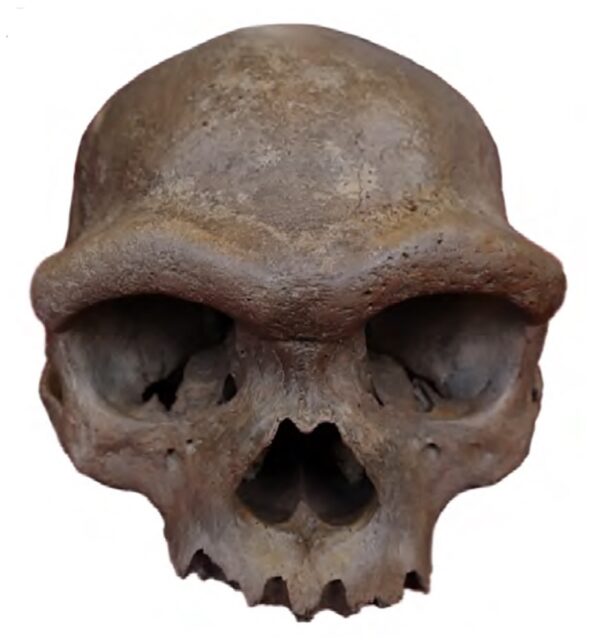
The large Harbin skull from China has been linked to Denisovans through DNA and ancient proteins. Source: Wikimedia Commons

Take a walk in London’s Trafalgar Square this summer and wilting under the heat will be all sorts of body sizes, some tall, some short: a real mix of sizes.

Picking just two from the crowd to represent the whole human species would be a tall order. But that is exactly what we do when we find fossils of ancient hominins (human relatives).

Anthropologists can estimate a person’s height with reasonable accuracy from the long bones – your femur (thigh bone) works well. On average, the size of this bone
scales well with overall height, given a large samples of bones.

This is exactly what a group of scientists have done using fossils dredged from the seafloor off Taiwan. To add to the mystery, these bones are those of Denisovans, currently one of the most enigmatic species of hominins.

The Denisovans were a widespread species of Homo (the genus which encompasses our own species, as well as close relatives such as Neanderthals). They were initially known only from genetic sequences that had been extracted from isolated fragments of material, such as a small finger bone, at Denisova Cave in the Altai Mountains of Siberia.

The apparent absence of substantial fossil material from this species made them mysterious, although in recent years, fresh discoveries have added to our understanding. These include the Dragon Man (or Harbin) skull, recovered from a river in northeast China. DNA and protein analysis has now linked this large skull to the Denisovans.

The remarkable feature of the fossils analysed by Yousuke Kaifu, from the University of Tokyo, and colleagues, is that they were dredged from the Penghu Channel in the Taiwan Strait.

Most rare hominin fossils are carefully excavated, allowing researchers to record their exact position within layers of sediment and their relationship to associated animals, artefacts and environmental evidence.

These bones were instead recovered from the seabed among the fossilised remains of terrestrial ice age mammals, probably deposited when sea levels exposed the channel as dry land around the time when the ice age was at its height. Their precise discovery locations and geological contexts were not recorded.

This makes the fossils scientifically unusual: their anatomy and preserved proteins contain valuable evidence. However, much of the contextual information normally supplied by an archaeological excavation has been lost.

Recovered long bones

The bones – an incomplete femur (thigh bone) and tibia (the largest bone in the shin) – have been assigned to two Denisovans on the basis of analyses of their recovered ancient proteomes. A proteome is the collection of proteins preserved within a fossil. These proteins can retain evidence of evolutionary relationships, even when DNA has been lost.

These bones produced slightly different proteome signals, which is why the authors suggest that these represent two individuals. The newly described femur and tibia are likewise not directly dated.

Denisovans
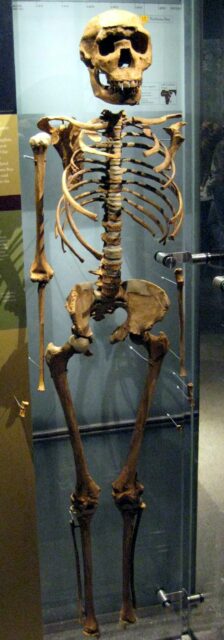
A replica of the Turkana boy skeleton at the American Museum of Natural History in New York. Source: Wikimedia Commons

Because they were recovered by dredging and lack secure geological provenance, they can only be placed broadly within the Middle to Late Pleistocene, using the animal remains and preservation evidence. The Pleistocene epoch lasted from around 2.58 million years ago until 11,700 years ago.

Aside from assigning the bones to Denisovans, the researchers have used them to infer the stature of the two individuals. They are incomplete, which complicates matters somewhat, but skilled anatomists can be reasonably confident on the complete bone sizes.

The lack of context for the fossils – normally provided by the sediments in which they are recovered from – means we don’t know if the two individuals lived at the same time or at least a similar interval.

But the bones are long and when the other body elements are scaled based on the leg bones, it suggests that these individuals were tall. In the new paper, Yousuke Kaifu and colleagues say that the estimated height of Penghu 2 (one of the newly described specimens) was approximately 1.8 metres (5’11”), with a weight of around 83kg.

Their estimates for the other fossil, Penghu 3, give a height of about 1.9 metres (6’3″) and a weight of about 91kg. These estimates, the team writes in their study, “are comparable to the largest known Pleistocene Homo from Africa and Europe”.

Inferring tallness as a species-level trait based on two individuals is challenging, although it has not prevented some headlines from claiming that Denisovans were tall. Think back to our walk in Trafalgar Square.

Proceed with caution

The dangers of reconstructing stature are illustrated by the famous Turkana Boy or Nariokotome Boy, a remarkably complete Homo erectus skeleton discovered in Kenya in 1984. He was unusual because his skull, teeth and long bones were all complete and available for study.

He was already around 1.6 metres tall when he died, but estimates of his age have differed. Dentally, he appears younger than his skeleton suggests. His skeletal development appeared comparable to that of a modern human aged around 11-13, while microscopic growth increments in his teeth suggested that he was only about eight or nine.

The discrepancy reflects uncertainty over whether Homo erectus grew slowly like us, including an adolescent growth spurt, or matured more rapidly.

Different assumptions consequently produced different projections of his adult height, although more recent modelling suggests he would probably have reached approximately 1.76–1.80 metres.

He is the only example of such a complete Homo erectus skeleton, but does this mean that all members of his species would have been as tall? We should be sceptical – just as we should be about the height of Denisovans.The Conversation


This article is republished from The Conversation under a Creative Commons license. Original article.

The post Were Denisovans tall compared to other ancient humans? appeared first on Mapping Ignorance.

  •  

Homo antecessor Had Surprisingly Modern Skull, New Fossils Suggest

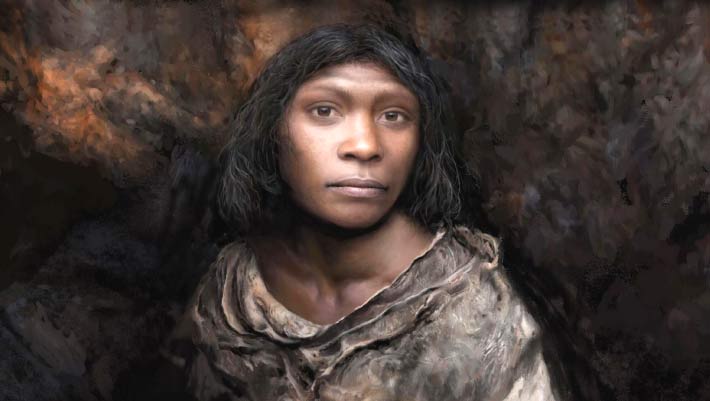
An artist’s rendering of a Homo antecessor individual known as the Girl of Gran Dolina. Image credit: Tom Björklund.

A new analysis of three skull fragments unearthed at the Gran Dolina cave site in Spain indicates that Homo antecessor had bone thickness closer to that of Neanderthals and modern people than to more archaic hominins.

The post Homo antecessor Had Surprisingly Modern Skull, New Fossils Suggest appeared first on Sci.News: Breaking Science News.

  •  

The Neanderthals of a Cave in Northern Spain Were Already Making and Reusing Bone Tools in a Standardized and Planned Way

A team of researchers from the University of Burgos and the Atapuerca Foundation has published the first detailed analysis of the bone retouchers found in the Valdegoba cave, in the municipality of Huérmeces (Burgos). This site, occupied by Neanderthals during the Middle Paleolithic, has yielded 38 bone fragments that were used as tools to retouch […]

  •  

Cave Discovery Suggests Neanderthals and Modern Humans May Have Shared Culture

Üçağızlı II Cave in Southern TürkiyeModern humans and Neanderthals may have shared more than land and genes. They may have also shared culture. Modern humans and Neanderthals may have shared more than territory, tools, and genes. New evidence from a cave in southern Türkiye suggests the two groups may also have exchanged ideas and developed similar symbolic traditions over thousands [...]
  •  

Neanderthal Gene Still Shapes Muscle and Jaws in Some Living Humans

Velazquez-Arcelay et al. found that genetic material from Neanderthal ancestors may have contributed to the propensity of some people today to be early risers, the sort of people who are more comfortable getting up and going to bed earlier. Image credit: Holger Neumann / Neanderthal Museum.

Neanderthals vanished roughly 42,000 years ago, but a piece of their biology appears to be quietly at work in some people today, according to a new study led by scientists from the Max Planck Institute for Evolutionary Anthropology.

The post Neanderthal Gene Still Shapes Muscle and Jaws in Some Living Humans appeared first on Sci.News: Breaking Science News.

  •  

Scientists Discover that the Increase in Visual Information Was What Allowed the Development of Ape and Human Brains

The research, published in the journal Science, was led by Richard F. Kay, emeritus professor of Evolutionary Anthropology at the Trinity College of Arts & Sciences and at the Nicholas School of the Environment at Duke University. The work, which used a unique collection of skulls mostly from the Natural History Museum of the Duke […]

  •  
❌