 Login

Inside Mark Zuckerberg’s Decision to Pull the Trigger on Meta’s A.I. Agent
Meta had delayed releasing Muse, its A.I. agent app, for months over safety concerns. Then new competition forced Mr. Zuckerberg’s hand.


US vice-president’s comments come as former Anthropic researcher revisits recent claim AI could destroy humanity
The US vice-president has dismissed calls for global regulation of AI safety risks, telling companies creating the most advanced models: “If you’re building Frankenstein, stop.”
In remarks addressed towards Dario Amodei, the co-founder of Anthropic who has called on Washington DC to coordinate control of AI systems, including with China, JD Vance said: “If you’re gonna create Frankenstein, don’t come to the government and say we need regulation.”
Continue reading...
© Photograph: Mark Schiefelbein/Reuters

© Photograph: Mark Schiefelbein/Reuters

© Photograph: Mark Schiefelbein/Reuters
Also: OpenAI CEO Sam Altman expressed his surprising sympathy over the construction of datacenters across the country
Hello, and welcome to TechScape. I’m Blake Montgomery, US tech editor at the Guardian, writing to you from a sunny park in New York City, which was supposed to endure rain all weekend but in fact delivered the best weather of the year.
‘We are hitting a different chapter’: OpenAI leader warns of threat of ‘persistent’ AI cyber-attacks
OpenAI announces slowing pace of development after hack by rogue agent
OpenAI launches ChatGPT for Teens with stronger safeguards
‘Digging the grave of my profession’: the Hollywood creatives training AI to do their jobs
Will AI give you the job? Automated hiring tools spark discrimination and secrecy lawsuits
After more than 15 years of laptops in the classroom, do Australian schools need a rethink?
Did someone wearing Meta Glasses film you today? Are you sure?
Continue reading...
© Photograph: Vicki Behringer/Reuters
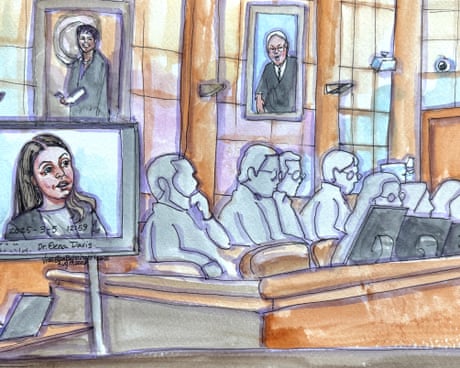
© Photograph: Vicki Behringer/Reuters
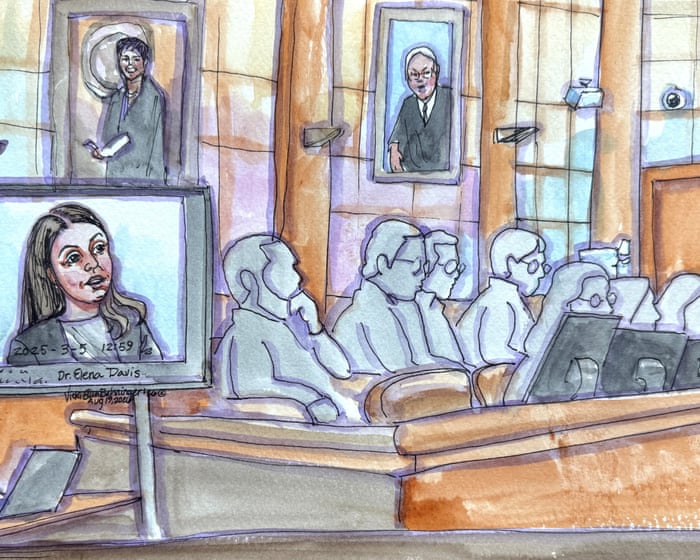
© Photograph: Vicki Behringer/Reuters
It’s simple, says the SpaceX boss – according to something called the ‘Kardashev scale’, we just have to move energy production ‘off-planet’
Next time the weather gives the UK 61 days without rain and we wonder idly if this is the end, there is a term we may whistle up to soothe us. Like murmuring the rosary, or putting our fingers in our ears and humming, this phrase is to be mumbled on repeat – “the Kardashev scale, the Kardashev scale” – a buzzy concept in tech, much favoured by Elon Musk, and precisely the thing we’ve been waiting for. The Kardashev scale is the answer both to our impending doom and our anxiety around it – and if we decide to believe in it, we won’t have to give the climate crisis a single thought until the last drip falls from the tap.
This is the idea and it’s a familiar one to anyone who has watched tech billionaires take intractable, commonplace crises and decide that, among the measures and proposals in play, the vital missing ingredient so far has been them. Do you remember when Jeff Bezos, rather than doing something quotidian and loserish like funding public education by ensuring Amazon pays the same tax rate as regular Americans, decided instead to reinvent preschools?
Emma Brockes is a Guardian columnist
Continue reading...
© Photograph: Reuters

© Photograph: Reuters

© Photograph: Reuters
A Meta está a reforçar a aposta em modelos de IA abertos e que possam funcionar diretamente nos computadores dos utilizadores. O lançamento do Muse Glimmer é acompanhado por um longo ensaio de Mark Zuckerberg, que defende uma abordagem mais aberta à IA e menos restrições nos EUA.
The post Muse Glimmer é a nova aposta da Meta na IA aberta e pode funcionar num único computador appeared first on Tek Notícias.
Meta CEO presents utopian vision of AI in 6,000-word essay amid Silicon Valley debate over government regulation
Mark Zuckerberg published a lengthy essay on Monday detailing his views on artificial intelligence and announced several plans for how Meta would develop the technology in the future. The CEO’s essay went online the same day as Meta released a new, open-source AI model that seeks to rival Anthropic and OpenAI’s products called Muse Glimmer.
Over the course of more than 6,000 words in a post titled “The Future is for Everyone,” Zuckerberg addressed a range of topics related to AI that included datacenters, government regulation, cybersecurity, the creation of bioweapons, labor market disruption, surveillance powers and more. The essay presented a utopian vision of AI as a personalized “superintelligence” – using the word 60 times.
Continue reading...
© Photograph: Nic Coury/AP

© Photograph: Nic Coury/AP

© Photograph: Nic Coury/AP
Meta has announced its intention to focus on open-weight large language models. Additionally, the company announced the release of an open model called Muse Glimmer and a promise to open the weights for Muse Spark 1.2, its more powerful model, in the next few weeks.
Alongside these announcements, Meta CEO Mark Zuckerberg published a more than 6,000-word essay outlining the company's philosophy about AI systems and governance moving forward. The essay aims to differentiate Meta from companies like OpenAI and Anthropic, which develop proprietary models and have lobbied the US government for help competing against large-scale distillation—which involves using an existing model to train a new one—or open-weight models by Chinese labs.


© Bloomberg / Contributor | Bloomberg
Social media scuttlebutt about Mark Zuckerberg’s $300 million superyacht failing to assist stranded boaters off the coast of Alaska was partly corroborated by ship-tracking data—and eventually prompted responses from both the US Coast Guard and a spokesperson for Zuckerberg.
The incident was made public when Michael Love, a passenger aboard the replica steamship Wilderness Legacy during an Alaska cruise, posted about it on the social media platform Bluesky. The ship detoured to rescue a stranded 21-foot skiff with two women, a child and a dog, after the US Coast Guard had supposedly first radioed Zuckerberg’s superyacht, Launchpad, for help without success.
“There was near unanimous booing when the captain announced this,” Love wrote in describing the Alaska cruise passengers’ response to the lack of help from Zuckerberg’s ship.
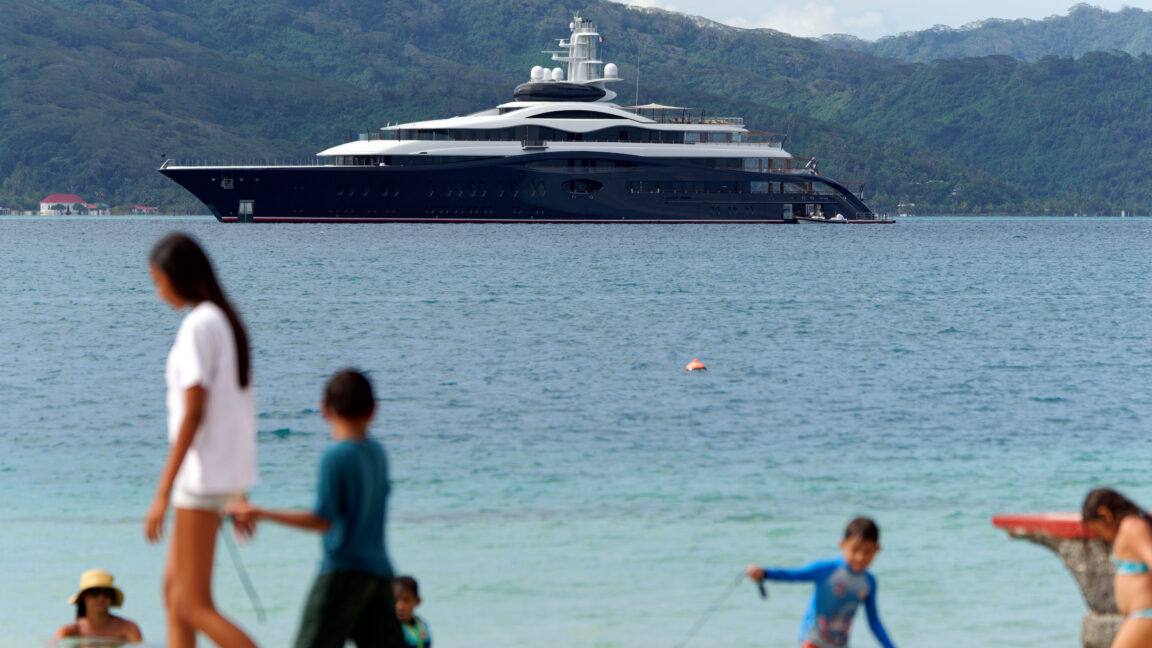
© Sylvain Lefevre/Getty Images
Social media scuttlebutt about Mark Zuckerberg’s $300 million superyacht failing to assist stranded boaters off the coast of Alaska was partly corroborated by ship-tracking data—and eventually prompted responses from both the US Coast Guard and a spokesperson for Zuckerberg.
The incident was made public when Michael Love, a passenger aboard the replica steamship Wilderness Legacy during an Alaska cruise, posted about it on the social media platform Bluesky. The ship detoured to rescue a stranded 21-foot skiff with two women, a child and a dog, after the US Coast Guard had supposedly first radioed Zuckerberg’s superyacht, Launchpad, for help without success.
“There was near unanimous booing when the captain announced this,” Love wrote in describing the Alaska cruise passengers’ response to the lack of help from Zuckerberg’s ship.
© Sylvain Lefevre/Getty Images
Ruling comes as part of second phase of landmark trial that found social media company enabled harm against users
A New Mexico court has ordered Meta, the parent company of Facebook, to pay $567m into a fund aimed at redressing adverse mental health impacts from the social media giant’s platforms.
The Thursday ruling comes as a part of the second phase of a landmark trial the social media giant lost in March. At the time, a jury found that the company knowingly harmed children’s mental health and concealed what it knew about child sexual exploitation on its platforms, and imposed the maximum penalty: a $375m fine.
Continue reading...
© Photograph: Jill Connelly/Getty Images

© Photograph: Jill Connelly/Getty Images

© Photograph: Jill Connelly/Getty Images
'Most people don’t want pervert glasses that can film us without our consent,' said a spokesperson from activist group Everyone Hates Elon. The group has launched a series of guerilla adverts deriding non-consensual filming by the glasses as well as an email campaign encouraging people to legally object to being filmed by Meta glasses under general data protection regulations, which over 20,000 people have signed.
Rights groups have warned that the glasses threaten the right to privacy, while countries such as Germany are reportedly considering a ban.
And while Meta’s safety guidelines say smart glasses should not be used for 'harassment, infringing on privacy rights, or capturing sensitive information', women have taken to social media to share their stories of being filmed by men without their consent.
Watch as Guardian columnist and Opinion editor Kirsty Major dives into why fears of surveillance and 'creepy men' mean Meta can never convince her to love the glasses – and read more about the glasses via the link in the bio
Continue reading...
© Photograph: Guardian
© Photograph: Guardian
© Photograph: Guardian

Meta’s Ray-Ban smart glasses are quickly earning a far less flattering nickname: “pervert glasses.”
A new investigation has exposed how highly personal videos captured by users — including people undressing or using the bathroom — are being sent to contractors in Kenya for AI training, often without the subjects’ knowledge. The revelations have sparked widespread outrage online, with many accusing the devices of turning everyday wearers into unwitting voyeurs and reigniting deep concerns about privacy in the age of always-on AI surveillance.
Victor Tangermann for Futurism:
Automated systems designed to blur faces often failed, the contractors claimed, effectively giving them a front row seat of somebody’s most intimate moments.
“I don’t think they know, because if they knew they wouldn’t be recording,” one contractor said.
Many have quickly embraced a term for the devices that’s presumably sending Meta CEO Mark Zuckerberg into paroxysms of fury: “pervert glasses.”
“Glad people are settling on the term ‘pervert glasses,’” another agreed. “Bonus points if you also say it while posting a picture of Mark Zuckerberg or call them Mark Zuckerberg’s pervert glasses.”
“Not a fan of Mark Zuckerberg’s pervert glasses,” wrote yet another. “I would prefer technology to make it more difficult to skeez, creep or perv on the world. I would like tech to protect me from creeps, not smooth the runway for them.”
The threat of simple smart glasses being used for surveillance isn’t some dystopian vision of a far future. Researchers have already shown that Meta’s smart glasses can be used to instantly reveal the identities of strangers in public — tech that Meta has reportedly been working on itself.
All told, smart glasses are a product category rife with uncomfortable connotations, especially when worn in the presence of others who may not know they may be recorded.
MacDailyNews Take: Unless their goal was to trash their reputation as quickly as possible, we bet Ray-Ban is rethinking its poor decision to tie up with an outfit like Meta.
Meta is to privacy as Chernobyl is to nuclear power. – MacDailyNews, December 19, 2024
Please help support MacDailyNews — and enjoy subscriber-only articles, comments, chat, and more — by subscribing to our Substack: macdailynews.substack.com. Thank you!
Support MacDailyNews at no extra cost to you by using this link to shop at Amazon.
The post Meta Ray-Bans are being called ‘Mark Zuckerberg’s Pervert Glasses’ appeared first on MacDailyNews.
