❌

Reading view

Denuvo sues anonymous game cracker ‘voices38’ over alleged DRM circumvention — seeks damages after Anti-Tamper protections bypassed in 26 games

Anti-Tamper and DRM (Digital Rights Management) software developer Denuvo is taking its fight against video game piracy to court by filing a lawsuit against the anonymous game cracker known as “voices38.” According to TorrentFreak, the company claims that the accused bypassed its Anti-Tamper technology in at least 26 PC games and is seeking monetary damages as well as a court order that would prevent further tampering of its DRM.

In its lawsuit filed on September 14 in the U.S. District Court for the Northern District of California, Denuvo alleges that the “defendant is a computer hacker who is focused on reverse engineering, hacking, or ‘cracking’ video games employing Denuvo’s Anti-Tamper product. Defendant has bypassed DRM restrictions in copyrighted works, removing protections that allow copyright owners to restrict who may access their works, and allowing for pirated versions of those copyrighted works.” The complaint also named 26 games including popular titles such as Hogwarts Legacy, Black Myth: Wukong, Resident Evil Requiem, and Doom: The Dark Ages.

It is worth mentioning that Denuvo doesn’t actually own the copyrights to any of these games. Meaning that instead of a filing for copyright infringement, the complaint relies on the anti-circumvention provisions of the DMCA. It essentially prohibits bypassing a digital lock that controls access to a copyrighted work, or distributing tools and instructions that help others to bypass copyright protections.

What makes the case interesting is that Denuvo does not know the real identity of voices38. It only points to the defendant as “an unknown individual or entity” alongside ten other unnamed defendants. The complaint also references Reddit and Discord accounts as well as Steam profiles that Denuvo believes may be connected to the cracking activity. The company could eventually seek information from these platforms as part of its legal proceedings.

Voices38 has been particularly active in recent months, with reports pointing to a growing number of Denuvo-protected game cracks to the anonymous cracker. Recent releases include Star Wars: Outlaws, Persona 3 Reload, and Prince of Persia: The Lost Crown. For Denuvo, the lawsuit could lead the way in identifying one of the more active figures in the recent video game-cracking scene. That said, the case is still in its early stages, and Denuvo's allegations have yet to be tested in court.
  •  

Original Sony PlayStation 2 security chip ‘broken wide open’ after 26 years — chemical decapping and four years of reverse engineering unlocks MechaCon secrets

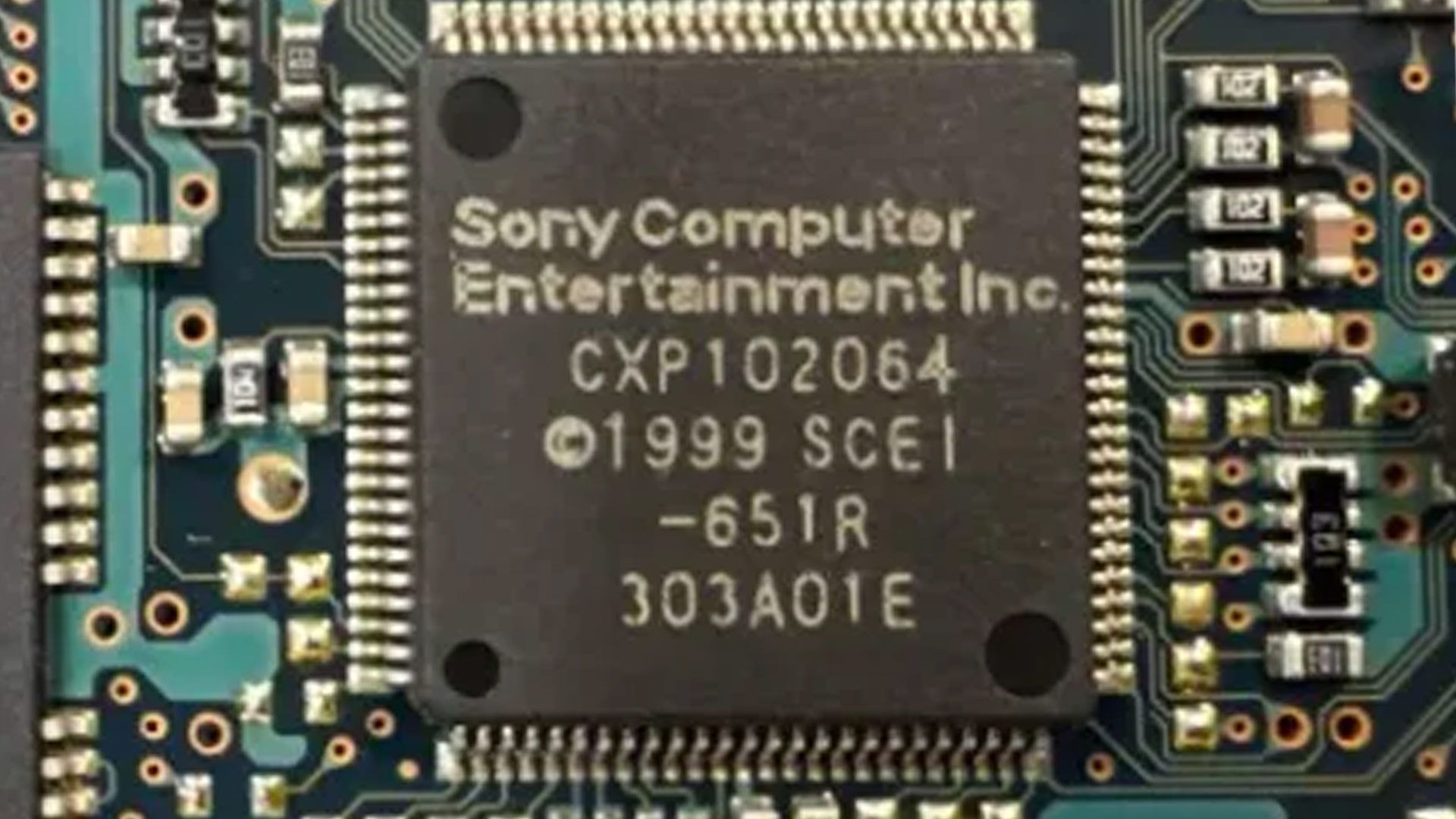
The ‘magic security chip’ inside the original PlayStation 2 has been successfully reverse-engineered and dumped. Canadian retro hardware and software enthusiast DiscoStarslayer was the manic mind behind the cracking open of the CXP102064 MechaCon chip, which arrived inside the ‘PS2 Fat’ from 1999. It took “four years of effort” to reach this stage, but this milestone should be a boon to hardware preservation, repair, and emulation projects.

After 4 years of effort, I'm happy to announce that one of the final secrets of the PS2 has been broken wide open!It's been a long process of decapping, optical dumping, and now at last a software solution.Thank you Libby for finding the exploit from our dirty optical dumps! pic.twitter.com/VrsCH8I35CSeptember 13, 2026

The Mechacon got its name from its primary duty of controlling the PS2’s optical and flash drive mechanics. It also played a significant part in Sony’s game optical disc security, supporting “Magic Gate [memory card] and KELF file [executable] decryption among other things,” notes the PSDev Wiki. Unlocking the secret workings of such chips can be important to those involved in video game preservation. So, many people will appreciate DiscoStarslayer’s work in reverse engineering and dumping one of the PS2’s last remaining secrets.

As per the social media post, the arduous task of breaking the MechaCon’s security took four years. Some of the reverse engineering tricks utilized by DiscoStarslayer include chemically decapping the CXP102064 to expose the die, then using microscopes and optical dumping skills to analyze the silicon chip circuitry. In this case, a lucky break during the hacking apparently uncovered an exploit that provided a method whereby the chip’s data could be extracted through software.

With this achievement unlocked, the game/hardware preservation and programming communities can look forward to improved emulation and homebrew developments. It should also open up possibilities for replacing the aging optical drives in PS2 consoles.

Beyond the confines of PS2 Fat consoles, some social media commenters noted that the MechaCon was also used in a handful of arcade machines from the era. Specifically, the Namco System 246 and System 256, as well as the Konami Python 1, which used modified PS2 hardware, used the MechaCon firmware to authenticate security and allow the execution of encrypted game data.

  •  

Devastated father says his 9-year-old son spent $118,000 on YouTube ad campaigns for his Minecraft channel using a company credit card — bill racked up in just three weeks was supposed to be one $20 promotion

A father says his 9-year-old son spent $118,000 on YouTube ad campaigns for his Minecraft and Roblox gameplay videos over about three weeks, all charged to a company credit card the father had saved to his own Google account, which his son also used. The father, who identifies himself only as Dave, described the incident in a video titled “Message from Dad…Mighty Mike Plays is Over.” posted to the boy’s channel on Sept. 15. Dave said he was called into a meeting with his manager, corporate staff, and finance and shown the advertising charges.

Mighty Mike Plays (@MightyMikePlays67) is a 9-year-old’s Minecraft and Roblox gameplay channel with about 24,000 subscribers and 182 uploads as of early Sept. 16. Dave said it started when the boy was around 8, streaming straight from a PS5 with a cheap headset and no editing. Early videos got 5 to 11 views, he said. Dave said he entered the company card himself to buy Robux for his son, and it then sat saved on the Google account that also carries his work email, calendar, and files. Dave did not say why he used the company card for that purchase.

Dave said that after the boy complained about views, he set up a roughly $20 promotion and talked through the steps aloud: set a budget, select who sees the ads, hit run. The boy then created his own campaigns, and Dave said his son did not understand the $20 as a limit. “The credit card, it just says approved every single time,” Dave said in the video. Finance showed him three weeks of ad spend totaling $118,000 on campaigns titled “Mighty Mike,” “Epic Roblox,” and Minecraft gameplay.

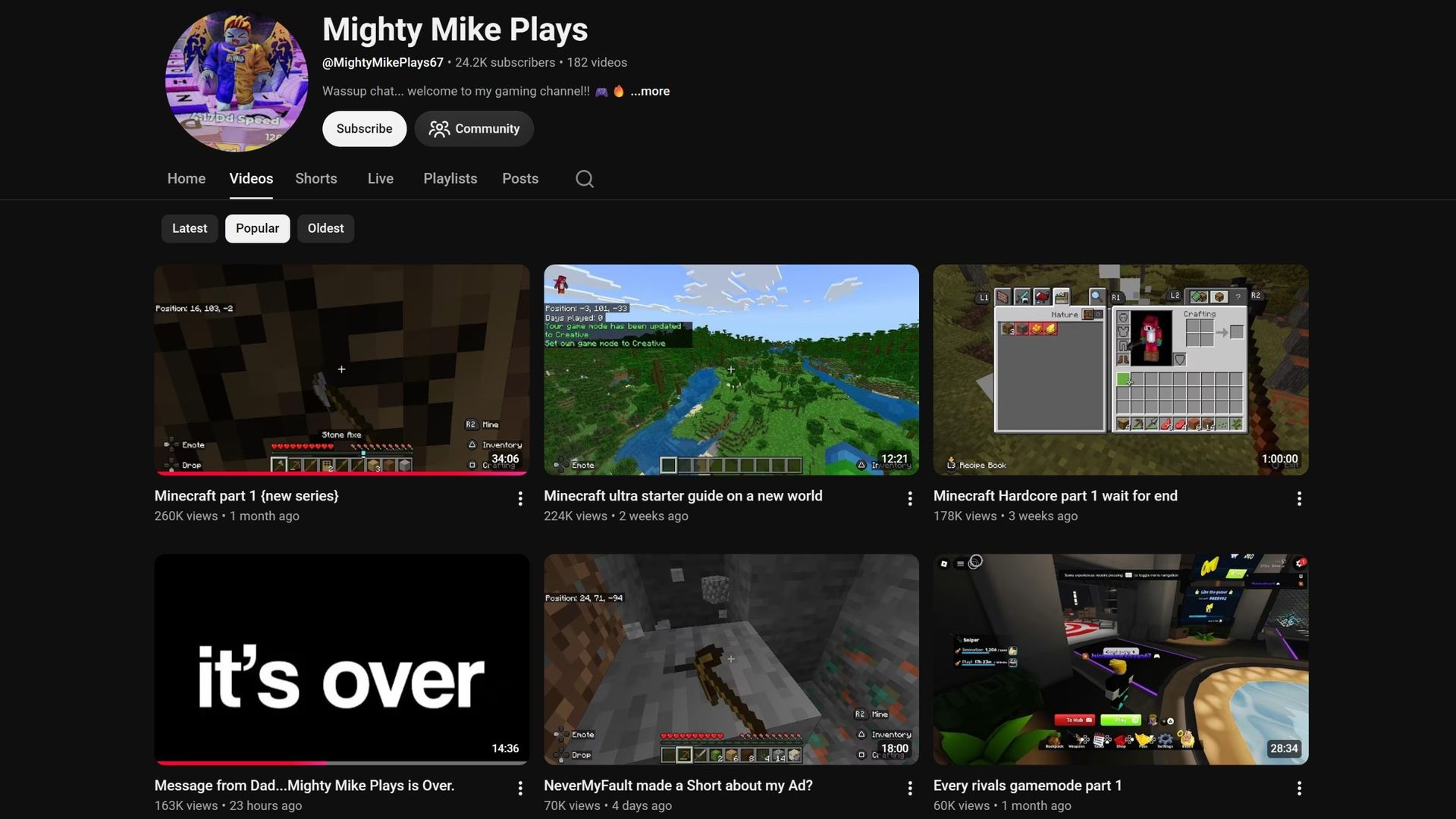
Three of the promoted videos reached around 200,000 views. As of a check at 12:26 a.m. ET on Sept. 16, the channel’s three most-viewed gameplay videos stood at 260,000, 224,000, and 178,000 views, with a run of uploads above 1,000 views and most of the rest under 100. Four days before Dave’s video, the boy had posted a video titled “NeverMyFault made a Short about my Ad?” about another creator noticing one of his promotions; it had about 70,000 views.

The Mighty Mike Plays channel's Popular tab as of 12:26 a.m. ET Sept. 16.

(Image credit: YouTube / Mighty Mike Plays)

Dave said the matter has been escalated and he does not yet know whether he will get to keep his job or have to repay the costs.

Google’s own help pages say a payment method entered for any Google purchase is stored in a payments profile tied to the Google Account and is offered again for the next purchase. The profile is also shared across Google Ads and other Google products. YouTube’s Promote tool, which Google describes as a simplified version of Google Ads, walks a creator through a goal, an audience, a budget, and an end date. Dave did not say which interface his son used, but the steps he described match Promote’s. Google Ads does not allow users under 18, but the account was the father’s.

In a separate case, the FTC announced on Sept. 4, 2014, that Google would refund at least $19 million to parents billed for children’s unauthorized in-app purchases on Google Play, and required it to get express consent before billing. That covered Google Play, not Google Ads. Dave said the family will remove saved payment details, add spending caps, and set up parental controls, and that the channel is paused until “real guard rails” are in place.

  •  
  •  

Minecraft Legacy gets rewritten in C++ for PS2 and Wii ports — code is tuned so it works well even on the PS2’s meager 32MB of RAM

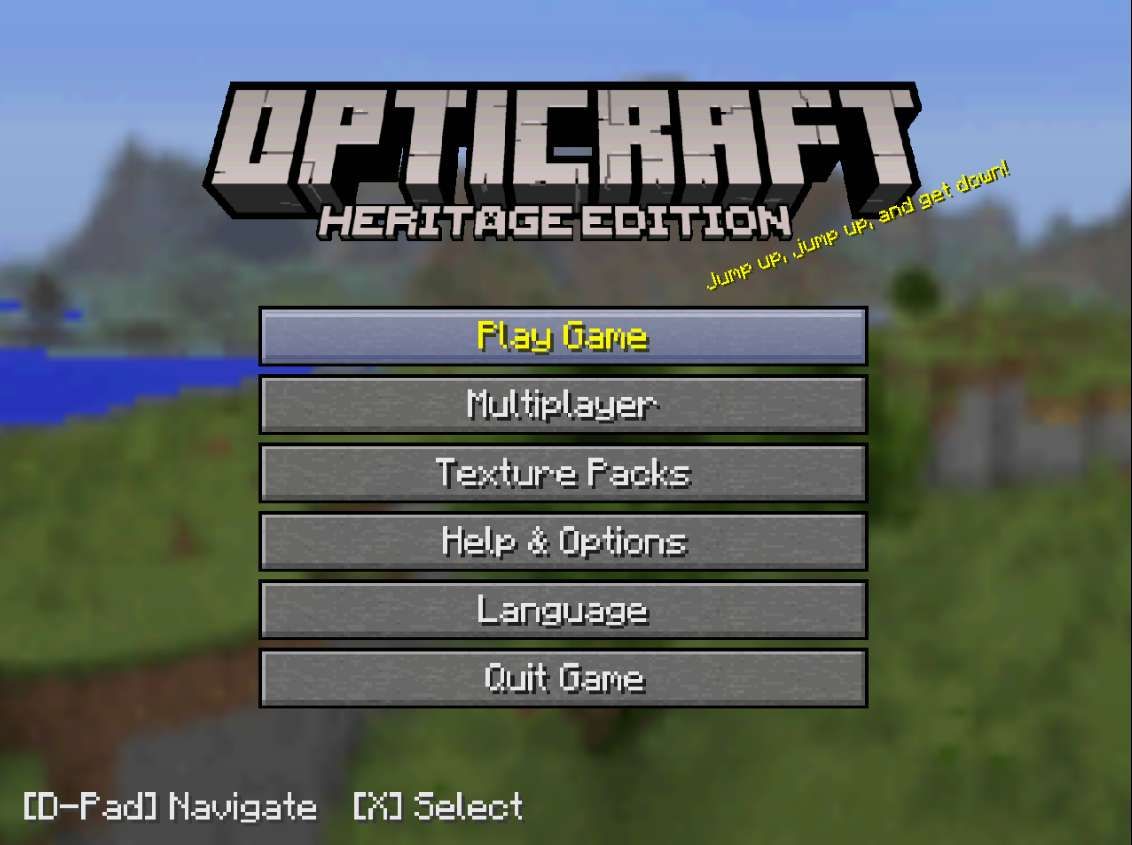
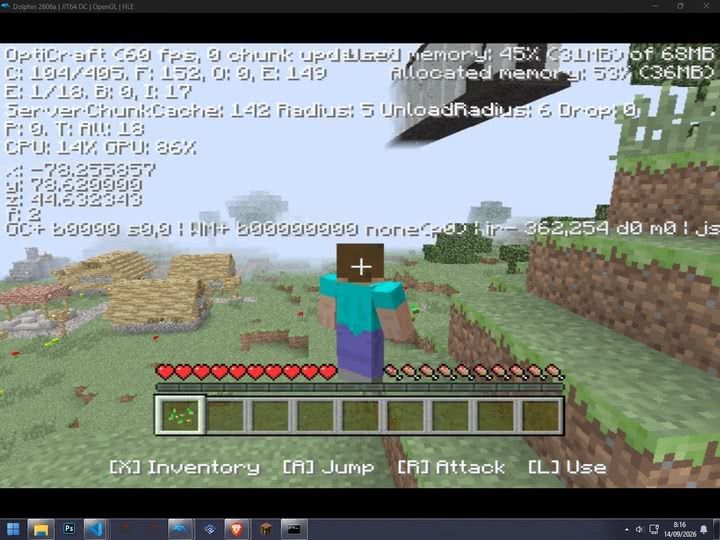
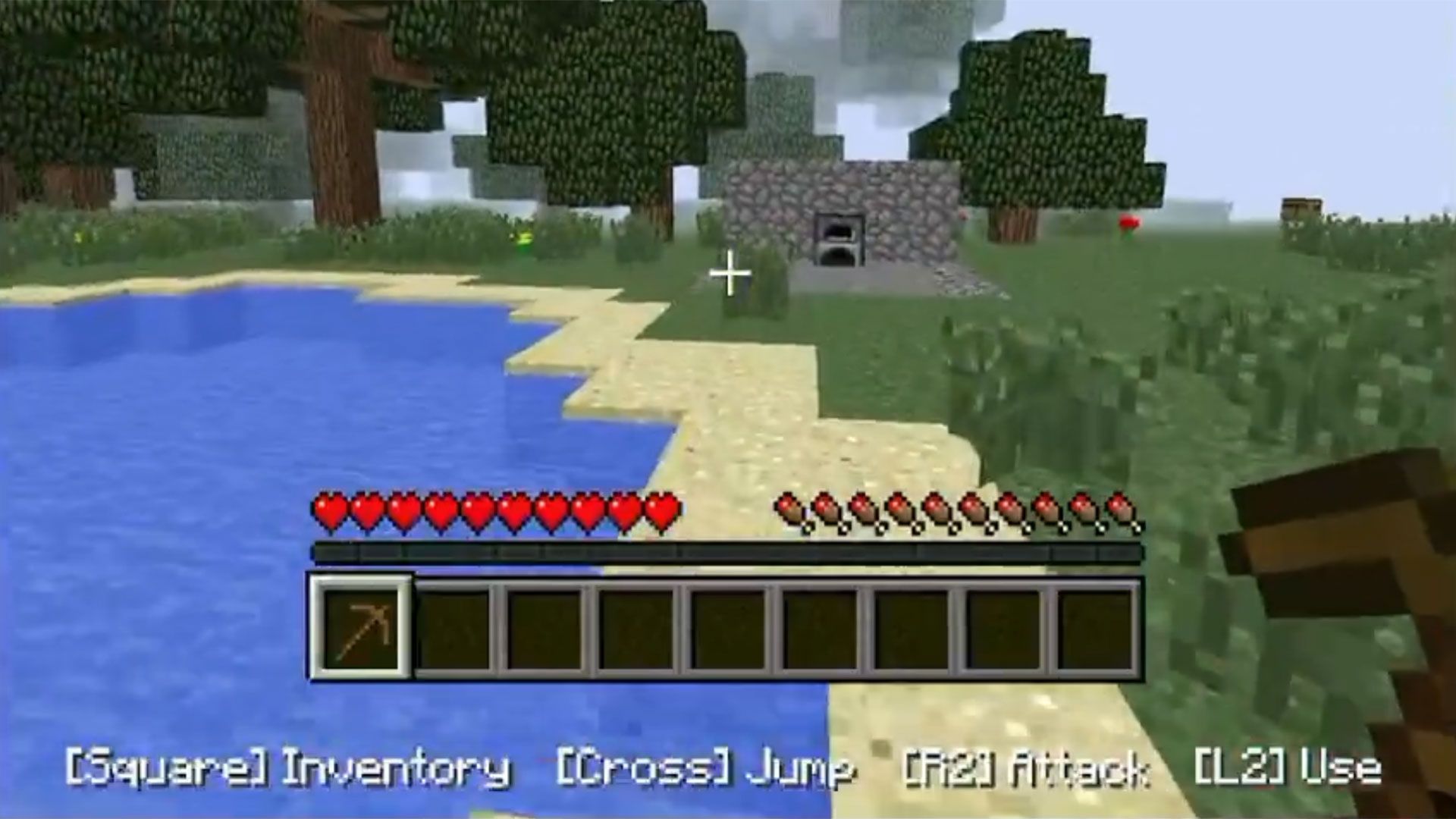
Games optimization specialist OptiProjects (AKA OptiJeugos) has released a new port of Minecraft Legacy for the Sony PlayStation 2 and Nintendo Wii consoles. The project is based on the Minecraft Java 1.2.5 source code, rewritten in C++, and using a recreated legacy console interface (machine translation). Even on the quarter-century-old PS2 with its cramped 32MB of RAM, the OptiCraft Heritage Edition runs at 15-30 fps. Check out the video demo embedded below.

TERMINADO!!! FINALMENTE NUEVO PORT DE ""MINECRAFT LEGACY"" a PS2 y WII!!Es un PORT de JAVA 1.2.5 a C++ con la interfaz de Legacy recreada, corriendo nativamente en la PS2 y Wii.Probado en hardware real! La wii soporta online con servidores de JAVA en esa version! https://t.co/x3pQw8XvBJ pic.twitter.com/nZNc0QehGySeptember 14, 2026

Minecraft is one of the best-selling games of all time, with sales above $400 million according to an Entertainment Weekly report earlier this year. Meanwhile, the PS2 is the best-selling home console in history, with 160 million units shifted worldwide. When Minecraft first launched, the PS2 had already been kicking around for close to a decade and was rapidly reaching retirement age. Thus the Minecraft PS2 game release was never a thing (it did launch on PS3 in 2013-14). Similarly, the Wii got overlooked by Minecraft's publishers, with the Wii U only getting the game in late 2014.

Windows PC (Java Edition 1.2.5)

PS2 (OptiCraft Heritage)

Wii (OptiCraft Heritage)

Engine / Language

Java

C++ (native port)

C++ (native port)

Hardware / RAM

Min. ~2GB recommended for era

32MB system RAM

~88MB available RAM

Chunks / draw distance

Scalable, (usually 8–16+ chunks)

2 chunks

4 chunks

Performance

Often 60+ FPS on period PCs

15–30 FPS

15–60 FPS

Controls

Keyboard + mouse

DualShock 2

Wii Remote / Classic Controller

Interface

Original 1.2.5 UI

Recreated Legacy interface

Recreated Legacy interface

Ponder over the features and performance comparison table we have nailed together, above. You can see how tightly the PS2 version is constrained by its hardware limitations. In comparison the Wii version is significantly more comfortable. Moreover, the Wii version has experimental online gaming functionality.

Minecraft Legacy for the Sony PlayStation 2 and Nintendo Wii
OptiProjects
Minecraft Legacy for the Sony PlayStation 2 and Nintendo Wii
OptiProjects

If you are interested in enjoying some retro Minecrafting on your old PS2 or Wii, or emulators for either system head on over to the official OptiProjects page linked top for your downloads. Those aiming to play on original hardware will need to be able to load .ELF files from USB (on PS2), or access the game via SD card and the Homebrew Channel (on Wii). To my knowledge that means your PS2 or Wii must be soft or hard modded to play homebrew code.

  •  

Need for Speed Underground 2 now runs directly on Nintendo Switch — other Classic Windows titles playable thanks to custom firmware boot

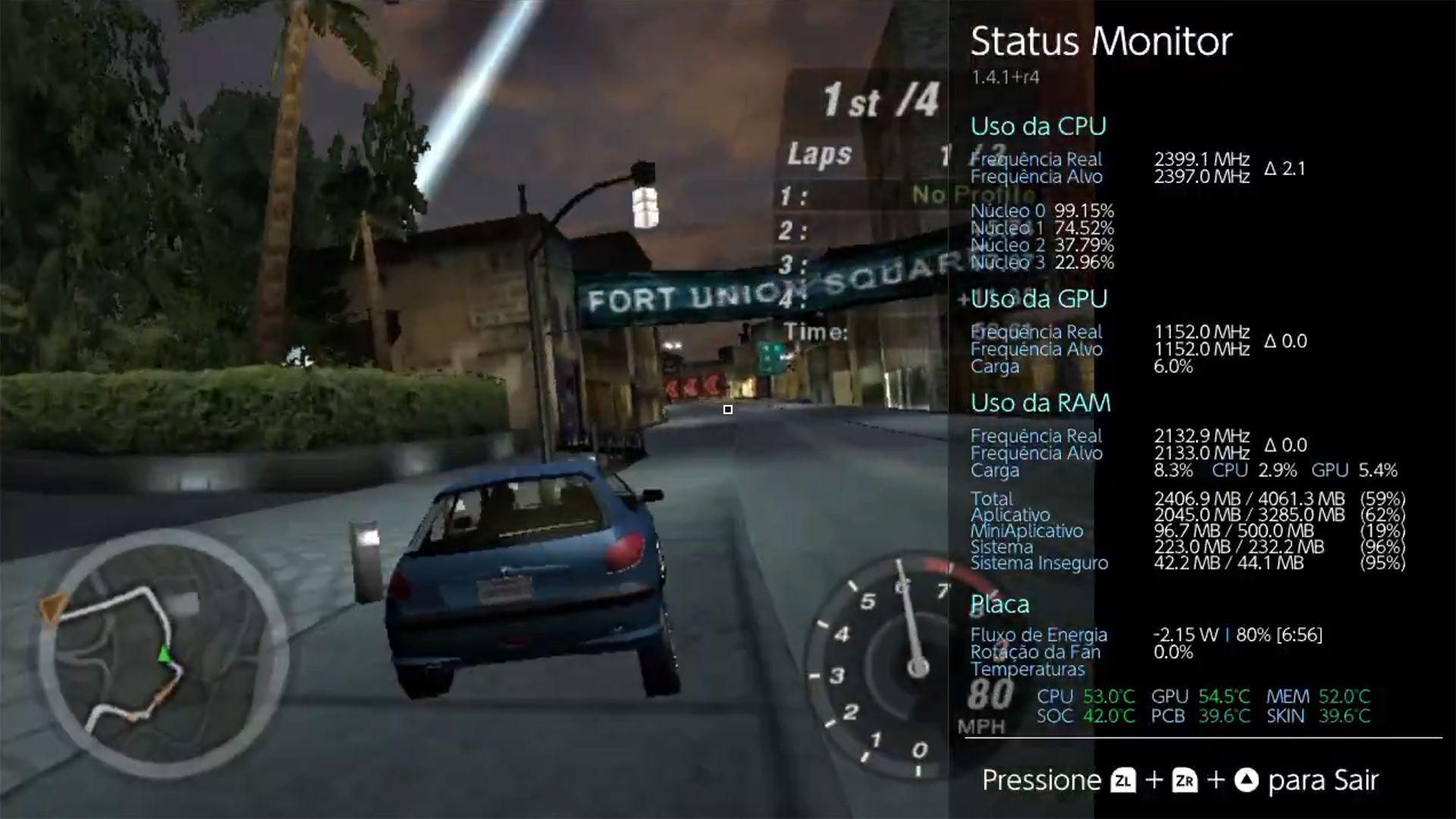
Retro gaming fans who own Nintendo Switch consoles now have several classic Windows titles they can now enjoy. A video shared on Twitter/X shows the well-loved Need for Speed Underground 2 running pretty smoothly on Nintendo’s hybrid device. Meanwhile, a forum about Wine-NX says that Quake III and OpenTTD are also playable, with WarCraft III nearly ready, too. It's early days for this 'experimental' software, but things look very promising.

Windows x86 games are now running directly on Nintendo Switch homebrewNeed for Speed Underground 2 on capture 😀 pic.twitter.com/SD0sugV4DsSeptember 13, 2026

In the embedded video you can see NFSU2 runs rather well on Nintendo’s hardware. Older PC games are perhaps a good fit for what many consider to be the rather anemic specs of the Switch. A status panel shows CPU and GPU usage. According to the forum post “Races run at roughly 20–45 fps at default detail with the CPU overclocked.”

Other games that Wine-NX can handle well at this time include OpenTTD (Transport Tycoon Deluxe), which runs at up to 60 fps. Quake III Arena is also capable of running at around 37 fps at 1,280 x 720 pixels, according to the source. The last PC game mentioned as being compatible, almost, is WarCraft III, and specifically this work in progress has working “menus, campaigns, and now cutscenes.”

The Wine-NX forum page linked to helpfully explains what exactly this is, and how it works. In brief, Wine-NX is a port of Wine 11 to the Switch’s native Horizon OS. It comes as a homebrew package in the NRO format Horizon expects games to be in, but that allows it to run Windows programs and games with Box64's ARM64 dynarec translating the x86 code. Graphics are handled through Mesa 20.1's nouveau driver. It supports audio and touchscreen, and the Switch controllers can also handle mouse / keyboard duties – as well as doubling as an Xbox 360 controller.

You can’t use any Nintendo Switch to load Wine-NX and Windows PC games. You’ll need to have a console that can boost custom firmware, and run homebrew NROs. That means an older unpatched Switch or one with a hardware mod.

  •  

Nintendo of America puts tariff refunds towards 'customer appreciation' sale, but no refunds to Switch 2 buyers — offers 30% off games and accessories from September 13 to 26

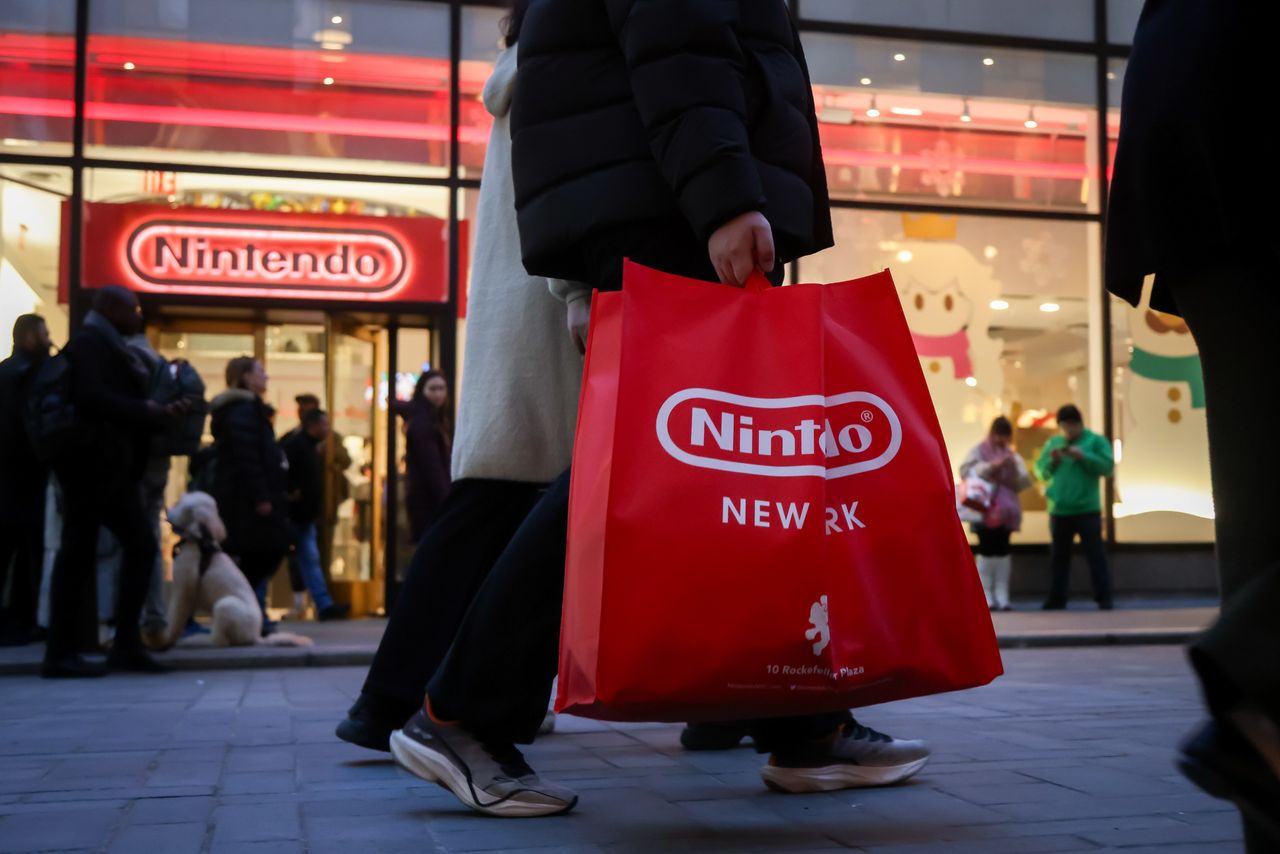
Nintendo of America got its tariff refund and is using the money to hold a sale, rather than returning it to customers who paid higher-than-expected prices for the Nintendo Switch 2 and accessories. The rare promotion, dubbed the "Customer Appreciation Sale," will run from September 13 to 26 and will offer 30% off digital Switch games, bundles, and "select physical games, downloadable content, accessories, amiibo, and apparel." Discounts will be available in Nintendo Stores and the Nintendo eShop, as well as other participating retailers.

"The Customer Appreciation Sale is our way of saying thank you to Nintendo players for their continued support and is made possible in part by tariff-related refunds," a brief blog post on Nintendo's U.S. website reads. "While Nintendo absorbed most tariff-related costs, the refunds helped make promotions like this one possible."

In a 2026 earnings document, the company stated that it got $300 million in tariff refunds.

Nintendo of America is facing a proposed class action lawsuit from customers who believe the company will be made whole twice: once through raised prices and a second time through the refunds. Sony is facing a similar suit, and in September, Nintendo of America filed a motion to dismiss its suit.

Nintendo was hit hard by the Trump administration's tariffs. Soon after the Switch 2's initial announcement, the company delayed U.S. pre-orders for the console, though the system launched on time. In May, Nintendo raised the price of the Switch 2 by $50 to $499, though that also priced in component shortages and included hikes in Europe and Japan.

In March, Nintendo of America sued the U.S. government in the U.S. Court of International Trade seeking refunds, joining Costco, FedEx, Revlon, and more than 1,000 others. The Supreme Court ruled that large swaths of the tariffs were unlawful, with over $166 billion due back to American businesses. By the end of July, the government had paid $100 billion in refunds.

Most companies seem to be pocketing the refunds, even though costs were typically passed on to American consumers. In August, Panic, which makes the handheld Playdate focused on indie games, refunded tariffs to customers.

  •  

Steam enforces Australian age verification via credit cards — debit card glitches and low credit adoption alienate core gamers, privacy-first mindset leads to dearth of options that may hinder consumers

Today is September 9, and the significance of the date for Australian consumers is that, by law, buying online apps and games now requires an over-18 age verification step. The local law isn't specific about the exact type of verification, only that it offers "appropriate age assurance measures." Valve is complying by asking for a bank card rather than government ID or a biometric check. The problem in the land down under is that while credit cards seemingly all work, debit card support is spotty and conditional.

This situation isn't unique, as it's basically a repeat of the same existing scenario in the United Kingdom. Valve's privacy-minded approach is laudable, as a bank card only links a payment method to a name and address. Meanwhile, a government ID is a more dangerous document if it gets leaked; face scans are quite fallible and revealing, and biometrics are intrinsic to the person and not replaceable if exposed — unlike bank cards, which can be canceled and swapped in minutes.

However, having a card check as the only verification option is causing problems, and many users are already asking for other means of verification, even if they're more invasive, citing Xbox and Sony's services as more accommodating.

Since credit cards in Australia (and the UK) can only be issued to adults, they work fine for Steam verification. Debit cards, on the other hand, can be carried by minors, and they're only valid for age checks under specific conditions. For now, that seems to be those (a) belonging to the Mastercard network, which introduced its own global automatic age verification check on June 2, 2026, and (b) for which the issuing bank flagged the card product as adults-only. The transaction firm only passes the answer to "is the buyer an adult?" back to the merchant (in this case, Steam), without exposing an actual date of birth.

A quick harnessing of user reports, mainly from Reddit posts, seems to indicate that debit Mastercards from Commonwealth, Westpac, and Macquarie appear to work, while those from Bendigo, St. George, Revolut, ANZ, and most Visa cards seem to fail the check. Note that this is an evolving situation, so the situation may have changed by the time you're reading this.

The demographics of credit card ownership definitely don't help matters. Unlike the U.S., where credit cards are the default method of purchase, only about 45% of Australian buyers and 65% of UK punters own one. Perhaps most importantly, within the 18-24 age demographic, only 25% to 30% own a credit card — precisely the people who buy the most games and are the most affected. For both user satisfaction and business reasons, it's seemingly desirable that Steam add verification alternatives.

  •  

Switch 2 Zelda 40th Anniversary Edition preorders open on Amazon for $519.99 — here's your last shot to grab the limited-edition console at MSRP

Preorders for the Nintendo Switch 2 The Legend of Zelda 40th Anniversary Edition went live shortly after yesterday's Nintendo Direct and sold out instantly. Walmart has listed the handheld gaming console but has enabled preorders. Meanwhile, you can preorder it on Amazon for $519.99, so you may still have a chance to get one at MSRP before the scalpers.

Major U.S. retailers, including Target, Best Buy, and GameStop, were the first to enable preorders for the Switch 2 The Legend of Zelda 40th Anniversary Edition, which instantly sold out. It did not take long for scalpers to hit eBay to resell preorders for as much as $1,000, almost 2X over Nintendo's MSRP. Zelda-exclusive consoles have always been prime targets for scalpers.

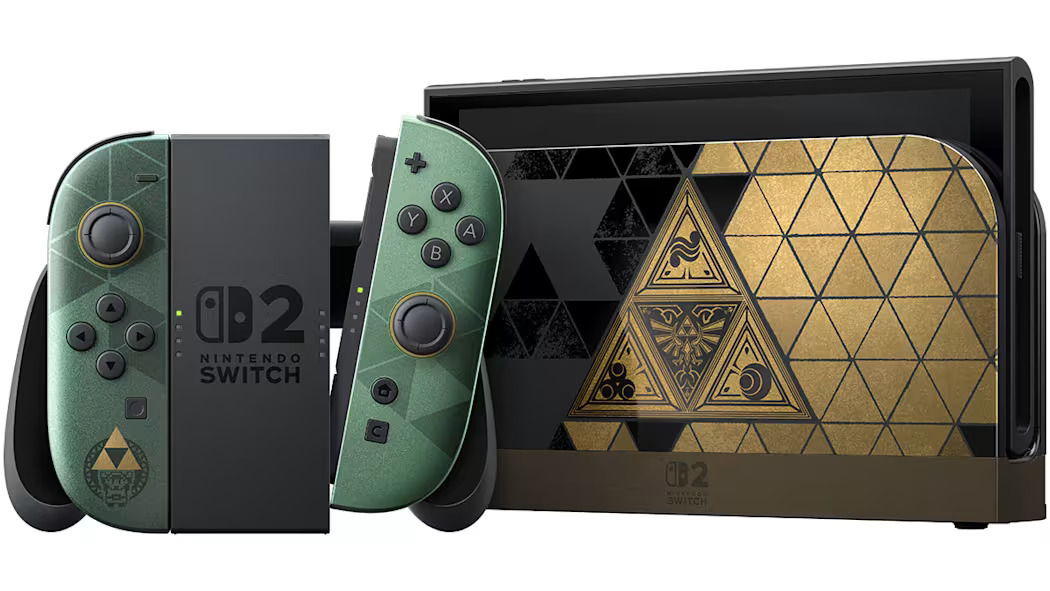
The Switch 2 The Legend of Zelda 40th Anniversary Edition, the first limited edition of the Switch 2 and a The Legend of Zelda-themed edition celebrating the franchise's 40 years, makes the handheld console even more desirable to hardcore fans and scalpers looking to make a quick profit. Plus, the console's $519.99 price tag, which is only $20 over the vanilla Switch 2, gives gamers extra incentive to purchase one. The problem is finding one in stock.

Along with the console, Nintendo also gave the Switch 2 Pro controller and carrying case with an included screen protector the same The Legend of Zelda 40th Anniversary Edition treatment. Best Buy currently has both up for preorder at $99.99 and $39.99, respectively.

The Switch 2 The Legend of Zelda 40th Anniversary Edition officially launches on October 29. Historically, The Legend of Zelda-themed consoles are available for purchase on launch day. However, stock will likely be extremely limited, which is why many fans like to lock in their preorders early.

It remains to be seen whether Nintendo will produce many units of the Switch 2 The Legend of Zelda 40th Anniversary Edition. At least for the previous limited-edition consoles, like the Nintendo Switch OLED: Tears of the Kingdom Edition or Nintendo Switch Lite: Hyrule Edition, stock was not a problem since you can still buy them today despite being last-generation consoles.

  •  

Microsoft reportedly gives secret Xbox Game Pass discounts to churned subscribers to reel them back in — targeted offers slash up to 30% off the regular price

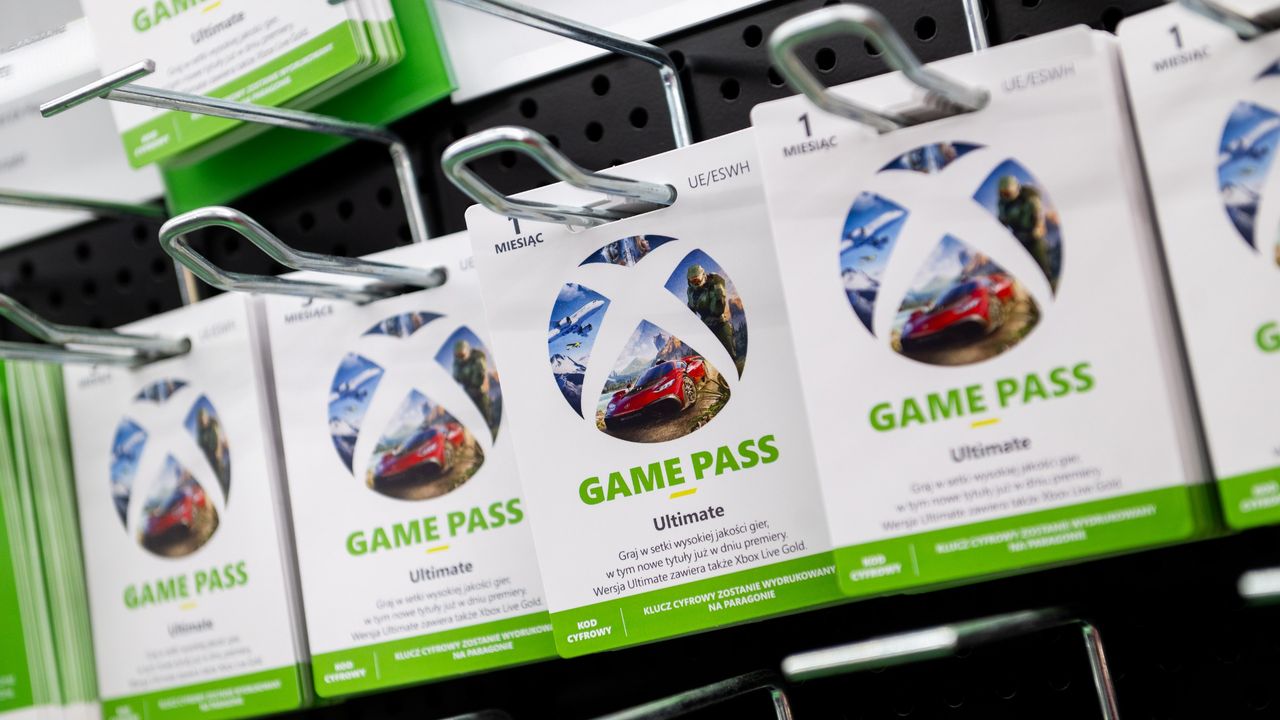
If you play hard to get, you could get Xbox Game Pass for cheaper; at least that is what numerous users are reporting on a Reddit thread. One Xbox Game Pass subscriber shared a screenshot of Microsoft offering them the Ultimate plan for $16.09 for a month, 30% lower than the standard $22.99. Their secret? Cancel Xbox Game Pass almost every month.

Dynamic win-back discounts are perhaps the oldest trick in the book, but they remain widely used because of their effectiveness in re-engaging customers who have stopped buying a product or, in Microsoft's case, canceled their Xbox Game Pass subscription. These targeted offers, often disguised as "We Miss You" or "Welcome back" deals, aim to win back lost customers with exclusive or time-limited discounts.

According to the Redditor, they have used Xbox Game Pass on and off for about two years. However, instead of committing to an annual plan, the user frequently paused and resubscribed. In the Redditor's words, they were "not doing any sort of tricks lol...just got the offer randomly because I cancel gamepass almost every month, so maybe this was their way of keeping me."

This kind of customer behavior is not uncommon among subscription services, since buyers seek to maximize value and avoid unnecessary spending. Apparently, Microsoft seemingly noticed this user and proactively offered a 30% discount, dropping the Xbox Game Pass Ultimate price from $22.99 to $16.09 for a year. And it worked. The Redditor confirmed that they took the offer and locked in for the entire year.

Got Offered a Game Pass Annual Subscription
 from r/XboxGamePass

At least one other Redditor confirmed they also received the same $16.09 offer. The thread quickly filled with additional posts as users shared their experiences with Xbox Game Pass discounts. For example, one Reddit user said that when they logged in with a secondary account on their Xbox console, they saw an $18 offer for 12 months of Xbox Game Pass Ultimate. Their main account allegedly never receives offers like this. Meanwhile, other users chimed in to report receiving $ 20-per-month offers.

It is unclear what criteria Microsoft uses to distribute these win-back discounts. Many speculate that the company may be considering activity, subscription history, or even multiple accounts. The discounts do not seem limited to the U.S., where the Redditor lives. Users in the thread have reported similar discounts in regions like México.

Despite Microsoft slashing Xbox Game Pass pricing earlier this year, many gamers still resort to digital key marketplaces such as Eneba, G2A, or Loaded, where one month of Xbox Game Pass Ultimate can cost as little as $9.28. By running targeted annual promotions, Microsoft can encourage subscribers to stick with Xbox Game Pass, secure long-term revenue, and avoid the risks of month-to-month cancellation.

However, these targeted discounts raise an important question: should Microsoft not reward loyal Xbox Game Pass subscribers with similar exclusive discounts? Win-back promotions are great for bringing back former subscribers, but long-time users will feel overlooked and see no reason to commit, since the generous deals go to those who cancel and return.

  •  

Nintendo unveils The Legend of Zelda 40th Anniversary Switch 2 for $520 — First-ever special-edition Switch 2 drops October 19, alongside $100 Pro Controller, pre-orders live

Nintendo just aired one of the most important Directs of the Switch 2 generation, showcasing the upcoming Ocarina of Time remake in all its glory. The presentation also brought along the announcement of the first special edition Switch 2 hardware: The Legend of Zelda 40th Anniversary Edition. The console costs $519.99, but there's also an identically themed Pro Controller for $99.99 that you can pre-order right now — either item ships later this year on October 29.

The company's first handheld to be adorned in special edition Zelda makeup was the Game Boy Advance SP released in 2004 alongside The Legend of Zelda: The Minish Cap. The first home console to receive the same treatment was The Wind Waker HD edition of the Wii U in 2013. Most recently, we got a Tears of the Kingdom-themed Switch OLED in 2023, followed by the Hyrule Edition of the Switch Lite next year.

Across every handled and home console released, The Legend of Zelda 40th Anniversary special edition Switch 2 will be the 12th piece of Zelda-themed hardware Nintendo has put out. Moreover, it took the original Switch just a few months to get its first limited-edition hardware (Monster Hunter XX Special Pack), but the Switch 2 has clearly taken its time with this design, and it's sure to be a collector's item.

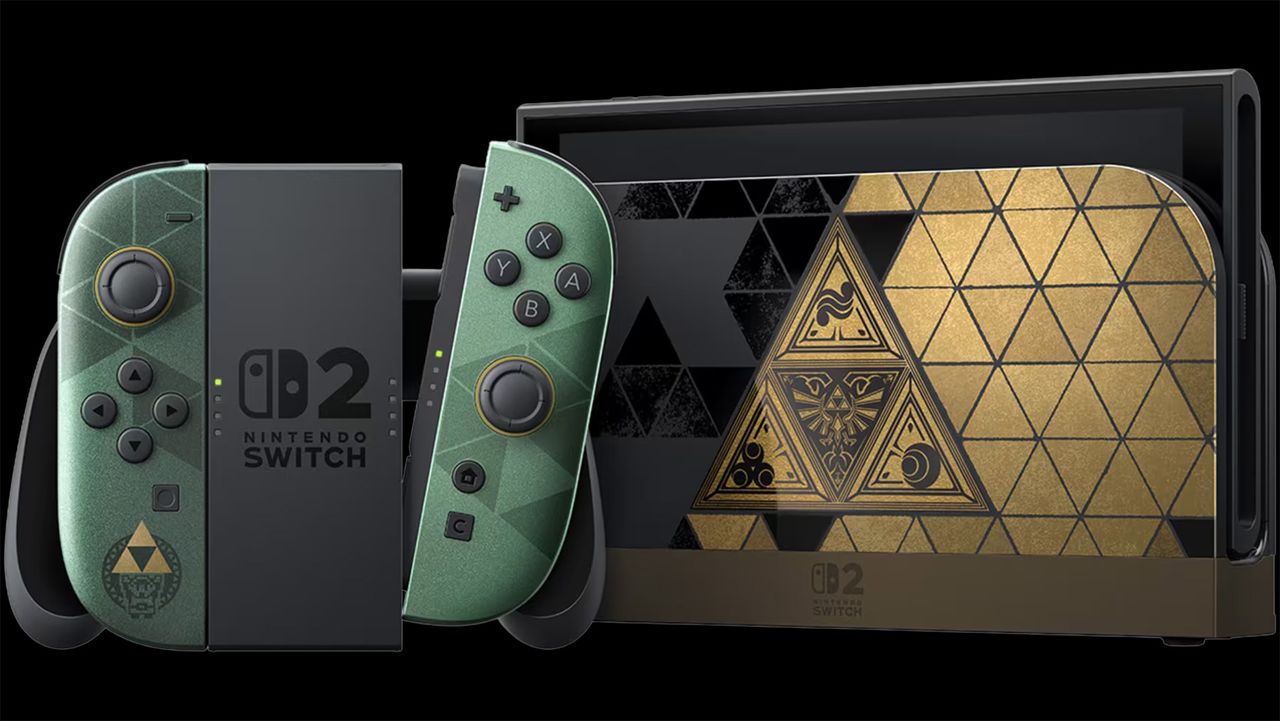
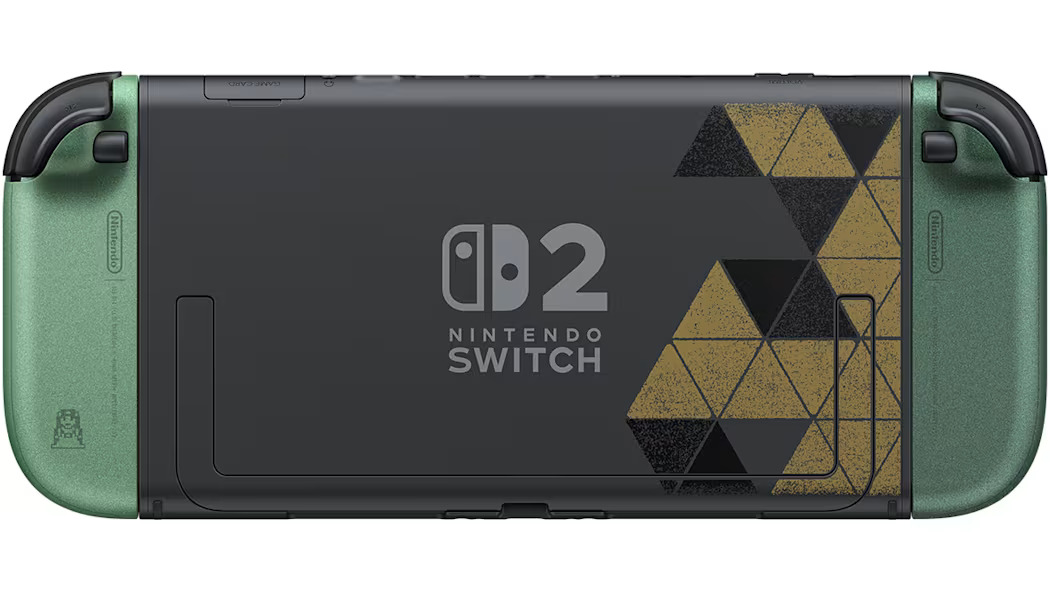
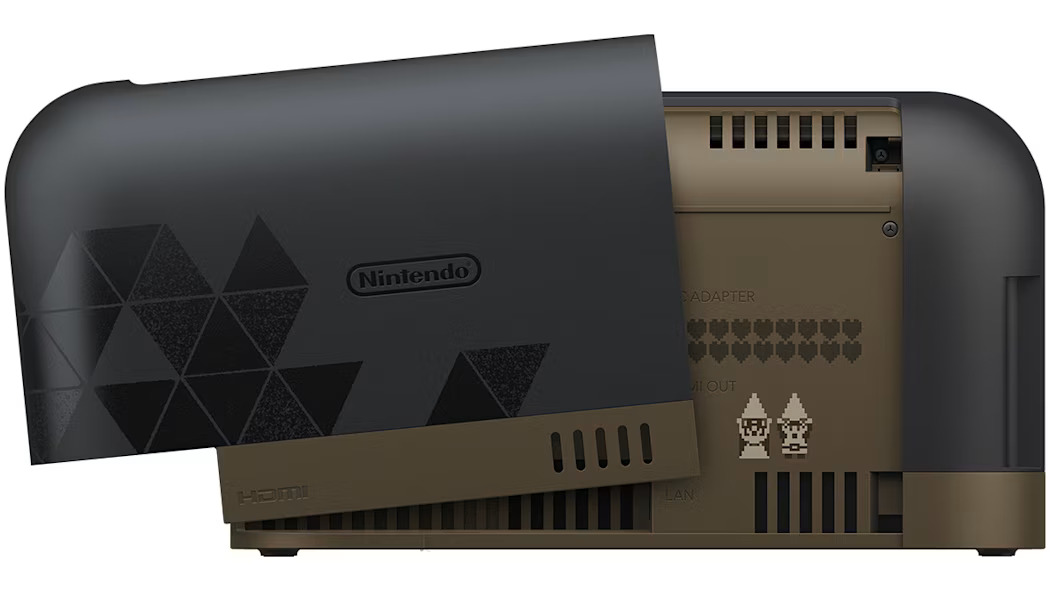
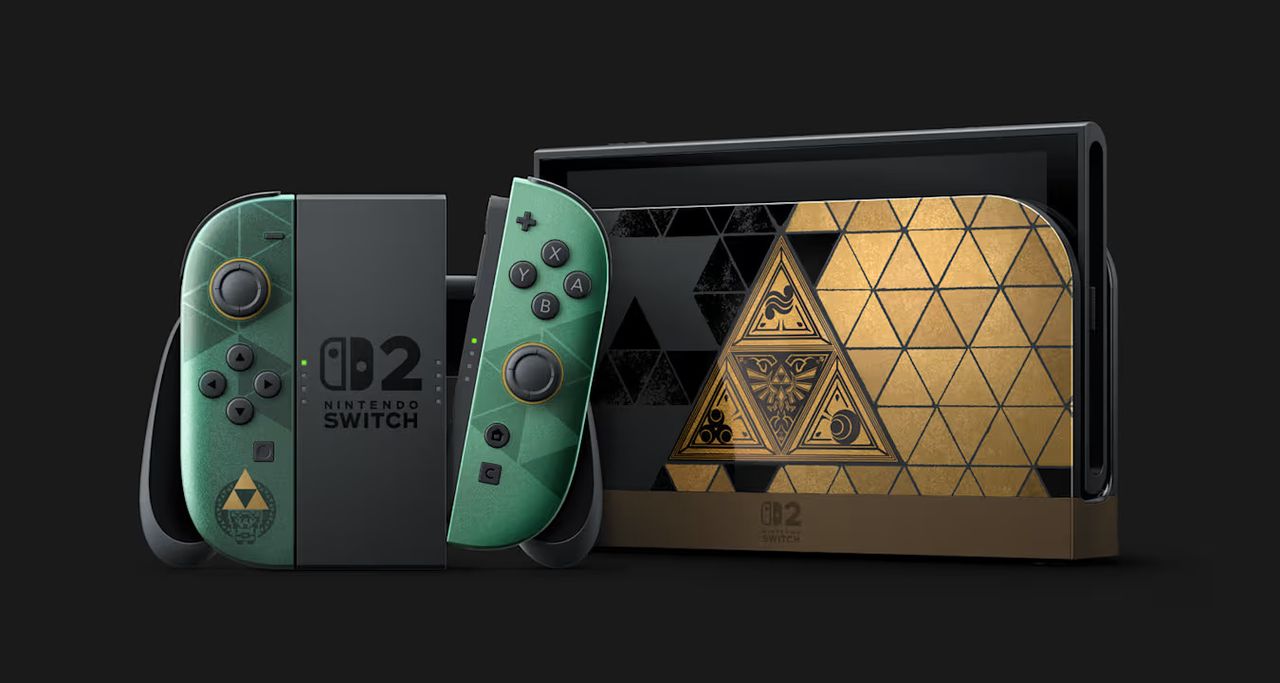
The tablet itself is mostly the same boring black except for a few golden triangles at the back. However, the Joy-Cons feature a beautiful green design with a Tri-Force symbol on the left. The dock is a gorgeous, two-tone golden and black color with a very bold Tri-Force theme across the front and some easter eggs on the back. Even the packaging is supposed to have textured foil cover art. The console will retail for $520 and does not come with any game.

The Legend of Zelda™ – 40th Anniversary Edition Nintendo Switch 2, Pro Controller, and Carrying Case
Nintendo
The Legend of Zelda™ – 40th Anniversary Edition Nintendo Switch 2, Pro Controller, and Carrying Case
Nintendo
The Legend of Zelda™ – 40th Anniversary Edition Nintendo Switch 2, Pro Controller, and Carrying Case
Nintendo

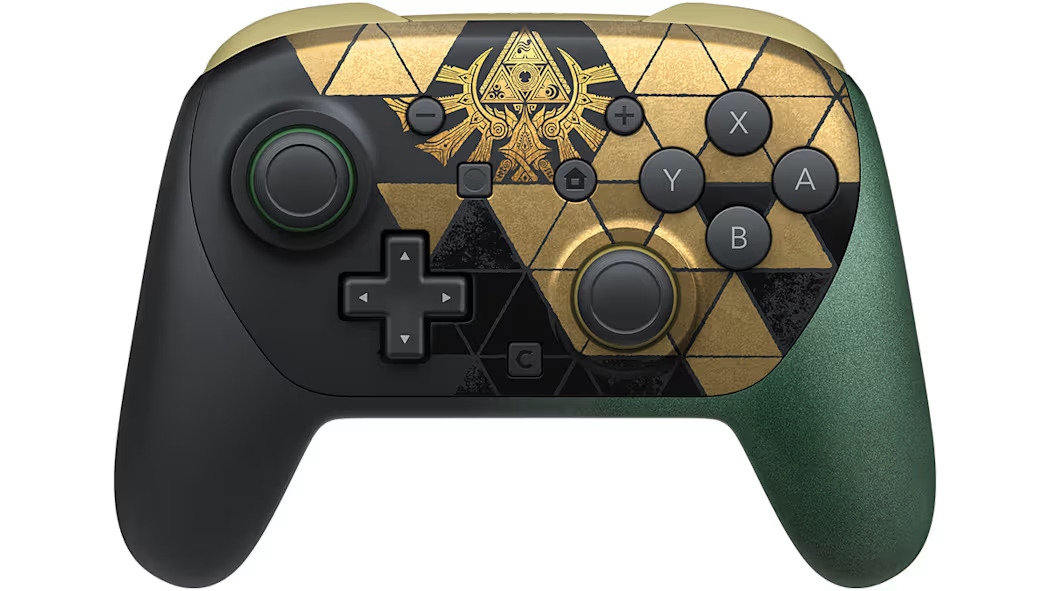
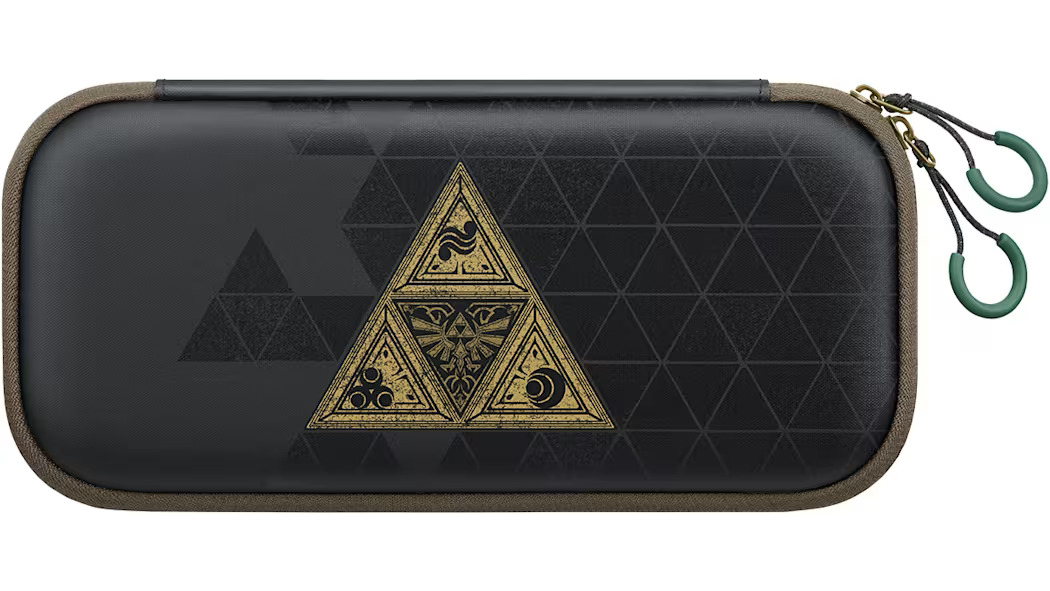
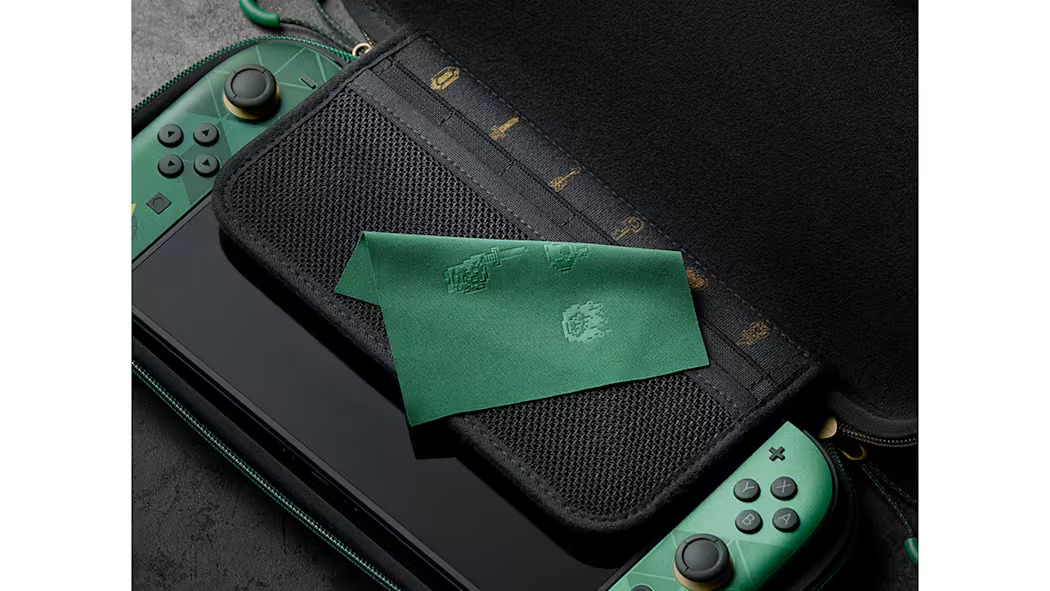
Alongside the console, there's a Switch 2 Pro Controller that looks very similar to the Joy-Cons, with a green and gold theme that combines elements of the Triforce with a crest emblem. It comes as is for $100, but you can also get it with a subtly themed display stand for $110. Finally, there's also a $40 carrying case adorned with Zelda illustrations. You even get a custom, green-colored microfiber cloth inside and a screen protector.

The Legend of Zelda™ – 40th Anniversary Edition Nintendo Switch 2, Pro Controller, and Carrying Case
Nintendo
The Legend of Zelda™ – 40th Anniversary Edition Nintendo Switch 2, Pro Controller, and Carrying Case
Nintendo
The Legend of Zelda™ – 40th Anniversary Edition Nintendo Switch 2, Pro Controller, and Carrying Case
Nintendo

Keep in mind that all of this hardware celebrates the 40th anniversary of the Zelda franchise, which already passed earlier this year. It has nothing to do with the upcoming Ocarina of Time remake and, as such, the game is not included in the $520 limited edition Switch 2. Pre-orders for all the items discussed above are open, and they will be released on October 29, 2026. The Ocarina of Time remake drops next month, on November 19, 2026, and will be sold separately for $60.

  •  

Super Smash Bros Melee gets fully decompiled after over six years of effort — ambitious and technically impressive project delivers GameCube classic as C code

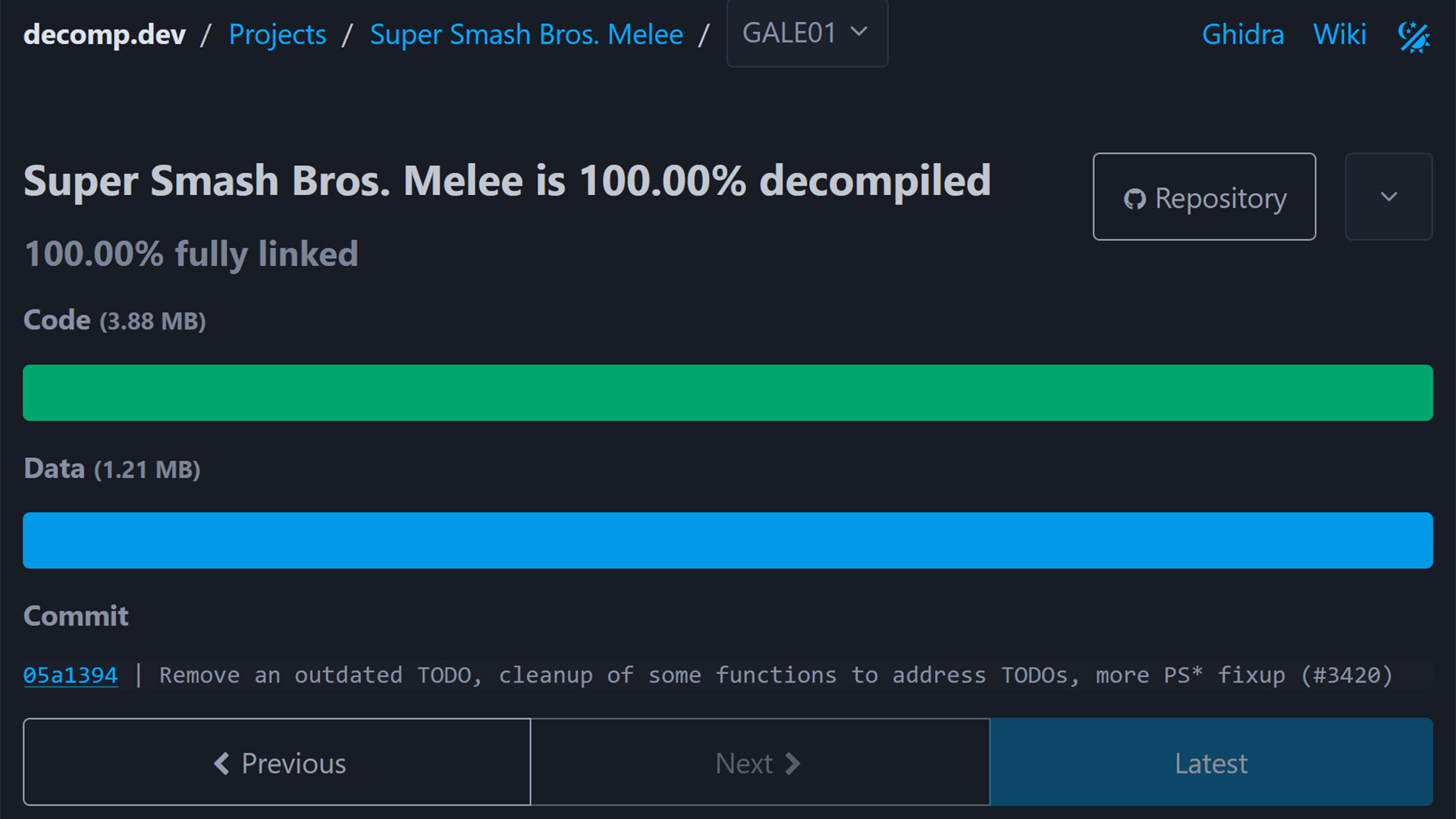
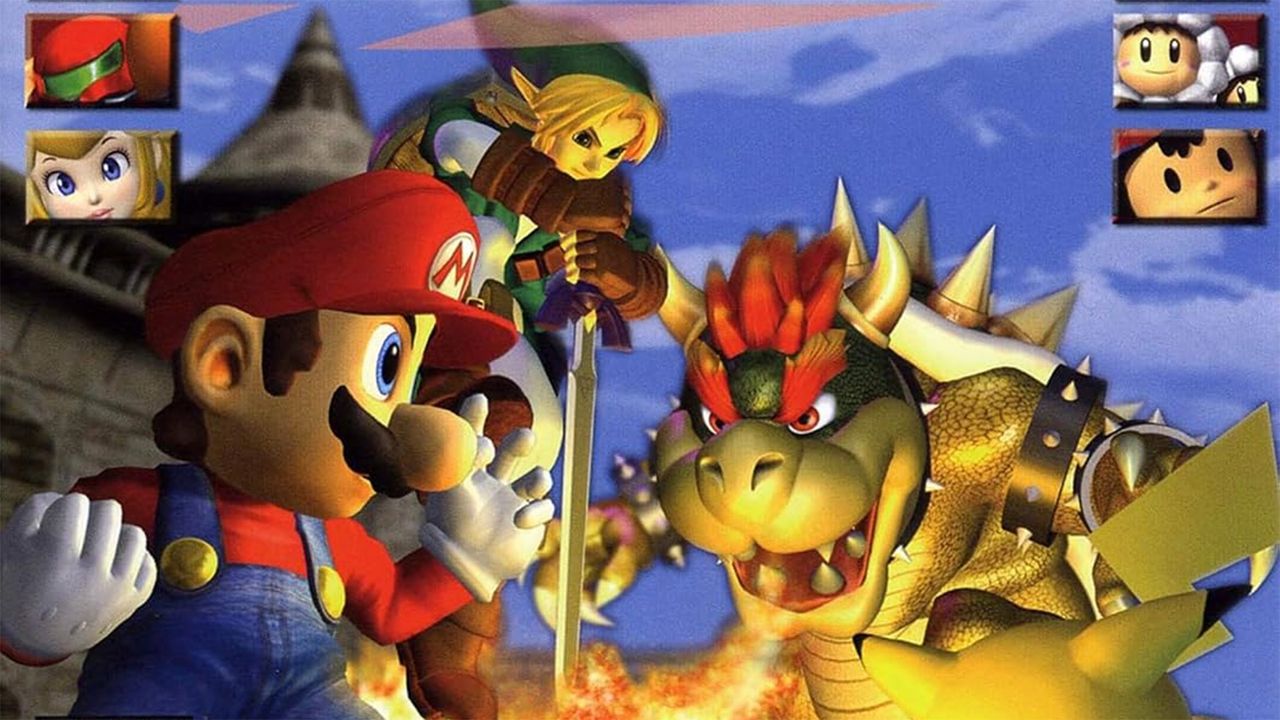
A Super Smash Bros Melee decompilation project hit its key long-standing goal a few hours ago. Nintendo’s legendary platform fighting game, which launched on the GameCube in 2001, has now been 100% decompiled by a team of developers. This is a complex game to convert to C code, but the project code can now be compiled into a binary byte‑for‑byte identical to Nintendo’s original main.dol. The effort has taken the team six years or more to get to this stage, with OpenAI's Astra part of the effort to get it over the line. Gamers may already be excitedly anticipating Super Smash Bros Melee ports and modding tools, but these too will take time and effort.

Super Smash Bros. Melee has been 100% decompiled!
 from r/SSBM

Decompilation projects seem like the latest trend to grasp the retro gaming and development communities, but some, like this, have been in progress for a very long time. Enthusiasts are spurred on by old console hardware becoming scarce, expensive, or uneconomical to repair. Thus, they want to preserve the original game code in a manner that can be ported to modern supported systems. Demanding 100% accuracy with a complex game like this was ambitious, but now that milestone has been reached.

Super Smash Bros Melee decomp

(Image credit: decomp tracker)

Preservation isn’t the only goal, or result of projects like this. Seasoned developers will now be able to pore over the game’s C code and gain insights into Melee’s engine, physics, game mechanics, and more. Armed with this knowledge, we should eventually see the modding potential of this game blossom. This has happened in the wake of previous successful decompilation projects.

If you drop in on the doldecomp/melee GitHub page, linked above, you can check over the code for yourself. There are instructions for compiling this Super Smash Bros Melee C code on various platforms, including Windows. However, please remember these aren’t ports; you will just be recreating the v1.02 US release main.dol file from the GameCube, which weighs in at 3.88MB. You'll also need the original assets (textures, audio, etc.) from the GameCube disc that you own, in order to run the game.

Some highlight that the project was finalized with thanks in part to the latest AI tech, including GPT-6 Astra. Similar tech might also be used to rapidly develop the ports and mods that the crowds are looking forward to.

  •  

Sony threatens to cut off customer support and pursue legal action over harassment as backlash to PlayStation’s physical-disc phaseout intensifies — company to move forward with no disc decision despite several lawsuits

Sony Japan has officially implemented a new customer harassment policy to address ongoing customer backlash, following the company’s controversial announcement to phase out physical PlayStation game discs by January 2028. In an official publication on September 1, the company outlined prohibited customer behaviors to protect the dignity and safety of its employees and threatened to suspend customer service if the behaviors continued.

“The dignity and safety of our employees must not be threatened by customer harassment, such as words or demands from customers that exceed what is considered reasonable according to social norms,” the publication read. “If any behavior constituting customer harassment is confirmed, we may restrict or suspend customer service in order to protect the safety of our employees.”

Some of the examples of customer harassment detailed in the publication include “persistent and repeated, or prolonged, demands; excessive or unreasonable demands for compensation; abusive language, threats, slander, and other similar behaviors; requests unrelated to products or services; intimidating attitude; discriminatory or sexual conduct; and attacks and demands against individual employees.

The company also listed “forcing someone to prostrate themselves,” visiting company grounds without permission, and excessively asking for apologies as customer harassment, expressing willingness to use legal force if necessary. “We will take a firm stance against such actions and aim to build healthy and sustainable relationships while respecting both our customers and employees,” it said. “If we deem it necessary, we will cooperate with the police, lawyers, etc., and consider taking action, including legal measures and criminal proceedings.”

The new policies appear to be in response to the intense backlash over Sony's decision to end physical disc production by 2028. The decision was met with immediate, widespread backlash from the gaming community, which argued — among other things — that ending physical discs was equivalent to eliminating true ownership. Critics also argued that digital purchases were rentals and placed too much power in the company's hands, which could restrict access at will. Just 6 days after the July 1st announcement, a Change.org petition to stop the move had amassed 200,000 signatures and is now approaching 400,000.

The company doesn't appear to be backing down. After a class action lawsuit related to Sony’s decision to kill physical discs, the company moved to force the case into out-of-court arbitration, arguing that “reasonable consumers would not be misled into believing they own digital games.” The plaintiffs allege that Sony misleads consumers by using "Buy" buttons for digital PlayStation games without clearly disclosing that buyers are only purchasing a temporary, revocable license rather than actual, permanent ownership of the game.

Several other related lawsuits are ongoing. Regardless, Sony has said it will "cautiously move forward" with its decision despite “strong views” from players. The company hopes its new customer harassment policy will curb some of the backlash individual employees are currently facing. The policies also align with Japan's recent law that mandates companies to take measures to prevent customer harassment towards their workers.

  •  

Vintage Emulator Studio recreates 44 legendary synths down to the chip level — free MAME-powered component-level emulation should offer exceedingly accurate sound

Musicians and synth-heads in the audience, rejoice. A new vintage synthesizer plugin has arrived that has the potential to blow many commercial offerings out of the water — and it's completely free, to boot. Audio software maker Autodafe has released the Vintage Emulator Studio (VES), a fresh new plugin that integrates a fair number of the open-source MAME emulator's synthesizer cores in one neat package.

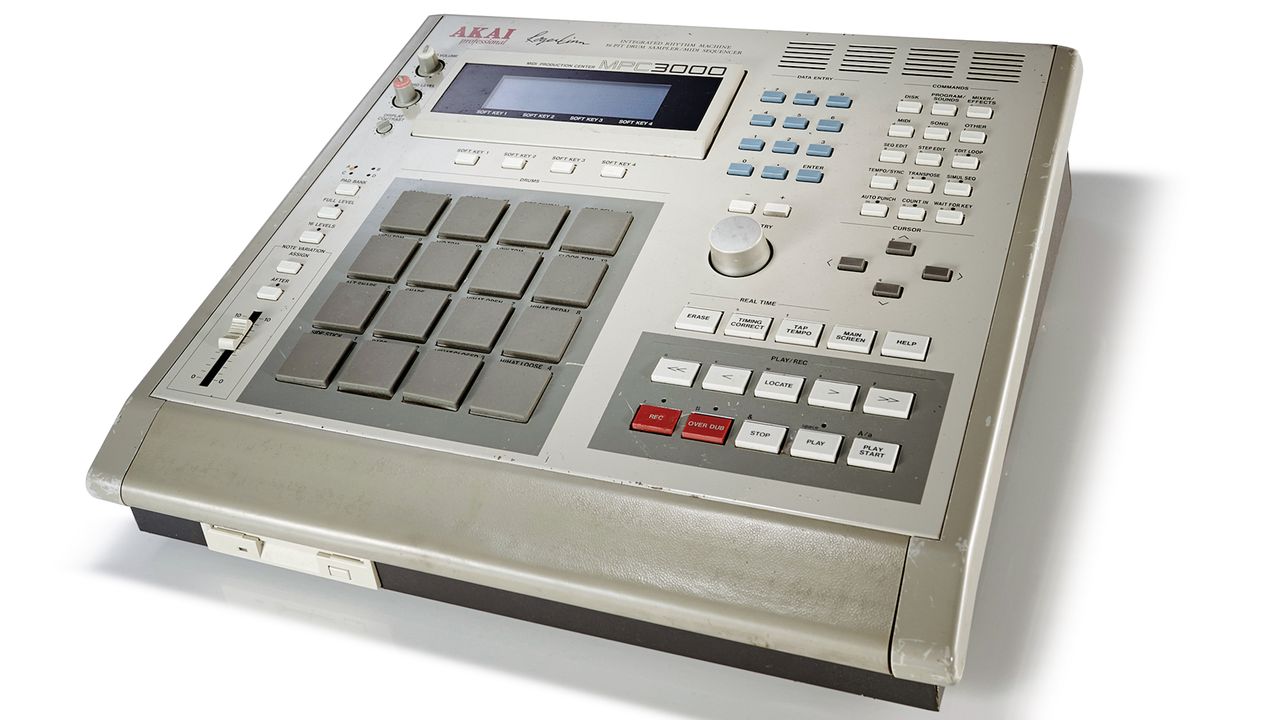
The entire list of emulated synths is below, but it includes iconic entries like the Akai MPC3000, LinnDrum, Oberheim DMX, and Roland TR-707 — used by names like Dr. Dre, New Order, The Police, INXS, and Prince, among many other high-level acts. There are a total of 44 machines, all with component-level emulation.

What makes VES different from most other synth plugins is that instead of presenting a facsimile of the final output or a hybrid mix of component- and output-stage emulation, it employs — by way of MAME — full component-level emulation. Each processor, tone generator, envelope generator, filter chip, and converter should be faithfully reproduced, potentially resulting in a "perfect" emulation of the gear in question, more or less depending on the status of each driver core.

Notably, on machines whose MAME emulation is farther along, analog and/or digital output stages are faithfully recreated, meaning you won't need additional low-pass filters or any other trickery to make the synth sound like the actual hardware. Additionally, the skeuomorphic, HiDPI-ready UI replicates the units' control panels, dials, buttons, and LCD displays, making them easy to interact with if you're familiar with the real hardware — and probably a nightmare if you're not, as "ease of use" wasn't high on the list of priorities back then. Floppy disk, CD-ROM, and peripheral emulation ought to be included too.

If by now you're thinking this is all too good to be true, there are indeed a couple or three catches. First and foremost, as with any emulator, you'll need to provide your own ROM/firmware, and depending on the synthesizer, any associated sample packs. Although obtaining those is not too difficult, having a copy of that data is a legal gray area if you don't own the original hardware. Although we haven't tested it ourselves, the CPU usage of the plug-in ought to be somewhat high, considering all the work it's doing simulating every single component.

Additionally, while MAME's emulation cores aim for full component-level emulation, not every synth driver has had the same amount of work put into it. For example, the Akai MPC-3000 driver is nearly complete, while the Prophet-5's has only been introduced to MAME fairly recently — so your mileage may vary. We'd expect this VST to be updated somewhat frequently as work on its MAME core moves forward.

For the sake of argument, though, if only a handful of synths are fully emulated, that's still an impressive showing out of a list of 44, given that in theory you'll get output that tracks exceedingly close to that of the original hardware, all from one plugin. You can download the Vintage Emulator Studio right here, in VST3 or AU format, for every major OS: Windows, macOS Intel/M-series, and Linux. It's also available as a handy standalone application.

  •  

Virtual Taekwondo Takes the Contact Out of a Combat Sport

The contactless version of the Korean martial art is making its debut at this year’s Asian Games. Critics say it’s a glorified video game.
  •  

GTA Vice City and GTA III return to web browsers after a DMCA takedown — Open-source reverse engineering brings the classics to the web with over 100 FPS performance

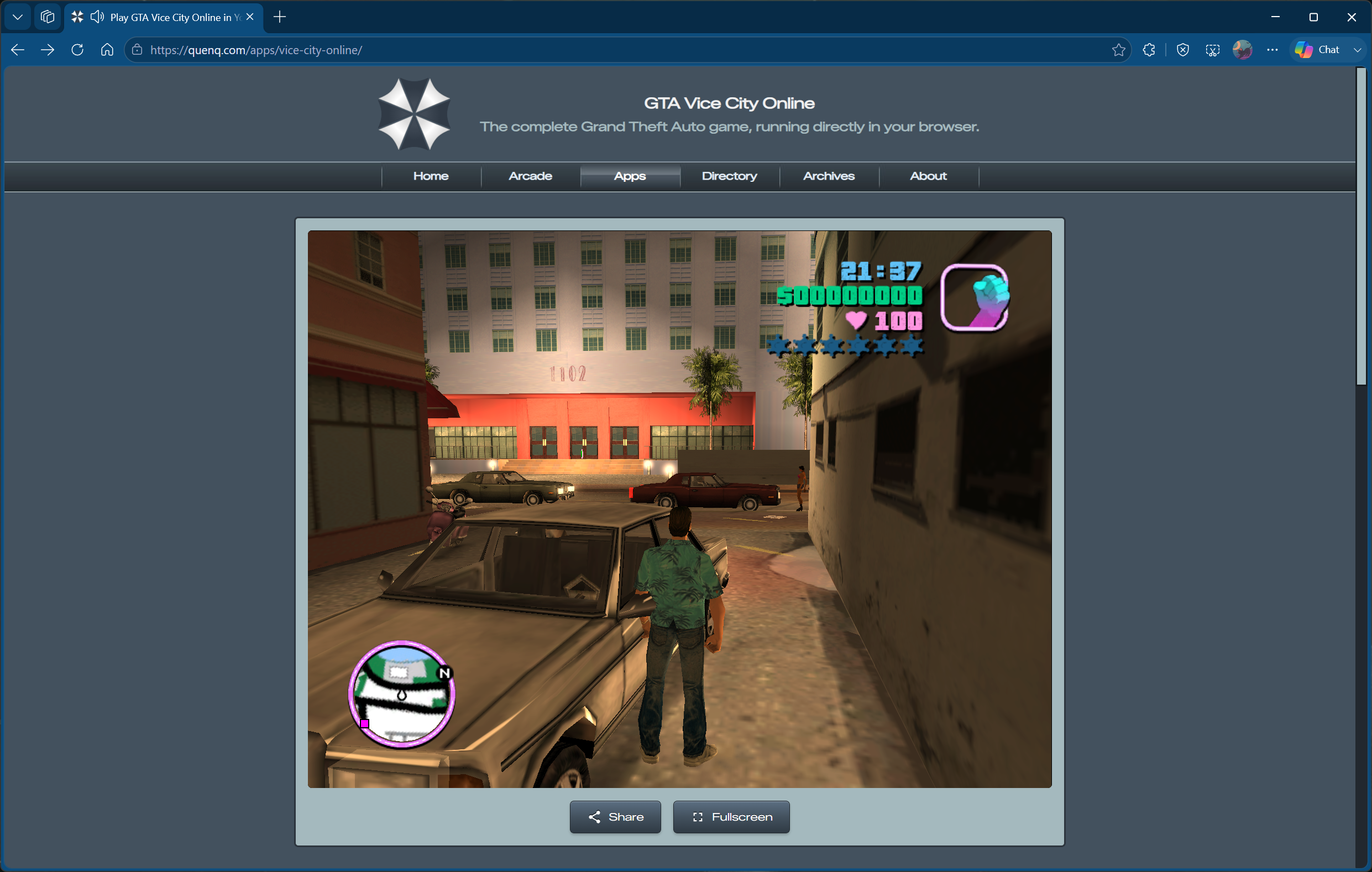
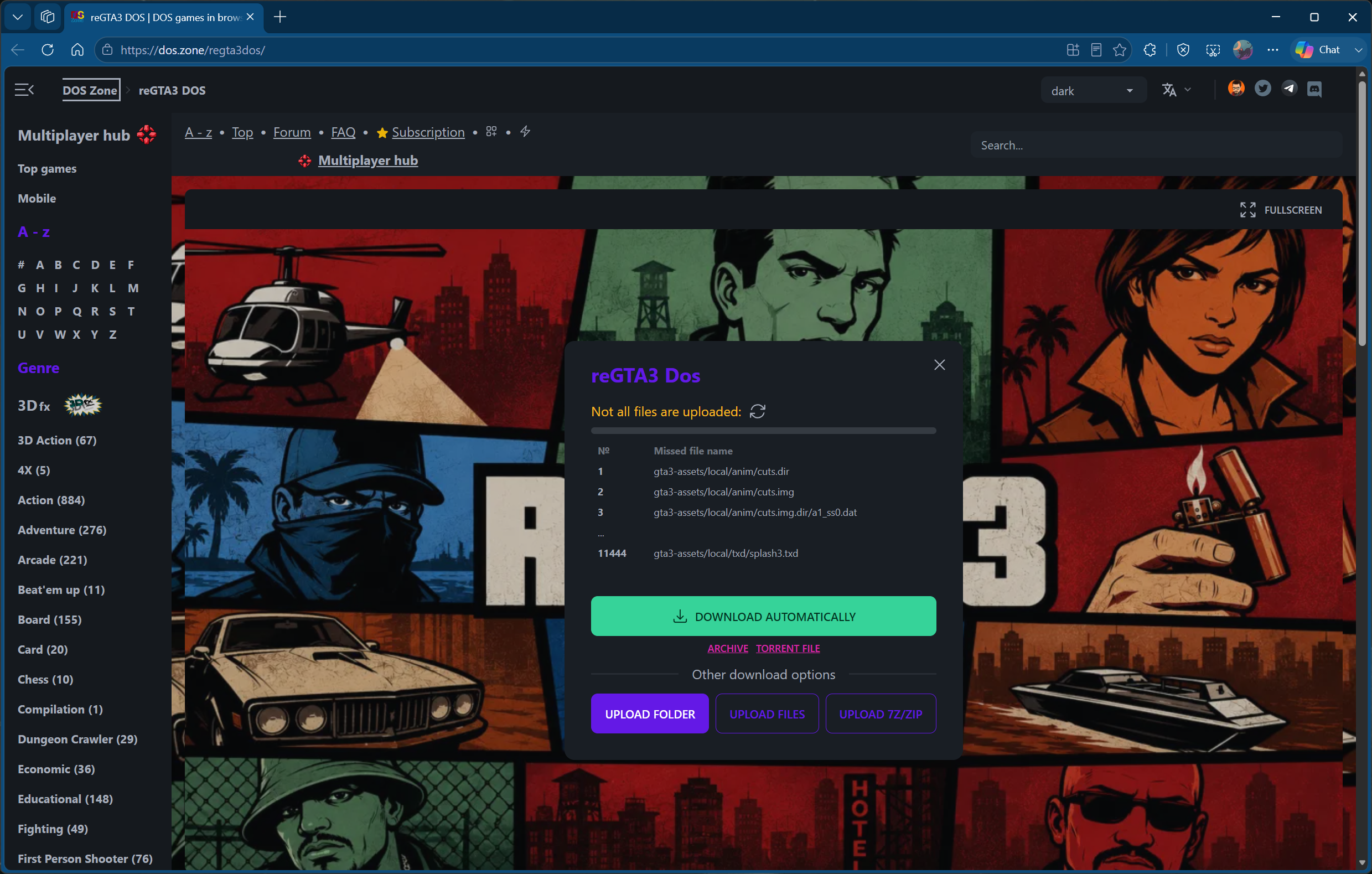
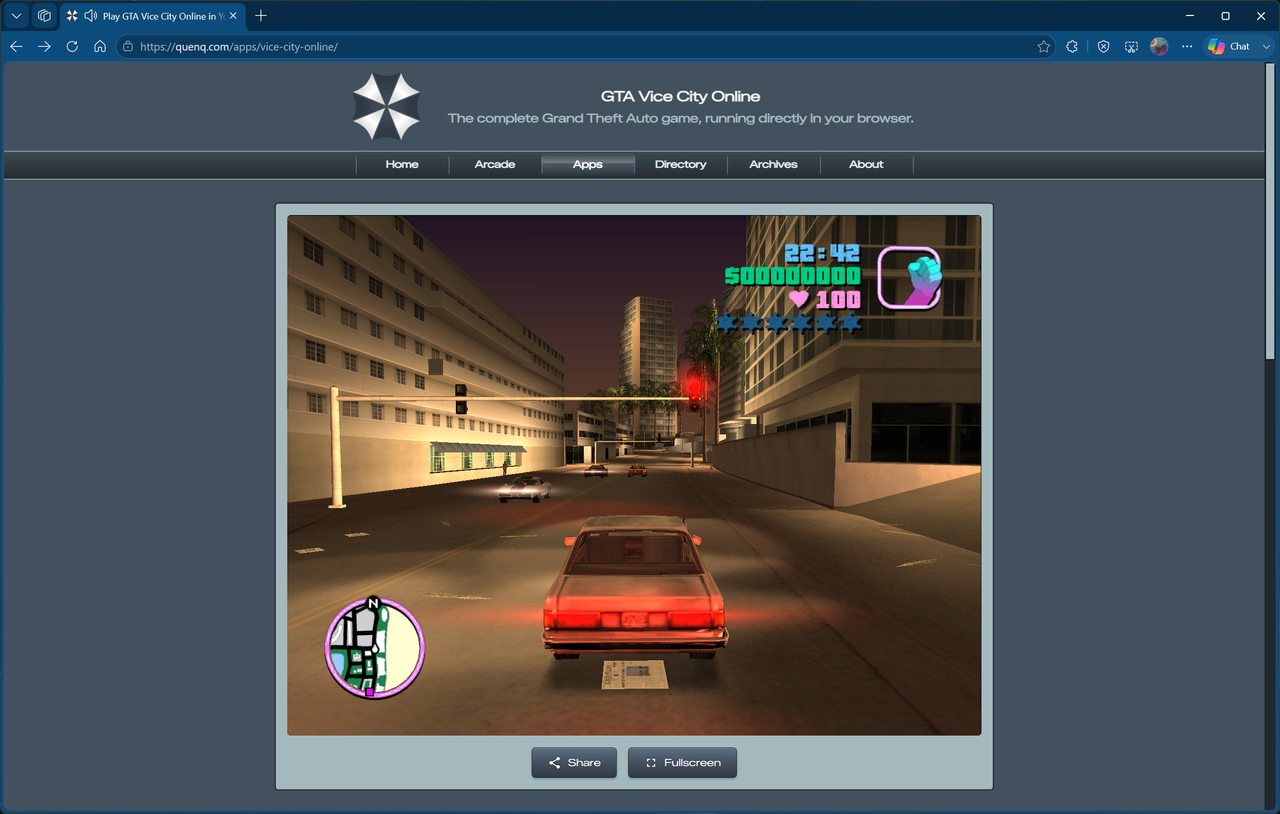
Grand Theft Auto: Vice City has cemented itself as one of the most legendary games of all time. It originally came out in 2002 on the PS2 before making its way to the Xbox and PC a year later. Fast forward to 2026, and now the game is entirely playable in a browser window. It was actually already playable last year on DOS Zone but was quickly shut down following a DMCA strike from Take-Two. However, a different website called "Quenq" has taken up the mantle now, and it also hosts GTA III there.

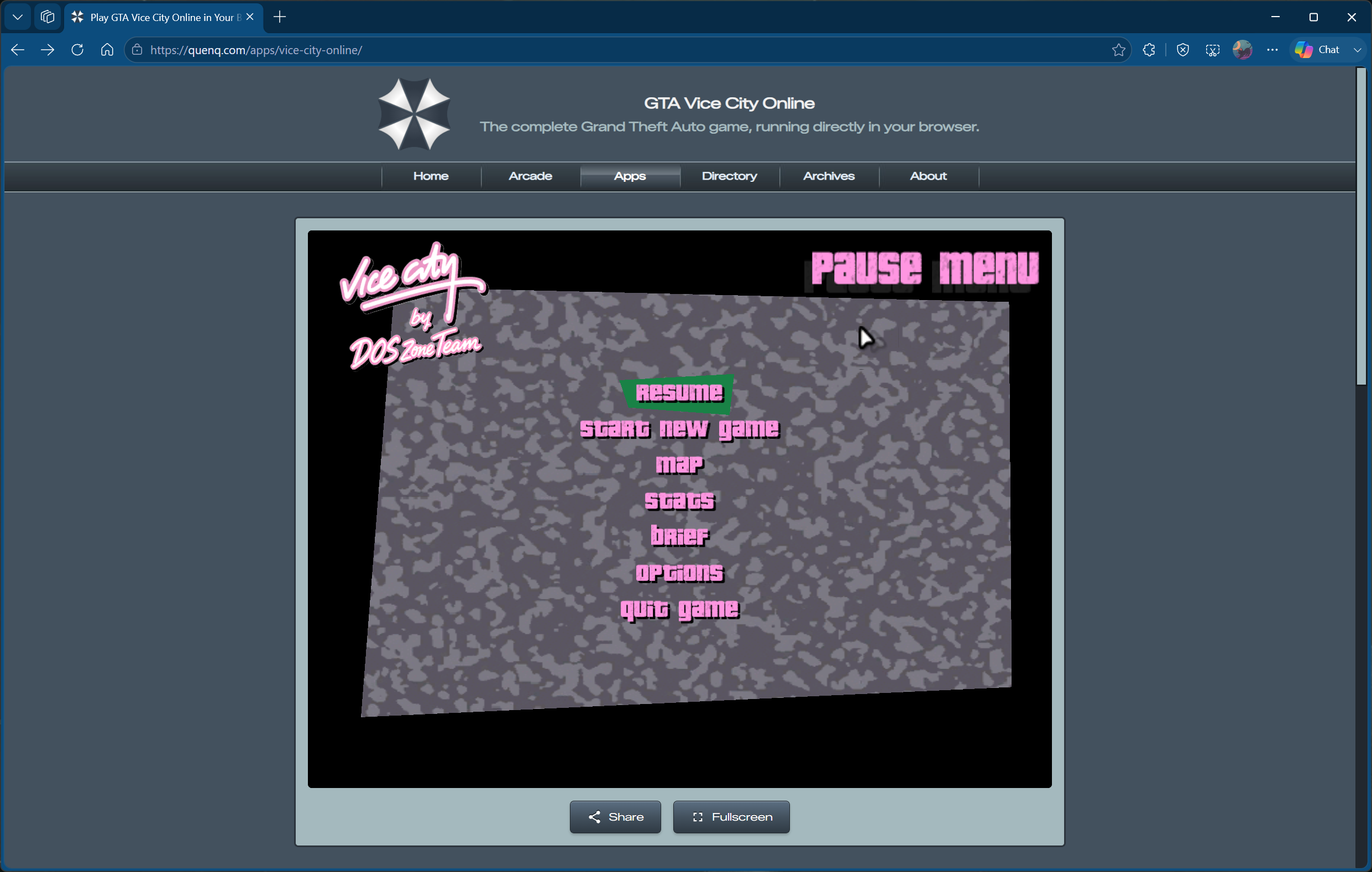
The project is still the same because it quite literally says DOS Zone in the pause menu. Anyhow, for a change of pace, we tried the game on a OnePlus 12; it loaded immediately and ran without any issues. Beyond keyboard/mouse and controller, the game is also compatible with touchscreen controls. We were able to seamlessly move around the world and control Tommy in both landscape and portrait orientations.

You get a save game and mod manager, allowing you to upload your own files right into the browser. You can type cheats using an external keyboard as well. There's an FPS limit option before the game begins because GTA Vice City was intended to run at 30 FPS, so playing it at unlocked framerates (which this port supports) can sometimes cause bugs and physics to break. We were able to easily play the game past 100 FPS on desktop, though.

GTA: Vice City running in a browser
Future
GTA: Vice City running in a browser
Future

The project likely uses reVC — a community project that decompiles the original source code of GTA: Vice City into clean, readable C++ code. Then, WebAssembly helps translate C++ code into JavaScript that the browser can natively understand. The port should be running on WebGL 2, a JavaScript API that bypasses your browser's typical layout engine and talks directly to your GPU to execute graphics-intensive tasks.

The same goes for GTA III — it's also available on Quenq, features the same controls and options (except for the mod manager), and is likely built using re3, which is the decompiled source code of GTA III. This project doesn't seem to be ripped off from DOS Zone, as there is no indication of such in the pause menu. It also runs just as well as the Vice City port, and we had no issues playing it across a bunch of devices.

Just out of curiosity, we checked DOS Zone and actually found both Vice City and GTA III listed there, but they require uploading the game assets. You can also just download the data through a torrent after you click a button, but the platform leaves that choice to you with clear disclaimers that they won't be responsible for piracy. It's clear that the DMCA takedown has shifted the way the platform distributes these projects, but it's still impressive that they're up, nonetheless.

GTA III running in a browser

(Image credit: Future)

  •  

This 10-inch 4:3 television hides your retro consoles in a secret rear compartment — Unico's Traveller ULW10 trades composite video for RGB SCART and HDMI

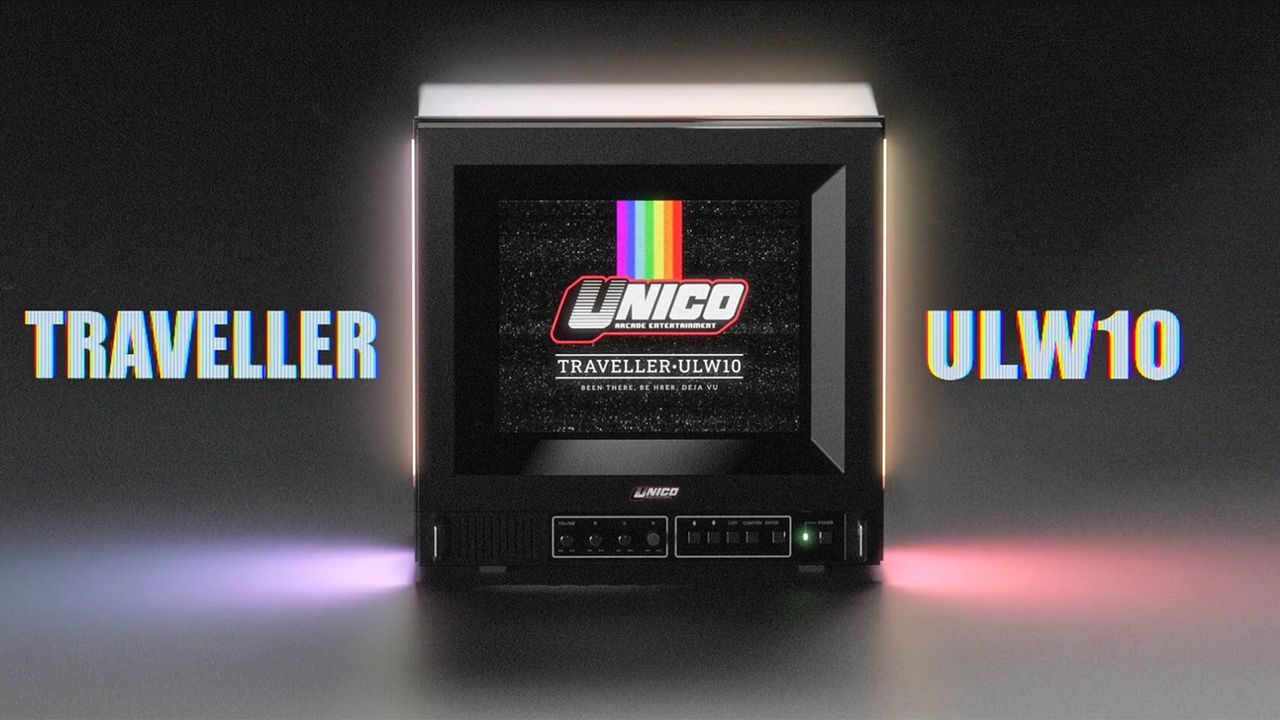
Getting a retro game console to look right on a modern TV can be a challenge, as legacy video signals need to be scaled or de-interlaced, while latency and aspect-ratio issues can further make retro games look or feel different from the original experience. In an attempt to recreate the nostalgic experience, retro gaming hardware manufacturer Unico has introduced the Traveller ULW10, a CRT-inspired 10-inch TV.

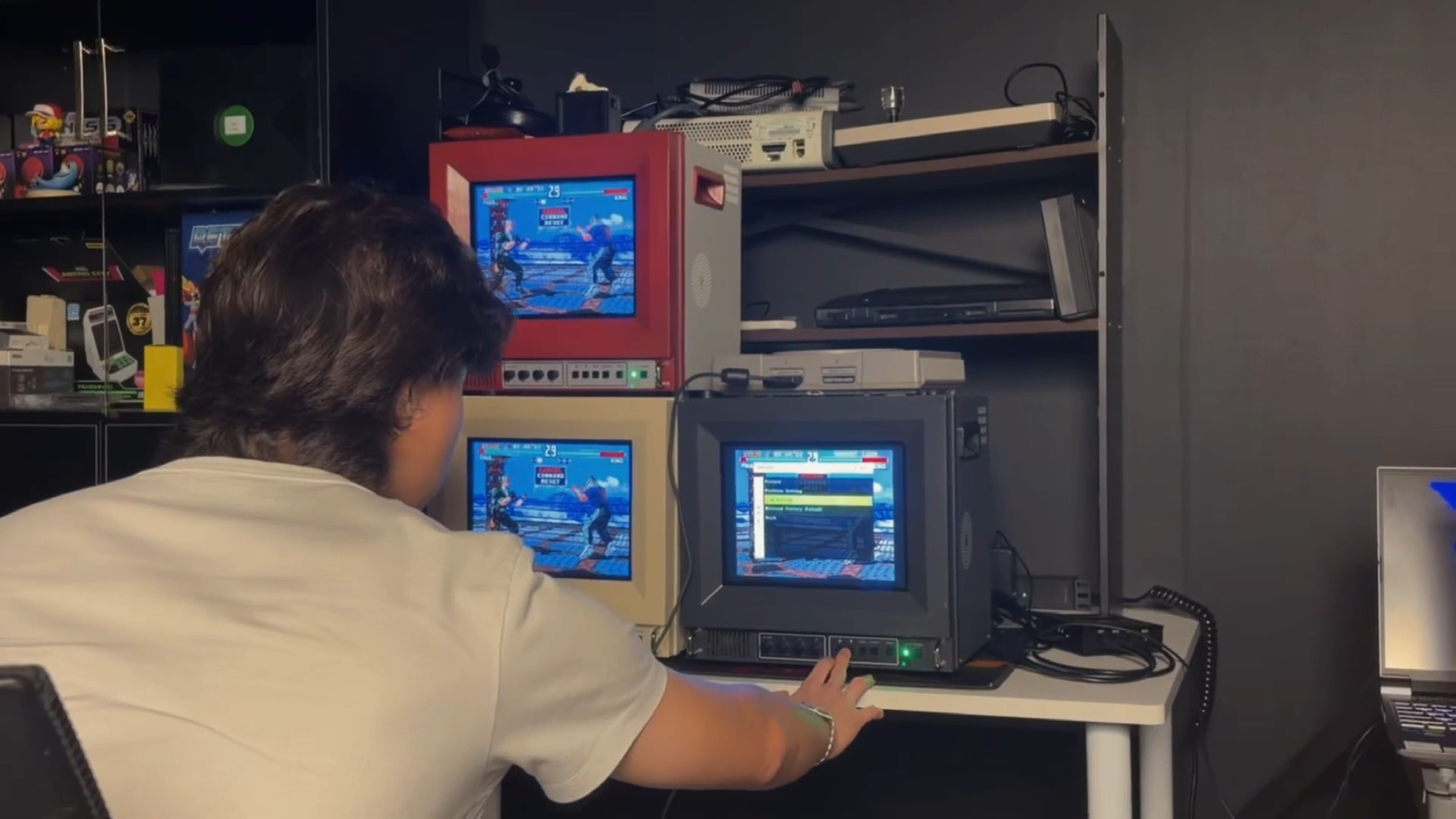
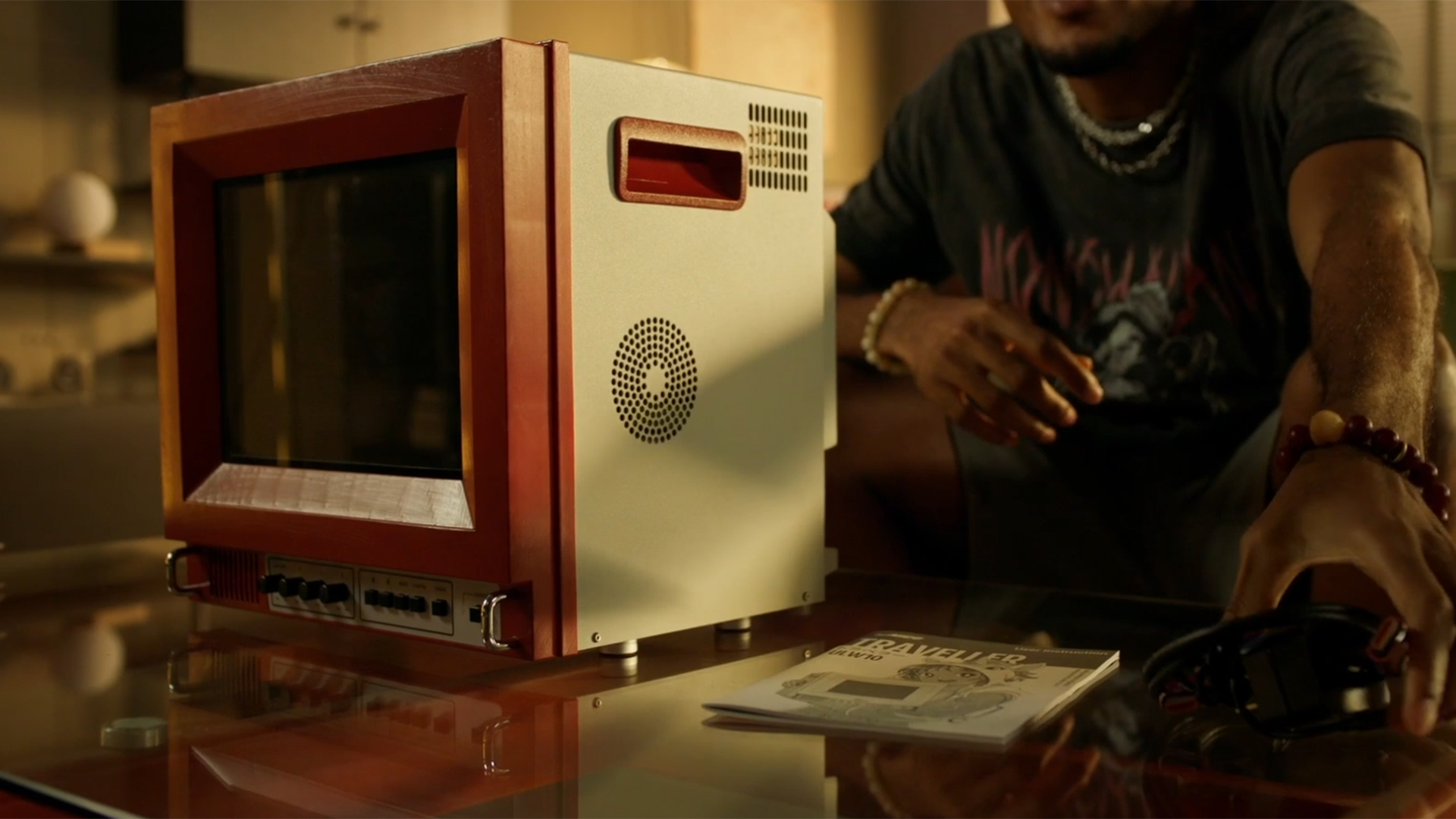
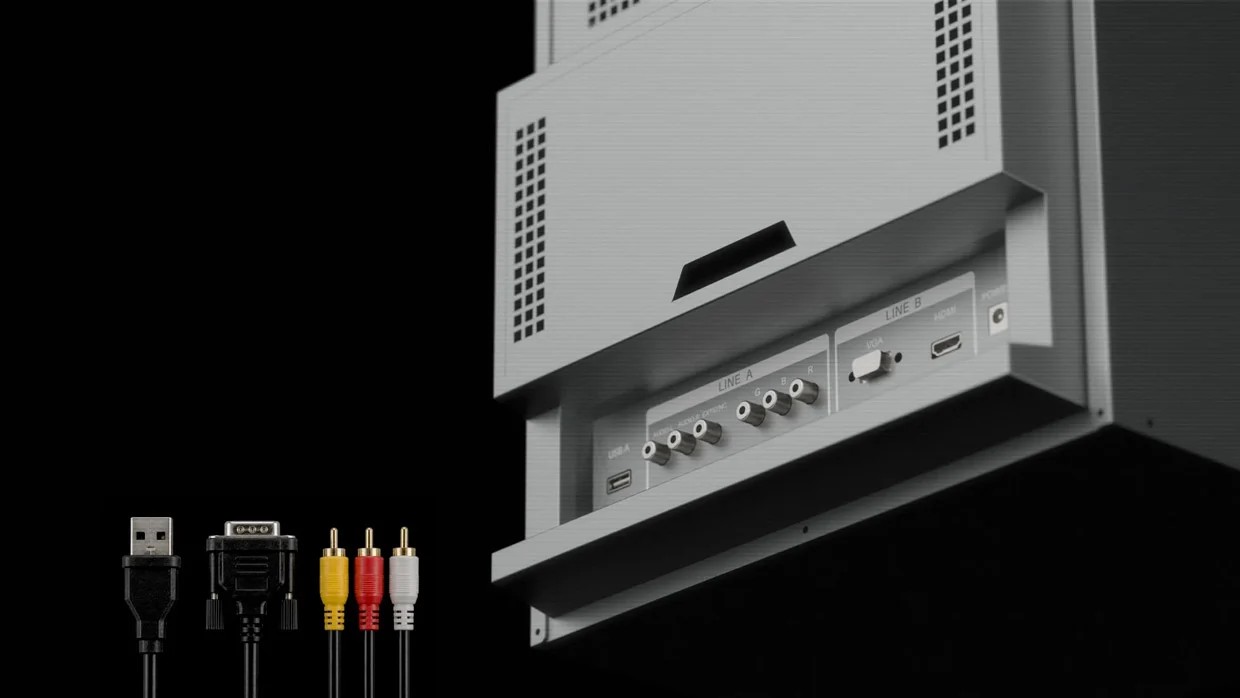
According to the company, the ULW10 is a PVM (Professional Video Monitor) with a vibrant 4:3 panel that “combines the character of a classic display format with the reliability of modern technology.” In terms of connectivity, the monitor comes with RGB, VGA, and HDMI video inputs, offering support for a wide variety of consoles. There is also a USB Type-A port, while the rear compartment provides storage for compatible consoles that can be tucked behind the display. It also includes knobs and physical buttons for various settings, similar to those found on old-school televisions.

The Unico Traveller ULW10 retro gaming monitor
Unico
The Unico Traveller ULW10 retro gaming monitor
Unico
The Unico Traveller ULW10 retro gaming monitor
Unico

Unfortunately, the ULW10 does not include a composite video input, and Unico says the decision ultimately came down to the limited space inside its compact chassis. With room needed for the signal board and other components, the company had to choose which video inputs to include. HDMI and VGA were retained for modern devices, PCs, and video converters, while RGB SCART was selected as the analog option because it offered the best balance between compatibility and image quality. It is also worth mentioning that the ULW10 is not a CRT monitor, but it can simulate the CRT or pixel-art style of old games.

The monitor will be offered in three color options: red and white, cream white, and studio gray. The casing includes built-in carrying handles as well as speaker vents, although the monitor itself does not include any speakers. The Traveller ULW10 will be available via Kickstarter, and while pricing information has not yet been confirmed, you can reserve a ‘Founder Spot’ for $5 and receive $30 back when you back the monitor on Kickstarter.

  •  
❌