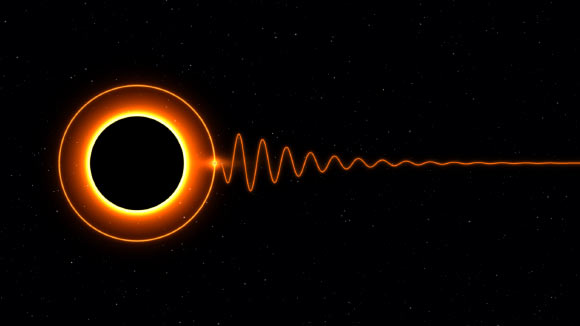
When two black holes merge, the resulting object rings like a struck bell, radiating gravitational waves that fade in a distinctive pattern called ringdown.
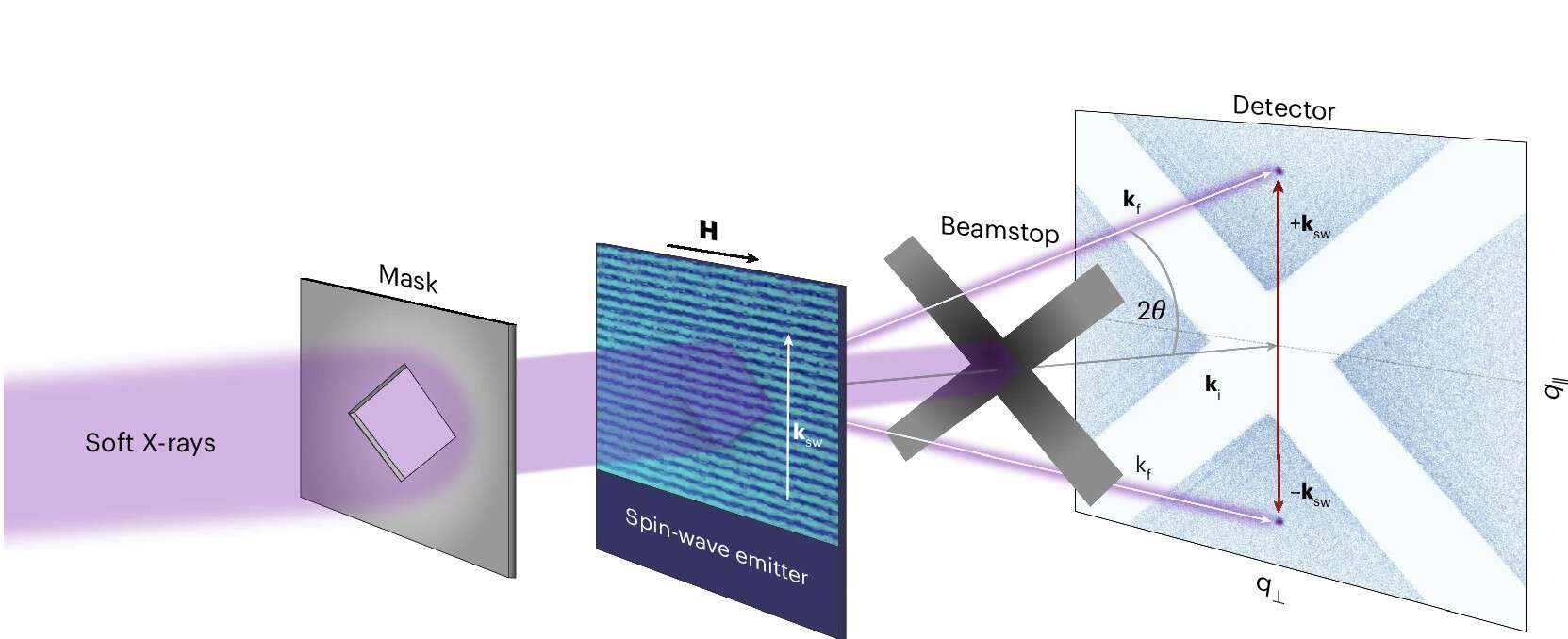
Seeing spin waves in momentum space Soft X-rays pass through a mask and scatter off spin waves travelling through a magnetic thin film (the “spin-wave emitter”). A beamstop blocks the direct beam, while the scattered X-rays reach a detector, producing two bright spots that directly reveal the spin wave’s direction and wavelength. (Courtesy: Daniel Schick/Max Born Institute/CC BY 4.0)
A new microscopy technique that can probe short-wavelength spin waves has been developed by researchers in Europe. Dubbed magnon momentum microscopy, the technique uses X-rays to observe quantized spin waves (magnons) in magnetic materials. Unlike existing techniques, the new method can characterize nonlinear interactions involving short-wavelength magnons – interactions that could be used to create new “magnonic” technologies.
The research was done by a team including Steffen Wittrock, Bastian Pfau and Daniel Schick at Germany’s Helmholtz Center Berlin for Materials and Energy and the Max Born Institute for Nonlinear Optics and Short Pulse Spectroscopy. The team comprised researchers at those German institutes and at EPFL in Switzerland.
Every ferromagnetic material is full of tiny atomic magnets, all lined up and pointing in the same direction. Nudge one of them, and the disturbance travels through the material like a ripple across a pond, passing from one atomic magnet to the next. These disturbances are called spin waves, and are quantized in units called magnons. Magnons have both particle-like and wave-like properties and physicists believe that magnons could one day carry information inside computers more efficiently than electrical signals do today. Such technologies are dubbed magnonics.
Magnon behaviour is most interesting when the magnon wavelength is shorter than about 100 nm. At these wavelengths, magnon dynamics are dominated by short-range quantum exchange interactions, rather than the longer-range forces that govern magnons with longer wavelengths.
At high magnon intensities, magnons will collide, combine, and split into new magnons before heading off in completely different directions. These nonlinear interactions will be crucial for developing magnonic technologies, but existing tools have consistently fallen short at probing this regime. Previous techniques, for example, could only probe short-wavelength magnons from one direction at a time. What magnonics researchers needed was a way to probe all directions simultaneously with extremely high sensitivity.
Now, the German–Swiss team has created an instrument that does exactly that.
Mapping in momentum space
Their technique, called magnon momentum microscopy, uses soft X-rays as a probe. When a magnon travels through a magnetic material, it leaves a regular imprint on the material’s magnetization. Soft X-rays tuned at just the right wavelength scatter off this transient imprint.
The angle of scattering directly reveals the magnon’s direction and wavelength. A detector placed behind the sample records the full scattering pattern in one shot. The result is a map in momentum space. This is a single image in which every magnon direction and wavelength appears at once, rather than one at a time. The team acquires each full map in as little as 30 s. The technique can detect magnons driven by power levels more than a thousand times weaker than what previous X-ray methods required.
Watching waves multiply
The team demonstrated the technique using a sample of yttrium iron garnet (YIG), a standard material in magnon research. They directly observed a process called four-magnon scattering, in which two high-amplitude spin waves scatter off each other and populate new waves spreading out in every direction.
On the detector, four-magnon scattering shows up as a bright elliptical ring. The ring covers all directions in 2D momentum space in a single snapshot. Its shape is a very good match for theoretical predictions of the spin-wave dispersion. Dispersion is a function that relates the propagation speed of a spin wave to the frequency of that wave. This agreement confirms both the physics and the precision of the new technique.
At higher driving powers, new waves appear at simple fractions of the driving frequency. These fractional harmonics go beyond standard theoretical descriptions. They point to a richness in nonlinear magnon behaviour that remains to be fully understood.
With its ability to capture the full directional landscape of spin waves in one measurement, and its sensitivity reaching down to the shortest wavelengths where exchange interactions dominate, magnon momentum microscopy opens a direct route into a regime of magnon physics that was previously out of reach. The research is described in Nature Physics.
Modern computation ranks among the great technical achievements of the 20th and 21st centuries and touches nearly every area of human activity. Today digital computing uses billions of transistors etched onto semiconducting silicon chips to work as tiny switches that represent binary 0 or 1. The technology underlies personal phones and laptop computers, and extends to supercomputers that perform nearly one quintillion operations per second (1018 floating point operations per second, or FLOPS) and manipulate up to 100 petabytes of data.
Supercomputers can simulate otherwise intractable problems in science, from climate and weather patterns to protein folding and even black-hole interactions. However, further progress in scientific and general computation is approaching saturation because of fundamental limits, while the explosion in artificial intelligence (AI) based on large language models (LLMs) is clearly showing where computation needs to be improved. Physics is essential for this effort.
Nearing the physical limits
Back in 1965, Intel co-founder Gordon Moore famously predicted that the number of transistors we could fit onto a silicon chip would increase exponentially. He later forecasted that the number would double roughly every two years. Moore’s law has held for decades, albeit at a lower rate since the mid-2010s. More transistors meant increased computing power per chip, as well as faster computing.
That’s because smaller transistors switched between binary states more quickly, and higher transistor densities reduced the distance signals had to travel. These factors made it possible to increase “clock speed” – the frequency at which a computer’s central processing unit (CPU) synchronizes its internal operations – which helps determine computational speed. That frequency grew from tens to hundreds of megahertz in the 1970s–1990s until it reached gigahertz levels.
But by the early 2000s, the increase in clock speed with density of transistors no longer held. Transistors that switched more frequently used more power, generating heat beyond what could easily be dissipated. Essentially, clock frequencies have stagnated at 3–5 GHz.
Within this limitation, the strategy for faster computing has been to design chips for parallel processing. Modern CPUs contain “cores”, which are separate processing units on a chip that independently read and execute instructions. In a CPU with four cores, each operates at the clock rate of 5 GHz, say; but since they operate in parallel, the throughput can approach a fourfold increase.
Another, more specialized form of parallel processing was introduced in graphics processing units (GPUs). While a CPU typically has between four and 32 powerful cores that have been optimized for flexibility in carrying out different tasks, a GPU has hundreds to thousands of simpler cores, designed to deal with many data elements for such tasks as rendering images or multiplying large matrices.
GPUs have become essential for supercomputers, but they also face limits. Trouble is, not all computational tasks can be broken into parallel operations, while adding more transistors to a chip still requires more power and generates yet more heat.
Large scales and rising costs
Supercomputer-level capabilities, however, are needed to support the rising use of LLMs such as ChatGPT, which are trained on huge data-sets and can create content based on natural language. Other LLMs followed, and by 2025 up to a billion individuals, corporations and governments were using AIs globally. This enormous scale of usage is highly demanding of computational and electrical power.
LLMs need two kinds of computation. First there is training computation, which analyses massive amounts of text from books, articles and websites containing trillions of tokens – words or parts of words. The training’s aim is for the model to learn statistical patterns in a given language, and estimate the probabilities for the next token in a given sequence.
Training the largest LLMs can take up to 100,000 GPUs using tens to hundreds of megawatts, comparable to the biggest supercomputers. A few dozen of these centralized installations are estimated to be operating around the world, concentrated in the US and China.
The second type of computation is inference, where an already trained model responds to user prompts. Inference processing needs less computational and electrical power, but runs continuously to serve users. It must also respond with little latency, the time delay between request and response, so inference infrastructure is geographically distributed, not centralized.
Of about 12,000 general data centres operating globally, hundreds to a few thousand now support a large AI cluster for inference, with the number rapidly growing. With this scale of continuous operation, inference is expected to dominate long-term AI energy use.
By 2030, global data centres, driven largely by AI, are expected to consume some 1000 TWh per year, corresponding to an average load of roughly 100 GW. This is a few percent of global electricity use and the resulting waste heat must be removed, requiring millions of gallons of water for some facilities. This heat discharge, along with the necessary additional electricity generation, will have a significant impact on the environment.
That’s provoked reactions to AI infrastructure, both from communities objecting to local data centres and governments concerned about national power grids. Scaling today’s relatively few specialized supercomputers to many large AI centres around the world carries significant costs, not to mention AI’s uncertain societal impact. As AI stretches resources, researchers are keen to rethink the very nature of computation.
Building a better bit
The use of electronic circuits to carry out binary logic, which defines modern computation, was mathematically formalized by the US mathematician Claude Shannon. In 1937 he showed that on/off electrical switches, arranged in what we now call a “logic gate” (based on the true/false logic George Boole invented in the 19th century), can carry out arithmetic as well as logical decision-making.
This approach has been embodied in computers, first using electromechanical relays, then vacuum tubes, followed by discrete transistors, and finally CMOS (complementary metal-oxide-semiconductors) integrated circuits. Each succeeding generation has slashed the energy required for a single binary switching event – for example, from nanojoules for an older discrete transistor to femtojoules for a transistor in a modern CMOS chip.
But this gain has been far outstripped by the rapidly growing volume of computation. Despite improved energy efficiency, our increasingly computerized world demands more electrical energy. Fortunately, there are other, more efficient ways to encode binary information using physical systems that support two stable states: the horizontal or vertical polarization of a photon; the up or down orientation of the spin magnetic moment of an electron; or persistent superconducting currents circulating in opposite directions.
Each approach has its own advantages and drawbacks. Photon-based computing offers high speed and reduced resistive heating; but it is difficult to store photons. Superconducting currents offer high speed, and require low energy per operation. But the energy cost for cryogenic cooling at 4 kelvin, hundreds of watts per one watt of heat removed, diminishes or wipes out the energy advantage.
“Spintronics” technology, however, has been the most successful of the three. Its basic device is the magnetic tunnel junction (MTJ), where a thin insulating barrier separates a “reference” and a “free” magnetic layer. The device’s electrical resistance depends on whether the magnetizations of the layers are parallel or antiparallel.
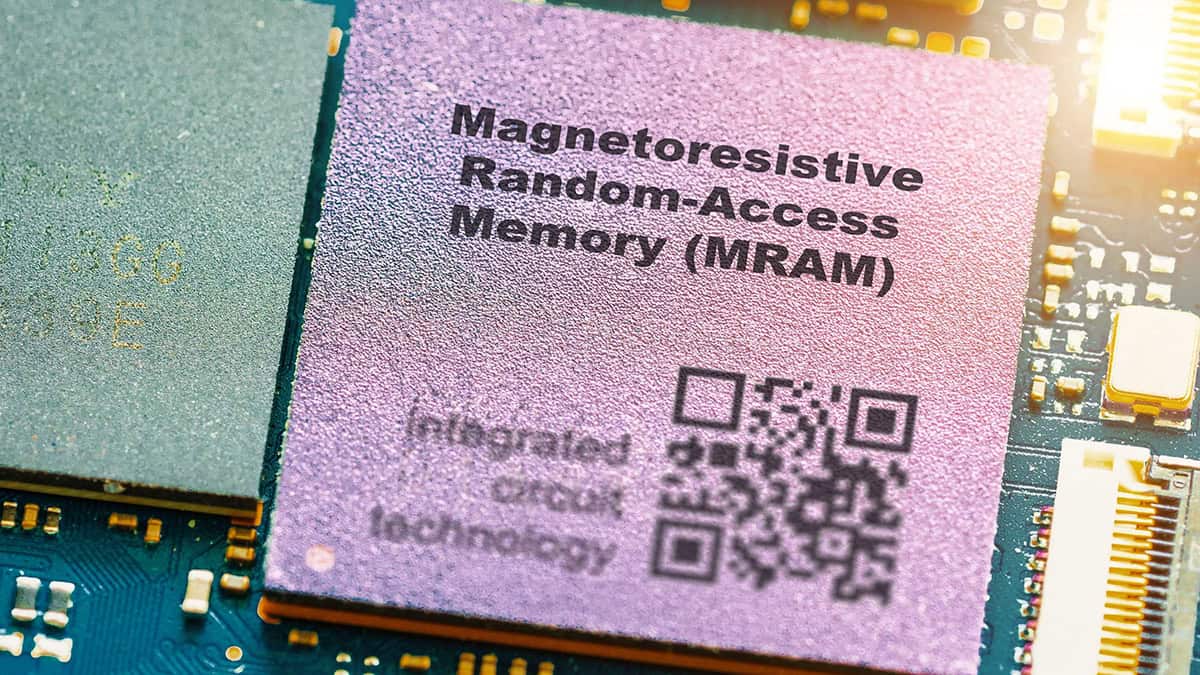
Universal memory Magnetoresistive random-access memory (MRAM) stores data in magnetic domains. Its main benefit is that it can retain data even when the power is turned off. (Courtesy: Shutterstock/luchschenF)
MTJs exist in hard disk drives and can also serve as read-write units in a magnetoresistive random-access memory (MRAM). To read, a small current is passed through the MTJ, and the resulting voltage shows the state of the bit. To write, a larger current is applied. The fixed layer polarizes the spin of the electrons, which carry angular momentum as they tunnel into the free layer.
This flips that layer’s magnetization, switching the magnetic bit, whose state survives even without power. That’s a key advantage of MRAMs compared to volatile CMOS RAMs, which require power and lose their stored data without it. MRAMs are not yet competitive with CMOS RAMs, but are already used in automotive, aerospace and other applications where their non-volatile nature is essential to reduce power needs and maintain their data under extreme conditions.
Along with this benefit, new possibilities for spintronics are emerging. In 2024 Nuh Gedik at the Massachussetts Institute of Technology (MIT) and colleagues reported that they had rapidly induced magnetism in iron phosphorus trisulfide with light (Nature636 609). FePS₃ is an antiferromagnet where atomic spins in opposite directions result in little or no net magnetic field. The researchers found that picosecond pulses of terahertz light produced magnetic states that persisted for milliseconds – far longer than any other reported light-induced magnetism (see box below).
Metastable magnetization
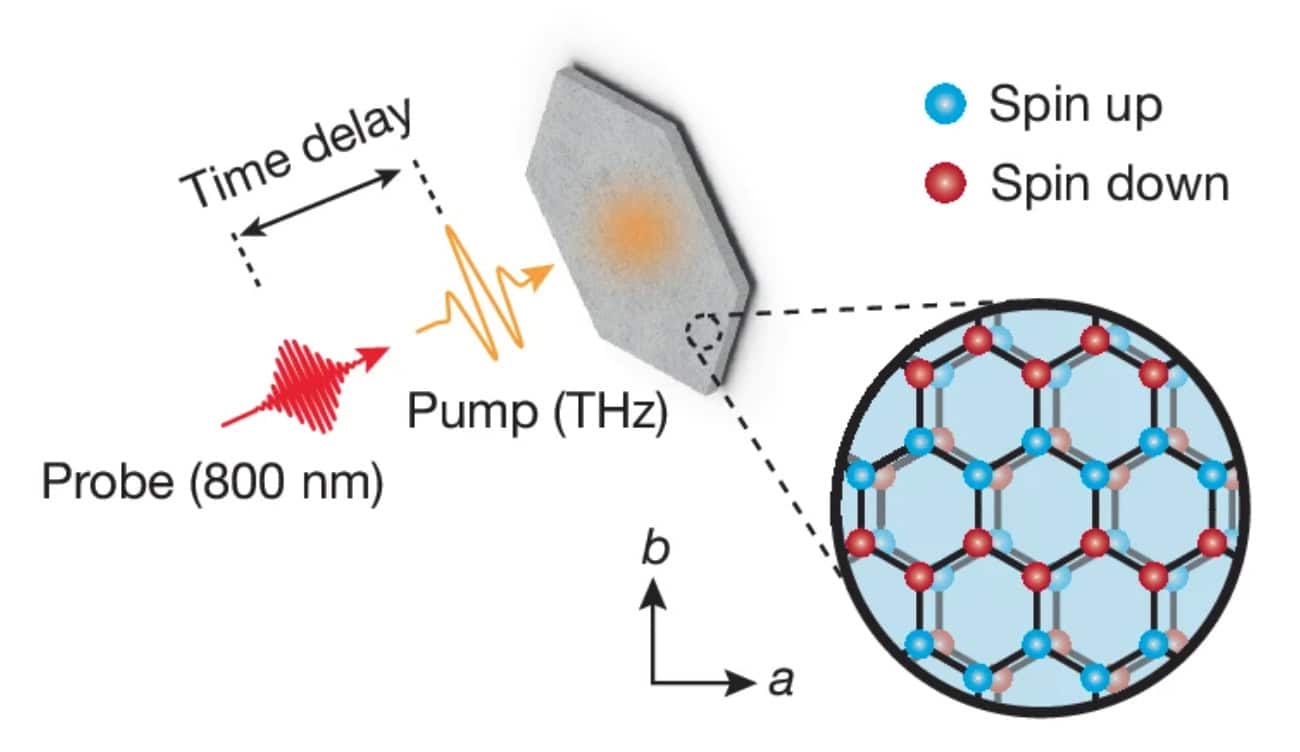
(Courtesy: Ilyas, B, Luo, T, von Hoegen, A et al. “Terahertz field-induced metastable magnetization near criticality in FePS3” Nature636 609 (2024) Springer Nature)
Shown here is the experimental set-up that an international team of physicists use to produce a long-lasting, light-driven magnetic state in a material such as iron phosphorus trisulfide (FePS3), which becomes antiferromagnetic when cooled below about 118 K. They used an intense terahertz-frequency (THz) pulse (orange) to drive low-energy collective excitations, which induce transient changes in optical properties that can be probed with an 800 nm probe pulse (red). Fe2+ ions form a hexagonal lattice and their spins arrange ferromagnetically along the zig-zag chain (a-axis) and antiferromagnetically between the adjacent chains (the structure in the circle). The magnetic coupling between the layers is antiferromagnetic together with a small interlayer shear distortion along the a-axis. The THz pulses put the material in a metastable magnetic state that lasts for more than 2.5 milliseconds even after the light source is switched off.
Earlier this year, researchers at Beijing Normal University in China found that light-induced magnetic transitions consume little energy (ACS Nano20 9051). If magnetic bits become competitive with electrical ones – activated by light or otherwise – they would unite working memory and long-term storage in one computational stage rather than two as we now have. Magnetic bits could also play a role in a bigger change in computer structure.
Bringing it all together
A novel form of computer architecture could also remove a famous bottleneck in computing that dates back to the influential 1945 proposal by the mathematician John von Neumann for a general computational design. He suggested using separate processing and memory (first put forth in 1837 by Charles Babbage for his mechanical “Analytical Engine”) but added the idea of the stored program.
By holding the instructions for computer operations in memory along with data, a computer program makes computation more flexible but has one big drawback. Data and instructions have to shuttle between processor and memory along the same channel, reducing computing throughput and using more energy than processing – the “von Neumann bottleneck”.
Novel computing: liquids, soft solids and deuterium
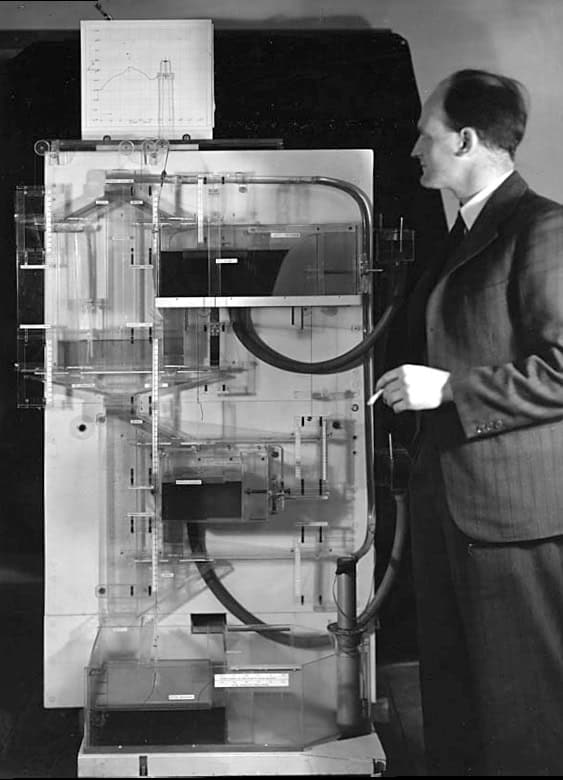
Financial flows London School of Economics economist AWH (Bill) Phillips with his eponymous machine, also known as the MONIAC analog computer, that modelled economic theory with water flows. (No known copyright restrictions, LSE Library archive)
At the heart of modern computing technology are ultra-pure silicon wafers. These nearly perfect regular crystalline solids form the substrates for integrated circuits, making it all the more surprising that less ordered materials – such as liquids and soft solids – have their own history in computation.
In 1949, for example, the UK-built Monetary National Income Analogue Computer (MONIAC) simulated the flow of money within a national economy using coloured water moving through transparent tubes under gravity. Water levels representing economic conditions were set by pumps and valves. As the water negotiated the system, it dynamically illustrated how parameters such as tax rate affect an entire economy, eventually settling into equilibrium.
Another liquid – mercury – also appeared in the early days of electronic computing. The first commercial unit in the US, UNIVAC I (1951), stored nine kilobytes of data as sound pulses continually recirculating in tubes filled with liquid mercury acting as delay lines. The units, which were bulky and heavy, provided serial rather than random access because the pulses travelled in sequence. Timing was crucial, and the mercury was held at a constant 40 °C to keep the speed of sound stable. Another early computer, EDVAC, also stored data in liquid mercury.
Since the 2000s researchers have shown that tiny droplets of oil, moving through small channels filled with water, can implement binary logic. If a droplet blocks a channel, a second droplet arriving behind it is diverted into another channel, representing a “decision”. Proper design can emulate the Boolean logic that underlies conventional computing. With channels only 100–200 µm across, microfluidic logic could route and process small samples, providing a lab on a chip for chemical analysis, biological research or medical diagnostics.
Yet another liquid – one more exotic than mercury – and a soft solid were apparently at least considered for computation in the same era as UNIVAC 1. According to Iain Dey and Douglas Buck’s 2017 biography The Cryotron Files: the Strange Death of a Pioneering Cold War Computer Scientist, the MIT scientist Dudley Buck once worked on a data storage system using magnetic pulses in liquid deuterium held at cryogenic temperature. In that Cold War era, US government money was available for any research that might help America and the authors describe how some of it also went on studies into a soft, wobbly foodstuff, lemon Jell-O as well as the viscous semi-liquid hair preparation Wildroot Creme Oil, which might also support sound waves in a memory unit. None of this Cold War research panned out, although at least the Jell-O experiments could treat the entire lab team to dessert.
One solution is to carry out processing and memory functions in the same physical element, potentially using a new type of electric circuit element originally proposed in 1971 by the US electrical engineer and computer scientist Leon Chua. Its resistance depends on the accumulated charge and, since charge is the time integral of current, therefore carries a memory of the device’s past electrical activity.
Chua dubbed his new element a memory resistor or “memristor” – and the concept can be used when a read-write MTJ holds a memory of past electrical activity as a magnetic bit. In 2026 Shahar Kvatinsky at the Israel Institute of Technology and colleagues showed that small MRAMs formed from MTJs can perform logical operations inside memory (Adv. Electron. Mater.12 e00348).
In principle, therefore, this could also provide arithmetic processing inside memory, thereby removing the von Neumann bottleneck. The non-volatile memory would also save energy relative to CMOS memory. Problems remain though, such as reducing noise and producing large-scale MRAMs – but the ability to merge memory and computation within MRAMs has been established at small scales.
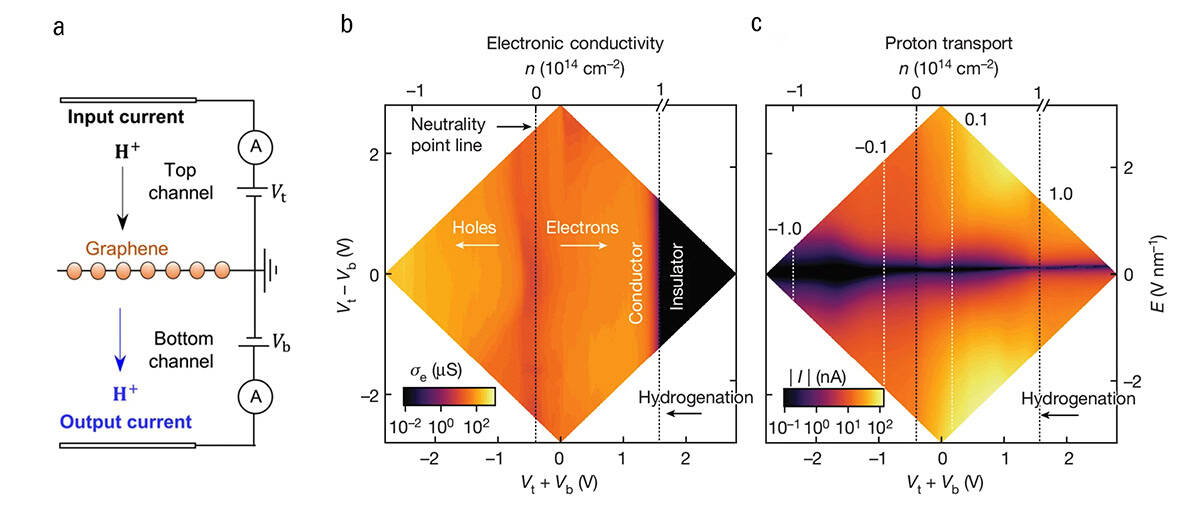
Certain material structures can also play a dual function. The wonder-material graphene – a 2D hexagonal lattice of carbon atoms – is electrically conductive when a voltage is applied in its plane, driving the electrons. If the graphene sheet is also placed between proton-conducting electrolytes, a second voltage applied across the sandwich produces a proton current (a flow of positive charge) perpendicular to the plane.
In 2024 Marcelo Lozada-Hidalgo at the University of Manchester and colleagues found that certain values of electron density in this structure make the graphene an insulator (Nature 630 619), producing a reversible change from conducting to insulating that forms a non-volatile two-state memory. Their set-up allowed the researchers to perform logic and memory operations in a single device for the first time.
As graphene, MRAMs, and other approaches are under study for in-memory computing, another method emulates a natural process – and is perhaps the biggest departure from conventional computing.
Dual purpose
(Courtesy: M Lozada-Hidalgo, Nature630 619. CC BY 4.0)
(a) Graphene is well known to be a good electrical conductor, but in 2024 an international team of researchers used the 2D substance to make a new electrically-controlled switching device that supports both memory and logic functions. The device exploits graphene’s ability to conduct protons as well as electrons. The team showed that placing a sheet of it between proton-conducting electrolytes also produces a proton current perpendicular to the plane, with the proton and electron transport allowing independent control of field and charge density. Shown here are the top and bottom voltages and the direction of electron and proton flow. (b) Map of in-plane electronic conductance, σe, as a function of electric field E and charge density n. The left and bottom axes show that these variables are controlled by the difference and sum of the top and bottom electron voltages, respectively). (c) Map of proton transport current, I, as a function of E and n.
Copying biology
In the 1980s, Carver Mead – a Caltech physicist and engineer who had been instrumental in developing integrated circuits and deeply understood the physics of computing – made a radical proposal. Instead of building computers around centralized digital logic, we should instead design them to imitate the strategies that make the human brain highly efficient. He coined the term “neuromorphic” computing for this approach and is widely considered its founder.
Using specific biological and biophysical features, the brain performs its cognitive and sensory tasks at the modest power of 20 watts. Its 86 billion neurons do not constantly use energy, but act sparsely in response to events, firing brief electrical spikes at definite timings and rates. A system like this can be expected to save energy compared to a conventional computer, which steadily consumes energy at the CPU clock rate.
Also, there is no von Neumann bottleneck in the brain. Information is stored as changes in synapses: the ~1014–1015 connections among neurons that control signal flow. As a spike arrives, a synapse immediately applies its stored information. The modified signal is passed on to neurons that repeat the cycle. Storage and processing occur together within this closely linked 3D network, which also operates in a massively parallel manner.
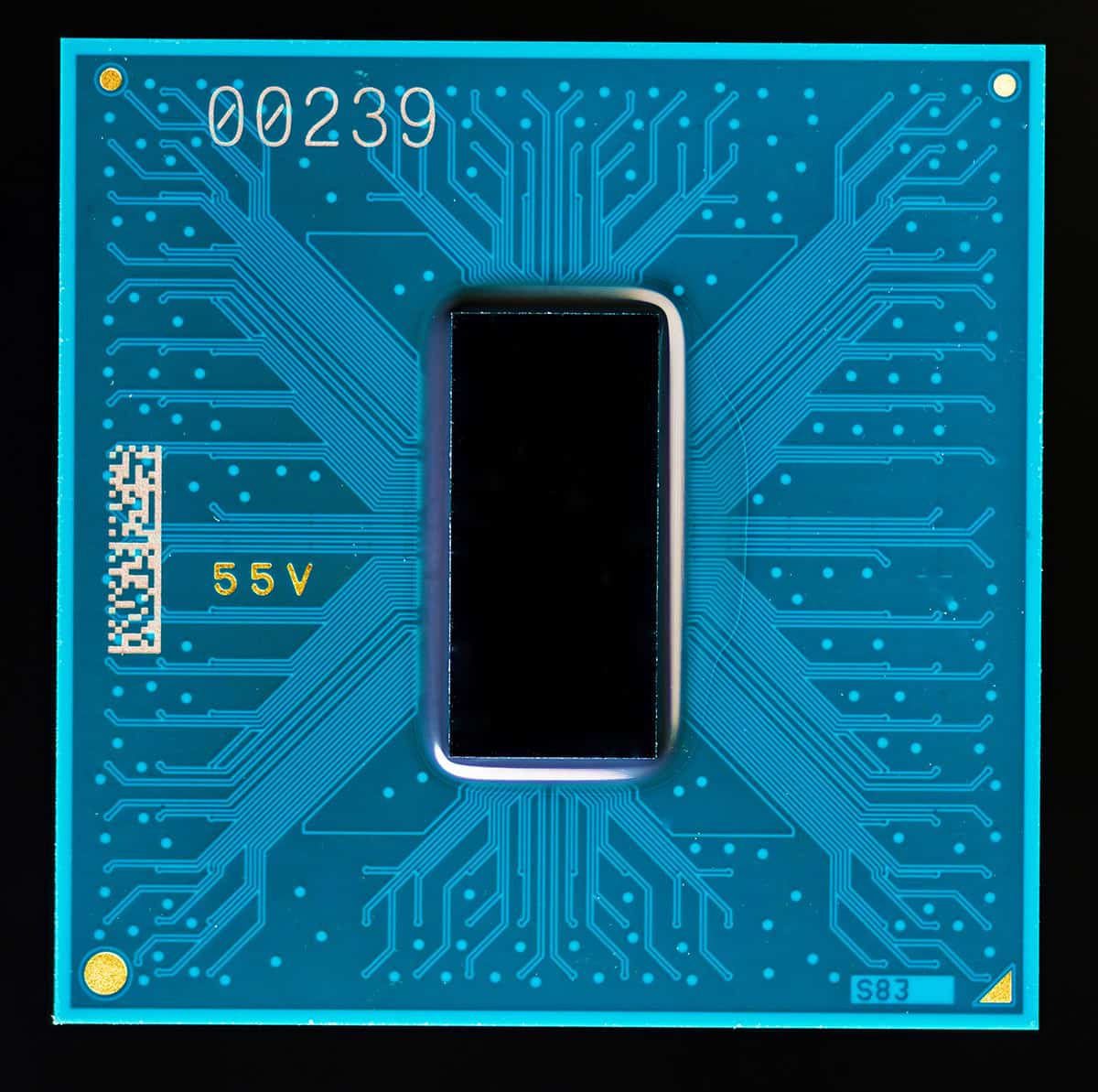
Mead had envisioned an analogue neuromorphic design, but in practice the biological features are expressed digitally to match CMOS technology. For example, in 2017 Intel introduced its Loihi chip with event-driven spiking and closely connected computation and memory. A later model was reported in 2025 (arXiv:2503.18002) that trebled the throughput for matrix multiplication – the main computationally-intensive operation needed to train an LLM – with half the energy a standard GPU chip uses.
Similarly, in 2014 IBM built and tested a chip that emulated spiking behaviour, while a later version, dubbed NorthPole, does not use spiking. In 2025, meanwhile, IBM researchers reported that 288 linked NorthPole chips could carry out AI inference on certain sizes of language models at favourable speeds and power usage.
Chip off the old block Intel’s Loihi 2 chip is an example of a neuromorphic chip, based on how the human brain functions. With linked computation and memory, it can carry out AI inferencing considerably faster than standard chips, making it more energy efficient. (Courtesy: Walden Kirsch/Intel Corporation)
The future of computing and AI
Most of the novel approaches are in the proof-of-principle or pre-commercial phase and may never reach wide use, for both economic and engineering reasons. The investment in CMOS technology and the associated computer architecture is enormous. Any overall change would be a massive undertaking. Although a neuromorphic chip might be more efficient, it would require huge investment to be formally adopted by today’s markets and chip-making industry.
Even so, there are valuable lessons to be learned from the research into novel approaches – such as better integration of memory and computation. There is also a consensus that hybrid solutions can yield immediate benefits. An accelerator unit, such as a bank of neuromorphic chips, integrated with CMOS technology, could increase speed and decrease power use for the critical matrix multiplication stage. Upgrades like these can be included as new supercomputers and AI centres are being built, improving general and AI computation and reducing their energy costs.
We should also think of the problem from the other end: yes, we can now produce a form of AI based on LLMs. But this is ultimately a brute-force approach that demands a great deal of time, money and resources. It should continue to be refined, but there should also be space for bold ideas that may lead to better and more sustainable forms of AI, and of the computation it requires.
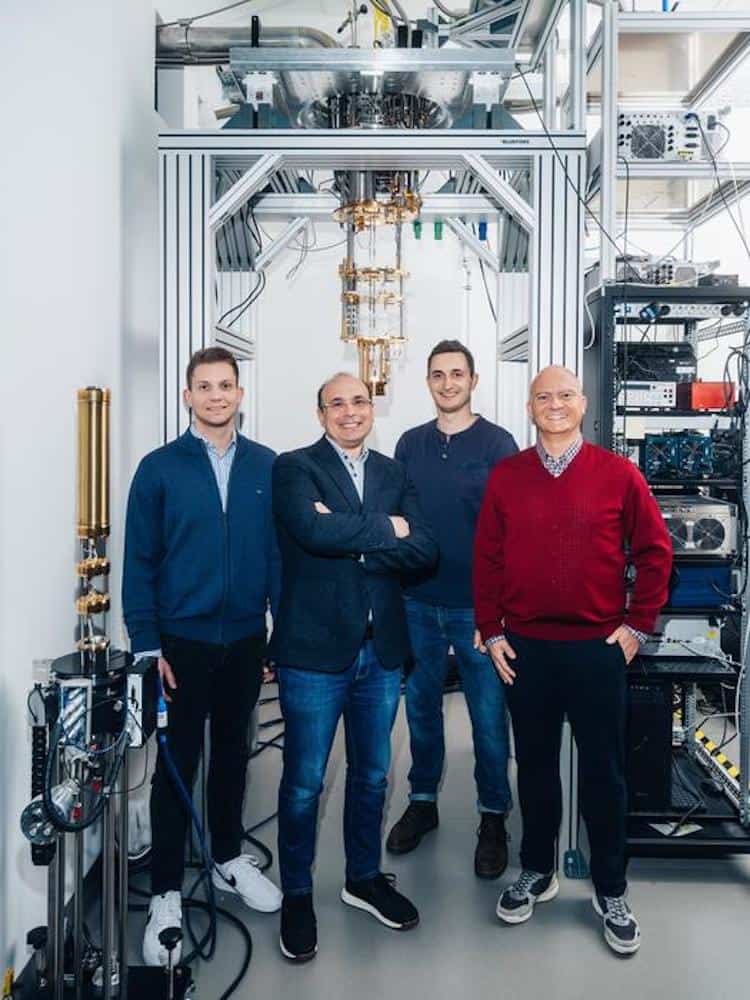
From left to right: University of Vienna researchers Rostyslav Serha, Andrii Chumak, David Schmoll and Sebastian Knauer standing in front of a cryostat. (Courtesy: Ian Ehm)
Bosonic quasiparticles such as magnons show much promise for enabling on-chip quantum information technologies that can be scaled down to the nanoscale, but their too-short lifetime has held back such applications until now. An international team of physicists says it has now increased this lifetime by a hundredfold, thanks to the discovery of a new class of magnons known as short-wavelength dipole-exchange magnons.
Magnons are the collective oscillations of coupled magnetic spins in a material. They are particularly promising for next-generation computing because they could allow for information processing based on the wave-like dynamics of these spins rather than the flow of electrons, thereby significantly reducing energy losses. They can also naturally couple to many other fundamental quasiparticles, such as phonons and photons, which makes them ideal as the building blocks for hybrid quantum systems.
The main drawback of magnons, however, is that they die too fast, explains Andrii Chumak of the University of Vienna, who led this latest study. “Indeed, their lifetimes are typically limited to a few hundred nanoseconds, something that puts a hard ceiling on what we can do with them in a quantum architecture.”
A lifetime of up to 18 µs
In this work, which is detailed in Science Advances, the researchers discovered short-wavelength dipole-exchange magnons in highly pure, single-crystal yttrium iron garnet (YIG) spheres held at millikelvin temperatures. These magnons last for up to 18 µs, which is nearly two orders of magnitude longer than that previously observed for these quasiparticles.
As often in science, the discovery was accidental, says Chumak. “We had prepared three YIG spheres with varying degrees of purity for planned quantum experiments with superconducting qubits, and we simply wanted to characterize these spheres and identify the one that hosted the longest magnon lifetime,” he recalls.
“An 18 microsecond lifetime places magnon coherence on a par with that of typical transmon superconducting qubits used in today’s quantum processors,” he tells Physics World. “This reshapes the role magnons can play in hybrid quantum architectures – from lossy intermediaries to robust quantum memories and low-loss links able to mediate interactions between distant qubits on a chip.”
A programmable on-chip “quantum bus”
And that’s not all: long-lived magnons coupled to superconducting circuits could act as a programmable on-chip “quantum bus”, entangling many distant quantum bits (qubits) made from these hybrid structures along a common waveguide, rather than only nearest neighbours, he adds. The results also point to a clear materials-science route to push magnon lifetimes even further, in particular by continuing to reduce rare-earth impurity concentrations in YIG.
There is a way to go before real-world applications see the light of day, however. For one, the researchers still have some physics to understand, but that is what makes the project so intriguing for them, they say.
Chumak says that the most immediate future step in his team’s work will be an echo-type experiment to measure the lifetime of these magnons directly, rather than inferring it from the so-called parametric instability threshold, as was done in this work. “In parallel, we will need to learn how to excite and detect these short-wavelength magnons efficiently using nanoscale transducers, which is essential before they can be integrated with superconducting qubits.”
“The field of quantum magnonics is still very young compared to other quantum platforms,” Chumak notes, “so it will take some time before we reach actual quantum computing applications – but the path is now much more concrete than it was a year ago.”
Altermagnets can transfer their unusual magnetic properties to nonmagnetic materials placed next to them, say theorists in China and the US. This so-called “proximity effect” had already been observed in ferromagnets and superconductors, but it is new for altermagnets, which were only recognized as a distinct class of magnetic materials in 2024. If confirmed experimentally, the team says the effect could aid the development of advanced quantum materials with applications in fields such as spintronics, valleytronics and fault-tolerant quantum computing.
In ferromagnets, proximity effects make it possible to tune properties such as magnetic anisotropy, coercivity and exchange bias in nonmagnetic materials that have acquired magnetic polarization from a neighbouring ferromagnet. Similarly, ordinary materials that have picked up superconducting correlations from a nearby superconductor are a mainstay of experiments on topological superconductivity and topological quantum computing.
In the latest research, physicists led by Tong Zhou of the Eastern Institute of Technology in Ningbo sought to understand whether altermagnets could likewise transfer their behaviour to a neighbouring material. To do this, they created a model of a van der Waals bilayer heterostructure in which the bottom layer is a two-dimensional (2D) altermagnet, V2Se2O, while the top layer is a non-magnetic semiconductor, PbO.
Zhou explains that the vanadium atoms in V2Se2O form two opposite-spin sublattices that are connected by rotational symmetry rather than by simple translation or inversion. This complex structure is what gives V2Se2O its characteristic altermagnetic spin splitting, with a band structure in which spin-up and spin-down electrons have different energies that vary in periodic patterns. V2Se2O also has a so-called spin texture, which is a pattern of spin polarization that produces a net zero magnetization in the material.
First-principles calculations
Using first-principles calculations, the researchers found that the distinctive symmetry-patterned magnetism of V₂Se₂O can indeed transfer into the PbO layer across the interface between them. As a result, Zhou says the originally spin-degenerate bands of PbO develop a clear momentum-dependent spin splitting.
Importantly, this pattern is not arbitrary. Instead, it follows the symmetry expected from the altermagnetic order of V2Se2O. What is more, the real-space spin density of the PbO mirrors the symmetry of the V2Se2O, showing that it has inherited altermagnetism rather than simply becoming generically spin polarized.
When the researchers rearranged the V2Se2O into a conventional antiferromagnetic configuration with no alternating spin splitting, they found that the induced splitting in PbO disappeared. They also observed that the degree of induced splitting decreases when the PbO is placed further away from the V2Se2O, confirming the proximity effect.
As a final piece of evidence, the researchers searched for similar proximity effects in other altermagnetic systems, ranging from insulators to metals and covering material platforms with 3D architectures as well as 2D ones. “Even graphene, one of the most common 2D materials, can acquire altermagnetic characteristics when interfaced with CrSb, which is an experimentally well-established altermagnet,” Zhou notes.
Altermagnets as interfacial “spin-pattern generators”
One of the work’s main implications is that altermagnets could be used to generate spin patterns in many otherwise non-magnetic materials, Zhou tells Physics World. “This means that instead of searching only for intrinsic altermagnets, we can now design ‘proximitized’ altermagnetic systems by combining an altermagnet with a semiconductor, metal or superconductor,” he says.
In semiconductors, Zhou notes, the altermagnetic proximity effect can induce controllable spin and valley splitting, which are promising for spintronics and valleytronics devices, respectively. In superconductors, meanwhile, the effect can generate momentum-dependent spin splitting without the need to apply an external magnetic field or introduce net magnetization – something that Zhou says offers a new route toward topological superconductivity and the Majorana modes that could revolutionize fault-tolerant quantum computing. “More generally, this effect provides a versatile platform for designing field-free spin devices, topological quantum devices and multifunctional van der Waals heterostructures,” he says.
Looking ahead, Zhou and colleagues say they would now like to observe the altermagnetic proximity effect in heterostructures fabricated in the laboratory. They also want to find out how to control the strength of the effect – for example, by changing interlayer spacing, stacking, strain, gating and possibly even layer twisting.
“More fundamentally, an important question is how fast and how reversibly altermagnetic order, and therefore the altermagnetic proximity effect, can be reconfigured dynamically,” Zhou says. “That would be especially interesting for controlling spin-dependent transport and topological phases in real time.”
Some animals could sense Earth’s magnetic field by using the superparamagnetic properties of white blood cells in their livers, a new interdisciplinary study has revealed. Led by Clivia Lisowski at the University of Bonn, the team’s insights into homing pigeon navigation could help scientists resolve the decades-old mystery of how animals can sense magnetic fields. The research also shines new light on the inner workings of the immune system.
Animals ranging from sharks to bats appear to use Earth’s magnetic field to navigate during long migratory voyages. However, the nature of this magnetoreception is poorly understood.
“How they sense Earth´s magnetic field has been a mystery,” Lisowski explains. “Several hypotheses were suggested, but these have often resulted from laboratory experiments. They were hardly ever done in the field, and so couldn’t explain how migration would work at night or in dark environments.”
In their study, Lisowski’s team investigated the origins of magnetoreception in homing pigeons. These birds are famous for finding their way back home after being released in unfamiliar locations. “We combined expertise from research fields that usually are not intersected, namely immunology, physics and animal behaviour,” Lisowski explains. “[This gave] us a truly interdisciplinary approach to solve the mystery of magnetoreception in homing pigeons.”
Searching for magnetism
As part of this approach, the researchers searched for magnetism in several different tissues of the bird – including the liver, spleen, muscle, and beak. They used vibrating-sample magnetometry (VSM), whereby samples are placed in a constant magnetic field and vibrated up and down. If the sample is magnetic, it will induce an electric field that is proportional to its magnetization.
The team also did field studies of homing pigeon flight patterns and studied the birds’ anatomy. The latter involved using dyes to visualize microscopic structures embedded in tissues along with genomic assays of the tissues.
This combined analysis revealed the presence of superparamagnetic macrophages in homing pigeon livers. Macrophages are specialized white blood cells whose primary function is to engulf and digest pathogens. They are a cornerstone of the immune system. Superparamagnetic means that the macrophages are very easily magnetized.
“The macrophages are superparamagnetic due to their physiological function of degrading old and damaged red blood cells,” Lisowski explains. “They sequester and store the iron from red blood cells as oxide nanoparticles in ferritin proteins.”
Connecting to the brain
Within homing pigeon livers, the researchers found that these macrophages were often in the vicinity of – and sometimes even in direct contact with – nerve fibres in liver tissue. This could allow magnetic information to be passed from macrophages to the brain.
At the atomic level, Lisowski’s team proposes that the effect emerges from unpaired electrons in ferritin proteins, which interact with each other through magnetic dipole–dipole coupling to enhance their magnetic susceptibility. This subatomic effect could in turn explain the distinctive circling behaviour observed in pigeons after they take off. This circling could allow these unpaired electrons to be imprinted with magnetic information, before the birds settle into a more uniform flight.
The research could also improve our understand of the immune system. The team suspects that the sensing abilities imparted by their superparamagnetic properties could enable macrophages to better gauge their surrounding environments: distinguishing between what to fight, and what to tolerate.
“Our finding that the immune system can also sense the Earth´s magnetic field is a completely new layer in this concept of ‘immuno-sensation’, and opens the door to new research,” Lisowski says.
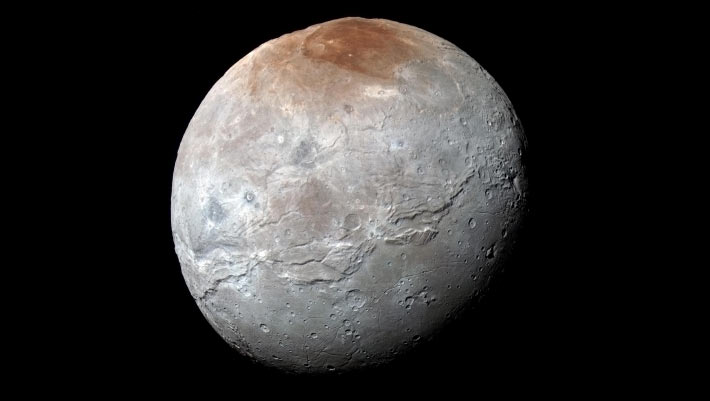
New research indicates that Pluto’s largest moon, Charon, may continue to lose rotational energy despite the pair’s long-standing tidal lock, offering scientists a rare glimpse into the hidden interiors of distant icy worlds.
Editor’s Note:Astrobites is a graduate-student-run organization that digests astrophysical literature for undergraduate students. As part of the partnership between the AAS and astrobites, we occasionally repost astrobites content here at AAS Nova. We hope you enjoy this post from astrobites; the original can be viewed at astrobites.org.
The room is large and densely packed. As you twirl across the floor, someone extends their hand, inviting you to dance. The two of you spin around each other, the tension building with every step. As you draw closer and closer, you realize this isn’t a ballroom, and you’re not people. This is outer space, and you and your partner are black holes, spiraling toward one another in one of the most energetic events in the universe: a black hole merger.
In this cosmic dance, black holes in a binary system orbit each other while also spinning around their own axes. Their spins are inherited from the angular momentum of the massive stars that collapsed to form them. After the two black holes merge, the remnant black hole also spins. The final spin depends on the spins of the two merging black holes and the ratio of the mass of the larger black hole to that of the smaller one. The higher the mass ratio, the more the larger black hole dominates the final spin. To quantify how fast black holes spin, physicists use a dimensionless spin parameter that ranges from 0 (not spinning at all) to 1, the maximum allowed by general relativity.
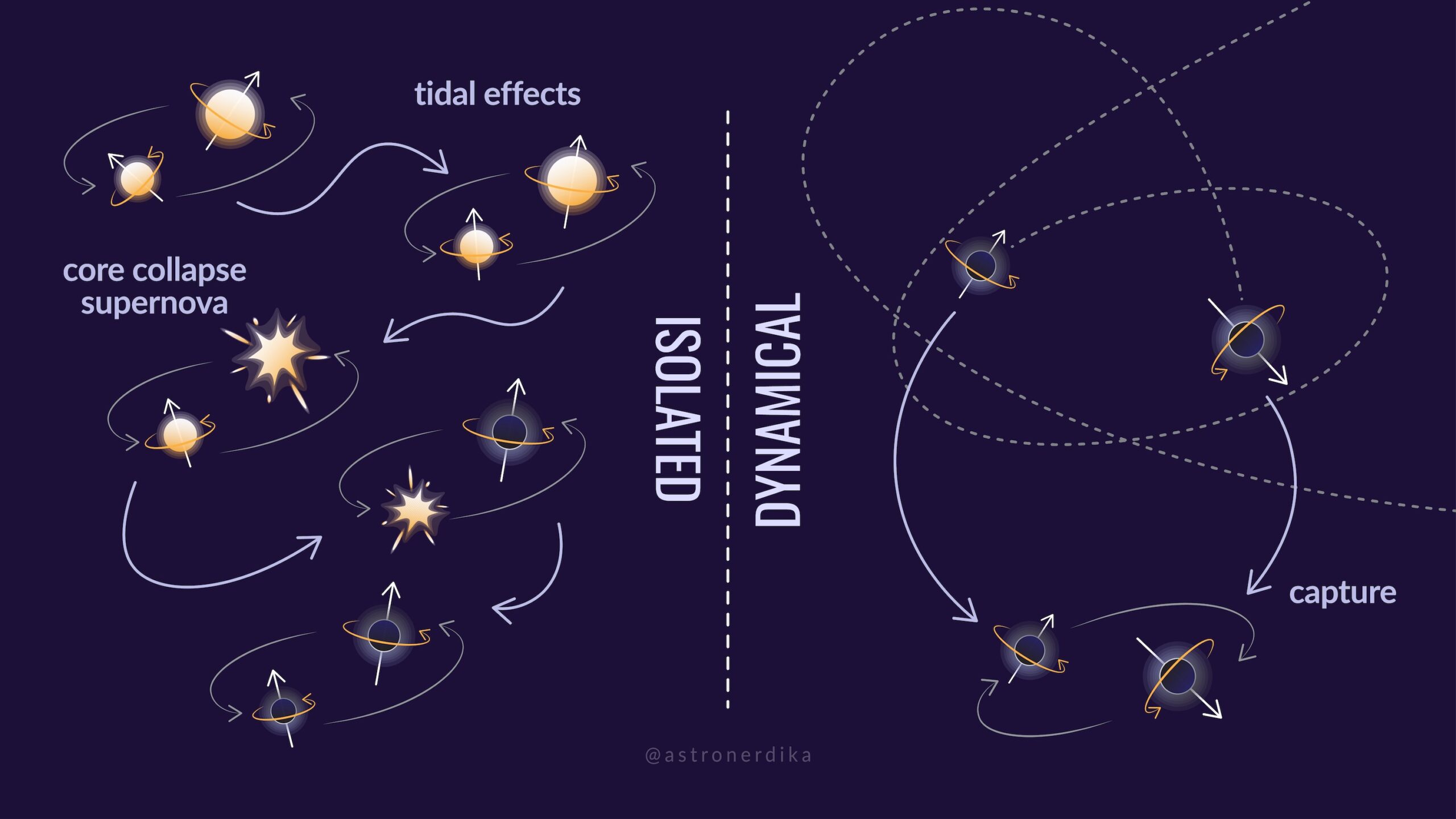
Observing the distribution of black hole spins helps us understand how binary systems form. For example, binaries formed through isolated channels, where the black holes are born and evolve together, are likely to have similar spin magnitudes, and the directions of their spins tend to align with their orbital motion. In contrast, black holes that form separately and later become a pair through dynamic encounters in dense environments typically have randomly oriented spins (see Figure 1). To determine which formation channels are more common, we need accurate predictions of the expected spin distributions for each scenario to compare them directly to merger observations from detectors like LIGO/Virgo or future gravitational-wave observatories.
Figure 1: Graphic showing two main formation channels of black hole binaries. [Reproduced with permission from Shanika Galaudage/Space Australia]
In a dense environment, such as a globular cluster, black holes can undergo multiple consecutive mergers, known as hierarchical mergers. With this in mind, we assign “generations” to black holes: first-generation (1G) black holes have never merged, second-generation (2G) black holes are the product of one previous merger, and so on. After several generations, the spin distribution of black holes has been shown to peak at approximately 0.7, independent of the mass ratios and spins of the first-generation binaries. However, studies have often overlooked an important factor that may impact this distribution: recoil kicks.
After a merger, the newly formed black hole receives a “kick” velocity — a shove that sends it moving through space. This happens because gravitational waves carry away linear momentum asymmetrically during the merger, and to conserve momentum, the remnant black hole recoils in the opposite direction. If its kick exceeds the escape velocity of its cluster, the remnant is ejected, making it unlikely to merge again. However, remnants that receive smaller kicks are retained and can go on to merge again, contributing to the spin distribution over multiple generations. The authors of this article study the final spin distribution of black holes that remain within a cluster after forming from hierarchical mergers.
Simulating Binaries in a Globular Cluster
The authors simulate a first-generation population of one million black holes that are assumed to all have the same initial spin, labeled ai. The authors use data from globular cluster simulations to determine the properties of binaries found in dense environments. The final spin, af, and kick velocity of the black holes are calculated using a high-accuracy model of black hole merger remnants. Only black holes with kick velocities less than the escape velocity of typical globular clusters are kept in the population for future mergers. For their analysis across multiple merger generations, the authors test escape velocities of 50, 100, and 200 km/s.
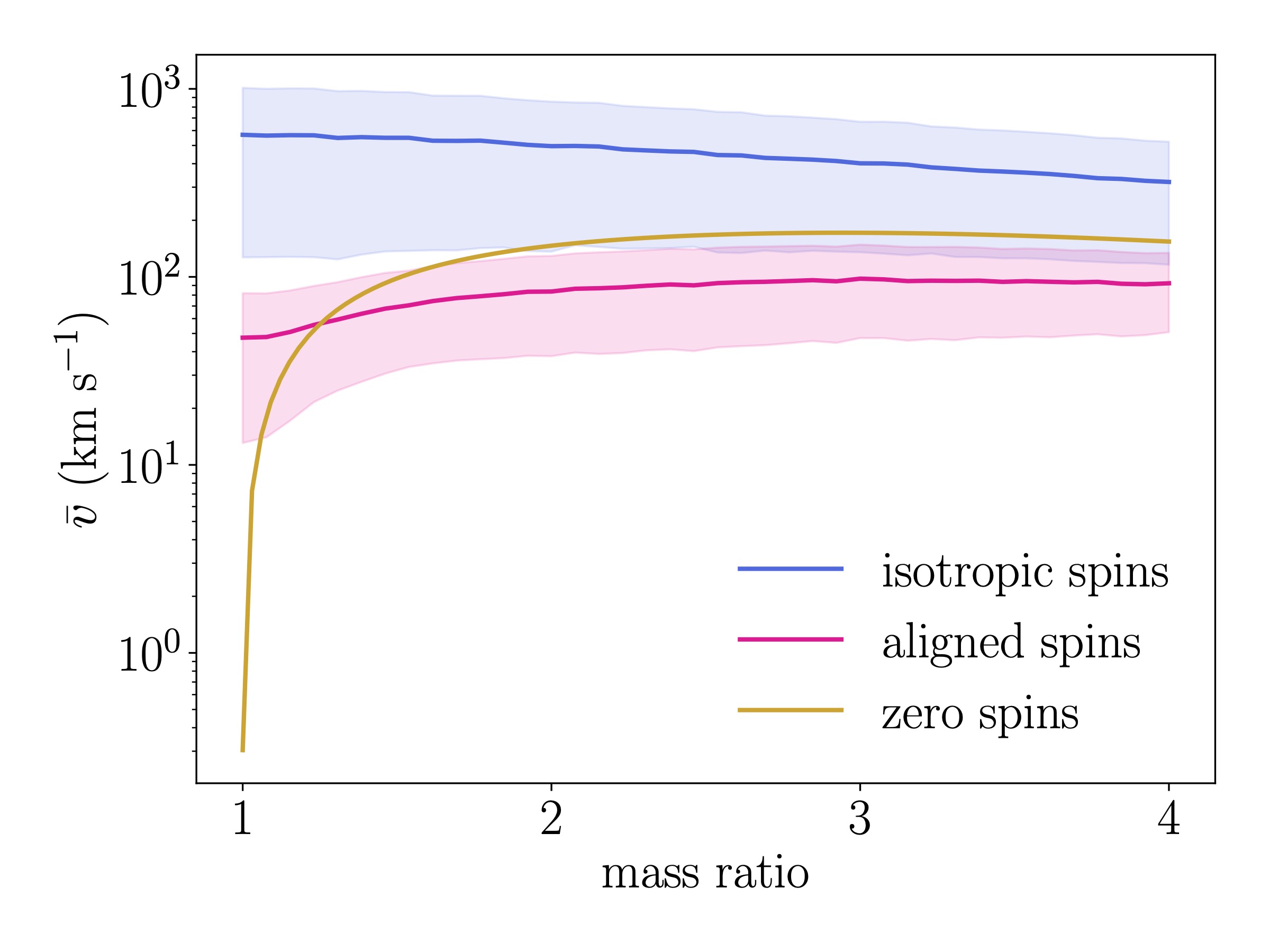
Some initial binary configurations are more likely to produce high kick velocities that could eject the remnant from the cluster. Figure 2 shows that binaries with isotropic (randomly oriented) spins tend to produce larger kicks than those with spins aligned with the orbital motion.
Figure 2: Kick velocity as a function of mass ratio for three types of black hole binaries: ones with random spin directions (blue), ones with spins aligned with the orbital motion (pink), and ones with zero spin (yellow). Each point shows the average from 10,000 simulated binaries, with spin magnitudes up to 0.8. Solid lines show the average kick velocity; shaded regions show the spread. [Borchers et al. 2025]
Spin Distribution of 1G + 1G Mergers
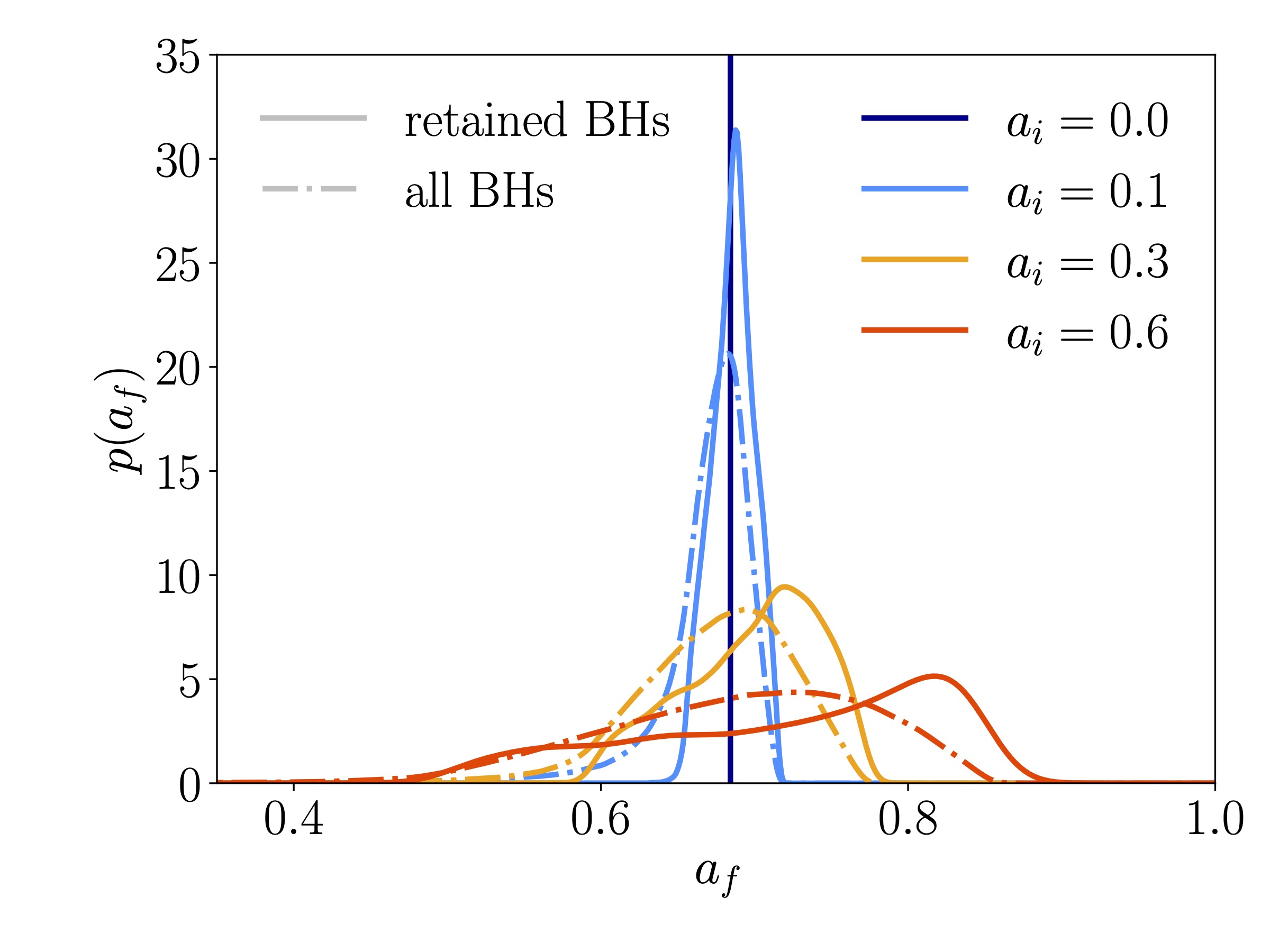
Figure 3 shows the final spin distribution from mergers between two first-generation black holes for different initial spin values. It compares all merger remnants (global population) to those that stay in the cluster (retained population). As expected, the distribution peaks around 0.7 for the global population. However, the peak shifts to higher spin values when only retained remnants are considered.
Figure 3: Spin distribution of 1G+1G merger remnants with different initial spin magnitudes and randomly oriented spins. The dashed lines show the distribution for all remnants, while the solid lines show the distribution for those that remain in the cluster. For the ai = 0.0 case, the vertical line is centered at af = 0.69. [Borchers et al. 2025]
This happens because, as Figure 2 shows, binaries with aligned spins tend to produce lower kick velocities, making them more likely to stay in the cluster. At the same time, aligned spins lead to remnants with higher final spins, so the retained population is biased toward higher spins.
The authors also examine the effect of escape velocity on the spin distribution. Higher escape velocities make the distribution more similar to the global population, while lower escape velocities lead to broader distributions with more support at higher and lower spins.
Spin Distributions of Higher-Generation Mergers
Figure 4 shows how the spin distribution changes over several generations of black hole mergers. As more generations pass, the spin distribution of the retained black holes starts to look quite different from the global one. In particular, it spreads out and shows a broader range of spin values.
Figure 4: Final spin distribution for different merger generations. The dashed lines show the distribution for all remnants, while the solid lines show the distribution for those that remain in the cluster. [Adapted from Borchers et al. 2025]
The authors also test different starting spin values and escape velocities. While the global spin distribution tends to settle into a consistent shape after a few generations, the authors find that the retained spin distribution does not. Instead, the spin distribution of black holes that stay in the cluster depends on several factors: the binaries’ initial spins and mass ratios, what generation they belong to, and the escape velocity of the cluster. So, there isn’t a single “universal” spin distribution for retained black holes — it changes depending on the environment and merger history.
Hierarchical mergers are considered a pathway to forming intermediate-mass black holes, potentially explaining events like GW190521. Current gravitational-wave detectors are observing more and more black hole mergers, and future detectors will measure their spins more precisely. Accounting for the spin distributions of black holes that remain in clusters rather than the universal distribution will help us better understand and measure how hierarchical mergers contribute to the gravitational-wave population.
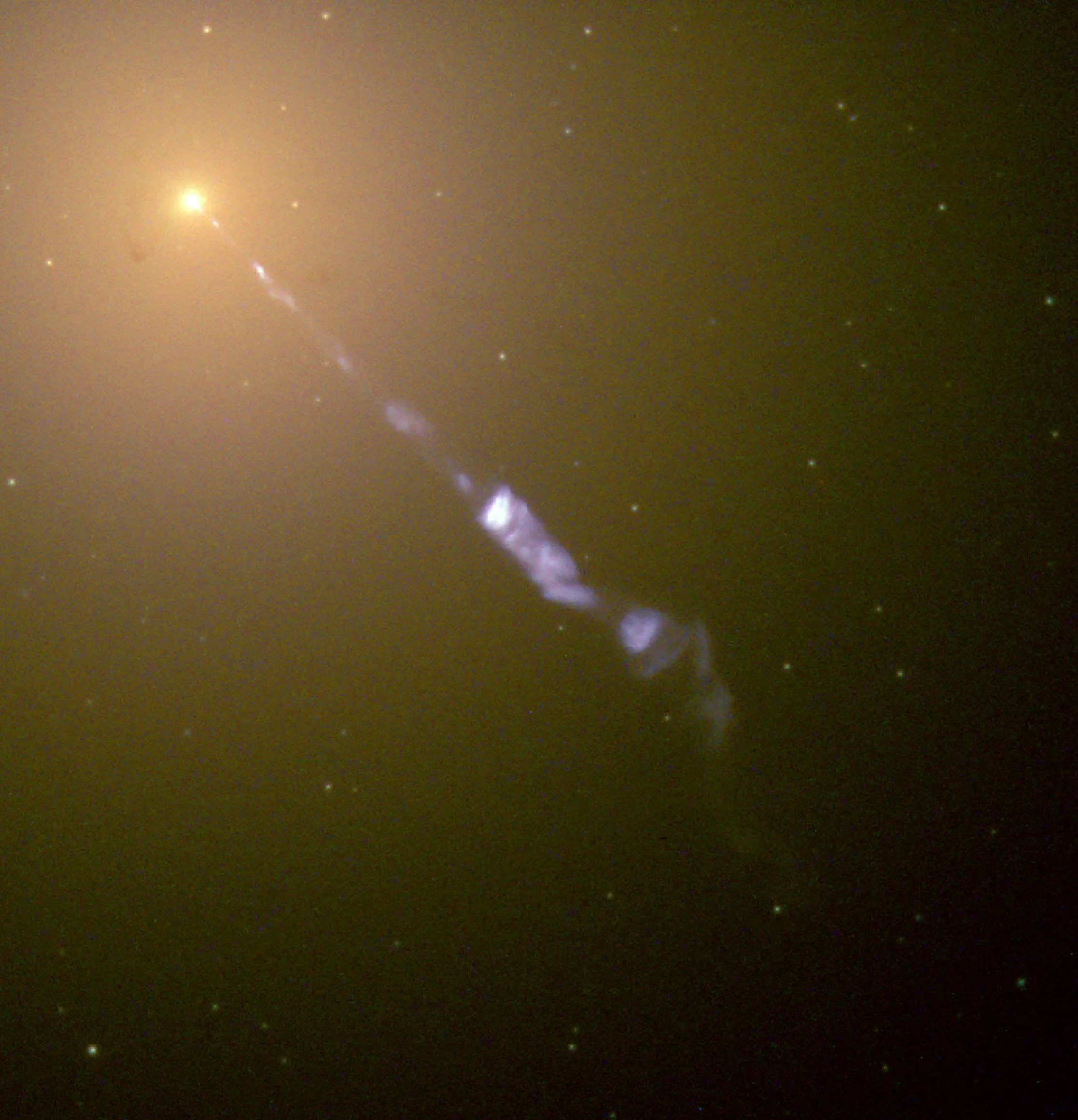
Upgraded interferometers will give researchers a never-before-seen view of the jets of active supermassive black holes. By modeling what might be seen when these instruments come online, researchers have discovered a new way to measure black hole spin.
Galaxies across the universe harbor supermassive black holes. Determining the properties of these black holes — their masses and spins — is key to understanding the formation and evolution of supermassive black holes and how they shape the evolution of their host galaxies.
Some supermassive black holes produce relativistic particle jets that are thought to be powered by the black hole’s spin. This means that precise observations of black hole jets could provide a potential way to measure the spin of a black hole.
Planned and proposed interferometers will stretch observing baselines to great distances — even into space — to attain the high resolution necessary for this sensitive measurement. Building on the successes of the Event Horizon Telescope, a planet-spanning interferometer that has revealed images of the supermassive black holes at the center of the giant elliptical galaxy Messier 87 and the Milky Way, observatories like the Next-Generation Event Horizon Telescope and the Black Hole Explorer will advance our understanding of supermassive black holes and relativistic jets.
Tracing Rays from Modeled Jets
To learn what might be gleaned from future images of black holes and black hole jets, Zachary Gelles (Princeton University) and collaborators developed a model of a nearly face-on relativistic black hole jet, much like the jet from Messier 87’s black hole. The team’s model incorporates both general relativistic magnetohydrodynamics, which describes a magnetized fluid subjected to the rules of Einstein’s General Theory of Relativity, and force-free electrodynamics, which focuses on the dynamics of the system’s electromagnetic fields.
Ray-traced polarized image of a collimated black hole jet. The white bars show the direction of polarization, while the color scale shows the normalized intensity. Several abrupt changes in the polarization direction as a function of radius are visible. Click to enlarge. [Adapted from Gelles et al. 2025]
With this model in hand, the team used ray tracing — following the paths that photons would take through the modeled jet — to predict how the jet would appear in polarized light. Examining the results for jets with varying degrees of narrowness, or collimation, the team noted that the polarization of the most collimated jet behaved strangely, with the polarization angle changing dramatically with position.
Gelles and coauthors demonstrated that one of these sudden polarization changes happens at the black hole’s light cylinder, or the radius at which the jet becomes relativistic and the magnetic field switches from being mostly poloidal to mostly azimuthal. Because the position of the light cylinder is dependent upon the spin of the black hole, measuring the location of this polarization swing allows for a measurement of the black hole’s spin.
The Promise of Polarization
This method has several potential advantages over other methods. Unlike the current leading method for measuring black hole spin, X-ray spectroscopy, this method applies to low-luminosity active black holes, which are thought to be common throughout the universe. And while the model includes a number of simplifications, the team asserts that incorporating features of more realistic jets, such as asymmetry, is unlikely to change the outcome.
Polarization direction as a function of impact parameter, showing the locations and causes of the abrupt changes in polarization angle. Click to enlarge. [Gelles et al. 2025]
Gelles’s team also showed that the location of the polarization flip for slowly spinning black holes is 10 times farther out than it is for rapidly spinning black holes. What this means in practice is that determining whether a black hole is slowly or rapidly spinning doesn’t require extraordinarily high resolution, just a general sense of where the flip happens.
Looking forward, Gelles’s team plans to continue their simulations, shoring up their predictions until they can be tested when future interferometers come online.
Citation
“Signatures of Black Hole Spin and Plasma Acceleration in Jet Polarimetry,” Z. Gelles et al 2025 ApJ981 204. doi:10.3847/1538-4357/adb1aa

 Login