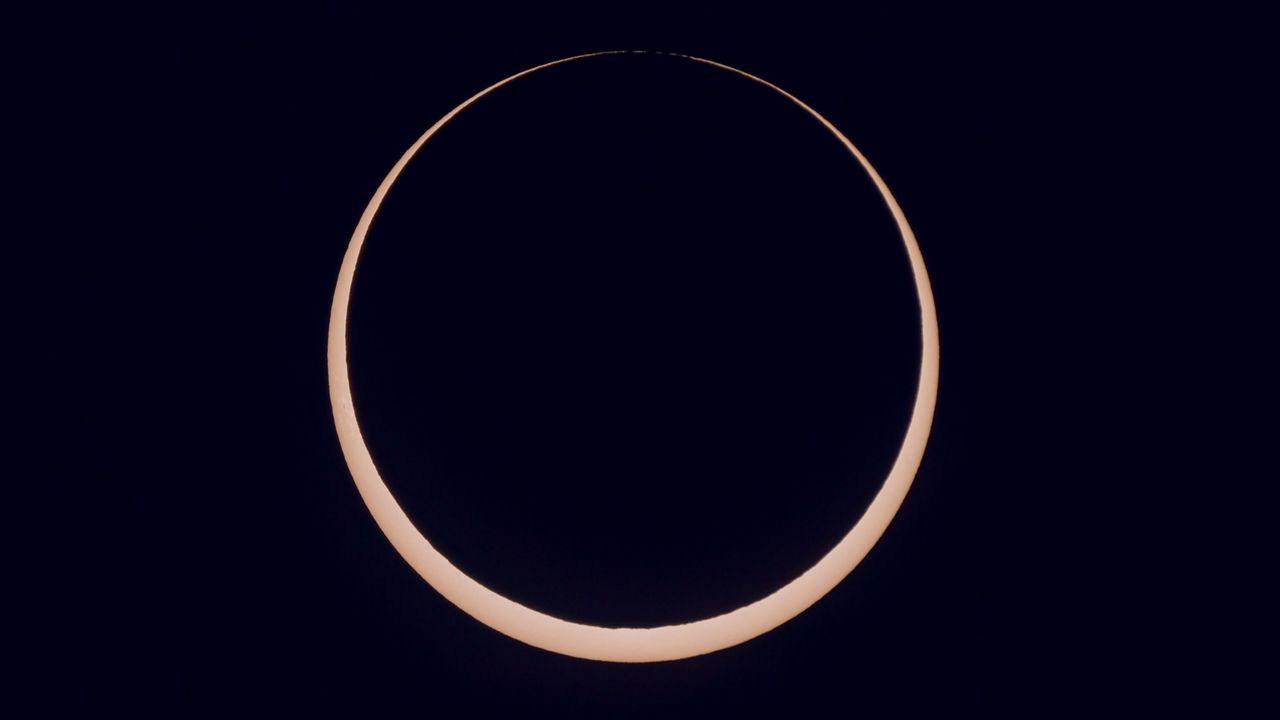
The Aug. 12 total solar eclipse is just one day away! Here's how you can watch the entire show live online from the comfort of your home
Millions of people across Spain, Iceland and Greenland will see the moon completely hide the sun during the climactic phase of totality on Aug. 12. Countless more skywatchers across Europe will witness a deep partial solar eclipse, as the moon's curved silhouette covers a swathe of the sun's surface, while failing to cover it entirely.
Thankfully, we live in modern times. So there's no need for you to miss out on the solar spectacle if you find yourself outside of the path of totality, or if clouds conspire to ruin your view. Here's where to watch every phase of the 2026 total solar eclipse live online.
NASA
NASA will be hosting its own livestream of the event starting at 1:15 p.m. EDT on Aug. 12, featuring live views of totality from cameras spread throughout the path of the eclipse. The visuals will be accompanied by information on the science of the incredible event and details on how the agency is working to learn more about our sun.
Time and Date's YouTube livestream kicks off at 12 p.m. EDT (1700 GMT) on Aug. 12, bringing live views of the eclipse from Leon in northwestern Spain and the island of Mallorca, along with live commentary from journalist Anne Buckle and astrophysicist Graham Jones.
The European Space Agency
An official European Space Agency (ESA) livestream will begin at 1:30 p.m. EDT (1730 GMT) on Aug. 12. The stream will feature expert commentary on the science of the eclipse along with live views from telescopes at the Observatorio Astrofisco de Javalambre, which is located close to the Spanish city of Teruel directly in the path of totality.
Royal Observatory Greenwich
London's historic Royal Observatory Greenwich will host two simultaneous YouTube streams featuring live views of the partial solar eclipse starting at 1:15 p.m EDT (1815 GMT) on Aug. 12. The first livestream will be presented by Royal Observatory astronomer Greg Brown, who will discuss the science of the sun while providing expert commentary on the eclipse, while the second will offer a silent livestream, featuring visuals of the eclipse with no accompanying audio.
Be sure to check out our live blog for all of the latest news on the Aug. 12 total solar eclipse. We'll also have reports from Skywatching Writer Anthony Wood as he watches the eclipse unfold low in the horizon in central Spain, and also from Skywatching Editor Daisy Dobrijevic as she witnesses the spectacle during a voyage with HX Expeditions to Greenland!
Editor's Note: If you would like to share your eclipse photos with Space.com's readers, then please send your photo(s), comments, and your name and location to spacephotos@space.com.
While totality will be visible from parts of Greenland, Iceland and Spain, millions more people across Europe will experience a dramatic partial solar eclipse. Whether you're chasing the moon's shadow in Reykjavik or watching the moon take a 'bite' out of the sun from London, Paris, or Berlin, timing is everything.
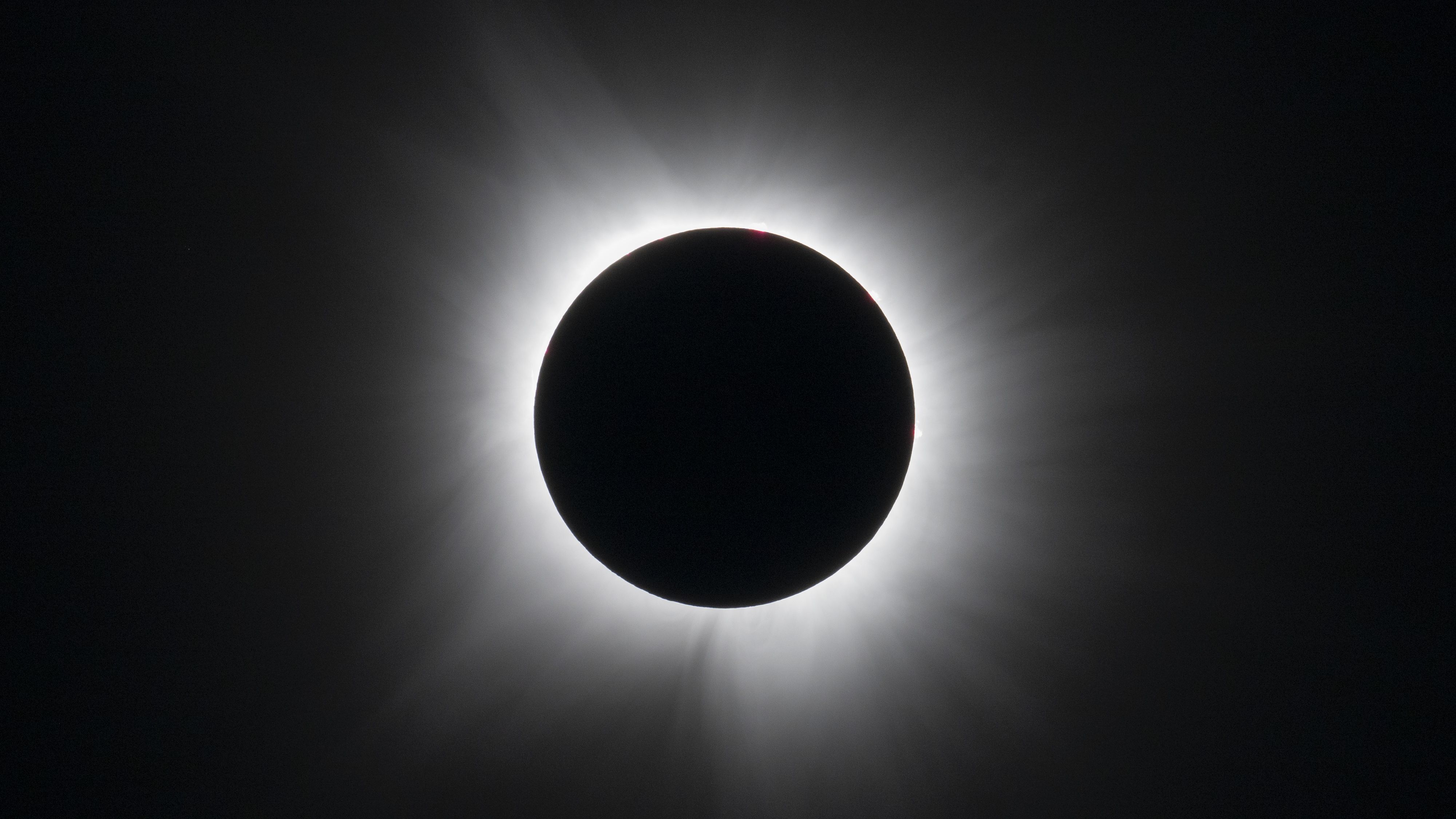
A total solar eclipse occurs when the moon moves in front of the sun and blocks it from view. (Image credit: Paul Souders/Getty Images)
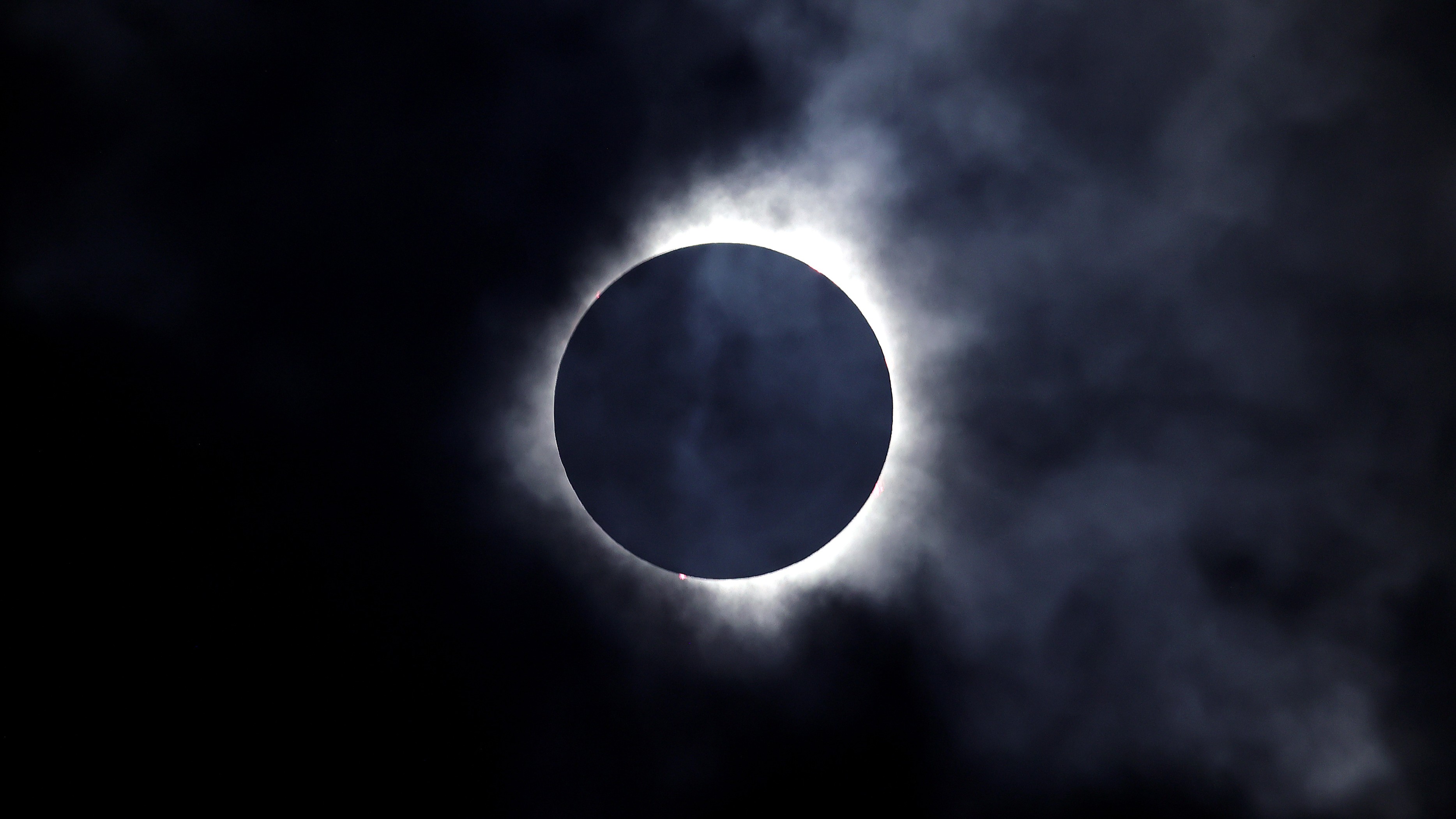
A total solar eclipse occurs when the moon moves directly between Earth and the sun, completely blocking the sun's disk from view.
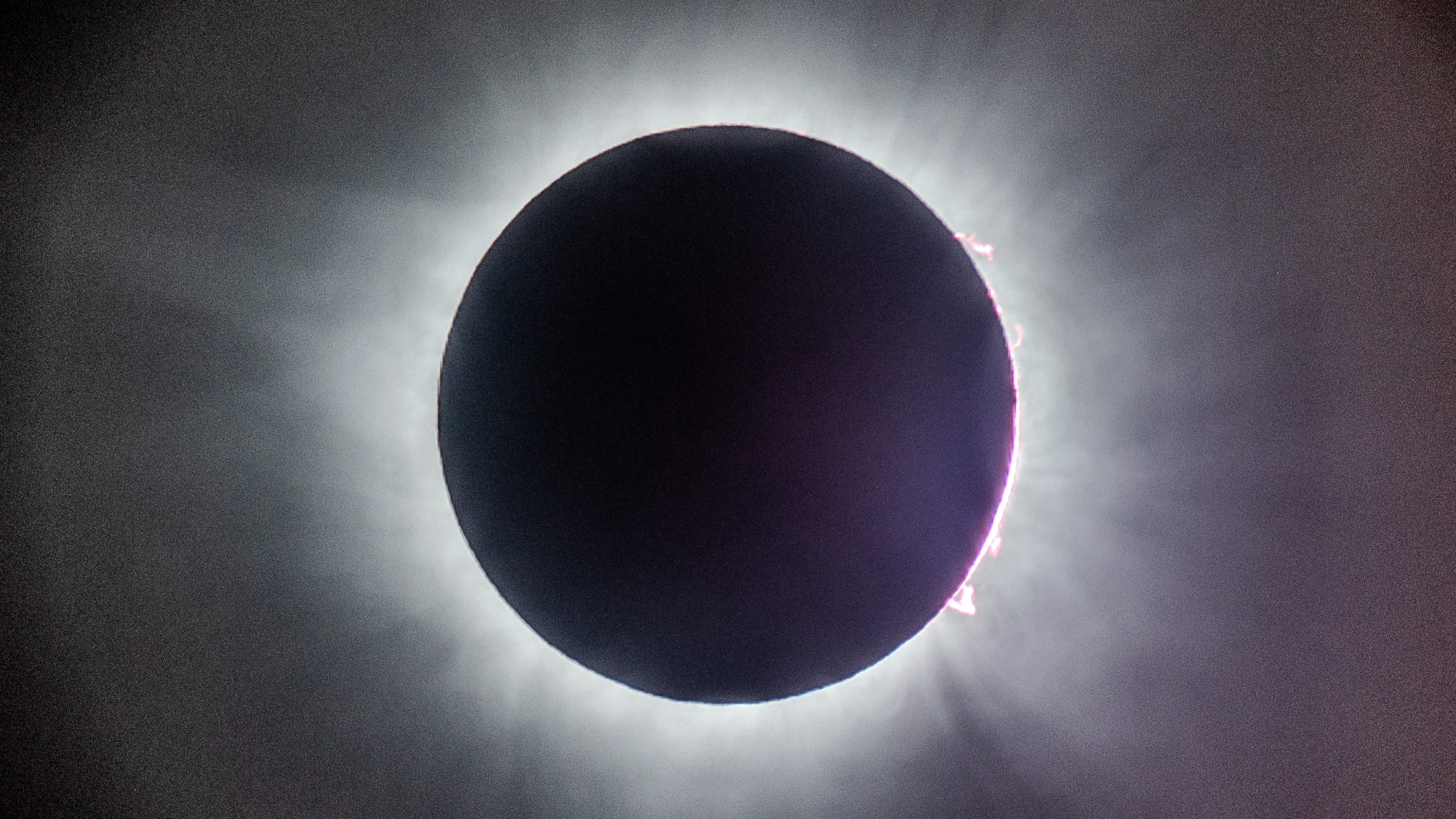
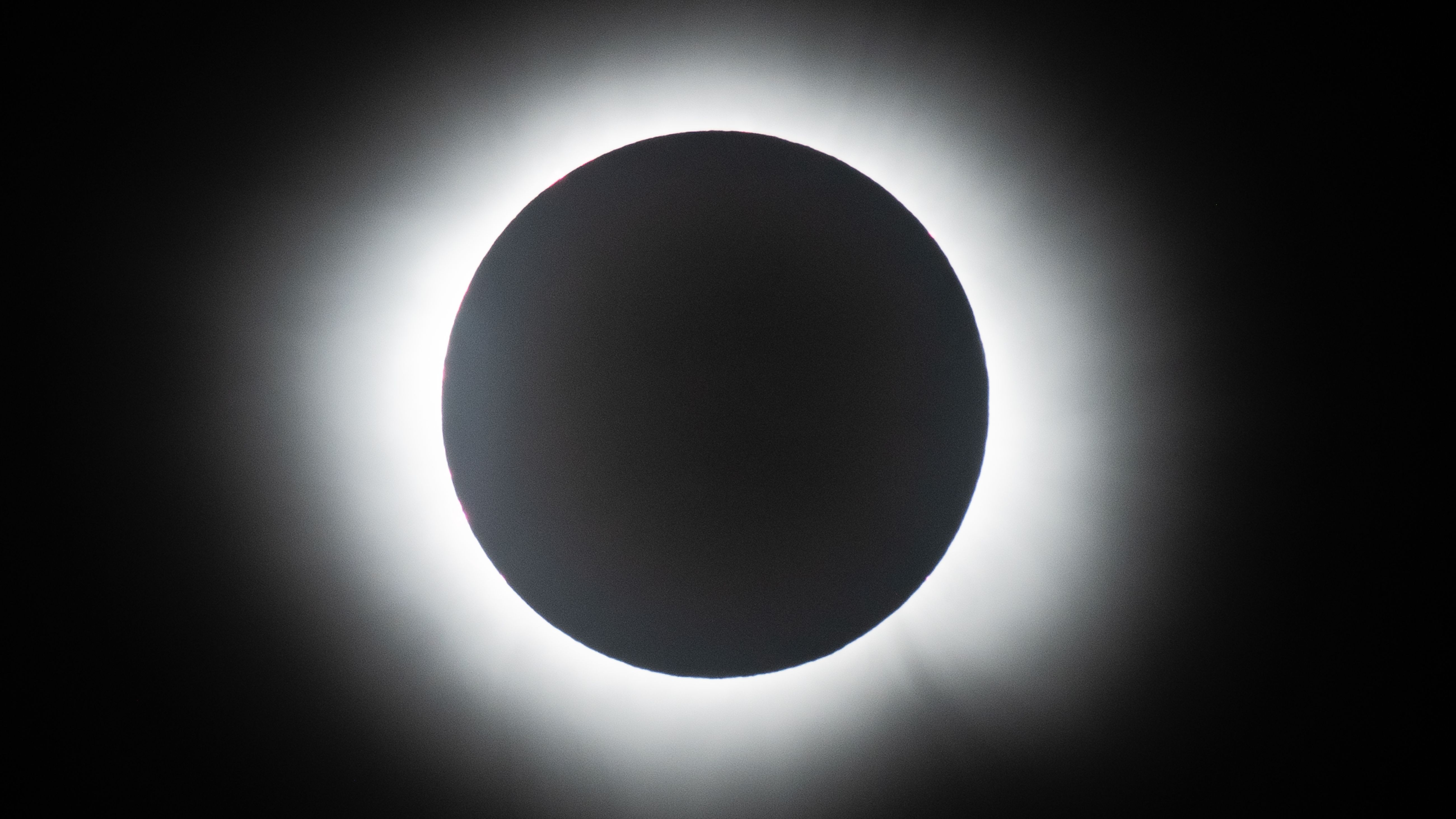
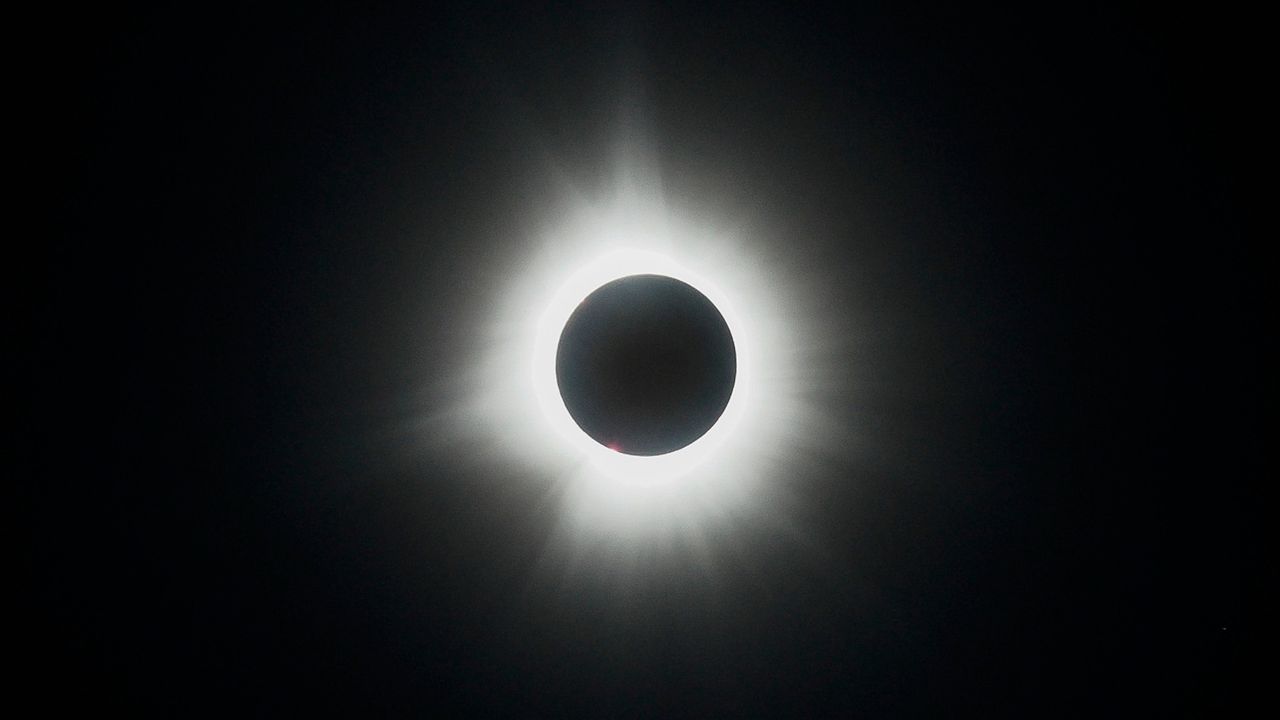
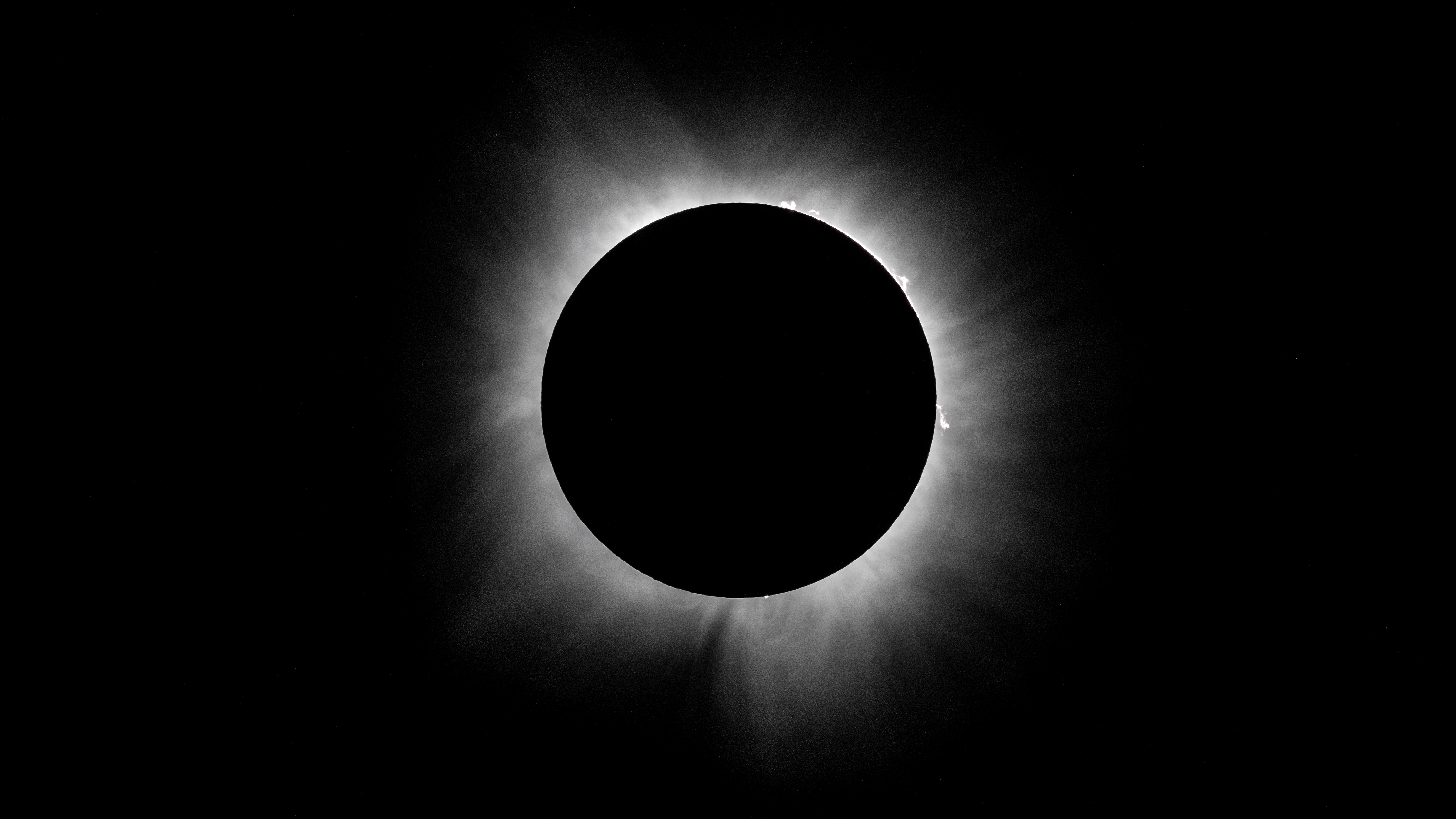
During totality, the sky darkens significantly, temperatures drop and bright stars and planets can even become visible. Observers can also catch a glimpse of the sun's outer atmosphere, known as the corona, glowing around the silhouetted moon.
Totality — when the sun is completely obscured — is only visible within the narrow path of the moon's shadow. Outside that path, observers may see a partial solar eclipse, whereby only a portion of the sun is covered.
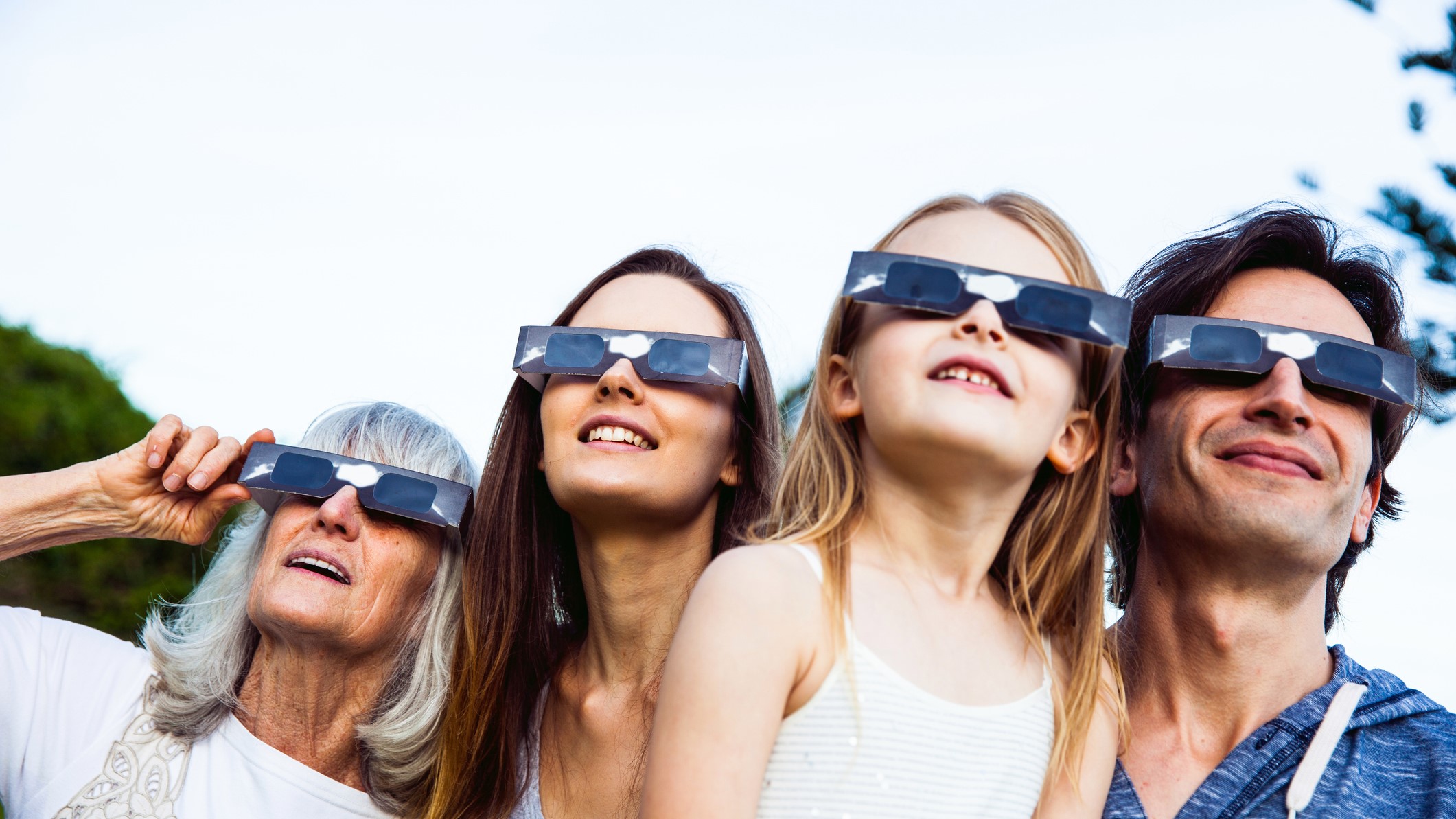
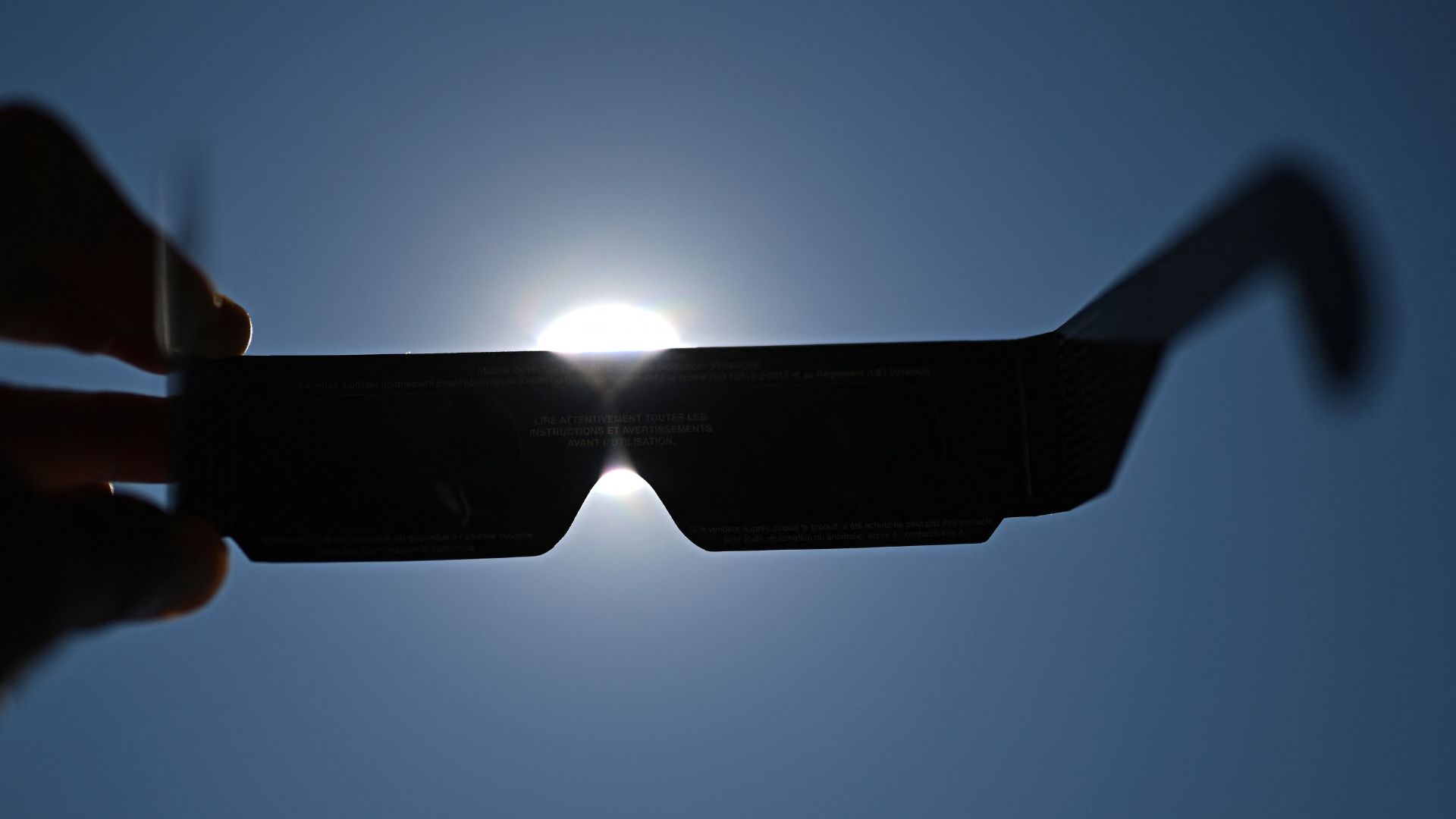
REMEMBER to NEVER look directly at the sun. To view this solar eclipse safely, you must use solar filters. Only during the brief period of totality when the moon completely covers the sun, is it safe to look at the sun without protection. Observers will need to wear solar eclipse glasses, and cameras, telescopes and binoculars must have solar filters placed in front of their lenses at all other times.
After the total solar eclipse on Aug. 12, 2026, the next solar eclipse will be an annular solar eclipse on Feb. 6, 2027 visible across parts of Africa and South America. The next total solar eclipse will be a spectacular event on Aug. 2, 2027. Visible across North Africa, it will be the longest totality on land since 1991.
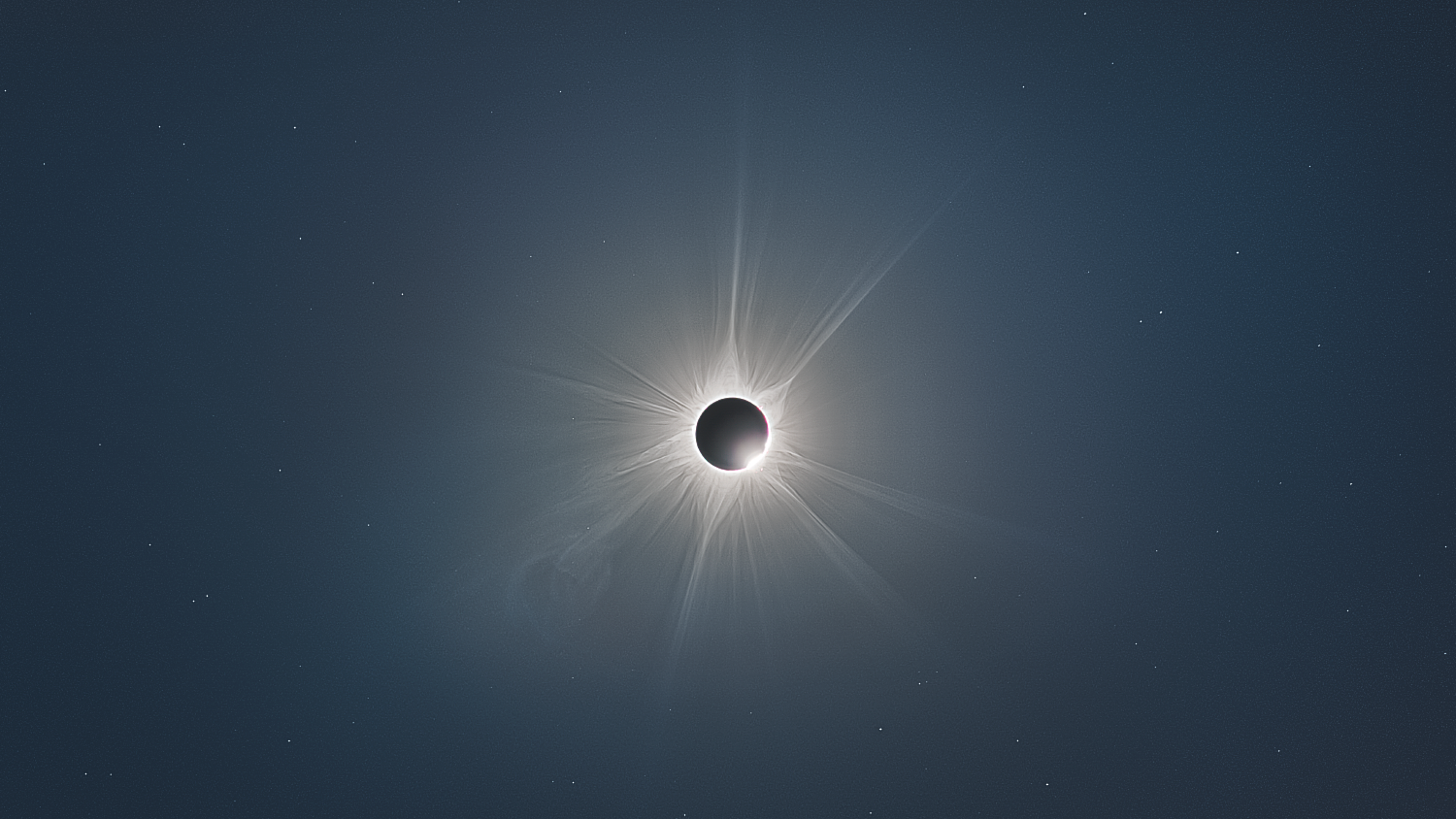
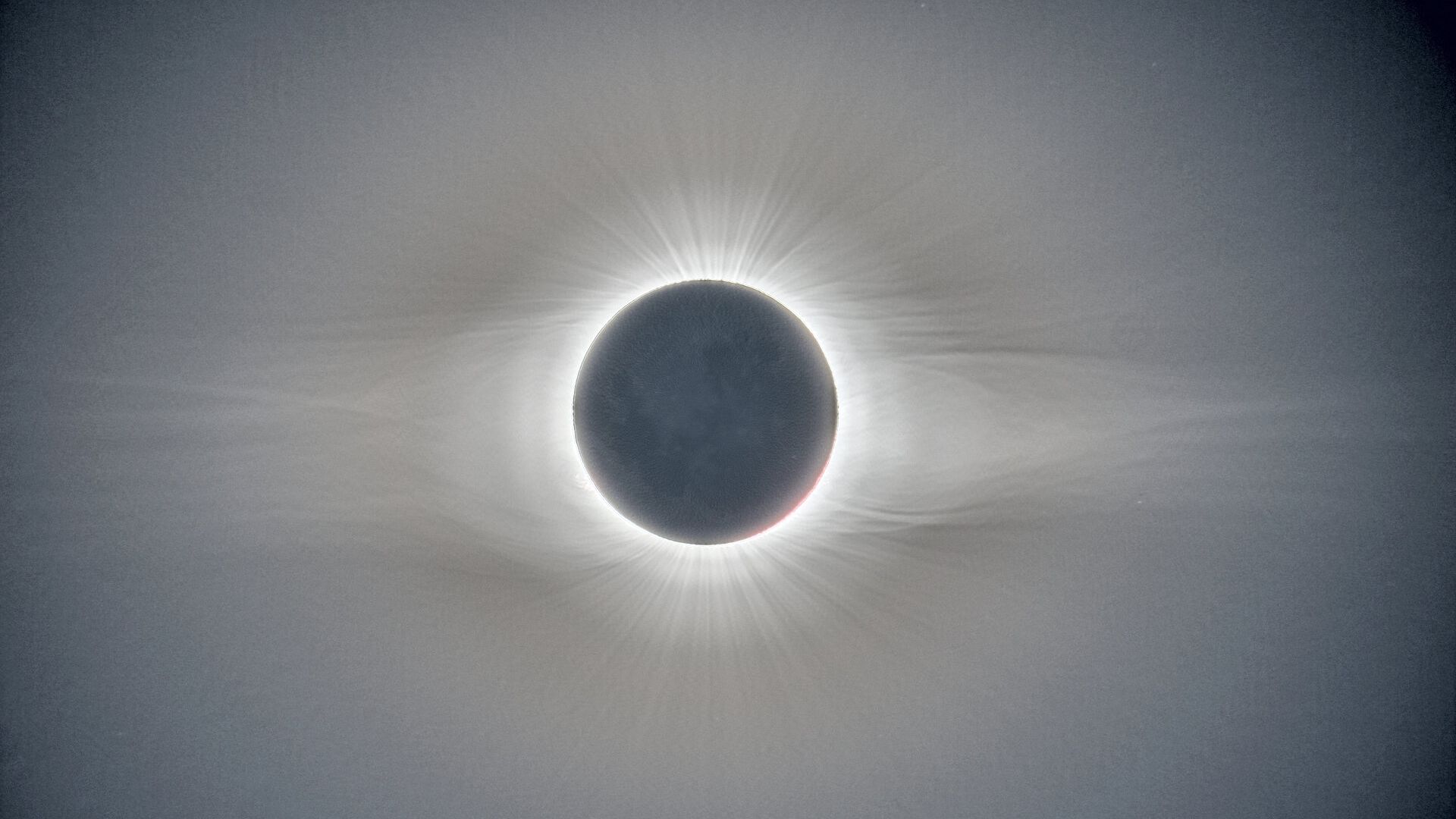
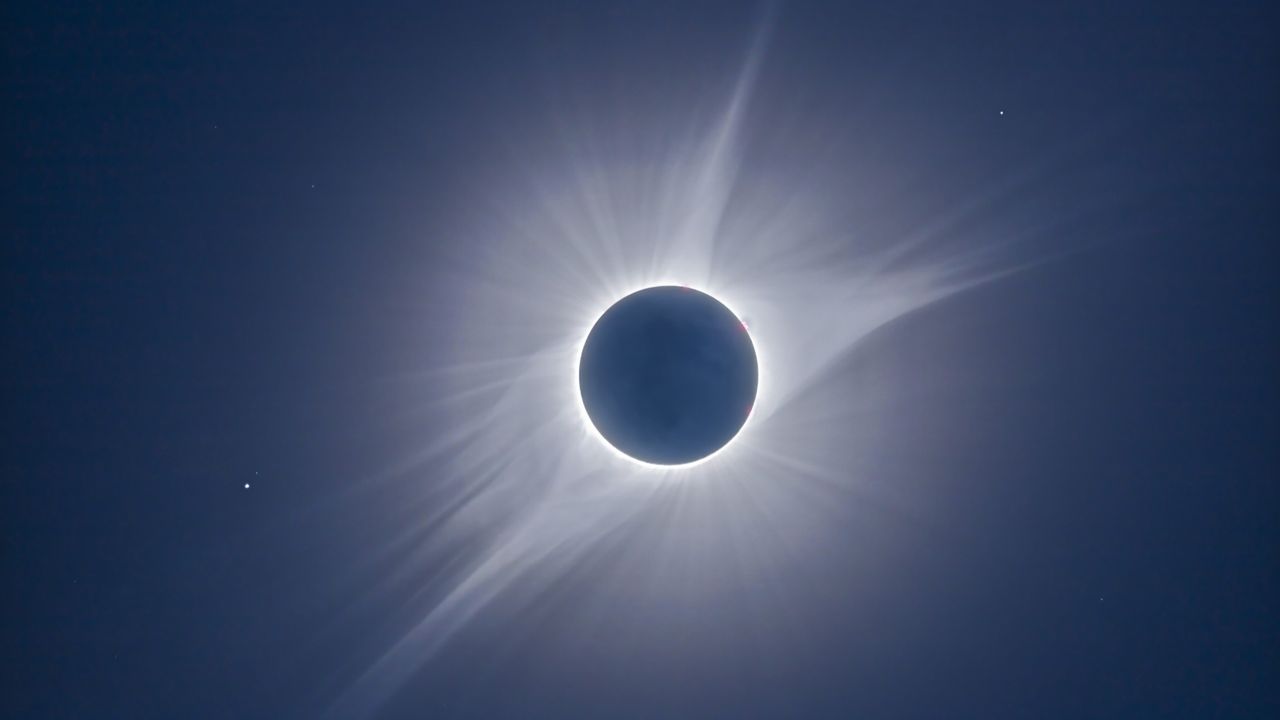
Every total solar eclipse is different. While the silhouette of the moon passing across the sun barely changes, the moment our natural satellite covers the entire solar disk, something spectacular happens — the emergence of the corona. The Latin word for "crown", the solar corona is one of the wonders of nature. To gaze upon its delicate, spiky white tendrils during brief moments of totality is to glimpse the infinite, but it's only a glimpse because the corona is always changing. Shaped by the sun's constantly changing magnetic field, the corona evolves from year to year, month to month and even day to day. No two total eclipses ever reveal exactly the same structure.
It's one reason why eclipse chasers keep traveling. The corona visible during the total solar eclipse of Aug. 12, 2026 — if skies are clear — will be a unique snapshot of the sun at a specific moment in Solar Cycle 25. It will reflect years of changing magnetic activity, thousands of sunspots and countless eruptions of solar material.
Once totality ends, that exact configuration of the corona will never be seen again. Can we know in advance what it might look like?
The sun's hidden atmosphere
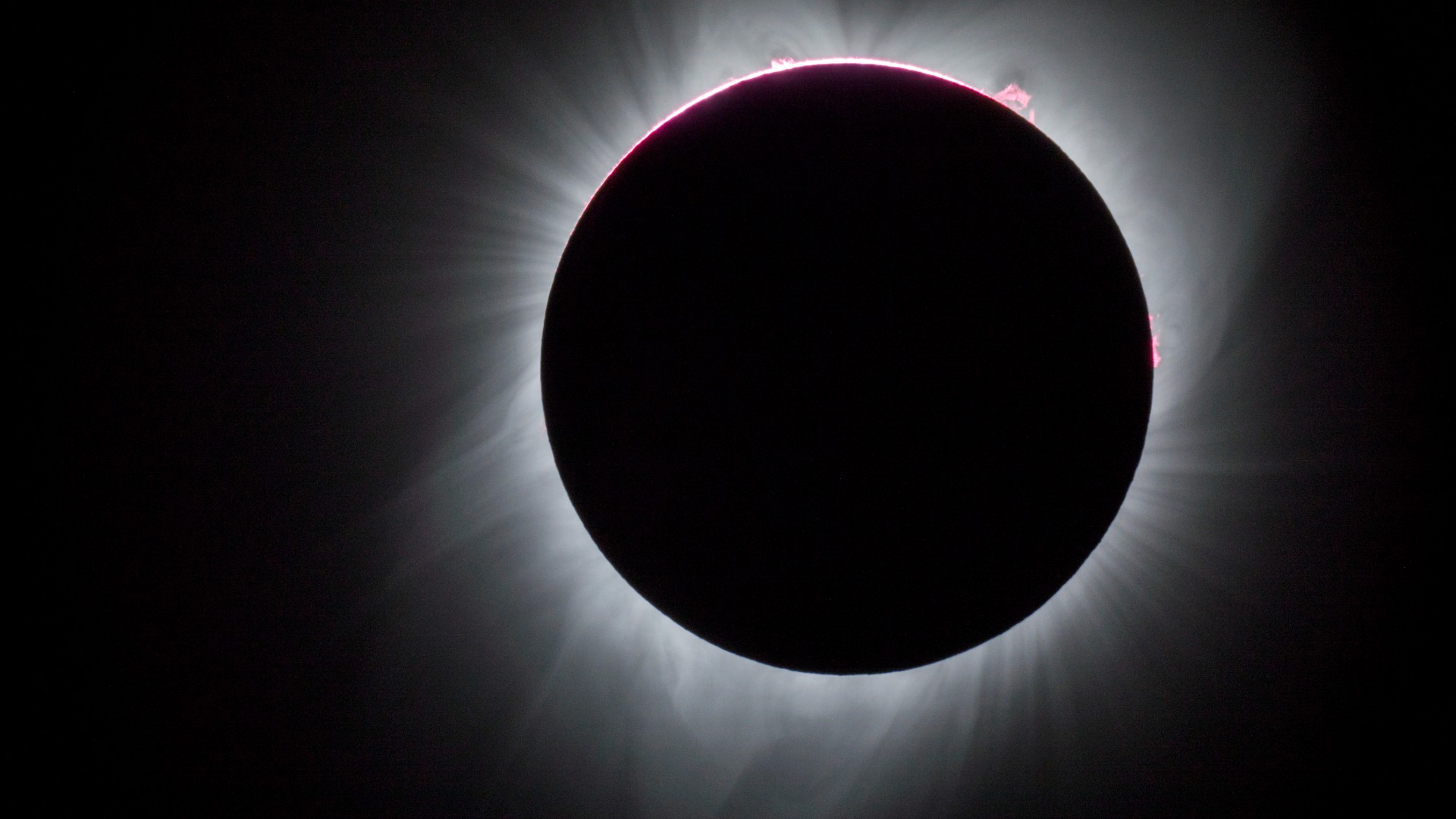
Under normal circumstances, the sun's corona — our star's outer atmosphere — is invisible. It extends millions of miles into the solar system, but it's overwhelmed by the brilliant light of the sun's photosphere, its visible surface. Totality changes that. When the moon completely covers the photosphere, the corona suddenly emerges. White streamers extend away from the black silhouette of the moon. Pink loops and prominences can appear around the edge of the moon.
For many first-time observers, the greatest surprise during totality is not only the detail but the scale. The corona often appears much larger than expected, extending several solar diameters away from the eclipsed sun. Photographs can capture some of that complexity, but they rarely reproduce the impression of depth and structure visible to the human eye, whose dynamic range is vastly superior to any camera.
The corona on Aug. 12, 2026, may resemble the total solar eclipse on April 20, 2023. (Image credit: NASA/ESA (SOHO), P. Horálek/Institute of Physics in Opava; Josef Kujal (of the Astronomy Society of Hradec Kŕlové) and Milan Hlaváč.)
Why every corona looks different
The corona is not a fixed object. It is created by extremely hot plasma — highly energized, ionized gas — that's trapped and sculpted by the sun's magnetic field. Since the sun's magnetic field is constantly changing, the corona changes with it.
"The sun follows a natural 11-year cycle of increasing and decreasing activity," Ryan French, solar physicist, author and science communicator at the Laboratory for Atmospheric and Space Physics (LASP) in Boulder, Colorado, and author of Little Book of Eclipses: An Essential Companion to Solar and Lunar Events told Space.com in an email. "At the peak of this cycle, called solar maximum, there are loads of sunspots on the sun, which are giant magnets nestled in the base of the sun's atmosphere. These sunspots produce a lot of solar flares and coronal mass ejections, which are kind of bursts and eruptions of energy from the sun's atmosphere, and at solar minimum, the sun has none of these things."
That magnetic activity determines the overall shape of the corona. During solar minimum, when the sun has few or no sunspots, the corona tends to look more uniform and more symmetrical. Long streamers often stretch from either side of the sun, giving the corona a wing-like appearance. During solar maximum, it can look much more complex. Sunspot regions act like magnetic anchors, creating structures that can appear as spikes or streamers extending in different directions.
"If you were to see a total eclipse during solar maximum, the solar corona looks almost like a five-pointed cartoon star," said French. "That's because every one of these sunspot regions creates a spire or spike that you can see with the eye."
Not solar maximum — but not quiet
The 2026 eclipse will not occur at solar maximum. Solar Cycle 25 peaked in October 2024, according to NASA and NOAA, with the Aug. 12, 2026 eclipse occurring almost two years later, during the cycle's declining phase. However, solar activity does not collapse immediately after solar maximum. It declines gradually, and the sun is expected to remain more active than it was in the lead-up to solar maximum.
"We're no longer in solar maximum — we're a third of the way past the peak in terms of amplitude and years passed," said French. "The corona will still be far more active than during the 2017, 2019 and 2020 total solar eclipses, but much less so than 2024's."
That makes the 2026 eclipse especially interesting. It likely won't show the full, highly structured corona seen close to the peak of activity in 2024, when the April 8 total solar eclipse occurred with a monthly sunspot number of about 144. Current predictions for August 2026 are closer to 102; far fewer, but still considered active by recent-cycle standards.
That means eclipse-watchers should expect something between extremes: not the clean, flattened corona of solar minimum, but not quite the wildest solar-maximum display either.
The sun's corona is only visible during the totality phase of a total solar eclipse. (Image credit: Getty Images)
A comparison with past eclipses
A useful comparison may be the total solar eclipses near the previous solar maximum. Solar Cycle 24, which peaked in April 2014, was relatively weak. The closest total solar eclipses to that peak were the rare hybrid eclipse of Nov. 3, 2013, when the monthly sunspot number was around 113. By contrast, Solar Cycle 23, which had a double peak — in March 2000 and November 2001 — was relatively strong. The closest total solar eclipse occurred on June 21, 2001, with a monthly sunspot number of around 203. Its corona was likely more complex than expected in 2026.
The 2026 eclipse therefore sits in a middle category. It's not a repeat of 2024, but it's not a quiet-sun eclipse either. An active declining-phase corona, it will likely feature strong streamers extending far into space, but with greater asymmetry, with one side of the corona more active. "It's sunspots specifically near the edge of the sun that dictate what the corona will look like," said French. The sun rotates every 27 days, so any large active region of sunspots rotating onto the sun's edge shortly before Aug. 12 could alter the corona's appearance dramatically. It's why any forecasts of what the corona looks like — which often come from Predictive Science a week before the eclipse — are generally refined on the day of the eclipse.
Red prominences may steal the show
One of the most memorable sights during totality is the appearance of vivid pink or crimson features around the moon's edge. These are usually prominences — immense structures of hydrogen plasma suspended above the sun's surface by magnetic fields. They're often mistaken for solar flares by beginners, such as after the 2024 total solar eclipse.
"Prominences are large magnetic structures that suspend plasma in the atmosphere of the sun, and they glow very bright in a very specific wavelength of light called hydrogen alpha," said French. Prominences are more likely when the sun is active, and because they can last for days or weeks, they are easier to anticipate than a flare. In hydrogen-alpha images taken before eclipse day, observers may be able to see which prominences are present around the solar edge.
The 2026 eclipse may have favorable geometry for sighting prominences. Because the moon will appear only slightly larger than the sun — which contributed to the relatively short duration of totality, at a maximum of just 2 minutes 18 seconds — smaller prominences on different sides of the sun could be visible at the same time. That is different from longer eclipses, where the larger apparent moon can cover prominences on one side before revealing others on the opposite side.
Could a CME be visible?
A coronal mass ejection (CME) is an eruption of plasma and magnetic field from the sun's atmosphere. Seeing one during totality is possible — it happened during the total solar eclipse on Dec. 14, 2020 — but requires luck. "CMEs travel very slowly, so they take several hours to traverse and escape from the sun's atmosphere, so you wouldn't see any motion during an eclipse," said French. "But what you could see, if you're lucky, is a snapshot of an eruption — though maybe a long exposure camera will be more likely to see this than your eye would." Such a view would be rare, but the chances are higher in an active solar environment than near solar minimum.
The 2019 total solar eclipse on July 2, 2019, just before the last solar minimum in December 2019. (Image credit: ESA/CESAR/Observatorio Astrofisico di Torino)
Predicting the corona yourself
There will be a forecast from Predictive Science, which can be so accurate that some eclipse chasers avoid it, so as not to ruin the surprise of totality. One way to get a general idea is to look at real-time images from telescopes that use coronagraphs to block the sun, such as the COSMO K-Coronagraph, NASA SOHO's LASCO C3 and the GOES CCOR-1. For sunspots, check the latest H-Alpha image from the Global Oscillation Network Group (GONG).
No scientist can say exactly what the corona will look like on Aug. 12, 2026. That will depend on the sun's magnetic activity in the days immediately before totality, the location of sunspot groups, the presence of prominences and the possibility of eruptions. "What exactly we see during the August eclipse will depend on what the activity is that week," said French. "And even if you saw an eclipse a month before or a month after, it could be very different." For a few fleeting minutes over Greenland, Iceland, Spain and the Balearic Islands, the sun's hidden atmosphere will become momentarily visible before vanishing back into the glare, never being seen again in quite the same way.
We're just a few short days away from the Aug. 12 total solar eclipse, when millions will watch as the moon glides across the face of the sun, hiding its light in a wondrous display of orbital mechanics.
The eclipse will unfold during August's new moon phase, as the lunar disk slips silently between the sun and Earth in the daytime sky. Ordinarily, the subtle tilt in the moon's orbit causes its shadow to pass just below, or above our planet, missing it entirely.
However, on Aug. 12, the moon's orbit will carry it into a near-perfect alignment with the sun and Earth, casting its colossal shadow across a 182-mile-wide corridor known as the path of totality, where viewers will get to see the lunar disk fully hide the sun's disk.
The path of totality for the Aug. 12 eclipse cuts through Spain, Iceland and Greenland. Hundreds of millions more watching from outside of this narrow corridor will also bear witness to a spectacular partial solar eclipse, as the moon passes in front of our parent star, without fully obscuring its surface. Those unable to watch the eclipse in person by dint of geography can also follow along online, with details of the livestream to be released closer to the event.
Read on to discover what will happen during each stage of the Aug. 12 total solar eclipse.
Stage 1: The partial eclipse begins
The partial phase of the eclipse officially begins at the moment of "first contact", when the lunar disk takes its first nibble out of the sun — a subtle transformation that will first become visible in the skies over the U.S. state of Alaska at 11:34 a.m. EDT (1534 GMT) on Aug. 12.
The moon takes its first "bite" out of the sun during the partial phase of a solar eclipse. (Image credit: Photo by Noam Galai/Getty Images)
You can check out exactly when the partial eclipse will begin from your location and find out exactly how much of the sun will be hidden by the moon using Time and Date's interactive eclipse tracker.
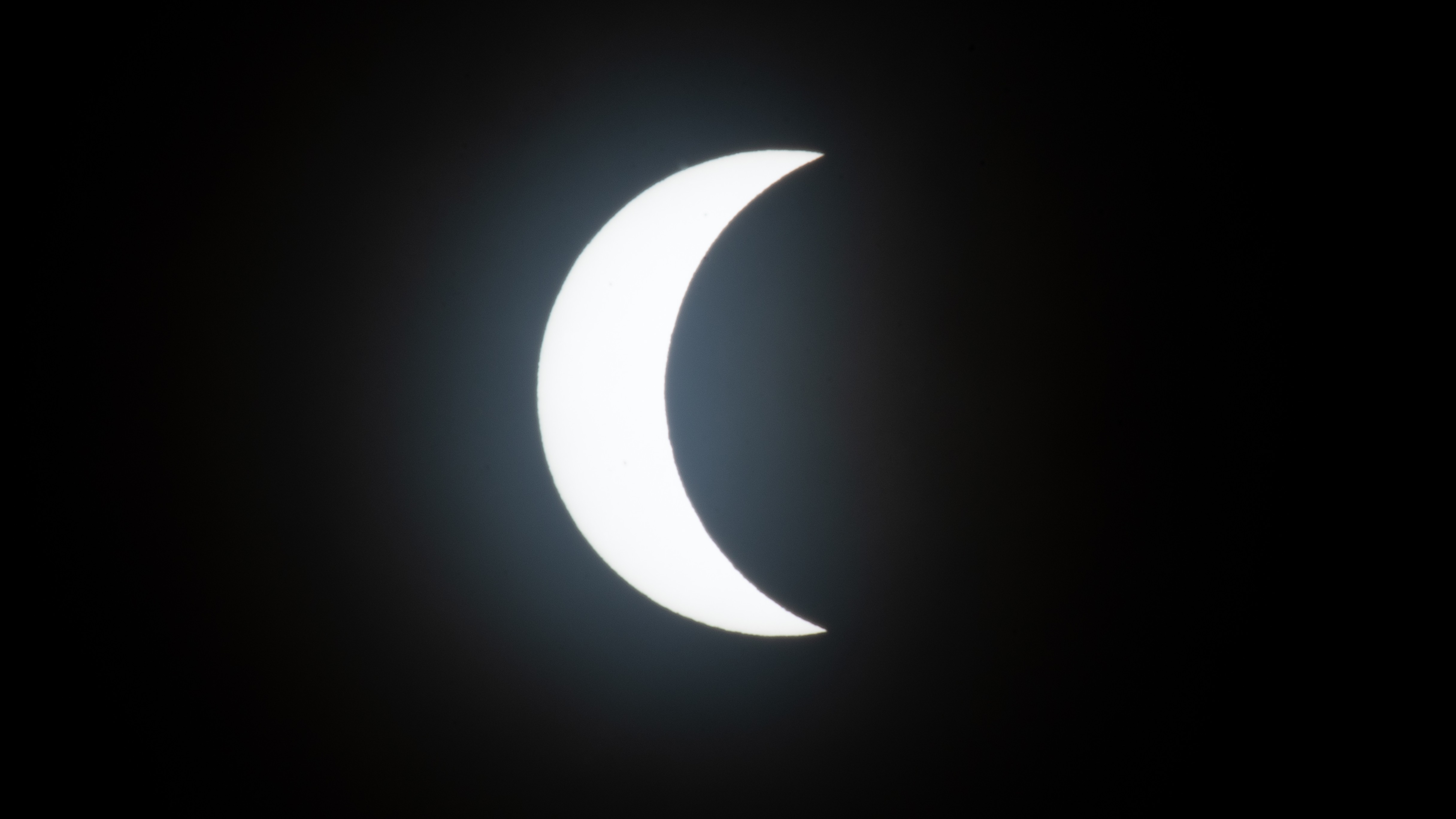
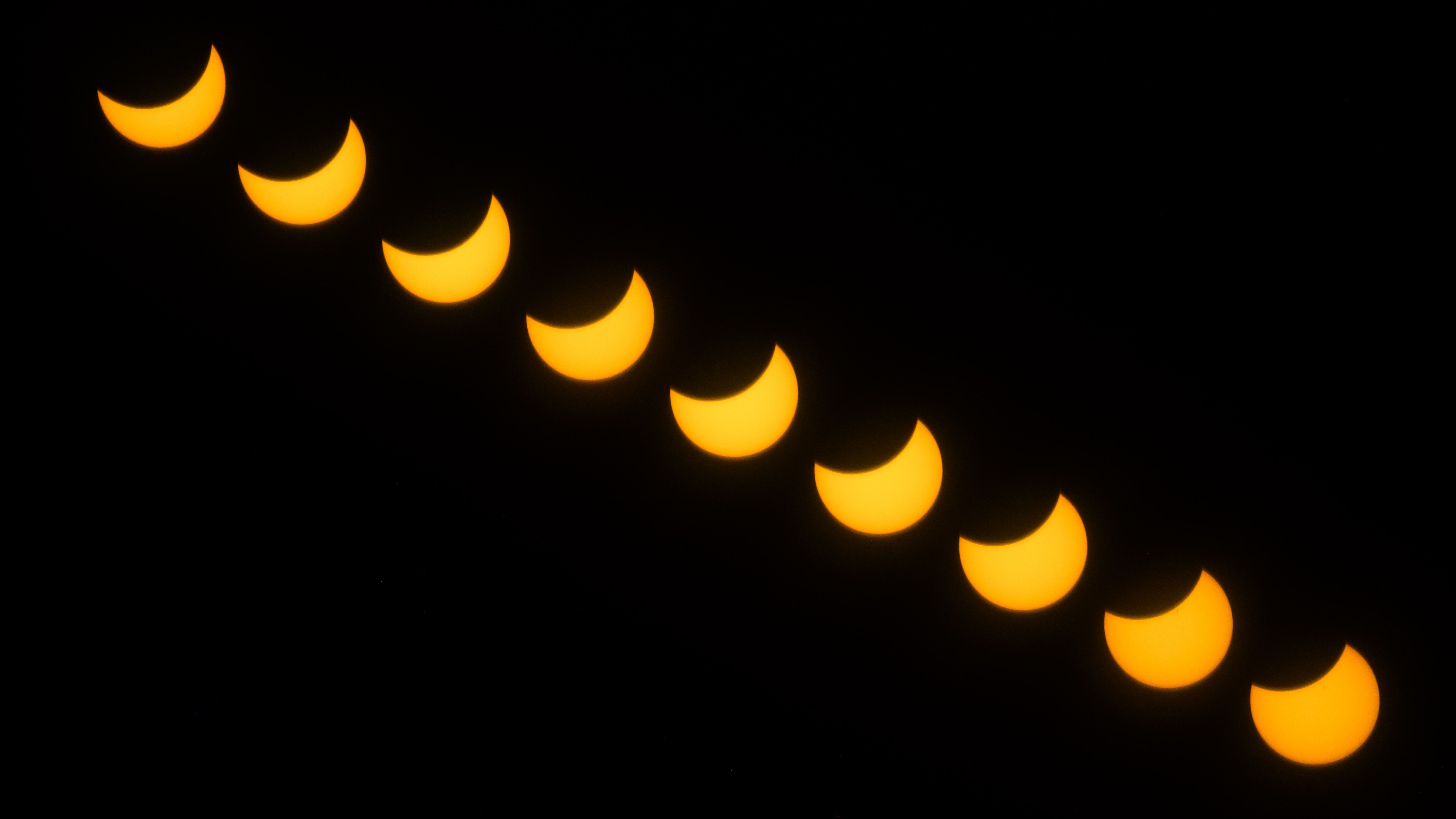
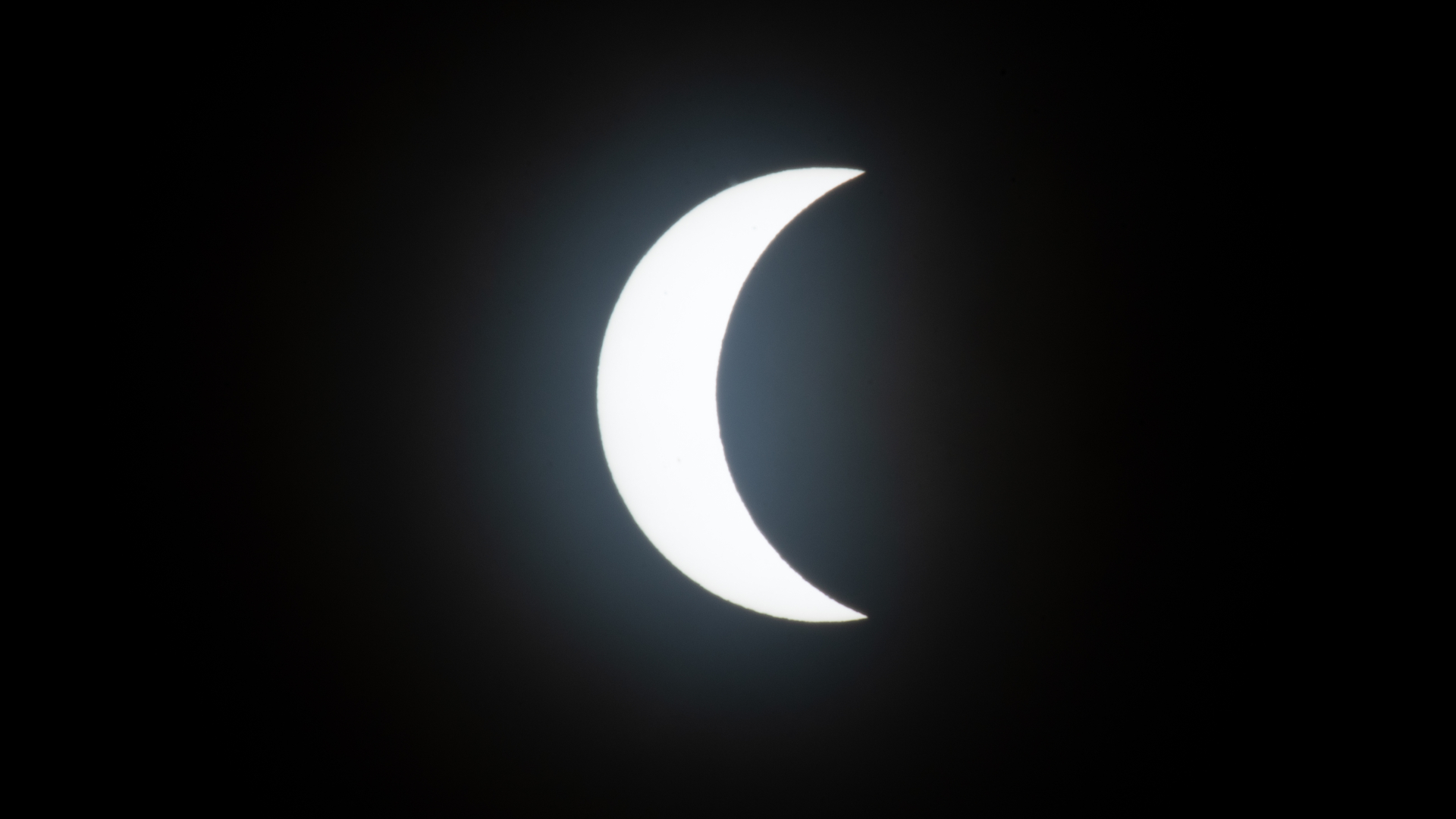
The hour and a half following first contact will see the moon sink ever farther into the sun's disk for those in the path of totality, transforming it from a burning orb into a magnificent shining crescent.
The and moon meet in the skies over Mexico during the 2024 total solar eclipse. (Image credit: Photo by: Edwin Remsberg/VWPics/Universal Images Group via Getty Images)
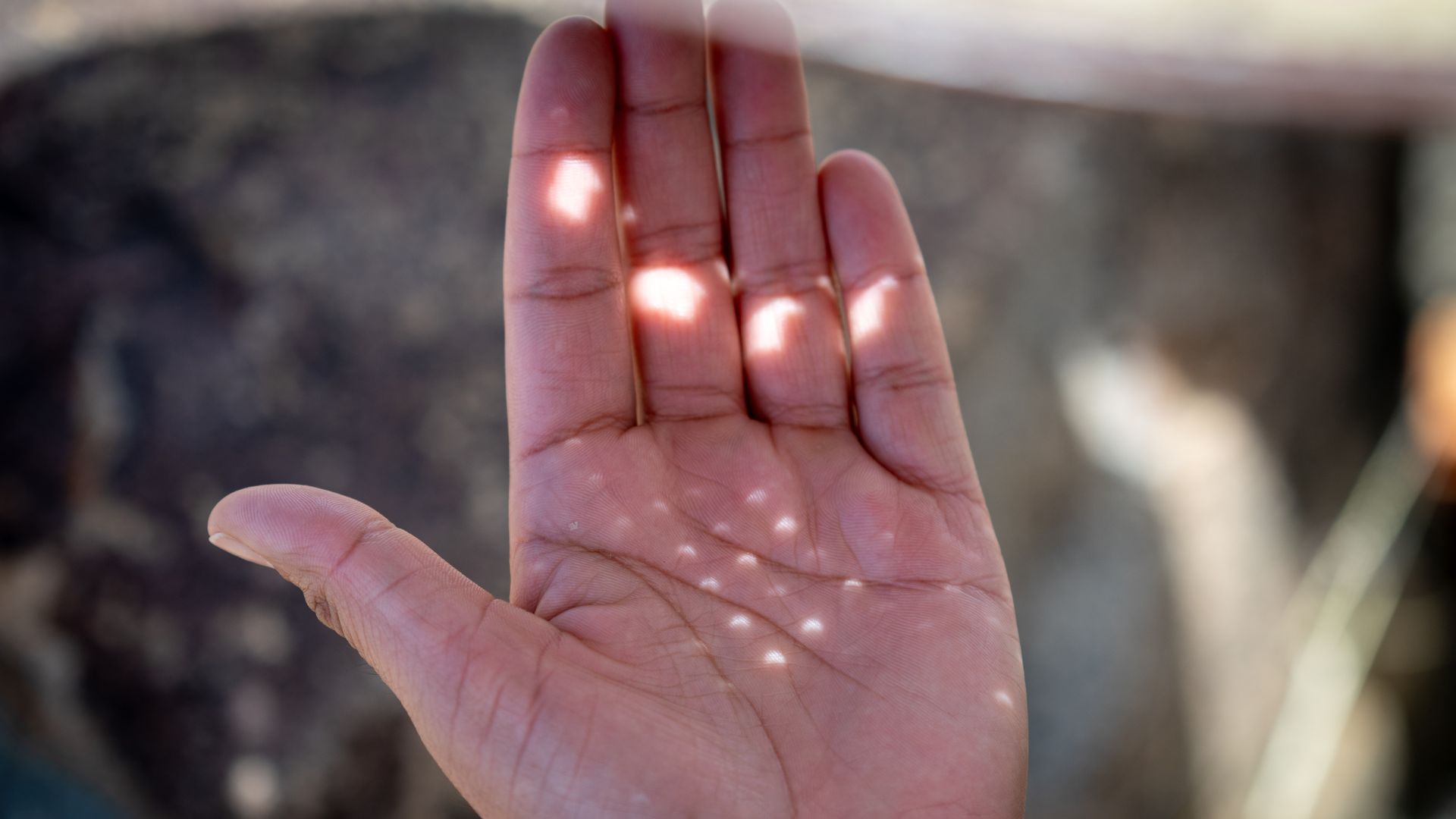
You may notice the temperature drop noticeably, accompanied by a subtle darkening of the sky in the half hour preceding the climactic phase of totality, as the moon reduces the sun to a thin sickle in the evening sky. Pinpricks of light — such as those that shine through a colander, or the gaps in a leaf — will also appear to mirror the scene above, creating a kaleidoscope of tiny bright crescents.
Pinpricks of light create tiny crescents during a solar eclipse. (Image credit: Photo by: Edwin Remsberg/VWPics/Universal Images Group via Getty Images)
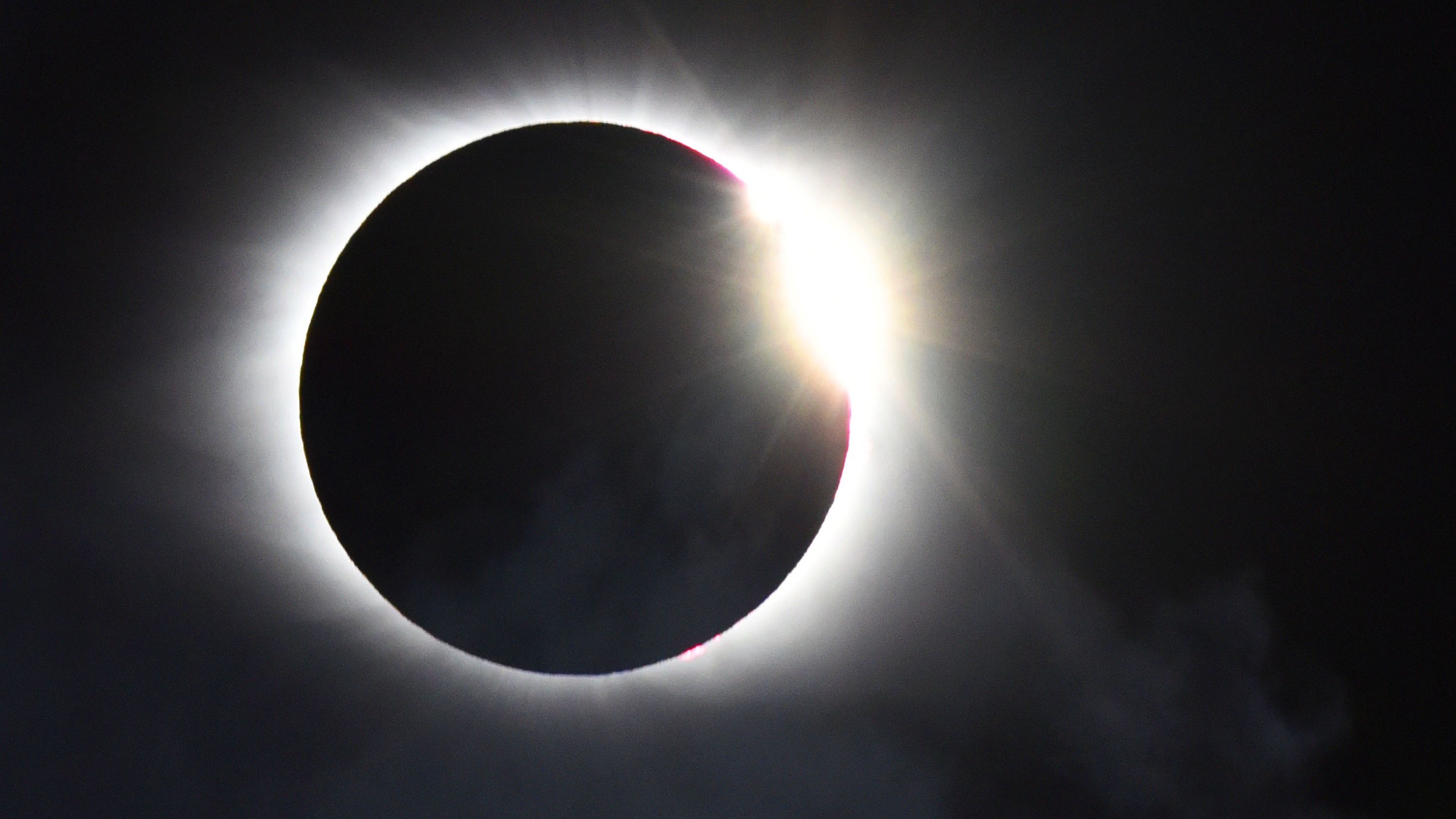
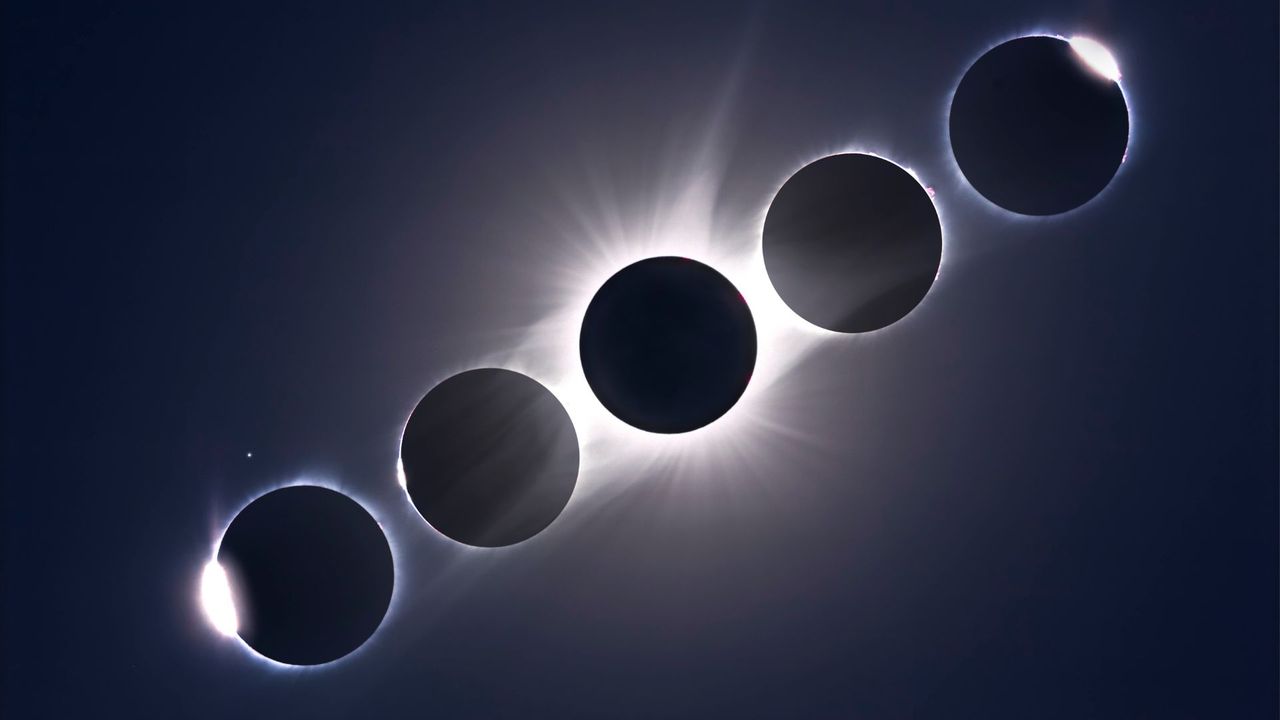
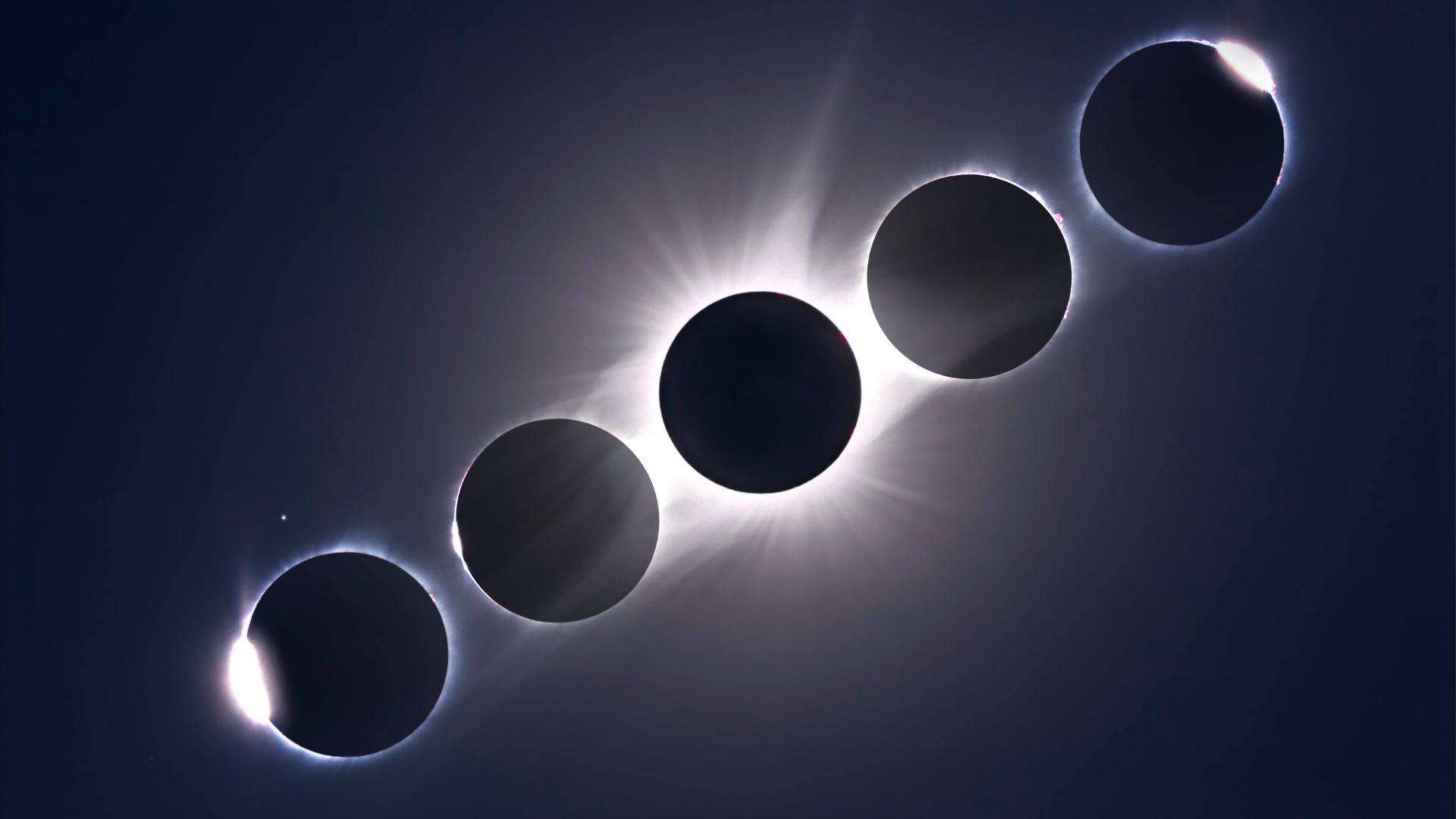
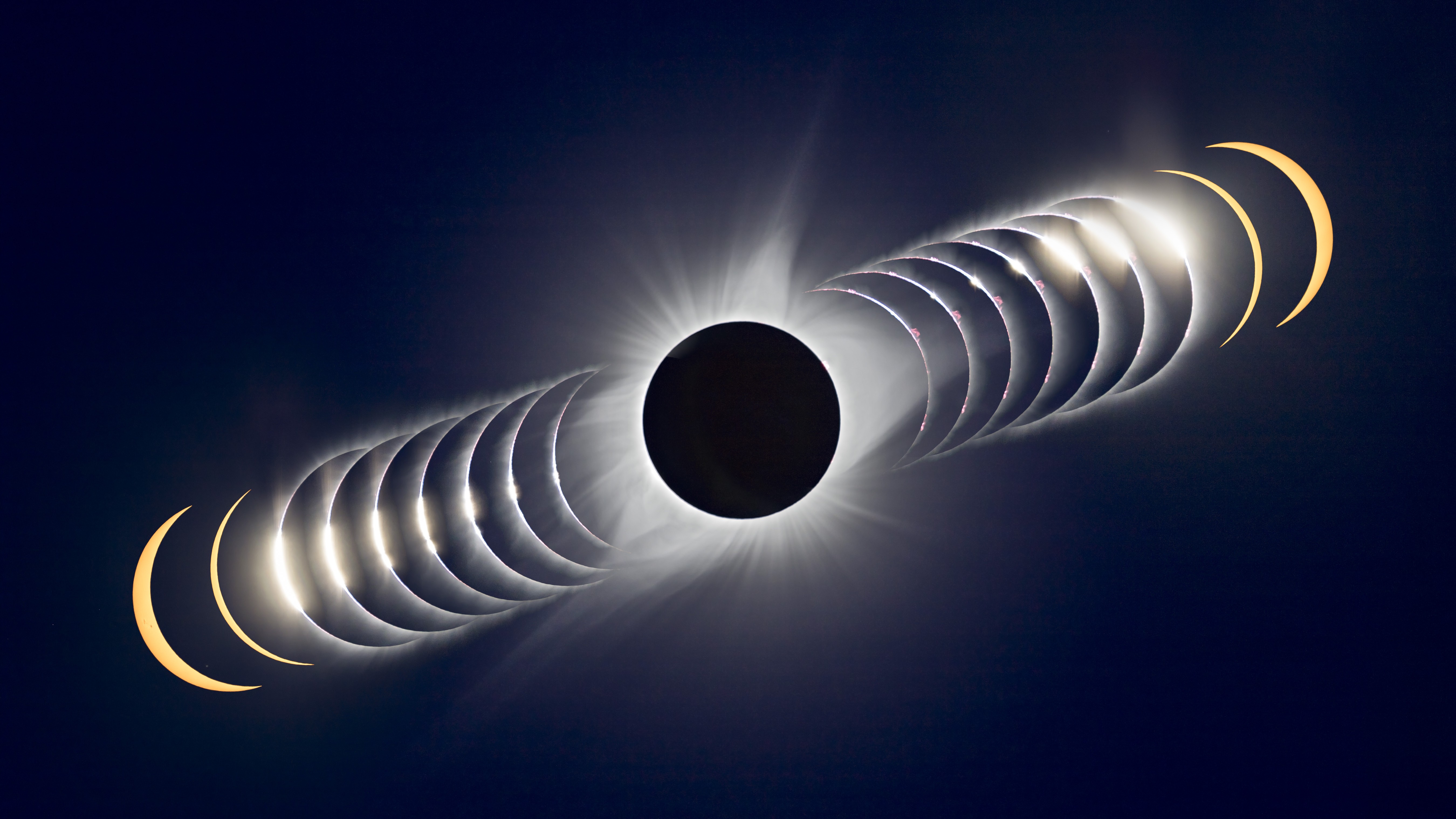
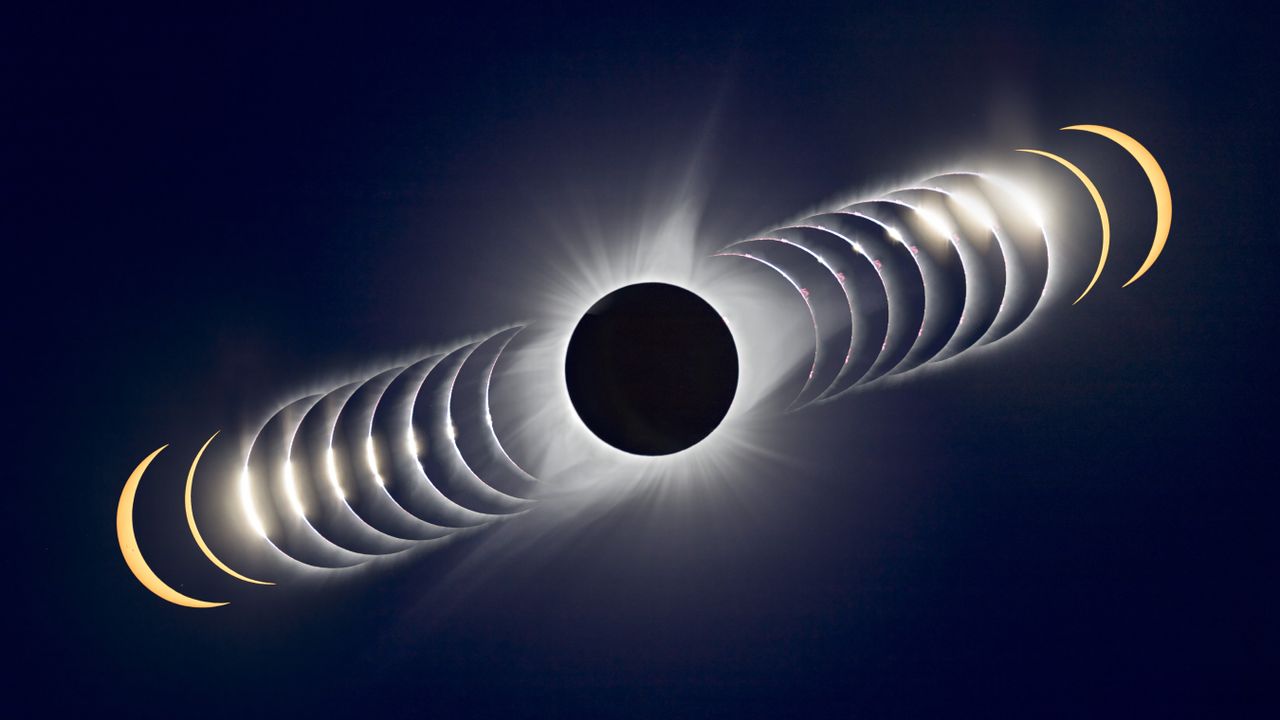
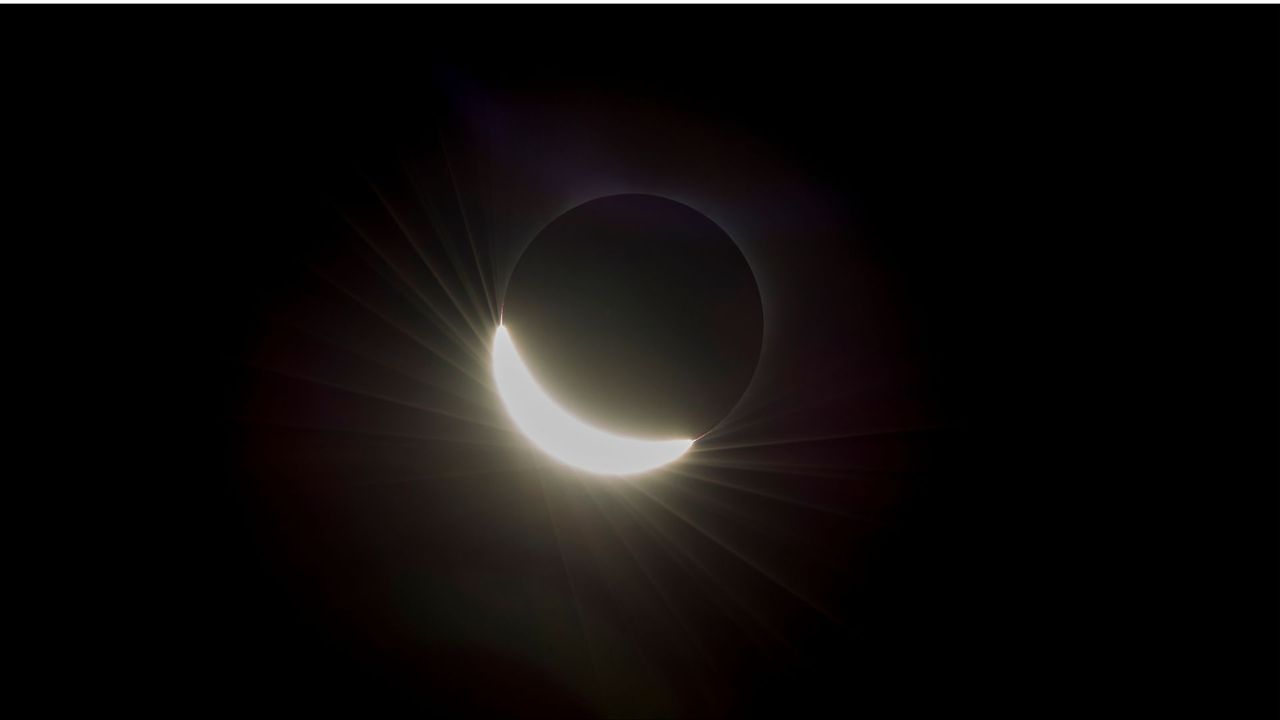
Some of the most spectacular moments of an eclipse occur just before and after totality. First, look out for the "diamond ring" effect, as the last sliver of the sun peeks out from behind the lunar disk to appear as a gorgeous celestial jewel, while the outermost layer of our star's atmosphere, the corona, creates a glowing halo around the moon.
The diamond ring effect shines from behind (Image credit: Photo by Chris McKay/WireImage)
Tear your eyes away from the sun for just a second and you may just catch sight of the moon's shadow advancing on you from the west, before it engulfs your surroundings in a false night.
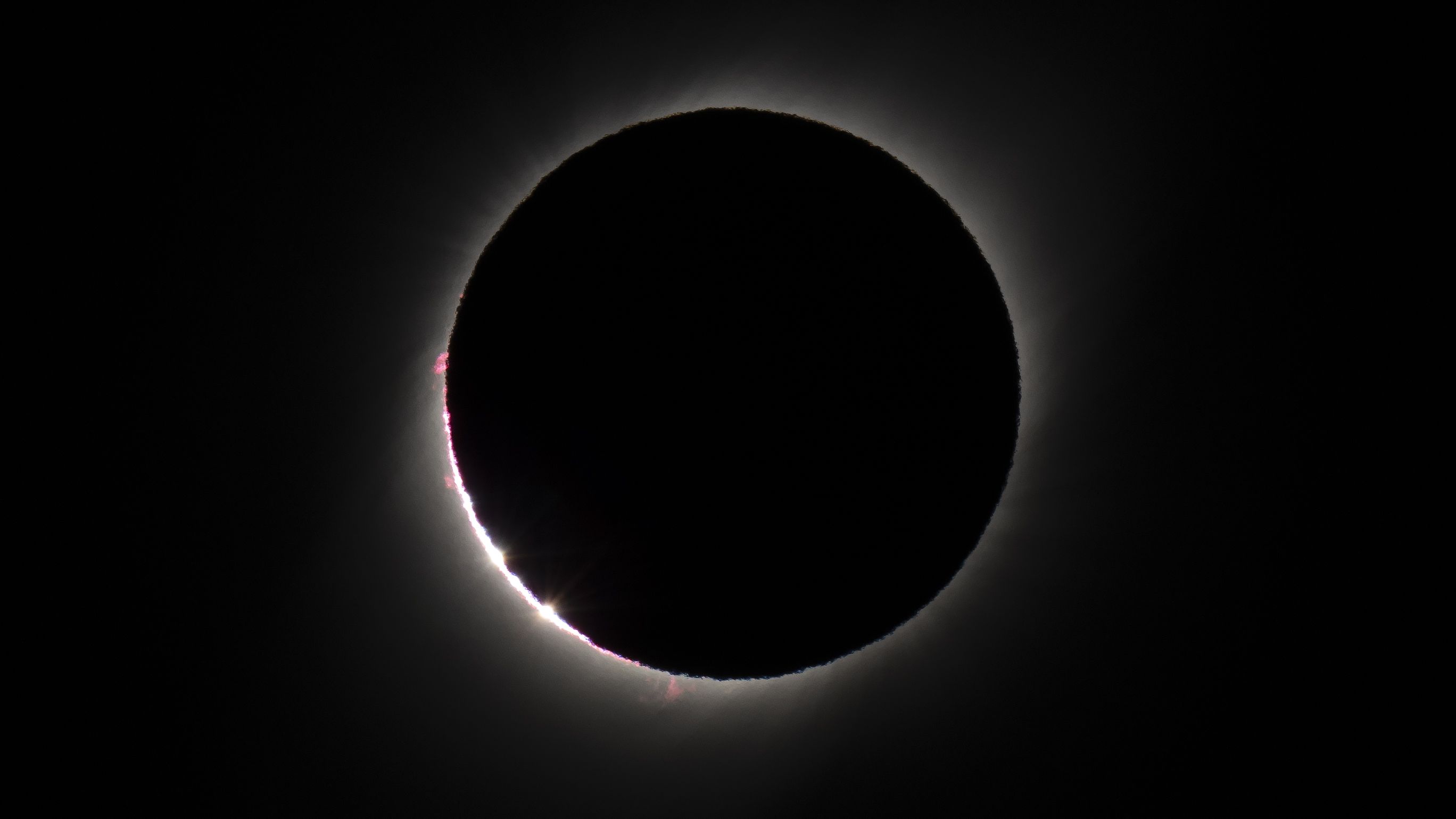
Baily's beads appear in the moments before totality. (Image credit: STAN HONDA/AFP via Getty Images)
The final seconds before totality will see bright "Baily's Beads" form dazzling points of light on the moon's edge, where the last shreds of the sun's disk shine through the ravines and valleys that scar the ancient lunar surface.
Stage 3: Totality & maximum eclipse
As the last of the sun's surface slips behind the moon, totality begins. This is the climactic phase of the eclipse, when the moon acts like a natural coronagraph to block the brilliance of the sun's disk, ushering in a false night in which our star's outer atmosphere can be seen leaping out from the lunar silhouette.
Totality will last a maximum of 2 minutes, 18 seconds, during which time it's safe to remove your glasses and look at the sun. Just be sure to put them on again before its fiery disk reemerges from the other side of the lunar disk.
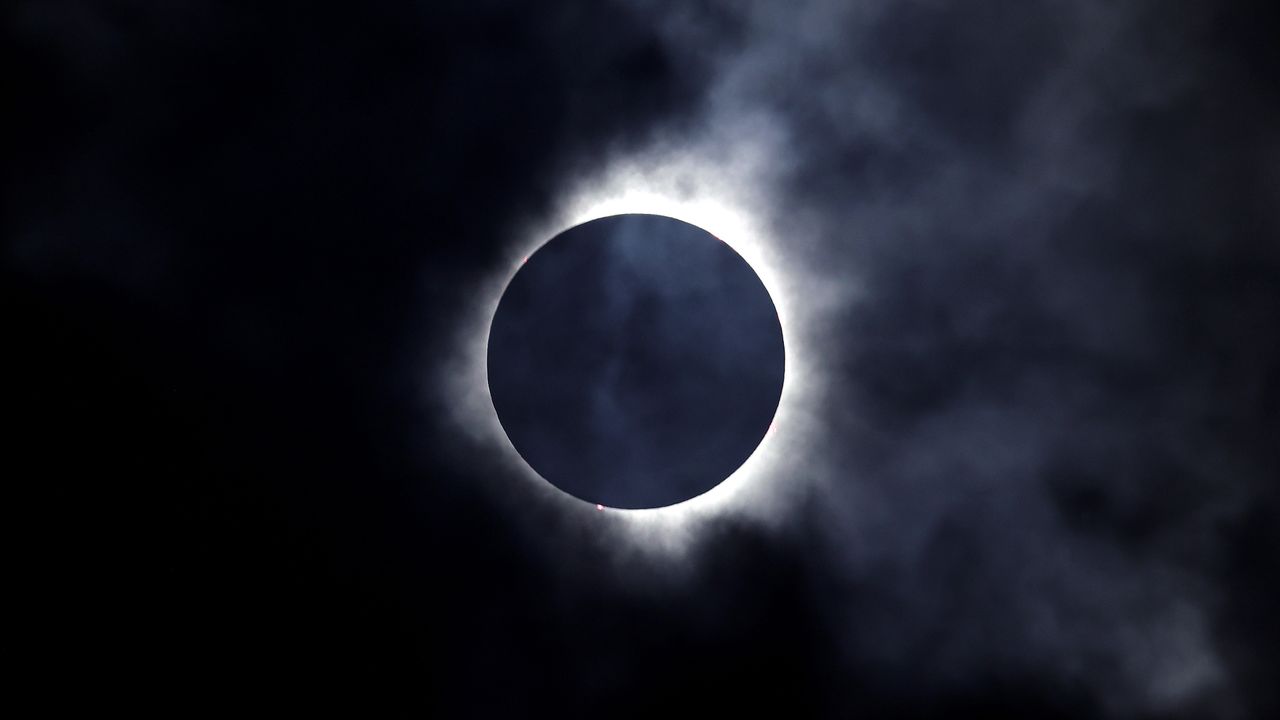
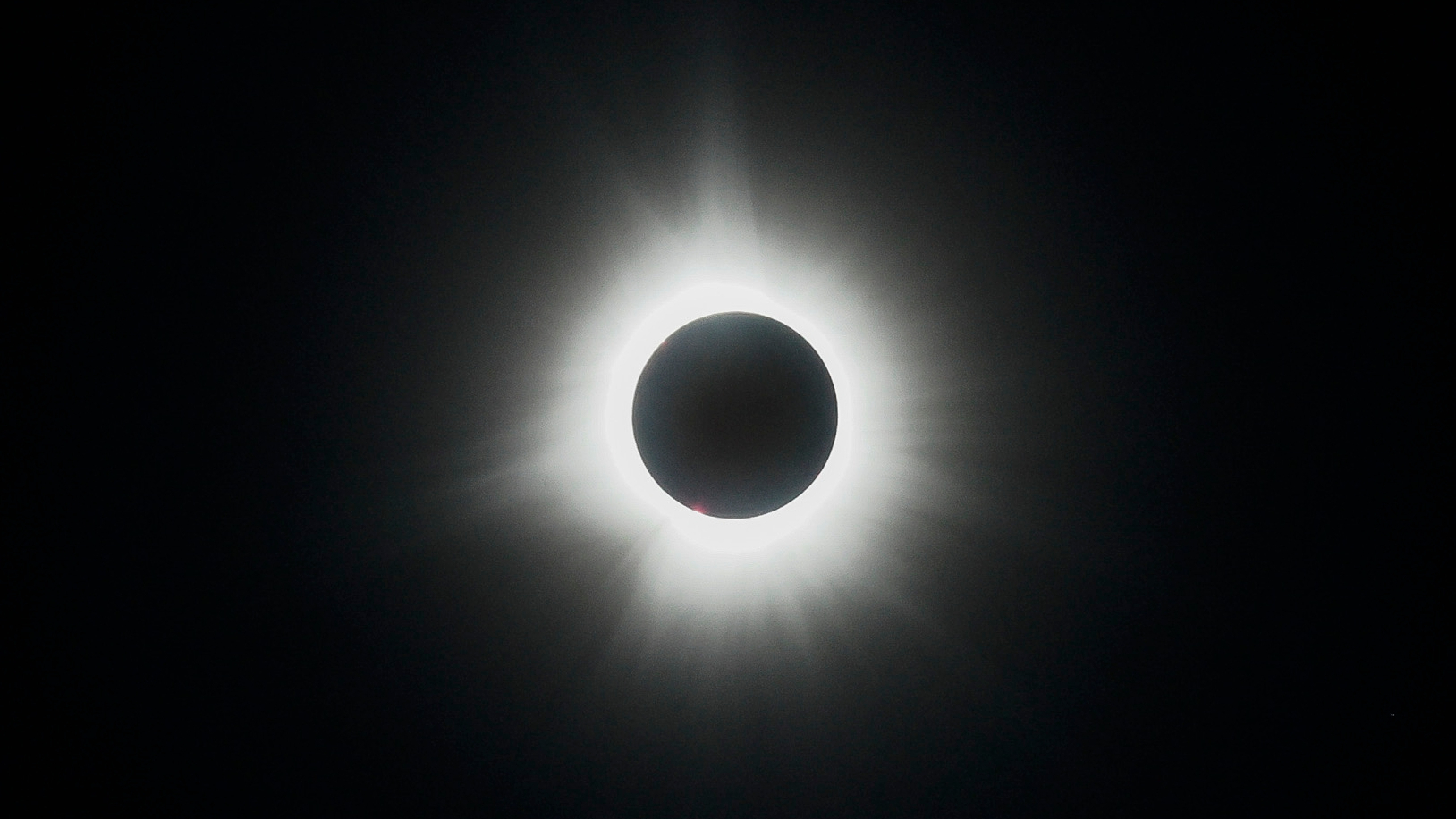
The sun's corona haloes the moon at the climax of a total solar eclipse. (Image credit: Photo by: Edwin Remsberg/VWPics/Universal Images Group via Getty Images)
That white halo surrounding Earth's natural satellite is the sun's corona — a jacket of superheated gas that surrounds our parent star. Look out for glowing solar prominences leaping outward through the sun's atmosphere, along with the red line of the chromosphere — the layer of the sun's atmosphere beneath the corona — which appears fleetingly at the beginning and end of totality, according to NASA.
The point of maximum eclipse occurs roughly halfway through totality, when the sun's disk is most hidden by the moon.
Eagle-eyed skywatchers may catch Jupiter and Mercury shining to the lower right of the eclipsed sun in the faux twilight experienced during totality, while Venus will appear as a bright star-like object to its upper left. If you're incredibly lucky, you could even spot one of the brightest shooting stars or fireballs of the Perseid meteor shower, which comes to a peak around the same time as the Aug. 12 total eclipse.
Stage 4:Totality ends
The fourth stage of the eclipse comes as the very edge of the sun's disk emerges from behind the moon, marking the end of totality as Bail's Beads and the diamond ring effect play out in reverse, before giving way to an ever-thickening solar crescent.
Stage 5: The partial eclipse ends.
The waning partial eclipse will come to a global end at 3:57 p.m. EDT (1957 GMT), as the moon's silhouette exits the sun's disk in the skies off the west coast of Africa — a moment known to astronomers as fourth contact.
The moon exits the solar disk at the end of a total solar eclipse. (Image credit: Getty Images)
Space.com is on hand to provide expert coverage and on the ground reporting as the eclipse unfolds. Skywatching Editor Daisy Dobrijevic is undertaking an expedition with HX to observe the total solar eclipse from the waters around Greenland, while Skywatching Writer Anthony Wood heads to Spain in a cowboy hat, to catch the orbital showdown with citizen scientists from NASA's Dynamic Eclipse Broadcast Initiative.
Be sure to check out our total eclipse live blog to stay up to date with all the latest news, along with our handy explainer article detailing everything you need to know about the Aug. 12 total solar eclipse.
Editor's Note: If you capture footage of the Aug. 12 total solar eclipse and want to share it with Space.com's readers, then please send your photo(s), comments, name and location to spacephotos@space.com.
It's hardly a "Great American Eclipse," but on Aug. 12, 2026, some parts of the North American continent will see a partial solar eclipse.
Will it be as impressive as on April 8, 2024, when totality visited Mexico, 15 U.S. states and six provinces in Canada? No, yet in some parts of the U.S. and Canada, astronomers will be out in force to capture a significant chunk of the sun as it is obscured by the new moon.
The spotlight may be on the total solar eclipse in Greenland, Iceland, and Spain, but millions across North America can still see the moon take a bite out of the sun on Aug. 12. The farther northeast you are, the deeper the eclipse. Here's everything you need to know about the partial solar eclipse in North America.
Where to see the partial solar eclipse in the U.S.
Between 7:34 a.m. AKDT and 2:52 p.m. EDT, 20 U.S. states will see something of the partial solar eclipse, though only northeastern states will get a good view. Here's a sample of locations and the time of maximum eclipse. Note that the partial eclipse begins (first contact) and ends (last contact) around 55 minutes before and after the time of maximum eclipse given here.
Location
Maximum eclipse
Time (local)
Fairbanks, Alaska
37%
8:27 a.m. AKDT
Presque Isle, Maine
28%
1:50 p.m. EDT
Bangor, Maine
23%
1:53 p.m. EDT
Portland, Maine
19%
1:53 p.m. EDT
Montpelier, Vermont
17%
1:49 p.m. EDT
Manchester, New Hampshire
16%
1:53 p.m. EDT
Boston, Massachusetts
16%
1:55 p.m. EDT
Providence, Rhode Island
15%
1:55 p.m. EDT
Springfield, Massachusetts
14%
1:53 p.m. EDT
New Haven, Connecticut
12%
1:54 p.m. EDT
Bridgeport, Connecticut
11%
1:54 p.m. EDT
New York City, New York
10%
1:54 p.m. EDT
Newark, New Jersey
9%
1:53 p.m. EDT
Rochester, New York
9%
1:43 p.m. EDT
Allentown, Pennsylvania
8%
1:52 p.m. EDT
Buffalo, New York
7%
1:42 p.m. EDT
Philadelphia, Pennsylvania
7%
1:53 p.m. EDT
From most of the northeast U.S., only a small eclipse will be visible on Aug. 12, 2026. (Image credit: imageBROKER/Lucas Seebacher via Getty Images)
Where to see the partial solar eclipse in Canada
Between 8:38 a.m. MST and 4:38 p.m. NDT on Aug. 12, every province in Canada will be able to see some kind of partial solar eclipse, but those in the east of the country will see something much more significant. Here's a sample of locations and the time of maximum eclipse. Note that the partial eclipse begins (first contact) and ends (last contact) around 55 minutes before and after the time of maximum eclipse given here.
Location
Maximum eclipse
Time (local)
Iqaluit, Nunavut
61%
1:24 p.m. EDT
St. John's, Newfoundland and Labrador
53%
3:34 p.m. NDT
Moncton, New Brunswick
32%
2:55 p.m. ADT
Halifax, Nova Scotia
31%
3:00 p.m. ADT
Churchill, Manitoba
27%
12:02 p.m. CDT
Quebec City, Quebec
24%
1:46 p.m. EDT
Whitehorse, Yukon
23%
9:26 a.m. MST
Trois-Rivières, Quebec
21%
1:45 p.m. EDT
Sherbrooke, Quebec
20%
1:48 p.m. EDT
Montreal, Quebec
18%
1:45 p.m. EDT
Ottawa, Ontario
15%
1:42 p.m. EDT
Kingston, Ontario
12%
1:43 p.m. EDT
Toronto, Ontario
8%
1:40 p.m. EDT
St. Catharines—Niagara, Ontario
8%
1:41 p.m. EDT
Kitchener, Ontario
7%
1:38 p.m. EDT
Hamilton, Ontario
7%
1:40 p.m. EDT
London, Ontario
5%
1:38 p.m. EDT
Windsor, Ontario
3%
1:36 p.m. EDT
What to expect
This is a small partial solar eclipse in North America, which occurs at lunchtime. In the east of the continent, it will occur high in the sky — about two-thirds of the way between the horizon and the zenith — in the south-southwest. At maximum eclipse, the partially eclipsed sun with resemble a thick crescent or a smile. It won't get dark — that only happens within the path of totality — nor will daylight be affected.
Those using a telescope to observe or image the partial eclipse (using a solar filter) should also consider that Venus — which will be visible just after sunset — reaches dichotomy on Aug. 12. This is the point in its current apparition as the "Evening Star" that it starts becoming interesting in a telescope. Dichotomy sees it reduce to 50%-lit and gradually become an ever-shrinking crescent.
Perhaps more importantly, the early hours of Aug. 13 see the peak of the annual Perseid meteor shower.
When is the next solar eclipse visible from the US after August 2026?
The next solar eclipse on Aug. 2, 2027, will be seen in Newfoundland, Canada, where a 23% partial eclipse will occur at the province's southwestern tip.
On Jan. 26, 2028, during an annular solar eclipse across northern South America, eastern U.S. states and eastern Canada will see a very small partial solar eclipse shortly after sunrise. Florida will have the best view, with around 15% of the sun blocked.
On Jan. 14, 2029, a large partial solar eclipse will be seen in the morning sky across all of North America — up to 81% in northern Canada and 74% in northwestern U.S. states. On June 12, 2029, a smaller partial solar eclipse will peak at 34% just after sunrise from Nunavut, the Northwest Territories and the northern tips of Alberta and British Columbia.
It will be a magnificent day for England's south coast. From Portsmouth's Historic Dockyard and Brighton's Royal Pavilion to Dorset's Jurassic Coast and Cornwall's Land's End, beaches and cliff tops will be plunged into darkness in the day during the U.K.'s first total solar eclipse for almost 91 years. There is, however, a problem — this scenario won't occur until Sept. 23, 2090.
A total solar eclipse visits a location on Earth on average once every 366 years, and the British are currently in no-man's land. Aug. 12, 2026, is particularly cruel, with a path of totality cruising past the British Isles as it surges across the Atlantic Ocean from Iceland to northern Spain. Eclipse chasers in the U.K. are used to traveling, and travel they will, but those left behind will nevertheless experience a very deep partial solar eclipse peaking at 98% in extreme locations. It will be the U.K.'s most significant partial solar eclipse since March 20, 2015, when another path of totality just missed the U.K. to the north.
Where to see the partial solar eclipse in the U.K.
A deep partial eclipse is a compelling sight, and the widespread nature of this one means millions of Brits can experience it without leaving home.
London, Manchester and Glasgow all experience 91.4% coverage, staggered by only a few minutes. Belfast does slightly better at 93.1%, while Cardiff edges ahead among the U.K's capitals at 93.2%. In practice, these differences are subtle — this is a nationwide event that requires no travel. That said, expect crowds at U.K. national parks, such as Snowdonia, the Brecon Beacons and the Pembrokeshire Coast in Wales; the South Downs and the Lake District in England; and the Cairngorms and the Isle of Skye in Scotland.
However, it's in County Kerry, Ireland, that sees the biggest eclipse in the British Isles archipelago, with Great Skellig — Luke Skywalker's island sanctuary in "Star Wars Episode VII: The Force Awakens" and "Star Wars Episode VIII: The Last Jedi" — seeing a whopping 98% partial eclipse.
When to see the partial solar eclipse in the U.K.
This is a late, low eclipse, and timing matters. The action takes place between 5:59 p.m. and 8:10 p.m. BST, but the main event comes around 7:05-7:13 p.m. BST, when the eclipse reaches its maximum across the U.K. The deeply eclipsed sun will appear above the west-northwest horizon as a thin crescent, hanging like a curved blade, with its tips pointing toward the ground.
It won't get dark — that only happens within the path of totality. However, daylight will feel very subdued with a noticeable dimming.
Location will be crucial. Because the sun will be so low, you'll need a clear, unobstructed horizon — ideally from a coastal viewpoint, hilltop, or open landscape. Get into position early, use proper eclipse glasses and solar filters, and follow the sun as the moon slowly takes its bite.
If you're somewhere rural, it's worth spending the night, which also happens to be the peak of the annual Perseid meteor shower.
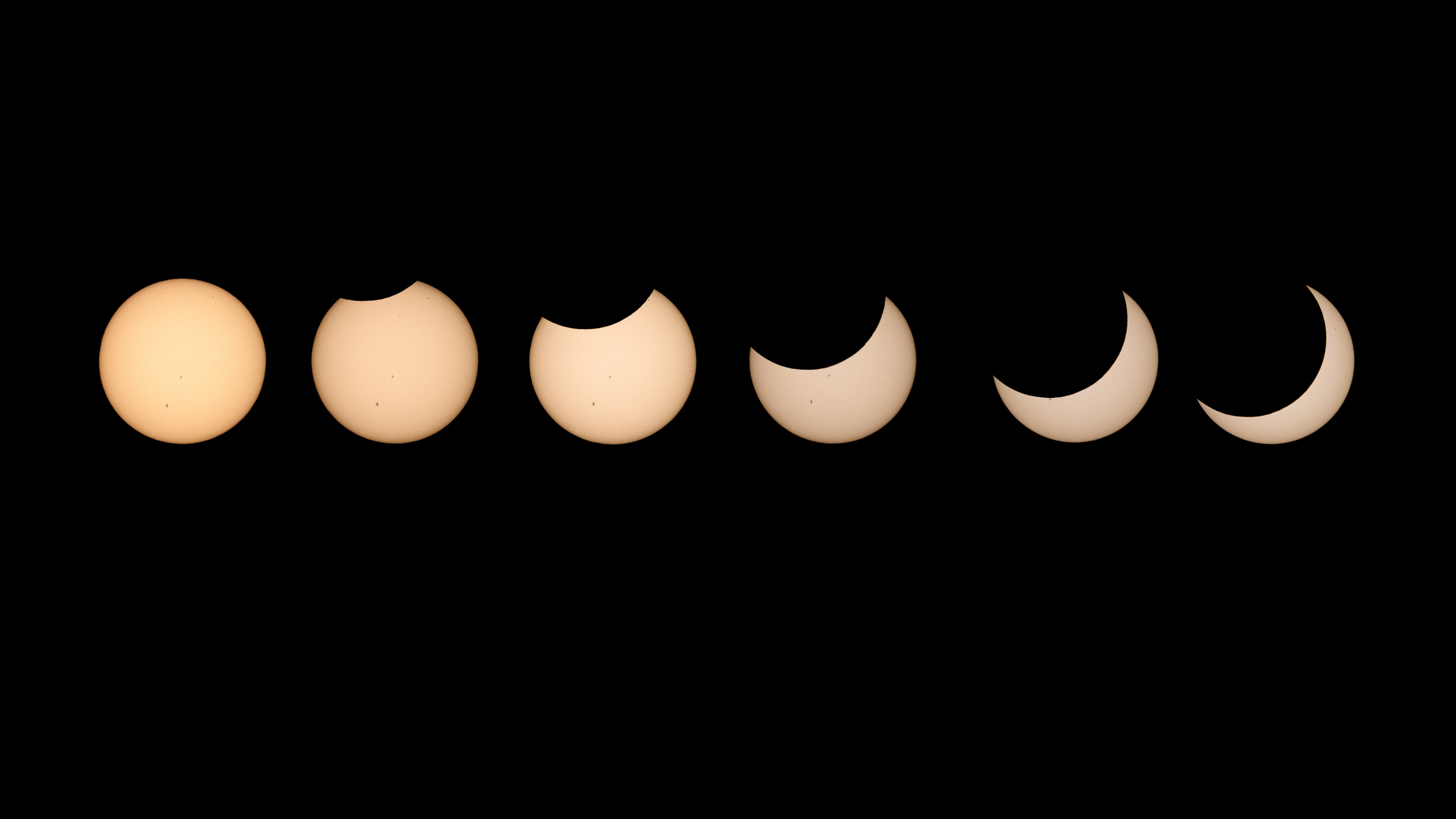
Partial solar eclipse sequence captured on Oct. 14, 2023 from central California. (Image credit: Mimi Ditchie Photography via Getty Images)
Best weather for the partial solar eclipse in the U.K.
Whether the sky is clear on the day is another matter; August may be warm in the U.K., but it's not known for clear skies (as anyone who traveled into the last British path of totality, in Cornwall in 1999, will recall). This is why many British eclipse chasers are perfectly happy that there is no total solar eclipse in the U.K. until 2090, but statistics are not destiny. A single high-pressure system on the day could transform the outlook entirely.
Meanwhile, the path of totality crosses regions with more reliable weather patterns, particularly north-central Spain and the Balearic Islands.
Partial solar eclipse beyond the U.K.
While observers in the U.K. will see a deep partial eclipse, those inside the narrow path of totality — across eastern Greenland, western Iceland and northern Spain — will experience something fundamentally different, if only for a few minutes. In eastern Spain, totality arrives just before sunset, with the fully eclipsed sun hovering only a few degrees above the western horizon. The sun will disappear almost immediately after totality ends.
However, what's been largely overlooked is the scale of the partially eclipsed sunset across Europe and northwest Africa. Across Algeria, France, Germany, Italy, Austria, Poland and beyond, millions will see the sun set while deeply eclipsed. In some locations, maximum eclipse occurs just minutes before sunset; in others, the sun slips below the horizon still significantly covered by the moon. Expect slim crescent suns to be photographed slipping beneath the horizon from across Central Europe.
Consequently, U.K. observers will see the edge of a much larger event — the moon's expansive penumbral shadow stretching across continents. It will be one of the most widely visible and visually striking eclipse phenomena of the decade. According to Time and Date, 283 million people will see at least a 90% partial eclipse.
When is the next partial solar eclipse in the U.K.?
If Aug. 12, 2026, feels like a one-off, it isn't. The U.K. is in the midst of an unusually active spell for partial eclipses, with at least one visible almost every year through the end of the decade. After this deep event comes a more modest partial on the morning of Aug. 2, 2027 — linked to the century's longest total eclipse over North Africa — with a maximum obscuration of 48% in southern England.
On Jan. 26, 2028, attention shifts once again to a partially eclipsed sunset during which up to 56% of the sun will be obscured by the moon. That one will be best seen from western locations such as Cornwall and Wales, while the central path delivers an annular "ring of fire" across Portugal and Spain. The June 12, 2029, eclipse is much more marginal, visible only from northeast England and eastern Scotland as a shallow partial eclipse at sunrise. Finally, on June 1, 2030, another annular eclipse brings a partially eclipsed sunrise to the entire U.K., with up to about 49% of the sun blocked by the moon in the southeast.
Individually, these events are varied — morning, sunset and sunrise eclipses, deep and shallow — but taken together they form a rare sequence for armchair eclipse chasers in the U.K. who likely won't be around for totality 64 years from now.
Be sure to stay up to date with all the latest news with our total solar eclipse live blog, where skywatching editor Daisy Dobrijevic will be sharing her experience of totality from aboard a HX Expeditions cruise ship in the waters off eastern Greenland. Skywatching writer Anthony Wood will also be bringing reports of each eclipse phase from central Spain, as he watches the eclipse accompanied by citizen scientists from the Dynamic Eclipse Broadcast initiative.
Are you ready for the eclipse? Whether you're bound for the path of totality or set to see a partial eclipse from Europe, Canada or the northeast U.S. on Wednesday, Aug. 12, there's a dirty word eclipse chasers hate to utter during an eclipse season, and yet become completely obsessed with — clouds.
We all start behaving as though Earth's atmosphere owes us something. After spending years studying the climate and where it is most likely along a path of totality to have a clear sky, we're in position and can now do almost nothing about it save for drive or sail a few miles. We refresh cloud forecasts. We compare satellite imagery. We point at scraps of blue sky as if we can persuade them to remain so at a specific time. By the time the moon is almost on the sun, we've spent the best part of a week staring at our phones and fretting.
The received wisdom is that you must have a perfect view of a total solar eclipse, and that if you don't, you've failed because you didn't do your research or take evasive action. Never mind that many who end up under a blue sky then spend the entire time behind a camera. The desire for a clear sky and a clean horizon is obvious — particularly if you're in the path of totality — and yet it's entirely possible that clouds will be present, very possibly in the places expected to be clear. That's exactly what happened on April 8, 2024, when the favored state of Texas was cloudy while wintry Maine and New Brunswick had a bluebird day.
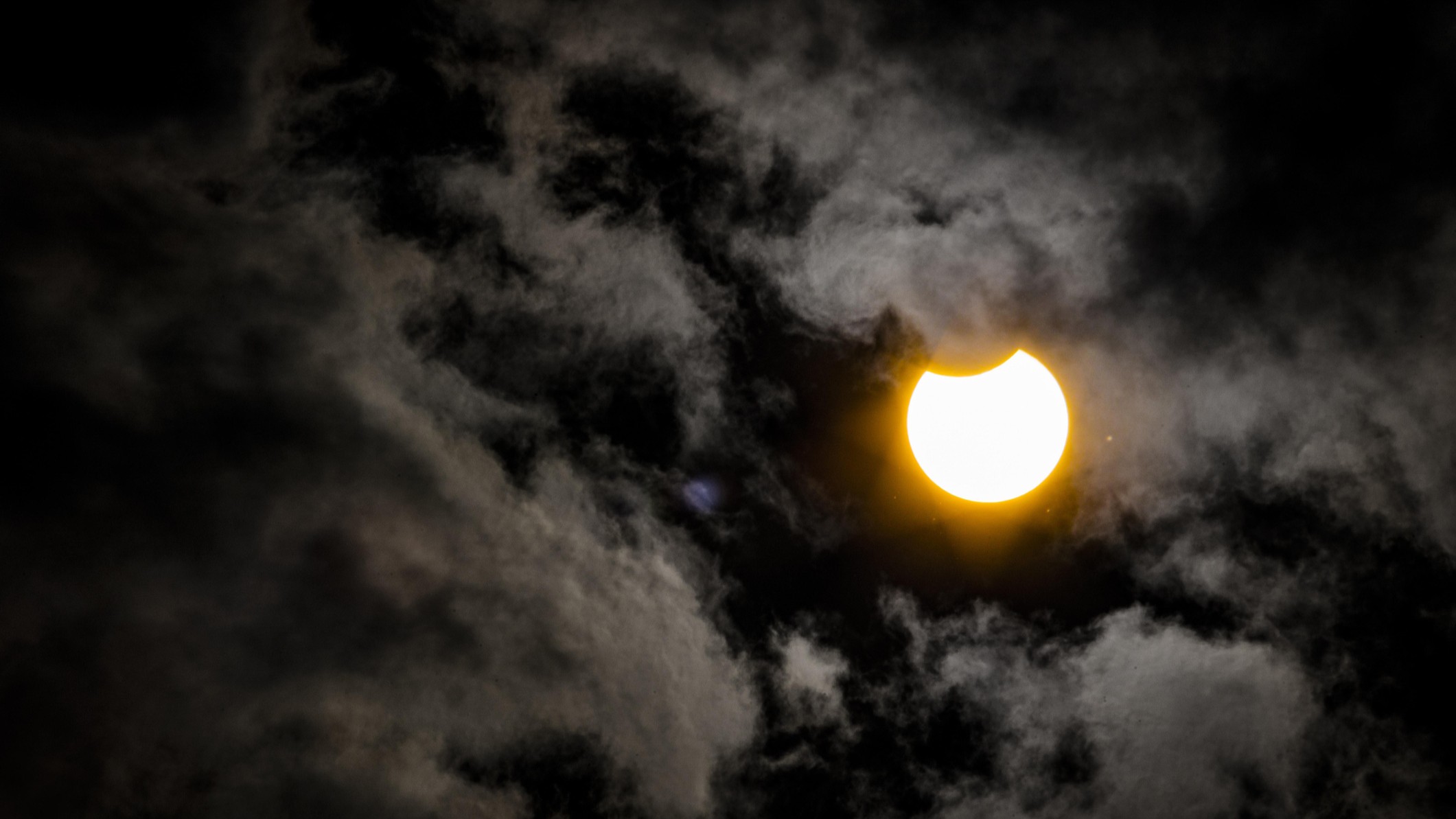
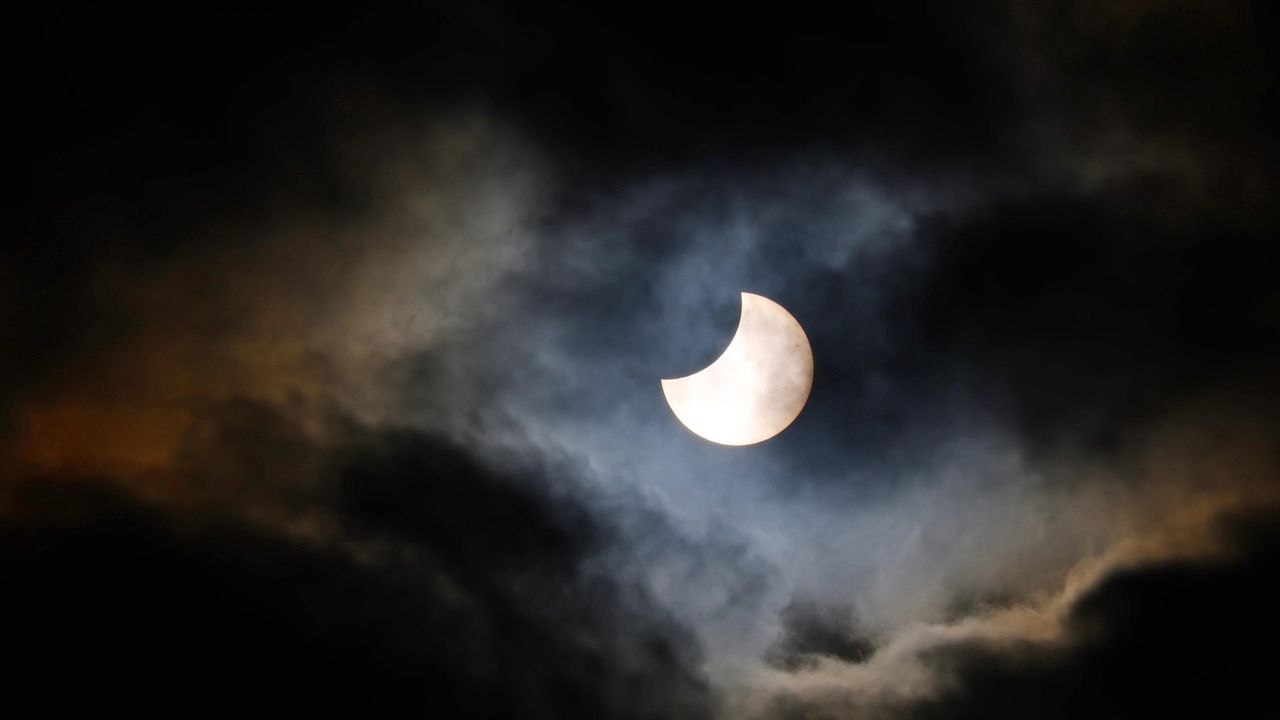
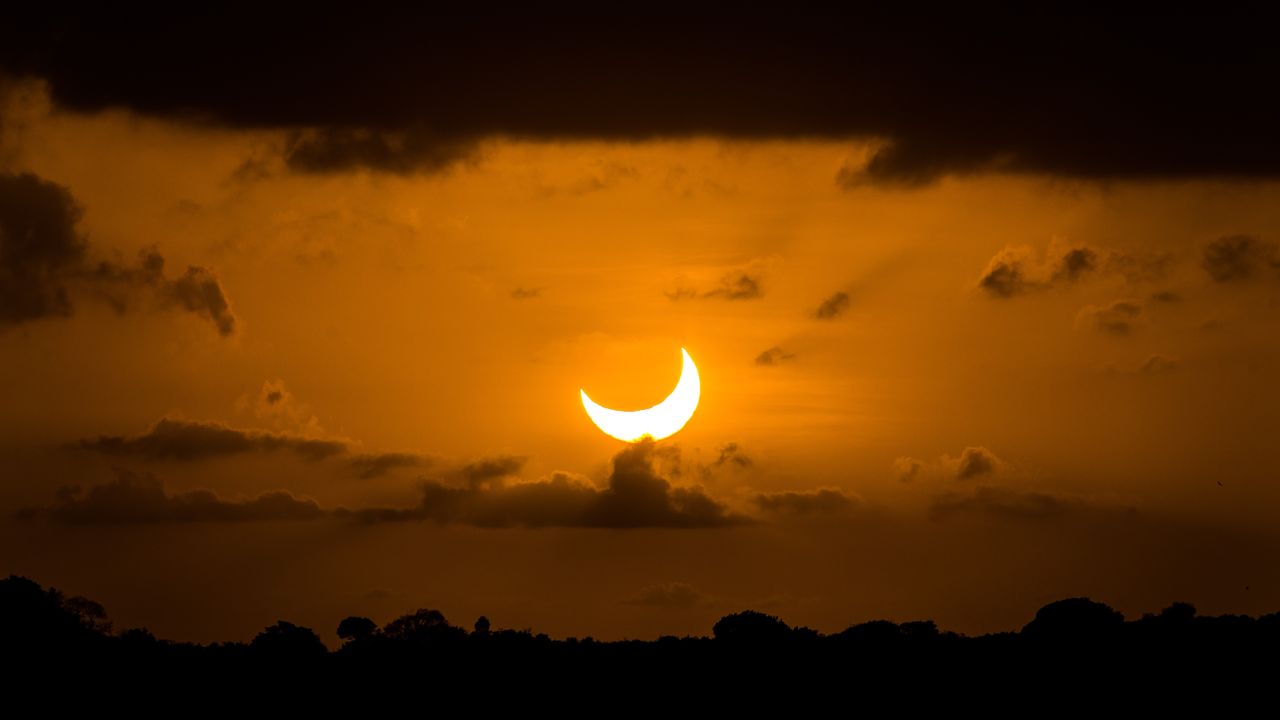
Having seen many total, annular and partial solar eclipses, I have come to believe something slightly heretical: you do not need a perfectly clear-sky view of a total or partial solar eclipse to matter. Sometimes one clear second is enough. Whisper it, but clouds add a lot of drama not just to an eclipse, but to photos of it, too.
Beginners often assume an eclipse is only "successful" if they see the sun's corona throughout totality. Some even rank eclipses in advance according to how long totality lasts. It's all an illusion. If a gap opens in the cloud for a short time and the corona appears, that is not a consolation prize. That is the thing itself. The same goes for a glimpse of a partially eclipsed sun if that's what's heading your way.
So don't fret the eclipse — check weather forecasts and do your best to find a clear sky, but when nature takes over, don't fight it or get upset by it. Cherish whatever you get. You only need a one-second window — and even that is not in your control.
What's happening
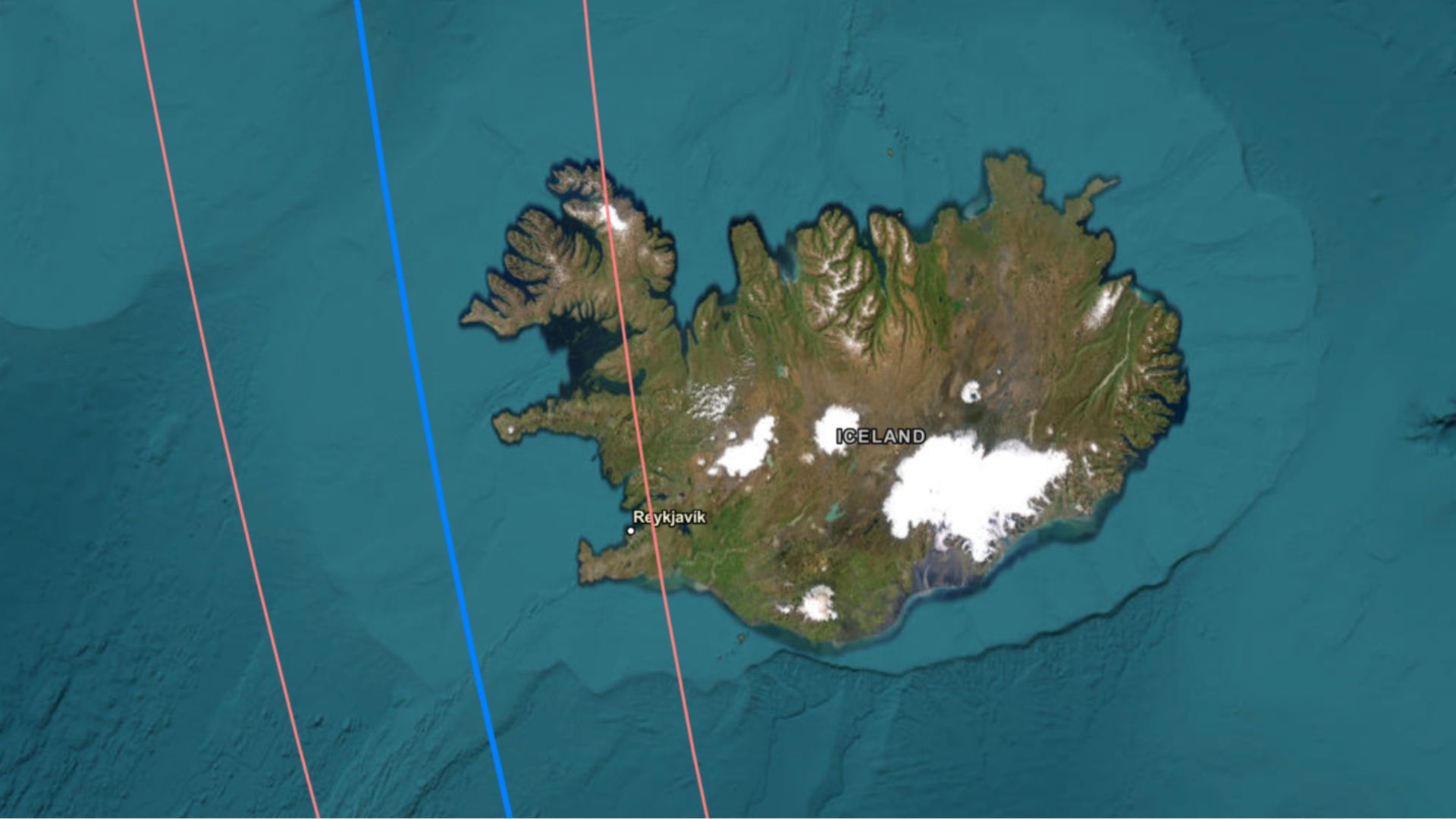
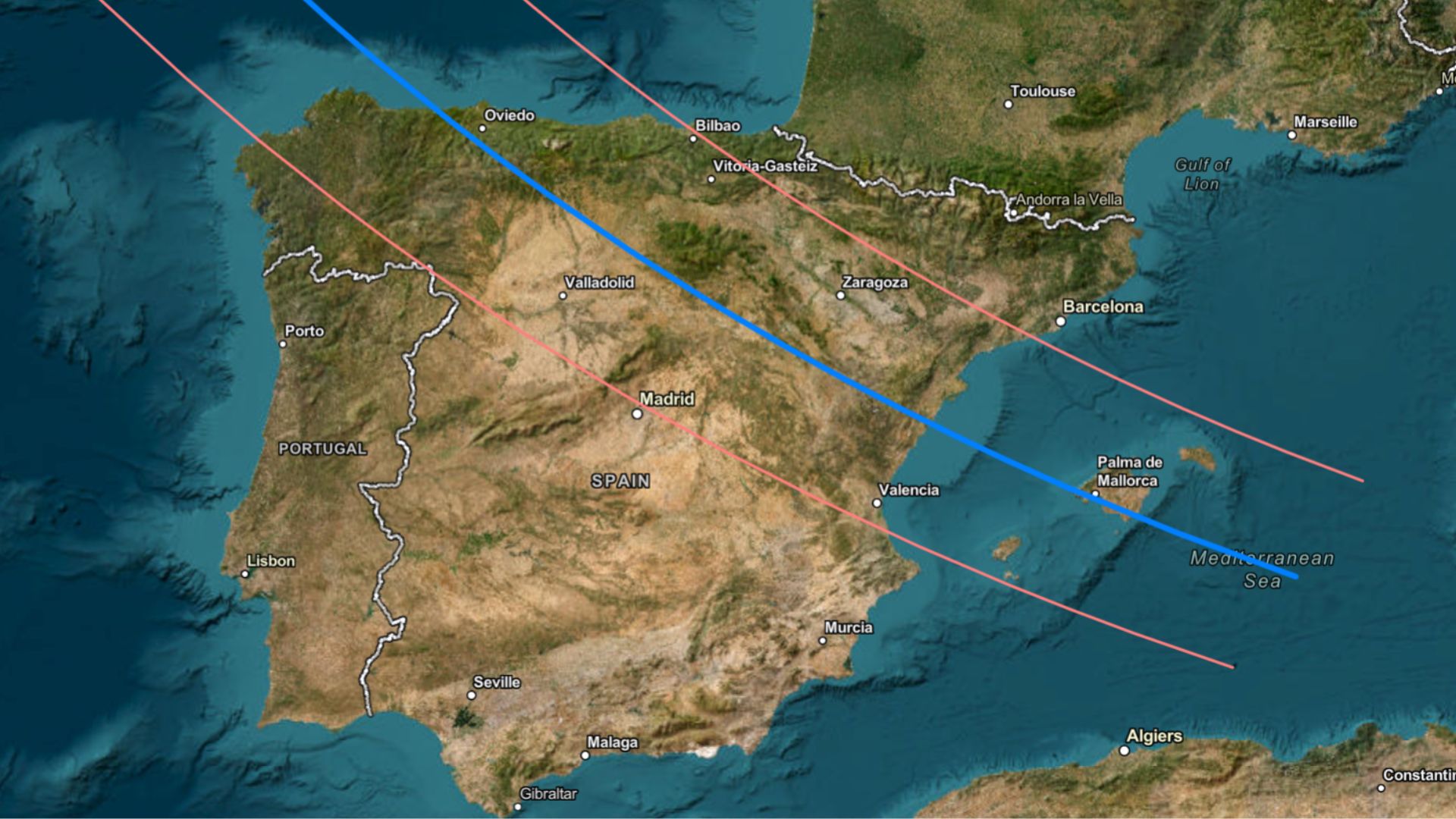
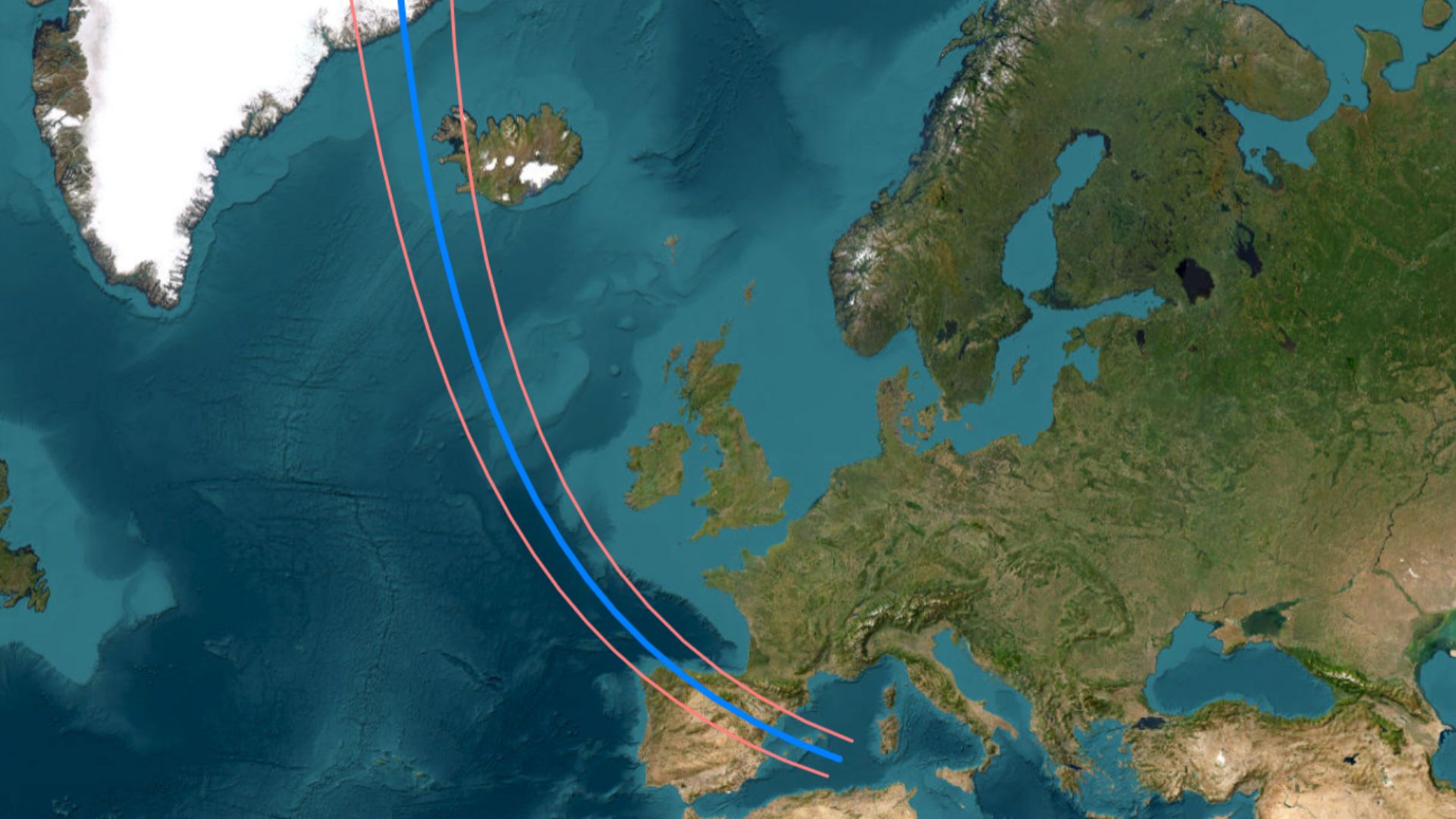
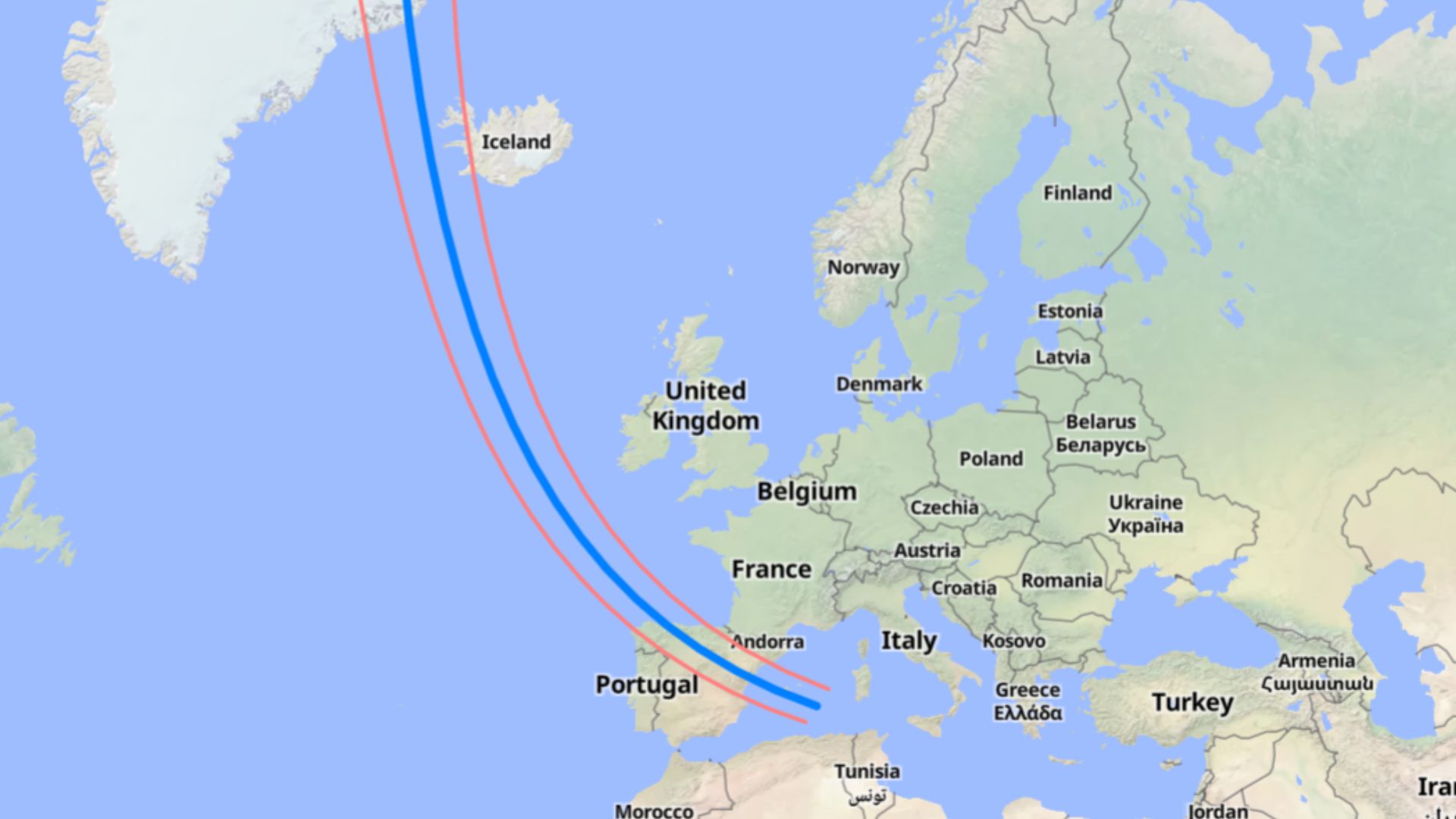
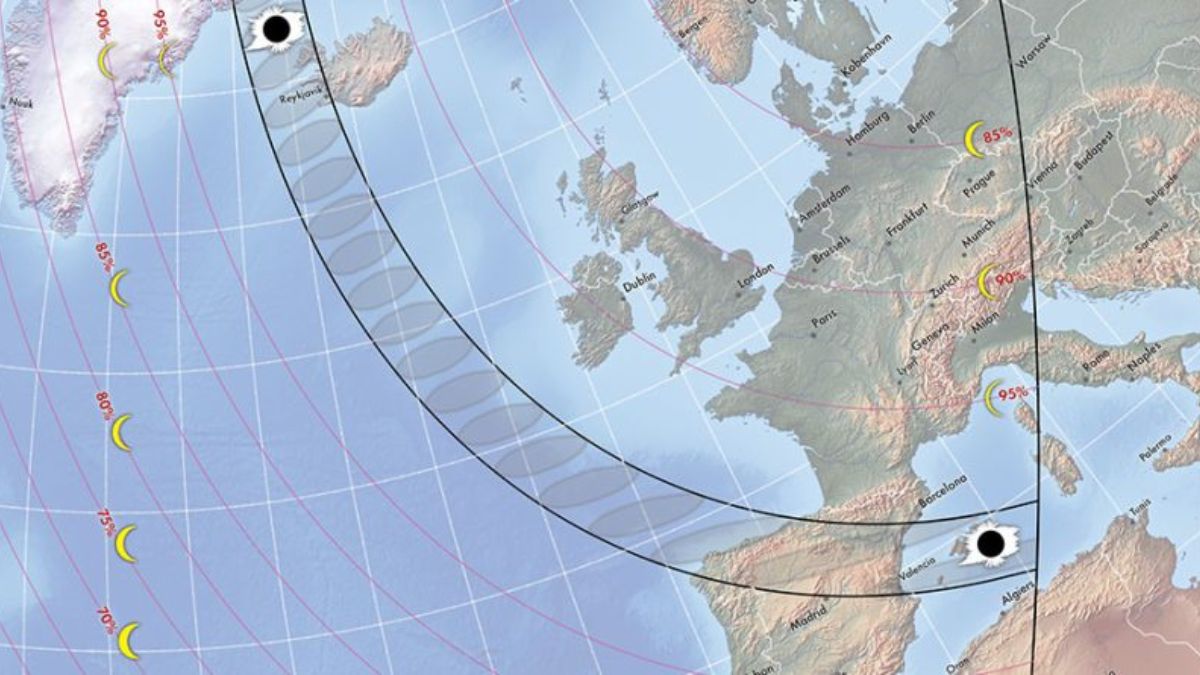
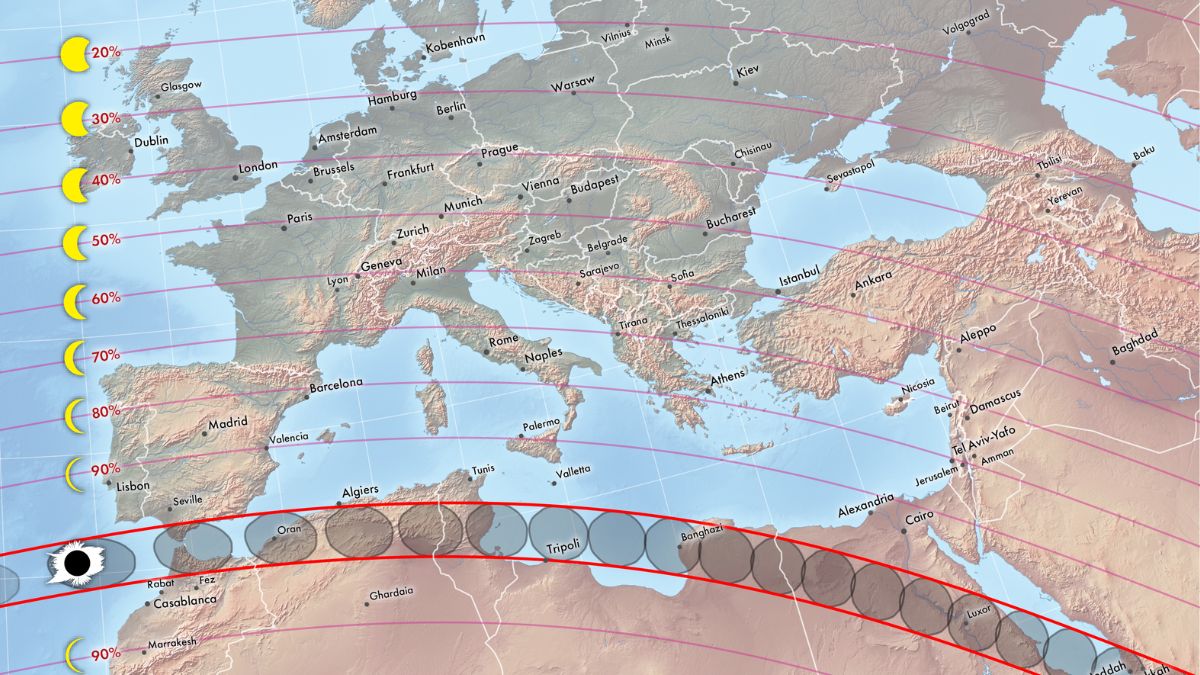
Path of the total solar eclipse over IcelandCreated using MapHub.net. Source: Esri, Maxar, GeoEye, Earthstar Geographics, CNES/Airbus DS, USDA, USGS, AeroGRID, IGN, and the GIS User CommunityPath of total solar eclipse over SpainCreated using MapHub.net. Source: Esri, Maxar, GeoEye, Earthstar Geographics, CNES/Airbus DS, USDA, USGS, AeroGRID, IGN, and the GIS User CommunityEntire path of the total solar eclipse on Aug. 12, 2026.Created using MapHub.net. Source: Esri, Maxar, GeoEye, Earthstar Geographics, CNES/Airbus DS, USDA, USGS, AeroGRID, IGN, and the GIS User CommunityEntire path of the total solar eclipse on Aug. 12, 2026.Created using MapHub.net. Source: Esri, Maxar, GeoEye, Earthstar Geographics, CNES/Airbus DS, USDA, USGS, AeroGRID, IGN, and the GIS User Community
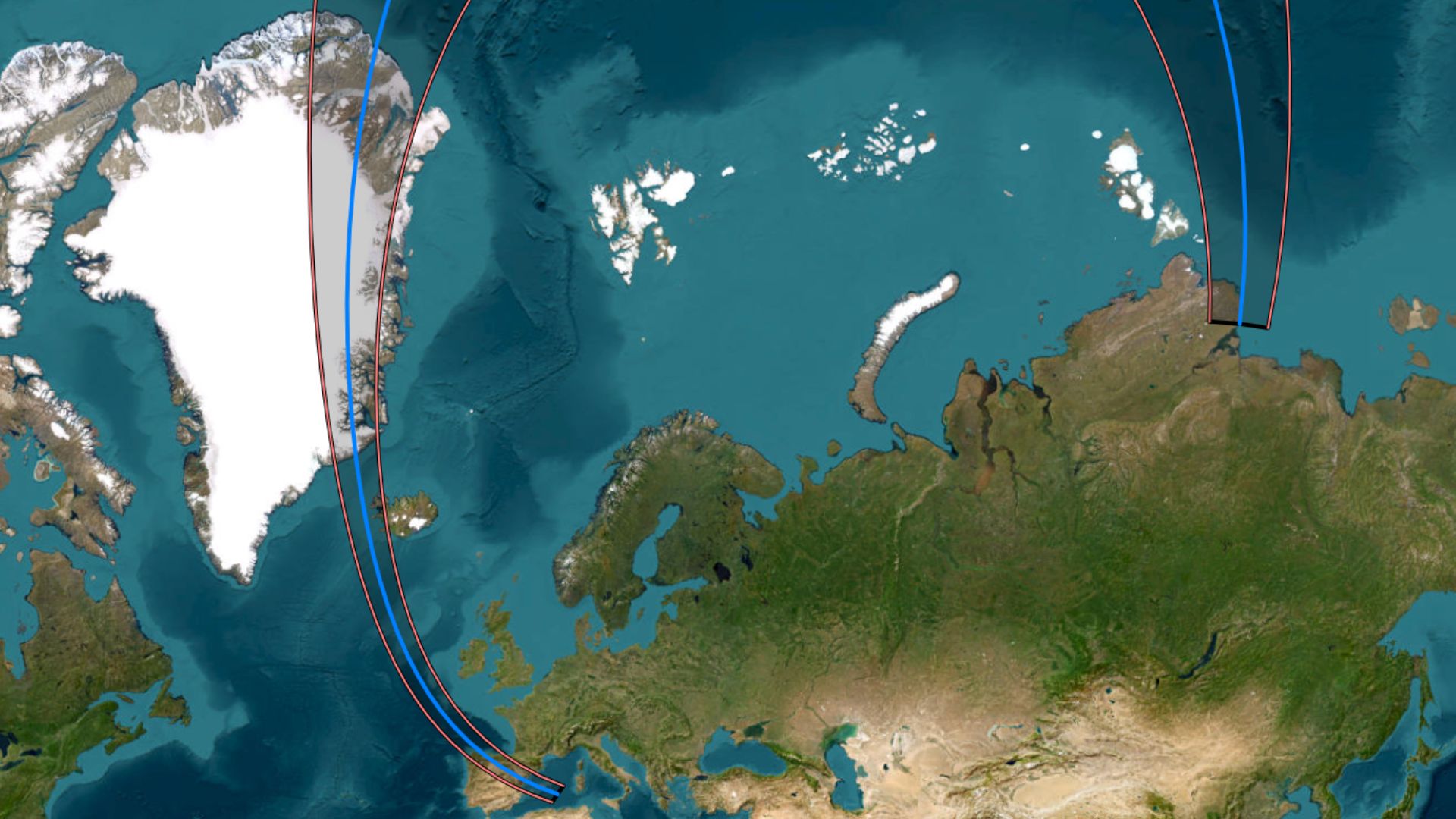
On Aug. 12, the moon's shadow crosses eastern Greenland, western Iceland and northern Spain, with a small part of Portugal also near the action. From inside the narrow path of totality, the sun will be completely covered for up to 2 minutes 18 seconds. If that's your destination, get excited — and be prepared. During totality, stay present. An eclipse is short enough that distraction becomes a genuine hazard to observing. A one-second look can be enough, but only if you are really paying attention.
Outside of the path of totality, a much wider partial solar eclipse will be visible across the U.K., Europe, parts of North America and northwest Africa.
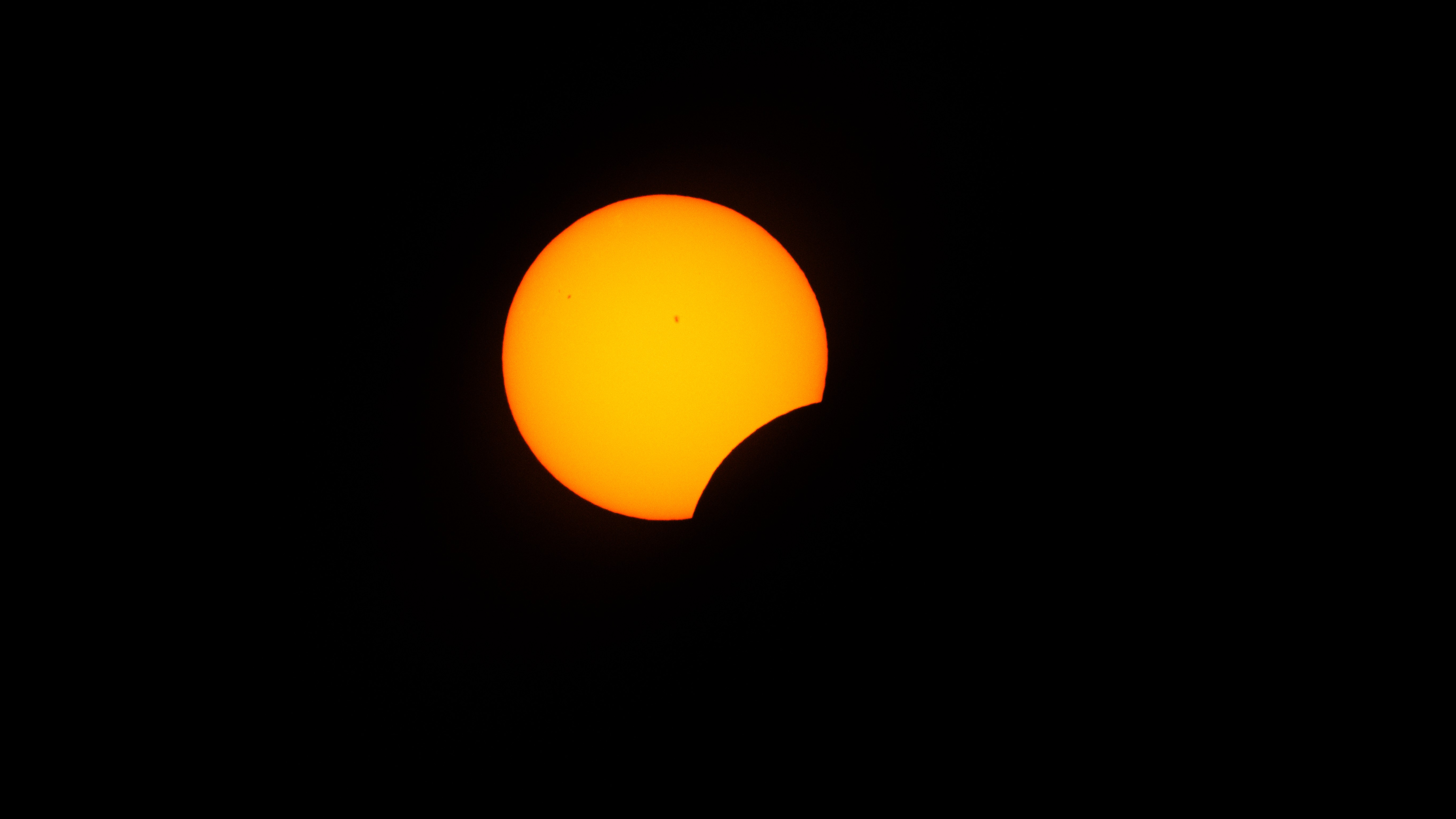
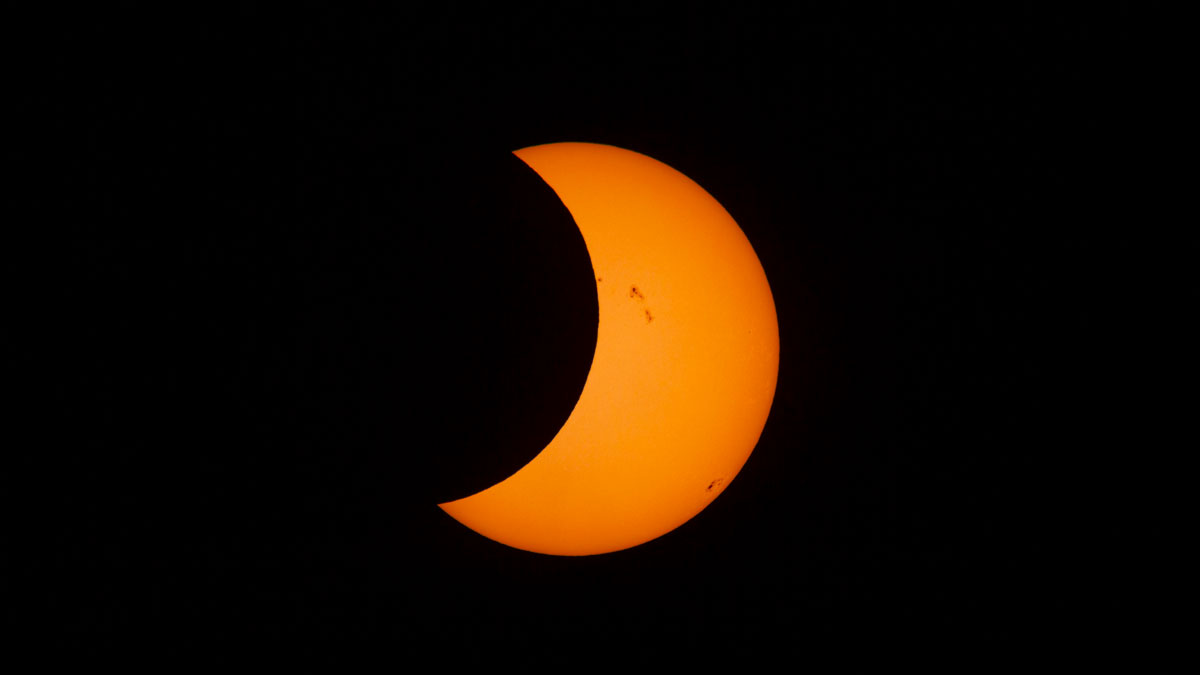
A partial solar eclipse can make for a striking photograph. Here you can also see some large sunspots on the surface of the sun. (Image credit: Josh Dury Photo Media)
The U.K. gets one of the more striking consolation prizes: a very deep partial eclipse late in the day. Across much of Britain, around nine-tenths of the sun will be covered, with the deepest views toward the west and southwest. London, Manchester and Glasgow are all in the roughly 91% range, while Cardiff and Belfast do slightly better. Maximum eclipse takes place around 7:05 to 7:13 p.m. BST, when the sun will be low in the west-northwest. That low sun is the detail many people will miss. This is not an eclipse to watch from behind a row of houses, trees or office blocks. A beach, cliff top, hill or open field may make the difference between seeing a thin solar crescent and seeing nothing at all. But having a clear western horizon means clear weather is needed not just where you are, but where you're looking — possibly a 100 miles away to the northwest. That will be even more of an issue in eastern Spain and the Balearic Islands, from where the total solar eclipse will occur when the sun and moon are just a couple of degrees above the horizon.
North America gets a smaller event, but not a meaningless one. The farther northeast you are, the better — though a partial eclipse probably isn't something to travel far to see more of. It's best to take what's coming your way. In the U.S., northern Maine sees the deepest partial eclipse, while Boston, New York, Philadelphia and parts of New England see a smaller bite taken from the sun after lunch. Canada does better, especially in the east and north. Newfoundland sees more than half the sun covered, while the rest of Atlantic Canada has a much better show than most of the U.S.
Wherever you are, remember that it is never safe to look directly at the sun without proper eclipse glasses or certified solar filters. Thin cloud does not make it safe to look at the sun. Nor do sunglasses. Even a quick glance requires eclipse glasses.
How and when I'm watching it
I'll be in Greenland for this one, but the way I recommended you watch it is low-tech. I would bring eclipse glasses, a printed or saved set of local timings (visit Time and Date for a location-specific schedule), and binoculars with a proper solar filter fitted securely over the front of the lenses. Personally, I wouldn't build the day around photography. The great trap of a total solar eclipse is believing it is mainly something to photograph. It is not. It is something that happens to the whole environment.
If you're in the path of a deep partial eclipse — say, over about 80% — you may begin to notice the light taking on an unusual quality, with a more noticeable dimming around 90% coverage. If you're in the path of totality, you'll feel a coolness as totality begins, birds and humans going quiet, and light levels suddenly crashing as the moon's shadow sweeps across you. Clouds can even sharpen the strangeness. In the path of totality, a low, milky sky may hide the corona, but that also makes the darkness feel heavier and more sudden. All of this is why people cherish their experience of an eclipse — not because of a photograph.
Stargazer's corner: August 7-13, 2026
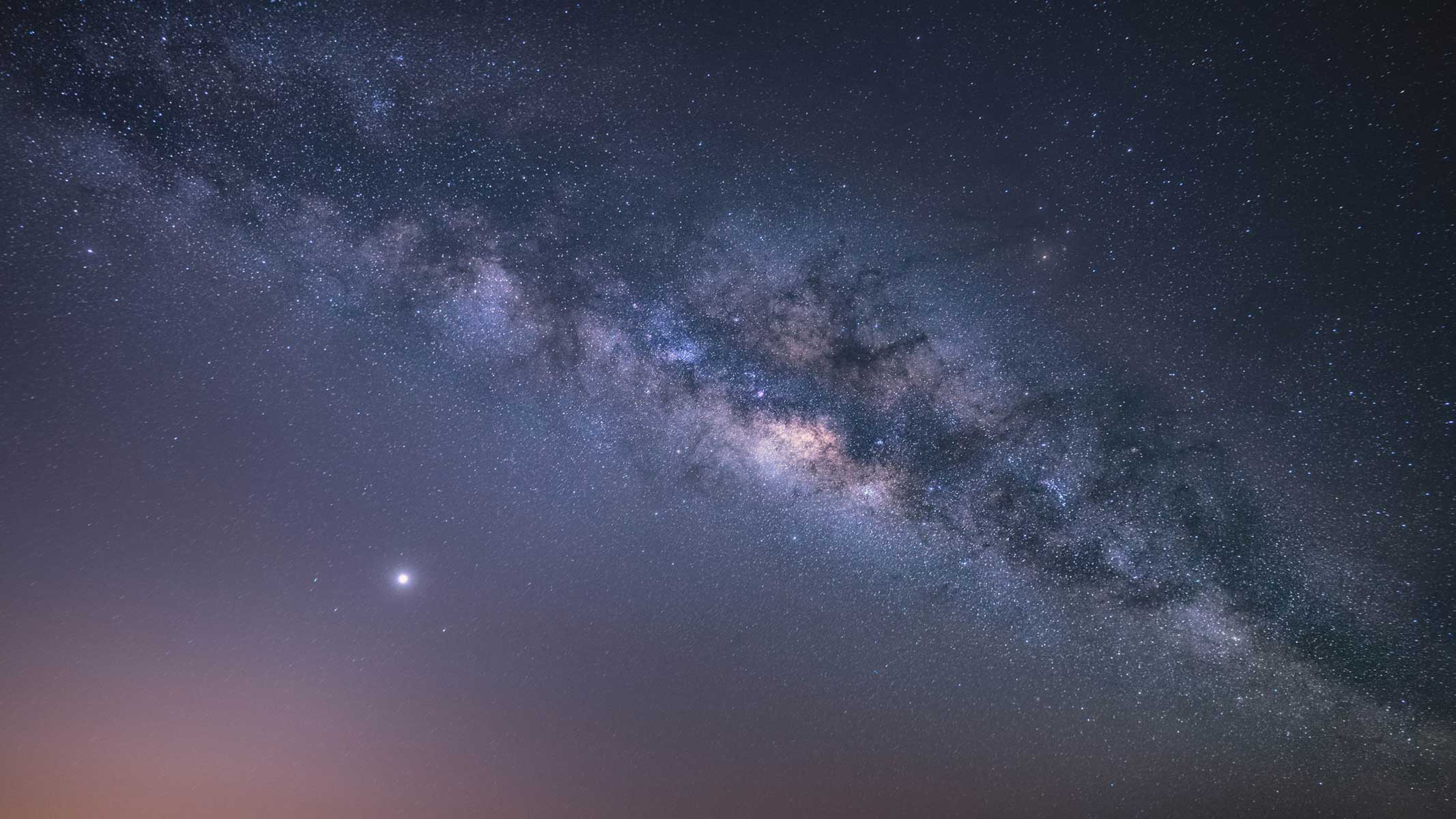
The Milky Way. (Image credit: Getty)
Here comes an incredible week of stargazing, with the solar eclipse and the peak of the Perseid meteor shower — both occurring on the same day — hard to underplay. Those chasing the eclipse in Greenland and Iceland may have a chance to see the aurora after midnight, though the darkness is short. Farther south, it's peak Milky Way season. The galaxy arches high across the sky, with its brightest and most detailed regions now well placed after dusk. All this week, the moon will be a thin crescent, if present at all, creating excellent conditions for simply stepping outside and exploring the sky at night. If you can glimpse the Milky Way, an eclipsed sun and a "shooting star," you've bagged one of the greatest combinations in skywatching.
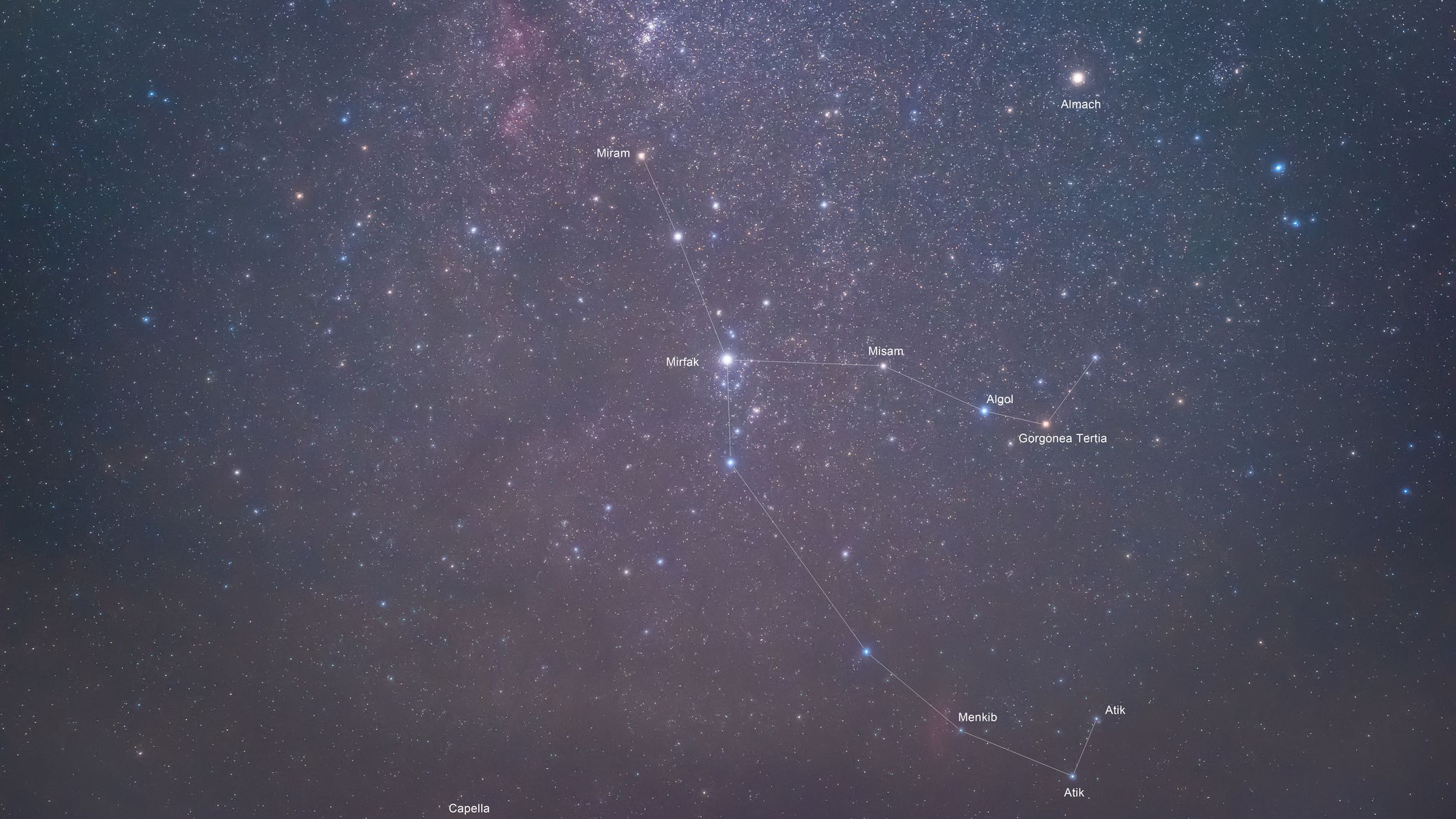
The constellation Perseus. (Image credit: iStock / Getty Images Plus)
Perseus is the name attached to the week's meteor shower, but the meteors do not actually come from the stars of Perseus. They only appear to radiate from that direction because Earth is moving through a stream of comet debris. To find Perseus, look northeast late in the evening and higher before dawn, below the W-shaped constellation Cassiopeia. The beginner's mistake is to stare at the radiant. Use Perseus only as an anchor point, then watch the widest patch of dark sky you can manage. This meteor shower — one of the best of the year, taking place under perfect moonless conditions — rewards patience more than precision.
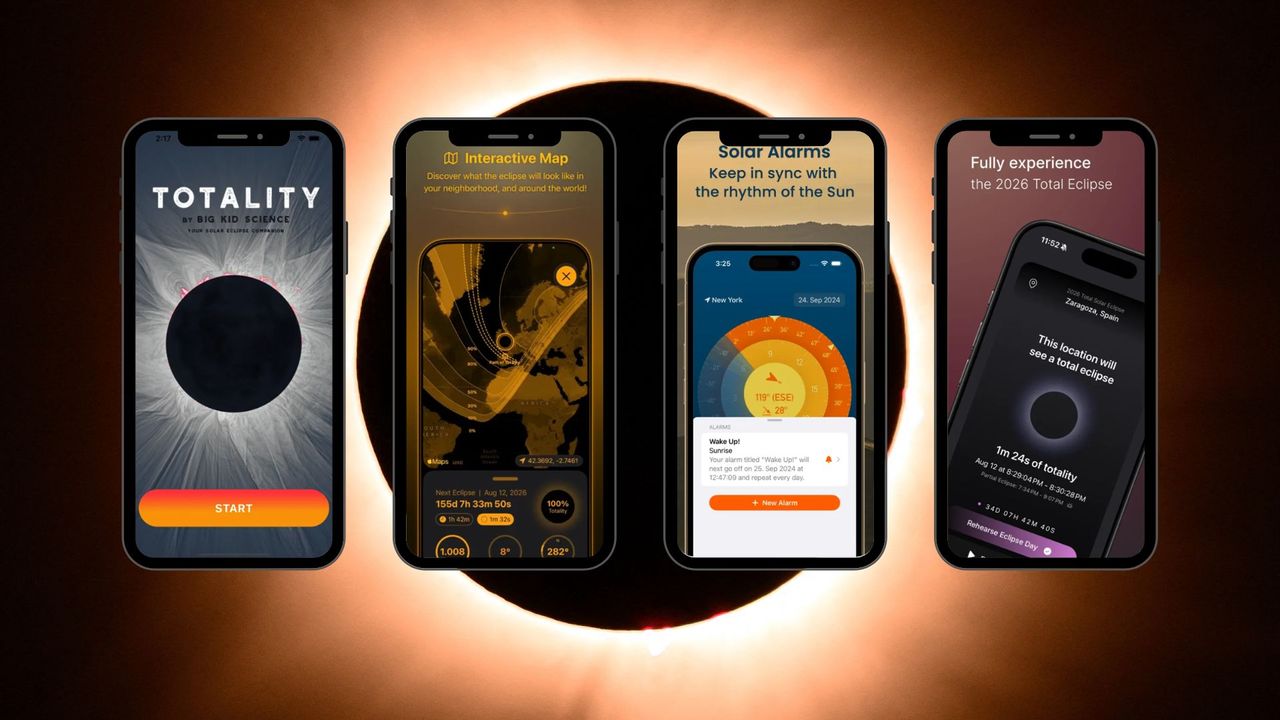
The Aug. 12 total solar eclipse is less than a week away! We know that eclipse planning can be daunting, so we've put together a list of great eclipse apps to help make things that little bit easier.
Over 15 million people across Spain, Greenland and Iceland will witness totality on Aug. 12, while almost a billion will bear witness to a partial eclipse, as the moon blocks a portion of the sun's light without hiding its surface entirely, according to Time and Date.com. However, each person's experience will be subtly different, whether it be the exact timing of totality, the terrain, cloud cover, or a myriad of other reasons.
From location-specific totality alerts to weather forecasts, there are plenty of ways that these apps can help enhance your eclipse viewing experience.
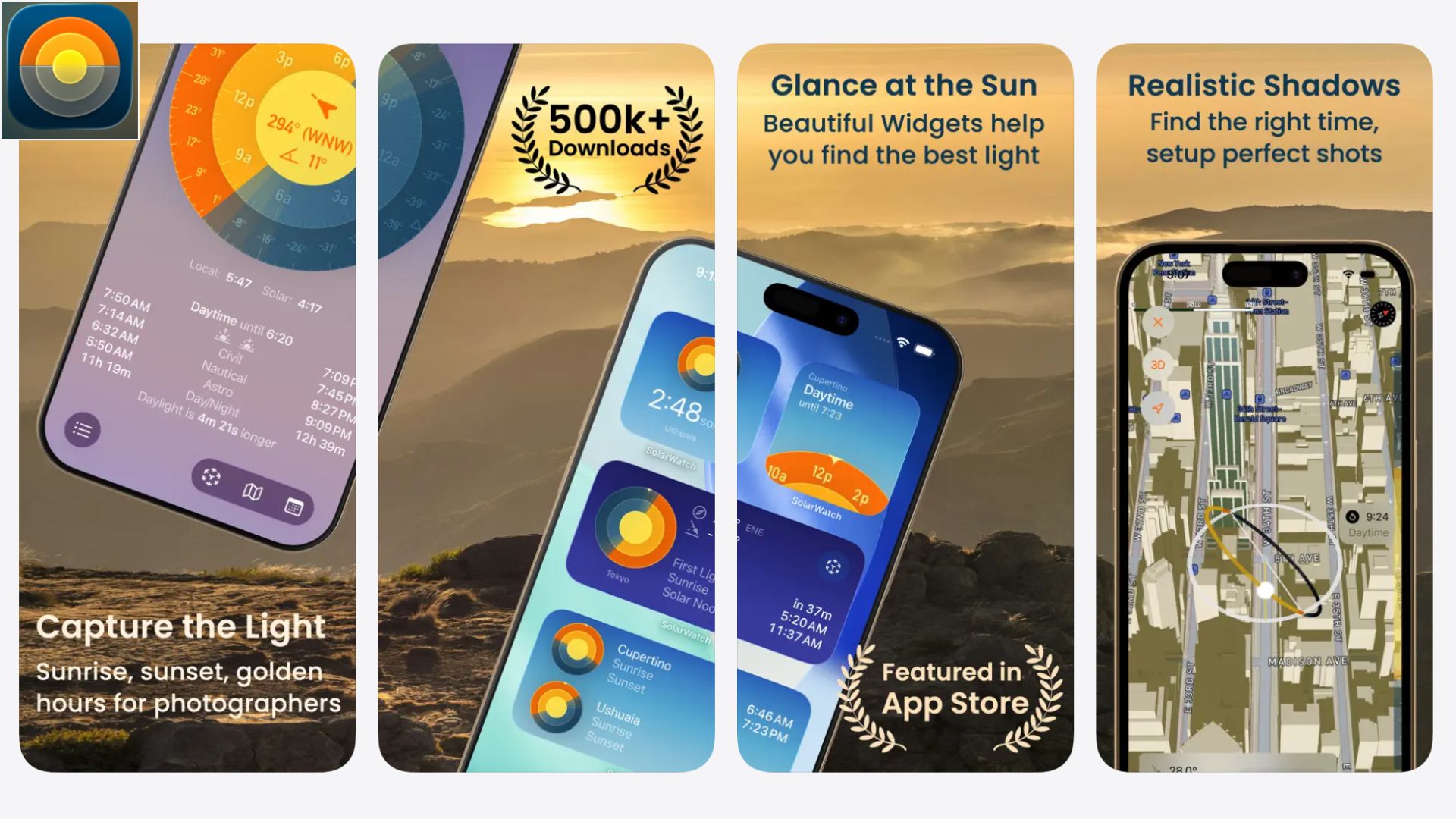
The popular iOS stargazing app SolarWatch has had a major update to introduce a slew of helpful eclipse-planning features. According to solo developer Engin Kurutepe, the app offers interactive eclipse path maps that allow you to simulate precise timings for each phase of an upcoming eclipse, while also providing data on local cloud obscuration.
SolarWatch also gives real-time and time-lapse simulations of the moon's shadow racing across a 3D representation of Earth, along with educational content on eclipse phenomena such as Baily's Beads. It also tracks each eclipse phase with countdowns and even gives details on the speed of the moon's shadow at your specific location!
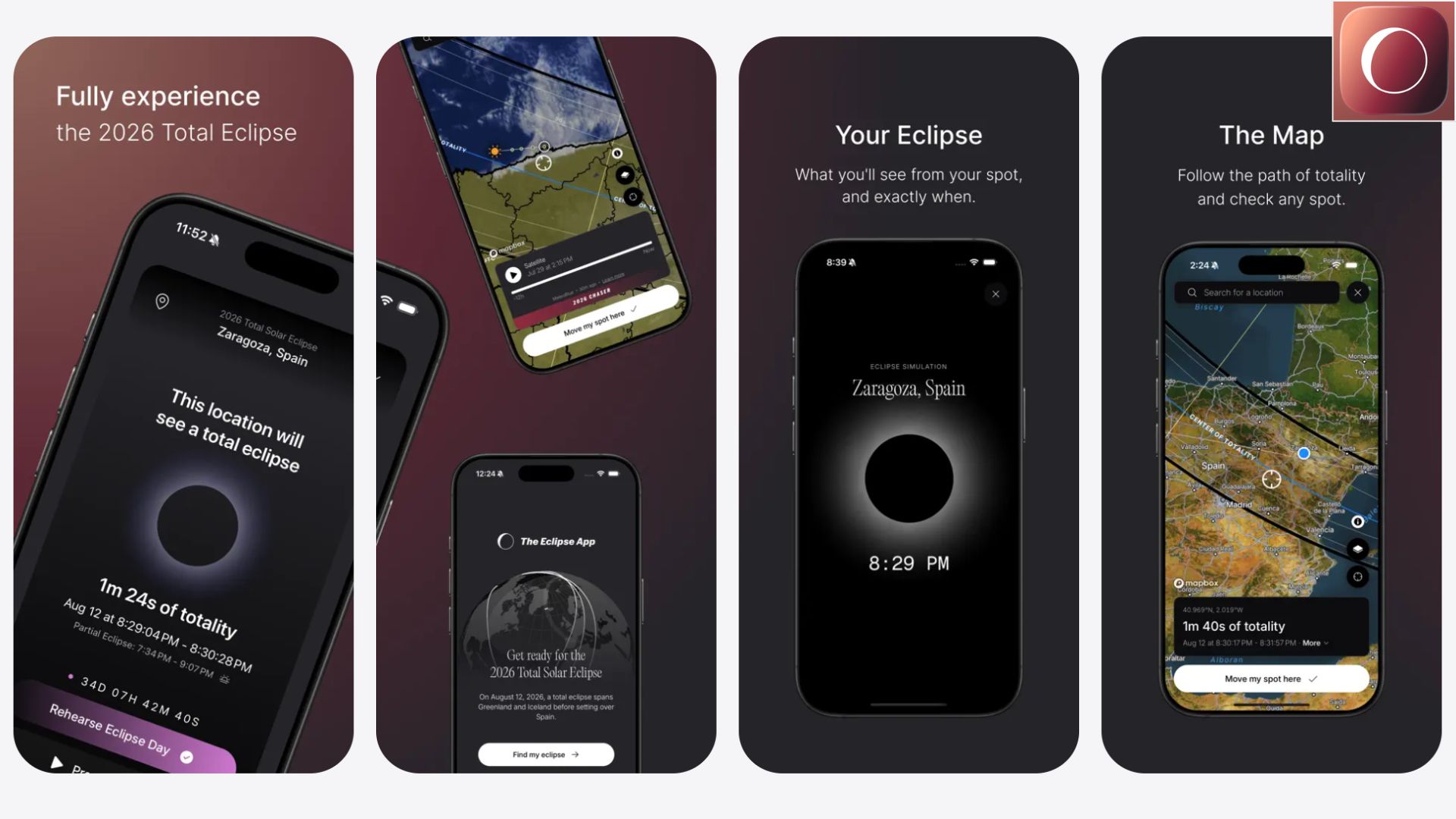
As its name suggests, The Eclipse App is available on iOS to cater to all your eclipse needs. The app has been rebuilt for the Aug. 12 eclipse, featuring exact timings for each stage of the event running from first contact through totality and beyond.
See simulations of the eclipse from your specific vantage point, receive alerts and discover exactly how much of the sun is covered during any given moment of the eclipse, the length of totality and more. Inbuilt features also allow you to record your experience in real time and return to relive it after the event.
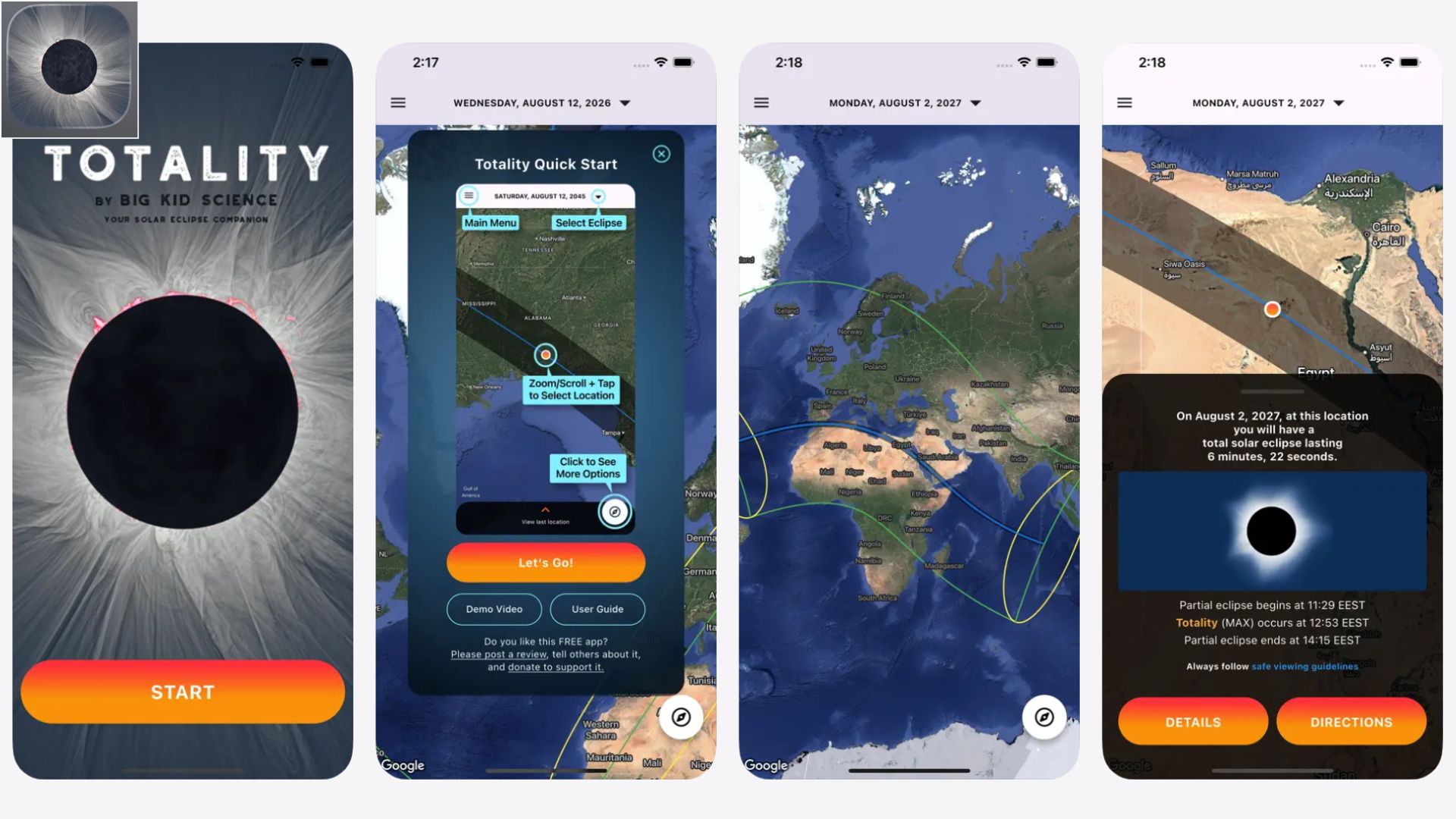
Like other apps on this list, Totality by Big Kid Science on IOS and the Play Store offers users a wealth of eclipse information, including detailed timings based on your phone's GPS data, safety tips, eclipse science and more. It also provides handy navigation tools to help eclipse chasers find a way into the path of totality.
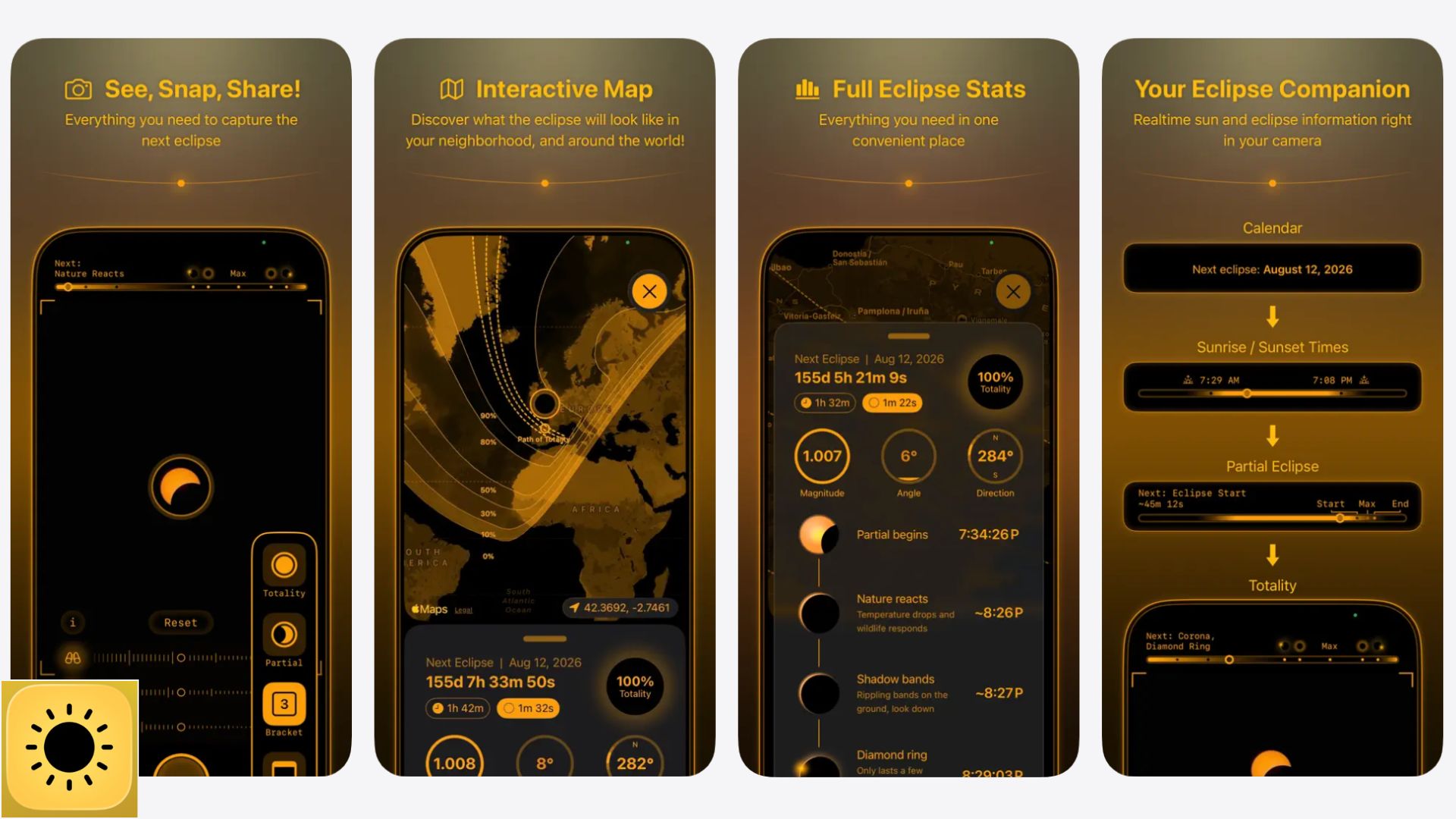
Want to capture the eclipse but don't have access to an expensive camera? Then Solar Snap on iOS or the Google Play Store might be for you.
The app provides a range of useful controls and features to help you capture the Aug. 12 eclipse with your smartphone, along with an interactive global eclipse map and information on the timings of phases, position of the sun and more.
It's designed to work in conjunction with a solar smartphone filter, which can be purchased as part of the Solar Snap filter kit. Alternatively, there are in-app tutorials that show how to make your own smartphone filter using a pair of eclipse glasses!
Be sure to check out our live blog for all of the latest news on the Aug. 12 total solar eclipse, along with on-the-ground reporting of the eclipse from skywatching editor Daisy Dobrijevic, who is currently aboard HX Expeditions' MS Spitsbergen off the coast of Greenland and skywatching writer Anthony Wood who will be heading to Spain. We'll also be publishing information on how to watch the eclipse live online for free closer to the time.
While you're at it why not download the Space.com app, available on IOS and Android, to stay up to date on all the latest launches, space science, skywatching news and eclipses?
Editor's Note: If you would like to share your eclipse astrophotography with Space.com's readers, then please send your photo(s), comments, and your name and location to spacephotos@space.com.
The total solar eclipse on Aug. 12, 2026 will sweep across parts of the Northern Hemisphere, offering millions of people a chance to witness one of nature's most spectacular sights.
The path of totality — in which the moon completely covers the sun — begins over the Arctic Ocean, before crossing eastern Greenland, western Iceland and northern Spain. It then passes over the Balearic Islands before ending over the Mediterranean Sea.
Only skywatchers inside this relatively narrow path, just 182 miles (293 kilometers) wide, will experience totality, where day briefly turns to twilight. Here, you'll be able to safely see the sun's outer atmosphere, known as the corona, with the naked eye during the fleeting moment when the moon completely obscures the sun.
A much larger region surrounding the path of totality will instead see an impressive partial solar eclipse. Much of Europe, including the U.K., Ireland, France, Germany, Italy and Scandinavia, will witness the moon take a "bite" out of the sun.
Northern Spain is expected to be one of the most popular destinations for eclipse chasers thanks to its relatively accessible location and the low evening sun on the big day, which could create dramatic views as totality unfolds close to sunset. Greenland and Iceland offer very different experiences, with totality taking place higher in the sky against the nations' spectacular Arctic landscapes.
We'll have reporters on the ground to keep you updated each step of the way. Be sure to follow along on our total solar eclipse live blog to stay up to date with all the latest news and action as Skywatching Editor Daisy Dobrijevic embarks on an eclipse expedition to Greenland with HX Expeditionsand Skywatching Writer Anthony Wood heads to Spain to experience the eclipse with NASA's DEB initiative and citizen scientists.
The global path of the total solar eclipse on Aug. 12, 2026. (Image credit: Created and annotated by Jamie Carter using MapHub.net. Sources: Esri, Maxar, GeoEye, Earthstar Geographics, CNES/Airbus DS, USDA, USGS, AeroGRID, IGN and the GIS user community. Eclipse path by Xavier Jubier)
How to watch
Wherever you plan to watch from, remember that it is never safe to look directly at the sun without proper eye protection. Certified solar eclipse glasses or a solar filter fitted to telescopes, binoculars and cameras must be used throughout the partial phases. Only during the brief period of totality, when the moon completely blocks the sun, can you safely remove your eclipse glasses and look directly at the eclipse.
We will also be livestreaming the eclipse here on Space.com; details will be released closer to the time.
Want to know exactly where the eclipse will be visible and how long totality will last at different locations? Check out ourcomplete guide towhere to see the Aug. 12, 2026 total solar eclipse, including detailed maps, timings and viewing advice.
On Aug. 12, 2026, Europe will experience its first total solar eclipse since 1999, as the moon's shadow sweeps across Greenland, Iceland, northern Spain and the Balearic Islands.
Along the narrow path of totality, day will briefly turn to twilight as the moon completely covers the sun, revealing its elusive outer atmosphere — the corona. Meanwhile, millions more skywatchers across much of Europe, as well as parts of northeastern United States and eastern Canada, will witness a partial solar eclipse as the moon appears to take a bite out of the sun.
Live reporting from the path of totality
We'll be following the eclipse from two locations along the path of totality.
Our skywatching editor Daisy Dobrijevic is currently aboard HX Expeditions' MS Spitsbergen exploring Greenland's dramatic coast. She'll be aiming to witness totality from Scoresby Sund, the world's largest and longest fjord system. Dobrijevic is hoping for more eclipse luck than last time, when unfortunately,totality was a total bust, but not for the reason you may think.
Meanwhile, our skywatching writer Anthony Wood is joining the DEB initiative in Valoria la Buena, Spain, where the eclipsed sun will hang low above the western horizon shortly before sunset. It will be Wood's first-ever total solar eclipse.
One week until the total solar eclipse 2026: The countdown has begun... are you ready?
The countdown has begun! The total solar eclipse 2026 will occur on Aug. 12. (Image credit: Photo by Erin Clark/The Boston Globe via Getty Images)
In just one week, millions of people across Greenland, Iceland and Spain will witness one of nature's greatest spectacles as the moon completely covers the sun.
Our team will be following the eclipse from two incredible locations, aboard an expedition ship in East Greenland with HX Expeditions and from northern Spain with the DEB initiative, bringing you live updates throughout the lead-up to the eclipse and on the day itself
Eclipse glasses must be worn whenever the sun's disk is visible. (Image credit: LeoPatrizi / Getty Images)
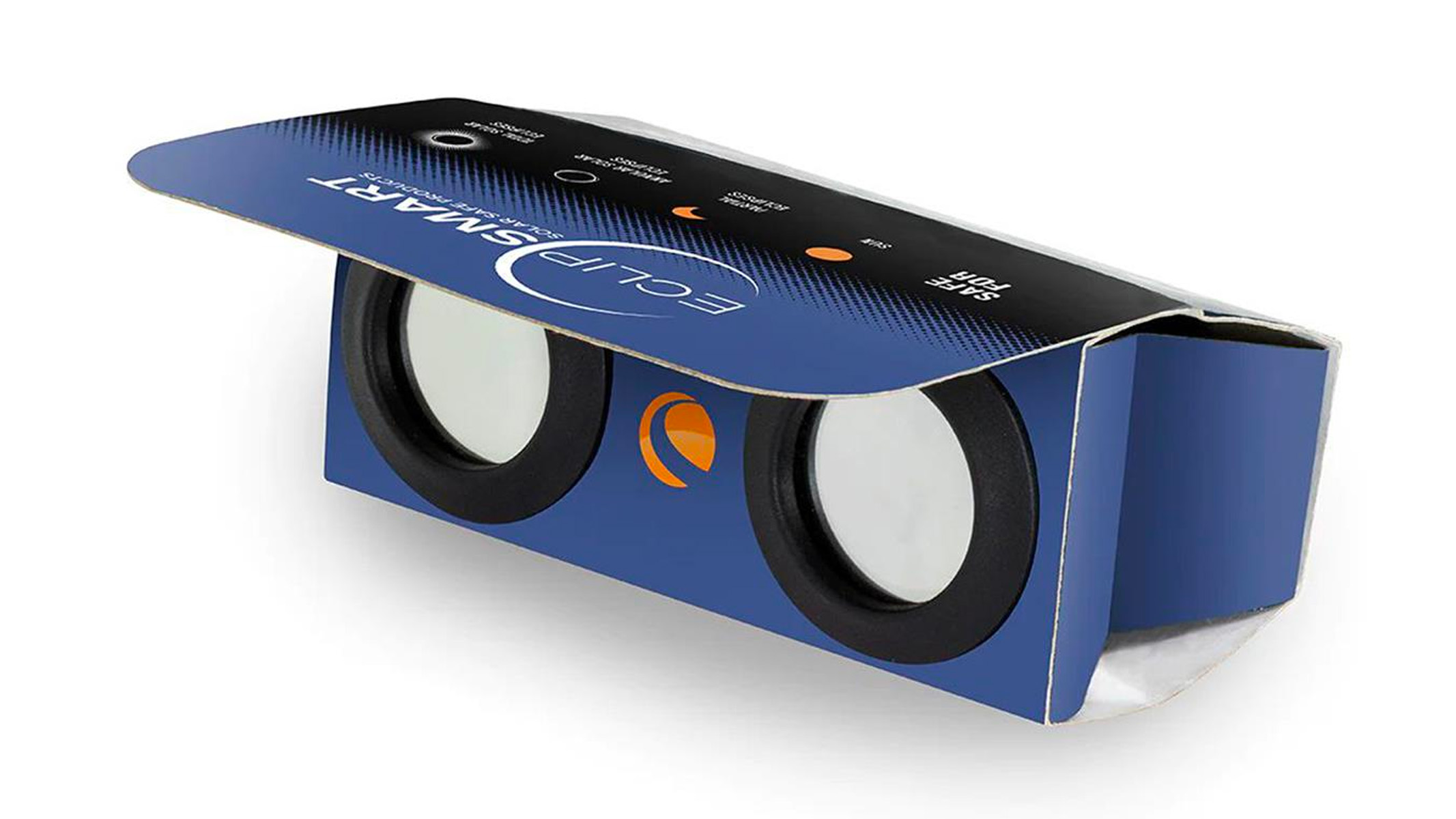
If you're planning on viewing the Aug. 12 total solar eclipse then you'll need to get hold of a pair of quality eclipse glasses. Be sure to get a pair from a reputable dealer that conforms to the all important ISO 123-12 - 2 certification and never use an old pair if they appear scratched or damaged in any way!
Find out where you can experience totality on Aug. 12, 2026. (Image credit: Created in Canva Pro)
Not everyone will experience totality on Aug. 12.
Some places will see the moon completely cover the sun, while others will experience a partial solar eclipse and for some… no eclipse at all. Womp womp.
One of the biggest worries before any eclipse is weather.
While a perfectly blue sky is ideal, you don't necessarily need one to enjoy the experience. Even under thin clouds, many of the most dramatic effects of totality can still be visible.
Sunglasses are vital to safely view the partial stages of a solar eclipse. (Image credit: Photo by Gabriel BOUYS / AFP via Getty Images)
If you'll be looking at any part of the partial eclipse, you'll need proper eye protection. Never look directly at the sun without certified eye protection.
The citizen scientists keeping an eye on the Aug. 12 total solar eclipse
Two teams of Dynamic Eclipse Broadcast volunteers with observe totality on Aug. 12. (Image credit: Photo by: Alan Dyer/VW Pics/UIG via Getty Images)
Countless eyes will be watching the moon's silhouette swallow the light of our parent star during the climactic phase of totality on Aug. 12.
Among them will be volunteers from the Dynamic Eclipse Broadcast Initiative — a passion-driven volunteer network of solar observers led by professional astronomers from the Southern Illinois University Carbondale and part funded by NASA.
Discover more on their efforts to capture valuable data on the sun's atmosphere while bringing the public closer to the Aug. 12 total solar eclipse below.
Get ready stargazers! We're just one week away from the total solar eclipse on Aug. 12, when millions of stargazers will be treated to a spectacular display as the lunar disk passes in front of the sun, blocking its light.
Roughly 15.2 million people spread across Greenland, Iceland, Portugal, Russia and Spain will be in the path of totality during the total solar eclipse 2026, where the moon will completely hide the sun's disk starting at 12:58 p.m. EDT (1658 GMT), according to Time and Date.
A further 980 million people — approximately 12% of Earth's human population — will bear witness to a partial eclipse, as the lunar disk appears to takes a bite out of the sun.
Solar eclipses occur during the monthly new moon phase, when the lunar disk passes directly between the sun and Earth in its slightly lopsided orbit, casting its colossal shadow over a swathe of our planet's surface.
Viewers in the U.K. and several European countries will see an impressive partial solar eclipse, with around 90% of the sun's surface occulted by the moon as it sinks low on the western horizon. Several northeastern U.S. states, including New York, Maine and Pennsylvania, that sit farther from the path of totality will witness the lunar disk take a small "bite" out of the sun.
We will also be bringing you the latest eclipse news and updates from our reporters in the field with our dedicated eclipse live blog. Skywatching Editor Daisy Dobrijevic is on an eclipse expedition to Greenland with HX Expeditionsand Skywatching Writer Anthony Wood is heading to Spain shortly to experience the eclipse with NASA's DEB initiative and citizen scientists.
If the eclipse isn't visible from your location, there's no need to worry. You can watch each stage of the total solar eclipse unfold in real time from the comfort of your home. Details of livestreams will be released closer to the time.
Those outside of the path of totality will witness a spectacular partial solar eclipse. (Image credit: Photo by: Edwin Remsberg/VWPics/Universal Images Group via Getty Images)
August's umbral show is just the opening act of a "Golden Age" of solar eclipses, which will see three total eclipses and three annular "ring of fire" eclipses sweep across Earth between 2026 to 2028.
Editor's Note: If you would like to share your solar eclipse photos with Space.com's readers, then please send your photo(s), comments, and your name and location to spacephotos@space.com.
Meet the Dynamic Eclipse Broadcast Initiative — a passion-driven citizen science endeavour that shares breathtaking views of total solar eclipses while capturing valuable data on the sun's incandescent atmosphere.
At the heart of our solar system is a burning ball of superheated gas 100 times the width of Earth, with a thermonuclear reaction raging at its core. Its radiation and gravity hold the planets in their orbit and allow for the existence of life on our Blue Marble.
Yet despite centuries of scientific scrutiny, many mysteries remain as to the inner workings of our sun and the influence it extends out into the solar system.
What is the DEB Initiative?
One effort to unravel the mysteries and share the beauty of our parent star is being undertaken by the DEB. A network of volunteer solar observers coordinated and guided by professional astronomers from Southern Illinois University Carbondale that's partly funded by NASA and the National Science Foundation.
"We came up with a setup that's portable, that's relatively cheap," Associate Scientist Bob Baer of the Southern Illinois University Carbondale and co-principle investigator of the DEB Initiative explained to Space.com in an interview. "They're about $1,800 once you factor in everything, like the computer, the mount, the telescope, the camera."
During the great American Eclipse of 2024, the DEB had over 80 teams equipped with identical telescopes arrayed across a path of totality that cut through the contiguous United States. Having trained for months, their duty was to keep vigil on the climactic phase of totality, as the moon's silhouette covered the face of our parent star to reveal the sun's golden corona reaching out into the false twilight.
The sun's corona shines from behind the lunar disk at totality during the 2024 eclipse. (Image credit: Photo by Brandon Bell/Getty Images)
Telescope footage was uploaded in near-real time and included in livestreams that brought the beauty of the eclipse directly to the public no matter where they were — an impressive effort that saw numerous members of the team receive Emmy Awards for their coverage.
Some of the volunteers are also the authors of a scientific paper set to be published in the Astrophysical Journal Letters that tracked the structure and dynamics of the sun's inner atmosphere, or corona, from 11 DEB locations over 49 minutes of evolution.
Outside of eclipses, volunteers also use their telescopes to track asteroids, solar vibrations and powerful flares that blast from the surface of the sun. They even collect data on exoplanet transits, as distant worlds pass between our planet and their parent stars, creating periodic dips in their light.
Having so many volunteers in different places enables a much wider range of data to be collected. "It's the network of telescopes that is the strength of the project," explained Baer. "It's not just one scope."
Is the DEB watching over the 2026 eclipse?
A spectacular total solar eclipse will take place on Aug. 12, as the moon's vast silhouette passes across the solar disk, completely blocking its light across a 182-mile-wide (293-kilometer) swathe of Greenland, Iceland and Spain during the climactic phase of totality.
The DEB will have two teams on hand in the path of totality to observe the eclipse. One will set up in the northwestern Spanish city of Leon, while a second team — led by citizen scientist Charles Greenwald and shadowed by myself — will find the high ground in the Castilian village of Valoria la Buena, 93 miles (150 kilometers) to the southeast.
My conversations with Greenwald have underscored how important passion is to maintaining an initiative like the DEB. The past eight months have seen him travel to Guadalajara, Mexico, multiple times to prepare his team for their expedition to Spain, while helping to test software updates that govern how telescopes will capture the sun over the course of the eclipse.
As in 2024, the data DEB volunteers collect will be uploaded to a server in real time and used in multiple live streams — including NASA coverage — to bring the public closer to the eclipse. But it's also being used as whetstone, a testing ground to hone processes that will be used to document what some are dubbing as "the eclipse of the century", which will sweep across a swathe of Northern Africa on Aug. 2, 2027.
A map of the 2026 total solar eclipse. (Image credit: Michael Zeiler/EclipseAtlas.com)
It'll be the longest totality of any eclipse in the 21st century to date, lasting a maximum of 6 minutes and 23 seconds as opposed to the 2 minutes 18 seconds of the 2026 eclipse.
DEB leadership is working on tentative plans for an ambitious 2027 campaign, which could see 27 teams composed of American groups and local observers set up across the path of totality. Baer is hoping to achieve double redundancy throughout the shadow's path, ensuring an uninterrupted view in the event that a group is clouded out, or loses connection.
For plans to unfold on that scale, many moving parts would need to fall into place, both in terms of logistics and funding and, more importantly, in acquiring volunteers from both the U.S. and North Africa.
A map of the 2027 total solar eclipse. (Image credit: Michael Zeiler/EclipseAtlas.com)
It's a labor of science, and love. The DEB is planning to start recruiting volunteers for 2027 in the fall of this year, so be sure to keep an eye on the Initiative's website if you're interested in joining their mission to watch over our parent star.
During the eclipse, we'll have live reporting of the event from Skywatching Editor Daisy Dobrijevic as she watches from the the deck of a HX Expeditions cruise ship in the waters off eastern Greenland.
I, meanwhile, will be sharing my experience of totality from the Spanish village of Valoria la Buena, where the eclipse will unfold low in the western evening sky.
Editor's Note: If you would like to share your eclipse photography with Space.com's readers, then please send your photo(s), comments, and your name and location to spacephotos@space.com.
A solar eclipse, the Perseids, bright Venus after sunset, and a deep partial lunar eclipse highlight August’s skywatching.
Skywatching Highlights
Aug. 5: Last Quarter Moon
Aug. 12: Total solar eclipse across northern Russia, Greenland, Iceland, northern Spain, and part of Portugal; partial eclipse in parts of the U.S.; New Moon
Aug. 12-13: Perseid meteor shower peak under dark skies
Aug. 14-16: Venus reaches greatest eastern elongation and shines low in the west after sunset
Aug. 27-28: Partial lunar eclipse visible from much of North and South America and parts of Europe and Africa
Transcript
A solar eclipse, one of the year’s best meteor showers, Venus at its brightest in the evening sky, and a lunar eclipse to close out the month.
That’s “What’s Up” for August.
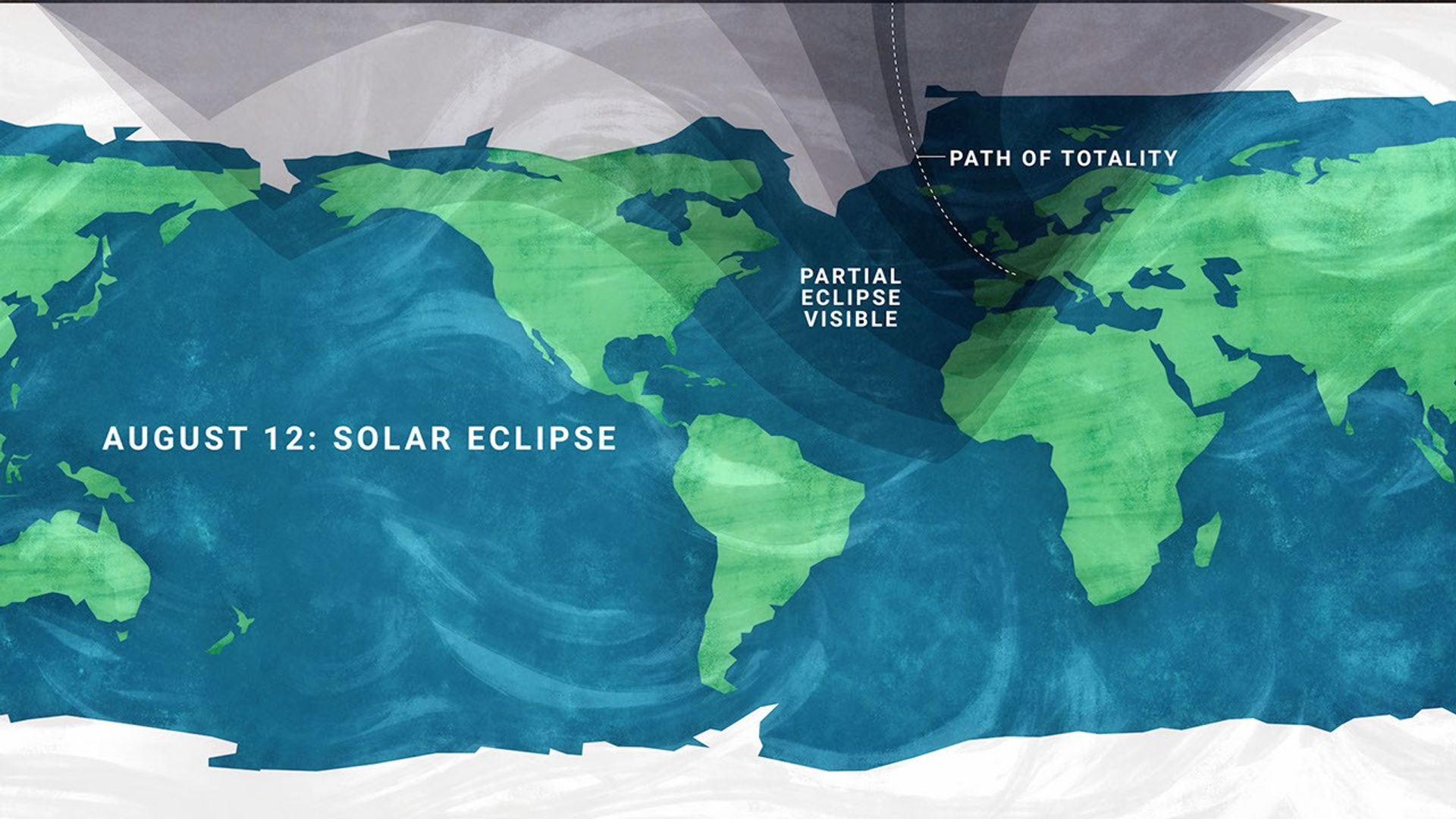
On Aug. 12, a total solar eclipse crosses northern Russia, Greenland, Iceland, and northern Spain, with a small corner of Portugal inside the path of totality.
In parts of the United States, from Alaska to North Carolina, the eclipse is partial. The Moon will take only a small bite out of the Sun, and the amount of coverage will vary with location.
A map showing viewing areas of the August 2026 total solar eclipse.
NASA/JPL-Caltech
Remember to watch safely. Use certified eclipse glasses or a safe solar viewer any time any part of the Sun is visible. Regular sunglasses are not safe. And never use binoculars, a telescope, or a camera without a solar filter made for the front of the optics.
Later that same night, the Perseid meteor shower will light up the sky, peaking the evening of Aug. 12 into the early morning hours of the 13th. And with a New Moon arriving on the 12th, the skies will be ideally dark.
The Perseids happen every year when Earth passes through a debris stream left behind by Comet Swift-Tuttle. As those tiny bits of comet dust hit our atmosphere at high speed, they burn up as bright streaks of light.
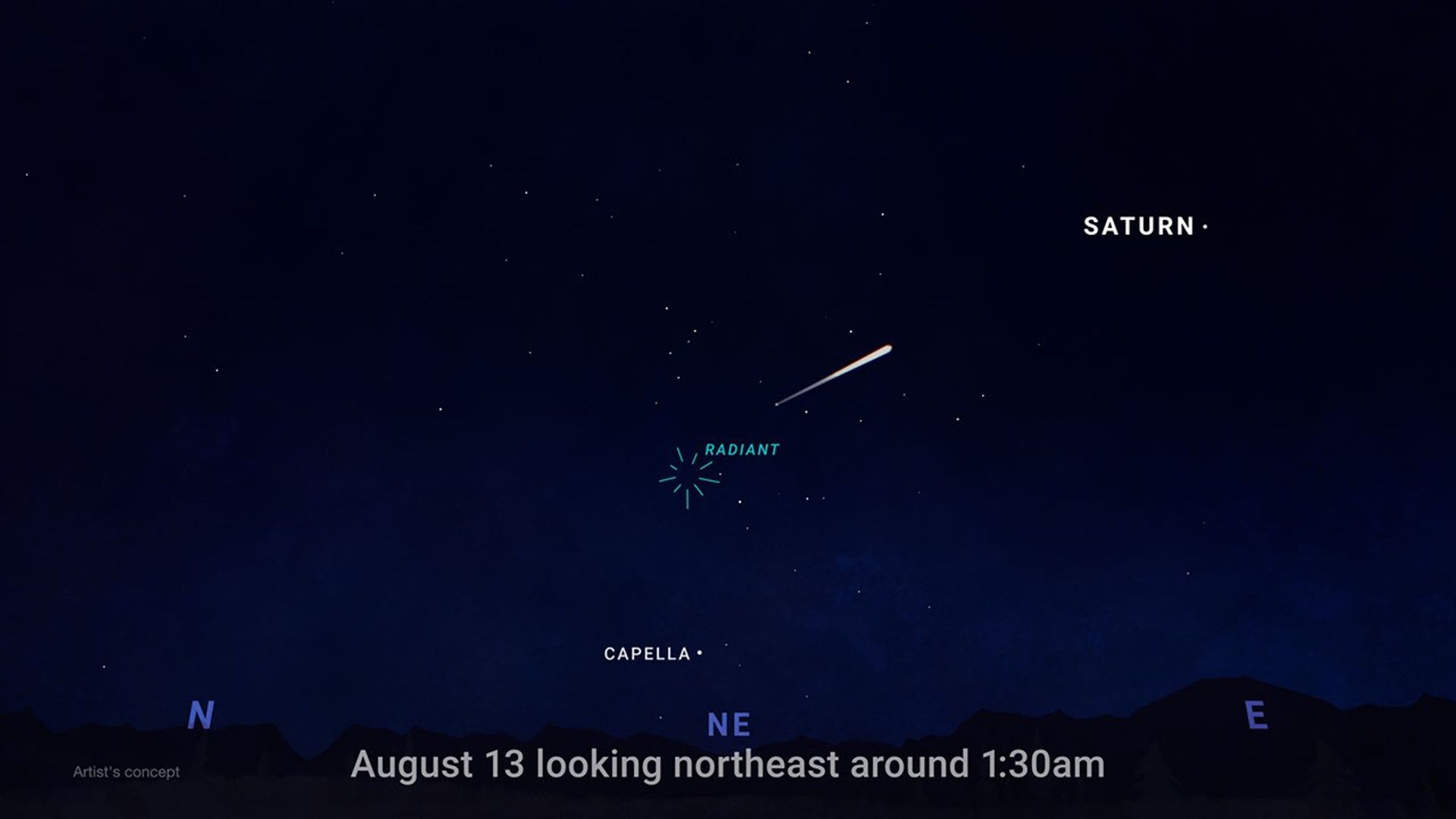
To view this meteor shower, look toward the northeast once it’s fully dark and watch for the constellation Perseus to clear the horizon. This is where the meteors originate, but let your eyes wander, because they can flash across any part of the sky.
For the best view, stay out late as the stars climb higher, find a dark open spot, and give your eyes 30 minutes to adjust.
This illustration shows where in the night sky to look for the Perseid meteor shower.
NASA/JPL-Caltech
Aug. 14-16, Venus reaches its greatest eastern elongation, which is its widest apparent separation from the Sun during this evening appearance.
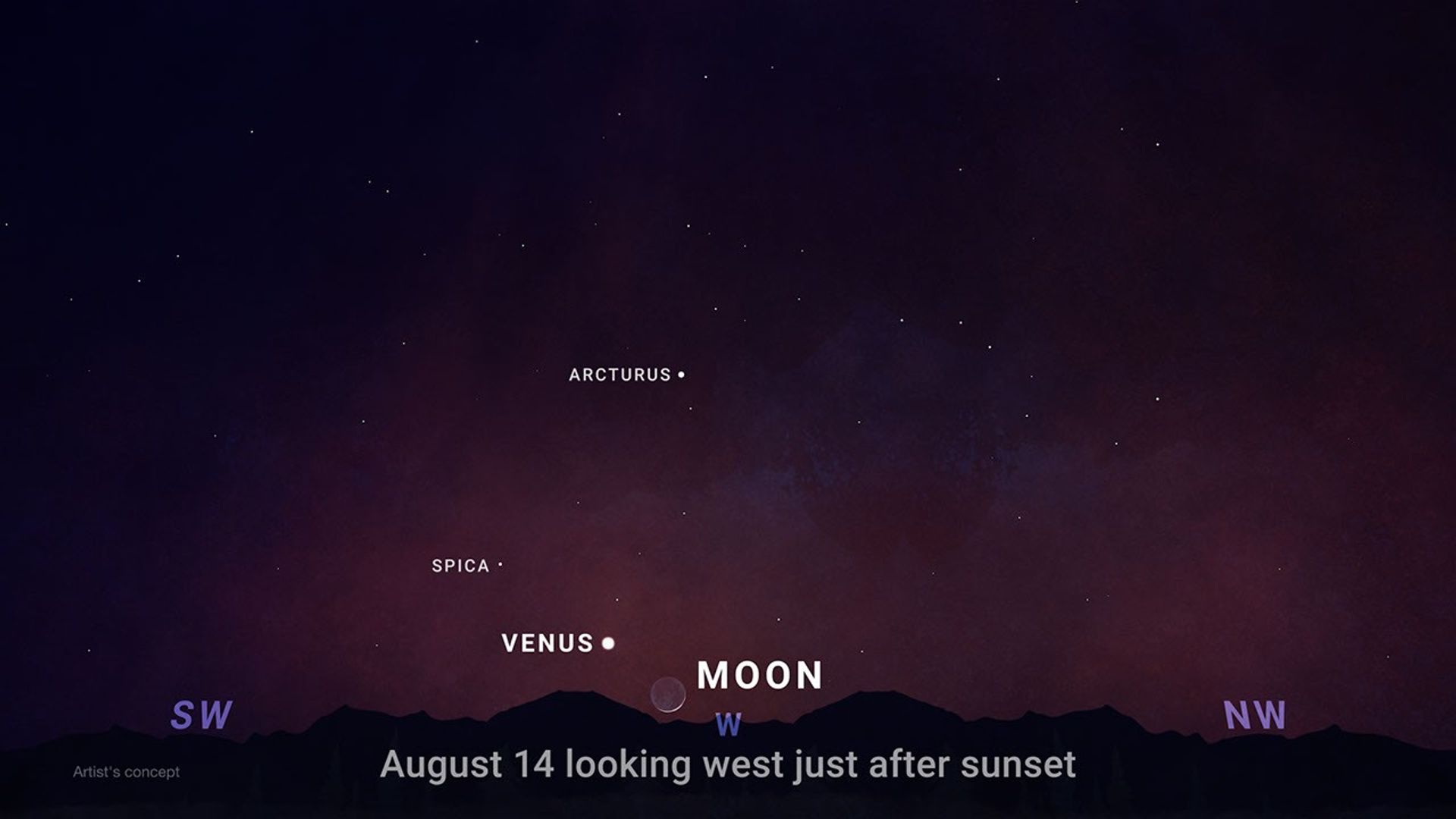
Look low in the western sky shortly after sunset for the bright object that will outshine every star around it. Through a telescope after sunset, Venus will look close to half lit, like a tiny lunar phase.
This illustration shows where to observe Venus after sunset in August.
NASA/JPL-Caltech
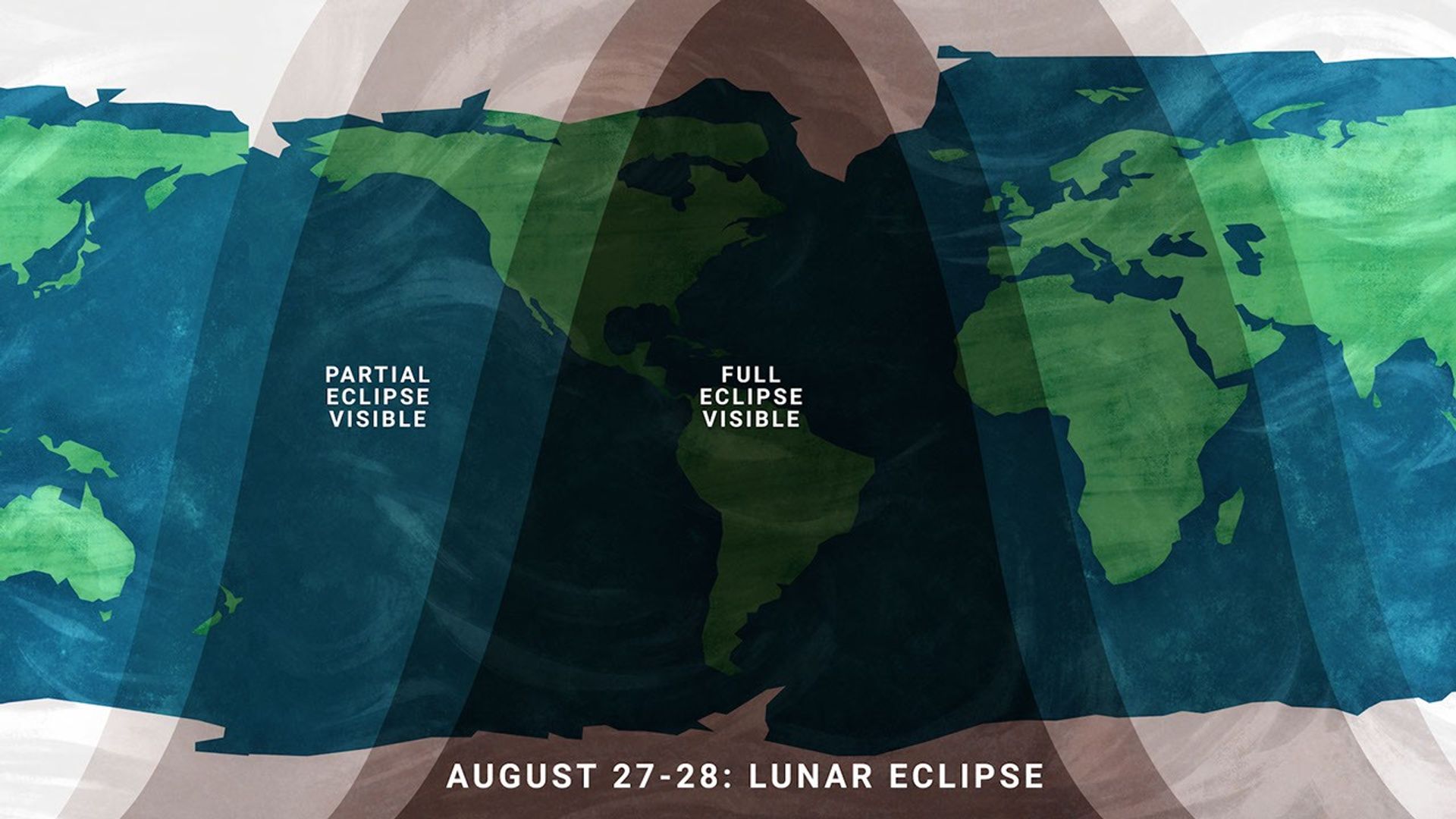
On the night of Aug. 27, continuing into Aug. 28 for some time zones, the Full Moon slips through Earth’s shadow, resulting in a partial lunar eclipse. It will be visible from much of North and South America and parts of Europe and Africa.
Viewing areas for the August 2026 lunar eclipse.
NASA/JPL-Caltech
At maximum eclipse, about 93% of the Moon’s diameter will be inside Earth’s dark central shadow, called the umbra. The Moon will not be completely covered, but it can look dramatically darkened, with a rusty, coppery tint along the covered edge.
Unlike a solar eclipse, a lunar eclipse is safe to watch with just your eyes. Binoculars or a small telescope can give you a closer view of Earth’s curved shadow moving across the Moon.
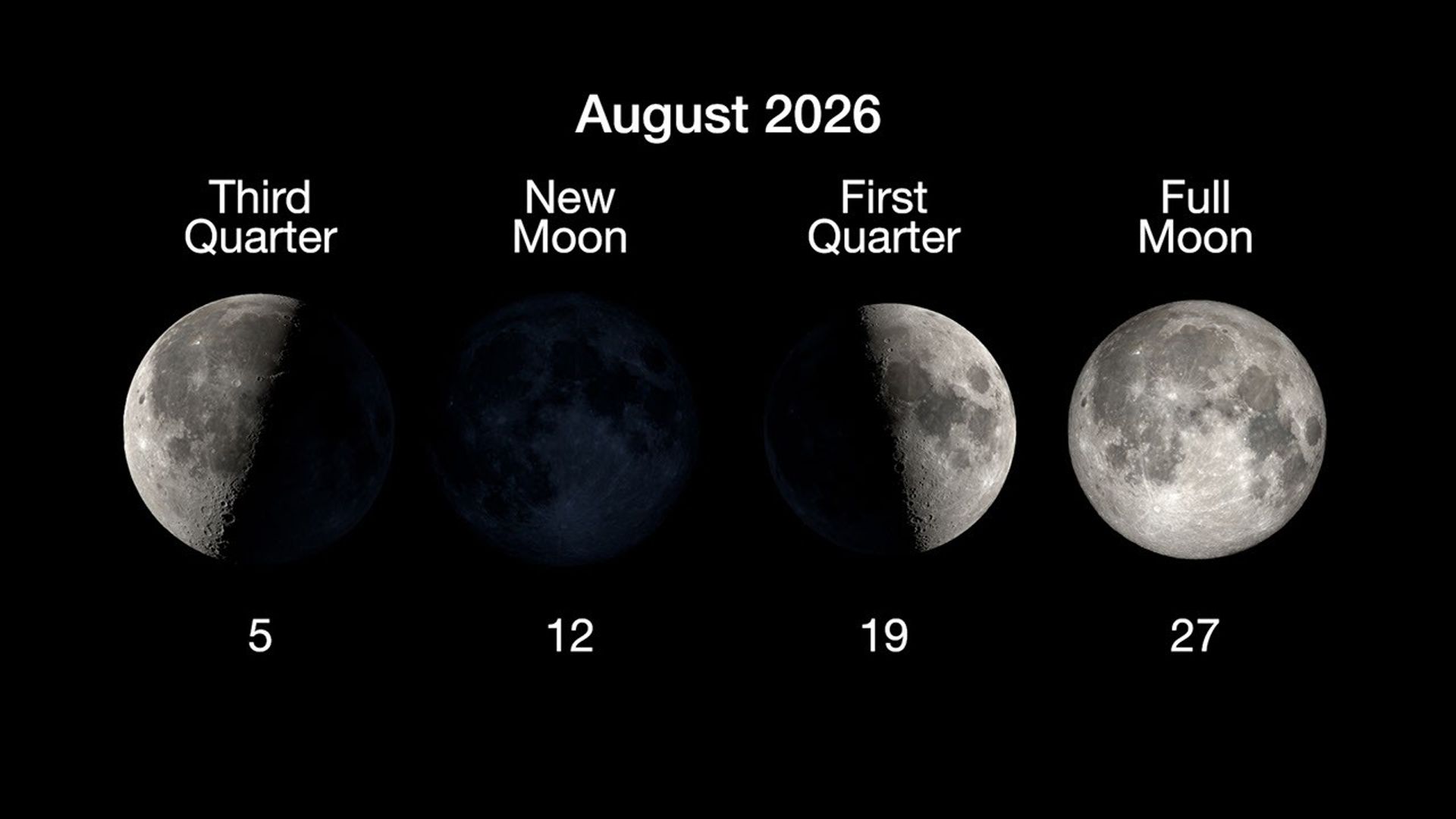
Here are the phases of the Moon for August.
NASA/JPL-Caltech
You can stay up to date on all of NASA’s missions exploring the solar system and beyond at science.nasa.gov. I’m Raquel Villanueva from NASA’s Jet Propulsion Laboratory, and that’s What’s Up for this month.
A solar eclipse, one of the year's best meteor showers, Venus at its brightest in the evening sky, and a partial lunar eclipse to close out the month.On Augu...
A solar eclipse, the Perseids, bright Venus after sunset, and a deep partial lunar eclipse highlight August’s skywatching.
Skywatching Highlights
Aug. 5: Last Quarter Moon
Aug. 12: Total solar eclipse across northern Russia, Greenland, Iceland, northern Spain, and part of Portugal; partial eclipse in parts of the U.S.; New Moon
Aug. 12-13: Perseid meteor shower peak under dark skies
Aug. 14-16: Venus reaches greatest eastern elongation and shines low in the west after sunset
Aug. 27-28: Partial lunar eclipse visible from much of North and South America and parts of Europe and Africa
Transcript
A solar eclipse, one of the year’s best meteor showers, Venus at its brightest in the evening sky, and a lunar eclipse to close out the month.
That’s “What’s Up” for August.
On Aug. 12, a total solar eclipse crosses northern Russia, Greenland, Iceland, and northern Spain, with a small corner of Portugal inside the path of totality.
In parts of the United States, from Alaska to North Carolina, the eclipse is partial. The Moon will take only a small bite out of the Sun, and the amount of coverage will vary with location.
A map showing viewing areas of the August 2026 total solar eclipse.
NASA/JPL-Caltech
Remember to watch safely. Use certified eclipse glasses or a safe solar viewer any time any part of the Sun is visible. Regular sunglasses are not safe. And never use binoculars, a telescope, or a camera without a solar filter made for the front of the optics.
Later that same night, the Perseid meteor shower will light up the sky, peaking the evening of Aug. 12 into the early morning hours of the 13th. And with a New Moon arriving on the 12th, the skies will be ideally dark.
The Perseids happen every year when Earth passes through a debris stream left behind by Comet Swift-Tuttle. As those tiny bits of comet dust hit our atmosphere at high speed, they burn up as bright streaks of light.
To view this meteor shower, look toward the northeast once it’s fully dark and watch for the constellation Perseus to clear the horizon. This is where the meteors originate, but let your eyes wander, because they can flash across any part of the sky.
For the best view, stay out late as the stars climb higher, find a dark open spot, and give your eyes 30 minutes to adjust.
This illustration shows where in the night sky to look for the Perseid meteor shower.
NASA/JPL-Caltech
Aug. 14-16, Venus reaches its greatest eastern elongation, which is its widest apparent separation from the Sun during this evening appearance.
Look low in the western sky shortly after sunset for the bright object that will outshine every star around it. Through a telescope after sunset, Venus will look close to half lit, like a tiny lunar phase.
This illustration shows where to observe Venus after sunset in August.
NASA/JPL-Caltech
On the night of Aug. 27, continuing into Aug. 28 for some time zones, the Full Moon slips through Earth’s shadow, resulting in a partial lunar eclipse. It will be visible from much of North and South America and parts of Europe and Africa.
Viewing areas for the August 2026 lunar eclipse.
NASA/JPL-Caltech
At maximum eclipse, about 93% of the Moon’s diameter will be inside Earth’s dark central shadow, called the umbra. The Moon will not be completely covered, but it can look dramatically darkened, with a rusty, coppery tint along the covered edge.
Unlike a solar eclipse, a lunar eclipse is safe to watch with just your eyes. Binoculars or a small telescope can give you a closer view of Earth’s curved shadow moving across the Moon.
Here are the phases of the Moon for August.
NASA/JPL-Caltech
You can stay up to date on all of NASA’s missions exploring the solar system and beyond at science.nasa.gov. I’m Raquel Villanueva from NASA’s Jet Propulsion Laboratory, and that’s What’s Up for this month.
NASA Science Soars During August Total Solar Eclipse
Each time the Moon covers the Sun during a total solar eclipse — darkening daytime skies and briefly revealing the Sun’s ethereal outer atmosphere, the corona — it presents new opportunities to better understand our star and its influence on Earth.
On Wednesday, Aug. 12, as the next total solar eclipse sweeps over Greenland, Iceland, and Spain, NASA-funded science teams will be chasing the Moon’s shadow with a high-altitude jet and scientific balloons to investigate the Sun’s dynamics and how the temporary darkening of our skies affects our atmosphere.
“From our unique perspective on Earth during a total solar eclipse, scientists can study the Sun’s corona in a way we can’t from anywhere else in the solar system,” said Kelly Korreck, eclipse program manager at NASA Headquarters in Washington. “The Sun impacts our daily life, satellites, and astronauts in space, and we can take advantage of this moment to advance our understanding of that influence.”
High-flying jet to record solar dynamics
Soaring in the nose cone of NASA’s WB-57 high-altitude research aircraft is a suite of four cameras to take high-resolution images of the corona in several different wavelengths of visible and infrared light. Part of an instrument developed by the NASA Scientifically Calibrated In-Flight Imagery (SCIFLI) team at NASA’s Langley Research Center in Hampton, Virginia, the cameras will capture at least 20 images per second, recording structures, outflows, and rapid changes in the corona during the total solar eclipse.
With these images, scientists hope to learn more about the formation of prominences (solar material that gets suspended above the Sun’s surface), better understand the corona and how it gets heated to nearly a million degrees, and investigate how material in the corona and the solar wind are related, which flows out from the Sun across the solar system.
These images of the corona and solar prominences were taken in different wavelengths of visible and infrared light by imagers aboard a NASA’s WB-57 jet during the April 8, 2024, total solar eclipse. The same cameras will fly on a NASA WB-57 jet again during the Aug. 12 eclipse.
NASA / SwRI / William Ashfield
By chasing the Moon’s shadow, the jet will extend how long the cameras can observe the corona. On the ground, the longest anyone will be able to see the corona is two minutes and 18 seconds. But flying along the eclipse path at 460 miles per hour, the jet’s view of the corona will last nearly three minutes.
NASA’s WB-57 will fly at 50,000 feet, above any clouds that might obscure the view of the corona from the ground. The altitude also allows the cameras to observe some infrared wavelengths that get absorbed by the lower atmosphere before reaching the ground, and the corona only has been observed in those wavelengths a few times before.
One of NASA’s WB-57 high-altitude jets will carry a suite of cameras up to 50,000 feet to capture images of the solar corona during the Aug. 12 total solar eclipse.
NASA
The instrument, called SCIFLI Multispectral Airborne Imager, or SAMI, also flew on a WB-57 during the total solar eclipse on April 8, 2024, providing valuable imagery and information about the corona. However, the study’s principal investigator, Amir Caspi of the Southwest Research Institute in Boulder, Colorado, says each total solar eclipse provides new opportunities to learn more about the corona.
“The Sun is always changing,” Caspi said. “Every eclipse is different. So we could see things we didn’t see before. And we learn from each eclipse how to better observe the next one.”
Caspi’s team also is making some enhancements for the 2026 campaign based on lessons learned in 2024. For example, the team will adjust exposure times to better capture bright features that were overexposed in 2024 imagery. They will also leverage software developed since 2024 to process and analyze the data sooner than before.
The experiment is funded by NASA’s Heliophysics Low Cost Access to Space Program.
As a total solar eclipse crosses Russia, Greenland, Iceland, Spain, and Portugal on Aug. 12, 2026, some of the best views will come from 50,000 feet up, aboard NASA’s WB-57 jet. Credit: NASA’s Goddard Space Flight Center
Balloons to watch atmospheric changes
When a total solar eclipse suddenly turns daytime skies dark, our atmosphere changes in ways we don’t yet fully understand.
The NASA-supported Nationwide Eclipse Ballooning Project, led by Angela Des Jardins at Montana State University, is sending students from several U.S. universities to Iceland and Spain to launch scientific balloons before, during, and after the eclipse to better understand those changes.
A student team from the University of Kentucky prepares to launch a ballon from Bloomington, Indiana, to take atmospheric measurements on April 8, 2024, during the 2024 Nationwide Eclipse Ballooning Project campaign.
Sean Bailey (University of Kentucky)
In Iceland, two teams will launch a total of 80 balloons starting 18 hours before the eclipse until eight hours afterward to study how the eclipse affects Earth’s “boundary layer,” the part of the atmosphere that touches the ground. The thickness of the boundary layer changes depending on factors such as surface temperature and moisture in the air.
Previous balloon flights during solar eclipses in October 2023 and April 2024 showed that the boundary layer collapsed, or decreased in thickness, in locations with clear skies but not where there were cloudy skies. Scientists wonder whether that will be different in Iceland in 2026. Changes in the boundary layer are driven by the day-night cycle. However, in Iceland in August, the days are long and nights are short, so the nighttime influences might not be as strong as in 2023 or 2024.
“Will this eclipse be able to collapse the boundary layer?” said Matthew Bernards, a chemical engineering professor at the University of Idaho, who leads one of the Iceland teams.
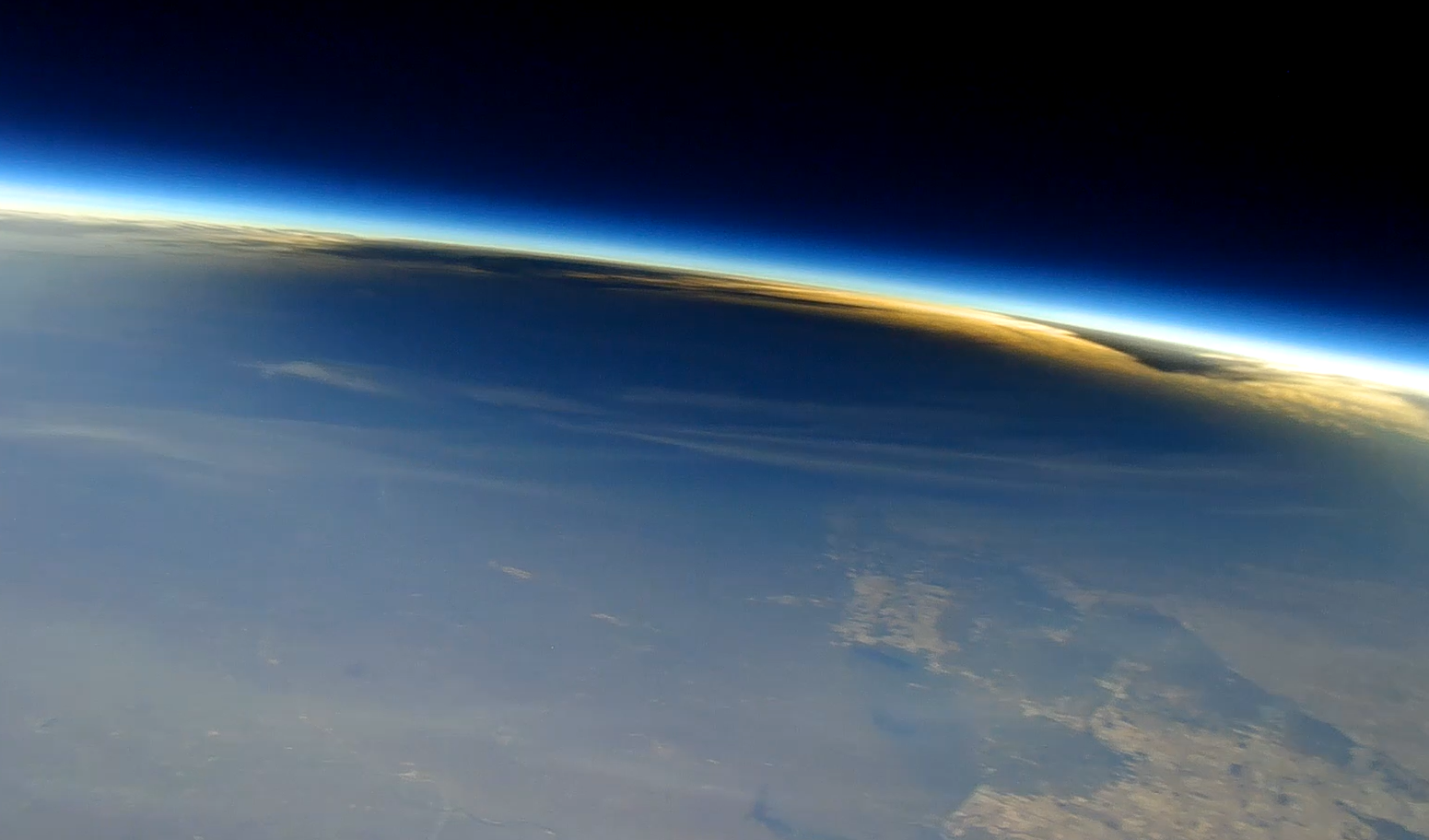
This image shows the Moon’s shadow on Earth during the total solar eclipse on April 8, 2024, as seen from about 90,000 feet from a camera carried by a scientific balloon. Cameras carried by balloons launched from Spain will capture similar images during the Aug. 12 total solar eclipse.
In Spain, three balloon teams will launch a total of six balloons with 360-degree cameras to image the eclipse shadow from above. These balloons also will include instruments designed to measure levels of ozone in the atmosphere, which requires sunlight to form. Similar balloon experiments showed that ozone decreased during totality in April 2024. Scientists wonder whether there will be differences with this eclipse, particularly since it happens at a later time of day and during a different season.
The NASA-funded Nationwide Eclipse Ballooning Project will allow teams of students from across the U.S. to get a unique view of the August total solar eclipse with scientific balloons. Credit: NASA’s Goddard Space Flight Center
Follow along
While the total solar eclipse won’t be visible in the U.S., some parts of the country will be able to see a partial solar eclipse. Learn more about where to see the eclipse and how to view it safely.
by Vanessa Thomas NASA’s Goddard Space Flight Center, Greenbelt, Md.
On Aug. 12, I get to fulfil a lifelong ambition. I'll take a flight to Madrid and travel northwest to the city of Valladolid by rail, before striking out for Valoria la Buena — a charming town in central Spain with a population of less than 1,000.
There, I'll bear witness to one of the most spectacular naked eye shows that the solar system has to offer: a total solar eclipse. My first total solar eclipse.
Don't get me wrong. I've been obsessed with eclipses my entire life. I just haven't found myself in the right place at the right time to experience totality until now. 10-year-old me came pretty close during a deep partial eclipse in 1999, when I caught a fleeting glimpse of the moon's silhouette taking a bite out of the sun in the cloud-ridden skies over the United Kingdom.
Smash cut 20-something years later and I'm inexplicably the Skywatching Writer for Space.com, where one of the major perks of the job is being sent to report on eclipses. Things aligned quite nicely.
The DEB is a network of enthusiastic solar observers led by professional astronomers who use standardized telescopes and software to share inspiring eclipse imagery to the public, while also capturing valuable scientific data on the sun's disk and golden atmosphere.
It was Greenwald who scouted Valoria la Buena as a prime location to observe the eclipse. He's since been hard at work liaising with DEB initiative leadership to test software updates and troubleshoot other issues, while also travelling toMexico to help train student members of the team ahead of their expedition to Spain. Two more eclipse enthusiasts are due to join the group once it arrives in Madrid, making it a wonderfully international affair.
Less than a month out, things are pretty settled, and a kind of nervous anticipation has taken hold. Flights and trains are booked, and I have a pair of Celestron EclipSmart 10x42 binoculars and the EclipSmart 3-Piece Solar Eclipse Observing and Imaging Kit, courtesy of Celestron. Also hats and an ungodly amount of suntan lotion. I'm bald after all, so the sun is my greatest natural predator.
Of course, preparations can only get you so far. Once we get to Valoria la Buena on Aug. 10 there'll still be important work to do. The first order of business for Charles and his DEB team will be to stake out a location with a clear line of sight to the west for their equipment. Totality will occur with the sun less than 10 degrees above the horizon — roughly the width of your clenched fist held at arm's length — so line of sight will be everything.
We'll also be at the mercy of the weather. Clouds could easily arrive to hide the cosmic show from view — especially with the eclipse so low on the horizon. The DEB team also has to find a spot with good connectivity, which will allow them to broadcast near-live images of our parent star for the public to enjoy and scientists to pore over.
The sun's atmosphere shines out from behind the moon during a total lunar eclipse. (Image credit: Photo by Keegan Barber/NASA via Getty Images)
All being well, myself, the DEB team and over 15 million others in the path of totality will bear witness to a heartstopping display of orbital mechanics that crescendos with the fleeting artificial night of totality, as the moon blocks the last sliver of the sun from view. Space.com's Skywatching Editor Daisy Dobrijevic will also be on hand to report on the total solar eclipse as it unfolds in the skies over Greenland.
Editor's Note: Want to share your eclipse photography with Space.com's readers? Then please send your photos and comments, along with your name and location to spacephotos@space.com.
On Aug. 12, 2026, skywatchers across the U.K. will experience a rare astronomical double-header: a deep partial solar eclipse before sunset followed, hours later, by the peak of the annual Perseid meteor shower. Although the path of totality will sweep from Greenland and Iceland to Spain, it will miss Britain entirely. However, the solar eclipse will still be dramatic, with up to 96% of the sun obscured for viewers in the far southwest.
This will be the U.K.'s deepest partial solar eclipse since 2015, and timing will be everything. The eclipse reaches its peak around 7:00-7:16 p.m. BST, with the sun hanging low above the west-northwest horizon as a narrowing crescent shortly before sunset. Because the sun will be relatively low, choosing the right location will matter far more than traveling huge distances. Coastal viewpoints, hilltops and open landscapes with unobstructed western horizons will offer guaranteed views — if the sky is clear.
The locations below prioritize another crucial factor: dark skies. While the eclipse will be visible almost everywhere in the U.K. and most will be happy to see it from close to where they live, the real reward comes after darkness falls, when the Perseids begin flashing across the sky. Find somewhere remote, stay overnight — ideally camp — and this could become one of the most memorable observing sessions of the year.
During a partial solar eclipse, it is NEVER safe to look directly at the sun without solar eclipse glasses designed for solar viewing. Read our guide on how to observe the sun safely.
1. Hugh Town
The Isles of Scilly will see the largest eclipse in the U.K. (Image credit: Westend61 via Getty Images)
Location: St. Mary's Island, Isles of Scilly, U.K.
Max eclipse: 96.4% at 7:16 p.m. BST
Sun position: 13° above west-northwest horizon
Eclipse window: 6:19-8:10 p.m. BST
Sunset: 8:49 p.m. BST
Light pollution: 3.2 Bortle/SQM 21.86
Cloud risk: 74%
The Isles of Scilly combine Britain's deepest partial eclipse with some of southern England's darkest skies. From Hugh Town and nearby west-facing beaches on St Mary's, the eclipsed sun will hang low above the Atlantic Ocean late in the day. Later that night, with minimal light pollution and broad sea horizons, the islands are an exceptional place to watch the Perseid meteor shower beneath pristine late-summer skies.
2. Land's End
Land's End will see one of the biggest eclipses on the U.K. mainland. (Image credit: PKM1 via Getty Images)
Location: Sennen, Penzance, England
Max eclipse: 95.9% at 7:16 p.m. BST
Sun position: 13° above west-northwest horizon
Eclipse window: 6:19-8:10 p.m. BST
Sunset: 8:47 p.m. BST
Light pollution: 3.1 Bortle/SQM 21.85
Cloud risk: 71%
Land's End is one of the best places on mainland Britain to watch the eclipse because of its vast Atlantic horizon and minimal obstruction toward the west-northwest. The sun will appear heavily eclipsed as it descends toward the ocean before sunset. After dark, the remote far-western location and low levels of artificial light make this region an outstanding destination for viewing the Perseid meteor shower.
3. Boscastle
Boscastle's River Valency valley will frame the eclipsed sun. (Image credit: Graham Custance Photography via Getty Images)
Location: Cornwall, England
Max eclipse: 94.7% at 7:15 p.m. BST
Sun position: 13° above west-northwest horizon
Eclipse window: 6:18-8:09 p.m. BST
Sunset: 8:45 p.m. BST
Light pollution: 4.0 Bortle/SQM 21.71
Cloud risk: 76%
Boscastle's narrow harbor and dramatic valley may create a natural frame for the eclipsed sun as it sinks toward the Atlantic. The village's northwest-facing coastline offers clear views toward the low evening eclipse, while the surrounding Cornish countryside remains relatively dark after sunset. Once twilight fades, the cliffs and headlands nearby become excellent places to watch for bright Perseid meteors.
4. Exmoor Dark Sky Reserve
Exmoor Dark Sky Reserve is a great choice for an eclipse and the Perseids. (Image credit: Devon and Cornwall Photography via Getty Images)
Location: Exmoor National Park, Somerset and north Devon, England
Max eclipse: 93.7% at 7:14 p.m. BST
Sun position: 12° above west-northwest horizon
Eclipse window: 6:17-8:08 p.m. BST
Sunset: 8:42 p.m. BST
Light pollution: 3.9 Bortle/SQM 21.67
Cloud risk: 69%
Exmoor combines elevated moorland, dramatic coastline and protected dark skies, making it ideal for both the eclipse and the Perseids. Coastal viewpoints such as Valley of Rocks and Heddon's Mouth offer clear west-facing horizons for the low-eclipsed sun before sunset. Later that night, Exmoor's status as a Dark Sky Reserve makes it perfect for seeing bright Perseid meteors — and the Milky Way.
5. Rhossili Bay
Rhossili Bay in the Gower has a west-facing beach and dark skies at night. (Image credit: Chris Griffiths via Getty Images)
Location: Gower Peninsula, Swansea, Wales
Max eclipse: 93.8% at 7:13 p.m. BST
Sun position: 13° above west-northwest horizon
Eclipse window: 6:16-8:07 p.m. BST
Sunset: 8:46 p.m. BST
Light pollution: 4.0 Bortle/SQM 21.63
Cloud risk: 73%
Rhossili Bay's enormous west-facing beach and elevated clifftops make it ideal for watching a low eclipse unfold above the sea. Located on the Gower Peninsula, the area is a Dark Sky Community that retains relatively dark skies despite its popularity during the day. As darkness falls later that evening, the open coastal landscape provides excellent visibility for Perseid meteors.
6. Strumble Head
Strumble Head in west Wales has a clear western horizon and dark skies. (Image credit: Andrea Ricordi, Italy via Getty Images)
Location: Pencaer, Pembrokeshire, west Wales
Max eclipse: 94.0% at 7:13 p.m. BST
Sun position: 14° above west-northwest horizon
Eclipse window: 6:15-8:07 p.m. BST
Sunset: 8:51 p.m. BST
Light pollution: 3.3 Bortle/SQM 21.84
Cloud risk: 70%
Strumble Head offers one of the clearest west-facing horizons in Wales, with the eclipsed sun appearing above the Irish Sea beside its iconic lighthouse. The remote Pembrokeshire coastline experiences very little artificial light, helping preserve dark skies after sunset. Once the eclipse ends, this rugged headland becomes an excellent place to watch the Perseids, with broad ocean views and little interference from nearby towns.
7. Llŷn Peninsula
The remote Lleyn Peninsula is close to a Dark Sky Sanctuary. (Image credit: WLDavies via Getty Images)
Location: Llŷn Peninsula, Gwynedd, north Wales
Max eclipse: 93.3% at 7:11 p.m. BST
Sun position: 14° above west-northwest horizon
Eclipse window: 6:14-8:05 p.m. BST
Sunset: 8:52 p.m. BST
Light pollution: 2.9 Bortle/SQM 21.91
Cloud risk: 70%
The remote Llŷn Peninsula projects deep into the Irish Sea, offering expansive views toward the west-northwest horizon, where the eclipsed sun will appear before sunset. It is also one of the darkest regions in Wales, lying close to the protected skies of Ynys Enlli (Bardsey Island) Dark Sky Sanctuary. With minimal light pollution and wide rural vistas, the peninsula becomes a superb location for watching Perseid meteors later that same night.
8. Galloway Forest Dark Sky Park
The shore of Clatteringshaws Loch in Galloway Forest Park. (Image credit: Flavio Vallenari via Getty Images)
Location: Galloway Forest Park, Dumfries and Galloway, Scotland
Max eclipse: 91.8% at 7:07 p.m. BST
Sun position: 14° above west-northwest horizon
Eclipse window: 6:10—8:01 p.m. BST
Sunset: 8:47 p.m. BST
Cloud risk: 85%
Galloway Forest Park was Britain's first Dark Sky Park and remains one of the country's premier stargazing destinations. Open western views around Clatteringshaws Loch, along with other viewpoints away from the forests, make it well-suited to the low evening eclipse. After twilight fades, exceptionally dark skies reveal the Milky Way in striking detail, creating near-perfect conditions for viewing the Perseid meteor shower in the early hours — if the sky is clear.
9. Northumberland Dark Sky Park
Sunset at Kielder Water in Northumberland. (Image credit: Paul Hayes via Getty Images)
Location: Northumberland National Park and Kielder Water & Forest Park, Northumberland, England
Max eclipse: 90.4% at 7:07 p.m. BST
Sun position: 13° above west-northwest horizon
Eclipse window: 6:10-8:00 p.m. BST
Sunset: 8:49 p.m. BST
Light pollution: 3.3 Bortle/SQM 21.82
Cloud risk: 90%
Northumberland's Dark Sky Park combines remote landscapes with some of England's darkest skies. Locations around Kielder Water and Northumberland National Park provide broad views toward the low west-northwest eclipse shortly before sunset. Later that night, the region becomes one of the finest places in Europe to watch the Perseids, with frequent views of the Milky Way and bright meteors overhead. Check for any events at Kielder Observatory.
10. Giant's Causeway
Giant's Causeway will have a great view of the eclipse. (Image credit: Francesco Vaninetti Photo via Getty Images)
Location: Bushmills, Northern Ireland
Max eclipse: 93.1% at 7:07 p.m. BST
Sun position: 16° above the west horizon
Eclipse window: 6:09-8:02 p.m. BST
Sunset: 9:31 p.m. BST
Light pollution: 4.2 Bortle/SQM 21.52
Cloud risk: 81%
The Giant's Causeway in Northern Ireland offers a spectacular foreground for the eclipse, with the sun appearing low above the Atlantic beyond the famous basalt columns. Although the skies here are not as dark as in some rural parks, the north Antrim coastline still experiences relatively modest light pollution. Nearby coastal viewpoints and beaches provide good conditions for watching Perseid meteors later that night beneath expansive northern skies.
One month from today, millions will turn their eyes to the skies for one of the most anticipated skywatching events of the year: the total solar eclipse on Aug. 12, 2026.
The eclipse will sweep across parts of Greenland, Iceland and Spain, briefly turning day into night for those lucky enough to be within the narrow path of totality.
It's been a long time coming for European skywatchers, as the event marks Europe's first total solar eclipse since 1999.
Where can I see the total solar eclipse?
If you're hoping to experience totality, now is the time to finalize your plans. Thepath of totality crosses Greenland, Iceland and northern Spain, with maximum eclipse lasting up to 2 minutes and 18 seconds.
Path of totality over Iceland.Created using MapHub.net. Source: Esri, Maxar, GeoEye, Earthstar Geographics, CNES/Airbus DS, USDA, USGS, AeroGRID, IGN, and the GIS User CommunityPath of totality over Spain.Created using MapHub.net. Source: Esri, Maxar, GeoEye, Earthstar Geographics, CNES/Airbus DS, USDA, USGS, AeroGRID, IGN, and the GIS User CommunityEntire path of totality. From Greenland through Iceland and Spain. Created using MapHub.net. Source: Esri, Maxar, GeoEye, Earthstar Geographics, CNES/Airbus DS, USDA, USGS, AeroGRID, IGN, and the GIS User Community
Spain is expected to be one of the most popular destinations thanks to its favorable weather prospects, though it's not without a catch! Viewers will need to secure a clear view of the western horizon because the eclipsed sun will sit very low in the sky during totality.
Notable locations and timings of totality
Location
Totality duration
What time?
Sun height
Scoresby Sund, Greenland
1 minute, 46 seconds
4:35 p.m. CGST
24 degrees above west
Reykjavik, Iceland
1 minute, 1 second
5:48 p.m. GMT
25 degrees above west
Snæfellsjökull National Park, Iceland
2 minutes, 10 seconds
5:45 p.m. GMT
25 degrees above west
Gijón, Spain
1 minute, 46 seconds
8:26 p.m. CEST
10 degrees above west-northwest
A Coruña, Spain
1 minute, 15 seconds
8:27 p.m. CEST
12 degrees above west-northwest
Palencia, Spain
1 minute, 42 seconds
8:29 p.m. CEST
9 degrees above west-northwest
Burgos, Spain
1 minute, 44 seconds
8:28 p.m. CEST
8 degrees above west-northwest
Segovia, Spain
54 seconds
8:31 p.m. CEST
8 degrees above west-northwest
Sigüenza, Spain
1 minute, 38 seconds
8:30 p.m. CEST
7 degrees above west-northwest
Mallorca, Balearic Islands, Spain
1 minute, 36 seconds
8:31 p.m. CEST
2.7 degrees above west-northwest
Will I see the eclipse from where I live?
Not inside the path of totality? Don't worry. A spectacular partial solar eclipse will be visible across much of Europe, with more than 90% of the sun covered from locations including London, Paris and Dublin.
Over the coming weeks, Space.com will bring you everything you need to prepare for eclipse day. We'll publish viewing guides, safety advice and information on how to watch the eclipse online.
Closer to the event, we'll launch a dedicated live blog covering the latest eclipse news and insights from our reporters in the field.
Skywatching Editor Daisy Dobrijevic will join an eclipse expedition to Greenland with HX, while Skywatching Writer Anthony Wood will travel to northern Spain with the DEB initiative and citizen scientists to report firsthand from the path of totality.

 Login