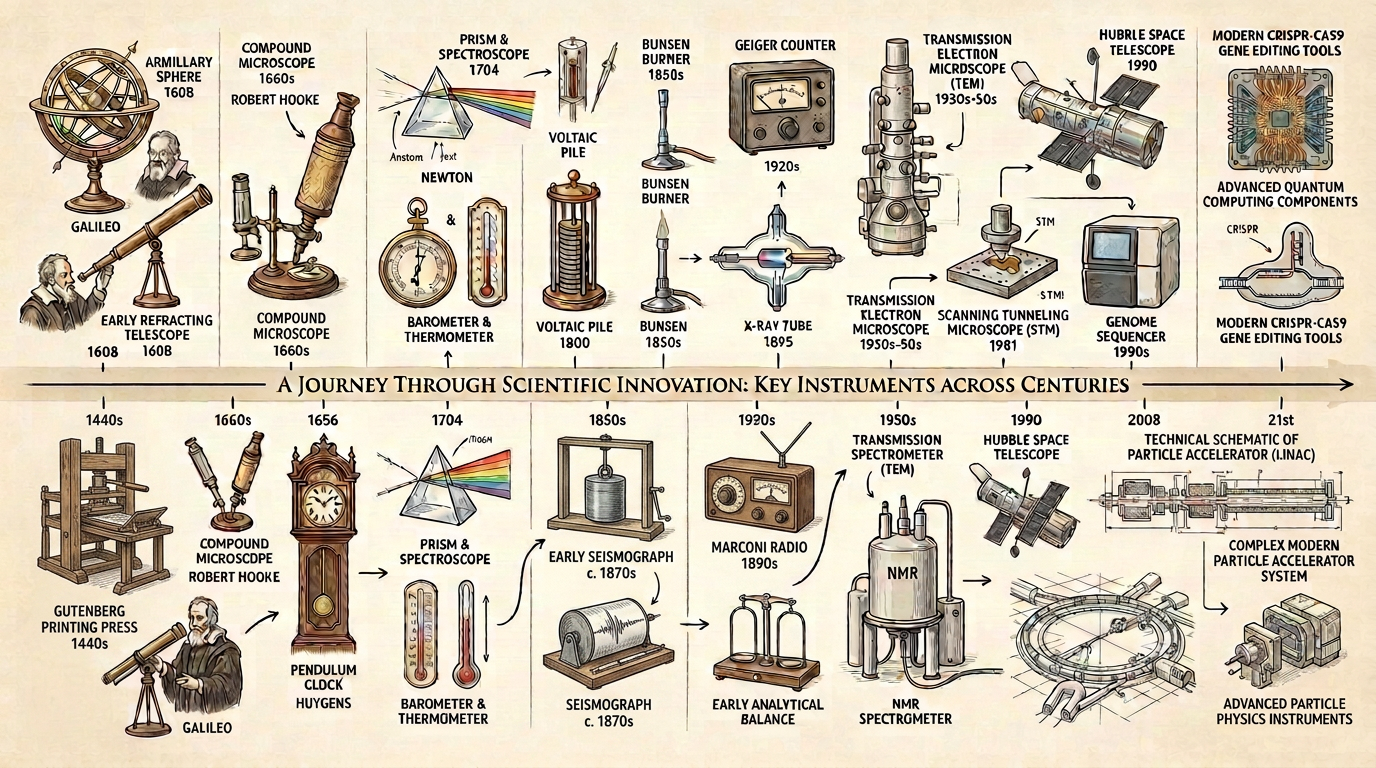
A timeline of key scientific discoveries from the 16th to the 21st century highlights the early role of the Christian worldview in the Scientific Revolution. Influential founding figures like Newton, Faraday, and Maxwell linked their faith to their scientific contributions. Yet a decline in Christian influence among later scientists is noted.
The Scientific Revolution was significantly influenced by Christian philosophers and scientists, particularly Francis Bacon, who emphasized empirical methods and a rational Creator. The integration of faith and reason laid the foundational principles of modern science. The laws of the physical universe never change and are discoverable using the scientific method.
La Tierra no solo completa una vuelta sobre sí misma cada día. Mientras rota, altera levemente el espacio-tiempo, un comportamiento anticipado por Albert Einstein que un satélite acaba de constatar con un rigor inédito.
Kevin Roose and Casey Newton explain why they try to include “a little chaos” when they record their New York Times tech podcast in front of a crowd in San Francisco.
Using NASA’s Chandra X-ray Observatory and ESA’s XMM-Newton satellite, astronomers identified a possible remnant of ancient stellar explosion just a few dozen light-years from Sagittarius A*, a supermassive black hole at the center of our Milky Way Galaxy.
I discuss the distinction between operational science, which relies on repeatable experiments, and historical science, particularly cosmology. While acknowledging the contributions of renowned scientists, I argue that cosmology lacks the capacity for experimental verification and is thus not true science, but science falsely so-called.

 Login