Il cherchait simplement un coin tranquille où camper au Québec lorsqu’une étrange forme circulaire apparue sur Google Maps a attiré son attention. Deux ans plus tard, une expédition menée dans des conditions particulièrement difficiles vient de révéler ce qui se cache réellement autour du lac...
Et si nos ancêtres avaient recherché les effets des drogues bien avant l’apparition de l’agriculture ? Une découverte archéologique sur une île d’Indonésie vient repousser de plusieurs millénaires les traces connues de cette pratique et soulève une étonnante question : pourquoi ces...
A transformação digital abriu um novo espaço para a inovação jovem, defende Miguel Faustino, que afirma que os jovens podem ser mais do que apenas uma promessa para o futuro e constituir uma parte primordial da resposta aos desafios do presente.
An AI summarizes the Young Earth Creationist (YEC) perspective in that dinosaurs were created on Day 6 of creation alongside Adam, and therefore were on Noah's Ark. The biblical interpretation of creatures like Behemoth and Leviathan and dragon is what we now call dinosaurs though the word "dinosaur" is not found in the Bible.
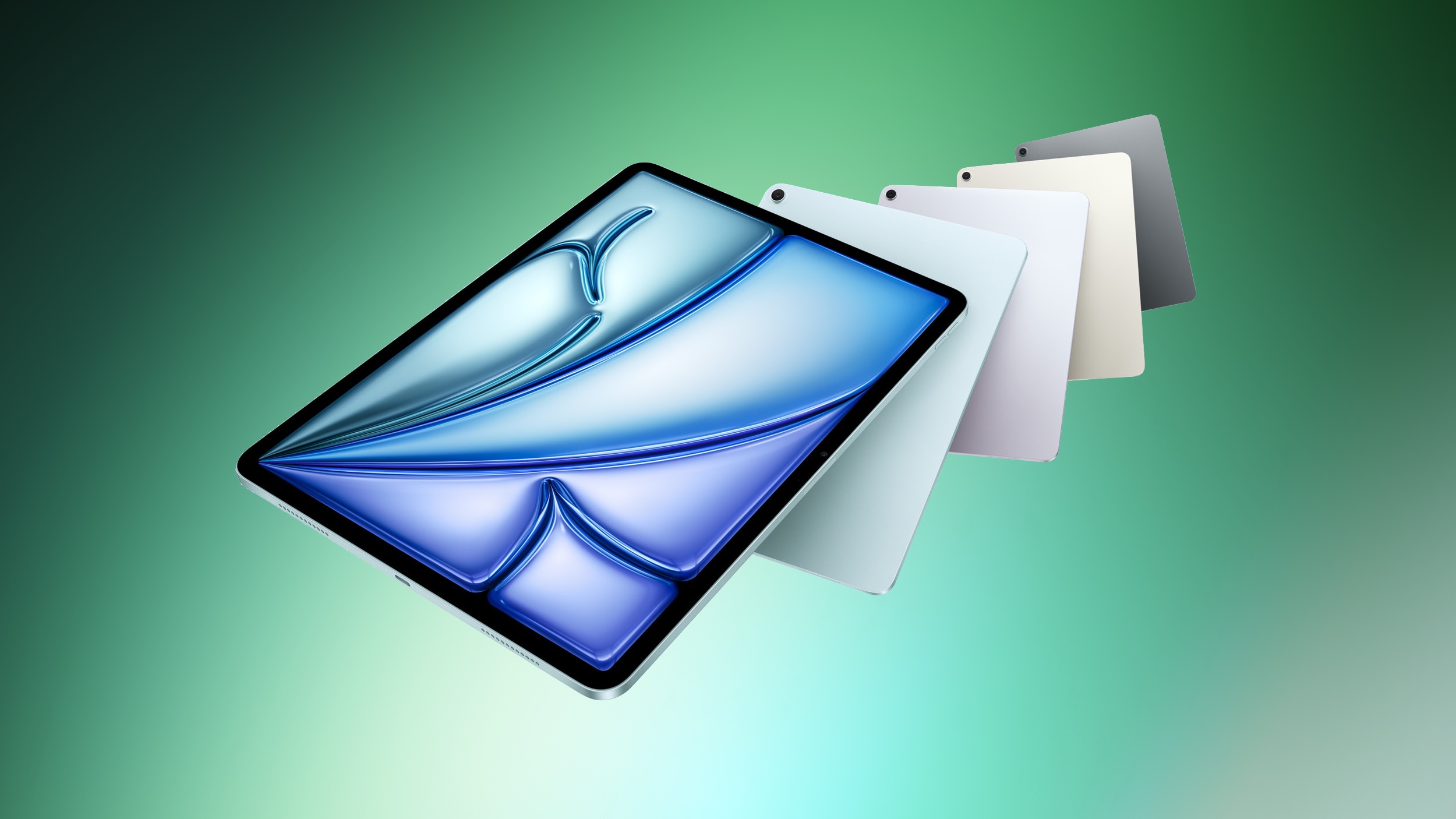
BOE wants a share of the OLED supply chain for Apple's next iPad Air, aiming to land a secondary sourcing role behind primary supplier Samsung Display, according to a report from South Korea's The Elec.
Sources cited by The Elec say the Chinese panel maker is building out its iPad Air OLED effort at its B12 fab in Chongqing, home to BOE's sixth-generation OLED production line, ahead of the launch of a redesigned iPad Air that isn't expected to launch until the first half of 2027. Samsung Display already holds the lead supply role for that panel and is on track to begin ramping production toward the end of this year or the start of next, as previously reported.
BOE still has to clear Apple's qualification process. Samples reportedly still need to be submitted for evaluation, and a verdict on whether the company wins any commercial orders is not expected until closer to the end of the year. Even a favorable outcome may only translate into modest volume at first, with output confined to iPad Air units destined for the Chinese market or to refurbished devices, rather than the entire global launch.
The sources put BOE's qualification decision at some point in November or December, noting Apple typically finalizes production approval just one to two months ahead of mass production actually starting. Should BOE fall short of that bar, Samsung Display will end up carrying the entire initial production run by itself.
Becoming a supplier for the OLED iPad Air would be a meaningful expansion for BOE, which has experience providing OLED panels for the iPhone, but has struggled to break into larger OLED products. Samsung Display and LG Display have held onto that ground in tablets specifically, and BOE has lost, rather than gained, footing elsewhere in Apple's OLED lineup recently; its utilization on Apple-dedicated lines reportedly slid from roughly 82% in 2024 to about 48% earlier this year as Apple is set to lean on Samsung instead for the upcoming OLED iPad mini.
The redesigned iPad Air is expected in 11 inch and 13 inch sizes, with a hybrid OLED panel pairing a glass substrate with thin film encapsulation, a single stack RGB emissive layer, and an LTPS backplane, with a refresh rate of 60Hz. That keeps it below the iPad Pro's tandem stack OLED panel on cost, while still moving the iPad Air away from an LCD.
BOE is also reportedly pursuing a secondary supplier role for Apple's OLED MacBook Pro from its 8.6 generation B16 fab in Chengdu, but persistent yield problems there make commercial shipments to Apple unlikely soon. Industry sources do not expect BOE to enter that supply chain until sometime after 2028.
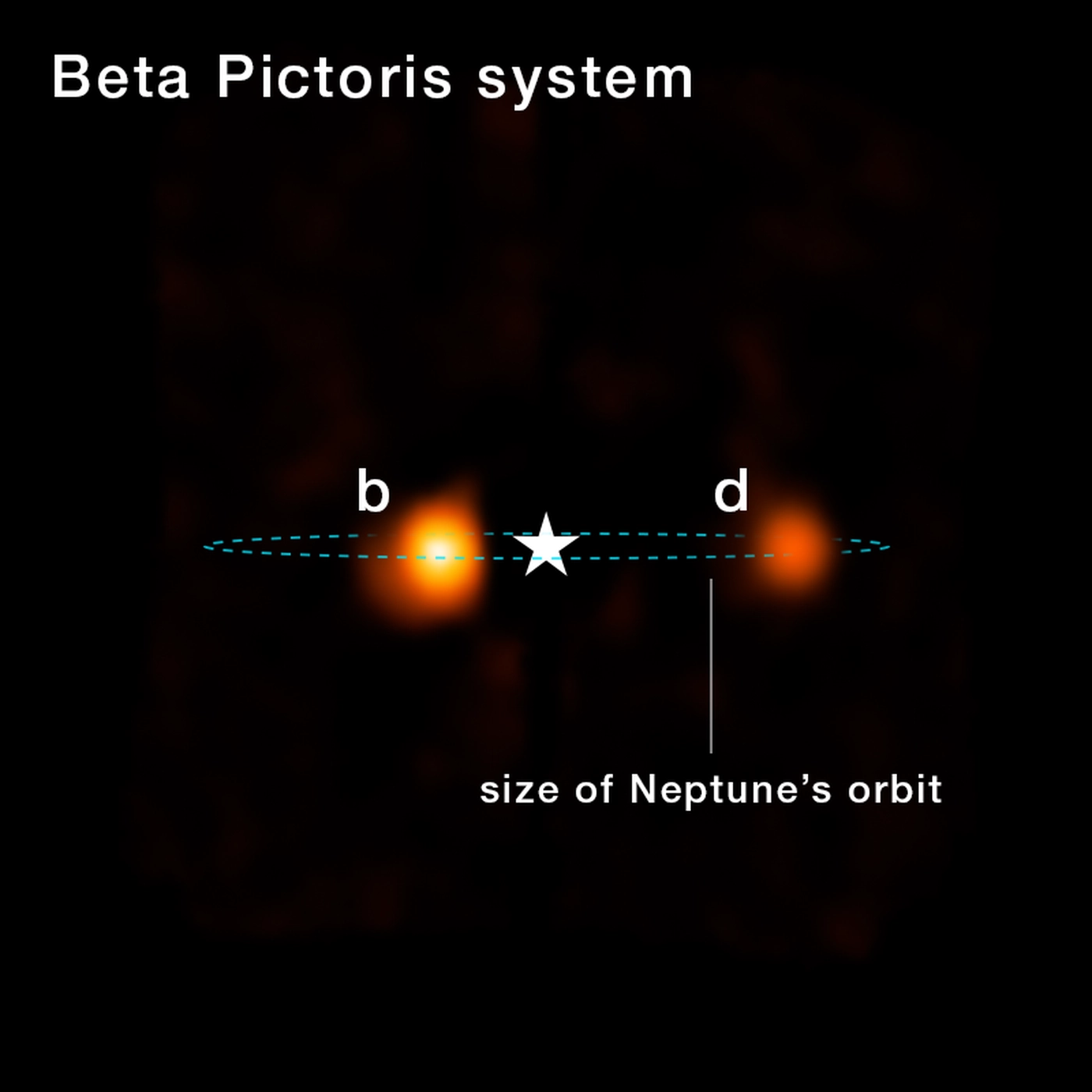
Astronomers have found a third giant planet around Beta Pictoris, one of the best-known young planetary systems near Earth. The discovery is striking because the planet was not first picked out as a bright dot in a telescope image. NASA’s James Webb Space Telescope found it in the spectrum of light coming from the system: […]
Futura fête ses 25 ans en 2026, et au cours des 25 dernières années, la science climatique a fait un bond spectaculaire. La compréhension du climat a changé, notamment grâce aux relevés météo, mais aussi avec le développement des outils satellites. Une bascule s'est opérée au cours de l'année...
Neonatal necrotizing enterocolitis (NEC) remains one of pediatrics’ most devastating intestinal disorders, and safer, mechanism-driven therapies are urgently needed. New findings suggest that tiny vesicles naturally present in human breast milk—exosomes—may offer protection by delivering a specific regulatory microRNA.
Researchers report that exosomes enriched with miR-144-5p can help restore the intestinal tight junction barrier, a key defense line that collapses during NEC. By focusing on miR-144-5p, the team moves beyond earlier observations that breast milk exosomes can reduce NEC severity and instead pinpoints a molecular cargo likely responsible for part of that benefit.
The study centers on how NEC damages epithelial integrity and promotes inflammatory signaling. Tight junction disruption is associated with increased permeability, bacterial translocation, and worsening inflammation—conditions that accelerate disease progression in vulnerable newborns. The investigators therefore examined whether miR-144-5p could counter these barrier failures in NEC contexts.
Mechanistically, the work links miR-144-5p action to the TLR4/NF-κB pathway, a well-known inflammatory axis. Toll-like receptor 4 (TLR4) senses danger-associated cues and can trigger NF-κB activation, driving transcription of pro-inflammatory mediators. In NEC, exaggerated signaling through this route contributes to tissue injury and impaired repair.
By modulating this cascade, miR-144-5p appears to dampen downstream inflammatory responses while promoting recovery of junctional structure. The paper’s data indicate that exosomal delivery is central: miRNAs packaged within vesicles can be taken up by recipient cells more efficiently than naked RNA, enabling functional gene regulation in target intestinal compartments.
Together, the results support a model in which breast milk exosomal miR-144-5p alleviates NEC by suppressing TLR4-driven NF-κB activation, thereby reducing inflammatory injury and enabling tighter regulation of epithelial junctions. If translated, such a cargo-guided approach could complement existing supportive NEC treatments.
While additional work will be required to confirm efficacy across models and to evaluate safety, the study provides a clear mechanistic roadmap: therapeutic exosomes or miRNA mimics that bias TLR4/NF-κB activity may be a promising strategy for protecting the neonatal gut.
Subject of Research: Neonatal necrotizing enterocolitis (NEC), breast milk-derived exosomes, miR-144-5p, tight junction barrier repair, TLR4/NF-κB signaling.
Article Title: Human milk exosomal-miR-144-5p alleviates neonatal necrotizing enterocolitis by regulating the TLR4/NF-κB pathway.
Article References: Chen, Z., Chen, C., Hu, X. et al. Human milk exosomal-miR-144-5p alleviates neonatal necrotizing enterocolitis by regulating the TLR4/NF-κB pathway. Pediatr Res (2026). https://doi.org/10.1038/s41390-026-05305-9
Para a estreia das telas OLED1Organic light-emitting diode, ou diodo emissor de luz orgânico. e do suporte ao toque em computadores com o suposto “MacBook Ultra”, a Apple poderá recorrer exclusivamente à Samsung Display como fornecedora dos painéis.
A informação partiu do site sul-coreano The Elec, o qual afirmou que, segundo as suas fontes relacionadas à cadeia de suprimentos, cerca de 250 mil unidades de painéis OLED de 14 e 16 polegadas (8,6ª geração) da Samsung foram encomendadas, com previsão de produção em massa para o mês de agosto.
A Apple não teria cogitado a LG Display e tampouco a BOE para o desenvolvimento dessas telas, devido a questões de rendimento, tornando a Samsung a única fornecedora viável.
De acordo com uma série de leakers, analistas e jornalistas, especulava-se que o “MacBook Ultra” tivesse o seu lançamento entre o final deste ano e o início do ano que vem, mas devido à crise de memória é possível que ele de fato chegue às lojas somente em 2027.
Segundo o jornalista Mark Gurman (da Bloomberg), tal Mac deverá ser equipado com os chips M5 Pro e M5 Max, com o conjunto (design, construção e tela) posicionando-o acima dos MacBooks Pro.
MacBook Pro de 16″
Cores: preto-espacial ou prateado Tela: padrão ou nano-texture Chips: M5 Pro ou M5 Max Memória: 24GB, 36GB, 48GB, 64GB ou 128GB Armazenamento: 1TB, 2TB, 4TB ou 8TB
Cores: preto-espacial ou prateado Tela: padrão ou nano-texture Chips: M5, M5 Pro ou M5 Max Memória: 24GB, 36GB, 48GB, 64GB ou 128GB Armazenamento: 1TB, 2TB, 4TB ou 8TB Adaptador de energia: USB-C de 70W ou 96W
NOTA DE TRANSPARÊNCIA: O MacMagazine recebe uma pequena comissão sobre vendas concluídas por meio de links deste post, mas você, como consumidor, não paga nada mais pelos produtos/serviços usando os nossos links de afiliado.
A crise no mercado de memórias causada pelo boom das empresas de inteligência artificial (IA) está fazendo até mesmo marcas como a Apple pechincharem na hora de garantir componentes para os seus produtos, segundo informações do site sul-coreano The Elec.
Mais precisamente, a empresa teria pedido que suas fornecedoras reduzissem o preço das telas OLED 1Organic light-emitting diode, ou diodo emissor de luz orgânico. destinadas ao vindouro “iPhone 18 Pro Max” para algo em torno de US$70. Para efeito de comparação, é estimado que cada tela do iPhone 17 Pro Max custe à Apple algo em torno de US$80.
De acordo com as fontes da indústria consultadas pelo veículo, no entanto, a Maçã não só teria obtido sucesso em sua barganha, como estaria pagando um valor médio ainda menor para a Samsung Display e a LG Display, suas duas principais fornecedoras de painéis: US$66,50 (redução de aproximadamente 20%).
Dados da UBI Research citados pelo The Elec dão conta de que a Samsung Display deverá produzir algo em torno de 46 milhões de telas OLED para a linha “iPhone 18” só em 2026, de modo que 2 milhões delas serão reservadas para o modelo de entrada, 18 milhões para o modelo Pro e 26 milhões para a versão Pro Max. A LG Display, por sua vez, produzirá cerca de 1,09 milhão de telas para o modelo mais barato, 19 milhões para o Pro e 21 milhões para o Pro Max.
É esperado que os iPhones “18 Pro” e “18 Pro Max” utilizem displays M16, a geração mais recente de painéis OLED. Entre as vantagens dessa versão da tecnologia estão uma maior eficiência luminosa, uma vida útil maior e características de cor aprimoradas.
Essa, vale notar, não é a primeira vez que o valor das telas OLED empregadas em iPhones cai de uma geração para a outra. Como destacado pelo próprio The Elec, os painéis produzidos para o iPhone 16 Pro Max, lançado em 2024, podiam passar de US$100 por unidade em alguns casos.
Exigências como a da Apple também não são uma surpresa para as fabricantes de telas. No último dia 22 de julho, por exemplo, o presidente da Samsung Display, Lee Cheong, comentou durante um evento que “há uma pressão muito forte para reduzir os preços de componentes e telas” devido à “inflação dos chips”. Jeong Cheol-dong, presidente da LG Display, por sua vez, reconheceu o impacto dessa crise nos negócios da fabricante, mas disse que a situação permanece “em um nível administrável”.
iPhone 17 Pro Max
Cores: prateado, laranja-cósmico ou azul-intenso Armazenamento: 256GB, 512GB, 1TB ou 2TB
NOTA DE TRANSPARÊNCIA: O MacMagazine recebe uma pequena comissão sobre vendas concluídas por meio de links deste post, mas você, como consumidor, não paga nada mais pelos produtos/serviços usando os nossos links de afiliado.
O Polo de Vairão da FCUP recebeu um conjunto de equipamentos tecnológicos de última geração, financiados pelo PRR, que incluem a primeira sala de simulação agrícola, pioneira em Portugal, e protótipos de robótica terrestre e aérea.
Apple is pushing OLED panel suppliers to lower their prices for the iPhone 18 Pro Max, as the cost of memory chips and other components rises, reports The Elec.
According to the Korea-based report, Apple has proposed paying around $70 for OLED panels, but it might end up paying even less. Industry estimates suggest that Samsung Display and LG Display will supply the panels for around $66.50 each. That would be a roughly 20 percent drop from the prices paid for iPhone 17 Pro Max OLED panels.
The report says that the price Apple has paid for iPhone OLED panels has fallen with each new generation. However, this year's reduction is unusually steep, especially considering that the iPhone 18 OLED panel is expected to require greater manufacturing complexity – Apple will be using Samsung Display's latest M16 OLED material set, which improves luminous efficiency, lifespan, and color performance.
Smartphone makers across the board are said to be trying to offset rising memory costs by reducing procurement expenses for other components, including display panels and camera modules.
According to market research firm UBI Research, Samsung Display is expected to supply 46 million OLED panels for Apple's iPhone 18 lineup this year, comprising 2 million for the standard iPhone 18 model, 18 million for the iPhone 18 Pro, and 26 million for the iPhone 18 Pro Max. Meanwhile, LG Display is forecast to supply 41 million panels, including 1 million for the standard model, 19 million for the 18 Pro, and 21 million for the 18 Pro Max.
Apple is expected to launch the iPhone 18 Pro models in September alongside its first foldable iPhone, followed by the iPhone 18 and iPhone 18e in spring 2027. Analysts suggest the iPhone 18 Pro and Pro Max could start at $1,299 and $1,399, respectively. In other words, a $200 jump over their predecessors, with rising memory and storage costs largely to blame.
President Donald Trump holds a signed executive order on tariffs, in the Rose Garden at the White House in Washington, D.C., April 2, 2025.
A group of 25 U.S. lawmakers has sent a letter to President Trump calling on his administration to confront the European Union’s digital regulations, which they describe as discriminatory policies aimed at American technology giants.
In the letter, obtained by Reuters, the Republican lawmakers – including key members of the House trade subcommittee – urged the president to consider launching Section 301 investigations under U.S. trade law. Such probes could pave the way for tariffs or other retaliatory measures against the EU if talks fail to resolve the issues.
The central target of the complaint is the EU’s Digital Markets Act (DMA), which designates major U.S. companies – including Amazon, Apple, Google, Meta, Microsoft, and Booking Holdings – as “gatekeepers” subject to strict behavioral rules. Lawmakers argue the rules unfairly burden American firms while sparing European and Chinese competitors.
Key concerns raised in the letter:
• Cloud services: The likely inclusion of Amazon Web Services and Microsoft’s cloud business under DMA oversight would impose “unprecedented regulatory burdens” not faced by European or Chinese rivals.
• Google fines: An expected European Commission fine against Google this week for alleged DMA violations ignores the company’s significant changes to its search services.
• Inconsistent enforcement: Apple, Meta, and Amazon have been labeled gatekeepers based on user numbers in Europe, while Chinese platforms like Temu and AliExpress have been excluded.
“We write to bring to your attention the many ways the EU continues to pursue anti-competitive acts, policies, and practices as a tool of economic extraction and regulatory coercion against American firms,” the letter states. It warns that EU access to the U.S. market “is not guaranteed” if the discriminatory practices continue.
The European Commission has not yet responded to the letter. It maintains that its rules apply neutrally to promote fair competition and do not single out any country.
This latest congressional push aligns with President Trump’s long-standing criticism of EU digital policies and could signal a more aggressive U.S. trade posture toward Brussels in the coming months. Lawmakers emphasized that dialogue should be attempted first, but “all available tools” – including tariffs – remain on the table if needed.
The move highlights ongoing transatlantic tensions over technology regulation, data privacy, and market access that have persisted for years and are now poised to test the new Trump administration’s approach to international trade.
MacDailyNews Take: Good. The DMA does far more harm than good.
The European Union arose because the Europeans couldn’t compete on their own with the rest of the world, so they each lined up to surrender their national sovereignty, unique cultures, and dignity for an undemocratic, opaque, wasteful, bloated, bureaucratic quasi-governmental blob – and, even with the EU’s thumbs all over the scale, they still can’t compete. – MacDailyNews, March 4, 2024
Please help support MacDailyNews — and enjoy subscriber-only articles, comments, chat, and more — by subscribing to our Substack: macdailynews.substack.com. Thank you!
Tired of clunky email triage on your iPhone? Avec’s swipe-based interface lets you quickly sort important messages from noise, using AI to prioritize what matters. It’s Gmail-only and iPhone-only for now, but IMAP support is promised and a desktop version is coming.
Cette année 2026 bascule dans tous les extrêmes : des pluies records et interminables en début d'année, et deux vagues de chaleur précoces en mai et en juin. Cette évolution n'a en fait rien de surprenant.
Following its trip around the Sun late last year, 3I/ATLAS had been significantly warmed, causing a large amount of its icy exterior to be converted into a cloudy coma. This not only made the comet more visible but also provided Webb an ideal opportunity to collect spectrographic data that could offer important information about its chemical composition.
The Webb data, which was detailed in a recent study, indicates chemical ratios of carbon and deuterium emanating from the object that are very unlike those of comets found within our solar system.
The compelling new findings, according to NASA officials, “surprised researchers.” Here’s why.
A Rare Look at an Ancient Space Object
Fundamentally, the recent Webb observations provided astronomers with one of their best opportunities to observe information about the comet’s possible origins throughout the duration of its visit to our Solar System last year.
Martin Cordiner, an astro-chemist at NASA’s Goddard Space Flight Center in Greenbelt, Maryland, called the observations “a unique opportunity to study an ancient object from the distant galaxy, probably pre-dating our Sun and solar system.”
Above: Researchers used Webb’s NIRSpec instrument to map specific chemical contents of comet 3I/ATLAS as it exited our Solar System (Image Credit: NASA, ESA, CSA, STScI, Martin Cordiner (CUA, NASA-GSFC); Image Processing: Alyssa Pagan (STScI).
Cordiner, who was also the lead author of the recent Nature study, said that the data he and his co-authors were able to obtain helped to provide “direct insight into that distant time and place” from which 3I/ATLAS originates, while also providing new insights into “how unusual our own solar system may be.”
Understandably, the Webb telescope is in high demand, and Cordiner and his team had to interrupt the space observatory’s planned schedule to turn its powerful eye toward 3I/ATLAS as it made its exit.
A Deuterium-Rich Space Object
Cordiner and the research team joined astronomers from many sub-disciplines in taking the opportunity to get a look at 3I/ATLAS on its journey through the solar system, which relied primarily on Webb’s NIRSpec (Near-Infrared Spectrograph) instrument.
As previously reported by The Debrief, the telescope’s NIRSpec instrument revealed “exceptionally high” levels of deuterium—also known as “heavy hydrogen”—amounting to nearly 30 times the amount normally seen in comets within our solar system.
One thing this probably indicates is that early in its lifetime, 3I/ATLAS was likely exposed to large amounts of radiation, which gave rise to the deuterium-rich ice in its composition. However, after drifting through space for eons without coming into proximity to a star like our Sun, there were no opportunities for this “heavy water” to be converted back into the typical kind of H20 water common on our planet.
Clues from Carbon Traces
Another primary finding Cordiner and the team made is that NIRSpec data revealed only small amounts of carbon-13, as opposed to its lighter counterpart, carbon-12. Since carbon-13 enrichment is known to occur within stellar systems over time, the team interprets this as evidence for the extreme age of 3I/ATLAS, which could have origins going as far back as an astonishing 12 billion years ago.
This would place the interstellar object’s birth within the period astronomers identify as “cosmic noon,” during which our universe was undergoing its peak period in star formation. Additionally, separate observations involving the European Southern Observatory’s Very Large Telescope help to affirm the recent Webb findings, along with complementary insights into the ancient comet’s carbon content, as well as nitrogen present in the form of cyanide, revealed from recent spectrographic analysis.
“For us as scientists, finding these rare isotopes is fascinating, but the bigger picture here is looking at the possibilities of prebiotic chemistry elsewhere in the galaxy,” said Stefanie Milam, one of the recent study’s co-authors, and also a researcher at NASA Goddard, in a recent statement.
Fundamentally, what the latest data on 3I/ATLAS conveys is more than just a rare look at a cosmic voyager who briefly entered our Solar System—it is a potential glimpse at how the very building blocks of life could have made their way into our planetary neighborhood long ago, eventually arriving here on Earth.
“So far, we know of only one place in the vast cosmos where chemical ingredients led to life – our solar system, our Earth,” Milam recently said.
“Analysis of these interstellar objects is a major step towards learning how common, or uncommon, the conditions for the evolution of life are in the universe,” Milam added.
The team’s recent study, “Isotopic evidence for a cold and distant origin of 3I/ATLAS,” appeared in the journal Nature on June 22, 2026.
Micah Hanks is the Editor-in-Chief and Co-Founder of The Debrief. A longtime reporter on science, defense, and technology with a focus on space and astronomy, he can be reached atmicah@thedebrief.org. Follow him on X @MicahHanks, and at micahhanks.com.
For the last 30 years, stopping the flow of cybersecurity-related software has proven to be ineffective. It's unclear why it would work now with Anthropic’s cybersecurity model Mythos.
Numa semana histórica para o setor da inteligência artificial, a OpenAI submeteu o seu prospeto confidencial à SEC dias depois da Anthropic ter feito o mesmo. A SpaceX prepara-se para começar a negociar na bolsa ainda esta semana. E a Perplexity, imperturbável, mantém o seu plano para 2028.

 Login