Login

AI Hysteria: Take a Deep Breath and Ask, “Who Benefits from Apocalyptic Claims?”
Anthropic researcher Jacob Coxon quit and posted at X last Tuesday, to over 25 million views, that “No other human activity poses this level of danger.”


In a study of 2,266 workers in Finland, evening-type people, or night owls, were up to three times more likely to be treated for depression or anxiety than morning types, with poor work-life balance identified as a key contributing factor.
The post Study: Night Owls Face Higher Mental Health Risks Tied to Work-Life Balance appeared first on Sci.News: Breaking Science News.

This week in stories we’re tracking here at The Debrief: NASA’s Nancy Grace Roman Telescope was launched on Sunday, and experts think this could be one of its most important discoveries in the years ahead. Meanwhile, scientists have discovered a magnetic “clock” in ancient pottery that could help museums distinguish real artifacts from modern fakes. And elsewhere, scientists say it might be possible that aliens are lurking in the acidic clouds of Venus.
Ready to get caught up on more of the latest science news? Here’s a look at other stories we’re covering right now at The Debrief…

Se você costuma usar o aplicativo Relógio (Clock) em iPhones, iPads e Macs ou o Timers do Apple Watch para ativar alarmes ou timers, saiba que é possível identificá-los adicionando um nome (ou etiqueta, como a Apple chama).
Isso é muito útil para quem possui múltiplos alarmes/timers em ação e quer ter um controle sobre eles.
Neste artigo, ensinaremos como é simples adicionar uma etiqueta em cada um, veja só.
Posts relacionados


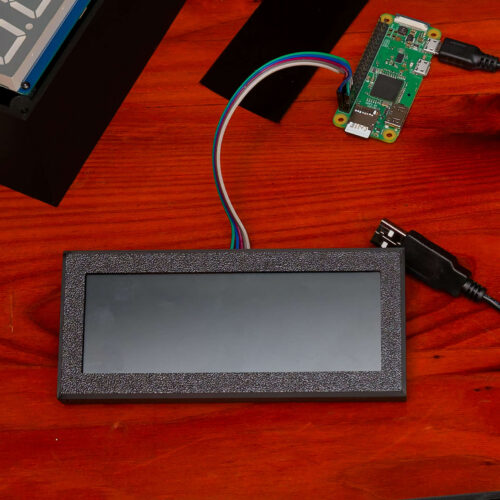
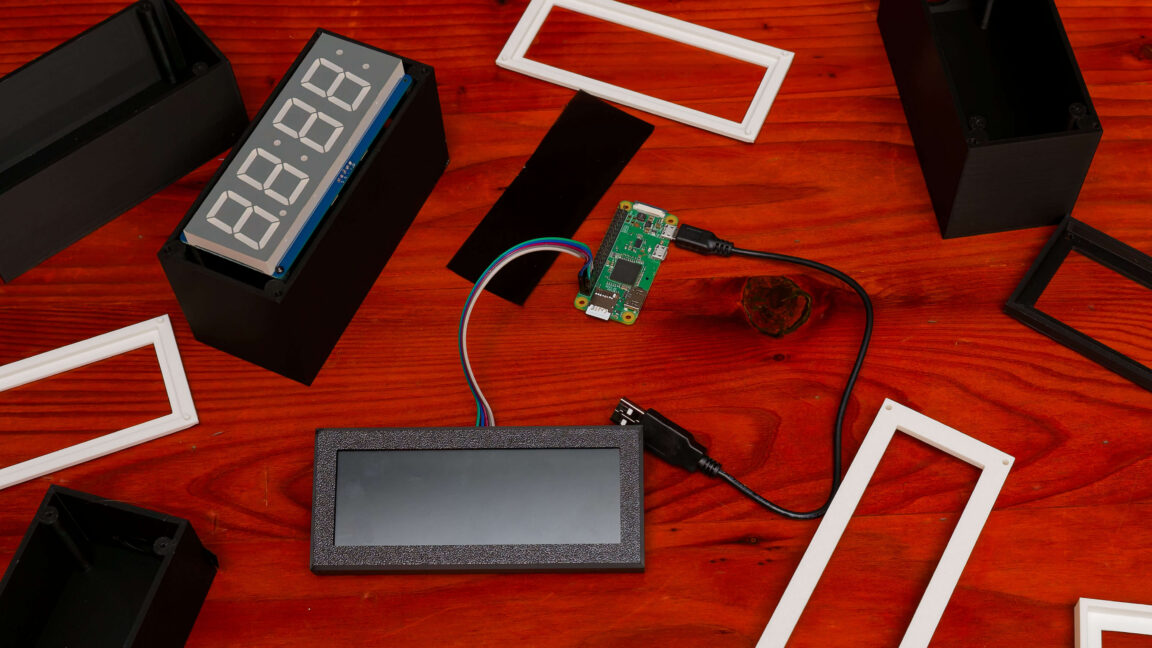
I wanted a clock that, annoyingly, didn't seem to exist.
Since childhood, my bedside clocks have been a series of red, seven-segment LED clock-radio specials from Walmart or Target. They are invariably cheap, simple, and long-lived—but they require manual intervention at the start and end of Daylight Saving Time and whenever the power flickers. After a recent power flicker, as I found myself standing by the sideboard holding down "TIME" and mashing the "HOUR" button, frustration boiled over, and I thought to myself, "We're a quarter of the way through the 21st century. There has to be a better way!"
My perfect clock would be self-setting. It would offer auto-DST adjustment (or not, depending on how this bill fares!). It would manage drift and always show the exact sub-second time. It would show that time on a red seven-segment display—not blue, not green, not yellow, and absolutely not white. And I shouldn't have to install any privacy-destroying garbage apps to make it work.
© Lee Hutchinson
A hidden biological clock has been discovered by genetic researchers, revealing how proteins act as a timing mechanism that controls living organisms’ growth into adulthood.
Cold Spring Harbor Laboratory (CSHL) researchers in New York revealed their findings in a recent paper published in the Proceedings of the National Academy of Sciences, identifying how a feedback circuit between the proteins MYRF-1 and LIN-42 functions as the worm genome’s master developmental clock.
Their research focused on the worm species Caenorhabditis elegans, revealing how these proteins set the timing of pulses that guide the worm through its development.
“Development requires that cells change identity in the correct order while the organism continues to grow. How multicellular animals generate and synchronize this timing information across tissues has remained unclear,” the authors write.
The search for this missing biological clock was the core of the CSHL team’s research. Genetic and developmental problems are often expressed as a failure of developmental processes to initiate, which could be tied to problems with internal timing sequences that organize such behaviors. This marks the first time researchers have discovered a non-repeating biological clock.
“This is the central clock for all cells in the worm,” explained co-author Christopher Hammell. “It’s responsible for coordinating a finite series of sequential pulses of gene expression that must occur only once, and in order, for proper developmental progression. It’s like a ratchet. It turns genes on and off multiple times during development, but ultimately, it’s only going in one direction.”
CSHL researchers paired the modern AI tool AlphaFold with more traditional genetic research techniques, such as protein sequencing, molecular experiments, and DNA sequencing, to identify MYRF-1’s role in the worm’s development.
The team found that protein signals both initiate and terminate developmental stages, keeping growth on track. MYRF-1 pulses fire first, then activate LIN-42, which determines the strength and duration of the timing pulses. This biological clock activates stage-specific regulatory RNAs and synchronizes developmental checkpoints, creating a rhythmic gene-regulation metronome that enforces the irreversible nature of growth and molting.
In tests to confirm how this biological clock operates, researchers discovered that blocking MYRF-1 expression disrupts the worms’ development cycle.
“We’ve never seen anything like this before,” Hammell says. “MYRF-1 is part of this master regulatory clock for all cells, but it’s also acting as a key maker and the master key for each stage of growth. Without the right key for each stage, development hits a wall and can’t progress.”
The researchers say that understanding how these proteins interact to create cellular clocks that guide development will help researchers better understand cell growth, progression, and differentiation.
“The MYRF-1/LIN-42 circuit runs in all cells,” Hammell says. “And every one of these independent cellular clocks appears to be in sync when you watch normal development. But are they communicating with each other? We’ve never thought deeply about that question before.”
A better understanding of these clocks could offer potential routes to cures for genetic and developmental issues by allowing medical science to jump-start processes that fail to initiate naturally.
Fundamentally, by restoring synchronization of these growth, development, and differentiation processes, scientists and medical practitioners could see better future success in alleviating certain genetic conditions.
The team’s recent paper, “A Molecular Timer Couples Organism-Wide Temporal Identity to Developmental Checkpoints,” appeared in Proceedings of the National Academy of Sciences on May 6, 2026.
Ryan Whalen covers science and technology for The Debrief. He holds an MA in History and a Master of Library and Information Science with a certificate in Data Science. He can be contacted at ryan@thedebrief.org, and follow him on Twitter @mdntwvlf.