❌

Reading view

Biologists Were Wrong About the “American Cheetah” According to New Genetic Findings

The extinct American cheetah wasn’t a true cheetah at all, say biologists in new research overturning our previous understanding of the legendary predator, revealing a cautionary tale about superficial scientific interpretations.

In a recent paper published in Current Biology, a research team led by scientists at the University of California, Santa Cruz, revealed that the so-called “American cheetah” is actually a relative of the Puma, adapted to Arctic conditions.

Scientifically known as Miracinonyx trumani, the American cheetah has turned out to be a fish-eating Puma relative and quite a distinct creature from the one envisioned by earlier researchers, as their suggestions were based primarily on the animal’s physical form. Using fossils discovered as far north as the Arctic Yukon, the team analyzed the species’ nuclear paleogenomes and stable isotopes, reconsidering the big cat at the genetic level.

Convergent Evolution

M. trumani had long front legs and a slender body, weighing roughly 150 pounds and measuring about eight feet long and three feet tall. This sleek form allowed it to cross vast swathes of Pleistocene North America and achieve cheetah-like speeds.

While it may have developed a form similar to the cheetah, this is simply a case of convergent evolution, after the “American cheetah” split from the puma lineage some 2.6 million years ago. Fossils used in the research date from 23,000 to 31,000 years old, considerably more recent than that initial split.

Although the American cheetah is extinct today, its influence is still felt. One evolutionary theory is that the fastest North American land animal, the pronghorn, which can run up to 60 miles per hour, owes its tremendous speed to evolving to escape the swift predator.

American Cheetah Habitats
The “American cheetah” roamed a wide variety of habitats, adapting to markedly different local conditions. Credit: UCSC/Julius Csotonyi

Where The “American Cheetah” Roamed

One of the most intriguing elements of the new research is that it extends the cat’s habitat north by 20° latitude, into the Arctic Yukon. The team says that, depending on latitude, the species could occupy distinctly different ecological niches, demonstrating a high degree of adaptability to prevailing conditions.

To the south, the American cheetah had long been recognized as residing in Florida and Wyoming. In these areas, rich in temperate grasslands, the cat would have behaved as a generalist predator. However, in the harsher Arctic Yukon, it acted as a tertiary predator, living off fish like salmon.

“These cats were remarkably flexible, much like pumas are across their range today,” said lead author Molly Cassatt-Johnstone, a Ph.D. candidate in the Paleogenomics Lab at UC Santa Cruz. “We found loss-of-function mutations in certain genes that regulate circadian rhythms, suggesting they may have adapted to the extreme light cycles of summers and winters in northern latitudes.”

American Cheetah Extinction

The genes revealed further peculiarities of M. Trumani. Generally, cats are known for a lack of interest in sweet foods, but this particular cat also lacked a sour taste receptor, a trait associated with specialized diets. Animals normally use this receptor to identify food that is safe to eat.

The fossils tell the story of a slow, steady decline in the species over the course of the Pleistocene. One notable factor could be their distinct lack of genetic diversity, which the researchers do not attribute to inbreeding.

“Miracinonyx persisted for a very long time without the signs of inbreeding we’d expect before a collapse,” senior author Beth Shapiro, professor of ecology and evolutionary biology at UC Santa Cruz and co-director of the Paleogenomics Lab, concluded. “The decline was slow, not sudden, and that may be what left it unable to adapt when the climate shifted.”

The paper, “Range and Diet Diversity in the Pleistocene American ‘Cheetah,’ Miracinonyx Trumani,” appeared in Current Biology on September 4, 2026.

Ryan Whalen covers science and technology for The Debrief. He holds an MA in History and a Master of Library and Information Science with a certificate in Data Science. He can be contacted at ryan@thedebrief.org, and follow him on Twitter @mdntwvlf.
  •  

Ancient DNA Rewrites Story of Enigmatic ‘American Cheetah’

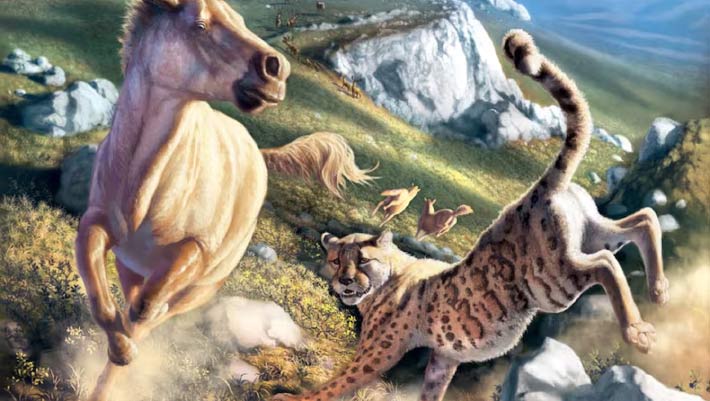
Miracinonyx trumani and the ecosystem this species lived in. Image credit: Julius Csotonyi.

For several decades, paleontologists have described Miracinonyx trumani -- an extinct species of cheetah-like felid that roamed the North American prairies and steppe terrains more than 13,000 years ago -- as North America’s answer to the African cheetah (Acinonyx jubatus).

The post Ancient DNA Rewrites Story of Enigmatic ‘American Cheetah’ appeared first on Sci.News: Breaking Science News.

  •  

Moving Cat Indoors is Easier than Owners Expect: Study

The owner experiences of transitioning cats indoors suggest that, for most owners and cats, a transition to indoor cat management is manageable and worthwhile. Image credit: Natali Anderson.

Moving a free-roaming cat indoors for good is a decision many owners approach with dread: guilt over confining a former outdoor explorer, worry about litter boxes and scratched furniture, and doubts about whether the cat will ever adjust.

The post Moving Cat Indoors is Easier than Owners Expect: Study appeared first on Sci.News: Breaking Science News.

  •  

Licensing a Mac App With RevenueCat

Jared Sorge:

I know there are options out there like Paddle, FastSpring, and Lemon Squeezy that have worked for many apps like mine over the years. But I also wanted something simple for my users. Not to mention Apple Pay was a must-have.

I believe all the services he mentions do support Apple Pay.

  • RevenueCat serves as the source of truth for whether or not a customer is licensed.

  • I create RevenueCat customer IDs from local iCloud identifiers (more specifically, calling userRecordID() on my CKContainer in CloudKit).

  • When the user makes a purchase, they earn an entitlement that I look for in Arborist to grant them a license.

He doesn’t need to run his own server, and the purchases are automatically tied to the user’s iCloud account, so there are no e-mails or serial numbers to deal with. On the other hand, well, it’s all dependent on the Apple Account.

The app, which helps manage Git worktrees, is shipping now.

Previously:

  •  

Domestic Cats Age Like Humans, New Study Shows

Lauren Scott & Brittany Florkiewicz show that cat facial signals correspond to different social functions, which have likely been influenced by domestication. Image credit: Sci.News / Makieni777 / Rise-a-mui / Alexas_Fotos / Dorothe / Vaclav Zavada / Artem Makarov / Daga Roszkowska / Birgit / Pasi Mammela.

Domestic cats (Felis catus) develop the same patterns of brain shrinkage and neurological decline as aging humans, and scientists think that makes them an ideal window into dementia and aging.

The post Domestic Cats Age Like Humans, New Study Shows appeared first on Sci.News: Breaking Science News.

  •  

Scientists create a new kind of Schrödinger’s cat state

Physicists at the University of Oxford have created a new type of quantum state that could help advance quantum computing and deepen our understanding of the strange rules of the quantum world. The research builds on one of the most famous ideas in physics: Schrödinger’s cat. Proposed by physicist Erwin Schrödinger in 1935, the thought […]

The post Scientists create a new kind of Schrödinger’s cat state appeared first on Knowridge Science Report.

  •  

Schrödinger’s Cat Gets Stranger: Physicists Demonstrate Quantum States No One Has Seen Before

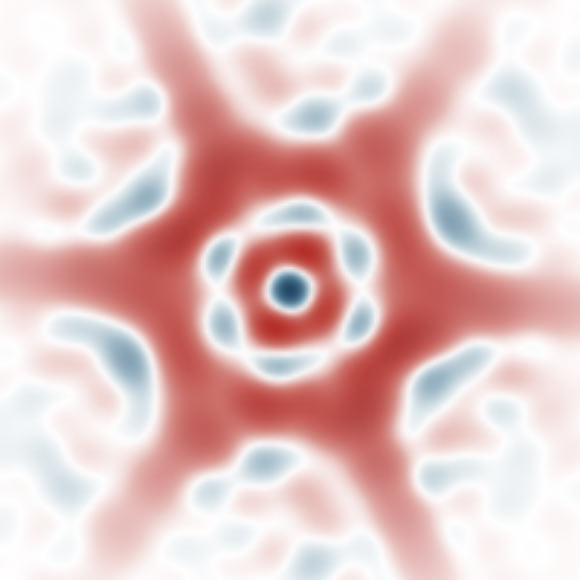
Quantum mechanics defies classical intuition, most famously through Schrödinger’s cat, where systems exist in superpositions of opposing states. Such superpositions are central to quantum technologies. Quantum ‘cat’ states have been realized in harmonic oscillators, but implementations were largely limited to Fock, displaced, or Gottesman-Kitaev-Preskill states. A different class of macroscopic superpositions, where an oscillator is squeezed along orthogonal axes so that its positional variance is simultaneously larger and smaller than the Heisenberg limit, was proposed previously but remained unrealized. Saner et al. introduce a trapped-ion hybrid spin-oscillator system enabling an experimental realization of these ‘siblings’ of Schrödinger’s cat. Image credit: Saner et al., doi: 10.1103/k1xk-yt42.

Physicists at the University of Oxford have engineered a new class of ‘cat states’ -- quantum superpositions constructed not from ordinary wave packets, but from deeply exotic, nonclassical components -- opening unexpected paths toward more resilient quantum computers.

The post Schrödinger’s Cat Gets Stranger: Physicists Demonstrate Quantum States No One Has Seen Before appeared first on Sci.News: Breaking Science News.

  •  
❌