❌

Reading view

Pentagon Opens New Pathway for Government Insiders to Disclose UAP Information

A new legal waiver allows current and former U.S. government personnel to disclose information related to unidentified anomalous phenomena (UAP) to representatives of the government’s  Presidential Unsealing and Reporting System for UAP Encounters (PURSUE) initiative. 

The waiver “establishes an authorized, legally protected disclosure mechanism for current and former personnel to provide UAP-related National Defense Information (NDI) to designated representatives of the PURSUE effort,” the U.S. Department of War announced on Monday. 

The PURSUE initiative, initiated earlier this year by the Trump administration, is not a UAP investigative office like the All-domain Anomaly Resolution Office (AARO), but rather an effort to identify, review, declassify, and publicly release UAP-related records held by U.S. federal agencies.

According to the Department of War, the waiver supports President Donald Trump’s mandate for greater transparency surrounding UAP by creating a protected channel for military and government personnel to provide UAP-related National Defense Information (NDI) to designated PURSUE representatives. The directive applies to current and former Department of War service members, veterans, civilian employees, and contractors who currently have or previously had access to UAP-related NDI.

For covered disclosures made to designated PURSUE representatives, the waiver provides targeted relief from certain civil and administrative enforcement provisions contained in Non-Disclosure Agreements (NDAs) and Special Access Program Indoctrination Agreements (SAPIAs). The waiver applies specifically to authorized communications with PURSUE representatives.

Michael Gold, President of Civil and International Space Business Development at Redwire and a former NASA official who supported the efforts of AARO’s predecessor office, the UAP Task Force, and NASA’s UAP Independent Study Team, told The Debrief the move was “unprecedented.”

“To the best of my knowledge, this action by the Department of War is nearly, if not entirely, unprecedented,” Gold said. “I have never seen anything like this before on any topic, and it demonstrates the seriousness with which the Department of War and the Trump administration are treating UAP transparency.”

“This administration’s handling of UAP transparency has been extraordinary and should be applauded by all of those who care about the issue and good government generally,” Gold added.

Why does this matter for past whistleblowers? 

The new PURSUE order comes after several UAP whistleblowers have come forward with allegations that the government possesses more information about UAP than has been publicly disclosed. Individuals who have claimed knowledge of UAP-related programs have also cited legal and professional risks as barriers to publicly discussing what they say they know. Those concerns have included potential violations of nondisclosure agreements, loss of security clearances, and administrative or legal consequences for revealing protected information.

The Department of War says the new waiver is designed to address some of those barriers. Importantly, however, the waiver does not mean that previously classified UAP information has been declassified or cleared for public release. Instead, it creates an authorized pathway for individuals with relevant information to provide it to PURSUE for review.

The Department of War says information submitted through PURSUE will undergo security review and, where appropriate, potential declassification before it can be publicly released.

“Disclosures of any kind made to PURSUE would need to be reviewed and classified information redacted before such information could be released publicly,” Gold told The Debrief. “The administration, through the National Archives and other executive branch agencies and departments, has already gone through this process to release information in the various tranches, and the same could be done for information disclosed via this waiver,” Gold said.

Gold said he was “optimistic that some very significant information could be publicly released through this process,” says Gold. 

Gold also argued that members of Congress involved in UAP oversight should eventually be given access to information provided under the waiver.

“In addition to select representatives of PURSUE, I think it would be very beneficial if Members of the House UAP caucus and other select Representatives and Senators would be granted access to whatever information is provided under the waiver.  For example, Representatives Burlison, Luna, Burchett, and others have been fearless champions for UAP transparency, and including them in this process would substantially bolster the credibility and efficacy of the overall effort.”

The change could provide former government personnel with an authorized route to disclose UAP-related information to PURSUE without triggering certain civil or administrative enforcement provisions that might otherwise apply under NDAs or Special Access Program agreements.

However, the waiver is specifically directed at authorized disclosures to PURSUE representatives. It does not provide blanket authorization for individuals to publicly reveal protected or classified information.

The potential implications for the commercial and private sectors also remain unclear. Gold, however, believes greater UAP transparency could have consequences for aerospace and aviation.

“UAP transparency could have tremendous beneficial impacts on the aerospace sector,” Gold said in an email to The Debrief.

“Understanding what the phenomenon is could lead to new scientific discoveries and technologies,” he said, adding that a better understanding of UAP “will benefit the safety of air traffic and space operations.”

Fundamentally, Gold says that any new information whistleblowers may now be willing to provide could also help reduce stigmas surrounding the topic that have impeded U.S. progress in the past, and which may even have aided foreign adversaries.

“By diluting the stigma surrounding UAP, it will close a loophole that I suspect is being used by adversary nations to hide advanced drone activity around critical American national security and civil infrastructure and facilities.”

Whether this new pathway produces substantive new information and opens the door for legitimate whistleblowers remains to be seen. As with previous UAP disclosure efforts, distinguishing well-supported testimony and documentation from misinformation, disinformation, or unsubstantiated claims will remain an important part of that process.

If the waiver results in significant new information reaching the public, it will depend on what is submitted to PURSUE, how that information is evaluated, and what can ultimately be cleared for public release following the security review process.

Chrissy Newton is a PR professional and the founder of VOCAB Communications. She currently appears on The Discovery Channel and Max and hosts the Rebelliously Curious podcast, which can be found on YouTube and on all audio podcast streaming platforms. Follow her on X: @ChrissyNewton, Instagram: @BeingChrissyNewton, and chrissynewton.com. To contact Chrissy with a story, please email chrissy @ thedebrief.org.

  •  

Democratic Allies Must Join Forces in the Race for UAP Disclosure

Since February 2026, the United States Department of War (DOW), under the direction of President Donald Trump, has released an unprecedented number of documents, videos, and firsthand witness accounts detailing the United States’ extensive history of encounters with unidentified anomalous phenomena, or “UAP.”

Despite the questions that remain, this initiative under the Presidential Unsealing and Reporting System for UAP Encounters (PURSUE) has been nothing short of historic. For more than 75 years, Americans pleading for the truth on the issue have been routinely ridiculed and even misled by their own government. It’s difficult to imagine the nation’s posture being anything other than one of obfuscation, secrecy, and resistance to transparency.

Documents, particularly those detailing reports from senior intelligence officials encountering “orbs”, are a stark departure from the U.S. government’s nearly century-long position of secrecy.

Lawmakers, however, have been left with more questions than answers. Who or what flies with such impunity over our sensitive military installations? Who owns this technology? Are they a threat to national security?

Across the Pacific, members of Japan’s National Diet are confronting the same questions. The May 2026 file releases from the U.S. DOW disclosed two unresolved UAP incidents from the U.S. Indo-Pacific Command. Japanese legislators only learned the details of these cases near their own territory after the American file release—not through any internal channels.

Democratic allies, it seems, face a shared challenge. For too long, elected officials in our respective nations have been denied adequate information about the phenomena operating in our common security environment. And in the U.S., whenever we are informed, it’s only through the preferred methods and timing of unelected bureaucrats deeply entrenched in our national security apparatus. In Japan, by contrast, the Ministry of Defense has stated that information may be made public when something arises that it determines should be explained.

But this raises a fundamental question: should the government alone decide what should be explained to the public?

If a grave national security threat truly exists, then elected representatives have been left with little choice but to entrust the security of their nations to the very institutions that have obscured the truth from us and even each other.

It is therefore incumbent upon us—Representatives solely accountable to the citizens of our respective nations—to work together and to seek the truth wherever we may find it; both for the good of our people and to defend against whatever threats we face from strategic competitors.

As mentioned above, among the files released by the U.S. DOW were highly significant firsthand reports from high-ranking officials in the Office of the Director of National Intelligence. The documents detail a search operation at a classified missile testing site in the Western United States, explicitly for aerial phenomena:

En route, ground teams reported spotting a UAP on FLIR [Forward Looking Infrared], describing it as “super-hot,” low to the ground, and moving east then south at high speed. The object then split into two and changed direction. Upon arrival, we scanned the area using NVG [Night Vision Goggles], FLIR, and the naked eye. The ground team suddenly radioed that the object had risen from the ground, approached within ten feet of the helicopter, dropped below us, and then sped away.

The documents were accompanied by what the DOW labeled as “related photos.”

Accounts such as these are hardly “proof” of anything, but for elected officials, they do cement the reality of our national security concerns. Missing from this account—or any account we have been allowed to access—is an answer to a fundamental question: What do the various U.S. government agencies believe these objects are? Are they merely civilian drones? Do they represent technology belonging to a foreign actor? And if someone within the government does know, who decides that elected officials shouldn’t?

Members of Japan’s UAP Parliamentary League, led by former Japanese Defense Minister Yasukazu Hamada, share similar concerns.

DOW data, released through the Pentagon’s All-domain Anomaly Resolution Office (AARO) in August of 2023, identified specific regions of Japan, particularly in the western and southern parts of the country, as being among the world’s notable hotspots for UAP reports.

One such instance occurred as recently as July of last year. Security guards at the Genkai Nuclear Power Station in Saga Prefecture observed three luminous objects in the sky above the facility. The lights remained visible for nearly two hours; long enough for local police to arrive and observe them. The police stated that what they themselves observed was an airplane, leaving a discrepancy between the two accounts. The incident was also recorded by Kyushu Electric Power’s security cameras, but the footage has not been made available even to members of the National Diet. Police have likewise declined to disclose related information on the grounds that the matter remains under investigation. As a result, elected lawmakers still lack access to the information necessary to independently assess the incident, and to this day, members of Japan’s National Diet have no answers.

Like their American counterparts, Japanese lawmakers have been left without the tools or information for proper oversight despite reports of UAP operating near critical infrastructure within restricted airspace.

It is no longer acceptable for elected representatives to be agnostic on this issue. Events such as these, along with countless videos now made publicly available, are more than mere optical illusions and cannot be dismissed on account of prosaic explanations like parallax effect. For many members of Congress and members of Japan’s UAP Parliamentary League, the evidence presented before us indicates an unknown technology.

Our understanding of what is technologically feasible in propulsion, the manipulation of physical matter, and even space-time itself is being challenged. From what we know, our current defense capabilities appear insufficient. Furthermore, the origin of these phenomena remains unknown—not only to the U.S. and Japan, but seemingly to other nations as well. China, for instance, recently established its own military body dedicated to investigating UAP, even supplementing human resources with artificial intelligence dedicated to tracking what the People’s Liberation Army refers to as “Unidentified Air Conditions.”

We are, by all indications, in a global arms race for technological supremacy, one that is rapidly rendering today’s weapons obsolete through advances in quantum technology, artificial intelligence, and drone warfare. UAP and whatever technology allows them to operate with apparent impunity over sensitive military and nuclear installations could redefine the competition.

If harnessed by democratic allies, breakthroughs could bolster deterrence and stability in the South China Sea. Conversely, failure to establish a coordinated effort among democratic allies could give China an unforeseen technological advantage over a future invasion of Taiwan, making an already difficult fight impossible.

U.S. global leadership, along with the territorial integrity of the Pacific are at stake. For members of Japan’s National Diet, UAP investigations are of great national importance—an issue that demands cross-party attention.

As for their American counterparts, it’s clear representatives can’t reach the truth through traditional pathways that amount to asking the Central Intelligence Agency ‘nicely.’ It stands to reason that close alliances with democratic allies like Japan may be the most viable pathway for disclosure.

Indeed, if our tools are limited in scope, perhaps new revelations made by democratic allies provide a unique leverage point. After all, it was the Trump administration’s disclosure under the PURSUE program that significantly increased pressure on Japan’s Defense Ministry to acknowledge its own previously undisclosed UAP-related activities.

This is why we, as elected representatives of our nations, have engaged the Emerging Technologies Interparliamentary Caucus (ETIC) as a platform for international dialogue regarding emerging technologies and the security threats presented by UAP. Comprised of representatives from across the globe, the ETIC presents a rare opportunity to ensure elected representatives are equipped to assess potential threats, safeguard our nations, and prepare for the realities of emerging technologies in the 21st century.

Whether the phenomena we are encountering originate from an adversary or something else entirely, democratic nations cannot afford to be complacent.

The people of our nations deserve answers, and we intend to find them.

Rep. Eric Burlison (R-MO-07) is the Chairman of the Subcommittee on Economic Growth, Energy Policy, and Regulatory Affairs. 

Yasukazu Hamada is a Member of the House of Representatives, Japan, Former Minister of Defense, and Chairman of the UAP Parliamentary League.  

Yoshiharu Asakawa is a Former Member of the House of Representatives, Japan, and Assistant to the Chairman of the UAP Parliamentary League.

  •  

KolourPaint chega ao Snap Store e facilita edição rápida no Linux

KolourPaint no Snap Store traz pintura simples e edição rápida para Linux, com instalação fácil e versão atualizada.

O post KolourPaint chega ao Snap Store e facilita edição rápida no Linux apareceu primeiro em Blog do Edivaldo - Informações e Notícias sobre Linux.

  •  
  •  

TdhCad chega ao Linux via Snap Store com foco em desenho vetorial

TdhCad no Linux via Snap Store traz desenho vetorial, gráficos e exportação fácil para quem precisa criar rápido.

O post TdhCad chega ao Linux via Snap Store com foco em desenho vetorial apareceu primeiro em Blog do Edivaldo - Informações e Notícias sobre Linux.

  •  

Mercury Has Shrunk Even More than Planetary Scientists Thought

This color image of Mercury was generated from three MESSENGER images taken through filters sensitive to light in different wavelengths. Image credit: NASA / Johns Hopkins University Applied Physics Laboratory / Carnegie Institution of Washington.

The Solar System’s smallest planet has contracted by nearly 19 km (12 miles) across, as crater debris masked telltale wrinkles on its surface, according to new research led by the German Aerospace Center’s Institute of Space Research.

The post Mercury Has Shrunk Even More than Planetary Scientists Thought appeared first on Sci.News: Breaking Science News.

  •  

Always-listening Apple Watch AI could test eavesdropping laws

Apple Watch Ultra 4, the ultimate sports and adventure watch, now includes new, advanced health and fitness features, and longer battery life.

Apple’s newest Apple Watch features are designed to remember conversations so users don’t have to. Legal experts say they may also test wiretap statutes that were written long before a wristwatch could quietly turn speech into text.

The tools arrived with the Apple Watch Series 12 and Ultra 4. Siri Recap produces summaries of conversations a wearer had during the day. Live Rewind, triggered by a double-press of the Digital Crown, shows a transcript of the previous 15 seconds. Apple markets both as memory aids, not as recording devices.

That distinction is the heart of the dispute. According to reporting by Bloomberg News’ Natalie Lung, attorneys in all-party-consent states — including California, Massachusetts, Pennsylvania, and Washington — are not convinced that on-device processing and the absence of a saved audio file will keep users clear of eavesdropping and wiretap laws. Those statutes generally require everyone in a private conversation to agree before it is intercepted.

Apple has built in several safeguards. Live Rewind plays an audible alert, shows a full-screen animation and microphone indicator, and processes audio on secure hardware that Apple says is inaccessible to the operating system, apps, the user or the company. The company says no audio recording is created or stored. Transcripts vanish about 30 seconds after the display dims unless saved in the Siri app. Recap summaries are deleted after seven days unless a user keeps them. Users can turn the features off or restrict them by time or place. Apple also says summaries do not attach comments to named people and may omit financial details, personal identifiers and authentication data.

Experts quoted in Lung’s reporting still see legal risk. Subodh Chandra of Chandra Law Firm said the feature set “raises serious concerns under California law and the laws of other states that require all-party consent.” Boston criminal defense attorney Joe Simons called it a likely “case of first impression” in Massachusetts. Pennsylvania defense lawyer Phil Lauer said the technology is “very close to being legal” because a person is not sitting on the other end of the feed — but that courts could still treat the watch’s capture and interpretation of speech as unlawful interception. Seattle attorney Mark Blair argued that fleeting processing may not matter: if consent is missing, the wearer could face criminal exposure even after the text disappears.

Colin Zick of Foley Hoag advised users to treat the tools as they would a wiretap and ask permission first. Adam Schwartz of the Electronic Frontier Foundation said bystanders have little practical way to consent or refuse, and called always-on monitoring of conversations “an unacceptable burden on our conversational privacy.” Former Apple employee Todd Dailey wrote that lawyers “will have some long nights ahead,” arguing Recap-style capability existed before but is now harder to detect.

Apple rejected the idea that the features record conversations. It noted that people already take notes with phones and wearables, said the 15-second Live Rewind window encourages responsible use near a speaker, and pointed out there is no audio file to share or produce. Company guidance still tells users to “consider” people around them when conversations might be private or sensitive. Unlike Live Rewind, Siri Recap has no continuous on-wrist indicator while it listens through the day.

The debate sits in a broader push toward ambient AI — smart glasses, always-available assistants, gadgets that sit in the room rather than wait for a button press. Dedicated recorders from companies such as Plaud and Pocket typically start only when activated. Apple’s watches, by design, must be listening first if they are going to rewind or recap later. Whether courts treat that as note-taking or interception is unsettled. Until it is, the legal risk may fall less on Cupertino than on the person wearing the watch.

MacDailyNews Take: Surely Apple’s legal team has vetted these features before release, but we’ll see what happens with the perpetually aggrieved their overly litigious ambulance chasers.


‎
Please help support MacDailyNews — and enjoy subscriber-only articles, comments, chat, and more — by subscribing to our Substack: macdailynews.substack.com. Thank you!

Support MacDailyNews at no extra cost to you by using this link to shop at Amazon.

The post Always-listening Apple Watch AI could test eavesdropping laws appeared first on MacDailyNews.

  •  
  •  

Siri Recap Privacy Explained: What Apple Does With Your Conversations

Apple says Siri Recap can listen for conversations on Apple Watch, process the audio, and create a short high-level summary without keeping an audio recording for replay. The feature is opt-in, and users can control it by time, location, or a manual switch. Apple’s Audio Intelligence support document says raw audio is not recorded or […]

The post Siri Recap Privacy Explained: What Apple Does With Your Conversations appeared first on The Mac Observer.

  •  

Should your Apple Watch always be listening?

Person with curly hair in a gray sweatshirt holds a large shell to their face, facing the sea under an overcast sky.
(Anastasiya Badun/Unsplash)

At my gym, all the signs are handwritten and friendly. In one section, a sign asks members not to drop their weights because there are downstairs neighbors.1 In the bathrooms, reminders to flush and wash hands. But throughout the gym, signs say—more directly—no live streaming. Other signs ask people to exercise consideration when recording their routines for themselves or their coaches to ensure nobody else is in their sight lines. Privacy in the gym is paramount to ensure everyone is not self-conscious and is comfortable.

Pictures of iPhone and Apple Watch with Siri Recap features: iPhone shows the recap of a conversation.
Siri Recap requires continuous audio capture, relying on Apple’s privacy protections and with no obvious disclosure to others in the vicinity.

I was thinking of my gym when I heard about Live Rewind and Siri Recap in the just-announced Apple Watch Series 12 and Apple Watch Ultra 4. These are two of the four flagship Audio Intelligence features launching in beta later this year. Both of these tools record audio continuously. Live Rewind lets you double-press the Digital Crown to receive a transcription of the last 15 seconds of conversation. Siri Recap takes notes on what it hears throughout the day and provides Apple Intelligence-generated summaries.

Both features have, understandably, freaked people out, made them angry, or caused them to shrug in resignation. Surely Apple is exaggerating the privacy protections it explains on the same page it describes the features! And if Apple is all in on recording us all the time without our consent or knowledge whenever one of its devices is nearby, the privacy game is over, isn’t it!? Everything becomes fodder for the machine; private conversations are immutable; the future is surveillance!

I’m not one for extremes, and I’ve studied Apple’s privacy and security provisions and mistakes for nearly 30 years. But I have concerns about these features from social, political, safety, and legal standpoints. Let me tackle the privacy and security first.

Hush, now

When Apple announced Private Cloud Compute in 2024, it was interesting, but it felt academic because it didn’t then release a Siri worth worrying about. In 2026, the PCC expansion with Siri AI is much more important, as Siri may send huge amounts of our personal information to the cloud to provide better answers derived from our data.2

After studying Apple’s details on PCC, I felt reassured. This is partly because one of Apple’s five pillars of PCC integrity is transparency. This is unlike many previous claims by Apple that it would be transparent. Here, they’ve stated exactly what will be available to researchers, and one researcher already found a flaw and was awarded the highest Apple bounty—$150,000. The other pillars include end-to-end encryption, barring access by Apple or other parties through cryptographic design, and no way for an external (or internal!) party to determine which PCC server is processing an individual’s data.

Apple’s promises with Audio Intelligence are somewhat different, though I find them a valid approach to minimizing invasions of one’s privacy and an attempt to reduce violations of other people’s personal sphere. Here are the fundamentals for Live Rewind and Siri Recap:

  • The features are opt-in and can be entirely disabled (with a big asterisk, which I discuss in the next section). Live Rewind has to be triggered before it can access a 15-second recording window. Siri Recap must be enabled. This contrasts with Apple Intelligence in the version 27 releases, where, unlike earlier iterations, you cannot disable Apple Intelligence.3
  • Audio isn’t recorded, nor is it stored, nor is a transcript made. As it is captured, the audio is not accessible to you, watchOS or iOS, apps, or Apple. Apple achieves this by using the Secure Exclave to process audio; after processing, the audio is immediately discarded.4

  • All of the audio processing happens on your Apple Watch and iPhone. That prevents leakage. If you engage Siri, however, some portion of the Live Rewind text could be sent to PCC under the same security protections. (Apple says “will.”)

  • Siri Recap uses PCC. The process is complicated, exposing as little information as possible within the already secured PCC environment.

  • iCloud syncing is end-to-end encrypted. You don’t need to enable Advanced Data Protection (ADP).

  • Siri Recap deletes summaries after seven days; Live Rewind’s 15-second text snippets are deleted within 30 seconds after the Apple Watch display dims. You can save Siri Recaps or export them. With Live Rewind, they are retained within the Siri app if you choose to save them or ask Siri about the text.

From a design standpoint, these measures all feel well thought out to prevent all of the egregious use cases one might imagine: Unwanted recordings! Apple analyzing our conversations to sell us stuff (or sell to third parties)! Leakage that would allow friends or strangers to access summaries, snippets, or conversations, including via internet cloud storage!

And yet. I find the above fits into the meme of “My ‘An explanation of how the Apple Watch recording what you are saying is kept private and anonymous’ T-shirt has people asking a lot of questions already answered by my shirt.”

The right to be unheard

When I’m out in public in the United States, courts have found that in most situations, I have little right to privacy. But then you can shave that down. If a neighbor points a camera from their house at my unfenced front lawn, visible from the street?Generally legal, with some exceptions related to harassment or intimidation. But if a camera points into my house through a window or into a fenced area of my property, most jurisdictions find that “not cool” (a legal term).

The audio side of this is very different. My state of Washington, for instance, is an “all-party consent” state; some states are “one-party consent” or have different rules. “One party” means anyone in the conversation (on a phone, in person, via videoconferencing, etc.) can consent, so they can record audio or have a device or system do it for them. In Washington and other all-party states, every person being recorded must consent, or it is illegal and actionable. (Recording across state lines or internationally becomes complicated.)

Screen captures cropped from Apple video introducing Live Rewind feature: server, left, reading specials; customer looking at Live Rewind on Apple Watch, right.
Even in Apple’s promotional video, they show a food worker getting their audio recorded without their knowledge, and then replayed as text once they have left tableside.

The company says it’s not “recording” or “storing” audio. But it is capturing it. Shockingly, I’m not a lawyer, so I can’t provide a legal analysis. (Presumably many privacy-focused organizations are doing deep reads of state-level statutes.) But the gut check is what I’m really going for, anyway: do these two features have the feeling of being recorded without one’s permission, even if Apple is trying to mitigate both the technical reality and the sense of it?

On the technical side, it appears that you have to enable each feature in the Watch app on the paired iPhone. Live Rewind requires enabling Siri: Live Rewind: Double Click Digital Crown. You can schedule Siri Recap by time, trigger it or turn it off using a location, or enable or disable it manually, such as through Control Center.

So let’s do the vibe check.

Live Rewind appears to be buffering audio at all times in anticipation of needing to transcribe the last 15 seconds. Apple says Live Rewind is designed to alert those around you that you’re replaying audio: when you double-click the Digital Crown, a chime sounds (ignoring any of your settings) as the Apple Watch’s entire screen is taken over with an animation that includes a microphone indicator.

However, unless Live Rewind is also a literal Time Machine, this doesn’t feel right. People are being warned 15 seconds after their audio is captured. (If Apple doesn’t mean that, it needs to clarify.) Further, it assumes that people will be keyed in to someone’s smartwatch making sounds and flashing images they should be paying attention to.

Picture of Apple Watch showing a Siri Rewind transcription
Siri Rewind effectively replays the last 15 seconds in transcription form without obtaining consent through time travel.

There’s also no “stop recording” option: if you’re being recorded by Live Rewind, you as an unrelated party—a waiter, a friend, a stranger, someone nearby, a celebrity—have no way to say “no.”

Siri Recap ostensibly is capturing audio whenever it’s active in any of the circumstances above. There’s no indication to other people that it’s running at all, and no one except the user can opt out.

Apple’s mitigations here include that no speaker is attributed, though Siri Recap identifies and anonymously labels different voices.

With Siri Recap, an Apple Watch automatically discards “potentially harmful content.” Apple defines this as content that “promotes self-harm or hateful speech, and sensitive information, such as financial data, government-assigned identifiers, authentication data, and certain personal identifiers.” I’m not sure this list is a strong argument for Siri Recap.

When using a public or private space, there should be a compelling case, even with the protections enumerated. There are already many kinds of assistive technology used by people with many kinds of disabilities to let them function better in a world often hostile to people with no or low vision or hearing.

However, the assistive case isn’t what defines Live Rewind, a useful feature of convenience that has massive privacy implications despite the way data is captured and stored. And it doesn’t help with Siri Recap at all. Siri Recap is just “life recording” without the label attached, since no audio or video is retained, and only 0.01% of a day’s conversation will likely be summarized.

These features feel like they were designed in a lab and passed through to production without enough people wondering, “Will this provoke a tremendous backlash because of the gaps in privacy that are relatively obvious?”

It’s a jungle, Jim

The best way I can conclude my analysis is by quoting Apple:

Be mindful of those around you. While audio is not recorded and stored, and no speakers are attributed, consider those around you where conversations might be private or sensitive.

Given that Apple has to warn of this, it’s the surest sign the features shouldn’t be released in this form. Apple repeats the form of the warning I see regularly at my gym… but apparently it isn’t heeding it.


  1. Improbably, there is a 24-hour recording studio downstairs. This is not a Simpsons bit. ↩
  2. Siri AI uses a combination of local, on-device AI models and cloud-based models. Starting with Siri AI, this can include Apple models trained using Google Gemini running on Google’s private cloud servers. However, as a user, you can’t opt out of using cloud AI, and you don’t know which queries or parts of queries are sent to PCC (let alone which flavor of PCC). (This is distinct from ChatGPT support, from which you can opt out, use quasi-anonymously, or use logged in to your own OpenAI account.) ↩
  3. You can only disable Siri, which also turns off Siri AI, but Apple Intelligence will continue to function in supported apps as far as I can determine. ↩
  4. This is also where Apple Pay data is stored. The Secure Exclave differs from the Secure Enclave, which is a one-way secrets holder for biometric data and device-based encryption keys, among other things. ↩
  •  
  •  

★ Face swap com IA: como a tecnologia está mudando a edição de fotos e vídeos

Já imaginou assistir a uma cena de filme em que um rosto muda completamente e, pouco depois, ver algo parecido viralizar nas redes sociais? O que antes parecia reservado ao cinema hoje está ao alcance de qualquer pessoa.

Com ferramentas de inteligência artificial, trocar rostos deixou de ser uma tarefa complexa de edição. Em poucos passos, uma foto comum pode ganhar um novo contexto, permitindo transformar ideias criativas em imagens e vídeos compartilháveis.

Face swap

Como o face swap com IA está mudando a edição de fotos e vídeos

Durante muito tempo, fazer uma troca de rosto convincente exigia softwares de edição, conhecimento técnico e bastante trabalho manual. Era necessário recortar imagens, ajustar proporções, combinar cores e corrigir imperfeições para obter um resultado natural.

Com a IA, boa parte dessas etapas pode ser automatizada. Os modelos conseguem identificar rostos, analisar características visuais e adaptar uma face à posição, iluminação e expressão da imagem original.

Essa evolução também mudou a produção de conteúdo. Uma ferramenta de troca de rostos como o VidMage permite experimentar diferentes ideias sem passar horas em um editor tradicional, tornando o face swap mais acessível para criadores e usuários comuns.

O que é possível criar com face swap hoje

O face swap atual vai muito além de simplesmente colocar um rosto em outra fotografia. A combinação entre IA e edição visual permite explorar diferentes estilos, personagens e situações, seja para entretenimento, redes sociais ou expressão criativa.

Algumas possibilidades incluem:

Face swap

Estilos criativos

Uma selfie pode ganhar uma nova identidade visual ao ser inserida em uma pintura clássica, uma cena de ficção científica, um universo de fantasia ou uma temática sazonal. É uma forma simples de experimentar diferentes estilos sem precisar criar a imagem do zero.

Memes para redes sociais

O face swap também pode transformar modelos conhecidos de memes em conteúdos personalizados. Colocar o próprio rosto em uma situação divertida pode gerar imagens rápidas para compartilhar com amigos e seguidores.

Personagens fictícios

Outra possibilidade é assumir o papel de personagens fictícios, como cavaleiros, exploradores espaciais ou heróis de histórias em quadrinhos. Esse tipo de edição pode ser útil para narrativas visuais, fantasias e avatares.

Correção e edição de fotos

Nem todo uso precisa ser apenas criativo. O face swap pode ajudar a corrigir uma expressão, substituir uma foto em que alguém piscou ou combinar diferentes registros para obter uma imagem mais interessante, sem exigir experiência em edição.

Da criação ao resultado: como escolher um software de face swap

Com tantas ferramentas disponíveis, vale observar mais do que apenas a qualidade do efeito. Uma boa solução deve equilibrar facilidade de uso, controle criativo e segurança, especialmente para quem pretende trabalhar regularmente com fotos e vídeos.

Ao escolher um software, vale considerar:

  • Facilidade de uso: uma interface simples permite criar resultados sem conhecimentos avançados de edição.
  • Qualidade do resultado: rostos, expressões e proporções devem ser integrados de maneira natural.
  • Variedade de recursos: suporte a diferentes formatos e possibilidades de edição amplia os usos da ferramenta.
  • Privacidade: é importante entender como as imagens enviadas são processadas e armazenadas.
  • Compatibilidade: ferramentas disponíveis tanto online quanto em desktop oferecem mais flexibilidade para diferentes fluxos de trabalho.

Nesse sentido, o VidMage para troca de rostos no Mac é uma opção voltada para usuários que preferem realizar esse tipo de edição diretamente no computador. Ter uma versão para desktop também pode ser interessante para quem trabalha com um volume maior de imagens e busca mais praticidade no processo.

Face swap

Privacidade, segurança e controle sobre suas imagens

As imagens devem ser usadas apenas com a autorização das pessoas retratadas. O face swap não deve ser usado para enganar, prejudicar ou constranger terceiros. Também é importante respeitar os direitos de imagem e evitar conteúdos que possam causar confusão sobre a identidade de alguém.

A privacidade é outro ponto importante. Segundo a política do VidMage, fotos, vídeos e informações de características faciais usados no processamento não são armazenados nem compartilhados com terceiros. Os arquivos enviados para os serviços online são excluídos automaticamente dos servidores em até duas horas.

Além disso, o VidMage informa que os dados dos usuários, incluindo fotos e vídeos enviados, não são utilizados para treinar modelos de IA. Nos aplicativos para desktop, os arquivos permanecem armazenados localmente no dispositivo, oferecendo ao usuário maior controle sobre seus próprios dados.

O futuro do face swap na criação de conteúdo

O face swap com IA está tornando a edição visual mais rápida e acessível. O que antes dependia de ferramentas complexas agora pode ser explorado por qualquer pessoa interessada em experimentar novas ideias com fotos e vídeos.

À medida que os modelos de IA evoluem, a tecnologia tende a oferecer resultados mais naturais e maior controle sobre as criações. O desafio será encontrar o equilíbrio entre liberdade criativa, qualidade e uso responsável, para que o face swap continue sendo uma ferramenta de expressão e não apenas um efeito visual.

  •  

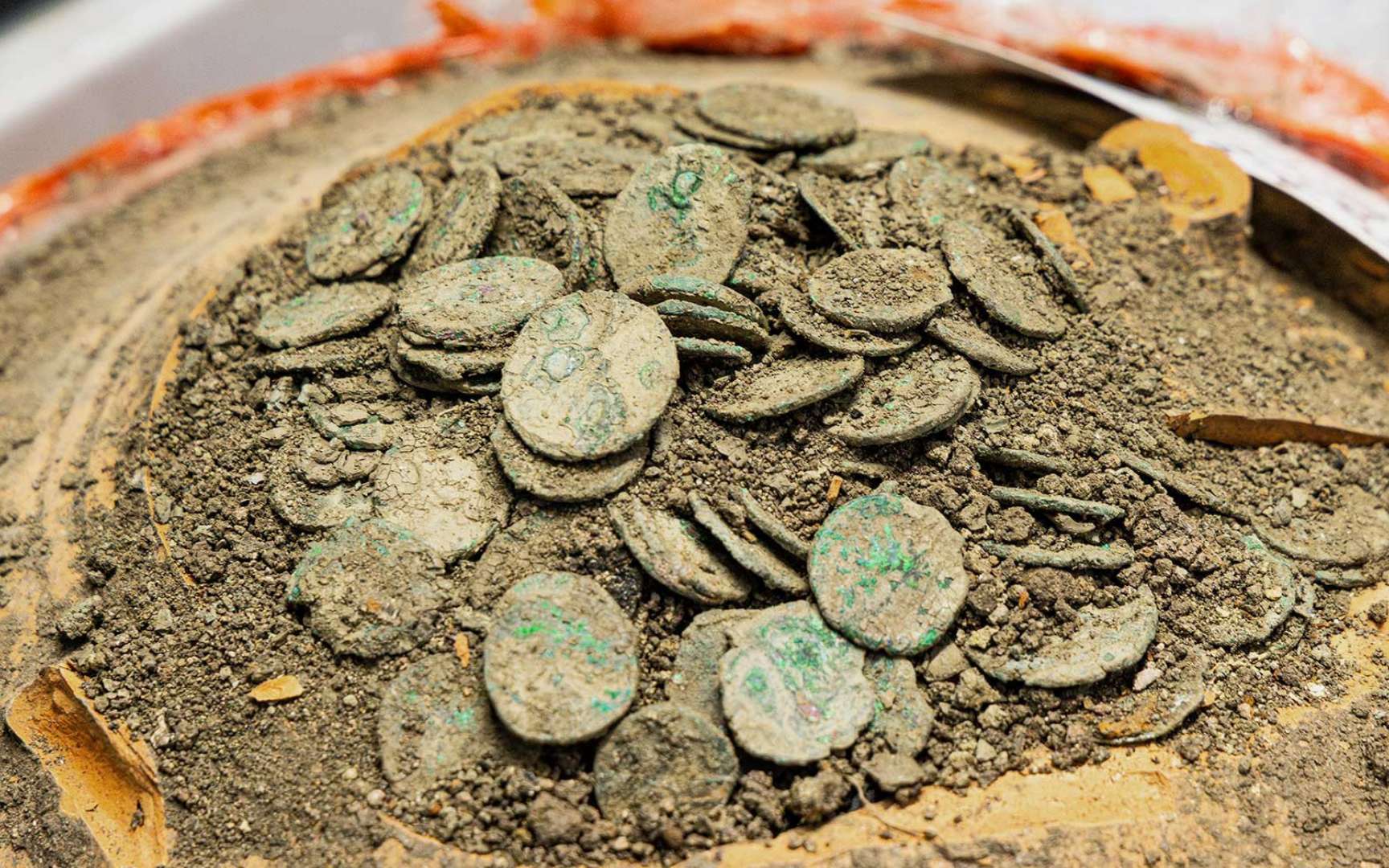
Pourquoi 40 000 pièces romaines étaient-elles cachées sous ce village français depuis 1 800 ans ?

Plus de 40 000 pièces romaines réparties dans trois vases, enfouies dans trois maisons voisines d'un même quartier. La découverte de Senon, dans la Meuse, ne ressemble pourtant pas à un trésor caché en urgence. Les archéologues y voient plutôt l'équivalent antique d'un compte courant, ce qui...

  •  

Inteligência de Áudio: Apple detalha como protegerá a privacidade nos novos recursos do Watch

Hoje, com a revelação dos Apple Watches Series 12 e Ultra 4, a Maçã também anunciou um novo conjunto de recursos chamado Inteligência de Áudio (Audio Intelligence), composto pelas funções Reconhecimento de Som (Sound Recognition), Reconhecimento de Música (Music Recognition), Live Rewind e Siri Recap.

Parte da Apple Intelligence e exclusivas desses novos relógios, essas ferramentas analisam o som ambiente — que, em alguns casos, é captado constantemente — para alertar o usuário sobre sons importantes, ajudá-lo a descobrir o título de músicas, recobrar algo que foi falado nos últimos instantes e revisar anotações sobre as suas principais conversas ao longo do dia, respectivamente.

Por mais bem intencionados que esses recursos possam ser, no entanto, é natural que alguns usuários torçam o nariz para eles — afinal, a ideia de ter um dispositivo monitorando tudo o que você fala (e que falam para você) sem interrupções pode ser um tanto… preocupante, principalmente do ponto de vista da privacidade — um assunto tão abordado pela Apple.

E foi muito provavelmente pensando nessas pessoas que a Apple colocou no ar uma extensa página de suporte que detalha o funcionamento dessas ferramentas, além de explicar quais medidas de segurança foram tomadas para proteger usuários que decidirem ativar essas ferramentas. A empresa também publicou um documento [PDF] que mergulha ainda mais nas minúcias dessas novidades, as quais dependem não só do poder de fogo do novo SiP 1System in a package, ou sistema em um pacote. S11, como também dos seus recursos de segurança embutidos.

Para início de conversa, a Apple deixa claro que todos esses recursos são completamente opcionais; o Reconhecimento de Som, por exemplo, precisa ser configurado nos Ajustes (Settings) do iPhone, de modo que ele só vem ativado por padrão no Apple Watch caso o recurso equivalente do iOS já tenha sido ativado anteriormente pelo usuário no iPhone. Outras ferramentas, como o Reconhecimento de Música, podem ser ativadas diretamente nos Ajustes do Apple Watch (caso já não tenham sido ativadas anteriormente).

Divulgação/Apple

O Live Rewind, por sua vez, entra em cena apenas quando o usuário dá um clique duplo na Digital Crown, mostrando em seguida uma transcrição dos últimos 15 segundos de conversa. Ainda segundo a Apple, o relógio para de gerar essa transcrição assim que o último trecho de conversa é exibido, além de não salvar qualquer texto — a menos que o usuário faça uma pergunta sobre o seu conteúdo para a Siri ou escolha salvá-lo no app da assistente, que é onde estão os ajustes dessa ferramenta.

Divulgação/Apple

Disponível na Central de Controle, o Siri Recap pode ser ativado e desativado manualmente a qualquer momento, mas também permite que o usuário defina uma programação com base na hora e/ou localização. A Siri também pode ser barrada de realizar qualquer registro em momentos/lugares específicos.

Trechos de texto do Live Rewind e anotações do Siri Recap podem ser visualizados, editados e apagados a qualquer momento no app da Siri, bem como exportados para apps como o Notas (Notes) e o Diário (Journal). Além disso, apagá-los faz com que eles sumam de todos os seus dispositivos sincronizados — lembrando que a Apple os protege com criptografia de ponta a ponta antes de enviá-los ao iCloud.

Proteções adicionais

Segundo a Apple, em todos esses casos, nenhuma gravação de áudio é gerada ou armazenada no Apple Watch. Em vez disso, o áudio captado pelos microfones passa pelo Secure Exclave do SiP S11 — compartimento isolado por hardware que processa dados de maneira separada do resto do sistema, impedindo que aplicativos, o watchOS, a Apple ou até mesmo o próprio usuário possam acessá-lo.

Os resumos da Siri Recap são gerados pelos chamados Apple Foundation Models no Private Cloud Compute, que não salva nenhuma das informações. As anotações também são apagadas automaticamente pelo app da Siri depois de sete dias, caso o usuário escolha não salvá-las ou exportá-las.

A Apple também garante que esses recursos não identificam ou atribuem locutores nos áudios captados — protegendo, assim, a identidade de pessoas no entorno do usuário. A única particularidade aqui é a Siri Recap, que pode registrar nomes citados no conteúdo da conversa, mesmo sem identificar quem é o locutor ou interlocutor; ele também reconhece e censura “conteúdo potencialmente prejudicial, como linguagem que promove automutilação ou discurso de ódio, e informações confidenciais, como dados financeiros, identificadores governamentais, dados de autenticação e certos identificadores pessoais”.

Divulgação/Apple

No caso do Live Rewind, um alerta sonoro é reproduzido sempre que o usuário ativa o recurso, não importa se o Apple Watch está com o modo silencioso ligado ou não. Uma animação em tela cheia também é exibida junto com um indicador de uso do microfone; “Isso serve para alertar as pessoas próximas de que o recurso foi ativado”, explica a empresa.

Dependente do Shazam, o Reconhecimento de Música compartilha apenas uma assinatura acústica, e não o áudio bruto, na hora de processar o áudio captado — algo que acontece nos servidores do serviço. A assinatura acústica, ainda segundo a Apple, é gerada em um buffer seguro no Secure Exclave.

Disponibilidade

Todos esses recursos, como dito, requerem um Apple Watch Series 12 ou um Apple Watch Ultra 4 para funcionar.

Indisponíveis para usuários menores de 13 anos, o Live Rewind e a Siri Recap serão liberados como recursos beta ainda neste ano (inicialmente apenas em inglês). O Reconhecimento de Som e o Reconhecimento de Música serão liberados junto com os novos smartwatches.

Notas de rodapé

  • 1
    System in a package, ou sistema em um pacote.

  •  

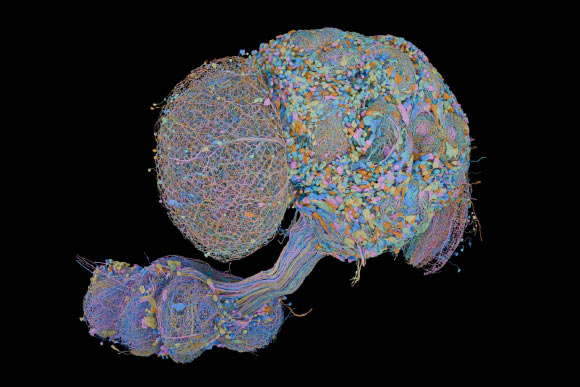
Researchers Unveil Complete Fruit Fly Connectome

The wiring diagram of the central nervous system of an adult male fruit fly will help researchers better understand how the brain enables complex action, from sensory perception to behavior. Image credit: FlyEM Project Team, HHMI’s Janelia Research Campus / Cambridge Connectomics Group / Google Research / Philip Hubbard, HHMI Janelia Research Campus.

After nearly two decades of work, scientists have completed a wiring diagram of the central nervous system of an adult male fruit fly (Drosophila melanogaster).

The post Researchers Unveil Complete Fruit Fly Connectome appeared first on Sci.News: Breaking Science News.

  •  
  •  
❌