
❌

Reading view

Moths Can Smell With Their Wings, Researchers Say
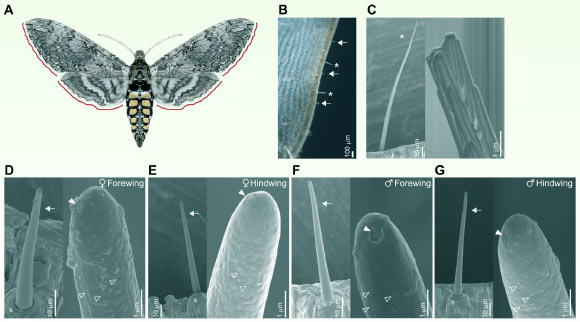
Reda Ismaieel et al. examined the olfactory capabilities of the wings of the tobacco hawkmoth (Manduca sexta). Image credit: Reda Ismaieel et al., doi: 10.1242/jeb.252047.

Scientists at the Max Planck Institute for Chemical Ecology have found that moth wings are equipped with odor-detecting receptors, suggesting the insects use their wings -- not just their antennae -- to sense chemical cues in the air while flying.

The post Moths Can Smell With Their Wings, Researchers Say appeared first on Sci.News: Breaking Science News.

  •  

Dinosaur-Killing Asteroid Didn’t Just Strike Earth, Its Dust Cloud Cooked It

Ankylosaurus magniventris, a large armored dinosaur species, witnesses the impact of an asteroid, falling on the Yucatan peninsula 66 million years ago. Image credit: Fabio Manucci.

The Chicxulub impact not only plunged Earth into an impact winter but also produced a dust blanket that later overheated the planet, according to new research from Purdue University and the University of Colorado, Boulder.

The post Dinosaur-Killing Asteroid Didn’t Just Strike Earth, Its Dust Cloud Cooked It appeared first on Sci.News: Breaking Science News.
  •  

Astronomers Spot Wandering Supermassive Black Hole Far From Its Galaxy’s Heart

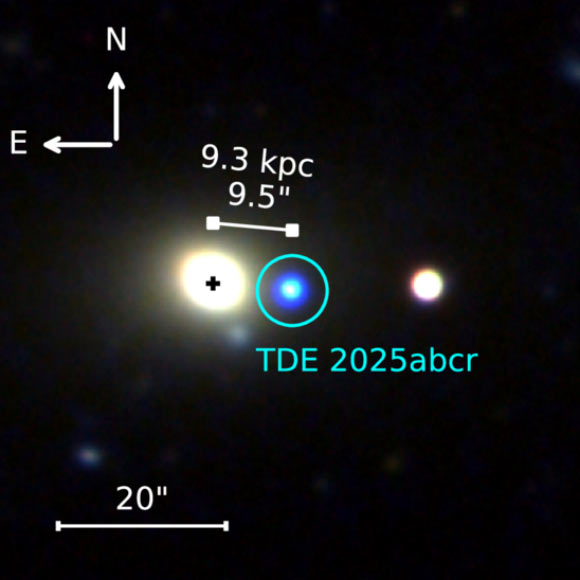
TDE 2025abcr. Image credit: Stein et al., doi: 10.3847/2041-8213/ae77f3.

Astronomers have discovered a dormant supermassive black hole 30,000 light-years from the center of WISEA J014656.04-152214.7 -- a massive galaxy located about 750 million light-years away in the constellation of Cetus -- after it briefly lit up by tearing apart a star.

The post Astronomers Spot Wandering Supermassive Black Hole Far From Its Galaxy’s Heart appeared first on Sci.News: Breaking Science News.

  •  
  •  
❌