❌

Reading view

Early Miocene Fossil Rewrites Family Tree of Little Carnivorous Marsupials
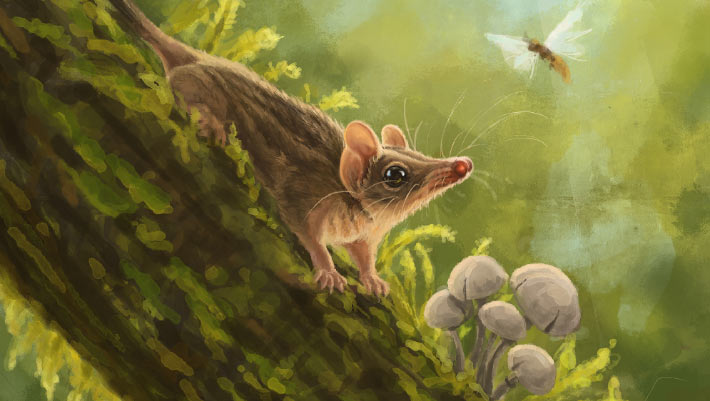
An artist’s reconstruction of Miyumba chrisdickmani in the Early Miocene rainforests of northern Australia. Image credit: Nellie Pease.

Paleontologists at the University of New South Wales have described a new genus and species of dasyurid marsupial from the Early Miocene of Australia, offering the first solid evidence that the family Dasyuridae -- which today includes quolls, Tasmanian devils and tiny antechinuses -- existed long before scientists had proof of it in the fossil record.

The post Early Miocene Fossil Rewrites Family Tree of Little Carnivorous Marsupials appeared first on Sci.News: Breaking Science News.

  •  

Giant Rift Valleys Hint Venus is Still Tectonically Active

This hemispheric view of Venus was created using radar observations, including images from NASA’s Magellan spacecraft. Magellan imaged more than 98% of Venus. Gaps in the Magellan coverage were filled with images from the Earth-based Arecibo radar. The composite image was processed to improve contrast and to emphasize small features, and was color-coded to represent elevation. Magellan launched on May 4, 1989, and was deployed from the cargo bay of Space Shuttle Atlantis on May 5, 1989. The spacecraft orbited Venus from August 10, 1990, until October 13, 1994 when the spacecraft was commanded to plunge into the atmosphere of Venus. Image credit: NASA / JPL-Caltech / USGS.

New 3D computer simulations from ETH Zurich show that young rift flanks on Venus stay tall and steep, while older ones flatten out over time.

The post Giant Rift Valleys Hint Venus is Still Tectonically Active appeared first on Sci.News: Breaking Science News.
  •  

Did Early Snakes Burrow, Swim or Crawl? 80‑Million‑Year‑Old Fossil Suggests: All Three

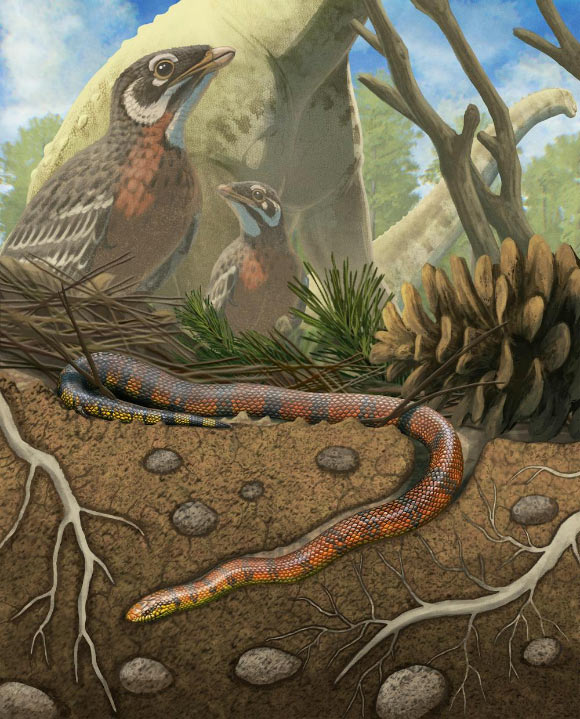
Life reconstruction of Tametara mirim. Image credit: Gabriel Ugueto.

Paleontologists have unearthed a remarkably preserved fossil snake in Brazil that is reshaping ideas about how the earliest snakes lived and complicating the long-running debate over whether their ancestors burrowed underground, swam in the sea or crawled the surface.

The post Did Early Snakes Burrow, Swim or Crawl? 80‑Million‑Year‑Old Fossil Suggests: All Three appeared first on Sci.News: Breaking Science News.
  •  

Juno’s Microwave Vision Peers beneath Surface of Jupiter’s Volcanic Moon Io

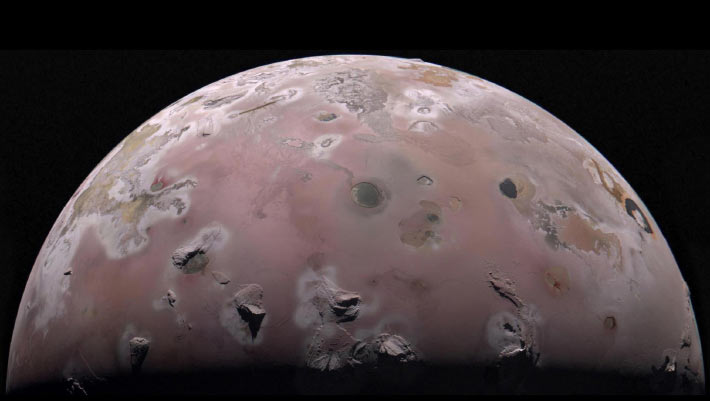
The north polar region of Io was captured by NASA’s Juno spacecraft on December 30, 2023. Image credit: NASA / JPL-Caltech / SwRI / MSSS / Gerald EichstΓ€dt.

New data from NASA’s Juno spacecraft show temperatures spike more than 20 degrees Celsius just a few meters under Io’s surface, providing the first look at what’s happening below the crust of the Solar System’s most volcanic world.

The post Juno’s Microwave Vision Peers beneath Surface of Jupiter’s Volcanic Moon Io appeared first on Sci.News: Breaking Science News.

  •  
  •  
  •  

Stone Tools from Armenian Cave Reveal Split Strategy for Survival 50,000 Years Ago

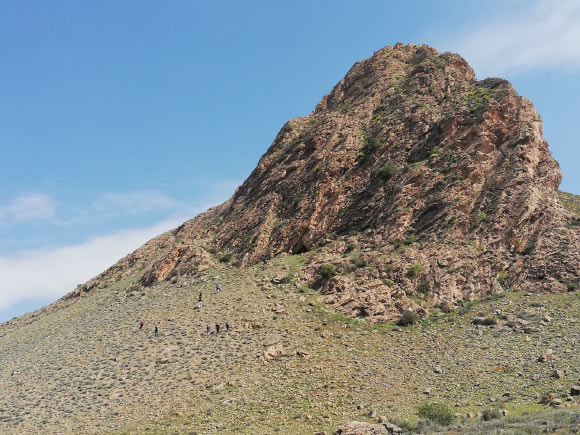
A look at Ararat-1 Cave from the bottom of the Ararat Depression. Image credit: Ariel Malinsky Buller.

Ararat-1, a modest limestone cave that lies at an elevation of 1,034 m on the eastern flanks of the Ararat Depression in central Armenia, has yielded a striking puzzle about how Middle Paleolithic humans moved across their landscape.

The post Stone Tools from Armenian Cave Reveal Split Strategy for Survival 50,000 Years Ago appeared first on Sci.News: Breaking Science News.
  •  

Space Weather May Warp Martian Weather during Dust Storms, Planetary Scientists Suggest

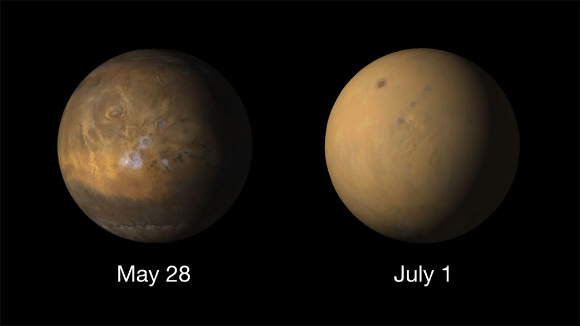
These images from Mars Color Imager (MARCI) aboard NASA’s Mars Reconnaissance Orbiter (MRO) show Mars before (left) and during (right) the June 2018 dust storm. Image credit: NASA / JPL-Caltech / University of Arizona.

Planetary researchers have found the first evidence that bursts of energetic particles from the Sun could warm the lower atmosphere of Mars during massive dust storms, hinting at an unexpected link between space weather and Martian climate.

The post Space Weather May Warp Martian Weather during Dust Storms, Planetary Scientists Suggest appeared first on Sci.News: Breaking Science News.
  •  

Hugs May Be an Ancient Peacekeeping Tool, Ape Study Suggests

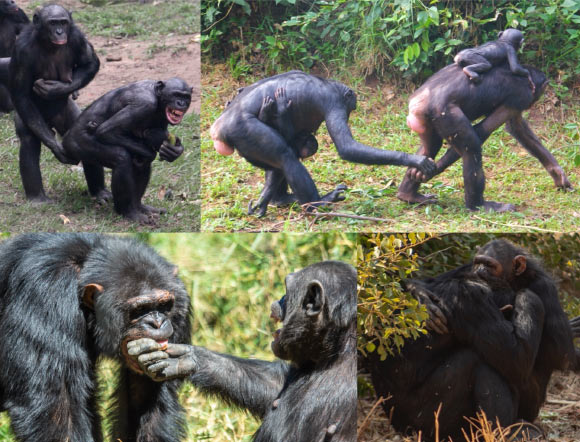
Examples of bonobo and chimpanzee reassurance behaviors. Image credit: Z. Clay / J.S. Brooker.

In a new study of chimpanzees (Pan troglodytes) and bonobos (Pan paniscus), scientists found that embraces, touches and other reassuring gestures before competition for food were linked to more peaceful sharing, suggesting the roots of human social touch stretch back at least six million years.

The post Hugs May Be an Ancient Peacekeeping Tool, Ape Study Suggests appeared first on Sci.News: Breaking Science News.
  •  

Our Milky Way Galaxy Likely Underwent Disk Flip after Ancient Galactic Collision: Study

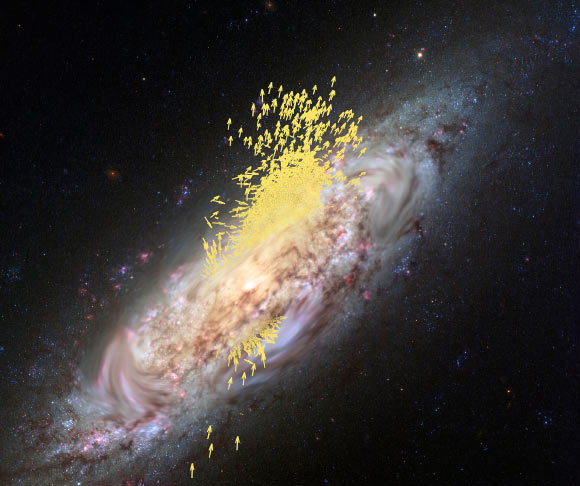
Using supercomputer simulations of galaxies like the Milky Way, Batrakov et al. found that galaxies with slowly rotating stellar haloes are more likely to have experienced a major β€˜disk flip,’ where our Galaxy’s disk changed its orientation by more than 90 degrees. Image credit: Batrakov et al.

A head-on collision with another galaxy billions of years ago may have dramatically reoriented the Milky Way’s disk, according to new supercomputer simulations that reveal how violent mergers can leave spiral galaxies looking surprisingly normal today.

The post Our Milky Way Galaxy Likely Underwent Disk Flip after Ancient Galactic Collision: Study appeared first on Sci.News: Breaking Science News.
  •  

Small Sauropod Dinosaur from Jurassic Period Discovered in India

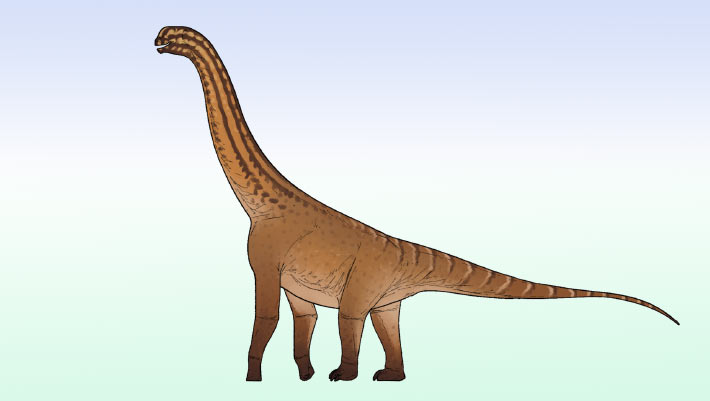
Life reconstruction of Ceratocaudia antiqua, the earliest-known macronarian neosauropod species from India. Image credit: Connor Ashbridge / CC BY 4.0.

Paleontologists in India have unearthed a partial skeleton of a diminutive, previously unknown neosauropod dinosaur from the Middle Jurassic rocks of Gujarat’s Kachchh Basin.

The post Small Sauropod Dinosaur from Jurassic Period Discovered in India appeared first on Sci.News: Breaking Science News.
  •  

Puzzling Near-Earth Asteroid Turns Out to Be Comet with Weak Tail

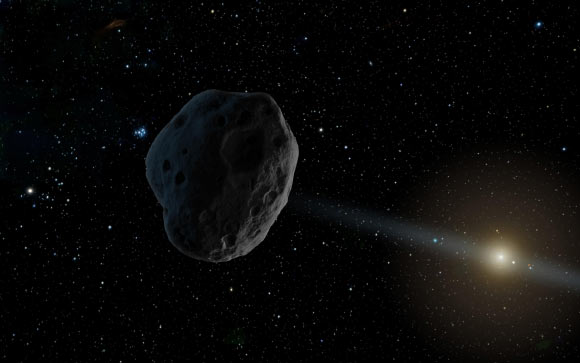
This artist’s concept depicts a near-Earth asteroid with an elongated orbit; a few objects such as these can exhibit significant perturbations in their motion around the Sun and, like 1998 SH2, could turn out to be regular comets with a weak tail and coma. Image credit: NASA / JPL-Caltech.

The near-Earth object (875163) 1998 SH2, which is currently classified as an asteroid, has revealed a hidden identity: it’s actually a comet in disguise, according to a new study published in the journal Nature Astronomy.

The post Puzzling Near-Earth Asteroid Turns Out to Be Comet with Weak Tail appeared first on Sci.News: Breaking Science News.
  •  

3.5-Million-Year-Old Fossil from Japan Reveals Lost Lineage of Giant Salamanders

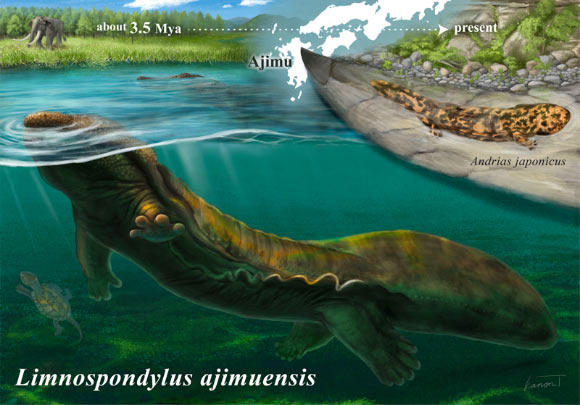
Life reconstruction of Limnospondylus ajimuensis. Image credit: Kanon Tanaka.

A new genus and species of cryptobranchid salamander that lived in lakes in Japan about 3.5 million years ago has been identified from three fossil vertebrae, filling a major gap in the fossil record of one of the world’s oldest amphibian lineages.

The post 3.5-Million-Year-Old Fossil from Japan Reveals Lost Lineage of Giant Salamanders appeared first on Sci.News: Breaking Science News.
  •  

Oldest Known Male Gecko Found Preserved in Kachin Amber

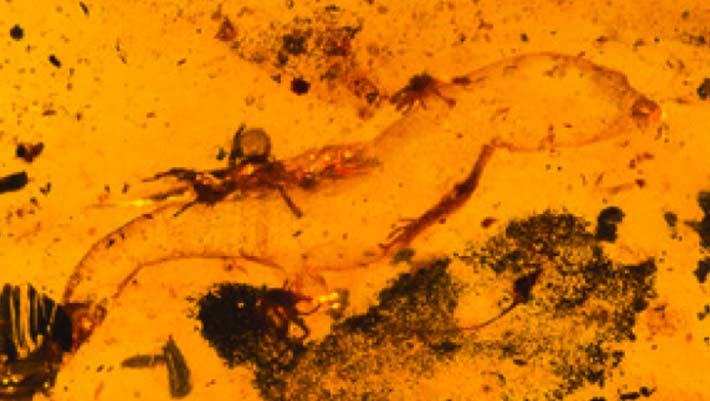
Carinasquama rusmithii. Image credit: Daza et al., doi: 10.3897/sjp.145.188227.

Paleontologists have described a new genus and species of ancient gecko found in two pieces of amber from the 99-million-year-old (mid-Cretaceous) amber deposits in Kachin province, Myanmar.

The post Oldest Known Male Gecko Found Preserved in Kachin Amber appeared first on Sci.News: Breaking Science News.
  •  

CERN Physicists Take New Look at Why Matter Beat Antimatter

Neutral beauty mesons can turn into their own antimatter opposite and back again. Image credit: Ansar Iqbal / CMS.

Using the largest sample yet of particles called beauty mesons, physicists with the CMS Collaboration at CERN’s Large Hadron Collider (LHC) refined a decades-old test of the subtle imbalance that let our Universe exist at all.

The post CERN Physicists Take New Look at Why Matter Beat Antimatter appeared first on Sci.News: Breaking Science News.

  •  

Moderate Coffee and Caffeine Intake Poses Little Heart Risk, and May Even Help

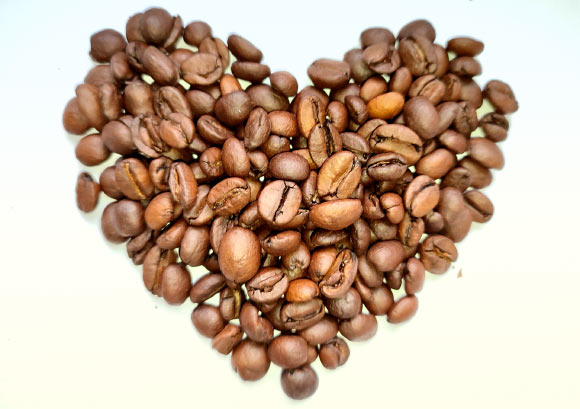
Marcus et al. conclude that moderate caffeine or coffee consumption is safe for most adults and is linked to a lower risk of several cardiovascular conditions, including coronary heart disease, stroke, heart failure and atrial fibrillation, as well as hypertension and type 2 diabetes. Image credit: Sci.News.

In a new review paper, Dr. Gregory Marcus from the University of California, San Francisco and colleagues analyzed decades of research on how caffeine -- most often consumed as coffee -- affects the heart and its risk factors.

The post Moderate Coffee and Caffeine Intake Poses Little Heart Risk, and May Even Help appeared first on Sci.News: Breaking Science News.
  •  

Astronomers Find Omega Centauri’s First Stellar-Mass Black Hole

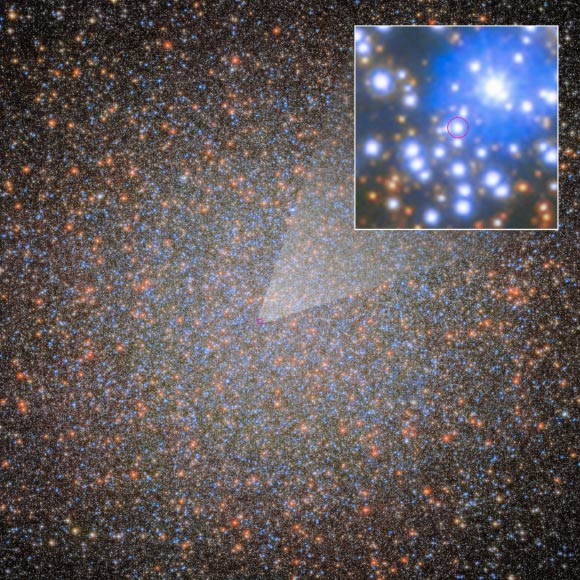
Whitaker et al. found Omega Centauri’s first stellar-mass black hole, which has a visible star companion that is shown in greater detail. Image credit: ESA / NASA / Maximilian HΓ€berle, MPIA / Joseph DePasquale, STScI.

After decades of searching, astronomers have pinpointed the first of an estimated 10,000 stellar-mass black holes thought to lurk in Omega Centauri, the most massive stellar system in the Milky Way found so far, with a stellar mass of 3.6 million solar masses.

The post Astronomers Find Omega Centauri’s First Stellar-Mass Black Hole appeared first on Sci.News: Breaking Science News.
  •  
❌