❌

Reading view

Astronomers Detect Gamma-Ray Burst’s Magnetic Fingerprint

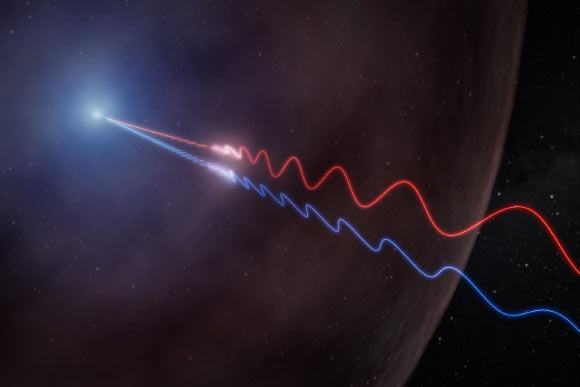
This illustration depicts Faraday rotation in the afterglow of a gamma-ray burst. A powerful jet (upper left) sends polarized radio waves outward through the thin wall of a surrounding bubble of magnetized gas called an HII region. As the light passes through this material, its polarization angle is twisted by the magnetic field. Because the effect is stronger at longer wavelengths, the red and blue waves, which represent different radio wavelengths, exit the bubble oscillating in different directions. By measuring this difference, astronomers were able to map the magnetic environment surrounding GRB 260310A for the first time. Image credit: NSF / AUI / NRAO / M. Weiss

Using NSF’s Very Large Array (VLA), astronomers made the first radio detection of polarized light and Faraday rotation from a gamma-ray burst afterglow, offering an unprecedented glimpse of the magnetic fields surrounding one of the Universe’s most powerful explosions.

The post Astronomers Detect Gamma-Ray Burst’s Magnetic Fingerprint appeared first on Sci.News: Breaking Science News.
  •  

Astronomers Discover and Directly Image Third Planet in Beta Pictoris System

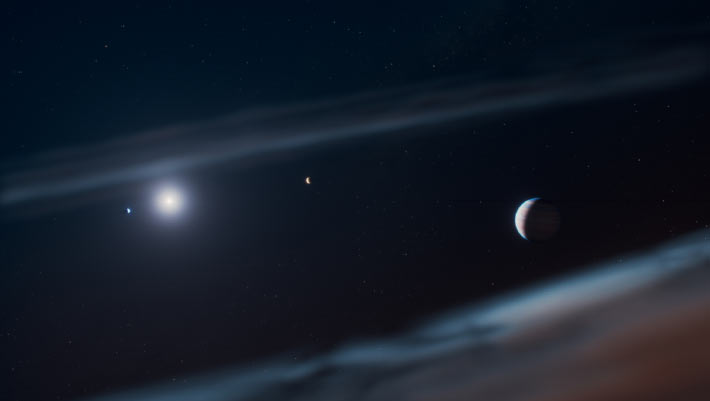
This artist’s concept shows the Beta Pictoris system with the discovered giant exoplanet Beta Pictoris d at the right. Image credit: NASA / ESA / CSA / STScI / Ralf Crawford, STScI.

Named Beta Pictoris d, the newly-discovered world is 100 times fainter than Beta Pictoris b -- the first planet discovered around the A5-type star Beta Pictoris -- and is among the lightest exoplanets ever to be imaged from the ground.

The post Astronomers Discover and Directly Image Third Planet in Beta Pictoris System appeared first on Sci.News: Breaking Science News.
  •  

Pluto’s Moon Charon May Still Be Slowing Its Spin, Study Suggests

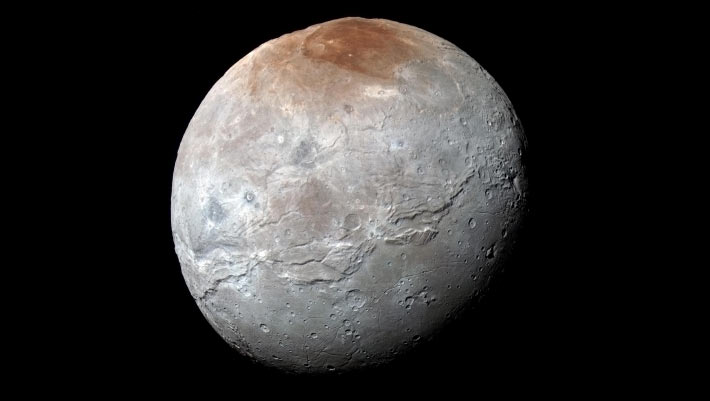
This impressive view of Charon was captured on July 14, 2015. Charon’s color palette is not as diverse as Pluto’s; most striking is the reddish north (top) polar region, informally named Mordor Macula. Image credit: NASA / Johns Hopkins University Applied Physics Laboratory / Southwest Research Institute.

New research indicates that Pluto’s largest moon, Charon, may continue to lose rotational energy despite the pair’s long-standing tidal lock, offering scientists a rare glimpse into the hidden interiors of distant icy worlds.

The post Pluto’s Moon Charon May Still Be Slowing Its Spin, Study Suggests appeared first on Sci.News: Breaking Science News.
  •  

Losing Even 80 Minutes of Sleep a Night Linked to Weight Gain

The study sheds new light on the link between sleep deprivation and obesity. Image credit: Sweet Briar College.

New research from Columbia University found that adults who cut their sleep by about 80 minutes for six weeks packed on a pound (0.45 kg) and moved less during the day.

The post Losing Even 80 Minutes of Sleep a Night Linked to Weight Gain appeared first on Sci.News: Breaking Science News.

  •  

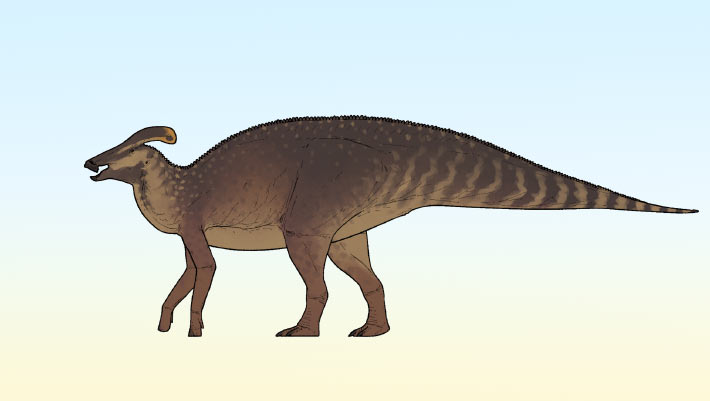
New Crested Dinosaur Species Identified in Canada

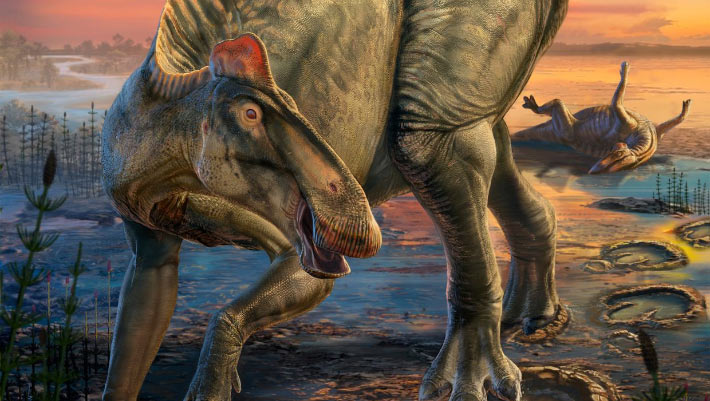
Life reconstruction of Plesiolophus warnerensis. Image credit: Connor Ashbridge / CC BY 4.0.

A new genus and species of lambeosaurine hadrosaurid dinosaur has been identified in southern Alberta, Canada, dating back 77 million years to the Campanian age of the Cretaceous period.

The post New Crested Dinosaur Species Identified in Canada appeared first on Sci.News: Breaking Science News.
  •  

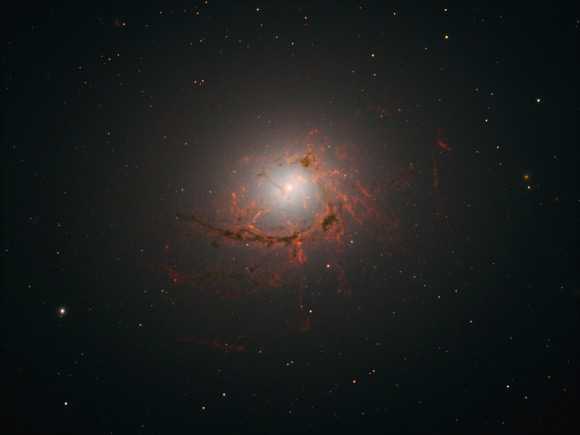
Webb Catches Supermassive Black Hole Feeding from Cosmic Gas Streams

This Hubble image shows the elliptical galaxy NGC 4696. Image credit: NASA / ESA / Hubble / A. Fabian.

New images of the giant elliptical galaxy NGC 4696 from the NASA/ESA/CSA James Webb Space Telescope reveal gas filaments funneling material into a spinning disk around a supermassive black hole 800 light-years across.

The post Webb Catches Supermassive Black Hole Feeding from Cosmic Gas Streams appeared first on Sci.News: Breaking Science News.
  •  

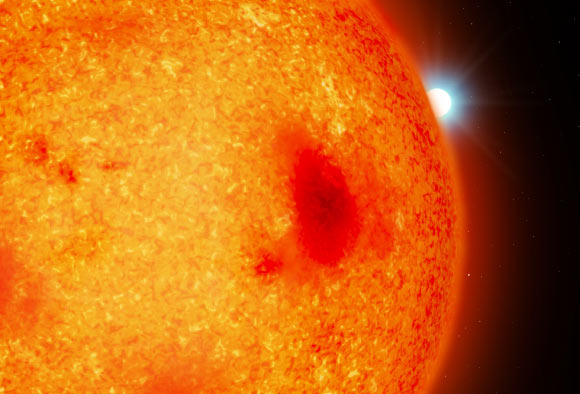
Astronomers Discover Four New White Dwarfs in Solar Neighborhood

An artist’s impression of a red dwarf with a white dwarf binary companion peeking out from behind. Image credit: Mark A. Garlick / University of Warwick.

Using near-UV spectroscopic data from the Space Telescope Imaging Spectrograph (STIS) on the NASA/ESA Hubble Space Telescope, astronomers discovered four white dwarfs orbiting nearby red dwarf stars.

The post Astronomers Discover Four New White Dwarfs in Solar Neighborhood appeared first on Sci.News: Breaking Science News.
  •  

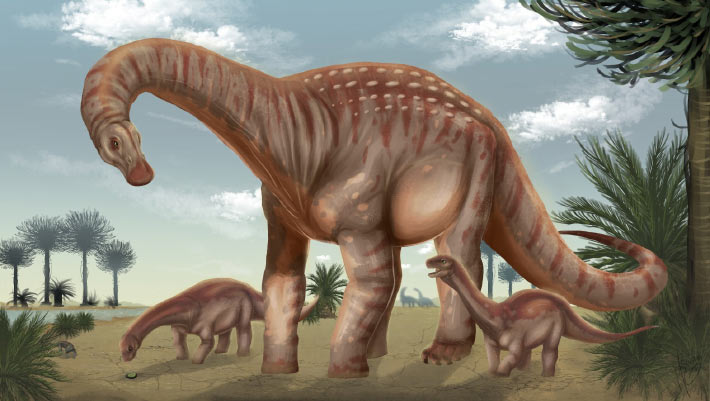
Paleontologists Discover New Species of Titanosaur in Uruguay

Mesetasaurus protector. Image credit: Merlina Ramírez.

Paleontologists in Uruguay have identified a new species of aeolosaurine titanosaur from a pair of remarkably well-preserved tailbones unearthed in the 1980s near the Uruguay River.

The post Paleontologists Discover New Species of Titanosaur in Uruguay appeared first on Sci.News: Breaking Science News.
  •  

Astronomers Detect Sugar in Interstellar Space for First Time

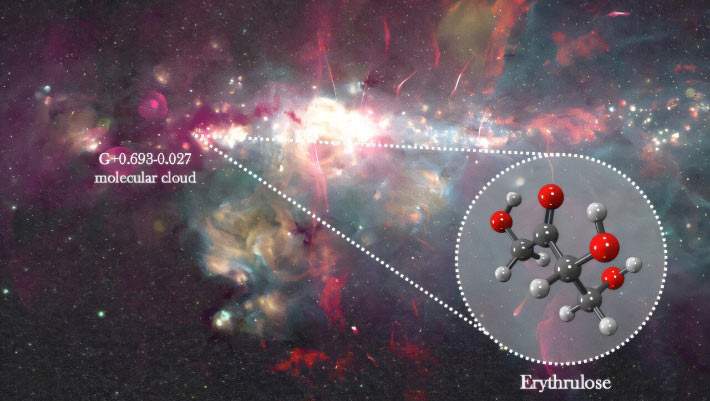
This composite image of the Milky Way’s central region shows the location of the molecular cloud G+0.693-0.027. Image credit: Ashley Barnes / Izaskun Jiménez-Serra / Juan García de la Concepción.

Using the Yebes 40-m and IRAM 30-m radio telescopes, astronomers have discovered erythrulose, a four-carbon sugar commonly found in raspberries and sunless tanning cosmetics, in the molecular cloud G+0.693-0.027.

The post Astronomers Detect Sugar in Interstellar Space for First Time appeared first on Sci.News: Breaking Science News.
  •  

Was Odysseus’ Ithaca Never an Island? Scholars Challenge Centuries-Old Assumption

Paliki peninsula on the island of Kefalonia, Ionian Islands, Greece. Image credit: Christos Vittoratos / CC BY-SA 3.0.

For as long as readers have pored over Homer’s Odyssey they have pictured Ithaca, the homeland Odysseus fights for ten years to reach, as an island unto itself.

The post Was Odysseus’ Ithaca Never an Island? Scholars Challenge Centuries-Old Assumption appeared first on Sci.News: Breaking Science News.

  •  

Bumblebees Display Emotion-Like Reactions to Sweet and Bitter Tastes

Gibbons et al. showed that bumblebees are capable of modifying their response to noxious stimuli in order to get a higher sugar reward. Image credit: Ralphs Fotos.

Slow-motion video reveals that buff-tailed bumblebees (Bombus terrestris) respond to sweet and bitter tastes with distinct, context-dependent behaviors resembling mammalian expressions of pleasure and disgust, adding fresh evidence to the debate over insect consciousness.

The post Bumblebees Display Emotion-Like Reactions to Sweet and Bitter Tastes appeared first on Sci.News: Breaking Science News.

  •  

Beans and Broccoli Linked to Lower Heart Risk in Young Adults

Sotos-Prieto et al show that modifying dietary habits can have a significant impact on health outcomes. Image credit: Silvia Rita.

A new analysis of data from the Western Australian-based Raine Study suggests that two humble vegetable groups -- legumes and cruciferous vegetables -- may play an outsize role in protecting young adults from early cardiometabolic risk, though the benefits appear to diverge sharply between men and women.

The post Beans and Broccoli Linked to Lower Heart Risk in Young Adults appeared first on Sci.News: Breaking Science News.

  •  

Tiny Triassic Reptile Sheds Light on Early Lizard Evolution

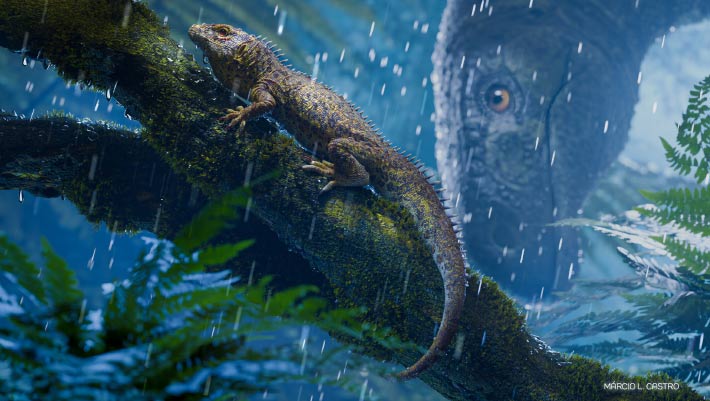
A landscape from the Late Triassic of southern Brazil showing Cargninia enigmatica being observed by the sauropodomorph dinosaur Macrocollum itaquii. Image credit: Marcio L. Castro.

Today, lepidosaurs -- the reptile group that includes lizards, snakes and New Zealand’s tuatara -- are among the most diverse vertebrates on Earth, but their earliest evolutionary history remains poorly understood.

The post Tiny Triassic Reptile Sheds Light on Early Lizard Evolution appeared first on Sci.News: Breaking Science News.
  •  

Ediacaran Sea Creature May Hold Earliest Evidence of Right-Handedness

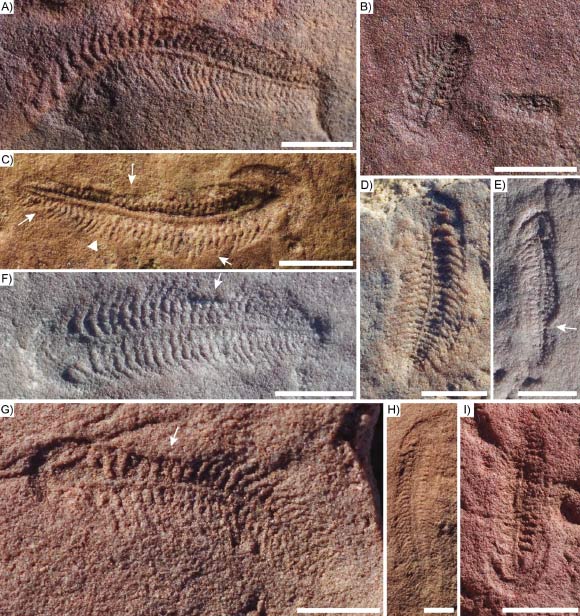
Fossils of Spriggina floundersi from South Australia; white arrows highlight lifted areas, white triangle indicates divergent bend angle of adjacent modules. Scale bars - 10 cm. Image credit: Evans et al., doi: 10.1038/s41598-026-53857-x.

Spriggina floundersi, a marine species that lived during the Ediacaran period 550 million years ago, is one of Earth’s earliest bilaterally symmetrical animals.

The post Ediacaran Sea Creature May Hold Earliest Evidence of Right-Handedness appeared first on Sci.News: Breaking Science News.
  •  

Astronomers Uncover Hidden Structures Surrounding Orion Nebula

Extended Orion nebula shell sampled by HI emission from the combined VLA and FAST observations (shown in red), Hα emission from the European Southern Observatory Digitized Sky Survey (shown in green), and 3.4-μm emission registered by the Wide-field Infrared Survey Explorer (WISE) satellite (shown in blue). Image credit: Juan D. Soler, University of Vienna / NRAO / VLA / NASA / WISE.

Using the Karl G. Jansky Very Large Array (VLA) s and the Five-hundred-meter Aperture Spherical Radio Telescope (FAST), astronomers have created the sharpest-ever radio maps of neutral hydrogen around the Orion Nebula.

The post Astronomers Uncover Hidden Structures Surrounding Orion Nebula appeared first on Sci.News: Breaking Science News.

  •  

New Species of Long-Necked Dinosaur Identified in Thailand

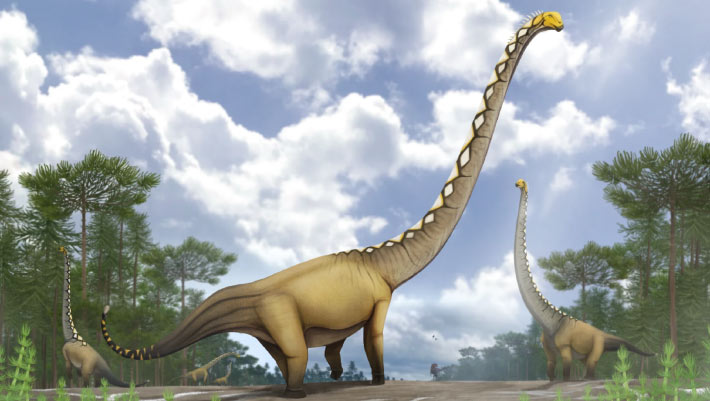
Life reconstruction of a herd of five individuals of Uragasaurus kalasinensis inhabiting a Late Jurassic forest in Thailand, accompanied by a pair of rhamphorhynchoid pterosaurs and a metriacanthosaurid theropod. Image credit: Pakorn Chotchaiyaporn.

Paleontologists working in northeastern Thailand have identified a new species of mamenchisaurid sauropod dinosaur, offering fresh evidence that a group of giant sauropods once thought to be almost exclusively East Asian also roamed mainland Southeast Asia.

The post New Species of Long-Necked Dinosaur Identified in Thailand appeared first on Sci.News: Breaking Science News.
  •  

Astronomers Probe Chemistry of Giant Exoplanet Beta Pictoris b

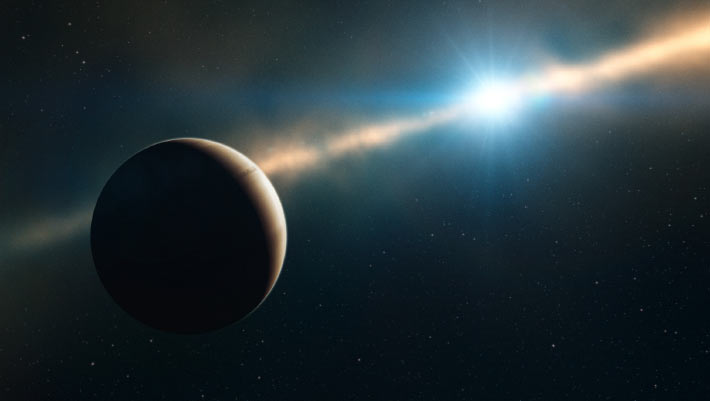
This artist’s impression shows how the gas giant exoplanet inside the disc of Beta Pictoris may look. Image credit: L. Calçada / ESO.

Using the upgraded GRAVITY+ instrument on ESO’s Very Large Telescope Interferometer (VLTI), astronomers have measured the ratio of carbon isotopes in the atmosphere of the young exoplanet Beta Pictoris, offering new insights into how giant planets form.

The post Astronomers Probe Chemistry of Giant Exoplanet Beta Pictoris b appeared first on Sci.News: Breaking Science News.
  •  

Ancient Turkish Cave Reveals Neanderthals and Homo sapiens Shared Same Way of Life

A group of Neanderthals in a cave. Image credit: Tyler B. Tretsven.

Üçağızlı II Cave on Türkiye’s Mediterranean coast has yielded a rare and detailed record of two Homo species living the same way of life, one after the other, over more than 20,000 years, offering new evidence that the transition from Neanderthals to modern humans in the region was far more culturally seamless than previously understood.

The post Ancient Turkish Cave Reveals Neanderthals and Homo sapiens Shared Same Way of Life appeared first on Sci.News: Breaking Science News.

  •  

Euclid Discovers Earliest Quasars Ever Seen

This collage shows 15 of the 31 newly discovered quasars by ESA’s Euclid space telescope. EUCL J172902.75+641018.1 and EUCL J125308.55+705432.3 are visible on the first row, the first and second from the left, respectively. Image credit: ESA / Euclid / Euclid Consortium / NASA / Euclid Science Ground Segment / Antoine Basset, CNES.

Astronomers using ESA’s Euclid space telescope have discovered 31 ancient quasars from a time when the Universe was just 670 to 800 million years old. One of these objects, dubbed EUCL J172902.75+641018.1, sets the new record for the most distant quasar ever reported.

The post Euclid Discovers Earliest Quasars Ever Seen appeared first on Sci.News: Breaking Science News.

  •  
❌