❌

Reading view

Astronomers Trace Elusive High-Energy Neutrino to Star-Forming Galaxy in Early Universe
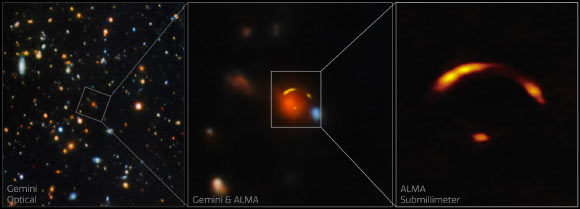
The origin of high-energy astrophysical neutrinos remains unresolved, and secure electromagnetic counterparts to individual events are rare despite rapid follow-up. Dusty star-forming galaxies at cosmic noon (redshift of z ≈ 1-4) are natural cosmic-ray calorimeters, yet observational links between these galaxies and neutrinos have remained unknown. Urata et al. report a compact-core, dusty star-forming galaxy within an IceCube localization, JCMT0402-0424, a quadruply lensed galaxy at z = 2.988 located inside the 90% containment region of the IceCube event IC 210922A. Image credit: International Gemini Observatory / NOIRLab / NSF / AURA / ALMA / ESO / NAOJ / NRAO / T.A. Rector, University of Alaska Anchorage & NSF’s NOIRLab / D. de Martin & M. Zamani, NSF’s NOIRLab / Yuji Urata. MITOS Science Co., LTD.

JCMT0402-0424, a dusty starburst galaxy around 11 billion light-years away, is the strongest candidate yet for the source of the high-energy neutrino event IC 210922A, according to a team of astronomer led by Yuji Urata of MITOS Science Co.

The post Astronomers Trace Elusive High-Energy Neutrino to Star-Forming Galaxy in Early Universe appeared first on Sci.News: Breaking Science News.
  •  

Radar Observations Reveal New Clues about Europa’s Hidden Interior

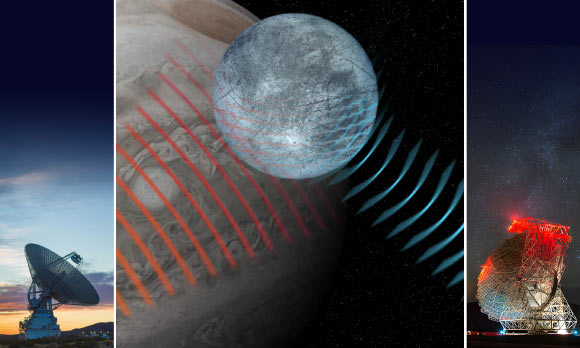
This artist’s impression shows radar waves from NASA’s Goldstone Solar System Radar pinging Europa; the radar waves penetrate Europa’s icy surface before bouncing back to be collected by NSF’s Green Bank Telescope on Earth. Image credit: NSF / AUI / NSF’s NRAO / P.Vosteen.

Using NASA’s Goldstone Solar System Radar and NSF’s Green Bank Telescope, astronomers from the University of California, Los Angeles, confirmed that the icy surface of Jupiter’s moon Europa scatters radio energy in an unusually strong and complex way not seen on rocky worlds.

The post Radar Observations Reveal New Clues about Europa’s Hidden Interior appeared first on Sci.News: Breaking Science News.
  •  
  •  

New Duck-Billed Dinosaur Unearthed in Romania

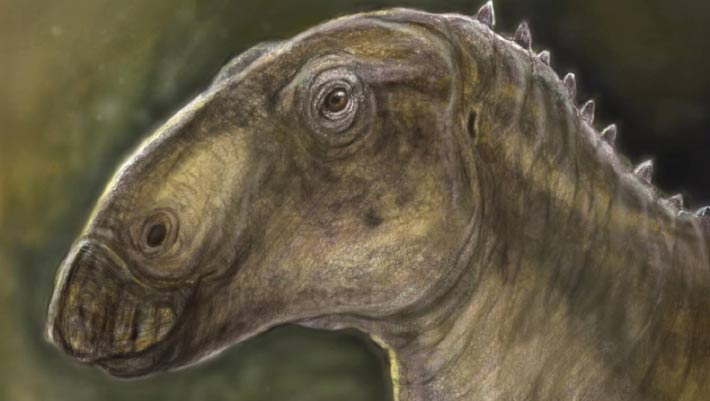
Kryptohadros kallaiae. Image credit: Tibor Pecsics.

An international team of paleontologists from Romania, Hungary and Italy has identified a new genus and species of herbivorous, duck-billed dinosaur from an incomplete skeleton unearthed in the Hațeg Basin, a bowl-shaped depression in the Carpathians of present-day Romania.

The post New Duck-Billed Dinosaur Unearthed in Romania appeared first on Sci.News: Breaking Science News.

  •  

New Species of Walking Shark Discovered off Papua New Guinea

Hemiscyllium dudgeonae, male paratype, Nubwageta, Milne Bay province, Papua New Guinea. Image credit: M.V. Erdmann.

Marine biologists have identified a new species of the shark genus Hemiscyllium in the waters of eastern Papua New Guinea, expanding a remarkable group of reef-dwelling sharks known for using their four fins to ‘walk’ across the seafloor.

The post New Species of Walking Shark Discovered off Papua New Guinea appeared first on Sci.News: Breaking Science News.

  •  

Evidence of Fire Use by Early Humans May Date Back Nearly 1.8 Million Years

Shaar et al. unveil the oldest evidence of human activity in Wonderwerk Cave, South Africa. Image credit: Michael Chazan.

Scientists have uncovered compelling new evidence that early human ancestors, likely Homo erectus, were deliberately bringing fire into Wonderwerk Cave in South Africa as far back as 1.79 million years ago.

The post Evidence of Fire Use by Early Humans May Date Back Nearly 1.8 Million Years appeared first on Sci.News: Breaking Science News.

  •  

Fossils from Chinese Cave Fill Crucial Gap in History of Gigantopithecus blacki

An artist’s impression of a group of Gigantopithecus blacki within a forest in southern China. Image credit: Garcia / Joannes-Boyau, Southern Cross University.

Deep inside a limestone cave in southern China, paleontologists have uncovered an assemblage of thirteen fossilized teeth belonging to Gigantopithecus blacki, the largest primate species ever known to have lived.

The post Fossils from Chinese Cave Fill Crucial Gap in History of Gigantopithecus blacki appeared first on Sci.News: Breaking Science News.

  •  

Experimental Copper-Based Drug Clears Alzheimer’s Plaques and Boosts Memory in Mice

Using the APP/PS1 mouse model of familial Alzheimer’s disease, Pyun et al. investigated the effect of Cu(ATSM) on brain microvascular abundance and function of P-glycoprotein and the associated effects on exogenous amyloid-beta clearance, brain amyloid burden, and cognitive function. Image credit: Pyun et al., doi: 10.1021/acschemneuro.6c00252.

Copper diacetyl bis(4-methyl-3-thiosemicarbazone), or Cu(ATSM), restored a key waste-removal system in the brain, reducing toxic amyloid-beta buildup and improving spatial memory in lab models of Alzheimer’s disease, according to a team of researchers at Monash University.

The post Experimental Copper-Based Drug Clears Alzheimer’s Plaques and Boosts Memory in Mice appeared first on Sci.News: Breaking Science News.
  •  

New Marsupial Lineage Emerges from Australian Fossils

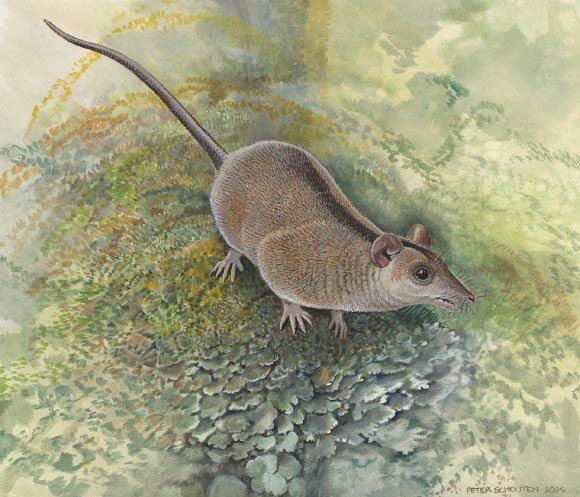
Reconstruction of Phantasmodon travouilloni in the Early Miocene rainforests of northwestern Queensland. Image credit: Peter Schouten.

Paleontologists have described a new genus and three new species of small, insect-eating marsupials from the Early Miocene deposits of the Riversleigh World Heritage Area in northwestern Queensland, one of Australia’s richest fossil sites.

The post New Marsupial Lineage Emerges from Australian Fossils appeared first on Sci.News: Breaking Science News.

  •  
  •  

Entomologists Reconstruct Evolutionary History of Millipedes

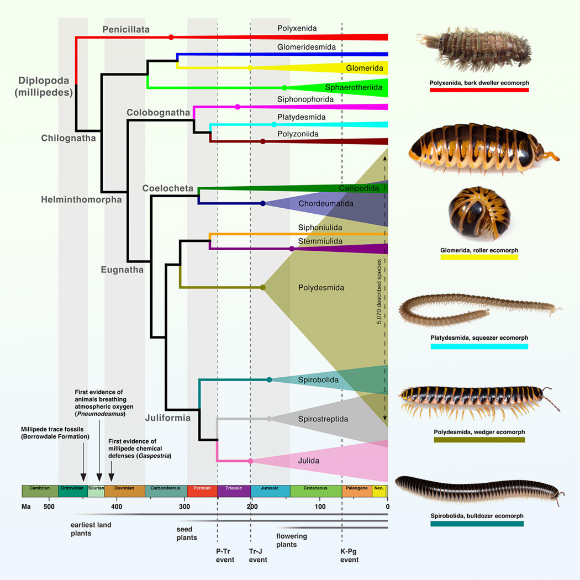
To date, 14,232 millipede species have been described, with at least as many still awaiting discovery. Image credit: Vasquez-Valverde et al., doi: 10.1016/j.cub.2026.05.035.

Two elusive groups of millipedes, Siphoniulida and Siphonocryptida, were the last missing pieces in the evolutionary history of Earth’s oldest land animals, according to a team of entomologists led by Virginia Tech.

The post Entomologists Reconstruct Evolutionary History of Millipedes appeared first on Sci.News: Breaking Science News.

  •  

Astronomers May Have Found Supernova Remnant near Milky Way’s Central Black Hole

This composite image contains X-rays from Chandra and XMM-Newton missions (shown in blue) as well as radio data from the MeerKAT telescope (shown in red) in South Africa. These have been combined with an optical image from the Pan-STARRS telescopes in Hawai’i (red, green, and blue). Image credit: NASA / CXC / UCLA / Zhu et al. / ESA / XMM-Newton / PanSTARRS / MeerKAT / CSA / STScI / SAO / L. Frattare & P. Edmonds.

Using NASA’s Chandra X-ray Observatory and ESA’s XMM-Newton satellite, astronomers identified a possible remnant of ancient stellar explosion just a few dozen light-years from Sagittarius A*, a supermassive black hole at the center of our Milky Way Galaxy.

The post Astronomers May Have Found Supernova Remnant near Milky Way’s Central Black Hole appeared first on Sci.News: Breaking Science News.
  •  

New Species of Ancient Bear-Dog Identified in Spain

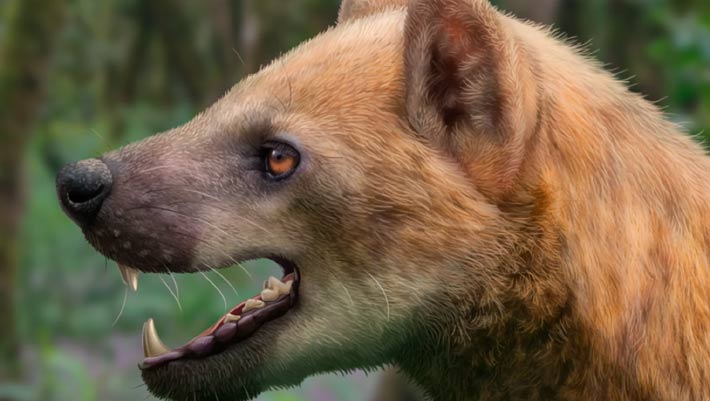
Paludocyon moyasolai. Image credit: Jesús Gamarra.

Paleontologists have identified a previously unknown species of amphicyonid -- the extinct family of carnivorous mammals popularly known as bear-dogs -- from two specimens unearthed at a rich fossil site in the Vallès-Penedès Basin near Barcelona, Spain.

The post New Species of Ancient Bear-Dog Identified in Spain appeared first on Sci.News: Breaking Science News.

  •  

Amazon’s Elusive Short-Eared Dog May Be More Common than Researchers Once Thought

The short-eared dog (Atelocynus microtis) from a trap camera in Bolivia. Image credit: G. Ayala & M.E Viscarra.

Hundreds of camera-trap records from Bolivia and Peru suggest the short-eared dog (Atelocynus microtis), one of the world’s least-known canids and one of Latin America’s least-known carnivores, may be thriving in intact upland forests.

The post Amazon’s Elusive Short-Eared Dog May Be More Common than Researchers Once Thought appeared first on Sci.News: Breaking Science News.
  •  

Scientists Capture First-Ever Images of Cozumel Dwarf Fox

This image of a dwarf gray fox (Urocyon sp.) was captured on the island of Cozumel, Mexico: an adult male is shown partially concealed behind foliage before capture by the Fundación de Parques y Museos de Cozumel on September 14, 2023; this represents the first photograph ever taken of the species on the island and the first reported sighting since 2001. Image credit: Rafael Chacón.

Researchers have obtained the first-ever photographs of the Cozumel dwarf fox (Urocyon sp.), an elusive dwarf fox living on the Caribbean island of Cozumel, off Mexico’s Yucatán Peninsula. Captured in September 2023, the images provide the first confirmed evidence since 2001 that the elusive animal still survives on the island.

The post Scientists Capture First-Ever Images of Cozumel Dwarf Fox appeared first on Sci.News: Breaking Science News.

  •  

Study: Cave Lions were Distinct Species that Occasionally Bred with Ancestors of Today’s Lions

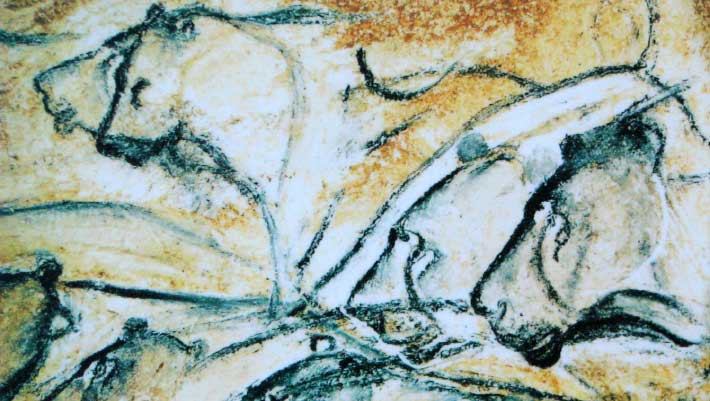
Cave lions painted in the Chauvet Cave, France.

The extinct Eurasian cave lion (Panthera spelaea) and today’s African and Asian lions (Panthera leo) belong to separate evolutionary lineages that diverged roughly 1.7 million years ago -- far earlier than previously thought, according to an analysis of 12 cave lion genomes spanning more than 100,000 years.

The post Study: Cave Lions were Distinct Species that Occasionally Bred with Ancestors of Today’s Lions appeared first on Sci.News: Breaking Science News.

  •  

Schrödinger’s Cat Gets Stranger: Physicists Demonstrate Quantum States No One Has Seen Before

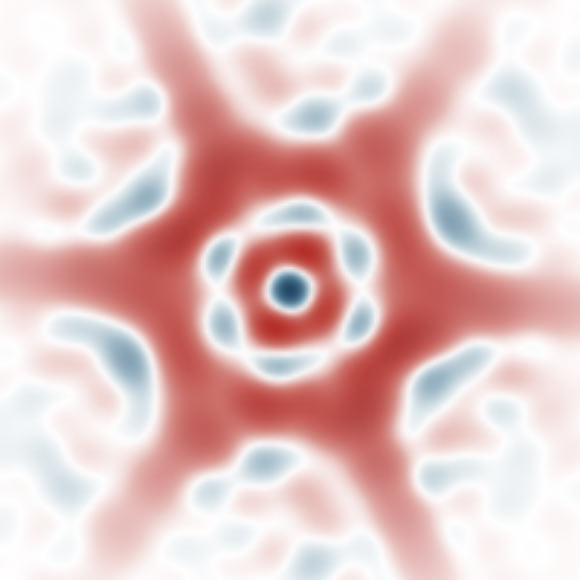
Quantum mechanics defies classical intuition, most famously through Schrödinger’s cat, where systems exist in superpositions of opposing states. Such superpositions are central to quantum technologies. Quantum ‘cat’ states have been realized in harmonic oscillators, but implementations were largely limited to Fock, displaced, or Gottesman-Kitaev-Preskill states. A different class of macroscopic superpositions, where an oscillator is squeezed along orthogonal axes so that its positional variance is simultaneously larger and smaller than the Heisenberg limit, was proposed previously but remained unrealized. Saner et al. introduce a trapped-ion hybrid spin-oscillator system enabling an experimental realization of these ‘siblings’ of Schrödinger’s cat. Image credit: Saner et al., doi: 10.1103/k1xk-yt42.

Physicists at the University of Oxford have engineered a new class of ‘cat states’ -- quantum superpositions constructed not from ordinary wave packets, but from deeply exotic, nonclassical components -- opening unexpected paths toward more resilient quantum computers.

The post Schrödinger’s Cat Gets Stranger: Physicists Demonstrate Quantum States No One Has Seen Before appeared first on Sci.News: Breaking Science News.
  •  

Earth’s Earliest Animals May Have Thrived Too Easily to Evolve

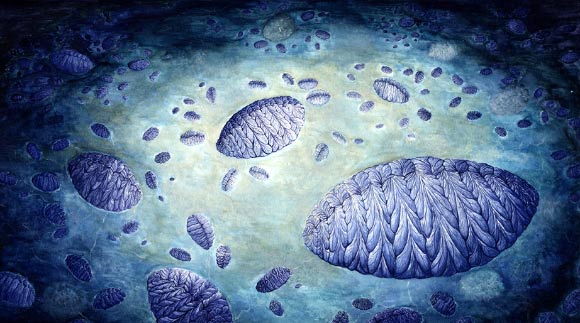
Artist’s reconstruction of the Fractofusus community: the bottom right features a large Fractofusus around which there are 5 to 8 medium specimens clustered; each of the medium specimens also has small specimens clustered around them; the small specimens therefore form an independent double cluster pattern, namely clusters of clusters. Image credit: C.G. Kenchington.

Fossils from some of the oldest-known animals on Earth, dating from 574 million years ago (Ediacaran period), suggest that cloning, not competition, dominated the Ediacaran seas, slowing evolution until environmental stress helped drive the rise of sexual reproduction and a burst of biodiversity.

The post Earth’s Earliest Animals May Have Thrived Too Easily to Evolve appeared first on Sci.News: Breaking Science News.
  •  

Lunar Meteorite Preserves Evidence of Colossal Asteroid Strike

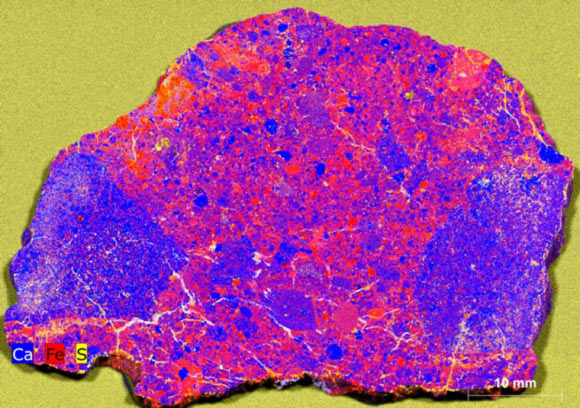
XRF map of 7.53 g slice of NWA 12593: calcium (Ca) and iron (Fe) illustrate the location and diversity of clasts; sulfur (S) highlights the location of cracks and terrestrial weathering. Image credit: Crow et al., doi: 10.1130/G54386.1.

Planetary scientists analyzing a lunar meteorite known as Northwest Africa (NWA) 12593 have uncovered evidence of an asteroid impact that occurred 3.5 billion years ago on the Moon, helping to reconstruct a period of intense bombardment that left lasting marks across the inner Solar System.

The post Lunar Meteorite Preserves Evidence of Colossal Asteroid Strike appeared first on Sci.News: Breaking Science News.
  •  
❌