Tens of thousands of years ago, Neanderthals mated with modern humans and passed along a gene variant that enables us to pack on more muscle, a new study finds.
Researchers found that this specific Neanderthal gene, a variant of the growth hormone receptor gene, causes cells to respond strongly to growth hormone. The Neanderthal version of the gene creates a growth hormone receptor with two amino acid changes and one deletion, compared with the typical receptor in most modern humans. The researchers think it entered the modern human gene pool through interbreeding, probably about 47,000 years ago.
"The most noticeable characteristic would likely be greater muscle mass, around 270 grams [9.5 ounces] per copy of the variant," study co-author Hugo Zeberg, a geneticist at the Karolinska Institute in Sweden, told Live Science in an email. "A person who inherited two copies, one from each parent, could therefore have more than half a kilogram [1.2 pounds] of additional muscle mass."
The study, published Aug. 5 in the journal Cell, found that almost all Neanderthals had this gene variant, but only about 10% of modern humans do. Certain modern human groups were more likely to have it, with the variant showing up in about 1% of modern people with European ancestry, and up to 25% of those with Southern Asian or Southeast Asian ancestry. It does not seem to appear in people of African ancestry, possibly because the interbreeding happened in Eurasia.
Growing cells
Human growth hormone is produced naturally by most people in the brain's pituitary gland, and it stimulates growth in children and adolescents. Some people have too much or too little human growth hormone, but most of these cases can be medically treated for it. The pituitary gland is also essential in adults for producing hormones that have several roles, including regulating metabolism, stimulating ovulation in ovaries, and stimulating testosterone production in testicles.
In the study, the researchers studied 10 samples of Neanderthal DNA and two samples of Denisovan DNA from archaeological sites in Europe, the Balkans, Siberia and Asia. (The Denisovans were closely related to the Neanderthals.)
They compared their results to modern biobanks that store more than 1.1 million human genomes and related physical data, to understand the effects of the gene variant.
The researchers next tweaked cells in the laboratory to express the regular and Neanderthal variants of the gene, and found that the Neanderthal cells multiplied about 40% more often than regular cells when flushed with growth hormone. Despite this, the Neanderthal gene variant doesn't always make people look bulkier, the researchers found. Instead, the differences are more subtle: for example, people who have this gene variant would have higher levels of a key signaling protein in response to growth hormone, the researchers wrote.
The team also found that people with the gene variant might have slightly shorter tooth roots and small differences in their jaw shape — features that are seen in Neanderthals, who went extinct around 40,000 years ago.
Neanderthals went extinct around 40,000 years ago, but passed along key genetic features to modern humans. (Image credit: gorodenkoff via Getty Images)
Growing Neanderthals
Neanderthals were, in general, stockier than modern humans. But Zeberg thinks their enhanced response to growth hormone does not fully explain why Neanderthals were generally more robust and "thick-set" than modern humans.
"It cannot explain the Neanderthal body type on its own," he said. "Neanderthal robustness was almost certainly shaped by many genes, as well as by development, lifestyle, and environmental factors. Our results provide one possible piece of a much larger puzzle."
The placenta produces a particular form of growth hormone for a fetus, which differs from the form of growth hormone produced by the pituitary gland. However, it seems the Neanderthal variant doesn't respond to growth hormone from the placenta. As a result, Neanderthal babies were the same size at birth as modern human babies but grew faster after that, Zeberg said.
In the study's sample of modern humans, the team noticed that children aged 11 or younger with the gene variant didn't show the effect; rather, only older individuals did. This suggests that the gene variant's differences might not emerge until puberty, strengthening the idea that it responds only to growth hormone produced by the pituitary gland and not by the placenta, the researchers said.
"Growth hormone is also particularly important during puberty, when its levels rise substantially," Zeberg said. "The effect of the variant is therefore likely to be especially important during puberty and later development, rather than before birth."
Kornelius Kupczik, a paleoanthropologist at the University of Chile in Santiago who was not involved in the study, told Live Science that it was notable to see such a high prevalence of the Neanderthal gene variant in people of South Asian and Southeast Asian ancestry, when it was relatively rare among Europeans.
This suggests that early human migrations may have been more complicated than had been assumed — a "curious" challenge that required further investigation. "I guess that's something we still have to find out," he said.
How much do you know about our closest relatives? Find out with our Neanderthal quiz!
Scientists have developed a new type of artificial intelligence (AI) chip that mimics the human brain's aptitude for instinctive motor responses.
Modeled after the cerebellum, the part of the brain that helps coordinate balance and fine muscle control, the chip is designed to ignore routine information and respond only to unexpected events.
In simulated tests using electrocardiogram (ECG) data, the device flagged irregular heartbeats (arrhythmias) within one-fifth of a heartbeat and with 98% accuracy, according to the researchers — and did so twice as fast as conventional AI systems. The team published their findings July 10 in the journal Nature Communications.
The device could pave the way for highly responsive, low-power AI systems capable of spotting and reacting to unusual events without relying on the massive computing resources of data centers — from always-on health monitors to self-driving cars and autonomous robots.
A new approach to neuromorphic computing
Computer architecture inspired by the human brain is known as neuromorphic computing. Many researchers consider it key to developing more advanced and efficient AI systems, because it more closely mimics how neurons fire in the human brain.
Rather than processing all incoming information with equal intensity, the brain's biological circuits prioritize important signals and filter out routine background noise, helping it conserve energy.
Most neuromorphic approaches focus on the cerebrum, the largest part of the human brain and the central "thought center." In the new study, the scientists instead focused on the cerebellum, a smaller brain region responsible for coordination and instinctive motor skills — things we do without much conscious thought.
Neural circuits in the cerebellum contain competing excitatory and inhibitory signals that normally balance each other out. When something unexpected happens, the balance shifts and alerts the brain that it needs to react.
This makes the cerebellum a prime, untapped candidate for neuromorphic AI systems, said study co-author Mark Hersam, a professor of materials science and engineering at Northwestern University.
"The cerebellum is excellent at ignoring the expected and reserving its resources for reacting to the unexpected," Hersam said in a statement. "That approach ultimately translates into lower energy consumption."
A map of the human brain, including the cerebellum. (Image credit: grayjay/Shutterstock)
Merging memory and compute
While current AI is exceptionally good at recognizing patterns, it spends enormous amounts of computing power continuously analyzing streams of data.
One of the constraints is the hardware itself. Processing information involves shuttling data back and forth between separate memory and processing components, resulting in a delay known as the von Neumann bottleneck.
This new device integrates memory and processing into a single component called a memtransistor (a portmanteau of "memory" and "transistor"), enabling it to move data much more quickly and efficiently.
The memtransistor is made from an atomically thin semiconductor called molybdenum disulfide, which forms a channel between two electrodes. One electrode makes direct contact with the semiconductor, while the other sits partly above it, separated by a thin insulating layer.
This asymmetry changes how electricity flows through the device, allowing it to switch between "excitatory" and "inhibitory" modes when the direction of the voltage is reversed, the researchers explained in the study.
The "output layer" of spiking neural networks
The device is designed to form the core of the output layer of a larger spiking neural network (SSN), Hersam explained in an email to Live Science.
SNNs are a type of neural network that processes information as a series of electrical spikes, mimicking how signals pass between neurons. For the study, the researchers measured how individual memtransistors responded to repeated electrical pulses, then used the results to simulate a network comprising multiple devices that could distinguish normal ECG patterns from arrhythmias.
They then fed the same ECG data into the cerebellum-inspired memtransistor network and a standard transformer model — the AI architecture that underpins large language models (LLMs) — and compared how quickly and efficiently each detected an arrhythmia. The cerebellum-inspired system was more than twice as fast and required around 10,000 times fewer computer calculations, according to the team.
Hersam said the results should translate into faster, more energy-efficient hardware, though he added that real-world performance would depend on the speed and size of the devices.
"We have not scaled memtransistors to the level of commercial Si [silicon] chips, but in principle, 2D materials and memtransistors can be scaled to comparable sizes and operating speeds," he told Live Science.
More efficient AI at the edge
Hersam said the new device was particularly suited to scenarios where quick inference was needed using minimal power. "One example could be edge computing, or in cases where access to the cloud is not available or is not desired due to the sensitivity of the data," he added.
A huge potential benefit of the technology is that it could slash AI's reliance on data centers. According to the International Energy Agency, global data center electricity demand could reach around 945 terawatt-hours by 2030 — slightly more than the entire electricity consumption of Japan — largely driven by AI. One terawatt-hour is equal to 1 trillion watt-hours — enough electricity to power a 60-watt lightbulb continuously for 1.9 million years.
A hypothetical future memtransistor-based network could enable robots, autonomous vehicles and cybersecurity systems to run continuously at low power by processing data locally and reacting only when they detect an unexpected, potentially hazardous event, the researchers said.
"The current AI deployed in cybersecurity and autonomous vehicles uses the massive computing power of data centers or an in-house facility of GPUs and CPUs," Hersam told Live Science. "In contrast, our approach promises low energy/power consumption by simplifying the net number of operations needed… [This] is not an incremental performance improvement, but a fundamentally different way of detecting anomalies."
The next stage of research will focus on mimicking the cerebellum's ability to adapt to predictability — specifically, how the human brain stops treating events as unique or unexpected when they're encountered multiple times.
See how much you know about the most complex organ in the human body with our brain quiz!
When penicillin was first introduced to the public, it earned the nickname "the wonder drug" because it cured infections that had once been deadly. It ushered in the golden era of antibiotics, during which the bacteria-killing drugs entered widespread use, driving down rates of severe disease and death from infections.
Unfortunately, the sweeping adoption of these medicines also set the stage for their obsolescence. Once hailed as miracles, antibiotics are now losing their power as bacteria evolve strategies to evade them.
Today, the world is contending with a "silent pandemic" of antibiotic resistance, driven largely by the misuse and overuse of these critical medicines. Curbing resistance, then, means changing how doctors prescribe — and patients use — antibiotics.
I traveled to Japan because a government initiative aimed at correcting antibiotic misuse has helped slash unnecessary prescribing and I wondered if a similar approach could work in the U.S. The program offers "tips" of 800 yen (about $5) to the clinics of pediatricians and ear, nose and throat doctors (ENTs) who withhold antibiotics in cases when they're likely not needed.
My findings suggest that many of the factors that drive antibiotic misuse in outpatient clinics overlap in the U.S. and Japan. But the cultural, governmental and insurance landscape may differ too greatly between the two countries for America to copy-and-paste Japan's approach. Instead, here's what I think could work to close the gaps in antibiotic overprescription in the U.S., based on my conversations with doctors.
Similar pressures, different systems
In both Japan and the U.S., sick visits are mere minutes long, so doctors must determine quickly whether an antibiotic is needed. Few rapid tests exist for bacterial infections, introducing a degree of diagnostic uncertainty. Children's caregivers sometimes request antibiotics when they're not needed, and depending on the doctor, that social tension can be enough to prompt an unnecessary prescription, research has found.
I learned that children's caregivers value doctors who can answer questions and clearly explain their reasoning. They don't necessarily arrive at an appointment expecting a specific "solution," such as an antibiotic prescription — even if they sometimes request one. When faced with parents who request a prescription, doctors can often defuse the tension by explaining why antibiotics aren't necessary, my reporting found.
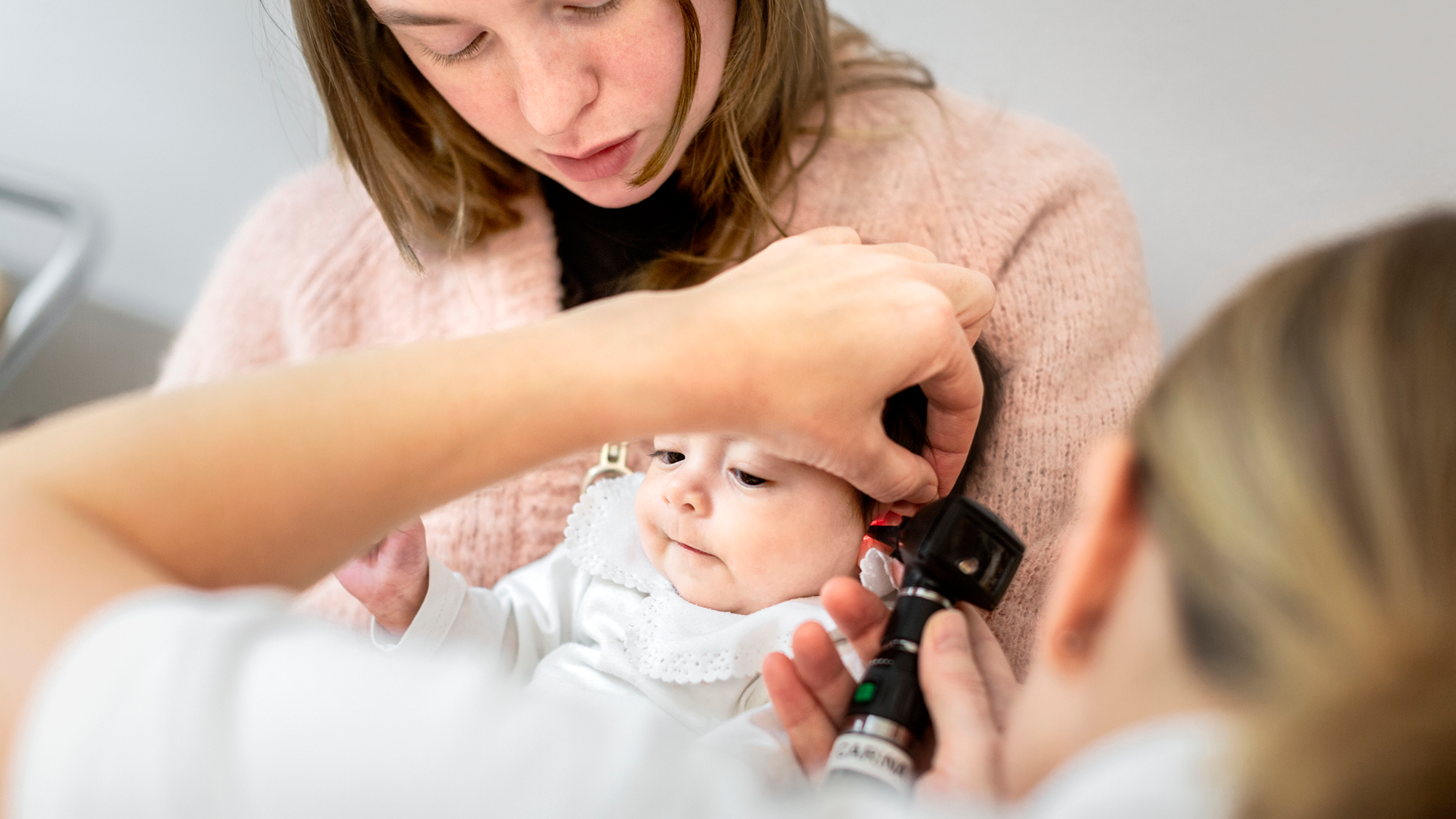
In Japan and the U.S., children's caregivers value doctors who can explain their rationale for opting for one treatment course over another. (Image credit: Jessica Peterson via Getty Images)
On paper, Japan's antibiotic incentive gets at both halves of this pediatrician-parent dynamic. It offers pediatricians and ENTs extra payment to avoid antibiotics for certain types of infections. To claim that cash for their clinics, the doctors must explain their reasoning for withholding antibiotics to the child's caregivers, to help educate them about appropriate antibiotic use.
Although the pressures that lead to overprescription are similar in the U.S., the countries have several big differences.
These layers of complexity are baked into the U.S. healthcare system, whereas in Japan, the federal government can introduce an insurance policy and affect change across the whole system at once. That's how the 800-yen incentive for pediatric clinics was implemented.
Hesitations from U.S. doctors
Japanese doctors readily accepted the notion of "tips" for withholding unneeded antibiotics, in part because those types of small-scale incentives already exist in Japanese healthcare.
Clinics earn incentives by claiming an add-on fee when they seek insurance reimbursement for a given appointment. That reimbursement rate is dictated by Japan's federal government, which sets healthcare pricing, so it's simple to introduce such incentives at scale. Similar add-on fees have been used to encourage doctors to prescribe cheaper "biosimilars" over costlier drugs with the same effects and to adopt better treatment approaches for conditions like hip fractures and painful periods.
In contrast, reimbursement rates in the U.S. are set by a dizzying array of agencies and private companies, all with their own goals.
I do not believe that financial incentives should dictate clinical practice.
Dr. Erik Blutinger, emergency medicine physician for the Mount Sinai Health System
I asked U.S.-based doctors whether a similar incentive could work here. Their responses were mixed.
"I think a program like the Japanese one could work in the U.S.," Dr. Conor Blanco, a pediatric ENT based in New Jersey, told me in an email. He noted that many physicians' pay is determined partially by patient satisfaction scores, so there are existing financial incentives that steer their behavior. If you set up a similar incentive around proper antibiotic use, "maybe it makes a difference, it's tough to say," he said.
Dr. Dmitry Volfson — chief medical officer of CityMD, a large urgent care provider in New York and New Jersey — agreed that it might work. "But [it] may be difficult to implement" given America's multitude of insurance payers, Volfson told me in an email.
Other doctors were less open to the idea.
"On first pass, it feels very unethical to me," said Dr. Morgan Leafe, a pediatrician who worked in both inpatient and outpatient settings for 11 years. Children's caregivers might be upset to hear that clinics get paid more when they don't prescribe an antibiotic, given that some are already under the impression that U.S. doctors are overly motivated by money, she told me in a direct message.
Doctors already widely criticize insurers for denying what physicians deem necessary care. Dr. Jennifer Shu, a pediatrician with Children's Medical Group in the Atlanta metro area, worries that insurers might set up the incentive in a way that restricts doctors' prescribing patterns too aggressively or doesn't align with current scientific evidence.
"I do not believe that financial incentives should dictate clinical practice," said Dr. Erik Blutinger, an emergency medicine physician for the Mount Sinai Health System in New York who also works in its urgent care centers. "It should boil down to the patient's health and ultimate well-being over finances."
Dr. Ilan Shapiro, a community pediatrician at AltaMed Health Services in Southern California, said he could see an incentive driving down unnecessary antibiotic prescriptions, but he added that it could also overcorrect, encouraging doctors to hold back antibiotics that are actually needed.
"I'm not a believer in the carrot or the stick," Shapiro told me.
Professional groups and regulatory bodies like the Centers for Disease Control and Prevention issue protocols to help guide doctors' antibiotic prescriptions. Several U.S. clinicians told me that they'd be wary of insurers setting incentives that might conflict with those established protocols. (Image credit: Johner Images via Getty Images)
How incentives work in the U.S.
Notably, many U.S. doctors are already financially incentivized to improve antibiotic prescribing — but those incentives apply at a high level, rather than case by case.
For example, many American health insurance plans use a tool called the Healthcare Effectiveness Data and Information Set (HEDIS) to assess patients' quality of care at the medical centers they visit. The tool is used by many commercial insurers, as well as by private groups that manage Medicare and Medicaid plans.
Some insurers incentivize providers to achieve higher HEDIS scores by offering higher reimbursement in exchange, "but this is not universal," Volfson explained. There are HEDIS metrics that track how often antibiotics are used for ailments that are frequently viral, like upper respiratory infections, sore throat and bronchitis, he added.
These incentives fall under "value-based care," which aims to reward behaviors that tend to improve patient outcomes and lower healthcare costs. That's opposed to the more dominant "fee-for-service" model, which compensates practices for individual services provided.
Science Spotlight takes a deeper look at emerging science and gives you, our readers, the perspective you need on these advances. Our stories highlight trends in different fields, how new research is changing old ideas, and how the picture of the world we live in is being transformed thanks to science.
Medicare has its own value-based care approach that includes metrics to track antibiotic use, including for upper respiratory infections. These metrics get factored into one composite score that can boost reimbursement (if the score is high) or lower it (if the score is low) for eligible clinicians and practices covered by the program.
Medical practices' participation in value-based care is growing, but fee-for-service remains dominant. Some doctors are skeptical of the alternate approach, Leafe noted, because they feel it puts them on the hook for outcomes that are not completely within a healthcare team's control. But Shapiro, whose healthcare system uses value-based care, sees it as a way to encourage doctors to consider the long-term trajectory of a patient's health rather than only the acute ailment at hand.
"You have to have some sort of guardrail"
U.S. doctors were often put off by the idea of clinical decisions being steered by a potential bump in payment. "Patient-related outcomes are more important than financial incentives when it comes to shaping my clinical decision-making," Blutinger said.
Shapiro embraces value-based care but expressed doubts about the Japanese approach to incentives. My interviews suggested that incentives awarded for individual actions — such as offering $5 to not prescribe antibiotics for a given child's cold — might not be accepted as easily in the U.S. as they are in Japan.
As Shu expressed, that may partially come down to a lack of trust in insurance companies. There may also be a lack of trust in other doctors and practices; multiple doctors I spoke with expressed worries about underprescription.
"What if people become disincentivized to give antibiotics at all, even when they need them?" asked Dr. Shruti Gohil, an infectious-disease specialist with UCI Health who has designed antibiotic stewardship interventions for hospitals. "You have to have some sort of guardrail on that."
Gohil noted that, in Japan's case, the government incentive aims to promote a "culture of safety, whereas with an insurance company, it's just about finance." In other words, she worries that U.S. insurance companies mainly care about their bottom line, not public health. An insurer incentivizing doctors to provide less care struck her as "unsettling."
In contrast, the pediatricians I spoke with in Japan expressed concerns about other doctors overusing antibiotics, not underusing the drugs, and they argued that some doctors still don't take antibiotic resistance seriously. Their salaries are also lower than those of other medical specialties, and the doctors explicitly stated that they appreciate that the antibiotic add-on boosts their practices' profits.
Alternative approaches?
U.S. doctors may not accept a clone of Japan's incentive program, and given America's complex mix of insurance providers and systems, a similar incentive could be difficult to implement uniformly and at scale. But based on my research, I think that incentives that fit more comfortably within our existing infrastructure could still move the needle.
Doctors are already incentivized to record certain metrics, such as body mass index (BMI) and ongoing weight-management plans, in their notes, Shu said. For example, Medicare and HEDIS bake this documentation into quality measures that affect reimbursement, as well as other calculations that help dictate insurance payments.
Borrowing from Japan's approach, I propose that clinicians and health systems could be paid more when they document that they've explained key facts about appropriate antibiotic use to patients' caregivers. These facts might include that childhood illnesses are often viral and that symptoms like fever or green mucus don't necessarily mean bacteria are to blame. They could note that unnecessary antibiotics can cause side effects like diarrhea and make the medicines less effective over time. These talking points could be added to the electronic medical record, where clinicians could easily access them.
This parent-education requirement could incorporate follow-up plans for further learning. That might include providing parents with physical materials, like pamphlets, or links to vetted websites like the American Academy of Pediatrics' HealthyChildren.org.
In the electronic medical record, in-built tools and prompts can help guide clinicians' antibiotic prescriptions. They could potentially help steer patient education around antibiotic use, too. (Image credit: Morsa Images via Getty Images)
Gohil's practice regularly uses those types of patient-directed materials. "Nothing beats the conversation," she said, "but they [the materials] give you talking points and then allow the patient to reference something."
Particularly effective trials combine parent education with efforts aimed at healthcare providers: in-office materials and presentations about antibiotics, guidelines within the electronic medical record that point doctors toward best practices, data on antibiotic resistance rates in the community, or "audit and feedback," where clinicians get report cards comparing their prescription rates with those of others in their practice.
This approach would not specifically incentivize nonprescribing over prescribing, but it would prompt clinicians to educate patients and caregivers about appropriate antibiotic use while providing them a simple script to follow. U.S. adults report placing more trust in health information from their own healthcare providers than from government entities, suggesting that these messages are more likely to stick when doctors deliver them.
Targeting caregivers
Incentives might also help by rewarding children's caregivers for educating themselves about antibiotics. That approach might be less ethically dubious than directly incentivizing doctors' prescribing habits, and the infrastructure for such incentives already exists, my reporting suggests.
Major U.S. health insurers — includingprivate and publicinsurance — now offer their members cash, gift cards or reward points when they engage in certain "health promoting" behaviors. Even life insurers are getting in on the idea. Participants earn rewards by completing an annual well visit, getting a routine cancer screening, logging a certain number of steps per day, or completing courses on healthy eating or nicotine cessation.
The hope is that, by rewarding such healthy habits, insurers can reduce their members' medical costs. Evidence suggests that these programs can motivate people to change their behavior and improve related health measures, especially in the short term. Their long-term and systemic impacts are understudied, although some research — about quitting smoking, for example — demonstrate long-term behavioral changes.
This same infrastructure could be used to enhance patients' understanding of antibiotics, and thus relieve some of the pressure on doctors to explain why the drugs may not be necessary. Children's caregivers could earn rewards for engaging with short, interactive courses or informational pages about the basics of antibiotics — what the drugs treat, what they don't, what "watchful waiting" is, and why antibiotic resistance is a problem. Short quizzes and surveys could check parents' understanding and prompt further rewards from the insurer.
These resources could explain that many common childhood infections are viral and resolve on their own or, similar to an app about childhood illness created in Japan, lay out the recommended care for acute viral infections and describe the signs that a bug might actually be bacterial. The creator of the app, Dr. Masahiko Sakamoto of Saku Central Hospital, has found that the platform changes how parents understand childhood illness and interact with the health system.
Presumably, with that kind of continuing education of patients, they would perhaps seek antibiotics less and less and understand when they're necessary.
Dr. Shruti Gohil, infectious-disease specialist with UCI Health
Such information is already available to parents via trusted sources like the American Academy of Pediatrics; the difference in this scenario is that caregivers would be paid to use it. Gohil thinks that incentivizing this type of patient education would be a "boon," especially when combined with strategies aimed at improving providers' antibiotic use, such as audit and feedback.
"Presumably, with that kind of continuing education of patients, they would perhaps seek antibiotics less and less and understand when they're necessary," she said. "I think that [idea] is so compelling."
This approach could benefit insurers by averting unnecessary doctors' visits and prescription costs, and on a larger scale, potentially help lower the risk of resistant infections.
Beyond pediatrics
Japan's incentive program focuses on pediatricians and ENTs, because the government recognized a pattern of overprescription in those groups. In the U.S., pediatrics clinics aren't the main source of overprescription — but urgent care centers may be a significant one.
Compared with other outpatient medical settings, like doctor's offices, urgent care centers are more likely to write unnecessary antibiotic prescriptions, severalstudiessuggest. One study of millions of urgent care visits found that prescriptions were written for 15% of bronchitis cases, for which antibiotics are nearly never needed.
Unlike primary care pediatricians, who see children's caregivers many times and have the opportunity to build trust, urgent care providers may see them only once. In a 2026 study of pediatric urgent care providers across the country, many reported feeling pressured to satisfy parental requests for antibiotics, and over 50% admitted to altering their care plans in response to such requests.
That said, 66% of those participants said parents are open to education about antibiotics, even when the provider's care plan didn't align with the caregiver's initial expectations. That suggests that prioritizing — and perhaps incentivizing — parent education in urgent care settings could help prevent unnecessary prescriptions.
"It does become challenging when you have a queue of patients waiting to be seen," Blutinger noted. Nonetheless, his practice aims to prioritize such education. He's found that parents are receptive to explanations about antibiotics, especially if he carefully listens to and addresses their concerns. "I've never found it helpful to make it a one-way, information-sharing conversation. It has to be two-way," he said.
The 2026 study included physicians, physician assistants (PAs) and nurse practitioners (NPs), with the latter two groups making up about half of the participants. (In Japan, only doctors can prescribe antibiotics, and there are no equivalent roles to NPs and PAs.)
In the U.S. setting, physician assistants and nurse practitioners may be logical targets for strategies to optimize antibiotic use. (Image credit: Maskot via Getty Images)
Urgent care centers are often staffed largely by PAs and NPs, with one doctor on-site along with various medical assistants. That might be relevant to their antibiotic prescribing.
That's because some studies suggest that PAs and NPs are more likely to prescribe antibioticsthan physicians are. In one study of acute respiratory tract infections, the providers were 30% more likely than doctors to write an antibiotic prescription for the same ailments, and that difference was more pronounced for visits with pediatric patients. In another study of outpatient providers, PAs and NPs had the highest likelihood of inappropriate prescriptions and pediatricians had the lowest.
The reasons for this difference aren't fully understood, although the study authors pointed out that efforts to improve antibiotic use have been aimed mostly at doctors. NP and PA education and training also tends to vary more widely than doctors' training, suggesting potential knowledge gaps.
These trends point to an opportunity to tailor interventions to NPs, PAs and urgent care providers. These might be easiest to implement in urgent care facilities affiliated with larger hospital systems, representing about 35% of U.S. urgent cares. These systems set the metrics that factor into bonuses that doctors, NPs and PAs frequently earn on top of their base salaries.
One metric that's already used widely is clinical documentation, which could be required to note when rationale for denying antibiotics was provided to patients. A large Utah urgent care network recently took a similar approach and gave their clinicians a goal to decrease antibiotic use for respiratory illnesses. They made a certain threshold of antibiotic use in a year a quality metric that clinicians could earn extra compensation for hitting.
That financial incentive didn't stand alone, though. It coincided with new educational materials for clinicians and patients about antibiotics, new guidance on antibiotics in the medical record, and the introduction of peer-to-peer comparisons of prescribing rates. Together, these strategies drove a substantial decrease in overall antibiotic use for respiratory ailments. Clinicians initially prescribed antibiotics for 48% of respiratory conditions; that fell to 33% within one year and to 26% the next.
It takes time for new antibiotic-use guidelines to filter down to individual providers, particularly when there's an existing culture of overprescription. Japan's experiment demonstrated that targeted incentives can reduce antibiotic misuse — at least in Japan. The exact same approach may not be acceptable or feasible in the U.S. But we can still take inspiration from the idea and explore it as one tool among many to fight this silent pandemic.
"Antimicrobial resistance is one of the world's most urgent public health threats," Dr. Sarah Kabbani, director of the Centers for Disease Control and Prevention's Office of Antibiotic Stewardship, told me in an email. "Because outpatient prescribing is so common, even small improvements can have a large impact on patient safety and population health."
This article is for informational purposes only and is not meant to offer medical advice.
Sperm whales make the loudest communication sound of any animal on Earth, researchers find — but they aren't sure why.
In a new study, researchers investigated the mysterious, low-frequency clangs made by male sperm whales and found that they were louder than any known sperm whale communication signal, with the potential to be heard by other whales around 43 miles (70 kilometers) away.
They are very loud and metallic sounds that almost sound "like a jail door slamming," which is "why they are also called clangs," study first author Simone Videsen and co-author Peter Teglberg Madsen, biologists at the Center for Active Sensing with Sound at Aarhus University in Denmark, told Live Science in an email. "You feel small as a human when you hear them, as they are clearly made by something bigger than you," they said.
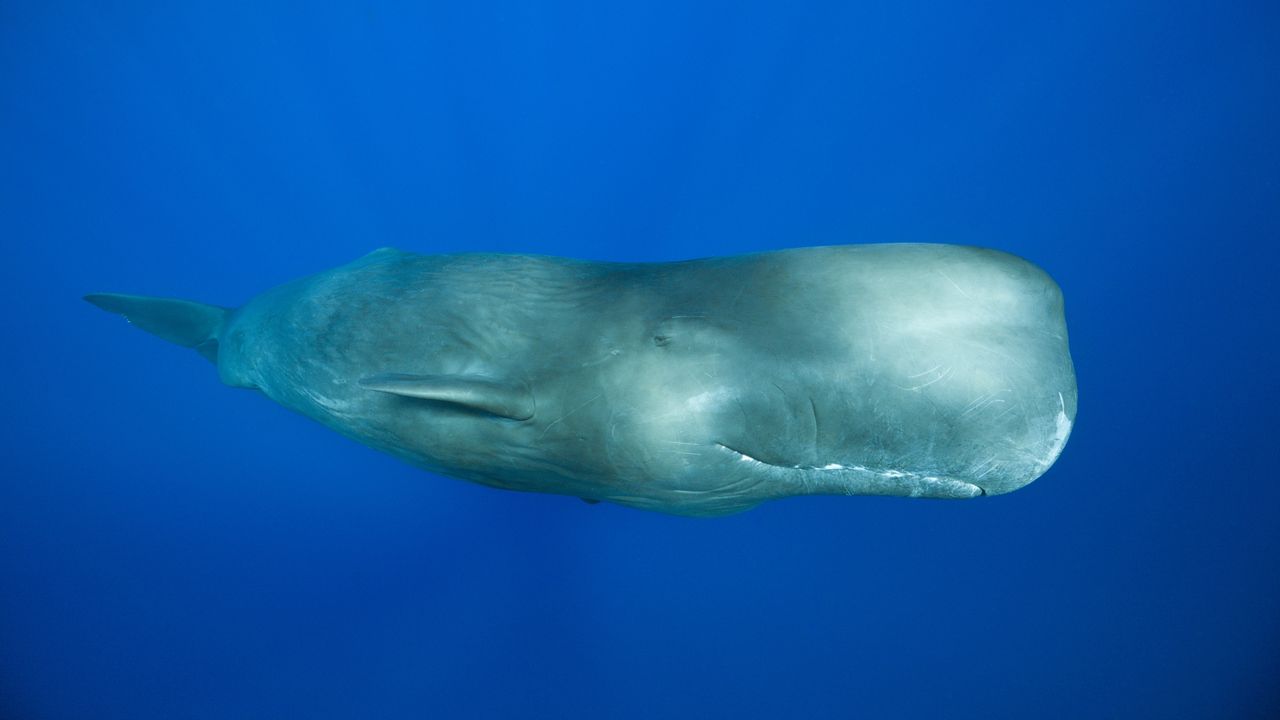
Sperm whales (Physeter macrocephalus) are the largest toothed predators, growing up to around 59 feet (18 meters) long. They dive deep into the ocean to hunt giant squid (Architeuthis dux) and other prey that dwell as low as 1.9 miles (3 km) below the ocean surface.
The distinctive clangs, first reported in the 1980s, are the loudest communication signal that sperm whales make, although they can produce even louder echolocation clicks to locate prey during hunts. The clangs are unusual because they are made only by males and represent an extreme form of communication that scientists still can't fully explain.
In the latest study, the researchers used hydrophones (underwater microphones) off the Seychelles to measure the sound level of the clangs. They also studied the rhythm of the signals in recordings collected in other locations, including off Sri Lanka, Norway and Scotland.
The recordings revealed that the whales kept up a slow, low-frequency rhythm, unlike the short, rhythmic clicks that both males and females make for typical social communication or the clicks used in echolocation. In fact, the rhythm was so slow that males left a gap of 5 to 10 seconds between each clang. That might not sound that impressive — but as far as we know, whales can't count to 10, so they are using another means to keep up this rhythm. According to the study, the whales might be relying on the echoes of the clangs bouncing off the seafloor.
Sperm whales can produce these record-breaking acoustics thanks to their ginormous noses — the largest of any animal — that dominate their massive heads, which make up about one-third of their body length. To make the clangs, male whales use their "phonic lips" — structures in their noses that snap together.
"They make [these noises] by forcing pressurized air through so-called phonic lips in their giant sound producing nose," Videsen and Madsen said.
The researchers proposed a few possible explanations for why the whales might be making the long-range clangs. For example, the males might be using the sounds to attract mates or scare off other males.
However, the communication may exist for another, unknown reason. In future studies, the researchers hope to learn more about this mysterious form of communication by playing recordings of the clangs underwater and seeing how nearby sperm whales respond.
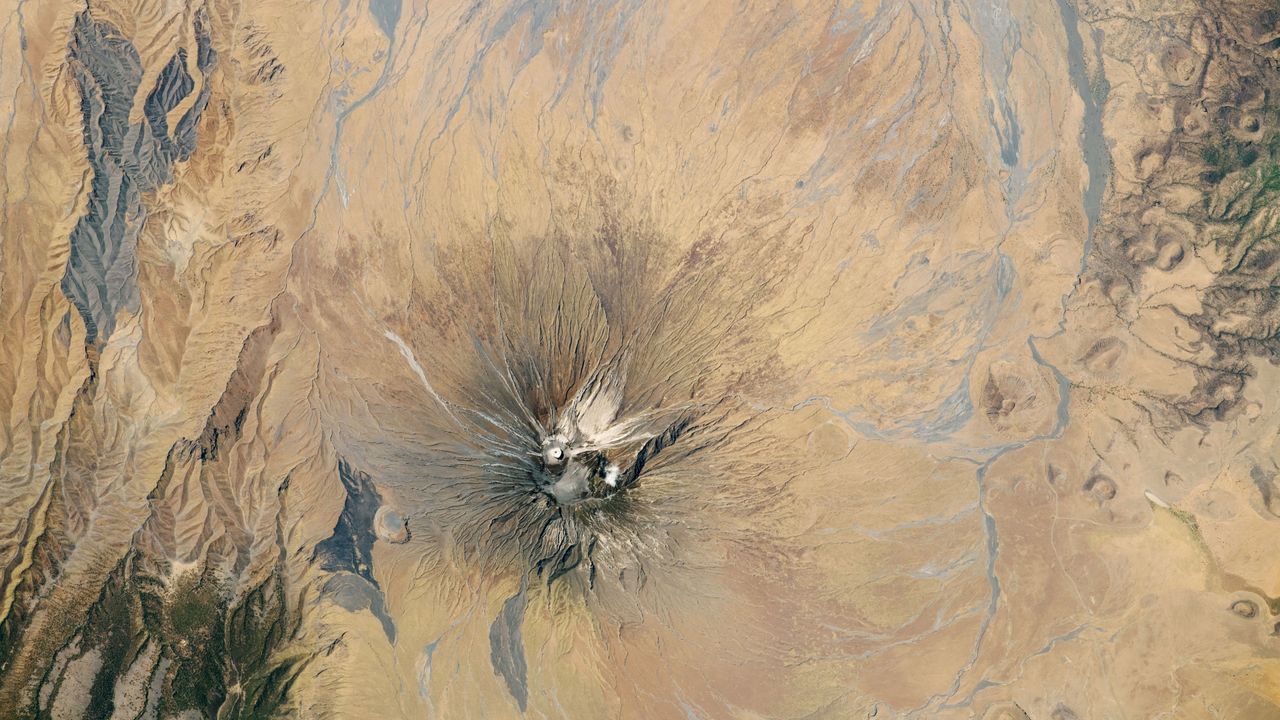
What's in the photo? The lava-stained slopes and ash cone of a highly active volcano
Who took the photo? An unnamed astronaut on board the International Space Station
When was it taken? Oct. 6, 2020
This dramatic astronaut photo shows a highly active stratovolcano in Tanzania that was recently adorned with a striking white "crown" of ash. The explosive volcano produces a rare type of lava that is unusually cool, uniquely colored and the fastest-flowing on Earth.
The volcano is officially named Ol Doinyo Lengai and stands up to 9,718 feet (2,692 meters) above the grassy plains of the Arusha region of northern Tanzania. The local Maasai people call the towering peak the "Mountain of God," because they believe it is the residence of the supreme creator god Ngai (also known as Engai or Enkai), according to the book "Sacred Mountains of the World" (Cambridge University Press, 2022).
Ol Doinyo Lengai is one of Africa's most active volcanoes; it has been erupting on and off for the past 15,000 years. It alternates between effusive eruptions, where lava seeps out of its vents, and sporadic explosive outbursts, which can drastically alter its appearance. Its most recent eruption, which is effusive, has been going on since April 2017, according to the Smithsonian Institution's Global Volcanism Program.
The sacred mountain produces a rare type of lava that consists of natrocarbonatite rock, which is rich in sodium, potassium and calcium carbonate but low in silica. As a result, it is much cooler than most other lava, dipping to temperatures below 1,100 degrees Fahrenheit (600 degrees Celsius). It also has an unusually low viscosity, which makes it "some of the fastest-flowing lava in the world," according to NASA's Earth Observatory.
When it solidifies, this unusually runny lava turns surprisingly pale, due to chemical reactions with rainwater and moisture in the air. In this image, you can see several lightly colored rivers of rock snaking down the volcano's flank. The youngest of these lava flows was created during an eruption in 1998.
For most of the past century, Ol Doinyo Lengai's summit consisted of a bowl-like depression that gradually filled with lava. But between 2007 and 2008, a series of major explosive eruptions birthed a 330-foot-tall (100 m) ash cone that now looms over the summit's center.
This explosive event has transformed the volcano's appearance when viewed from space, additional photos from the Earth Observatory show. In the featured image, a dark spot of fresh lava can be seen in the center of the cone, making it look like a crown.
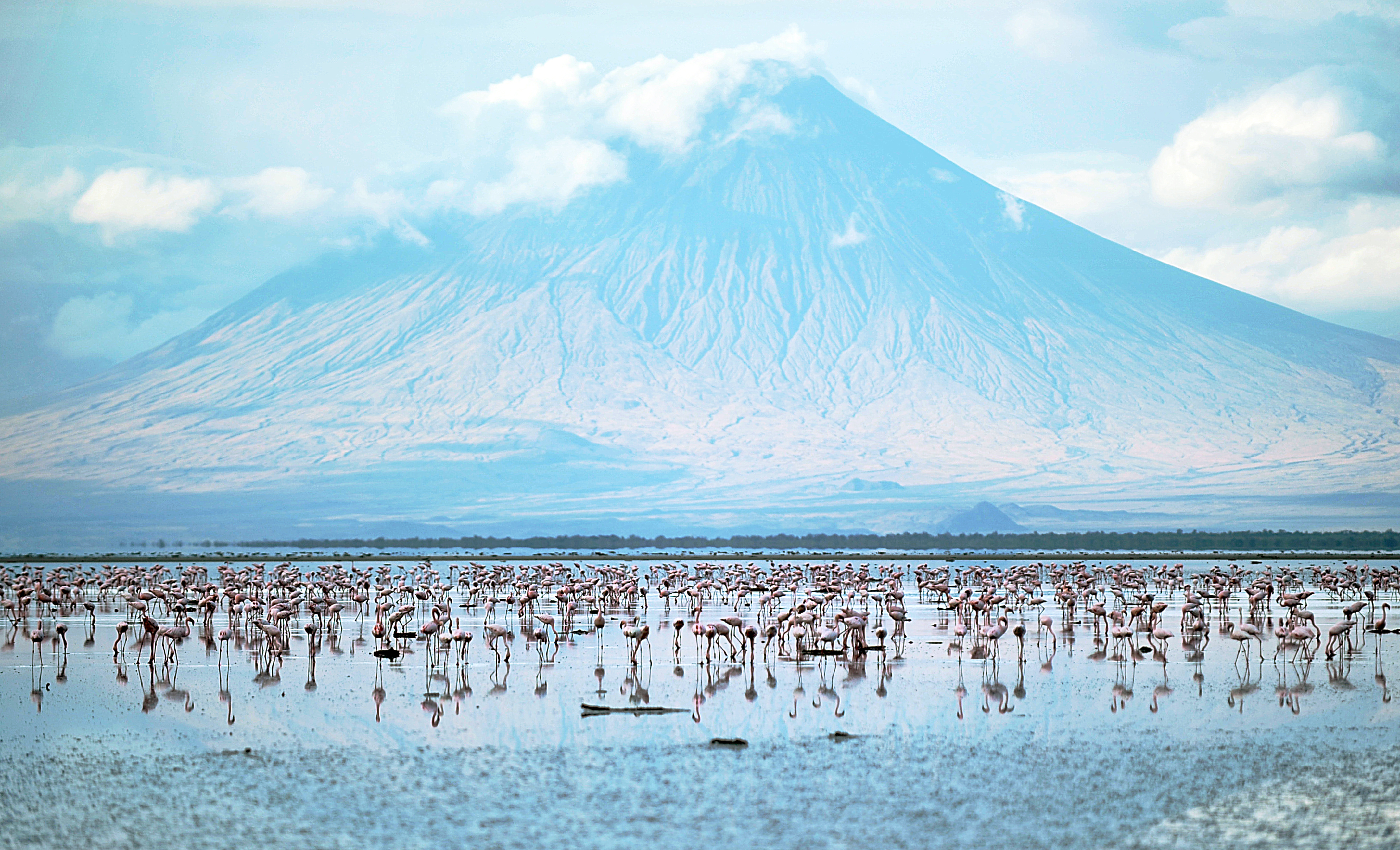
Lake Natron, near Ol Doinyo Lengai, hosts large flamingo populations. (Image credit: TONY KARUMBA/AFP via Getty Images)
Ol Doinyo Lengai is located in the East African Rift System, a roughly 2,000-mile long (3,500 kilometers) area surrounding a divergent fault line where the African Plate is splitting into the Somali and Nubian plates.
This region has been tectonically active for more than 25 million years and has created some of the continent's most interesting topographic features, including Mount Kilimanjaro and Mount Kenya, which are located on each side of Ol Doinyo Lengai, according to the Earth Observatory.
The godly mountain is around 10 miles (16 km) south of Lake Natron, a red salt lake that's famed for its large flamingo populations. The geographical features are often photographed alongside one another.
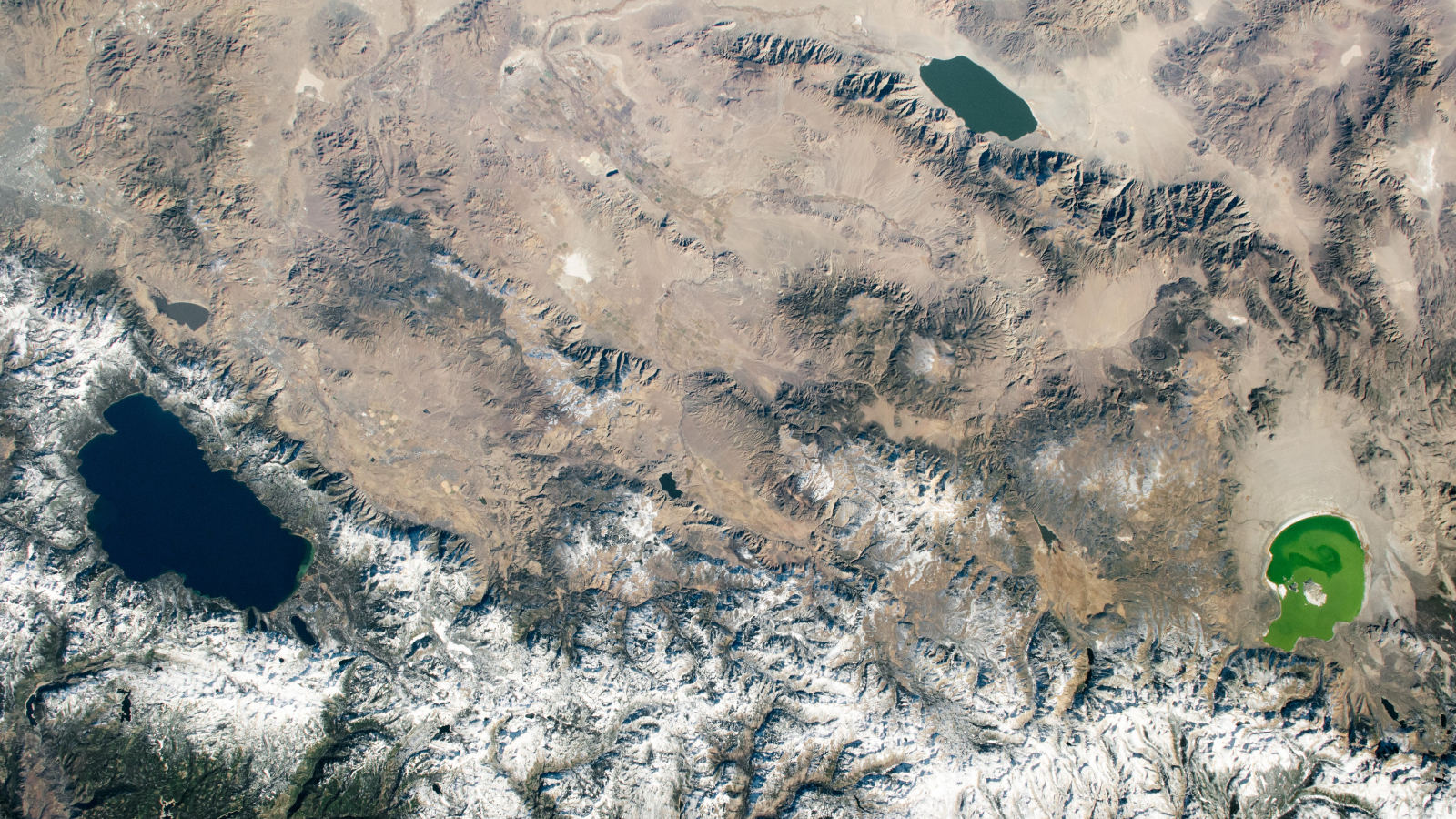
A 2020 astronaut photo shows three uniquely colored lakes — Tahoe, Walker and Mono — straddling contrasting biomes on either side of the California-Nevada border.
Does the approval of a new mRNA vaccine signal a shift in this sentiment? Not necessarily, experts told Live Science.
"I don't read this as a shift in the administration's stance on mRNA," Jeff Coller, a distinguished professor of RNA biology and therapeutics at Johns Hopkins University, said in an email. Coller is also a co-founder of the Alliance for mRNA Medicines, an international association aimed at advancing mRNA technology, and he advises several RNA companies.
The approval does suggest, however, that the FDA's approval process isn't completely compromised by anti-mRNA sentiment, Coller said.
"What the approval does signal, and I think this is the more useful story: the statutory machinery still works when it is allowed to run," Coller said. "For companies and investors deciding whether to keep building in this space in the United States, that matters more than any statement from HHS."
A "tortured" approval process
The new flu vaccine, called mFlusiva, was made by Moderna. The company filed for the shot's approval in February, but initially, the FDA denied Moderna's request to have its materials reviewed.
Reporting by STAT News later found that career FDA scientists had planned to do the review but they had been overruled by Dr. Vinay Prasad, then director of the FDA's Center for Biologics Evaluation and Research (CBER). (Live Science has contacted the FDA for comment.)
"It's been a little tortured," Dr. Paul Offit, director of the Vaccine Education Center at Children's Hospital of Philadelphia, said of the approval process. In April 2024, before starting its final trial of the vaccine, Moderna ran its plans past the FDA, and the FDA confirmed in writing that the trial's design was acceptable. But when Moderna filed for approval using data from the trial, "Vinai Prasad, who had just been put in place at CBER … said no," Offit told Live Science.
"That didn't last long, nor did he last long, after that," Offit added. The denial was reversed within the month, and Prasad left the FDA in April.
"That refusal was reversed fifteen days later," Coller said. "Nothing about the evidence changed in those fifteen days." What changed were the choices made by FDA leadership, he said.
Once allowed to do so, the FDA's vaccine advisory committee, called the Vaccines and Related Biological Products Advisory Committee (VRBPAC), met to discuss the shot's safety and effectiveness. The group voted unanimously to recommend approving the vaccine for adults ages 50 and up. The FDA then followed this advice, making the approval official.
"They're experts in the field," Offit said of the VRBPAC members. He personally sat on the committee from 2017-2025. "It's a pleasure to go to those meetings because, you know, it's the way it's supposed to work," he said.
mRNA-based vaccines can be made more quickly than conventional flu vaccines can, and trials suggest that the newly approved shot offers more protection, too. (Image credit: Catherine Falls Commercial via Getty Images)
Next step for the new mRNA flu vaccine
Now that mFlusiva is FDA approved, the data must be reviewed by the CDC, which issues recommendations about how the vaccine should be given and to whom. Normally, a vaccine advisory committee would review the data first and then give the CDC guidance, but it's unclear how that might look in this case, Offit said.
That's because ACIP is in the midst of a lawsuit, which recently prompted a federal judge to put a freeze on several of the committee's recent changes. Those changes include the appointment of new committee members by Kennedy and a major revision of the childhood immunization schedule. While the litigation plays out, the committee could still issue new vaccine guidance if it appoints enough new members to compensate for the ones who are currently in limbo — but that hasn't happened yet.
The CDC could issue its own recommendations for mFlusiva without ACIP's help, Offit noted. It's within the agency's power to do so. But will that happen?
"I don't know," Offit said. "Robert F. Kennedy Jr. has ultimate say, and he's a science denialist and an anti-vaccine activist. So I don't know." Offit predicts that Kennedy "will do nothing to encourage vaccination, period, independent of what the vaccine technology is."
It would be useful to have an mRNA vaccine option available this upcoming flu season, Offit said, in part because trials suggest that the shot is more protective than existing options, especially for adults 50 to 64. There's also strong evidence that that's true for adults over 64, but for that age group, more data will be collected in the coming season to see how well mFlusiva stacks up against existing high-dose flu shots for older adults. Offit expects those upcoming results will likely be positive and back up the existing evidence, which involved measuring antibody levels in older adults given either vaccine.
Other strengths of mRNA-based flu vaccines are that they can be produced in about half the time that existing flu shots are made and they can be better tailored to match the targeted flu strains, Offit noted.
Looking to the future of mRNA vaccines in the U.S., mFlusiva's approval suggests that vaccine regulatory bodies still have the means and will to review mRNA vaccine trials and approve new products, as Coller said. However, this stand-alone approval doesn't necessarily mark a sea change in the federal government's sentiment toward the technology, he noted.
"An approval is a legal determination on one application. It tells you the data met the standard, which everyone involved in reviewing it already knew," he said. "A genuine shift would look like the 22 canceled mRNA contracts being restored, or a retraction of the claim that these vaccines fail against respiratory viruses. As far as I know, neither has happened."
Live Science contacted the HHS for comment on the mFlusiva approval.
"Secretary Kennedy has been clear that he believes mRNA products warrant heightened scientific scrutiny. That's why this vaccine is entering the market with some of the strongest post-market study commitments FDA has required, particularly for individuals 65 years of age and older," HHS Press Secretary Emily Hilliard responded in an email.
"CDC has not yet issued its recommendations, and this vaccine is not mandated. Americans deserve transparent information, informed consent, and the ability to work with their physician to decide whether — and which — seasonal flu vaccine is right for them," she continued. "HHS will continue to follow the evidence and make safety and effectiveness data publicly available as additional information emerges."
This article is for informational purposes only and is not meant to offer medical advice.
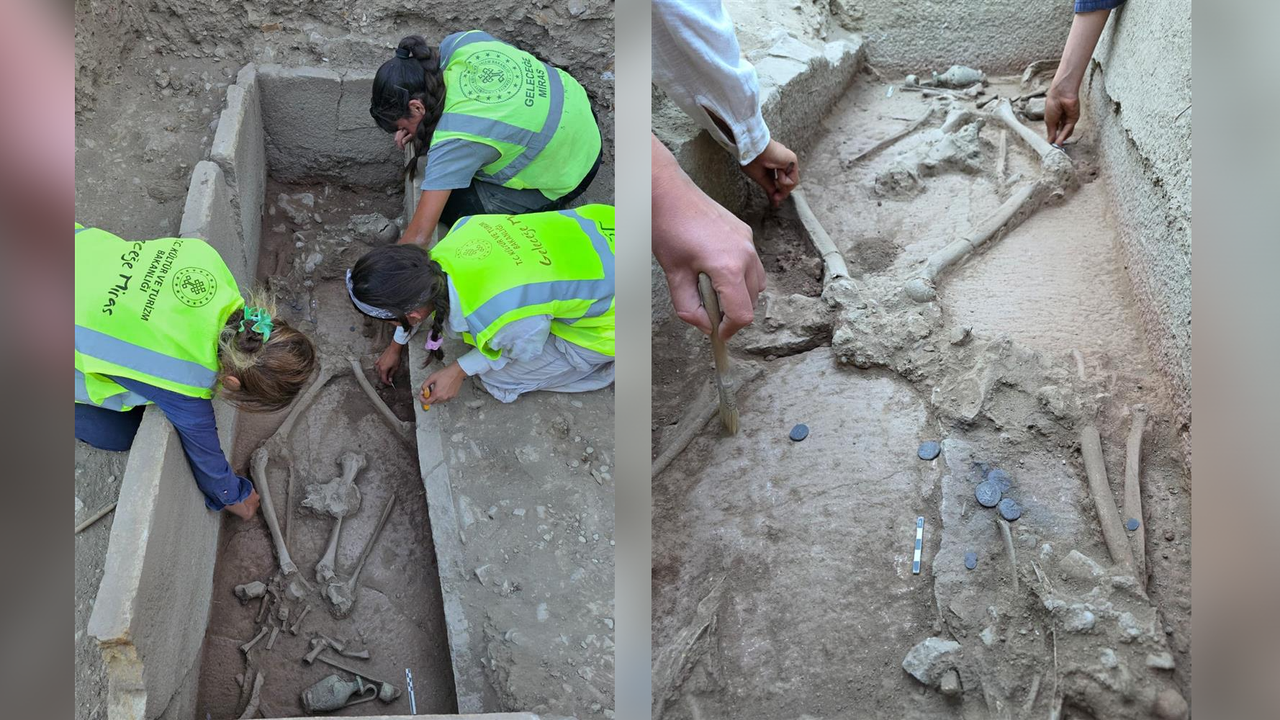
Archaeologists excavating near the ancient town of Aspendos in Turkey have discovered the grave of a person who may have been a pro athlete over two millennia ago.
"Coins with depictions of wrestlers and other artifacts found in the tomb indicate that the person buried here may have been involved in sports, perhaps even a wrestler," Mehmet Nuri Ersoy, Turkey's minister of culture and tourism, said in a translated statement Monday (Aug. 10).
The archaeologists found the skeleton and artifacts in a box-style sarcophagus made of stone slabs while digging in one of the cemeteries outside Aspendos. The tomb likely dates to between 475 and 300 B.C., during the city's Classical period, according to the statement.
Aspendos was a Greco-Roman city in southwest Turkey, roughly 10 miles (16 kilometers) inland from the Mediterranean Sea. The city was founded by Greek colonists in the fifth century B.C. and quickly rose to prominence as a trading center for salt, olive oil, wood and horses. Aspendos had a large Greek gymnasium as well as a large stadium that was erected in the second century A.D. and could hold up to 8,000 spectators who watched footraces, javelin contests and wrestling.
The ancient sport of wrestling is linked to Aspendos primarily through the city's coinage. Aspendos minted its own silver coins with the image of two naked wrestlers on one side.
A recently excavated grave reveals a human skeleton and silver coins depicting wrestlers from the ancient city of Aspendos in Turkey. (Image credit: Alamy)
These coins, called staters, were minted for well over a century, which suggests wrestling held civic significance for Aspendos, Oğuz Tekin, an archaeologist at Koç University in Turkey, suggested in a 2000 study.
Although wrestler-type Aspendos coins were discovered in the newly excavated grave, it is unclear whether the deceased was a wrestler.
"There will need to be much more analysis before a positive identification of the body as a wrestler can be determined," Sarah E. Bond, a historian at the University of Iowa who was not involved in the discovery, told Live Science. For example, signs of a broken and healed nose could indicate the person was an athlete.
"Coins alone cannot indicate this was a Classical era Greek wrestler," Bond said, because "these coins were numerous and used as payment by the entire populace, not by wrestlers alone."
The grave is part of the ongoing excavation of a newly discovered cemetery at Aspendos, according to Ersoy. "With every new find in Aspendos, we will continue to complete the missing pages of our history, protect our cultural heritage through scientific studies, and carry it into the future," he said in the statement.
Throughout his career as a composer, Jim Nollman has worked with unorthodox partners to create music. Instead of collaborating solely with human musicians, the artist has expanded his cast to include animal bandmates, and they've been making melodies together for more than 50 years.
Nollman's new album, "Orcas' Greatest Hits," will be released Aug. 14 by the music label Smithsonian Folkways Recordings. As the title suggests, the album is a collection of songs centered around orca (Orcinus orca) vocalizations.
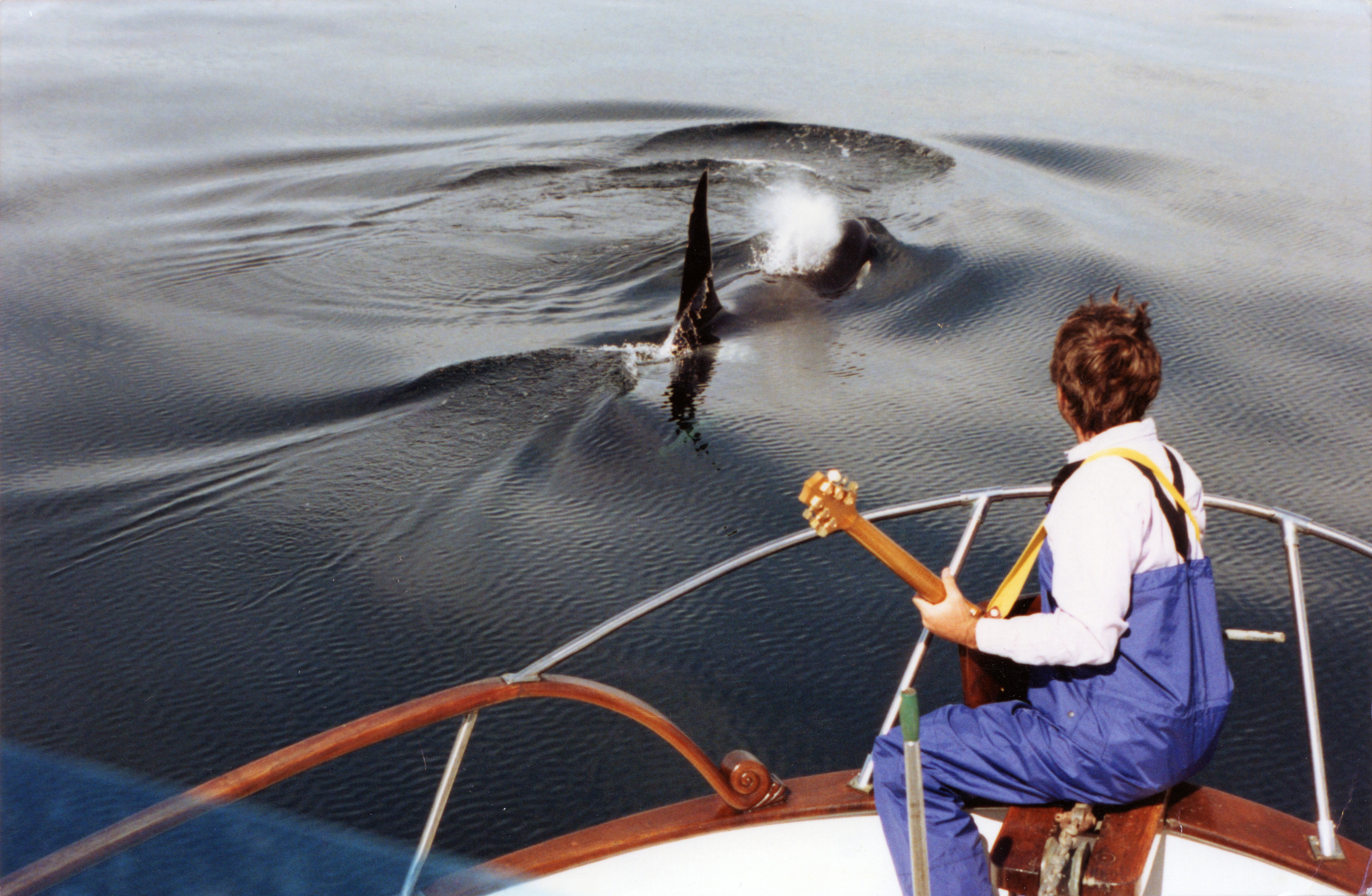
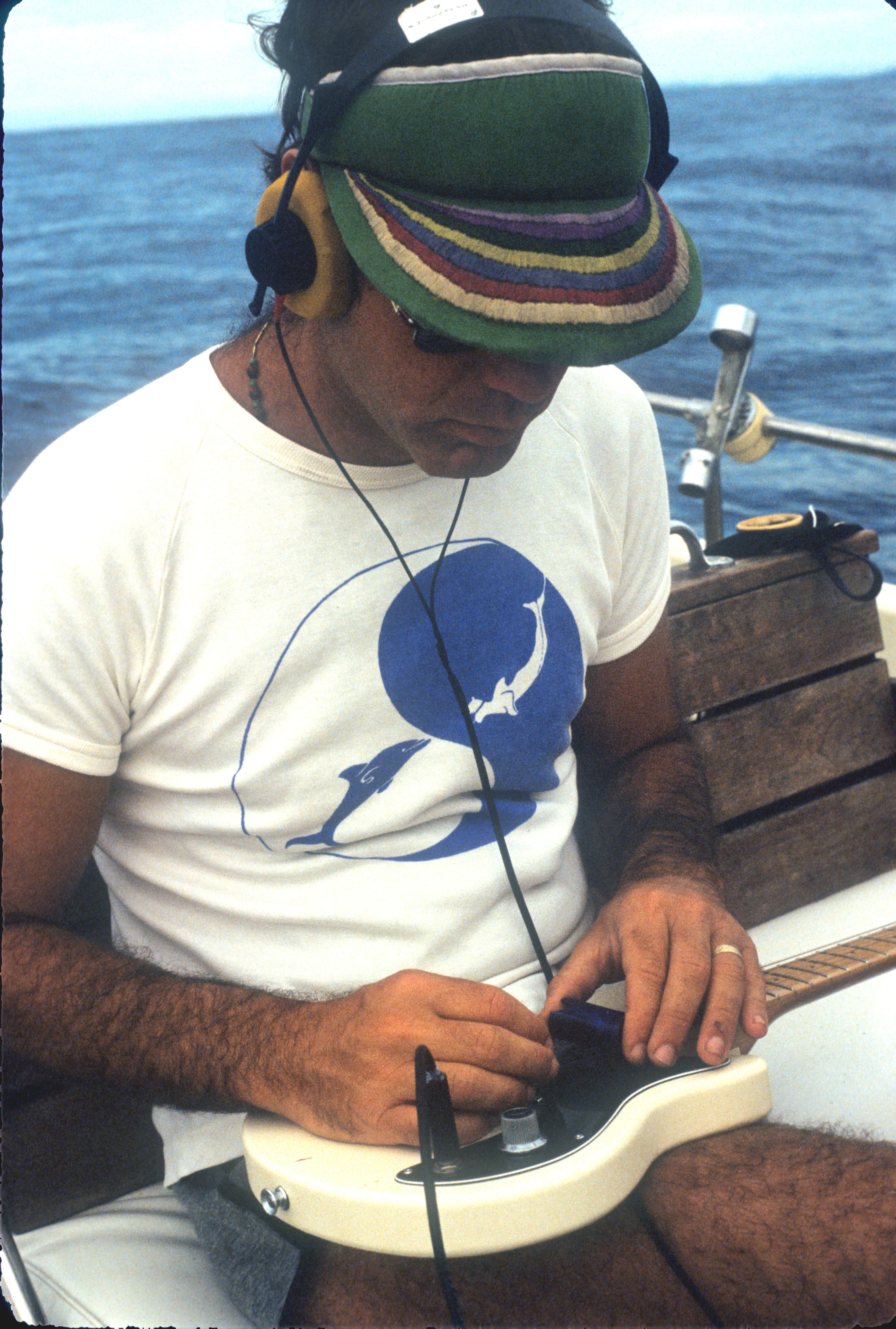
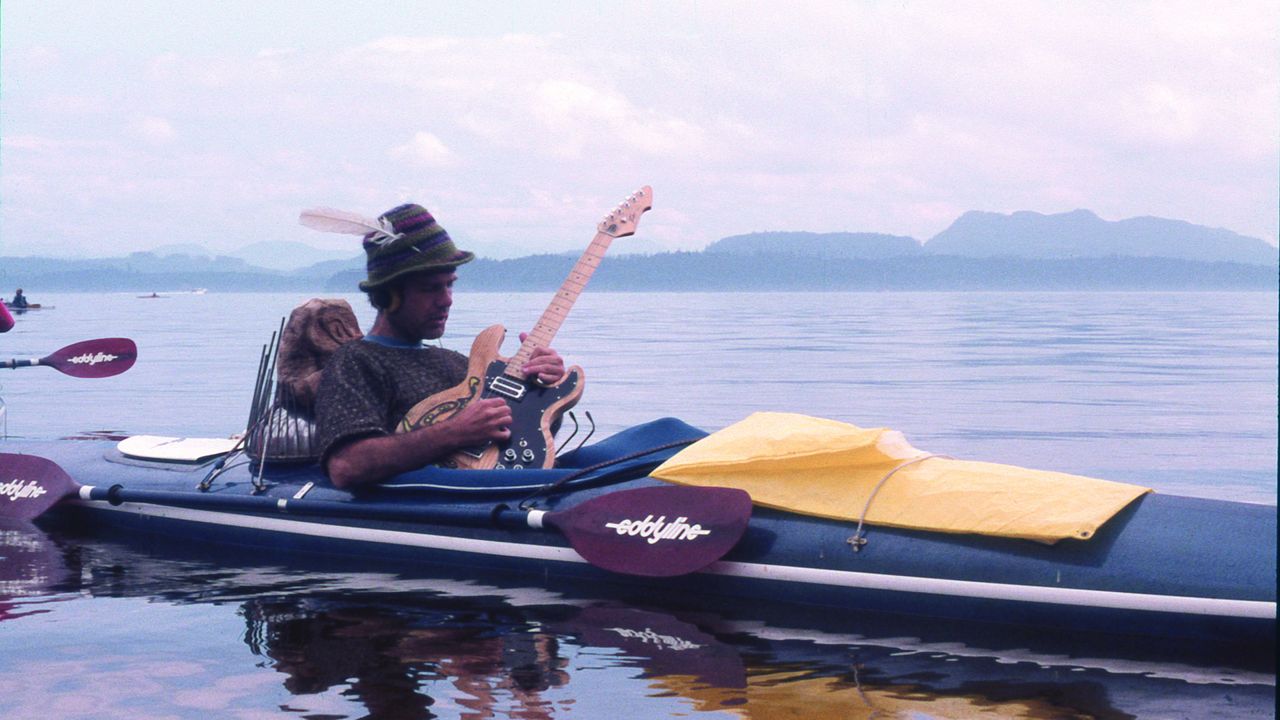
Nollman now lives in Friday Harbor, Washington, but he recorded these sounds off the coast of British Columbia between 1985 and 2002, using underwater microphones called hydrophones. The vocalizations weren't random calls that Nollman overheard; rather, he prompted the orcas to "sing" by broadcasting his and fellow musicians' music into the water via underwater speakers. The artists kept the volume at a reasonable level to protect the orcas and performed after dark to avoid motorboat sounds.
However, orcas weren't Nollman's first animal bandmates. Fresh out of Tufts University in the 1970s, he made music with various animals, including turkeys, wolves and dolphins. To learn more, we spoke with Nollman about his career, including several years he spent consulting with the U.S. Navy, and the extraordinary interactions he's had with whales and other creatures.
Sascha Pare: How did you first start making music with animals?
Jim Nollman: In my latter year at university, I got involved in the theater, doing all the music for all their plays. I soon got into John Cage [an American composer known for his innovative approaches to sound] — first in Boston, and then in the San Francisco Bay Area when I moved there. I got to know some of the avant-garde music people, especially in Berkeley, because there was a big movement there [centered around California's KPFA Radio].
I'd been in Mexico, playing flute, and the turkeys next door would always gobble on a certain high note and at a certain volume. I said [to an editor at KPFA], "Why don't you send me to a turkey farm? I'd like to do a Thanksgiving Day piece." He gave me a sound man and a Nagra tape recorder. I remember vividly, because having a Nagra after just getting out of college was a big deal for me. I was into technology. [Editor's note: Nagra is a Swiss brand of portable audio recorders.]
The turkey farm had 300 turkeys, and I immediately learned from the owner that it's really only the males that gobble. He kept the males and the females separate, so he put me into the fenced-in area where the males were. I started singing, and I could control them. The turkeys closest to me would start, and the gobble would go out to the edge of the 300 birds. And then it would come back, and then they would all stop. I was singing "Froggie Went A-Courtin'," which is an old American folk song [originally from Scotland] about animals. I sang 30 or 40 verses of this song and controlled the turkeys.
Jim Nollman's new album, "Orcas' Greatest Hits," will be released Aug. 14. (Image credit: Jim O'Donnell)
I was around 24 years old, and I had a hit. I knew I wanted to be a musician, but I had some major flaws to be a performer, because I didn't like being the center of attention. I'm kind of an introvert. That's a loser if you're trying to be a singer-songwriter. I loved writing tunes and playing them, but not in front of a big audience. This [recording tunes in nature with animals] was a way to get into music.
After the turkeys, I wondered if I should try making music with animals again. I tried it with kangaroo rats [Dipodomys deserti], which build these burrows like Trinidad steel drums. Kangaroo rats only come out at night, and they thump to each other in their burrow systems, which are tuned — it seemed to me, anyway, that each place in the burrow had a different tone — and they communicate with one another.
Then, I went to a wolf preserve. I realized that the wolves did two or three howl sessions in the morning around dawn and two or three at night. The wolves wouldn't play with me if I was out of their key. If I played a flat note, they would stop and basically tell me, "We don't mind if you're playing in our pack, but you've got to do it right." That was a big lesson for me, and that's how I got into it.
SP: Your new album features orcas. Did you always have a sweet spot for orcas, or is there another animal you preferred working with?
JN: No, I don't have a sweet spot for orcas. I recorded orcas for 15 years, and I had lots of recordings, most of which I never really listened to, because I didn't know what to do with them. At some point, I decided that "I can't do anything more with the orcas, and I don't like going to whale conferences and being this authority," because it wasn't about that for me.
[After years of recording orcas], I started going to the Arctic — because I wanted to go to the Arctic and because beluga whales [Delphinapterus leucas] were there, and they seemed like the opposites of orcas. The orcas were very much in tight families traveling together and making very simple calls that had deep meaning. To have their echolocation against a speaker at midnight could be like being in a war zone. It was so loud; we had speakers blow out sometimes.
The beluga whales were the antithesis of that. It seemed like they all were talking at the same time, and they all seemed to know what everybody else was saying. This is my speculation. They used sound as their family anchor, and I had no idea if they all understood each other talking. But it was very much more animated than what the orcas were doing. I would say 50% of the orca calls were just two notes; they were D to C, and back to D. And they would do that all day long, some of them. Beluga whales sometimes sounded like belly laughs. They made the weirdest sounds, and I loved it.
I went everywhere in the Arctic. I started out in the first year going to Nome [Alaska] in the Bering Strait, and then I went east to the Mackenzie River delta in northern Canada on the Beaufort Sea. Then, I went to Baffin Island in the Canadian High Arctic. In every place I went, limited beluga populations were crashing. At some point, I realized this was a complete loser. I pretty much gave it up until I met some people from Finland who said, "You should try it in Russia." The Soviet Union had recently crashed, and they were opening up all the places where they had their gulags [forced labor camps] and their nuclear fleet. The Solovetsky Islands were loaded with beluga whales that hadn't seen people in 70 years. I went there, and I had a great time with the beluga whales.
The wolves wouldn't play with me if I was out of their key.
Jim Nollman, musical composer and sound artist
SP: What is your favorite memory of working with orcas or beluga whales?
JN: Six or eight years ago, somebody brought me and a bunch of other artists up to Hudson Bay [in Canada], basically to emulate what I'd done for so many years [artistic residencies to experiment with whale sounds]. I was the mentor for everybody. I liked that role. We were confronted with beluga whales, and I said, "I don't really want to play the guitar or the mandolin with the beluga whales, because I've tried that all over the Arctic and I've never had much success. I'm going to put my head in the water and blow bubbles."
The beluga whale came up, and it wrapped its mouth around my face. It did the same thing to the woman who was blowing bubbles on the other side of the kayak we were on. That was maybe the most fun thing I ever did with cetaceans. I wasn't worried at all. I've had the same thing happen with giraffes. I was in Texas at this game farm, and this giraffe came and licked my whole face with its giant tongue. It was really quite wonderful.
SP: The oldest recordings in the new album are 40 years old, and you said you hadn't listened to all of them before making the album. What was it like hearing them after all these years?
JN: I had 65 hours of tapes, and I listened to them over three or four months. Ninety percent of it was rubbish; it was just repetitive, and the whales would get into their D-to-C-to-D call routine. I wanted something where there was a groove, or some kind of magic going on that was inexplicable.
I started choosing some sequences. I thought it was only a certain level of connection that we'd created, but a couple of the things that I listened to when I was in that process blew me away. The one where I was playing James Brown riffs into the water — that was very strong for me. I'd never heard that before. I was discovering new stuff by giving it a close listen.
There's one where I was being filmed by National Geographic, and it was just me and a guy on a big boat cruising the waters. I started playing a country blues bottleneck on the guitar. [Editor's note: A bottleneck in country blues is a guitar-playing technique where a hard object is placed on a finger and glided along the strings.] The whales only did this a couple of times, but they would come in with a chord change. Say I'm playing in a key of D; they would come up and play the G in perfect time. I was impressed by that.
SP: Did you ever play the recordings of you and the orcas back to the orcas?
JN: No, because the recording can't answer the whales. I was trying to make a telephone connection, so it has to be two things talking to each other. To play a recording would be like me saying, "Let's stop this interview now, and I'm going to put on something of me giving an interview to somebody I spoke to yesterday." You wouldn't like that, and I don't think the whales would have liked that either if I did it to them. It had to be direct. I had many people who were very ardent or passionate about singing or reciting poetry — one guy wanted to sing Jewish death prayers to the whales. But the whales didn't come.
Nollman recorded orcas off the coast of British Columbia between 1985 and 2002. (Image credit: Jim Nollman)
SP: Is part of why you've been so successful at making music with animals that they particularly like you?
JN: Some animals like me. I definitely got through to the orcas. I could tell that, because I had an interim of eight years between doing it with the big communities [of artists] and going out alone with the orcas. They were the same orcas, and they definitely knew who I was the first time I put sound in the water again. That's when that country blues episode happened. We were all much more relaxed with each other. The second time was great. It was also a tragedy, because the whales had lost their residence to the loss of salmon [in the northeast Pacific Ocean], and they were way out of their range.
SP: Your work with orcas and other whales landed you a job with the U.S. Navy in 2011. How did that happen, and what was your role?
JN: I was doing underwater concerts in the 1990s. I was invited to Kodiak Island, which is a large island off the coast of southern Alaska. They wanted me to do an underwater concert. At the time of this festival, in which I was performing, the U.S. Navy was sending ballistic missiles from Southern California to the waters off Kodiak Island for testing. This was destroying the halibut [Hippoglossus stenolepis] fishery on Kodiak Island, because the fishermen couldn't go into this area, suddenly.
The Navy sent a guy who was part of this ballistic missile thing but also had a PR background. He said, "Can I speak before your concert?" I said, "You can speak about whatever you want, but you've got to get in the water. That's the payment you have to give me: Get in the water and hear all this music that I've created."
He was blown away. I had a fan. He took me out for dinner and asked me if I had any ideas about solving this great scandal that was enveloping the Navy at the time, which was the killing of mostly beaked whales during mid-frequency sonar exercises, mostly in the Bahamas, in this hole in the ocean that's there. Nobody had a solution, so he wanted me to be on the team. I said, "Sure, I'll be on the team." It was like somebody asking me to play for the New York Yankees or something — completely odd, but I thought, "OK, I'll try that."
He called me back two years later, saying, "We have our money, and we want you to come to the Groton submarine base [in Connecticut], where we'll have our first meeting with submarine captains, Ph.D. sonar engineers and a few whale biologists." That went on for seven years. I took the job seriously. I told them that I thought we could solve it in five minutes. I said, "All you need to do is take care. If you see whales in the vicinity, don't exercise on that day." This sounds so totally obvious, but the fact was that he [the PR man] was contending with a Navy establishment that believed that the Navy could do anything to save the American people from being bombed or wrecked. They didn't see whales as anything but collateral damage.
SP: Do you have a favorite song on the new album?
JN: I like "The Three Jimmies." I never knew that James Brown's guitar player was named Jimmy Nolen — I mean, that's really outrageous. So, it's the three Jimmies, right? I really like the music, and I like the piano player [Jonathan Churcher], who plays one note every three or four bars. The response of the whales is also brilliant, I think. There's one part where the whale starts to echolocate, which is the way they see the world; it's their perceptional tool. The whale starts clicking in time with the beat that I'm playing on the guitar. That only happened once in 65 hours of recordings, and I thought that was pretty unusual.
SP: What's next for you after "Orcas' Greatest Hits"?
JN: I'm composing new music, and I'm hoping I'm at least breaking even [with the new album] so that they [Smithsonian Folkways Recordings] can do the next one, which is called the "Cowbird Variations." The cowbirds are basically the bottom voice, maybe the part that's played by bass in pop music. Everything else is other birds and insects called treehoppers. It has this very primitive sound to it.
I love doing this music with cowbirds, because cowbirds have a horrible reputation. They lay their eggs in other birds' nests, and when the eggs hatch, the baby cowbirds knock all the birds in the nest out and kill them. Then, the parents — juncos, where I live — end up raising the cowbirds. These birds have a terrible reputation, but they make one of the strangest sounds in nature — so that's why I chose them.
This interview has been condensed and edited lightly for clarity.
Baader AstroSolar Filter Film OD 5.0 is one of those "secret" astronomy products that looks almost too simple to be special. In its most familiar form, it’s a thin, silvery A3 or A4 sheet of metalized film that can be cut and mounted in cardboard, plastic or commercial filter cells. Surely it’s better to have a pre-made filter for your camera? Go to any solar eclipse, and you’ll get your answer: experienced eclipse photographers, solar observers and anyone wanting to safely point a camera or binoculars at the sun very often rely on Baader AstroSolar Filter Film OD 5.0.
Its popularity does not come from its ruggedness nor its out-of-the-box convenience. Whether bought as a loose sheet for making filters or as ready-made Baader solar filters for binoculars, camera lenses and telescopes, it enables super-sharp captures of sunspots on the sun, allowing much faster shutter speeds than some rival solar filter materials.
Although a brighter Baader AstroSolar Filter Film OD 3.8 Photo Film is also available (which is not designed for visual use), this review focuses on the Baader AstroSolar Filter Film OD 5.0, both as a practical DIY filter material and as the core of ready-made solar filters.
Baader AstroSolar Filter Film OD 5.0: Design
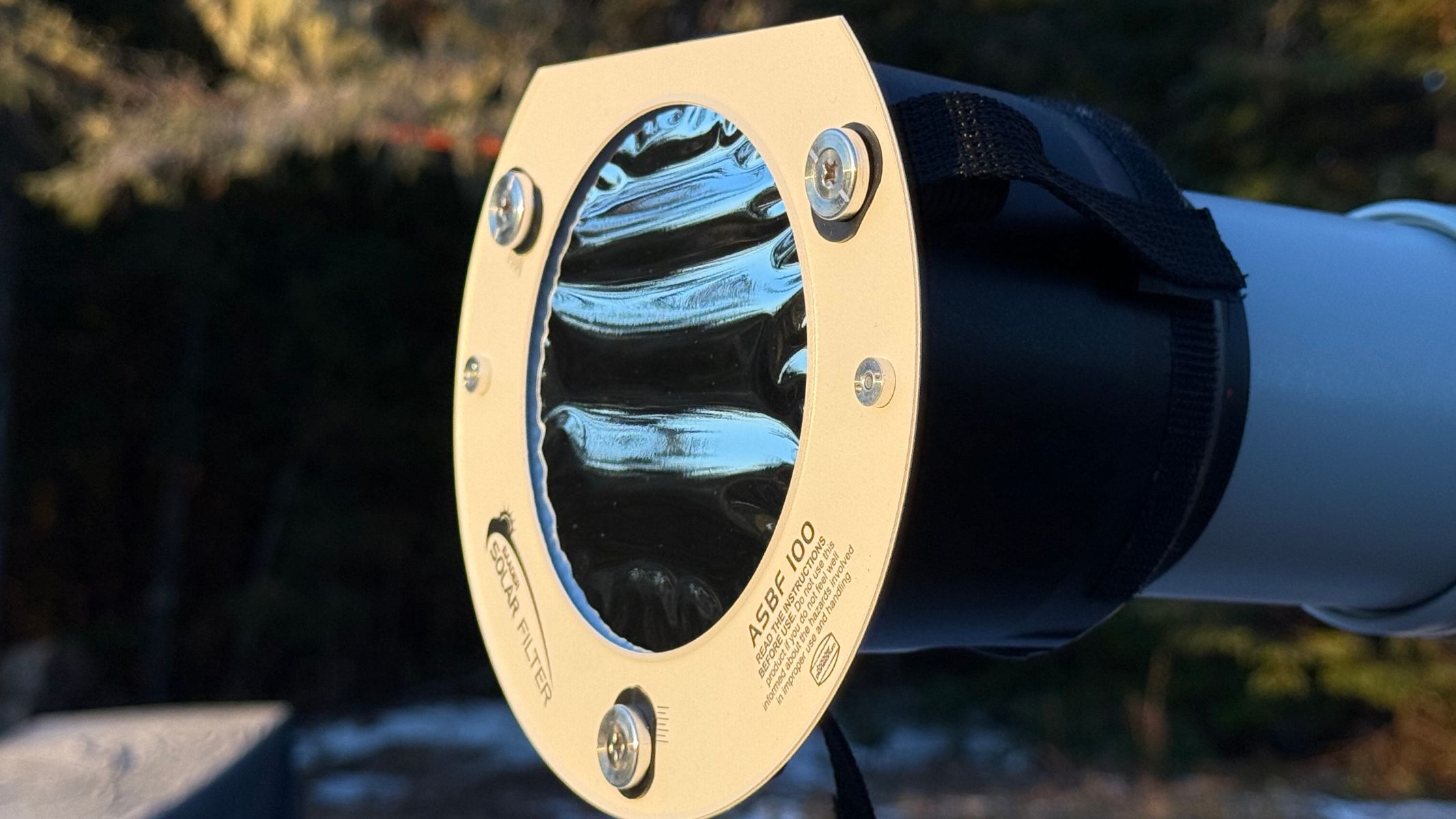
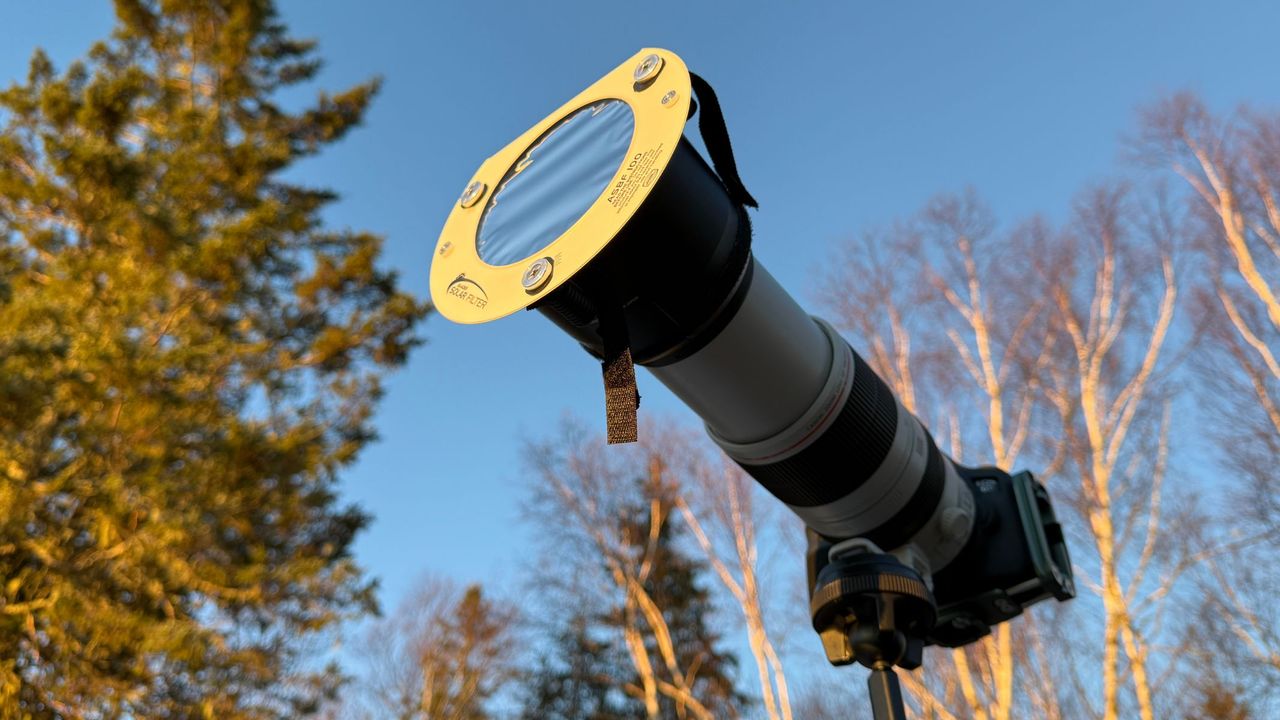
Baader AstroSolar Film can be used to make solar filters for all kinds of equipment.Jamie CarterBaader AstroSolar Film can be used for all kinds of solar images.Jamie Carter
Thin and delicate
Perfect for crafting homemade solar filters
Available as A4 and A5 sheets and ready-made filters
The defining feature of Baader AstroSolar Filter Film is how little there is to it. The film is extremely thin — around 0.01 mm — and feels much more fragile than tougher solar polymer materials. That can be disconcerting the first time you handle it. It wrinkles easily, but should never be pulled tight. However, initial fears are misplaced because a good homemade solar filter does not require the film to be flat. In fact, it should be mounted slightly slack, because wrinkles and ripples in the filter material actually improve the image.
The real design advantage is that AstroSolar Film is hugely versatile and can be cut to suit almost anything. A single sheet can be used to make a front filter for a telephoto lens or two, as well as for a couple pairs of binoculars. Any filter must always go over the front of the optics, never behind them. For binoculars, make a filter for one objective lens for safe one-eyed viewing and securely cap the other.
Key specifications:
Product type: AstroSolar Safety Film OD 5.0 solar filter film Material: Metalized film Thickness: Around 0.01 mm Light reduction: OD 5.0 blocks 99.999% of visible sunlight Solar color: Neutral white Formats: Loose sheets and pre-made filters
They are, of course, neater and more durable than homemade cardboard versions, but the optical principle is exactly the same. Besides, the loose sheet version is more attractive if you have several lenses or binoculars to cover, or if you want to make a filter that precisely fits a specific lens hood.
Baader AstroSolar Filter Film OD 5.0: Performance
An image of a partial solar eclipse in 2023, taken using a Baader filter.Jamie CarterAstroSolar Film gives the sun a neutral white appearance.Jamie Carter
Sharp solar detail
Neutral white color
Suits cameras and binoculars
Although its versatility makes it unusual, making DIY solar filters won’t be for everyone. However, the main reason to choose Baader AstroSolar Filter Film is for its image quality. When used correctly, it produces a sharp, high-contrast, white-light view of the sun. Sunspots appear cleanly defined, the solar limb looks crisp and the image has a neutral white tone, rather than the deep orange produced by some polymer filters.
That white rendering will not be to everyone’s taste. Casual eclipse watchers often expect the sun to look orange through solar filters because that is how it often appears through eclipse glasses and some glass or polymer solar filters. Baader’s version is a lot more clinical. For photographers, however, that is an advantage. A neutral white solar disk is easy to warm up later in editing, while a heavily colored orange image gives a little less flexibility. It all depends on your point of view.
The sharpness advantage comes from the fact that it allows shorter exposures, something that becomes more obvious as the focal length increases. In a short-lens or wide-field composition, the sun is small, so differences between filter materials are less obvious.
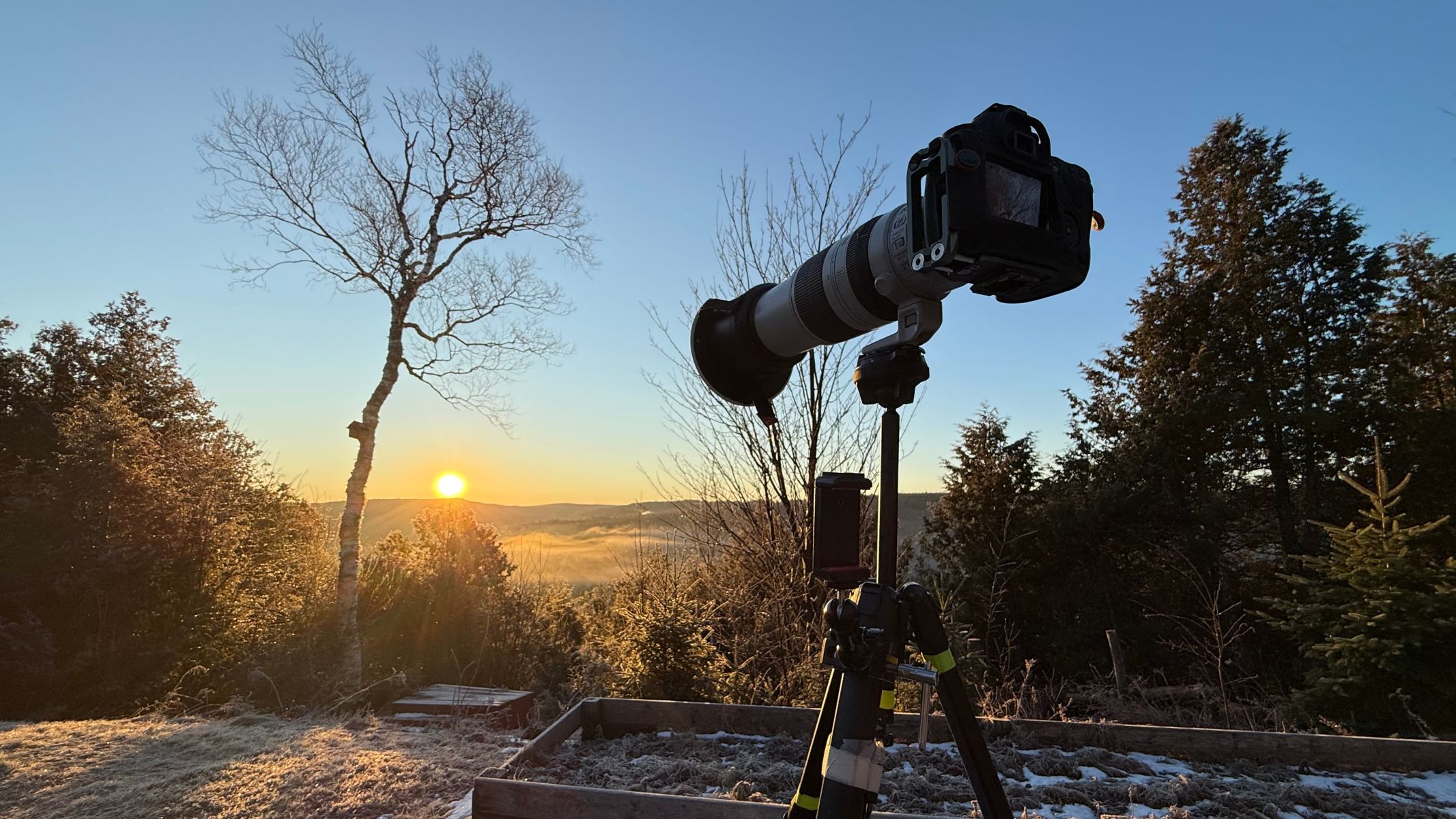
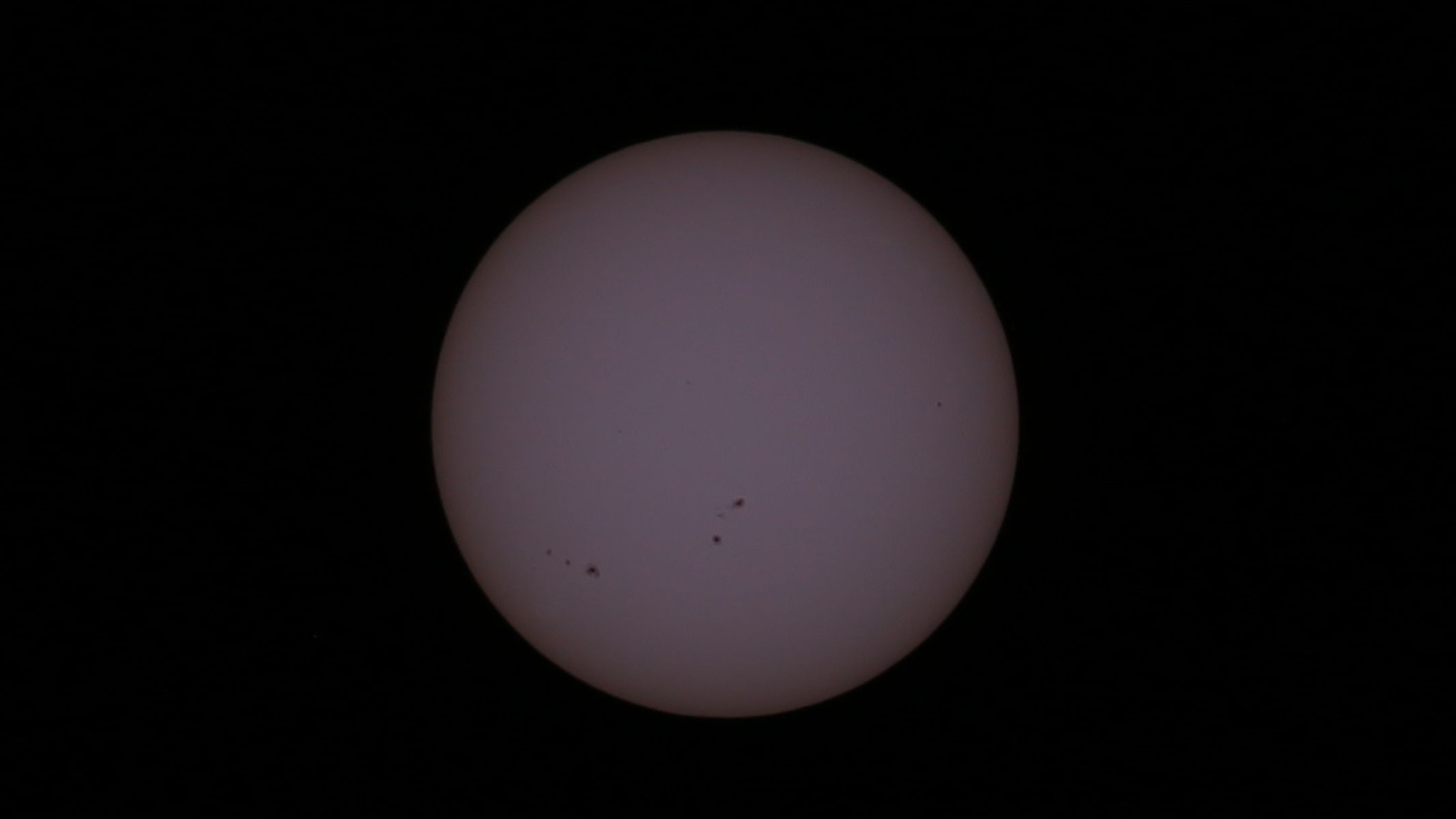
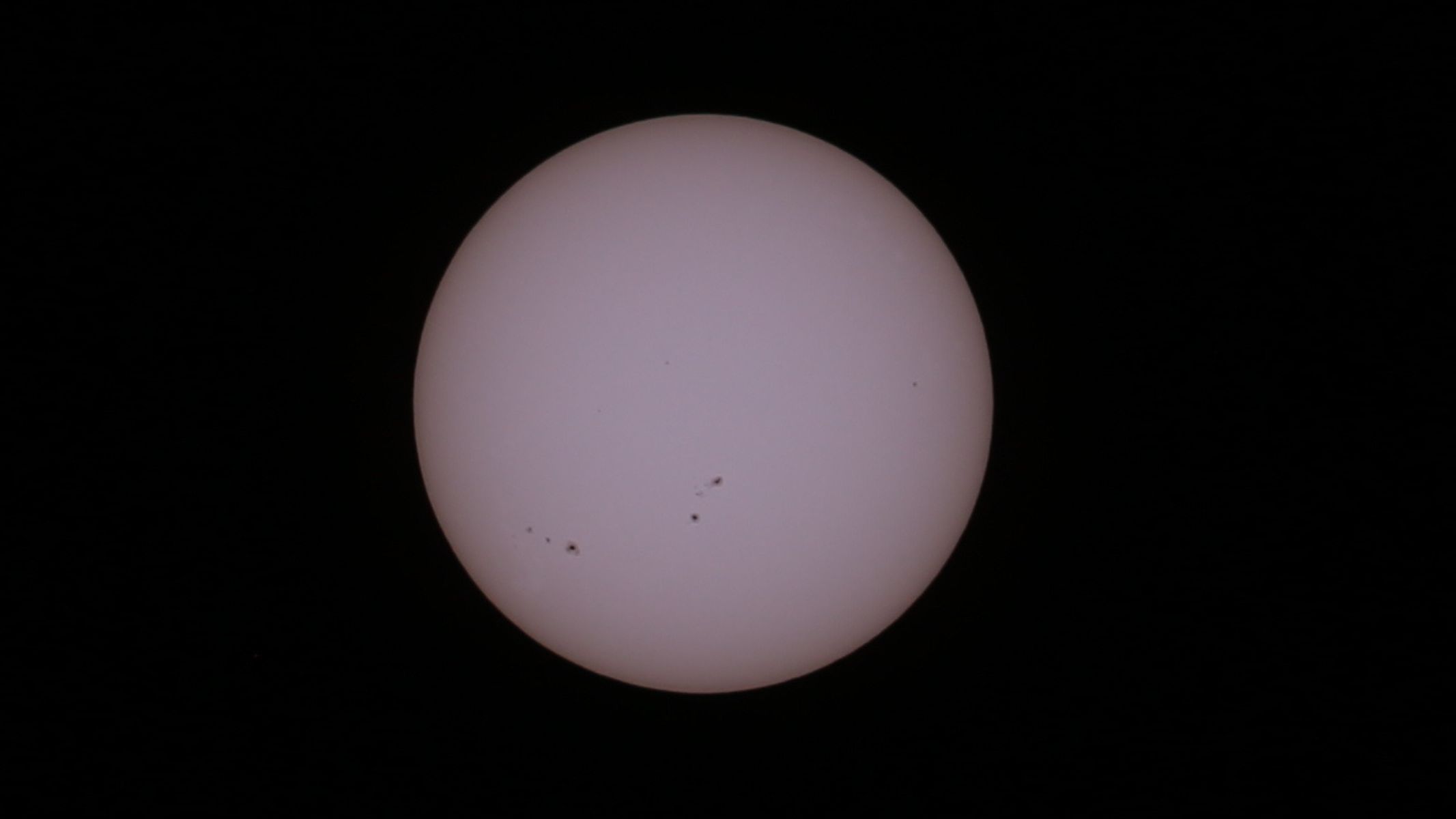
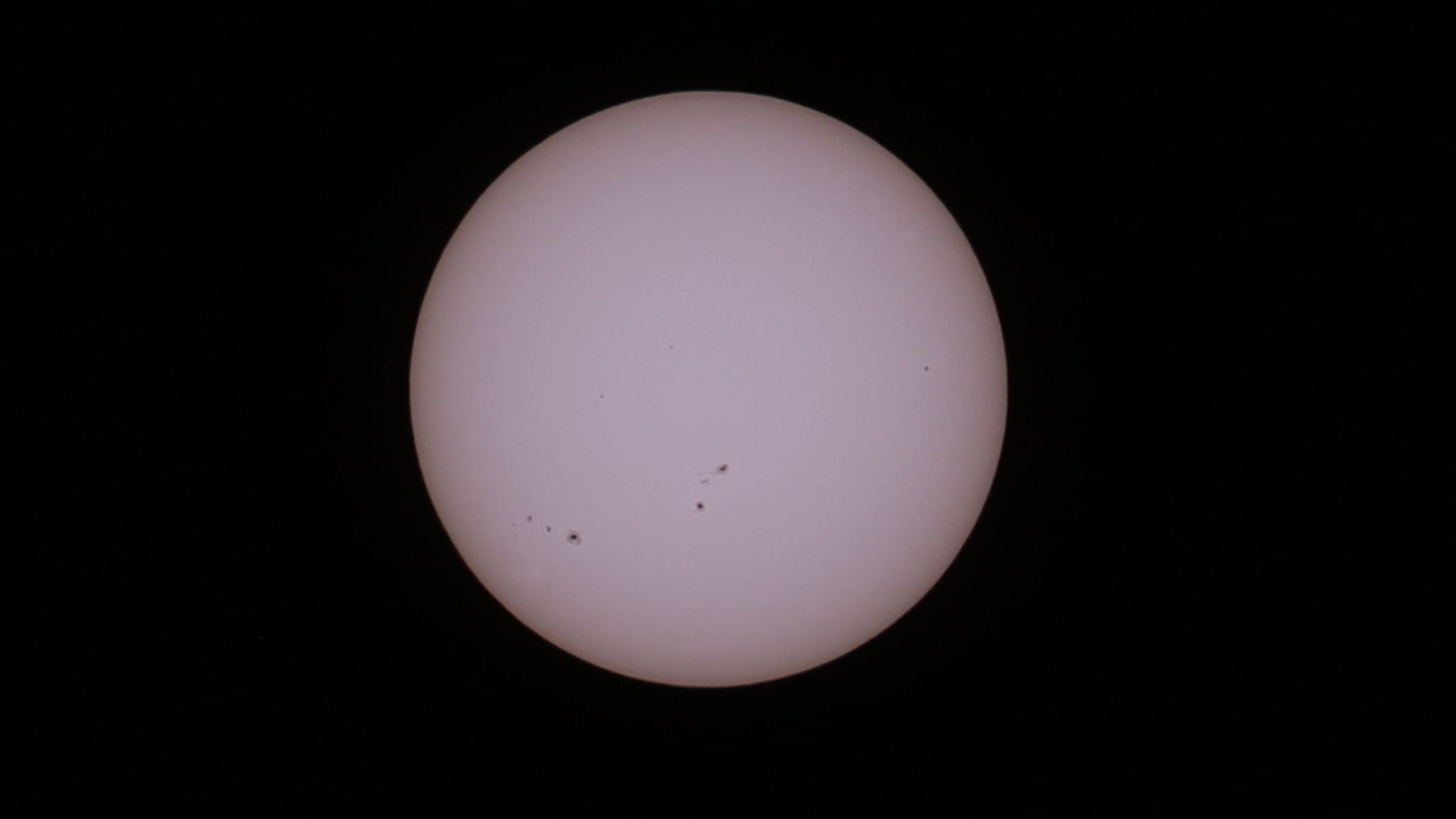
On a 400mm, 500mm or 600mm lens, where sunspots and the edge of the solar disk matter more, Baader AstroSolar Film OD 5.0 shows why it has such a strong reputation among eclipse photographers. In our tests at 400m set to f/8 and ISO 100, we found that exposures of 1/800s and 1/1,000s achieved the best results.
An image of the sun using 1/2,000s exposure. Jamie CarterAn image of the sun using 1/1,000s exposure. Jamie CarterAn image of the sun using 1/800s exposure. Jamie CarterAn image of the sun using 1/250s exposure. Jamie Carter
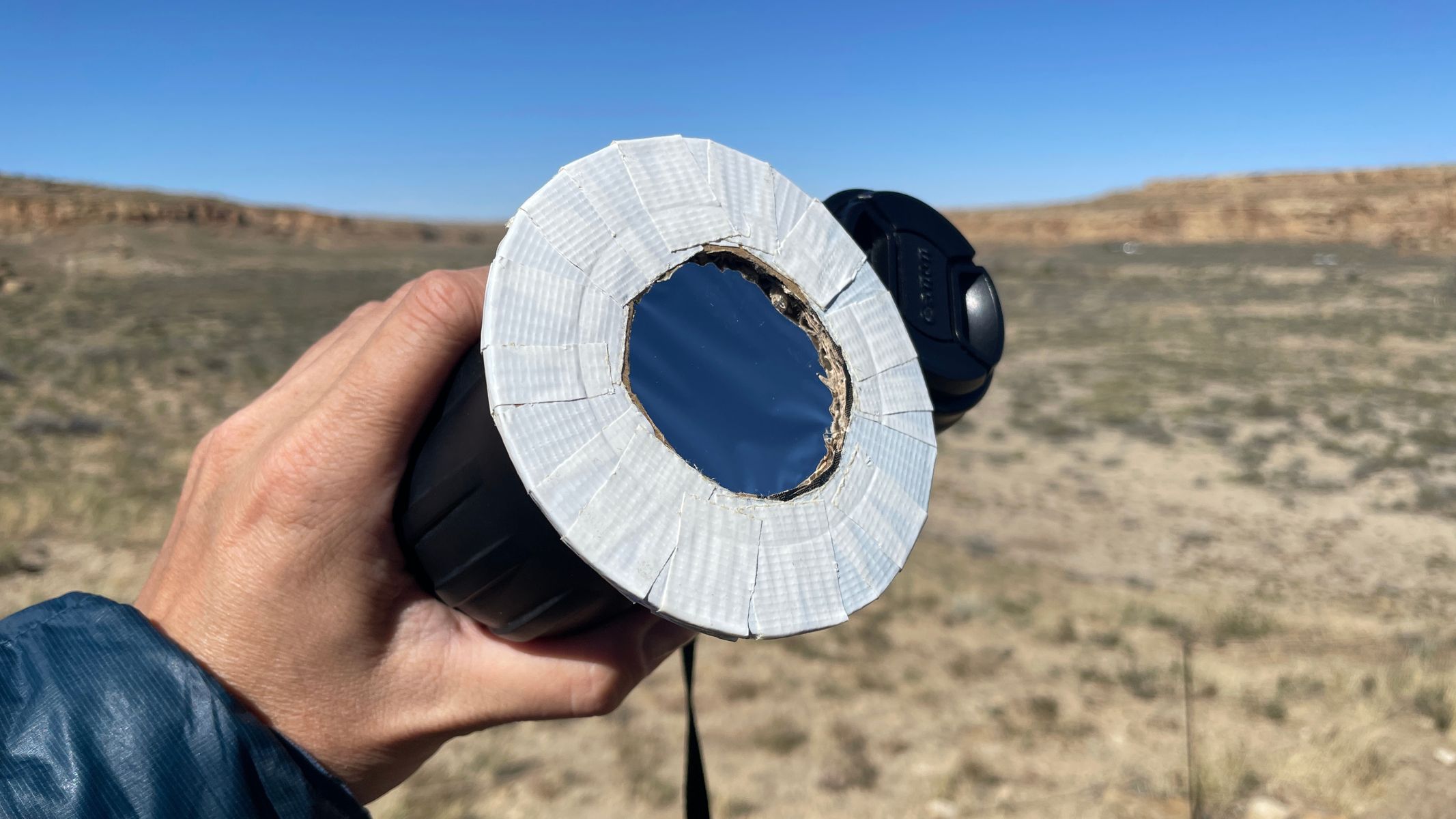
It also works well with binoculars. In fact, we’ve been traveling to watch solar eclipses using the same DIY solar filter fashioned from Baader AstroSolar Film OD 5.0 for a decade. Over the years, it’s been reinforced with plastic tape to extend its lifespan. It turns a pair of 10x50 binoculars into a safe solar-viewing instrument for the partial phases of an eclipse (just remember to cap the non-filtered lens).
The use of Baader AstroSolar Film is, of course, solely for capturing the partial phases of a solar eclipse, allowing safe imaging of the shrinking solar crescent. If you’re in the path of totality and about to watch a total solar eclipse, you’ll need to gently remove the filter when it gets dark.
That makes a homemade slip-on filter particularly attractive: it can be designed to slide off quickly, avoiding the fiddly delay of unscrewing a hot, threaded plastic or metal filter during the brief moments of totality. It’s wise to have an empty shirt pocket ready to take that filter for the few minutes of totality, which will keep it safe until the post-totality partial phases a few minutes later.
Baader AstroSolar Filter Film OD 5.0: Functionality
Homemade filters can be built from the A3 or A4 sheets of AstroSolar film.Jamie CarterReady-made Baader solar filters use the same core AstroSolar material.Jamie Carter
Easy to use for DIY projects
Works across many optical devices
Safety checks required
If you buy a solar filter that uses Baader AstroSolar Filter Film OD 5.0, you have an excellent product that requires care when traveling and storing. If you purchase it as a sheet of material, it requires some time and patience as well as cardboard, tape, glue and scissors to custom-build your own Baader AstroSolar Solar Filter for almost any optical device. That’s a huge advantage over many screw-in photographic filters, which only fit specific thread sizes.
As you’d expect, making a new solar filter for any new gear from an existing sheet of Baader AstroSolar Filter Film is much cheaper than investing in an all-new screw-in photographic filter.
The DIY construction is simple: two cardboard rings sandwich the film, then a short cardboard sleeve fits snugly over the lens hood, binocular objective or telescope tube. The result should be secure enough that it cannot fall off accidentally, but easy enough to remove deliberately. It’s a good idea to have some masking tape handy in your camera bag for added security, particularly if it’s windy and/or the sun is low on the horizon.
Whether your solar filter is pre-made or homemade, it’s important to inspect it before use, especially when using Baader AstroSolar Filter Film. Any holes, tears, or scratches are reasons to stop using the filter.
Should you buy Baader AstroSolar Filter Film?
Buy it if:
✅ You want to make your own solar filters.
✅ You need filters for camera lenses and binoculars.
✅ You want sharp, white-light solar images.
Don't buy it if:
❌ You want the simplest possible eclipse-viewing option.
❌ You don’t have the patience to craft your own solar filter.
❌ You prefer an orange solar image.
Baader AstroSolar Filter Film OD 5.0 is neither the most robust nor the quickest solution for casual eclipse viewing. Its delicate construction demands careful handling, storage and inspection before every use. For some users, a ready-made polymer or glass filter will be less stressful.
However, for photographers and binocular users, it’s hard to beat. It is light, sharp, adaptable and available in various forms for different solar imaging needs. Its greatest strength is that it allows you to create exactly the filter you need, whether that’s for a 400mm camera lens, one side of a pair of binoculars, a compact travel telescope or any other equipment.
Treat it gently and mount it securely, and Baader AstroSolar Filter Film remains one of the most useful solar filter materials available.
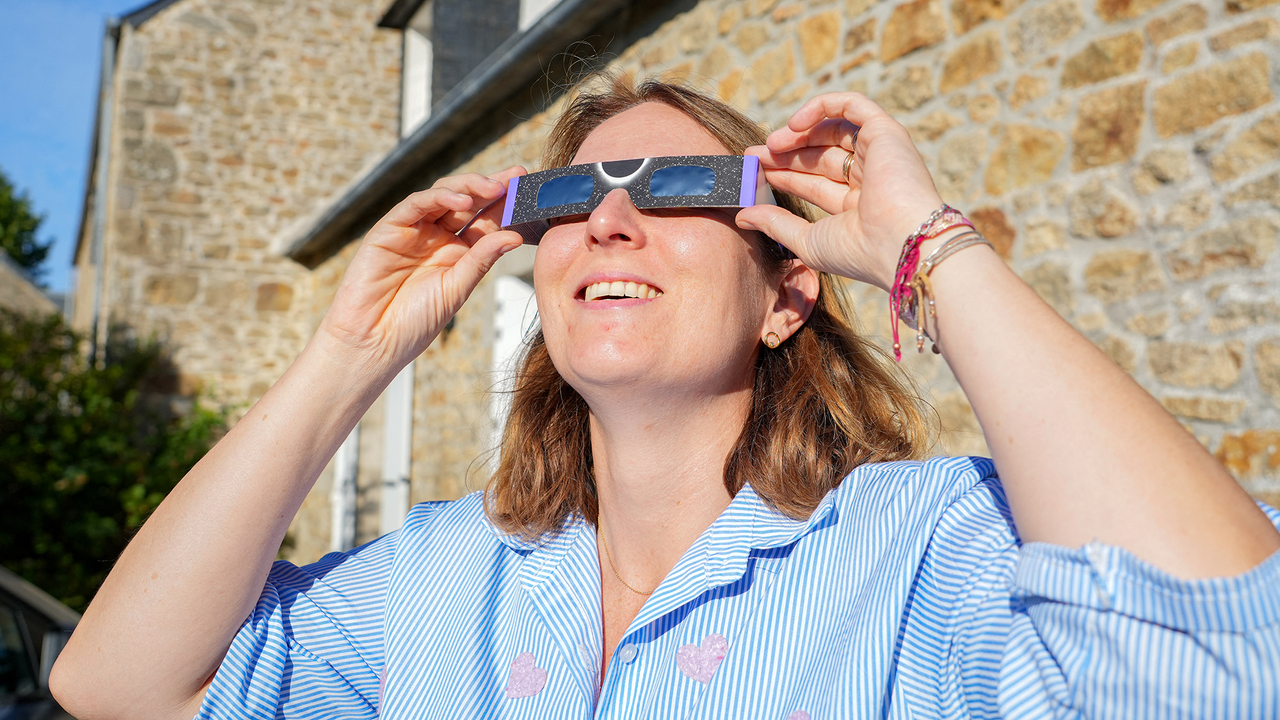
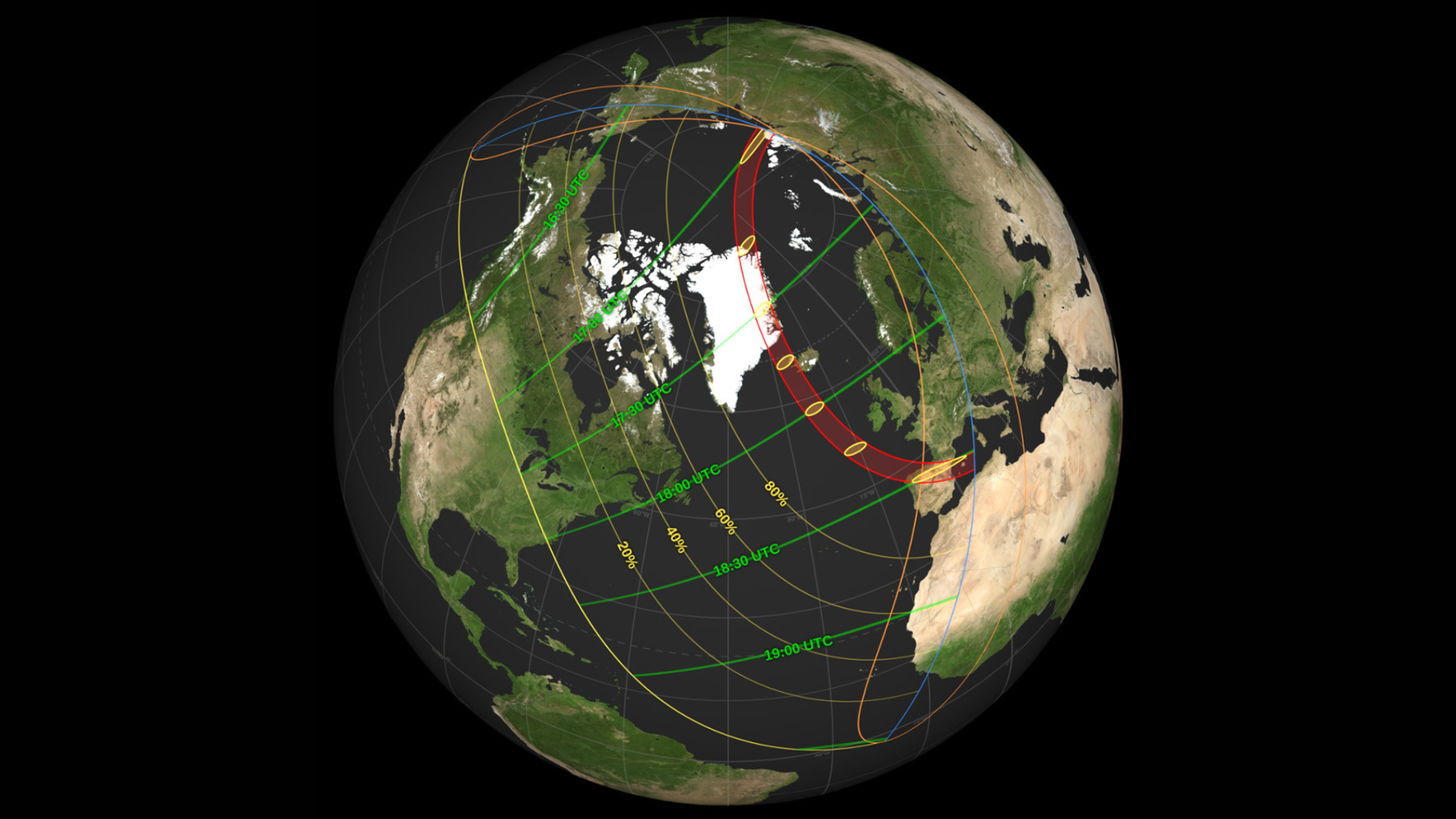
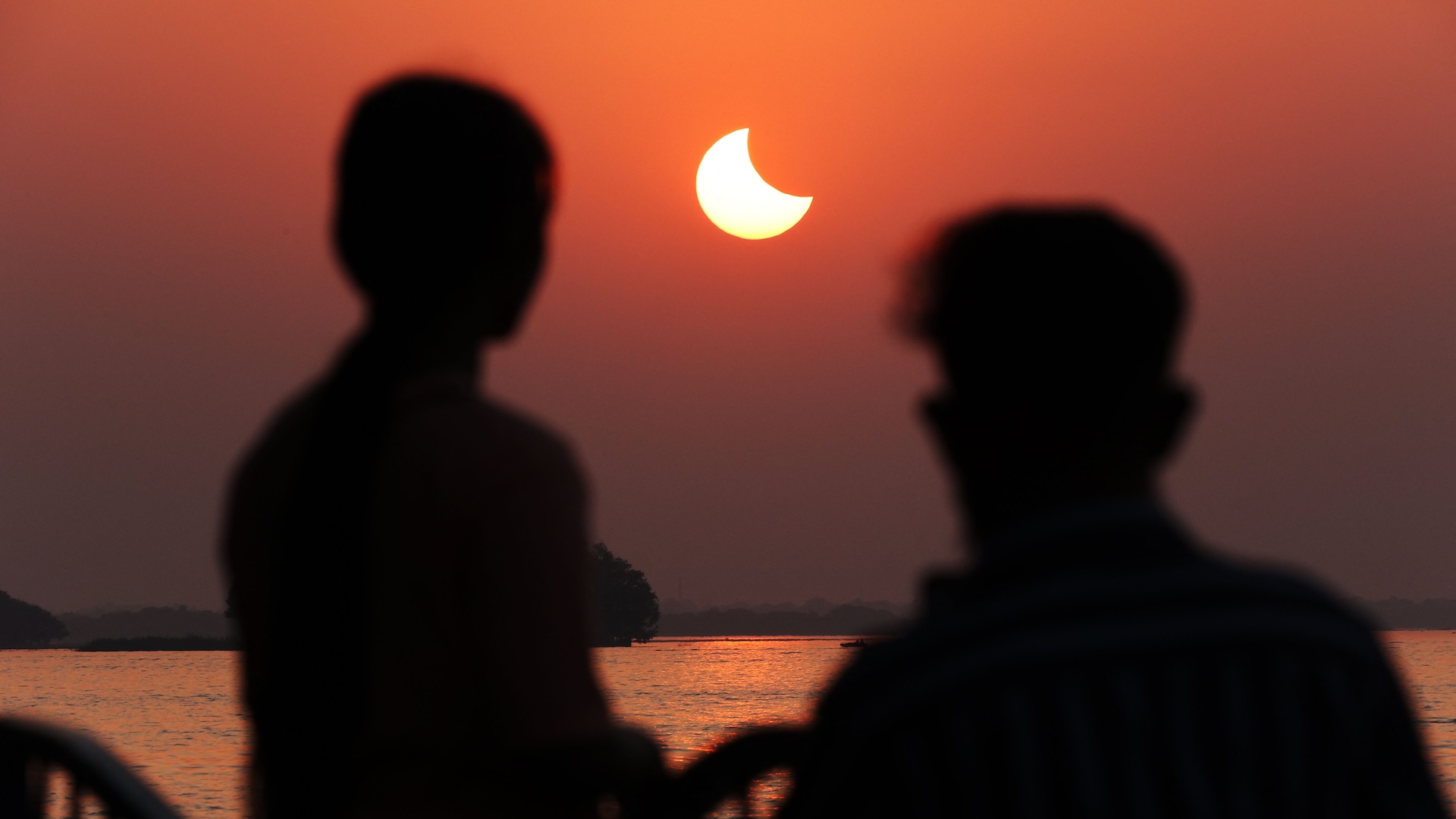
For space fans and skywatchers alike, Wednesday Aug. 12 is destined to be a date for the history books. For those in North America — including Alaska, eastern Canada and parts of the northeastern U.S. — viewers will be able to see a partial solar eclipse during the daytime. Across the pond, the total eclipse will be visible from eastern Greenland, western Iceland and northern Spain. (For those planning to see this rare event in person, it's important to wear the right solar eclipse glasses, especially if you're watching the partial phase of the eclipse; we have some gear suggestions that can help you watch this skywatching event from anywhere).
Once the sun goes down, the night skies offer their own treat: the Perseid meteor shower, which peaks overnight on Aug. 12-13. Thanks to a new moon, stargazers will have an even better chance of catching these streaking lights across the night sky, with the best hours to watch occurring from midnight to 2 a.m. local time. According to the Planetary Society, observers in dark sky areas can hope to catch between 50 and 75 meteors per hour. The dark skies also make it a great night to try and spot the Milky Way, or the six planets that will appear together before dawn.
With so much going on in the skies on Aug. 12, will you be watching? Take our poll and let us know what you think in the comments below.
The Berlin gold hat was made around 3,000 years ago from a single sheet of gold and accentuated with motifs that represent a calendar. (Image credit: Alamy)
QUICK FACTS
Name: Berlin gold hat
What it is: A tall, conical hat
Where it is from: Likelysouthern Germany
When it was made: Circa 1000 to 800 B.C.
This tall, conical hat made from a single sheet of hammered gold was likely worn by an ancient priest during a sun cult ceremony. The Berlin gold hat is the best preserved example of only four Bronze Age accessories of this type that have been found in Central and Western Europe.
The gold hat is in the collection of the Museum of Prehistory and Early History in Berlin. The museum acquired the artifact in 1996 after it circulated on the antiquities market. As a result, it is unclear where the hat was found, but the other three known Bronze Age gold hats were discovered in southern Germany and western France.
The hat is roughly 29 inches (74 centimeters) tall and weighs just over 1 pound (480 grams). It is accented with a flat bronze band with a bronze wire bordering its brim. A wool or felt lining was likely worn underneath the gold hat to stabilize it, but no traces of a lining remain.
Bands of decoration on the Berlin gold hat make the artifact stand out. The repeated motifs of concentric circles, disks, ovals and other symbols encode numerical values that correspond to a calendar, archaeologist Wilfried Menghin argued in a 2008 study. Each band represents a numerical value, and combinations of bands can help calculate lunar months and solar years, as well as convert between lunar and solar dates. The calendar can also be used to predict lunar eclipses.
"The person who wore this hat was the carrier of secret and very special knowledge," Matthias Wemhoff, director of the Museum of Prehistory and Early History, said in a translated 2018 video. Wemhoff described the hat's wearer as a priest who may have come out on a mountaintop at sunrise. The glistening gold hat would have caught the sun's first morning rays, dazzling the other participants in the ceremony.
Although there are no historical records of a Bronze Age sun cult in Europe, other astonishing artifacts, such as the Trundholm Sun Chariot and the Nebra Sky Disk, showcase the importance of celestial bodies to these prehistoric societies.
For more stunning archaeological discoveries, check out our Astonishing Artifacts archives.
Near-extinct oryx are returning. Farms are prospering as irrigation water reaches fields for the first time in decades. Farmers are even nurturing new trees on their land.Once a byword for drought and famine, the African Sahel region on the southern flank of the Sahara Desert now has more water than it has for decades. Wells are filling as water tables have risen by 13 feet or more in places. Lake Chad, which was one of Africa's largest expanses of water before shriveling during the droughts, is recovering.
Over years of drought in the late 20th century, the sun hard baked the soils of the Sahel. Now, erratic but extreme rains are returning to this semi-arid region, causing lethal floods but also replenishing rivers, filling desert depressions, restoring water to dried riverbeds known as wadis, and sluicing rainwater off impermeable soils directly into aquifers. The process began in the 1990s but has accelerated in the past five years.
"Across the Sahel, from Ethiopia to Senegal, we have evidence of increased terrestrial water storage," says Richard Taylor, a hydrogeologist at University College London who has led ground teams investigating the relationships between climate, land use, and groundwater recharge in the region.
But increased rainfall since the drought years of the 1970s and 1980s explains only some of the rewetting of the Sahel. It cannot fully account for the transformation, say researchers. Also driving the rewetting, they posit, are changes to the land surface, ranging from the internationally funded Great Green Wall project to the revival of traditional water harvesting methods and the chaos caused by jihadist militants, which has led to the abandonment of irrigation projects that once emptied rivers of their flows.
Much remains unclear in these remote lands on the edge of the Sahara Desert, but the trend seems set to be long-term, with climate scientists saying more — and more extreme — rainfall is on the way in the 21st century. As underground water reserves revive, some are forecasting an agricultural renaissance.
The Sahel is a band of semi-arid land around 500 miles wide that stretches across North Africa, from Senegal in the west to Ethiopia in the east, with a fast-growing population above 150 million. It is a transition zone between the Sahara Desert in the north and savanna grasslands and coastal forests to the south. Water is everything in the Sahel. Its rains are critical to human survival, but they have been sporadic and unpredictable since the close of a humid era around 5,000 years ago.
Shallow groundwater storage in February 2003 and February 2025, as compared to the average from 1948 to 2012. (Image credit: NASA / Adapted by Yale Environment 360)
How much rain the Sahel gets depends on the West African monsoon, a wet wind that sweeps north from the Gulf of Guinea between June and September, and on how far the monsoon penetrates into the interior. Whether it reaches the 15th parallel north of the equator or stalls at the 10th parallel make the difference between a good year and a failed harvest, say hydrologists.
During the droughts of the late 20th century, as the monsoon repeatedly fell short, up to a million people died of hunger and disease. But now, with a strengthening monsoon, there is talk among scientists of the Sahel being on the verge of a new humid era.
That is good news for wildlife. With wadi systems reviving in Chad's Ouadi Rimé-Ouadi Achim nature reserve, conservationists are documenting resurgent numbers of aardvarks, porcupines, badgers, and foxes, and the successful reintroduction of the scimitar-horned oryx, which was once declared extinct in the wild but now numbers more than 600 individuals. Elsewhere, West African giraffes are browsing on verdant vegetation in areas from which they had disappeared.
As the rains return, farmers have boosted crop yields by nurturing the natural regrowth of some 200 million trees on formerly treeless fields in southern Niger, according to former World Resources Institute geographer Chris Reij. And, supported by new aid programs such as the World Bank's regional recovery program PROLAC, they are re-establishing small-scale irrigation systems by tapping groundwater around resurgent oases in Chad, Niger, and Cameroon.
"In the past … there was not enough water to irrigate crops, and our harvests were meager. Now our lives have changed," Achta, a farmer in Chad, said last year. She now has water to plant on four times as much land and has doubled her onion crop. The Bank says her story "reflects a broader transformation across the Lake Chad basin."
Most places in the Sahel are seeing more rainfall. And that rain has become concentrated in extreme downpours from clusters of violent thunderstorms, known to meteorologists as Mesoscale Convective Systems, that occasionally bubble up during the monsoon season. Sahelian storm clusters are now rated as some of the most powerful on the planet, and they deliver most of the region's rainfall. There has been a threefold increase in the frequency of extreme storms since the 1980s, according to a recent analysis.
Why the revival of the rains? An assessment published in 2021 by the U.N.'s Intergovernmental Panel on Climate Change found "high confidence" among climate scientists that it is a result of strong warming in the North Atlantic, caused by a combination of global heating and a reduction, in Europe and North America, of sulphate aerosols from coal burning, which once created a thin haze that cooled the ocean. That cooling prevented the northward migration of the West African monsoon into the Sahel, resulting in drought. But the clean-up has warmed the ocean and pulled the monsoon back into the Sahel, strengthening its ability to produce deluges.
The streets of the Keurs Massar area in Dakar are flooded on Sept. 7, 2020 after a monsoon in Senegal. (Image credit: SEYLLOU via Getty Images)
The effects of these mega-storms are especially challenging in a region more used to disasters caused by the absence of rain. Niger, one of the world’s 10 poorest countries, saw tens of thousands die from famine during the late 20th century droughts. Now, it sees more deaths from floods than droughts. Fierce storms during the 2024 monsoon season inundated the capital, Niamey, and in rural areas washed away more than 150,000 mud-brick homes.
Sudden downpours are initially destructive, but they are a boon to underground water reserves. Falling onto compacted ground, the water does not initially infiltrate the soil but rushes into rivers and dry wadis, which speed the water's flow into aquifers.
Hydrologists say that this indirect infiltration is most intense after heavy storms. "In some locations, rainfall intensity is more important than the annual rainfall amount in determining the magnitude of groundwater recharge," says Taylor. This intensity, he says, is a major cause of the rapid rising of water tables — especially since, in the Sahel, most water drains not to the ocean but inland to depressions and lakes.
Not only are new ponds forming across the formerly arid lands; ancient networks of wadis are being restored. And Taylor's network of researchers has found wells across the region refilling. Mean water tables in much of Niger have risen by some 13 feet, indicating a 15 percent increase in aquifer reserves.
This local data is now being corroborated by analysis from satellites that measure changes in land mass by tracking subtle changes in gravitational force from the land below. NASA's Gravity Recovery and Climate Experiment mission has found a sharp increase in gravitational force across the Sahel in the past two decades that hydrologists attribute to growing terrestrial water storage.
But rainfall and its intensity are only part of the story. Events on land also play a part.
Environmentalists have long held that the encroachment of agriculture into the Sahel during the 20th century caused "desertification" by removing natural vegetation, destroying soils, and allowing the advance of desert sands. But hydrologically, the effect may be the opposite because some crops can actually help the land retain water.
All vegetation absorbs moisture from the soil before transpiring it into the air. But shallow-rooted African grain crops such as millet and sorghum transpire less moisture than the deeper-rooted grasses they replace, leaving more moisture in the soil.
Dead trees in an arm of Lake Chad near Kiskawa, Chad, that was recently flooded. (Image credit: JORIS BOLOMEY via Getty Images)
An amplifying factor is the drought-driven crusting of soils, which has increased runoff by around 50 percent in the central Sahel in recent decades. Analysis by Christophe Peugeot, a hydrologist at the HydroSciences laboratory at the University of Montpellier in France, found that the droughts "have permanently transformed the region's soils… fueling today's floods."
Much of this runoff ends up in Lake Chad, on the border between Nigeria, Cameroon, Chad, and Niger, which drains an area almost six times the size of California. The lake's dramatic demise became a totemic image of the late 20th century hydrological decline of the Sahel. But less well known is that the lake is now recovering, as water inflows increase. Hydrogeologists at the University of N'Djamena in Chad report that in 2024 it swelled to a peak of more than 9,000 square miles, almost as big as in the 1960s and 10 times its size in the mid-1980s.
This growth is partly masked by large areas of saturated vegetation in the lake that do not show up in satellite images, say hydrologists. But as the lake grows, the aquifer beneath is also refilling.
Some researchers argue that deliberate efforts to capture rain in soils can also help explain the rising groundwaters across the region. One such effort is the Great Green Wall. Originally planned as a barrier of planted trees to prevent the advance of the Sahara, it has morphed into more grassroots efforts to control soil erosion by capturing rainfall and improving soil moisture, all of which can improve infiltration underground.
Many such projects revive traditional water-harvesting techniques, including the placement of stones along hill contours, digging small holes known as "zai pits" amid crops, and forming crescent-shaped mounds around trees.
Alpha Lo of the Climate Water Project, who highlighted the restored Sahelian groundwaters in a recent online analysis, argues that such techniques are "the primary reason." But most researchers believe that, while locally effective in nurturing trees or crops, they are not happening at sufficient scale to explain the region-wide resurgence.
A final suggestion is that humans are extracting less water from rivers, leaving more to eventually infiltrate into aquifers. One driver of this trend is the decline of big irrigation projects that were constructed during the drought years to boost food production. For instance, Cameroon once largely emptied the River Logone, historically the biggest single source of water flowing into Lake Chad, to grow rice. But the SEMRY irrigation project reportedly diverts much less water now, due to poor management, aging infrastructure, and the outmigration of farmers.
In areas around Lake Chad, farmers have also abandoned their irrigated fields because of Boko Haram, a militant jihadist group that continues to terrorize communities. Timmo Gaasbeek, food security policy officer at the Netherlands Ministry of Foreign Affairs, says the chaos in northern Nigeria "means that the water in the rivers is not caught upstream, and continues to flow into Lake Chad, where it contributes to higher water levels and more groundwater recharge."
Most climate models predict a further increase in annual rainfall in the coming decades, due to global heating and the banishing of cooling aerosols from the North Atlantic. Taylor predicts that "the Sahel will experience particularly marked increases in extreme rain" that will "serve to increase groundwater recharge."
Peugeot says that "the increased availability of water in valley bottoms could promote the development of irrigation, offering new prospects in several Sahelian regions." Buoyed by such predictions, Nigeria is looking to restore the 165,000-acre South Chad Irrigation Project on the former shores of Lake Chad, which has long been abandoned for want of water.
But the road ahead will not be straightforward. Sahel rains will continue to be erratic on all timescales. Most immediately, climatologists are predicting that this year's strong El Niño event could deliver drought in the eastern Sahel, but bumper rains and more floods further west.
Long before chemistry was a formal science, humans were experimenting with substances to solve problems, cure illnesses and make money. In his book "The Age of Alchemy: How Early Innovators Shaped Modern Chemistry" (Profile Books, 2026), author Kit Chapman, a science journalist and honorary researcher at Falmouth University in the U.K., traces how this ancient, protoscientific tradition shaped the world.
From our ancestors' early use of fire to some accidental — and disastrous — pyrotechnics in the 14th-century French court of Charles VI, Chapman reveals how early innovations across the world paved the way for modern science.
Hannah Osborne: The book is full of brilliant historical anecdotes that bring all of these alchemy breakthroughs into context. What was your favorite one and why?
Kit Chapman: I mean, you can't go wrong with a man trying to turn his own urine into gold, I think. Hennig Brand [who accidentally discovered phosphorus in the 17th century] was one of my early touchstones. I've known about this story for a while. I've always thought, "How can I get this into a book? What's the link?" Obviously alchemy provides this fantastic base. He bankrupted two wives to try and fund his 1,500-gallon [5,700 liters] urine habit — and then he gets something [phosphorous], against the odds.
This is the first element we can actually put a name to. This is the first person we can say actually discovered a chemical element, and it's an alchemist in the purest sense of the word. Then, of course, he tries to keep it secret. He sells it, eventually, to a friend, and his urine goes on tour around Europe, showing the kings and queens this glowing pee, before suddenly, [chemist and philosopher] Robert Boyle actually works out exactly what's going on.
That, to me, sort of encompassed everything I was hoping for in the book. There's a fantastic story there that's about human connection. There's the unraveling of mythology, and theology and belief, and starting to look at science. But there's also real practical stuff going on there. He didn't know what he was doing. He just didn't know why he was doing it, and that I found fascinating.
HO: You make the point that these people weren't thinking, "Oh, I'm going to do chemistry." How important is that for understanding how these early innovations shaped modern knowledge of how things work?
KC: I think that's essential. We often look at science as something separate from the real world, and one of the things that I really wanted to do with this book was to illustrate that science is going on in every profession. It's going on in every home, continuously; it's going on in our bodies continuously. It's everywhere.
Science is a way to understand what's going on in the world. It is not a separate thing from culture, from belief, from trade, from globalization, from discovery, from just getting on with life. I wanted to bring in the potters, the weavers, the bakers, the urine salesmen — which was an entire thing that I didn't really know I had to go down. I found it fascinating.
And, of course, [there are] artisans. When we start looking at the first actual chemistry that's being done, it is people trying to create beautiful works of art, perfumes, things like that. It moves away from survival and into this ecstatic beauty, and that, to me, encompasses what I love about the history of science. It's bringing all of these threads together and making discoveries not necessarily where we think we're going to find them.
HO: You mentioned the beauty of it all, and the perfume. One of the chapters I really enjoyed was the first chemist who was a female perfume maker in ancient Assyria.
KC: Tappūtī Bēlet-ekallim. The fascinating thing is that the only reason we know her name is that she put it down in cuneiform. She wrote it down. She may well have been a slave; perfume makers were often slaves. She was certainly a woman who was working in the palace. She was working with another woman whose name, unfortunately, we've lost to time.
What I find fascinating is that we now have this person who was one of the working class, one of the underdogs, slaving for a week to make this potion that she wrote down because the recipe is incredibly detailed. And we remember her name, but we have no recollection of the lord or lady that she was actually making it for. It's kind of class warfare throughout the centuries.
HO: I found the extreme sort of secrecy really striking — that so many of these ancient texts were lost because they were being hidden. But then you also have the fall of civilizations, so we've lost all this knowledge.
KC: It's this combination of, as you mentioned, hiding the recipes because they are trade secrets. If you look at the first alchemy book that we actually know of — "Physika Kai Mystika" — it literally translates as "natural and secret questions" or trade secrets. These were craftsmen, and, of course, they didn't want to share it with rival craftsmen. If you've got a really good recipe for making something look like gold, you want to keep that to yourself.
They use these code words — and that went all the way through into what we think of as alchemy, that sort of Renaissance period where they're talking about taking the fiery sword from the belly of the dragon, which is just wonderful and descriptive.
But you also have things like Emperor Diocletian destroying the texts in Alexandria in 300 A.D. Why did he do it? Because it was a matter of survival for him. Twenty-five of his predecessors were murdered by their own guards or died of plague and things like that — horrible fates. He wanted to avoid that, and the idea that [someone] could turn something into gold terrified him. It would debase his currency, so it always brings in that politics. It brings in human nature and human curiosity.
HO: Do you think there are still things we're yet to discover from alchemy from the past?
KC: Yeah, without question. Whether or not we're going to discover some kind of new, groundbreaking technology that's going to change the world, I can't see that happening. But the one thing we could see is the use of natural products in a way that we hadn't necessarily thought [of].
A great example of that is [Nobel Prize-winning chemist] Tu Youyou and the discovery of artemisinin compounds [from the] qinghao [plant], which comes from a Chinese alchemist's herbal remedies book, essentially 1,700 years ago. The fact that the best defense we have against malaria, the best antimalarials possible, comes from this ancient alchemical source indicates that there's probably more to find.
Nobel Prize winner Tu Youyou (Image credit: STR / Stringer via Getty Images)
There is almost certainly more to find in terms of how they [ancient alchemists] used recipes, how they would try and make gold. Their understanding of the world is something that we don't necessarily have a full grasp of, and we're still piecing it together. There's some wonderful work being done by Matteo Martinelli and others looking at the history of, particularly of Western alchemy emerging in Egypt.
We also have things like Greek fire. We have a pretty good idea how they did it, but if you're looking for what the exact recipe [is], we're still not 100% sure.
HO: It's interesting now, watching modern equivalents taking place. We still, to an extent, try to guard our own knowledge.
KC: Yeah, we do, and I think it's actually a pernicious thing in science. We have this publish-or -perish mentality, which is that if we don't get the paper out first, obviously we lose the patent, but wider than that, we lose the kudos. There's this kind of necessity to kind of hide things. You hear about all kinds of shenanigans — a reviewer delaying a paper until their paper comes out, things like that, all this kind of naughtiness going on.
We've got to recognize that science has moved on certainly from the "Great Man" idea. We're now working collaboratively in teams. That is the only way that modern science gets done. The second, if there is one lesson from the book, it's that if you try and hide science, you delay progress.
If you look at the traditional story of science, we talk about Europe. Occasionally, we might bring in China. But India, Africa, Mesoamerica, South America, North America — every single continent was having scientific discoveries and developments.
The moment you actually start spreading ideas, the real ignition for me for the Renaissance and for what becomes chemistry, is the printing press. It's the fact that ideas can then be shared and accessed by everybody. The moment we start realizing that science is a global endeavor, that everyone can do it — man, woman, child, it doesn't matter your nationality, [it] doesn't matter your ethnic ethnicity, it's for everybody — the sooner we're going to start seeing some major progress that we otherwise wouldn't make.
HO: We see loads of the advances in chemistry and alchemy within civilizational melting pots. What were some of the biggest surprises to you when you were researching the book?
KC: One thing that really annoyed me was, looking through textbooks, you can look at who made zinc, and you come up with a name that came from the 1700s, or how platinum was discovered — that's a fantastic example. Platinum was discovered by a conquistador who noticed that some natives were wearing platinum. But, of course, he didn't discover it; it was discovered by the Indigenous populations.
The amount of science that came out of Mesoamerica, Central America, and the way that science was also being developed in India, it's just kind of completely overlooked. If you look at the traditional story of science, we talk about Europe. Occasionally, we might bring in China. But India, Africa, Mesoamerica, South America, North America — every single continent was having scientific discoveries and developments.
They weren't necessarily developments that we think of in terms of leading to chemistry, but they were dealing with social problems that they had at the time. They were tackling what was in front of them, and we always need to remember when we're looking at history to look at the context of the discoveries.
HO: Which breakthrough did you think was most impressive in terms of the materials or facilities that were available?
KC: One thing that I found sort of striking was, there's a chap called Paracelsus who is absolutely fascinating, absolutely bonkers. Paracelsus is, for me, the archetypical alchemist because he was certainly trying to revitalize medicine and get rid of humor theory and come up with all these ideas. [Editor's note: Humor theory is the idea that human health and temperament were related to four fluids in the body — black and yellow bile, blood and phlegm.] But he also believed that mermaids were real and that they were just out to steal men's souls.
A painting of Paracelsus. (Image credit: GL Archive via Alamy)
He was a drunk, he had a broadsword, and yet he's the guy that was able to combine what we think of as the traditional herbalist role and the doctors. At that point, doctors weren't even touching patients. They believed that the true skill of a medical man was that you didn't even need to examine a patient; you could just sort of look at them and you'd know what was wrong. He [Paracelsus] was able to say, "No, that's not right; you need to actually test things, and you need to try things." The moment we actually combine those two different threads together is when we actually started to get what becomes of modern medicine. The number of lives that saves is incalculable, so I think that that's one of the great moments.
The other one that always comes to me is Antoine Lavoisier in the French Revolution. He made several great discoveries — the fact that matter can only be changed; it can't be destroyed [at least at low energies]. The idea that if you take something, then obviously there's got to be components to that; you're not making it out of thin air. And coming up with a list of elements in the French Revolution or just before the French Revolution, unfortunately dies, from the guillotine [when Lavoisier was executed].
That, for me, was when we started to get true chemistry. That's when all of the magic is dispelled. I think he [Lavoisier] is, for me, the French equivalent of Isaac Newton. He's incredible.
HO: For you personally, throughout researching and writing the book, what was your biggest takeaway and what was the biggest surprise?
KC: My biggest takeaway is that science happens everywhere continuously through everyone. I traveled around the world for this book; I went to pretty much all of the continents. I didn't go down to Australia; that's about it. Wherever you go, there are discoveries being made. There are people who are trying to make their worlds better.
Science is not for this elite group; it's for everyone. One of the things I try to do with this book is to show people that even if you think that science isn't for you, it absolutely is; you're doing science continuously.
There've been so many [surprises]. One of the things — this is purely because of the way that I was taught and these inherent biases that we have — but it's so easy to overlook the role of women. When you start delving into the role of women in science … You've mentioned Tappūtī; we also have Mary the Jewess. Throughout the Renaissance, we have people like Caterina Sforza and [the] very famous Queen Christina of Sweden, which I didn't mention in the book because I just didn't have space.
The one shocker for me is this book "The Secrets of Isabella Cortese," which was a man pretending to be a woman to sell his science book. For me, [it] just kind of unravels this whole idea that science isn't for everyone.
This interview has been condensed and edited lightly for clarity.
profilebooks
The Age of Alchemy (Hardback)
"Age of Alchemy" is a fascinating and funny dive into chemistry long before chemistry existed. It captures the ingenuity of humans across cultures and time, revealing how ultimately the work of these early innovators would eventually meld into modern science.
What it is: Saguaro, a lower-redshift spiral galaxy
Where it is: About 10 billion light-years away in the constellation Ursa Major
When it was shared: July 29, 2026.
Ever since NASA's James Webb Space Telescope (JWST) began science operations in 2022, something has been bothering astronomers. Scattered across JWST's deepest images of the early cosmos are tiny, crimson-colored smudges that glow brightly in infrared light but appear surprisingly compact, making them difficult to classify. These mysterious objects appear in huge numbers around 600 million years after the Big Bang before seemingly vanishing less than a billion years later.
These odd-looking "little red dots" (LRDs) left astronomers wondering whether they were witnessing an entirely new type of galaxy or something even stranger. But now, fresh observations from JWST, combined with data from the Hubble Space Telescope and NASA's Chandra X-ray Observatory, suggest that LRDs may not have disappeared at all. Instead, they may have simply changed their appearance as the universe grew older.
Researchers trained JWST on a relatively close galaxy near the Big Dipper known as WISEA J123635.56+621424.2, nicknamed the Saguaro because its sweeping spiral arms resemble the iconic cactus of the Sonoran Desert, which bears red fruit.
The Saguaro galaxy existed around 3.3 billion years after the Big Bang, long after LRDs were thought to have faded from view. However, at its heart sits a compact, reddish core that ticks nearly every box for an LRD, including unusually weak X-ray emissions. The researchers chose the Saguaro because, unlike the incredibly distant LRDs, it's close enough for the space telescope to spot the galaxy's spiral arms and brilliant central core.
The aim wasn't to study the Saguaro as it is now but to try to calculate what it would look like if it were much farther away. Using computer models, the researchers shifted the galaxy to the enormous distances seen in the early universe. As they did, its elegant spiral arms gradually melted into the darkness until only a tiny glowing red point remained. It looked almost identical to the LRDs littering JWST's farthest deep-field images.
The findings suggest that many LRDs may in fact be ordinary galaxies, but at such vast distances that only their bright, active centers remain visible, while the surrounding galaxies fade beyond even JWST's incredible vision.
Instead of representing a completely new class of cosmic object, then, LRDs may actually be a short-lived phase in the growth of supermassive black holes during the universe's youth.
The hunt is now on for more nearby galaxies like the Saguaro to see whether they follow the same pattern. This will enable scientists to build a catalog of LRDs to understand better how galaxies and their central black holes evolved together across cosmic history.
Although it might be difficult to believe in our hyper-connected lives, there are thousands of people across the planet who remain almost completely disconnected from the rest of the world.
It's estimated that there are at least 196 "uncontacted" Indigenous groups worldwide, living mainly in 10 countries in South America, Asia and the Pacific, including Brazil, Indonesia and India. They live in diverse environments, from islands, to deserts, and the forest-dense borderlands of the Amazon basin. These groups have had varying levels of contact with the outside world; while some have only sporadic encounters with neighboring Indigenous peoples, others more regularly encounter outsiders, sometimes against their will due to the presence of oil, logging, agriculture and mining industries that increasingly encroach on their lands.
But who among them are the most isolated people on Earth?
While this question is difficult to answer, there are some candidates for the "least contacted" groups, experts told Live Science.
There aren't strict definitions of what makes a group "uncontacted." The United Nations even notes that the description of such groups can vary from "free, uncontacted, hidden or invisible peoples, peoples in voluntary isolation, etc." Hal Russell, Asia and Pacific research and advocacy officer with the nongovernmental organization, Survival International, said, "We define 'uncontacted peoples' as Indigenous peoples who generally avoid contact with outsiders and have no permanent relationship with them, even while being aware of the outside world."
"Certainly there is a spectrum between permanent contact, initial contact, sporadic contact and none at all," he told Live Science.
Generally what unites these groups is that they have actively avoided or tried to limit contact with other cultures, even with other uncontacted peoples, to maintain their unique way of life.
"They do not want to be disturbed"
One such candidate is a small group of Indigenous islanders known as the Sentinelese, who live on North Sentinel Island within India's Andaman and Nicobar Islands in the Bay of Bengal. This group is so little known that anthropologists aren't even sure what they call themselves; their name is based on the roughly 23-square-mile (60 square kilometers) island where they live.
According to Survival International, it's believed that the Sentinelese have lived in the Andaman Islands for up to 55,000 years and are direct descendants of the first humans to migrate out of Africa. Today, the Sentinelese follow a hunter-gatherer lifestyle and fish along the coastline, using sleek, hand-carved canoes. Survival International estimates that the group includes between 50 and 150 people, although lack of access to the group makes them near impossible to count, and the government has not attempted to include them in the Indian census. Their official numbers remain unknown.
Aside from the island's remoteness, contact is even more difficult because the islanders reject it. The community has been known to shoot at approaching boats and hovering helicopters.
"When they shoot bows and arrows, they are communicating," Simron Singh, a professor at the University of Waterloo in Ontario whose expertise is in island environments and the peoples of the Andaman and Nicobar islands, told Live Science. "It says they do not want to be disturbed."
Only a handful of outsiders have ever set foot on North Sentinel Island, and Indian law now prohibits travel within a 3-mile-radius (5 km) of the island for the protection of both parties. Islanders are vulnerable to diseases brought by outsiders, and visitors are at risk of attack; the Sentinelese have shot and killed at least three people, including a missionary named John Allen Chau, who traveled to the island illegally in 2018.
Herlin Odicio Estrella, an Indigenous leader and president of the Native Federation of Kakataibo Communities, speaks at a press conference in Lima on May 4, 2023. The conference addressed how regional and municipal governments are failing to protect Indigenous communities from coca growers encroaching on their communities. (Image credit: ZUMA Press, Inc. via Alamy)
"They erase their footprints"
Survival International estimates that 95% of "uncontacted" and "isolated" peoples live in the Amazon Basin (though the term "voluntarily isolated peoples" is more commonly used to refer to such groups there, according to Beatriz Huertas, an anthropologist, independent researcher and special adviser on isolated peoples policy with Rainforest Foundation Norway).
Huertas conducts research on these groups and to her one stands out in particular: the Kakataibo, a forest peoples in the Aguaytia basin, part of the Amazon in central Peru. The Kakataibo are very rarely encountered, even by other Indigenous peoples. In fact they "are so determined not to be found that they erase their footprints with Earth," Huertas said, "so there is not much information about them."
"We know that this isolation is a protective strategy they have adopted" precisely because they have had contact with the outside and it has not been a positive experience, Huertas explained.
Survival International highlights other highly-isolated groups in the region, including a nomadic Indigenous group called the Kawahiva. This group has evaded contact so successfully that they are known only through chance encounters and one piece of video evidence, and were only recognized as a distinct group in 1999. It's not uncommon for there to be "little recognition or documentation of an uncontacted group, in fact there are likely many uncontacted groups with no documentation at all," Russell said.
He noted that even in Brazil which has some of the most rigorous documentation policies, one Indigenous group was only documented in 2021, having eluded authorities up until that point. Very little is known about them, including their name.
Another prominent group that is extremely isolated is the Mashco Piro of the remote forests of Peru, who are thought to constitute the largest group of uncontacted peoples in the world, numbering about 750. Some in this group are the descended relatives of people who were enslaved and forced to work on Amazonian rubber farms in the 1800s, but escaped deeper into forests where they have since remained, shunning contact.
Misconceptions about isolated peoples
This history of contact for even the most remote people on Earth shows that the term "uncontacted people" is misleading, Huertas said. In fact, the phrase has fed into unhelpful misconceptions that these groups are "stuck in the Stone Age, as if they were living in a bubble," she said. "In the social sciences, we know that no people remain completely isolated from what is happening in their surroundings and, therefore, no people have remained stuck at any particular stage in history."
Another frequent misunderstanding is that these groups would want to connect if they knew more about the benefits of the outside world, Singh said. He has worked with the Nicobarese peoples of the Nicobar Islands, who haven't completely rejected contact like their Sentinelese neighbors, and has discovered that in their case this is not true. In fact, the Nicobarese are aware of wars and conflict beyond the island, and this has framed their perception that the outside world is "dangerous and uncivilized," Singh said.
In many cases historical experiences can explain why these groups would want to avoid the world beyond. By the mid-1900s, the Great Andamanese of nearby islands had experienced a population decline of up to 99% after bouts of conflict with British settlers and the influx of disease. The Sentinelese themselves had a historical encounter with British colonizers in the 1800s during which time some were kidnapped, infected with disease, and died, which may have shaped their current wariness of the outside world.
Some researchers have argued that these groups should be contacted to better protect them from current and future harms. But groups like Survival International counter that a long history of forced contact shows that this ultimately leads to more harm than good for these peoples, their safety and their survival.
Indigenous peoples have a human right to self-determination as affirmed by the United Nations, and researchers like Huertas and Singh said these groups clearly express that right by seeking contact when they want to associate with others, and retreating when they want to be left alone.
"It's not that they don't have the option [to seek contact] ... It's not rocket science to get on a boat and sail somewhere," Singh said. "It's a choice not to connect."
Inside the world’s newest data centers, energy-guzzling computations proceed round the clock as AI chatbots and other generative AI tools tackle tasks from the frivolous to the weighty: assembling imagery for social media, proffering relationship advice, analyzing medical images to diagnose cancer, creating code for developers or detecting financial scams for banks.
Just as the popularity of AI tools has skyrocketed in recent years, so have the associated environmental costs. Data centers now consume 414 terawatt-hours per year, or about 1.5 percent of global electricity use, according to the International Energy Agency — an amount that grew by 12 percent annually for five years before jumping to 17 percent in 2025. By 2030, the agency projects that demand for electricity by data centers will more than double. Much of the increasing demand for electricity is being met by fossil fuels, while experts also worry about the use of local water resources to cool data centers in drought-struck regions.
Use of AI to generate text or imagery probably accounts for a mere sliver of any given person’s environmental footprint. And experts stress that the onus is on tech companies to reduce AI’s resource consumption, from creating smarter, energy-saving algorithms to building more efficient hardware.
Yet there are simple actions people can take to ensure that their AI usage has as little environmental impact as possible — from carefully considering where AI is needed to tailoring prompts to minimize the amount of computation required.
“Individual choices are not meaningless, and some are more powerful than people realize,” says computer scientist Ivana Drobnjak of University College London.
It is notoriously tricky to estimate the energy expended on processing an individual chatbot query. Google, for example, estimates that its chatbot Gemini consumes around 0.24 watt-hours to respond to a median-length text query — equivalent to the electricity needed to watch TV for less than nine seconds. It also uses about 0.26 milliliters of water and emits the equivalent of 0.03 grams of carbon dioxide (driving a gas-powered car for a mile would emit about 400 grams). Small individually, these expenditures build up for those individuals and companies that use AI tools a lot.
The reason AI models consume so much energy lies partly in the processors that power them, such as the graphic processing units (GPUs) that consume significantly more energy than the central processing units (CPUs) that fuel simpler tasks like web searches and email. It also has to do with the models that underlie most popular generative AI tools, including the large language models (LLMs) that power AI chatbots and assistants.
These are based on a particular design called transformer architecture. This allows LLMs to train on vast swaths of language patterns in text and, from this, compute hundreds of billions or trillions of parameters. These parameters can then be used to generate new strings of text, by predicting which words are likely to follow one other.
A transformer-based LLM is computationally intensive because for each new word it generates in response to a user’s query, it runs the query and the words that have been written so far through the model, performing billions of calculations each time.
Tech companies note that LLMs have become more energy-efficient over time; according to Google’s 2025 calculations, the 0.24 watt-hours that Gemini consumes on a median-length text prompt represents a 33-fold decrease compared with the model’s energy consumption the previous year.
In any case, even small amounts of energy add up quickly given the scale of AI use. Based on 2025 numbers from tech company OpenAI, Drobnjak estimated in May that, at that point, around 3.2 billion queries are being sent every day to its chatbot ChatGPT. Users are asking AI tools to process and produce vast quantities of text, images and video. Some are having lengthy conversations with chatbots. And, increasingly, people are creating their own “AI agents” that themselves send queries to AI chatbots.
So what can users do to minimize the resources spent on their AI use? Experts have some tips.
Don’t give up on search
As a first, simple measure to save energy, users should carefully consider whether they truly need AI for a given task. “Asking ChatGPT ‘What should I wear today?’ or ‘How is the weather?’ is like taking a Concorde to travel to your supermarket,” says Günter Klambauer, an AI expert at Johannes Kepler University in Austria.
The same goes for web search engines that use AI to automatically generate a response to a query alongside the actual search results, such as Google’s AI overviews or Bing’s Copilot search. “If you’re just looking for a particular article, turning that off could be powerful from a saving-energy perspective,” says Udit Gupta, an expert in electrical and computer engineering at Cornell Tech in New York City. Selecting “Web results only” in one’s browser or including “-ai” in the wording of your web search can do the trick.
Smaller models use less energy
People and businesses that use AI tools a lot for specific tasks like translating or summarizing could consider shifting to smaller language models that are specialized to these tasks. Because these are trained more narrowly and perform fewer computations, they expend less energy than the massive, all-purpose LLMs on the same tasks.
In one 2025 study published by UNESCO, Drobnjak tested the benefits of using small models — such as one called opus-mt-en-es for English-Spanish translations, and other models for summarization and query-answering — in lieu of the model Llama 3.1 developed by Meta. Though these smaller models are often less user-friendly than more popular AI models, they’re freely available from the AI platform Hugging Face. The small models consumed between 15 and 50 times less energy while producing higher-quality outputs on the tasks for which they were designed, the study found.
Using small, specialized models for particular tasks consumes a fraction of the energy guzzled by large, all-purpose models, with similar if even slightly better accuracy. (Image credit: Knowable Magazine)
The shift away from larger models resulted in a 90 percent decrease in energy use overall, making this the most powerful single energy-saving strategy Drobnjak tested in her study. As Gupta puts it, “You don’t need to use a trillion-parameter model for editing an email.”
Less chatty chatbots
Because LLMs perform so many computations for every consecutive word they produce, it helps to choose models that produce less text in general. AI systems expert Mosharaf Chowdhury of the University of Michigan, who has been measuring the electricity usage of LLMs that have been made publicly available, has learned that models that are “chattier” by nature tend to consume more energy.
For instance, one version of the model Qwen developed by Chinese company Alibaba Cloud consumes significantly more energy when it’s in “problem solving with reasoning mode,” where it produced roughly 10 times as many words in response to a prompt compared to its “text conversation” mode. So some experts recommend using reasoning mode only for complex questions and otherwise sticking with a chatbot’s standard mode.
Simply asking AI chatbots to “be brief” or giving them a word limit can also save energy. In the UNESCO paper, Drobnjak and her colleagues found they could reduce the energy consumption of the Llama model by 50 percent when they instructed it to halve its output. By contrast, keeping the prompt itself short had less significant savings — just 5 percent for a prompt that was half the length of the original query.
“The size of the output is what determines and drives the energy expenditure the most,” Drobnjak says. She has collaborated with the city of San Francisco to develop energy-saving tips for AI users, which include being as specific as possible and adding instructions like “five bullets max.”
Keeping chatbot prompts short can conserve some energy, but asking chatbots to keep their responses brief amounts to much bigger savings. (Image credit: Knowable Magazine)
Go low-res and batch video
Similar recommendations apply for generating images and video, which can consume orders of magnitude more energy than generating text, as they involve iterating millions of pixels many times over, each time processing the entire image anew, says Drobnjak. Such tools are highly popular: Nearly 40 percent of teens ages 13 to 17 surveyed in a recent study by the Pew Research Center use AI to create or edit images or videos.
Drobnjak recommends generating images or videos only when necessary and only at the resolution necessary. “One option is to just start in low resolution,” she says, “and if the algorithm is in the right direction, you then start increasing resolution.” She also notes that editing existing images is always less computationally intensive than generating new ones from scratch.
And when generating multiple images, it helps to do so in a single session or batch, which is more efficient than doing so in multiple separate requests.
These actions may seem like a drop in a bucket, and in many respects they are, experts say. But small things add up. While waiting for tech companies, scientists and policymakers to find ways of reducing AI’s overall environmental impact, “the individual who knows to reach for the right tool can make a real difference,” Drobnjak says. “AI is [consuming] so much energy that we have to look at it from every angle.”
Editor’s note: This story was updated on July 21, 2026, to clarify that the energy use of individuals who use AI tools a lot is cumulative, not necessarily huge, as was originally stated.
About 2,500 years ago, people in what is now India and Sri Lanka were manufacturing an exceptionally high-quality type of steel. Wootz steel was extraordinarily strong and sharp, and they exported it globally — in the Middle East, it was used to forge the legendary Damascus blades. But around A.D. 1100, it vanished, and the knowledge of how these ancient people forged such high-carbon steel was lost.
In this excerpt from the book "The Age of Alchemy: How Early Innovators Shaped Modern Chemistry" (Profile Books, 2026), author Kit Chapman, a science journalist and honorary researcher at Falmouth University in the U.K., reveals the extraordinary story of Wootz steel and the experiments that finally showed how it was created using furnaces powered by monsoons.
During the Industrial Revolution, it became clear that something far stronger [than iron] — steel — was needed. Victorian engineers had started to build larger projects than anyone had ever seen, and were using cast iron for their structures, such as the first metal bridge, at Ironbridge in Shropshire. But cast iron was too weak. In 1847, a cast-iron railway bridge over the River Dee collapsed less than a year after it was opened.
If the world was going to modernise, it had to come up with a better material. Steel was the obvious answer, but how did you get rid of just the right amount of carbon in pig iron? The answer was found by an inventor called Henry Bessemer, who was hired by the British government to try to make cheap steel for use in guns. Bessemer's great innovation was to suggest that, once you've got your molten-hot pig iron, you blow air — a lot of air, between 85,000 and 550,000 litres per minute — up from beneath it.
This results in the iron undergoing oxidation, both increasing the temperature of your molten steel and reacting with the impurities. The impurities form a scum at the top of the furnace called slag. This is a mix of metal oxides and other unwanted byproducts such as silicon dioxide, which then needs to be removed, decarbonising the pig iron into the exact ratio you need for steel. With the steel already molten, it can then be poured out into whatever shape you need.
Bessemer became one of the leading figures of the "Second Industrial Revolution" at the tail end of the nineteenth century. He was knighted by Queen Victoria; his steelworks in Sheffield led to it becoming synonymous with steel; and in the US, eight towns were named after him. Without Bessemer, the world would never have known steel's true potential, and our skylines wouldn't be dominated by modern structures that rely on them, such as skyscrapers, railroad tracks and suspension bridges.
Except there's a big problem. "The story you've been told about metallurgy is from a western viewpoint," explains Gill Juleff, an archaeologist from the University of Exeter, and the reason I've come out to Sri Lanka. "It comes from colonialism, and the dominance of Europe. In Asia, there were technologies that were making very good-quality steel. The makers of iron understood it. All of the evidence suggests that India was very familiar with it. They were producing hardened chisels that carved granite even in the Iron Age. You can only do that with steel."
A Damascus blade forged from Wootz steel. (Image credit: HDesert via Getty Images)
As early as 500 BCE, steel began to originate from the Indian subcontinent that was far greater in quality than any other. The blades were forged with intricate, elaborate patterns and banding, like the marbling of the finest cut of steak. These were harder than any other blades, cut sharper and cost more.
Arabian, Greek, Roman and Chinese writers all described this wonder-material, which became so legendary that a Persian euphemism for cutting someone with a sword was an "Indian answer." It was known as Wootz steel. Just like pepper or other commodities from southern India that moved west along the Silk Road, the steel's rarity made it a luxury item.
"It's not a material that your everyday blacksmith would necessarily want," Juleff says. "High-carbon steel is an awful lot harder to work. It's not for arrowheads or kitchen knives. It became used by specialist swordsmiths." Then, around 1100 CE, the mysterious, intricately patterned blades simply vanished. Subsequent versions emerged (the most famous is Damascus steel), but Wootz steel had disappeared completely. It left a gaping hole in the history of chemistry.
No one could figure out how the Sri Lankans produced steel of such fine quality, and with such intricate patterning, well over a thousand years before it should have been possible. That is, until Juleff discovered the answer. She realised that archaeologists had been looking at the question based on how Europeans worked with iron.
"We discovered that the furnaces were all placed at the top of hills," Juleff explains. "Hundreds of them, of a type we'd never seen before; we only knew they were furnaces because there was slag everywhere. For some reason, the early Sri Lankans had their villages at the bottom of a hill, and then dragged all their iron to the top to smelt it." Initially, the strange furnaces were a puzzle. Typically, a furnace is tall and erect, like a chimney; this creates a natural draught that feeds oxygen to the fire, drawing air in and pushing out the exhaust gases. The Sri Lankan furnaces were totally different. They were flat, half a metre high and 2 metres long, with hundreds of holes bored into the front and back. They looked like oversized harmonicas.
Ancient people forged Wootz steel near Sri Lanka's central highlands at the tops of hills to utilize the monsoon winds. (Image credit: Jakub Specjalski via Getty Images)
"The answer wasn't immediately obvious why," Juleff says. "And then we realised they were all facing into the wind." What if the Sri Lankans weren't using bellows at all? This is why Juleff asked me to come to Colombo in the off-season. Every year, Sri Lanka is buffeted by two wet seasons: the south-west monsoons from May to September, and the north-west monsoons from December to February. It's a kind of weather you have to experience yourself to truly appreciate.
"A monsoon wind blows up to 90km an hour [56 mph]," says Juleff. "When you're at the top of a hill, you get an aerodynamic effect, where all the wind's rushing up and cresting. You're battered by it. Everyone told me you couldn't run a furnace just using the wind, because it's not strong or reliable enough. So, I decided to experiment. I built one." Juleff's furnace was identical to the Sri Lankan ruins she had found. She fed it using charcoal and iron sourced locally from surface deposits — exactly as would have been available to the villagers who built them.
Then, she waited for the monsoon. "So, we ran this furnace," Juleff says. "And, to begin with, I thought it wasn't working. We had this line of fire behind the front wall, and nothing at the back. I thought everything needed to be burning." It looked like the experts had been right: the monsoon winds weren't regular or consistent enough to blow into the furnace's holes to create the temperatures required.
But then Juleff's mood changed. "It was like a Transformers toy, everything rearranged in my mind. I had a eureka moment! It wasn't wrong at all; it was how it was designed to work. The wind was blowing up the hill — it wasn't blowing into the tubes at all, it was blowing over the top of the furnace. It's like an aeroplane wing: by blowing over the furnace, you're creating this incredible pocket of low pressure." The Sri Lankan furnace wasn't a harmonica, with air puffed through it; instead, it was played like a flute.
This is the Bernoulli effect, the same principle that sticks a race car to the road, or keeps water moving through your plumbing. The change in pressure and the smooth, ordered air flow was creating a furnace beyond anything western science had considered possible. The team continued putting in ore and charcoal throughout the day, then allowed things to cool. The next day, they returned to see what they had produced. At the top was a knotted lump of pure iron — a bloom, as expected. "But then below that, stuck to the bottom of our slag, was another layer of metal," Juleff says. "High-carbon steel. The wind did it. We couldn't stop the wind doing it. We had created a furnace that could make the best steel anywhere in the world."
Juleff had solved the mystery of Wootz steel. Not only did we now know how it was made, we understood why the technology hadn't spread around the world: the technology was anchored in the unique geography of Sri Lanka, and the people who visited weren't scholars, but traders who didn't appreciate the small miracle they were witnessing.
"The metal-makers weren't moving," Juleff says. "They were here, sat in the interior of Sri Lanka, season after season, running these incredible furnaces." Why did Wootz steel vanish? In the twelfth century CE, Sri Lanka was invaded by the Pandya dynasty of southern India. It triggered a societal collapse, as Sri Lankans were forced to pay tribute to their conquerors. The most likely explanation is that, during the chaos of the invasion and its messy aftermath, the traders and middlemen who brought the Wootz steel to the coast, and the ships that transported it around the world, had stopped coming.
It wouldn't have occurred, or mattered, to a Sri Lankan metallurgist that their goods were ending up in the hands of kings and emperors in some distant land they'd never heard of; they'd have only seen that they couldn't sell to local traders any more. The villagers stopped making goods that didn't sell, and moved on to other, more profitable, careers.
Excerpted from "The Age of Alchemy: How Early Innovators Shaped Modern Chemistry," Profile Books, 2026.
Profile Books
The Age of Alchemy: How Early Innovators Shaped Modern Chemistry
"Age of Alchemy" is a fascinating and funny dive into chemistry long before chemistry existed. It captures the ingenuity of humans across cultures and time, revealing how ultimately the work of these early innovators would eventually meld into modern science.
Millions of people across Europe and North America will witness a solar eclipse on Wednesday, Aug. 12, but the event will vary greatly depending on the location. A narrow corridor stretching from Greenland to northeastern Spain will experience a total solar eclipse, much of Europe will enjoy a deep partial eclipse, and parts of North America will see a smaller partial eclipse.
Want to know what you can expect to see from where you are? Here's an overview of the event from various locations, along with the exact viewing times for the Aug. 12 solar eclipse.
Remember, it's important to wear certified solar eclipse glasses during all partial phases of the eclipse. Totality — when the sun's face is completely blocked by the moon — is the only time it's safe to remove your eclipse glasses. (It’s not too late to order last-minute eclipse glasses if you don’t have a pair on hand.)
If you're in the path of totality
A map of the path of totality (red) for the Aug. 12 solar eclipse. (Image credit: NASA's Scientific Visualization Studio)
If you're fortunate enough to be inside the 180-mile-wide (290 kilometers) path of totality — the path of the dark shadow of the moon — in eastern Greenland, western Iceland or northeastern Spain, you'll experience the moon completely covering the sun for up to 2 minutes, 18 seconds. The sky will darken to twilight, bright stars and planets may appear in the daytime sky, and the sun's spectacular corona (its wispy outer atmosphere) will become visible. Here’s a handy guide to all the gear you’ll need to get the most out of totality.
The closer you are to the centerline of the path, the longer totality will last. But the most important consideration is to stay within the boundaries of the path, because it has a hard edge. Madrid, for example, is barely outside the path and will see a 99.99% partial eclipse — and no totality whatsoever. The partial phases last an hour on each side of totality.
Here's when totality will occur in various locations for the Aug. 12 total solar eclipse:
León, Spain: 8:28 p.m. CEST (1 minute, 45 seconds)
Soria, Spain: 8:29 p.m. CEST (1 minute, 43 seconds)
S'Arenal, Mallorca, Spain: 8:31 p.m. CEST (1 minute, 36 seconds)
If you're in North America
Viewers in North America will see a modest partial eclipse, with the biggest eclipse seen from northern and eastern Canada, Alaska and the northeastern U.S. The farther northeast you are, the deeper the eclipse will appear. Eclipse glasses are essential at every stage of the two-hour event, because there will be no totality. Here are the times of maximum eclipse in various locations:
Iqaluit, Nunavut: 1:24 p.m. EDT (61% eclipse)
St. John's, Newfoundland and Labrador: 3:00 p.m. NDT (53%)
Fairbanks, Alaska: 8:27 a.m. AKDT (37%)
Anchorage, Alaska: 8:21 a.m. AKDT (28%)
Bangor, Maine: 1:53 p.m. EDT (23%)
Quebec City: 1:46 p.m. EDT (24%)
Montreal: 1:45 p.m. EDT (18%)
Boston: 1:55 p.m. EDT (16%)
New York: 1:54 p.m. EDT (9%)
If you want to watch totality from outside the path, there are many live stream options available, including planned streams from NASA and the European Space Agency.
A deep partial eclipse will be visible in many locations throughout Europe, with a smaller eclipse visible in North America. (Image credit: GAGAN NAYAR via Getty Images)
If you're elsewhere in Europe and North Africa
Most of Europe and far northwestern Africa will see a spectacular deep partial eclipse, with more than 90% of the sun covered in many western cities. Although the eclipse will never become total, it will still be an impressive sight, though solar eclipse glasses will be required throughout the event. Here are the times of maximum eclipse in some major cities:
Madrid: 8:32 p.m. CEST (99.9%)
Barcelona: 8:29 p.m. CEST (99.8%)
Algiers, Algeria: 7:33 p.m. CET (96%)
Nice, France: 8:24 p.m. CEST (95%)
Lisbon, Portugal: 7:36 p.m. WEST (94%)
Dublin, Ireland: 7:10 p.m. BST (94%)
Cardiff, Wales: 7:13 p.m. BST (93%)
Belfast, Northern Ireland: 7:08 p.m. BST (93%)
Paris: 8:17 p.m. CEST (92%)
Tangier, Morocco: 7:40 p.m. WEST (92%)
London: 7:13 p.m. BST (91%)
Edinburgh, Scotland: 7:05 p.m. BST (91% eclipse)
To check exactly what you'll see and when, enter your location on an interactive map of the eclipse, which will give you a schedule for when the eclipse begins, peaks and ends where you are.
Yams and sweet potatoes are often confused, and the names are sometimes used interchangeably in the U.S. However, they're two different crops. So what sets them apart?
The differences lie mainly in these vegetables' classifications, plant growth, and nutritional profiles, experts told Live Science.
Despite both growing underground and appearing somewhat similar, "Botanically, sweet potatoes and yams are not closely related, as they belong to different plant families," said Phillip Wadl, a research geneticist at the U.S. Vegetable Laboratory in Charleston, South Carolina. Sweet potatoes (Ipomoea batatas) are in the morning glory family (Convolvulaceae). Yams (Dioscorea), by contrast, belong to the Dioscoreaceae family, and there are 11 yam species cultivated for food and income, Wadl told Live Science in an email.
Yams and sweet potatoes also belong to different plant groups, or "cotyledon types," said Jeffrey Cole Denis Gregorie, a sweet potato specialist at the Sweet Potato Research Station in Chase, Louisiana. Yams are monocots, plants whose embryo has only one cotyledon, or seed leaf, like grasses and lilies. Sweet potatoes are dicots, plants with two embryonic seed leaves, which include many fruits and vegetables, such as grapes, squash, strawberries and tomatoes.
In addition, yams and sweet potatoes store food in different parts of the plant. "Sweet potatoes form storage roots which are enlarged parts of the root system," Wadl explained, "whereas yams form tubers, which are enlarged underground stems for nutrient storage."
The "garnet yam" is actually a sweet potato. (Image credit: Sarawuth123 via Getty Images)
A single sweet potato plant typically produces about four to 10 sweet potatoes, while a yam plant yields about one to five yams. Sweet potatoes generally take about three to five months to mature, compared with about six months to a full year for yams, according to Craig Yencho, a professor of horticultural science and a sweet potato and potato researcher with North Carolina State University.
Visually, sweet potatoes and yams are easy to tell apart when you know what to look for. Sweet potatoes tend to be shorter and blockier, with tapered ends. Yams are usually long and cylindrical, sometimes with "toes," or branching shapes.
Sweet potatoes come in various flesh colors, including orange — the most common color in the U.S. — as well as yellow, purple and white. Their skin is typically thin and smooth, whereas "yams often have a rough, bark-like skin and their flesh can be white, purple or reddish," Wadl said. One well-known purple yam, known as ube (Dioscorea alata), is a popular ingredient in treats such as ice cream, cookies and pound cake.
Sweet potatoes and yams also have noticeable differences in their culinary and nutritional profiles, Wadl said. "Sweet potatoes are generally sweeter and have a moist, creamy texture when cooked, although dry types are available," he explained. "Yams, on the other hand, tend to be starchier, drier, and have a more earthy, sometimes less sweet, flavor compared to sweet potatoes. Their texture can be more like a regular potato."
Nutritionally, the two crops are quite different, too. Sweet potatoes, particularly the orange-fleshed varieties, are an excellent source of beta-carotene (a precursor to vitamin A), vitamin C, dietary fiber, potassium and some B vitamins. "While nutritious, [yams] typically contain less beta-carotene than orange sweet potatoes," Wadl noted. Instead, yams are a good source of potassium, vitamin C, manganese and dietary fiber.
Sweet potatoes are generally considered safe to eat both raw and cooked, Wadl said. By contrast, many wild varieties of true yams, especially those not cultivated for commercial consumption, contain compounds like dioscorine that could make them toxic to humans if eaten raw. "These must be thoroughly cooked to remove the toxins and make them safe for consumption," Wadl said.
A woman sells yams in the market in Abobo in the Ivory Coast on April 22, 2020. (Image credit: ISSOUF SANOGO via Getty Images)
Thanksgiving confusion around yams and sweet potatoes
If yams and sweet potatoes are so different, why do so many Americans call sweet potatoes "yams"?
Part of the answer lies in history. The yam was a key provision on voyages of enslaved people from West Africa to the Americas, "used to feed captives a familiar food," said Judith Carney, a professor of geography at UCLA. "In mainland plantation societies of North America where the African yam could not be grown, the sweet potato served as a substitute dietary staple." Because the two crops shared some characteristics, "the word 'yam' came to refer vernacularly to both tubers in mainland America, as we see in the U.S. today," Carney told Live Science in an email.
A purple yam, known as ube, from the Philippines. (Image credit: Ezra Acayan / Stringer via Getty Images)
The U.S. sweet potato industry also leaned into the confusion, adopting the term "yam" for marketing reasons, Gregorie told Live Science in an email. "In the United States, many orange-fleshed, moist varieties of sweet potatoes are often mislabeled as "yams" to distinguish them from the drier, white-fleshed sweet potato varieties," Wadl explained.
As a result, the "yams" at most U.S. supermarkets are probably sweet potatoes. "Garnet yams" and "jewel yams" aren't actually yams, despite those labels; instead, they're softer, sweeter varieties of sweet potatoes, according to the University of California, Davis.
Although genuine yams are sold in many international markets in the U.S, "if you're buying a "yam" in a typical U.S. supermarket, you're almost certainly purchasing a sweet potato," Wadl said.
Bolstering a type of bacteria that lives in the uterus may help counter age-related changes that can make it harder to get pregnant, a new study suggests.
In experiments, treating aged mice and lab-grown human uterine cells with a specific species of Lactobacillus, a group of bacteria often found in the uterus, reduced signs of aging in the uterine lining and improved embryo implantation. This improvement was also seen with a specific byproduct of Lactobacillus.
The findings, published Thursday (Aug. 6) in the journal Cell Host & Microbe, suggest that the uterine microbiome could be a promising target for treating age-related infertility. However, experts who were not involved in the study cautioned that the research is still preliminary.
"This is an interesting and promising approach, but we still don't know whether these findings will translate into meaningful improvements in human fertility," said Dr. Alex Robles, a fertility specialist at Columbia University Fertility Center who was not involved in the study.
"The microbiome can be influenced by many factors, including genetics, diet, geography, environmental exposures and other lifestyle practices," he told Live Science in an email, "which is why it's important to validate these findings across diverse populations before developing broadly applicable treatments."
To explore whether and how the uterine microbiome changes with age, the study researchers analyzed samples of the endometrium — tissue from the lining of the uterus — from 149 women ages 20 to 45 who were undergoing fertility treatment in China. The older women had lower levels of beneficial Lactobacillus bacteria, particularly L. gasseri and L. crispatus. These bacteria are generally associated with a healthy reproductive tract.
With age, the lining of the uterus typically becomes less receptive to implantation, lowering the chance of pregnancy. (Image credit: BSIP / Contributor vis Getty Images)
"One finding that surprised us was that overall microbial diversity did not change markedly across the different age groups," study co-author Dr. Rong Li, deputy director of the Department of Obstetrics and Gynecology at Peking University Third Hospital in Beijing, said in a statement. "Instead, the major differences involved particular bacterial species."
Later, 93 of the women underwent in vitro fertilization (IVF), and of those, 56 became pregnant. Those who became pregnant had higher levels of Lactobacillus in their uterine lining than those who did not get pregnant. That said, the pregnancy rates were similar across women of different ages who underwent IVF.
To better understand the effect of these bacteria on the uterus, the team isolated five Lactobacillus species and tested how they interacted with uterine cells. L. gasseri stood out because it attached strongly to uterine cells, and this attachment was associated with reduced inflammation and lower damage from oxidative stress. The bacterium also produced large amounts of exopolysaccharides (EPS), a type of sugar molecule.
The researchers then purified these sugars into a postbiotic they call LG-EPS. Unlike probiotics, postbiotics are products of bacterial cells and thus do not contain live bacteria.
Then, the researchers ran tests in older female mice (roughly equivalent to a middle-aged woman) to see whether introducing L. gasseri or LG-EPS to the vaginal canal could affect the aging uterus. After four weeks of daily vaginal treatment with either the bacterium or the postbiotic, the mice had fewer signs of uterine aging, less inflammation and higher embryo implantation rates than the untreated animals did. (That said, the team did not measure how much of each treatment actually reached the uterus.)
When they tried the same test with a modified strain of L. gasseri that could not make EPS, they found that many of these benefits disappeared. That suggested that the exopolysaccharides were responsible for much of the benefit. LG-EPS also reduced signs of aging in artificially aged human uterine cells, improving their ability to support embryo implantation.
Further experiments suggested that the postbiotic works by modifying a signaling pathway that helps control cell growth and tissue repair. This pathway was overactive in aged mice and uterine cells, but treatment helped to normalize its activity. Blocking a key protein in the same pathway eliminated the treatment's effects.
Robles said postbiotic treatments could be especially interesting because they may be easier to manufacture than treatments containing live bacteria. "If confirmed in future studies, these treatments could potentially be used alongside IVF to improve the uterine environment before embryo transfer," he suggested.
But he cautioned that the study should not prompt people to try over-the-counter probiotics or other supplements as ad hoc fertility treatments.
"The reproductive tract is a delicate ecosystem, and introducing or eliminating certain bacteria could have unintended consequences," Robles said. "We do not fully understand what constitutes a 'healthy' uterine microbiome. As such, any intervention should be approached with caution."
This article is for informational purposes only and is not meant to offer medical advice.

 Login