❌

Reading view

The secret to protecting next-gen spacecraft might be eggshells

In 2007, a piece of space debris punched a bullet-like hole through the radiator panel of the US space shuttle Endeavor. The shuttle program ended in 2011, but the space debris problem has only intensified as we launch more and more satellite constellations, telescopes, and spacecraft into orbit. That's why Chinese scientists have devised a new aluminum material inspired by eggshells that they believe could offer enhanced protection against debris fragments, according to a new paper published in the Journal of Applied Physics.

Eggshells have long fascinated scientists because of their mechanical properties. For instance, it's well known that cracking an egg requires applying just enough force to the center to achieve a clean break without completely shattering the shell. In 2012, MIT mechanical engineer Pedro Reis co-authored a paper demonstrating the link between an egg's ovoid geometry and its rigidity, a major factor when predicting how much force an object can endure before cracking. (As I wrote for Slate at the time, rigidity is related to, but distinct from, strength. If one eggshell has tiny cracks and the other doesn't, both shells have different strengths—the cracked one will break more easily—but the same rigidity.)

Reis started studying eggshells after participating in a popular physics demonstration: walking on cartons of eggs without breaking them. The key, he learned, was to align the eggs with their narrow tip (the most crack-resistant part) pointing up, and then carefully place one's feet to distribute one's weight over the entire surface area. This ensures that no single egg is overloaded. While it takes around 5.5 pounds of force to crack an egg, that depends on the direction in which the force is applied, as well as its distribution over the shell's surface.


Read full article

Comments

© Wang et al., 2026

  •  

Medieval manuscripts are "biological time capsules" for deadly sheeppox virus

Sheeppox is a highly contagious, often fatal viral disease that was largely eradicated from much of European livestock in the 20th century. But there is still the occasional regional outbreak, such as the one that afflicted many flocks of sheep in Greece last year. In order to reconstruct how the virus has evolved over the last 3,500 years, scientists extracted and sequenced sheeppox DNA preserved in the animal skins used for the parchment of numerous medieval manuscripts. They reported their findings in a new paper published in the journal Science Advances.

“The recording of ancient DNA of pathogens has completely changed our understanding of infectious disease in the past, and here we show that parchment can also preserve animal pathogen DNA. It is possible that archives and libraries around the world also contain the genetic traces of disease outbreaks in animals in the past,” said co-author Louis L’Hôte, a graduate student at University College Dublin. “These genomes help us understand how these pathogens evolved and how they impacted past societies—such as sheeppox virus, which we show has been affecting Eurasian sheep herds for at least three and a half millennia.”

Per the authors, the earliest known written evidence of sheeppox infection dates to the first century CE, when Roman accounts described outbreaks of skin lesions ("pustules") in the animals. There are more frequent mentions of deadly outbreaks of "pockes" or "variola" in sheep by the Middle Ages, recorded in various agricultural texts and accounting documents in France, Spain, and England. There seemed to be a decline in outbreaks in 17th-century France, although frequent outbreaks re-emerged in the 18th and 19th centuries, often with high mortality rates in the flocks. Great Britain did not experience a sheeppox resurgence until 1847.

Read full article

Comments

© Seraaron/CC BY-SA 4.0

  •  

Meet the 2026 Ig Nobel Prize winners

It's that time of year again, when we learn which lucky scientists are among the winners of the Ig Nobel Prizes. This year, the prizes honor research on designing the perfect splash-free urinal; using mosquito proboscises to "necroprint" tiny nozzles; studying composition rates of buried cotton underwear; and the aerodynamics of a healthy nose-blow, among other highlights.

Established in 1991, the Ig Nobels are a good-natured parody of the Nobel Prizes; they honor “achievements that first make people laugh and then make them think.” The unapologetically campy awards ceremony features miniature operas, scientific demos, and "24/7 lectures," whereby experts must explain their work twice: once in 24 seconds and the second in just seven words.

Acceptance speeches are limited to 60 seconds. And as the motto implies, the research being honored might seem ridiculous at first glance, but that doesn’t mean it’s devoid of scientific merit. In the weeks following the ceremony, the winners will also give free public talks, which will be posted on the Improbable Research website.

Read full article

Comments

© YouTube/Improbable Research

  •  

Research roundup: 7 cool science stories we almost missed

It’s a regrettable reality that there is never enough time to cover all the interesting scientific stories we come across. So every month, we highlight a handful of the best stories that nearly slipped through the cracks. August’s list includes the discovery of a new celestial object astronomers have dubbed a "black hole star"; breaking down plastics with microbes and turning them into edible cookies; how whale calls are connected to Einstein's special theory of relativity; and how avocado tree flowers switch sex during the day, among other highlights.

Discovery of a "black hole star"

Credit: Rohan Naidu (University of Hawai'i)

In 2024, astronomers combing through datasets taken by the James Webb Space Telescope noticed hundreds of mysterious little red dots lurking therein, believed to be baby quasars. They existed when the Universe was just a few hundred million years old. One such object in particular captured scientists' interest: a red dot that was extremely red and very bright, but whose properties didn't fit with any known astrophysical object. Astronomers have now concluded that the little red dot is a "black hole star," so named because it is the size of a large star but produces far more energy than would be possible via nuclear fusion—energy comparable to what an active black hole would produce.

Read full article

Comments

© ose-Luis Olivares, MIT

  •  

Why did 1,000 world citizens bury their underpants?

A thousand people voluntarily buried their cotton underpants for two months—not to keep the Underpants Gnomes from stealing them, but as part of a citizen science project to map out soil health in 25 countries around the world. The results of this unique experiment were reported in a new paper published in the journal Plants People Planet.

“Our results show that how soil is managed can significantly affect both soil life and soil quality,” said co-author Marcel van der Heijden, an agroecologist at the University of Zurich. “Healthy, biologically active soil is crucial for fertility, nutrient cycling and many other ecosystem services.”

Soil health is critical for agriculture and, by extension, food security, not to mention a healthy global ecosystem, but it has been declining worldwide, per the authors. One key indicator of soil health is decomposition rates of complex organic matter, breaking down stuff like leaves, wood, even cadavers into simpler organic and inorganic compounds, releasing C02 and nutrients in the process. There have been relatively few large-scale national decomposition studies involving different land use types, although smaller studies have shown that how humans use a site can significantly affect the soil's biological diversity.

Read full article

Comments

© Nicolas Zonvi

  •  

Preserving glow-in-the-dark art and fashion for future generations

Fashionistas of a certain age no doubt remember the late designer Stephen Sprouse, who gave Blondie's Debbie Harry her distinctive Bowery punk style. Sprouse's first collections in the mid-1980s made a major splash, melding graffiti prints, a playful '60s aesthetic, and bright Day-Glo colors that won admirers such as Andy Warhol.

Several examples of Sprouse's work are preserved in the textiles collection of the Indianapolis Museum of Art at Newfields, where conservationists are trying to learn more about the phosphorescent and fluorescent pigments the designer used in his creations in order to keep the colors from dulling over time. They described recent advances in that research at a meeting of the American Chemical Society (ACS) held this week in Chicago.

Scientists began describing minerals that glowed in the dark as phosphors in the Middle Ages. Typically, such materials take on a charge when exposed to light, storing the absorbed energy and releasing it gradually as re-emitted light. Henri Becquerel discovered radioactive decay in 1896 because of his work with phosphorescent uranium salts: He left the salts in a closed drawer with photographic plates, which fogged up even without a light source. DayGlo paints and similar materials exploit the related phenomenon of fluorescence. DayGlo pigments fluoresce in daylight by essentially converting UV light into visible light to produce brighter, more vibrant colors.

Read full article

Comments

© Indianapolis Museum of Art at Newfields, Gift of Joanne Sprouse, in memory of her son Stephen Sprouse, 2020.58

  •  

Dogs can tell if you're scared or sad

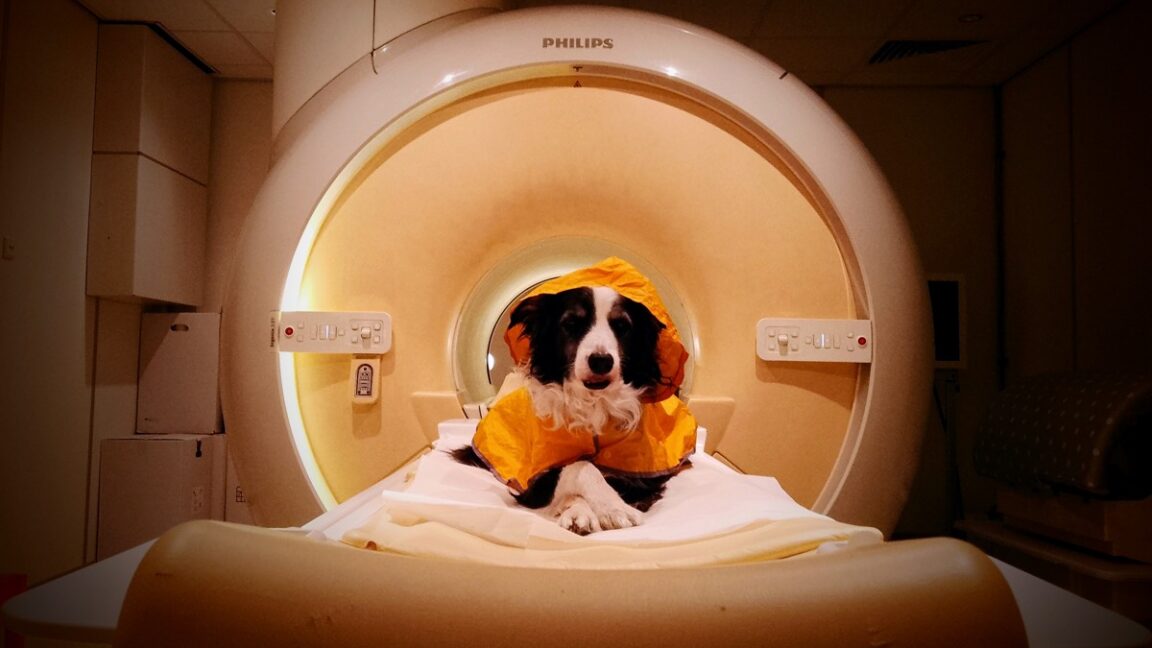
Any dog owner would tell you that their canine companions are attuned to their humans' emotional state and respond accordingly. Scientists have performed fMRI scans on dogs and identified a specific brain region that processes happy human facial expresses, like a smile, according to a new paper published in the journal iScience. They also found that dogs can tell the difference between negative facial expressions, specifically anger, sadness, and fear.

“Humans are really good at picking up small details on the face, and so are dogs,” said co-author Raúl Hernández-Pérez of the University of Vienna. “This makes dogs very interesting. By studying their brains, we can understand what adaptations have developed to support their remarkable social and emotional understanding of humans.”

Prior behavioral studies have shown that dogs are sensitive to emotion in human faces. Dogs will, for example, choose a box their human has identified with a happy expression over one the human treats with fear or disgust. Past fMRI studies found that an area in the canine left temporal cortex showed a stronger response to human faces compared to dog faces, as well as a greater response in the caudate, hippocampus, and amygdala to human faces showing emotion versus neutral faces.

Read full article

Comments

© Laura V. Cuaya/CC BY-SA

  •  

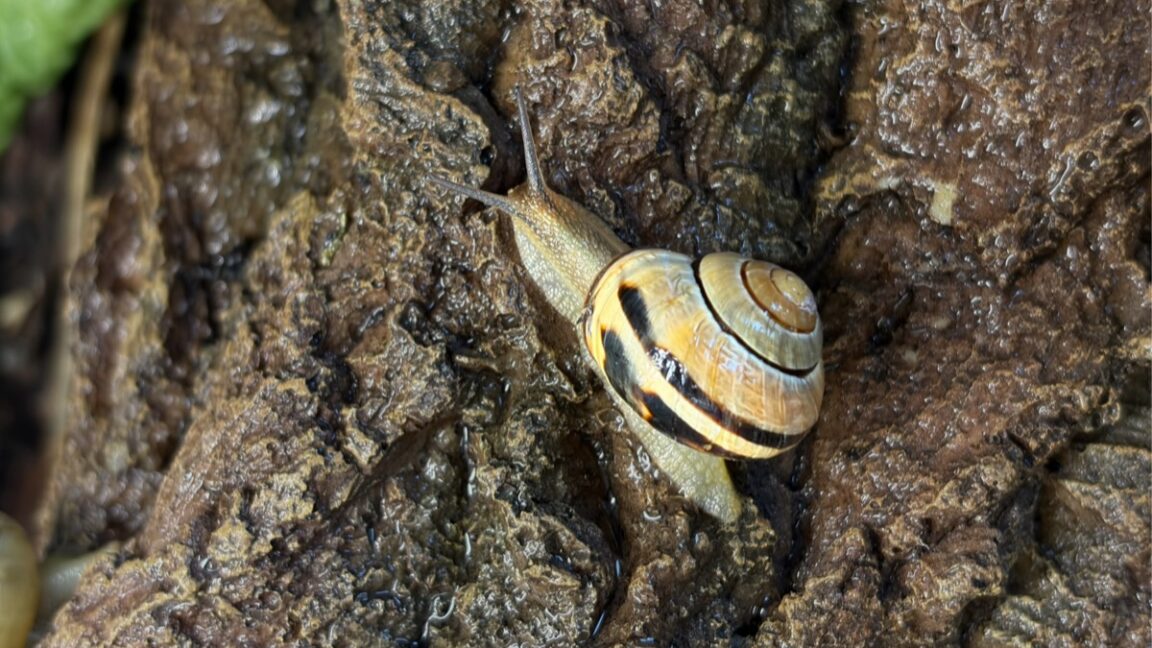
How snails engineer their slime

Snails are well-known for their mucus. The slime is highly valued as an anti-inflammatory and anti-aging ingredient in certain skin care products, and snails can secrete different kinds of mucus with properties tailored to specific functions. A team of German scientists has determined a recipe for how snails achieve that so-called tunability: Collagen and calcium work in tandem to achieve the varying mechanical properties, according to a new paper in the journal Science.

Snail mucus is mostly water; it's the mucins (glycoproteins) and complex carbohydrates that give it that slimy, viscous texture. In addition to cosmetics, the mucus holds great potential for drug delivery. In 2020, scientists found that combining snail slime from a common garden snail with gold nanoparticles helped accelerate wound healing and exhibited anti-inflammatory properties in mice. Most relevant to this latest paper is a 2023 study on garden snail slime that identified three distinct types of secreted mucus: a hydrating version to protect its skin, one that acts as an adhesive glue, and a third that serves as a lubricant so the snail can more easily glide across a surface.

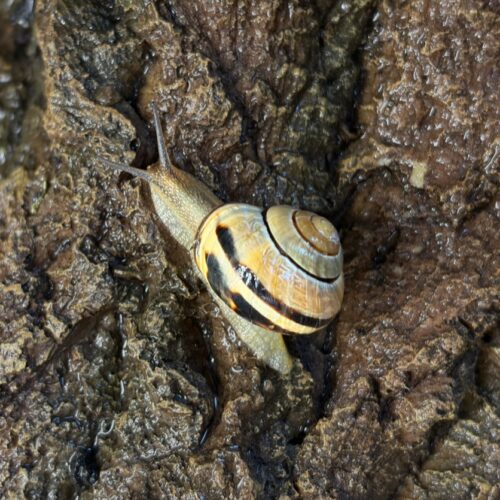
The team focused their research efforts on the grove snail/lemon snail (Cepaea nemoralis), which they deemed well-suited as subjects because the snails secrete five different kinds of mucus with distinct functions. As with the garden snails, there is one that acts as a lubricant to help with locomotion and an adhesive mucus to help the snail stick to various surfaces. Then there's a mucus layer known as the epiphragm that the snail secretes when it hibernates in winter, which contains calcite and effectively seals the shell to protect the snail from predators and harsh environmental conditions.

Read full article

Comments

© Max Planck Institute of Colloids and Interfaces

  •  

Parasitic zombie-ant fungus thrives in mosses, too

The parasitic fungi in the Cordyceps genus are a favorite subject of nature documentaries. They've also infiltrated popular culture via the zombie-apocalypse video game The Last of Us (2013) and its TV adaptation, in which a parasitic fungus mutates to infect humans. Scientists are keen to study Cordyceps to learn more about the origins and intricate mechanisms underlying these pathogen-based diseases.

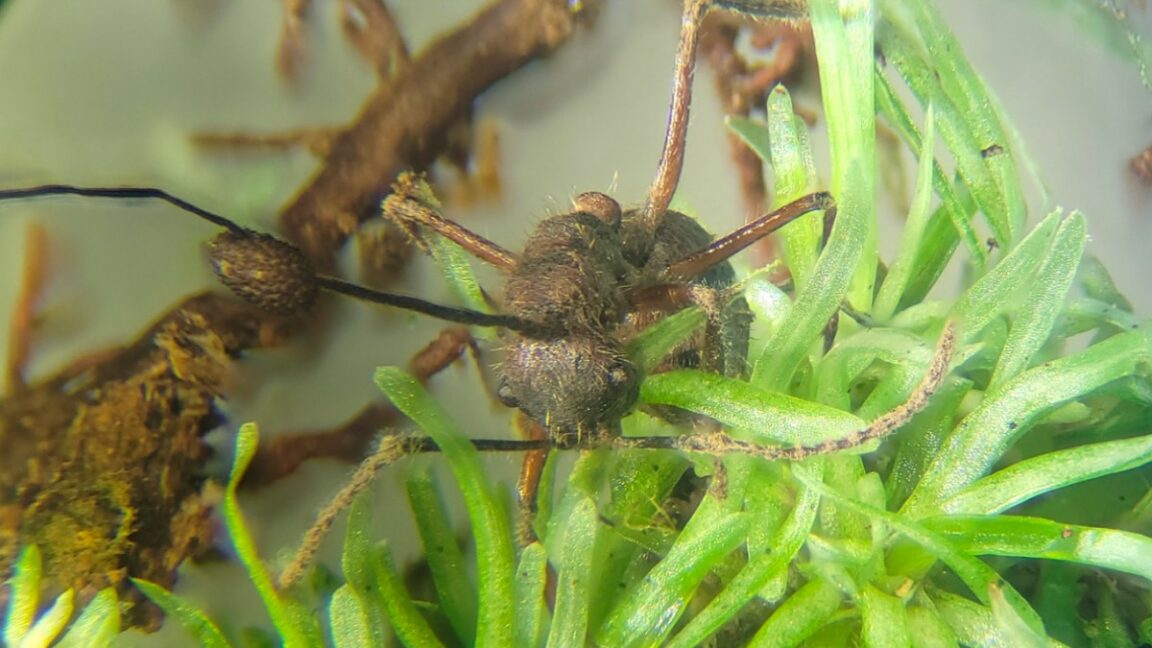
The latest finding: DNA analysis revealed the same fungus in both parasitized insects and surrounding mosses, according to a paper published in the journal IMA Fungus. (Yes, really.) This suggests a second life stage during which the fungus lives inside the moss, possibly an evolutionary adaptation to survive when insect hosts may be scarce. It could also explain why the host species seems to prefer biting into mosses during their final death throes.

As we've previously reported, there are more than 400 different species of Cordyceps fungi, each targeting a particular insect species, like ants, dragonflies, cockroaches, aphids, or beetles. The spores attach to the target insect, such as a carpenter ant, and germinate, spreading through the host’s body via long tendrils called mycelia. Cordyceps essentially turns its host into a zombie slave, compelling the ant to climb to the top of the nearest plant and clamp its tiny jaws in a death grip around a leaf or twig.

Read full article

Comments

© Tales Alves-Júnior et al., 2026

  •  

Research roundup: 6 cool science stories we almost missed

It’s a regrettable reality that there is never enough time to cover all the interesting scientific stories we come across. So every month, we highlight a handful of the best stories that nearly slipped through the cracks. July’s list includes outfitting cyborg cockroaches with a tiny diving suit for navigating flooded terrain; confirmation that a Medici duke died of malaria, not poisoning; the best evidence to date that Betelgeuse is orbited by a companion star; and evidence that some ancient Egyptian princesses were skilled archers.

Sacrificial Incan boy died of blunt force trauma

Credit: Administrative Archive, Regional Museum of Iquique–CORMUDESI

It's known that the Incas practiced a human sacrifice ritual known as Capachoca, in which children were offered to the mountains and believed to become divine themselves, serving as intermediaries with the gods. This often involved pilgrimages to the remote sacrificial sites, with colonial accounts describing strangulation, asphyxiation, and blunt force trauma as the most common methods of sacrifice. Archaeologists have reanalyzed the remains of one such victim and concluded the boy died from blunt force trauma, rather than freezing to death as previously believed. They described their findings in a paper published in the journal Science Advances.

Read full article

Comments

© National Museum of Natural History of Chile

  •  

Study: Dinosaurs were charbroiled after Chicxulub impact

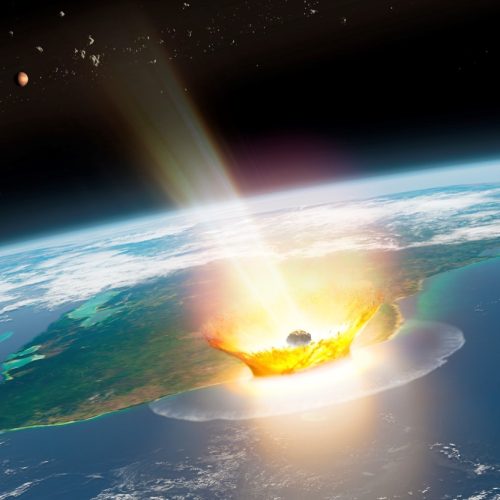
Some 66 million years ago, an asteroid impact wiped out three-quarters of all plant and animal species on Earth, most notably taking down the dinosaurs. But exactly how that impact caused those extinctions has been the subject of fierce debate. According to a new paper published in the Journal of Geophysical Research: Biogeosciences, the impact would have produced an immense cloud of dust that superheated the upper atmosphere, charbroiling living organisms unable to take shelter and igniting widespread wildfires.

As previously reported, the most widely accepted explanation for what triggered that catastrophic mass extinction is known as the “Alvarez hypothesis,” after the late physicist Luis Alvarez and his geologist son, Walter. In 1980, they proposed that the extinction event may have been caused by a massive asteroid or comet hitting the Earth. They based this conclusion on their analysis of sedimentary layers at the Cretaceous-Paleogene boundary(the K-Pg boundary, formerly known as the K-T boundary) found all over the world, which included unusually high concentrations of iridium—a metal more commonly found in asteroids than on Earth. (That same year, Dutch geophysicist Jan Smit independently arrived at a similar conclusion.)

Since then, scientists have identified a likely impact site: a large crater in Chicxulub, Mexico, in the Yucatan Peninsula, first discovered by geophysicists in the late 1970s. The impactor that created it was sufficiently large (between 11 and 81 kilometers, or 7 to 50 miles) to melt, shock, and eject granite from deep inside the Earth, probably causing a megatsunami and ejecting vaporized rock and sulfates into the atmosphere. It has been estimated that the impact would have released energy over a billion times higher than the atomic bombs dropped on Hiroshima and Nagasaki in 1945.

Read full article

Comments

© Mark Garlick

  •  

Watch orcas ram a sunfish so hard it explodes

Credit: Kathryn Ayres

There have been numerous accounts in recent years of orcas ramming boats—and sometimes sinking them. Scientists believe this may be a form of culturally learned behavior passed down through generations. Now we have fresh examples: orcas in the Gulf of California were filmed teaming up to ram sunfish with so much force that the carcasses exploded into small fragments. While orcas have been known to use force to remove flesh from prey, this is something different, according to a new paper published in the journal Frontiers in Ethology.

“We think this may help younger orcas feed more easily, or it could also just be for fun," said co-author Kathryn Ayres of Beneath The Waves, a nonprofit organization promoting ocean health. "Orcas are known for playing with their food.”

Orcas engage in cooperative hunting strategies that can involve striking or killing animals—sometimes eating their prey, sometimes not—so the behavior could be described as social interaction, play, or practice as a mode of social learning. Orcas have been observed ramming whale sharks as another orca held the prey steady. Other cooperative strategies include herding mobile rays, blocking an escape path while hunting white sharks, and deliberately producing waves to bump penguins off ice floes.

Read full article

Comments

© Robert Pittman, NOAA/Public domain

  •  

Let Tom Hiddleston be your guide to Pompeii's final day

When Mount Vesuvius erupted in 79 CE, it spewed molten rock, pumice, and hot ash over the cities of Pompeii and Herculaneum, killing thousands of people. It's one of the most famous natural disasters in human history, so naturally there have been countless documentaries about Pompeii (and at least one popular song). But only one features actor Tom Hiddleston taking on the role of a "time detective" to bring the people of Pompeii to vivid life. That would be National Geographic's new three-part docuseries, Pompeii: Out of Time.

The Marvel connection made Out of Time happen. Executive producer Kevin Wright was also a producer on the Disney+ series Loki, which included a scene where Hiddleston's Loki travels through time to visit Pompeii. Hiddleston also studied classics at Cambridge University and had visited the Pompeii archaeological site as a teenager, which the Marvel star attributes to indirectly influencing his career path into acting.

"There is just a passion to the way Tom tells stories that's infectious," Wright told Ars. "We knew that if we could capture that and put it into [the series], it might interest people who wouldn't normally want to watch a documentary about Pompeii. "

Read full article

Comments

© National Geographic/Paolo Verzone

  •  

Troubling new details emerge on diabetes ouster controversy

Last month, we reported on a troubling incident at the annual meeting of the American Diabetes Association (ADA) in New Orleans. On June 5, five leading scientists were ousted for handing out copies of an editorial, published in the journal Diabetes Care (an ADA journal) in April, sharply criticizing the Trump administration’s ongoing attacks on scientific research. There was a public outcry and (eventually) a personal apology from the ADA's CEO for the heavy-handed response, but it seems the organization has not yet learned its lesson.

The deputy editors of Diabetes Care have posted an editorial and seven accompanying opinion articles to a preprint server—handily contained in a single PDF file—that they say the ADA has refused to publish. Several troubling new details are included in the articles, including an accusation that ADA leadership knew in advance that members would be handing out copies of the editorial and deliberately set up an ambush by venue security and local police. That decision, in turn, might be due to simmering tensions connected to a session organized the year before.

ADA leadership was provided with the articles in advance of publication with an invitation to simultaneously publish their response.

Read full article

Comments

© Screenshot/MedPage Today

  •  

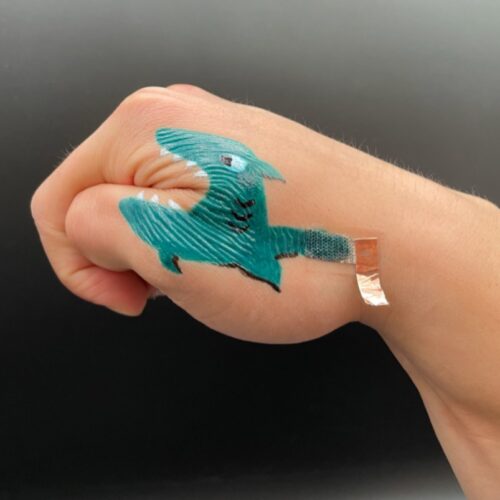
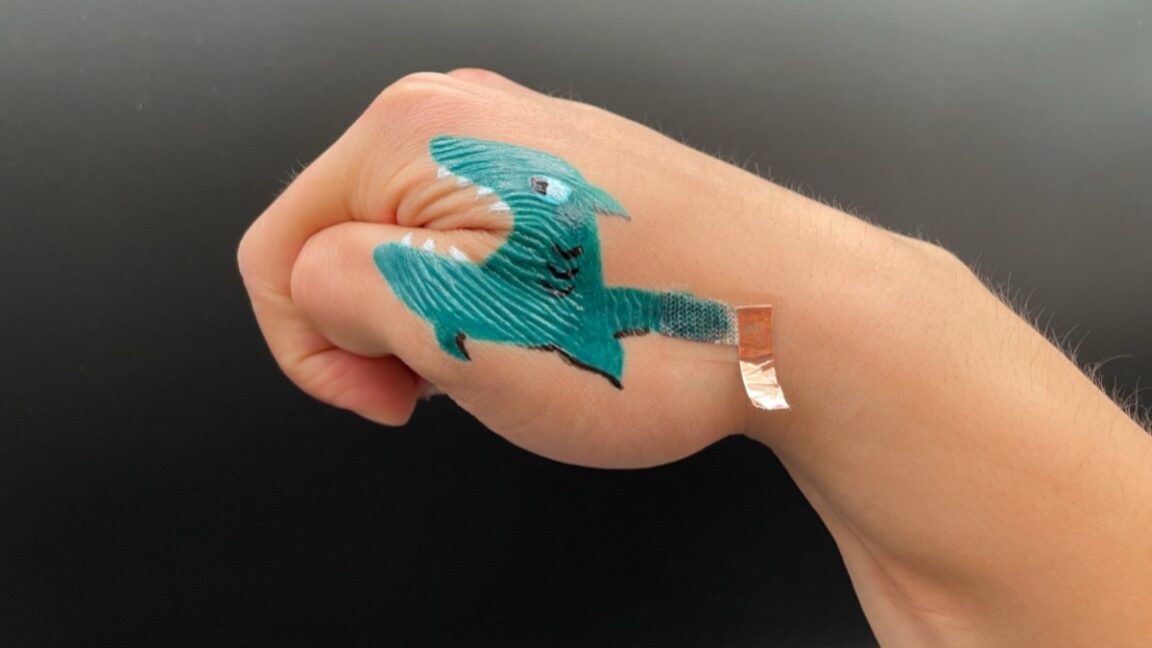
These painted e-tattoos could be the future of wearable biosensors

Credit: Wanqing Zhang

Scientists at Pennsylvania State University have developed a novel conductive ink that can be painted directly onto the skin in colorful custom designs, turning into a functional electrode for biomonitoring after drying. They described their work in a new paper published in the Proceedings of the National Academy of Sciences (PNAS).

As previously reported, epidermal electronics attached to the skin via temporary tattoos (e-tattoos) have been around for more than a decade. So-called e-tattoos connect to skin without adhesives, are practically unnoticeable, and are typically attached via temporary tattoo, allowing electrical measurements (and other measurements, such as temperature and strain) using ultra-thin polymers with embedded circuit elements.

However, these e-tattoos have their limitations, most notably that they don’t function well on curved and/or hairy surfaces, as well as requiring personalized electrode placement design to cover larger areas, since biosignals are spatially distributed. So scientists have been getting creative. For instance, in 2024, researchers developed special polymer-based conductive inks that can be printed onto a person’s scalp to measure brain waves, even if they have hair. This could one day enable mobile EEG monitoring outside a clinical setting, among other potential applications.

Read full article

Comments

© Wanqing Zhang

  •  

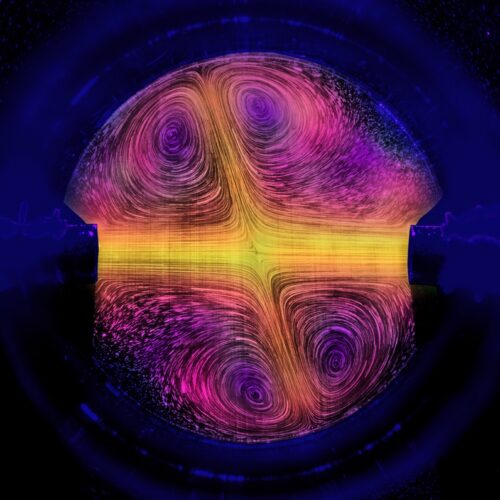
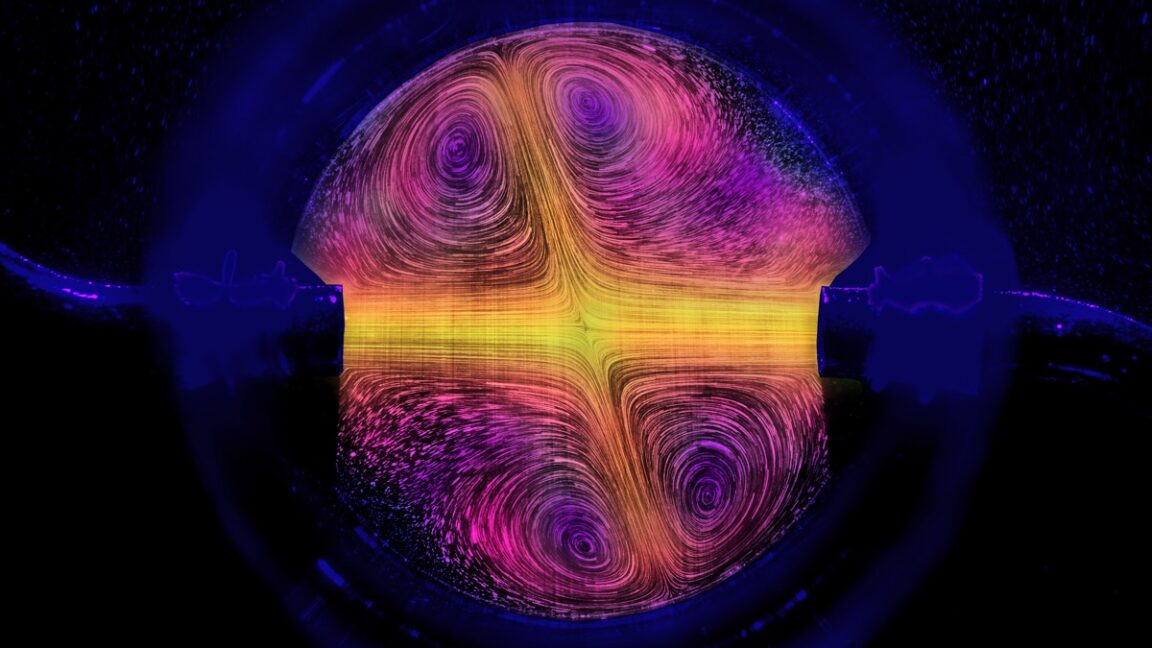
Solution to Feynman's reverse sprinkler puzzle also applies to "silly sprinklers"

Watering your lawn in the summer can be both pragmatic and fun with so-called "silly sprinklers," designed to create amusing loops and spirals of water jets. And there's some fascinating physics at work to boot. Researchers at New York University's Courant Institute conducted a series of experiments with different silly sprinkler designs to find the answer to a longstanding problem in fluid dynamics, according to a new paper published in the Proceedings of the National Academy of Sciences.

As previously reported, the reverse sprinkler problem is associated with physicist Richard Feynman because he popularized the concept, but it actually dates back to a chapter in Ernst Mach’s 1883 textbook The Science of Mechanics (Die Mechanik in Ihrer Entwicklung Historisch-Kritisch Dargerstellt). Mach’s thought experiment languished in relative obscurity until a group of Princeton University physicists began debating the issue in the 1940s.

Feynman was a graduate student there at the time and threw himself into the debate with gusto, even devising an experiment in the cyclotron laboratory to test his hypothesis. One might intuit that a reverse sprinkler would work just like a regular sprinkler, merely played backward, so to speak. But the physics turns out to be more complicated. “The answer is perfectly clear at first sight,” Feynman wrote in Surely You’re Joking, Mr. Feynman (1985). “The trouble was, some guy would think it was perfectly clear [that the rotation would be] one way, and another guy would think it was perfectly clear the other way.”

Read full article

Comments

© NYU's Applied Mathematics Laboratory

  •  

Check out the first images of Quest shipwreck

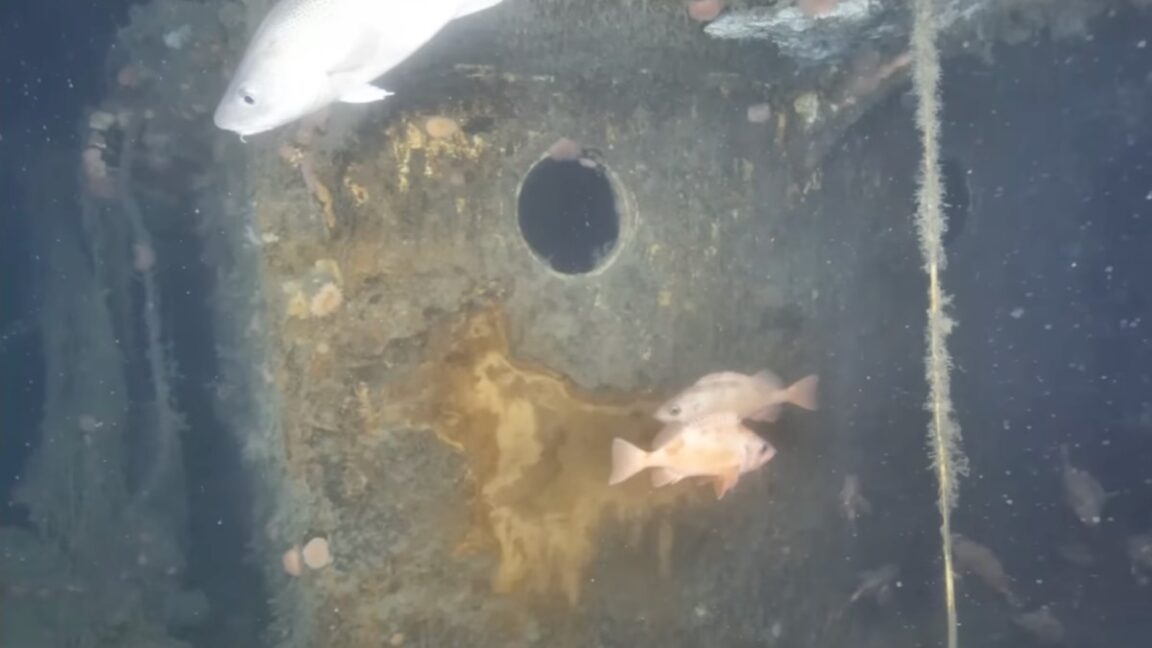
Back in 2024, we reported on the discovery of the Quest shipwreck, the polar exploration vessel that served Arctic explorer Sir Ernest Shackleton on his last voyage. Shackleton died before reaching their destination, and the ship sank in 1962. The Royal Canadian Geographic Society (RCGS) has now released the first images of the wreck more than 60 years after it sank, published in Canadian Geographic magazine.

Shackleton, of course, is most famous for his ill-fated voyage on the Endurance, which became trapped in sea ice in 1914 and sank. Shackleton and his crew defied the odds and survived. (The Endurance shipwreck was finally found in 2022.) By the time Shackleton returned to England, the country was embroiled in World War I, and many of his men enlisted. Shackleton was considered too old for active service. He was also deeply in debt from the Endurance expedition, earning a living on the lecture circuit. But he still dreamed of making another expedition to the Arctic Ocean north of Alaska to explore the Beaufort Sea. He got funding from an old school chum, John Quillier Rowett.

Shackleton purchased a wooden Norwegian whaler, Foca I, which his wife Emily renamed Quest. When the Canadian government withdrew its support, the mission shifted back to the Antarctic, and the Quest received an extensive retrofit. The improvements included a new deckhouse, a heated crow’s nest, a wireless set, and an odograph for tracing and charting the route automatically, as well as a Lucas deep-sea sounding machine, a large and pricey collection of cameras and photographic equipment, and even a small airplane.

Read full article

Comments

© YouTube/Canadian Geographic

  •  

TikTok users don't have as much agency over their FYPs as they think

TikTok's For You Page (FYP) is the default home screen for users of the video-sharing platform. It's a personalized, algorithmically driven content feed, but the approach differs from other social media in that TikTok's algorithm relies heavily on implicit signals—such as how long users watch particular videos—as well as explicit signals such as likes or follows. And generally, that algorithm does remarkably well at predicting which videos will interest particular users.

But some users have voiced concerns that TikTok's almighty algorithm doesn't seem to incorporate negative feedback very well. Even when they don't watch a suggested video or click the "not interested" feature, they keep seeing those videos on their FYP. Northeastern University computer scientists put those suspicions to the test. According to their recent paper, the engagement signals do have an effect, but only temporarily. Then the algorithm gradually relapses unless a user consistently gives the same feedback over and over again.

The research group specializes in "algorithm audits," co-author Piotr Sapiezynski told Ars, to better understand online platforms: "how they work, how they fail, when they fail, how they harm individuals and societies." In this case, he and his co-authors wanted to take a closer look at user agency after hearing multiple anecdotal reports from TikTok users that their negative feedback—responding to prompts by indicating they aren't interested or want to see less of a certain kind of video—doesn't seem to remove those posts from their FYP. "On the other hand, it's unclear why the platforms would offer it, if it doesn't work," said Sapiezynski.

Read full article

Comments

© Getty Images | Bloomberg

  •  

Dragonflies maneuver like fighter pilots

Credit: Samuel T. Fabian et al., 2026

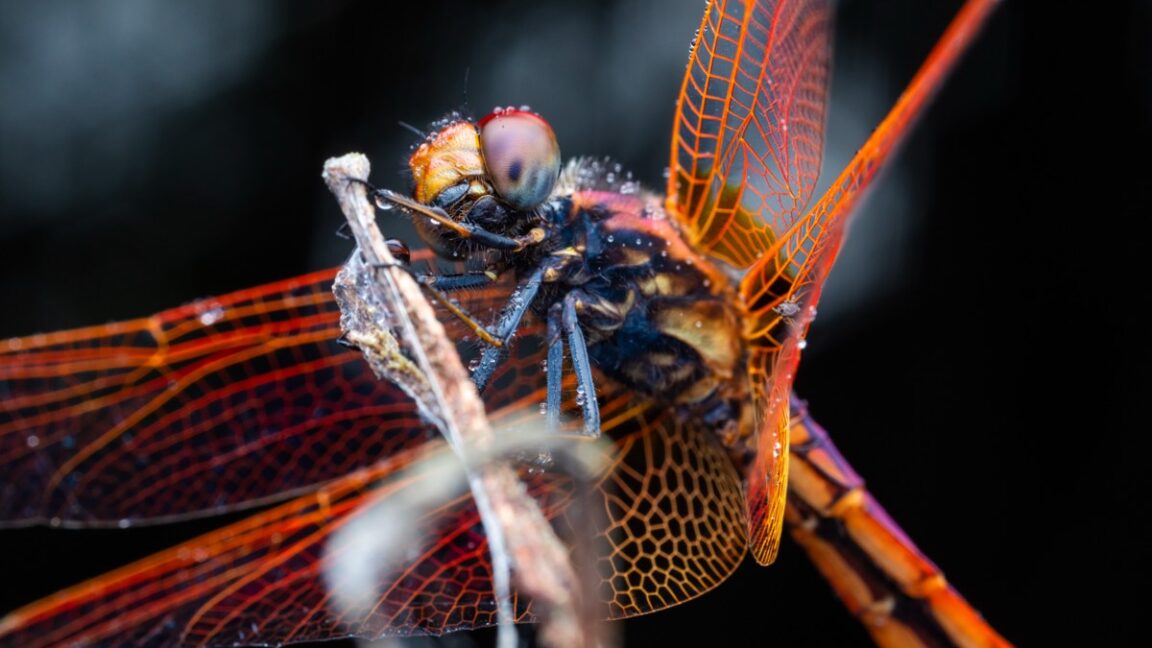
Male dragonflies are known to engage in mid-air "dogfights" to defend their breeding territory, using different maneuvers than those they employ when hunting prey. A new paper published in the Journal of the Royal Society Interface concluded that relatively simple rules drive that behavior, namely that male dragonflies are trying to maintain a tactical position. This mirrors the tactics of human fighter pilots. The research could lead to the development of smarter drones capable of navigating with simple, vision-based guidance rather than complex computation.

Classic pursuits involving prey or mating rituals are asymmetric: there is a chaser and an evader, with each role requiring different maneuvers. In the case of male-on-male interactions, however, it is more of a mutual pursuit, per the authors, who thought that studying flight trajectories of insects or raptors could yield useful insights into the guidance laws that underlie the behavior. They chose the Trithemis Aurora species of dragonfly for study because the males are "fiercely territorial," and there are usually multiple males around a given pond, intent on defending their chosen perches. The dragonflies are also crimson-colored, making them easier to track.

Much of the prior research on dragonfly interactions relied on visual observations or single-camera recordings. For this study, the authors set up a portable stereovideographic rig with two shutter-synchronized cameras to record dragonfly interactions in both color and monochrome, and then reconstructed 102 paired male-on-male flight trajectories to capture the 3D kinematics. They also reconstructed nine trajectories for dragonflies intercepting prey for comparative purposes. This enabled the authors to develop a model for the rules governing the flight behavior.

Read full article

Comments

© Samuel Fabian et al., 2026

  •  

Did a medieval flying monk spot Halley's comet, twice? It's complicated

Early in the 11th century, a young Benedictine monk named Eilmer jumped from the 150-foot tower of his abbey in the small English town of Malmesbury, wearing a pair of crude wings he’d fashioned from willow wood and cloth. Eilmer managed to glide a good 600 feet, passing over the city wall before crash-landing in a small valley near the river Avon. The fall broke both his legs, crippling him. Malmesbury Abbey still boasts a stained-glass window in honor of Brother Eilmer.

This legendary experiment in medieval aviation comes to us via 12th-century historian William of Malmesbury in an account written circa 1125, although William neglected to provide future historians with an exact date for the feat. But William does mention another key episode in Eilmer's life when the monk was "advanced in years": Eilmer witnessed Halley's comet in 1066, commenting, "It is long since I saw you." Some historians have interpreted this to mean that Eilmer saw Halley's comet on an earlier fly-by in 989, when he would have been a young boy.

Assuming Eilmer was at least 5 years old in 989, he would have been born no later than 984. This would make Eilmer in his 80s in 1066, with his attempt at flight—which occurred when he was "in his first youth"—likely falling between 1000 and 1010. However, it's an estimate that is based on a lot of assumptions, according to James Aitcheson of the University of Leicester, who argues in a paper published in the journal Notes and Queries that Eilmer may have seen a different comet altogether in his youth—the comet of 1018. If so, he would have been born much later, and the date of his flight would have occurred between the 1020s and 1040s.

Read full article

Comments

© Andrew Dunn/CC BY-SA 2.0

  •  
❌