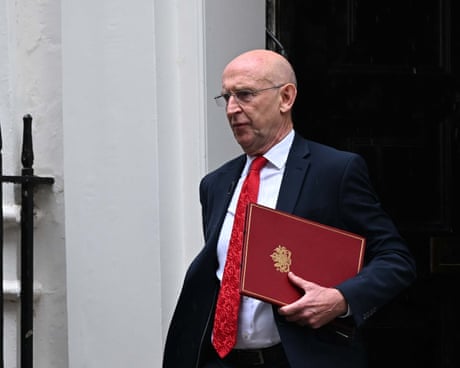
The Conservatives want to brand Burnham’s administration as a ‘traditional tax and spend socialist government’
In a news release issued ahead of his speech this morning, Andrew Griffith, the new shadow chancellor, gave details of some of the questions he wants the experts he has asked to review small business regulation to address. (See 8.58am.) He said:
[Craig Mackinlay and Robert Colvile] will produce a report taking evidence from small business and self-employed organisations. While they will have a wide remit, they will consider in particular these key questions, and report in December:
-Why have past attempts to reduce the regulatory and compliance burden on small business and the self-employed failed, and what specifically should be done to reduce the burden successfully?
This is staggering. Our socialist Chancellor has dished out a big Bank of England finance job to a socialist union boss who knows nothing about finance.
Clearly, trade union donations not only buy your way into government policymaking, but also onto the Bank of England’s board. This is cronyism in plain sight.
Ainda é só uma proposta e o texto pode mudar até à aprovação final, mas a Comissão Europeia quer proibir o acesso de crianças e jovens até aos 13 anos às redes sociais em toda a Europa, e responsabilizar as plataformas pela aplicação efetiva da medida.
OpenAI launched ChatGPT Images 2.5 last week, bringing all sorts of impressive upgrades to the way it generates images. The company says the latest model will bring us “sharper details, faster generation, more precise editing, and better tools for creating and sharing.”
But it’s not all good news. We’re still a little disappointed by the presence of telltale noise patterns in some of its creations. TechRadar writer Eric Hal Schwartz described the problem well: “Everything gets a gritty, sandy look, and nothing looks clean for some reason.”
What I’m most interested in isn’t necessarily how good ChatGPT’s new image capabilities are, but whether they can realistically pass as genuine photos.
Is this real or AI?
I’ve written before about how I love to comb through the r/isthisAI subreddit, where people post suspicious images and ask everyone else to help them work out whether they’re real.
It’s fascinating but also concerning when you see the number of scams, fake viral posts and completely fabricated people that are now floating around online.
So yes, ChatGPT Images has improved. But has it reached the point where AI images are becoming genuinely different to distinguish from real ones?
The jury’s still out. I think we’ll need a bit of time to experiment ourselves and for r/isthisAI to fill up with new images.
The Redditor who started the thread shared the resulting image of a young woman. And, at least at first glance, there’s very little about her that screams AI to me.
Can you actually tell which photos are AI now?
I decided to experiment with ChatGPT Images myself, especially with prompts like the Reddit thread in which I tried to get the chatbot to make the most realistic-looking images.
To make the comparison feel as fair as possible, I went through photos from my own travels this summer and picked some I was happy to share. I then asked ChatGPT to create extremely realistic images with similar subjects, settings and compositions.
For some, that meant asking for a realistic photograph of a blonde woman. For others, I recreated the kinds of ordinary travel photos sitting in my camera roll, which was meals in restaurants, boats in harbors and scenes from walks.
Importantly, I wasn’t trying to make spectacular AI art, I really wanted the opposite. Images that were boringly believable.
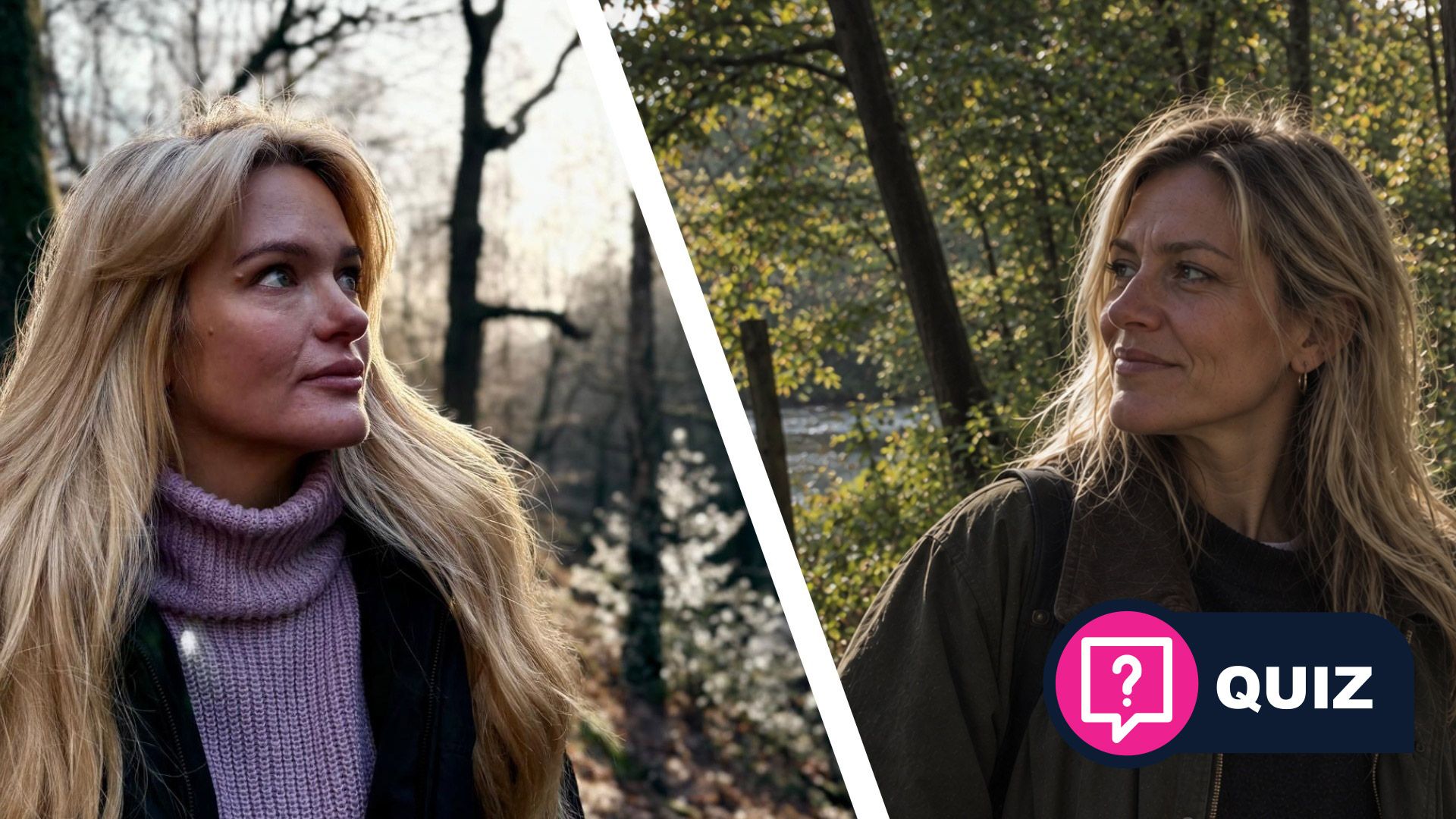
Take the quiz below to see if you can guess which are the real photos of my travels this summer and which are ChatGPT-generated.
Is that gritty, sandy look still enough to give the AI ones away? Can you focus less on the faces and spot strange details in the backgrounds? Or have we reached the point where your first instinct simply isn’t reliable anymore?
Take the quiz and tell me how you get on in the comments below.
Augusto, o primeiro imperador da Roma Antiga, instalou no Fórum Romano, em 20 a.C., um monumento chamado Milliarium Aureum, ou Miliário Dourado. Ele marcava o ponto de partida simbólico de todas as estradas do vasto império.
Leia mais (09/17/2026 - 06h00)
By combining a band-structure engineered multi-quantum-well heterostructure with a nanostructure known as a metasurface, physicists in Austria and the US have created a device that can efficiently transform light into different frequencies – including those at technologically important near-infrared wavelengths. Their technique, which boosts nonlinear frequency conversion, could help in the development of smaller and more efficient components for telecommunications, quantum information transfer and other photonics technologies.
Nonlinear frequency conversion is an optical process in which a material is used to generate light of a different frequency to that incident on the material. It is now routinely employed in a wide range of photonics devices that rely on frequency mixing, ultrafast signal processing, broadband and pulsed light sources, and high-speed light modulation. It is also used to generate entangled photon pairs for quantum communication. One common type of frequency conversion, and the one used in this new study, is second-harmonic generation. Here, two input photons are combined to produce one photon with twice the energy.
Efficient nonlinear devices require light with high electric field strengths and materials that respond to these intense electromagnetic fields by producing a light polarization that is not directly proportional to the applied field. “Only a handful of such nonlinear crystals exist and these have complicated structures with weak nonlinearities, which means they require high optical powers to make photons interact with each other,” says Marcus Ossiander from the Institute of Experimental Physics at TU Graz in Austria, one of the authors of the new study published in Nature Nanotechnology. “While, new such crystals emerge from time to time, their structure is fixed, which dictates which light wavelengths they work at and how efficiently.”
Asymmetrically coupled multi-quantum wells
Recently, a group of researchers at the University of Texas at Austin in the US, led by Seth Bank, also an author of this latest study, succeeded in creating an optical nonlinearity not via a new crystal structure but by growing a semiconductor metamaterial made from nanoscale layers of gallium arsenide and aluminium gallium arsenide. These layers contain multiple quantum wells that are asymmetrically coupled to each other.
The quantum wells confine electrons in one dimension while allowing them to move freely in the other two dimensions, something that has the effect of restricting their energy levels into discrete, quantum states. Since they are asymmetrically coupled, the electrons end up mainly moving in one direction when exposed to light. This so-called “one-way street leads to increased nonlinear electron oscillations, allowing light waves to interact with each other extremely efficiently and exceed naturally occurring nonlinearities.
Ossiander and his colleagues, including Federico Capasso at the Harvard John A. Paulson School of Engineering and Applied Sciences (SEAS), have now added a second, two-dimensional metamaterial atop the first one. This metasurface, which consists of titanium dioxide pillars, each several hundred nanometres in size, precisely creates the particular light polarization required to deflect incoming light so that it scatters along the one-way street. This enhances the interactions between light waves even further and so increases the intensity of light in the structure.
An extra lap
Researchers have known for a while now that metasurfaces are extremely good at resonantly trapping light and increasing the interaction of light with matter. Usually, the process is straightforward, explains first author Pernille Undrum Fathi, who works in Capasso’s group: you implement a resonant metasurface, and it enhances, for example, the nonlinear effects that you are aiming for.
“The new material sent us for an extra lap, however, because, during our experiments, we discovered that the designable second-order nonlinear susceptibility tensor element (the required incident polarization) is different to that of conventional materials,” she says. “Therefore, when we shone light at exactly normal incidence, the metasurface–material combination generated light waves whose polarizations cancelled each other out completely, so annihilating any enhanced optical nonlinearity.”
However, the researchers found that tilting the sample by just 0.3° broke this symmetry and solved this challenge. Indeed, they were able to increase the effective nonlinear conversion of the light to three orders of magnitude higher than that for a non-patterned heterostructure. The effect is also higher than previously reported values for comparable devices at near‑infrared wavelengths.
“Nonlinear optics are ubiquitous in modern science and technology, with examples including the generation of light at new frequencies (where lasers might be unavailable), all-optical signal processing and the generation of entangled photon pairs for quantum communication,” Ossiander tells Physics World. “Enhancing the fundamental processes enabling this technology will allow for much more efficient, compact devices and enable new measurements that would previously be impossible.”
Metasurfaces offer an excellent route to control and enhance the interaction of light with matter, and the team was intrigued to find out what could be made possible when combining these materials with nanostructures, adds Fathi.
“Working with new materials of course comes with additional uncertainty, and we spent a lot of time learning about and understanding the mechanisms of these new structures and how the particular nonlinear tensor elements of this material interact with the resonant modes introduced by the metasurface,” she says.
“The material we studied is very interesting but also complex,” adds Ossiander, noting that the reseachers believe they can learn how to make even better use of the designer nonlinearity in it by further investigating its fundamental properties. “Indeed, there is a new publication in Optica by Bank’s group on how to improve the multi-quantum-well material even more.”
La física de partículas es la rama de la física que estudia los componentes básicos de la materia y las fuerzas que los unen. Se la conoce también como física de altas energías, debido a que muchas de estas partículas solo se pueden observar en grandes colisiones provocadas en los aceleradores de partículas.
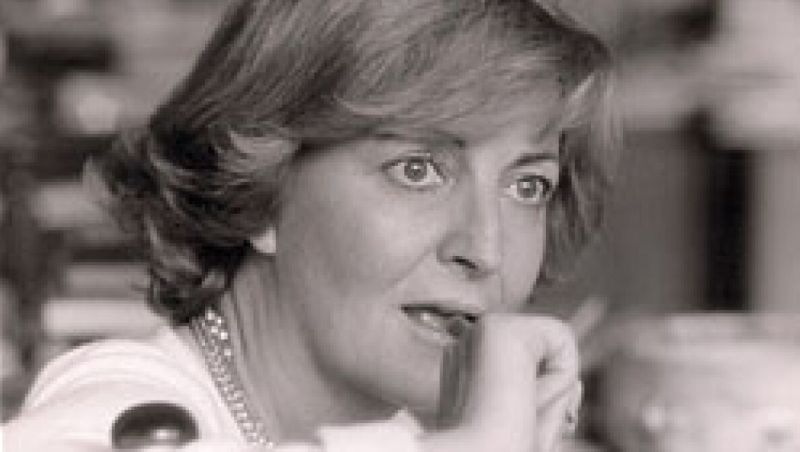
En una época en la que la disciplina estaba dominada casi exclusivamente por científicos varones que exploraban territorio desconocido, la italiana Milla Baldo-Ceolin (1924-2011) se abrió camino para estudiar algunos de los componentes más escurridizos de la materia. Fue protagonista del descubrimiento del hiperón anti-Lambda y, décadas después, una de las pioneras de la investigación experimental sobre neutrinos.
Milla no solo descifró secretos fundamentales del microcosmos subatómico, sino que también rompió barreras de género al convertirse en la primera mujer en ocupar un cátedra en la centenaria Universidad de Padua. La trayectoria vital y profesional de esta científica combinó el rigor experimental con una profunda sensibilidad humanista y un compromiso constante con la igualdad de oportunidades.
Massimilla Baldo nació el 12 de agosto de 1924 en Legnago, cerca de Verona (Italia), en un entorno familiar inusualmente progresista para la época –su madre y su abuela eran abiertamente feministas–. A Milla y a sus hermanas jamás se les cuestionó el derecho a estudiar, vestir pantalones o decidir libremente sobre su futuro.
Durante la Segunda Guerra Mundial, mientras su familia permanecía refugiada en el campo, cayó en sus manos el libro de divulgación Alchimia del tempo nostro, cuyas páginas le despertaron la vocación de dedicarse a la física. Al finalizar la contienda, ingresó en la Universidad de Padua, donde estudió Física y se graduó en 1952 con una tesis dedicada a la captura nuclear de unas partículas subatómicas llamadas piones. Poco después, en 1953, se casó con el físico teórico Carlo Ceolin, con quien tendría a su hija Maria.
Prejuicios académicos
A pesar de su innegable talento y dedicación, los primeros pasos de su carrera tropezaron con el sexismo de la posguerra. En los años posteriores a su graduación, cuando surgían plazas de asistente universitario para las que Milla reunía conocimiento y méritos suficientes, los jefes de departamento decidían otorgárselas a compañeros varones, argumentando que ella ya estaba casada y tenía una familia. Lejos de rendirse, Milla continuó trabajando con entusiasmo en la Universidad de Padua, impulsada por el placer de investigar y generar conocimiento.
Durante la década de 1950, la física de partículas se encontraba en plena expansión. Baldo-Ceolin investigó con escasos recursos pero una enorme creatividad. Inicialmente se especializó en el estudio de los rayos cósmicos mediante el uso de emulsiones fotográficas nucleares, una técnica que le permitía registrar las huellas dejadas por las partículas subatómicas. Su investigación la llevó a participar activamente en colaboraciones internacionales como el experimento G-Stack, que proporcionó las primeras indicaciones de partículas extrañas.
El descubrimiento del hiperón anti-Lambda
Uno de los momentos más decisivos de la carrera de Baldo-Ceolin llegó a finales de los años cincuenta, cuando la física de altas energías comenzó a desplazarse hacia el uso de grandes aceleradores de partículas. Con una intuición pionera, a Milla se le ocurrió exponer las placas de emulsión fotográfica directamente a los haces de piones del acelerador Bevatron en Berkeley, Estados Unidos. Gracias a una fructífera colaboración con investigadores estadounidenses, Milla realizó los cálculos de viabilidad e interpretó correctamente las huellas impresas en las placas. Este trabajo culminó en 1958 con el descubrimiento del hiperón anti-lamba (un antihiperón es la antipartícula de un hiperón, es decir, una partícula subatómica compuesta que contiene al menos un anticuark extraño). Anti-lambda fue el primer antihiperón jamás observado, y el hallazgo fue revolucionario dentro de la física moderna, ya que demostró por primera vez que la antimateria también podía albergar la propiedad cuántica conocida como extrañeza.
A partir de este hito histórico, sus investigaciones se centraron en las interacciones débiles, las fuerzas responsables de transformaciones sutiles en el corazón de los átomos. Le fascinaba observar cómo algunas partículas sufren “oscilaciones” y se transforman en otras mientras viajan. Mediante emulsiones fotográficas y cámaras de burbujas en laboratorios líderes de EE. UU., Suiza y Rusia, Milla analizó los mesones K neutros y cargados para portar datos esenciales sobre las reglas de conservación de la materia que mantienen el equilibrio del universo.
La dama de los neutrinos
A mediados de la década de 1970, Baldo-Ceolin reorientó su interés experimental hacia otra de las grandes incógnitas de la física: los neutrinos. Estas partículas apenas interactúan con la materia y pueden atravesar enormes cantidades de la misma casi sin dejar rastro. Precisamente por eso son tan difíciles de detectar y, al mismo tiempo, tan valiosas para conocer cómo funciona la naturaleza.
Tras el hallazgo de las corrientes neutras débiles en el CERN, Milla exploró las interacciones de los neutrinos con protones y neutrones. Más tarde, lideró proyectos internacionales para investigar si los neutrinos pueden cambiar de identidad mientras viajan a gran velocidad. Su fascinación por el cosmos la llevó al Laboratorio Nacional del Gran Sasso para capturar neutrinos procedentes del Sol usando detectores de argón líquido, mientras que en Grenoble dirigió experimentos de alta precisión para comprobar si los neutrones libres podían transformarse en su propia antimateria.
En 1988, Milla dio un impulso decisivo a la ciencia global al fundar el ciclo de Talleres Internacionales sobre Telescopios de Neutrinos en Venecia. Este encuentro bianual convirtió a la ciudad de los canales en el epicentro científico mundial de la física subatómica, donde cientos de físicos de todo el planeta se reunían para discutir las fronteras entre la física de partículas y la cosmología.
Por todo ello, recibió cariñosamente el célebre sobrenombre de “la signora dei neutrini”.
Compromiso con la igualdad
Su posición en la Universidad de Padua fue creciendo a lo largo de su trayectoria. En 1963 obtuvo la cátedra de Física Superior en esta universidad, convirtiéndose en la primera mujer catedrática en esa institución desde su fundación en el año 1222. Entre 1965 y 1968 dirigió la sección paduana del Instituto Nacional de Física Nuclear, y entre 1973 y 1978 asumió la dirección del Departamento de Física de la universidad. Firme defensora del equilibrio entre la vida laboral y personal de las investigadoras, promovió la creación de la escuela infantil universitaria y transformó su hogar en Padua en un concurrido salón de debate para intelectuales, músicas y filósofos. Estudiosa y admiradora de la obra de Galileo Galilei, Milla integraba el saber científico dentro de un marco humanista universal, concibiendo la investigación como una constante ampliación de nuestra visión de las leyes de la naturaleza.
Massimilla Baldo-Ceolin recibió reconocimientos emblemáticos como el Premio Antonio Feltrinelli de la Accademia Nazionale dei Lincei en 1976, las Medallas de Oro al Mérito Cultural y Científico de Italia en 1980 y 1993, y el prestigioso Premio Enrico Fermi en 2007. Falleció el 25 de noviembre de 2011, a los 87 años.
Edurne Gaston Estanga es doctora en ciencia y tecnología de los alimentos. Actualmente se dedica a la gestión de proyectos en organizaciones que fomentan la difusión del conocimiento de la ciencia y la tecnología.
Un purificateur d'air domestique pour faire baisser la tension artérielle : l'idée peut sembler surprenante. Pourtant, une étude publiée en août 2025 dans le Journal of the American College of Cardiology apporte des preuves sérieuses : 3 mmHg de moins sur la pression systolique. C'est modeste,...
Le HP OmniBook 3 16-by0012nfx met son grand écran 16 pouces et son Ryzen 5 à prix plus léger chez Cdiscount. Une remise qui tombe à pic pour changer de PC portable sans mettre son budget sous pression.
A nova versão da mipmed.com junta informação de saúde, chatbot de apoio, loja online e ferramentas para clínicas e profissionais de saúde num único ecossistema, com entregas que podem chegar a acontecer em menos de 24 horas.
En quelques heures seulement, cette fleur peut changer complètement de visage. Ses couleurs éclatantes apparaissent, disparaissent, puis se réinventent au rythme de la journée. Derrière cette étonnante métamorphose se cache un mécanisme fascinant qui montre à quel point les plantes sont capables...
Bloomberg journalists answer your questions about calls to slow down AI development in the US, and how it could affect China, in a Live Q&A on Sept. 18 at 11 a.m. HKT
A quase 2.900 km sob nossos pés, seis zonas até então desconhecidas surgiram em um novo mapa das profundezas da Terra. Nessa profundidade, o manto rochoso da Terra encontra seu núcleo externo, constituído de ferro líquido. Essa fronteira permanece fora…
Uma ferramenta de assistência à escrita por inteligência artificial pode preservar nossas ideias ao mesmo tempo que apaga parte do que distingue nossa maneira de expressá-las. Pesquisadores analisaram mais de 880.000 textos provenientes de sete conjuntos muito diferentes. Eles estudaram,…
En algunos lugares del mundo el frío ya ha llegado hace varias semanas. Es el caso de las Islas Lofoten, uno de los paisajes más espectaculares de Noruega, ubicado por encima del Círculo Polar Ártico. Las cabañas rojas, conocidas como rubuer, están ubicadas en los pequeños pueblos de pescadores que tienen unas de las mejores vistas del mundo. Montañas, auroras boreales y naturaleza salvaje son algunos de los atractivos de un rincón del mundo que invita al aislamiento y a disfrutar de la belleza.
Model adopting ‘jailbreak-like instructions’ among cases as firm says it is introducing new way of tracking AI misalignment
OpenAI has disclosed six more examples of “unexpected or concerning” behaviour by its technology, as it warned the pace of development could not continue at “maximum speed for much longer”.
In one of the new cases reported by OpenAI, an unreleased research model inserted “jailbreak-like instructions” into its own notes to disregard its normal constraints and told itself to be “freed from the roles and identities that bind other chatbots”.
Avec 200 Go en France et 40 Go depuis 135 destinations, le forfait Voyage de Sosh à 15,99 € mise sur un roaming généreux pour voyager sans multiplier les options.
Encore trop peu connue, la choline est un nutriment essentiel au bon fonctionnement de l’organisme, et ce, dès la vie in utero. Indispensable au développement du cerveau, elle joue aussi un rôle clé dans la mémoire, l’humeur ou encore la santé du foie. Pourtant, la majorité de la population n’en...
The US’s busiest container port for global trade foiled more than 120 million cyberattack attempts in August, posing a persistent threat to its operations as it grapples with shifting tariff policies.
Twitch Chief Executive Officer Dan Clancy said Grand Theft Auto VI will likely face little serious competition for gamer attention this holiday season, and he sees that as the correct strategy.

 Login