Login

Orange-Lipped Monkey Photo Helps Scientists Identify New Species
The medium-sized monkey with an orange-colored patch around its nose and mouth, known locally as Likweli, joins a very short list of newly identified African monkey species.

Campaigners hope move will force commercial banks to rethink holding assets linked to the fossil fuel
Climate campaigners have declared a victory after the Bank of England said it would no longer accept bonds linked to one of the most polluting industries on the planet for key loan arrangements.
The ban, which comes into force in October, marks a fresh crackdown on thermal coal, which is burned in power plants to create electricity, and has long been a target of green policy activists.
Continue reading...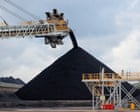
© Photograph: Bloomberg/Getty Images

© Photograph: Bloomberg/Getty Images

© Photograph: Bloomberg/Getty Images
Party manifesto pledged to honour existing North Sea exploration licences but not issue new ones
Andy Burnham risks his first confrontation with Labour MPs if he announces new oil and gas drilling licences when he becomes prime minister, insiders have warned.
Speculation is rife that Burnham will unveil fresh plans for drilling in the North Sea after he is installed in Downing Street.
Continue reading...
© Photograph: Jack Taylor/Reuters

© Photograph: Jack Taylor/Reuters

© Photograph: Jack Taylor/Reuters
The predicted £264bn cost by 2050 could be even higher, plus renewables avoid a far higher total of emissions than can be captured, writes Andrew Boswell, while Simon Oldridge calls out vested interests
Prof Myles Allen and colleagues, in their letter (12 July) on carbon capture and storage (CCS), propose licensing gasfields on condition that producers store an increasing proportion of “the carbon dioxide their products generate”. Their proposal only considers CO2. Methane is excluded by choice although it leaks throughout global fossil-fuel supply chains, including during extraction, processing, liquefaction and shipping.
A growing academic literature, supported by satellite observations of major methane plumes, shows that these emissions can be very substantial, and are the dominant near-term climate impact for gas supplied as liquefied natural gas.
Continue reading...
© Photograph: Peter Cade/Getty Images

© Photograph: Peter Cade/Getty Images

© Photograph: Peter Cade/Getty Images
Campaigners say field will bring minimal benefit for UK economy, as industry lobbies Burnham for go-ahead
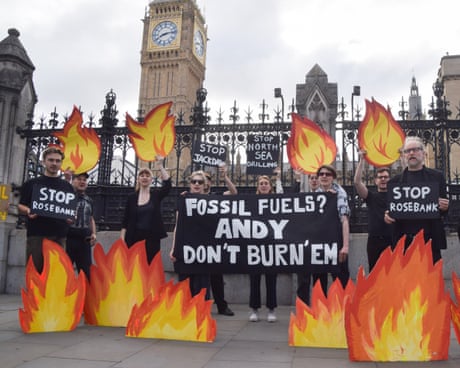
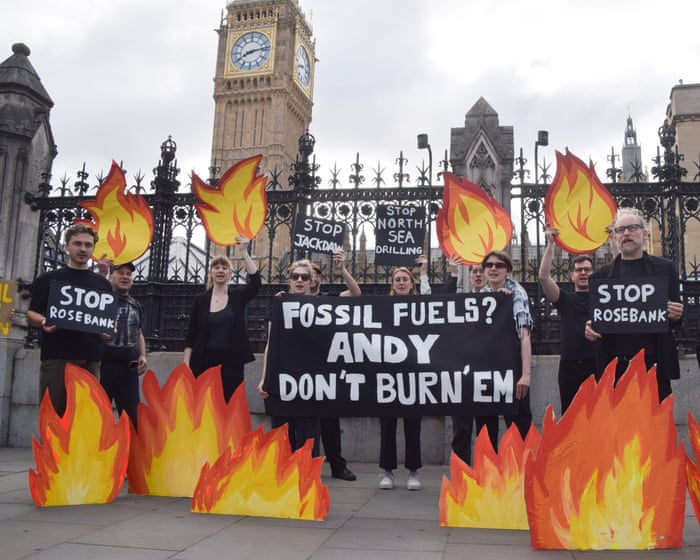
More people can fit on to the top deck of a standard London bus than will be directly employed on the new Jackdaw gasfield in the North Sea, industry documents show.
Only 27 direct full-time jobs would be created by Jackdaw, one of the biggest gasfields remaining in the North Sea, according to an environmental impact assessment filed publicly by its owner, Adura, a joint venture between Shell and Norway’s Equinor.
Continue reading...
© Photograph: Vuk Valcic/ZUMA Press Wire/Shutterstock
© Photograph: Vuk Valcic/ZUMA Press Wire/Shutterstock
© Photograph: Vuk Valcic/ZUMA Press Wire/Shutterstock
Nature Energy, Published online: 17 July 2026; doi:10.1038/s41560-026-02092-9
The rapid growth of electric vehicles is creating a surge of end-of-life batteries. This Review evaluates current recycling methods, their suitability for emerging chemistries and the practical challenges for scaling a circular battery industry.
A large pit discovered by an amateur astronomer on Google Maps in 2024 is actually a 390 million-year-old meteor impact crater, scientists have confirmed.
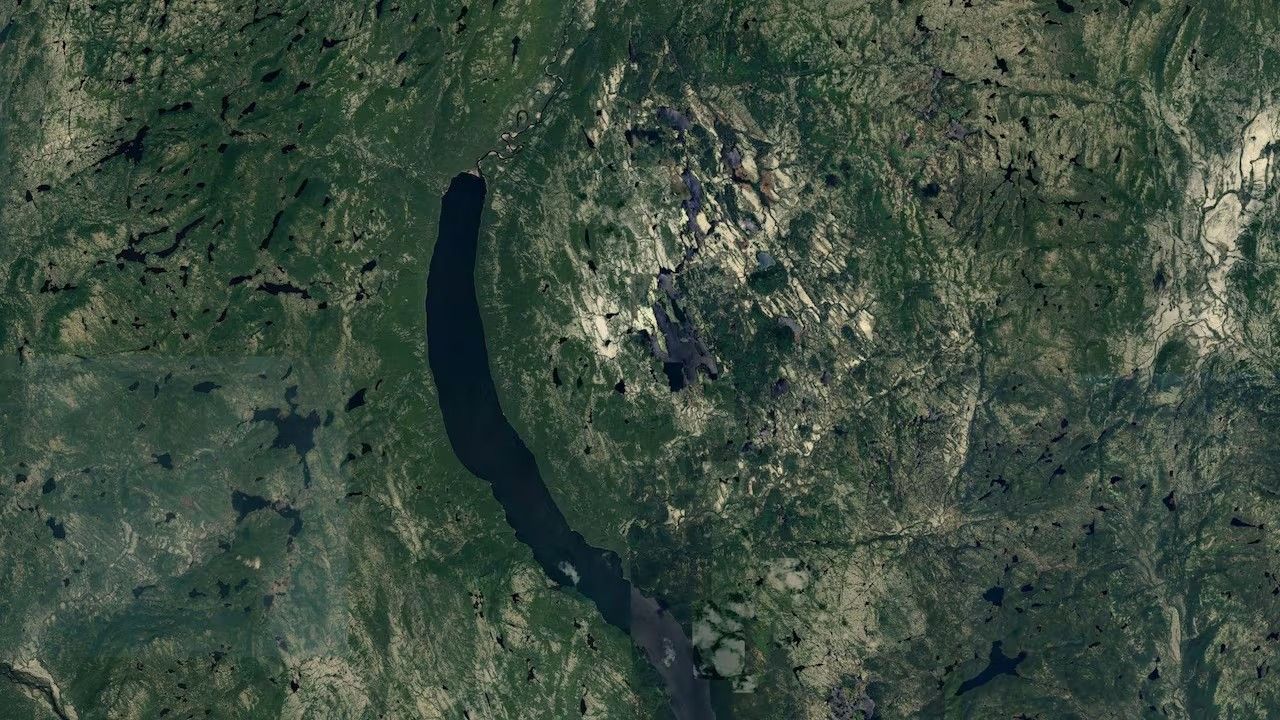
Joël Lapointe was planning a camping trail through Quebec's Côte-Nord region when he stumbled upon a large indentation in the terrain, CBC reported at the time. The pit, centered around Lake Marsal, was about 25 kilometers (15.5 miles) in diameter and a near-perfect ring — it didn't seem like a normal ditch. Lapointe eventually got in touch with French geophysicist Pierre Rochette, who said that the surrounding topography was "very suggestive" of an impact crater.
Initial testing of samples retrieved from the site contained a mineral called zircon often formed during meteor impacts. However, zircon's presence alone was not enough to prove the crater's extraterrestrial origin story. So a team of scientists had visited the pit in person.
"One of the key things we look for is evidence for shock metamorphism, which can only occur due to the immense pressures created by asteroid or cometary impacts — or nuclear explosions," Gordon Osinski, a professor of planetary geology at Western University, told Live Science in an email. "Most of these features are microscopic, so you can only confirm in the lab with samples."
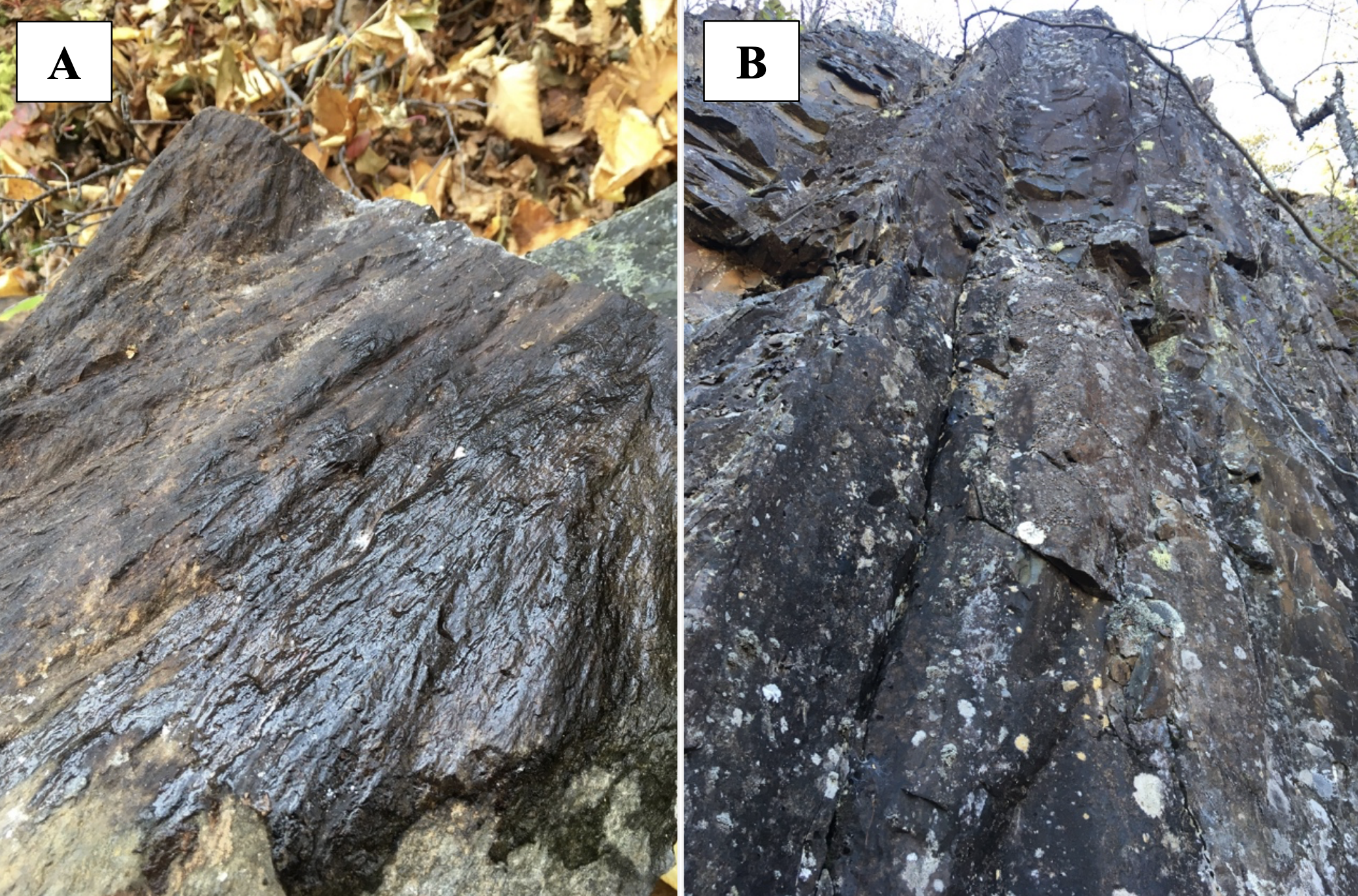
But there is one feature Osinski said can be seen with the naked eye: grooves or lines in the rock's surface called shatter cones, which are caused by shockwaves passing through the ground.
In October 2025, Osinski and a team of geologists visited the site to investigate whether any of these features were present. "This was one of the most arduous expeditions I’ve ever done — and I’ve done 25 expeditions to the Arctic and 6 continents," he said. "The terrain was incredibly rough and rugged, plus [there were] lots of bugs."
But they eventually found what they were looking for — shatter cones. They also discovered big cliffs of impact melt rock, created by the intense temperatures and pressures produced by a meteor impact. "You can melt literally tens of cubic kilometres of the Earth's crust when you get a big enough asteroid hitting," Osinski told CBC.
Taking samples from the rocks, the team dated the crater at 390 million years old.
Osinski, who runs a website called Impact Earth dedicated to verifying meteor impact sites, is used to getting emails about strange looking satellite images. "I get lots of messages from the public thinking they have found a crater and 99/100 turn out not to be the case," he told Live Science. "This is one of those rare examples that shows this is possible."
So far, we know of roughly 200 impact craters on Earth, 31 of which have been found in Canada. "Typically about 1 or 2 craters are discovered per year, but these are typically less than 5-10 km [3 to 6 miles] in size," Osinski said. "[A crater of this size] is pretty rare."
The last meteor crater confirmed in Canada was in 2010.
After the new investigation confirmed the pit was punched out by a meteor impact, Osinski, Rochette and their team named it Uhaachatik Crater following discussions with the Ekuanitshit Innu council, a council representing the indigenous people in the area. The researchers will present their work at the Annual Meeting of the Meteorological Society in Germany next month.
Speaking to Radio-Canada, Lapointe said that he was very happy to hear his discovery had been confirmed as a genuine meteor crater. "It's not every day that an ordinary citizen finds a 390-million-year-old crater," he said. “I encourage everyone to not ignore intuition or an observation, even if it isn’t part of your field of expertise.”
Osinski and the team will continue their work on the collected samples to learn more about the impact site. "Any crater discovered offers us insight into how craters form and the effects that they can have on Earth’s geology, biology, and climate," he told Live Science.
Heatwaves, high energy prices, calls for reindustrialisation and North Sea drilling are all high on the to-do list
Wildfires cast a pall of smoke this week over Greater Manchester, whose former mayor Andy Burnham stands on the threshold of No 10. Amid three UK heatwaves so far this year, which have killed thousands of people in England and Wales, damaged harvests and left children crying in classrooms, the new prime minister’s plans for the climate crisis remain as shrouded as his city.
“Burnham has been very quiet about the climate [crisis] so far,” says Chris Venables, an environmental campaigner and fellow at the Green Alliance thinktank. “I don’t think [it] is at the forefront of his mind, but that does not mean he will water down this agenda.”
Continue reading...
© Photograph: Guy Bell/Shutterstock

© Photograph: Guy Bell/Shutterstock

© Photograph: Guy Bell/Shutterstock
3 min read

Fifty years ago, NASA’s Viking 1 and 2 landers made the first successful landings on Mars, opening a new era in planetary exploration. Behind that achievement was a team at NASA’s Langley Research Center in Hampton, Virginia, whose steady leadership and technical expertise helped turn an ambitious idea into a mission that reshaped how we explore other worlds.
NASA selected Langley in 1968 to lead the massive Viking project, the first U.S. mission designed to land safely on Mars and search for signs of life. Project Manager James S. Martin Jr. set the tone from the start. He wanted clear priorities, tough engineering reviews, and the discipline to test every system until the team was confident it would perform on Mars.
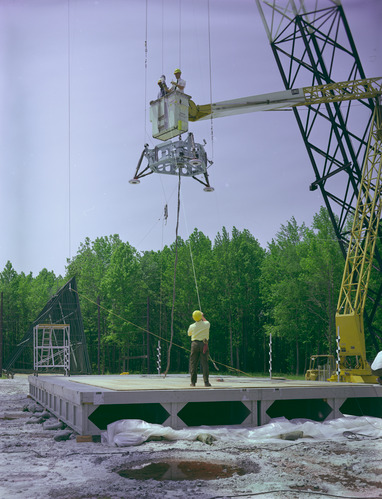
Langley engineers faced a challenge unlike anything attempted before: slowing a spacecraft plunging into the Martian atmosphere at more than 10,000 miles per hour. So they leaned into their expertise in atmospheric entry aerodynamics, heat shielding, and parachute technology. Their work produced the protective aeroshell and heat shield, as well as the supersonic parachute. These systems didn’t come from theory alone — they were shaped by years of wind‑tunnel tests, analysis, and problem‑solving. Langley still excels at entry, descent, and landing systems today.
Langley also helped create a new approach to finding safe landing sites. Teams combined images from Viking’s orbiters with radar data from Earth‑based observatories to identify regions that balanced scientific value with engineering safety — a method now standard for Mars missions.
Viking also changed how mission teams operated. Engineers and scientists adopted the sol — a Martian day slightly longer than 24 hours — to keep daily work aligned with local time on Mars, a practice still used for surface missions.
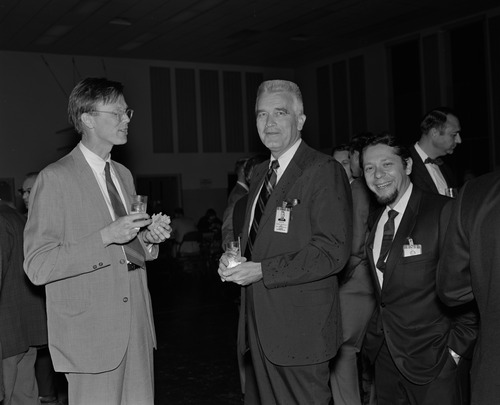
Viking grew out of a pivotal program shift. The earlier Voyager Mars lander concept was canceled because it was too costly and risky, relying on two large landers stacked on a single Saturn V rocket. Langley helped chart a more realistic path forward, pairing each lander with its own orbiter and using Titan IIIE‑Centaur rockets instead. The new design preserved scientific ambition while making the mission achievable.
Viking provided an early model for how NASA could explore the solar system: scout with orbiters, certify landing sites with real data, and land only with systems tested well beyond their limits. That “planetary playbook,” shaped heavily by Langley, provided a guide for future Mars missions like Curiosity and Perseverance.
The two landers returned thousands of images and groundbreaking data, revealing Mars as a world with weather, geologic history, and complexity that scientists are still studying today. And while no human has ever set foot on the Martian surface, Viking proved that reaching another planet — and working on it — was within reach.
As the 50th anniversary of those landings arrives, Langley’s influence is unmistakable. The center continues to advance new entry, descent, and landing technologies, and explore concepts that will support future human explorers. The same spirit that guided Viking still drives the work happening in Hampton today — steady, curious, and always looking toward the next horizon.
Nature Geoscience, Published online: 20 July 2026; doi:10.1038/s41561-026-02045-7
The Eastern Himalayan orogenic corner, or syntaxis, is largely formed by flattening of the Indian slab and shear localization in weak crust, which may affect development of the orogenic system, according to thermomechanical models.
Nature, Published online: 20 July 2026; doi:10.1038/d41586-026-02211-2
Satellite images have been analysed by a machine-learning algorithm to produce high-resolution maps of wetland environments — a boon for conservation efforts.
Nature, Published online: 20 July 2026; doi:10.1038/d41586-026-01995-7
Other researchers say that non-infectious viral samples in luggage posed no risk, but might have violated import rules.
Nature, Published online: 20 July 2026; doi:10.1038/d41586-026-02220-1
Largest genetic analysis of the condition so far finds 11 linked locations in the human genome.
Nature, Published online: 20 July 2026; doi:10.1038/d41586-026-02234-9
A postdoc researcher trying to move into an industry role wants help gaining traction and making it past the first interview stage.