❌

Reading view

Ukraine’s drone rescue of wounded soldier puts much touted idea into practice

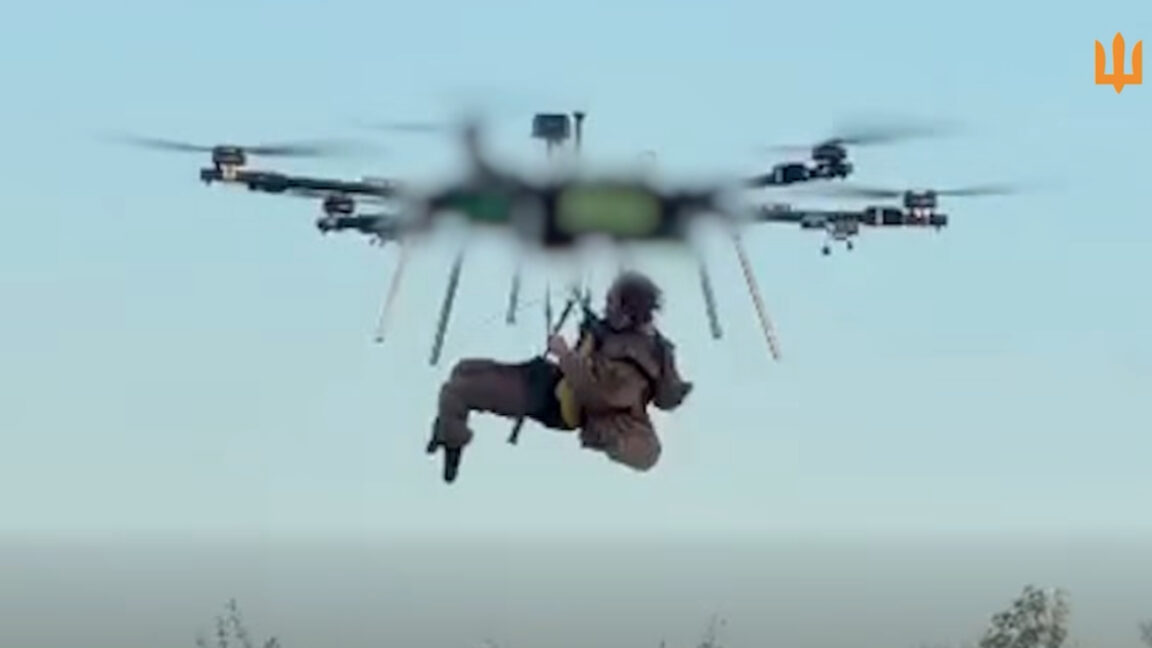
Ukraine’s unprecedented drone rescue of a wounded soldier from the battlefield has shown once again how battlefield necessity can spur innovation. The operation was revealed just days after separate Ukrainian drones designed for casualty evacuation were deployed for frontline testing—taking a step beyond the US military’s decades of experimentation with similar concepts.

The drone evacuation of the injured soldier took place at an undisclosed time and place on the frontline where the presence of Russian drones and landmines made it impractical to send in a wheeled ground robot, according to The Kyiv Independent. On October 19, Ukraine’s Army shared a video of the drone evacuation, showing the wounded soldier securing himself in a harness suspended beneath a heavy hexacopter drone with six rotors before being flown to safety.

“This is a historic event, the next stage of evacuating the wounded, which we will all come to,” said Napalm, a programmer of the 92nd separate assault brigade's unmanned ground systems company, who went by his callsign per Ukrainian military practice, in a statement. “Now the serious systematic work begins, so that such missions are carried out constantly.”
Read full article

Comments

© 92nd Separate Assault Brigade of the Ukrainian Ground Forces

  •  

Stratospheric airship flew from US to Japan to test sky cell tower concept

Nearly 100 years after the dirigible Graf Zeppelin made the first nonstop airship journey across the Pacific Ocean, another airship has successfully completed a round-trip flight from New Mexico to Japan and back. But the significance of this modern feat was less about the journey's length and more about its purpose: demonstrating how a lighter-than-air platform can act as a cell phone tower in the sky.

The trans-Pacific flight that took place over a month between August and September 2026 was the most notable milestone yet for Sceye, a US aerospace company based near Albuquerque, New Mexico. Sceye has developed an uncrewed platform filled with helium for buoyancy and equipped with an electric-powered propeller for active propulsion, allowing it to resist most strong winds and keep hovering over the same location for long periods. The platform also uses top-mounted solar panels and onboard batteries to stay powered for stratospheric operations around the clock.

“We can stay over an area of operation, and we do that in the stratosphere right around 60,000 feet, so we're twice as high as air traffic and we're above the jet stream, and yet 30 times closer than low-Earth orbit satellites,” Mikkel Frandsen, founder and CEO of Sceye, told Ars. “We can fly through day and night until the sun comes up the next morning and recharges the batteries, at which point we're still at the same altitude and still over the same area of operation.”

Read full article

Comments

© Sceye

  •  

Black Sea drone attacks enter NATO country's territorial waters for first time

Russian drones are suspected of sinking a cargo ship and leaving chemical tankers ablaze near the Black Sea coasts of Bulgaria and Romania, respectively. The latest attacks mean that at least seven ships have been attacked in the exclusive economic zones of NATO member countries—and even within Romania's territorial waters if Russian involvement is confirmed in the case of the chemical tankers.

Such attacks have spurred requests for NATO to redeploy counter-drone systems to provide more protection. In a social media post on October 15, NATO Secretary General Mark Rutte stated that NATO had increased "counter-drone capabilities" along the alliance's eastern flank after meeting with the leaders of Bulgaria and Romania.

The latest attacks this week occurred within 24 hours between October 14 and October 15, when the two chemical tankers were set afire after Russian drones were detected in Romanian airspace, according to Deutsche Welle. Both ships were sitting at anchor near the mouth of the Sulina canal that connects the Black Sea to the Danube River, which has become a crucial shipping export route for Ukraine, Reuters reported.

Read full article

Comments

© Hristo Rusev/Getty Images

  •  

The Internet’s undersea backbone is slipping into the danger zone

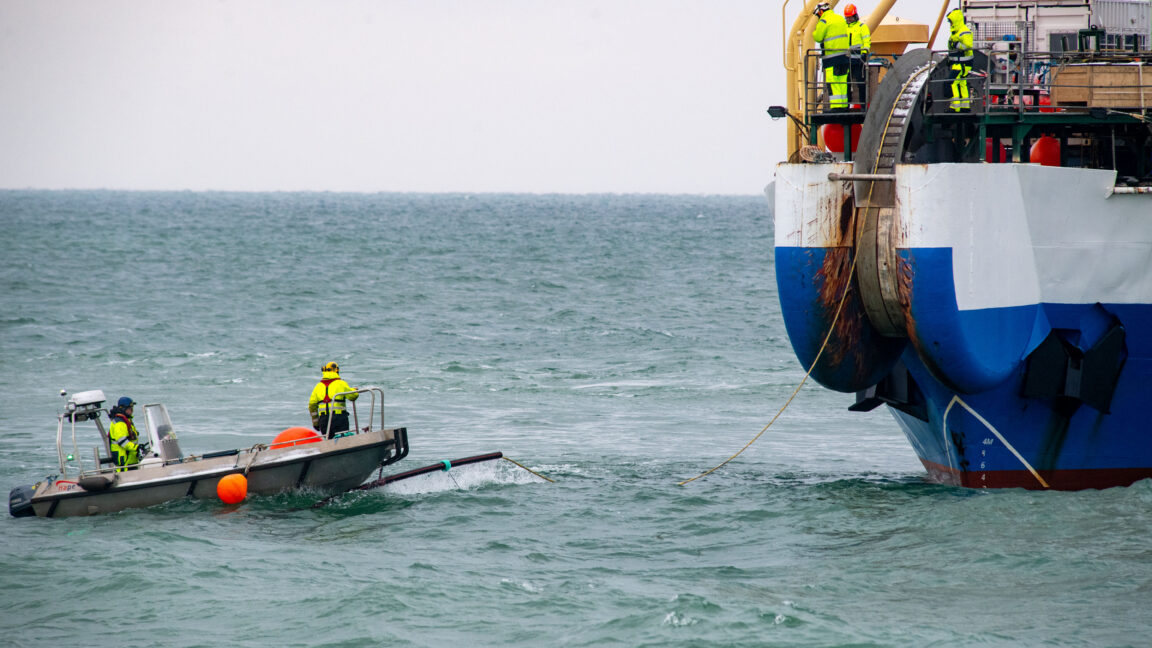
Despite the expansion of Starlink and other communications satellite services, most of the world’s Internet traffic still travels through subsea cables crisscrossing the ocean floors. Those fiber-optic cables coexist with a network of oil and gas pipelines and submarine power cables—and all these crucial links connecting countries and continents now face growing sabotage risks as gray-zone warfare and open conflicts have become widespread.

The rising risks to the world’s invisible infrastructure beneath the waves are the main subject of a new book by Elisabeth Braw, a senior fellow at the Atlantic Council who leads the Threats to the Global Maritime Order Initiative. Her book, titled Undersea War, explores the modern rise in suspicious incidents in which ships dragging their anchors for unusually long periods have cut or damaged undersea cables and pipelines, from the Baltic Sea to the Pacific Ocean.

Braw acknowledges that about 60 percent of undersea cable damage is primarily due to human error during fishing and shipping activities, when weighted nets or anchors drag across the seabed. Natural hazards like storms and undersea landslides also account for a smaller proportion of such incidents. In total, between 150 and 200 cables are damaged each year and usually repaired quickly.

Read full article

Comments

© Stefan Sauer/picture alliance via Getty Images

  •  

Russia was not ready for the data center war it started with Ukraine

When Russia began attacking Ukrainian data centers and telecommunication infrastructure, it apparently failed to prepare for possible retaliation. Now Russia’s digital services are facing widespread outages after Ukrainian drone strikes knocked out three of the largest data centers owned by Russian tech giant Yandex within several days.

Pro-Kremlin bloggers are warning that Russia’s centralized digital economy could collapse because the country is not prepared for the “data center war” it started, according to posts translated by the pseudonymous independent researcher ChrisO_wiki. The Russian commentators also suggested that Ukraine’s decentralized digital services could prove more resilient than Russia’s system if the countries continue trading such blows.

Russia initially launched a drone strike campaign targeting Ukrainian data centers and mobile phone networks in late September. The attacks temporarily disrupted Internet and cell phone service for up to 100,000 households in the Ukrainian capital of Kyiv and came as part of a broader long-range strike campaign that has involved Russian missiles and jet-powered drones hitting Ukraine’s power grid infrastructure, transportation hubs, and even residential apartment building blocks.

Read full article

Comments

© Igor IVANKO / AFP via Getty Images

  •  

Amazon has over 1 million robot workers. What’s next for human employees?

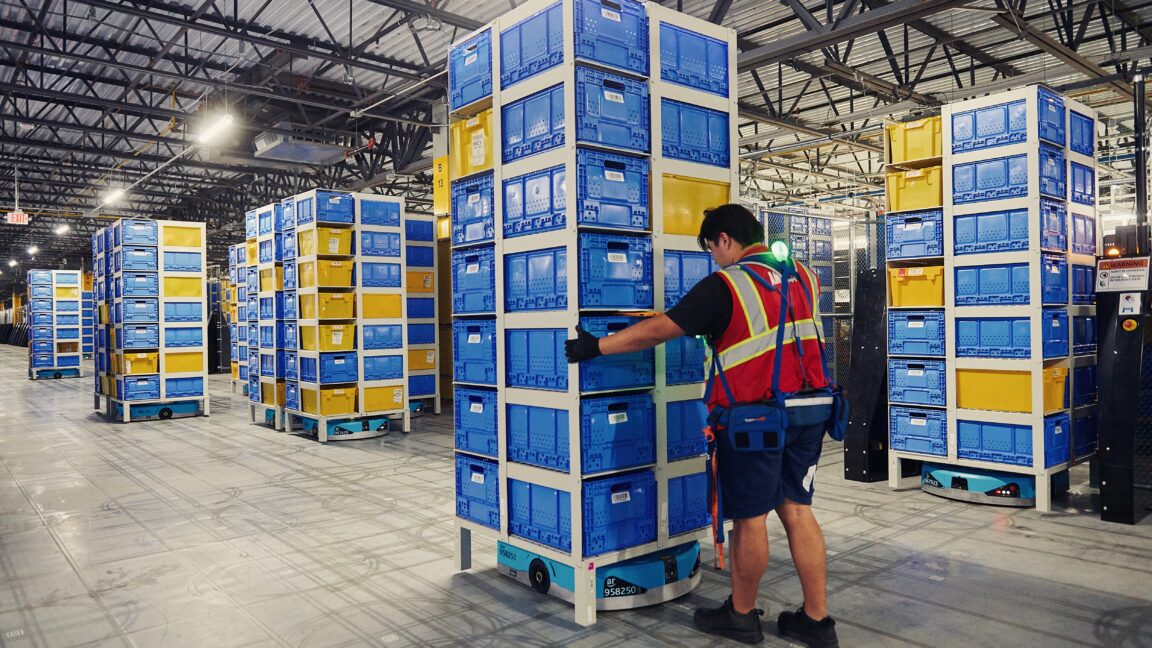
No organization in the world operates more robots than Amazon. The company already has more than 1 million robots working in warehouses around the clock to make tens of millions of same-day and one-day package deliveries happen on a daily basis—and Amazon is poised to significantly grow that robotic fleet in the coming years as it establishes new factories to churn out increasingly more capable robot workers.

Despite deploying so many robots, Amazon is also the second-largest corporate employer in the world, with more than 1.5 million full-time and part-time human workers, according to its 2025 annual report. Amazon executives say that the growing robot fleet has eased the burden on its human workforce by taking on the toughest fulfillment center tasks that carry the greatest risks of physical fatigue and injury. But labor advocacy groups and independent researchers point to evidence suggesting that warehouse automation driven by AI is not all upside for the humans who work alongside robots.

“For the last 100 years, most of the automation that we've seen usually happens away from workers—you're taking that high-risk task away from the worker, and you're doing so in a way that is not physically proximate,” Brad Greenwood, professor of business at George Mason University, told Ars. “The rise of collaborative robots really changes that dynamic for two reasons: one is that it is physically proximate, and two, the robot has the ability to dictate the pace of work.”

Read full article

Comments

© Amazon

  •  

Iran strikes on Amazon data centers caused permanent loss of customer data

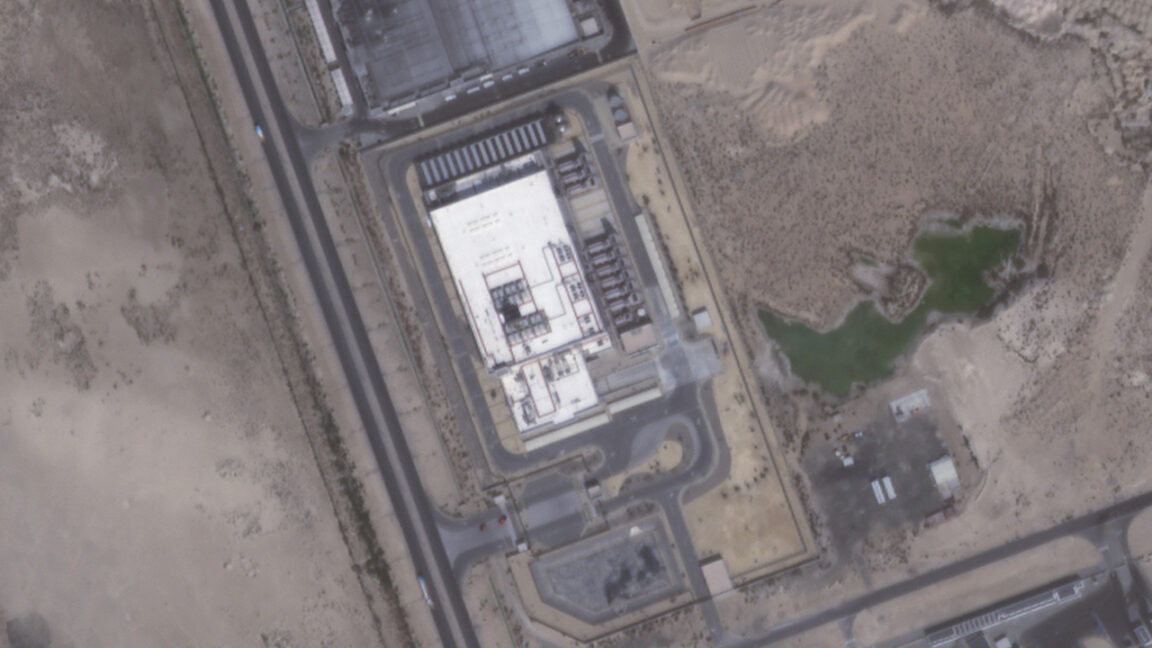
Half a year after Iranian drone strikes knocked out multiple Amazon data centers, the US tech company has acknowledged the permanent loss of some customer data that was hosted in Bahrain and the United Arab Emirates.

Amazon Web Services was “unable to restore access to the resources and data” hosted in some of the war-damaged data centers, according to an AWS dashboard update posted on September 15. The development was first reported by Reuters and suggests that the Iranian strikes inflicted catastrophic damage on the data centers.
Customer data was irretrievably lost in one of three AWS availability zones in the United Arab Emirates region, specifically the mec1-az2 availability zone. Each availability zone is serviced by one or more Amazon data centers.

Read full article

Comments

© Planet Labs PBC

  •  

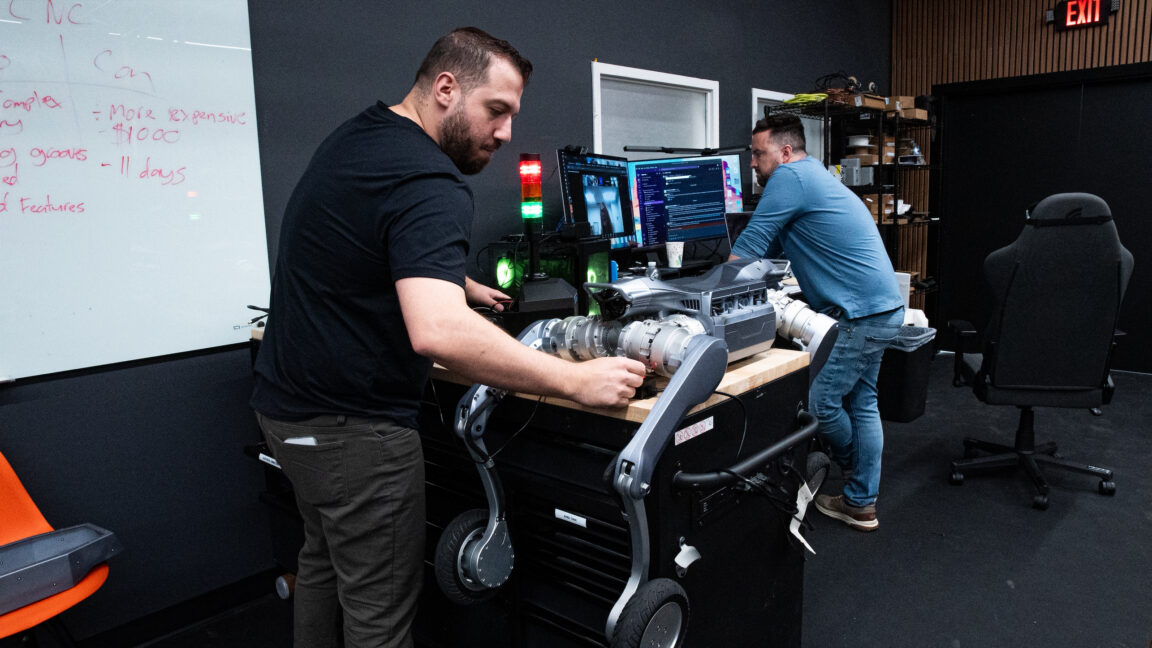
Founder’s cost-cutting obsession drove Unitree lead in cheap humanoid robots

China leads the world in churning out humanoid robots and four-legged robot dogs that also happen to be the most affordable on the market—and Unitree Robotics’ founder Wang Xingxing is arguably one of the people most responsible for that Chinese lead.

The introverted founder, who prominently appeared at a 2025 business symposium hosted by Chinese President Xi Jinping, became phenomenally wealthy after Unitree launched an initial public offering on the Shanghai Stock Exchange STAR Market on August 19. But extensive reporting by Beijing-based Caijing Magazine suggests Unitree’s success so far has been driven by Wang’s extreme micromanagement leadership style—an approach that may be more suited to a small startup than a fast-growing robotics company.

Caijing’s interviews with Unitree employees and investors paint a picture of Wang as someone who personally decides nearly every aspect of corporate strategy or product design, including the colors of materials and lengths of individual screws. The Caijing Magazine feature published on August 31, titled “The King of Unitree,” was translated into English by ChinaTalk, a US-based think tank and media organization, on September 10.

Read full article

Comments

© Michael Kappeler/dpa (Photo by Michael Kappeler/picture alliance via Getty Images

  •  

Oracle tries to appease Stargate data center opponents with renewables push

Oracle’s proposed investment in 2 gigawatts of renewable energy projects for New Mexico comes as local opposition could delay development of the Project Jupiter data center that Oracle is building for OpenAI.

The two tech companies are developing the $165 billion Project Jupiter data center in Santa Teresa, New Mexico, as part of the broader Stargate AI infrastructure project announced by President Donald Trump in 2025. But Project Jupiter faces local protests and court battles over concerns about its environmental impacts—and the latest Oracle announcement on September 8 seeking proposals for renewable energy projects does not change the fact that the data center will be powered by fuel cells that consume natural gas.

“Like all matching programs, this would be synthetic in the sense that 2 GW of renewables wouldn't directly power the data center,” wrote Michael Thomas, CEO of the Cleanview data platform that tracks renewable energy and data center projects, in a LinkedIn post.

Read full article

Comments

© STACK Infrastructure

  •  

China’s drone supremacy shows in airlifting bodies and food after Nepal flood disaster

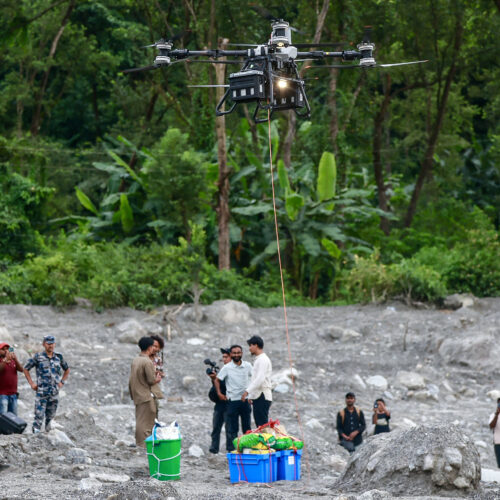
Chinese-made drones are flying out the bodies of flood victims and delivering food to survivors in the aftermath of devastating flash floods on the border of Nepal and China’s Tibetan region.

Nepal’s army has been using four DJI FlyCart 100 drones donated from China to make 10 to 16 aid deliveries each day, according to Reuters. This comes after a partial glacier collapse in the Himalayan mountains unleashed a sudden surge of water, mud, and debris that swept through border crossings, valley communities, and hydropower projects on August 26.

The DJI Flycart 100 Drones come with a 98-foot rope and winch system for picking up and dropping off heavy loads. The website of Chinese drone company DJI describes the drones as being able to carry between 187 and 220 pounds, depending on the battery configuration.

Read full article

Comments

© PRABIN RANABHAT / AFP via Getty Images

  •  

Apple debuts $129 AirPods 5 with better noise cancellation and transparency mode

Apple has debuted the new AirPods 5 with improved active noise cancellation and sound quality—aiming to provide improved listening and user features at a lower launch price than the predecessor AirPods 4.

The newest AirPods will go on sale for $129 in stores starting on September 18, according to an Apple press release accompanying the company’s “Surprise and Shine” event. Customers can also purchase AirPods 5 with a wireless charging case that provides longer battery life and on-stem volume control for $149. Preorders are already open.

This is looking like a solid deal compared to the predecessor AirPods 4. The older AirPods debuted in 2024 with a starting price of $129, but users had to pay $179 for the version with active noise cancellation.

Read full article

Comments

© Apple

  •  

Popular navigation apps unlikely to ditch Mercator maps despite UN resolution

Nearly every country represented in the United Nations General Assembly recently voted in favor of promoting world maps that more accurately show the size of various continents. But the UN resolution is unlikely to change how millions of people regularly see versions of 16th-century Mercator maps depicting skewed continent sizes in navigation apps.

On September 4, the African-led resolution attracted 164 votes in favor, with six countries abstaining from voting. Only the United States voted to oppose the resolution after describing it as a “radical ideological project,” according to UN News.

The non-binding UN resolution does not impose map changes on anyone. Instead, it “encourages governments, schools, international organizations, and technology companies to use the Equal Earth projection and other so-called equal-area maps when relative size matters,” UN News reported. The resolution also encourages teaching about the trade-offs that arise from depicting a spherical planet on a flat map.

Read full article

Comments

© UN Photo/Loey Felipe

  •  

Top chipmakers embrace ASML’s $400M machines, agree to crucial chipmaking change

Leading chipmakers Samsung Electronics and Taiwan Semiconductor Manufacturing Co. announced plans to adopt ASML’s latest chipmaking machines in the next several years—and they also joined Intel in agreeing to a crucial technology change that could boost chip production on the new machines by 40 percent.

This signifies the semiconductor industry’s broader embrace of high NA EUV photolithography technology that can cost up to $400 million per machine and is only provided by the Dutch technology company ASML, Bloomberg reports. The technology would allow chip designers to implement even smaller features in potentially more powerful and efficient next-generation chips produced for AI data centers and consumer electronics such as smartphones, tablets, and laptops.

ASML’s EUV (extreme ultraviolet) lithography machines enable chipmakers to use powerful laser light to imprint patterns in silicon wafers, layer by layer, and gradually form the computer circuitry that makes silicon chips work. Compared to older deep ultraviolet lithography, EUV technology harnesses a more powerful source of light with a shorter wavelength to create even smaller features on silicon wafers.

Read full article

Comments

© Michel de Heer | ASML

  •  

Data centers become "killer application" for new power transformer tech

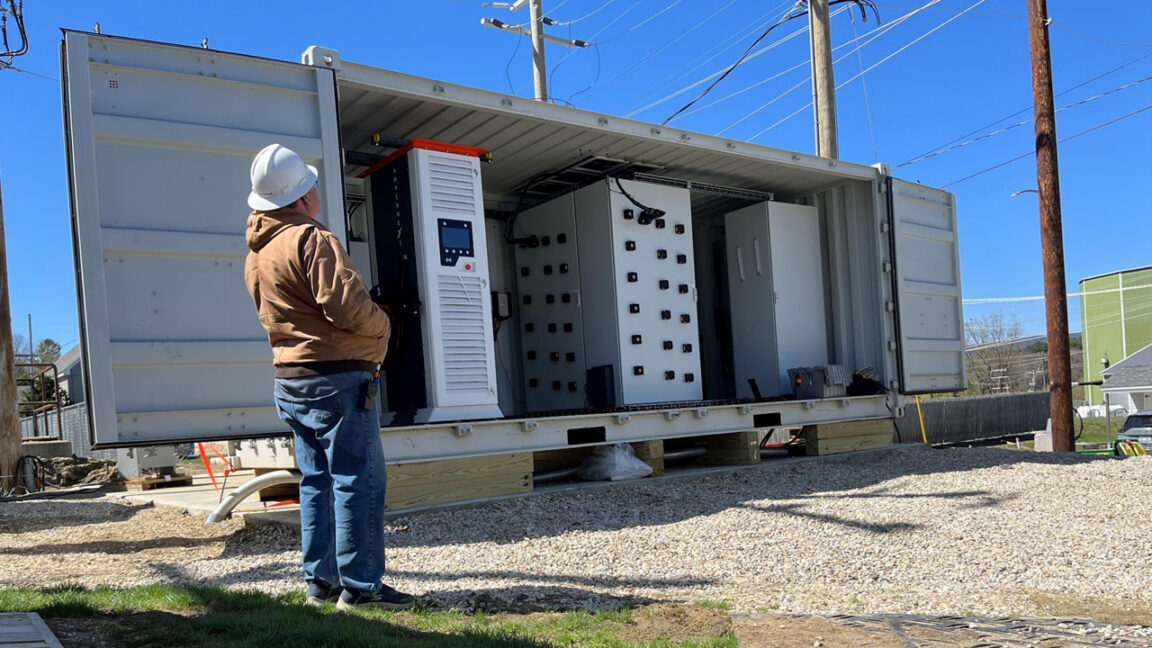
Data centers have become the largest driver of a surging electricity demand that is straining US power grids. But the AI data center boom has also accelerated investment in a technology that could provide a silver lining for everyone—solid-state power transformers that replace industrial-age technology with modern power electronics.

Power grids currently rely on conventional transformer technology that is painstakingly assembled by hand and has a fundamental design dating back to the 1880s. Two copper wire coils manually wound around a steel core create electromagnetic fields that help step up voltage levels of alternating current electricity for long-distance transmission or step down voltage levels for the electricity use of homes and businesses. The largest power transformers cannot be mass-manufactured but are instead custom-built for each utility company’s electrical substations.

Manufacturing constraints, coupled with the scramble to upgrade US power infrastructure, have meant utility companies and other customers must wait up to several years for delivery of new power transformers. That not only hinders power grid infrastructure expansion needed to support growing electricity demand, but also delays the process of replacing aging power transformers.

Read full article

Comments

© EPRI

  •  

Fighter jets help destroy Russian drone boat near European offshore gas platform

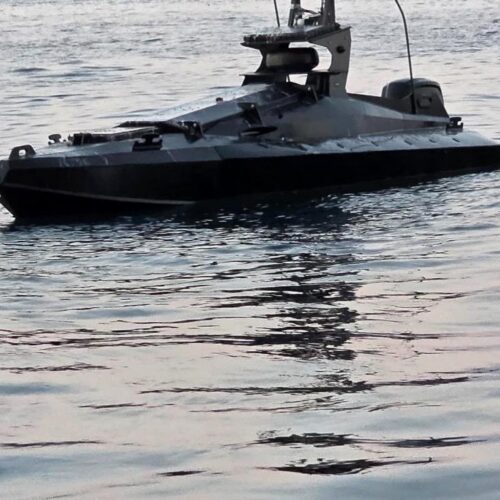
This week, Romania accused Russia of sending a drone boat loaded with explosives to a vital European natural gas platform in the Black Sea. A Romanian F-16 fighter jet used its cannons to disable the surface drone so that explosive ordnance experts could blow it up safely.

On August 20, the Romanian Coast Guard first spotted the maritime drone a few hundred meters away from the Neptun Deep project’s main drilling platform, where several hundred workers were busy with the platform’s ongoing installation, Defense Minister Radu Miruță said in a Facebook post. The offshore gas project would make Romania the largest gas producer in the European Union once it starts full production in 2027.

To protect the lives of the workers and the offshore gas infrastructure, the Romanian military scrambled two F-16 fighter jets to stop the drone with cannon fire, Miruță said. Army specialists later carried out a controlled detonation, as seen in a Facebook video shared by the defense minister.

Read full article

Comments

© Romanian Ministry of Defense

  •  

US distributor of China’s most popular humanoid robots pivots after US ban

A leading US distributor of China’s most popular humanoid robots and robot dogs now plans to produce its own robots at a facility on Long Island, New York. The business pivot comes amid the US government’s growing crackdown on foreign-made robots.

The company, RoboStore, had previously become the main North American distributor for humanoid robots and quadruped robots from Unitree Robotics, a Chinese robotics company that produces some of the most affordable and popular humanoid robot models. Universities like Harvard and MIT, along with tech companies like Amazon and Nvidia, purchased such robots made in China through RoboStore for their own research and development purposes.

“We’ve sold over 1,500 robots and deployed them and worked with customers like Cisco, OpenAI, Nvidia, and over 150 universities,” Teddy Haggerty, founder and CEO of RoboStore, told Ars.

Read full article

Comments

© Robo Inc.

  •  

Amazon aims for delivery drones to reach 500 US neighborhoods by end of 2026

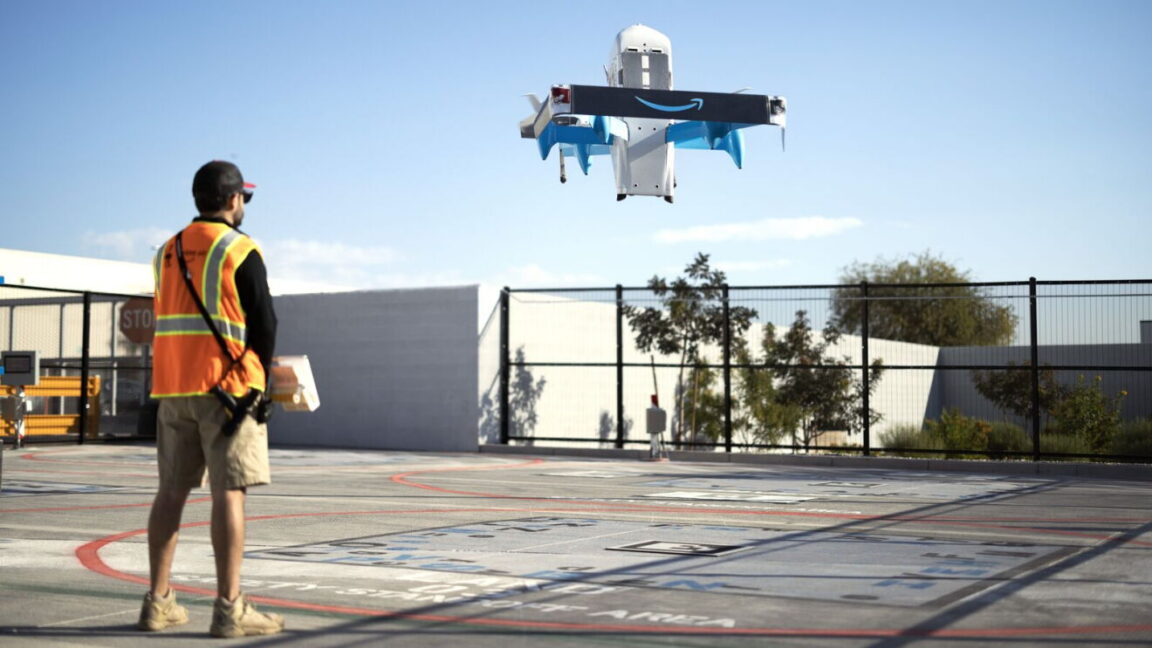
Amazon wants to grow its Prime Air delivery drone service sixfold to reach nearly 500 cities and towns across the United States by the end of 2026. The planned expansions from Amazon and its rivals could make the convenience of delivery drone services available to tens of millions more people in the coming months—but will also test more communities’ tolerance for increased noise from daily drone flights.

On August 19, Amazon announced it would soon launch Prime Air in the metropolitan areas of Chicago; Cleveland; Atlanta; Syracuse, New York; and Boise, Idaho, with more to come later in the year. Each Prime Air site offers delivery drone service within an area of about 175 square miles, with delivery times ranging from half an hour to an hour.

Prime Air already operates out of Amazon warehouses in 10 cities across seven states. Those include primarily suburban neighborhoods of Phoenix; Tampa; Kansas City; Omaha, Nebraska; Baton Rouge, Louisiana; Detroit; Houston; and San Antonio, Dallas, and Waco, Texas.

Read full article

Comments

© Amazon

  •  

First test flight of largest all-electric aircraft used just $5 of electricity

The first flight of the largest battery-electric aircraft to take to the skies lasted nearly half an hour while costing just $5 of electricity. That aviation feat comes at a time when jet fuel prices have skyrocketed because of the US war with Iran.

The test flight of Heart Aerospace’s X1 demonstrator aircraft took place at Plattsburgh International Airport in upstate New York on August 12. The X1 aircraft is comparable in size to a small regional airliner and can achieve a maximum takeoff weight exceeding 25,000 pounds with the help of four wing-mounted electric motors. The battery-electric propulsion system delivered more than one megawatt of power during the maiden flight.

All-electric aircraft can offer quieter and cleaner flight without the emissions that come from burning jet fuel. They may also prove more reliably cost-effective than conventional aircraft that come with jet fuel costs subject to geopolitical disruptions.

Read full article

Comments

© Heart Aerospace

  •  

Ukrainian drones wipe out entire US tank brigade in live war game

Ukrainian drone teams demolished a brigade of US Army tanks and armored vehicles during a live war game held this year—but the US soldiers were lucky enough to get “respawn” attempts while learning from the experience.

The semiannual military exercise, called Combined Resolve, gave the US military a firsthand taste of how modern drone warfare has evolved on the battlefields of Ukraine. The Ukrainian drone operators participating in the exercise were easily able to spot and destroy US armored vehicles by mimicking the actions of dropping bombs from above or moving close enough to simulate a kamikaze strike, according to US officials and a participant who spoke with The Wall Street Journal.

US armored vehicles were being destroyed so quickly that they were “respawned” and sent back into the simulated fray, a US official told The Wall Street Journal. The US troops who participated in the exercise—held in Germany from April 9 to May 10—were on rotational deployment from Fort Hood, Texas.

Read full article

Comments

© Sgt. Joseph Mcdonald | US Army

  •  

US boosts drone surveillance as flesh-eating screwworms spread in Texas

Hundreds of US government drones have switched from border surveillance to a different surveillance mission this summer—looking for signs of screwworm infestations in wild animals and livestock herds.

The flesh-eating New World Screwworm is the parasitic larva that emerges from eggs laid by flies in the open wounds or body openings of warm-blooded animals and humans, with untreated cases potentially leading to severe injury or death. Since the first screwworm cases were detected in South Texas in June, the US Department of Agriculture and US Customs and Border Protection have been conducting “one of the most extensive animal-health surveillance operations in the country,” the USDA said on August 10 in social media posts on platforms like X and Facebook.

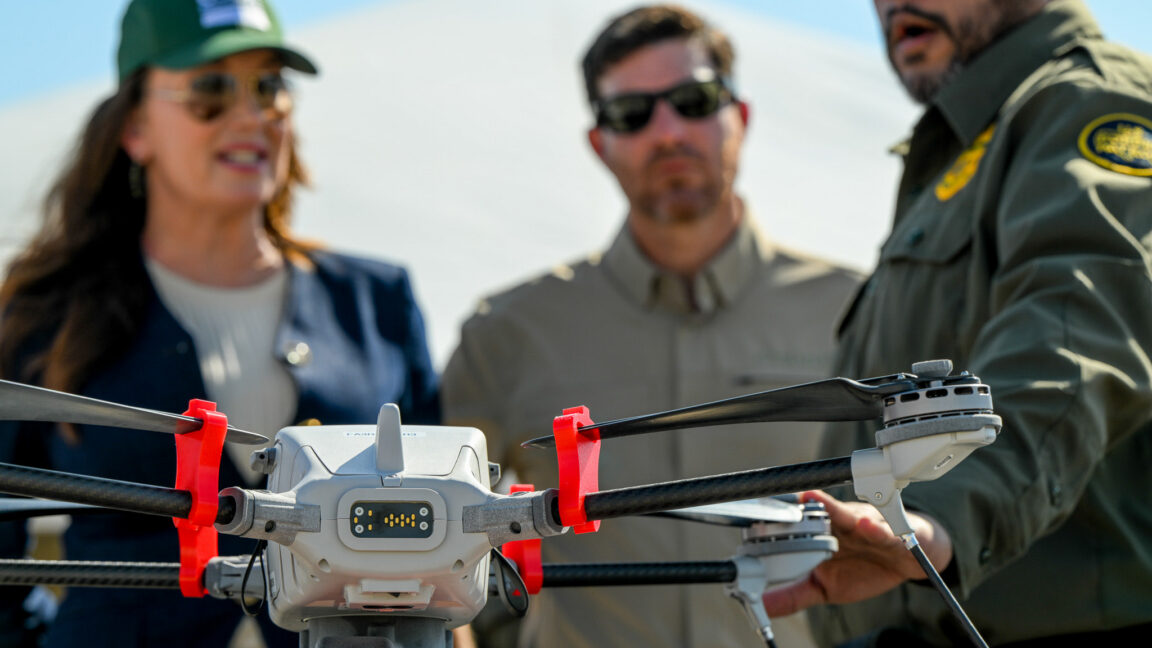
The effort involves at least 200 drones owned by the Department of Homeland Security, which includes the Customs and Border Protection (CBP) agency. But the actual number in use "varies depending on availability and need," a USDA spokesperson told Ars.

Read full article

Comments

© US Department of Agriculture

  •  
❌