❌

Normal view

Man rummaging in a Polish junkyard finds a 1,800-year-old shield holding the cremated remains of a Vandal warrior

1 September 2026 at 15:37

A cone shaped container is open next to a pile of ashes on a white surface

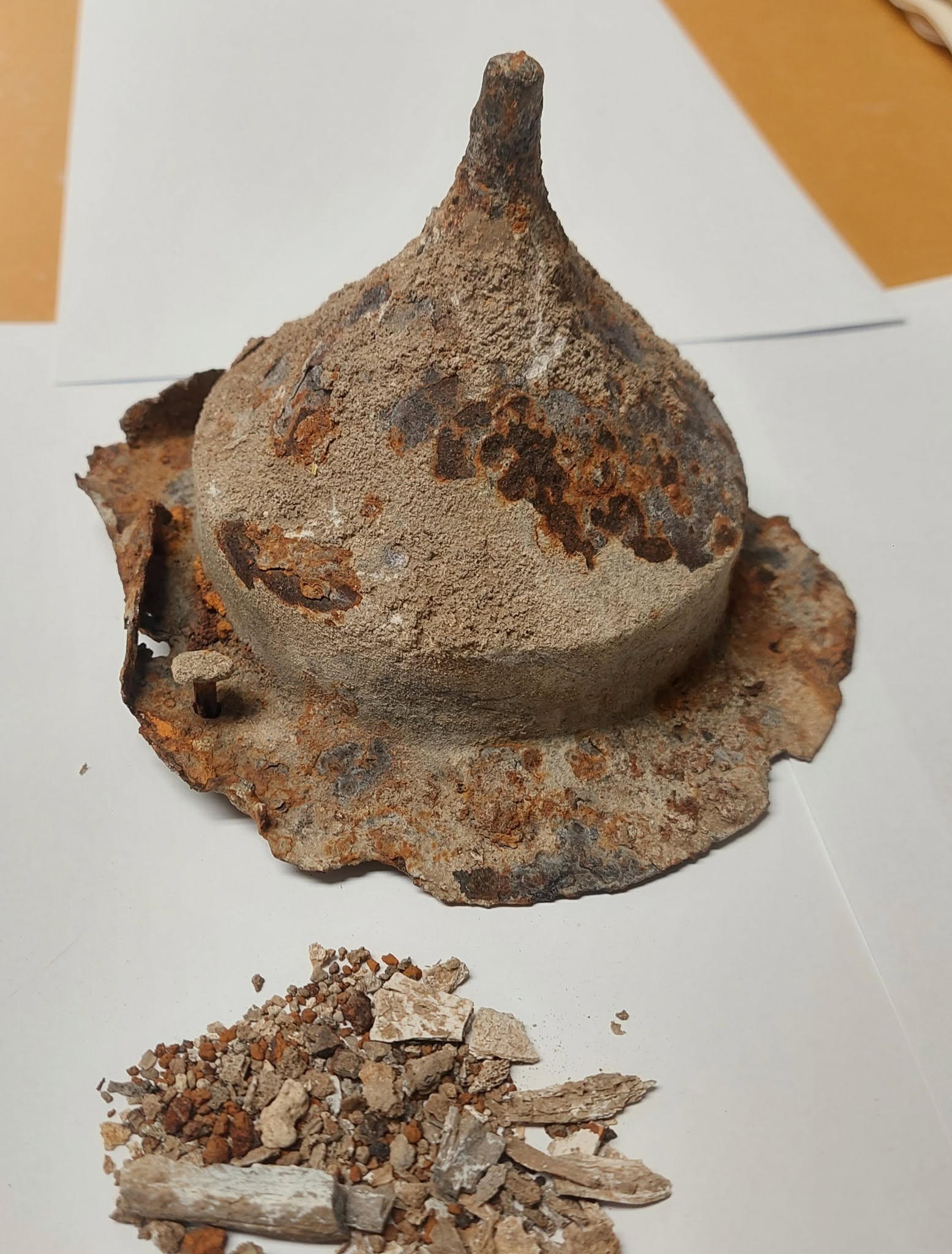
The iron shield boss was covered with caked earth when it was found. (Image credit: Bartłomiej Bartecki, Hrubieszów Museum)

A man searching for spare auto parts at a junkyard in Poland discovered an entirely different kind of treasure: part of a 1,800-year-old shield that was filled with bones.

The shield's age and location suggest that it belonged to a Vandal warrior, according to the archaeologists who excavated the find. The Vandals were Germanic people who lived in Poland at that time. After the Germanic invasions of the Roman Empire, the Vandals, whose name became synonymous with destruction, moved south and eventually settled in North Africa in A.D. 429, long after this shield was buried.

The bones seem to have been part of a cremation, which was also a Vandal tradition. However, the archaeologists lamented in an Aug. 20 Facebook post that the original grave has been lost to time.

A cone-shaped stone container is against a stone surface.

The ancient shield boss — the central iron hub of the full shield — was found in a junkyard in southeastern Poland. (Image credit: Bartłomiej Bartecki, Hrubieszów Museum )

The newfound artifact consists of the shield's central iron "boss," or "umbo," which protected the hand while supporting the wood and leather of the full shield built around it. The wood and leather have now rotted away.

The shields of Roman legionaries also had a central boss. But the Romans never got that far north, and the pointed style of the boss indicates it is of second-century Vandal origin.

A pile of ashes and small stones against a white background.

Archaeologists think the bones are from the cremation of a Vandal warrior.  (Image credit: Bartłomiej Bartecki, Hrubieszów Museum )

Junkyard find

A cone-shaped stone container is full of gray ashes, sitting on a white surface.

Examinations showed the plug of dried earth inside the shield boss contained cremated bones. (Image credit: Bartłomiej Bartecki, Hrubieszów Museum )

According to the Facebook post, the shield boss was discovered earlier this month at a junkyard in the town of Hrubieszów, near Poland's southeastern border with Ukraine.

The man who found it immediately knew the artifact was very old, and he sent a photograph of it to the Father Stanisław Staszic Museum at Hrubieszów. Archaeologists there verified its likely origin, and the cremated bones were found during later examinations of a plug of dried earth inside the boss.

"The state of preservation of the umbo, especially its characteristic surface, indicates that it was exposed to high temperatures," museum representatives stated in the post. "This fact, combined with the burnt bones inside, clearly indicates the cremation burial of a warrior from the Vandal community." The Vandals are associated with the Przeworsk culture in Poland, after the town where evidence of them was first found.

"Unfortunately, we will probably never know what else was found in this destroyed burial ‪—‬ perhaps a sword, spearheads, javelins, a belt buckle, or a cloak clasp," the museum team noted.

See if you know what these mysterious artifacts are with our archaeological fragments quiz!
Ancient Egyptian princesses may have been skilled warriors

1 September 2026 at 11:30

It seems some Egyptian royal women really were warrior princesses.

Researchers examined five almost 4,000-year-old mummified princesses. Their results suggest these women were skilled users of the daggers, bows and other weapons buried with them. The findings appear in the July 16 Frontiers in Environmental Archaeology. 

“These princesses were active practitioners of hunting or athletic skills rather than merely symbolic owners of the weapons found in their tombs,” says Zeinab Hashesh. She’s a bioarchaeologist at Egypt’s Beni Suef University.

Some Egyptologists have dismissed the weapons found in females’ graves as “token” objects for the afterlife. However, the female mummies’ features showed they had performed intensive martial activities, Hashesh says.

The study examined six mummies that had been excavated in 1894 and 1895 from the Dahshur funerary complex. It’s about 40 kilometers (25 miles) south of Cairo. The mummies’ tombs had been carefully cataloged. Finds included impact weapons such as flails — jointed clubs — and maces.

The mummies themselves had been removed and stored at an Egyptian museum. They were thought lost until rediscovered in 2020.

Hashesh and her coworkers measured the mummies’ bones to figure out their sex and their age at death. The scientists also used X-rays and other techniques to search the remains for signs of illness and trauma.

This work confirmed handwritten notes from 19th century excavators at Dahshur. The one male mummy was an obscure, 13th Dynasty pharaoh. Three other mummies were probably Ita, Khenmet and Itaweret. They were daughters of the 12th Dynasty pharaoh Amenemhat II. He ruled between about 1929 and 1895 B.C. One mummy had no notes. But the researchers tentatively identified it as Sathathormeryt. She was a fourth sister to the three princesses. The last mummy was also a princess. But she was not a sister to the four other women.

All six mummies shared a rare cluster of inherited spinal defects. This showed they were related. The team hopes to one day carry out DNA studies on them.

The researchers also saw clear evidence of “robust” skeletal developments and muscle attachments. (That’s where connective tissue once joined muscle and bone.) For instance, there were enlarged areas of the forearm bones in one mummy, Itaweret. This showed that she had often drawn bows.

Some of the women had healed from traumatic injuries. Those may have happened while the princesses were training, hunting or in battle. “These princesses were not leading sedentary lives of luxury,” Hashesh says. “They were well-conditioned athletes. [Their] bodies were hardened by the same skilled force and disciplined movement as the men of their time.”

Nicholas Brown is an Egyptologist at the University of Iowa in Iowa City. He did not take part in this study. Egyptian princesses used bows in a royal ritual during the Sed festival of renewal, Brown says. During that time, they would shoot arrows in the four cardinal directions: north, east, south and west.

Evidence of their weapon use is indirect, he notes. “The bones aren’t preserving the behavior directly. But the muscle attachments are clearly indicating some kind of habitual, repeated activity.”

Humans have used fire far longer than anyone realized

21 August 2026 at 11:30

A cave in Africa seems to host the oldest known traces of humans using fire. Burnt remnants of animal bones hint that groups of Homo erectus used fires here as long as 1.8 million years ago.

The site is known as Wonderwerk Cave. It’s in the Northern Cape province of South Africa. The oldest previously known traces of our early relatives using fire also came from there. Those dated to about 1 million years ago.

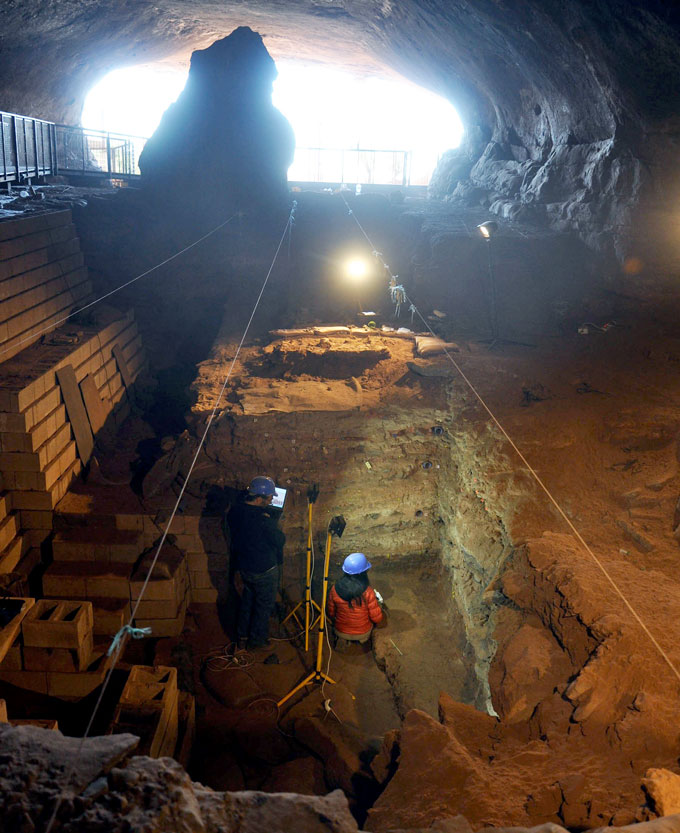
A helmeted researcher stands in a massive pit dug into the floor of a cave, surrounded by archaeological equipment
Burnt remnants of animal bones were found in deep layers of cave sediment, under previously analyzed remnants of other, later fires. Michael Chazan

The new evidence comes from an earlier, deeper level of sediment in that cave. These traces of fire could be anywhere from 1.07 to 1.79 million years old. But “I’m very comfortable saying it was between 1.7 and 1.8 million years ago,” says Michael Chazan. This archaeologist works at the University of Toronto in Canada. He leads excavations at Wonderwerk Cave.

Chazan was part of a team that shared the new findings June 1 in PLoS One.

The researchers don’t think H. erectus lit the fires. The earliest evidence of people using iron pyrite to make sparks dates to about 400,000 years ago. So people in the Wonderwerk Cave probably carried in flames from wildfires, Chazan says. “This is not human ignition of fire. It’s collecting a fire on the landscape.”

These were likely not cooking fires, but ones used to give light and warmth.

Chazan’s team detected burnt bones at the fire sites with a blue-light technique that forensics experts use to solve crimes. It’s called “luminescence.” Until now, no one had used it in archaeology. The bones came from owl pellets. (Owls cough up such balls of fur and bone after eating.) When examined under blue light, the burned bones glowed more brightly than unburned ones.

Archaeologists already knew that Wonderwerk Cave was probably home to groups of H. erectus at this time. Barn owls also likely sheltered in the cave while these ancient humans lived there, Chazan says. People kept fires going on the pellet-strewn floor. This could explain the finding of burned bones. 

Ancient people didn’t seem to always have fires in Wonderwerk Cave. “There’s a clear signal [of fire],” Chazan says. “But it’s not of year-round access to fire.” Wildfires likely happened only in hot seasons. That may not have been often enough for H. erectus to make any lasting lifestyle changes based on access to flames.

❌