❌

Normal view

Gemini bate 1 bilhão de usuários; base ativa no iOS passa de 100 milhões

11 August 2026 at 23:01

O Gemini, do Google, ultrapassou oficialmente a marca de 1 bilhão de usuários mensais ativos — tornando-se, segundo a própria gigante de Mountain View, o produto de crescimento mais rápido na história da empresa.

Para colocar esse marco em perspectiva, o Gmail levou cerca de 12 anos para conquistar uma base de usuários desse tamanho. Isso também coloca o Gemini no mesmo patamar do ChatGPT (da OpenAI), que atingiu essa marca no início de junho.

O CEO 1Chief executive officer, ou diretor executivo. do Google, Sundar Pichai, utilizou o X para destacar esse marco.

1B+ people are now using @Geminiapp every month to spark new ideas and get things done. It’s our fastest growing product ever, and our 14th to hit the 1B-user mark.

Kudos to @JoshWoodward & the entire Gemini team, and thank you to everyone who has been on this journey with us -… pic.twitter.com/sSWrULX4Qn

— Sundar Pichai (@sundarpichai) August 11, 2026
Mais de 1 bilhão de pessoas já usam o @Geminiapp todos os meses para despertar novas ideias e realizar tarefas. É o nosso produto que mais cresce na história e o 14º a atingir a marca de 1 bilhão de usuários.

Parabéns ao @JoshWoodward e a toda a equipe do Gemini, e obrigado a todos que têm feito parte dessa jornada conosco — vem muito mais por aí!

Além do número de usuários, o Google divulgou detalhes sobre como as pessoas interagem com o chatbot no dia a dia. Entre eles, a empresa aponta que os usuários dos dispositivos da Apple estão adotando a ferramenta em grande escala, com mais de 100 milhões de usuários ativos no iOS. Além disso, usuários avançados do macOS acionam o Gemini cerca de duas vezes mais frequentemente do que em outras plataformas.

Eles apontam ainda que interação por voz tornou-se a forma preferida de usar o aplicativo, com 63% dos usuários optando por falar em vez de digitar. Ademais, uma em cada cinco sessões do Gemini Live vai além do áudio simples, envolvendo o compartilhamento de imagens da câmera/tela em tempo real.

Estudantes representam outro grupo importante de usuários: 38% das solicitações acadêmicas incluem o envio de arquivos de tarefas, anotações ou PDFs. A geração de imagens também gera um tráfego enorme, sendo responsável pela criação de mais de 150 milhões de imagens diariamente.

Notas de rodapé

  • 1
    Chief executive officer, ou diretor executivo.

SpaceXAI lança Grok Bot, app de IA agêntica, para Mac e iPhone

11 August 2026 at 20:20

A SpaceXAI liberou hoje, ainda em fase beta, um novo aplicativo de inteligência artificial (IA) agêntica para Mac e iPhone chamado Grok Bot.

Nascido como uma ferramenta interna, ele permite que usuários criem “colegas de trabalho de IA”, os quais contam com seus próprios computadores e são capazes realizar uma série de tarefas de ponta a ponta, além de acessar as ferramentas (apps, emails, etc.) que você já utiliza.

Introducing Grok Bot, now in early beta.

Bots are AI teammates that do real work for you. They sign in to your tools, use them just like you do, and come back with finished work. pic.twitter.com/uyfA97yo98

— Grok Bot (@bot) August 11, 2026
Apresentamos o Grok Bot, agora em versão beta antecipada.

Bots são colegas de IA que realizam tarefas reais para você. Eles acessam suas ferramentas, as utilizam como você e retornam com o trabalho concluído.

A ideia, segundo a SpaceXAI, é que o usuário converse com esses “colegas” como se eles fossem pessoas reais, seja por mensagem de texto ou por voz.

“Usuários com acesso antecipado dizem que o Grok Bot parece menos com dar instruções a um agente e mais com delegar tarefas a um colega de equipe altamente capacitado”, comentou a empresa.

Grok Bot
Divulgação/SpaceXAI

Assim que a IA recebe uma tarefa, ela toma conta de tudo automaticamente, de modo que o usuário só precisa intervir caso uma ação requeira a sua autorização. Ela também pode se lembrar de conversas passadas, enviar mensagens para outros bots e ser adicionada a grupos.

Na SpaceXAI, é comum que várias equipes executem bots em paralelo, com uma delas gerenciando as demais. Um chefe de gabinete supervisiona tudo, com um especialista para cada área: gerenciamento de emails, despesas, recrutamento, correção de bugs ou operações. Em vez de gerenciar vários agentes, o Grok Bot oferece uma pequena equipe que pode trabalhar em paralelo, eliminando a necessidade de você ser o intermediário.

A SpaceXAI disse ainda que esses bots conseguem aprender com seus hábitos, o que significa que seu desempenho nas tarefas melhorará com o tempo. Isso também fará com que eles fiquem mais proativos com o passar dos dias, assumindo tarefas antes mesmo de você precisar falar com eles.

Por enquanto, o Grok Bot está disponível para Mac, iPhone, Windows e Linux, para assinantes do SuperGrok Heavy, Cursor Ultra e Cursor Teams Premium — mas a empresa do bilionário Elon Musk pretende lançar uma versão para Android em breve.

Brechas no Zoom permitiam controle de dispositivos durante videochamadas

11 August 2026 at 20:09

Pesquisadores da A Security revelaram vulnerabilidades na plataforma de videoconferência Zoom que poderiam ter sido exploradas para assumir o controle dos dispositivos dos usuários — em um ataque denominado “Zoomsday”.

Qualquer pessoa em uma chamada que envolvesse compartilhamento de tela — fosse participante ou anfitrião — estaria vulnerável a um ataque executável sem qualquer indicação ou interação por parte da vítima.

Os especialistas afirmam que a falha foi descoberta no início de junho, utilizando modelos de IA disponíveis publicamente, e que foram necessários menos de 20 comandos para identificar as vulnerabilidades e criar um ataque funcional.

O que nos interessa — e o que consideramos perigoso — é a democratização dessas capacidades; a barreira de entrada está caindo rapidamente. Antigamente, seria necessária uma equipe de cinco pessoas trabalhando talvez seis meses, com muitos ajustes e iterações, para descobrir isso. Agora, é possível obter os mesmos resultados com menos de 20 comandos. Além disso, o Zoom é um alvo importante porque as pessoas confiam na plataforma ao utilizá-la; elas não a veem como uma ameaça.

—Omer Gull, cofundador da A Security.

Ainda segundo os pesquisadores, as vulnerabilidades estavam localizadas especificamente no protocolo usado para permitir anotações em tempo real durante o compartilhamento de tela.

De acordo com informações do WIRED, o Zoom emitiu um comunicado de segurança nesta semana detalhando as correções das brechas, as quais afetavam dispositivos com todos os sistemas operacionais suportados pela plataforma — Windows, macOS, Linux, iOS e Android.

My biggest Steam Deck regret was losing native PC Game Pass, but an open-source project called Xodus might finally undo that mistake

I've spent a lot of time this summer gaming on my Steam Deck. It's hot outside, it's hot inside, and my desktop gaming PC simply creates too much heat.

The only major problem I have with my Steam Deck is that it doesn't play nicely with PC Game Pass, to which I'm a subscriber. Yeah, I could stream games to my handheld, but there's now a better solution in the works.

I'm talking about Xodus, an open-source project that's attempting to build a bridge between PC Game Pass and Linux systems, including the Steam Deck. The project is also attempting to iron out similar issues on macOS. No Windows install needed.

Xodus comes from the developers behind the Heroic Games Launcher, a separate open-source app that brings Epic, GOG, and Amazon Prime titles to Steam Deck (it also works on Windows, macOS, and other Linux systems).

The developers are undoubtedly up against a grind with this project. Xbox PC games that come from the Xbox app rely primarily on a Microsoft Game Development Kit (GDK) runtime, which is a far cry from DirectX and Win32 layers that Valve's Proton already handles quite well.

This Microsoft GDK is really what has kept PC Game Pass from running directly on the Steam Deck (and macOS) for so long.

Is Xodus ready for public release?

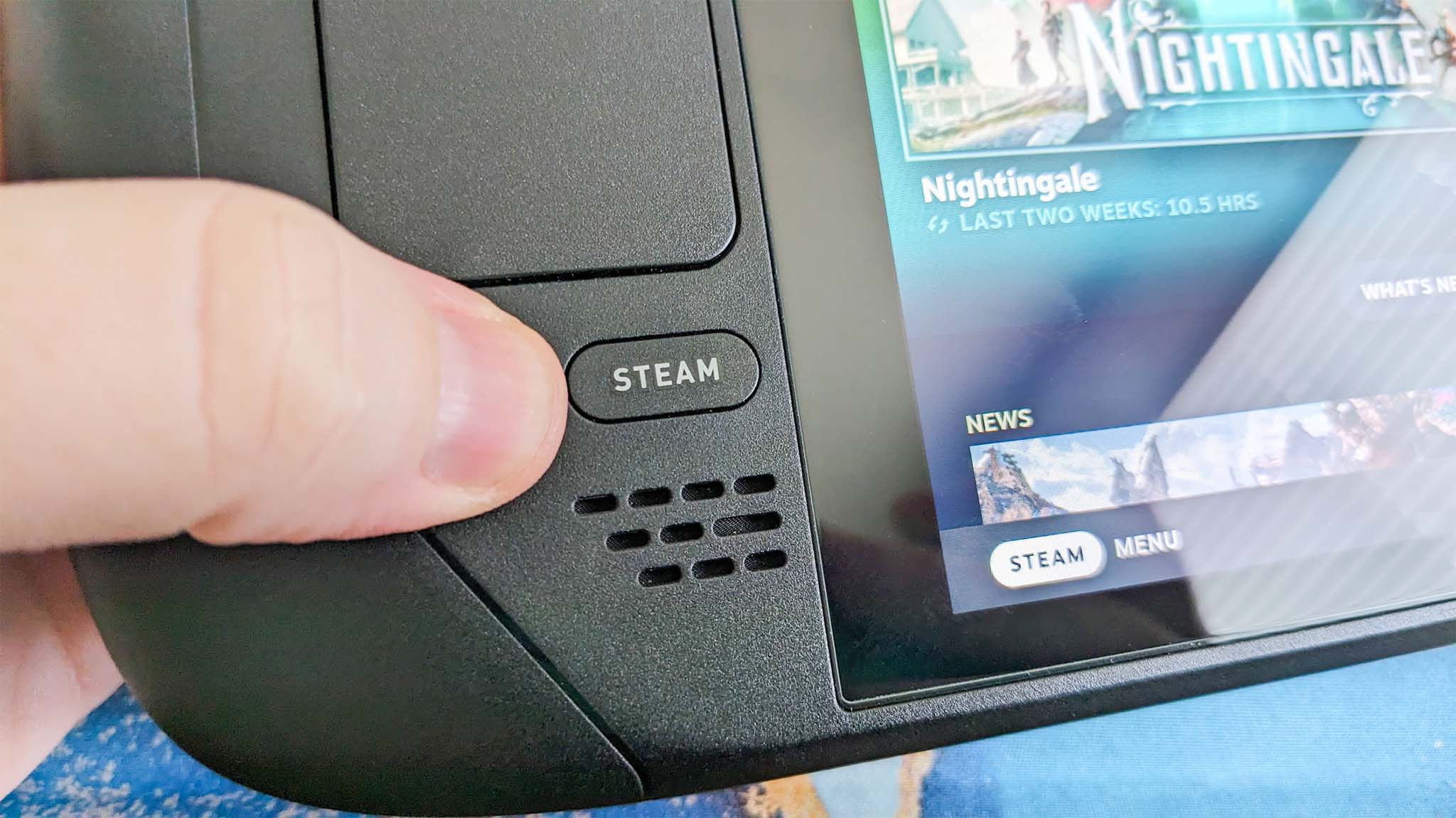
Steam Deck Steam button.

Xodus could finally bridge the gap between PC Game Pass and Steam Deck. (Image credit: Rebecca Spear / Windows Centarl)

According to updates shared on the Xodus GitHub page, the developers have cracked Xbox authorization, license checks, and MSIXVC package (the containers that PC games come in) download and decryption.

In a Reddit post, a Xodus developer noted that the team's main focus is now getting the Software Development Kit (SDK) for each title to run through Wine. It appears that Xodus has its own Wine and Proton forks for this purpose, as well as an open-source version of the xgameruntime.dll file that Game Pass games depend on.

Xodus likely won't support all Game Pass games when it launches, either. Older games that eschew GDK and MSIXVC for UWP will likely come later, if at all.

Why I'm so excited to try out Xodus on my Steam Deck

Steam and PC Game Pass

PC Game Pass on Steam would open up a whole lot of new options for gaming on the go. (Image credit: Future)

As mentioned, the biggest drawback to my Steam Deck, aside from its growing age, is its lack of native PC Game Pass support.

Sure, I could upgrade to a newer handheld that natively runs Windows, but it looks like I might not need to quite yet. That's especially exciting considering just how expensive gaming handhelds have become of late.

Then there's the Steam Machine, another Valve device running the Linux-based SteamOS. A whole bunch of gamers recently got their hands on the Steam Machine when it launched in June, and making PC Game Pass an option can only benefit Microsoft.

Here's the rub: Xodus has no affiliation with Microsoft. It's an unofficial community project created by independent developers. Does that mean Microsoft will have a problem with it? Not likely, but you never can tell.

Xodus still doesn't have an official release date, but it's something I'll be keeping my eyes on as it progresses. If you're a Linux gamer who wishes they could use PC Game Pass natively, you'll definitely want to keep watch as well.

What do you think about Xodus as a bridge between Steam Deck/Machine and PC Game Pass? Is it something you'd use regularly? Do you already have an alternative method that works better for you? Let me know in the comments section below!

(via VideoCardz.com)

Click to join us on r/WindowsCentral

Join us on Reddit at r/WindowsCentral to share your insights and discuss our latest news, reviews, and more.

Usuários de iPhones gastam mais que os de Android com microdramas, revela pesquisa

11 August 2026 at 15:58

Uma pesquisa da Omdia revelou que donos de iPhones costumam gastar mais por aplicativos de microdramas (as novelas verticais) que donos de smartphones com Android — inclusive em países como o Brasil.

Por aqui, 48% dos usuários do iPhone pagam por esse tipo de conteúdo, contra 39% do Android. Na Alemanha, as porcentagens são de 49% contra 44%, enquanto na Coreia do Sul elas são de 59% contra 45%.

Nos Estados Unidos, a situação é um pouco mais equilibrada. Por lá, 69% dos usuários do iPhone disseram pagar por conteúdos, enquanto no Android o número caiu apenas um ponto percentual, mais especificamente para 68%.

O relatório também concluiu que usuários do iPhone gastam aproximadamente US$14 por semana nesses apps, enquanto no caso de donos de smartphones com Android o gasto é de cerca de US$10 por semana.

microdrama
Divulgação/Omdia

A Omdia destaca que esse resultado vai de encontro a suposições que geralmente relacionam o consumo de novelas verticais a um público com menos poder aquisitivo, que geralmente é mais associado ao Android.

No entanto, é importante ressaltar que ela leva em consideração não apenas o consumo, e sim a compra de conteúdos — que costuma ser mais frequente no iOS em praticamente qualquer tipo de aplicativo.

AirTag em cadela ajuda a encontrar idosos após incêndio florestal no Canadá

11 August 2026 at 14:45

Um AirTag usado para rastrear uma cadela ajudou a encontrar um casal de idosos que foi evacuado da casa de repouso onde residiam após um incêndio florestal atingir o espaço, localizado em British Columbia (no Canadá).

Conforme relatado ao Globalnews.ca, as duas filhas do casal ficaram desesperadas quando viram as notícias envolvendo os incêndios na cidade de Summerland — que foi completamente evacuada —, uma vez que moram bem longe do local onde os pais residem.

Foi aí que uma delas lembrou que a cadela do casal tinha um AirTag em sua coleira e começou a observar a localização apontada pelo rastreador, que apontou para um famoso centro de convenções e comércio na província.

Embora concluísse que eles estavam seguros, a mulher começou a se preocupar com a medicação do pai e com a perda de memória da mãe, e decidiu fazer um apelo para encontrá-los em uma comunidade do Facebook.

Após a publicação, várias pessoas começaram a ligá-la afirmando terem visto seus pais e que eles estavam bem. “Eles são adoráveis, eles estavam cumprimentando a todos”, diziam algumas das pessoas que ligavam.

Uma mulher, então, encontrou os pais de Helen Gonzalez e ligou para ela. A mulher ajudou a conseguir uma cama confortável e alimento para eles, além de ter permitido que a filha falasse com os pais pelo telefone.

Além do AirTag, a linha de apoio criada para famílias entrarem em contato com seus entes queridos foi essencial para o reencontro e para o final feliz dessa história.

AirTag (2ª geração; pacote com 4 unidades)

R$ 1.288,78

AirTag (2ª geração)

R$ 329,00
R$ 369,00

AirTag (pacote com 4 unidades)

R$ 1.049,90
R$ 1.249,00

AirTag

R$ 369,00

NOTA DE TRANSPARÊNCIA: O MacMagazine recebe uma pequena comissão sobre vendas concluídas por meio de links deste post, mas você, como consumidor, não paga nada mais pelos produtos/serviços usando os nossos links de afiliado.

Tree Shade Reveals Directional Clues

11 August 2026 at 14:29

Cities may soon be able to identify their hottest walking routes with the same precision used to map traffic or public transport. HeiGIT, the Heidelberg Institute for Geoinformation Technology, has added a tree-shade indicator to its free Climate Action Navigator, a digital platform designed to help municipalities and civil society organizations understand how urban environments affect everyday life. The new tool provides a street-level view of where pedestrian paths are protected by tree canopies and where people are exposed to direct sunlight, offering planners a detailed basis for decisions about urban greening, heat adaptation and safer walking routes.

The need for such information is becoming increasingly urgent as cities experience more frequent and intense heat waves. A citywide estimate of tree cover can suggest that an urban area is relatively green while concealing major differences between neighborhoods. In one district, a large park or wooded hillside may raise the average, even though the streets used daily by residents remain almost entirely unshaded. The Climate Action Navigator is designed to reveal these local contrasts by measuring shade along pedestrian routes rather than relying only on broad land-cover statistics.

In Innsbruck, Austria, tree cover extends across approximately 30 percent of the city’s relevant areas, but the distribution is far from even. Much of the shaded pedestrian network lies outside the central urban area, while heavily used streets in the city center can remain exposed to full sun. This distinction matters because people experience heat at the scale of individual journeys: walking to school, commuting to work, visiting shops or reaching public transport. Two routes separated by only a few streets may therefore offer very different levels of thermal comfort and protection from solar radiation.

The indicator is also intended to connect physical infrastructure with human behavior and well-being. Shaded paths can make walking more attractive during hot weather, potentially influencing whether people choose to travel on foot, wait for public transport or avoid certain destinations altogether. Claudia Schmiedeberg of the GLEN Study said that understanding the social effects of climate change requires examining how local surroundings shape daily decisions over time. Combining the tree-shade data with longitudinal survey information could help researchers investigate whether residents in greener neighborhoods adapt differently to heat, and whether unequal access to shade contributes to wider social disparities.

Technically, the tool identifies pedestrian walkways that directly overlap with tree canopies at least two meters high. The height threshold is designed to distinguish trees capable of producing meaningful overhead shade from low shrubs, grass and ground vegetation. The analysis uses high-resolution global canopy datasets and applies the same processing method across different cities. This allows a small town, a regional center and a major capital to be compared using a consistent measure rather than relying on incompatible local mapping systems.

The calculation also models a high-noon scenario, when the sun is strongest and shadows are generally shortest. By estimating shade under these demanding conditions, the indicator focuses on a daily period when heat exposure may be especially severe. It measures the availability of shade at what the developers describe as the weakest point of the day, creating a conservative benchmark for planning. The result is not a complete simulation of human thermal comfort, which also depends on air temperature, humidity, wind, pavement materials and building geometry, but it provides a clear spatial signal of where tree canopy is present above pedestrian infrastructure.

Early comparisons show how sharply shade levels can differ between cities. In the historic city of Maribor, Slovenia, approximately 35 percent of the pedestrian network is covered by trees. In Tempe, Arizona, a university city located in a hot and generally arid region, the corresponding figure is just above 7 percent. Such numbers do not by themselves determine whether a city is comfortable or unsafe, but they provide a comparable starting point for identifying exposure. When combined with information about schools, care facilities, public transport stops or tourist destinations, the data can show which groups and routes may require priority attention.

Urban planners could use the indicator to decide where new trees would provide the greatest benefit, while also recognizing streets where existing canopy already supports walking during hot periods. Linking shade maps with school catchment areas, for example, could reveal whether children have protected routes to school or must travel through long stretches of direct sunlight. Tourism agencies and local authorities could also use the information to recommend cooler walking routes to major attractions. In this way, the platform is intended not only to document an environmental problem but also to support targeted interventions, from tree planting and maintenance to short-term route guidance.

Jim Walker of the Walk21 Foundation said the indicator offers comparable, street-by-street evidence that can help administrations prioritize infrastructure investment during the hottest months. Its developers argue that global canopy datasets make it possible to overcome the local data shortages that often prevent smaller municipalities from conducting detailed climate assessments. Dr. Kirsten von Elverfeldt, community engagement manager at HeiGIT, said the goal was to make granular diagnostic information freely available so that greening initiatives can be directed toward the places where they are most needed.

The Climate Action Navigator is open to the public, allowing users to explore how their municipality performs and compare different urban areas. The platform’s tree-shade indicator does not replace on-the-ground assessments, but it can help transform an abstract climate challenge into a visible pattern of shaded and exposed streets. As heat increasingly shapes how people move through cities, that ability to see the difference at walking level could make urban climate planning more precise, more equitable and more immediately actionable.

Subject of Research: Not applicable

Article Title: New Global Tool Maps Tree Shade Street by Street to Reveal Cities’ Heat Exposure

News Publication Date: August 11, 2026

Web References: Climate Action Navigator: https://heigit.org/ ; Tree shade indicator video: https://www.youtube.com/watch?v=vAQxEnAgM44 ; Innsbruck example: plugin/hiwalk?share-id=f50386c3-4ea6-45b8-946a-6fedfae38dc8 ; Maribor example: plugin/hiwalk?share-id=f675a5bd-f15f-429c-81f4-80cac6c7051a ; Tempe example: plugin/hiwalk?share-id=31880ebb-1c6d-40e1-89cf-ffac9bceb607

Image Credits: Climate Action Navigator

Keywords: urban heat, tree shade, climate adaptation, pedestrian routes, urban planning, tree canopy, heat exposure, Climate Action Navigator, HeiGIT, sustainable cities

Tests TDAH sur TikTok : le piège du faux diagnostic que dénoncent aujourd’hui les médecins

11 August 2026 at 14:01
De plus en plus d’enfants et d’adultes reçoivent un diagnostic de TDAH. Faut-il y voir une dérive diagnostique ou, au contraire, le rattrapage d’années de sous-diagnostic ? Entre critères élargis, faux positifs et véritables troubles encore ignorés, les dernières études invitent à dépasser les...

Spotify says it won’t recommend music from ‘AI Personas’

11 August 2026 at 14:00
An image showing the AI persona badge on Spotify

Spotify will soon label AI artists and remove their music from your recommendations. The change, which will start rolling out in mid-September, means you'll see an "AI Persona" badge on an artist's profile across the app if they do "not represent a real person."

The music streaming platform will allow artists to disclose that they're an AI persona starting today, but it won't rely solely on self-identification. Spotify says it will use human review and AI tools to determine whether someone's profile, including their name and image, "appears to represent photorealistic AI-generated identities." If Spotify determines that an artist's identity …

Read the full story at The Verge.

Claude will apply invisible watermarks to AI text and images

11 August 2026 at 13:22
The Claude logo on a computer screen on an orange background.

Anthropic has pledged to start marking Claude-generated text and images with machine-readable data, in an effort to comply with European rules for AI transparency. "Generated text will carry embedded watermarks, and generated files will include digitally signed provenance metadata where supported," Anthropic says on a new Claude support page. The changes are invisible to human eyes, but will make it easier for people and online platforms to detect if content was generated by Claude models.

These updates are a future commitment rather than something that will go into effect immediately. New AI labeling and transparency obligations under the …

Read the full story at The Verge.

Meta faces expensive child safety reckoning

11 August 2026 at 13:04

Also: Google executives jump ship in race for AI dominance

Hello, TechScape readers! Danielle Abril, editor of the Guardian’s Reworked series on AI and the future of work, filling in for Blake Montgomery this week. Major legal battles against Meta over child safety are playing out in courts across the US – and the tech giant is losing. Recent rulings raise big questions about social media companies’ responsibility to their youngest users. Meanwhile, more key executives have jumped ship from Google as it battles OpenAI and Anthropic in the race for AI dominance, and Meta’s smart glasses face a fearsome backlash. Let’s dig in!

‘I’ve definitely lost followers’: influencers face backlash over Meta ‘pervert glasses’ content

This man was secretly snapped by someone with smartglasses. He’s not alone in calling that a violation of privacy

Tell us: do you believe you have been filmed by Meta’s smartglasses without your consent?

Restaurants, pubs and theatres ban Meta’s ‘spy glasses’ over privacy fears

‘I’m not spying’: how Meta’s smartglasses have divided opinion

Bernie Sanders calls on Silicon Valley to ‘pause AI development’ in interest of humanity

Rising number of UK children report seeing explicit deepfakes of themselves

The White House’s plan to vet potentially dangerous AI is cloaked in secrecy

‘This is very real redlining’: outrage in Little Rock as two datacenters loom

Safety fears as scientists make first viruses designed by AI

SpaceX beats revenue expectations in first earnings report after IPO crash

Continue reading...

© Photograph: Jill Connelly/Getty Images

© Photograph: Jill Connelly/Getty Images

© Photograph: Jill Connelly/Getty Images

Redditor somehow turns a Steam Deck into a Game Boy — and I'm loving the 'SteamBoy'

11 August 2026 at 12:59
  • A modder has taken the innards of a Steam Deck and put them into a Game Boy-style case
  • The end result is the 'SteamBoy', although it's not quite finished (the screen doesn't yet work)
  • There's a lot of excitement about this DIY project, and some gamers have even said they'd be keen to buy a retro handheld like this

Ever wished the Steam Deck looked a bit more retro — or indeed a lot more retro? Meet the 'SteamBoy', which takes the innards of Valve's handheld and transplants them into a case styled on the Game Boy.

Steam Deck HQ noticed this clever piece of modding in the form a project by 'PhyFawkes' as posted on Reddit (via VideoCardz).

The SteamBoy uses the motherboard, controller, buttons, speakers, and battery from the Steam Deck, fitting the components into a case which the maker says is the same dimensions as an original Game Boy, with a thickness of 32mm (yes, it's thick).

PhyFawkes explains: "The battery is the original battery, and it basically takes up the whole width of the device on the inside. It's sandwiched between the motherboard and the display. The motherboard and controller boards are completely intact as well."

The only element that isn't functional yet is the screen, so this device is still a work in progress. The Redditor has demonstrated it working on an external monitor, though.

Analysis: next stop Kickstarter?

SteamBoy shown hooked up to an external monitor, playing Slay the Spire 2

(Image credit: PhyFawkes on Reddit)

The snag with getting the screen going is that the motherboard firmware reports the display properties directly to SteamOS, and so the firmware details must be updated with the info for the new screen. The Redditor says it hopefully it won't take too long to sort this out.

Another part of the recipe that's missing is the triggers, but PhyFawkes says that they might be able to add them eventually, but that space constraints with the case could make this too tricky a proposition.

Apparently the handheld runs cool enough with some slight under-volting. All in all, this a very smart-looking project, and I'm seriously impressed. The case itself is 3D-printed, with the Redditor noting that they're going to provide the details on how to make one for those who might want to try their hand at this enterprising piece of handheld DIY.

Of course, constructing something like this is well beyond the scope of your average gamer, and there are fans of this concept out there who'd be willing to pay money for a SteamBoy of their own. Plenty of them, in fact, as the reception for this project has been nothing short of glowing.

As someone on Reddit put it: "This is legitimately so cool. I would totally back something like this on Kickstarter."

Another Redditor said: "Looks amazing! I'd probably buy 2 of these bad boys."

iPad Air OLED Panel Orders Could Be Split With BOE in 2027

11 August 2026 at 12:36
BOE wants a share of the OLED supply chain for Apple's next iPad Air, aiming to land a secondary sourcing role behind primary supplier Samsung Display, according to a report from South Korea's The Elec.


Sources cited by The Elec say the Chinese panel maker is building out its iPad Air ‌OLED‌ effort at its B12 fab in Chongqing, home to BOE's sixth-generation ‌OLED‌ production line, ahead of the launch of a redesigned ‌iPad Air‌ that isn't expected to launch until the first half of 2027. Samsung Display already holds the lead supply role for that panel and is on track to begin ramping production toward the end of this year or the start of next, as previously reported.

BOE still has to clear Apple's qualification process. Samples reportedly still need to be submitted for evaluation, and a verdict on whether the company wins any commercial orders is not expected until closer to the end of the year. Even a favorable outcome may only translate into modest volume at first, with output confined to ‌iPad Air‌ units destined for the Chinese market or to refurbished devices, rather than the entire global launch.

The sources put BOE's qualification decision at some point in November or December, noting Apple typically finalizes production approval just one to two months ahead of mass production actually starting. Should BOE fall short of that bar, Samsung Display will end up carrying the entire initial production run by itself.

Becoming a supplier for the ‌OLED‌ ‌iPad Air‌ would be a meaningful expansion for BOE, which has experience providing ‌OLED‌ panels for the iPhone, but has struggled to break into larger ‌OLED‌ products. Samsung Display and LG Display have held onto that ground in tablets specifically, and BOE has lost, rather than gained, footing elsewhere in Apple's ‌OLED‌ lineup recently; its utilization on Apple-dedicated lines reportedly slid from roughly 82% in 2024 to about 48% earlier this year as Apple is set to lean on Samsung instead for the upcoming ‌OLED‌ iPad mini.

The redesigned ‌iPad Air‌ is expected in 11 inch and 13 inch sizes, with a hybrid ‌OLED‌ panel pairing a glass substrate with thin film encapsulation, a single stack RGB emissive layer, and an LTPS backplane, with a refresh rate of 60Hz. That keeps it below the iPad Pro's tandem stack ‌OLED‌ panel on cost, while still moving the ‌iPad Air‌ away from an LCD.

BOE is also reportedly pursuing a secondary supplier role for Apple's ‌OLED‌ MacBook Pro from its 8.6 generation B16 fab in Chengdu, but persistent yield problems there make commercial shipments to Apple unlikely soon. Industry sources do not expect BOE to enter that supply chain until sometime after 2028.
Related Roundup: iPad Air
Tags: BOE, OLED, The Elec
Buyer's Guide: iPad Air (Buy Now)
Related Forum: iPad

This article, "iPad Air OLED Panel Orders Could Be Split With BOE in 2027" first appeared on MacRumors.com

Discuss this article in our forums

iPhone 17 Pro Max erreicht Bestpreis: Apples Spitzenmodell fällt auf 1.269 Euro

11 August 2026 at 10:15

-12 %

iPhone 17 Pro Max 256 GB

Apples Top-Smartphone jetzt 180 Euro günstiger

Premium-Smartphones gehören zu den wenigen Technikprodukten, deren Preise oft über viele Monate vergleichsweise stabil bleiben. Besonders bei Apples Pro-Modellen sind größere Preisnachlässe selbst lange nach dem Marktstart eher selten.

Wer mit dem Gedanken spielt, auf das aktuelle Topmodell von Apple umzusteigen, findet derzeit jedoch ein vergleichsweise attraktives Angebot. Das iPhone 17 Pro Max mit 256 GB Speicher ist bei Amazon aktuell für 1.269 Euro erhältlich. Gegenüber der UVP von 1.449 Euro entspricht das einer Ersparnis von 180 Euro beziehungsweise rund 12 Prozent.

Gleichzeitig markiert das Angebot den bisherigen Tiefstpreis. Ende Juli kostete das Smartphone noch 1.329 Euro, Ende Juni fiel der Preis kurzzeitig auf 1.299 Euro. Erstmals unterschreitet das iPhone 17 Pro Max nun diese Marke. In der Farbe Orange ist das Modell derzeit zum gleichen Preis erhältlich, für das Modell in Tiefblau zahlen Sie aktuell 1.299 Euro.

Mit 4,6 von 5 Sternen aus mehr als 1.000 Bewertungen kommt das Smartphone bei Nutzern überwiegend gut an. Zudem wurden laut Amazon in den vergangenen vier Wochen mehr als 500 Geräte verkauft. Das Modell zählt damit weiterhin zu den gefragtesten Premium-Smartphones auf der Plattform und ist derzeit Bestseller Nummer 4 bei Amazon.

Was das iPhone 17 Pro Max zu bieten hat

Das iPhone 17 Pro Max ist Apples größtes und leistungsstärkstes Smartphone der aktuellen iPhone-Reihe. Es verfügt über ein 6,9 Zoll großes Super Retina XDR OLED-Display mit einer Auflösung von 2.868 × 1.320 Pixeln. Unterstützt werden eine adaptive Bildwiederholrate bis 120 Hertz, Always-on-Display, Dynamic Island, HDR und True Tone.

Für den Schutz des Geräts setzt Apple auf Ceramic Shield auf Vorder- und Rückseite. Laut Hersteller soll die Rückseite einen bis zu vierfach höheren Bruchschutz bieten, während Ceramic Shield 2 auf der Vorderseite die Kratzfestigkeit verbessert. Zusätzlich ist das Smartphone nach IP68 gegen Wasser und Staub geschützt.

Apple iPhone 17 Pro 14

Britta O’Boyle

Innen arbeitet der neue A19 Pro Chip mit 6-Core-CPU, 6-Core-GPU und 16-Core Neural Engine. Apple spricht von einer deutlich höheren dauerhaft verfügbaren Leistung gegenüber dem Vorgänger.

Ein Schwerpunkt des Pro-Max-Modells bleibt das Kamerasystem. Verbaut sind drei 48-Megapixel-Kameras mit Fusion-Hauptkamera, Ultraweitwinkel und Telekamera. Möglich sind bis zu achtfacher Zoom in optischer Qualität, ein optischer Zoombereich von 16-facher Vergrößerung sowie bis zu 40-facher Digitalzoom. Hinzu kommen ProRes-Videoaufnahmen bis 4K mit 120 Bildern pro Sekunde, Dolby Vision, Apple Log 2 sowie weitere Funktionen für Foto- und Videoproduktionen.

Die neue 18-Megapixel-Center-Stage-Frontkamera passt den Bildausschnitt automatisch an und eignet sich dadurch besonders für Videoanrufe, Gruppenaufnahmen oder Inhalte für soziale Netzwerke. Außerdem unterstützt sie die gleichzeitige Aufnahme mit Front- und Rückkamera.

Apple spricht beim 17 Pro Max von der längsten Laufzeit, die es bislang in einem iPhone gegeben hat. Laut Hersteller sind bis zu 37 Stunden Videowiedergabe möglich. Geladen wird über USB-C, Magsafe oder Qi2. Mit einem kompatiblen Netzteil sollen bis zu 50 Prozent Akkuladung in etwa 20 Minuten erreicht werden.

Zur weiteren Ausstattung gehören 5G, WLAN 7, Bluetooth 6, NFC, Face ID, Notruf SOS über Satellit, Unfallerkennung sowie Apple Intelligence. Ferner unterstützt das Pro-Modell USB 3 mit Datenraten von bis zu 10 Gbit/s, was insbesondere für Nutzer interessant sein kann, die große Foto- oder Videodateien übertragen.

Auch in unserem Test hinterließ das Gerät einen guten Eindruck. Gelobt wurden unter anderem die hohe Leistung, die verbesserte Kühlung, das helle Display, die neue Center-Stage-Frontkamera sowie die Telekamera mit erweitertem Zoombereich.

Warum sich das Angebot lohnt

Mit 1.269 Euro erreicht das iPhone 17 Pro Max aktuell seinen bisherigen Bestpreis. Nachdem das Modell Ende Juli noch 1.329 Euro kostete und Ende Juni lediglich kurzzeitig auf 1.299 Euro gefallen war, ist das aktuelle Angebot die bislang günstigste Gelegenheit für Käufer, die das Flaggschiff-Modell im Blick haben.

Besonders interessant ist das Smartphone für Nutzer älterer iPhone-Generationen, die Wert auf eine lange Akkulaufzeit, hohe Leistung und ein vielseitiges Kamerasystem legen. Auch wer regelmäßig fotografiert, Videos aufnimmt oder das Smartphone beruflich nutzt, profitiert von den zusätzlichen Funktionen der Pro-Serie.

Die Bewertungen fallen überwiegend positiv aus. Käufer loben vor allem die Verarbeitungsqualität, die hohe Zuverlässigkeit, die starke Akkulaufzeit sowie die Kamera mit ihrer natürlichen Farbwiedergabe und hohen Detailtiefe. Ebenfalls positiv erwähnt werden das Design und die allgemeine Performance im Alltag.

Kritik gibt es vor allem beim Preis. Trotz des aktuellen Rabatts bleibt das iPhone 17 Pro Max eines der teuersten Smartphones auf dem Markt. Zudem bringt das Gerät mit 231 Gramm vergleichsweise viel Gewicht auf die Waage. Wer ein möglichst leichtes Smartphone sucht oder die erweiterten Kamera- und Pro-Funktionen nicht benötigt, findet in günstigeren Modellen oftmals die wirtschaftlichere Wahl.

Für alle, die gezielt das derzeit leistungsstärkste iPhone mit der längsten Akkulaufzeit und dem umfangreichsten Kamerasystem suchen, ist der aktuelle Tiefstpreis aber eine der bislang attraktivsten Kaufgelegenheiten seit Marktstart.

Virtue and a Sledgehammer – take a literal hammer to your past

11 August 2026 at 10:00

What do you do when you return to your home town, with your dead mother in your car boot, to find the inhabitants have been turned into robots?

In the boot of her car, Pratelle carries the corpse of her mother and a giant sledgehammer. Her mission is simple: take the hammer to her home town. As you enter shops and homes through the door and leave them through the opposite wall, it becomes clear that the robots who either attack you or flee are all digital versions of your old neighbours.

Pratelle, with her close-cropped hair and dungarees, read to me as a queer woman, but interestingly, testers of the game often mistook her as a man. The team at developer Deconstructeam and longtime collaborator Selkie Harbour didn’t anticipate this confusion but found it fits the character perfectly, especially in this setting based on a small Spanish town like those in which the developers grew up.

Continue reading...

© Photograph: Devolver Digital

© Photograph: Devolver Digital

© Photograph: Devolver Digital

❌