❌

Normal view

Aug. 11, 1877: Asaph Hall discovers Deimos

11 August 2026 at 14:00

After spending the 1850s at Harvard Observatory calculating orbits, Asaph Hall became an assistant at the U.S. Naval Observatory at Washington, D.C., in 1862. He was quickly promoted, and by 1873 had not only held several scientific discussions with Abraham Lincoln during the president’s visits to the observatory, but had also been put in chargeContinue reading "Aug. 11, 1877: Asaph Hall discovers Deimos"

The post Aug. 11, 1877: Asaph Hall discovers Deimos appeared first on Astronomy Magazine.

Never-Before-Seen Vortices Are Swirling Across the Sun

Tiny Vortices on the SunThe world’s largest solar telescope and advanced computer simulations revealed vortices that are reshaping our understanding of the Sun. Across the Sun’s visible surface, hot plasma is constantly rising, cooling, and sinking. At the edges of these churning regions, researchers have now resolved tiny swirling structures that may help explain how the Sun twists, stores, [...]

Don’t Miss: Europe Is About To Go Dark in a Spectacular Total Solar Eclipse

11 August 2026 at 11:28
Solar Eclipse (Artist Impression)A rare total solar eclipse will sweep across parts of Europe on August 12, 2026, briefly turning daylight into darkness as the Moon completely covers the Sun. Europe is about to experience a total solar eclipse, and people around the world will be able to watch it live. The European Space Agency (ESA) will begin [...]

Scientists Warn That New Satellites Could Cause Eye Damage for People on the Ground

10 August 2026 at 20:05

Last month, the Federal Communications Commission approved an experimental and controversial new satellite being developed by venture Reflect Orbital to reflect sunlight down onto the Earth to illuminate patches of it at night for paying customers.

The purported goal is to allow solar farms to continue generating electricity even after nightfall and provide illumination during emergencies. Those may sound like noble ideas on the surface, but the concept comes with major downsides as well.

One is that such bright satellites could easily wreck deep space observations. Astronomers were appalled at the news, with the FCC receiving nearly nearly 2,000 public comments criticizing the proposal, as Wired reported at the time.

And it’s not just professional astronomers that could be affected, as experts told The Verge. Amateur astronomers gazing up at the prototype mirror satellite, dubbed Eärendil-1 — continuing Silicon Valley’s obsession with borrowing names from JRR Tolkien’s “Lord of the Rings” — could easily be blinded. Even looking through a 12-inch telescope, a common type used by enthusiasts, could result in permanent eye damage.

It’s a considerable risk to human health that makes the FCC’s approval “extraordinary,” as Royal Astronomical Society deputy executive director Robert Massey told The Verge.

It’s a risk experts have known for decades now. Case in point, observing a similar proposed Russian prototype, dubbed Znamya, could cause damage equivalent to staring at the Sun around a total eclipse, according to a 2000 research article by the Royal Astronomical Society of Canada. (Russia launched two experimental Znamya space mirror satellites in the 1990s, but later abandoned the program.)

Critics of the FCC’s approval of Reflect Orbital’s plans pointed out the risk of eye damage to the regulator, which wound up being deemed irrelevant and too “small” of a factor compared to the “benefits of permitting American companies to test innovative technology in space.”

As The Verge points out, astronomers won’t even be warned of when and where the mirror satellite will be in the night sky, which could result in them gazing at it inadvertently.

Reflect Orbital spokesperson Christopher Buscombe told the publication that the company is in active talks with “scientists, astronomers, environmental researchers and other stakeholders” and that it will use its initial demonstration satellite to test out built-in safeguards.

The Air Line Pilots Association has also raised concerns over Reflect Orbital’s inadequate approach to air safety. The satellites could also disrupt sleep and the circadian rhythms migratory species.

“The proposed scale of orbital deployment would represent a significant alteration of the natural night-time light environment at a planetary scale,” the presidents of several international chronobiology assocaitions said in a joint statement quoted by The Guardian.

Buscombe told The Verge that the company would limit the amount of light being reflected and calibrate brightness to “levels humans and animals already tolerate.” But experts warn there are far too many variables that the company won’t be able to control for, from light scattering in the atmosphere to interactions with clouds.

Satellites in general are an increasingly controversial topic. The number of spacecraft in low Earth has exploded over the past decade, and many are being delivered at lower altitudes that make them appear even brighter.

“The stars above us are a valued part of human heritage – deploying more than one million exceptionally bright satellites would utterly destroy this and permanently scar the natural landscape,” Massey told The Verge.

More on the satellites: Astronomers Horrified by Enormous Mirror Satellite That Reflects Sunlight Back Down to Earth at Night

The post Scientists Warn That New Satellites Could Cause Eye Damage for People on the Ground appeared first on Futurism.

Scientists Are About to Test a Revolutionary New Device During This Week’s Solar Eclipse—Here’s What It Could Reveal

10 August 2026 at 19:21

European scientists are taking advantage of this week’s solar eclipse to test a potentially groundbreaking instrument that could transform the way astronomers study the Sun.

For weeks, a team from the Astrophysical Observatory of Turin has been stationed at Spain’s Javalambre Astrophysical Observatory, preparing to deploy a novel spectrometer ahead of the August 12 eclipse.

On that date, researchers will activate the Circular Slit Spectrometer (CISS), which the Turin-based team says will provide a unique new view of our life-giving star. Specifically, the device will focus on the corona, the outermost portions of the Solar atmosphere, and the hottest part of the Sun.

The 2026 Solar Eclipse: A Trio of Occurrences

This month, skywatchers will be treated to a trio of celestial events: a solar eclipse and the peak of the Perseids meteor shower on August 12, followed by a lunar eclipse between August 27 and 28. The total solar eclipse will be best viewed from parts of Spain, Portugal, Russia, Iceland, and Greenland, while observers across much of Europe, Africa, and North America will experience only a partial eclipse.

To take advantage of the event, the research team traveled from its home base in Padua, northern Italy, to Spain, where years of development work will culminate in the first field test of CISS. The scientists believe the new instrument could significantly improve observations of the Sun’s corona.

Opportunities Arise During the European Eclipse

Spectrometers are among astronomers’ most valuable tools, allowing researchers to analyze the composition of stars and even detect the atmospheres of distant exoplanets by examining subtle changes in starlight.

Closer to home, the Italian team believes CISS can separate the wavelengths of sunlight far more rapidly than existing instruments. That capability could prove especially valuable because the corona drives powerful space weather events capable of disrupting communications, power grids, and GPS systems on Earth and in orbit.

The researchers see the eclipse as the ideal opportunity to test their instrument, since the Moon’s passage in front of the Sun dramatically increases the contrast of the corona against the sky. For the team, the observation marks the culmination of more than two and a half years spent rethinking some of the fundamental design principles behind conventional spectrometers.

CISS: A Spectrometer Unlike Any Other

Unlike traditional spectrometers, which typically rely on a narrow rectangular slit, CISS uses a circular slit. This allows it to “capture the spectrum of the entire corona at a certain distance from the centre of the Sun in a single photograph,” according to principal investigator Federico Landini of the Astrophysical Observatory of Turin.

By redesigning the instrument’s aperture, the researchers say they have reduced the time needed to scan the corona from hours to just minutes. If successful, the eclipse demonstration could pave the way for incorporating the technology into future space missions designed to observe the Sun from closer vantage points.

For now, the team is focused on ensuring the best possible observing conditions. Researchers continue to monitor the weather, with current forecasts appearing favorable for eclipse viewing. To minimize the risk of equipment problems, the team transported CISS from Italy to Spain by van rather than by air, avoiding the need to disassemble the instrument and reducing the possibility of flight delays or cancellations.

Later this week, they will learn whether years of work have produced a breakthrough in solar observation—or simply the next step in refining a promising new technology.

Ryan Whalen covers science and technology for The Debrief. He holds an MA in History and a Master of Library and Information Science with a certificate in Data Science. He can be contacted at ryan@thedebrief.org.

Community College Instructors Bring Astronomy Textbook Into 21st Century

10 August 2026 at 19:08

2 min read

Community College Instructors Bring Astronomy Textbook Into 21st Century

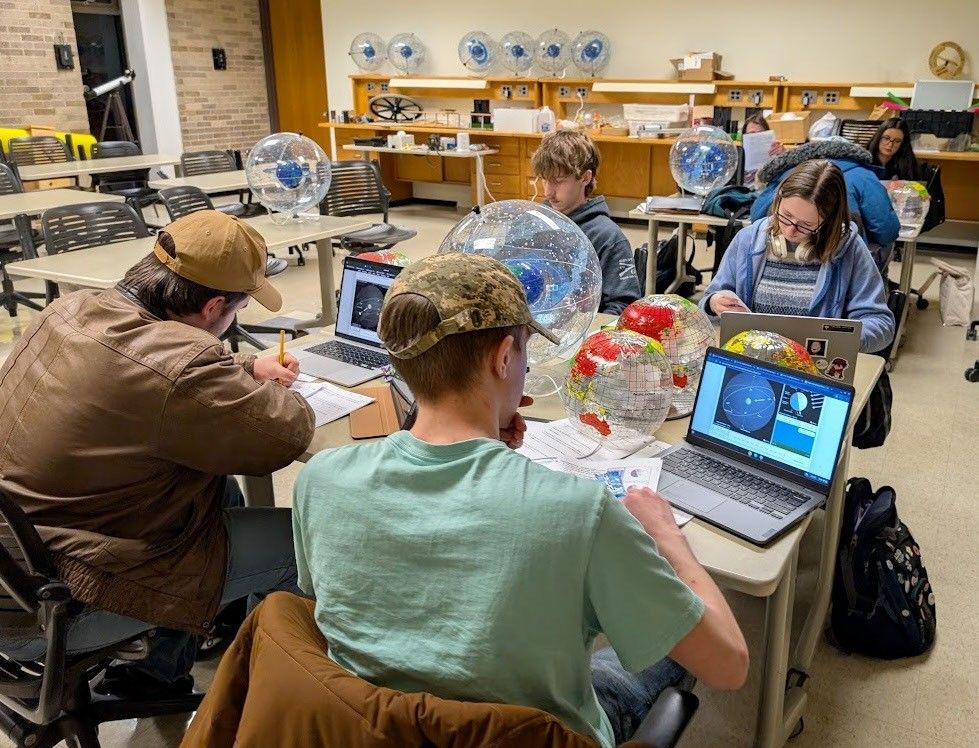
Classroom with seven students sitting at desks. They have their laptops open showing images of the celestial sphere. On the desks between the students are Earth globes and model celestial spheres.
Students studying the celestial sphere at Jackson College, Michigan.
Credit: Steven Tuckey

Teaching the beautiful and inspirational science of astronomy using only the conceptual framework offered by a traditional textbook – without incorporating the wealth of incredible resources, images and activities from NASA – falls short of the more modern, active learning experience that could better serve students evolving learning strategies. Three project teams from the NASA Science Activation (SciAct) program – NASA Community College Network (NCCN, led by the SETI Institute) and five of their expert community college instructors; Infiniscope (led by Arizona State University, ASU); and NASA Treks – set out to address this challenge. 

In June 2026, these teams gathered for a virtual workshop to lay the groundwork for incorporating active learning components drawn from NASA’s extensive education and visualization resource pool and the widely used but traditionally structured OpenStax Astronomy 101 textbook into Relevant Engaging Active Learning (REAL) courseware for introductory Astronomy, while preserving the core content and clear explanatory narrative of the text. 

Over the following two weeks, the instructors each adopted one of the opening five chapters of OpenStax, enhancing the content with active learning modules with an emphasis on materials developed by SciAct project teams, such as NASA Treks, Universe of Learning, and Cosmic Data Stories, to name a few. The results of their efforts were presented in a wrap-up presentation in July and will be field-tested in community college classrooms in Fall 2026.

This workshop served as a proof of concept for exploring whether an existing textbook can be effectively adapted into an active learning tool that will enhance students’ understanding of fundamental astronomical concepts. Next steps will include expanding the program and diving back into OpenStax to systematically reimagine the material into an active learning tool that covers the entire book – and therefore, the entire Universe! Importantly, this effort highlights new and highly impactful possibilities for the dissemination of NASA SciAct resources.

Special thanks to the five community college instructors and their invaluable wisdom, experience, and skills: Carver Bierson (Scottsdale Community College, Scottsdale Arizona), Dan Chase (Modesto Community College, Modesto, California), Dennis Just (Pima Community College, Pima, Arizona), Steve Tuckey (Jackson College, Jackson, Michigan) and Sally Watt (Glendale Community College, Glendale, Arizona).

NCCN, Infiniscope, NASA Treks, and many of the projects that contributed learning materials are supported by NASA cooperative agreement awards and are part of the NASA Science Activation Program portfolio, which connects learners with authentic NASA science experiences through partnerships with educators and community organizations.

Share

Details

Last Updated
Aug 10, 2026
Editor
NASA Science Editorial Team

The Andromeda galaxy may be getting bullied by a smaller galactic neighbor, scientists find

10 August 2026 at 19:00

Thanks to the Hubble Space Telescope, astronomers have shed light on a recent chapter in the history of our Milky Way's neighboring galaxy, Andromeda.

Using Hubble Space Telescope observations of Andromeda's stars, a research team showed that the spiral galaxy's rate of making new stars has dramatically slowed down in the last 40 million years. And they've found more evidence that one of Andromeda's own neighbors — a smaller galaxy called M32 — may be to blame.

"We can't explicitly say that we are seeing a decrease in star formation because of M32. But it's right there, and it's definitely the most likely suspect," said Tobin Wainer, a graduate student at the University of Washington and one of the astronomers, in a statement.

Astronomers like Wainer knew from prior research that Andromeda saw a burst of star formation about 2 billion years ago (possibly as a result of a collision with an unknown galaxy). They also knew that star formation had slowed down since then. What they did not know was how quickly that deceleration had been. If they could find out, they could fill in some of the gaps in Andromeda's history.

At 2.5 million light-years' distance, Andromeda is near enough to Earth that Hubble can measure its stars. In the past several years, Hubble has conducted two surveys of Andromeda. While Hubble can only make out stars in Andromeda that are brighter than our sun, these two surveys still gave Wainer and colleagues a compendium of 200 million stars, covering two-thirds of Andromeda's disk.

Wainer and colleagues parceled out this vast space into a grid of squares, 300 light-years to a side. They reconstructed the history of each square by examining the colors of its stars.

A square with many bright blue stars, for example, probably saw a lot of star formation recently, since blue stars tend to be younger. On the other hand, if a square only contains smaller, redder stars, we know those stars are longer-lived and older, and that square probably hasn't seen a lot of newborn stars.

The astronomers mapped out a story of slowing star formation. Around 500 million years ago, on average, Andromeda turned the equivalent of our sun's mass in gas and dust into newborn stars each year. As millions of years passed, that rate declined. About 40 million years ago, it was about one-half the sun's mass each year. Then, it tilted into a dramatic deceleration. Today, it stands at about one-fifth the sun's mass each year.

A spiral galaxy with lots of stars in the background. A bright haze is seen coming from the center of the galaxy. Toward the center left there is a glowing dot. And on the center right another glowing dot mostly offscreen.

The Andromeda galaxy, M31, with satellite galaxies M32 (center left) and M110 (lower right). (Image credit: S. Ozime)

Curiously, they found that Andromeda's starmaking slowdown is especially pronounced on one particular side of the galaxy, starting about 60 million years ago. Astronomers know this side of Andromeda is closest to another galaxy: M32.

Astronomers have eyed M32 with suspicion for some time now. M32 is only located about 16,000 light-years from Andromeda (Andromeda is formally called M31) and it looks like the rump core of a spiral galaxy that lost its arms. It's possible that this is actually the aftermath of a collision between M32 and its larger neighbor. It's possible, though not confirmed, that Andromeda's slowing bears the fingerprints of this collision.

We may not need to wait long for more answers. Just as Hubble can see Andromeda's stars, so too will the Nancy Grace Roman Space Telescope, set to launch in late August. In the coming years, Roman will be able to measure even more of Andromeda than Hubble has.

Look: NASA’s James Webb Space Telescope Captures Striking New Images That Bring the ‘Lion Nebula’ Roaring to Life

10 August 2026 at 16:44

Stunning new imagery of the distant celestial object NGC 2392, better known as the “Lion Nebula,” has been obtained by NASA’s James Webb Space Telescope.

The cosmic vista captured by Webb reveals a colorful view of the ancient nebula, whose characteristic appearance resembles one of nature’s most respected apex predators, complete with a bushy-looking “mane” composed of hazy stellar gases and objects similar to comets.

The new high-resolution imagery offers one of the clearest and most detailed views of the Lion Nebula ever seen. Previous images captured by Webb’s predecessor, the Hubble Space Telescope, were obtained in 2000, featuring the same celestial feature in visible light.

With the added spectral ranges Webb’s Near Infrared Camera (NIRCam) and Mid-Infrared Instrument (MIRI) can capture, the Lion Nebula now appears in colorful pinks and indigo hues, surrounded by distant galaxies blazing in brilliant orange from across vast cosmic distances, whose light has traveled billions of years to reach our Solar System.

A Lion Roars Across the Cosmos

A particularly striking feature about the new imagery is the way cosmic dust and regions of ionized gas are showcased in the new Webb imagery.

“It’s taken several thousand years for this collection of gas and dust to reach its current shape, and the nebula’s components continue to be altered,” read a portion of a statement released by the European Space Agency (ESA) that accompanied the new images.

Lion Nebula
The Lion Nebula, as seen with the MIRI instrument on board the James Webb Space Telescope (Image Credit: NASA, ESA, CSA, STScI; Image Processing: Alyssa Pagan (STScI)).

One reason that helps account for the changing appearance of the Lion Nebula over time can be found at its center, where the remnants of a slowly dying white dwarf star (which effectively forms the nose in the lion’s face after which the nebula is named) continues to supercharge the surrounding cosmic structures made visible in the new Webb imagery.

The rest of the lion’s face is composed of an expanding bubble of ionized gas, the nature of which remains somewhat mysterious. Presently, astronomers are uncertain about what exact mechanisms give rise to the complex appearance of this gassy bubble and its internal structures, which are a recurring element in ancient nebulae such as this.

NGC 2392 isn’t the only celestial feature known as the “Lion Nebula.” An entirely separate diffuse nebula located in the Cepheus constellation, known as Sharpless 2-132, also shares this nickname due to its shape, which resembles a lion’s body seen from the side.

A Cosmic Visage Frozen in Time  

For now, the Lion Nebula is captured in the Webb imagery, which, despite its almost serene beauty, represents a highly active area of the cosmos, undergoing constant change as material is continually ripped away from the stellar central core.

Sometime in the next 10,000 years or so, this striking celestial feature will eventually be destroyed, once the white dwarf powering the nebula completely dies and the remnants of stellar material are completely dispersed into the surrounding space.

Until then, this remarkable cosmic feature will remain a target of study by astronomers, whose inquiries are helped significantly by the unprecedented clarity offered in the latest Webb images.

Additional information about the Lion Nebula (NGC 2392) can be found on NASA’s official page documenting the Webb MIRI imagery.

Micah Hanks is the Editor-in-Chief and Co-Founder of The Debrief. A longtime reporter on science, defense, and technology with a focus on space and astronomy, he can be reached at micah@thedebrief.org. Follow him on X @MicahHanks, and at micahhanks.com.

Webb Finds Stellar ‘Treasure Chest’ in Carina Nebula

10 August 2026 at 15:58
This Webb image shows the Treasure Chest, a cometary globule located within the famous Carina Nebula. Image credit: NASA / ESA / CSA / Webb / M. Reiter / M.H. Özsaraç.

A stunning new image from the NASA/ESA/CSA James Webb Space Telescope reveals a comet-shaped cloud in the Carina Nebula hiding a cluster of about 70 young stars, including a rare giant of O-type nearly 19 times as massive as the Sun.

The post Webb Finds Stellar ‘Treasure Chest’ in Carina Nebula appeared first on Sci.News: Breaking Science News.

A Bizarre Dead Star’s Magnetic Field Has Revealed a Strange Surprise, Potentially Confirming a 90-Year-Old Theory

10 August 2026 at 15:19

An unusual dead star displaying one of the strongest magnetic fields astronomers have ever seen may offer the clearest evidence yet that regions of space appearing to be void of matter are anything but empty.

An international team of astronomers has revealed that the magnetar 1E 1547-5408 displays behavior consistent with vacuum birefringence, a phenomenon first predicted almost a century ago, but never directly observed—until now.

The findings, detailed in a new study published in the journal Nature, were the product of more than 140 hours of observations in 2025 using NASA’s Imaging X-ray Polarimetry Explorer (IXPE), the Neutron Star Interior Composition Explorer (NICER), and Australia’s Murriyang radio telescope.

NASA IXPE
Artist’s concept of NASA’s Imaging X-ray Polarimetry Explorer (IXPE), one of the platforms that made the recent magnetar discoveries possible (Image Credit: NASA)

Spying on the Universe’s Most Extreme Objects

Ranking among the most extreme objects known to astronomers, magnetars are a variety of neutron stars that display unusually strong magnetic fields.

These extreme celestial objects pack more mass than our Sun into a region of space spanning only a few miles; yet they also manage to generate magnetic fields that are sometimes as much as trillions of times that of our planet.

For the recent study, scientists focused on 1E 1547-5408, a magnetar that spins once every two seconds. This magnetar is atypical since it also emits both intense X-rays and bright radio waves. Measuring the polarization of light it produces, researchers were able to discern that X-ray polarization was almost three times stronger than expected, based on current models that characterize the star’s surface, as well as the geometry of its magnetic field.

An Unusual Signal Emerges

The observed characteristics were unexpected, and to explain this, the researchers looked to the concept of vacuum birefringence, a phenomenon originally predicted in 1936. This predicts that magnetic fields possessing enough power could potentially alter the vacuum of space.

According to quantum theory, the vacuum of space isn’t truly empty—it is filled with fleeting “virtual” particles, and when subjected to the influence of such a strong magnetic field, the quantum vacuum is predicted to behave like an extremely large optical filter, whereby light that passes through it is subtly changed, with its polarization increasing.

Based on computer simulations, the researchers found that the proposed vacuum birefringence phenomenon produced results that appeared to be consistent with both the X-ray and radio observations.

Hoa Dinh Thi, a researcher at Rice University and the recent study’s co-lead author, said the team’s model “suggests that reproducing the observed X-ray polarization signatures, while also satisfying the constraints set by radio observations, requires the presence of vacuum birefringence in the neutron star’s environment.”

“This finding exemplifies how neutron stars enable us to test fundamental physics in environments not replicable in labs on Earth,” Thi added.

Although the team says further observations will be required to confirm their findings, their current results offer the strongest evidence to date for one of the longest-standing predictions in quantum physics.

If confirmed through future observations of magnetars, such findings could reveal the presence of other exotic phenomena that may provide astronomers with a unique opportunity to explore the fundamental nature of space itself—and potentially even more surprises in regions of the cosmos that were long assumed to be “empty.”

The recent study, “Vacuum birefringence and the polarized X-ray emission from a radio magnetar,” appeared in the journal Nature. 

Micah Hanks is the Editor-in-Chief and Co-Founder of The Debrief. A longtime reporter on science, defense, and technology with a focus on space and astronomy, he can be reached at micah@thedebrief.org. Follow him on X @MicahHanks, and at micahhanks.com.

Sharpest image of the sun ever captured! | Space photo of the day for Aug. 10, 2026

10 August 2026 at 15:00

Yellow and orange swirls show the sun in sharp detail.

This image of the sun — the sharpest ever snapped — was captured by the NSF Inouye solar telescope. (Image credit: NSF, NSO, AURA, MPS, Inouye Tel)

Scientists have captured the sharpest image ever of our sun's surface. This view has revealed incredible new details about the inner mechanisms driving stellar activity.

What is it?

An international team of researchers using the U.S. National Science Foundation's Inouye Solar Telescope has captured the highest-resolution view of the sun's surface.

In analyzing observations from this telescope, the team, made up of researchers from the National Solar Observatory, the NSF NCR High Altitude Observatory and the German Max Planck Institut für Sonnensystemforschung, discovered strange patterns on the sun's surface. The whirling patterns, they found, are actually evidence of what's called Kelvin-Helmholtz instability (KHI), or instability that happens when there is a change in velocity of fluids.

Why is it incredible?

This image is groundbreaking. Capturing the highest-resolution view of the sun's surface is a massive accomplishment, and in the time-lapse video above, you can even see the fluid dynamics on the surface of the sun in motion.

But this view is much more than a beautiful, high-resolution image. These observations have revealed swirls on the sun's surface at the edges of the magnetic areas, allowing the team to identify KHI on the sun's surface. This fluid instability has long been suspected on the sun, but these observations are the first time they have ever been directly seen like this.

“We believe that the discovery of Kelvin-Helmholtz Instability in the solar photosphere, backed up by analysis of numerical simulations, is a major step forward in our understanding of the dynamics and evolution of solar and stellar plasma, and will serve as a basis for future discoveries," David Boboltz, the deputy director at the National Solar Observatory, said in a statement.

A paper describing these findings was published recently in the journal Nature.

Aug. 10, 1990: Magellan enters venusian orbit

10 August 2026 at 14:00

On Aug. 10, 1990, the Magellan orbiter arrived at Venus and was inserted into orbit. Its goal was to map the surface of the planet, using radar to peer beneath the cloudy atmosphere. Launched aboard the Space Shuttle Atlantis in May 1989, Magellan was the first deep space probe launched from a shuttle. Budget constraintsContinue reading "Aug. 10, 1990: Magellan enters venusian orbit"

The post Aug. 10, 1990: Magellan enters venusian orbit appeared first on Astronomy Magazine.

Pluto's atmosphere is collapsing as it drifts away from the sun into a deep freeze

10 August 2026 at 13:00

Pluto's atmosphere appears to be freezing out as the dwarf planet moves ever further away from the sun, according to careful observations of Pluto astronomers made as it was seen passing in front of stars in the sky.

Pluto is already cold. Its surface temperature is about –382 degrees Fahrenheit (–230 degrees Celsius), while its upper atmosphere is a little warmer at –333 degrees Fahrenheit (–203 degrees Celsius). As Pluto moves away from the sun it will grow even colder and its nitrogen-rich atmosphere should start to collapse and freeze out, condensing as frost on the frigid surface.

Now, a team led by Amanda Sickafoose of Arizona's Planetary Science Institute believe they have seen the onset of this process. "We're at a particularly interesting point for Pluto," said Sickafoose in a statement. "Our work suggests that the atmosphere has recently started decreasing in pressure."

Pluto's orbit is highly elliptical and very oblique to the ecliptic plane of the solar system. In fact, so eccentric is Pluto's orbit that for ten years either side of its perihelion in 1989 (when Pluto was closest to the sun), it was actually closer to the sun than Neptune was.

However, ever since 1989 Pluto has been moving away from the sun on its 248-year-long orbit – we've not even seen Pluto complete half of its orbit yet since its discovery in 1930. Pluto will reach its furthest point from the sun – called aphelion – in the year 2114 when it will be about 49 astronomical units (7.3 billion kilometers/4.6 billion miles) distant.

When NASA's New Horizons mission flew past Pluto in July 2015, it measured Pluto's atmospheric pressure to be 10 microbars. This is a tiny amount, millions of times lower than the atmospheric pressure on Earth, resulting from Pluto's thin nitrogen atmosphere that also contains hazes made from organic molecules including methane and carbon monoxide.

a hazy blue ring of light on a black background

An image taken by NASA's New Horizons spacecraft that offered scientists the first look at Pluto's atmosphere in infrared wavelengths when it was taken in July 2015. (Image credit: NASA/JHUAPL/SwRI)

With New Horizons now having flown past Pluto and deeper into the Kuiper Belt, astronomers have to instead rely on more distant and less direct means of keeping tabs on Pluto's atmosphere. From our point of view on Earth, Pluto is sometimes seen to pass in front of a distant star. This is called a stellar occultation. When an airless body, such as an asteroid, occults (or hides) a background star the star's light winks out in an instant, before suddenly reappearing. When there is an atmosphere involved, however, the light of the star doesn't go out all at once when blocked by Pluto, but steadily fades as the atmosphere scatters and refracts the starlight before the star vanishes behind the dwarf planet's solid body.

Between 2017 and 2023, Sickafoose's team probed Pluto's atmosphere during ten occultations of stars ranging in brightness from about magnitude 12 to magnitude 18, far below naked-eye visibility.

Observing stellar occultations is not always a simple matter. They are not visible from everywhere on Earth, but only along narrow tracks, often in difficult to reach areas. The tracks, which are just a few kilometers wide, are effectively Pluto's shadow falling on the Earth. By spacing observers across the width of the track, it is possible to measure the extent of Pluto's atmosphere (there usually also has to be an unlucky observer just outside the track to confirm that is indeed the edge of the shadow track).

"I'm constantly amazed at how the simple technique of watching starlight dim and reappear allows us to study a thin atmosphere – a few millionths of the Earth's – on a world two-thirds the size of our moon and 30 times farther from the sun," said Sickafoose.

Of the ten occultations, four could be seen from observatories in multiple locations, which meant that the different observatories could confirm each other's results.

"We often prefer to observe predicted occultations that have shadow paths over large observatories because that equipment and data have proven successful," said Sickafoose. "Then, we try to improve those datasets by collaborating with local observers in the shadow paths."

a U-shaped graph of dots with labels that read, from left to right, star+Pluto system, atmosphere, Pluto system, atmosphere, star+Pluto system

Light curve from the June 1, 2026 occultation, observed from Savannah Skies Observatory in Chillagoe, Queensland, Australia. The gray vertical lines indicate different stages of the occultation. The baseline flux level contains combined light from the star and the Pluto system (Pluto plus all of its moons). The flux drops gradually as the starlight bends and scatters in Pluto's atmosphere, reaching nearly zero flux as defined by only light coming from the Pluto system. As the star appears on the other side of Pluto, the light gradually reappears in the atmosphere before returning to full strength. (Image credit: A. Sickafoose/Planetary Science Institute)

Previous work had suggested that Pluto's atmosphere began freezing out in 2018, but Sickafoose's team found that actually, Pluto's atmosphere remained constant from 2015 to midway through 2021. However, between mid-2021 and the last occultation that Sickafoose's team observed in 2023, Pluto's atmospheric pressure dropped by 16 per cent.

The pressure drop was deduced from the light curves, which show how the star's brightness changed with time during an occultation. The light curves revealed that while the structure of Pluto's upper atmosphere remained fixed, the lower atmosphere changed.

Sickafoose's team interprets this as being the haze particles settling towards lower latitudes. This is what is expected to happen when the atmospheric pressure drops.

"I am hopeful that we'll be able to get more data in the next years to decades to specifically confirm or refute this trend," said Sickafoose.

It is thought that Pluto's atmosphere won't have completely frozen onto the dwarf planet's surface by the time it reaches aphelion, and then as Pluto begins moving in towards the sun once more the feeble solar heating that Pluto receives will slowly begin to increase, causing nitrogen frost to sublimate from the surface and thicken the atmosphere once more.

The findings were published on July 31 in the Planetary Science Journal.

The long-term fate of Earth’s biosphere

10 August 2026 at 12:00

The economist John Maynard Keynes once remarked, “In the long run we are all dead.” From an astronomical standpoint, this is true for the Earth itself. In roughly 5 billion years, the Sun will exhaust the hydrogen at its core and enter the next phase of its life as a Red Giant, where it will swell up large enough to engulf and destroy the Earth.

Currently, the Sun is still in its main-sequence phase, where it fuses hydrogen into helium in its core. Although it remains relatively stable during this phase, it will gradually grow brighter with time. As the Sun shines brighter, the increased heat and radiation will raise Earth’s surface temperature, potentially pushing it past the threshold for life to survive. 

One of Earth’s geological processes that helps regulate its surface temperature is the carbon cycle. Over millions of years, carbon moves from the Earth’s interior into the atmosphere as carbon dioxide or CO2, where it functions as a greenhouse gas that traps heat. Plants take in this CO2 through photosynthesis and move carbon through the biosphere. 

Meanwhile, rain and rock weathering draw carbon into the oceans and rocks. By pulling CO2 out of the atmosphere, the carbon cycle could mitigate Earth’s warming as the Sun brightens over time. Today, human activities are increasing atmospheric CO2 and warming the planet. However, over billions of years, the carbon cycle could gradually remove enough CO2 from the atmosphere that eventually too little would remain to support photosynthesis. 

With these challenges to life on Earth in mind, the researchers Jacob Haqq‐Misra and Eric Wolf investigated how long Earth’s biosphere could last in the distant future. The team used computer models to calculate the balance of energy that Earth would receive and emit over time, accounting for the effects of increasing sunlight and changing atmospheric CO2 concentrations. They followed this up with calculations using the ExoCAM model to determine the temperature and atmospheric conditions of future Earth across different latitudes. They related these conditions to a habitability metric to determine their impact on the biosphere.

To estimate the biosphere’s maximum possible lifespan, the team conducted 29 simulations representing the planet’s conditions over the next 2 billion years. In one set of simulations, the Earth’s carbon cycle contributed little to regulating surface temperature, with the atmosphere’s CO2 concentration fixed at approximately modern levels of 400 parts per million (ppm) and surface temperatures continuing to increase. In another, the carbon cycle worked to keep Earth’s average surface temperature fixed at the modern average of approximately 59℉ (15℃), no matter how much it had to reduce CO2 in the atmosphere. 

In the scenario with a fixed CO2 concentration, the team found that in 1.7 billion years, Earth’s surface reached an average of 122°F (50°C), which is too hot for most land plants. After 1.9 billion years, it reached 149°F (65°), becoming too hot for all land plants to survive as temperatures continued to rise. 

They also found that in the fixed average surface temperature scenario, atmospheric CO2 dropped below the 150 ppm level that most plants require for photosynthesis within 500 million years. After 1.4 billion years, CO2 levels fell below 10 ppm, leaving only a few land photosynthesizers and aquatic plants alive. After about 1.8 billion years, atmospheric CO2 dropped to 1 ppm, leaving only microbes capable of photosynthesis.

The researchers’ findings generally extend the estimated lifetime of Earth’s future biosphere compared with earlier, simpler models that suggested maximum lifespans of 100 million to 1.5 billion years. However, they clarified that other scientists should verify their results by running tests with other models, especially under extreme conditions of high incoming solar radiation and low atmospheric CO2. 

Lastly, Haqq‐Misra and Wolf noted that their model did not account for major evolutionary changes that could help life adapt to future conditions. Over time, plants could evolve to tolerate higher temperatures or lower atmospheric CO2 levels. Future humans or another intelligent species might also engage in large-scale geoengineering projects to prevent the end of life on Earth. If life on Earth proves adaptable enough, the biosphere may endure until a Red Giant fills the daytime sky.

The post The long-term fate of Earth’s biosphere appeared first on Sciworthy.

Will you be looking up on Aug. 12, the best skywatching day and night of the year?

10 August 2026 at 12:00

For space fans and skywatchers alike, Wednesday Aug. 12 is destined to be a date for the history books. For those in North America — including Alaska, eastern Canada and parts of the northeastern U.S. — viewers will be able to see a partial solar eclipse during the daytime. Across the pond, the total eclipse will be visible from eastern Greenland, western Iceland and northern Spain. (For those planning to see this rare event in person, it's important to wear the right solar eclipse glasses, especially if you're watching the partial phase of the eclipse; we have some gear suggestions that can help you watch this skywatching event from anywhere).

Once the sun goes down, the night skies offer their own treat: the Perseid meteor shower, which peaks overnight on Aug. 12-13. Thanks to a new moon, stargazers will have an even better chance of catching these streaking lights across the night sky, with the best hours to watch occurring from midnight to 2 a.m. local time. According to the Planetary Society, observers in dark sky areas can hope to catch between 50 and 75 meteors per hour. The dark skies also make it a great night to try and spot the Milky Way, or the six planets that will appear together before dawn.

With so much going on in the skies on Aug. 12, will you be watching? Take our poll and let us know what you think in the comments below.

❌