A global analysis of range-shift records for 1,758 butterfly species—10% of known butterfly species—found that 80% had expanded their range and that 79% of all recorded range shifts were linked to climate change and extreme weather events. The new study, published in Nature Ecology & Evolution, also reports range contractions for 27% of species, and 22% of species showed a change in elevation. Because many species exhibited multiple types of range shifts, the percentages for expansions, contractions and elevation changes are above 100%.
A global analysis of range-shift records for 1,758 butterfly species—10% of known butterfly species—found that 80% had expanded their range and that 79% of all recorded range shifts were linked to climate change and extreme weather events. The new study, published in Nature Ecology & Evolution, also reports range contractions for 27% of species, and 22% of species showed a change in elevation. Because many species exhibited multiple types of range shifts, the percentages for expansions, contractions and elevation changes are above 100%.
Every year, millions of migratory birds travel between different geographical regions on Earth to find food, escape cold weather or reach safe environments to raise chicks. To determine which direction to fly, these birds rely on various types of sensory cues and information, including the magnetic field surrounding our planet, known as the geomagnetic field.
Every year, millions of migratory birds travel between different geographical regions on Earth to find food, escape cold weather or reach safe environments to raise chicks. To determine which direction to fly, these birds rely on various types of sensory cues and information, including the magnetic field surrounding our planet, known as the geomagnetic field.
The mission of the Flock app is quietly subversive: to encourage users to ditch their screens and explore the wonderful world of birding
On a brilliantly bright afternoon in his gallery and studio in Bolinas, a small town on the northern California coast, Keith Hansen was putting the finishing touches on a watercolor of an almost improbably flamboyant painted bunting.
With an ultra-fine sable brush, he made a few intricate additions to the cobalt blue plumage on the bunting’s head, and, satisfied with his work, slipped the watercolor into a stout binder that every few days welcomes a new addition.
Scientists have made a surprising finding about how an asexually reproducing stick insect has evolved. Research led by Dr. Darren Parker, lecturer in evolutionary biology at Bangor University, studied the genes of several species of Timema (a type of stick insect), which have not engaged in sexual reproduction for 1 million years—the longest known asexual period for any insect.
Scientists have made a surprising finding about how an asexually reproducing stick insect has evolved. Research led by Dr. Darren Parker, lecturer in evolutionary biology at Bangor University, studied the genes of several species of Timema (a type of stick insect), which have not engaged in sexual reproduction for 1 million years—the longest known asexual period for any insect.
When most baby turtles hatch, their sex depends on the temperature of the sand or soil where their mother laid her eggs. Warm incubation produces females, while cool nests produce males.
When most baby turtles hatch, their sex depends on the temperature of the sand or soil where their mother laid her eggs. Warm incubation produces females, while cool nests produce males.
In the animal kingdom, only those that adapt to their environment survive. This adaptation takes a wide range of forms, from invisible internal shifts in gene expression to dramatic anatomical changes, such as tadpoles growing legs and transitioning to life on land as frogs.
An international team of researchers has uncovered a previously undetected structure in the birdsong of Bengalese finches that has the same statistical patterns found in human languages.
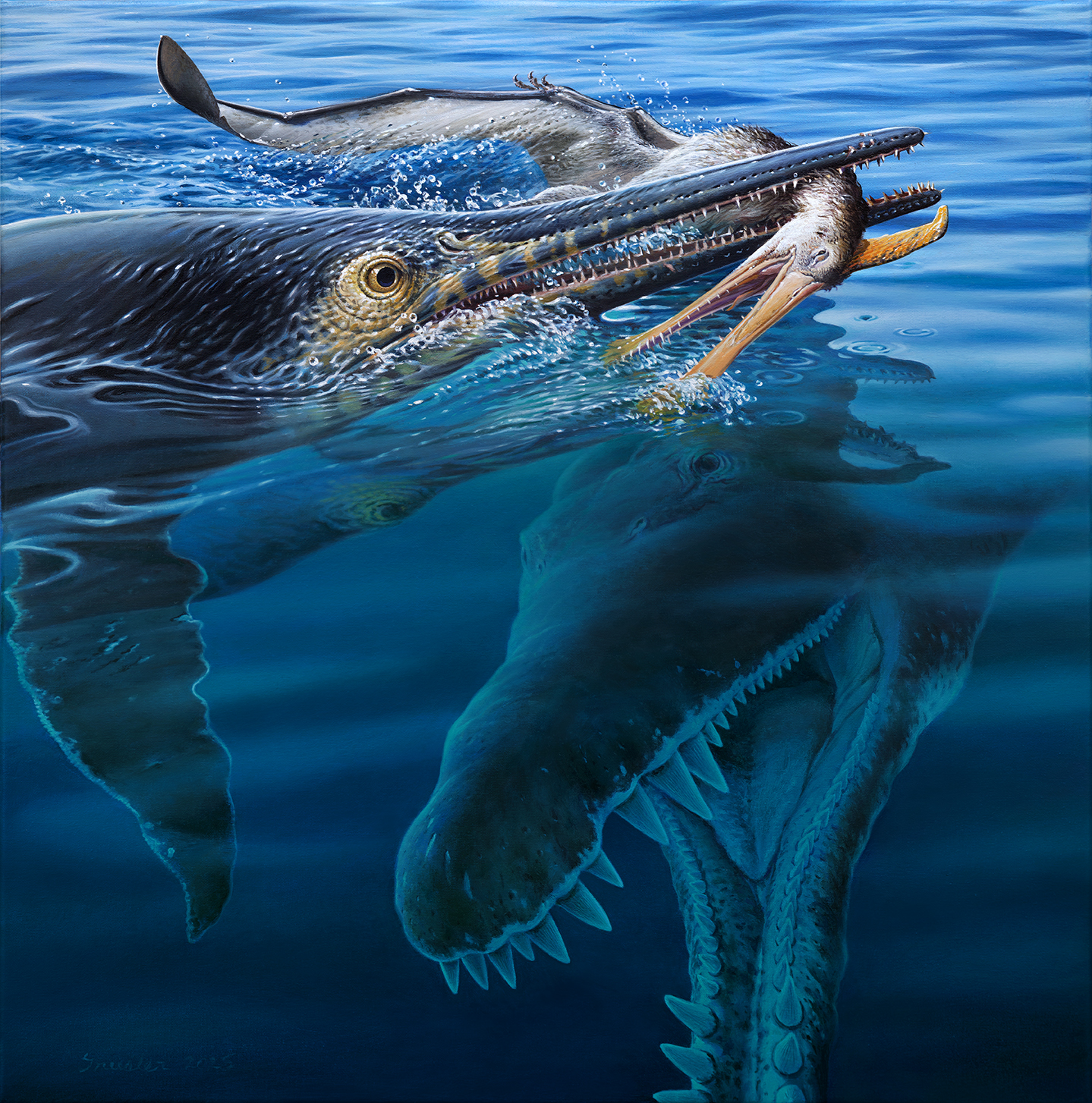
An illustration of an ichthyosaur eating a pterosaur, while a pliosaur lurks beneath. (Image credit: Peter Trusler)
An ichthyosaur fossil found in Australia's outback may preserve a rare snapshot of a prehistoric food chain. Around 100 million years ago, the enormous marine reptile swallowed a flying pterosaur before being attacked by a giant ocean predator, new research suggests.
The fossil set, nicknamed "BOB" or "Bag of Bones," belonged to a 20- to 23-foot-long (6 to 7 meters) ichthyosaur, an animal that belonged to a group of dolphin-shaped marine reptiles that lived alongside the dinosaurs during the Mesozoic era, from about 250 million to 90 million years ago. But in a new study, researchers discovered fragments of a pterosaur's jaw — along with fish and cephalopod remains — preserved inside the animal's body cavity.
The finding is the first confirmed evidence that ichthyosaurs ate pterosaurs, an extinct group of flying reptiles that ruled the ancient skies, according to the new study, published July 28 in the journal Gondwana Research.
The fossils may also hint at the ichthyosaur's violent end. Its skeleton — discovered in 2019 in Queensland's outback — contains shattered bones, missing ribs and large crushing injuries. Researchers think the gruesome wounds may have been inflicted by Kronosaurus queenslandicus, a colossal crocodile-like apex predator that lived 120 million to 100 million years ago in the ancient Eromanga Sea in Australia.
A rare prehistoric meal
Fossilized stomach contents are a rare find because they can be preserved only under very specific conditions.
"Rapid burial after death is essential to prevent decay and scattering of remains," study co-author Matt White, a research associate at the University of New England in Australia, told Live Science in an email. "The animal must have died soon after its last meal so stomach acids don't fully digest the prey."
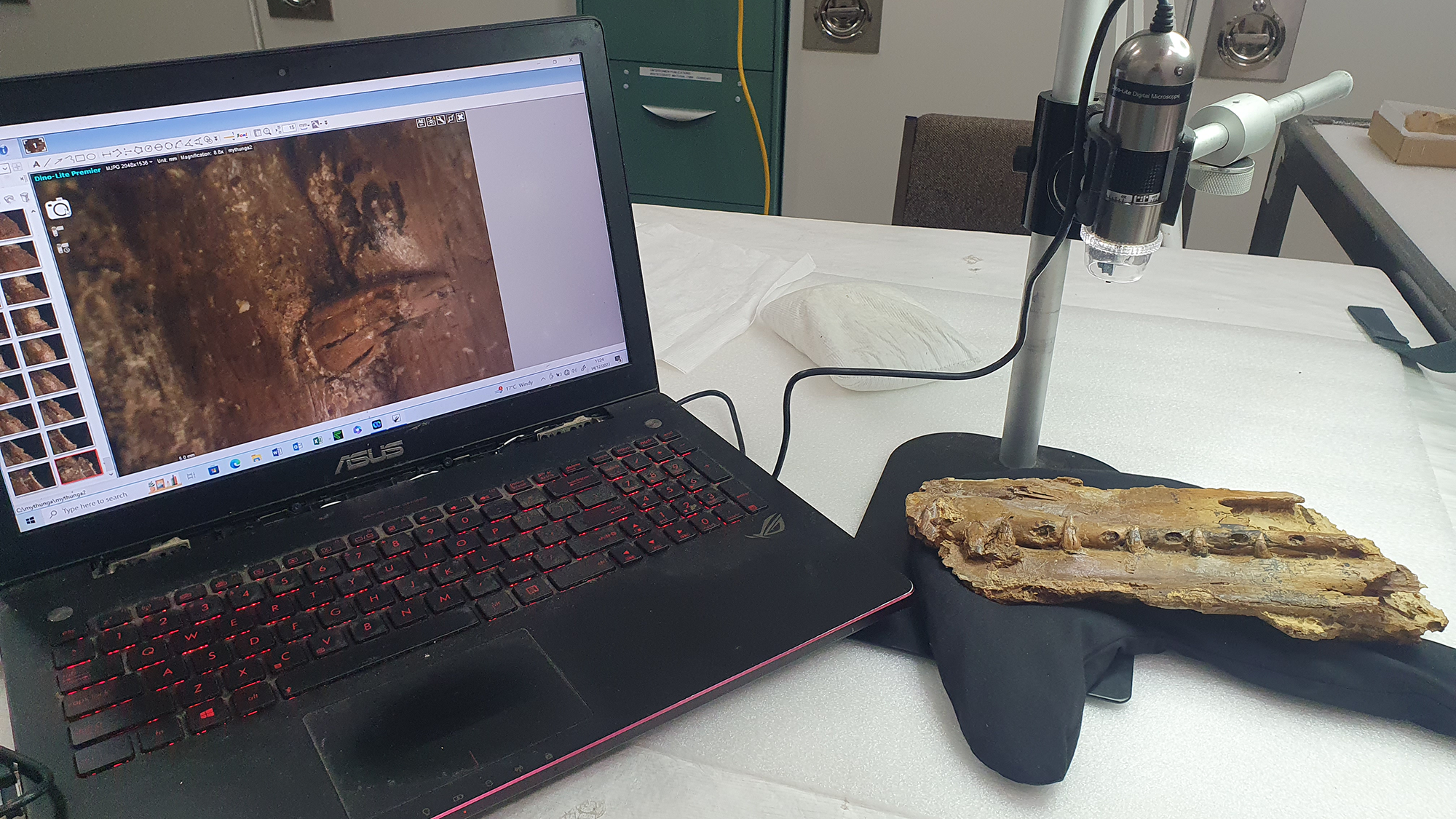
The ichthyosaur fossil set "BOB" gets scanned. (Image credit: Kronosaurus Korner Museum Queensland Australia)
Researchers used advanced neutron imaging to peer inside BOB's stomach contents without breaking any of the fossilized formations. The scans revealed hidden bones and helped scientists determine that the remains were likely associated with the ichthyosaur's digestive system.
White said that advances in imaging technology are making it possible to uncover evidence that would previously have remained hidden inside fossils.
"Scanning techniques have also improved, which has enabled us to see inside specimens and reveal what they potentially ate," White said. The methods can also reveal "the shape of various organs" and internal bone structures, he added.
The pterosaur remains were found near the front of the ichthyosaur's body cavity rather than in their expected position as digested prey, which White and his colleagues think may be because the ichthyosaur struck the seafloor headfirst shortly after its last meal, shifting some of its stomach contents forward.
"We believe the animal died in the water column — perhaps from a pliosaur (Kronosaurus) attack or natural causes — and then sank," White said. "It impacted the seafloor with its rostrum, and connected soft tissues kept most of the body in sequence."
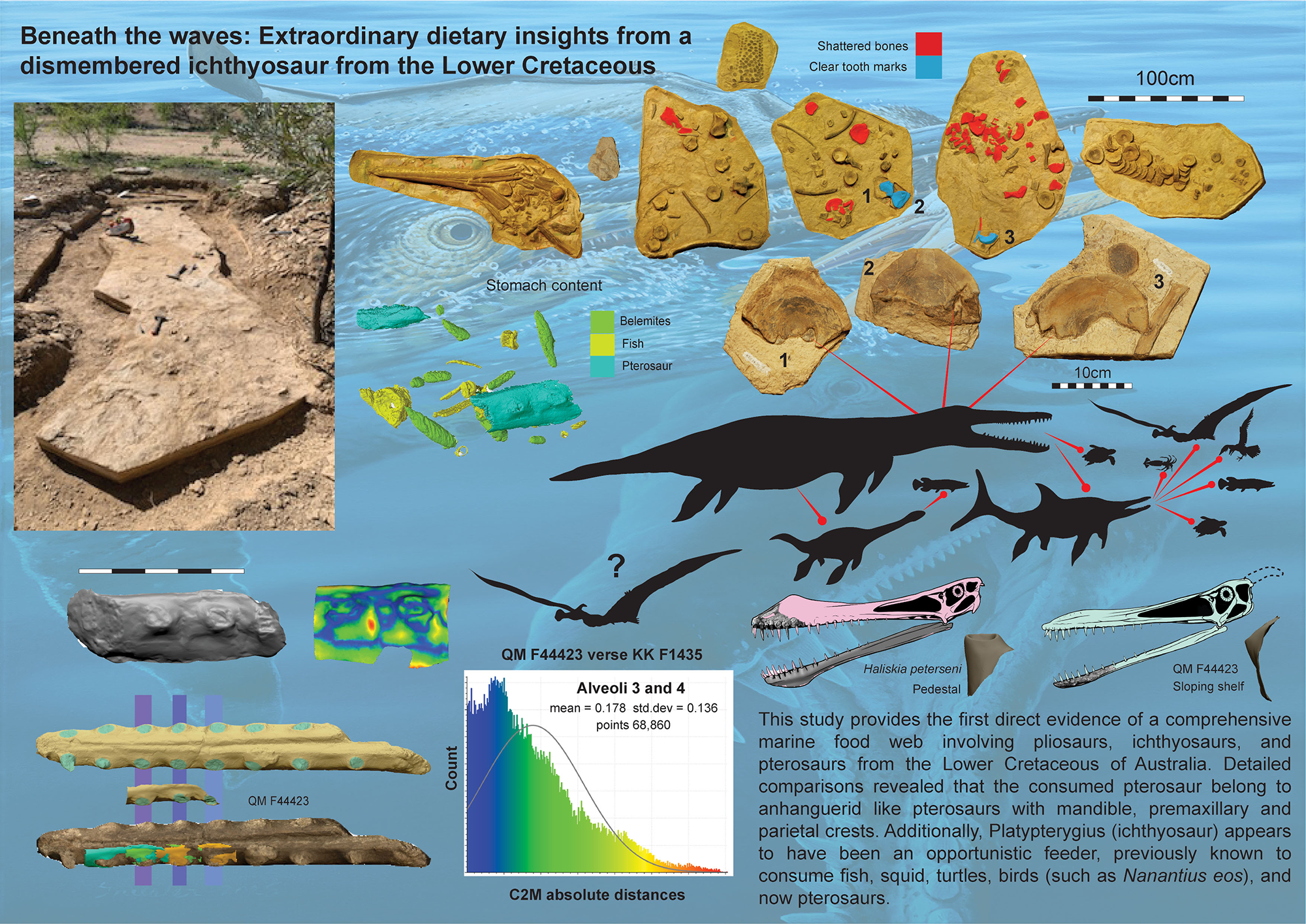
A graphical abstract of the research showing the complex food web of Cretaceous Australia. (Image credit: White et al. (2026))
The fossil offers a rare glimpse into the food web of the ancient Eromanga Sea, which covered much of central Australia during the early Cretaceous period around 145 million to 100 million years ago.
Although ichthyosaurs are known to have eaten fish and squidlike animals, evidence that they ate pterosaurs, a common predator of the ancient skies, has been elusive. The new fossil suggests that at least some ichthyosaurs may have fed on flying reptiles that landed on the water or died and floated to the surface.
"Such discoveries yield valuable information about trophic interactions and allow us to reconstruct ancient ecosystems in greater detail," White said.
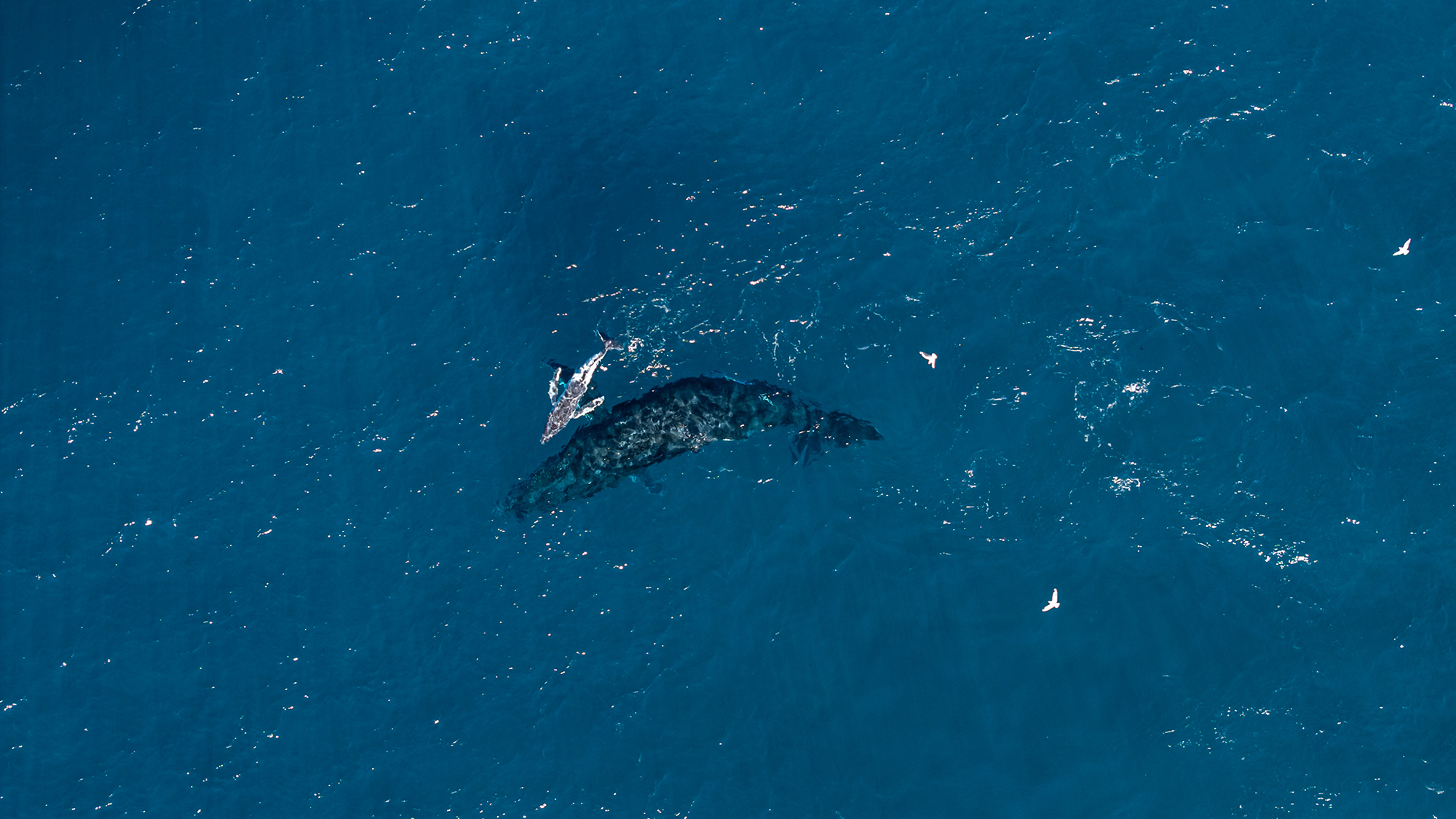
A camera drone operator captured footage of a humpback whale giving birth off the north coast of New South Wales in what is thought to be a world first.
Alexander Forrest, a commercial drone pilot for the Organisation for the Rescue and Research of Cetaceans in Australia (ORRCA), was conducting aerial observations of migrating humpback whales (Megaptera novaeangliae) on July 28. ORRCA is a nonprofit organization focused on the rescue, conservation and welfare of marine mammals.
During the survey, Forrest noticed a whale swimming slightly behind her pod and going unusually slowly. Then, he saw her give birth.
"It's incredibly rare to see a moment like this in the ocean. It's a very rarely documented encounter," Forrest told Live Science. "It's the first drone video as far as we know of a full humpback whale live birth. It gives critical inside moments in the first moments of a calf's life, and also discovers the behaviour of a new humpback whale mother and her freshly newborn calf."
An ORRCA spokesperson said that this is only the fourth time the phenomenon of a humpback whale giving birth had been filmed, in general. Scientists also have footage of other whale births, including a gray whale (Eschrichtius robustus) birth filmed off the coast of California and a sperm whale (Physeter macrocephalus) recorded giving birth in the Caribbean.
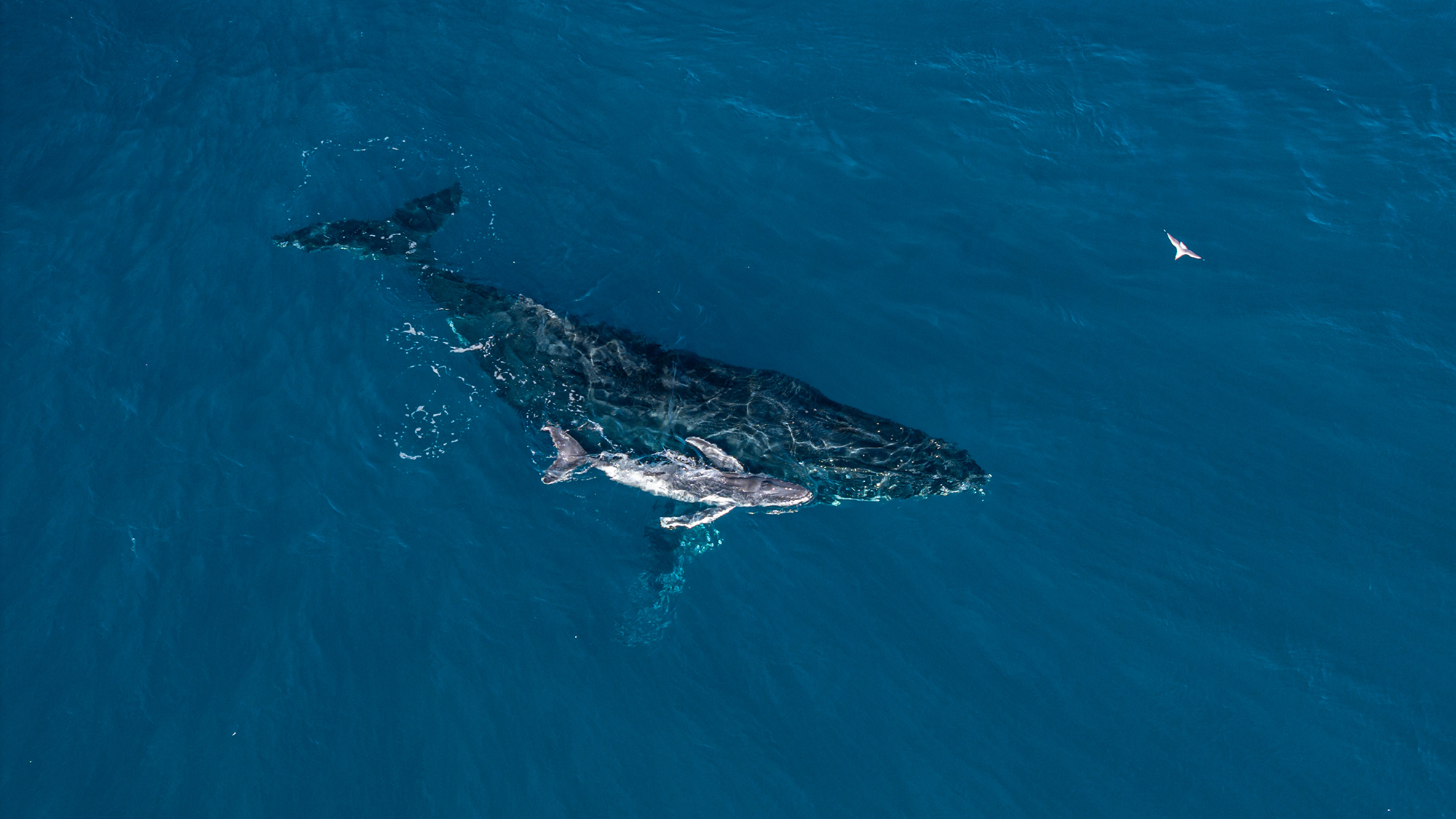
The expectant humpback whale mother swam behind her pod, eventually giving birth by herself. (Image credit: Alexander Forrest/ORRCA (@forrestfov))
The drone video shows the newborn whale surface from blood-reddened water for its first breath. The mother then turns back to reunite with it. The scene was filmed around 0.4 miles (700 meters) from the shore at Kingscliff in northeastern New South Wales.
The birth is "a symbol of one of the strongest conservation efforts in history, returning humpback whales from near extinction to nearly 50,000 on the New South Wales coast," Forrest said. Gathering data on this humpback whale population is critical to "discovering more about where they birth, what happens when they birth, and what those early moments look like."
Humpback whale calves stay with their mothers for their first 11 months. (Image credit: Alexander Forrest/ORRCA (@forrestfov))
The footage will now be analyzed so that a report on the observation can be peer-reviewed and published in a scientific journal. Notably, the mother whale was trailing behind her pod when she gave birth, a detail biologists will compare with observations of other birthing whales that were accompanied by members of their pod. For instance, the 2023 drone footage of the sperm whale giving birth showed that she had 10 adult females near her that formed a protective circle and took turns lifting the calf up so it could breathe at the water's surface.
Throughout their first weeks, calves stay close to their mothers and learn critical behaviors, such as breathing at the surface.
"Humpback whales seem to have an incredible maternal bond with their offspring," Forrest said. "There is an 11-month period where this calf will be raised and feeding on very nutrient-rich milk until it is a yearling and can fend for itself."
A newborn humpback whale calf weighs 1 to 1.5 tons (900 to 1,360 kilograms) and measures roughly 10 to 16 feet (3 to 5 meters) in length. While feeding on its mother's milk, the calf will gain 100 pounds (45 kg) a day and develop the strength and food storage it needs for its first migration. Humpback whales undertake one of the longest migrations of any mammal, travelling up to 5,000 miles (8,000 kilometers) each way between the cold waters of the poles to warm tropical breeding grounds.
Veterinary students at the University of Georgia learned to care for honeybees, which are vital pollinators for U.S. agriculture. Between 2024 and 2025 more than half of the managed colonies in the U.S. have been lost.
Like many parents, zebra finches sing to their young. But some parental songs seem to prepare the baby birds for hot weather, even before they leave the egg.
Zebra finches live in sun-crisped Australian woodlands. On hot days, adults make a rapid, peeping “heat call.” It kicks off genetic changes in the brains of their unhatched babies. The tune acts like a weather forecast. It prepares them for the broiling conditions on the outside of the eggshell.
Researchers described their new findings June 11 in the Journal of Experimental Biology.
A decade ago, behavioral ecologist Mylene Mariette was part of a team that made a discovery. Exposure to heat calls in the egg, shortly before hatching, changed how chicks of these zebra finches (Taeniopygia guttata) dealt with high temperatures. They grew more slowly. They also preferred warmer places to nest. In all, they seemed better able to handle heat.
But one mystery remained: How could hearing a simple song trigger all this?
Singin’ for the brain
Mariette, of Deakin University in Waurn Ponds, Australia, teamed up with neuroscientist Julia George. George works at Clemson University in South Carolina. The pair wanted to know if those songs might trigger changes in the brain’s hypothalamus. This region plays a big role in controlling the birds’ metabolism and responses to heat.
Hear the finch’s heat-induced call
This high-pitched, rapid peeping is the “heat call” of Australian zebra finches. It spurs their unhatched babies’ brains to change how they move blood around. This might reduce the hatchlings’ risk of heat stroke — and lasts the birds’ entire life.
“Some of the consequences of [the call] are permanent. The birds will choose warmer nest sites as adults if they are exposed to heat calls as embryos,” says study author Julia George. “And they will produce more offspring in those warmer environments.”
AUDIO: M. MARIETTE
The researchers raised the eggs of zebra finches at a consistent temperature. Then they separated them into two groups. They exposed about half of these eggs to playbacks of an adult’s heat call. The other half heard a different call for a few days. Afterward, the team removed the embryos from the eggs and euthanized them.
Researchers cut out a small sample of the hypothalamus and extracted some of its RNA. This is a messenger molecule made based on DNA. It carries genetic information to the protein-making parts of the cell. The researchers planned to compare the levels of different RNAs. This should show how certain genes ramp up or down.
The team expected the heat calls would trigger changes in hormone-regulating genes, George recalls. Instead, the songs reduced the activity of genes that control how the brain’s blood vessels squeeze. The researchers now think this helps the chicks brains’ shed heat.
“It’s important that the temperature of the brain is kept cool, even in hot temperatures,” George says. Modifying blood flow there could protect against dangers such as heat stroke.
The calls didn’t change how the hypothalamus works, in general. Instead, only a select set of systems in it seemed to change. These systems are vulnerable to high temperatures. Only about 2 percent of the RNA in the hypothalamus showed this response to the heat calls.
The heat calls could be “like a little weather forecast,” George says, that allows finches to fine-tune their brain’s development. And this might leave them “better suited to the environment right after they hatch,” she adds.
Ready for a warmer world
Other types of yet-to-hatch birds have also shown sound-triggered changes. Yellow-legged gulls warn each other of predators. Those exposed in the egg to these warning calls grew more slowly. After hatching, they also were more likely to crouch when they heard those calls.
Alexandra Cones wonders if there are other genetic and cellular ways for animals to adapt to heat. Cones is an evolutionary behavioral ecologist at Ludwig Maximilian University. It’s in Munich, Germany. She did not take part in the new finch study. But her own research has shown that adult house sparrows can change how their chicks’ metabolisms respond to temperature.
Cones’s team never uncovered exactly how this happens. But, she says, the zebra finch data “forces us to consider a broader range” of possibilities for how such a flexibility evolved.
Zebra finches may not be alone in their brain-bending musical abilities, George concludes. Perhaps there’s a whole playlist of heat-busting birdsongs yet to be discovered.

 Login