Autistic children showed earlier and less age-related refinement in the brain signals involved in processing faces. A child looks at a face, and within milliseconds the brain begins sorting its features, expression, and identity. Researchers have now traced that process across the entire scalp in one of the most comprehensive studies of face perception in [...]
A single neuron may help the brain recognize what it sees, track what the body is doing, and guide a decision, all at the same time. Most neurons may be far more versatile than scientists once thought. In a major study published in Nature, researchers analyzed more than 14,000 individual neurons across 43 regions of [...]
The dreaming brain surges with energy, yet its neurons may consume it faster than they can replenish it. A new mouse study from Tohoku University has uncovered a surprising energy imbalance during rapid eye movement (REM) sleep. As the brain entered this dream-rich stage, blood volume increased across the cortex, and astrocytes accumulated more metabolic [...]
Dr. Michael Egnor explores the existence and immortality of the soul, challenging materialist views by analyzing brain injuries, free will, and near-death experiences. He concludes that while the brain handles physical functions, the soul embodies abstract thought and consciousness, remaining independent and everlasting.
Inflammation may be behind a mysterious phenomenon known as dissociation, a mental state that includes "out-of-body" experiences and the feeling that the world is "unreal," emerging research suggests.
Scientists have long known that this altered state of consciousness is often triggered by trauma. But new research hints at how: Trauma triggers a stress response, which dials up chronic inflammation. The findings are part of a broader shift in psychiatric research as experts increasingly examine how the immune system may play a role in mental health conditions.
The research, which has been accepted for publication and is currently under peer review, is still preliminary, and it is based on correlations between blood markers and symptoms, which cannot prove inflammation causes dissociation. But if follow-up work shows inflammation fuels dissociation, that raises the possibility that anti-inflammatory drugs could treat disorders in which people spend much of their time feeling detached from themselves or reality, experts told Live Science. Interventions that broadly target reducing inflammation could also be beneficial, the study suggests.
Research in this area could provide a "whole new avenue for potential treatment options," study lead author Evelyn Dilkes, a psychology researcher at the University of Essex in England, told Live Science.
A common experience, a rare disorder
Dissociation encompasses both out-of-body experiences, known as depersonalization, and the feeling that everything around you is unreal, called derealization, said Dr. Ruth Lanius, a psychiatry professor and Harris-Woodman chair of mind-body medicine at Western University in Ontario. Both of these experiences are related to a person's sense of self and embodiment.
As a short-term phenomenon, it is common; between a quarter and three-quarters of the population may experience dissociation at some point in their lives. It can also be a symptom of many conditions, such as schizophrenia, depression, anxiety, panic disorders and epilepsy.
In around 1% of the population, people may experience prolonged dissociation, in what's known as depersonalization-derealization disorder (DPDR). People with this condition may frequently feel detached from their body or from reality for hours, weeks, months or years at a stretch.
Research suggests DPDR is often associated with past trauma, such as a life-threatening event or childhood abuse. During a traumatic event, dissociation may be helpful because it may offer "a psychological escape when a physical escape is not possible," Lanius told Live Science. It may also help a person stay calm and focused on the threat at hand.
The problem arises when dissociation continues after the threat has passed.
"[Dissociation] helps you to survive, but in the aftermath of trauma, it leaves you detached from all of your emotions, positive and negative, and so often individuals lose the capacity to feel fully alive," Lanius said.
So why does dissociation linger long past the immediate trauma for some people?
From stress to inflammation and then dissociation
Past research showed that inflammation, which can be the immune system's response to infection or injury, seems to be dysregulated in individuals with dissociative conditions. So Dilkes wondered whether the link between trauma and prolonged dissociation runs through the body's response to stress as a kind of "biological embedding," in which life experiences alter a person's physiology. That hypothesis proposes that trauma initially triggers a stress response. When that stress response doesn't subside, the body's stress system stays activated, continually releasing the hormone cortisol from the adrenal glands.
Cortisol is typically anti-inflammatory in short exposures, but when it remains elevated over long periods, it can contribute to chronic inflammation. This can show up in blood levels of interleukin-6 and C-reactive protein.
So Dilkes' lab looked for those inflammatory markers in the blood of children in the U.K. who were followed, starting in the 1990s, as part of the Avon Longitudinal Study of Parents and Children. The study collected samples at age 9 and 12 and again at age 17 and 24. The study asked participants when they were adults whether they “ever felt that they were not a real person, not part of the living world,” or if they “ever felt that the world was unreal, that things around them were like a stage set.”
Early results suggest that high interleukin-6 levels at age 9 seem to be correlated with people experiencing depersonalization in adulthood, while elevated C-reactive protein levels in earlier childhood, but lower ones in adulthood, are linked with experiencing derealization as an adult.
In the latter case, the study authors suggest that chronic stressors could dampen the immune response, leading C-reactive protein levels to drop over time even as symptoms linger.
Interleukin-6 levels in childhood have been tied to depersonalization, or the feeling that you are detached from your body, in adulthood. (Image credit: ALFRED PASIEKA / SCIENCE PHOTO LIBRARY)
The researchers also speculated that interleukin-6 and C-reactive protein may differentially act on the different brain regions affected in depersonalization and derealization, respectively. These findings may reflect differences in how stress and immune activity shift across the lifespan following trauma. "It's suggestive of a very intricate system," Dilkes said.
Affected brain regions and networks
Dilkes' research can't answer which brain regions and networks are likely affected, but past research suggests dissociation involves emotional blunting in the brain. In this response, the prefrontal cortex, which is involved in planning and decision-making, acts as a brake on the limbic system, which helps people experience emotions, Lanius said.
According to this theory, dissociation occurs because circuits in the amygdala, the fear-processing part of the brain, hyperactivate the prefrontal cortex. The overactive prefrontal cortex then disrupts normal signaling to the limbic system. The overall result is a dampening of emotions, which may enable people to stay focused and rational during a scary event.
This brain activation pattern, which is characteristic of DPDR, is the opposite of that classically found in post-traumatic stress disorder (PTSD), in which the amygdala is hyperactive, while parts of the prefrontal cortex are underactive. (There is, however, a subtype of PTSD associated with dissociation.)
Some early research hints that the default mode network and the temporoparietal junction, which are thought to be involved in maintaining a sense of self, may be affected in dissociation.
In the new study, the researchers speculate that interleukin-6 exposure in youth may influence the development of the default mode network, which could result in depersonalization symptoms later in life.
Many unanswered questions
While Dilkes' findings are intriguing, outside experts cautioned against overinterpreting early results.
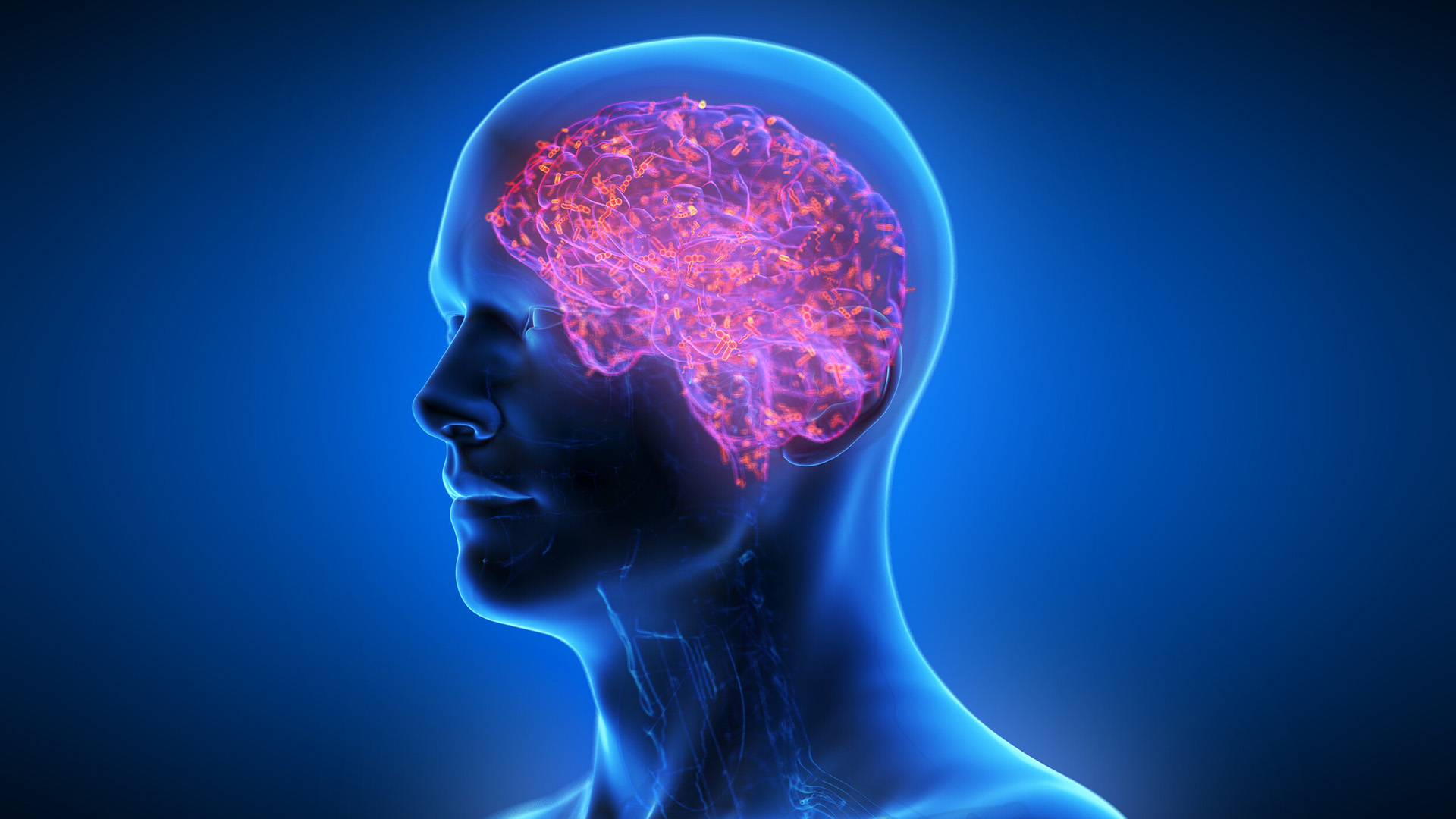
Some researchers think that the link between out-of-body experiences and traumatic life experiences runs through inflammation. But what that means for diagnosis or treatment is unclear. (Image credit: 3DMEDISPHERE / SCIENCE PHOTO LIBRARY)
Extrapolating results from studies that investigate dissociative disorders is difficult because patient groups with different diagnoses differ a lot from each other, said Judith K. Daniels, a professor of clinical psychology at the University of Groningen in the Netherlands. What's more, many symptoms can overlap between different dissociative disorders. Dissociation fueled by childhood abuse may differ biologically from dissociation found in a panic disorder, but current research isn't able to distinguish these groups.
What's more, biomarkers of inflammation like C-reactive protein and interleukin-6 are often elevated in other inflammatory and autoimmune conditions — such as rheumatoid arthritis, lupus and multiple sclerosis, while, most people who experience trauma do not develop a dissociative disorder, which suggests that additional genetic or environmental factors are likely involved, Lanius said.
The nonspecific nature of these blood markers would also make it challenging to use them to diagnose DPDR, though in the future they could potentially be used alongside traditional DPDR screening tools, experts told Live Science.
One big limitation is that scientists do not yet fully understand how the brain constructs conscious reality in the first place.
"In my opinion, if we don't understand altered states of consciousness and dissociation, we can't understand psychopathology fully," Lanius said.
For now, more research is needed to determine whether therapies targeting inflammation would benefit people with dissociative disorders. Conditions like DPDR are thought to be rare, but symptoms are often overlooked, which can make it hard to both determine how common it is and to find study participants. But Dilkes thinks dissociation is underdiagnosed.
"So many people experience this, but no one has the words or knowledge of what it is," Dilkes said.
A group at the Institute of Science Tokyo simultaneously measured the activity of thousands of neurons in two mousebrain regions and found that the areas sometimes shared timing information but maintained more independent representations at other times. The researchers, led by Associate Professor Riichiro Hira, maintained that this flexibility enables the brain to remain stable as it adapts to changing requirements.
A Task Built to Catch the Brain Switching Modes
Hira’s team created a task to highlight this timing mystery. They trained mice to expect rewards at intervals that switched between 6 and 12 seconds, without any break to mark the end of one trial and the start of the next. Since there was no pause, the mice had to keep updating their internal sense of time throughout the experiment, instead of resetting their mental stopwatch for each new trial.
The mice eventually figured out the pattern. At first they expected a reward every six seconds even if the time they had to wait was longer than this, but by the end of the training session, their behavior indicated that they had learned to anticipate both reward intervals. This showed that the mice were capable of keeping track of both durations and of predicting which one would come next.
While the mice performed the task, the researchers recorded activity in their secondary motor cortex and the posterior parietal cortex using wide-field two-photon calcium imaging. Both regions play key roles in planning, prediction, and working memory.
Two Regions, Two Kinds of Mistakes
The neurons fired in sequence in each brain area, with different cells becoming active at different times. This sequence showed that each region was monitoring the passage of time.
The researchers also identified two kinds of errors in the neural activity. In some cases, both areas made the same mistake when assessing the passage of time. These coherent errors suggested that both regions sometimes shared the same timing drift. In other instances, only one region was inaccurate while the other remained correct. These independent errors suggested that one region could temporarily maintain a different timing representation from the other. Independent errors were more frequent than coherent ones, and this ratio remained the same in all the mice examined.
If the brain regions were just randomly out of sync, you’d expect the ratio to change. However, it didn’t, which suggests that the brain has a built-in way to balance working together and working independently.
Modeling the Switch Between Coherence and Independence
To identify this mechanism, the team built a computational model with two recurrent neural networks linked by sparse, long-range connections and exposed to the same background noise. The model produced the same 2-to-1 ratio of independent to coherent errors seen in the mice.
The model also discovered that the limited connections between the networks tended to cause them to become synchronized, while the common noise caused them to move in separate directions. Hira provided an explanation of the interaction saying, “We found sparse inter-regional connectivity promotes synchronization between the two regions, whereas widespread fluctuations prevent complete synchronization, allowing each region to preserve its own temporal representation.” Neither force takes precedence; instead, a compromise is reached which allows communication between the regions.
The findings challenge the idea that brain regions rely on a single synchronized timing system. It indicates that the brain can adjust how different parts are coordinated, rather than just turning that coordination on or off.
What a Flexible Clock Could Mean for the Brain
Hira’s team believes that there are implications beyond simple timing circuits. “In the future, our results may contribute to a better understanding of cognition, neurological disorders involving disrupted inter-regional coordination, and the development of brain-inspired artificial intelligence and robotic control systems that combine stability with flexibility,” said Hira.
This last idea may prove most important in the years ahead. Engineers building AI and robotic systems face a similar challenge: how to let separate parts work on their own when needed, yet still come back into sync. The mouse brain shows that sparse connections and shared background fluctuations can achieve this balance. This could point to a design principle that even applies to systems with no biological components.
Austin Burgess is a writer and researcher with a background in sales, marketing, and data analytics. He holds an MBA, a Bachelor of Science in Business Administration, and a data analytics certification. His work focuses on breaking scientific developments, with an emphasis on emerging biology, cognitive neuroscience, and archaeological discoveries.
A large British study spanning more than 70 years has found that people who experience chronic money struggles over their working lives show measurable declines in memory and processing speed by their 50s, along with signs of accelerated brain shrinkage decades later.

 Login

 Autistic children showed earlier and less age-related refinement in the brain signals involved in processing faces. A child looks at a face, and within milliseconds the brain begins sorting its features, expression, and identity. Researchers have now traced that process across the entire scalp in one of the most comprehensive studies of face perception in [...]