❌

Normal view

British vial of smallpox scabs triggered the devastating 1789 outbreak among Indigenous Australians, study finds

20 July 2026 at 13:15

It's long been debated what started the 1789 smallpox outbreak that devastated the Indigenous population in Australia. Now, a new modeling study has the likely answer: It was brought in 1788 by the "First Fleet" of British ships to settle Australia.

The finding is based on mathematical modeling of the disease's impact on Indigenous Australians and rejects a contrary idea that the outbreak originated through contact with Indonesian islanders fishing in the far North of the country.

Alan Williams β€” an archaeologist at the private firm EMM Consulting and co-author of the study, published July 9 in the journal Nature Human Behaviour β€ͺ—‬ told Live Science that the likely source of the outbreak were vials of dried smallpox scabs that British medics kept for inoculations (a precursor of smallpox vaccines, which weren't invented by Edward Jenner until the 1790s).

Some historians had argued that the live smallpox virus could not have survived the eight-month ship journey from Portsmouth, England, to Botany Bay, south of what is now the modern city of Sydney, where the British ships first landed.

But the investigation showed that the vials of smallpox scabs may have been replenished during the voyage when the fleet stopped at either Cape Town, South Africa, or Rio de Janeiro, Brazil, only a few months earlier, Williams said.

The smallpox outbreak devastated Indigenous communities and contributed to the rapid demise of Indigenous Australian culture, he said. The study estimates approximately 220,000 people died from the disease, and that early-20th-century Australian authorities did not comprehend the true extent of the Indigenous population when they attempted to document historical accounts.

Mystery outbreak

Within a few decades of the British Royal Navy officer James Cook charting Australia, the British sent ships to settle the continent. The British "First Fleet" to Australia consisted of 11 ships: two naval vessels, six convict transports and three ships for provisions. The British claimed that Australia legally belonged to nobody. They soon left Botany Bay because the land and water there were poor, and they moved to Sydney Cove in Port Jackson, which is now part of modern Sydney. There, they raised the British flag, claiming the whole continent.

There were no signs of a smallpox outbreak among nearby Indigenous communities when the First Fleet arrived, but the disease took a devastating toll in the decades that followed. Because there were no recorded cases of smallpox on the fleet, it was argued that the disease must have arrived in Australia on the tropical north coast of the continent through contact with islanders from the Makassar region of Sulawesi, which is now part of Indonesia.

But the new computer modeling of the proposed north coast outbreak showed the disease could not have spread from there to Australia's Southeast. Among other issues, the two regions were separated by thousands of miles of uninhabited desert, Williams said. Meanwhile, modeling of the smallpox outbreak in Indigenous communities near Port Jackson indicated that the outbreak had originated there, the researchers found.

Co-author Matthew Cody Nitschke, an expert in computer modeling at Flinders University in Adelaide, told Live Science that it is now clear that the outbreak was very unlikely to have originated in the North; by contrast, "there is very strong evidence that it was the First Fleet."

At the time, disease theory was not known, so the spread of smallpox may have happened by accident, Williams said.

A group of people wearing feathers and skirts dance around.

An Indigenous Australian man holds traditional weapons during a ceremonial dance in Laura Quinkan Dance Festival at Cape York, Australia. New estimates that the theoretical population capacity of Australia before the British arrival was up to 5 million Indigenous people. (Image credit: chameleonseye via Getty Images)

Revising earlier ideas

The new study in Nature Human Behaviour refers to a second study by the same researchers that is now being prepared for publication by the same journal. It proposes that there were up to 3 million Indigenous Australians at the time the First Fleet arrived β€” many more than the 300,000 or so proposed in some earlier studies.

That second study, based in part on archaeological investigations of early Indigenous Australian communities, suggests that the theoretical population capacity of Australia before the British arrival was up to 5 million people, especially in the resource-rich areas of the North and Southeast.

The former estimate of roughly 300,000 Indigenous Australians seems to have come from a study in the 1930s based only on their depleted numbers. "By the time people actually sat down and said how many people were here, we had 100 years of disease, frontier violence, and everything else going on," Williams said.

University of Tasmania historian Henry Reynolds, who was not involved in the studies, told Live Science that the research debunks the old idea that the smallpox outbreak started on the north coast. "The idea that it came from the North and arrived at exactly the time [as the First Fleet] was always improbable," he said.

Ann McGrath, a historian at the Australian National University in Canberra who was not involved in the work, agreed. "The strong interdisciplinary approach of this latest research convincingly refutes this, and it also provides a much expanded estimate of the Indigenous population prior to 1788," she said in an email.

Mummy mask with wig: A 1,000-year-old 'false head' found in Peru that was crafted with real human hair and toxic red cinnabar

QUICK FACTS

Name: Mummy mask with wig

What it is: A carved wooden mask

Where it is from: Peru

When it was made: Circa 1000 to 1450

This wooden mask, which is decorated with human hair and a textile headband, adorned an Andean mummy up to a millennium ago. Made by an artist of the Chancay people, the mask was also painted red with the mercury-containing pigment cinnabar.

The Chancay were a pre-Inca people who lived along the central coast of Peru in the Late Intermediate Period (1000 to 1450). A common tradition among the Chancay was the funerary bundle β€” the end result of wrapping their dead in layers of textiles, vegetal material and animal skin. The bundle was then buried in a pit along with grave goods such as tools, food and figurines. Because the bodies were usually wrapped in a fetal position, however, it was not always clear exactly where the head was located once the bundle was complete.

According to The Walters Art Museum in Baltimore, which has this mask in its collection, "false heads" made from textiles or wood were sometimes tied onto the Chancay funerary bundles to act as a focal point for venerating the ancestor.

The mask is roughly life-size, measuring 12 by 8 inches (30.5 by 20.3 centimeters). Chancay funeral masks were not meant to be realistic. Instead, they had simplified features, such as the diamond-shaped eyes; triangular nose; and tiny, U-shaped smile on this mask. The wig was almost certainly made from human hair, according to a microscopic analysis The Walters Art Museum undertook in 2017.

The Chancay artist who made the mask painted it red using cinnabar, a toxic substance that is the brick-red form of mercury sulfide. Cinnabar was frequently used in Andean funerary rituals, and the color was associated with purification and commemoration rituals. But the mask was likely not placed on the outside of the bundle burial, as a patterned impression has been left on the cinnabar of this mask, probably from being wrapped in even more textiles, according to The Walters Art Museum.

Although the Chancay culture is not as well known as the Inca, recent research into the ceramics the Chancay left behind and the tattoos on their mummified ancestors has revealed that they were a complex society with a high degree of artistic talent.

For more stunning archaeological discoveries, check out our Astonishing Artifacts archives.

Can you put together last week's Astonishing Artifact?

Decorated wild-boar tusk found in Russia may have been medieval warrior's good-luck charm

19 July 2026 at 13:30

Archaeologists in Russia have discovered a rare medieval wild-boar tusk that was likely used by a warrior or noble as a good-luck charm, a new study reports.

The unusual finding, a large tusk mounted with an engraved metal cap, dates to between the mid-12th and early 13th century. It was found in Novgorod the Great (also called Veliky Novgorod or Novgorod), one of the oldest major towns in Russia. One characteristic of the amulet, in particular, stood out.

"It's extraordinary because of its size. It's extremely big," Natalia Eniosova, co-author of the study and a metal scientist in the Department of Archaeology at Lomonosov Moscow State University, told Live Science. The tusk isn't complete, but the length of what's left is 3.9 inches (10 centimeters) long, with the widest point measuring 1.1 inches (2.8 cm) across. She and her colleagues' research revealed that the tusk came from a wild boar that was at least 8 years old and weighed over 220 pounds (100 kilograms).

"Such an animal would not have been hunted for food," she said, explaining that domestic pigs were a more practical and common food source at the time. The wild boar may have been eaten anyway, but the team doesn't know for sure.

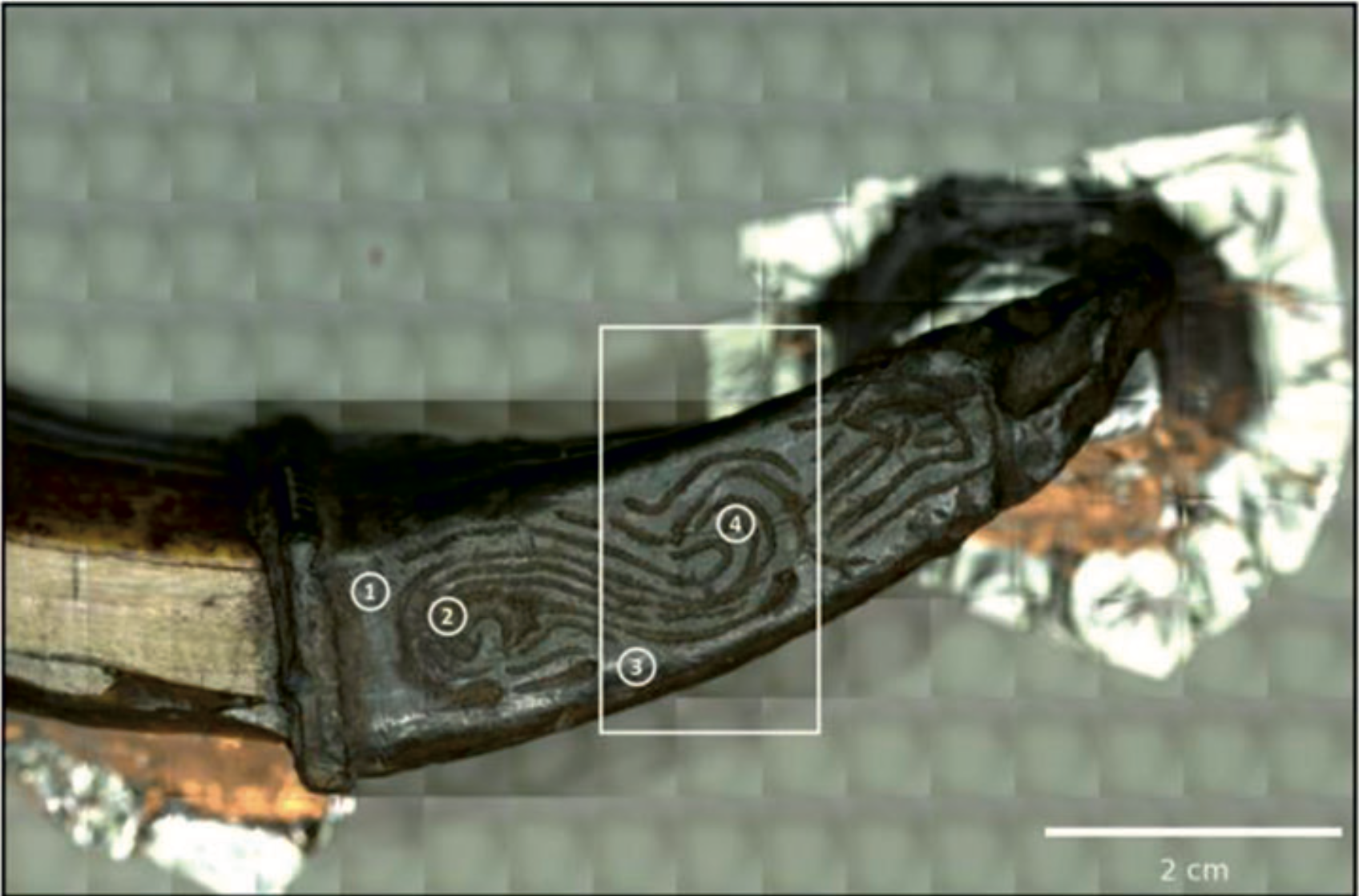
Another trait that makes the amulet unique is its mount. While it looks like it's made of silver, Eniosova was surprised to find that it was almost 100% tin β€ͺ—‬ specifically, a silver-imitating tin-lead alloy. Just like today, tin wasn't as valuable or as expensive as silver, but because there weren't many tin sources in Europe at the time, it was still rare.

A close up of a preserved wild boar tusk with metal covering.

A close-up of the tin mount and its engraved decorations. (Image credit: Tyanina E.A. et al. The Volga River Region Archaeology (2026))

It's interesting that such a soft material was carved with engraved decorations, Eniosova pointed out. "It wouldn't have been easy, and this ornament is quite elaborate," she said. "It's a very, very well-done object."

All of these unusual characteristics seem to align with the artifact's discovery in a part of the Troitsky XVI excavation area that would have been inhabited by wealthy individuals. In fact, it was probably a hunting trophy belonging to an aristocrat, noble or military man, Eniosova said.

Historical texts report that wild-boar hunting in medieval times in what is now Russia was a privilege of the "druzhina," or military retinue, and the nobility, according to the study, which was recently published in the journal The Volga River Region Archaeology. Regardless of whether the wild boar was eaten, at least one of its tusks was extracted and then mounted with metal. The team thinks it was kept as a good-luck charm, mostly because of its size.

"It is highly probable that this mounted tusk functioned as a martial or hunting talisman," the researchers wrote in the study. "It symbolized the transfer of the beast's physical prowess to the hunter and served concurrently as a charm for good fortune."

Similar animal amulets with holes at the top, worn as necklaces, were popular in Veliky Novgorod during this time period, Eniosova noted. The newfound wild-boar tusk is missing its top part, but it may have once had a hole.

A close up of a preserved wild boar tusk.

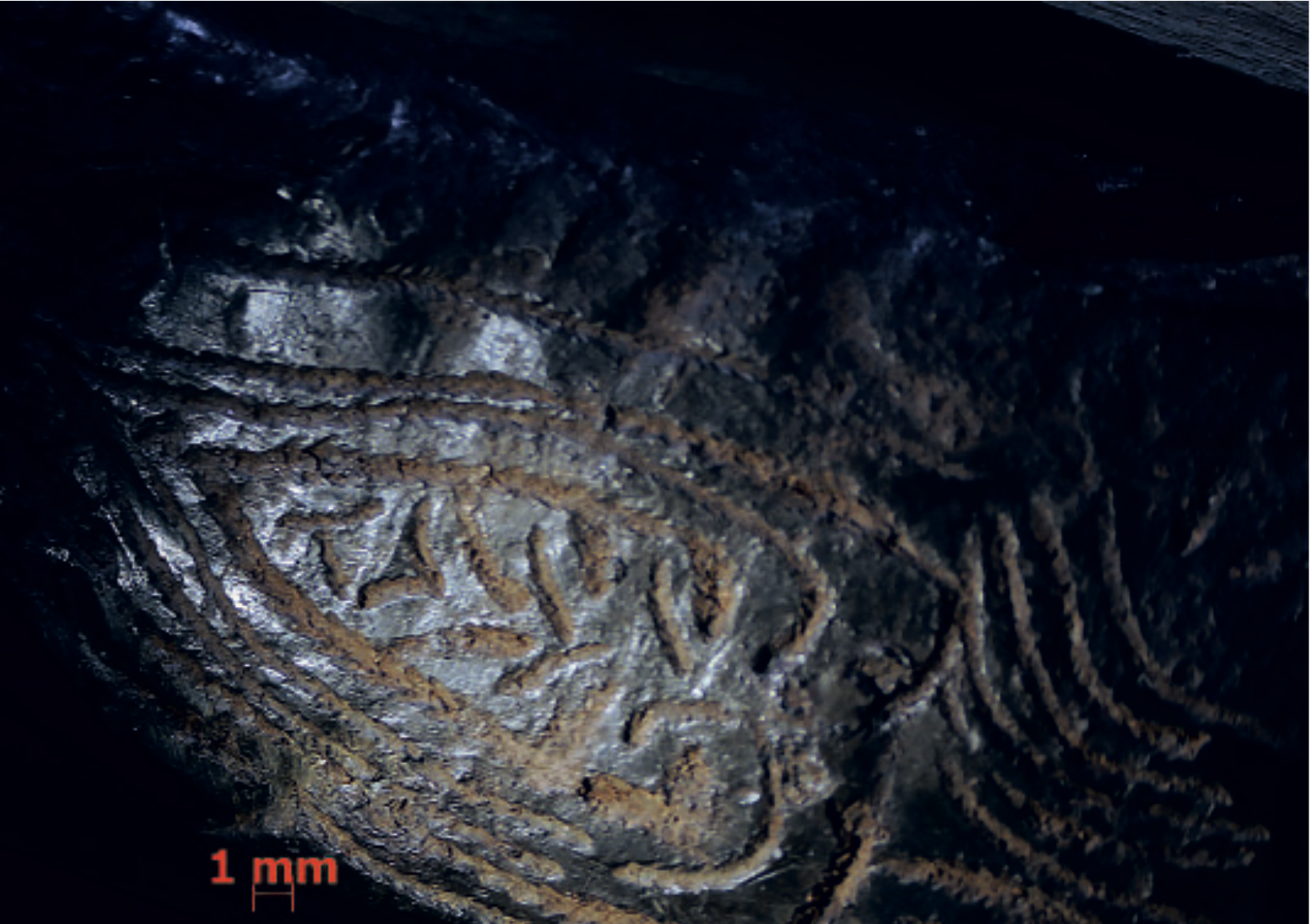
A close-up of an engraved ornament on the boar tusk's mount. (Image credit: Tyanina E.A. et al. The Volga River Region Archaeology (2026))

It still would have been a rare object, however. Boar tusk amulets were common in earlier periods, but they were very rare between the second half of the 11th century to the first half of the 13th century, despite the enduring widespread belief that these tusks had magical qualities.

The amulet could be linked to Scandinavian mythology, according to Eniosova. Indeed, some of Veliky Novgorod's first settlers were from Scandinavia. But the amulet was created over 150 years after they left the area, so the relation is hypothetical, Eniosova said.

Veliky Novgorod first appears in historical documents in the ninth century and was a major trading hub in the medieval polity known as Kievan Rus. Archaeologists theorized that at the time the boar tusk amulet was made, the city was inhabited by landowners and/or people involved with the fur trade, Eniosova said.

The finding is a "highly significant and unusual discovery," Alexei Gippius, a philologist at HSE University in Moscow who is familiar with Novgorod archaeology, told Live Science in an email.

Gippius, who knows the researchers but wasn't involved in the new study, added that the research sheds "new light on the origins and functioning of the mythological beliefs of the early Rus elite."

What's the oldest weapon in the world?

19 July 2026 at 10:00

Nowadays, the word "weapon" may evoke modern-day technologies such as firearms, blades and missiles. Yet archaeological evidence shows that weapons have existed for hundreds of thousands of years. Of course, early humans wielded weapons that looked quite different from those used today.

So what is the oldest weapon?

Generally, weapons are defined as objects used to impart violence on other living beings, said Ben Fitzhugh, a professor of anthropology at the University of Washington in Seattle. That includes objects used in interpersonal conflict among hominins (a group that includes modern Homo sapiens and our relatives that evolved following the split from chimps and bonobos) and for hunting, Fitzhugh told Live Science.

Sign up for our newsletter

Life's Little Mysteries logo with a question mark in a magnifying glass

(Image credit: Marilyn Perkins / Future)

Sign up for our weekly Life's Little Mysteries newsletter to get the latest mysteries before they appear online.

But archaeologists don't automatically consider just any object that could cause harm to be a weapon; context and intent matter, Rolf Warming, founding director of the Society for Combat Archaeology and a doctoral candidate in archaeology at Stockholm University, told Live Science in an email. For instance, experts excavating a site with potential weapons might look for evidence of hunting, such as butchered animal bones; or artifacts like pointed bone tools that can be used to craft weapons. They may also consider what objects were made out of and residue or wear marks on the weapons themselves, which can help determine how they were used.

According to Warming, archaeologists generally consider three finds as contenders for the oldest evidence of weaponry in the archaeological record: the Clacton spear, the SchΓΆningen spears and throwing sticks, and the Kathu Pan 1 spear points.

Clacton spear

Scientists have estimated that the Clacton spear is over 400,000 years old. Experts think the uncovered 15-inch-long (37 centimeters) spear point was broken off from a longer shaft, perhaps by accident while the user was hunting, or deliberately as a ritual. It's made from yew wood and was worked with a tool to a sharp point on one end. The broken end was never found.

Excavated in 1911 from Clacton-on-Sea in Essex, England, the Clacton spear is now on display in London's Natural History Museum, where it is labeled as the oldest preserved wooden spear fragment in the world.

Archaeologists believe it was fashioned by either Homo heidelbergensis or Neanderthals β€” two hominins that predate H. sapiens. In fact, the spear appears to be older than our species, as the oldest known H. sapiens fossils date to around 300,000 years ago. The Clacton spear's shape, size and wood suggest that it was a thrusting weapon and that its makers engaged in cooperative hunting strategies.

SchΓΆningen spears and throwing sticks

Four brown pointed edges against a dark background

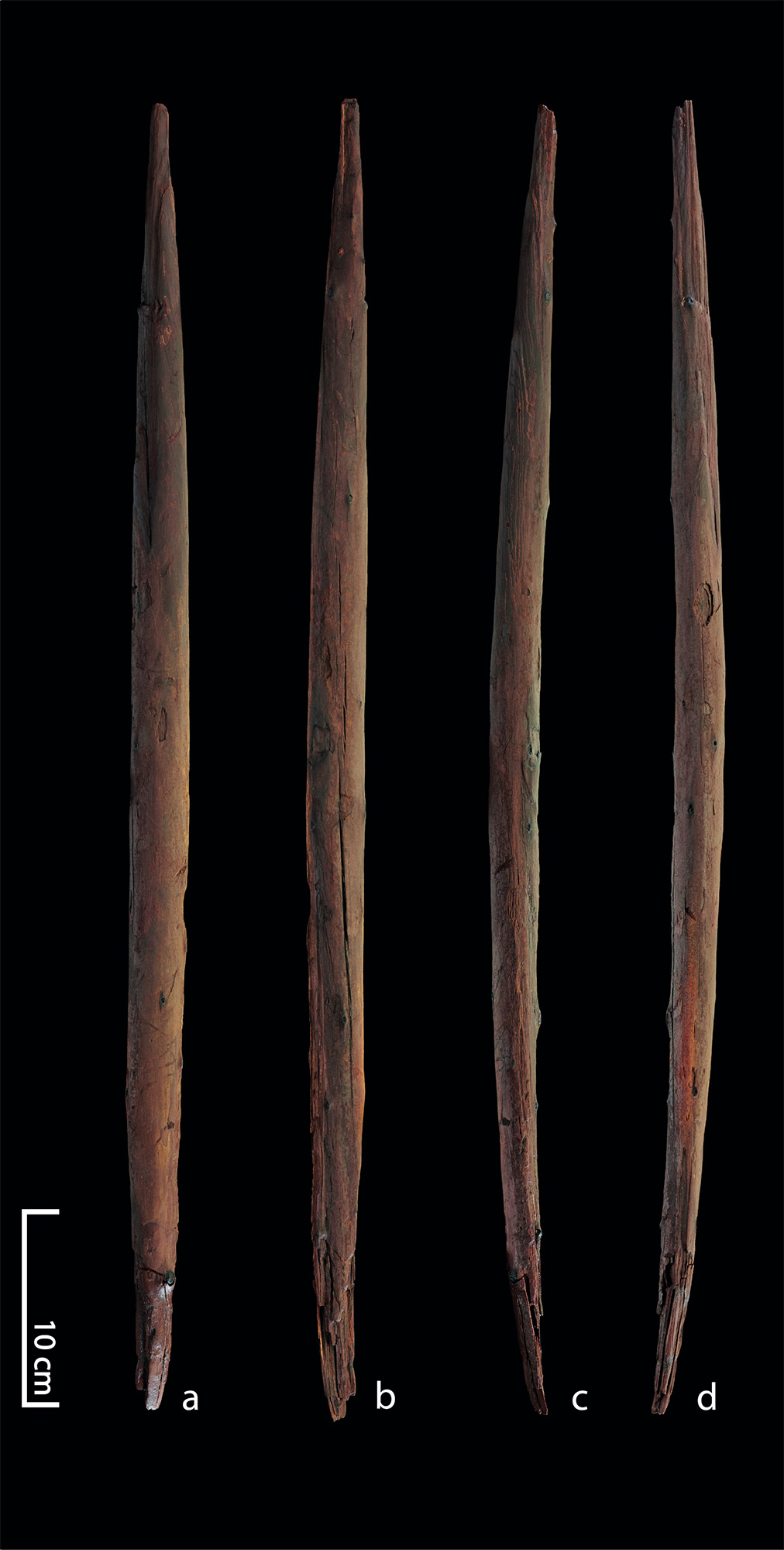
Different views of a throwing stick from SchΓΆningen, a contender for one of the world's oldest weapons. (Image credit: Photograph by Volker Minkus)

Since 1992, archaeologists have excavated between 20 and 25 wooden weapons at a site in SchΓΆningen, Germany, including complete and fragmented spears, and throwing sticks made predominantly from spruce and pine wood.

They're considered the oldest completely preserved wooden weapons in the world, according to the SchΓΆningen Research Museum; today, archaeologists' varying estimates place the weapons' age between 200,000 and 300,000 years old. Their creation has historically been attributed to H. heidelbergensis, an early human species that lived about 700,000 to 200,000 years ago throughout Europe, parts of Africa, and possibly in what is now China. More recent dating suggests the spears could potentially be the work of Neanderthals, according to a 2025 study.

Scientists think these spears, which average just over 6.6 feet (2 meters) long, were used as thrusting weapons, throwing weapons or some combination of both to hunt larger game mammals, like horses, according to a 2024 study. The shorter throwing sticks are believed to be projectile weapons and average around 26 inches (65 centimeters) long.

"In fact, the [SchΓΆningen weapons] were found in association with butchered horses," Fitzhugh noted. The spears were sharpened, hardened and blackened using fire. "These things were shaped in a dynamically sophisticated way," he said.

According to Warming, the SchΓΆningen weapons suggest hominins had clear material knowledge and used different hunting tactics depending how far they were from their target.

Kathu Pan 1 spear points

Hafted spear tips β€” stone points attached to some form of handle or shaft β€” became more common in the archaeological record between 200,000 and 300,000 years ago across Africa and Eurasia, and were previously thought to be created by Neanderthals or H. sapiens.

However, 500,000-year-old stone points excavated from the Kathu Pan archaeological site in South Africa have signs of wear on the edges, and the shape of their base is consistent with hafted spears, suggesting they were used as weapons. Their age predates both Neanderthals and H. sapiens, and the location they were found in suggests they could have been created by H. heidelbergensis, who lived in regions of southern Africa at that time. Archeologists think they could have been used as spear ambush weapons.

But some researchers have contested this evidence, arguing that it's "indirect" or even controversial, as no wooden shafts were uncovered with the spear points to solidify them as weapons as opposed to stone tools.

Something older?

These are some of the earliest examples of weapons in the archaeological record, but there may be older weapons that have not survived throughout time.

While hominins likely used organic materials like wood, sinew, fiber and adhesives to create objects and weapons, these materials break down or are destroyed over time, Warming noted.

Studying these ancient weapons gives us perspective about the present. After all, weapons are more than tools of harm: Warming said they are material clues that give us glimpses into how our early relatives combined materials, used their imaginations, shared knowledge and cooperated in groups.

Yet among these three important finds, Warming said that when inquiring about the oldest known weapon in the world, that "Clacton is the safest answer."

Can you identify these historical objects of war? Test your smarts with our weapons of the world quiz!

Not a housekeeper, but a 'vilica': The many responsibilities of Roman-era female farm managers were overlooked by historians

18 July 2026 at 16:00

Female farm managers are hidden in plain sight in ancient Roman texts, mentioned in laws, literature and grave inscriptions across five centuries. Modern historians have generally assumed they were housekeepers, in charge of domestic tasks and household meals, and segregated from the productive business of the farm.

My new paper, published in the Journal of Roman Archaeology, challenges this assumption.

In fact, there is evidence to suggest that many Roman female farm managers supervised wine production and other processes vital to farming and profits.

A false lead

A farming manual written by the Roman writer Lucius Junius Moderatus Columella in the 1st century CE is a window to the roles of the female manager.

An upper class landowner himself, Columella lists the responsibilities of farm managers, who were probably enslaved. The male manager was termed the vilicus, and the female manager the vilica, terms derived from their roles at the "villa".

But many historians reading this text have been side-tracked by a false lead: Columella begins his section on the vilica with a long quote from the Greek philosopher Xenophon, who wrote in Athens more than four centuries earlier.

A statue of a woman in a toga with other scientists

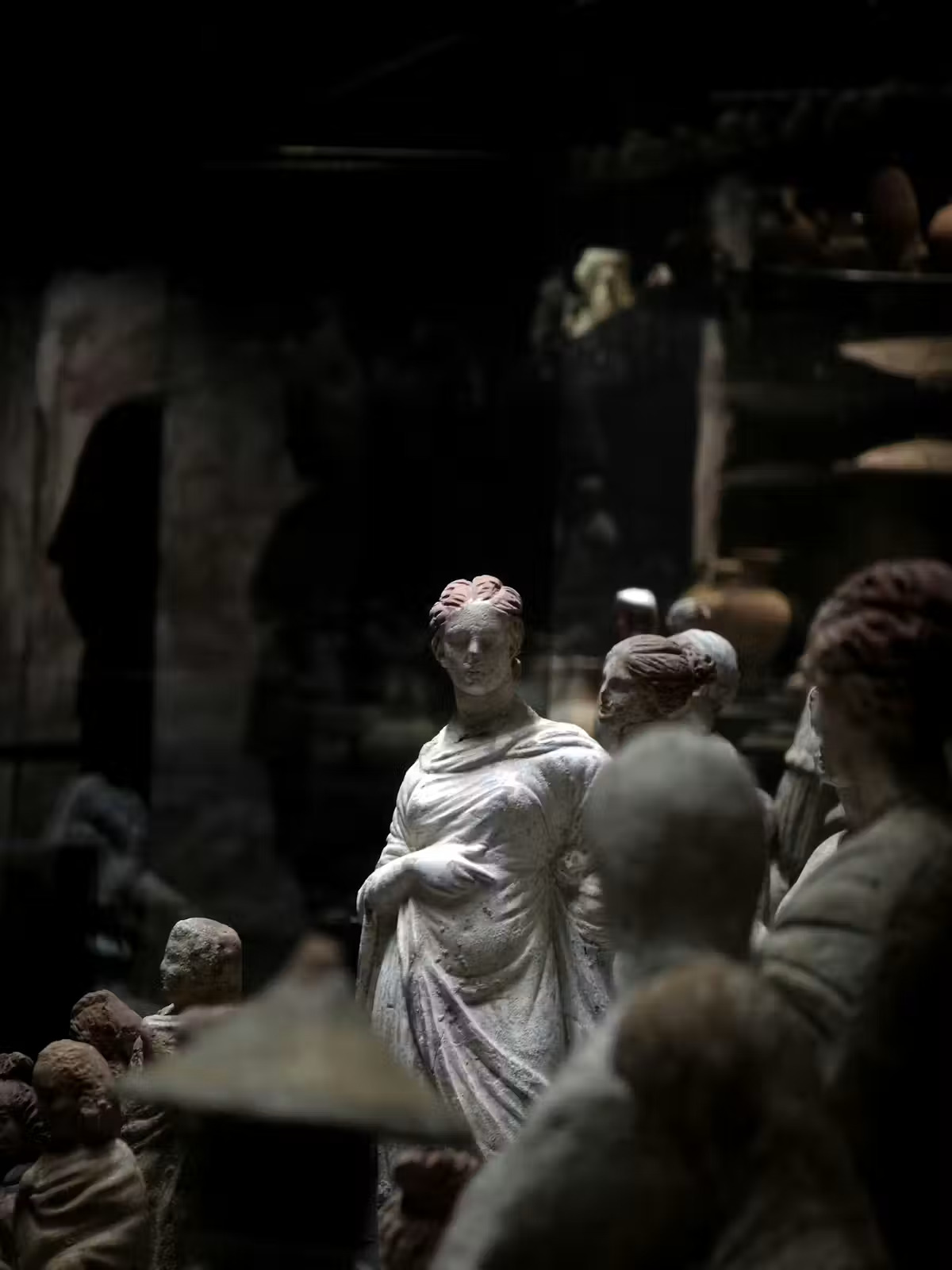
A quote from Greek philosophy led many to misunderstand the roles women played in ancient Roman farming. (Image credit: Mahmoud Amer/Pexels)

The "natural" role of women, according to Xenophon, was to work indoors. Therefore in his discussion, the ideal upper-class married woman is depicted staying inside her town house to supervise the domestic work of the slaves.

The Greek writer is not discussing farm workers. In fact, Columella says four times that these ideas are not his own, but those of Xenophon, writing long ago.

Columella lists a completely different set of responsibilities for the vilica on a Roman farm: most importantly, the making of wine and olive oil, which were highly valuable commodities β€” the backbone of landowners' profits.

In his description of the vilica's duties, Columella includes the extraction of the juice from grapes during the harvest; adding flavorings and preservatives such as salt, wormwood, fennel or boiled grape-juice; and overseeing successful fermentation into wine.

According to Columella, the vilica also managed the processing of other farm products to make them long-lasting and profitable, such as turning inedible olives into olive oil for sale.

From archaeology we know that production of wine or oil, using huge machines in substantial buildings, could reach 50,000 to 100,000 litres per year, or even more. The vilica was therefore responsible for overseeing large-scale work essential to the operation of the estate.

Calling on the gods

Correct sacrifices to the gods were seen as vital to the success of the farm. Archaeology has uncovered altars for offerings in Roman wine-making buildings.

Wine-making in the Roman world was a precarious process, due to uncontrolled temperatures, bacteria or oxygenation. Wine could easily go moldy or turn into vinegar.

A striking element of Columella's account is that he includes carrying out offerings to avert such a disaster in his instructions for the female farm manager.

Looking for more clues

Other texts contain barely more than a mention of the vilica, revealing only her presence.

But we can still put together some clues.

Legal writings on inheritance, quoting the 1st century BCE jurist Trebatius, include her in the instrumentum fundi β€” whatever (including enslaved personnel) is required for productive work, gathering and preserving produce of the estate.

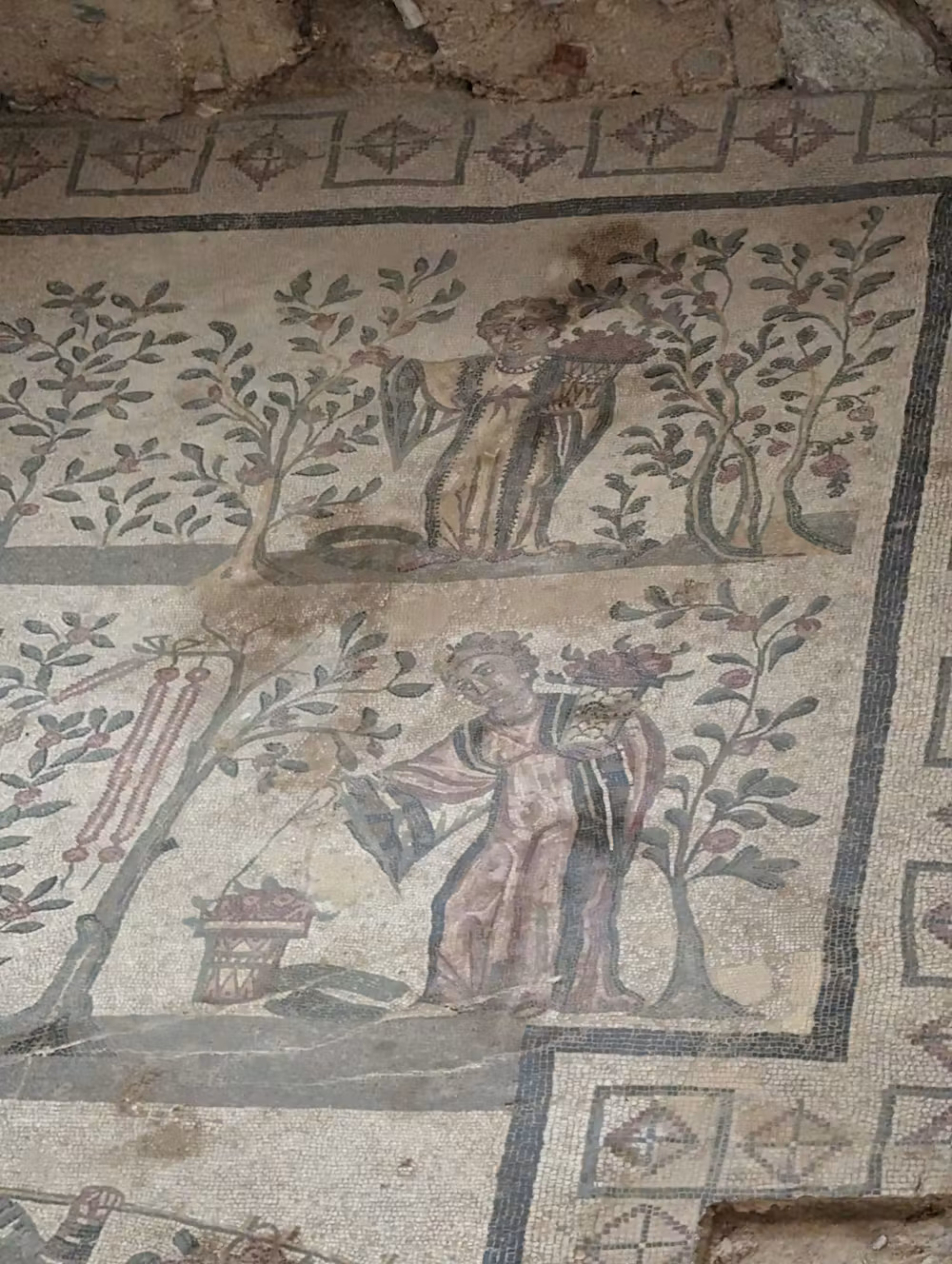
A close up of a mosaic of a woman in garden.

A mosaic shows Roman farm women at the Villa Romana del Casale, Sicily. (Image credit: Joe Lynch)

Another aristocratic landowner and writer, Cato the Elder, living two centuries before Columella, lists both the female and the male farm manager as essential staff for a vineyard or olive farm.

He devotes only one small section to outlining the female farm manager's tasks, but a close look shows these are not predominantly domestic. Cato includes keeping poultry and processing of seasonal farm products. Although he does include supervision of cleaning, this could refer to maintenance of work spaces such as stables and wine making buildings, an integral part of estate management – and also listed by Columella among the vilica's duties.

Cato also gives the vilica the responsibility for making sacrifices to the gods for the success of the farm. She must regularly offer garlands at the altar "for abundance", he writes.

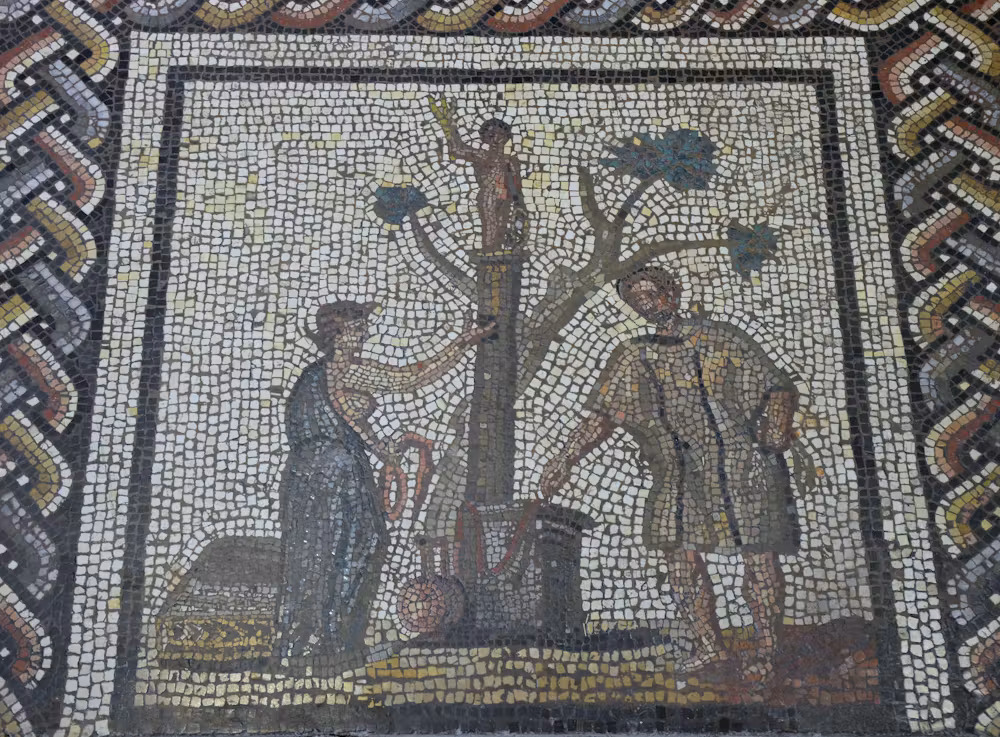
A Roman mosaic showing estate work in different seasons depicts a scene of sacrifices for abundant crops to the god Jupiter (in his Celtic form as a sky and weather god). A woman is shown holding an offering of garlands, just as Cato instructs. Beside her are a jug for wine offerings and a male figure.

A close up of a mosaic with people around a tree.

A woman is depicted at an altar holding the offering of garlands. Beside her is a jug for wine offerings and a male figure. (Image credit: Carole Raddato/MusΓ©e d'ArchΓ©ologie Nationale, Saint-Germain-en-Laye/Flickr,Β CC BY)

Perhaps this mosaic shows the vilica and vilicus, both essential to the success of annual harvests. While such images of female figures are rare, one fragmentary wall painting from Rome shows a female overseeing wine-making workers, just as Columella describes.

This combined body of evidence suggests we should expand outdated understandings of the roles that Roman women played in farm production, the dominant sector of ancient economies.

No vilica has left us an account of her work in her own words. But by paying careful attention to the evidence, we can hear an echo of her voice.

This edited article is republished from The Conversation under a Creative Commons license. Read the original article.

From Augustus to Nero, see how much you know about ancient Rome's famous leaders with our Roman emperor quiz!

Science news this week: Gold tongues discovered in tombs, sugar found in space, a new monkey identified in the Congolian rainforest, and ancient impact crater 'geoguessed' by an amateur astronomer

This week's science news reminds us how the past still speaks if we listen closely, with news of the discovery of 18 ancient Egyptian tombs filled with dozens of gold tongues topping the bill.

The ancient Egyptians believed that gold was the flesh of the gods, meaning that bestowing gold tongues upon the deceased could help them speak in the afterlife. But it's not entirely certain whether all of the newly found gold objects were tongues (one may actually depict a wheat ear, a symbol of fertility), and the mystery of a possible false door inside the tomb is also stirring up debate.

It's not the only ancient Egyptian discovery causing disagreement among archaeologists this week; an analysis of the nearly 4,000-year-old skeletal remains of ancient Egyptian princesses reveals they may have hunted or trained with the military β€” though not all experts agree.

Elsewhere, archaeologists discovered a curious ancient chariot among the remains of a mysterious society that burned down its own buildings before disappearing. We also learned that an ancient Bronze Age shaman thought to be a man was actually a woman, and researchers revealed the origins of more than 150 liberated Africans who had been left to die by the British Navy on the island of St. Helena.

We anticipate further ancient discoveries after a new study revealed that DNA can last for up to 50,000 years in Africa. Meanwhile, we published an excerpt describing how experimental archaeologists used ancient techniques to mummify a modern-day person β€” part of our coverage of author Sam Kean's book "Dinner with King Tut: How Rogue Archaeologists Are Re-creating the Sights, Sounds, Smells, and Tastes of Lost Civilizations."

Sugar found in space

Sweet! Sugar found in raspberries was discovered near the Milky Way's center, hinting that life's ingredients are common in space

A view of white glowing gas swirling among white and blue stars in deep space.

A Hubble image of the Milky Way’s center, in the constellation Sagittarius. Researchers have discovered a sugar found in raspberries buried in a cloud in this region. (Image credit: NASA, ESA, and G. Brammer)

Astrochemists delivered a sweet surprise this week, with news that they had detected a type of sugar called erythrulose in interstellar space, near the center of our Milky Way galaxy.

Erythrulose, consisting of four carbon atoms, is found in raspberries back on Earth. But its presence in space is a mouthwatering sign that the essential ingredients for life are highly abundant across our galaxy. That could make life much more prevalent than we thought, and could mean that aliens may also have a sweet tooth.

Discover more space news

β€”'Smaller than the tiniest scale in nature': Physicists made a black hole out of light and used it to test Stephen Hawking's elusive radiation theory

β€”'The moon looked wrong': Artemis II mission controller Chris White on taking historic lunar flyby photos from 250,000 miles away

β€”James Webb telescope captures never-before-seen glimpse of 'Centaur' galaxy's battle wounds β€” Space photo of the week

Life's Little Mysteries

What is the roundest animal?

A close up of a black shiny pill bug all rolled up.

A pill bug curls into a round ball for protection. (Image credit: lophius via Alamy)

Animals come in all shapes and sizes, but are any a satisfyingly perfect sphere? It turns out that this deceptively simple question holds some evolutionarily profound implications.

β€”If you enjoyed this, sign up for our Life's Little Mysteries newsletter

Amateur astronomer 'geoguesses' an ancient crater

'This was one of the most arduous expeditions I've ever done': Scientists confirm that 15-mile-wide pit found on Google Maps is ancient meteor crater

Image shows a satellite picture from Google Earth showing a recently discovered meteor impact crater.

The large pit, discovered on Google Maps in 2024, is actually a 390 million-year-old meteor impact crater. (Image credit: Gordon Osinski via Google Earth)

Geoguessing emerged in the last decade as a geography game (and later a popular esport) in which players deduce locations from Google Maps imagery. But what about geoguessing something completely undocumented, and one that only trained scientists should be able to recognize?

In that circumstance, amateur astronomer JoΓ«l Lapointe should be crowned this year's champion. Using Google Maps to plan a hiking trip in Quebec's CΓ΄te-Nord region, Lapointe stumbled upon an indentation that has now been confirmed by scientists to be a 390 million-year-old scar from a gigantic asteroid collision.

"I get lots of messages from the public thinking they have found a crater and 99/100 turn out not to be the case," Gordon Osinski, a professor of planetary geology at Western University in Canada who confirmed the find, told Live Science in an email. "This is one of those rare examples that shows this is possible."

Discover more planet Earth news

β€”Tropical forests stop absorbing carbon dioxide during El NiΓ±o events. This year could be the worst.

β€”Venezuela's devastating 'earthquake doublet' holds a warning for California's San Andreas Fault

β€”'These are striking forecasts': Super El NiΓ±o keeps getting even more likely, and it could bring a humanitarian crisis

Also in science news this week

β€”5 'extremely rare' iron shackles discovered in France highlight Celtic slave trade 2,300 years ago

β€”Nobel Prize-winning physicist and team use Claude AI to solve decades-old math puzzle

β€”New 3D silicon chip stacks circuits on top of each other to boost computing power

β€”Robot dog can climb stairs, navigate a forest and bound over logs thanks to new, rapid AI training technique

β€”Scientists are deep-freezing koala eggs and sperm to protect the species from extinction

β€”Heaven Lake: China's deepest lake sits atop a colossal volcano and belongs mostly to North Korea

Something for the weekend

If you're looking for things to keep you busy over the weekend, here's a selection from our best opinion pieces, interviews, diagnostic dilemmas and crosswords that we published this week.

β€”Tobacco companies are pushing nicotine pouches on teens β€” and we need to act now to stop them [Opinion]

β€”'It affects your daily life suddenly': Sea level researcher explains why once-in-a-century floods could become the new normal [Interview]

β€”Diagnostic dilemma: Junk-food diet caused a teen's permanent blindness [Diagnostic Dilemma]

β€”Live Science crossword puzzle #52: The moon's other name β€” 2 down [Crossword]

Science photo of the week

Orange-lipped monkey that roars and snorts deep in Congo rainforest is new species to science

Two orange-lipped black monkeys sit in a large leafy tree looking at the camera

The newly described monkey has orange lips and a patch of white fur around the anus. (Image credit: Β Daniel Rosengren, Frankfurt Zoological Society Β )

Hello! A new monkey just dropped!

Named Colobus congoensis after the remote region of the Democratic Republic of the Congo where it was found, this striking newfound species has orange lips and makes unique roars and snorts.

The monkey's discovery is remarkable, most of all because finding new primates is extremely rare β€” with only five new ones being identified in Africa over the past 75 years β€” and also because of its relatively large size. Pinning down the species took years of careful tracking and documentation, alongside work with people from eight local villages who had knowledge of it.

Besides being a cool find in its own right, the discovery points to there being potentially many more undiscovered mammals, fish, reptiles and plants hidden inside the Congolian rainforest.

Follow Live Science on social media

Want more science news? Follow our Live Science WhatsApp Channel for the latest discoveries as they happen. It's the best way to get our expert reporting on the go, but if you don't use WhatsApp we're also on Facebook, X (formerly Twitter), Flipboard, Instagram, TikTok, Bluesky and LinkedIn.

Did ancient Egyptian princesses use weapons? Controversial study claims they hunted or trained with the military, but not all experts agree.

17 July 2026 at 05:00

A close up of a blue and brown dagger against a white background

The dagger buried with Princess Ita, which is now on display at the Egypt Museum. (Image credit: Sameh Abdel Mohsen, Egypt Museum photographer)

Several ancient Egyptian princesses buried with bows, arrows and a dagger may have trained with those weapons during their lives, possibly using them while hunting or practicing archery, a controversial new study suggests.

Researchers examined the remains of six royal individuals who lived during Egypt's Middle Kingdom nearly 4,000 years ago. After analyzing the muscle-attachment sites on these bones, the researchers suggested that certain pronounced areas might be linked to repeated activities such as archery and weapon handling.

"Members of the royal family, especially the women, were active participants in skilled, physically demanding activities such as archery and hunting," study first author Zeinab Hashesh, an archaeologist at Beni-Suef University in Egypt, said in a statement.

The finding, published Friday (July 17) in the journal Frontiers in Environmental Archaeology, challenges the assumption that weapons placed in the women's tombs were largely ceremonial. It may also provide new information about the health and physical activities of royal women.

However, bioarchaeologists who were not involved in the study told Live Science that skeletal changes cannot reliably indicate a specific activity. Age, body size, genetics and other repetitive movements can produce similar results, they said.

Royals rediscovered in a museum basement

A brown photograph of a moustached man looking at the camera

The French archaeologist Jacques de Morgan found the royal burials in the 1890s. (Image credit: Gallica Digital Library via Wikimedia Commons)

In the 1890s, French archaeologist Jacques de Morgan excavated a site near the tomb of pharaohs Amenemhat II and Amenemhat III. From these excavations, de Morgan found various royal individuals, whose partial remains were later stored at the Egyptian Museum in Cairo.

For decades, the remains were forgotten about. But in 2020, museum workers rediscovered the bones during a museum curation project. The collection included King Hor, Princess Ita, Khenmet, Itaweret and Noub-Hotep, as well as an unidentified woman who may have been Princess Sathathormeryt (also spelled Sithathoriunet). Four of the women are believed to have been daughters of the pharaoh Amenemhat II.

However, the skeletons' identities depend heavily on those 19th-century labels, which "means that we cannot be certain how reliable they really are," Sonia Zakrzewski, a bioarchaeologist at the University of Southampton in the U.K. who was not involved in the research, told Live Science in an email. Most of the individuals' skulls were missing, and only around 22% to 58% of each skeleton survived. Their soft tissues had largely decayed into powder, but the remaining bones allowed the team to estimate the sex and age and look for injuries, diseases and signs of physical activity.

Signs of weapons training?

Using X-ray scans and specialized infrared spectroscopy, which can help identify different materials, the researchers examined the entheses, the places where muscles, tendons and ligaments attach to bones. Repeated muscle use can contribute to enlarged or pronounced attachment sites, although several other processes can also create this result.

Princess Ita, who died between the ages of 28 and 34, had pronounced attachment sites on parts of her right shoulder, arm and hand. The team suggested that these changes could reflect repeated gripping and weapon handling, possibly involving the ornate dagger found in her tomb.

Princess Noub-Hotep, who died in her early 40s, had strongly developed attachment sites in her forearms and right hand. De Morgan had discovered "arrows with their barbs in an astonishing state of preservation" in the princess's tomb, according to an 1896 issue of the journal American Anthropologist.

Similarly, Princess Itaweret showed robust attachment sites around her shoulder and chest, while Khenmet had pronounced features on her arms and shoulders. King Hor also displayed differences between muscle attachments on the left and right sides of his body.

The authors argued that these patterns fit actions involved in drawing back a bowstring β€ͺ—‬ a process that can create muscular asymmetry between the left and right upper body. They also posited that these muscular patterns could be from gripping objects like daggers or maces and suggested the weapons buried with the royals weren't just symbolic.

Experts remain doubtful

Despite the pronounced attachment sites on these individuals' bones, Zakrzewski said it's unknown if the royals got buff through archery or some other activity.

The sites on the bones show that "certain muscles appear to have been repeatedly used, but the actual cause of that use is uncertain," she said. "We cannot say therefore that these skeletal changes necessarily are associated with the use of weaponry," especially since the researchers didn't look at comparison groups from the Nile Valley or elsewhere.

An older photograph if a dirt hill

An old photo of Dashur Pyramid, where the royal individuals were found. (Image credit: Rijksmuseum via Wikimedia Commons)

Zakrzewski added that it's unknown why artifacts like arrows were included in the tombs. Perhaps they were meant to be "used by individuals associated with the deceased," she said.

Scott Haddow, a bioarchaeologist at the University of Turin in Italy who was not involved in the study, noted that some of the skeletal changes were present on both sides of the remains.

"Archery is a highly asymmetrical activity; finding generalized, bilateral robusticity in some bones (with some asymmetry observed in other bones) does not make a particularly strong case for these individuals practicing archery," he told Live Science via email.

The individuals' ages at death could also explain the differences. Khenmet was between 35 and 45 when she died, while Noub-Hotep was approximately 40 to 44. Muscle-attachment sites are influenced by aging, as well as by body size and genetics, Haddow said.

Princess versus pauper

One of the study's largest caveats was the absence of a comparative group, which would have shown how unusual the changes were compared with other Egyptians from the same period.

"It would be very useful to know how much such side differences exist in contemporaneous Egyptians, whether royal or not," Zakrzewski said.

Besides missing a comparison with a "control" group, other experts believe that the researchers are reading too much into the weapons being buried with the royals.

"Although the presence of funerary artifacts (e.g., arrows, daggers) makes the princesses' involvement in such activities plausible, the authors provide limited biomechanical or biomedical evidence to substantiate this claim," SΓ©bastien Villotte, an anthropologist at the French National Center for Scientific Research, told Live Science via email.

He added that "a more robust approach would involve comparing these individuals to non-elite contemporaries from the same region and period. This would help determine whether such degenerative changes (at these locations) were common in the general population (who were unlikely to engage in the same activities) or truly indicative of elite-specific behaviors."

Although the study has a number of uncertainties, Zakrzewski said they shouldn't diminish the value of examining the remains. "It allows us to sort of put flesh on the bones and understand more about their lives," she said.

Can you identify these historical objects of war? Test your smarts with our weapons of the world quiz!

Ancient chariot emerges among remains of mysterious society that burned down its own buildings and then disappeared

16 July 2026 at 21:04

Archaeologists in Spain have discovered the remains of a 2,400-year-old bronze chariot that was used to honor the gods and may have had links to the ancient Etruscans, who lived in what is now Italy. β€ͺThe discovery is "without known parallels" in Iberia, according to the research team.

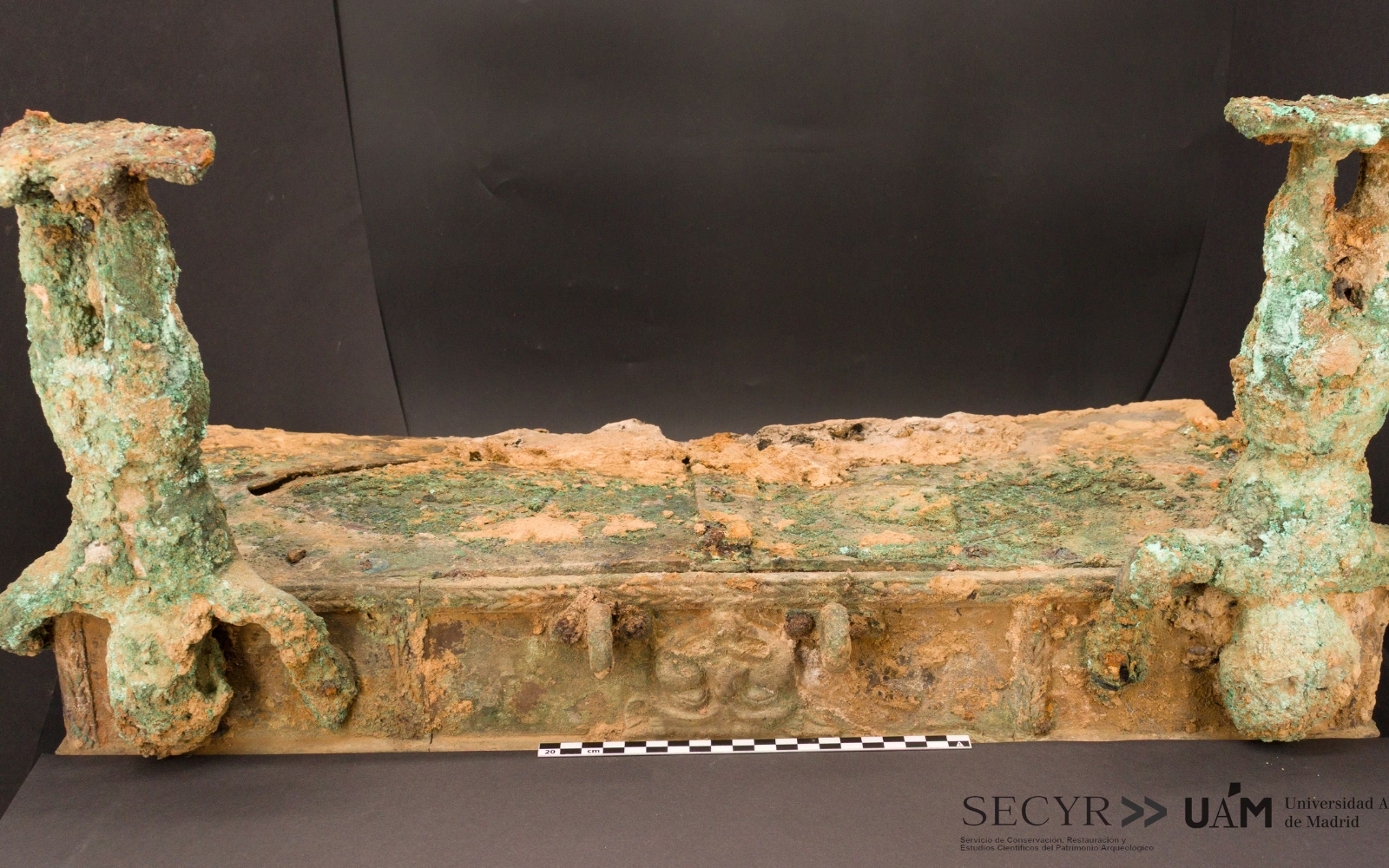
The roughly 24-inch-long (60 centimeters) chariot was designed with a flat, table-like top that people would have used as a surface for burning incense as a divine offering, according to a translated statement.

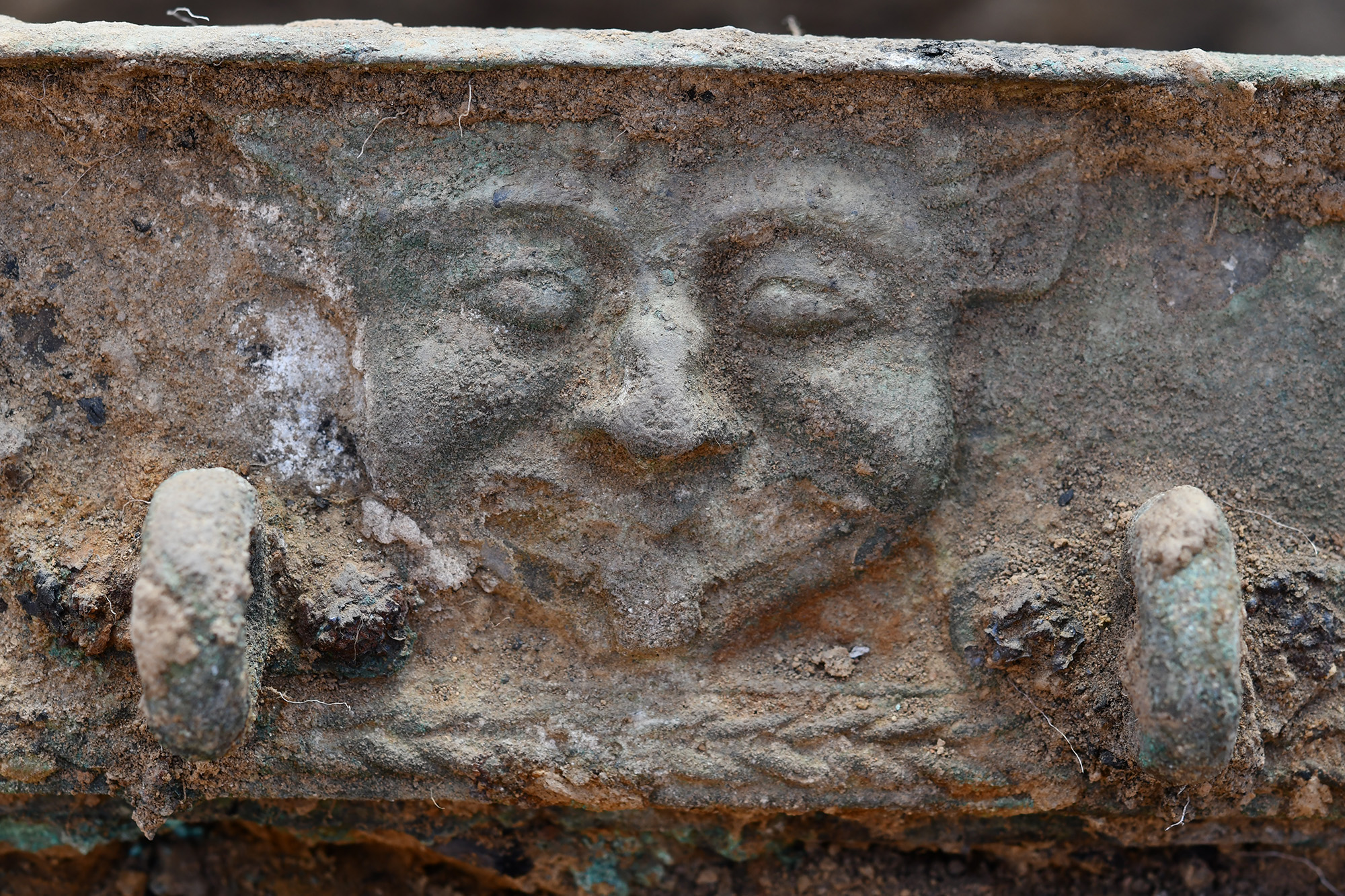
The side of the chariot showcases a face sticking out its tongue. This face appears to be an unusual fusion of a gorgon, an ancient protective symbol associated with Medusa; and Achelous, a powerful river god in Greek mythology who could turn into a bull, Guiomar Pulido GonzΓ‘lez, an archaeologist at the MΓ©rida Institute of Archaeology (part of the Spanish National Research Council) who was involved with the discovery, told Live Science.

Archaeologists unearthed part of the chariot, including two legs and two wheels, at an archaeological site called Casas del TuruΓ±uelo (Spanish for "Houses of TuruΓ±uelo") in Spain's Badajoz province, close to the border with Portugal. The two legs look like two people holding up the table part of the chariot.

A close up of a bronze chariot with a face carved into it.

A face on the chariot appears to be an unusual fusion of a gorgon and Achelous, a river god in Greek mythology who could turn into a bull. (Image credit: Construyendo Tarteso Project )

Both of the short sides of the chariot feature a mythical creature associated with safeguarding: a lion with wings and an eagle head, called a griffin. "All the figurative parts of the chariots point to protective divinities," Pulido explained, though "we are not sure what they are protecting β€ͺ—‬ maybe the content of the chariot, or the viewers looking at them."

Archaeologists have previously discovered similar chariots made by the Etruscans, a pre-Roman people who lived in Italy from about 900 to 100 B.C. However, the newfound one is the first known chariot to feature a gorgon-Achelous face mashup, and the first of its kind to be found in the Iberian Peninsula, according to Pulido, who is also a doctoral student at the Autonomous University of Madrid studying ancient Mediterranean imports throughout the Iberian Peninsula.

A series of images from an archaeological dig for a bronze chariot

Both of the short sides of the chariot feature a griffin, a mythical creature associated with safeguarding. (Image credit: Construyendo Tarteso ProjectΒ )

Restorers working on the artifact noticed that the two people holding the chariot are wearing skirts, which would be unusual for an Etruscan chariot; typically, Etruscan-crafted bronze figures are naked, Pulido said. Despite this anomaly, the theory is that the chariot was made by the Etruscans and arrived in modern-day Spain via trade routes.

The chariot was found in a layer suggesting it was discarded around the end of the fifth century B.C., though the design of the gorgon-Achelou face's iconography indicates that it could have been made as early as the sixth century B.C.

A series of images from an archaeological dig for a bronze chariot

The humanlike figures on the chariot are clothed, which is unusual because other Etruscan-crafted bronze figures are naked. (Image credit: Construyendo Tarteso Project)

An enigmatic people

The archaeological site that yielded the bronze chariot is in an area known as the Middle Guadiana River Valley, which has 14 known sites left behind by an enigmatic people that completely disappeared from the archaeological record around 400 B.C., Pulido noted. They were probably local populations that were heavily influenced by or mixed with the Tartessians, a civilization that settled in the Iberian Peninsula around the eighth century B.C. and was known for its elaborate writing system.

Each of the 14 sites holds the remains of burnt buildings that were subsequently filled in with soil and fragmented objects, Pulido said. The recently discovered chariot had been intentionally broken β€” it has no other damage besides being halved β€” and included in the debris.

An aerial view of an archaeological dig
Construyendo Tarteso Project
Three people wearing hats dig in the earthy ground with shovels. Part of the chariot emerges from the dirt.
Construyendo Tarteso Project

The current leading theory regarding these ruins is that, for some unknown reason and around the same time, the inhabitants of these centers burned down their buildings, filled them in and then abandoned the sites. The burning and filling seem to have been too intentional for it to have happened in the context of an enemy attack, according to Pulido. "Instead, they may have formed part of a carefully planned ritual of closure, a symbolic farewell to buildings that were intentionally decommissioned," she said.

Then, this culture "disappeared from the archaeological record," Pulido said. But other evidence, including imported pottery from Greece and other Etruscan bronze objects, suggests that whoever these people were, they participated in the ancient trade networks stretching across the Mediterranean, with their elite having enough wealth to afford imported objects, she said.

See if you know what these mysterious artifacts are with our archaeological fragments quiz!

Thousands of liberated Africans died on a remote island after the British Navy freed them. We now know where they came from.

16 July 2026 at 19:00

Little is known about the tens of thousands of liberated Africans who were buried on the remote Atlantic island of St. Helena in the 19th century. But now, a new chemical and dental analysis reveals where more than 150 of these individuals spent their childhoods in Africa.

About 27,000 liberated slaves ended up on St. Helena after the British Empire outlawed slave trading in 1807, with the Royal Navy enforcing the ban. St. Helena was used to drop off enslaved people whom the navy had liberated. However, about 8,000 of these newly liberated people, who were malnourished and in poor health, died on the South Atlantic island not long after landing there.

These burials were forgotten until they were found ahead of an airport construction project centuries later. The dig, carried out in 2007 and 2008, found the buried skeletons of the liberated slaves, according to a new study published Thursday (July 16) in the journal Science.

To determine the origins of the liberated slaves, scientists studied the teeth of 152 individuals, measuring the ratio of strontium isotopes, which are atoms of the element strontium that have a different number of neutrons in their nuclei. When a person's teeth grow during childhood, the strontium isotopes in the food they eat and the water they drink are incorporated into their tooth enamel. By studying the unique strontium ratios in a person's enamel, researchers can determine where individuals lived as children.

The study found that many of the liberated slaves lived near the coast of West Africa, although some lived farther inland.

"Most individuals likely came from coastal or near-coastal regions in western Central Africa, [and] others appear to have originated much farther inland, implying forced displacement over hundreds to thousands of kilometers before embarkation," the team wrote in the study.

In one case, a man who died between the ages of 19 and 25 had been moved from inland Angola to the coast as a child, between the ages of 7 and 9. The scientists detected this movement by comparing the isotope signatures of his teeth that grew when he was around 7 to those that grew when he was around 9. He may have been trafficked as a slave when he was between those ages, the team wrote in their paper.

It's "possible that their displacement during childhood was connected with their enslavement," study co-author Hannes Schroeder, an associate professor of molecular ecology and evolution at the Globe Institute at the University of Copenhagen, told Live Science in an email. Unfortunately, we don't know much else about this individual, Schroeder said.

In addition to this man, the study found evidence that at least 10 of the liberated slaves had been transported as children or early adolescents.

Schroeder said it's not clear if any of the people in the study have living descendants on St. Helena but it's unlikely given that these people probably died not long after landing on the island.

The team also used historical records and DNA analyses of 20 of the individuals to help determine where they were from. The DNA analysis "revealed affinities with present-day populations from Gabon and northern Angola, while also showing considerable diversity," the team wrote.

"These results are consistent with eyewitness accounts by Royal Navy personnel on the island, who reported multiple languages among the captives, including Congo and Benguela dialects," the team wrote, noting that the findings also align with historical records from Angola, Cuba and Brazil.

A series of people sit in chairs in a clearing

The reburial ceremony for the liberated slaves on St. Helena, a remote island in the Atlantic. (Image credit: Photo courtesy of the St Helena Museum)

"The tragedy of enslaved children"

The new study sheds much needed light on the lives of enslaved people, researchers told Live Science.

"This study is especially impactful because it investigates instances of slavery, where knowledge of individuals' ancestors and descendants have been erased from history," Steven Micheletti, a geneticist who has studied the trans-Atlantic slave trade but was not involved in the new research, told Live Science in an email. However, he said the study would have benefited from analyzing the DNA of more people.

David Head, a historian at the University of Central Florida who was not involved in the study, praised the study. We "know a lot about the embarkation/disembarkation of enslaved people, thanks to slave traders keeping records of their business but less about where people originate from and how they got to the ports," he said in an email. "It's not surprising that the study found most people came from relatively close to the coast but that there were cases of people who came from much farther inland as well."

What "seems most interesting to me is the promise of learning about individuals, which is often very hard to do since the slave traders kept the records," and records kept by slave traders tended not to include a lot of information on the lives of their slaves, Head added.

He was also struck by the study's findings that many of the enslaved people were moved at a young age. "It makes sense that slave traders wanted younger people, with the potential for many years as laborers, but to have [this] reinforced through their [teeth] reveals the tragedy of enslaved children."

Alex Bentley, an anthropology professor at the University of Tennessee who wrote an article discussing the study in the journal, praised the research, noting how it combined the isotope data with historical records and some DNA analysis.

This is important because "although strontium isotope ratios in human tooth enamel ultimately reflect local geology, they record a biologically available mixture of foods and water consumed while the tooth was forming during childhood," Bentley told Live Science in an email. "So it's rarely a unique geographic fingerprint." It's possible that similar approaches could be used to study the origins of enslaved people in the United States, Bentley added.

The remains were reburied in 2022. The scientists and members of St. Helena's community looked into the possibility of repatriating the remains to countries in Africa where the people came from, but no agreements were reached. In some cases, it would have been difficult to determine which country to return them to, the team noted in their paper.

Oops! Ancient Bronze Age shaman long assumed to be a man was actually a woman, DNA reveals

An Early Bronze Age metalworker and shaman discovered over 200 years ago in a lavish burial near Stonehenge and long assumed to be male was actually female, a new genetic analysis reveals.

The results of the ancient DNA analysis of the "Upton Lovell Shaman," carried out by researchers at the Francis Crick Institute in London, break the previously held stereotype of Early Bronze Age women, according to a statement from the Wiltshire Museum, where the remains and grave goods are housed.

"It completely tears up previous assumptions," David Dawson, director of the Wiltshire Museum, told The Guardian. "We're so used to the assumption [that] men do everything, men are the leaders, men are the metalworkers. Here we have smoking gun evidence of a female metalworker. And metalworking was the space science of its day."

The nearly 4,000-year-old burial was unearthed in 1801 near the village of Upton Lovell, about 10 miles (16 kilometers) west of Stonehenge. The human remains were surrounded by an unusually rich tool kit containing stone axes, metalworking implements with traces of gold on them, a touchstone for testing metal purity by comparing streaks left by different metals, and pierced animal bones that were likely once sewn onto a garment as decorations, hinting at a ceremonial cloak.

The mix of high-status metalworking tools and objects thought to have ritual significance led archaeologists to interpret the individual as a spiritual specialist, earning the remains the nickname, the "Upton Lovell Shaman."

William Cunnington, the English archaeologist who excavated the burial mound, known as a barrow, noted at the time that, "from the largeness of the bones," the burial "appeared to be a stout man," according to the statement. For the next two centuries, the individual's assumed sex was male, with its museum display depicting a bearded male figure.

Four hollow circles made of bone.

Among the grave goods were four fossil sponges hollowed out into cups, hinting that their owner was once a crafter. (Image credit: Wiltshire Museum)

The DNA analysis was originally intended to trace the individual's ancestry, but the results showed sex chromosomes of XX, instead of XY, catching the researchers off guard. To be certain, the team tested DNA from a tooth and a toe β€” and got the same answer each time, with no evidence that the grave held more than one person, according to the statement.

Other clues in the skeleton revealed more details about the individual. She stood around 5 feet, 4 inches (165 centimeters), which was unusually tall for a Bronze Age woman, and died at about age 45. She was robustly built, with arthritis in her right wrist but not her left β€ͺ—‬ a pattern that fits years of the repetitive work with metalworking tools, the statement reported.

A 2022 study found that the individual was likely a skilled goldsmith who fashioned gold ornaments. This ability may have seemed magical during the Bronze Age, Susan Greaney, an archaeologist at the University of Exeter who wasn't involved in the study, told Live Science at the time.

"The ability to transform other objects by the delicate and skilled process of covering them with gold sheet may have been seen as a magical or ritual process, a secret method known only to a few people," Greaney said in a 2022 email. "This research shows how metalworking was closely related to magical, ritual and religious beliefs."

This is not the first time an ancient elite individual has been mistakenly identified as male. For instance, an elite person from Sweden's Viking Age who was buried with weapons and strategy games was thought to be male but was later verified to be female, and a high-ranking individual from Copper Age Spain was thought to be male until a DNA analysis showed they were female.

"We now have a whole new understanding of this burial, rewriting their story, breaking stereotypes, and putting women front and centre in our understanding of early Bronze Age society," Lisa Brown, curator of the Wiltshire Museum, said in the statement.

The findings will be unveiled Thursday (July 16) in a new exhibition on ancient DNA, "We Go Way Back," opening at the Francis Crick Institute.

❌