Human T cell leukemia virus type 1, the first human retrovirus ever identified, infects an estimated 5 to 10 million people worldwide, a figure extrapolated from surveys covering only about one-seventh of the global population. The virus inserts a DNA copy of its RNA genome into the chromosomes of host T cells, establishing a lifelong infection that can drive a spectrum of diseases, including adult T cell leukemia/lymphoma, HTLV-1-associated myelopathy, and HTLV-1-associated uveitis, a chronic inflammation inside the eye that is particularly common in endemic regions such as Japan. Despite the scale of the problem, coordinated global action has been slow; the World Health Organization only published technical reports aimed at reducing HTLV-1-related morbidity and mortality in 2021, and no broadly effective intervention has emerged in decades of research.
Current treatment for the ocular disease relies heavily on corticosteroids, delivered as topical drops, injections into the eye, or oral prednisone. This approach has serious shortcomings. Studies indicate that 30 to 60 percent of patients with HTLV-1-associated uveitis experience recurrent episodes, and long-term steroid exposure can trigger cataracts, glaucoma, macular edema, epiretinal membranes, retinal degeneration, optic nerve atrophy, and bullous keratopathy. Most importantly, corticosteroids suppress inflammation without reducing the number of virus-infected cells or halting disease progression. Newer molecular targeted agents, including the anti-CCR4 antibody mogamulizumab and the immunomodulatory drug lenalidomide, have been explored, but treatment-related inflammation and adverse effects remain significant obstacles. This therapeutic gap motivated a team led by Yaru Zou and Koju Kamoi of Tokyo Medical and Dental University to investigate whether an epigenetic drug already approved for blood cancer could address the root of the ocular inflammation.
The drug in question is valemetostat, marketed as EZHARMIA, a dual inhibitor of the enzymes EZH1 and EZH2 that was approved in 2022 for adult T cell leukemia/lymphoma. Both enzymes are the catalytic components of polycomb repressive complex 2, a molecular machine that silences genes by adding three methyl groups to lysine 27 on histone H3, producing the repressive chromatin mark known as H3K27me3. Previous work had shown that EZH1 and EZH2 are overexpressed, and H3K27me3 deposition increased, in ATL cells and in cells expressing the viral oncoprotein Tax. Dual EZH1/2 inhibitors have also been reported to curb the spontaneous proliferation and exaggerated immune responses of HTLV-1-infected cells in patients with HTLV-1-associated myelopathy. What remained unknown was whether such inhibition could benefit the inflamed eye.
To find out, the researchers built a series of laboratory models centered on ARPE-19 cells, a human retinal pigment epithelial cell line chosen because the retinal pigment epithelium forms the outer blood-retinal barrier and governs retinal immune homeostasis. They exposed these ocular cells to three kinds of T cells: MT-2 cells, which carry transcriptionally active HTLV-1 and express the viral protein Tax; TL-Om1 cells, an ATL-derived line in which the virus is largely silent and Tax is low or absent; and Jurkat cells, which are uninfected and served as controls. In parallel, they treated the T cell lines themselves. Western blotting and quantitative PCR revealed that HTLV-1 infection drove significant upregulation of both EZH1 and EZH2, along with elevated H3K27me3, in infected retinal pigment epithelial cells and in MT-2 cells, with EZH1 protein rising roughly 2.5-fold in infected ocular cells and six-fold in MT-2 cells. This was the first demonstration that HTLV-1 infection induces polycomb-mediated epigenetic changes in retinal cells.
The team then treated the models with valemetostat at 0.01, 0.1, and 1 micromolar for 96 hours, concentrations selected in preliminary experiments because they harmed infected T cells while leaving normal ocular cells, including primary human trabecular meshwork cells, unaffected below 10 micromolar. The results were strikingly dependent on the model. In co-cultures of retinal cells with Tax-positive MT-2 cells, and in retinal cells directly infected with HTLV-1, the drug produced modest but statistically significant reductions in cell viability at the highest dose, accompanied by small increases in late-stage apoptosis. No such effects appeared in co-cultures with TL-Om1 or Jurkat cells. Crucially, the absolute magnitude of apoptosis remained limited, typically only 1 to 3 percent above baseline, indicating that valemetostat is not broadly toxic to retinal cells, an important safety consideration given their role in maintaining vision.
The virological findings were equally nuanced. Valemetostat did not significantly reduce the HTLV-1 proviral load in co-culture systems or in directly infected retinal pigment epithelial cells. However, in MT-2 cells themselves, 1 micromolar valemetostat significantly lowered proviral load and suppressed the messenger RNA levels of both Tax and HBZ, the two hallmark transcripts of the virus. Because MT-2 cells represent the transcriptionally active, highly infectious state of HTLV-1, while TL-Om1 represents latency, the results suggest that the drug’s antiviral effect is gated by the transcriptional status of the infected cell. Within the four-day treatment window, the authors conclude, valemetostat’s benefit to the ocular environment is likely indirect, acting primarily by quieting the most virally active cells rather than by eradicating provirus everywhere.
The most clinically relevant effects emerged in the inflammatory readouts. HTLV-1-infected T cells recovered from the eyes of patients with uveitis are known to secrete copious interleukin-6, interleukin-8, and interleukin-10, all implicated in disease. In the new study, valemetostat produced a dose-dependent increase in the anti-inflammatory cytokine IL-10 in MT-2-containing conditions, significant at 1 micromolar in the co-culture system and across all doses in MT-2 cells. This fits a mechanistic expectation: blocking EZH1/2 removes H3K27me3 marks that repress the IL-10 gene, and prior genetic studies showed that loss of EZH2 directly activates IL-10 transcription in several CD4-positive T cell subsets. Meanwhile, pro-inflammatory signals fell in a context-dependent pattern. IL-12p70 and the chemokine CXCL-10 dropped in co-cultures, IL-6 and IL-8 declined mainly in MT-2 cells, and CCL-2 fell at low doses in the MT-2 co-culture, whereas the chemokine CCL-5 was unchanged in every model.
The drug’s influence on NF-kappaB, the central inflammatory pathway that Tax hijacks to drive both viral replication and cytokine production, was more subdued. Valemetostat modestly reduced NF-kappaB p65 phosphorylation in the MT-2 co-culture at the lowest dose and slightly decreased the nuclear-to-cytoplasmic ratio of p65 in retinal cells stimulated with TNF-alpha, but it did not abolish nuclear translocation. The authors attribute this to the overwhelming strength of Tax-driven NF-kappaB activation, which a 96-hour course of EZH1/2 inhibition may be insufficient to counteract, and to the fact that NF-kappaB and cytokine networks are regulated by many factors beyond polycomb complexes. Immunofluorescence confirmed that valemetostat significantly lowered H3K27me3 in retinal cells exposed to MT-2 cells or directly infected, but not in cells co-cultured with TL-Om1 or Jurkat cells, again underscoring the model dependence of the epigenetic response.
The study also carries a cautionary note about IL-10. Although the cytokine is anti-inflammatory, it can promote the survival of HTLV-1-infected T cells and facilitate immune evasion by impairing dendritic cell antigen presentation and downregulating MHC class I molecules, and patients with aggressive ATL often show abnormally elevated IL-10. The authors therefore suggest that combining EZH1/2 inhibition with IL-10 pathway blockade could prove more effective, noting evidence that IL-10 neutralization sensitizes ATL cells to standard therapies. In the TL-Om1 model of ATL-related ocular infiltration, valemetostat failed to reduce H3K27me3, proviral load, or NF-kappaB activation within the malignant cells, yet it suppressed TL-Om1-induced CXCL10 secretion and induced dose-dependent apoptosis, pointing to a benefit mediated through the inflammatory microenvironment rather than direct tumor killing.
The authors are candid about the limitations. The work relied entirely on in vitro co-cultures and established cell lines, which cannot reproduce the blood-retinal barrier, retinal architecture, or local immune regulation of a living eye, and the intraocular pharmacokinetics of valemetostat after systemic administration remain undefined. Sex as a biological variable could not be assessed because donor-defined primary cells were not used. Even so, the findings establish a proof of concept that an approved epigenetic therapy can counteract HTLV-1-induced chromatin changes in retinal cells, dampen viral transcription in the most active infected cells, and reshape the cytokine milieu that sustains uveitis. Longer treatment studies, in vivo models, and patient-derived systems will be needed to determine whether these modest, context-dependent effects can be translated into a genuine steroid-sparing therapy for one of the most burdensome manifestations of a virus that medicine has long neglected.
Subject of Research: EZH1/2-targeted epigenetic therapy with valemetostat for HTLV-1-associated uveitis
Article Title: Dual impact of EZH1/2-targeted therapy in HTLV-1-associated inflammation: Direct and indirect mechanisms
Article References: Zou, Y., Kamoi, K., Yang, M., Zong, Y., Zhang, J., & Ohno-Matsui, K. (2026). Dual impact of EZH1/2-targeted therapy in HTLV-1-associated inflammation: Direct and indirect mechanisms. iScience, 29(11), Article 117775. https://doi.org/10.1016/j.isci.2026.117775
Inside every stressed cell, a quiet emergency response unfolds. When oxygen runs low, toxins accumulate, or nutrients grow scarce, mammalian cells assemble temporary structures known as stress granules, non-membranous aggregates of proteins and RNA that condense in the cytoplasm. In healthy tissue, these assemblies act as a protective pause button, halting protein production so the cell can weather the storm and resume normal function once conditions improve. But a new study suggests that in oral squamous cell carcinoma, one of the most common and disfiguring malignancies of the head and neck, this ancient survival machinery may be hijacked to serve a darker purpose: helping tumors grow and spread.
The research, conducted by a team at Kangwon National University in South Korea and published in Cell Death Discovery, examined how stress granule formation influences tumor progression and metastasis in oral squamous cell carcinoma, or OSCC. The findings point to a specific molecular switch, the phosphorylation of a protein called eIF2α, as a central driver of the process. When that switch is suppressed, the study reports, stress granule formation drops, and with it the growth and metastatic burden of tumors in mouse models. The work adds oral cancer to a growing list of malignancies in which the integrated stress response appears to fuel, rather than restrain, disease.
To understand why this matters, it helps to consider what stress granules actually do. Under stress, cells activate kinases that phosphorylate eIF2α, the alpha subunit of a translation initiation factor. Phosphorylated eIF2α dampens global protein synthesis, and the messenger RNAs that would otherwise be translated are instead sequestered, along with RNA-binding proteins, into dense cytoplasmic droplets. Key markers of these structures include G3BP1, TIAR, and PABP, proteins that researchers use to identify stress granules under the microscope. In normal cells, this translational arrest conserves energy and prevents the accumulation of damaged or misfolded proteins. The system is meant to be reversible: when the stress passes, the granules dissolve and translation restarts.
Cancer cells, however, live in a state of chronic stress. Tumors outgrow their blood supply, creating regions of hypoxia, low oxygen tension that would kill most normal cells. They also face nutrient deprivation, acidic microenvironments, and assault from chemotherapy and radiation. In this context, the stress response can become a liability for the patient rather than a safeguard for the cell. Previous work in other cancers has implicated stress granules in tumor progression and metastasis, partly through their interactions with key signaling pathways, but their role in oral squamous cell carcinoma had remained poorly understood, despite growing scientific interest in the topic.
The Korean team began by comparing human tumor tissue with adjacent normal tissue. They found that markers of stress granules, including G3BP1, eIF2α, TIAR, and PABP, were significantly overexpressed in OSCC tissues compared with their normal counterparts. This observation established that the stress granule machinery is not merely present in oral cancer but is amplified, suggesting that tumor cells may rely on it more heavily than the healthy cells around them. Overexpression of these markers alone does not prove causation, but it set the stage for the functional experiments that followed.
Those experiments turned to mouse models built from OSCC cells that had been preconditioned with hypoxia, deliberately exposing the cells to low oxygen before implantation. The logic was to mimic the stressful conditions tumor cells encounter in a real growing tumor and to ask whether cells that had already mounted a stress response behaved differently afterward. In parallel, the researchers used a compound called ISRIB, an inhibitor of the integrated stress response that acts downstream of eIF2α phosphorylation, in mice subjected to sodium arsenite-induced stress. Sodium arsenite is a classic laboratory trigger of oxidative stress and a reliable inducer of stress granule formation, making it a useful tool for probing the pathway.
The results were striking. In both experimental settings, suppression of eIF2α phosphorylation was associated with reduced stress granule formation, reduced tumor growth, and a reduced metastatic burden. In other words, when the researchers blocked the molecular event that nucleates stress granules, the tumors not only grew more slowly but also spread less aggressively. Conversely, the study found that stress granule formation was elevated during hypoxia-induced stress, underscoring a stress-responsive regulatory mechanism in which the harsh conditions of the tumor microenvironment actively promote the assembly of these granules. Together, the data sketch a coherent chain of causation: hypoxia and other stresses trigger eIF2α phosphorylation, phosphorylation drives stress granule assembly, and the granules support the cellular programs that allow OSCC cells to proliferate and colonize distant sites.
Why would a structure designed to protect cells become an engine of metastasis? The authors and other researchers in the field point to the selective nature of stress granules. While global translation is arrested, certain messenger RNAs are preferentially stored within the granules and protected from degradation. Among the transcripts sheltered this way are often those encoding proteins that promote survival, invasion, and epithelial-to-mesenchymal transition, the process by which stationary epithelial cancer cells acquire the motility needed to invade surrounding tissue and enter the bloodstream. By acting as temporary warehouses for pro-metastatic messages, stress granules may allow tumor cells to stockpile the tools of aggression, releasing them for translation once the acute stress subsides. In this view, the granule is not merely a damage-control structure but a staging ground for the next phase of tumor progression.
The therapeutic implications are considerable. Oral squamous cell carcinoma is frequently diagnosed at advanced stages, and metastasis to cervical lymph nodes is one of the strongest predictors of poor outcome. Existing treatments, surgery, radiation, and chemotherapy, remain limited in their ability to control disseminated disease. If stress granule formation genuinely drives metastatic behavior, then the pathway offers a new target. ISRIB, the compound used in the mouse experiments, has attracted attention in recent years for its ability to blunt the integrated stress response, and the new findings suggest that agents with a similar mechanism could be explored as anti-metastatic therapies in oral cancer. The authors conclude that stress granules promote OSCC progression via eIF2α phosphorylation and might serve as a novel therapeutic target, a formulation that is deliberately cautious but clinically suggestive.
As with any preclinical study, important caveats apply. The evidence comes from human tissue comparisons and mouse models, and translating these findings into patients will require further work to confirm that the same mechanism operates in human tumors in real time, to identify which patient subsets have the highest stress granule activity, and to develop inhibitors with acceptable safety profiles. Suppressing a fundamental cellular stress pathway carries risks, since normal tissues also rely on the integrated stress response during injury and inflammation. Still, the study fills a genuine gap in the literature by connecting a well-characterized cellular stress mechanism to one of the most clinically feared behaviors of oral cancer. It also adds to a broader shift in cancer biology: the recognition that tumors are not just collections of mutated genes but ecosystems shaped by physical and chemical stress, and that the survival programs cells use to endure hardship can be turned against the organism that hosts them. For patients with oral squamous cell carcinoma, whose disease too often spreads before it can be stopped, the humble stress granule may prove to be an unexpected and consequential adversary.
Subject of Research: The role of stress-induced eIF2α phosphorylation and stress granule formation in promoting metastasis of oral squamous cell carcinoma
Article References: Kim, S., Park, S., Lee, Y., Park, G., & Choi, J. (2026). Stress-induced eIF2α phosphorylation promotes tumor metastasis in oral squamous cell carcinoma. Cell Death Discovery. https://doi.org/10.1038/s41420-026-03412-4
Frost is one of the most punishing adversaries of tea cultivation. A single cold snap can scorch tender leaves, derail an entire season’s harvest, and degrade the delicate chemistry that gives tea its value. For growers and breeders, however, judging how badly a field has been damaged has long been a stubbornly subjective exercise: visual ratings lump continuous injury into crude categories, and laboratory assays destroy the very tissue they measure. A new study published in Plant Methods by Zhengtong He of Shihezi University, Zhiwei Chen of the Tea Research Institute of Shandong Academy of Agricultural Sciences, and colleagues offers a way out, pairing hyperspectral imaging with a purpose-built deep learning model to read frost damage directly from the way leaves reflect light.
The core problem the team confronted is that frost injury is not a binary event but a continuum. Leaves exposed to sub-zero temperatures suffer a cascade of overlapping stresses: photosynthetic pigments degrade, the machinery of photosynthesis falters, and cell membranes and walls break down. Any single measurement captures only a sliver of that cascade. To capture the whole picture, the researchers collected hyperspectral data together with eight key physicochemical indicators from tea plants growing across natural frost damage gradients in the field, rather than in the artificial conditions of a growth chamber. From these multidimensional physiological responses they constructed a composite measure, the tea cold stress response index, or TCSRI, which expresses frost damage severity as a continuous value instead of a coarse visual class.
Building TCSRI is a meaningful advance in itself. Traditional frost assessment often relies on ordinal scales, where an observer assigns a score of mild, moderate, or severe. Such scales throw away information and make it difficult to track recovery or compare cultivars with fine precision. By integrating several physiological dimensions into one index, the team created a target variable that reflects the plant’s actual internal state. The challenge then became predicting that index, and the individual chemical indicators behind it, from spectral data alone, without touching or destroying a single leaf.
Hyperspectral sensing is well suited to this task in principle. Across hundreds of narrow wavelength bands, plant leaves encode a wealth of information: chlorophyll absorption in the visible range, water and structural features in the near infrared. But the data are high-dimensional, with far more spectral channels than samples, a regime that invites overfitting, especially in field studies where collecting ground-truth measurements is laborious. Conventional chemometric approaches, from partial least squares regression to standard machine learning pipelines, often struggle to separate genuine physiological signals from noise, sensor drift, and the confounding effects of leaf surface properties and illumination variation.
The researchers’ answer is a model they call STAMPformer, short for spectral-prior-guided multi-view attention pooling. Its architecture reflects a deliberate design philosophy: rather than letting a neural network rediscover everything from scratch, the model is steered by what spectroscopists already know about how plants respond to stress. At its front end, a parameter-free attention convolution extraction module jointly models both the raw reflectance spectra and their first-order derivatives. Derivative spectra are a classic spectral prior: they accentuate subtle local features such as absorption peaks and shoulders that are easily drowned out in raw reflectance, while suppressing broad baseline drift and noise. By processing both views together, the module sharpens the local spectral signatures that carry physiological meaning.
On top of this extraction stage sits the second innovation, a multi-view attention pooling module. Deep networks processing spectral sequences produce long streams of features, but not all wavelengths matter equally for a given prediction. The pooling module adaptively aggregates sequence features drawn from different feature subspaces, learning to amplify the responses that are most diagnostic of cold stress and to down-weight the rest. This attention mechanism acts like a learned spotlight, and because it operates across multiple subspaces, it can capture complementary patterns that a single attention head might miss. The result is a compact representation tailored to the prediction task at hand, whether that is estimating a specific chemical indicator or the composite TCSRI.
The performance numbers are striking. Across all nine prediction tasks, spanning the eight physicochemical indicators and the TCSRI itself, STAMPformer achieved coefficients of determination above 0.87 and ratios of performance to deviation above 2.80, thresholds generally regarded as indicating reliable quantitative prediction. In other words, from a leaf’s reflectance fingerprint alone, the model could reconstruct the plant’s internal frost-stress state with an accuracy that approaches laboratory measurement, while remaining entirely non-destructive. The team did not stop at headline metrics. Ablation experiments systematically removed each proposed module to confirm that both the attention convolution extraction and the multi-view pooling contributed measurably to the gains, and paired statistical tests across multiple random seeds ensured the improvements were not artifacts of a lucky initialization.
Interpretability was a further priority, and here the study delivers something rarer than raw accuracy. Applying SHAP analysis, a technique that attributes each prediction to the contributions of individual input features, the researchers identified the wavelengths the model relied on most heavily. These key spectral regions correspond to physiologically meaningful processes: pigment degradation, photosynthetic impairment, and the disruption of cellular structure. That alignment between machine attention and plant biology matters on two fronts. It gives spectroscopists confidence that the model has learned genuine stress signatures rather than spurious correlations, and it hands plant physiologists a data-driven map of which parts of the spectrum track which facets of cold injury, potentially guiding future sensor design and breeding assays.
Crucially, the model also proved itself on data it had never seen. Independent external validation, using samples not involved in training, demonstrated that STAMPformer’s predictive ability generalizes beyond its original dataset, addressing one of the most common failure modes of machine learning in agricultural sensing. For a field where models are often tuned and tested on the same plots, this external check is an important credibility marker, suggesting the framework could be deployed across different farms, seasons, and frost events rather than remaining a laboratory curiosity.
The practical implications reach well beyond tea. An accurate, non-destructive, continuous measure of cold damage opens the door to rapid post-frost field surveys, letting growers quantify losses within hours instead of waiting for symptoms to develop or sending samples to a lab. For breeders screening for cold-tolerant germplasm, a spectral readout of TCSRI could accelerate the evaluation of hundreds of candidate lines without destructive sampling. And in the emerging vision of the smart tea garden, where drones and handheld spectrometers roam the rows, a model like STAMPformer could feed real-time frost maps into irrigation, shading, and recovery-management decisions. The authors frame their work as supporting frost monitoring, cold-tolerant germplasm evaluation, and intelligent garden management, and the architecture’s reliance on general spectral priors rather than tea-specific tricks suggests the approach could be adapted to other crops facing abiotic stress. As climate variability makes late-season frosts increasingly erratic, tools that turn light reflected from a leaf into a precise physiological diagnosis may become as essential to the tea garden as the thermometer.
Subject of Research: Hyperspectral deep learning prediction of continuous frost damage severity in tea plants
Article Title: STAMPformer: spectral-prior-guided multi-view attention learning for hyperspectral prediction of continuous frost damage severity in field-grown tea plants
Article References: He, Z., Chen, Z., Ding, Z., Wang, Z., Zhang, F., Zhao, Y., & Dong, C. (2026). STAMPformer: spectral-prior-guided multi-view attention learning for hyperspectral prediction of continuous frost damage severity in field-grown tea plants. Plant Methods. https://doi.org/10.1186/s13007-026-01597-4
Buildings are responsible for an enormous share of global electricity demand, and the way their air conditioners, lights, and heating systems are scheduled can make the difference between a grid under strain and one running smoothly. For years, engineers have tried to optimize these schedules with evolutionary algorithms and reinforcement learning, but the problem becomes brutally hard when dozens of buildings share a single electrical network and must be coordinated simultaneously. A new study published in Discover Artificial Intelligence proposes a strikingly different approach: instead of searching step by step for the best schedule, a generative artificial intelligence model learns to paint one directly out of pure noise, guided by a map of how the buildings are physically wired together.
The framework, called DMCBO, short for Diffusion-driven Multi-objective Collaborative Optimization for Building Clusters, was developed by Yalan Zheng of Zhengzhou Technical College and Taixiang Yin of North China University of Water Resources and Electric Power. Their central insight is that the joint scheduling of equipment settings and load distribution across an entire cluster of buildings can be treated as a high-dimensional data sample, much like an image. Diffusion models, the same family of generative techniques behind modern text-to-image systems, work by progressively corrupting data with Gaussian noise and then learning to reverse that corruption. The researchers reformulated multi-objective building optimization as exactly this kind of conditional denoising process: starting from random noise, the model strips away noise step by step until a complete, Pareto-optimal collaborative schedule for every piece of equipment in every building emerges.
Technically, the forward diffusion process is a fixed Markov chain that adds tiny amounts of Gaussian noise to real scheduling data over one hundred steps, with the noise coefficient increasing linearly from 0.0001 to 0.02 until the original data becomes indistinguishable from standard Gaussian noise. A neural network is then trained to predict the noise that was added at each step, given the noisy schedule and a conditional encoding vector describing the current situation. Once trained, the model can generate fresh solutions at inference time by sampling pure noise and running the reverse process, refining it over one hundred denoising steps into a schedule tailored to the prevailing weather, occupancy, and grid conditions. Because this generation is a gradient-based learning process rather than an iterative search, it avoids the local optima traps that plague traditional multi-objective evolutionary algorithms and the reward oscillations that destabilize deep reinforcement learning.
What makes the system genuinely cluster-aware is its use of graph neural networks. The researchers model the building cluster as a graph mapped onto a radial distribution microgrid topology, where nodes represent buildings and edges encode physical constraints such as maximum line thermal capacities and transformer limits. A two-layer graph convolutional network passes messages between neighboring buildings, fusing spatial-topological dependencies and network constraints into a single graph embedding. This embedding is concatenated with an adjustable preference weight vector to form the condition that steers the denoising trajectory. In effect, when the model generates a control strategy for one building, it simultaneously perceives the state of its neighbors and the limits of the shared electrical infrastructure, suppressing systemic coordination errors from 0.18 down to 0.06 in the team’s experiments.
The multi-objective aspect is handled through an elegant scalarization trick. Each objective, such as energy consumption, operating cost, or thermal comfort, is normalized to a dimensionless value between zero and one using Min-Max normalization based on historical operational bounds. The normalized objectives are then blended into a single scalar condition via a weight vector whose components sum to one. During training, these weights are sampled from a uniform Dirichlet distribution, exposing the model to the entire space of possible preferences so it learns the distribution of the full Pareto front. At deployment, a decision maker can slide the weight vector like an adjustment knob, instantly generating schedules that emphasize energy saving, comfort, or a balanced compromise, all within the same trained model.
The denoising backbone itself is a U-Net adapted to process one- and two-dimensional building scheduling tensors. Diffusion time steps are embedded through sinusoidal positional encodings, while the graph-derived condition is injected into every residual block via Adaptive Layer Normalization. A bottleneck layer with multi-head self-attention captures long-range dependencies across the entire daily scheduling horizon, and symmetric skip connections preserve high-resolution information during reconstruction. The authors trained the model for 300 epochs on dual NVIDIA Tesla V100 GPUs, and the loss curves dropped from 0.75 to below 0.03 with training and validation curves closely coinciding, indicating no overfitting. As the reverse diffusion step count decreased from 90 to 10 during analysis, the noise-prediction error distribution became sharply concentrated at zero, demonstrating extremely high denoising precision at the end of generation.
Validation was carried out on the open-access Building Data Genome Project 2 dataset, which supplied real hourly weather records, operational schedules, and annual electricity, cooling, and heating load profiles across diverse climate zones. Because that dataset provides metered energy data rather than physical building models, the team used United States Department of Energy Commercial Reference Buildings as templates and calibrated them in EnergyPlus, a high-fidelity thermodynamic simulation platform, to create a digital twin consistent with the real data. All results were benchmarked against a rule-based control strategy with static thermostat setpoints of 25 degrees Celsius in summer and 22 degrees in winter, and every experiment was repeated ten independent times to confirm statistical significance.
The headline numbers are impressive. In high-demand summer conditions, DMCBO achieved an average energy-saving rate of 28.6 percent and cut peak load by 38.5 percent, shaving the afternoon peak from roughly 560 kilowatts down to about 440 kilowatts and saving approximately 142.80 US dollars per day. Cumulative daily power savings exceeded 1,000 kilowatt-hours, compared with 400 kilowatt-hours for a traditional collaborative strategy and just 120 kilowatt-hours without coordination. In winter, peak shaving and valley filling reached about 39 and 42 percent respectively, far above the 22 and 25 percent of conventional methods. When the solution sets were projected into objective space, DMCBO dominated the baselines: it reached a hypervolume indicator of 0.95 within 12,000 function evaluations, versus 0.85 for NSGA-II and 0.70 for MOPSO, while keeping operating costs between 140 and 160 dollars against more than 210 dollars for deep reinforcement learning and 260 to 300 dollars for a GAN-based generative approach.
Robustness and scalability proved equally compelling. Under injected stochastic disturbances mimicking sudden weather changes and occupancy swings, the framework confined power fluctuations to a narrow band of plus or minus 5 kilowatts, whereas the deep reinforcement learning baseline swung between minus 15 and plus 20 kilowatts. Scaling from 5 to 50 buildings, the global energy-saving rate actually rose from 28.5 to 31.2 percent, because larger clusters unlock more load-complementary opportunities that the graph encoder can safely exploit within encoded grid boundaries. Computation time grew to 9.8 seconds at the 50-building scale, but that remains comfortably within the 15-minute control horizon used by real building management systems, and the hypervolume index slipped only slightly to 0.88. Ablation experiments confirmed that both the graph neural network module and the choice of 100 diffusion steps, which yields a 50-millisecond inference latency, were essential to this balance of speed, accuracy, and stability.
The authors are candid about limitations. The framework has so far been validated only in simulation, and EnergyPlus simplifies sub-minute mechanical actuation latencies that real HVAC hardware would introduce; they propose cascading PID loops and predictive safety margins to absorb those delays in practice. Data quality, generalization to residential buildings and extreme climates, the computational cost of scaling to city-sized networks, and the black-box nature of the generative process all remain open challenges, with explainable AI and transfer learning flagged as future work. Still, the architecture is designed to slot into standard building management systems as a supervisory layer, transmitting setpoints over protocols such as BACnet or Modbus. If the simulation gains survive contact with physical buildings, the idea of generating optimal energy schedules from noise, guided by a graph of the grid itself, could become a powerful new tool in the push toward decarbonized cities.
Subject of Research: Conditional diffusion models with graph neural networks for multi-objective energy optimization in building clusters
Article Title: Diffusion model-driven multi-objective collaborative optimization for building energy management using graph neural networks
Article References: Zheng, Y., & Yin, T. (2026). Diffusion model-driven multi-objective collaborative optimization for building energy management using graph neural networks. Discover Artificial Intelligence, 6(1), Article 1383. https://doi.org/10.1007/s44163-026-02140-z
Keywords: diffusion models, graph neural networks, building energy management, multi-objective optimization, EnergyPlus, smart buildings, Pareto optimization, deep learning, energy efficiency, HVAC control, microgrids, generative AI
Major TV networks were notified on Friday that the department was examining whether they violated antitrust laws when they suspended pool coverage of President Trump.
The Philadelphia Police Department said the agents had also sent in a false homicide tip. The incidents led the White House to call for better disclosure of rogue A.I. behavior.
What was it like during the Golden age of Piracy? In this DRAIN THE OCEANS MEGA episode, join National Geographic to examine and uncover shipwrecks and lost treasures. The Drain the Oceans team analyzes the richest wrecks ever find, the long-lost shipwrecks of the legendary pirate captains of the Caribbean, and the battle for the Black Swan, worth over half-a billion dollars.
Featuring three, full episodes:
Sunken Treasure Ships - 00:00
Treasure hunting has captured our imaginations for centuries. Draining the oceans reveals the richest wrecks ever found.
Pirate Ships of the Caribbean - 47:02
Uncovering the long-lost shipwrecks of legendary captains reveals why the Caribbean — more than all other seas — became famous for pirates.
The Battle for the Black Swan - 1:33:54
Archaeologists and treasure hunters battle it out over half a billion dollars worth of gold and silver. Who will win the Battle for the Black Swan?
Drain the Oceans | Pirate Special
Subscribe: https://www.youtube.com/natgeo
Stream more on Disney+
➡ Disney Plus: https://www.disneyplus.com/browse/national-geographic
Get unlimited access to National Geographic stories, photography, and more by subscribing today:
➡ National Geographic Magazines: https://natgeo.com/ytngmagazine
#NationalGeographic #DrainTheOceans #MegaEpisode
About National Geographic: National Geographic is the world's premium destination for critically acclaimed storytelling around science and exploration. Discover amazing wildlife, ancient civilizations, hidden worlds, and the incredible wonders of our Earth. Through world-class scientists, photographers, journalists, and filmmakers, Nat Geo inspires fans of all ages to connect with, explore, and care about the world.
Discovering Long-Lost Pirate Ships | Drain the Oceans MEGA Episode | National Geographic
https://youtu.be/1YdZast_RLg
The written word is one of humanity's most important information technologies. Without it, mathematical and scientific discoveries would be lost to history. But it can also lock ideas in place long after they've stopped making sense.
So does writing speed up cultural change or slow it down?
Russell Gray, a professor in the Department of Linguistic and Cultural Evolution at the Max Planck Institute for Evolutionary Anthropology in Germany, heads a research project investigating how writing affects the way languages change. His team uses methods borrowed from evolutionary biology to trace languages through family trees — similar to the way biologists trace species.
Language is one element of culture that researchers can measure to determine whether writing speeds up or slows down cultural change.
"The obvious answer," Gray said, is that writing slows culture down because writing "is all codified and specified and people get trained in it." Gray doesn’t think the obvious answer is necessarily the right one. But other researchers agree that writing can lock in ways of thinking.
"Writing can lead to what learning psychologists sometimes call 'canalization,'" Charles Perreault, an associate professor in the School of Human Evolution and Social Change at Arizona State University, told Live Science in an email. "It can narrow the range of ways people think about a problem. When a rule, method, or story is written down, people may come to see it as the correct version … and may not even consider that a better or different way could exist."
Religious texts and legal codes are good examples. In both cases, the interpretation of rules written hundreds — or even thousands — of years ago shapes the way things are done, long after the circumstances that produced them have changed.
Eadwine the Scribe, from a 12th Century psalter written at Christ Church, Canterbury by Eadwine. For much of the Middle Ages and before the invention of the printing press, transcriptions written by monks were the primary cultural bridge preserving early Christian writings, and classic Greek and Latin texts, for posterity. (Image credit: UniversalImagesGroup via Getty Images)
This idea shows up in artistic expression, too: A 2017 analysis by ethnomusicologist Patrick Savage looked at more than 4,000 British-American ballads from the 16th through 20th centuries and found that written melodies changed less than those shared through oral tradition.
But there are also ways that writing may speed up cultural change.
"Before writing, much cultural knowledge had to be stored in people's brains," Perreault said. "That has obvious limits."
People forget things they don't study routinely, and when people die, their knowledge often dies with them. Because writing moves information storage beyond the human brain, it can reduce those losses, Perreault said.
"If writing prevents knowledge from being lost, and if it also helps information spread through a society, as with the printing press, then it could accelerate the ratchet effect of cumulative cultural evolution," Perreault said. "But this remains, to some extent, a hypothesis."
By the book
One reason the question of whether written language speeds or slows cultural evolution is that writing is hard to separate from everything that comes with it.
Writing has been separately invented only around four times in human history — although "some people argue there's a fifth in India," Gray said — which means nearly every writing system on Earth descends from that handful. Those systems spread through contact; trade, war, religion and the other ways humans intermingle had their own effects on cultural change that are hard to untangle from the effects of writing.
Also, "mass literacy is quite recent," Gray said. "If you've got these written varieties that are just used by, often, religious elites, that's potentially going to have much less impact."
So which force wins? Both experts think writing speeds up cultural change, though neither can prove it yet.
"I would say that writing probably speeds up cultural change overall," Perreault said. Gray agreed, though he acknowledged that most people would guess the opposite.
Still, Perreault cautioned, "these are empirical questions that have yet to be answered empirically."
I primi notebook con NVIDIA RTX Spark N1X si possono già configurare e ordinare in Italia: per la nuova piattaforma NVIDIA si parte da poco più di 3.000 euro e si arriva a oltre 6.000, con la differenza di prezzo legata quasi esclusivamente alla memoria.... Leggi tutto
Flu season is off to an early start in some parts of the U.S., data shows.
In a typical year, U.S. flu activity starts building in late fall — typically in October or November — and peaks between December and February. This year, flu activity is currently low but rising nationwide: During the week ending Sept. 26, 3.4% of respiratory samples tested by clinical labs were positive for flu, according to Centers for Disease Control and Prevention (CDC) data.
That's about seven times the rate that was seen at the same point last year. About 0.5% of samples tested positive during the week ending Sept. 27, 2025.
"This particular year, it appears to be starting early — like right now," Dr. William Schaffner, a professor of preventive medicine and infectious diseases at Vanderbilt Health in Tennessee, told Live Science. Patients at clinics in his area are already testing positive for flu, he said.
The early uptick in flu is mostly unfolding in Western states, including Washington, California and Arizona. In Washington, for example, the share of emergency department visits diagnosed as flu climbed from 0.25% in the week ending Aug. 29 to 1.34% in the week ending Oct. 3, according to CDC emergency department data. That's a more than fivefold increase over six weeks.
Where the flu took off first isn't a warning sign in itself, Schaffner noted.
"There's nothing unusual about flu starting in the West Coast and moving east," he said. Recent seasons have more often begun in the Southeast or Midwest, he noted, but "it can start almost anywhere."
Leading with H1N1
Nowadays, seasonal flu is caused by three subtypes of flu viruses: two subtypes of influenza A, called H1N1 and H3N2, and the Victoria lineage of influenza B. (A second subtype of influenza B used to circulate but is now thought to be extinct.)
Last season, a fast-spreading version of H3N2 known as subclade K dominated. The CDC classified the 2025-2026 season as highly severe for children, as at least 195 children died of flu-related causes.
Schaffner likens influenza A and B to siblings. "They're very related, but they each have their own individual characteristics," he said. Influenza A strains usually cause the biggest outbreaks early in the season, while influenza B strains "kind of smolder along" and account for most cases toward the end, he noted.
This year, H1N1 has taken the initial lead. Of the influenza A samples that public health labs subtyped during the week ending Sept. 26, 96% were identified as H1N1, according to CDC data. That doesn't mean H1N1 will continue to dominate throughout the season; it just gives a snapshot of what's happening now.
The dominant strain matters because flu is "a moving target," said Dr. Paul Offit, director of the Vaccine Education Center at Children's Hospital of Philadelphia. The virus constantly mutates — especially hemagglutinin, the protein on the virus's surface that it uses to latch onto human cells. Hemagglutinin is the main target of flu vaccines.
An early start to the season doesn't guarantee it'll be a severe one, either. In its 2026-2027 season outlook, the CDC projected that this season will likely be moderate, although it has only low-to-moderate confidence in that forecast.
Everyone ages 6 months and older is recommended to get a flu shot, and older adults have several options, including high-dose, adjuvanted and mRNA vaccines. (Image credit: andreswd via Getty Images)
Influenza is especially dangerous for children under 5, adults 65 and older, people with chronic health conditions and pregnant people, as these groups are more prone to severe infections. Serious cases of flu can lead to complications such as pneumonia, sepsis, and brain or heart inflammation, and in some cases, they can be deadly. Tens of thousands of people die of flu each season in the U.S.
For flu vaccination, timing matters. The CDC generally doesn't recommend vaccination in July or August for most adults, because the shot's protection can wane over the course of a season. But with flu arriving early, "October is the ideal time to get vaccinated, and even more so right now," Schaffner said.
When circulating strains' features differ from those captured in the vaccine, "that usually predicts a more difficult season," Offit said. That said, it's too early to know if this year's flu shots are a good match for the circulating flu viruses.
Protection begins building right after you get the shot, but it takes up to about two weeks to reach full strength.
How much protection a flu vaccine offers varies by season, depending partly on how well its formulation matches the strains that circulate. Offit said that protection against symptomatic illness varies by age group and that the vaccines are "a little more effective" at preventing more severe illness. In terms of flu cases that prompt people to seek medical care, the shot has been 29% to 56% effective over the past decade, the CDC estimates.
While the vaccines are less reliable at preventing mild cases of flu, Schaffner said, they work best at "keeping you out of the hospital, keeping you out of the intensive care unit, and keeping you out of the cemetery."
The CDC's2026-2027 guidance keeps its recommendation of an annual flu vaccine for everyone 6 months and older, with high-dose and adjuvanted shots preferred for adults 65 and older. (Adjuvanted shots contain an extra ingredient to help rev up the immune system.)
There's also a new option: In August, the Food and Drug Administration approved mFlusiva, the first mRNA flu vaccine, for adults 50 and older. (You can find out where mFlusiva shots are available near you using Moderna's vaccine finder.) With the mRNA shot, "you're less likely to get symptomatic disease," Offit told Live Science.
Traditional flu shots contain purified pieces of the virus itself, Schaffner explained. With mRNA, the vaccine contains a "blueprint" of those proteins — essentially a set of genetic instructions that the body's cells then use. In mFlusiva's case, those instructions code for hemagglutinin (the protein on the virus's surface that it uses to latch onto human cells) from each of three flu subtypes, Offit said. The mRNA then breaks down in the body, Offit noted. It "cannot influence human genetic material," Schaffner emphasized.
Whether this early start gives way to a heavy flu season should become clearer in the coming weeks, as the CDC's weekly surveillance reports will show whether cases keep climbing beyond the West.
This article is for informational purposes only and is not meant to offer medical advice.
Presented by @ROLEX. Through its partnership with the National Geographic Society and as part of its Perpetual Planet Initiative, #Rolex supports expeditions exploring and protecting remarkable places around the world, a selection of which are featured in Africa Earth’s Wild Home. #PerpetualPlanet
Imagine you're road-tripping across the country 10 years from now. You spend a few minutes charging your electric vehicle and then set off — and your car's solar paint keeps it charged as you drive.
Your eyes are on the stunning scenery, taking in the vistas along Route 66 or the grandeur of the Rocky Mountains, or you're catching up on messages. Your hands barely touch the wheel, and your foot doesn't push a pedal. Your car communicates with others on the road, so there's no need to brake suddenly or swerve. That's because it knows a vehicle five cars up from you has done so, and all those in between are slowing at exactly the right pace to avoid dramatic changes in trajectory.
And when you park for the night, your car makes you money, selling the excess energy it's harvested from its paint back to the grid. Or maybe you don't feel like being in the driver's seat at all, so you hail a self-driving car and take a nap in the back seat in between adventures.
Some of that scenario may become a reality in the next 10 years, at least for those who are using the most cutting-edge cars on the market. Although there's some heavy speculation involved in that futuristic vision, vehicle manufacturers are already incorporating increasingly sophisticated automated driving technology into high-end personal vehicles, and self-driving taxis are coming to dozens of U.S. cities.
What's more, dramatic changes in range, cost and charging speed for electric vehicles (EVs) are arriving at a rapid pace. While some of these technologies may not wind up in personal cars, others are already taking to the roads.
An ecosystem of connected vehicles
Some car models within the next decade may interact with their surroundings in new ways, including by communicating with other cars to avoid collisions, drawing energy from natural sources, or letting drivers get paid for sending their cars' unused energy back to the grid.
Some researchers are developing technology to connect cars on the road, which could make for smoother braking and less traffic. (Image credit: lupengyu via Getty Images)
If you're driving an EV, you might avoid the hassle of finding a charger when you're at work or running errands. In 2024, EV company Aptera unveiled a prototype car equipped with solar panels. Those panels — on the car's hood, roof, dashboard and hatch — allow the vehicle to travel about 40 miles (64 kilometers) per day on solar power. That's more than the average American drives per day. Aptera's vehicle can also travel up to 400 miles (640 km) on a standard electrical charge.
Some sunlight-powered cars might ditch the solar panels altogether in favor of a more integrated design. In 2024, Mercedes-Benz revealed it was researching a photovoltaic paint that could convert sunlight into energy for electric cars. In sunny cities such as Los Angeles, the company calculated, the paint could draw in enough energy to power the car for nearly 7,500 miles (12,000 km) per year. The tiny particles in the paint convert about 20% of the energy from sunlight into electricity, which is comparable to the efficiency of existing solar panels.
You might even be able to sell some of the energy stored in your car's battery back to the grid. EV owners could charge during the day or late at night, when the demand for electricity is lower and pay lower rates for electricity. Then, in the evenings when the electrical grid is under more strain and the price of electricity is higher, they could sell that stored energy back at a profit.
Standardized software programs that throttle EV charging speeds during peak hours already exist. Drivers can use them if, for example, they want to keep charging costs down by primarily charging their cars during off-peak hours when electricity costs are lower, or if they want to use electricity only from solar power to charge, said Rajit Gadh, a researcher who studies EV charging and scalability at UCLA. But the process for sending energy back to the grid is a different story. Individual manufacturers haven't yet landed on a standard way to tell cars when and how much energy to discharge, Gadh said.
"What is needed is really [for] every EV charging vendor — and every EV manufacturer, actually — to have this protocol built in, adhere to it in its full specification, and make it available," Gadh told Live Science.
With the right protocols, though, cars of the future will be able to do more than interface with the electrical grid. "Vehicle-to-everything" technologies could enable cars to communicate with infrastructure and other vehicles to avoid traffic and collisions.
Some cars today are already equipped with vehicle-to-vehicle (V2V) communications. These systems use short-range radio signals to alert other V2V-equipped vehicles of the car's speed, direction of travel and braking patterns. The radio signals can travel about 1,000 feet (300 meters), allowing the vehicle to receive data from cars that are not in the driver's line of sight.
V2V systems could help reduce traffic collisions by warning drivers about oncoming cars they can't see yet — for example, by alerting a driver to another car speeding toward an intersection or coming around a bend as the driver is passing another vehicle on a twisty, two-lane highway. Not all cars have the technology, though, so its practical utility is limited for now.
Hands off the wheel; eyes off the road
Some driver assistance technologies, such as lane departure warnings and cruise control, have been on the market in personal cars for decades. These technologies and more recent assistive features require the driver to be in control of the vehicle, but theoretically, they make driving easier. For example, Tesla's Full Self-Driving (Supervised) mode handles most steering and braking tasks, but safe operation requires the driver to keep their eyes on the road and be ready to take over at a moment’s notice. In the next several years, drivers will likely see new features that automate driving in more contexts.
Some of these features will allow drivers to take their attention off the road entirely and enjoy some in-car entertainment, as long as they're alert and able to retake control of the vehicle within a few seconds if conditions change. Technologies that fully automate driving in many circumstances within certain service areas will likely be in about 4% of cars on the market by 2035, according to a white paper from the World Economic Forum.
In cars equipped with these features, "you're still going to have driver controls, but under certain circumstances, it will be effectively an automated vehicle," Luke Neurauter, who leads the Division of Vehicle, Driver and System Safety at the Virginia Tech Transportation Institute, told Live Science.
Mercedes-Benz introduced itsDrive Pilot system for two consumer car lines in 2022. On the entire German Autobahn network and on certain freeways between and around Los Angeles, San Francisco and Las Vegas, during heavy traffic, the system lets the driver turn their attention toward other activities, such as reading a book or eating lunch, while the car handles steering and keeping pace with other nearby vehicles.
But as the artificial intelligence (AI) models that control autonomous driving improve and become better able to handle unusual scenarios — often called "edge" or "corner" cases — on the road, drivers will be able to hand over control to their cars in more situations, said Rahul Jain, an electrical and computer engineer at the University of Southern California.
You're still going to have driver controls, but under certain circumstances, it will be effectively an automated vehicle.
Luke Neurauter, director of the Vehicle, Driver, & System Safety Division at Virginia Tech Transportation Institute
Future AI systems might "have some reasoning ability, and then because of that, it can handle these corner cases much better than current systems are able to do," Jain told Live Science. For example, a car might be able to better respond to an indecisive pedestrian who suddenly enters a crossing, assess whether to enter potentially hazardous conditions such as flooded roads, or safely navigate around unusual circumstances, such as construction work, on a highway.
While some systems will enable drivers to make fewer decisions, others that may roll out in the next several years will track a driver's attention and alert them with sounds, an indicator light or haptic feedback when their focus falters. These systems use cameras and software to track head position, eye movement and steering-wheel input to ensure drivers are focused on the road even when they're using assistive features such as lane centering, Neurauter said.
In addition to looking for distracted driving, the technology might expand to monitor drivers for fatigue and alcohol impairment, he added. That information could then affect "whether or not other features become active, or change how they act, based on the driver state at that moment in time," Neurauter said. Proposed legislation could make this technology a requirement in new vehicles as early as 2027, but technological hurdles and concerns over privacy and false positives could stall its implementation.
The technology could also assist drivers who become unable to safely operate the vehicle — for example, if the driver falls asleep or experiences a medical emergency. If a car detects that the driver is not holding the steering wheel or actively controlling the vehicle, it could send a series of visible, audible, or tactile alerts. If the driver doesn’t respond to those cues, a car might turn on its hazard lights and come to a stop. Some vehicle manufacturers are already rolling out such technology; for example, Volkswagen has made it available in all new vehicles from model year 2025.
Fully autonomous vehicles
While personal cars may not offer full automation, highly automated car services will become much more common as rideshare vehicles in major metro areas. In some cities, like San Francisco, commuters already rely heavily on autonomous vehicles from Waymo. The company has rolled out its cars in nearly a dozen cities — including Dallas, Houston, Atlanta and Los Angeles — and has announced plans to expand service to more than 20 additional locales. Other companies — such as Nuro and Volkswagen’s MOIA — are testing their vehicles with human drivers on board before rolling out full public service.
Autonomous cars are rolling out in new regions at a rapid pace, but a patchwork of laws and regulations governing self-driving cars may affect whether they wind up in a city near you. (Image credit: Marc Dufresne via Getty Images)
Currently, autonomous vehicles navigate by combining information from preloaded, high-resolution maps and real-time radar, lidar and visual data collected by cameras and sensors attached to the car. An onboard computer uses that information to build a 3D map of its surroundings. Right now, the cost of these sensors makes them impractical for consumer vehicles, Jain said, but they’re becoming cheaper as manufacturers scale up production. The cars also use an AI model trained on both common and unusual driving situations to anticipate how other vehicles and pedestrians will behave and plot a safe path forward, Jain added.
Developing those high-resolution maps takes time, which is one of the main reasons autonomous rideshares aren’t available everywhere yet. Mapping usually involves decking out a car with high-end visual sensors and lasers and driving it throughout the region. Although cities like San Francisco have been mapped with this level of precision, much of the U.S. has not.
"It's very difficult to do overnight," said John Dolan, an autonomous-driving researcher at the Carnegie Mellon University Robotics Institute.
Complexities also tend to arise in city environments, where unexpected stops are more common and there are many pedestrians who behave unpredictably or jaywalk. But interstate highway driving doesn't face as many of those obstacles, and that could enable autonomous long-haul drives.
"[Autonomous] trucking, I would expect, would be the first thing that's going to happen" in terms of autonomous travel outside of major cities, Jain said. A few driverless trucks are already on the road: Pittsburgh-based company Aurora deployed the technology on I-45 in Texas, between Dallas and Houston, in 2025, with plans to expand across the southern U.S.
Longer range and faster charging
While there's speculation involved in predicting the range of self-driving capabilities available in a decade, the picture for EVs is a little clearer.
Right now, lithium-ion batteries dominate the EV market. Each cell in a lithium-ion battery has two electrodes, commonly a layered graphite electrode and a metal oxide or phosphate electrode, separated by a liquid electrolyte solution. Lithium ions migrate back and forth between these two electrodes when a person charges and discharges the battery.
Many electric cars with lithium-ion batteries can already travel more than 300 miles (480 km) on a charge. But that's not ideal for a long-range car trip, because charging stations are few and far between in the country's vast interior and charging takes longer than filling up a gas tank.
Solid-state batteries, which replace the liquid electrolyte with a solid electrolyte made of ceramic, polymer or sulfide materials, could make that cross-country trip in an EV a practical option, allowing an electric car to travel more than 750 miles (1,200 km) on a single charge. Some prototype battery packs can already achieve this range under controlled conditions. If a solid electrolyte were paired with an anode made of pure lithium, rather than graphite or hard carbon, it would allow the battery to store more energy than a lithium-ion cell of similar mass can.
It'll be a fantastic commuter car, but you're not going to go on a family trip from Montreal to California so easily.
Eric McCalla, battery materials chemist at McGill University in Canada
Solid-state batteries may also enable faster charging. In current batteries that use liquid electrolytes, charging and discharging the battery too quickly can cause dendrites, thin branches of lithium that stretch across the cell and short-circuit the battery. A solid electrolyte could, in theory, block those dendrites, which would enable cars to charge fully in just 10 to 15 minutes. The higher energy density from a lithium metal anode also translates to a greater range than that from a similarly sized lithium-ion battery, Eric Wachsman, director of the Maryland Energy Innovation Institute at the University of Maryland, told Live Science.
Cheap EVs
Many of the raw materials that go into existing lithium-ion batteries are concentrated in a handful of geographic areas. In 2023, Australia, China and Chile mined about85% of that year's lithium supply; China mined the majority of graphite used that year as well. And battery materials still make up a significant portion of an electric vehicle's cost.
Sodium-ion batteries could be cheaper and easier to source. Sodium is plentiful in Earth's crust, which means mining could be done throughout the U.S., potentially with a comparatively low environmental impact.
Such batteries also rely on a more widely available electrode material. Sodium ions are larger than lithium ions, so they don't fit in between layers of graphite like lithium ions do. Instead, sodium-ion batteries use hard carbon electrodes.
I would be surprised to see them in cars in the next decade. I've been surprised before, though.
Eric McCalla, battery materials chemist at McGill University in Canada
"When you cook at home and your soup boils over and you get this black ring around your pot, this is hard carbon,"Maximilian Fichtner, a solid-state chemist at the Helmholtz Institute Ulm for Electrochemical Energy Storage in Germany, told Live Science. "You can produce this from sucrose or from biomass, from whatever. You can do that everywhere."
The downside is that hard carbon holds less sodium than graphite holds lithium, said Eric McCalla, a battery materials chemist at McGill University in Canada. That means sodium-ion batteries can't store as much energy relative to their mass, and they don't last quite as long as their lithium counterparts.
"The range won't be as large," McCalla told Live Science. "It'll be a fantastic commuter car, but you're not going to go on a family trip from Montreal to California so easily."
Manufacturers are already bringing sodium-ion technology to market. For instance, the Chinese company CATL began mass-producing the batteries in February and claims that their battery packs enable EV ranges over 250 miles (400 km).
But new technologies are being developed rapidly. For example, some scientists are making sodium-ion batteries that use solid electrolytes, combining the higher energy density of solid-state lithium batteries with the cost savings of sodium batteries.
This hybrid battery chemistry is still in the early stages of development, experts told Live Science. "I would be surprised to see them in cars in the next decade," McCalla told Live Science in an email. "I've been surprised before, though."
Bumps in the road
The future we're describing is the utopian scenario. But the biggest obstacles are likely not technological but rather regulatory, economic, political or cultural, experts said.
"We're going to try to guess at a timeline of when some of these things are going to come in, and odds are, we're going to be wrong," McCalla told Live Science. "Odds are, we're going to be slower than we think."
Solar panels may not wind up being the most economic or practical way to increase EVs' range, while scaling up manufacturing capacity for next-generation batteries is expensive and could slow EV adoption in the U.S. The utility of vehicle-to-vehicle communications, meanwhile, could be limited by a slow rollout and adoption of V2V-equipped cars among drivers.
Whether EVs will be ubiquitous will likely come down to their affordability relative to gas-powered vehicles, which is affected not just by manufacturing and technological advances but also domestic policy choices, such as whether to subsidize EVs or their charging networks.
One challenge for manufacturers is that the automated features drivers prefer may not always be safer. A recent review of automated systems found that those focused on driver safety, such as automatic safety or lane centering, tend to reduce crashes, while those focused on comfort, such as adaptive cruise control, can increase accidents. The authors proposed that such systems make it easier for people to disengage or become distracted while driving and possibly overestimate the capabilities of the system.
And there are other kinks to work out for autonomous rideshare vehicles. In December 2025, a horde of Waymos stalled during a power outage, clogging San Francisco intersections. The cars are programmed to treat dark traffic signals as four-way stops, according to a statement from Waymo, but they occasionally ping human operators for confirmation. During the outage, the number of confirmation requests spiked, leading to delayed responses — and lengthy traffic jams. The company says it has since released software updates that allow its vehicles to act more decisively at dark signals. But questions remain about how the fleet will respond in natural disasters, and some have expressed frustration that autonomous rideshare vehicles already slow down ambulances, fire trucks and police cars responding to emergencies.
One of the biggest roadblocks to automated driving is the regulatory environment, Neurauter said. Regulationson self-driving vehicles vary by state, and some, such as New York, effectively prohibit driverless vehicles entirely. Where they are legal, they often must carry higher insurance and pass testing, which could limit their rollout.
"When we get into automated driving, the driving behavior is being governed by software that's installed on a computer that's in the vehicle," Steven Shladover, a research engineer at the University of California, Berkeley, told Live Science. "That gets us into a messy gray area where both the federal and the state roles kind of overlap, and that's politically very complicated." For example, different states could end up with different rules for establishing who's legally responsible for an accident involving automated driving.
In 10 years, you'll almost certainly be able to drive from Los Angeles to Las Vegas in an autonomous vehicle. But if you want to drive to New York City, you might have to stop in New Jersey — and take a train into the city.
SpaceX ha ottenuto il via libera dalla FCC per creare una costellazione di 15.000 satelliti dedicati alle comunicazioni telefoniche. Acquistata la licenza negli Stati Uniti per sfruttare la banda degli 800 MHz per integrare il servizio satellitare con una copertura terrestre all’interno degli edifici... Leggi tutto
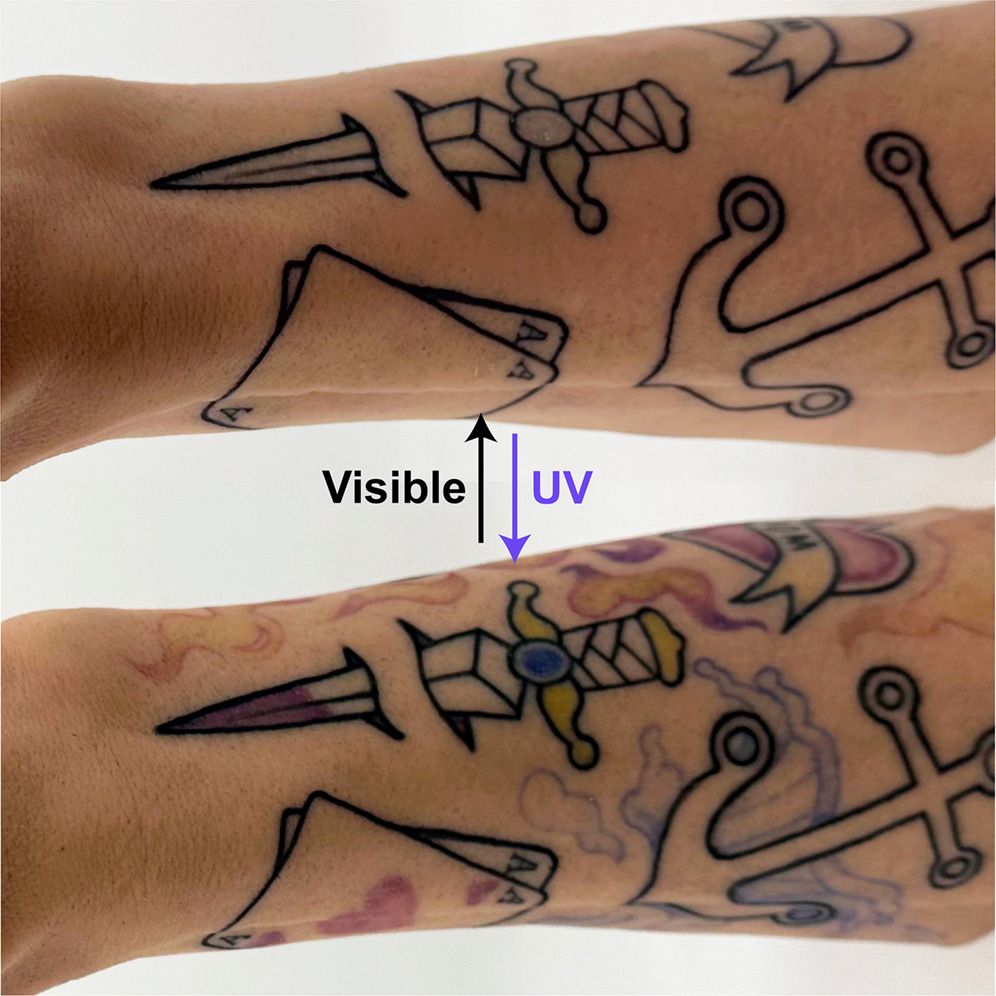
The new tattoo ink is activated under UV light. (Image credit: Matter & Light, Bruns et al.)
Researchers have developed a new type of tattoo ink that can be switched on and off with light, allowing colors and images embedded in the skin to be changed and even "erased" without having to go through the painful tattoo-removal process.
The system, which is being commercialized under the name PhotoTat, could eventually give people a way to conceal or change permanent body art. It could also have more practical applications, including medical tattoos that are visible only when a doctor needs to see them, researchers reported in a study published Friday (Oct. 9) in the journal Matter & Light.
"This is a tattoo that you can have, and whenever you decide you don't want it to be showing anymore, or you just don't want it there, you just turn it off," said study co-author Carson Bruns, an associate professor of biomedical engineering at the University of Colorado at Boulder. "And that's it. You don't have to turn it on again."
Working like a light switch
PhotoTat contains three primary color inks — blue, magenta and yellow — made with photochromic dyes, which are light-sensitive compounds that can change color with different wavelengths of light. These dyes are encapsulated in nanoparticles of polymethyl methacrylate (PMMA) — a medical-grade, glass-like plastic that is already used in medical implants and dermal fillers.
The dyes change their molecular structure when exposed to specific wavelengths of light. A 365-nanometer ultraviolet (UV) LED can activate pigments in around two to three seconds, Bruns said. Once activated, the colors can persist for hours to days under typical indoor lighting. But once the wearer exposes their skin to the bright outdoor sun, the colors disappear in seconds, erased by the intense light.
That makes the tattoo unique, as the pigment itself remains in the skin but the tattoo's appearance changes. Bruns and his team found that all three PhotoTat channels remained switchable in the skin for between 1.4 and 2.2 years.
Tattooing yourself for science
The three colors enable someone to activate different portions of a tattoo using different wavelengths of light. That means the magenta part of the tattoo might be turned on with green light, while the yellow pigment would be activated by blue light. This allows the wearer to customize their design and coloration to whatever they want at the moment — from a purple cherry to a yellow group of hearts.
That feature makes PhotoTat appealing for "people who love tattoos and have lots of tattoos, but just want something kind of fun and playful to add," Bruns told Live Science.
Bruns has tested each iteration of PhotoTat's inks on his own skin. His art is arranged in a series of tattooed scales, with different ink formations in individual scales.
"I gave myself these scales on purpose because they're each sort of a container for an experiment," Bruns said. The result, he joked, resembles a "magical mermaid trick," with some scales appearing out of nowhere and others changing color when activated.
The technology can also be combined with conventional tattoo ink. A permanent black ink design, for example, could contain hidden PhotoTat elements that appear only when activated.
The new tattoos could be appealing to people who want tattoos but are hesitant about their permanence, as well as to people who love their tattoos but occasionally need to conceal them because of work, social expectations or family, Bruns said.
"It's going to be on for most of the time, but just for this one moment, I'm going to turn it off for you grandma, for example," Bruns said.
Medical tattoos
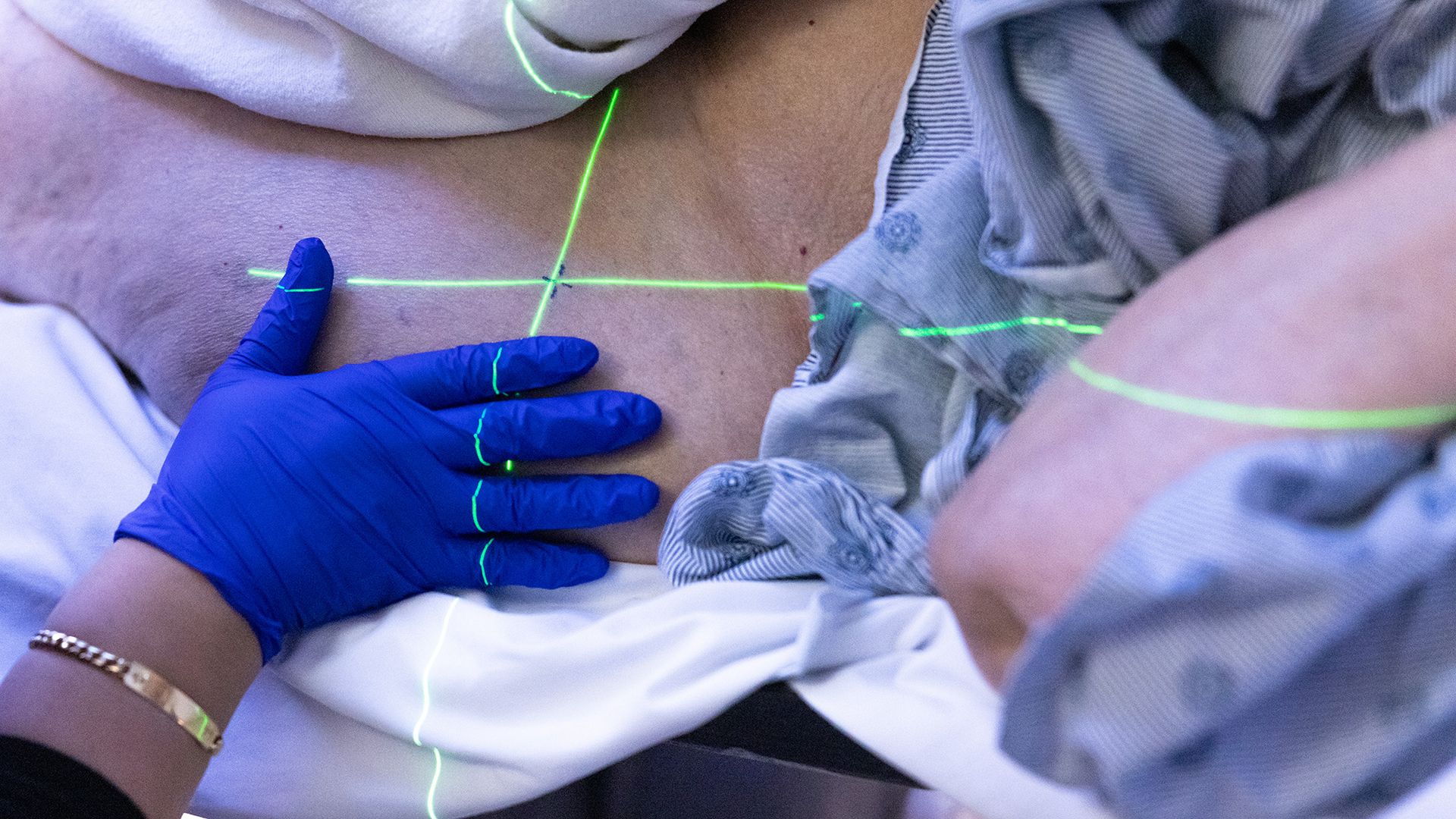
Bruns thinks the tattoos could be helpful in a medical setting, too. Patients undergoing radiation therapy, for example, sometimes receive permanent tattoos that help doctors precisely align radiation beams. While useful, those marks remain after the treatment, reminding the patient of their experience. These would make such markings invisible if a patient wants them to be.
PhotoTat could potentially allow similar markings to be switched on during surgery and hidden afterward.
Bruns has spent several years developing other smart tattoos for medical applications, including a dosimeter-type tattoo that measures the amount of UV radiation a wearer experiences, along with a tattoo that changes color when the wearer is exposed to dangerous gamma radiation.
A cancer patient receives radiation treatment, guided by laser lines and a tattoo on their skin. (Image credit: The Washington Post via Getty Images)
"It's not for you and me, but if you're like an astronaut or a nuclear engineer, they have to wear these dosimeters," Bruns said. "So, we have like a dosimeter tattoo that sort of puts that in your skin."
So far, Bruns and a fellow tattoo artist, have only commercialized the purple PhotoTat ink, after running the ink through a series of third-party medical tests.
The tests showed the purple is safe for use, and available to order, but it isn't cheap at $100 for a small bottle. Bruns hopes as more research is done, he can bring the other colors to market and lower the production cost, so the technology is more accessible.
How did Genghis Khan build the world's largest contiguous land empire? In this full episode of Genghis Khan: Secret History of the Mongols from National Geographic, the 13th century arrives and Chinggis Khan builds power by building an extensive army to eliminate rivals.
He begins conquests against the Tanguts, a Sino-Tibetan people who founded and inhabited the Western Xia dynasty, and the Jin Dynasty of Northern China, expanding his empire to become the largest contiguous land empire in human history.
Genghis Khan: Secret History of the Mongols | S1 E3 "The Birth of The Empire"
Chapters:
0:00 - Introduction
1:43 - 1206: The Kurultai
10:39 - Chinggis Khan's Family Unrest
16:46 - Challenging the Xi Xia
24:33 - Facing the Jin Empire
Subscribe: https://www.youtube.com/natgeo
Stream more on Disney+
➡ Disney Plus: https://www.disneyplus.com/browse/national-geographic
Get unlimited access to National Geographic stories, photography, and more by subscribing today:
➡ National Geographic Magazines: https://natgeo.com/ytngmagazine
About National Geographic: National Geographic is the world's premium destination for critically acclaimed storytelling around science and exploration. Discover amazing wildlife, ancient civilizations, hidden worlds, and the incredible wonders of our Earth. Through world-class scientists, photographers, journalists, and filmmakers, Nat Geo inspires fans of all ages to connect with, explore, and care about the world.
Birth Of The Empire (Full Episode) | Genghis Khan: Secret History of the Mongols | Nat Geo
https://youtu.be/IT09LD6nQys
IDC ha stimato 62,7 milioni di unità distribuite a livello globale nel terzo trimestre. Pesano l’accumulo di scorte nella prima metà dell’anno, i prezzi elevati e i vincoli sull’offerta... Leggi tutto
Our journalists Sheera Frenkel and Dylan Freedman break down what A.I. agents are, how they differ from chatbots and why A.I. companies are worried about them now.

 Login