 Login
Disaster Survivors Sticking Together
15 September 2026 at 19:19
We found grace, humanity and friendship in the stories of disparate Americans hit by climate chaos.


Chinese-made drones are flying out the bodies of flood victims and delivering food to survivors in the aftermath of devastating flash floods on the border of Nepal and China’s Tibetan region.
Nepal’s army has been using four DJI FlyCart 100 drones donated from China to make 10 to 16 aid deliveries each day, according to Reuters. This comes after a partial glacier collapse in the Himalayan mountains unleashed a sudden surge of water, mud, and debris that swept through border crossings, valley communities, and hydropower projects on August 26.
The DJI Flycart 100 Drones come with a 98-foot rope and winch system for picking up and dropping off heavy loads. The website of Chinese drone company DJI describes the drones as being able to carry between 187 and 220 pounds, depending on the battery configuration.

© PRABIN RANABHAT / AFP via Getty Images
Chinese-made drones are flying out the bodies of flood victims and delivering food to survivors in the aftermath of devastating flash floods on the border of Nepal and China’s Tibetan region.
Nepal’s army has been using four DJI FlyCart 100 drones donated from China to make 10 to 16 aid deliveries each day, according to Reuters. This comes after a partial glacier collapse in the Himalayan mountains unleashed a sudden surge of water, mud, and debris that swept through border crossings, valley communities, and hydropower projects on August 26.
The DJI Flycart 100 Drones come with a 98-foot rope and winch system for picking up and dropping off heavy loads. The website of Chinese drone company DJI describes the drones as being able to carry between 187 and 220 pounds, depending on the battery configuration.
© PRABIN RANABHAT / AFP via Getty Images
Officials at Grand Canyon National Park say one visitor died and at least fifteen others remain missing or unaccounted for, after a major flash flood raged through parts of the canyon over the weekend.
The flooding prompted evacuations, and damage to critical infrastructure is being assessed as lodging within the park was temporarily shut down on Sunday.
“Grand Canyon National Park will implement Stage 4 water restrictions on the South Rim beginning at noon on August 31 in response to the significant flash flooding that occurred along Bright Angel Canyon on August 29,” park officials said in a statement.
Significant damage was reported along the Transcanyon Waterline, a major source of water to facilities within the park. “The waterline is currently not operational, leaving the park with limited water reserves and requiring significant water conservation measures to ensure available supplies can be maintained,” officials said on Sunday.
The sudden flooding occurred near Bright Angel Creek beginning on Saturday, following an intense period of localized rainfall.
More than five dozen visitors were reportedly evacuated by helicopter from the inner canyon, according to the Associated Press. Arizona Department of Public Safety assisted with evacuations, and officials are still assessing damage to infrastructure as the search for several unaccounted visitors remains underway.
National Park Service officials confirmed that the body of a 46-year-old man was recovered Sunday night near Crystal Rapids, and as searches continue, officials have requested that the public please assist in providing any information about their possible whereabouts.
“The National Park Service is asking anyone who knows of hikers or backpackers who were in the inner canyon along the Bright Angel Creek corridor on August 29, as well as anyone who had a campground reservation in the affected corridor, to provide information to the National Park Service Investigative Services Branch (ISB),” National Park Service officials said in a statement released by Grand Canyon Office of Communications on Sunday.
“This includes individuals who may have been traveling along the North Kaibab Trail from the North Kaibab Trailhead to Phantom Ranch, staying at Bright Angel Campground, or traveling or staying in the area known as ‘the Box’ north of Phantom Ranch.”
Officials also said the floods had been severe enough to wash out several footbridges and even dislocate some large boulders in portions of the Colorado River, altering sections of the river channel, and potentially making some of them unsafe.
Stage 4 water restrictions will remain in effect on the park’s South Rim, and year-round residents have been asked to use water sparingly while repairs remain underway.
Beginning in 2023, efforts began to modernize the park’s water system, culminating in a $208 million rehabilitation project that would provide water for the roughly 1,600 residents of Grand Canyon Village and the millions of annual visitors who enjoy the park.
Damage assessments continue, and National Park Service officials have warned that additional summer storm activity could affect the region.
“Additional thunderstorms and heavy rainfall are possible today and Monday, which could result in additional flash flooding, debris flows, rockfall and changing trail and river conditions,” officials said.
Anyone with information about individuals who remain unaccounted for in Grand Canyon National Park has been asked to contact the National Park Service Investigative Services Branch Tip Line at 888-653-0009.
Micah Hanks is the Editor-in-Chief and Co-Founder of The Debrief. A longtime reporter on science, defense, and technology with a focus on space and astronomy, he can be reached at micah@thedebrief.org. Follow him on X @MicahHanks, and at micahhanks.com.
© Jason Gulley for The New York Times
© Chitose Suzuki/The Dallas Morning News, via Getty Images
© Joel Angel Juarez/Associated Press
© Brandon Bell/Getty Images
Scientists from Arizona State University have performed computer simulations suggesting viable methods for controlling the weather by ‘nudging” systems in their development stages with proven technologies to mitigate or even completely avoid the damage from extreme weather events.
Although the new approach, which the team termed “Weather Jiu-Jitsu,” hasn’t been tested in real-world conditions, the researchers behind the new perspective paper outlining the process said it could help humans better prepare for severe weather systems by finding ways to live with nature rather than reacting to it.
When detailing their approach, ASU researcher Qin Huang and colleagues highlight the historical damage caused by extreme weather events, including floods, heat waves, droughts, and ‘freezes.’ In addition to the loss of life, estimates suggest that climate extremes caused $417 billion in damage in 2024 alone.
The paper’s authors also note that such extreme weather events “are increasing in frequency and intensity,” a trend research suggests is strongly driven by rising global temperatures. Although there have been some efforts to mitigate the effects of extreme weather, the paper’s authors write that increasing populations and continued climate change “heighten exposure to risks that conventional infrastructure cannot fully address.”
“The growing impact of weather extremes on society highlights that traditional approaches such as dams, levees, and insurance alone may not be sufficient to address the widespread consequences of these hazards,” the authors write.
To explore alternatives, the team wondered if small adjustments to burgeoning weather systems could redirect their paths or lessen their severity. In some ways, it’s like redirecting an incoming meteor to miss the Earth or hit it at a more oblique angle to lessen the impact.
“Imagine harnessing the power of nature to help steer hurricanes away from land, redirect atmospheric rivers to spread their rain safely and evenly, or defuse extreme weather patterns like heatwaves, freezes, or prolonged droughts before they take hold,” Huang and colleagues write. “It’s a vision where we partner with Earth’s own forces to create resilience, rather than reacting to disasters. We call it Weather Jiu-Jitsu.”
When detailing how the process would work, the team explained that Weather Jiu-Jitsu takes advantage of the “chaotic sensitivity of mid-latitude atmospheric dynamics to redirect destructive weather trajectories through small, precisely timed perturbations,” using forecasting models that project system paths and intensities.
“Our thesis is that Weather Jiu-Jitsu, i.e., adaptive chaos control applied to mid-latitude atmospheric dynamics, may provide a 21st century approach to managing a range of extreme weather events by nudging the system trajectories,” they explain.
Due to the challenges and risks of testing weather-control methods in real-world conditions, the researchers developed proof-of-concept computer simulations. Critically, their approach used established models of atmospheric circulation and a large-scale artificial intelligence “deep-learning Earth system” model, Aurora, designed to predict weather at high resolution.
According to the team’s research, carefully timed seeding of clouds could have major impacts on a storm’s path and intensity, noting that “nudges applied days before peak impact can shift a hurricane track to avoid landfall on a major city, weaken the peak intensity of a blocking-driven cold extreme, and reduce atmospheric river moisture transport under favorable upstream conditions.”
When testing their weather control approach on historically extreme climate events, the results were significant. For example, the team found that small, carefully timed cloud seeding operations applied in the critical days before the peak of an extreme weather event “could have shifted the track of the 2012 Hurricane Sandy by about 300 miles to miss New York City.”
The model also indicated that a similar approach could have raised the lowest temperature extremes experienced during the 2021 Texas freeze “by about 18 degrees Fahrenheit.” Similarly, the model revealed that the approach could have reduced the damaging precipitation levels associated with the 2022 atmospheric river that caused flooding in California by about 5%.
“By leveraging the atmosphere’s inherent sensitivity, Weather Jiu-Jitsu seeks not to overpower nature, but to collaborate with it: nudging storm tracks, influencing jet stream meanders, and possibly mitigating compound extremes before they fully develop,” the authors explain.
When discussing the potential impacts of controlling the weather before serious damage can occur, the study authors noted that it would be “transformative” for the planet. They also noted that controlling the weather could offer an outsized benefit to the most vulnerable people “who do not have recourse to other protections from weather extremes.”
Still, they add that demonstrating the real-world benefits of their approach to controlling the weather while accounting for “natural variability” will require evidence of tangible outcomes. The suggestion is that these metrics would include “reductions in peak precipitation intensity, flood inundation extent, and insured economic losses.”
To achieve this goal, Huang and colleagues recommended a three-stage approach. In the near term, they suggested starting with “controlled deep-learning perturbation experiments” for historical extreme events like floods and droughts, and air them with an “observational system design.” In the medium term, Huang and colleagues suggested implementing “scaled regional pilot studies” and developing a “governance framework development with WMO and UNEP.” The final proposed phase involved limited operational pilot experiments in select locations “under formal international oversight with systematic outcome monitoring.”
“We outline an argument that control over catastrophic weather extremes is imperative to reduce exposure to catastrophic events that are not mitigated by traditional physical, financial, or social infrastructure, and explore conditions under which this may be feasible,” the authors conclude. “If such an approach were successful, it could revolutionize hydroclimatic risk mitigation.”
The study “Weather Jiu-Jitsu: Prospects for atmospheric nudging to defuse the impact of catastrophic weather extremes” was published in PLOS Water.
Christopher Plain is a Science Fiction and Fantasy novelist and Head Science Writer at The Debrief. Follow and connect with him on X, learn about his books at plainfiction.com, or email him directly at christopher@thedebrief.org.
© Ulet Ifansasti/Getty Images
© Ulet Ifansasti/Getty Images
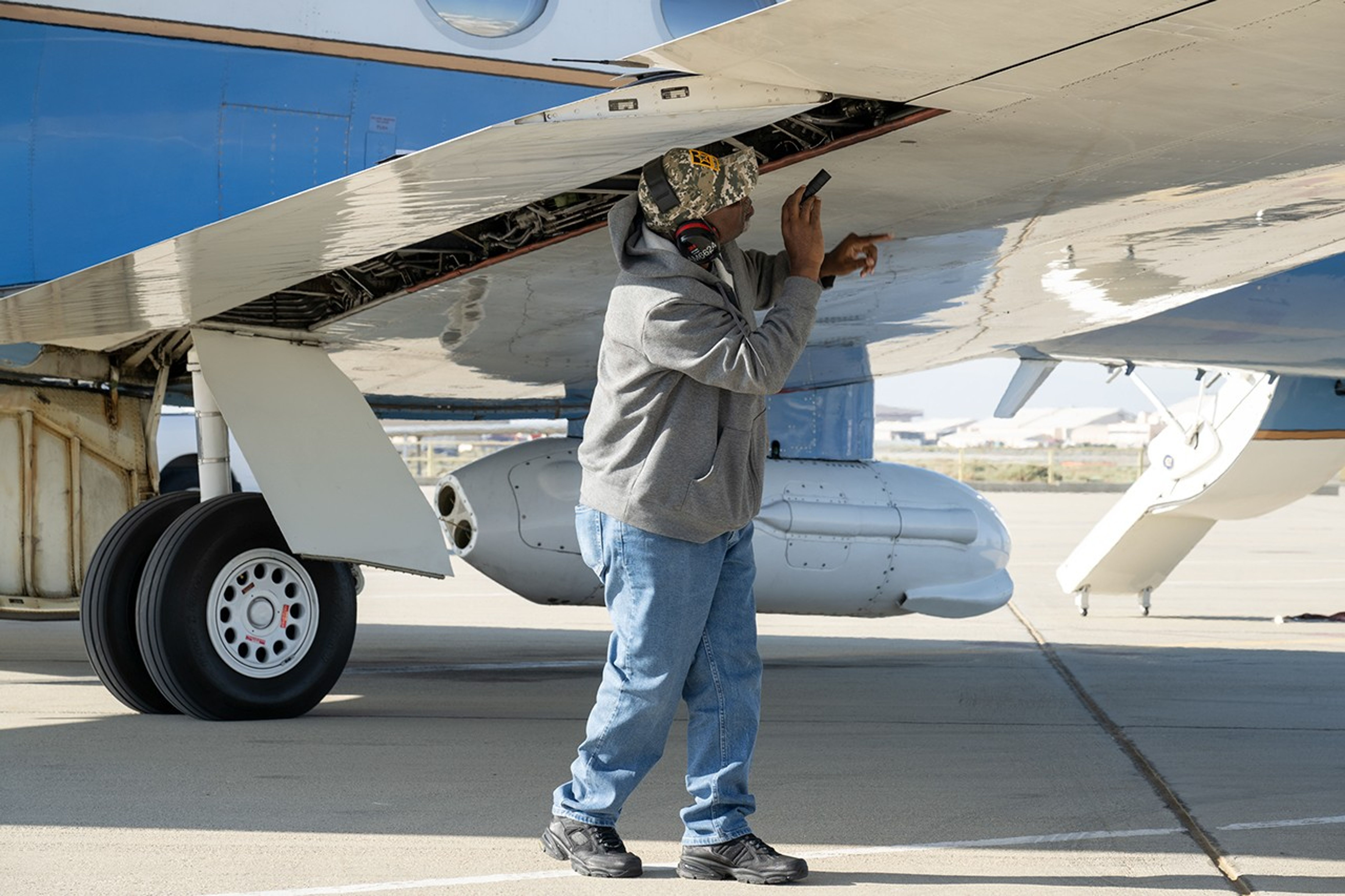
Data from a NASA campaign in Panama and Peru will help communities prepare for tropical floods in cloud-covered areas, improve scientific understanding of forest health, and support planning for spaceborne missions.
NASA’s C-20A aircraft from Armstrong Flight Research Center in Edwards, California, flew the Uninhabited Aerial Vehicle Synthetic Aperture Radar (UAVSAR) instrument, developed at NASA’s Jet Propulsion Laboratory in Southern California, to gather mission data. While flying repeat paths, the instrument collected high-resolution radar data from a pod mounted beneath the aircraft. The monthlong campaign, known as Tropical Synthetic Aperture Radar, or TropiSAR, concluded on June 4 after 17 flights totaling 75 hours.
Airborne data were captured over Peru in the same times and locations as data captured by the NISAR (NASA-ISRO Synthetic Aperture Radar) satellite to validate key NISAR capabilities and support calibration of the satellite’s L-band radar system. The science validation targeted two measurements: tropical rainforest flood extent within the Pacaya-Samiria National Reserve in Peru, one of the world’s largest protected flooded forests, and glacier movement in the Huascarán National Park in the Peruvian Andes, which is home to the largest concentration of tropical glaciers. The mission also gathered detailed 3D views of tree height and density to estimate biomass, assess forest health, and better understand how forest ecosystems store and release carbon.
In Panama, TropiSAR also supported NASA’s Airborne Validation Unified Experiment: Land and Ocean (AVUELO) campaign in collaboration with the Smithsonian Tropical Research Institute. Airborne radar data were collected from dry forests and coastal wetlands with the goal of better understanding Panama’s rich biodiversity. By linking field measurements with airborne and satellite observations, AVUELO may advance new methods for studying the tropics.
~Jay Levine
The post NASA Flights Map Tropical Ecosystems, Water, Ice appeared first on NASA Science.
