❌

Normal view

This Newly Discovered Flower Looks Like a Tiny Demon

16 September 2026 at 10:33
Thismia Daemona Among Leaf LitterResearchers have identified a new plant species in western Thailand whose unusual appearance inspired the dramatic name Thismia daemona, or the “devil flower.” A nearly black flower with horn-like projections and flashes of reddish orange has been discovered beneath leaf litter in a mountain forest in western Thailand. The plant cannot photosynthesize, spends most of [...]

Fossils of iconic long-necked dinosaur Diplodocus found in Europe for first time — and it may have traveled there via land bridge

15 September 2026 at 15:11

Paleontologists have identified the first confirmed remains of Diplodocus — "Dippy," for short — outside the western U.S., revealing that the iconic long-necked dinosaur reached what is now Spain roughly 150 million years ago.

The findings show that the enormous sauropod didn't live only in North America, as was long thought. Instead, it may have rambled across a land bridge all the way to Europe, the new study suggests.

The discovery, made at the La Tejería site near the small village of El Castellar in eastern Spain, provides some of the strongest fossil evidence yet that dinosaurs could move between North America and Europe during the Late Jurassic, when the Atlantic Ocean was still in its early stages of opening after the breakup of the supercontinent Pangaea. The researchers published their findings Tuesday (Sept. 15) in the Journal of Vertebrate Paleontology.

"Paleontological studies like this one help us better understand the history of life on Earth, reconstruct ancient ecosystems, and understand how they changed through time," study first author Sergio Sánchez Fenollosa, a doctoral student who studies biodiversity and evolutionary biology at the Joint Paleontology Foundation Teruel-Dinópolis (Dinópolis Foundation), a paleontological research institution, told Live Science via email.

A sauropod in Spain

Dippy is one of the best-known dinosaurs. After its fossils made their grand debut at the Carnegie Museum of Natural History in Pittsburgh in the early 1900s, life-size fossil replicas of the towering herbivore were sent around the world, including to England, France, Spain, Argentina and Russia.

But until now, Diplodocus' Late Jurassic fossils were known only from the Morrison Formation in the western United States ‪—‬ and the latest discovery shows that Dippy wasn't a homebody.

The newly unearthed Diplodocus specimen consists of 14 well-preserved tail vertebrae and several chevrons ‪—‬ bones that helped support blood vessels and muscles within the dinosaur's tail.

Study co-author and managing director of the Dinópolis Foundation, Alberto Cobos, said it was a friend who "thought he had spotted some bones on a mountainside," Cobos told Live Science via email. "That very day, I went to the site near El Castellar (a village in the province of Teruel). Sure enough, we saw a couple of sauropod vertebral centers."

Although only part of the skeleton has been recovered, the bones show a series of characteristics associated with Diplodocus, including large cavities corresponding to where air sacs would have been, along with deep grooves running alongside the underside of the tailbones.

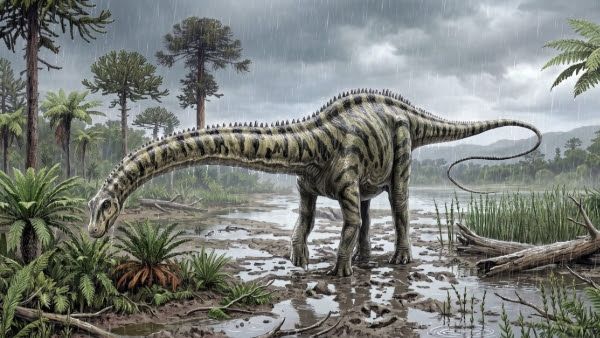
An illustration of a long-necked dinosaur

The 14 vertebrate and several chevrons found in Spain correspond to the Dipolodocus' anatomy. (Image credit: Carmelo López)

"It was an exciting and continuous process of seeing the pieces of the puzzle gradually fall into place," Sánchez Fenollosa said in a statement. "From the early stages of the osteological study, we noticed strong similarities with several diplodocine sauropods … With each new result, the picture became clearer: we were looking at a Diplodocus."

It's unclear which species of Diplodocus the new specimen is, but like others of its genus, it was a huge dinosaur with an extremely long neck and whip-like tail.

"The Diplodocus from El Castellar was approximately 25 meters [82 feet] long (comparable in size to its North American relatives), making it another of the giant sauropods of the Spanish Jurassic," Cobos said in the statement.

An ancient bridge

Between 195 million and 170 million years ago, the supercontinent Pangaea broke apart as the Atlantic Ocean opened. But the ocean was much narrower than it is today, and the continents were not necessarily as isolated as their modern geography is now.

Evidence indicates that temporary land bridges may have allowed some animals to move between the two regions. The most famous prehistoric land bridge is the Bering Land Bridge that humans used to move between Asia and what is now Alaska. Previous research showed the Bering Land Bridge also existed around 68 million years ago, and it may have allowed an Asian ancestor of Tyrannosaurus rex to trek into North America.

One possible route for Diplodocus into Spain may have been a land bridge that connected what is now Newfoundland with the Iberian Peninsula.

Geological conditions may have allowed dinosaurs like Diplodocus to move between continents, Sánchez Fenollosa told Live Science in an email. "This interpretation is supported not only by the fossil record but also by geological evidence," he said.

The newfound Diplodocus fossils also suggest that the distribution of giant sauropods was more complicated than the fossil record previously indicated.

"More complete specimens will be essential to understand this story in greater detail, particularly to determine which Diplodocus species inhabited Europe: whether it was one already known from North America or a previously unknown species," Sánchez Fenollosa said. "This discovery reminds us that even for such iconic dinosaurs, there are still many unanswered questions about their evolutionary history and biogeography."

500 snails mailed to Tahiti to reclaim their natural habitat

13 September 2026 at 15:25

Staff at St. Louis Zoo in St. Louis, Missouri recently opened up a very special delivery in the mail: an overnight shipment of 500 adult Partula snails. 

Their journey began at the Detroit Zoo in Royal Oak, Michigan, and it’s not quite over yet. The small invertebrates’ final destination is Tahiti, where they will be released into the wild as part of an international effort to reestablish wild populations of Partula snails. 

“The snails are sent ‘priority overnight’ via either FedEx or UPS. The snails are carefully packed using insulating materials and special ‘phase change’ packs to stabilize the temperature inside,” Mark Vassallo, Curator of Amphibians at the Detroit Zoological Society, tells Popular Science. “Currently the Detroit Zoological Society bred snails are taking a pit-stop at St. Louis Zoo where they will be fed a special diet in order to prepare them for the wild.”

Partula snails are small, tree-dwelling native to islands in French Polynesia. In Polynesian cultural heritage, each unique Partula snail shell represents an island. When humans introduced the predatory rosy wolf snail to the region to manage another invasive snail species, it wrecked Partula snail populations. 

a man holds a yellow measuring tape by a large snail
A Partula snail is weighed and measured by keeper Tom Maunders, during the annual weigh-in at Whipsnade Zoo in England. Image: Joe Giddens/PA Images via Getty Images.

For decades, the Detroit Zoo has been breeding and raising Partula snails and helping return them to their native habitat by the thousands in Tahiti. In fact, the 500 en route right now were all bred at the zoo. Each of their shells features an orange dot of animal-safe paint that glows in UV light, which identifies them as one of the snails released in 2026. Each year has a different color, and the dots also allow conservationists to easily monitor them in their natural habitat. 

This upcoming release is part of an international recovery program that has returned 11 different Partula species formerly deemed extinct in the wild to their native environments, consisting of over 17,000 individual snails. The Audubon Nature Institute in New Orleans, Louisiana, also recently sent 200 Partula snails to Tahiti. 

snails under a blue light with orange dots on their shells
Orange markings on Partula nodosa snails bred at the Detroit Zoo glow under ultraviolet light. The markings will help researchers identify and monitor the 2026 release group after the snails are returned to the wild in Tahiti. Image: Detroit Zoo.

When asked what “success” looks like, Vassallo explains that, “Success for a conservation project can be defined in stages but ultimately, a self-sustaining population with consistent reproduction and very importantly, proper habitat that is protected to sustain that species to allow long term recovery and stabilization of that population.”

Some species of Partula snails are already extinct in the wild, such as Partula nodosa. In the wake of reintroductions of the species, however, experts were excited to observe offspring born in the wild. 

The post 500 snails mailed to Tahiti to reclaim their natural habitat appeared first on Popular Science.

'Oddly shaped rock' unearthed in California turns out to be 'immaculate' mastodon molar

An exceptionally well-preserved fossilized molar belonging to an adult Pacific mastodon has surfaced in a nature preserve near San Francisco.

Upon first glance, the ancient tooth looked like an "oddly shaped rock" to geologists who were conducting fieldwork in the area, according to a statement from the Midpeninsula Regional Open Space (Midpen), which runs the preserve. But the find was quickly unmasked as a valuable fossil from the last ice age and was sent to scientists at Stanford University for carbon dating.

"The tooth itself is in immaculate condition," Wayne Thompson, a paleontologist and the CEO of Pacific Paleontology, a consulting firm that carried out a preliminary analysis, said in the statement. "It's the most complete mastodon molar from our area, and the most spectacular mastodon molar that I've ever seen. I had chills and shivers up and down my spine."

Brigid Lynch, a geomorphologist with the California-based hydrology consulting firm Balance Hydrologics, found the molar this summer while surveying a creek bed. "As a geologist, I've gone out and seen stuff in the field, but definitely nothing as exciting as this," Lynch said in the statement.

Lynch's team was working on a habitat enhancement project to support the threatened California red-legged frog (Rana draytonii) inside the preserve, which is located on the San Francisco Peninsula in San Mateo County. The fossil was a complete surprise and dates to at least 10,000 years ago, when the Pacific mastodon (Mammut pacificus) is thought to have gone extinct.

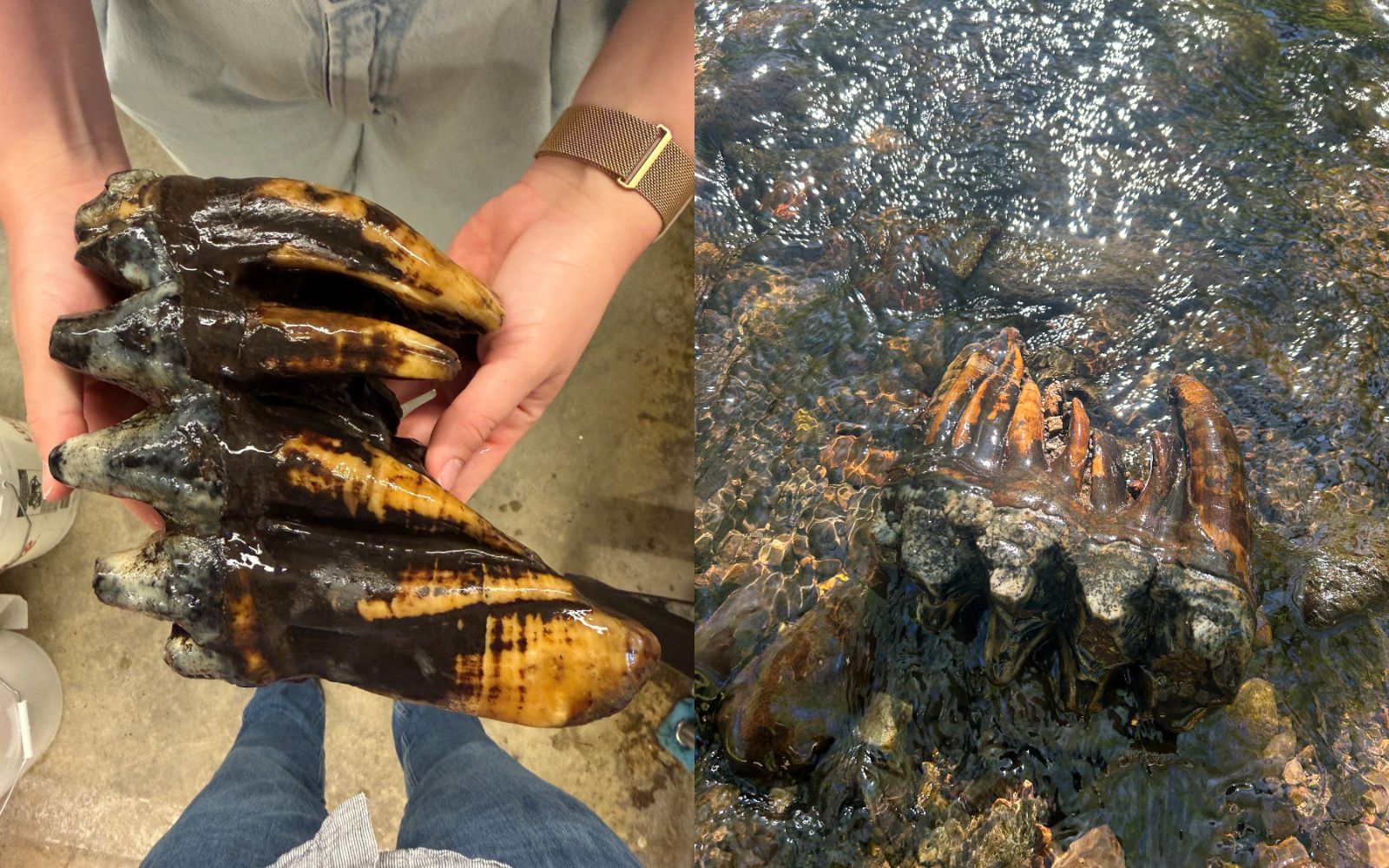
A mastodon tooth in the hands of paleontologists and embedded in a creek.

Mastodons are extinct, elephant-like creatures that lived during the last ice age. (Image credit: Midpen (left); Balance Hydrologics (right))

The Pacific mastodon was first recognized as a species in 2019. It was closely related to the American mastodon (Mammut americanum). Both elephant-like creatures lived in North America during the Pleistocene epoch (2.6 million to 11,700 years ago), but the Pacific mastodon inhabited regions farther west than its cousin, roaming parts of present-day Mexico, California, Oregon and the northern Rocky Mountains of the western U.S., according to the statement.

Pacific and American mastodon fossils reveal slight differences between the species, including a narrower third molar, thicker hind-leg bones and occasionally absent lower-jaw tusks in the Pacific mastodon, according to the Royal Alberta Museum.

The newfound tooth is "another puzzle in the Ice Age saga that we can put into place," Thompson said. To get a precise date for the fossil, Midpen donated it to Stanford University's Doerr School of Sustainability in July, the Los Angeles Times reported.

Researchers will produce a 3D copy of the molar that Midpen plans to use for public outreach and education, according to the statement.

Racing to Contain Invasive Green Crabs in Puget Sound

Tribes and scientists are mounting an urgent trapping effort to keep European green crabs from devastating a corner of Puget Sound.

© Chona Kasinger for The New York Times

Gray Wolf Spotted in Mendocino National Forest for First Time in 15 Years

10 September 2026 at 11:03
Gray Wolf Spotted in Mendocino National Forest for First Time in 15 Years

A gray wolf has been confirmed roaming California’s Mendocino National Forest, marking the first verified sighting there since the species made its comeback to the state 15 years ago. Wildlife officials say the discovery signals the predator’s continued expansion across California’s wild landscapes.

The sighting was reported in late August in the far northern reaches of Lake County, roughly two hours north of San Francisco. After receiving multiple reports from residents and observers, the California Department of Fish and Wildlife investigated and officially verified a wolf’s presence in the area, according to a statement from county officials.

Gray wolves were once hunted to extinction within California’s borders, disappearing from the state for nearly a century. Their return began in earnest around 2011, when a lone wolf known as OR-7 crossed into California from Oregon, reigniting hopes for the species’ natural recovery. Since then, small numbers of wolves have gradually reestablished territory across parts of Northern California, with packs forming in areas such as Lassen and Siskiyou counties.

The latest sighting in Mendocino National Forest suggests the animals are pushing further into new territory, a development conservationists view as an encouraging sign of ecological resilience. Wolves play a critical role in maintaining balanced ecosystems by regulating prey populations and influencing the behavior of other wildlife. Wildlife officials say they will continue monitoring the region to better understand the wolf’s movements and determine whether it may be part of a larger pack venturing into unfamiliar terrain.

The post Gray Wolf Spotted in Mendocino National Forest for First Time in 15 Years first appeared on EnviroLink Network.

Great Koala National Park Carbon Credit Deal Clears Senate Despite Internal Party Revolt

10 September 2026 at 11:02
Great Koala National Park Carbon Credit Deal Clears Senate Despite Internal Party Revolt

A contentious plan allowing major polluting industries to use carbon credits generated from a new koala national park in New South Wales to offset their emissions will proceed, after a deal was struck between the governing party and the Greens. The agreement means the Greens declined to join a Coalition-backed effort to block the arrangement in the Senate.

The plan has drawn criticism from environmental advocates who argue that using a protected wildlife sanctuary to generate offset credits undermines the conservation purpose of the park and allows heavy emitters to continue polluting rather than cutting emissions at the source. Supporters of the deal counter that it secures funding and formal protection for critical koala habitat that might otherwise remain vulnerable to logging or development.

The agreement did not have unanimous support within the Greens party room. Three senators — two from Tasmania and one from Western Australia — broke ranks to cross the floor and vote against the deal when it came before the Senate on Thursday afternoon. Their dissent highlights ongoing tension within the party over how far to compromise on environmental protections in pursuit of broader legislative wins, and raises fresh questions about the long-term ecological trade-offs of carbon offset schemes tied to national parks.

The koala park itself has been championed as a landmark conservation project, aiming to protect one of the last strongholds of the vulnerable species amid ongoing habitat loss from land clearing, bushfires, and climate change.

The post Great Koala National Park Carbon Credit Deal Clears Senate Despite Internal Party Revolt first appeared on EnviroLink Network.

Hurricane Lowell Floods Western Hawaii, New Forest Wildfire Threatens Woodland — Today’s Environmental Briefing for Wed, Sep 9 2026

9 September 2026 at 14:00
Flooded roadway with uprooted trees in western Hawaii after Hurricane Lowell

Across the stories today, a common thread emerges: the gap between what protects us on paper and what protects us in practice. Again and again, communities are discovering that designations, promises, and permits only matter when someone is willing to enforce them — and that when systems fail, it’s ordinary people, and often the most vulnerable, who absorb the shock.

Nowhere is that clearer than in Jackson, Mississippi, where a federal appeals court ruled this week that the Constitution guarantees no right to clean water. For residents who have lived through years of contaminated taps and boil-water notices, the decision lands as a gut-punch reminder that legal frameworks haven’t caught up to environmental reality. A similar tension runs through the Guardian’s reporting on datacenter wastewater in Wyoming, where testing turned up a rare, potentially hazardous bacterium, and on English golf clubs, where one in twelve have quietly broken water extraction rules amid growing drought stress. Behind the numbers are real communities adapting in real time — often without knowing what’s actually flowing through their pipes or being pulled from their aquifers.

That same gap between promise and delivery surfaces in the UK’s datacentre boom, which new analysis suggests will produce only a quarter of the jobs once advertised, even as it strains the national grid. It echoes in Georgia, where a once-booming EV manufacturing corridor is hitting turbulence under shifting federal policy — a reminder that industrial transitions built on incentives can be as fragile as the politics that fund them.

Yet the day’s coverage also points to growing momentum around care, restoration, and reckoning. Hurricane Lowell’s damage across Hawaii’s western islands — toppled trees, flooded roads, thousands without power — sits alongside quieter stories of renewal: Gloucestershire’s proposal to reintroduce beavers as a defense against drought and flooding, Douglas Head’s new conservation status on the Isle of Man, and Coventry’s investment in Longford Nature Park. These are small, deliberate acts of stewardship, the kind Wendell Berry spent his life advocating for. His death last week, at 92, feels newly resonant this week — a farmer-poet who insisted that loving a place well was itself a form of environmental action, long before it became policy language.

Farther afield, the human cost of extraction runs deep. In Peru and Brazil, mercury from illegal gold mining is showing up in children’s blood and in fish that families have eaten for generations, forcing painful dietary changes in communities that did little to cause the contamination. In Indonesia, El Niño-fueled fires are pushing orangutans out of burning forests, while in Uttarakhand, India, women — who gather firewood and fodder — are bearing the brunt of increasingly long fire seasons. In Colombia, the Wiwa community’s decision to relocate their village down the mountain is less retreat than adaptation, a recognition that sacred land is changing faster than tradition can hold still.

It’s a reminder that progress and pressure often arrive together — a new spaceport investment in Shetland, a badger vaccination program under scientific scrutiny, a push for a Natural History GCSE to reconnect children with the outdoors. Each represents a small bet on the future, even as larger systems strain under climate and economic pressure.

As the week unfolds, watch whether the Jackson ruling prompts congressional attention, whether Britain’s Green Party succeeds in forcing transparency around ecosystem collapse risks, and whether Gloucestershire’s beavers get their chance to prove that sometimes the oldest solutions are still the best ones.

The post Hurricane Lowell Floods Western Hawaii, New Forest Wildfire Threatens Woodland — Today’s Environmental Briefing for Wed, Sep 9 2026 first appeared on EnviroLink Network.

Nearly 500 animals rescued from trafficking arrive at a California aquarium

7 September 2026 at 14:00

On June 19, the Aquarium of the Pacific took in almost 500 animals in one go. Fish, marine invertebrates, and sharks were all brought into the facility in Long Beach, California, but the aquarium hadn’t just gone on some big marine shopping spree. 

These animals were rescued from animal trafficking, and were in urgent need of a home. At the aquarium, the staff worked through the night to stabilize and care for them. 

“Every animal that arrives at the Aquarium, whether through a carefully planned acquisition or a last-minute confiscation, receives the same high standard of care. What can differ is the condition in which those animals arrive,” Johnathan Casey, Aquarium of the Pacific curator of fish and invertebrates, tells Popular Science. 

Many trafficked animals have been traveling in stressful or poor conditions, so the aquarium’s experts immediately check their physical condition, water quality, and individual needs. They usually know little about an animal’s origin or history, so the team needs to be prepared for anything. The rescued animals are also quarantined to avoid the potential spread of diseases, according to Alyssa Tillman, the assistant curator of fish and invertebrates. 

a rescued clownfish swims in a holding tank
Confiscated animals like this clownfish were kept in holding tanks at the Aquarium of the Pacific on Long Beach, California. Image: Josh Barber/Aquarium of the Pacific. Josh Barber

The species included brownbanded bamboo sharks (Chiloscyllium punctatum), ocellaris clownfish (Amphiprion ocellaris), and Banggai cardinalfish (Pterapogon kauderni). The IUCN Red List classifies brownbanded bamboo sharks as Near Threatened and Banggai cardinalfish as Endangered. 

While the arrival of almost 500 animals was a standout event, the Aquarium of the Pacific has received rescued animals from over 30 confiscation events since September 2024.  This means they saw one confiscation event every three weeks, though the first eight months of 2026 have already seen over a dozen cases. Overall, the aquarium has taken in over 3,600 rescued trafficked animals in the past two years. 

The Aquarium encourages “the public to become informed consumers to help avoid wildlife trafficking of exotic pets. This includes researching the protected status of the species and ensuring purchases are through a reputable vendor,” Casey explains. “If the vendor cannot provide proof of where the animal came from, refraining from purchasing it is a way to help.” 

The post Nearly 500 animals rescued from trafficking arrive at a California aquarium appeared first on Popular Science.

Australia’s new environmental protection agency approves coal project, angering climate groups

3 September 2026 at 03:23

Queensland open-cut Saraji mine will be able to keep digging until 2055 as Anthony Albanese denies tensions with Pacific leaders over fossil fuels

Australia’s new national agency for environmental protection has approved its first coal project, allowing a Queensland open-cut mine to keep digging until 2055 while clearing threatened woodland and koala habitat.

The confirmation of the extension of the Saraji mine, which digs and exports coal for steel making, comes after the prime minister, Anthony Albanese, denied this week there was tension over Australia’s fossil fuel exports during talks with Pacific leaders.

Continue reading...

© Photograph: Wikimedia/Lock the Gate Alliance

© Photograph: Wikimedia/Lock the Gate Alliance

© Photograph: Wikimedia/Lock the Gate Alliance

New Analysis of “Tasmanian Tiger” Skulls Overturns Assumptions About What Led to the Species’ Extinction

2 September 2026 at 13:42

Australia’s extinct thylacine, also known as the Tasmanian tiger, was not the powerful predator European settlers had assumed based on experiences with the dogs and wolves of their homeland, scientists say.

In a recent study of the skull of this creature, famously hunted to extinction, researchers from Flinders University and the University of Melbourne found something unexpected: the thylacine likely hunted only small prey. The team presented these findings in a paper published in Nature Communications, challenging the assumption that the Tasmanian tiger targeted large animals like sheep.

According to the new research, false European assumptions brought to a new land led to the overhunting and extinction of the thylacine species.

Reconsidering the Thylacine

The primary discovery in the work was that the thylacine’s long, deep jaw shape would be poorly suited to holding down large animals. Instead, it would be more effective at delivering a powerful snap to a much smaller animal.

“Our latest findings on their feeding adaptations counter the myths that drove the thylacine to extinction,” said lead author Professor Vera Weisbecker, from the College of Science and Engineering at Flinders University. “Thylacines were often compared to Northern Hemisphere predators such as wolves, jackals and foxes from the dog family Canidae. This resemblance gave them their species name ‘cynocephalus’, meaning ‘dog-head.’”

While the animal may have had some superficial resemblance to a wolf or dog, they followed a quite different evolutionary trajectory. Instead of being closely related to canines, they were more similar to kangaroos. Thylacines were marsupials, pouch-bearing mammals that separated from the broader mammalian lineage in the time of the dinosaurs.

Thylacine Skull
Comparing the Thylacine skull with canid species makes its differences readily apparent. Credit: Vera Weisbecker (Flinders University)

The Strange Thylacine Skull

The researchers say the thylacine skull combines a set of features seen in no other living carnivorous mammal, making it a true outlier. At a glance, the team noted the extinct animal’s large skull, with its long, tall upper jaw that protrudes and ends in a wide snout—an unusual feature that is worthy of more detailed study.

“Even though the average thylacine may have weighed only half as much as the average wolf, its vastly oversized skull is about as large as a grey wolf’s skull,” said co-author Dr Douglass Rovinsky. “But while it was big, it wasn’t really shaped like the skull of a big predator. Instead, the thylacine’s snout was long and slender, almost delicate – not robust like the snout of a grey wolf. It very much looks like the snout of a fox or jackal, which can be much smaller than thylacines.”

Instead of holding down large animals, the researchers say these jaws would be better suited to capturing bandicoots, an animal similar in size to a rabbit, with a powerful snap.

“The longer a jaw is, the faster its tip moves when an animal bites. This increases the impact of the strike. We think that the thylacine’s huge skull size allowed it to withstand these bite forces,” says Professor Weisbecker.

Similar Carnivore Skulls

Intriguingly, while this skull configuration is not seen in carnivorous mammals, large-headed hunters with powerful snapping jaws are common outside of the mammal group.  This shape is particularly useful in aquatic environments, where fast, slippery fish are a primary target for predators.

Long, tall jaws with a wide tip are frequently found in crocodiles and some predatory fish. While the shape is conducive to hunting, it is typically used to capture smaller, highly agile prey. 

“Thylacines were hunted because of myths that they were ferocious predators of livestock, when there was little evidence for this. Their extinction is a story of ignorance and lack of respect for Australia’s unique wildlife and its Indigenous custodians,” Professor Weisbecker concluded. “As a country at the global forefront of mammal extinctions, we need to do all we can to safeguard equally irreplaceable surviving species.”

The paper, “Skull Morphology of the Extinct Tasmanian Tiger Suggests Unique Biting Style,” appeared in Proceedings of the National Academy of Sciences on August 31, 2026.

Ryan Whalen covers science and technology for The Debrief. He holds an MA in History and a Master of Library and Information Science with a certificate in Data Science. He can be contacted at ryan@thedebrief.org, and follow him on Twitter @mdntwvlf.

A Discovery Hidden in Antarctica’s Soil is Unlike Anything Found Elsewhere on Earth, Challenging Past Assumptions

1 September 2026 at 12:59

Scientists at the University of Colorado at Boulder’s Cooperative Institute for Research in Environmental Sciences (CIRES) have discovered that some microbes in Antarctica’s soil don’t exist anywhere else on Earth, upending the long-held belief that microbes move freely around the planet and inhabit many regions.

The researchers behind the discovery said understanding that some microbes are endemic to Antarctica’s soil challenges previous assumptions and offers valuable insights for future research and present-day conservation efforts.

Microbes in Antarctica’s Soil Live in an Extreme Environment

Announcing the findings, study leader and postdoctoral researcher Nick Dragone and co-author Noah Fierer, a CIRES Fellow and Director of the Center for Microbial Exploration, noted that scientists have always assumed that microbial species were widespread.

“There is a long-standing assumption in microbiology that ‘everything is everywhere,’” Dragone explained.

That’s because, unlike plants and animals, which are generally restricted to certain global zones or latitudes, microbes are highly mobile. For example, a simple updraft could propel microbes into an atmospheric jet stream, then deposit them hundreds or even thousands of miles away.

Still, Dragone and Fierer propose that, given Antarctica’s remote location, if there were a spot on Earth containing species unlike the rest of the globe, it would be on the planet’s southernmost continent.

“If we do find we’re looking for endemic microorganisms, a good place to start is Antarctica, because it’s an entire continent that is geographically isolated, ” Fierer said.

The study coauthor also noted that the unique conditions found in Antarctica’s soil aren’t usually found in other soil environments. “[Being] cold is the obvious one,” Fierer said, “but also super dry; Antarctica is a desert.”

Comparing 100 Antarctic Strains with 500 Worldwide Strains

Instead of starting with any microbial species, the CIRES team focused on bacterial strains within the Arthrobacter group. First, these strains grow well in lab conditions, which was critical to the team’s experiments. Second, Arthrobacter group bacterial strains are found in diverse environments ranging from the tropics to Colorado, and most critically, to Antarctica’s soil.

Byron Adams, professor of biology at Brigham Young University and a co-author of the study, said the species is widespread, but also diverse.

“Arthrobacter as a group may be found all over the planet, but when we look closely at individual strains, just like penguins, Antarctica clearly has its own distinctive biological history,” the professor explained.

To start, the team collected soil samples from Antarctica. They also collected comparison samples from similarly cold, arid regions like the Tibetan Plateau, Svalbard in the Arctic, and Chile’s Atacama Desert.

When examining the sampled soils, the team tested over 100 Antarctic bacterial strains and 500 worldwide strains.

Dragone and Fierer both noted that the research was made possible by “long-term collaborations among international research teams who have spent decades collecting samples across the continent for various projects.”

Genetic Sequencing Finds 90% of Antarctic Microbes are Endemic

After sequencing the genomes of the Arthrobacter strains found in samples from Antarctica’s soils, the team compared them with worldwide strains. For the worldwide species, the team obtained genomes from international research databases.

As hoped, the genetic comparison found species in Antarctica’s soil that were not found anywhere else in the world. Perhaps even more shocking, 90 percent of the Antarctic strains they’d sequenced were completely endemic, with no matches anywhere in the world.

Fierer said previous studies had identified “a few endemic microbes found in very specific environments.” However, the researcher also noted that finding such a large and unexpected number of endemic microbial species “does suggest there could be some in other locations.”

“[Determining] whether other microbial groups show these patterns is a good direction to go,” Fierer added.

Next, the team ran a follow-up experiment to see whether the endemic Antarctic strains showed signs of adaptation to the local, extreme environment. This included growing strains of the collected Antarctic Arthrobacter strains in the laboratory. Critically, the team mimicked the continent’s harsh environmental conditions.

First, the experiments showed that the strains collected from Antarctica’s soil were extremely resilient. They also grew more slowly than non-endemic strains. The team suspects these results show that Arthrobacter strains “are uniquely adapted to Antarctica.”

“We already knew that a broad diversity of microbes can survive the inhospitable conditions of Antarctica,” Fierer said. “Now we know that some of those microbes are also unique to Antarctica and are uniquely adapted to life on the southern continent.”

“Some of Antarctica’s Most Distinctive Species are Microscopic”

When discussing the implications of their findings, Adams pointed to a potential shift in public perception of what species diversity means.

“We tend to think of biodiversity in terms of penguins, seals, and whales, the researcher explained, “but this shows that some of Antarctica’s most distinctive species are microscopic.”

Along with the study’s scientific and public relations value, the team said it “sets the stage for future research on microbial life in Antarctica.” They also noted that the findings will aid efforts to preserve Antarctica’s biological diversity, including its microbial species.

“Protecting Antarctic biodiversity also means protecting the biological history contained in a handful of soil,” Adams concluded.

The study, “Evidence for endemism and local adaptation in Antarctic soil bacteria,” was published in the Proceedings of the National Academy of Sciences. 

Christopher Plain is a Science Fiction and Fantasy novelist and has spent the last six years as Associate News Editor and Head Science Writer at The Debrief. Follow and connect with him on X, learn about his books at plainfiction.com, or email him at christopher@thedebrief.org.

Only Three Are Known To Exist: China’s Mysterious Eyeless Cave Snail

9 August 2026 at 12:22
Species of Erhaia Dijiang With a Scale Bar of 1 mmScientists have discovered China’s first known freshwater cave snail, an eyeless species so rare that only three living adults have been found. Deep inside a mountain cave in southwestern China, scientists found an animal that appears built for a world where sunlight never reaches. The tiny freshwater snail has no eyes, almost no color, and [...]

Scientists Find Remarkable New Snail Species in Montenegro’s Mountains

8 August 2026 at 02:48
Cochlostoma Snail Crawling in MontenegroScientists and citizen volunteers discovered two new snail species in northwestern Montenegro, revealing the region’s hidden biodiversity and strengthening calls to protect Komarnica Canyon within the Durmitor World Heritage Site rather than build a hydropower plant. Two previously unknown snails have been added to Europe’s documented wildlife. Named Cochlostoma komarnica and Cochlostoma dobrido, the species [...]

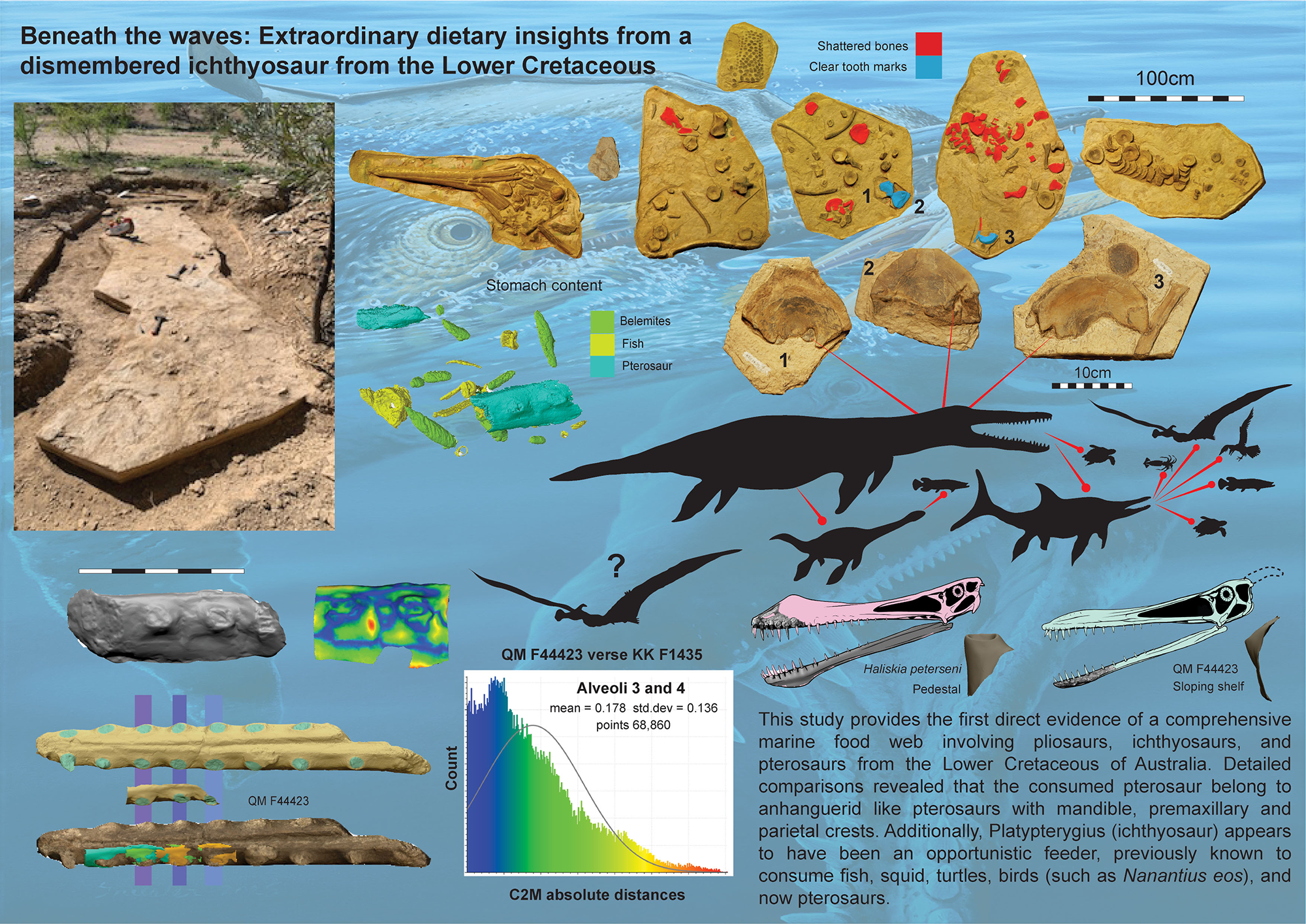
Stunning fossil from Australian outback reveals pliosaur killed a sea monster that had just eaten a pterosaur

5 August 2026 at 17:23

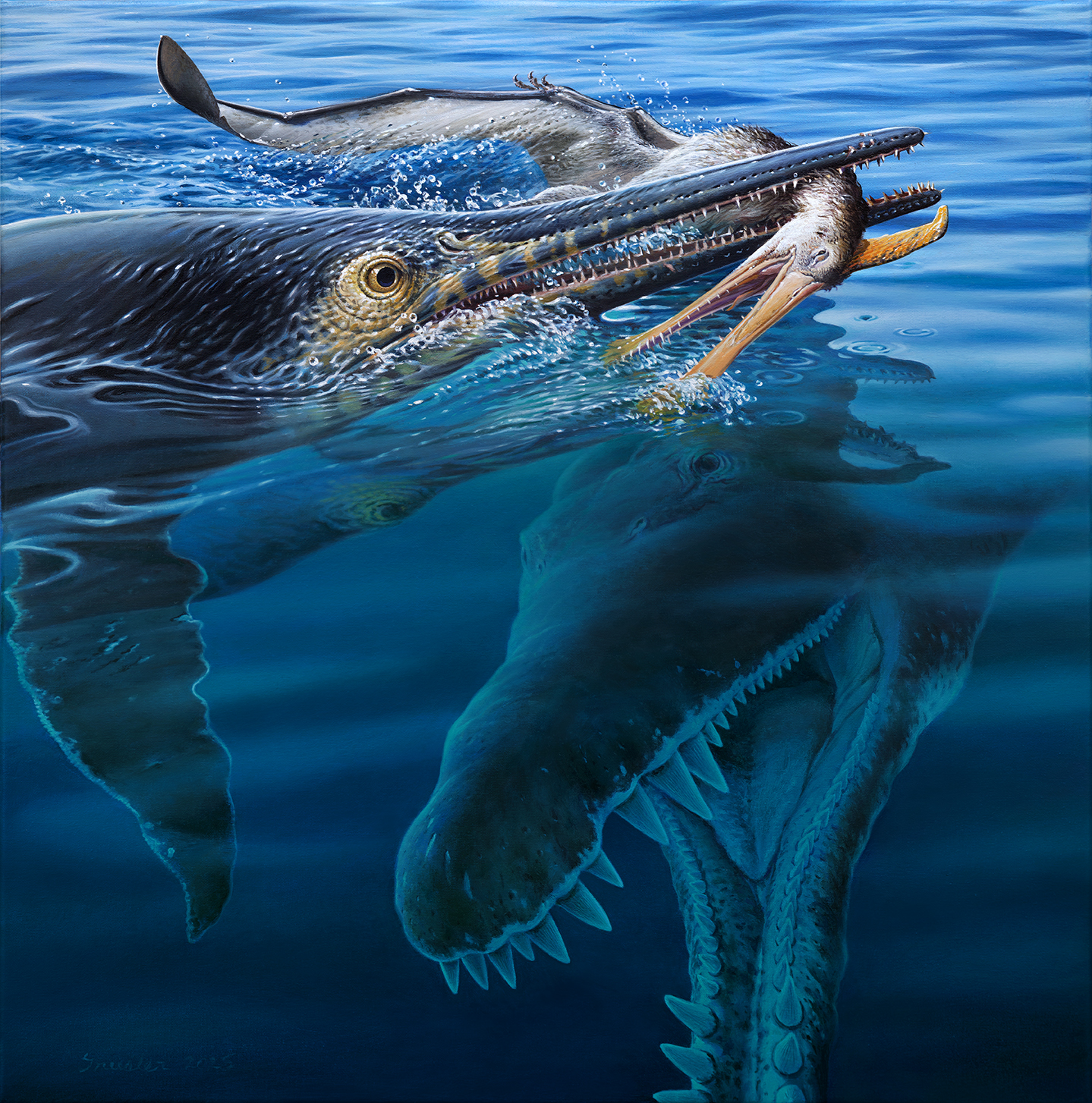
An illustration of an ichthyosaur eating a pterosaur.

An illustration of an ichthyosaur eating a pterosaur, while a pliosaur lurks beneath. (Image credit: Peter Trusler)

An ichthyosaur fossil found in Australia's outback may preserve a rare snapshot of a prehistoric food chain. Around 100 million years ago, the enormous marine reptile swallowed a flying pterosaur before being attacked by a giant ocean predator, new research suggests.

The fossil set, nicknamed "BOB" or "Bag of Bones," belonged to a 20- to 23-foot-long (6 to 7 meters) ichthyosaur, an animal that belonged to a group of dolphin-shaped marine reptiles that lived alongside the dinosaurs during the Mesozoic era, from about 250 million to 90 million years ago. But in a new study, researchers discovered fragments of a pterosaur's jaw — along with fish and cephalopod remains — preserved inside the animal's body cavity.

The finding is the first confirmed evidence that ichthyosaurs ate pterosaurs, an extinct group of flying reptiles that ruled the ancient skies, according to the new study, published July 28 in the journal Gondwana Research.

The fossils may also hint at the ichthyosaur's violent end. Its skeleton — discovered in 2019 in Queensland's outback — contains shattered bones, missing ribs and large crushing injuries. Researchers think the gruesome wounds may have been inflicted by Kronosaurus queenslandicus, a colossal crocodile-like apex predator that lived 120 million to 100 million years ago in the ancient Eromanga Sea in Australia.

A rare prehistoric meal

Fossilized stomach contents are a rare find because they can be preserved only under very specific conditions.

"Rapid burial after death is essential to prevent decay and scattering of remains," study co-author Matt White, a research associate at the University of New England in Australia, told Live Science in an email. "The animal must have died soon after its last meal so stomach acids don't fully digest the prey."

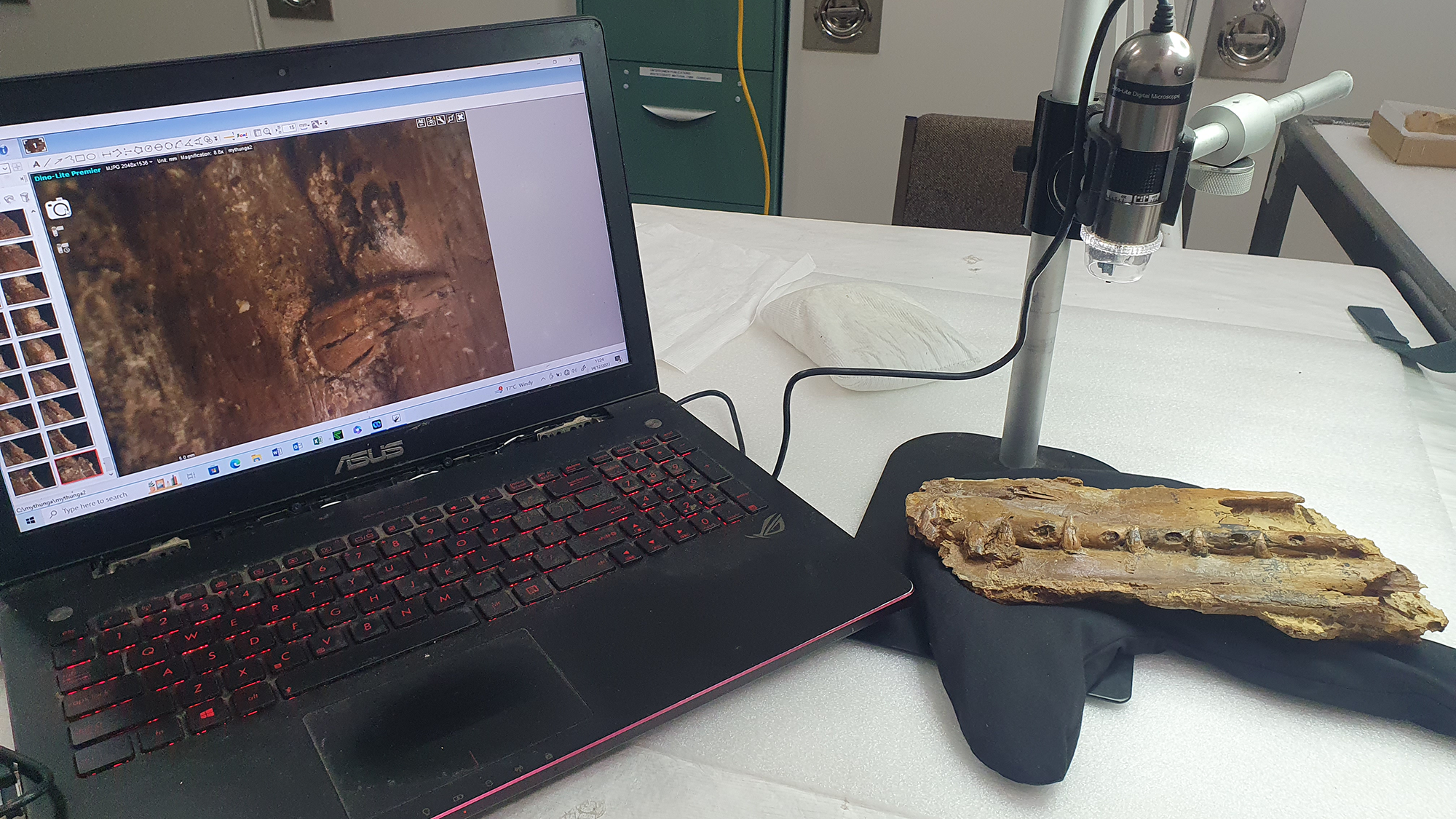
A view of a fossil being scanned with a laptop computer next to it

The ichthyosaur fossil set "BOB" gets scanned. (Image credit: Kronosaurus Korner Museum Queensland Australia)

Researchers used advanced neutron imaging to peer inside BOB's stomach contents without breaking any of the fossilized formations. The scans revealed hidden bones and helped scientists determine that the remains were likely associated with the ichthyosaur's digestive system.

White said that advances in imaging technology are making it possible to uncover evidence that would previously have remained hidden inside fossils.

"Scanning techniques have also improved, which has enabled us to see inside specimens and reveal what they potentially ate," White said. The methods can also reveal "the shape of various organs" and internal bone structures, he added.

The pterosaur remains were found near the front of the ichthyosaur's body cavity rather than in their expected position as digested prey, which White and his colleagues think may be because the ichthyosaur struck the seafloor headfirst shortly after its last meal, shifting some of its stomach contents forward.

"We believe the animal died in the water column — perhaps from a pliosaur (Kronosaurus) attack or natural causes — and then sank," White said. "It impacted the seafloor with its rostrum, and connected soft tissues kept most of the body in sequence."

A scientific poster showing fossils, illustrations, graphs and some text

A graphical abstract of the research showing the complex food web of Cretaceous Australia. (Image credit: White et al. (2026))

Reconstructing an ancient ecosystem

The fossil offers a rare glimpse into the food web of the ancient Eromanga Sea, which covered much of central Australia during the early Cretaceous period around 145 million to 100 million years ago.

Although ichthyosaurs are known to have eaten fish and squidlike animals, evidence that they ate pterosaurs, a common predator of the ancient skies, has been elusive. The new fossil suggests that at least some ichthyosaurs may have fed on flying reptiles that landed on the water or died and floated to the surface.

"Such discoveries yield valuable information about trophic interactions and allow us to reconstruct ancient ecosystems in greater detail," White said.

❌