Late last week, word started leaking that the National Institutes of Health (NIH) had reached an agreement with the Department of Defense that would see part of the NIH's budget used to fund research at the Department of Defense. So, on the Friday just prior to a US holiday weekend, the Department of Defense released a copy of the agreement and confirmed that it had been signed roughly a month earlier. The move is striking for a number of reasons, ranging from the existing budget disparities between the two parties involved to the fact that the money would be used for projects that the current NIH leadership has explicitly rejected.
The agreement itself sets up a system where the NIH would transfer money to the Department of Defense to fund staff and projects that would "support the advanced development of medical countermeasures against pandemic influenza, chemical, biological, radiological, and nuclear (CBRN) threats, and emerging infectious diseases." The money would come out of the budget for the NIH's National Institute of Allergy and Infectious Diseases, or NIAID, to which Congress has allocated $6.6 billion in 2026. The agreement is set to run for a decade.
Left unspecified is just how much of the NIAID budget will be spent on Defense projects. Reporting by Nature suggests that the Department of Defense was looking for up to a third of its total budget but was being told to settle for about 10 percent. There's obviously an enormous disparity between the budgets of these two agencies, given that the 2026 Defense budget is roughly $1 trillion. That budget is under considerable strain, however, due to the open-ended nature of the conflict with Iran. The deal has also been announced at a time when the NIH has been struggling to issue sufficient grants to use the money that Congress allocated to it.
On Tuesday, the House of Representatives passed a stopgap measure that would continue funding the US government through early December. While the measure still requires the signature of President Trump, it's widely expected that he will act to avoid a government shutdown immediately before the midterm elections.
This is a normal part of how the US government has operated in recent years, as it's often difficult to build the political support needed to pass a full year's budget in advance. In fact, dissent within the House's Republican caucus prevented them from agreeing on their own measure to keep the government open; instead, the House simply adopted a version of the spending bill that had previously passed the Senate.
From the perspective of scientists and their supporters, that adoption turned out to be a very good thing, because the Senate's budget bill, passed in early August, contains a provision that blocks the Office of Management and Budget (OMB) from implementing new rules that would give political appointees full control over what science is funded and allow them to cancel any grant at any time. The proposed rule has been widely decried as catastrophic for science, and it faced widespread opposition from scientific and health-focused organizations.
The UK’s Science and Technology Facilities Council (STFC) recently announced funding cuts to a range of physics and astronomy projects as it seeks to reduce costs. One of the most high-profile casualties is e-MERLIN, a network of seven radio telescopes spread across the UK, including the iconic Lovell Telescope at Jodrell Bank.
To discover what the cuts could mean for UK science and the livelihoods of those affected, podcast host Andrew Glester caught up with two astronomers at Jodrell Bank: Simon Garrington, e-MERLIN director, and David Williams-Baldwin, an e-MERLIN research support scientist.
They discuss why the cuts have caused such alarm among scientists, how the UK astronomy community is mobilizing in opposition, and why the consequences could extend far beyond Jodrell Bank.
e-MERLIN combines signals from its telescopes to produce sharp radio images of the Universe – with a resolution comparable to that of the Hubble Space Telescope. As things stand, funding for the telescope array will run out in March 2028, putting the future of the network and scientific operations at Jodrell Bank in doubt.
It’s an uncertain time for an observatory that was granted UNESCO World Heritage status in July 2019 for its historical contributions and its technical and scientific ingenuity since the 1940s.
An STFC spokesperson emphasises that Jodrell Bank is “not closing” and “will continue to play an important role in UK science”. This includes the Square Kilometre Array Observatory that has its headquarters at Jodrell Bank as well as other radio astronomy research projects in the UK and elsewhere.
“We recognise the strength of feeling about Jodrell Bank and the e-MERLIN network, and the contribution they have made to UK science. The achievements of the scientists, engineers and staff who have supported e-MERLIN over many years are widely respected across the research community,” they add. “We are focusing on the next generation of radio astronomy to ensure UK researchers continue to be at the forefront of the field. Rising cost pressures mean that we have had to make difficult choices about STFC funding to make sure we are able to fund world class research sustainably into the future.”
The US Department of Defense (DoD) has given 30 US research universities until the end of the month to audit, and potentially cease, their partnerships with universities and military training institutions in “foreign entities of concern”.
If the institutions do not comply with the order, they risk losing funding from the Defense Advanced Research Projects Agency, the Office of Naval Research, and the Air Force Research Laboratory – losses that could potentially close entire academic research groups or departments.
The order does not specify the foreign entities it targets. But a list that the DoD published last month identified 130 universities and research institutes in China, Russia and Iran that it claimed to be wrongly appropriating US-funded technologies.
The DoD, which the Trump administration calls the Department of War, also noted that its order applies to “organizations associated with rebranded Confucius Institutes” – cultural programmes associated with US universities that began in 2004.
The DoD asserts that the audit process is designed “to protect American taxpayer-funded research investments from unauthorized technology transfer, intellectual property theft and adversarial exploitation” adding that it will allow the department to “better anticipate emerging threats, adapt to evolving adversarial tactics and maintain America’s position as a global leader in innovation”.
“The Department of War has zero tolerance for academic partnerships that compromise our national security,” notes Emil Michael, the DoD’s undersecretary of war for research and engineering. “Institutions that receive funding from American taxpayers must uphold the highest standards of research security, and these mandated audits will ensure accountability across the board.”
China tension
Those affected by the order include Harvard University, Massachusetts Institute of Technology, Cornell University and Johns Hopkins University.
The DoD has not indicated why it has chosen the 30 targets for audit. However, since it took office last year the second Trump administration has criticized prominent universities over issues such as antisemitism and their use of diversity, equity and inclusion.
Harvard has received particular ire from the administration, which has cut or delayed government grants to its departments while fighting the university in court.
A Republican majority House of Representatives committee issued a report on 13 August claiming that Harvard received over $630m from Chinese sources. The report also noted that the university had created a nonprofit organization, Harvard Global, to accept overseas grants that the university itself is not legally permitted to receive.
The DoD’s audit comes as the Trump administration prepares to welcome President Xi Jinping to the US late next month.
Reacting to the order, a statement by China’s embassy in Washington notes that it opposes what it calls the politicization of normal scientific, educational, and academic exchanges. “The US side should abandon the Cold War mentality and foster an open, fair, and non-discriminatory environment for educational, scientific, and people-to-people exchanges between China and the United States,” it declared.
Physics World contacted some of the universities affected by the order but did not receive a response.
A new report by the Trump administration that outlines a model for the future government support for science and technology has drawn heavy criticism from the US scientific community. Entitled Science: A New Golden Age, it emphasizes developments by public–private partnerships at the expense of university-driven research with critics asserting it places politics above science.
The 104-page report aims to update a 1945 document – Science, the Endless Frontier – that was issued by Vannevar Bush, who served as director of the US government’s Office of Scientific Research and Development in the 1940s. The report eventually led to creation of the National Science Foundation (NSF) in 1950.
The 2026 report focuses on how government R&D spending reaches the scientific community and claims that the US research enterprise has become too centred on established research institutions rather than individual researchers.
The report wants the government to significantly reduce the amount and number of grants it gives universities and instead make large investments in industry and non-profits. It also calls for a significantly scale-up of the use of artificial intelligence in science.
“We must renew the R&D enterprise on which our scientific leadership depends,” US science adviser Michael Kratsios and Office of Management and Budget (OMB) director Russell Vought write in an accompanying memorandum.
Yet critics says that funding for exploratory science is not the administration’s only target. “It’s very clear that Kratsios/Trump want to destroy universities, or what he calls ‘legacy institutions’,” says public policy expert Shobita Parthasarathy from the University of Michigan. “There is no respect for basic research, which has historically driven innovation in the US [but that] industry won’t fund.”
Neal Lane, former US science adviser who served as NSF director between 1993 and 1998, takes issue with how individual agencies are asked to implement the points raised in the report. “Unlike previous rules, which were uniform guidance, allowing an agency like NSF to set their own rule, the new rule is a binding uniform regulation applying to all agencies as written,” he says.
Lane is also unhappy with the report’s dismissive approach to peer review, which it argues slows down innovation, proposing instead to diversify funding mechanisms with alternatives such as “golden tickets” rapid grants and prize challenges.
“For many decades, expert peer review has been regarded as the gold standard for funding research and publishing the results,” he says. “It is not credible for the administration to claim it supports ‘gold standard science’ without peer review.”
‘Misguided approach’
While some see merit in aspects of the report, or at least a need to rethink the underpinning of scientific research, the American Association of University Professors (AAUP) see the administration’s approach as a misguided way to address those challenges. “Reforms must strengthen scientific independence – not weaken it,” an AAUP statement asserts.
That view is echoed by the Federation of American Scientists (FAS), which note that while the report calls for a “lighter, faster, and more capable research enterprise”, it says that the to the “uniform guidance that governs how federal grant funding is administered runs counter to that goal”.
The report comes as the administration’s proposed budget for financial year 2027, which Congress must approve, would cut overall government spending on R&D by 22%, with support for the NSF slashed by more than 50%, NASA by 23% and the Department of Energy’s Office of Science by 15%. The OMB also proposes guidelines that would allow agencies to terminate grants that “no longer serve agency priorities or the national interest”.
Tess DeBlanc Knowles, a senior director at the US thinktank the Atlantic Council, says US science will be hit badly if those cuts go ahead. “No amount of experimentation can counteract the damaging effects that dramatically reduced funds will have on the foundation of the US’s scientific and technological leadership and ability to train the next generation of scientists,” she says.
A new report by the American Institute of Physics has found that physics and astronomy PhD graduates are quitting the US in record numbers. The proportion of non-US citizens leaving the US post-degree nearly doubled, from 16% in 2024 to 29% in 2025 – the largest one-year increase since 1997. The report also says about 12% of US citizens post-physics PhD left the US in 2025, compared to just 5% two years earlier.
Japan earthquake relief efforts will receive financial support from Apple following the powerful earthquake that struck Kumamoto Prefecture on the island of Kyushu.
CEO Tim Cook announced the donation through social media on July 30. He expressed concern for people facing the earthquake and continuing aftershocks while thanking the first responders helping affected communities.
“Japan has a very special place in my heart.”
Cook wrote before confirming that Apple was making a donation to support relief work.
Apple did not disclose the amount, recipient organizations or whether its contribution would support the immediate emergency response, longer-term reconstruction or both. The company frequently keeps disaster donation amounts private, even when Cook publicly confirms its participation.
The announcement came as rescue teams continued searching damaged homes, industrial facilities and the remains of a shopping center. Survivors were dealing with water shortages, disrupted transportation, damaged buildings and dangerous summer temperatures.
Image Credit: Wikimedia
Japan Earthquake Relief Follows Deadly Kumamoto Disaster
The earthquake struck southwestern Japan on Tuesday, July 28. Japanese reporting and international agencies have described it as a magnitude 7.1 event, while the U.S. Geological Survey measured it at magnitude 6.8. Differences can occur because agencies use different measurement methods and datasets.
The earthquake reached the highest level on Japan’s seismic intensity scale in parts of Kumamoto. Strong shaking damaged roads, houses and public infrastructure across communities near the epicenter.
The confirmed death toll had risen to 34 by Friday, according to Kumamoto prefectural authorities. Additional people were injured or remained missing as emergency workers entered the period when the likelihood of finding survivors beneath collapsed structures begins to decline sharply.
One of the most severe incidents involved an explosion and partial collapse at a shopping center. The earthquake also toppled a large chimney at a paper factory, damaged traditional homes and caused another section of the stone walls at Kumamoto Castle to collapse.
The historic castle was undergoing extensive restoration after the 2016 Kumamoto earthquakes. Damage to rebuilt or partially restored areas illustrates how recovery from one major disaster can remain unfinished when another arrives.
Aftershocks continued during the rescue operation, increasing the danger for emergency personnel entering unstable buildings. They also discouraged residents from returning to damaged homes, even when those structures remained standing.
Thousands of survivors moved into public shelters or slept inside vehicles. Some families chose cars because evacuation centers were crowded, while others feared that another strong tremor could collapse weakened buildings.
Extreme heat added another emergency. High summer temperatures can quickly create dehydration, heat exhaustion and medical complications, particularly for older people, children and residents sleeping in vehicles without reliable cooling.
Apple Donation Joins an Expanding Corporate Response
The Apple donation places the company among several technology and entertainment businesses providing money for Japan earthquake relief and reconstruction.
The Pokémon Company announced a contribution of 100 million yen to Kumamoto Prefecture, the Japanese Red Cross and other support organizations. The funding is intended to assist people affected by the earthquake and support restoration across damaged areas.
Sony committed 50 million yen and began collecting additional employee donations that the company will match. Its contribution is being directed toward the Japanese Red Cross and an emergency fund operated with Save the Children.
Sony has a direct industrial connection to Kumamoto through its semiconductor operations. The company described the prefecture as a community with which it has developed deep ties since establishing the Kumamoto Technology Center in 2001.
Apple also maintains substantial commercial and cultural connections with Japan through its retail stores, developer community, suppliers and customers. Cook has visited the country repeatedly and has met Japanese developers, musicians, educators and manufacturing partners during previous trips.
The amount behind Apple’s latest commitment may never be made public. The absence of a disclosed figure prevents direct comparison with other corporate donations, and it also leaves unanswered which organizations will distribute the money.
Relief contributions can support several different stages of a disaster response. Immediate funding may pay for water, food, temporary shelter, medical care and emergency equipment. Later funding can help repair homes, restore community services and assist families whose employment disappeared with damaged businesses.
The timing of Apple’s donation places it during the immediate emergency rather than after the complete scale of destruction has been calculated. Recovery costs will continue changing as inspectors determine which buildings can be repaired and which must be demolished.
Kumamoto Faces Another Long Recovery
Kumamoto experienced a destructive sequence of earthquakes in April 2016. Those events killed dozens of people, damaged or destroyed more than 100,000 buildings and displaced large numbers of residents.
Apple responded at the time by allowing customers to send donations to the Japanese Red Cross through iTunes. The system offered preset contribution amounts that were transferred without Apple retaining a percentage.
The company has used similar responses after earthquakes, hurricanes, floods and wildfires in several countries. Cook usually announces the commitment publicly while leaving the amount and distribution arrangements private.
Apple has previously contributed directly to relief organizations and has sometimes provided matching programs for employee donations. It has not announced whether employee matching or a customer donation channel will accompany the current Japan earthquake relief commitment.
The 2026 disaster presents different immediate pressures from the 2016 earthquakes because it arrived during intense summer heat. Shelter capacity alone does not solve the problem when buildings lack sufficient cooling, water or private areas for medically vulnerable residents.
Japanese authorities deployed Self-Defense Force personnel and emergency teams to support local rescuers. Prime Minister Sanae Takaichi instructed agencies to prioritize the protection of life, collect information quickly and coordinate assistance across national and local government.
Electricity had been restored by Friday evening, according to the local power company, but water remained a serious concern. Kumamoto authorities said nearly 80,000 homes were still without running water, creating demand for bottled supplies, mobile water stations and sanitation support.
A water interruption affects more than drinking. Hospitals, shelters, restaurants and homes need reliable supplies for hygiene, food preparation and medical care. Restoration can take longer than electricity because ruptured pipes must be located, isolated and repaired across damaged roads and neighborhoods.
Apple Donation Arrives Before the Full Damage Is Known
Apple’s announcement communicates support without defining how the money will be used. The effectiveness of the contribution will depend on the recipient, timing and ability to direct funding toward needs that remain after the first wave of public attention passes.
Immediate rescue work receives the greatest visibility, but rebuilding homes and local businesses can continue for years. Families may need temporary housing long after shelters close, while damaged schools, transportation routes and medical facilities require larger reconstruction programs.
Private donations cannot replace government disaster funding. They can provide additional flexibility for relief groups that need to purchase supplies quickly or reach people whose circumstances do not fit standard assistance programs.
The continuing aftershocks also make damage assessments provisional. A building considered stable after the first inspection may require another examination, while rain or additional shaking can affect weakened slopes and structures.
Apple has not indicated whether it will open a public donation channel through the App Store or another service. Its current response is limited to the corporate contribution confirmed by Cook.
The next stage of Japan earthquake relief will move from search operations toward shelter support, structural inspections and temporary housing. In Kumamoto, the most urgent calculation is already measured beyond financial totals: nearly 80,000 homes need running water restored while residents endure the hottest weeks of the Japanese summer.
The STFC cuts come after the council announced late last year that its core annual budget would rise by only £7m to £842m over the four years from 2026 to 2030. One of seven research councils within UK Research and Innovation (UKRI), the STFC runs the UK’s national facilities and supports particle physics, astronomy and nuclear physics (PPAN) research in the UK.
In a strongly worded statement, IOP president Paul Howarth is now urging the government to review “this ruinous set of decisions”, calling the cuts a “terrible blow” that will do “real damage” to the UK’s scientific reputation and put future economic growth at risk.
“Despite reassurances, physics has not been protected, crucial facilities remain under threat and jobs are being lost,” says Howarth. “Scientific capability that has taken years to build up is being put at risk by these decisions – it undermines a number of our most important international collaborations and could put a whole generation of young people off a career in science.”
Balancing the books
Although UKRI has received a record £39bn investment across the four-year period, it said last year that projects at STFC would need to be cut given inflation, rising energy costs as well as “unfavourable movements in foreign exchange rates”. Together, the STFC’s annual costs are projected to rise to over £1bn per year by 2030, forcing it to find ways to balance its books by 2029.
Earlier this year, the STFC said it would have to cut its core science budget by at least 30% over 2024/2025 levels. UKRI also noted it would stop funding two UK facilities – the Relativistic Ultrafast Electron Diffraction and Imaging facility and the C-MASS mass spectrometry centre. A UK-led upgrade to the LHCb experiment at CERN and support for the Electron–Ion Collider at Brookhaven in the US would be axed too.
That announcement caused significant distress within the physics community, prompting the heads of UK university physics departments to publish an open letter to then science minister Patrick Vallance, expressing their “deep concern” about funding changes adding that such cuts cause “reputational risk”.
UKRI then carried out further consultation with researchers and the STFC’s expert advisory bodies, with the results of this “funding prioritisation exercise”now revealed. There is some good news for STFC-funded “discovery-led” PPAN research, which physicists had feared could be cut by a third. Following lobbying, UKRI says this work is being “protected”, although it will still fall by 2.7% over the next four years.
Under attack
While facilities such as Diamond Light Source, the ISIS Neutron and Muon Source, and the Central Laser Facility will not be mothballed, the STFC’s budget for multidisciplinary facilities will reduce by 15% over the next four years to save £28m. As a result, ISIS will have to reduce operational time at the facility.
Yet the STFC warns that if saving and income targets for the programme are not met by 2028 then further action could be taken, which could involve closing a multidisciplinary facility.
STFC’s national laboratories and estates budget fares slightly better, falling by 8% over the four-year period, but individual facilities will be hit harder. The operational budget of the Boulby Underground Mine, for example, will be slashed by 40%.
Particle fever
The STFC insists that subscriptions for international projects, such as CERN and the European Southern Observatory, will remain protected despite their costs expecting to rise by 19% over the next four years. But other projects, including the EIC as well as the LHCb upgrade, will not be funded. The latter is expected to operate until 2033 by which time it would have reached the end of its lifetime after years of intense radiation damage.
An upgrade was planned so that it could take advantage of the upgrade to the LHC – the High-Luminosity LHC (HL-LHC) – and offer an order of magnitude increase in luminosity over upgrade I.
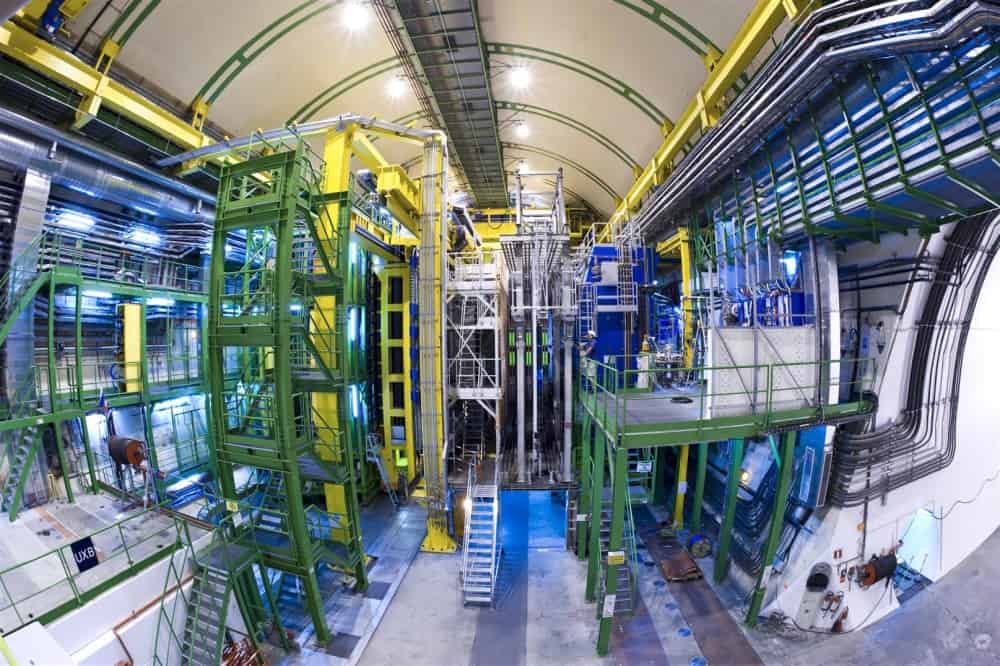
Down and out? UK funding for a major upgrade to LHCb has been cancelled increasing the possibility that it won’t go ahead. (Courtesy: CERN)
Tim Gershon from the University of Warwick, who became international spokesperson for the collaboration this month, says that the outlook for STFC-funded science is “grim”.
“With a 15% cut last year and an outlook that sees funding shrink further due to inflationary pressure, not even excellent-rated and internationally-leading science like LHCb can be supported,” he adds. “LHCb is the canary in the coalmine for the future sustainability of particle physics and astronomy research.”
Gershon states that the decision to cut UK involvement in LHCb will throw away the leadership it has built up. “Not only is this a tragedy for researchers and engineers who have dedicated their lives to making LHCb one of the most successful experiments in history, it destroys opportunities for current and future students to be involved in world-leading scientific discovery,” he adds.
This is a short-sighted move, to save a tiny fraction of the overall UK science budget
Catherine Haymans
Gershon says it will take some time to understand what the UK’s decision means for the upgrade and how other funding agencies will react but without UK expertise it will be hard to progress given the UK is the largest partner in LHCb with a 20% stake.
“Ultimately, the LHCb Upgrade is an essential part of the full exploitation of the HL-LHC, which is the top priority of the European and CERN strategies for particle physics,” adds Gershon. “We are determined to deliver the best detector that is possible within the available resources. But such a major change to the level of expected resources makes this extremely difficult.”
Peter Millington, a particle physicist from the University of Manchester, says that the outcome is “bad news” for accelerator physics and the applications that it fosters, particularly in medical physics. “It is completely at odds with UK priorities across all industrial strategy growth-driving areas, while also eliminating skills pipelines pivotal to a wide range of sectors and eroding the UK’s long-held position as a global scientific leader.”
Astronomy woes
Astronomy is another area that is bearing the brunt of the cuts. The UK contribution to the e-MERLIN network of seven radio telescopes, which includes the iconic Lovell telescope at Jodrell Bank in northern England, is also ear-marked for cancellation. Its funding will now run out in 2028 and the move not only threatens e-MERLIN but also the future of Jodrell Bank , which the Royal Astronomical Society calls a “deeply troubling development”.
Catherine Haymans, Astronomer Royal for Scotland, says she is “absolutely devastated” for those working on e-MERLIN. “This is a short-sighted move, to save a tiny fraction of the overall UK science budget,” she says. They are now considering contacting the new Department for Business, Innovation, Science and Trade to reverse the decision.
Other astronomy cuts include the UK withdrawal from the James Clerk Maxwell Telescope located in Hawaii as well as 20% cuts for the UK’s Square Kilometre Array Regional Centre and activities at the Vera C Rubin Observatory in Chile, which recently began a 10-year survey of the universe.
Jim Wild, president of the Royal Astronomical Society, notes the cuts are “devastating news” for UK astronomy. “At a time when technological innovation is crucial to our country’s prospects, discarding unique, globally significant observatories threatens both our scientific future and the inspiration of future generations of astronomers,” adds Wild.
Michele Dougherty, executive chair of the STFC, who is also Astronomer Royal, says that the situation requires “tough, but necessary decisions”.
“After listening to our community we have protected core discovery research within PPAN, through a more focused portfolio that safeguards postdoctoral researchers, protects PhD opportunities and maintains the UK’s international leadership.” adds Dougherty, who stepped down as president of the IOP in January over the conflict of interest with her position at the STFC. “These are never easy choices, but we have made what we feel are the right decisions to bring STFC to a sustainable financial position by 2029/30″.
I am writing from Argentina as a researcher working within the country’s national scientific system. While discussions about science funding are often framed in terms of budgets and economic indicators, the reality is experienced in laboratories, offices and research facilities where scientific knowledge is produced.
Today, many of us in Argentina are witnessing a progressive deterioration of Argentine science, both in terms of infrastructure and human capital.
The impact became tangible when my colleague Paula Alderete, an experienced electron microscope specialist, lost her position. Alderete, who has published two papers with me, was responsible not only for operating a highly specialized instrument, but also for maintaining it and supporting dozens of research projects.
Without Paula Alderete’s expertise, our lab’s electron microscope has become largely unusable. It is a quiet reminder that scientific infrastructure depends as much on people as on expensive equipment.
Faramarz S Gard
Without her expertise, the microscope has become largely unusable. Every morning I pass her empty desk on my way to the laboratory. It has become a quiet reminder that scientific infrastructure depends as much on people as on expensive equipment.
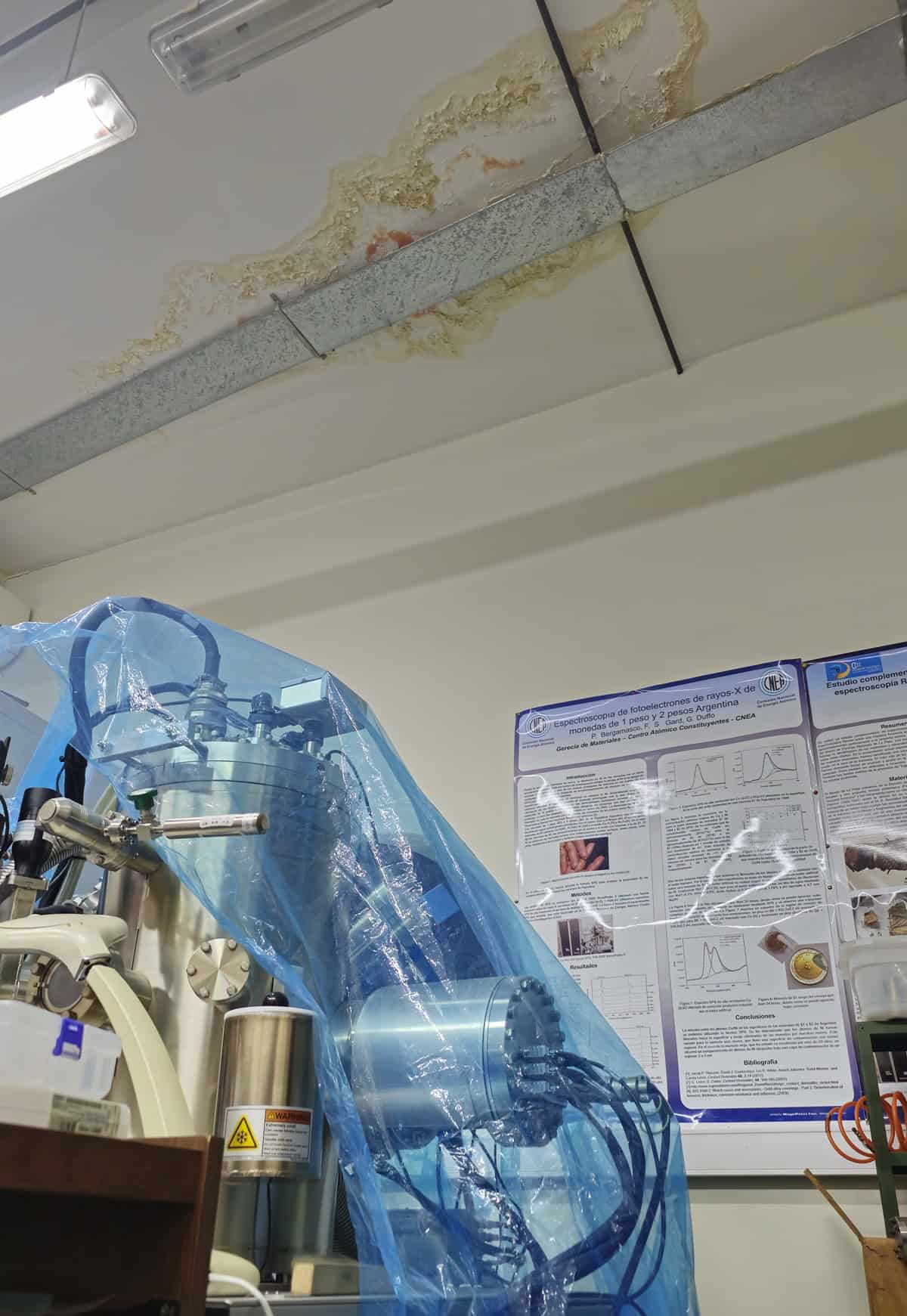
The deterioration extends beyond personnel. In my laboratory, an X-ray photoelectron spectroscopy (XPS) instrument worth more than $1m must sometimes be protected with plastic sheets because rainwater leaks through the roof.
Equipment designed to operate under tightly controlled environmental conditions is now exposed to circumstances that threaten its long-term reliability. Similar situations are becoming increasingly common across Argentina’s universities and research institutes as maintenance budgets shrink and infrastructure ages.
Argentina has a scientific tradition that reaches far beyond its borders. The country has produced five Nobel laureates, including three in the sciences, and has made internationally recognized contributions to nuclear technology, medicine, agriculture, astronomy and materials science. Institutions such as CNEA, CONICET (Argentina’s national research council) and the national universities have trained generations of researchers whose work has strengthened international collaborations and advanced scientific knowledge worldwide.
Scientific systems rarely collapse through a single dramatic event. They decline incrementally: one technician dismissed, one laboratory left unrepaired, one instrument taken out of service, one young scientist deciding to build a career elsewhere. These individual losses accumulate into a weakening of scientific capacity that may take decades to rebuild.
When a country loses the expertise required to operate advanced laboratories or maintain unique scientific infrastructure, the consequences extend beyond national borders.
Faramarz S Gard
This should concern more than Argentina. Modern science depends on international networks of researchers, shared facilities and long-term collaboration. When a country loses the expertise required to operate advanced laboratories or maintain unique scientific infrastructure, the consequences extend beyond national borders.
Damaged goods This X-ray photoelectron spectrometer at the author’s lab has to be protected from water leaking through the ceiling. (Courtesy: Faramarz S Gard)
Knowledge is lost, collaborations weaken, and opportunities for discovery diminish.scientific infrastructure is more than buildings and instruments; it is the people whose expertise gives those resources value. Once that expertise disappears, replacing it is far more difficult than preserving it.
The empty desk of a single scientist may seem insignificant, but multiplied across laboratories and institutions, it becomes a warning of how a research system is quietly dismantled. Argentina’s experience is therefore not only a national concern but also a reminder that scientific capacity, wherever it exists, is a global resource that is remarkably difficult to rebuild once lost.
I write this letter not only to describe a difficult situation but also to call attention to the broader consequences of sustained disinvestment in science. The international scientific community should recognize that the erosion of research systems in countries such as Argentina represents a loss not only for those nations but for global science itself.
Science is built by people, sustained by institutions, and enabled by infrastructure. Today, all three are under increasing strain in Argentina.
The National Science Foundation (NSF) has announced a new initiative to convert new research into products and industries. The $1.5bn programme, called X-Labs, however, has been criticized by some in the US scientific community given that financing the plan could come via cutting the budgets of current NSF directorates by as much as 30%.
The NSF says that the first round of X-Labs funding will focus on two areas – one on quantum sensing and AI-driven computational imaging while the second area will be in the development of quantum information and computing.
The projects that are chosen will receive $1.5m over a nine-month period to carry out further work. The NSF will then select projects to move onto the next phase in which they will receive a further $10–50m per year for 2–3 years.
According to an NSF spokesperson, X-Labs are designed to “spur progress on platform technologies critical to US competitiveness”, supporting high-risk, high-impact research that requires “substantial resources beyond traditional mechanisms”. A key goal of the handful of labs, the spokesperson adds, is to “reduce the time it takes to go from insight to impact through this new investment framework”.
While critics don’t have an issue with the concept, there are concerns that it is coming at the expense of basic research. Former presidential science adviser and former NSF director Neal Lane told Physics World that X-Labs is a “terrible idea”.
“There’s been a push to get more practical and get NSF involved in ensuring that science it funds actually makes it to the marketplace,” adds Lane. “But suddenly it’s been taken to extremes by the Trump administration. They’re trying to cut as much basic research as possible and put it all into an experimental programme.”
‘Without precedent’
The X-Labs programme comes as the NSF – one of the main science funding agencies in the US – still lacks a director. The previous head, Sethuraman Panchanathan, resigned in April 2025 after receiving orders from the White house to cut the agency’s budget by more than 50% (US Congress later restored much of the funding).
The Trump administration has announced Jim O’Neill, a Silicon Valley investor, as the next director, but he has yet to go through the necessary Senate confirmation.
There is also no further movement on the new personnel that will make up the National Science Board, the body that acts at the NSF in a way similar to a company’s board. In April the US administration announced that it was terminating the positions of all 22-member NSB “effective immediately” without disclosing the reasons for the move.
“[That removal of the NSB] is quite without precedent,” adds Lane. “It seems to be an effort to simply eliminate the NSF.”
Deane explains EPSRC’s role in funding research in physics and other sciences in the UK. She talks about the long-term strategy behind changes in funding priorities that were announced earlier this year. She also explains how EPSRC is supporting students and highlights the importance of quantum technologies and artificial intelligence to the future of the UK.
Southwest Research Institute (SwRI) and St. Mary’s University have embarked on a groundbreaking collaboration aimed at revolutionizing the future of hydrogen storage technology. This joint venture seeks to develop a comprehensive, physics-based forecasting tool capable of predicting the degradation and long-term durability of titanium-iron (TiFe)-based metal hydride vessels. Leveraging a chemical and thermo-mechanical modeling framework, the project represents a significant leap forward in tackling one of the most persistent challenges in hydrogen storage materials science. This initiative is made possible through a $125,839 grant from the St. Mary’s-SwRI Technology and Applied Research (S²TAR) Program, designed to foster impactful research collaborations.
Metal hydrides are pivotal materials in the hydrogen energy landscape, serving as one of the few safe and compact solid-state options for hydrogen storage. These materials function by chemically binding hydrogen to metal lattices through chemisorption, effectively locking hydrogen atoms within the structure. Unlike high-pressure gaseous tanks or cryogenic liquid hydrogen storage, metal hydrides offer improved safety profiles and reduce energy-intensive requirements. However, despite these advantages, their widespread application is hindered by their limited durability and performance degradation resulting from repeated hydrogen absorption and desorption cycles.
At the heart of this ambitious research endeavor is the intricate problem of metal hydride vessel degradation. Over numerous charge and discharge cycles, physical changes ensue within the alloy powders comprising the metal hydride bed. These changes include fracturing of particles, densification of the powder bed, and mechanical stresses that collectively impair hydrogen storage capacity and vessel performance. Traditional evaluation methods rely heavily on prolonged, costly experimental testing to assess long-term vessel integrity—a bottleneck that impedes innovation and commercialization.
The project team, headed by Dr. Richard S. Fu of SwRI and Dr. Mohamed Shaat of St. Mary’s University, seeks to transcend these limitations by integrating advanced physics-based simulations with targeted experimental validation. This dual approach aims to create a robust modeling framework capable of forecasting the lifecycle and operational durability of TiFe metal hydride vessels. The predictive tool will account for the coupled chemical, thermal, and mechanical phenomena driving hydrogen cycling performance over hundreds or even thousands of cycles.
Dr. Shaat is spearheading the development of an intricate, multiphysics computational framework at St. Mary’s University. This model is designed to encapsulate the complex interplay between hydrogen diffusion, chemisorption reactions, phase transformations within the metal hydride, heat generation and transfer, and the evolution of mechanical stress within the vessel. By accurately simulating these interconnected processes, the framework seeks to facilitate precise performance predictions, while also identifying design parameters and operational regimes that optimize both efficiency and vessel longevity.
Central to the team’s vision is the translation of fundamental physical and chemical principles of hydrogen interaction into computationally efficient predictive models. Dr. Shaat emphasizes the importance of capturing the coupling mechanisms—particularly how hydrogen transport influences thermal and mechanical responses and vice versa—in order to provide reliable simulations that replace and reduce the dependence on lengthy physical testing. This innovative approach promises to significantly reduce costs, accelerate development cycles, and improve hydrogen storage system designs.
On the experimental front, SwRI’s team, under Dr. Fu’s guidance, is undertaking controlled, long-term cycling experiments to collect essential validation data. By subjecting metal hydride vessels to realistic charge-discharge scenarios, they aim to quantitatively monitor performance degradation mechanisms as they unfold. These experiments will provide the empirical backbone necessary to calibrate and refine the modeling framework, ensuring that simulation outputs faithfully represent real-world behavior under operational conditions.
The synergy between modeling efforts and experiments forms the cornerstone of the project’s iterative design loop. As Dr. Fu explains, modeling insights will direct the focus of experimental tests to critical phenomena, while the resulting data will feedback to correct and enhance the models. This dynamic interplay is expected to unravel previously obscure degradation mechanisms by illuminating the coupled chemical, thermal, and mechanical interactions at work within the metal hydride vessels. Ultimately, this feedback-driven methodology will yield a predictive tool capable of guiding material improvements and engineering decisions.
Hydrogen’s emergence as a clean, versatile energy carrier is a key cornerstone of global efforts to decarbonize energy and transportation sectors. However, to fulfill its potential, advances in storage technology are imperative. Unlike batteries or fossil fuels, hydrogen storage demands novel materials and engineering solutions due to its unique physical and chemical characteristics. By focusing on metal hydride vessels, this project addresses a promising yet underdeveloped storage pathway that could unlock safer, more efficient hydrogen deployment across diverse applications.
The S²TAR funding mechanism plays an instrumental role in enabling this interdisciplinary collaboration by providing seed resources that draw on the expertise strengths of both SwRI and St. Mary’s University. This partnership is not only poised to produce high-impact scientific outcomes but also lays the foundation for sustained cooperation. Through this collaboration, the team is well-positioned to attract larger external funding sources from federal agencies and industry players focused on advancing hydrogen infrastructure and clean energy technology.
As work progresses, the team anticipates that their predictive modeling tool will be an invaluable resource for the hydrogen storage community. It will offer designers and researchers an evidence-based platform to evaluate new materials, optimize vessel designs, and predict operational lifetimes with higher confidence. By systematically addressing the core durability challenges of metal hydride storage, this project represents a wide-reaching advancement that could significantly accelerate solid-state hydrogen storage adoption worldwide.
In conclusion, this joint initiative by Southwest Research Institute and St. Mary’s University epitomizes the cutting edge of hydrogen storage research. Through combining rigor in experimental validation and sophistication in physics-based modeling, the project champions a future where hydrogen is stored more safely and efficiently. The knowledge generated here promises to not only rewrite the fundamentals of storage vessel degradation understanding but also to catalyze practical applications in the global hydrogen economy.
Subject of Research: Physics-based modeling and experimental validation of TiFe-based metal hydride hydrogen storage vessel degradation and durability.
Article Title: Advancing Solid-State Hydrogen Storage: Predictive Modeling and Experimental Synergy for Metal Hydride Vessel Durability
Stockholm-based startup Fika Jobs is building a video-first hiring platform that combines AI interview agents with short-form video profiles, creating something that feels like a cross between LinkedIn and TikTok.
Terraxy, an innovative startup emerging from cutting-edge research at the King Abdullah University of Science and Technology (KAUST), has successfully secured $3 million in its Seed-2 funding round. This round was spearheaded by Wa’ed Ventures, the venture capital wing of Saudi Aramco, with additional support from KAUST itself. The investment aims to accelerate the scaling and commercialization of Terraxy’s groundbreaking soil regeneration and carbon storage technology, designed specifically to tackle the challenges posed by desert environments.
The capital injection follows a critical growth phase, facilitating Terraxy’s shift from pilot-scale initiatives toward full-scale industrial production. A flagship component of this expansion is the establishment of a 30,000-square-meter commercial facility located in Al Zulfi, Saudi Arabia. This state-of-the-art production hub symbolizes a major leap for the company in bringing its proprietary technology to market readiness, underpinning Wa’ed Ventures’ mission to translate locally developed, research-driven innovations into sustainable, practical solutions.
At the heart of Terraxy’s technology lies Carbosoil, a proprietary soil enhancer engineered to address the unique and challenging characteristics of sandy soils found across the Arabian Peninsula. Globally, soil degradation affects nearly a third of arable land, hindering agricultural productivity and ecosystem health. In Saudi Arabia, where sandy and nutrient-poor soils dominate, agricultural efforts are hampered by poor water retention and low nutrient availability. Carbosoil demonstrates a remarkable ability to improve these conditions, delivering up to a 70% increase in plant growth and yield using the same quantities of water and nutrients. This efficacy directly translates into enhanced resource-use efficiency, especially critical in arid regions where water scarcity is a major concern.
Integral to Terraxy’s success is the supportive regulatory landscape fostered by Saudi Arabia’s Ministry of Environment, Water and Agriculture (MEWA). Terraxy has benefited from MEWA’s Regulatory Sandbox, a pioneering initiative allowing emerging environmental technologies to be tested rigorously under real-world conditions. This framework not only accelerates the validation of novel technologies but also ensures alignment with stringent environmental standards and drives the responsible introduction of innovations to the market, supporting national sustainability targets.
The importance of soil health in the Kingdom cannot be overstated. It underpins food security, water efficiency, and land rehabilitation frameworks that are critical to Saudi Arabia’s ambitious environmental and economic agendas. Through collaboration between innovators, regulators, and investors, Terraxy exemplifies how multi-stakeholder engagement can foster the development of homegrown technologies that address both ecological and commercial imperatives.
Amidst escalating global efforts to combat land degradation and climate change, Terraxy’s dual-purpose technology stands out. It not only rehabilitates degraded soils but also captures and stores atmospheric carbon dioxide in a stable form that can endure for centuries. This long-term carbon sequestration capability complements regional and international commitments to emission reduction and climate resilience, providing a scalable solution adaptable to various arid and semi-arid environments.
Wa’ed Ventures CEO Anas Algahtani emphasized the strategic value of backing deep technology initiatives with tangible sustainability benefits. Highlighting Terraxy’s unique strength, he noted that the startup’s ability to transition from foundational science to deployable industrial applications underscores the potent role of science-led innovation. Such initiatives are vital to Saudi Arabia’s Vision 2030, which prioritizes sustainability, technological advancement, and economic diversification.
Aramco’s commitment to supporting solutions that address emissions from difficult-to-decarbonize sectors was also underlined by Ahmad O. Al-Khowaiter, Executive Vice President of Technology & Innovation at Aramco, and Chairman of Wa’ed Investment Committee. Terraxy’s technology fits squarely within this vision, exemplifying the kind of scalable, scientifically robust innovation required to achieve meaningful climate impact while fostering economic growth.
As a spinout from KAUST, Terraxy benefits from a robust ecosystem that bridges academia and industry. The National Transformation Institute (NTI) at KAUST has played a pivotal role in nurturing the company’s journey, offering infrastructure and translational support critical for scaling emerging technologies. Professor Himanshu Mishra, one of Terraxy’s co-founders and an associate professor at KAUST, highlighted how the broader ecosystem—rather than any singular breakthrough—was instrumental in Terraxy’s development.
Dr. Ian Campbell OBE, Senior Vice President at KAUST’s NTI, formally acknowledged the importance of NTI’s efforts in enabling Terraxy’s scale-up journey. He described Carbosoil as a cornerstone for soil enrichment initiatives and a tool that aligns with Saudi Arabia’s Green Initiative and expanding carbon credit market. Such alignment demonstrates how academia, government, and private sector investment can converge to yield innovations with direct and measurable impacts on national and global environmental priorities.
Substantial funding and institutional validation signal growing confidence in Terraxy’s technology. The company is poised to make a significant contribution to Saudi Arabia’s greening efforts, resource efficiency strategies, and carbon management policies. Its scalable commercial model offers a replicable path for other arid regions facing similar environmental challenges, positioning Terraxy as a potential global leader in sustainable soil regeneration and carbon sequestration.
The company’s trajectory also illustrates the power of university-driven innovation ecosystems in advancing high-tech environmental solutions. By translating fundamental research into market-ready products, Terraxy exemplifies how science and technology can be harnessed to create sustainable economic opportunities while addressing pressing environmental imperatives.
As Terraxy moves forward, its integrated approach to enhancing soil health and capturing carbon dioxide offers a compelling model for deep-tech interventions in the sustainability domain. With substantial backing and a proven technology platform, Terraxy’s advances could become a pivotal component in shaping sustainable land management and carbon reduction strategies, both within Saudi Arabia and internationally.
Universities are receiving millions in taxpayers' money for research about asylum seekers stuffed with jargon like "postcolonial sexual identity" and "diasporic queers". Charlotte Gill has found 10 hair-raising examples.
Last August, the Trump administration issued an executive order intended to fundamentally alter how grant funding is handled by the US government. Under the system that had made the US a scientific superpower, peer reviewers rated the scientific quality and feasibility of grant applications, and subject-matter experts within the funding agencies used these ratings to determine which grants got funded. Under the proposed rules, political appointees would have the final say, and they were specifically instructed not to "routinely defer" to peer reviewers.
In the interim, the administration has lost many court cases because it turns out that issuing executive orders doesn't circumvent legal requirements, and the orders can be vacated if they lack strong justification. To avoid that same fate, the Office of Management and Budget (OMB) has decided to merge the executive order with other administration priorities and send it through the formal federal rulemaking process.
The result is a horror show for US science research. Not only is peer review made a secondary consideration, but the new rules would allow any federal agency to cancel any grant at any time based on the vague assertion that it isn't in the "national interest." The document would also ban any grants on a number of culture war topics, limit international collaborations, and block spending on things like publishing papers and attending conferences.
Last week, the US government announced $2 billion in investments in quantum computing companies, allocating $100 million each to a range of startups in exchange for equity in the companies. Those could be make-or-break investments for many companies that are likely years away from a product that could see widespread use. But a member of the US Congress is now arguing that those deals are illegal, as Congress did not allocate the money for this purpose—instead, it was meant to support public research in semiconductors.
But the biggest chunk of money would go to a company that likely wouldn't exist if it weren't for the government's backing. Anderon will be set up with a billion dollars each from IBM and the government and will inherit personnel and IP from IBM. It will serve as a foundry for fabricating quantum processing units and will contract its services out to IBM and any other company that wants access to cutting-edge hardware.
Is any of this legal?
Zoe Lofgren (D–Calif.), the ranking member of the House Science, Space, and Technology Committee, made it clear that she is not happy with how the government is using its money to support this technology.

 Login