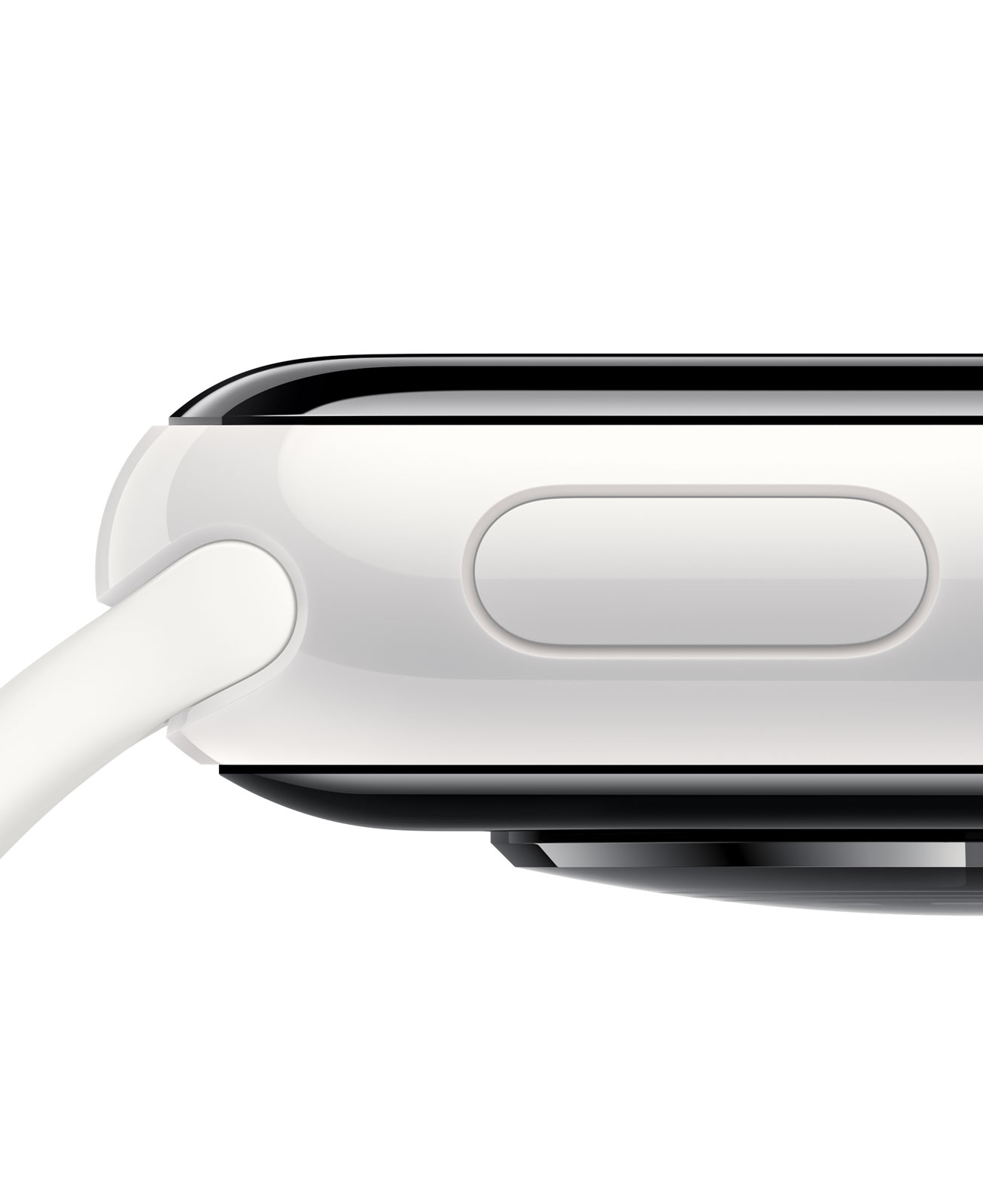
Though I didn’t get the design upgrades I was hoping for (I wanted Apple to do a 180-degree turn and debut a completely fresh look for its watches), we got some smart new color options in the process. But that aside, the new monitoring tools do more than make up for the lack of visual upgrades — they’re smarter, insightful, and more personal than ever.
It’s hard to tell if all the new wellbeing tracking tools will be available for previous models — for anything powered by Apple Intelligence, it’s likely that these will remain native to the Series 12 and Ultra 4 — but we still think they’ll make for welcomed additions for health-conscious users.
As part of the wider Health app revamp, health monitoring using the Apple Watch paired with the iPhone's camera is a new feature, starting with full body assessments. The assessments allow the Health app to measure VO2 max — the the maximum amount of oxygen your body can use while exercising, a key measure of fitness — along with flexibility, strength, balance, and movement mechanics.
All you have to do is prop your iPhone vertically against a wall so that your whole body fits in the frame, and it will get you to follow a coach-guided workout. Apple says in order to measure VO2 max, you’ll need an Apple Watch, AirPods Pro 3, or a third-party heart rate sensing device.
Health Age
(Image credit: Apple)
Apple is slightly behind on the Health Age feature — Garmin and Whoop got there first with Fitness Age and Whoop Age, respectively — but it’s finally coming to Apple Watch.
Health Age can be found under the new Longevity tab in the Health app, a hub for displaying deeper insights for different health topics including heart health, mental wellbeing, nutrition, and hearing health.
Your Health Age reading takes different aspects of your health profile into account and combines them into one score to show how your metrics compare to the average health and fitness level for your age and gender.
Health Sensing System
(Image credit: Apple)
This is a technical upgrade to the Apple Watch itself, and a welcomed improvement to how the wearable reads your health data.
Both the Apple Watch Series 12 and the Apple Watch Ultra 4 come fitted with new LED sensor arrays designed for better skin contact, including a new heart-rate sensor for more accurate heart rate and heart rate variability (HRV) measurements — which helps to determine the new Readiness score, which we'll discuss in a moment.
Under the new sensors are larger green LEDs, which now measure your heart rate up to every five seconds, all day long. Apple claims that it's the most accurate heart rate measurement on any wearable, and it can back this up with testing results. We can't wait to try it ourselves against an electrical heart rate monitor.
Readiness Score
Much like the Health Age metric, the new Readiness Score is a tool that's been widely adopted by rival wearables in the past — and now it’s Apple’s turn.
Diving into your Vitals, Sleep Score, recent activity, and other metrics, you'll be presented with a score from 0-10, along with a brief explanation to tell you if your watch thinks you need to pace yourself, or if you have the capacity to push yourself further.
It's a clever and handy tool that could stop you from overtraining, or change your plans to fit in a long run on a day in which you're ready for action. Readiness also updates multiple times a day as your Apple Watch gathers new data, telling you exactly what's affecting your overall score.
Insights tab
(Image credit: Apple)
The Health app's new Insights tab looks very comprehensive. Throughout the day, Insights displays timely information about your health metrics including heart, sleep, readiness, fitness, vitals, and cycle tracking data.
It gives you short summaries about how different fitness categories are impacting your long-term health, while the 'For You' section offers personalized recommendations and even relevant health articles based on your data.
While it's only available for preorder, you can get the 42mm GPS-only model for as little as $219 (originally $399) when you trade in a qualifying smartwatch. That's an impressive $180 discount and an incredible deal for a newly released Apple device.
The Apple Watch Series 12 features new Apple silicon and advanced health sensors, which Apple claims are the most accurate heart rate sensing in a wearable. Apple's newest Health Sensing System, along with its S11 chip, offers a suite of health and fitness features including a new readiness score. The Series 12 also includes advanced workout and sleep tracking and offers up to 24 hours of battery life and up to 10 hours during an outdoor workout, a 25% improvement over the previous model.
Save on the new Apple Watch 12 at Best Buy
Apple Watch Series 12 at Best Buy: starting at $219 with qualifying trade-in The Apple Watch 12 is available for preorder, and you can get the smartwatch for as little as $219 with a qualifying trade-in at Best Buy. The Apple Watch 12 features new Apple silicon and advanced health sensors, which offer advanced heart rate, workout, and sleep tracking.View Deal
To find out how much you can save, you'll click on 'Check your trade-in value' on the Apple Watch 12 product page. You'll then answer questions about your trade-in device, and Best Buy will show you the value. The retailer will email you shipping instructions for your trade-in device, and once it receives it, Best Buy will refund the amount to your original payment method.
Keep in mind this is a limited-time offer, and the Apple Watch 12 is only available for preorder with a September 18 ship date. This is a fantastic deal if you have an older smartwatch and want to upgrade to Apple's latest and greatest.
Strength training helps protect independence in aging by preserving the muscle needed for daily movement, balance, and resilience. Healthy aging means staying independent, moving well, and continuing to take part in daily life as the years pass. For many people, the most meaningful signs of good health are practical ones: standing up from a chair [...]
Apple's 'Surprise and Shine' event unveiled long-awaited devices including the iPhone 18 Pro and the long-anticipated iPhone Duo, but Apple Watches also had their time in the spotlight.
The Apple Watch Series 12 and Apple Watch Ultra 4 are the latest models to join Apple's family of wearables, and both pack quite a punch on the features- and health-tracking front, thanks to the combination of the new Health Sensing System and deeper Apple Intelligence integration.
Of course every new Apple Watch offers improvements over the previous generation — the question is always whether it offers enough to make it worth the upgrade. To help you decide, I've compared the new Apple Watch Series 12 against its predecessor, the Apple Watch Series 11, so you can see all the changes side-by-side.
Apple Watch Series 12 vs Apple Watch Series 11: Specifications
Apple Watch Series 11
Apple Watch Series 12
Price
From $399 / £369 / AU$679
From $399 / $369 / AU$649
Dimensions
42mm x 36mm x 9.7mm (42mm), 46mm x 39mm x 9.7mm (46mm)
42mm x 37mm x 9.7mm (42mm), 46mm x 40mm x 9.7mm (46mm)
Weight
30.3g (42mm); 37.8g (46mm)
32.2g (42mm); 39.5g (46mm)
Case/Bezel
Aluminum with a metal back or Titanium (100% recycled)
Aluminum, Titanium or Ceramic
Display
Always-on Retina LTPO3 display Wide-angle OLED at 374 by 446 (42mm) 416 by 496 (46mm). Ion-X scratch-resistant
Always‑On Retina display with wide‑angle OLEDs and LTPO3 at 374 by 446 (42mm) 416 by 496 (46mm)
GPS
L1 GPS, GNSS, Galileo, and BeiDou
Precision L1 GPS (GPS, GLONASS, Galileo, QZSS, and BeiDou)
Battery Life
24 hours, 38 hours in Low Power Mode
24 hours, 38 hours in Low Power Mode
Connection
Bluetooth 5.3, Wi-Fi, second-generation ultra-wideband chip, and 5G (Optional)
Bluetooth 5.3, Wi-Fi, Second‑generation Ultra Wideband chip, and 5G (optional)
Water Resistance
IP6X
IP6X
Design
We weren't expecting a visual overhaul with the Apple Watch Series 12, and nor did we get one.
The new model packs the same digital crown and side button that you'll find on most Apple Watch models, and size-wise the only difference is that the Series 12 is 1mm wider; if you can spot that in real life, you have sharper eyes than I do.
However, there are some design changes worth talking about. The key one is that as well as being available in Aluminium and Titanium, as the Watch 11 is, there's also now a Ceramic version — the first since the Series 5.
The Ceramic Watch 12 comes in two colors, Pearl White and Night Blue, while the Aluminum model is available in Space Gray, Black, Light Gold and the stunning new Dark Bronze shade, perfect for both casual and smart wear. The Titanium versions come in Radiant Gold and Natural.
Sticking with the Apple Watch 11? Then your choices are between Space Gray, Jet Black, Rose Gold, and Silver for Aluminum, and Slate, Gold, and Natural Polished in Titanium. And to reiterate, there is no Ceramic Watch 11 — so if you want that, you'll need the new model.
Features
Minor design changes aside, the key reasons to upgrade to the Apple Watch 12 relate to its health-tracking smarts.
Many of these stem from its new S11 chip. Apple — inevitably — describes this as its "most powerful wearable chip", and it powers the new Health Sensing System and Audio Intelligence features.
Let's start with the Health Sensing System, the redesign of the previous generation's LED heart rate sensor array. The Series 12's electrode surface area is now bigger, allowing for better skin contact for ECG tracking. It also packs new optical-sensing photo diodes to capture light more efficiently, while its brighter green LEDs support accurate HR in motion. In short, it's the most accurate Apple Watch ever, tied with its sibling the Apple Watch Ultra 4.
It records heart rate continuously, up to every five seconds, and heart rate variability (a key part of sleep tracking and recovery metrics) up to every five minutes. That's a massive 24x more frequently than it did before, ensuring peak accuracy (in theory).
However one of the new standout features is the new Readiness Score, which has finally arrived on Apple Watch. Every other health wearable seems to have one, and Apple's Readiness Score will combine your rings, vitals and other health metrics into a single actionable, frequently updated number.
There are also a significant redesign of the Health app which thrusts Apple Intelligence to the front of the experience. Now, Apple Watch lets you explore health profiles while offering personalized guidance thanks to Apple Intelligence. Once the Health app gets a sense of your health habits, it will tweak its recommendations so that they align with your health levels and data.
Health Age is another new feature that aligns your metrics and fitness level with your actual age, similar to features on Whoop and Garmin.
The Series 12 is packing tons of new fitness features, but Apple Intelligence — or at least, audio intelligence — is brand new and unrelated to health.
Audio Intelligence is comprised of four features. The Series 12 can listen out for sounds, be that a doorbell, traffic, or oncoming pedestrians, and will send alerts right to your watch face — which is ideal for users who are hard of hearing. You can also Shazam songs from your wrist.
Slightly more suspect are Live Rewind and Siri Recaps. Live Rewind allows you to go back 15 seconds to remember parts of a conversation. Didn't catch what the waiter said was new on the menu? Just double-press the digital crown and your watch will generate a transcript for you to read. Siri Recaps is a feature that, when active, listens constantly in the background, providing you with a summary of your day in the evening, including conversations.
Apple's September 9 'Surprise and Shine' event has come and gone, and we've learned a lot about Apple's latest crop of devices. While we've got new AirPods and iPhones (including Apple's first foldable, the iPhone Duo), it's the Apple Watches that have caught my eye as TechRadar's resident fitness and wearables writer — specifically, the Apple Watch Ultra 4, the latest version of Apple's flagship watch series.
But how does it compare to the previous gen, the Apple Watch Ultra 3 — and is it worth upgrading? Read on for a full comparison of both watches, so you can make an informed decision.
Apple Watch Ultra 4 vs Apple Watch Ultra 3: Specifications
Component
Apple Watch Ultra 3
Apple Watch Ultra 4
Price
$799 / £749 / AU$1,399
$799 / £749 / AU$1,399
Dimensions
49 x 41 x 14mm
49 x 44 x 12mm
Weight
61.6g
63.1g
Case/bezel
Titanium
Titanium
Display
514 x 422 px LTPO3 always-on OLED Retina Display
514 x 422 px LTPO3 always-on OLED Retina Display
GPS
Yes, dual-band
Yes, dual-band
Battery life
42 hours
48 hours
Connection
Bluetooth 5.3, Wi-Fi, 5G, satellite
Bluetooth 5.3, Wi-Fi, 5G, satellite
Water resistant
Yes, WR100 (diveproof)
Yes, WR100 (diveproof)
Apple Watch Ultra 4 vs Apple Watch Ultra 3: Price and availability
Price is unchanged from last year
$799 / £749 / AU$1,399
Available from September 18
Here's an easy one to start with: the Apple Watch Ultra 4's price is unchanged from last year, at $799 / £749 / AU$1,399. It's available from the September 18, so if you were considering getting an Apple Watch Ultra 3 but were holding out, there's no reason not to wait a few days for the latest model.
Apple Watch Ultra 4 vs Apple Watch Ultra 3: design
(Image credit: Apple)
Physically, little has changed in terms of looks, but there have been subtle tweaks. The titanium case is still there, slightly wider and slimmer than last year, and it lasts six hours longer than the Ultra 3 to make it to two days, or 18 hours with continuous GPS use.
The watch's heart rate accuracy is even better thanks to the new Health Sensing System. This redesign of Apple's LED optical heart rate sensor tech offers better skin contact thanks to an increased electrode surface area. Heart rate readings are now being taken up to every five seconds, with heart rate variability, an overnight measure of rest and recovery, being read up to every five minutes.
This makes Apple's heart rate sensor the most accurate of any wearable, according to Apple. It has apparently conducted tests against rivals using ECG chest straps, much like we do in our reviews.
I can attest that the Apple Watch Ultra 3 is as accurate a wearable as it gets, so I'll be intrigued to test the new Ultra 4 against my trusty Polar H10.
Apple Watch Ultra 4 vs Apple Watch Ultra 3: Features
(Image credit: Apple)
Finally, a Readiness Score
New Audio Intelligence features
Redesigned Health app
At last! Apple Watch gets a Readiness Score, a feature almost every other fitness wearable has had for years. Typically from Apple, it looks like the bee's knees, feeding into Vitals to generate a holistic overview of your night, and updating throughout the day, like Garmin's Body Battery function. A new Health Age feature also compares your current fitness level to those in your age group, much like Garmin's Fitness Age or Whoop's, er, Whoop Age.
It's unclear at the moment whether the Ultra 3 will get these features, or if it will be an Ultra 4 / Series 12 exclusive. But all the Apple Watch Ultra 3 features, including LTE and satellite connectivity, are available on the Ultra 4.
An incoming redesigned Health app on iPhone is Apple Intelligence-forward, offering personalized AI-powered insights, and what is clear is that this will also work with the Apple Watch Ultra 3 and all Apple Intelligence-compatible iPhones. This Health App will show you Readiness, Longevity, and allow you to measure your VO2 Max using a coached guided workout on your iPhone's camera, then update it according to your activity levels and metrics.
Audio Intelligence features are exclusive to the Ultra 4 and Series 12, and include Shazam on your wrist, Sound Recognition (your watch will let you know the doorbell's rung or a siren's going off, for example), and two more features which are sure to prove controversial.
Live Rewind has your watch listen to and instantly recall a conversation up to 15 seconds previously, by double-tapping the crown of your Apple Watch. Siri Recap listens throughout the day and uses Siri AI to process live audio files, serving you a summary of the day in the evening. There are numerous controls and privacy safeguards in place here, but there's no doubt they'll come across as creepy to many. You can read all about Audio Intelligence on Apple Watch here.
This left me (and probably a lot of other people) fearing the worst about the prices of the new stuff coming at Apple's September 2026 event.
But as we watched new products being announced that were the same price, or actually better value, than their predecessors, I felt like I was watching Neo dodging RAM-ageddon bullets… even though the iPhone 18 Pro price rose (check out our full list of iPhone price hikes), it felt reasonable.
But then, just like Neo, we got clipped and dropped to the ground by the fact that Apple quietly increased the price sof all its older phones following the event. Here's the new pricing for those models:
The increased iPhone prices
Model
New starting price
Old starting price
iPhone 17
$899 / £899
$799 / £799
iPhone Air
$1,099 / £1,099
$999 / £999
iPhone 17e
$699 / £699
$599 / £599
iPhone 16
$799 / £799
$699 / £699
Let's run through how well we did in different areas in the US and UK prices (it may differ elsewhere, of course).
Apple's launch prices compared
New product
Launch price
Comparison model
Launch price
Apple Watch Series 12
$399 / £369
Apple Watch Series 11
$399 / £369
Apple Watch Ultra Series 4
$799 / £749
Apple Watch Ultra Series 3
$799 / £749
AirPods 5
$129 / £119
AirPods 4
$129 / £119
AirPods 5 with Wireless Charging Case
$149 / £139
AirPods 4 with Active Noise Cancellation
$179 / $169
iPhone 18 Pro
$1,199 / £1,199
iPhone 17 Pro
$1,099 / £1,099
iPhone 18 Pro Max
$1,299 / £1,299
iPhone 17 Pro Max
$1,199 / £1,199
iPhone Duo
$1,999 / £1,999
Samsung Galaxy Z Fold8 Ultra
$2,099 / £1,899
Apple Watch
A nice easy win here — we got new features across both the new regular model and the new Ultra, and we got them for the same price as the previous model. That's pretty great given the levels of inflation we're dealing with.
These were the big win on value, in my opinion. When reporting on the AirPods 5 rumors, we said that we really wanted to see Apple improve what you got for the money specifically, because its entry-level were behind the best budget earbuds from competitors.
Well, that's exactly what we got. The basic AirPods 5 now have active noise cancellation, and along with other improvements this should make them competitive again at the same price. And the mid-range AirPods 5 model get on-ear volume controls and a few other small quality-of-life upgrades, which makes them cheaper than last year's mid-range model. It's a win all around — and you can pre-order them today.
iPhone 18 Pro
This is where things get rockier — but both models have a relatively modest $100 price increase in the US, which is under 10%, and in the world of 2026, I'll take that.
Of course, they've also improved compared to the previous model, and from what Apple's saying the new variable aperture camera system and the much longer battery life provided by the (somehow also super-powerful) A20 Pro chip might be well worth the extra cash.
iPhone Duo
Look, do I think $1,999 is an appealing price for a phone? It's not what I'd choose to pay. I wasn't happy about the rumors of it being that high, but it was kind of inevitable. However, the iPhone Duo folding phone needs to be assessed in context — and that context is: the Samsung Galaxy Z Fold 8 Ultra costs more in the US (in the UK, Samsung has the edge).
It only costs $100 more, I'll grant you, but a win is a win — and again, given the price rises elsewhere in Apple's range earlier this year, I think it was far from a given that its fancy folder was going to actually undercut the competition.
Will we be as lucky with future releases? Perhaps not. It's notable that these product categories are some of the few that didn't get price rises in the hikes earlier this year.
We're expecting the Apple TV 4K and HomePod mini to get new versions soon, for example, and these will probably arrive with the same price the current models do… which were just jacked up significantly. Same for the rumored new entry-level iPad.
And then there's the small matter of Apple having raised the prices of all its existing iPhone models. Unlike the iPhone 18 Pro, those increases don't come with any hardware or performance upgrades — they're just more expensive.
And I assume this means we're not getting a base iPhone 18 at all, if all these phones are sticking around with higher prices.
The Apple Watch 12 was introduced at today's September Apple Event, along with the AirPods 5, iPhone Duo, and iPhone 18 Pro. Apple's newest smartwatch is packed with new features and is officially available to preorder.
The Apple Watch Series 12 features new Apple silicon and advanced health sensors, which Apple claims are the most accurate heart rate sensing in a wearable. Apple's newest Health Sensing System, along with its S11 chip, offers a suite of health and fitness features including a new readiness score. The Series 12 also includes advanced workout and sleep tracking and offers up to 24 hours of battery life and up to 10 hours during an outdoor workout, a 25% improvement over the previous model.
The Apple Watch 12 starts at $399 / £369 for the GPS-only 42mm model and $449 / £419 for the 46mm size. The Cellular version starts at $499 / £469 for the 42mm model and $549 / £519 for the larger 46mm size.
As of writing, Apple is the only retailer where you can preorder the Apple Watch 12, but I'll update this page when more become available. Apple is currently offering a preorder trade-in deal that allows you to save on the new smartwatch when you trade in an older device.
Where to find the best Apple Watch 12 preorder deals
Below, you'll find the best Apple Watch 12 preorder deals available online in the US and UK.
The Apple Watch 12 starts at $399 / £369 for the GPS-only 42mm model and $449 / £419 for the 46mm size.
The Cellular version starts at $499 / £469 for the 42mm model and $549 / £519 for the larger 46mm size.
What Apple Watch 12 deals can you expect?
The only Apple Watch 12 preorder deals you can typically find are on Cellular versions, offered by phone carriers.
The Apple Watch Series 12 is officially available on Friday, September 18, and that's when we might see small discounts from third-party retailers like Amazon. If you want the best Apple Watch 12 deals, you'll have to wait for the next big holiday sales: Amazon's October Prime Day and November's Black Friday shopping event.
The 2026 Apple September Event is today, and rumors suggest the tech giant will introduce its newest smartwatch, the Apple Watch Series 12.
While we can't comment on what new features the smartwatch will offer, we can recommend the excellent Garmin Venu 3, which I've spotted on sale for a record-low of $288 (originally $449.99) at Amazon. That's a whopping $161 discount and an incredible price for a smartwatch that's packed with health and fitness features.
The Garmin Venu 3 earned four and a half stars in our review, and we said it was a 'near-perfect balance of smartwatch and health tracker'.
Great for outdoor and fitness enthusiasts, the Venu 3 offers advanced GPS tracking, a water-resistant design, a dedicated LED flashlight, and up to 14 days of battery life. The smartwatch also tracks heart rate, respiration, blood oxygen saturation, sleep, and stress levels, and includes a speaker and microphone so you can take calls from your wrist.
While the newest Apple Watch will undoubtedly be packed with new technology and health insights, most people won't need these features, and it will likely start at $399.99 based on its predecessor. The Garmin Venu 3 is down to just $288, making it a fantastic smartwatch, especially for runners, cyclists, hikers, and swimmers.
Get the Garmin Venu 3 for a record-low of $288
The Garmin Venu 3 once sat atop our guide to the best Garmin watches, with our fitness experts calling it "the best for most people". The new Venu 4 has replaced it, but this last-gen model still offers an excellent balance of advanced sports metrics and communication features at a new record-low price.View Deal
Apple's hotly anticipated ‘Surprise and Shine’ event is happening now, and we're on the ground in California bringing you all the big announcements as they happen.
Leading the list of rumored-to-be-unveiled products is Apple's first foldable iPhone — expected to be called either the iPhone Duo or iPhone Ultra — which, if it does arrive, would represent the biggest iPhone shake-up in recent history. This dual-screen device could also skyrocket the popularity of foldable phones more generally, so Samsung and Google executives are surely paying close attention.
Elsewhere, Apple looks set to refresh its wearable, earbud, and smart home lines with new Apple Watches, AirPods, and HomePods, respectively — and we may even see a new version of the Apple TV 4K, which hasn't been updated since 2022.
Proceedings kicked off at 10am PT / 1pm ET / 6pm BST — or 3am AEST on September 10 if you're in Australia — and you can follow along below for our live reaction to new CEO John Ternus' first-ever Apple Event.
Today's ‘Surprise and Shine’ Apple event is taking place at the Steve Jobs Theater in Apple Park, California, but you can follow along via the livestream video embedded above or via Apple’s official event page.
Proceedings kicked off at 10am PT / 1pm ET / 6pm BST, which is 3am AEST on September 10 if you're in Australia, but you'll be able to re-watch the stream once the event finishes (we're expecting things to wrap up around 12pm PT / 3pm ET / 8pm BST, or 5am AEST in Australia).
Live updates
Good morning, folks! It's Apple Day — the most important date in the annual tech calendar and the busiest day of the year for the TechRadar office (sigh).
I'll be bringing you the latest iPhone, AirPods, and Apple Watch rumors ahead of the event's kick-off later today, and trust me: there's a lot to cover.
First, a quick reminder of what's happening: Apple's ‘Surprise and Shine’ event is scheduled to start at 10am PT / 1pm ET / 6pm BST today (that's 3am AEST on September 10 if you're in Australia).
This is the 2026 edition of Apple's annual product showcase, and we're expecting to see as many as nine (yes, nine) new products unveiled.
Of those nine rumored products, the most hotly anticipated is Apple's first foldable iPhone, which we've been referring to as the 'iPhone Ultra' for close to a year now. But at the very last minute, the rumor mill has spat out an unexpected new name for this folding device...
Could the iPhone Ultra be the iPhone Duo?
According to seasoned Apple tipster Mark Gurman, the iPhone Ultra will in fact be called the iPhone Duo. It's pretty hard to believe that such a drastically different name has emerged just hours before the product itself is due to be unveiled — so we're still a tad skeptical about its authenticity — but Gurman has an excellent track record when it comes to Apple predictions.
Apple landed on the iPhone Duo name for the foldable iPhone and a $2,000 starting price, eating the additional memory costs. Storage capacities will reach 2 terabytes and roughly $3,000. It’ll ship in October, has support for the Apple Pencil and come in dark blue + white. https://t.co/58VLtVNka6September 9, 2026
Gurman adds in the same X post that the iPhone Duo will have a starting price of $2,000, rising to $3,000 for the 2TB model. And, yes, in case you were in any doubt: those numbers would make the Duo the most expensive iPhone of all time.
Another important note: Gurman says Apple's first foldable iPhone will have Apple Pencil support. Steve Jobs won't be happy...
(Image credit: Apple)
Let's talk AirPods
(Image credit: Future)
Moving away from the iPhone for the moment, let's talk AirPods. Today, we're expecting Apple to announce two new AirPods models: the AirPods 5 without ANC (active noise cancellation), and AirPods 5 with ANC.
Both models are set to use Apple's new H3 chipset, which should improve audio processing and reduce latency, though it remains to be seen how different the AirPods 5 with ANC will be from the AirPods Pro, which already offer ANC.
In any case, we're not expecting to see any camera-equipped AirPods launch today, despite rumors suggesting that such a product is indeed in development.
(Image credit: Apple)
Today might also be the day we finally get a successor to the HomePod mini. This smaller, more affordable version of the standard Apple HomePod (which now exists as the HomePod 2) was released way back in November 2020, but hasn't been updated since.
More than 20 (!) new iPhones have launched in that same period, so to say the HomePod mini 2 has been a long time coming would be an understatement.
Rumored upgrades for the HomePod mini include a faster chipset (duh!), superior audio quality, and Siri AI functionality.
A clear message from Samsung
(Image credit: Samsung)
If you walk around London, New York, or Seoul today, you may spot Samsung's new tongue-in-cheek advertising campaign, dubbed ‘Welcome to Foldables’.
The Galaxy Z Fold 8 manufacturer is clearly hoping to remind people that it has spent a decade developing foldable technology, and that Apple — if it does release its first foldable today — is late to the party.
That said, Samsung isn't totally against Apple's late entry into the foldables market. Speaking to Bloomberg last year, Samsung's President and COO of the company’s Mobile eXperience (MX) division, Won-joon Choi, said: "I think healthy competition with other companies will bring more innovations, and then bring more benefits to consumers. So we are welcoming others to join this category, which we created back in 2019 [...] Having another global company join this category, I think it's good for the industry, and also, it's going to be great for consumers."
Don't forget about the iPhone 18 Pro
A quick word on the iPhone 18 Pro and Pro Max, which will likely be the forgotten children of today's Apple Event while also being the best-selling Apple products of the next 12 months.
Gurman says both phones will have smaller, more functional Dynamic Islands, an upgraded vapor chamber (read: they won't get as hot), and "major" new camera hardware. Rumors suggest a variable aperture feature could be chief among this new hardware, which would make the iPhone 18 Pro and Pro Max some of the best camera phones around.
The iPhone 18 Pro and iPhone 18 Pro Max will have a smaller and upgraded Dynamic Island that can support three tasks at once (up from two currently), major new pro camera hardware and software, plus an upgraded vapor chamber. https://t.co/58VLtVNka6September 9, 2026
Now look, I can live without the Action button, a SIM card slot, and a telephoto camera, but no Face ID or MagSafe? I'm not sure I would spend $2,000 on an iPhone without those two features, which feel pretty essential to how I use my iPhone every day.
Thinking of selling your iPhone 17 Pro? Do so ASAP
(Image credit: Apple / Future)
Here's some last-minute advice for you: if you're planning on selling your current iPhone 17 Pro or Pro Max to fund an upgrade to the iPhone 18 Pro line, you should head out to your local tech store and do so ASAP. Why? Because current iPhones could fall in value by up to 30% once the new models launch.
“Many people will make the mistake of waiting to see what new features the next iPhone range has before trading in their old device, but our data clearly shows that waiting just a few weeks could mean a significant hit on the amount customers can get for it," Joe Armstrong, Head of Trading at musicMagpie, tells TechRadar. "Those who wait until October may see handsets drop by an average of £48 and up to £122."
It's the same story in the US and Australia, and while Armstrong references October as the hard trade-in deadline, your absolute best bet is to sell your current iPhone before 12pm PT / 3pm ET / 8pm BST today.
Of course, selling before the iPhone 18 Pro has even been announced would leave you with no phone until the new models begin shipping later this month, but some retailers will allow you to lock in a sale price today and keep using your phone for a few more weeks. That's the ideal scenario during this precarious time of year for iPhone trade-in values.
First official look at the iPhone Ultra?
New Apple CEO John Ternus has just posted what appears to be a tease for one of the company's new iPhones on X. There's no Tim Cook-style "Good morning!" here, nor even a reminder of today's event start time. Instead, Ternus has shared a 14-second clip of a spotlight shining down on the corner of what looks like an iPhone. Is this a hint that the iPhone Ultra/Duo won't have four straight edges à la the Samsung Galaxy Z Fold 8, or a reference to the rumored variable aperture feature on the iPhone 18 Pro?
Oh, and the Apple Store website is now closed for maintenance, which typically happens right before the company refreshes its product lineup. Not long to go now!
Regarding Ternus' teaser post on X, some Apple fans are pretty convinced it refers to the iPhone 18 Pro's variable aperture, rather than the company's first foldable iPhone. Perhaps we'll get a second teaser video before the event kicks off at 10am PT / 1pm ET / 6pm BST?
Pro phones to come to variable aperture!Notice how the light source widens up and then convergesJust a guess !September 9, 2026
In terms of what won't be unveiled today, we're not expecting Apple to announce new MacBooks, iPads, or Vision Pro-style VR hardware. Software upgrades will most likely take a backseat, too, after iOS 27, Siri AI, and WatchOS 27 were all announced at WWDC 2026 back in June (though it's worth noting that these new OS packages will almost certainly be released alongside their corresponding hardware products in September).
(Image credit: Future)
TechRadar's Editor at Large, Lance Ulanoff, has touched down in Apple Park. His first stop? The official Apple Store, which appears to be temporarily boarded up in preparation for new products.
The Boys Are Back in Town
(Image credit: Future)
Lance has now been joined by Jacob Krol, TechRadar's US Managing Editor for News. Between them, they'll be bringing you hands-on impressions and videos of everything Apple is announcing today — including, we hope, the company's first foldable iPhone.
OK, I'm pretty sure I know what the winning response will be (it rhymes with "grindstone culture"), but cast your vote below for your most anticipated announcement from today's Apple Event:
Just two hours to go! A reminder that today's event kicks off at 10am PT / 1pm ET / 6pm BST (or 3am AEST if you're in Australia, but if you're reading this from Sydney: go back to sleep).
Here's Lance and Jake on their predictions for today's event:
The sun is out at Apple Park! Incidentally, it was raining cats and dogs during last year's event, so perhaps the universe is telling us we're in for a more exciting set of announcements in 2026.
(Image credit: Future)
Watch out for watches
The Apple Watch Series 11 (Image credit: Future)
The foldable iPhone Duo and iPhone 18 Pro won't be the only stars of today's event: Apple Watches also look set to get an overhaul, starting with the Apple Watch Series 12.
Now, if you're expecting major design upgrades, prepare to be disappointed. According to the latest rumors, the Series 12 will look similar to its predecessor, the Apple Watch Series 11 — though one rumor does hint at ceramic case options, which would be a nice touch. We’ve also heard that the Series 12 could have a new LTPO display instead of the classic OLED, but we’re taking this claim with a pinch of salt.
For now, we’re expecting the biggest upgrades to come inside the watch. Specifically, the Series 12 is tipped to house Apple’s new S12 chipset, which should be powerful enough to support Siri AI, as well as a larger battery for a much-needed battery life boost.
(Image credit: Apple)
The premium Apple Watch Ultra is also tipped to get another update today, but again, it won't necessarily look any different from the current model. Some speculate that the Watch Ultra 4 will be identical in appearance to the Watch Ultra 3, while others claim it will have a bigger screen and slimmer build.
Of course, the biggest updates will likely come under the hood, with the Watch Ultra 4 set to get a new chipset — a no-brainer given Siri AI’s imminent rollout — and a suite of new sensors for more accurate health tracking.
Look out for new health-tracking software
While both new Apple Watch models will almost certainly get hardware upgrades, Apple is also expected to unveil new wellbeing tracking tools for health-minded users. A new default Readiness app is expected to launch for the Apple Watch home screen, delivering a new and improved recovery experience for users — because what you do after a workout is just as important as the workout itself.
The Workout app could be getting an overdue facelift, too. The new version will reportedly let you record individual reps and sets for strength routines to help you keep track of your progress. I’ve been using my iPhone's Notes app in the gym for years, so this is one feature I’m hoping will make an appearance at today's event.
Another handy health tool we’re expecting to see unveiled is always-on heart rate data tracking, which will monitor your activity and recovery over 24 hours using only your heart rate. This sounds exciting, but given that only the Ultra 4 is expected to get new sensors, it’s likely that this feature will be exclusive to Apple's most premium wearable.
(Image credit: Future)
Just 45 minutes to go — Lance and co. are being ushered into the Steve Jobs Theater to take their seats.
The current foldable competition
The Xiaomi 18 Fold (Image credit: Future)
Switching focus back to Apple's first foldable iPhone, there are currently three similarly sized devices available on the market right now: the Samsung Galaxy Z Fold 8, the Xiaomi 18 Fold, and the Huawei Pura X Max.
The first of that trio is the big competition for the iPhone Duo/Ultra. The Z Fold 8 is available globally, and it's been well-received by reviewers and customers as a sturdy, pocket-friendly phone designed for content consumption above all else. Apple will surely ensure its foldable iPhone one-ups the Z Fold 8 in some way, but we're not sure how just yet. I'm banking on a less-visible crease or a superior camera array.
The Xiaomi 18 Fold and Huawei Pura X Max are only available in China, but both may look more similar in appearance to Apple's foldable iPhone than the Galaxy Z Fold 8. Both phones have two rounded corners when closed and four when open, while Samsung's phone is straight-edged whichever way you slice it.
(Image credit: Future)
Lance and Jake have taken their seats inside the Steve Jobs Theater. It's getting real now.
We're kicking off with... iPhone?! I wasn't expecting that. Ternus says the iPhone represents the perfect intersection between AI and hardware. Private Cloud Compute delivers "personal intelligence that's actually personal."
OK we really are getting straight into the new iPhones. I respect it!
(Image credit: Apple)
First up is the iPhone 18 Pro and iPhone 18 Pro Max. "We made massive advancements in Intelligence, Performance, Battery, and Camera," Ternus says.
It comes in Black, Silver, Glacier, and Burgundy.
(Image credit: Apple)
The iPhone 18 Pro features Apple's most advanced foundation models, which, of course, unlock the full capabilities of Siri AI. We got a taste of Siri AI at WWDC 2026 earlier this year, but it now looks set to roll out properly on the 18 Pro, Pro Max, 17 Pro, 17 Pro Max, and iPhone Air (other iPhones will get it, too, but the best version of the software will be locked to these top-end models).
The iPhone 18 Pro features the Expressive Voices feature in Siri AI for more accurate dictation and improved personalization.
We're getting a lot on Siri AI and Apple Intelligence here, but we heard most of this back in June. Let's hope we move onto the hardware upgrades soon...
(Image credit: Apple)
OK, we're finally onto the hardware: the iPhone 18 Pro and Pro Max feature Apple's latest chipset, the A20. It's built on 2nm technology, and features a 6-core CPU (including 2 new super cores and 4 efficiency cores), a 7-core CPU (delivering a 40% increase in graphics performance), and two Neural Engines.
Its the "ultimate chip for running on-device AI models," Apple says.
(Image credit: Apple)
The iPhone 18 Pro and Pro Max also feature a redesigned vapor chamber. It has three times the surface area as the one inside the iPhone 17 Pro, and features more thermally conducted graphite than before. It's much better at dissipating heat, basically (you'll supposedly get a 40% gain in sustained performance).
(Image credit: Apple)
OK, onto the battery – the iPhone 18 Pro Max supposedly delivers the largest increase in battery life ever on an iPhone. You'll get 36 hours of video playback on the 18 Pro, and 45 hours on the Pro Max. As expected, Apple isn't sharing the specific mAh figures.
The biggest phone event of the year has arrived. Today (September 9), Apple is holding its ‘Surprise and Shine’ event where — among many other things — we’re expecting to see the foldable iPhone Ultra unveiled.
This phone has been rumored for years, so it’s almost hard to believe that it could finally be launching today, but all signs suggest that it is — and it won’t be alone, as other phones, plus new wearables and AirPods, look set to be unveiled too.
So, below, we’ve detailed how to watch today's Apple Event, along with all the things we expect to see announced in Cupertino. And to follow along with the announcements as they happen, head to our Apple Event 2026 live blog.
How to watch Apple’s iPhone Ultra launch
Today's major Apple launch is being held at the Steve Jobs Theater in Apple Park, Cupertino, California. As with all these events, it will also be streamed online, so you don’t have to attend in person to witness it.
It starts at 10am PT / 1pm ET / 6pm BST, which is 3am AEST on September 10 for people in Australia. So there’s a good chance you’ll either be at work or asleep while it happens, but you’ll be able to view a recorded version of the video after the live stream has ended, and we’ll also have full coverage of the event here on TechRadar, so you can always just stick with us for our analysis and impressions.
As for how to watch, that’s easy: simply hit play on the video embedded above. Alternatively you can head to YouTube, or Apple’s event page. You’ll also be able to view the livestream on Apple TV.
So, there are lots of ways to watch today's event, and if you press the ‘Notify me’ button on that video, you’ll also get a reminder when the event is starting.
What to expect at Apple’s iPhone Ultra event
(Image credit: Apple; Future)
The iPhone Ultra is almost certainly going to be the most eye-catching announcement at Apple’s Surprise and Shine event. This foldable phone will reportedly have a passport-like form factor similar to the Samsung Galaxy Z Fold 8, with a 7.8-inch foldable display and a 5.5-inch cover screen.
But in addition to this, we’re also expecting Apple to announce the iPhone 18 Pro and the iPhone 18 Pro Max. These will likely have similar designs to the iPhone 17 Pro series and the same screen sizes, but a powerful new chipset and potentially a variable aperture camera.
And it’s not just phones at this event — we’re also expecting to see the Apple Watch Series 12 and the Apple Watch Ultra 4. The main updates here could be the addition of Touch ID and an upgraded chipset, and the Ultra 4 might also gain new sensors.
The AirPods 5 could also land here, as might Apple’s first smart home display, and we might also see updates to the company’s HomePod mini and Apple TV 4K lines.
Beyond hardware, we also expect all of Apple’s next software versions to launch in finished form at today's event, including iOS 27, iPadOS 27, watchOS 27, macOS 27, and tvOS 27, with the headline feature in most of them likely to be Siri’s AI overhaul.
For me, cycling is therapy. It’s calming, meditative and uncomplicated. But there’s a catch. To experience the simple joy of riding a bike, you first have to navigate the maddeningly complex process of buying one.
Make no mistake: this is not a straightforward case of marching into Halfords, saying, “One bike, please!” and leaving with a shiny new steed. But, while complicated, it needn’t be stressful.
Em sua tradicional newsletter “Power On”, o jornalista Mark Gurman (da Bloomberg) tratou dos planos da Maçã para futuro do Apple Watch. A linha poderá passar por reformulações em seu formato, expandindo a variedade de modelos ofertados — mas essa mudança não estaria no horizonte de curto prazo.
Ainda que o bem-estar seja um pilar basilar do segmento de vestíveis (tanto por parte da Apple quanto na concorrência), a equipe de design industrial da empresa trabalha em novos produtos que funcionem como a resposta da Maçã à expansão da gama de dispositivos vestíveis disponíveis no mercado, sejam os anéis inteligentes ou as pulseiras sem tela.
Gurman salientou, no entanto, que essas mudanças poderão “levar tempo” para chegar ao consumidor final, e que atualizações modestas deverão definir o tom da linha durante pelo menos os próximos dois anos; ele reiterou ainda que a Apple planeja reintroduzir o acabamento em cerâmica — ou agora em setembro, com o “Apple Watch Series 12” e o “Ultra 4”, ou com os modelos que deverão ser apresentados no ano que vem —, além de apresentar melhorias significativas de performance.
Quem lidera a frente de ampliação dos vestíveis da Apple é Eddy Cue, que assumiu o comando do setor de saúde no ano passado. O executivo parece estar atento às iniciativas de empresas como a WHOOP ou a Oura, que redefiniram a relação dos wearables com a integração de recursos de inteligência artificial (IA) — o que, dada a expansão da IA no ecossistema da Maçã, poderá ser um caminho para os diferenciais em termos de software.
Os planos para o futuro, de acordo com o jornalista, envolvem variações de wearables sem telas, que deverão ser ainda mais acessíveis do que o Apple Watch SE, além de variantes que extrapolam a linha Ultra e Hermès. Gurman mencionou que, embora acredite que a hipótese nunca se transformará em um lançamento real, a Apple cogitou ainda a implementação de telas redondas.
Ao fazer um breve passeio pela trajetória do Apple Watch, ele destacou que as suas evoluções, assim como as do iPhone, partiram (e seguem partindo) de mudanças incrementais, sem romper com o formato do relógio apresentado por Tim Cook em 2014. Ao traçar um paralelo com a trajetória dos iPhones, a ampliação dos formatos do Apple Watch lembra a expectativa de que o “iPhone Ultra” redefina o paradigma de formato dos celulares da Maçã.
Apple Watch Ultra 3
Cores: natural ou preto Pulseiras: loop Alpina, loop Trail, Oceano ou estilo milanês de titânio
Material: alumínio ou titânio Cores: cinza-espacial, prateado, ouro rosa, preto brilhante, natural, dourado ou ardósia Tamanho: 42mm ou 46mm Conectividade: GPS ou GPS + Cellular Pulseiras: esportiva ou estilo milanês
NOTA DE TRANSPARÊNCIA: O MacMagazine recebe uma pequena comissão sobre vendas concluídas por meio de links deste post, mas você, como consumidor, não paga nada mais pelos produtos/serviços usando os nossos links de afiliado.
Apple is re-evaluating the Apple Watch lineup and considering a host of radical new designs, according to Bloomberg's Mark Gurman.
In today's edition of his "Power On" newsletter, Gurman compared plans for the Apple Watch's evolution to the "revolutionary design change" that the foldable iPhone represents. It will be "something that transforms the product for a new era." Apple's industrial design team has reportedly been "exploring a broader rethink of its smartwatches" for some time, with several directions under evaluation.
The company is apparently taking the resurgence of fitness bands without screens and smart rings seriously. As a result, the company is considering new Apple Watch-style devices with no display, as well as new Apple Watches with different types of screen and various new sizes.
Apple has also contemplated giving the Apple Watch a round display, but Gurman cautioned that such a device is unlikely to be released. The company has also considered introducing new premium variants designed to sit above the Ultra and Hermès models, alongside even more affordable options in addition to the Apple Watch SE.
The company has not yet settled on a direction for the product line, but it is said to be "determined to reinvent the lineup in response to growing competition." It also plans to make its wearables more AI-focused, with ambitious long-term plans to revamp the Health app.
Gurman believes that the Apple Watch revamp "could be as significant as the iPhone's transformation from a slab design into a foldable device." Apple purportedly hopes to reinvigorate its Wearables, Home and Accessories segment, which has struggled to generate growth over recent years.
Whether you’re training hard, traveling often, or dealing with poor circulation, these are the best compression boots for anyone looking for better muscle recovery.
Whether you’re training hard, traveling often, or dealing with poor circulation, these are the best compression boots for anyone looking for better muscle recovery.
RingConn has always been a solid challenger to Oura in the smart ring space, and after spending two weeks testing it, I can safely say the new RingConn Gen 3 continues that trend. You’ll get most of the same health, sleep and recovery tracking features as rivals in our best smart rings guide here, but without the monthly subscription that puts some people off buying a smart ring altogether.
The Gen 3 tracks heart rate, heart rate variability (HRV), blood oxygen levels, skin temperature, respiratory rate, stress, activity and sleep. New additions include a haptic motor for some alerts and reminders, improved battery life and new vascular health trend insights, which are designed to give you a picture of your cardiovascular wellbeing over time.
However, this version does feel similar to the Gen 2 that came before it. The design and app experience feel largely unchanged and many of the core features will already be familiar to anyone thinking of upgrading from a RingConn Gen 2.
Although that's not necessarily a bad thing. The lightweight titanium design is still incredibly comfortable to wear and the app is simple to navigate. RingConn also continues to stand out by offering useful features like sleep apnea monitoring, something that still isn't standard across the smart ring market.
(Image credit: Future)
The experience here isn't perfect. During my testing, I found that some health insights can feel generic, certain wellness scores lack meaningful context and some of the messaging around features like vascular insight trends can be confusing. And, while the app is clean and easy to use, it still doesn't feel quite as refined or polished as Oura's.
But RingConn continues to occupy a compelling middle ground. It isn't the cheapest smart ring you can buy, but it undercuts premium competitors while delivering a similar experience overall.
The RingConn Gen 3 may not be the most exciting smart ring launch of the year, but for anyone looking for comprehensive health tracking without an ongoing subscription, it's shaping up to be one of the easiest smart rings for me to recommend.
RingConn Gen 3: Specifications
Component
RingConn Gen 3
Price
$426 (silver, gold, matte black) / $454 (brushed silver and brushed rose gold); £322 / £343 (approx)
Dimensions
2.3mm thick
Weight
2.5g to 3.5g (depending on size)
Finish
Silver, gold, matte black, brushed silver, brushed rose gold
Sizes
6 to 15
Material
Titanium body, medical-grade epoxy interior with a PVD coating
Battery life
10 to 12 days (with vibration on), 11 to 14 days (with vibration off)
Sensors
Optical Heart Rate Sensor, Temperature Sensor, 3-Axis Accelerometer and Vibration Feedback Motor
Connection
Bluetooth 5.0
Water resistance
IP68 / 10ATM
(Image credit: Future)
RingConn Gen 3: Price and availability
Priced at $426 / $454; £322 / £343 (approx)
Rolled out from late May 2026
No subscription needed
Pricing starts at $426 for the silver, gold and matte black versions. That rises to $454 if you’d like the new brushed silver and brushed rose gold finishes.
I only tested the standard silver, but the brushed effect is really appealing. At least what I can see from promo shots, it makes the ring look a little more refined and if I was buying one myself I’d probably pay extra for that finish.
UK pricing hasn’t yet been confirmed at the time of writing, but that US pricing works out at approximately £322 to £343, depending on the finish you choose.
That places the RingConn Gen 3 firmly in the premium smart ring category. It's not cheap by any means. You can now find more affordable smart rings, like the Circular Ring 2, which starts at $349 / £280 / AU$497.
However, it still manages to undercut some of its biggest competitors, making a tempting value proposition. For context, the new Oura Ring 5 starts from £399. Which, granted, isn’t that much more expensive. But you do need to factor in the ongoing monthly subscription, which you’ll need to unlock all of the Oura’s features. That costs $5.99 / £5.99 per month. So paid monthly, that’s around an additional $70 / £70 per year.
What makes RingConn stand out is that there are no subscription fees here. Once you've bought the ring, you get access to all of the core health and wellness features without any additional monthly costs.
It’s worth mentioning that other smart ring brands are offering their devices without a monthly subscription too. And the gap between RingConn and its premium competitors isn't quite as large as it once was, especially as smart ring prices continue to rise across the board. But when you factor in the lack of subscription fees and the breadth of features on offer, the RingConn Gen 3 still represents good value.
Value score: 4/5
(Image credit: Future)
RingConn Gen 3: Design
Lightweight and comfortable design
Distinctive squared circle shape
New finishes and expanded sizing options
The first thing you'll notice about the RingConn Gen 3 when you take it out of the box is its unusual shape. Rather than being perfectly round, it has a subtle squared-off design. It looks a little unusual at first, but I really liked it. Plus it seemed like a refreshing choice in a market where so many smart rings are almost indistinguishable from each other.
At between 2.5g and 3.5g depending on which size you get, and measuring 2.3mm thick, the ring is light and discreet enough to forget you're wearing it. I wore it day and night when I was testing it, including while sleeping, without any issues.
That weight and thickness are both fairly standard compared to other smart rings. The only notable exception is the new Oura Ring 5, which has been designed to be slimmer and lighter than previous generations and almost all rivals.
The Gen 3 ring is made from titanium with a medical-grade resin interior and is rated IP68 and 10ATM for water resistance. In practical terms, that means you can wear it in the shower, while swimming and during workouts without worrying about taking it off. During testing, I rarely had to think about removing it, whether I was washing up, showering or exercising — though I did remove it when lifting weights to avoid any scratching.
RingConn has also expanded its sizing range this time around, now offering up to size 15. Many competing brands don't go beyond size 14. One thing to be aware of here is that RingConn says the Gen 3 sizing may differ slightly from standard ring sizing and other smart rings. Which means it may be worth using the sizing kit first just to be safe. Although I tested my usual size without any issues.
There are several new finishes available, including brushed silver and brushed rose gold. I tested the glossy silver model, which held up surprisingly well during testing. After more than a week of daily wear, there were no visible scuffs or scratches, even on close inspection.
That's really notable because when I’ve tested many smart rings in the past I've found that some finishes, particularly matte black ones, can start showing signs of wear after only a few days.
That said, if I were buying this ring myself rather than reviewing it, I'd probably choose one of the new brushed finishes, even though they cost a little more. After years of testing smart rings, I've come to think that the super glossy finishes are often what make them look like gadgets rather than jewellery. So if making sure a smart ring blends in is important to you, the brushed options are probably worth considering.
My only real criticism is that there isn't an obvious external marker showing which way round the ring should be worn. That's really nit-picking, but it's something some competitors have added. While it's easy enough to identify the correct orientation from the sensor placement inside the ring, a small external indicator, like a tiny notch, would make it quicker and easier to position correctly for the most accurate readings.
The charging case is handy. It's compact, easy to throw into a bag and feels more refined than previous versions. Unlike some competitors, it's also not tied to a specific ring size, which might be useful for you if you know someone else who has a RingConn ring.
Design Score: 4/5
RingConn Gen 3: Features
(Image credit: Future)
Subtle haptic alerts
Comprehensive health and wellness tracking
Sleep apnea monitoring and vascular insights
You’ll find all of the health and wellness features you'd expect from a premium smart ring here. The Gen 3 continuously tracks heart rate, heart rate variability (HRV), blood oxygen saturation (SpO2), respiratory rate, skin temperature, stress, activity levels and sleep. There's also menstrual tracking and a Baby Prep mode to support ovulation prediction.
Alongside these core features, RingConn offers a few more advanced tools that are designed to help it stand out from rivals. One of the most useful is sleep apnea monitoring. Once enabled, it monitors for the core signs of sleep apnea and provides short-term risk indicators alongside longer-term trends.
Like any wearable health feature, it's not designed to diagnose a medical condition. But I think it could be useful if you're concerned about your sleep quality or breathing patterns and want some additional information before you speak to a doctor.
New for the Gen 3 is a built-in haptic motor, which means the ring can now vibrate for health alerts, inactivity reminders and low-battery warnings.
At first, I was conflicted about this addition. Part of the appeal of smart rings for me is that they collect data in the background without demanding attention in the way a smartwatch can. Fortunately, RingConn has taken a restrained approach. The vibrations are subtle, focused on health-related notifications rather than phone alerts and can be disabled entirely if you'd prefer that.
Another notable addition is RingConn's vascular health tracking. Rather than attempting to estimate blood pressure directly, the feature combines overnight vascular load data with blood pressure readings and lifestyle information to provide longer-term cardiovascular insights.
To use it, you'll need to periodically enter blood pressure readings from a traditional blood pressure cuff. Initially, I wasn't convinced of the value of this feature. Wouldn’t you just use a cuff instead of the ring if you have one? But it became clear during testing that the goal here isn't to replace a blood pressure monitor. Instead, it's designed to help identify broader patterns over time.
One reason for the confusion is likely that in the app this section is labelled as 'blood pressure trends', which RingConn tells me is out-of-date copy and will be changed to 'vascular insights' soon to make it clear this isn't just a blood pressure reading feature.
Because the data you get here is about circulation stress tracking, which RingConn describes as a measure of how effectively your body moves between activity and recovery. Results are then also broken down into areas such as day-night rhythm, sleep breathing, post-exercise recovery and stress response.
The insights aren't especially deep, and if anything is flagged you'll need to go and search for what it means, but they're among the most detailed explanations available in the RingConn app and provide useful context without becoming overwhelming.
Features Score: 4/5
(Image credit: Future)
RingConn Gen 3: Performance
Clean, easy-to-use app
Excellent battery life
Strong sleep and wellness tracking
As with any smart ring, the Gen 3 relies heavily on its app, and RingConn gets a lot right here. While it doesn't feel quite as polished as Oura's software, I found it easy to navigate through the different menus. I also liked the flower-like Wellness Balance graphic at the top of the dashboard, which provides a quick visual snapshot of your overall health.
The app makes it easy to check key metrics at a glance, while more detailed charts, historical trends and explanations are there if you click through into each dedicated section, including sleep, activity and stress. Stress tracking was a particular highlight, making it easy to spot recurring patterns and periods of higher pressure throughout the day.
Some of the written insights can feel a little generic though, as daily summaries occasionally surfaced observations that felt obvious or lacked enough context to be genuinely useful. Sleep insights tended to be more helpful, with more detailed explanations and recommendations.
Sleep tracking is one of RingConn's strongest areas. The app presents sleep duration, efficiency, stages, overnight heart rate and movement data clearly without overwhelming you with information. During testing, it also handled my occasionally unusual sleep schedule surprisingly well, which meant that on nights when I woke up for an hour in the early morning before falling back asleep, RingConn correctly identified this as a brief 'awake' period rather than ending the sleep session entirely.
In terms of accuracy, I wore the RingConn Gen 3 alongside a Whoop 5.0. The two devices produced very similar results. Whoop measured a 84% sleep performance, 6 hours and 31 minutes of sleep and a 49bpm average overnight heart rate. RingConn gave me a 77 sleep score, recorded 6 hours and16 minutes of sleep with a 48bpm average overnight heart rate
Sleep stage breakdowns also aligned closely, with only minor differences in deep and REM sleep estimates. No wearable tracks sleep perfectly, but the results were broadly consistent.
I also appreciated how RingConn handles unusual readings. Rather than generating alarming warnings whenever a metric moves outside of its normal range, the app generally presents changes with reasonable context. I'd still like more explanation in some areas, particularly when a metric is flagged. I was often felt feeling a little frustrated at the lack of context and additional information as to why a reading deviated and what that really means. But the overall approach feels useful and sensible.
Sleep apnea monitoring is well implemented here. The feature presents trends clearly, includes some useful explanations and feels more mature than some of the app's other health insights. It's worth noting though that monitoring won't function properly once battery levels drop below 30%.
Exercise tracking is more basic than what you'll get from a dedicated sports watch, although that's true of most smart rings. During testing, the ring automatically detected walking, running and strength-training sessions without requiring manual input. You just need to acknowledge it’s identified your activity correctly and there are a wide range to choose from.
In the activity section you’ll find useful information like activity intensity, active time, calories burned and step count, which should be enough for most users.
Step tracking was accurate, although RingConn did seem to slightly under report compared to other devices. On one test day it recorded 5,167 steps versus 5,500 on the Whoop, a pattern I noticed in a few other comparisons.
Battery life is still one of RingConn's biggest strengths. The company claims between 11 and 14 days per charge, and in my testing the ring lasted nearly 12.5 days with both vascular insights and haptic alerts enabled.
That comfortably exceeds most rivals these days. For comparison, the Oura Ring 5 offers up to 7 days, the Samsung Galaxy Ring up to 7 days, while the Ultrahuman Ring Air and Circular Ring 2 both offer around 6 days.
For me, this is one of the RingConn's biggest selling points. The less often you need to remove a wearable for charging, the more likely you are to wear it consistently and collect uninterrupted data. RingConn also displays both remaining battery percentage and an estimate of days remaining in the map, which is a small but useful touch.
Overall, the RingConn Gen 3 delivers a strong experience. The app isn't quite as refined as Oura's, and some insights could go further, but the combination of comprehensive health tracking, clear data presentation, excellent battery life and a subscription-free model makes it one of the most compelling smart rings currently available.
Performance score: 4/5
(Image credit: Future)
RingConn Gen 3: Scorecard
Category
Comment
Score
Value
There's no subscription and it undercuts major rivals. But not by all that much.
3.5/5
Design
It's lightweight, comfortable and has a non-standard squared circle design. Nice glossy finish with several more available in this version too. There's no wearing indicator and sizing might differ this time around.
4.5/5
Features
A solid set of health and wellbeing features. Vascular insights are welcome, though not intuitive to use — you'll need a separate cuff. Otherwise, it is pretty similar to the Gen 2 that came before it.
4/5
Performance
Solid insights presented simply in the app. Which is a little less refined than rivals, but easy to use. The battery life is standout and I found myself really engaging with the data rather than forgetting to check — a testament to a solid experience.
4/5
RingConn Gen 3: Should I buy?
Buy it if...
You don't want to pay a subscription All of the features on offer here are free, which sets it apart from rivals like Oura that charge a monthly fee.
You want a light and comfortable smart ring It's very easy to wear, even at night. And despite reported changes to sizing, I got the size I usually wear with no issues.
You want general health insights Look, smart rings are not the last word in fitness tracking. There's some of it here but they're best at general health insights and an overall picture of your wellbeing.
Don't buy it if...
You have the Gen 2 or Air Yes, there are some significant improvements here, but not everyone would be able to justify an upgrade. It depends whether the changes are a priority for you.
You want to save money Compared to rivals, it's solid value. But there are now cheaper options that might not beat the RingConn Gen 3, but do the basics well.
You're considering Oura As you'll learn below, Oura is pricier with a monthly subscription. But it is an elevated experience over RingConn in most ways.
Also consider
Oura Ring 5
The Oura Ring 5 is here and it's one of the best choices out there, especially now the latest version is even slimmer than previous iterations. We rated its improved design and comfort in our recent review. Yes, it's more expensive than the RingConn Gen 3 and you'll need to add on the recurring monthly subscription. But if it's the most advanced smart ring you're after and you're willing to pay for it, take a look at the Oura Ring 5 instead.
I know, I know. This is the older model, but it's been significantly reduced now the Gen 3 is here. Which makes it even better value. Granted, you're not getting the improved battery life, extra finish options, upgraded tracking and vascular insights. But if saving money is a priority, you find a good bargain and you don't need the latest tech, it's a solid choice in my books.
I tested the Ringconn Gen 3 for just over 2 weeks. I wore it all day and all night, only taking it off to either charge it or lift weights — I've learned many times in the past that smart rings are very easy to scratch with metal dumbbells. The smart ring was on throughout workouts, while I was working, out socializing, relaxing on an evening and sleeping at night.
I've been reviewing smart rings since the very first version of the Oura ring came out back in 2017. Since then, I've tested almost every generation from every smart ring brand that came after it. This puts me in a solid position to not only test the newest rings, but compare the models, tell you which one might be right for you and bring you loads of context about the smart ring space.
These days, millions of us have smart devices strapped to our wrists, fingers and arms, measuring our metrics and building a picture of the “quantified self” to make us healthier, more active and better prepared for a medical emergency.
Wearables can help improve our wellbeing and nudge us towards better habits, but it’s less common to hear about the flipside: the anxiety at failing to close your rings, the frantic exercise to ensure you maintain your streak, and the obsession with meeting your targets on a daily basis.
These are feelings I know all too well. Having worn some of the best Apple Watches for close to a decade, I’ve watched it become an essential part of my life — so much so that I’ve tried closing my rings when I’m ill, on vacation, or should otherwise be resting and recuperating. I obsess over those little rings on my watch.
I know this is a problem for me. But what I wanted to find out was whether this is a more widespread issue, and if it is, what can be done about it. Is wearable tech making us more anxious? And can it be redesigned to push back against these tendencies and help us feel more relaxed, not less?
To find out, I spoke to tech and wellness experts who shared their thoughts on the ways wearables can impact our health — for better or worse.
The endless streak
(Image credit: DMstudio House / Shutterstock)
During the FIFA World Cup in July, I was preparing to wake up in the early hours to watch England play Mexico at 1am local time. I set my alarm, went to bed early, and got ready to cheer on my team without waking the neighbors.
Yet there was one thought that I couldn’t get out of my mind as I contemplated the looming disruption to my sleep: my Apple Watch is going to hate this.
It’s now become part of my morning ritual to check my sleep score on my Apple Watch. Every high score gives me a little dopamine hit, every low result a crushing sense of disappointment. And I knew that waking up at 1am and staying awake for two hours in the middle of the night was going to make my Watch very disappointed indeed.
In the end, I rolled over and went back to sleep when my alarm woke me for the game. I didn’t watch it, and I know that was only partly because I was woken at some ungodly hour — it was also because, to a certain extent, I’ve allowed the scores and metrics on my Watch to govern the way I live my life.
That’s not the only way this has happened to me. I recently hit a streak of closing my Move ring for 2,000 consecutive days. But I’d be lying if I said there weren’t some days when I entered a fake exercise to get me past my calorie goal on a day when I was ill, tired or simply unmotivated.
Why cheating is fine, but resting is not, is something I admit doesn’t make much sense. But what I do know is that the thought of losing my streak absolutely fills me with dread. 2,000 consecutive days on my Move streak sounds like a lot, but knowing myself, I’m sure I’m going to try to continue it until the day I die, such is the anxiety associated with the idea of my streak ending.
The dark side of wearable tech
(Image credit: Future)
I’ve long had perfectionist tendencies, but it’s through observing the way I interact with my Watch that it’s really become clear to me how strongly my device’s gamification of fitness has struck a chord with me — and led me into some unhealthy, possibly obsessive behaviors.
I spoke to Dr Dana McKay, Associate Dean of Interaction, Technology & Information at RMIT University in Australia, to get her opinion.
“These technologies are often designed to help us form habits,” McKay pointed out. "They often use tools for so called ‘persuasive design’.... to persuade us to do something we wanted to anyway when we bought the device."
There are two problems with this:, Dr McKay points out: the possibility of becoming “unhealthily focused” on the device, and the prospect of being convinced to don a wearable by an outside party, like an insurance company, and sharing data we don’t want to share. Some private health insurance companies may subsidise the purchase of a wearable in exchange to access to lower premiums, and sharing your tracker's information to an insurer's app.
Yang Wei, Professor of Wearable Technology at Nottingham Trent University in the UK, agreed, saying that while wearables can help us form positive habits, we also need to be careful around them.
“For many people, wearables can be motivating and empowering,” Wei noted, “but for some users they can also create pressure, anxiety, guilt, or unhealthy dependence on data.” After all, wearables “create a framework for what counts as ‘good’ or ‘bad’ activity, sleep, recovery, or productivity,” Wei said. If that data is framed the wrong way, it can push users in an unhelpful direction.
Wei also warned that “One of the risks is that people may start to trust the device more than their own body. For example, someone may feel they slept badly because their watch gave them a poor sleep score, even if they felt fine. Or they may feel they have failed because they did not close a ring or reach a step target, even if they had a perfectly reasonable day.”
That certainly resonates with me: I consciously work to close my Apple Watch’s rings, viewing it as a requirement for each day. A full set has almost become a condition for having a ‘good’ day, regardless of how I’m feeling or what I’ve achieved. And this overreliance on a piece of tech strapped to my wrist feels key to the negative habits I seem to have formed. So what can I do about it?
How to push back
(Image credit: Kanut Photo / Shutterstock)
If wearables have the potential to form negative habits, what can we do to put things right? The answer is often remarkably simple, both McKay and Wei believe: take your watch off from time to time.
“There is no need to wear your device while on vacation unless a health practitioner recommends it,” McKay advised. If your relationship with your fitness tracker has become a problem, “start by turning all the notifications off, limit checking of goals to help reduce obsession, and consider not using the device at all if possible.”
You also need to understand why you are using the device in the first place, Wei contends. “Is it to be more active? To understand sleep? To monitor a specific health concern? Or simply to be more aware of daily patterns? Having a purpose makes it easier to keep the technology in perspective.”
“I would also encourage people to treat wearable data as guidance, not judgement,” said Wei. “These devices can be useful, but they are not perfect and they do not understand the full context of a person’s life. Illness, stress, caring responsibilities, disability, travel, recovery, or simply needing rest can all affect what a ‘good’ day looks like.”
And both McKay and Wei said that if your device is causing significant anxiety or obsessive behavior, it might be best to speak to a medical professional. As Wei put it, “The aim should be for the wearable to support the person, not control how they feel about themselves.”
(Image credit: Future)
But this has to go beyond the user’s own actions — wearables themselves should be designed to better support healthy habits and discourage negative ones. For McKay, that includes “allowing people who use trackers to set the number of notifications they get” and hide those they don’t want to see, as well as “removing gamification elements like badges and sharing (competing) with friends and family.”
Many of these features, like push notification controls, are already buried in the watch's settings, but a lot of smartwatch users don't go looking for them.
“I think we need to move from a data-driven relationship with wearables to a more reflective and human-centered one,” Wei added. That means designers should “move away from purely addictive or performance-based features” and towards focusing on “long-term wellbeing rather than daily judgement.”
Ultimately, Wei said, “I think the best wearable technologies will be those that help people feel more confident and informed, not more anxious or dependent.”
I can’t change how Apple designs its smartwatches, but I can reduce the pressure on myself to hit my goals day after day, even when my body is telling me to rest. Staying fit and healthy is a worthwhile pursuit, but when it comes at the cost of anxiously worrying what will happen if your streak ends, it might just be time to bite the bullet, take off the watch, and enjoy some tech-free time with friends and family. After all, losing a streak is not the end of the world.

 Login