❌

Normal view

Finland's largest Viking Age silver hoard discovered by metal detectorist — and it has thousands of coins and pieces of jewelry

11 September 2026 at 11:00

The largest hoard of Viking Age silver ever found in Finland — which contains almost 10 pounds (4.5 kilograms) of coins and jewelry — has been unearthed by a metal detectorist about 95 miles (150 kilometers) north of Helsinki.

The hoard had been divided into two deposits and buried in birch-bark containers. Although the coins and jewelry likely date to between A.D. 1000 and 1050, it's unknown exactly when they were buried, Esko Tikkala, an archaeologist at the Lahti Historical Museum who excavated the hoard, told Live Science in an email.

The hoard has not yet been fully cleaned, separated and counted yet, but there are thousands of pieces, Tikkala said. "There are quite a lot of coins in this hoard," he said. "I have not had time to go through them."

Metal detectorist Kalle Lappinen found the two deposits Sept. 3 and immediately contacted the museum. Archaeologists inspected and properly excavated the finds the next day, according to a translated statement.

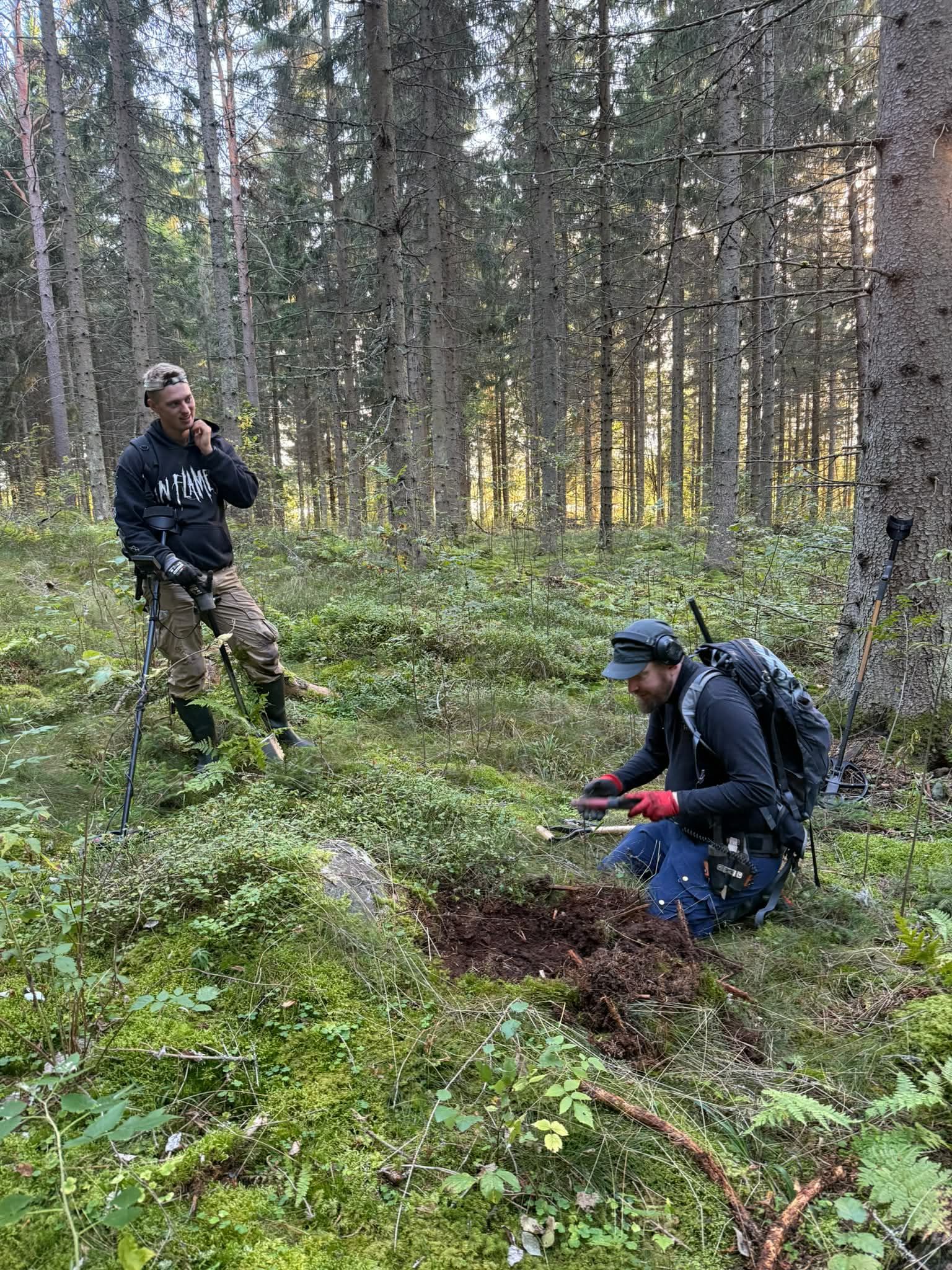
A person stands in the middle of a mossy forest, another kneels on the ground

The coins were discovered in early September by metal detectorist Kalle Lappinen (right). (Image credit: Kalle Lappinen)

Tikkala described the hoard site as beside a rock outcrop in a forest near the town of Sysmä. Several other buried hoards had been found in the same region of Finland over the past 10 years, Tikkala said.

Although it's challenging to determine why specific hoards were buried, a recent study of more than 15,000 Roman-era (the eighth century B.C. to the fifth century A.D.) hoards found that they were hidden for multiple reasons, including for tax evasion, votive offerings, and safe storage in times of uncertainty.

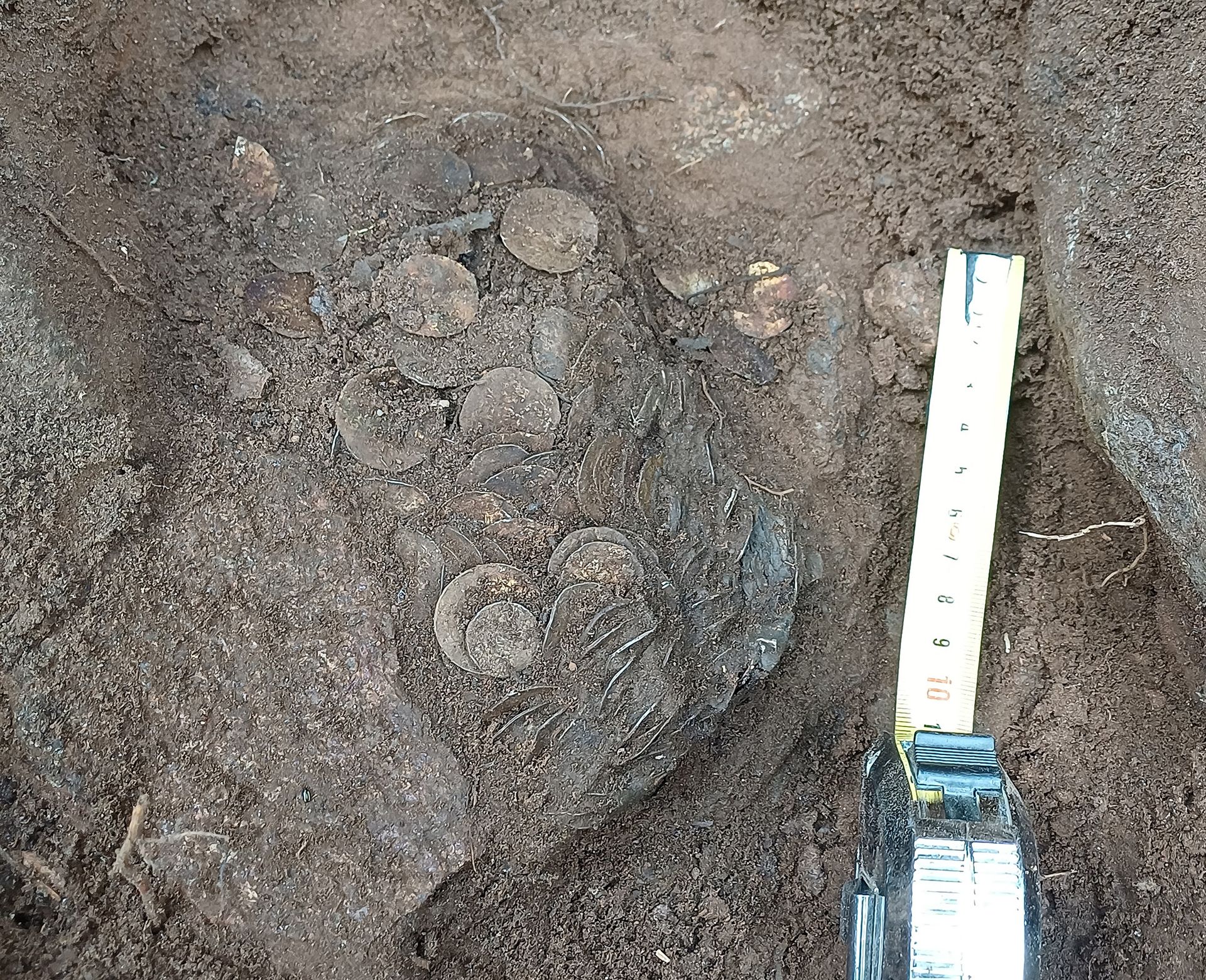
Tikkala said the two deposits of the silver hoard were buried between two stones about 18 inches (45 centimeters) below ground and about 39 feet (12 meters) apart. There were no signs of any burials nearby, but the surrounding area had not been properly studied, he said.

Tikkala added that the coins came from areas that corresponded to present-day Germany, Sweden and Great Britain. There were also some dirhams —‬ silver coins made in the Islamic world. Dirhams previously found in Finland generally date to between about 800 and 1050, he said.

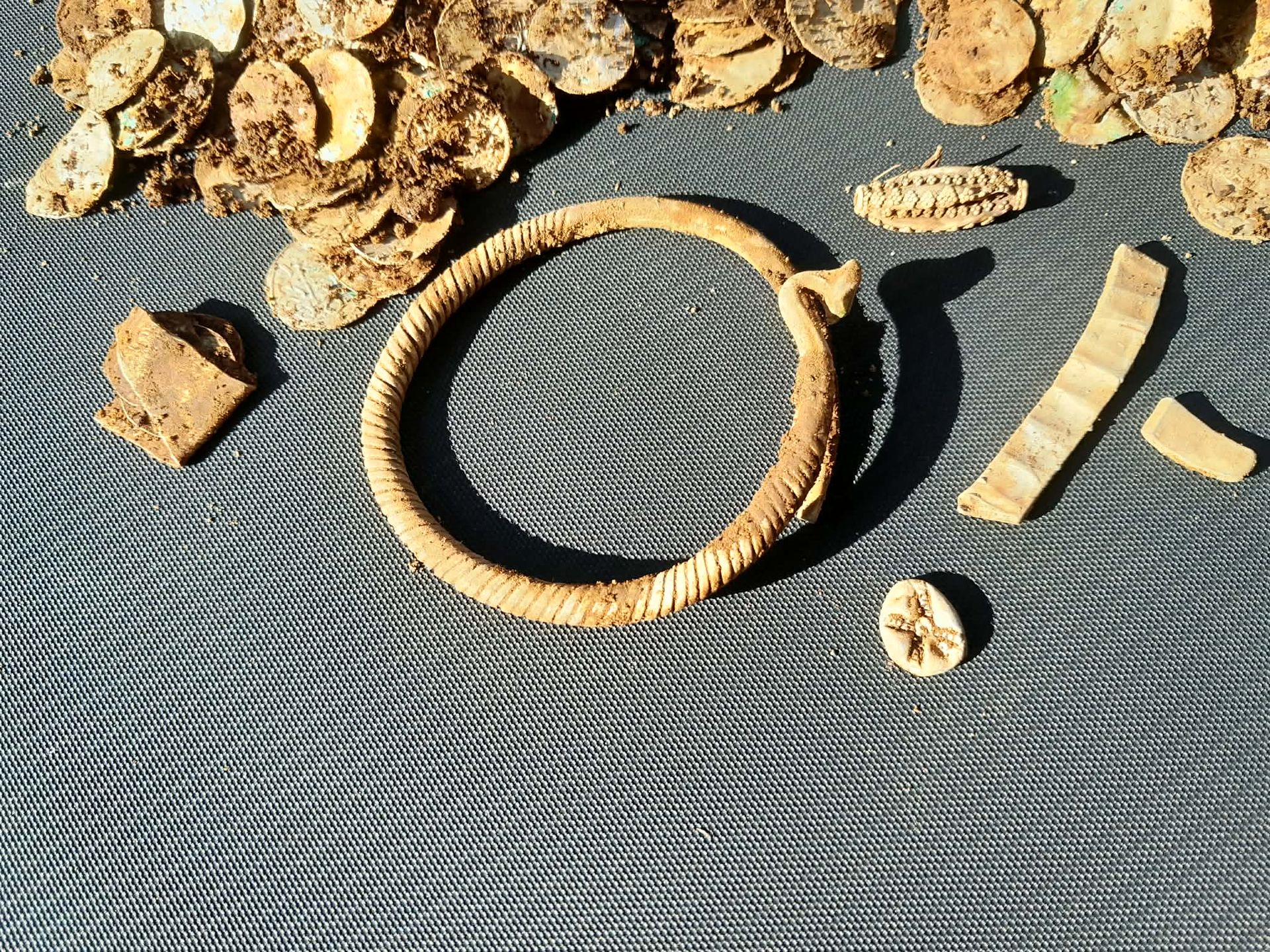
A close up of coins and a bracelet against a gray surface

In addition to the silver coins from many places, the hoard contains items of silver jewelry and "hack silver" used for payments. (Image credit: Lahti Museum)

The hoard also contains several pieces of jewelry, including a silver bracelet, and "payment silver" in the form of hack silver (also called hacksilber) — pieces of silver that could be cut into smaller pieces for payments according to their weight.

The weight of the precious metal alone would make the hoard worth almost $10,000 today.

From the Viking Age, but not from Vikings

Although the hoard is from the Viking Age (traditionally, from the 793 attack on Lindisfarne until the 1066 defeat of a Viking army at Stamford Bridge in England), that doesn't mean it was buried by Vikings, Tikkala said.

"The term Viking Age does not imply that there were Vikings in Finland," he said. "We have no sources suggesting that Finland was 'Viking' in the same sense as regions of present-day Sweden, Norway, and Denmark."

Instead, Finnish historians and archaeologists had adopted the term to designate the period, he said. But the area now known as Finland was not culturally or politically part of Viking Scandinavia.

A close up of half unearthed coins in a gray rock.

The hoard had been placed in two bark containers that were then buried several feet apart. (Image credit: Lahti Museum)

The next stage of the archaeological investigation will be to properly study the site where the two deposits were found, as well as their surroundings, Tikkala said; after that, specialists in Viking Age coins will try to identify the coins and prepare a detailed report.

"There will definitely be scientific articles published on the hoard as a whole, as well as more detailed studies of the coins themselves," he said.

Until now, Finland's largest Viking Age hoard was found in 1895. Buried at Nousiainen, about 130 miles (210 km) southwest of Sysmä, it contained more than 1,700 silver coins but weighed only about half as much as the newfound hoard.

Other Nordic countries have also recently reported their largest Viking Age hoards. A cache of more than 4,700 coins was found in Norway this past spring, and a homeowner in Denmark unexpectedly discovered a hoard of more than 700 silver objects weighing more than 40 pounds (18.5 kg) in their backyard, also in the spring.

See how much you know about ancient norsemen with our Viking quiz!

A Landslide in Italy Just Exposed a 2,500-Year-Old Tomb From a People Who Traded With the Greeks

11 September 2026 at 10:24
On the slope below the cemetery of Sant’Elpidio a Mare, in Italy’s Le Marche region, recent heavy rains loosened the hillside enough to expose something no one was looking for: a rounded ceramic vessel, decoration still visible, sitting almost intact in the displaced earth. It looked, at first, like debris. It turned out to be […]

Humans experimented with mind-altering drugs 25,000 years ago

10 September 2026 at 19:21

We humans love our mind-altering substances. Cultures around the world have discovered, ritualized, and simply experimented with alcoholic drinks and ingestible drugs for millennia. However, recent archaeological evidence indicates humanity possibly began utilizing psychoactive plants much earlier than previously believed. Based on findings published in the journal Science Advances, some communities in present-day Indonesia enjoyed the effects of betel nuts as long as 25,000 years ago. This pushes the timeline over 23,000 years back from documented Neolithic and Bronze Age uses circa 1,500 BCE.

The areca nut (Areca catechu), better known as the betel nut, isn’t widely known in the United States, but it’s one of the world’s most popular intoxicants. Most frequently seen across southeast Asia cultures, its global usage only trails behind alcohol, caffeine, and nicotine. Betel nuts are prepared by grinding and processing the plant seeds with slaked lime (calcium hydroxide). This fine powder is often combined with additional ingredients such as flavoring spices or tobacco to make a “quid,” that is then chewed as a stimulant. There are millions of betel users today, with some estimates putting the global total at 1-in-10 people.

Many researchers contend that most human intoxicant use began with fermented alcoholic drinks, amid the rise of farming during the Neolithic era about 13,000 years ago. Adam Brumm, one of the study’s co-author and an archaeologist at Australia’s Griffith University, believes otherwise.

“This theory fails to account for the possibility that very ancient drug-taking lies at the roots of our most commonly used psychoactive substances,” he explained in a university profile.

Brumm and his team cite evidence gathered from the extremely rare skeletal remains of two early human foragers discovered on the Indonesian island of Sulawesi. The older of the two lived between 25,000 and 16,000 years ago, while the younger individual is 7,600 to 6,300 years old. Unlike many other documented skeletons from the region, these hunter-gathers both exhibit rarely seen dental damage in the form of deep, curved grooves in the teeth. Researchers theorized this unexpected deterioration stemmed from a never-before-identified practice of regularly sucking on entire betel nuts.

But there was a problem—this hypothesis contradicted earlier studies of betel nut usage. Many scientists believe the drug’s primary neuroactive alkaloid, called arecoline, is only noticeable after chewing betel nuts processed with slaked lime. Lab experiments conducted by Brumm’s group suggest this isn’t necessarily always the case. To test their theory, researchers soaked betel nuts in artificial saliva, then introduced the mixtures to exposed cloned human receptors grown from frog egg cells. These receptors included specific proteins that function as molecular switches overseeing neural activity.

The study authors discovered that even simply sucking on whole betel nuts is all it takes to release enough arecoline to elicit altered neural activity and physiological effects. To further bolster their findings, biochemists even flagged arceoline traces in the dental tissue of both hunter-gatherers.

However, the ancient humans living on Sulawesi didn’t necessarily ingest betel nuts for recreational use. Unprocessed nuts likely offer milder effects, but arceoline remains a natural analgesic. Knowing this, the study’s authors surmise these betel nut habits were self-reinforcing.

“Sucking these hard, abrasive seeds wore down the foragers’ teeth so badly that in some cases the inner pulp chamber became completely exposed,” explained Brumm. “So while this habit may have been a remedy for toothache, years of prolonged nut-sucking eventually caused much worse dental health problems, creating a cycle of continued habitual use.”

The implications go far beyond revising the timeline of humanity’s relationship with mind-altering substances. If true, this means at least some ancient hunter-gatherer cultures discovered psychoactive properties before the development of agriculture.

“The study implies that some modern drug-taking behaviors are deeply rooted in forager traditions,” added Brumm.

The post Humans experimented with mind-altering drugs 25,000 years ago appeared first on Popular Science.

Romans Believed Lightning Was Sacred and Buried Them as Offerings to God Summanus: A 1,900-Year-Old Inscription Just Proved It

10 September 2026 at 17:18
In a quiet corner of Hadrian’s Villa, wedged between the so-called Amphitheater and a low bench of volcanic tufa rock, sits a marble slab measuring roughly 40 by 35 centimeters (about 16 by 14 inches). It has not moved in some 1,900 years. Two lines of carved capital letters explain why archaeologists are excited: FVLGVR […]

Scientists Solve a 1,700-Year-Old Jewelry Mystery Found in a Germanic Princess Grave on Rome’s Doorstep

10 September 2026 at 16:00
In 2022, medical CT scanners let Egyptologists peer inside sealed sarcophagi without ever lifting a lid. In 2026, the same basic technology — pointed not at a pharaoh’s mummy but at two silver brooches from a German field — has just done something similar for archaeology north of the Roman frontier. The brooches came out […]

Mysterious Origins of Britain’s 4,000-Year-Old ‘Devils’ Arrows’ Stone Monument Have Finally Been Solved

10 September 2026 at 14:50

A Curtin University-led research team has successfully identified the mysterious origin of several 4,000-year-old 25-ton stones, which ancient architects used to construct Britain’s iconic Devil’s Arrows, as Birmingham Rocks in North Yorkshire, over 11 miles (18 kilometers) from the monument’s location.

The researcher behind the first-ever geological source identification of the ancient stone monument said the quarry’s distance and the work required to move such massive stones suggest the ancient architects intentionally selected the material used to construct Devil’s Arrows.

Unraveling the Mysterious Origin of the 4,000-Year-Old Devil’s Arrows

Announcing the discovery, the research team, which included scientists from the University of York, UK, noted that the famous stone pillars stand up to seven meters (22 feet) tall. The team also said the site is unusual because such alignments are rare in lowland settings. Still, researchers have struggled to locate the mysterious origin of the massive stone pillars used to create the over 4,000-year-old monument.

The Curtin-led team noted that previous studies determined that the stones used in Devil’s Arrows were transported to the site during the Late Neolithic or Early Bronze Age. This range means the site could have been constructed as early as 2000 BC.

Lead author Dr Anthony Clarke, from Curtin’s School of Earth and Planetary Sciences, noted the significant challenges with moving the stones over such difficult terrain.

“Each stone weighs more than 25 tonnes, so moving them would have required incredible planning, coordination and engineering skill,” the researcher explained.

Dr. Clarke also highlighted the value this effort suggests these ancient Britons “placed real importance” on the material used in the monument’s construction and the landscape itself.

“It wasn’t just about convenience – the location the stones came from likely held meaning for them,” the researcher explained.

Low Impact Sampling Method Confirms Ancient Stone’s ‘Fingerprints’

To unravel the ancient site’s mysterious origin, the researchers placed tiny pieces of low-adhesion tape on the stones and then removed them. The team said this “low impact” sampling process collected several tiny mineral grains on the tape without measurable damage to the ancient monuments.

According to the statement announcing their solution to the Devil’s Arrows origin mystery, the team performed an analysis of the “fingerprints” of the selected grains. The results matched material from Brimham Rocks.

Critically, the mystery’s solution also addressed the possibility that glacial movement or other natural processes moved the stones over the needed distance. Instead, the team said their results demonstrated that “the stones were intentionally transported by people.”

“Our research shows these stones weren’t simply taken from the nearest available source – they were deliberately chosen from a challenging landscape 18 kilometers away,” Dr Clarke said.

Clarke also said that the results eliminate the nearer site of Plimpton Rocks, which “had previously been identified as the probable source of the stones.”

“Our findings instead point to Brimham Rocks, showing that prehistoric builders transported these enormous stones significantly further than thought,” he explained.

Solving Similar Stone Monument Origin Mysteries

After discovering the mysterious origin of the 4,000-year-old pillars, Dr Clarke said the team will apply its low-impact sampling method to similar stone monument origin mysteries. The team also hopes to conduct future “targeted excavations” at the Devil’s Arrows site and the newly identified source.

Dr. Clarke said that analysis might help explain how these ancient architects moved the massive stone pillars several miles over rugged terrain over 4,000 years ago. The research said the work could also unravel “how these extraordinary monuments were constructed.”

Co-author Dr Jim Leary from the University of York echoed Dr Clarke’s sentiments, while also suggesting that the team’s findings ‘reshaped’ how researchers understand the art of prehistoric monument-building.

“These results show that ancient communities were making deliberate and meaningful choices about where their stones came from,” Dr Leary explained.

The York researcher said their solution to the Devil’s Arrows origin mystery also “highlights the importance of landscape and shared belief systems, as well as the remarkable effort involved in transporting and raising stones of this size.”

The study, “Deliberate Prehistoric Sourcing of the Devil’s Arrows, Britain’s Tallest Stone Row,” was published in the Proceedings of the Royal Society. 

Christopher Plain has spent the last six years as Associate News Editor and Head Science Reporter at The Debrief. Follow and connect with him on X, learn about his novels at plainfiction.com, or email him at christopher@thedebrief.org.

Did Archaeologists Find Egypt’s Lost City of Mesen? A Ramesses II Inscription Offers a New Clue

10 September 2026 at 14:30

The name that keeps pulling archaeologists back to the eastern frontier What if a city that appears in the records of ancient Egypt has been sitting in plain sight, hidden beneath later roads, barracks and stonework? That is the possibility raised by a new discovery at Tell Abu Seifi in northern Sinai. Archaeologists have found […]

The post Did Archaeologists Find Egypt’s Lost City of Mesen? A Ramesses II Inscription Offers a New Clue appeared first on Curiosmos.

A Bronze Age Tribe in Poland Was Already Eating a Cereal Brought from China before Tutankhamun was even born

10 September 2026 at 11:28
Around 1590 BCE — more than 800 years before Rome was founded, and before Tutankhamun was even born — a small number of people in what is now southeastern Poland started eating a cereal that had never grown in their fields. It wasn’t a local crop, and it didn’t belong to any plant known elsewhere […]

Forget Beer: Ice Age Hunters Were Getting High 12,000 Years Earlier — With Betel Nuts

10 September 2026 at 10:08
Two skeletons from the Indonesian island of Sulawesi had something strange going on in their mouths. Not cavities. Not the usual wear from a tough diet. Deep, rounded grooves cut into the teeth — a pattern no archaeologist had documented before, and one nobody could explain. The answer, published in Science Advances, pushes the known […]

Britain’s Tallest Standing Stones Traced to Their Geological Source

9 September 2026 at 20:26
The Devil’s Arrows, the three towering gritstone megaliths on the western outskirts of Boroughbridge, Yorkshire, the United Kingdom. Image credit: Curtin University.

Scientists from Curtin University and the University of York have pinpointed the origin of the Devil’s Arrows, the three towering gritstone megaliths that have stood on the edge of Boroughbridge, Yorkshire, for roughly 4,000 years, ending a long-running archaeological debate.

The post Britain’s Tallest Standing Stones Traced to Their Geological Source appeared first on Sci.News: Breaking Science News.

World's oldest evidence of habitual drug use traced back 25,000 years to Indonesia

9 September 2026 at 19:00

The world's oldest known habitual drug use can be traced to an island in Indonesia, where ice age hunter-gatherers sucked on betel nuts — palm seeds that contain a neuroactive substance, a new study finds.

Scientists made the discovery after studying strange grooves in the teeth of two prehistoric hunter-gatherers. The deep grooves were caused by regularly sucking on betel nuts (Areca catechu), likely for relief from the pain of toothache, according to the study, which was published Wednesday (Sept. 9) in the journal Science Advances.

The partial skeletons of the two people were found on the island of Sulawesi, but their lives were separated in time by thousands of years. One of them, a man who died between about the ages of 40 and 50, lived between 25,000 and 16,000 years ago. This period roughly corresponds to the Last Glacial Maximum, the coldest part of the last ice age — although Sulawesi was not covered with ice at that time. The second person, who was around the same age when they died, lived on Sulawesi between 7,600 and 6,300 years ago, according to the study. The sex of this individual could not be determined.

Betel nuts contain a neuroactive compound called arecoline, which has a powerful stimulant effect when chewed with slaked lime, or calcium hydroxide. This early method of directly sucking betel nuts, however, would have only made the mouth numb.

These hunter-gatherers had so much dental damage, the new analysis found that they must have sucked on betel nuts almost continuously throughout their lives. But it seems these numbing nuts didn't have the desired effect in the long run. Instead, it may have made their dental conditions worse by eventually exacerbating any painful holes in their teeth.

"The more they sucked on the nut to relieve toothache, the worse that the damage to their teeth became," study first author Adam Brumm, an archaeologist at Griffith University in Australia, told Live Science. The grooves progressively became deeper, and in one individual they exposed the tooth's inner pulp cavity. "It would have been excruciatingly painful," Brumm said.

Although a 2017 study showed that Neanderthals used the bark of plants like poplar (genus Populus) for its pain-killing properties (poplars contain salicylic acid, a form of the active ingredient in aspirin), this is the earliest evidence of a drug from plants being used habitually, Brumm said.

Plant-based drugs have been used in many other prehistoric societies: 10,000-year-old traces of the pollen of a psychedelic cactus have been found in Peru, and 13,000-year-old residues of alcoholic beer have been found in Israel.

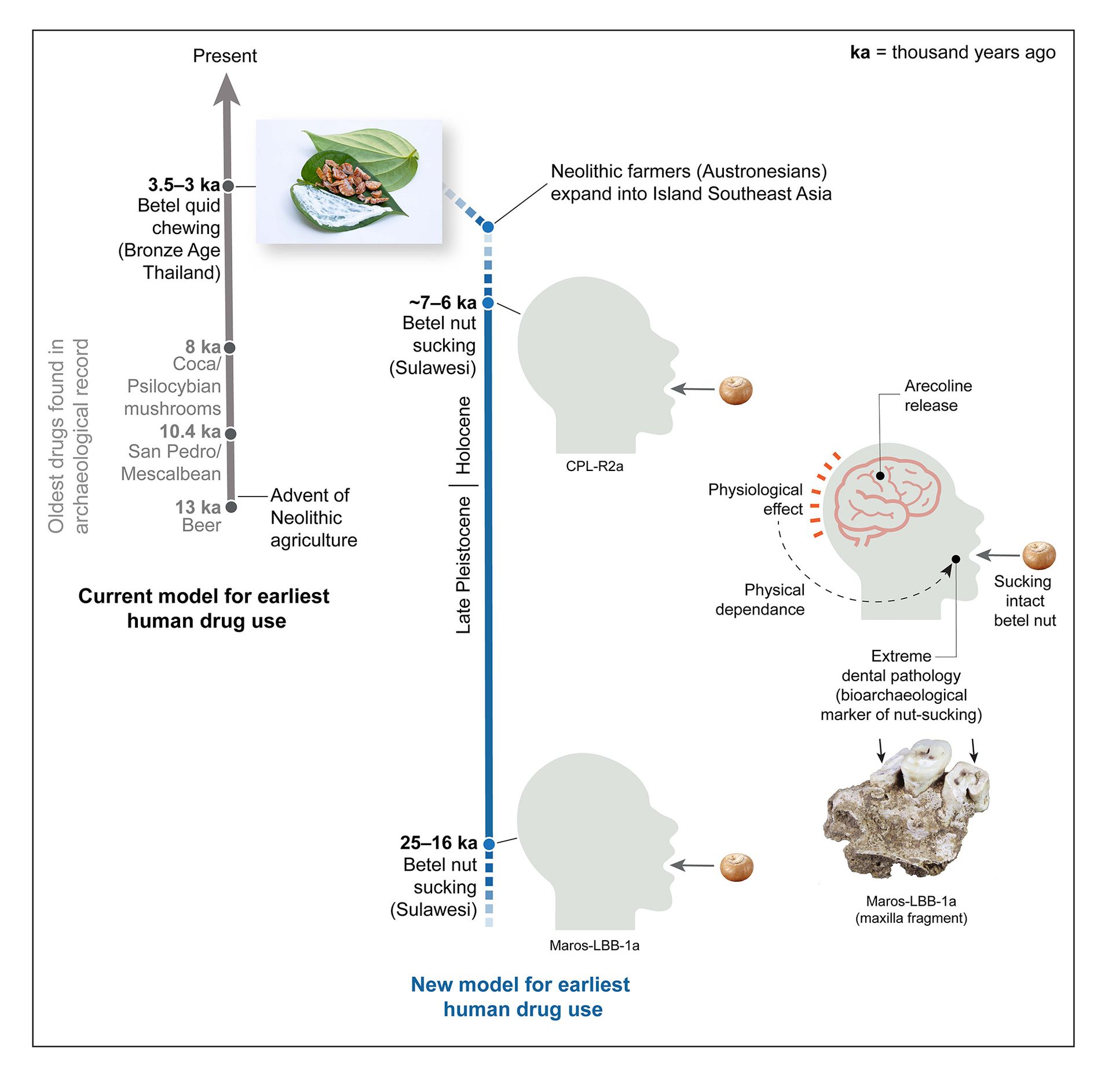
A diagram showing drug in people.

Sucking betel nuts is the earliest-known addictive behavior. Modern betel nut users make them into a chewable wad with slaked lime. (Image credit: A. Brumm)

Addictive nut

After determining the likely cause of the grooves, the researchers tested whether sucking on betel nuts — a behavior not seen before — resulted in a neuroactive effect. Their test subjects, genetically-engineered frog eggs with human neuroreceptors, revealed there was a neuroactive effect. Then, they examined samples from the teeth, which revealed traces of betel nut use.

Betel nut, also known as areca nut, is still widely used today in parts of South Asia and Oceania. Today, however, betel nut users mix it with slaked lime to make a chewable wad that has a stimulant effect. This chewable wad, also called a quid, is strongly addictive, and is used by an estimated 600 million people worldwide. But arecoline is also carcinogenic, and betel nut quids are often mixed with tobacco, so users are often diagnosed with mouth cancer.

The researchers speculate that the use of slaked lime with betel nuts originated much later, during the Neolithic, or "New Stone" Age, about 4,000 years ago on Sulawesi, when slaked lime was added to pottery to prevent it from shrinking and cracking during firing.

"It now seems probable that betel chewing as we know it evolved from a much simpler, older practice of just sucking on the intact nut," the researchers wrote in the new study.

It's likely that people of all ages used this remedy for toothache in prehistoric times, but the grooves only became apparent in mature people who had become addicted to the practice, Brumm said.

Drug use started before farming

The earlier betel-sucking man predated the Neolithic period not only in Sulawesi but also in the Fertile Crescent, where people began practicing agriculture around 12,500 years ago, Brumm said. Archaeologists have long debated whether people began using neuroactive plants as drugs before or after the introduction of farming, but the new finding shows that psychoactive drug use happened thousands of years earlier, Brumm said.

The new study is a "fantastic piece of research," Elisa Guerra Doce, a prehistoric archaeologist at the University of Valladolid in Spain who was not involved, told Live Science in an email.

The new study gives "particularly compelling and direct evidence for the antiquity of drug use," she said.

Guerra Doce is an expert on the prehistoric use of plants as neuroactive drugs. "In the specific case of betel nuts, the findings are especially significant because they also reveal the prehistoric roots of a deeply established cultural practice in Southeast Asia and the Pacific," she said.

The study also highlights how the prehistoric people of Sulawesi explored their natural world and figured out that it not only provided subsistence and medicinal resources but also had "substances that became integrated into social and cultural traditions over thousands of years," Guerra Doce said.

Enigmatic Denisovans lived by cave in what is now China for 100,000 years, rare fossils and handcrafted tools reveal

Archaeologists excavating in southwestern China have discovered a cave that was used by Denisovans for more than 100,000 years. Five human fossils, scores of stone tools, and hundreds of animal bones recovered from the cave reveal for the first time that the enigmatic Denisovans thrived in a forested environment where they hunted and ate large game animals.

Denisovans were a lineage of humans who lived in Asia and went extinct around 30,000 years ago. Ancient DNA has shown that Denisovans, Neanderthals and modern humans (Homo sapiens) are distantly related and that all three groups interbred in the past. But while archaeologists have found numerous Neanderthal and modern-human skeletons, Denisovans are known from only a handful of fragmentary fossils scattered from Siberia to Laos. This lack of evidence has severely limited experts' understanding of Denisovans' bodies and their culture.

In two studies published Wednesday (Sept. 9) in the journal Nature, researchers detailed their excavation of Bianfu Cave in southwestern China. Animal bones and ancient tools revealed that the cave was used from 190,000 to 70,000 years ago, and five human fossils dating to between 134,000 and 167,000 years ago confirmed that the people who used the cave were Denisovans.

Bianfu Cave is in the Yunnan province of southwestern China. In 2019, archaeologists excavated several stratigraphic layers of the cave and discovered nearly 1,400 stone artifacts, more than 64,000 mammal bones, and four teeth from an unknown human lineage. The Yunnan area is where Denisovans and modern humans are known to have met and mated, so researchers were unsure which group had used tools to butcher animals inside Bianfu Cave.

a map of Asia showing the location of Bianfu Cave in China

The geographical location of the Bianfu Cave, where researchers have discovered several teeth and bones from Denisovans. (Image credit: Institute of Vertebrate Paleontology and Paleoanthropology of China)

In one study, a research team used a technique called zooarchaeology by mass spectrometry (ZooMS) to quickly and efficiently screen the bone fragments from Bianfu Cave. ZooMS is a form of protein analysis that involves extracting collagen from the bones of an unknown species and comparing the protein pattern to the unique "fingerprint" of reference animals.

When the researchers applied the ZooMS technique to the Bianfu Cave bones, they discovered that three of the fragments had a collagen pattern found in members of the Homo genus. Then, using proteomic analysis, the researchers found that two teeth and three bones from Bianfu Cave had a particular amino acid variation linking the fossil remains with Denisovans.

Denisovans are still poorly understood, in part because no complete skeleton has ever been found. Most of the Denisovan fossils that experts have studied are pieces of the skull and teeth. A tiny finger bone and a rib fragment were all that had been found of Denisovans' bodies before the Bianfu Cave excavation. But one of the three bones identified as Denisovan through ZooMS was a fragment of a radius, one of the paired bones in the forearm. It is the only Denisovan radius found to date.

The newly discovered radius has a large head (where it connects to the humerus at the elbow) that is more similar to those seen in Neanderthals than in modern humans, but its overall shape is more similar to modern-human radii, the researchers wrote in one of the new studies. The fact that the Denisovan radius was shaped more similarly to the radius in humans "likely provided functional advantages for lightweight, precise manipulation," study co-author Qiaomei Fu, director of the Ancient DNA Laboratory at the Institute of Vertebrate Paleontology and Paleoanthropology, part of the Chinese Academy of Sciences, in Beijing, told Live Science in an email.

The unique features of the Denisovan radius also suggests that the Denisovans living near Bianfu Cave had different biomechanical demands on their bodies and different behavioral adaptations, the researchers noted.

Denisovan stone and bone tools

In a related study, researchers looked at the entire cultural sequence from Bianfu Cave to work out what Denisovans were doing there.

Of the nearly 1,400 stone artifacts recovered from the cave, there were about 200 flake tools, many of which were made from a sedimentary rock called sandy mudstone. These tools left marks on a number of animal bones discovered in the cave, suggesting that Denisovans regularly hunted, butchered and extracted marrow from cow- and deer-like animals, the researchers wrote in the study.

But the stone tools found at Bianfu Cave are different from the more sophisticated ones that Neanderthals made around the same time. The Denisovan stone tools appear to have been crafted quickly and efficiently from locally available materials, according to the study. The researchers, however, discovered that Denisovans at Bianfu Cave were also making bone tools, which Neanderthals did as well. This suggests that bone tool use may have been more widespread among Pleistocene human groups than experts previously thought, the researchers wrote, and it highlights the need to better understand the human evolutionary record of eastern Asia.

Although the studies have contributed new information to archaeologists' understanding of the enigmatic Denisovans, more work needs to be done, according to the researchers.

"We hope that similar proteomic analyses will aid in the identification of further Denisovan long bones in the future," Huiyun Rao, an associate professor at the Institute of Vertebrate Paleontology and Paleoanthropology, Chinese Academy of Sciences, and colleagues wrote, "to further understand the adaptive behavior of Denisovans in response to climate change or competitive pressure from contemporary hominins."

What do you know about early humans? Test your knowledge with our human origins quiz!

4,500-Year-Old Egyptian Tomb Discovery Reveals Something Archaeologists Say They Have Never Seen

9 September 2026 at 16:30

An important Egyptian tomb from the Fifth Dynasty of the Old Kingdom has been discovered in the Saqqara necropolis by a Spanish-Egyptian archaeological mission.

Josep Cervelló, an Egyptology professor at the Autonomous University of Barcelona, led the work, which was coordinated with the Egyptian Supreme Council of Antiquities to investigate the unique tomb in the Saqqara region southwest of Cairo.

The tomb did not belong to a Pharaoh, but was commissioned by a high-ranking official named Yunmen, who served during the reign of Djedkare Isesi. Strangely, the structure features two funerary chapels: one of which is dedicated to the Iti, Yunmen’s father, who held a lower rank than his son.

The discovery may offer a new context for the intersection of spirituality and social mobility in ancient Egypt.

Egyptian Tombs

We now see the Saqqara necropolis primarily as the remains of a dead culture, filled with long-forgotten tombs. While often portrayed as settings for horror stories, the Spanish-Egyptian archeological team viewed them differently, seeing them as places used by a vibrant community, where the living constantly came to leave offerings and work on funerary monuments.

The recent work is part of the continuing exploration of Egyptian sites discovered by archaeologists in the 19th century. To this day, archaeologists continue to seize on hints in the works of their forebears over a century ago to explore ancient Egypt’s impressive remains. Auguste Mariette, a French archaeologist, first discovered the site, identified as containing a large tomb complex, but no detailed exploration or documentation had been done.

Egypt Urban
Instead of just a place for corpses to lie, an Egyptian necropolis was a major urban feature. Credit: EFE/Egyptian Ministry of Antiquities

Life In the Necropolis 

Egyptian mastabas were a unique style of tomb, and in some ways were like modern cemeteries: they were frequently visited places where the lost were mourned and remembered. For this reason, the team was also very interested in the tomb complex’s topography, rather than just its beautiful decoration. They studied the tomb as an urban location, investigating how ancient people moved through it and whether they worshipped outdoors or inside.

Exploring the bustle of urban life in the necropolis netted the team their first indication of Yunmen’s tomb, alongside hints at two more located nearby. In follow-up excavations, the archaeologists are planning to explore the remaining pair.

Egypt Mastaba wall
The tomb’s interior details were extremely well preserved, revealing intricate designs. Credit: EFE/Egyptian Ministry of Antiquities

Moving in Ancient Egyptian Society

The tomb’s physical structure intrigues archaeologists, as it is a rare example of a building with two funerary chapels. Fortunately, the 4,400-year-old tomb is remarkably well preserved, with vibrant color and fine details observable in the wall reliefs. Archaeologists can still clearly make out tiny donkeys and other animals in the wall art. Elsewhere, some elements of the texts adorning the walls follow common formulas—yet even these are customized to the official role and personality of the owners.

Archaeologists interpreting the mastaba believe it reflects social advancement. Yunmen achieved a higher social status than his father, Iti. Yet on the journey to the afterlife, Iti was not forgotten; Yunmen ensured his father received a tomb of similar opulence, so the son’s prestige would apply retroactively to the father in death.

“We still need to fully examine it, but one possibility is that the official originally came from that outlying province, arrived at the court, and settled in Memphis—Egypt’s capital at the time—while his son became an official in the central state administration and was the one who built the tomb,” Cervelló said in a press release.

It remains to be seen what the other two mastabas identified by the team will reveal, whether they will provide more evidence for our traditional understanding of Egyptian culture or add more nuance to our view of these ancient people.

Ryan Whalen covers science and technology for The Debrief. He holds an MA in History and a Master of Library and Information Science with a certificate in Data Science. He can be contacted at ryan@thedebrief.org, and follow him on Twitter @mdntwvlf.

❌