Global warming will soon cross a critical threshold, surpassing a dangerous limit set years ago, the United Nations Environment Programme (UNEP) has found. But experts say it's still possible to cool things back down, emphasizing that the stakes are too high to stop trying.
In 2015, 196 nations and territories signed the Paris Agreement, pledging to restrict the average rise of global temperatures to below 2 degrees Celsius (3.6 degrees Fahrenheit) above pre-industrial levels. Ideally, the rise was meant to be kept to 1.5 degrees C (2.7 degrees F) above those levels. However, according to a new report detailed by the UNEP, we are on track to cross that 1.5 C line — and soon.
"This summer's scorching heat, raging wildfires and deadly floods are a warning of what lies ahead. We must make the overshoot above 1.5 degrees as small and short as possible. That demands an overshoot of ambition," U.N. Secretary-General Antőnio Guterres said in a statement.
According to the new report, experts have found that if we as a planet continue with business as usual, not only will we pass 1.5 C, but it will happen within just a few years. The report, however, maintained a positive tone. Rather than simply predicting a doomsday plot, the main purpose of this release is to outline a pathway with the necessary steps to set things on the right track.
"As global temperature rise gets set to cross 1.5°C, pushing climate risks and impacts to dangerous new heights, the world must strive to return to below 1.5°C as soon as possible and simultaneously reduce the vulnerability of societies, communities and economies to climate impacts," the report, titled "Limiting Overshoot: Navigating exceedance of 1.5°C and pathways towards return," states in its abstract.
Climate change is primarily caused and driven by human activities like transportation, industrial manufacturing, agriculture and more. According to the report, the two main aspects of this work need to be: reducing emissions and enabling adaptations to protect people impacted by the effects of climate change.
The U.N. states in the report the necessity of both an immediate and sustained reduction in the emissions of greenhouse gases like methane and carbon dioxide. Not only do we need to find a way to cut emissions fairly immediately, but we also need to find a way to sustain that effort over time. The U.N. further states it is important to not only work toward removing carbon from the atmosphere, eventually reaching net-negative emissions where more emissions are removed by humans from the atmosphere than added to the atmosphere.
This sort of carbon capture technology is still fairly early in its development, but according to the U.N., it is essential we find ways to rapidly move toward a future where we can capture and store carbon from the air and therefore reduce the quantity of greenhouse gases around our planet.
In addition to these long-term emission reduction actions, in this report the U.N. has also asserted that this process will need to include "adaptation actions," or ways to support the many people and communities already affected by climate change.
Even if all of the world's nations start working immediately to drastically reduce emissions, we are already seeing the sometimes fatal and irreversible effects of climate change. From increasing the intensity of wildfire seasons to worsening natural disasters, climate change is far from a distant future. It's our reality, especially for those living in high-risk areas like coastlines. So, while the nations of the world need to work together to reduce emissions, it is also important that adaptations are found to reduce the existing and future impacts of climate change on our communities.
"There are no good outcomes if we remain above 1.5°C. Across the globe, extreme heatwaves are already proving that climate impacts will strike faster, hit harder, and last longer — costing more lives and causing deeper disruption," Inger Andersen, the Executive Director of UNEP, said in the same statement. "Now is the time we must double down on climate action. We can — and must — get on the right path. By cutting greenhouse gas emissions, strengthening resilience and adaptation, and ensuring exceedance of 1.5°C is as small and short as possible."
Across the stories today, a common thread emerges: the gap between what protects us on paper and what protects us in practice. Again and again, communities are discovering that designations, promises, and permits only matter when someone is willing to enforce them — and that when systems fail, it’s ordinary people, and often the most vulnerable, who absorb the shock.
Nowhere is that clearer than in Jackson, Mississippi, where a federal appeals court ruled this week that the Constitution guarantees no right to clean water. For residents who have lived through years of contaminated taps and boil-water notices, the decision lands as a gut-punch reminder that legal frameworks haven’t caught up to environmental reality. A similar tension runs through the Guardian’s reporting on datacenter wastewater in Wyoming, where testing turned up a rare, potentially hazardous bacterium, and on English golf clubs, where one in twelve have quietly broken water extraction rules amid growing drought stress. Behind the numbers are real communities adapting in real time — often without knowing what’s actually flowing through their pipes or being pulled from their aquifers.
That same gap between promise and delivery surfaces in the UK’s datacentre boom, which new analysis suggests will produce only a quarter of the jobs once advertised, even as it strains the national grid. It echoes in Georgia, where a once-booming EV manufacturing corridor is hitting turbulence under shifting federal policy — a reminder that industrial transitions built on incentives can be as fragile as the politics that fund them.
Yet the day’s coverage also points to growing momentum around care, restoration, and reckoning. Hurricane Lowell’s damage across Hawaii’s western islands — toppled trees, flooded roads, thousands without power — sits alongside quieter stories of renewal: Gloucestershire’s proposal to reintroduce beavers as a defense against drought and flooding, Douglas Head’s new conservation status on the Isle of Man, and Coventry’s investment in Longford Nature Park. These are small, deliberate acts of stewardship, the kind Wendell Berry spent his life advocating for. His death last week, at 92, feels newly resonant this week — a farmer-poet who insisted that loving a place well was itself a form of environmental action, long before it became policy language.
Farther afield, the human cost of extraction runs deep. In Peru and Brazil, mercury from illegal gold mining is showing up in children’s blood and in fish that families have eaten for generations, forcing painful dietary changes in communities that did little to cause the contamination. In Indonesia, El Niño-fueled fires are pushing orangutans out of burning forests, while in Uttarakhand, India, women — who gather firewood and fodder — are bearing the brunt of increasingly long fire seasons. In Colombia, the Wiwa community’s decision to relocate their village down the mountain is less retreat than adaptation, a recognition that sacred land is changing faster than tradition can hold still.
It’s a reminder that progress and pressure often arrive together — a new spaceport investment in Shetland, a badger vaccination program under scientific scrutiny, a push for a Natural History GCSE to reconnect children with the outdoors. Each represents a small bet on the future, even as larger systems strain under climate and economic pressure.
As the week unfolds, watch whether the Jackson ruling prompts congressional attention, whether Britain’s Green Party succeeds in forcing transparency around ecosystem collapse risks, and whether Gloucestershire’s beavers get their chance to prove that sometimes the oldest solutions are still the best ones.
In this excerpt from "The Carbon Wave" (MIT Press, 2026), author Leah Stokes, an associate professor of environmental politics at the University of California, Santa Barbara, looks at a hopeful moment in U.S. politics when climate change took center stage: when Rep. Alexandria Ocasio-Cortez and Sen. Ed Markey ramped up calls for a "Green New Deal."
In September 2017, a still-unknown Alexandria Ocasio-Cortez watched as Hurricane Maria devastated Puerto Rico. Electricity went down for months. Like thousands of Puerto Ricans, her grandfather died in the storm's aftermath. She could see how climate change was hitting her community harder than others.
And it wasn't just Ocasio-Cortez's community: the year before, she'd traveled to Standing Rock, North Dakota, to see firsthand how the fossil fuel industry was harming Indigenous people. It was mere weeks after the 2016 election, and the resistance to Trump had found its center in a makeshift camp along the Missouri River. People had united to oppose an oil pipeline.
Serendipitously, the day after Ocasio-Cortez left the protest, a progressive organization reached out to ask her to run for Congress. Moved by the activists at Standing Rock, she said yes. In 2018, she ran a long-shot primary campaign in a Bronx district occupied by a ten-term congressman in House leadership. Her platform included an idea that some had bandied about before, but no one had developed in earnest: a Green New Deal. As she told journalists that summer, "The Green New Deal we are proposing will be similar in scale to the mobilization efforts seen in World War II or the Marshall Plan. We must again invest in the development, manufacturing, deployment, and distribution of energy, but this time green energy." In June, she won the primary. Her election signaled the beginning of a broader shift: climate change was back on the political agenda.
That fall, the world's leading climate science organization, the Intergovernmental Panel on Climate Change — often called the IPCC — released a short report concluding that limiting warming to 1.5°C would require emissions to fall by almost half by 2030. The news ricocheted around the world, with headlines like "We Have 12 Years to Limit Climate Catastrophe." In my own neighborhood, someone printed a copy and stuck it in the free lending library, labeling it "important reading." The report changed how many people thought about the problem: it wasn't something we could deal with in 50 years; it was something we had to deal with today.
In the November 2018 midterm elections, two years into the first Trump administration, Democrats won big, paving the way for Nancy Pelosi to return as Speaker of the House after eight years as the minority leader. Days later, a group of young activists from the Sunrise Movement staged a sit-in at her office. Their bright yellow and black signs read "We have 12 years. What’s your plan?" referencing that scientific report.
Protestors from the Sunrise Movement in the office of former U.S. Representative Nancy Pelosi supporting the Green New Deal. (Image credit: SOPA Images/Getty Images)
Newly elected Representative Ocasio-Cortez joined the action that day. She told the organizers they needed a clear ask and encouraged them to call for a Green New Deal. The idea broke through, sparking widespread coverage across the country. It was a new, hopeful vision for climate policy. These young people were not just talking about the climate disasters we needed to avoid — they were explaining how investments in clean energy could create good jobs. They were showing us the better world we could build together. If we only tried.
I watched these developments unfold in DC from my office by the Pacific Ocean and wanted to be a part of it. I wouldn't have to wait long. The Green New Deal held a force like gravity, pulling people into its orbit. By chance, I met some of the people tied to Ocasio-Cortez at a conference and was invited to an early gathering to develop the idea into more detailed policy. By then, she'd released a framework for the plan with Senator Ed Markey of Massachusetts.
The meeting was held in March 2019, at a hip hotel in DC's Adams Morgan neighborhood, miles away from the Capitol. A wide swath of people were invited: youth activists, environmental justice leaders, political organizers, think tank wonks, and a few academics like me. It was a contentious meeting that opened with a protest, revealing fissures in the movement that would eventually grow into large cracks. Some people believed that frontline communities facing the greatest pollution burdens were not being adequately consulted or invited to participate in the event. At the time, I didn't understand these dynamics between the climate and environmental justice movements. I was just a political science professor trying to understand how I could make my work more practical and help get a climate law passed if we got the chance.
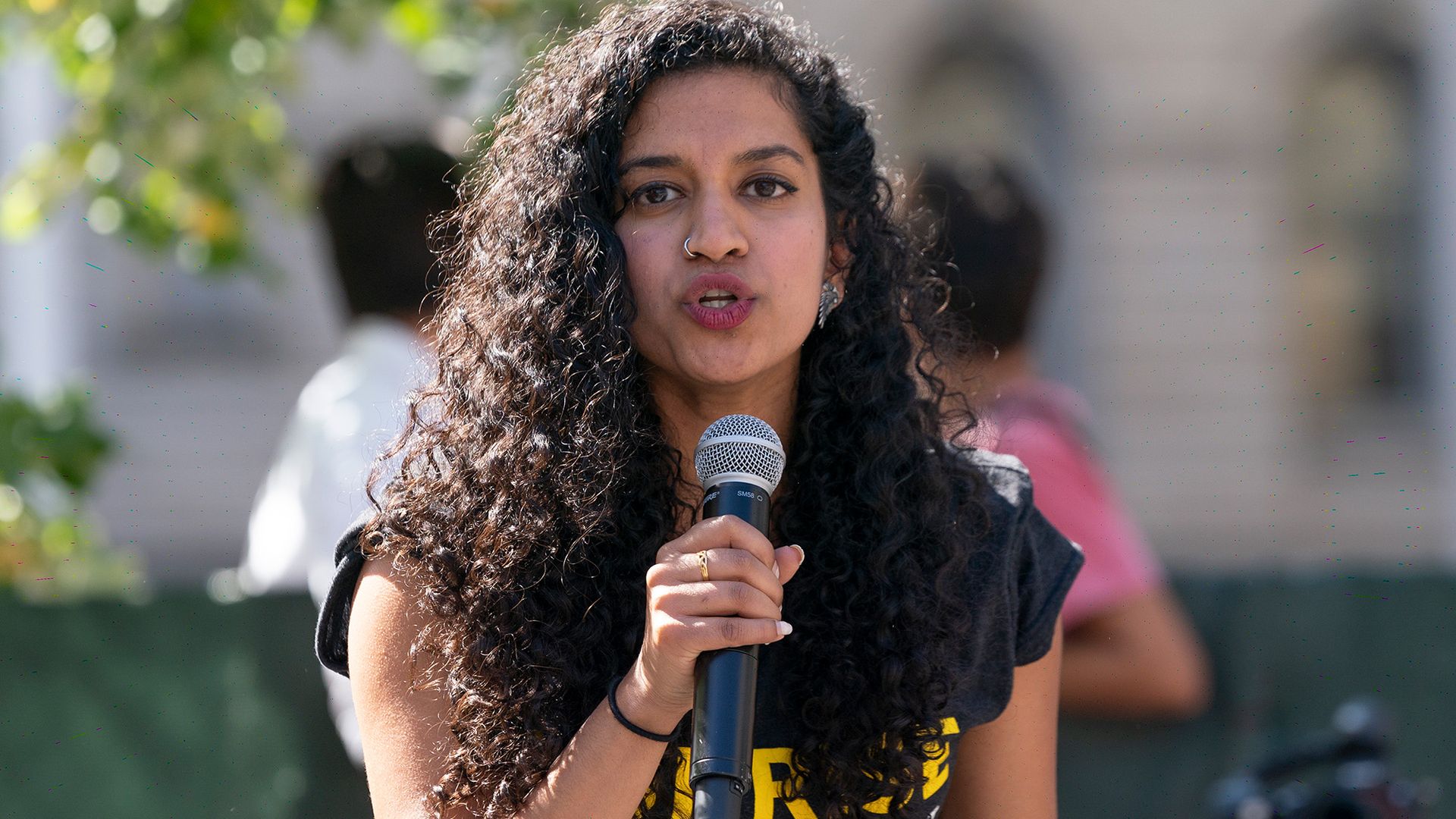
Varshini Prakash speaking during a Climate Strike rally in New York Citiy in 2019. (Image credit: Pacific Press via Getty Images)
It was at that event that I met Varshini Prakash, the executive director of the Sunrise Movement. I’d seen her photo many times, standing in the middle of Pelosi's office with her dark red jacket over a black and yellow T-shirt, surrounded by young people sitting on the floor. Four months had passed since the sit-in, and Varshini had ricocheted to the center of the climate movement. But she was also a recent college grad in her mid-twenties, feeling a heavy burden from the climate crisis and the work involved in fighting it. At one point during the meeting, she spoke frankly about the stress that was on her and other young activists and cried. I found her vulnerability moving.
The fact was, Varshini had already changed history. She'd given me, and millions of others, a sense of hope and possibility. It was her actions, alongside all the other organizers in the Sunrise Movement, that brought us together in that first DC convening, and in countless other meetings to come. She inspired me to believe that I could do something bigger if I tried.
Too often, the way we think about cause and effect is simplistic. We're fed a linear model that favors the immediate. One person is responsible for their own carbon footprint. One person only has one vote. One person can only do so much. From this perspective, standing against more than a century of fossil fuels running through the heart of our society, it can feel like there's nothing we could do to shake the system loose. We're too small. Mere drops. But drops in the ocean can make waves.
The Carbon Wave: a Story of Democracy, Parenthood, and the Race to Protect Our Planet
Interlacing personal narratives with stories from Congress, the White House, and outside activists, Stokes shows how dogged perseverance and collective action can still bend the course of history. The book concludes with an update from the second Trump administration, explaining the parts of the bill that were—and were not—rolled back, and why we should remain hopeful that progress is still being made.
Jaguar has announced 4,000 job cuts in the UK, blaming Brexit, Trump and China. But the real culprit is the misbegotten shift to EVs without checking anyone wants to buy them, says Paul Homewood in the Climate Skeptic.
With CEO pay frequently approaching a million dollars, environmental protection charities are clearly the place to make your fortune, says David Craig. But should the boss of Ducks Unlimited really get $500k?
Two distinct climate regimes that could trigger runaway methane emissions are emerging in Siberia due to Arctic warming, new research suggests.
While western Siberia is becoming wetter in response to rising heat and moisture transported from the North Atlantic Ocean, eastern Siberia is getting drier and more prone to wildfires, a study published Aug. 6 in the journal Science finds. The Yenisei River (also spelled Yenisey) in central Russia delineates the separate environmental states — referred to as regimes because they describe specific types of climates — on each side of the basin, the study authors said.
Between 2010 and 2023, methane emissions from Siberia rose by 5% per year, with western Siberia releasing methane mainly via microbial activity in thawing soils and eastern Siberia discharging the powerful greenhouse gas through biomass burning, the results showed.
"Given the observed increases in permafrost thaw, wetland activity, and wildfire occurrence, an increase in methane emissions was expected," study co-author Paul Palmer, a professor in the School of Geosciences at the University of Edinburgh, told Live Science in an email. "What is surprising is how large and sustained the increase appears to be."
Annual methane emissions grew by about 13.2 million tons (12 million metric tons) over the study period, almost mirroring the rate of increase in methane emissions from wetlands worldwide. Although Siberia currently makes up only about 5% of global methane emissions, the region is becoming one of the fastest-growing natural methane sources on the planet, Palmer said.
In their study, Palmer and his colleagues integrated satellite observations with near-surface measurements to map methane emissions from Siberia over time. Instead of adding up individual methane sources on the ground, the researchers used a modeling method known as a methane flux inversion system, which helped them limit the uncertainty in their estimates to roughly 10%.
Siberia is vast, remote, sparsely instrumented and currently inaccessible for many scientists due to the Russia-Ukraine war, making it hard to monitor methane consistently by any means other than satellites. Although satellites rely on sunlight, of which Siberia gets very little in the winter, most methane emissions are thought to occur in the spring and summer, when Siberia gets more sunlight, Palmer said.
The results of the study show that Arctic warming amplifies methane emissions via distinct pathways in western and eastern Siberia because the regions are influenced by different climate patterns. The researchers also used climate models to predict future methane emissions from Siberia and found that additional warming could unleash millions of tons of greenhouse gases stored in forests and permafrost, which would further accelerate the warming trend.
In western Siberia, methane is released mainly from permafrost, or ground that has stayed frozen for at least two consecutive years. Siberia holds 46% of the Northern Hemisphere's permafrost, and this icy sediment traps vast amounts of carbon that have accumulated for thousands of years, Palmer said.
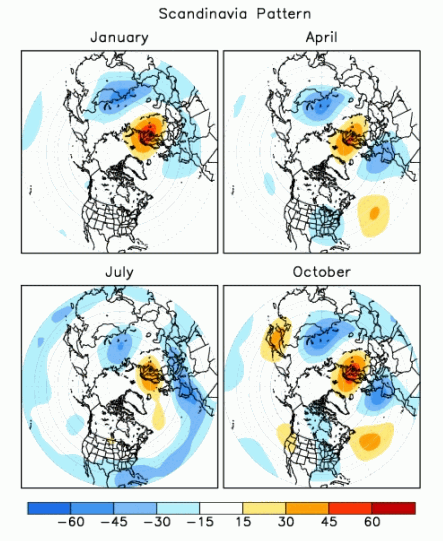
Western Siberia is influenced by the Scandinavian pattern of atmospheric circulation, a climate connection that consists of a main circulation center over Scandinavia and opposing weaker centers over Western Europe and eastern Russia. Global warming makes the Scandinavian pattern transport more warmth and moisture to western Siberia from the North Atlantic. Together with soaring temperatures in western Siberia itself, this triggers extensive permafrost thaw and unlocks carbon that microbes can convert into methane.
The Scandinavian pattern of atmospheric circulation (seen here in the positive phase) consists of different pressure systems above Scandinavia, Western Europe and eastern Russia/western Mongolia. (Image credit: NOAA)
Conversely, eastern Siberia is influenced by a climate pattern known as the Arctic Oscillation, which causes atmospheric air pressure to "seesaw" between the Arctic and the Northern Hemisphere's middle latitudes. Climate change affects the Arctic Oscillation, leading to persistent high-pressure systems that intensify heat waves, reduce cloud cover and promote wildfires in eastern Siberia, Palmer said.
The climate models showed that methane emissions will increase with temperature rise and that the increase could become steeper the hotter the world gets, triggering a feedback loop.
"Eastern Siberia appears to be the main driver of the projected increase because it is warming faster than western Siberia and has seen a sharp rise in extreme wildfires," Palmer said. "Whether that trend continues will depend on how much vegetation remains available to burn, but there is also evidence that fires may be accelerating permafrost thaw and the release of methane from previously frozen ground."
However, the rise in methane emissions reported in the study is small relative to global and projected future emissions, especially if wildfires are already destabilizing eastern Siberia's permafrost, Palmer said.
"Siberia's vast permafrost carbon store is a sleeping giant," he said. "Continued warming risks waking up a much larger source of greenhouse gases."
The Galápagos snapdragon, once close to disappearing, is showing encouraging signs of recovery through a long-term partnership between the Charles Darwin Foundation and the Galápagos National Park Directorate. For decades, the Galápagos snapdragon was known from little more than a specimen pressed into an herbarium collection. It had been gathered near Caleta Tagus in 1962, [...]
When the Denver board of Water Commissioners approved stage one drought restrictions back in March, they did so facing some of the driest conditions in decades. According to the US Drought Monitor, the watershed sourced for Denver’s water utility is experiencing a “severe to exceptional drought,” while the Denver metropolitan area has been in a “severe drought.”
As a result, residents and businesses have been asked to scale back. Denverites now have to limit watering their lawns to two days a week, chosen by address. And even on those days, customers are prohibited from watering between the hours of 10am and 6pm, Gadget Review reports.
Yet as some 1.5 million customers honor the restrictions, one major customer is evidently refusing to close the tap: a brand new AI data center.
In a now-viral video circulating on social media, an unidentified resident of Denver’s Elyria-Swansea neighborhood filmed the massive lawn of a data center being sprayed with copious amounts of water.
“You better believe that they are watering their entire green with so many sprinklers that it’s literally making a giant pond,” the woman says.
Denver residents see local DATA CENTER water its massive lawns while the whole are faces drought restrictions pic.twitter.com/rrj7vMrhpt
The identity of the data center in question is unconfirmed, but it’s likely the new 18 megawatt facility owned by the cloud computing company CoreSite. At around 170,000 square feet in size, the mammoth facility recently went live in Elyria-Swansea, though not without sparking a wide-ranging debate around Denver’s zoning regulations.
It isn’t known which tech companies are renting out space in CoreSite’s Denver facility, but elsewhere the company has proudly partnered with tech giants like Amazon, Google, and Microsoft.
As for the water use, it’s impossible to say whether the lawn sprinklers were in violation of the city’s drought restrictions without knowing the exact time and date that the reel was filmed. It’s also possible that the facility is using recycled water to irrigate its grass, though that approach has proved disastrous in other cities.
Going forward, Gadget Review notes that all lawn sprinklers will be fully restricted as of October 1, with a ban set to last until Spring of next year. If Denver’s data centers are still spewing after the cut-off, it remains to be seen how — or even if — local leaders plan to hold the facility’s owners accountable.
For several decades, paleontologists have described Miracinonyx trumani -- an extinct species of cheetah-like felid that roamed the North American prairies and steppe terrains more than 13,000 years ago -- as North America’s answer to the African cheetah (Acinonyx jubatus).
Two unusually colored lobsters have been spared from the dinner plate and are living at the Gulf of Maine Research Institute (GMRI) in Portland, and will be educating students in the process. Ethel is a split-colored lobster, with a very autumnal orange and black hue, while Gertrude is a breathtaking blue.
Shawn McEwen at Sea Salt Lobster Wholesale in nearby Saco, Maine contacted the team at the research center to see if they were interested in taking Ethel the two-toned lobster.
“He told us ‘We move a lot of lobsters and in my career this is top 3,’” Sam Fuss, an educator with GMRI’s LabVenture program, tells Popular Science.
Ethel’s two-tone look is a genetic mutation. Image: Gulf of Maine Research Institute.
To find Gertrude the blue a new home, the staff at the nearby Portland Lobster Company reached out to GMRI. And it could not have been easier for the team to pick up the new colorful crustacean.
“We coordinated a time, walked over to their restaurant with a bucket, and then walked her right back to our tank,” says Fuss.
Gertrude the blue on the way to her new home. Image: Gulf of Maine Research Institute.
GMRI works with many of Maine’s lobster fishers and has a network who will reach out about interesting catches like Ethel and Gertrude.
“Previously, in our tank, we have had blue lobsters, orange lobsters, calico lobsters, and other split-color lobsters,” says Fuss.
Why some lobsters are so colorful
In the wild, American or Maine lobsters (Homarus americanus) typically have a greenish-brown color. This helps them blend in better with the rocky seafloor. Lobsters have several layers of a pigment called astaxanthin. This pigment appears as layers of red, yellow, and blue. When all of those color layers are stacked up, they give lobsters a mottled blotch pattern of oranges, reds, blues, pinks, purples, yellows, and browns.
But some lobsters end up more colorful. Rare genetic mutations can alter the amount of pigment or how they interact with one another, producing striking shell colors such as blue, half-orange half-black, or even calico patterns. A lobster’s diet can also impact its shell color. For example, individuals that only eat small fish rather than shrimp and crabs get less astaxanthin, which can affect their coloration.
Split-colorization like we seen on Ethel occurs when two fertilized, unlaid eggs contact each other. One of the eggs then absorbs the other, creating a lobster that has two sets of genetic information. They also can store color pigments differently on either side of its shell.
The chance of finding a blue lobster like this Gertrude is about 1 in 2 million, while the odds are 1 in 50 million to find a split-colored lobster like Ethel. As for the other colors, the chance of finding a red lobster is 1 in 10 million, and 1 in 100 million for an albino or cotton candy lobster.
Crustaceans tackling climate change
Now that they are at GMRI, Gertrude, Ethel, and the institute’s other fish and crustaceans will be on display for fifth and sixth grade students from across the state who visit during the LabVenture field trip. Since the program began in 2005, LabVenture has provided a hands-on lab to over 170,000 Maine middle school students free of charge.
“The display tank that Gertrude and Ethel are living in is always a highlight of the field trip for our students,” Zoë Kennedy, LabVenture’s Lead Educator, tells Popular Science. “Many of them have spent most of their lives living right next to the Gulf of Maine but being able to see what the ecosystem looks like beneath the water brings a whole new perspective and sense of wonder.”
A landmark 2015 study found that the Gulf of Maine is warming faster than 99 percent of the ocean due to climate change. While the water has been cooling off a bit since 2021, a report published by NOAA in July 2026 found that the environment in the Gulf of Maine remains unstable. According to the GMRI LabVenture team, building more climate-ready communities, a strong waterfront workforce, and a blue economy in the face of this upheaval all starts with education.
“Our LabVenture program builds that foundation early by teaching students to interpret real, authentic climate data, while sparking the curiosity that drives them to keep asking questions about the world around them,” says Kennedy.
With so many climate projections and mitigation strategies eyeing far-away years like 2050, it can be tempting to assume there’s still time to reverse the worst impacts of an ever-warming planet.
Unfortunately, that’s no longer in the cards — at least according to the United Nations Environment Programme, which just released a dismal report calling for the “world to face the inevitability of exceeding global warming of 1.5 degrees Celsius” above pre-industrial levels.
That’s significant, because the 1.5 degree threshold has long been associated with a range of grim climate tipping points at which the planet will experience irreversible consequences such as the “breakdowns of major ocean circulation systems, abrupt thawing of boreal permafrost, and collapse of tropical coral reef systems,” per a UN climate explainer.
The new UN paper, coming on the heels of the hottest summer on record and pessimistically titled “Limiting Overshoot,” identifies the consequences of this reality, and recommends some immediate actions to keep things from spiraling even further.
Though most scientists agree we’re hovering around the 1.4 degree point at the moment, the UN notes that even in the best case scenario, where “all climate commitments and policies are implemented, warming is projected to reach 1.8 degrees Celsius at a minimum.” If we follow our current track, however, the report highlights the distinct possibility of hitting 2.6 degrees by the year 2100.
That catastrophic future is far from certain, although drastic intervention is becoming increasingly urgent if we hope to stave it off. Underscoring the severity of the present moment, the UN frames the situation in terms of maintaining warming at the 1.5 degree mark — no longer a theoretical ceiling, but the new floor going forward. Doing so, the report authors write, depends “on achieving sustained net-negative CO2 emissions at global scale in the second half of this century, and potentially further reductions of non-CO2 emissions.”
“Decisions taken this decade will determine whether viable options remain to gradually reverse warming back to 1.5 degrees Celsius,” they explain.
Speaking to CBCNews, UN Environment Programme executive director Inger Andersen said “let’s be very clear, 1.5 target is still the goal.”
“But now we need to approach it differently from above,” Andersen explained. “Every tenth of a degree we avoid still means less damage.”
As the planet warms, our environment will be transformed, but so will our bodies. In this series, we investigate the health impacts of climate change, focusing on heat, air quality, food and infection risk. We also evaluate the promising solutions that could help us adapt to our warmer future.
With only a couple of months to go before the harvest season for winter wheat in Colorado, the crop faced a whiplash: After a warm, dry winter, a cold snap plunged the plants into freezing weather for 12 hours, and temperatures soared to nearly 90 degrees Fahrenheit (32.2 degrees Celsius) two days later. When the final harvest numbers were tallied in July, 73% of the crops were in poor or very poor condition. According to early estimates by Colorado Wheat, 2026's winter wheat crop was the smallest in the state since 1965.
Pick a crop, any crop, and you'll hear a similar story: Extreme weather and climate change are rocking the food supply. The warming climate makes food less nutritious, threatens crop survival, and triggers tipping points that would upend farming as we know it.
The impacts will be felt most intensely in less-developed regions of the world, where many people can't afford imported food and climate-related famines and nutritional scarcity are already happening.
Climate change is threatening farming around the globe. (Image credit: Jason Edwards/Getty Images)
But the U.S. is facing big changes to its food systems too, and no one is immune. Humans have overcome looming agricultural disasters before, but experts say the challenge should not be underestimated.
"There are real food security and nutrition concerns," said Andrew Hultgren, an environmental economist at the University of Illinois, Urbana-Champaign, "especially under these high-warming futures."
Food is becoming less nutritious
As the planet warms, food crops are expected to become less nutritious. That's because, due to plant biology that's not yet fully understood, crops grown under higher levels of carbon dioxide are deficient in zinc, protein, magnesium, iron and other micronutrients.Crops are already less nutritious than they were in the 1950s, but this is partly due to breeding decisions that prioritize yield over nutrition. The carbon dioxide deficiencies will exacerbate this nutrition decline.
The global monthly average concentration of carbon dioxide in the atmosphere is now over 420 parts per million (ppm), well over the preindustrial average of 280 ppm. By the end of the century, those levels will increase to at least 550 ppm in all but the most optimistic scenarios.
That will mean an additional 175 million people will be zinc deficient and an additional 122 million people will be protein deficient by 2050, a 2018 study found. Zinc deficiency has consequences for immune and skin health and may lead to poor growth in childhood; protein deficiency can also cause stunted growth as well as fatigue, muscle weakness and stress fractures. Those figures account only for the effects of carbon dioxide. A cascade of climate shifts and extreme weather may also affect the number of nutrients (and calories) available to the world.
The threats are myriad: Rising sea levels may inundate farmland and lead to saltier soil in coastal regions where, for example, rice farming is common. Soil salinity can make it impossible to grow crops in some regions. Droughts, heat waves, storms or temperature swings like those seen in Colorado this year might take out certain crops in particular places, leading to year-by-year price spikes or shortages. In the U.S., the results might look a lot like the recent egg shortages triggered by bird flu; temporarily empty shelves, price spikes, or even restrictions on the amount a customer can purchase in a visit for an affected food.
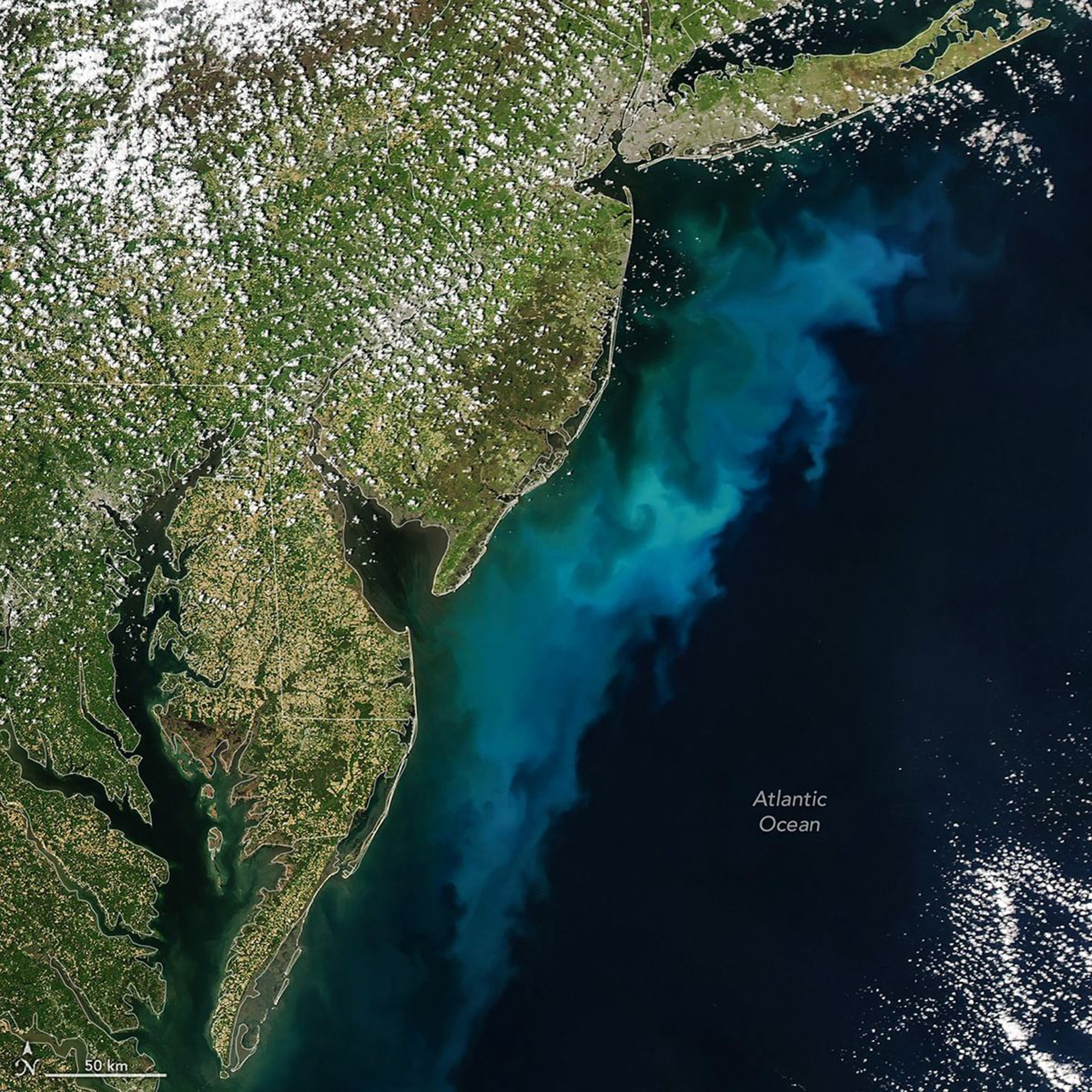
Phytoplankton blooms, like the one that grew off the Atlantic coast in April, can make seafood toxic. Such blooms will become more common as climate change worsens. (Image credit: NASA Earth Observatory/Michala Garrison)
Climate shifts that harm pollinators and fuel the spread and introduction of plant pathogens such as harmful fungi will also likely reduce crop yields.
Areas that depend on the ocean for food are also facing steep challenges, due to both ocean acidification and the degradation of coral reef ecosystems, which are sources of food for many coastal communities and form much of the base of food chains for the larger fish people eat.
Hotter weather also affects food safety, said Christopher Golden, a professor of nutrition and public health at the Harvard T.H. Chan School of Public Health.
"Increasing sea temperature and increasing sedimentation within seas could lead to harmful algal blooms or increasing food poisoning events from temperature-related food spoilage," Golden said. Algal blooms can contaminate shellfish like oysters or scallops with neurotoxins that can sicken and kill people who eat them. Food spoilage is a concern in regions such as Madagascar, where catches are brought ashore and readied for consumption in the open air.
Meanwhile, fish may move poleward to avoid the hottest sea temperatures, leaving the most vulnerable regions — such as Southeast Asia, the Caribbean, Africa, Central America and the Pacific — with fewer fish in their waters. How bad this looks depends on the extent of the climate swings, with research suggesting that without any mitigation, fishers could see their catches decline by 58% to 92% off small islands in the Pacific and by 70% to 86% in Southeast Asia. This would drive food insecurity and malnutrition in those regions. The U.S. will likely face impacts too, as most of its seafood is imported from subtropical or tropical waters elsewhere.
Climate change is bad in that it's a slow-moving wave. You don't really notice that it's shifting underneath you and that the apple you eat isn't the apple your granddaughter will eat.
Elizabeth Wolkovich, professor of forestry at the University of British Columbia
There may be shifts in trade networks that lessen the blow for U.S. consumers, Golden said, but it's hard to predict. Some possibilities include "price shifts or trade shifts that lead to changing dietary patterns or more shelf-stable and heavily processed items that we know aren't good for your health," he said. In other words, less fresh-caught snapper and more potted meats.
Changing foods on the table
Individual producers are adapting, sometimes in ways that may not be immediately obvious to consumers. "Climate change is bad in that it's a slow-moving wave," said Elizabeth Wolkovich, a professor of forestry at the University of British Columbia. "You don't really notice that it's shifting underneath you and that the apple you eat isn't the apple your granddaughter will eat."
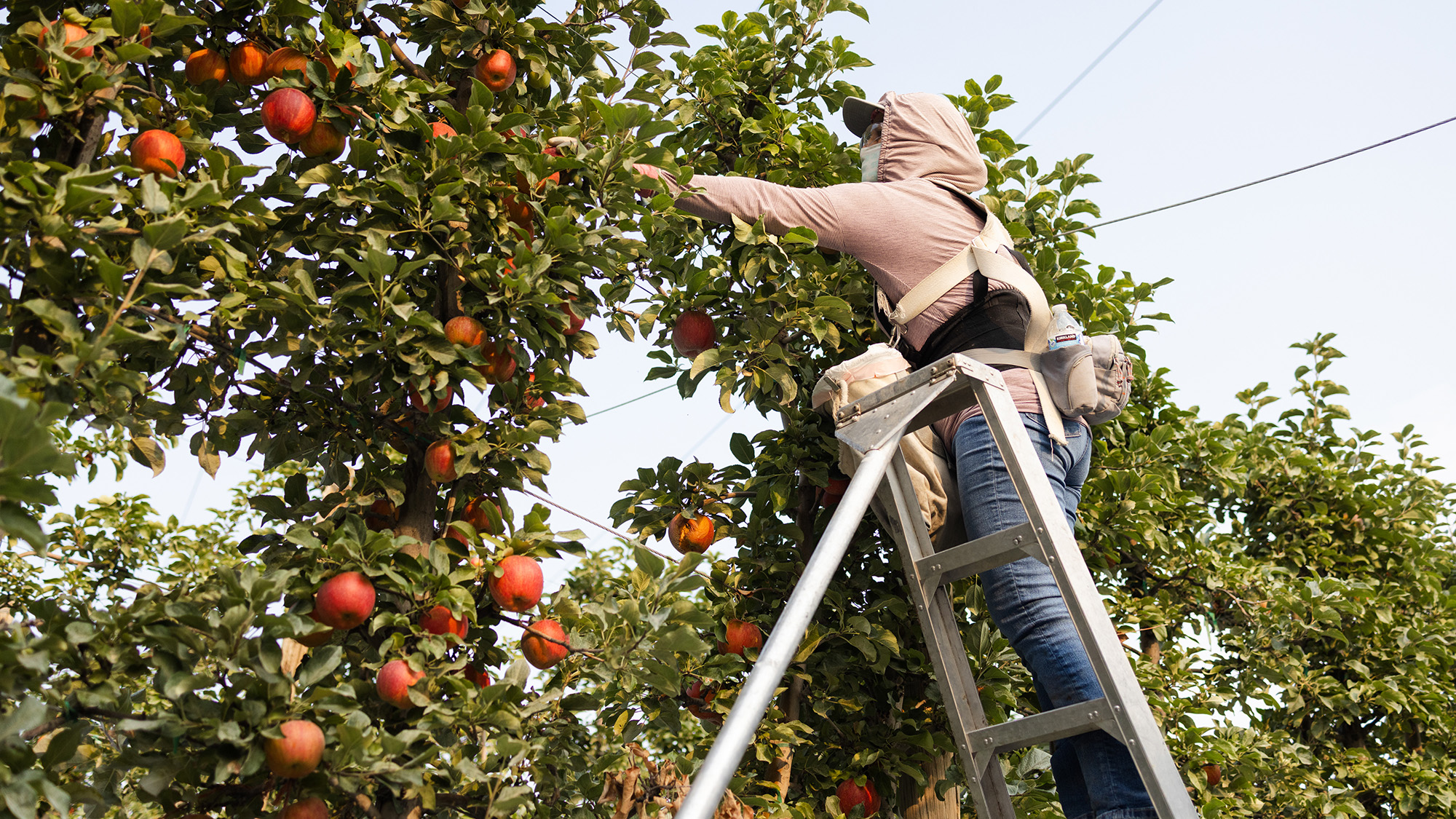
On that note, growers in the Pacific Northwest and U.S. Northeast will face challenges getting apples to lunch boxes around the world. Fewer cold days and more extreme-heat days will likely reduce apple yields by affecting how and when trees go dormant and bloom. Because it takes five or more years to establish fruiting trees in new regions, this could mean a reduced apple supply and higher prices.
Today's smooth arabica coffee (Coffea arabica) varieties may get harder to find and more expensive as climate change forces coffee growers out of many of the places they used to farm and droughts reduce supply. Earthier, more bitter robusta coffee beans (Coffea canephora) do better in warming temperatures, but even those beans could struggle with increasing seasonal variability caused by climate change.
Climate has already shifted wines in favor of less-acidic and higher-alcohol varieties, Wolkovich said, but it's happened slowly enough that, unless you're a connoisseur, you may not have noticed. Wine lovers can expect more changes: Wolkovich has found that the varieties of wine grapes that growers can produce will shift with climate change. Wildfires in grape-growing regions like California can also produce an unpleasant acrid and smoky flavor in wine.
Wildfires, which will become more common, can lend a smoky, acrid flavor to wines. (Image credit: George Rose via Getty Images)
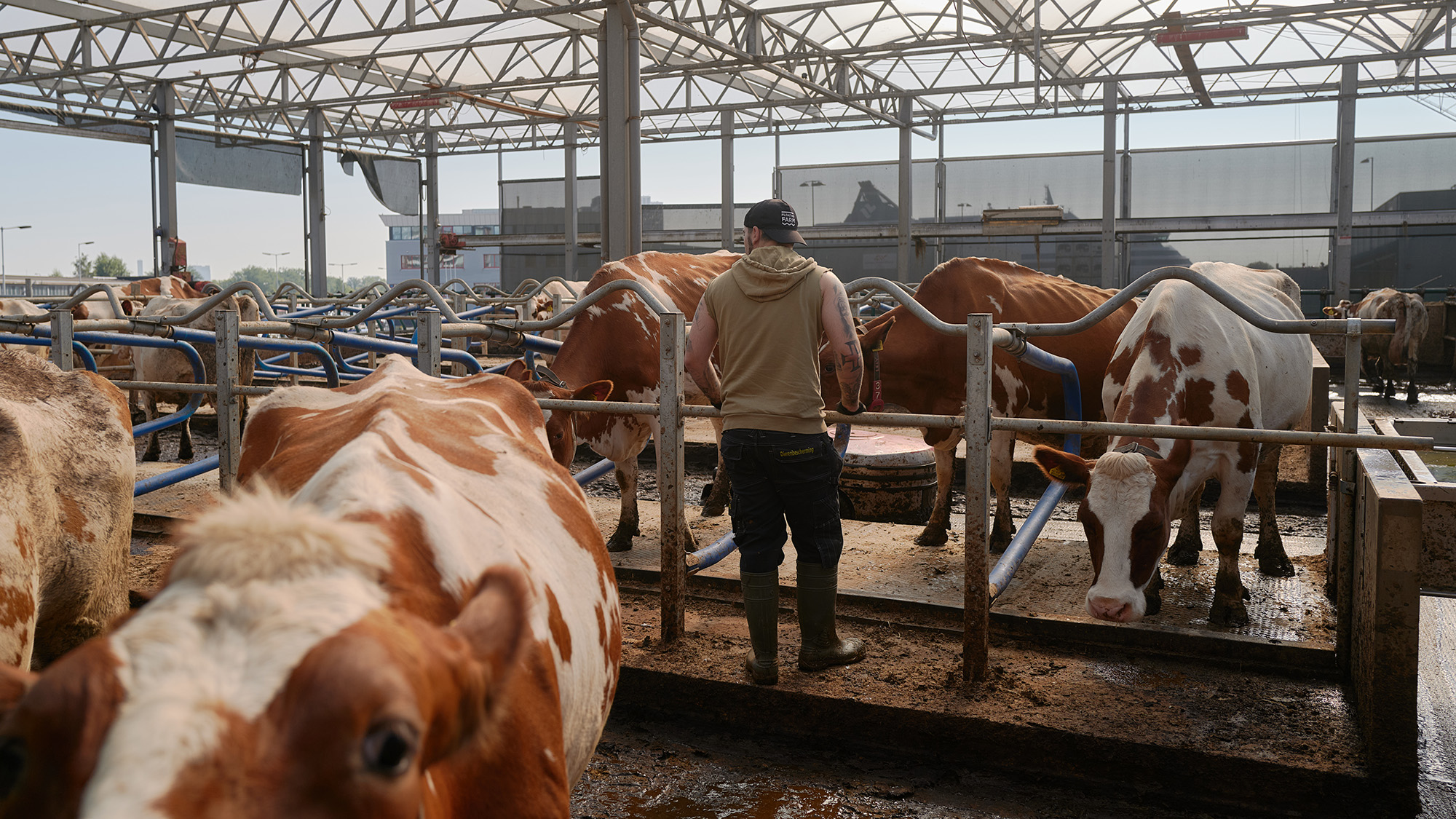
And it's not just flavors that will be affected. U.S. dairy cattle breeds originated in cool and cloudy Northern Europe, and their milk output goes down as temperatures climb. Such heat stress reduced annual milk yield by an average of 1% a year between 2012 and 2016 alone, and heat-related losses are expected to balloon by 30% by 2050.
Americans have long been drinking less milk from the glass, but their demand for yogurt and cheese is rising, said Jared Hutchins, an assistant professor of agricultural and consumer economics at the University of Illinois Urbana-Champaign and first author of the study on milk yield. Those products depend heavily on the fat and protein content in milk, which is the first thing to drop when cattle are hot. "Fat and protein are what deliver the cultured dairy products that are in high demand," Hutchins told Live Science.
For many of the European cattle breeds currently used in dairy production, overall yield, as well as the protein and fat content, decrease in hotter conditions. (Image credit: Pierre Crom via Getty Images)
The story repeats itself across agricultural products, Hultgren said. "For each degree of that global temperature rise, caloric output [from crops] drops by 120 kilocalories or U.S. calories per person per day," he said, "which is about 4.5% of a person's daily recommended caloric intake."
That calculation, published by Hultgren and his colleagues in the journal Nature in 2025, already accounted for adaptations that farmers can make to reduce crop losses. Without those adaptations, the number would be over 30% higher, he said.
Reductions in available calories will translate to food shortages in vulnerable places, such as the Horn of Africa or India, said Marina Romanello, executive director of a multinational research project that tracks the impacts of climate on health at University College London. In North America, "it would feel like inflation," Hultgren said — yet another factor driving up grocery prices.
Worst-case scenarios
For farmers, the year-by-year uncertainty of climate change is a problem. Will this year bring drought? Will there be a sudden storm or flood that will wash away the spring crop? Should they take a risk on a new heat-resistant plant or agricultural technique?
Similar uncertainty haunts the long-term forecast. Climate tipping points can lead to sudden, irreversible changes in the system. For agriculture, one of the scariest tipping points is the potential collapse of the Atlantic Meridional Overturning Circulation (AMOC). This pattern of ocean currents brings warm surface water north from the equator and circulates cold water south, warming Northern Europe and the northern parts of North America and cooling the Southern Hemisphere.
If this current were to collapse, northwestern Europe would cool dramatically, with studies suggesting that London could see temperature lows of minus 4 F (minus 20 C) — colder than the city's lowest temperatures on record. Precipitation would decline across Europe, leading to drought. Meanwhile, in the Amazon, the wet season could become the dry season and vice versa, said René van Westen, a climate researcher at Utrecht University in the Netherlands who has studied the impacts of an AMOC collapse.
On the other hand, if the AMOC doesn't collapse, London is expected to warm by 4.9 F (2.7 C) and see 15% to 18% more precipitation, depending on the season. The uncertainty in these predictions makes preparations difficult. There is still a lot of controversy over whether the AMOC will collapse and, if so, when. Should farmers plan for England to become increasingly toasty, or should they expect it to be plunged into a little ice age?
AMOC-related changes will take decades to centuries to unfold, even with a total collapse, van Westen told Live Science. But even so, they would require a total rewriting of agriculture in Europe and the northeastern U.S. "It will be very challenging to adapt to such a scenario," he said.
That doesn't mean a collapse of the world food system is inevitable. Farmers are already adapting to the early impacts of climate change by scaling back water-hungry crops in drought years and, in some places, testing new, heat-resistant varieties of crops in an attempt to stem the losses.
The apples we eat now, like honeycrisps, may not fare well under climate change. (Image credit: Bloomberg via Getty Images)
And humans have overcome looming disaster in agriculture before: In the 1950s and 1960s, new varieties of rice and wheat, along with the availability of synthetic nitrogen fertilizers, spurred the "Green Revolution," tripling the world's yield of cereal crops while expanding farmland by only 30%. Similar innovations could limit hunger even as the world warms.
But the biggest way to mitigate these impacts is the most obvious one. While Hultgren and his colleagues found that adaptation could cut caloric losses under climate change by 30%, mitigating warming by reducing emissions today could slash them by half. Similarly, the AMOC is on a path toward weakening, van Westen said, but as long as humans slow the pace of climate change, the current can recover.
"If you are cutting your emissions," van Westen said, "you can lower your risk."
China's solar power capacity has overtaken coal for the first time, marking a major milestone in the country's rapid expansion of renewable energy.
China had about 1,288 gigawatts (GW) of installed solar capacity at the end of July, compared with 1,285 GW of coal-fired capacity, according to figures from the country's energy administration reported by the South China Morning Post.
"China reaching around 1,288 GW of installed solar capacity, marginally overtaking coal, is a major milestone," Matthew Davies, UNESCO chair in sustainable energy technologies and a professor of chemical engineering at Swansea University in the U.K., told Live Science.
However, installed capacity doesn't necessarily equate to actual electricity generation. "Solar only generates when sunlight is available, whereas coal plants can run for much longer periods, so solar still supplies a much smaller share of China's electricity than coal," Davies said.
In other words, China has more solar capacity than coal capacity, but coal remains far more important when it comes to the amount of electricity actually delivered to the grid.
Between January and July this year, Chinese solar power output rose 15.5% compared to the same time period in 2025. Over those seven months, it reached 802.4 TWh, which is around 13% of the country's total electricity consumption.
"I would see this as a structural turning point, not the point at which solar has replaced coal," Davies said. "The key question is whether renewable generation can grow fast enough not only to meet rising electricity demand but to push coal generation down in absolute terms. Given the scale of China's power system, sustained reductions in coal use could have a major impact on global CO₂ emissions."
To do that, China will need to do more than build solar farms. One of the biggest challenges will be integrating all of the new renewable power into the electricity system.
"Installing solar is only part of the transition; grids, transmission, storage and demand flexibility all need to keep pace so that renewable electricity can actually be used," Davies said.
This transition toward solar panels will also make renewable energy more accessible around the world, as China's enormous manufacturing capacity will help drive down the global cost of solar panels. However, Davies said the next phase of the transition is to ensure the whole solar production process is sustainable. "We need to think about where technologies are made, where materials come from, how long they last, and how they are reused or recycled," he said.
Solar panel manufacturing involves raw material extraction, processing, manufacture, transport and installation, so it has an initial carbon footprint. High energy requirement for polysilicon production is a considerable factor as it uses coal-fired power plants. But, this is offset by the electricity they generate.
There is also a case for expanding local and regional manufacturing, Davies noted. Doing so could strengthen supply chains, create local skills and economic value, and make the global energy transition more resilient and equitable. That could be particularly important for expanding access to electricity in parts of the world where reliable power remains limited.
"The global energy transition is not only about replacing fossil fuels in existing electricity systems; it is also about enabling people who still lack reliable electricity to gain access to clean, affordable power," Davies said. "Ultimately, success is not simply about installing more solar panels. It is about building a clean-energy system that is affordable, sustainable, resilient and accessible globally."
Just like 20-somethings yelling or waving in a crowded, strobe light-filled club, three-spined sticklebacks (Gasterosteus aculeatus) can change their social behavior for the benefit of the group. These small fish will change how they swim to help find food when they are in cloudy water. The findings are detailed in a study published today in the journal Proceedings of the Royal Society B.
There are eight known species of sticklebacks (order Gasterosteiformes). These small fish live in fresh, brackish, and marine waters all over the Northern Hemisphere and as far north as the Arctic Ocean. They can grow to a maximum length of roughly seven inches and are known for a row of two to 16 spines on their backs.
Since they live in everything from salty seas to fresh lakes, their habitats can range from crystal clear to densely clouded. Turbidity is when small particles like mud, algae, or silt make water cloudy. While it is a natural process, farming, mining, construction, and other pollutants are increasing turbidity and reducing visibility in rivers and coastal waters around the world. This can make it more difficult for aquatic animals like sticklebacks to see their food, friends, or enemies.
“At the moment, we’re seeing our weather flipping between hot, dry periods to heavy rains, which mean[s] our rivers and streams experience sudden surges of muddy, highly turbid water,”
Dr. Sean Rands, a study co-author and behavioral ecologist at the University of Bristol, said in a statement. “It is good to know that the fish can respond to these big changes.”
For this study, the team observed how three-spined sticklebacks responded to their water becoming cloudier and noted their directions when food suddenly appeared in the water.
In murkier water, the fish took longer to swim towards the food than those in clear water. However, individuals in larger groups responded more quickly in both clear and cloudy water.
The study found in murkier water fish took longer to move towards the food than those in clear water, but individuals in larger groups responded more quickly overall. Image: Christos Ioannou.
The way that the sticklebacks moved together also influenced their response to the food. The smaller groups living in murky water got to the food more quickly when they swam close together in the same direction. By contrast, tighter coordination slowed the group’s response for larger groups of fish in clear water.
Before the food was introduced, fish in murky water tended to stick closer together, align their movements more closely, and respond more eagerly to the behavior of group members that were nearby.
According to the team, these results suggest that sticklebacks can compensate for reduced visibility in the water by increasing cooperation and coordination with one another.
“When we put an unexpected piece of food in the water, it took the fish longer to find it when the water was cloudier. This makes sense and has been shown before in different water-living species,” added study co-author and behavioral ecologist Christos Ioannou. “However, we were excited to see that the sticklebacks were able to compensate for this challenge by changing their shoaling behaviour. Their shoals became more coordinated, with the fish moving and aligning themselves together much more closely in poor conditions. This in turn meant the fish were able to find the food faster than if they weren’t coordinating.”
This enhanced social behavior may help them overcome the challenges of living in murky environments and respond better when there is an opportunity to find a meal.
“Finding that these rules are able to change in response to the challenges animals experience is reassuring, as it shows that these little fish have some extra tricks for the changes that humans are causing to their homes,” said Rands.
With the dog days of summer nearing an end, many are counting down the days until they can give the darker clothes in their wardrobe a bit more love. Though plenty of people flout seasonal rules and wear all-black year-round, light-colored fabrics are typically the better choice during hotter months because they reflect sunlight and can help keep us cool. This heat-reflecting logic is also partly responsible for the old decree, “don’t wear white after Labor Day!” But what if fashion choices weren’t dictated by the weather? A team of researchers from China and Australia believes they may have cracked that code, and it starts with a rich purple fabric.
The researchers, hailing from Zhengzhou University and Adelaide University, set out to create a dark-colored material that was also effective at keeping people cool. They created an entirely new fabric made of a purple metal-organic framework and zinc oxide nanoparticles. The metal-organic framework which absorbs green light from the sun and gives the purple color, while the zinc oxide nanoparticles which reflect sunlight and radiate heat away.
The material performed exceptionally well during testing. It reflected an average of nearly 88 percent of sunlight and stayed up to 11 degrees Fahrenheit cooler than conventional purple cotton outdoors. It was notably even 7.6 degrees cooler than white cotton. In a world where deadly hot summers are becoming more common, research suggests materials like this could provide outdoor workers with some much-needed relief.
“We have traditionally had to make a choice between cooling performance and appearance,” Adelaide University materials engineer Jun Ma and study co-author said in a statement. “Our research shows that we can have both. We can make a fabric that looks purple, but at the same time reflects most of the sun’s energy and releases heat very efficiently.”
The team published their findings in the journal Small.
Why do light colors feel cool?
Generally speaking, lighter colors are better bets for staying cool because they reflect more sunlight. White or unpigmented materials are the best at beating heat, whereas dark black material will feel the hottest. This same idea applies to building and construction materials as well. Purple, while obviously dark, is also a unique choice for the research because it strongly absorbs green light, which is one of the strongest parts of the solar spectrum.
Caveats are in order, though. Color isn’t the only factor in staying cool. Clothing material and fit are just as important, if not more so. Loose, breathable garments like cotton or linen allow far more airflow than tighter clothing. That’s why Bedouin nomads in the North African desert can wear mostly all black without collapsing from heat exhaustion. Still, all else being equal, lighter colors make for a cooler experience.
Making a cooling, purple fabric
To create the fabric, the team combined a purple ZIF-67 metal-organic framework with zinc oxide nanoparticles. Using electrospinning, they spun the mixture into purple thermoplastic polyurethane fibers, which were then woven into fabric. They then cut the material into two-inch squares and exposed them to direct sunlight on a sunny day in Zhengzhou, China, alongside control squares of standard white and purple cotton.
The revised material reflected an average of 87.6 percent of solar radiation. In terms of overall cooling, at least in these tests, it was a resounding success. After a full day baking in the sun, the fabric remained 7.6 degrees cooler than white cotton and 11.2 degrees cooler than traditional purple cotton. The fabric also achieved these thermal gains without sacrificing practical performance, and was flexible, stretch-resistant, and highly breathable, allowing moisture to evaporate effectively rather than trapping sweat. It also maintained both its rich color and cooling properties after 50 wash cycles. Furthermore, UV accelerated-aging tests (simulating roughly 108 days of intense sunlight exposure) showed that the cooling performance did not degrade over time.
Using science to stay cool in a warming world
It’s still early in the process, but the team believes their new approach could make darker-colored materials less off-putting during warmer weather. While that’s potentially great news for all the goths out there, the researchers emphasize far more practical applications as well. These refined fabrics could be used to make workwear for construction workers, farmers, and others who endure long hours baking in the sun. For outdoor laborers, even modest cooling relief can make a life-saving difference.
“The long-term opportunity is to move beyond the idea that cooling fabrics have to be white,” Adelaide University Chemical Engineer PhD candidate and paper co-author Yangzhe Hou said in a statement.
This summer’s heat has moved from unpleasantly hot to deadly in many parts of the world, and it’s likely a sign of more to come. Both the fashion industry and the general public are already adapting to this brutal new reality. A 2022 New York Times report noted a marked rise in sales of shorts and sandals alongside a sharp decline in fleece and heavy outerwear in recent years, a shift attributed in part to rising global temperatures. Similarly, recent efforts to normalize wearing shorts in office settings and the gradual removal of neckties reflect a workplace culture adjusting to a hotter climate.
The new purple fabric research also joins a now lengthy list of other attempts to apply science and technology to make clothing cooler. An assortment of (often more expensive) cool-tech clothing brands with names Coolcore and Iso-Chill have gained popularity, promising to beat the heat. Kontoor Brands, which owns blue-jean giant Wrangler, even made an Insta-Cool shirt that used phase-change material initially used by NASA astronauts to stay cool.
Every few years, El Niño or its cool counterpart, La Niña, shifts rainfall across the tropics, dries out Australia, floods parts of Peru, and rearranges the weather on most of the planet. The two are the warm and cold swings of a single system, the El Niño–Southern Oscillation, or ENSO, and that system is the largest source of year-to-year climate variation on Earth. Its swings sit atop the steadily rising temperatures driven by global warming.
But we didn't know whether global warming was making it stronger. It’s possible that the added energy in the atmosphere and oceans was causing its swings to be more dramatic.
“We've been seeing some very strong El Niño events in the late 20th and early 21st century, and what we didn't know was how unusual those are,” said Julie Cole, an environmental scientist at the University of Michigan. Because models disagree with one another and the instrumental data are too short to separate a trend, Cole’s team reconstructed a thousand-year-long ocean surface temperature record by analyzing fossilized Galápagos corals.
Since the 1850s, plowing and clear-cutting in modern agriculture have increased how fast soil erodes in the Upper Mississippi River Valley. Across the globe, farming strips soil up to 100 times faster than natural processes. It also removes farmable land and clogs waterways, threatening long-term environmental sustainability. However, scientists in the past have struggled to separate the effects of land-use changes from the transition out of the last ice age over the past 20,000 years.
To determine whether current farming practices are sustainable, researchers from Minnesota recently measured the speed at which soil eroded during the ice age transition and compared it with modern agricultural erosion. They focused on the Trout Creek tributary of the Mississippi River. This tributary has 2 step-like formations, or terraces, on its bank that represent past floodplains before the river eroded to its current level.
The oldest, upper terrace is about 14 meters (50 feet) above the lower terrace, which is about 8 meters (26 feet) above the modern floodplain. Scientists studying nearby areas have suggested that the terraces contain sediment from the last ice age, 20,000 years ago, referred to as the Last Glacial Maximum, to today.
In the upper terrace, the researchers pushed an empty cylinder into the ground, like a straw into a layer cake, to collect a cylindrical sample of sediments about 4 centimeters (1.5 inches) wide and 6 meters (20 feet) deep, called a sediment core. They collected slices of this core from 2 meters (6 feet) and 6 meters (20 feet) to find the terrace’s age.
Some grains in the sediment trap electrons while buried and release them when exposed to light. So the team shone light on the sediment slices to stimulate these electrons and measure the intensity of light emitted, known as their optically stimulated luminescence. Brighter light emissions indicate the sediment is older and was buried for a longer period of time. Using this method, they confirmed that the deep sediment slice was 22,000 years old, and the shallow sediment slice was 20,000 years old, dating the terrace back to the Last Glacial Maximum.
Next, the team drilled into the upper terrace with an auger to collect 25-centimeter (10-inch) wide plastic tubes of sediment. They pulled 4 samples from 0 to 2 meters (0 to 6 feet), and 1 sample from 6 meters (20 feet) deep. They explained that minerals in the sediment called quartz produce the radioactive form of the element beryllium, known as 10Be, when exposed to the Sun, so low 10Be means the sediment was buried quickly and had little sun exposure. The team measured the concentration of 10Be in each sediment sample and used an online calculator to estimate how quickly it eroded. The researchers calculated that during the Last Glacial Maximum, 0.073 millimeters (0.003 inches) of surface sediment were removed per year.
The researchers collected similar samples from the lower terrace and used optically stimulated luminescence to determine that it was between 22,000 and 14,000 years old. This terrace was the floodplain during the transition out of the Last Glacial Maximum, or deglacial period, where temperatures warmed and permafrost retreated. They measured the concentration of 10Be in samples from this terrace and determined that 0.049 millimeters (0.002 inches) of surface sediment were removed per year.
Finally, the researchers measured 10Be in a sediment sample from the modern floodplain, deposited between 14,00 years ago and today. They found that the sediment had eroded 0.053 millimeters (0.002 inches) per year during that interval, at a rate slower than it had during the glacial period, but similar to the deglacial period.
The researchers compared their findings to the average soil loss caused by modern agriculture, as reported by 4 previous scientists studying the area. They saw that modern farming removes an average of 0.60 millimeters (0.02 inches) of soil per year, which is 8 to 12 times greater than all the natural erosion rates they calculated.
They concluded that the recent spike in soil loss from agriculture greatly exceeds that caused by the largest natural climate transition in recent Earth history. Human-driven erosion shows an upward “hockey stick” trend like the one seen in global temperatures, suggesting that similar trends could exist throughout Earth systems. The team concluded that modern agricultural practices aren’t currently sustainable. While measures like native plant reintroduction can help curb this trend, more research is required to determine how best to limit long-term erosion.
A massive chunk of Greenland’s Petermann Glacier has broken away, forming an iceberg the size of Manhattan in what scientists say is the most significant Arctic calving event recorded in years.
As the dramatic event unfolded, the European Space Agency’s (ESA) Copernicus Sentinel-1 mission captured the breakup on August 4, as the 29-square-mile ice tongue detached from the eastern edge of Petermann Glacier.
The new “ice island,” also known as a tabular iceberg, is estimated to be close to 500 feet thick and was produced by an event that experts believe to represent the single largest loss of floating ice since 2012, and the most massive calving event anywhere in the Arctic since 2020.
Satellites Reveal a Rapid Iceberg Breakup
Evidence of an imminent calving event had begun showing months ago in the form of cracks in the glacier. On August 3, Sentinel-1 radar imagery revealed significant deterioration that was showing along the center of the glacier’s ice tongue.
The crewmembers aboard the nearby vessel weren’t the only ones armed with cameras who were observing the massive breakup. For many years, an international team of researchers has been monitoring conditions on Petermann Glacier using Sentinel-1 imagery. Since 2019, a series of tracking and expanding fractures and other clear signs of instability have gradually worsened.
Additionally, interferometric measurements collected earlier in 2026 showed signs that deformation and fractures were spreading through the ice tongue in advance of a likely break, allowing scientists both on-site and observing via satellites in orbit to plan for the event.
The ESA’s Copernicus Sentinel-1 (Image Credit: ESA/Mlabspace).
Iceberg Break Antipated for Years
“Petermann Glacier has long been one of Greenland’s largest remaining ice tongues,” said University of Ottawa PhD student Adam Garbo, one of the many researchers involved in monitoring the glacier prior to the calving event.
“We’ve anticipated this break for years, and seeing it finally happen is remarkable,” Garbo said in a statement. “It’s a powerful reminder of how quickly these systems can change.”
This event was by no means the first time that the Petermann Glacier has undergone a major calving event. In 2008, 2010, and in 2012, similar significant ice losses were logged, although its floating ice tongue had remained mostly stable since that time.
The recent event signals the end of that period of relative stability. Additionally, researchers say two more sections—measuring around 97 and 87 square kilometers—are likely to detach as existing rifts continue to appear and gradually separate.
Sentinel-1 Spots a Massive Break Up Event
With the help of the ESA’s Sentinel-1C and the recently launched Sentinel-1D satellites, a remarkably detailed view of the calving event was made possible. During its commissioning period, Sentinel-1D and its predecessor satellite achieved one-day repeat synthetic aperture radar observations.
Above: Optical image of the Petermann glacier from Sentinel-2 (left) and an interferogram from Sentinel-1 (right), which reveals deformation and fractures within the ice tongue (Image Credit: ESA/contains modified Copernicus Sentinel data (2026), processed by ESA/CC BY-SA 3.0 IGO).
The resulting interferograms allowed scientists to examine how fractures propagated, and aalso how the floating ice responded to factors that include ocean water movement in the vicinity prior to the separation.
“The changes we observed on Petermann Glacier were occurring very rapidly in the lead-up to the iceberg calving event, so it was incredibly exciting to monitor the crack propagation with interferometry in near-real time,” said University of Leeds PhD student Molly Hammond in a statement.
Satellites like those with the Sentinel mission are especially useful for observations in polar regions since their radar systems allow researchers to observe the Earth’s surface even when cloud coverage or darkness would normally obscure visibility. This allows the ability to continuously monitor activity around these remote glaciers, and a chance to trek the new ice island as it continues to drift.
Ongoing Monitoring After a Rare Event
“This type of large tabular iceberg is relatively rare in the Arctic, making this calving event a unique opportunity to study how such a vast ice mass drifts, evolves and eventually breaks apart,” ESA researcher Martin Wearing said in a statement.
Although the iceberg currently poses no practical concerns, Environment and Climate Change Canada is currently monitoring the iceberg’s movement, and will provide assessments about whether it could pose any risk to Arctic shipping and offshore infrastructure in the months ahead.
Those monitoring efforts will likely continue into the foreseeable future, since massive ice islands as large as the newly formed iceberg can survive for many years before they eventually undergo fragmenting of their own, dispersing smaller pieces into the surrounding ocean. These smaller pieces can be much more difficult to track, and thereby could pose greater risks.
For now, scientists plan to continue watching the new ice island, which will offer new insights into Arctic glacier dynamics, as well as the changes that are impacting one of Greenland’s most closely watched glaciers.
Micah Hanks is the Editor-in-Chief and Co-Founder of The Debrief. A longtime reporter on science, defense, and technology with a focus on space and astronomy, he can be reached atmicah@thedebrief.org. Follow him on X @MicahHanks, and at micahhanks.com.

 Login