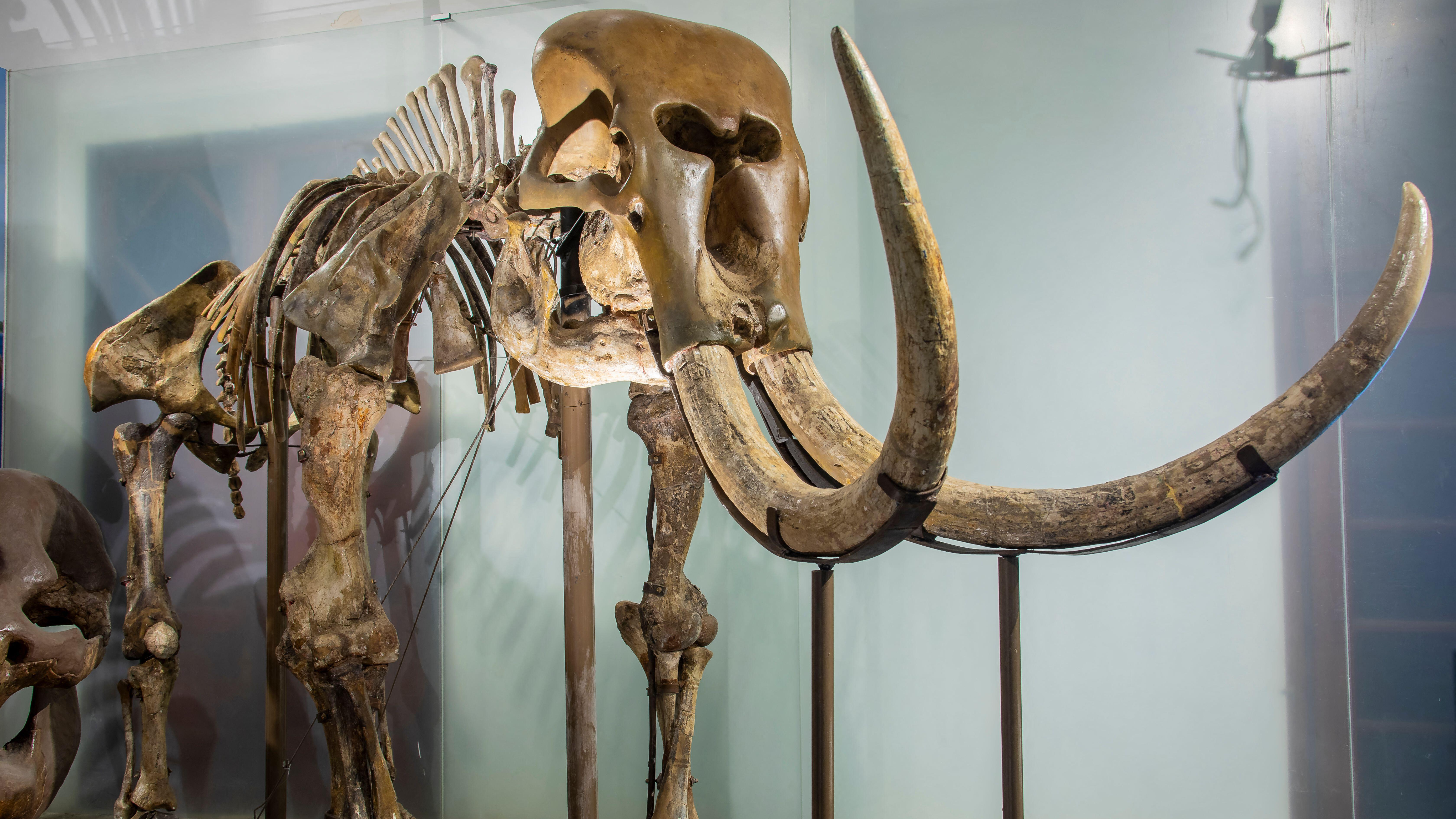
Archaeologists excavating in the famous prehistoric Hohle Fels cave in Germany have uncovered two bird figurines carved from mammoth ivory. The thumbnail-size carvings add to the existing evidence that ice age humans had a sophisticated artistic sense 40,000 years ago.
"The figurines demonstrate that the earliest artists were skilled ivory-carvers, who could depict delicate motifs in miniature form," Nicholas Conard, an archaeologist at the University of Tübingen in Germany and director of excavations at Hohle Fels, said in a July 29 statement.
When the birds were found in 2025, they were lying just 5 feet (1.5 meters) from each other in a layer dating back 40,000 years, according to the statement. The sculptures bring the total number of bird figurines from Hohle Fels up to three; a small water bird was found there in 2001.
Hohle Fels was occupied by early Homo sapiens during the Aurignacian period of prehistory (43,000 to 28,000 years ago), following the decline and disappearance of Neanderthals from Europe. At that time, humans launched a creative explosion, creating the world's first musical instruments, jewelry and small sculptures. The Venus of Hohle Fels, a 41,000-year-old statuette of a woman with exaggerated breasts and buttocks discovered in the cave in 2008, is generally considered the oldest figurative sculpture in Europe. Archaeologists have also found figurines of animals and an ivory rope-making tool at Hohle Fels, a German name that means "hollow rock" in English.
At roughly thumbnail-size, the two new bird carvings are significantly smaller than the figurines found previously at Hohle Fels. Despite their tiny dimensions, "the carvings are not highly stylized but instead include many specific and unique features," Conard said. "The artist has recorded detailed observations that allow us to consider which kind of bird is represented and what the bird could be doing."
One bird appears to be lying on the ground, possibly brooding over its eggs. This position suggests the bird is a ptarmigan, a game bird that is related to chickens and grouse and whose bones have been discovered in the prehistoric layers at Hohle Fels. The second bird has spread wings that are suggestive of flight or posturing in courtship, according to the statement. This bird may also be a ptarmigan, or possibly a bird of prey.
The two tiny ptarmigans raise many new questions about early humans in Europe, Conard said. They are among the earliest evidence of modern humans in Europe, suggesting art was a major feature of early human life. Archaeologists do not know what meaning the carvings held for the Aurignacian people who lived at Hohle Fels, but the objects may have been personal talismans or a symbol of a specific group of people.
Hohle Fels is unique among ice age cave sites because, to date, it is the only one with bird figurines. This may reflect people's keen observations of the natural world around them.
"Our region and landscape have always been the home of a vast range of birds," Stefanie Kölbl, managing director of the Museum of Prehistory and Ice Age Art, said in the statement. "Their calls signaled warnings, and the residents of the region often used their hollow bones and even mammoth ivory to make flutes that produced magical sounds."
Using laser scanning technology to peer beneath the dense canopy of the Amazon rainforest, archaeologists have discovered hundreds of ancient earthworks that were made by a complex, enigmatic society over two millennia ago, a new study finds.
This ancient civilization, called the Aquiry, arose 2,500 years ago in Brazil. Based on the large number of earthworks, called geoglyphs, the Aquiry may have had 3 million people before the society collapsed, the researchers suggested in the study.
"The cultures and societies that composed the Aquiry shared a common worldview and constructed ceremonial centers in a variety of monumental geometric forms, characterized by deep ditches and high outer embankments, commonly known as Amazonian geoglyphs," Martti Pärssinen, an archaeologist at the University of Helsinki, told Live Science in an email.
In the new study, published Wednesday (July 29) in the journal Nature, Pärssinen and co-authors presented findings from their survey of nearly 1,740 square miles (4,500 square kilometers) of Amazonian rainforest, which revealed 396 new geoglyphs and allowed them to approximate the geographical extent of the Aquiry civilization.
Pärssinen has been investigating geometric earthworks in Brazil's Acre state for more than two decades. In a 2021 study, he officially introduced the name Aquiry for the multicultural ancient civilization, named after the Acre River, which flows from Peru and Bolivia through the present-day states of Acre and Amazonas in Brazil. Aquiry means "river of caimans" in the language spoken by the Indigenous Arawakan people.
Because of the dense canopy of trees in the rainforest, archaeological investigation in the area has been limited. Most of the evidence for the Aquiry civilization comes from lidar and airborne laser scanning of monumental geoglyphs that were constructed between 600 B.C. and A.D. 850, according to the study. People lived in multifamily longhouses around the earthworks, and they farmed crops like maize and squash.
"According to native oral traditions, the Aquiry centers were built to foster relations among communities" and with significant otherworldly beings, Pärssinen said. These centers also served as venues for gatherings and political decision-making, and they enabled chiefs to display their generosity, he added.
To date, archaeologists have identified around 1,700 known geoglyphs in the area. But the researchers think the total is significantly higher, with more than 20,000 Aquiry earthworks waiting to be found in places that haven't yet been surveyed. And based on an estimate of 300 people needed to build and maintain each geoglyph on average, the researchers estimated that the Aquiry civilization likely peaked at 1.25 million to 3 million people between A.D. 100 and 300.
Similar geoglyphs dating to between 200 B.C. and A.D. 500 have been found in Peru. Known as the Nazca Lines, these earthworks are shaped like animals, humans, plants and fantastical figures, in addition to having geometric motifs. The Nazca were an interconnected regional society of precolonial farmers who were able to survive in a forbidding geographic region, but they lived roughly 1,050 miles (1,700 kilometers) from the Aquiry.
"The Nazca geoglyphs represent a different phenomenon and were probably unrelated to the Aquiry civilization," Pärssinen said. "Nevertheless, in both cases, the straight roads and lines, as well as the geometric forms and motifs, are best appreciated from the air."
The presence of thousands of geoglyphs in the southwest Amazon region is leading archaeologists to rethink assumptions about precolonial civilizations and urban development — but it's also bringing up questions about the fate of the Aquiry.
"We do not know why the geoglyphs were suddenly abandoned between A.D. 850 and 950," Pärssinen said. "The available evidence points to a relatively rapid collapse" that may be related to the disappearance of other major precolonial powers, he said, "including the Classic Maya in Central America and the Tiwanaku and Wari civilizations in the Andes."
How much do you know about the first people to reach the Americas? Find out with our First Americans quiz!
Cut marks suggestive of cannibalism have been discovered on the fossils of an ancient human relative in a cave in Spain, new research finds. But many of the bones from the species, known as Homo antecessor, were from adults — not just children, as previous discoveries had found — adding a new dimension to the cannibalism that was practiced in this area 850,000 years ago.
The two dozen bones and teeth were recently found in Gran Dolina cave, part of the Sierra de Atapuerca archaeological complex in northern Spain, according to a July 24 translated statement from the Catalan Institute of Human Paleoecology and Social Evolution (IPHES). Among the remains were fragments of a skull, spine, arm and leg bones, as well as three teeth from several members of the now-extinct H. antecessor, a relative of modern humans that lived in Europe between about 1.2 million and 770,000 years ago. Several of the bone fragments had cut marks from stone tools.
Over the past few decades, researchers have identified numerous cases of cannibalism at Gran Dolina, meaning H. antecessor is the oldest known human relative to eat its own group members for nutritional reasons. In a 2010 study, researchers noted that most of the evidence of cannibalism at Gran Dolina came from the bones of infants and juveniles, who would have been easier to capture and kill as the young, defenseless members of a rival group. But the newly excavated fossils have upended that assumption.
"The discovery of more adult individuals, some of whom also bear cut marks, demonstrates that cannibalism was not restricted to younger individuals," Palmira Saladié, a biological anthropologist at the IPHES who coordinated the work, said in the statement.
The first-ever ulna (forearm bone) discovered from an adult Homo antecessor individual at Gran Dolina in Atapuerca, Spain. (Image credit: Maria D. Guillén / IPHES-CERCA)
The number of individuals found at Gran Dolina has now risen to at least 13, and about half of them are adults. "The increase in the number of individuals, and especially the addition of more adults, allows us to begin understanding this population from a much more complete perspective than ever before," Andreu Ollé, an archaeologist at the IPHES, said in the statement.
Excavation at Gran Dolina has also brought to light an assemblage of stone tools made from flint, quartzite and sandstone, along with animal bones from hyenas, beavers, deer, horses and rhinoceroses, according to the statement.
Evidence of cannibalism at the site is extensive. Stone tools found in the cave are consistent with the cut marks on the human bones, and the animal bones have revealed butchering techniques that were also used on humans. Some of the human bones also had human bite marks, Saladié told Live Science in 2025, which is the "most reliable evidence that the bodies found at the site were indeed consumed."
But while the practice of cannibalism at Gran Dolina has been confirmed, the reason for it is still unclear. Researchers hope the newly discovered adult bones may help them better understand the practice among H. antecessor groups.
"We have only just begun excavating this new area" at Gran Dolina, Marina Mosquera, an archaeologist at the IPHES, said in the statement, "and the first results already demonstrate its enormous scientific potential."
Further analyses on the bones are now underway to explore questions about age-related differences in cannibalism, the number and length of cannibalistic episodes, and the social organization of H. antecessor, according to the statement.
What do you know about early humans? Test your knowledge with our human origins quiz!
The ancient Egyptians sometimes reused crafted materials. This block, which features a battle scene, was likely created during the reign of Amenhotep II between 1427 and 1400 B.C., during the 18th dynasty. But when it was discovered, the block was being used as part of the foundation of the unfinished mortuary temple of Ramesses IV (who ruled from 1153 to 1147 B.C., during the 20th dynasty).
The painted sandstone slab was discovered in Luxor in 1912 by Egyptologist Herbert E. Winlock, who later became the director of the Metropolitan Museum of Art, which has the block in its collection. In his original publication describing the artifact, Winlock wrote that it featured a scene of an Egyptian pharaoh slaying his enemies with a bow and arrow. "The block may be taken as one of the best preserved specimens of the great imperial pictorial-relief yet discovered," he wrote.
The excellent preservation of the artifact and its vibrant colors was likely due to its reuse in Ramesses IV's temple foundations, Catharine Roehrig, the Met's curator emerita of Egyptian art, wrote in a 2008 explanation of the relief fragment.
Measuring roughly 24 by 45 inches (61 by 115 centimeters), the painted sandstone carving was likely part of a larger scene depicting an Egyptian pharaoh vanquishing an enemy army, according to Roehrig. The pharaoh's chariot and horses appear in the upper-right corner, while a rival soldier tries to avoid being trampled to death. Three of the enemies have been pierced by arrows.
The pointed beards and distinctive clothing suggest the enemies were ancient Syrians or possibly the Hyksos, a Semitic-speaking foreign dynasty that ruled Egypt from around 1640 to 1530 B.C., during the Second Intermediate Period, James P. Allen, former curator of Egyptian art at the Met, wrote in 2005. The battle scene may therefore reflect historical conflicts fought between dynasty 18 pharaohs like Amenhotep II and Asiatic rulers.
But the relief was unlikely to have been created as a commemoration of a specific historical battle. "Their primary purpose was to portray the pharaoh in his role as the victorious defender of Egypt," Roehrig wrote.
For more stunning archaeological discoveries, check out our Astonishing Artifacts archives.
Archaeologists in El Salvador have uncovered the unusual burial of a face-down human skeleton that was interred along with a ceramic vessel shaped like a sea turtle nearly 3,000 years ago. The burial may be from a pre-Maya civilization that practiced human sacrifice.
According to a translated statement from El Salvador's Ministry of Culture, the burial was found July 2 in Antiguo Cuscatlán, a suburb of San Salvador, during excavation work directed by Carlos Flores Manzano, an archaeologist and doctoral student at Yale University.
Although the skeleton has not been radiocarbon-dated yet, it was discovered underneath a layer of volcanic ash from an eruption of the Plan de la Laguna volcanic crater thought to date to between 850 and 830 B.C., during the Middle Preclassic period (roughly 1000 to 400 B.C.) in Mesoamerica.
A ceramic vessel shaped like a sea turtle was discovered in the grave. (Image credit: El Salvador Ministry of Culture)
During this period, societies in southeastern Mesoamerica were becoming more sedentary and developing more complex cultures, archaeologists have found. But in addition to the archaeological remains of crop cultivation and painted ceramics discovered over the years in Antiguo Cuscatlán, experts have pointed to some burials as evidence of human sacrifice — and the newly uncovered burial may be similar.
In the late 1970s, archaeologist William R. Fowler excavated at Chalchuapa, an ancient town east of Antiguo Cuscatlán with thousands of years' worth of history. While digging in an area known as Structure E3-7, Fowler found 33 human skeletons — mostly adult males — that he interpreted as sacrifices of war captives due to signs that their feet and arms were bound.
The burial was encased in plaster to prevent damage during recovery. (Image credit: El Salvador Ministry of Culture)
According to the El Salvador Ministry of Culture's statement, the newly uncovered burial is likely not the only one in the area. Archaeologists may eventually find a burial mound with several dozen skeletons, similar to what Fowler uncovered at Chalchuapa. However, Fowler's interpretation of human sacrifice has been questioned in recent years, including by Flores Manzano in a 2020 study.
Instead of being linked to sacrifice, the unusual burial position might be related to an ancient understanding of the cosmos and underworld, Flores Manzano told Diario El Salvador. If that's the case, the sea turtle ceramic vessel found near the skeleton's hand may be associated with Orion's Belt, which features in later Maya astronomy as part of a sacred journey.
The fragile burial was encased in plaster before being removed for further study. Flores Manzano said the skeleton will now undergo chemical analysis so researchers can learn more about the individual's life, diet and possible cause of death. He expects the analyses to take about a year, after which the results will be announced to the public.
How much do you know about the first people to reach the Americas? Find out with our First Americans quiz!
Archaeologists have uncovered a rare and unusual burial of premature twins in a 1,200-year-old tomb near the Temple of Artemis at Ephesus in Turkey. Although the burial was found in an abandoned latrine, researchers think the intention was to protect the babies in the afterlife.
"This interment was made in an unexpected and exceptional setting," Lilli Zabrana, an archaeologist at the Austrian Academy of Sciences who co-authored a new study detailing the discovery, told Live Science in an email. Burials previously discovered at Ephesus were made in a dedicated cemetery outside the boundaries of the ancient temple.
"What is even more unusual is that the burial contains two premature infants, who were probably twins, which is a rather rare occurrence," study co-author Caroline Partiot, a bioarchaeologist at the Austrian Academy of Sciences, told Live Science in an email. Evidence of a rare genetic condition found in one of the infants makes the finding even more unique, the researchers noted.
In the study, published online July 13 in the journal Childhood in the Past, Partiot and Zabrana analyzed bones found in a tomb that was likely built in the eighth to ninth century, during the middle Byzantine era. The grave was placed within an abandoned latrine channel, originally built during the second or third century, Zabrana said, but the latrine was a later addition to a Roman odeum — a building used for musical performances — that was built in the first century within the sacred area of the famous Temple of Artemis at Ephesus (one of the Seven Wonders of the Ancient World), which was originally built around 550 B.C.
When excavators opened the cist, or stone-lined grave, they saw two tiny skeletons buried side by side. Based primarily on the size of the bones, Partiot and Zabrana estimated the skeletons were from infants who were likely born prematurely at around 33 to 34 gestational weeks, or 7.5 months in utero. (A full-term pregnancy typically lasts between 39 and 40 weeks.)
"The hypothesis that they were twins is based on the fact that they have very similar ages at death and were buried in direct contact with one another," Partiot said. "However, it will only be possible to confirm whether they were indeed twins through future DNA analyses."
Although the researchers did not find any evidence of trauma or disease on the babies' skeletons, they did notice a rare bone called a supernumerary cervical rib. This hereditary trait involves the growth of an extra rib bone that forms at the back of the neck in about 1% of people and usually doesn't cause any problems. However, Partiot has found that, in babies, there is an association between cervical ribs and anomalies in Hox genes — a group of genes that code for specific body parts during embryonic development — that can lead to stillbirth, prematurity or sudden infant death.
"To the best of our knowledge, no cases of twins with cervical ribs have been documented in an archaeological context" before this one, the researchers wrote.
The twins may have been buried in an odd location outside the known burial grounds at Ephesus because they died as premature infants who probably hadn't been baptized yet, the researchers proposed. The infants' final resting place was likely a kind of "practical compromise" between Christian burial practices and local customs, the researchers wrote in the study.
The team found no evidence of the twins' mother nearby or in the Ephesus cemetery. "It is possible she died at the same time, but it is also possible that she did not; it is difficult to say," Partiot said. "Both infant mortality and maternal mortality were very high at the time."
But the twins' protective cist grave preserved their skeletons for more than a millennium, which "clearly indicates that this was a respectful burial rather than the disposal of human remains," Zabrana said. Ultimately, the tomb reveals a family's "intention to care for the two deceased infants in death, and to acknowledge their fleeting place within the community," the researchers wrote.
What do you know about the bones in your body? Test your knowledge with our human skeleton quiz.
Archaeologists in Slovakia have uncovered a large Roman military camp likely used by Marcus Aurelius' troops during conflicts with Germanic tribes in the late second century. The "extremely rare" camp came as a surprise to archaeologists, as it holds the hastily buried remains of numerous soldiers in unusual graves, including wells.
Remains of the 18.2-acre (7.4 hectare) camp were found near the town of Šurany in southwestern Slovakia, according to a translated July 17 statement from MH Invest, which excavated the area along with the Institute of Archaeology at the Slovak Academy of Sciences (SAS).
"We have a unique opportunity to explore practically an entire Roman marching camp, which is extremely rare in the European context," Matej Ruttkay, director of the SAS Institute of Archaeology, said in the statement. "We are clearly investigating a place that disappeared immediately after the military conflict between the Romans and the Germans."
Between A.D. 166 and 180, the Romans fought a series of battles against a Germanic people called the Marcomanni, who lived north of the Danube River along the border of the Roman Empire in what are now Slovakia and the Czech Republic. Marcus Aurelius, who reigned as Roman emperor from 161 to 180, commanded troops in the Marcomannic Wars with the goal of defending and securing Rome's border against barbarian invasions. But the wars ended upon Marcus Aurelius' death, when his son Commodus negotiated a peace with the Marcomanni, according to third-century Roman historian Cassius Dio.
The newly discovered Roman military camp had clear defensive characteristics, including five entrance gates, fortifications, and a curved ditch-and-rampart system typical of marching or legionary camps, according to the statement. The Šurany camp is only the second Roman military installation ever found in western Slovakia; the first camp, discovered in 2024 by SAS archaeologists, is thought to be where Marcus Aurelius wrote part of his Meditations.
The Šurany camp surprised archaeologists with a large number of skeletons — and parts of skeletons — buried in ditches, wells and hastily dug shallow graves, according to the statement.
"Our preliminary findings indicate that in most cases these are Roman soldiers," Marek Vojteček, an archaeologist at the SAS Institute of Archaeology, said in the statement. "Numerous components of Roman military equipment and weaponry were also found with the skeletal remains, such as spears, arrowheads, parts of helmets, segmented and scale armor, legionary brooches, coins, and the characteristic 'caligae' military sandals, from which iron nails on the soles have been preserved," he said.
X-ray analysis of blocks of clay revealed the intact sandal nails, which are now stored at the SAS Institute of Archaeology's specialized laboratory for further analysis. "It is literally a miracle to see the original footwear of a Roman soldier and even to be able to determine its size," Michal Cheben, an archaeologist at the SAS Institute of Archaeology, said in the statement.
The unusual burials raise important questions about the use and abandonment of this Roman military camp, according to Cheben, including whether the soldiers died from combat injuries or disease and why the bodies weren't looted before being thrown into storage pits and wells. "Laboratory analyses and further genetic and anthropological research may provide answers," Cheben said.
Because the camp was so large and the artifacts so numerous, a comprehensive analysis of the site will take several years and will involve international experts in carbon dating, soil analysis, isotopic analysis and ancient DNA, according to the statement.
"This is a long-term process, so many results will only become known in the coming years," Ruttkay said.
From Augustus to Nero, see how much you know about ancient Rome's famous leaders with our Roman emperor quiz!
This wooden mask, which is decorated with human hair and a textile headband, adorned an Andean mummy up to a millennium ago. Made by an artist of the Chancay people, the mask was also painted red with the mercury-containing pigment cinnabar.
The Chancay were a pre-Inca people who lived along the central coast of Peru in the Late Intermediate Period (1000 to 1450). A common tradition among the Chancay was the funerary bundle — the end result of wrapping their dead in layers of textiles, vegetal material and animal skin. The bundle was then buried in a pit along with grave goods such as tools, food and figurines. Because the bodies were usually wrapped in a fetal position, however, it was not always clear exactly where the head was located once the bundle was complete.
According to The Walters Art Museum in Baltimore, which has this mask in its collection, "false heads" made from textiles or wood were sometimes tied onto the Chancay funerary bundles to act as a focal point for venerating the ancestor.
The mask is roughly life-size, measuring 12 by 8 inches (30.5 by 20.3 centimeters). Chancay funeral masks were not meant to be realistic. Instead, they had simplified features, such as the diamond-shaped eyes; triangular nose; and tiny, U-shaped smile on this mask. The wig was almost certainly made from human hair, according to a microscopic analysis The Walters Art Museum undertook in 2017.
The Chancay artist who made the mask painted it red using cinnabar, a toxic substance that is the brick-red form of mercury sulfide. Cinnabar was frequently used in Andean funerary rituals, and the color was associated with purification and commemoration rituals. But the mask was likely not placed on the outside of the bundle burial, as a patterned impression has been left on the cinnabar of this mask, probably from being wrapped in even more textiles, according to The Walters Art Museum.
Researchers have extracted DNA from a 50,000-year-old tooth belonging to an African antelope, setting a record for the oldest DNA ever retrieved from sub-Saharan Africa, a new study reports.
The finding suggests that DNA preservation in sub-Saharan Africa is possible for tens of thousands of years. In most cases, the region's hot climate breaks down the molecule and prevents researchers from understanding the evolution of numerous species, including ancient human ancestors and relatives.
While some temperate regions are known for preserving ancient human DNA — for instance, the Sima de los Huesos ("Pit of Bones") in Spain preserved DNA from a mysterious relative of modern humans that lived around 400,000 years ago — the sub-Saharan African climate is less forgiving. The oldest human DNA from sub-Saharan Africa is about 18,000 years old and was discovered in bones found in a rock shelter in Tanzania. And the oldest sub-Saharan animal DNA is just 9,300 years old, from an extinct antelope in South Africa.
In the new study, researchers tested whether DNA could be successfully extracted from ancient skeletons even older than that. By analyzing more than 300 teeth from animals that lived in the past 110,000 years, they discovered that small amounts of DNA could be identified even in remains from the Late Pleistocene, the latter part of the last ice age.
Researchers extracted the DNA from the 50,000-year-old tooth of a mountain reedbuck (Redunca fulvorufula), a species of antelope that still lives in Africa today. (Image credit: Getty Images)
In a study published online May 27 in the journal Quaternary Science Reviews, researchers extracted DNA from dozens of Holocene bovid specimens younger than 11,700 years old and from four Late Pleistocene bovid specimens between 12,000 and 50,000 years old. Although many of the teeth didn't yield DNA, a handful did. The oldest DNA the researchers found came from a partial molar from an African antelope called a mountain reedbuck (Redunca fulvorufula) discovered in Boomplaas Cave in southern South Africa. The other old DNA samples came from three extinct long-horned buffalos (Syncerus antiquus) — two that died 21,000 years ago and one that died 12,000 years ago.
"The 50,000-year-old DNA is exciting," study first author Deon de Jager, a paleogenomics expert at the University of Copenhagen, told Live Science in an email. "But I am myself skeptical of it, for two reasons."
The reedbuck DNA is significantly older than the next-oldest DNA the researchers retrieved, from the long-horned buffalo, de Jager explained, and the reedbuck specimen was contaminated with some human DNA, which they were able to remove. These two issues mean the 50,000-year-old antelope DNA result is not ironclad. However, since the publication of the study, the researchers have also sequenced the genome of a 42,000-year-old wildebeest from Ethiopia, suggesting DNA lasts a lot longer in Africa's climate than experts once thought.
"There is of course a limit to DNA preservation in Africa, but what it is, is not clear," de Jager said. "There are certainly parts of Africa where DNA will be preserved even better than from the sites we have surveyed. Deep caves with stable, low temperatures will certainly be good candidates, but also high-elevation sites where temperatures have been very low for a long time."
The Late Pleistocene teeth that de Jager and colleagues analyzed produced very low amounts of DNA, which is thought to have a half-life of about 521 years, meaning half of the DNA in a specimen disappears every 521 years until none is left. But the amount the researchers found is still useful, de Jager said.
The DNA is sufficient for identifying evolutionary lineages, de Jager added. If they can gather enough data, researchers might be able to compare gene flow and interbreeding among species and populations.
Although these results suggest that DNA analysis is possible for understanding the past 40,000 to 50,000 years of animal and human evolution in South Africa, we may never be able to extract DNA from ancient human relatives like Homo naledi, which went extinct around 240,000 years ago, or Paranthropus robustus, which died out around 1 million years ago.
"I think the chances of obtaining DNA from Homo naledi are very, very low, unfortunately," de Jager said. "One would have to get very lucky with an incredibly well-preserved skull with the petrous bone still present, which is the best bone for obtaining ancient DNA. To get DNA from something in Africa nearly 1 million years old would probably be impossible, as the conditions in Africa are just too harsh."
Archaeologists have found five pairs of iron shackles at a 2,300-year-old Celtic site in France — a discovery that suggests the small settlement was frequented by metalsmiths and slave traders.
The "extremely rare" shackles were discovered in the town of Allonnes in France's Loire Valley in 2019, but the finds from the two-year-long excavation were announced to the public on July 9 in a translated statement from the French National Institute for Preventive Archaeological Research (INRAP).
The settlement at Allonnes was established along with a religious complex in the third century B.C., according to the statement. Specialist artisans — including blacksmiths, coppersmiths, bronze workers and sheet-metal workers — plied their trade from small workshops, archaeologists found at Allonnes.
During the excavation, the team discovered a large number of high-quality metal objects — such as swords, spearheads, keys and horse harness fittings — but the iron shackles were a surprise because they are extremely rare for the time period. Excavators found a double-wrist restraint, an ankle restraint and three other portions of metal restraints.
The presence of shackles suggests that Allonnes may have been a hub for slave trading in the Late Iron Age (450 to 50 B.C.), according to the statement.
"The identification of restraints and weapons suggests a hierarchical social organization composed of dominant and subordinate groups — prisoners or slaves," Thierry Lejars, a specialist in Celtic metalwork, said in a translated interview with INRAP.
The Gauls, a loose association of Celtic tribes, were known to enslave prisoners of war, convicts and debtors, according to the statement, and they were often forced to work in the fields. These men, women and children then lost their rights and could be bought and sold by their owners. Because the Celts did not leave many historical records of their own, however, not much is known about the practice of slavery in pre-Roman Gaul. The shackles from Allonnes provide new insight into the lives of people who were typically invisible in historical accounts.
The small diameter of the wrist restraint — 2.4 inches (6 centimeters) — suggests it may have been used on a woman or a child, according to the statement. And the ankle restraint was over 2.2 pounds (1 kilogram), revealing the weight that enslaved people had to carry around.
Archaeologists also uncovered a religious sanctuary at Allonnes, along with offerings that included clothing and jewelry such as rings and amulets. Many of the offerings had been deliberately deformed or mutilated, likely to transform a mundane possession into a gift for the gods, the statement reported.
Hundreds of coins were also recovered at the site, and their mint dates spanned more than five centuries, Isabelle Bollard-Raineau, an ancient-coin expert with the French ministry of culture, said in the translated INRAP interview. About a third of the coins found at Allonnes had been filed, sheared or etched with a chisel.
"These mutilations reveal a ritual intention: the removal of the coin's commercial function in order to dedicate the object to the sacred, thereby ensuring the permanence of the offering," Bollard-Raineau said.
Allonnes was a significant Celtic site at the intersection of several major roads in ancient times, and the analysis of the metal finds has revealed important new information about some of the most powerless members of Gallic society.
See how much you know about the Celts with our Celtic quiz!
This unique helmet comes from the Elamite culture, an ancient civilization that flourished for nearly three millennia in what is now Iran. Likely worn by a warrior king more than 3,000 years ago, the helmet has been decorated with a large bird of prey that is swooping down over three divine figures.
The dome-shaped bronze helmet measures roughly 8.5 inches (21.6 centimeters) in diameter and has a thin, cutaway area on the front that would have gone over the wearer's eyebrows. Originally, a small projection would have extended down between them to cover the wearer's nose. Gold-covered silver studs line the edge of the helmet, and a bronze tube on the back likely once held a plume of feathers or hair.
The helmet, which is in the collection of the Metropolitan Museum of Art, was made by a master artisan of the Elamite culture, one of the earliest civilizations of the ancient Near East. The Elamites lived in what is now southwest Iran, along the eastern Persian Gulf, from roughly 2700 B.C. until they were conquered by the Persian Empire in 539 B.C. Elam was frequently at war with neighboring Mesopotamian cities, including Ur and Babylon, and archaeologists have found numerous examples of the culture's elaborate weapons and armor.
But this particular helmet is "a masterpiece of ancient art" that "has no parallels in either the representative art of the ancient Near East or from excavations," archaeologist Oscar White Muscarella wrote in a 1988 book about the ancient Near Eastern bronze and iron artifacts in The Met's collection. This helmet's unique shape and decorations make it stand out from other Elamite armor.
On the front of the helmet are three gold deities: two females and one male. The male deity carries a vessel with water cascading out of it, suggesting he is an Elamite water god. The two identical goddesses wear horned headdresses and jewelry, and they are holding up their hands in a gesture of prayer. A raptor is positioned vertically over the water god, possibly symbolizing the bird of prey of the battlefield that awaits the victims of the warrior king who wore the helmet, Charles K. Wilkinson, curator emeritus of Near Eastern art at The Met, wrote in a 1965 study of the object.
The helmet certainly would have been worn by someone of high rank in the Elamite culture, Muscarella and Wilkinson both wrote, but it was likely symbolic as well as functional. The representations of important deities were probably intended to ward off evil and conflict on the ancient battlefield.
For more stunning archaeological discoveries, check out our Astonishing Artifacts archives.
Most archaeologists spend time digging in the dirt or piecing together broken artifacts or bones in the lab, attempting to make sense of the past in a painstakingly slow process. But others use that information — and a little ingenuity — to re-create the sights, sounds, smells and tastes of ancient societies through a practice called experimental archaeology.
In his book "Dinner with King Tut: How Rogue Archaeologists Are Re-creating the Sights, Sounds, Smells, and Tastes of Lost Civilizations" (Little, Brown and Co., 2025), author Sam Kean delves into the overloaded sensory world of experimental archaeology practitioners. Along the way, he learns to knap a stone tool like early Homo sapiens did, create an intricate hairstyle that would make a Roman woman proud, tattoo someone using ancient tools, play an Aztec ball game, and bake the kind of sourdough loaf that King Tut once ate.
Related: Read an excerpt from Kean's book, "Dinner with King Tut."
Kristina Killgrove: What intrigued you about experimental archaeology?
Sam Kean: There was sort of a conflict within me because, on the one hand, I really love the questions that archaeology brings up. There's some big, meaty questions about who we are as a species, how we spread across the Earth, how we changed as we spread across the Earth — these really important, big questions about human history. But whenever I would go to an actual archaeological site, it just seemed to me like the most boring work I could imagine. It's just people sitting around in the dirt with toothbrushes or dental picks or whatever, picking up potsherds, and it just seemed so tedious to me.
Experimental archaeology seemed like a lot more lively, sensory-rich field because archaeologists in this field are actually doing things. They're re-creating stone tools, making ancient foods. You can smell the past. So it was just a lot more exciting way for me to get into archaeology.
KK:Tell me about your research process for this book. Did you "embed" with archaeologists and participate in their experiments?
SK: Each chapter is set in a different time and place, so you're really immersed in a day in the life of that person. There was a lot of reading about traditional archaeology and what we've learned from that, because we have learned a lot from it. But then I would go talk to experimental archaeologists and go through the process of brain-tanning leather or getting on a ship that they would have sailed on, and I just experienced it in the way that they're doing their research and experienced it more like people would have in the past too.
KK: Did you have a favorite experiment that you learned about or a favorite archaeologist you embedded with?
SK: There's a guy out in Utah who built a trebuchet — a giant medieval catapult. It was about 30 or 40 feet [9 to 12 meters] tall, I think. And we just spent a lovely day flinging these giant garden stones around at this palisade that he had built, as a stand-in for a fort, essentially. And we just spent a day flinging these huge stones at this fort and watching it smash in and splinter the wood and try to destroy this little fort. Getting to pull the trigger on this catapult — it was just like this majestic dragon coming to life, almost, as it started to fling these balls. And it was like a whip cracking of the sling as it would fling the stone out. That was just a really lovely memory, partly because everything worked properly that day.
A lot of the book was actually me floundering around, failing to complete the projects or figuring out what I was doing wrong. And I think that was a good learning method. I did learn a lot by flailing around, probably more than I would have had I gotten things correct the first time immediately. But it was nice when things went right every once in a while. And the catapult was a good example of that.
SK: Not a body, but I did do a little mummification myself. I didn't know this before I started writing the book, but the Egyptians mummified a lot of animals, a huge variety of animals, dozens of different types, and on a big, big scale. There's one grave site they found with something like 4 million bird mummies. So there have been a fair number of archaeologists in modern times who have tried to — and succeeded in — mummifying different animals, even though the Egyptians didn't write down a whole lot about the process. We don't know if it was lost to time or if it was just sort of a guild secret where they didn't write things down. So they would do this to learn about the mummification process with animals.
But, of course, the thing that really intrigues us about ancient Egypt are the human mummies. And everyone thought we couldn't actually make a human mummy until two guys did in the '90s. It was one Egyptologist [Bob Brier] and the guy who was in charge of the Maryland state anatomy board [Ronn Wade], who got to decide where cadavers went that had been donated to science. He decided this was a worthwhile project.
The donor remains anonymous, but he was a 76-year-old man from Baltimore who had died of a heart attack. They went all out to be authentic for this project. They went to Egypt to get the mineral natron that they would have used to mummify him. They had ancient tools made, and they went through all the steps that were known in mummification and turned this person into a mummy.
KK: Did these researchers learn more than what is in the historical records? What did they learn from doing this themselves?
SK: It was a controversial project. People said, when you donate your body to science, that's not a blank check to do whatever you want. Some people called it horrifying. And some people said that they didn't think it had any scientific value. I understand the ethical concerns, but I don't think it's true that we didn't learn anything.
One thing that sticks out in my mind that I was surprised about is how they used authentic tools. Archaeologists have found obsidian blades with mummies — those are volcanic glass — and they found copper tools associated with them. So, when these guys were trying to open the body up initially, it turned out that the copper blades they had were not good at all. They could not get through the skin and the muscle of the abdomen very well. The obsidian tools turned out to be much better at that task, which surprised me. I wouldn't have thought that the stone tools would have been better than the metal tools. That's something we wouldn't have learned had we not gone through the process.
Also, the iconic look of the mummy: It has retracted teeth and sparse hair and a forehead pulled very tight. Bob Brier, the Egyptologist involved, had seen a lot of mummies, and he always wanted to know, do they look like that because they've been sitting in Egypt, a dry environment, for 3,000 years, or is it the mummification process that gives them that look? And he said that even after about five weeks, when they took a peek at the body, they could tell it had that classic iconic mummy look. He said it looked exactly like Ramesses the Great to him. So we did learn things about the mummification process through this that we just wouldn't have known otherwise.
KK: That's amazing that this controversial experiment produced new knowledge. You mentioned you mummified something — tell me about it.
SK: I did mummify a fish for the book. That was kind of a fun process, and it was a surprisingly easy thing to do. You can rub the oils in, wrap them up, include little spells like they did back then. But the basic process is just using natron — which is baking soda and salt — and you just put the fish or whatever you want to mummify underneath this. Then it just does the work on its own.
KK: Then I guess the real question is, did you eat that fish that you mummified?
SK: No, but it's sitting on my shelf still as a little memento. I did accumulate quite a nice collection of artifacts and things – stone tools I made, I opened and ate an ostrich egg. I made tapa or kapa — which is a type of Polynesian bark cloth. So I did get to do and make and take home a lot of cool souvenirs from this.
KK: That's so fun! And your book is a little different from some other popular science books because you include these fictional narratives based in archaeological and historical fact. In the introduction, you call them a "form of time travel." Tell me a bit more about why you chose this unusual structure for the book and what you hope readers will get out of that.
SK: What I really value about experimental archaeology is that it's pretty immersive, especially the sensory aspects of it. You do get to feel — to some degree, at least — that you are there and that you are doing the things that people back then were doing. I thought that fiction would allow me to take that even one step further and really get in the minds and be in the world that those people lived in. So you get to wake up where they did, eat the foods that they did, and experience their society. Something like religion or their beliefs in the supernatural or spiritual beliefs are not going to be amenable to experimental archaeology, but you can do that in fiction. And so it allowed me to take it one step further, and it was just fun to try and fun to write as well.
KK: Is experimental archaeology going to be something you cover more in a future book?
SK: I think I could do it if I wanted to revisit it because there were other cultures that, for various reasons, I decided to not include. People are doing work in ancient Greece, but that didn't make it into the book. I do have one chapter in sub-Saharan Africa tens of thousands of years ago, but that was the Cradle of Humankind. I could certainly do other aspects of that. There's definitely fodder out there for another book, especially as these techniques get more accepted. It has been heartening to see that people are more accepting of experimental archaeology, and even people on traditional digs now are running maybe an experiment or two. So they're not going all the way to experimental archaeology, but they're incorporating these practices.
It's just such a fun field. I really would encourage people to get involved with it and to try it out, because you can do a lot of basic things like gather acorns and try to make a recipe out of those. Or research some ancient Roman or Greek food and try to re-create that stuff — just little experiments and things you can do to get people excited about it and bring the past alive in a new way.
KK: I'll look forward to reading that. Thanks for chatting with me!
Editor's note: This interview has been edited and condensed for clarity.
Dinner with King Tut: How Rogue Archaeologists Are Re-creating the Sights, Sounds, Smells, and Tastes of Lost Civilizations -- $17.24 on Amazon
From “one of America’s smartest and most charming writers” (NPR), an archaeological romp through the entire history of humankind—and through all five senses—from tropical Polynesian islands to forbidding arctic ice floes, and everywhere in between.View Deal
Ancient Egypt quiz: Test your smarts about pyramids, hieroglyphs and King Tut
Early Christian communities in Sweden often buried children in the same grave with adults, but archaeologists have found that these individuals rarely shared close biological ties, raising the question of how medieval people interred their dead.
In a new study, researchers analyzed the DNA of 142 skeletons from three cemeteries in Sweden dating to the 10th to 14th centuries, focusing on collective burials in which two or more people were buried in the same tomb.
"We often assume that adults and children sharing a grave were parents and children or other close family members," study first author Maja Krzewińska, a paleogeneticist at Stockholm University, said in a statement. "In most cases, that was not what we found."
The researchers determined that most burials containing multiple individuals held both adults and children and that the people buried together were usually of the same sex — a woman buried with a girl or a man buried with a boy. But the DNA analysis held a surprise: People buried together rarely exhibited close biological kinship, the researchers wrote.
When Christianity spread across Scandinavia starting in the late 10th century, burial practices became more uniform. Graves were oriented east to west, and people were buried in a simple shroud without any grave goods. Baptized individuals were allowed to be interred in consecrated cemetery grounds, while babies who died before they could be baptized were excluded.
"We have previously analyzed a burial containing an adult and the remains of a fetus, which we believe represents an unbaptized individual," Krzewińska told Live Science in an email.
A photograph of the Västerhus church ruin, Frösö parish, in Jämtland, Sweden, before 1951, where archaeologists have found many burials of children who weren't interred with close family members. (Image credit: Riksantikvarieämbetets arkiv )
These unusual burial arrangements likely point to early Christian traditions. For instance, some of the children buried with adults in the new study may have been unbaptized. Normally ineligible for burial in the cemetery, the children may have been opportunistically interred with an adult to get around religious norms. Other burials may reflect unrelated people buried together in the spring after passing away in the winter, when burial in the frozen ground was impossible.
"We also believe, based on more distant genetic affinity, that some co-burials represent more distant family relations, or even non-biological kin group relations," Krzewińska said.
In early medieval Scandinavia, households often included extended relatives, servants, employees and enslaved individuals, the researchers wrote. While biological kinship played a large role in the organization of society, membership in the local Christian community may have been equally important in determining where and with whom to bury a deceased person.
"Archaeologists have debated the relationships between people buried together in this type of grave for a long time," study co-author Anna Kjellström, an archaeologist at Stockholm University, said in the statement. "Ancient DNA has finally given us the tool we have been waiting for to test these interpretations directly."
We are family
In addition to collective burials of unrelated people, the archaeologists discovered evidence that some families were buried within the same cemetery over several generations. One burial, known as Lady 56, was a Christian pilgrim who anchored three generations of relatives.
A photograph of a pilgrim shell found at the Västerhus cemetery. This type of scallop shell is a symbol of Christian pilgrimage to Santiago de Compostela in northwestern Spain. (Image credit: Christer Åhlin, Historiska museet, 2012 (CC BY 4.0))
Lady 56 died when she was around 30 years old. She was buried with a rare scallop shell, a symbol of the apostle James, that she obtained after completing a pilgrimage to Santiago de Compostela, a town in northwest Spain on the edge of Christian Europe.
The researchers also identified Lady 56's kin group, which was of particular importance to the community and stretched over generations in the Västerhus cemetery, Krzewińska said. The DNA analysis revealed that Lady 56's parents, brother and daughters were also buried in the same cemetery, but in different places.
Västerhus was part of a wealthy landowner's farm from the 11th to 14th centuries, and the cemetery contained the remains of more than a dozen members of a biologically related group, many of whom were interred with members of a different kin group.
The DNA connections between the main Västerhus family and other kin groups in the cemetery support the special status of the main family. These close-kin burials highlight the importance of ancient-DNA testing, as different burials from the same time and region can follow very different traditions.
What do you know about Jesus Christ, the man? Test your knowledge of biblical archaeology with our Jesus Christ quiz!
Around 100,000 years ago, an early Homo sapiens man was probably stabbed in the face with a sharp stone tool and later buried in a cave in what is now Israel, archaeologists have determined. The Stone Age cold case appears to be the earliest evidence of this kind of interpersonal violence, according to the research team.
In a study published June 30 in the journal Scientific Reports, the international team of researchers closely examined the skull and lower jaw of a person who was deliberately buried in Qafzeh cave in Israel during the Middle Paleolithic period.
At least 27 people were buried in Qafzeh cave between about 145,000 and 92,000 years ago, making them some of the earliest members of our species to be found outside Africa. Previous analysis of the skeletons, which were excavated between the 1930s and 1970s, revealed that two people had head injuries resulting from blunt trauma.
But the new analysis, which employed microscopic and micro-CT scanning techniques, revealed that Qafzeh 25, an adult male, had a cut mark across his lower left jaw that affected one of his bicuspids and part of his upper jaw. The jawbone showed signs of healing, suggesting that the man lived for a significant amount of time after being injured, the researchers wrote in the study.
Archaeologists had previously identified only a few cases of trauma caused by sharp weapons or projectiles in Middle Paleolithic skeletons. Although these injuries could have resulted from hunting accidents, the researchers wrote, they have generally been interpreted as evidence of interpersonal violence.
The cut mark on the jaw of Qafzeh 25 was found on the left side of his face, lending further support to the idea that the injury was not an accident.
A close-up of the left side of the lower jaw, showing a cut mark near a bicuspid. (Image credit: Ana Pantoja et al.)
It's not clear what kind of tool made the cut mark, but stone tools found at Qafzeh included flint scrapers and sharp points that could have been fashioned into spear tips.
"Forensic studies of modern human populations have reported that craniofacial injuries resulting from blows are more frequently observed on the left side of the skull, a distribution commonly attributed to the predominance of right-handed assailants in face-to-face confrontations," the researchers wrote.
If the researchers' interpretation of the cut mark is correct, it "would represent the earliest documented case of sharp force trauma in the archaeological record," they wrote.
Qafzeh cave is already well known within archaeology for its clear evidence that early humans buried their dead. The new discovery confirms that the earliest human groups left Africa with a complex culture.
"These results provide new data to the debate on the origin of complex behaviors such as interpersonal violence, the care of injured or sick individuals and funeral practices," study first author Ana Pantoja Pérez, a paleoanthropologist at Spain's National Research Center for Human Evolution, said in a statement.
A team of conservationists has discovered and restored the tombstone of Sebastian, a formerly enslaved man who died free in 1729.
"That discovery is likely one of the oldest gravestones of a free Black person in America," Michelle Wu, the mayor of Boston, said in a July 4 speech. "It's been there all along. We just had to go look and share the story."
The stone marker is inscribed with Sebastian's chosen name, Boston, and features an image common in 17th- and early 18th-century tombstones in New England: the death's head. The symbol includes a stylized skull flanked by wings, which were possibly intended to symbolize spiritual resurrection.
On the tombstone, a simple, five-line inscription reads:
Original Inscription
HERE LYES Ye
BODY OF BOSTON
AGED 70 YEARS
DECD FEBY Ye 28
1728
Modern English
HERE LIES THE BODY OF BOSTON AGED 70 YEARS DECEASED FEBRUARY THE 28 1728
In 18th-century American writing, the word "the" was often abbreviated with a Y-shaped letter form called a "thorn" representing the "th" sound. Tombstones also frequently abbreviated "deceased" and the month. Somewhat confusingly, before 1752, the American colonies regularly used the Julian calendar, as did Britain, in which the new year started on March 25. Boston's year of death is listed on the tombstone as 1728, but his February 28 death was actually in 1729 in our modern Gregorian calendar.
Kelly Thomas, the director of the Historic Burying Grounds Initiative for the Boston Parks and Recreation Department, told WBZ News Radio that she identified the gravestone during a restoration project at the Granary Burying Ground, the city's third-oldest cemetery. Established in 1660, the cemetery includes over 5,000 graves, including the final resting places of Declaration of Independence signers Samuel Adams and John Hancock; the U.S. Revolutionary War officer Paul Revere; and Crispus Attucks, a sailor of mixed African and Indigenous ancestry who is thought to be the first American killed in the Boston Massacre.
"I was reviewing the photos of headstones, and then I noticed that the stone only had one name," rather than a first and last name, Thomas told WBZ News Radio, suggesting that Boston was either enslaved or free when he died. Based on a search of historical records, Thomas determined that Boston's enslaved name was Sebastian and that he also went by Bastian.
A surprising amount of information was recorded about Boston and his wife, Jane Lake. In 1701, they had their daughter, also named Jane, baptized at First Church in Boston, where they regularly attended worship services. But while the two were married with children, they were also both enslaved and lived in different households, historian Gloria Whiting wrote in a 2016 study.
Boston was likely freed in the early 18th century, some time after the 1702 death of John Waite, who had held him in slavery. By 1708, a list of free Black people included the name Boston, and he had gained a reputation in the city as a hardworking handyman, according to Whiting's study. He had been freed for roughly 30 years when he died in 1729 and was well-known enough to have an obituary published for him in the New-England Weekly Journal, a rare occurrence for enslaved or freed Black people in colonial America.
Wu also said that, in recent weeks, archaeologists in Boston had discovered musket balls and gun flints from the infamous Battle of Bunker Hill that took place on June 17, 1775. The battle was fought by British Crown forces and New England troops in the first stage of the American Revolutionary War.
Archaeologists in Italy have unearthed the royal tomb of a pre-Roman "warrior-prince" along with the remains of his chariot and weapons. The tomb was just one part of an extensive sixth-century B.C. burial ground and reveals new information about the funerals of elite rulers from this mysterious civilization.
The funerary complex was found in the municipality of Sirolo, a small town on the Adriatic Sea on Italy's east coast, according to a translated July 1 statement from the Superintendency of Archaeology, Fine Arts and Landscape for the Provinces of Ancona, Pesaro and Urbino.
In the sixth century B.C., an Italic group called the Piceni or Picentes lived in the area, bordered to the north by the Etruscans. The Piceni left few written records, so much of what is known about the enigmatic group comes from archaeological excavations. In 2020, a "princely tomb" complete with an iron-wheeled chariot, a cache of weapons and a helmet was discovered in the Pini cemetery. Now, archaeologists have found a second one.
At the center of a monumental circular palisade, researchers unearthed a large male burial with a wooden "currus" — a two-wheeled chariot that had been buried intact with the nobleman around 2,500 years ago. The warrior prince was also buried with a helmet and an ax, as well as several bronze vessels sealed with ceramic lids and filled with organic remains, which may represent the traces of a funeral banquet or food offerings for the afterlife.
Fragments of the two-wheeled chariot during excavation. (Image credit: Superintendency of Archaeology, Fine Arts and Landscape for the Provinces of Ancona, Pesaro and Urbino)
Next to the warrior prince was the tomb of a woman who was buried with textiles, shoes and numerous "fibulae" — ancient metal safety pins that likely fastened her clothing and burial shroud. An enormous fibula with a hunk of amber had been placed on or near her head, possibly as part of her hairstyle or a headdress. This burial is not far from the "Queen's Tomb" in the Pini necropolis, where, in 1989, archaeologists discovered a Piceni woman buried with two chariots, two mules and a large quantity of personal belongings.
While royal burials had been discovered in the Sirolo area for decades, the newly discovered cemetery surprised archaeologists because of its unprecedented shape. Previously discovered burial grounds in the territory of the Piceni were ringed with a ditch, symbolizing the separation of the dead from the living. But the newly discovered cemetery was ringed with a wooden palisade instead of a ditch, and it had been placed on a slight hill, possibly to emphasize its monumental character and symbolic value, according to the statement.
This is the the first time that archaeologists have observed "an entire aristocratic nucleus" of the Piceni, and the discovery can provide "new perspectives on the structure of the elites that led to the great Piceni center," archaeologist Stefano Finocchi, the director of the new excavation, said in the statement.
Although many of the artifacts are still being analyzed, the quantity and quality of the grave goods already recovered reveal that the "ruling groups integrated into a dense network of relationships connecting the central Adriatic with the principal centers of central Italy," Finocchi said.
From Augustus to Nero, see how much you know about ancient Rome's famous leaders with our Roman emperor quiz!
The Stargazer figurine was carved from marble around 5,000 years ago. (Image credit: Cleveland Museum of Art / Leonard C. Hanna Jr. Fund; John L. Severance Fund 1993.165 (Public Domain))
QUICK FACTS
Name: The Stargazer
What it is: A marble figurine
Where it is from: Kırşehir, Turkey
When it was made: Circa 3000 B.C.
This small, abstract sculpture of a woman, carved from milky-white marble, is known as The Stargazer because her head is tilted back and her eyes appear to stare skyward. Only about 30 figurines of this type have ever been found; all of them date to about 3000 B.C. and were crafted by a culture that left no written records of the figurines' meaning, according to art historian Amanda Mikolic.
This particular stargazer figurine was once owned by philanthropist Nelson Rockefeller, a member of the wealthy industrial family and vice president of the United States under Gerald Ford. It is now in the collection of the Cleveland Museum of Art (CMA).
The marble figurine is roughly 6.8 inches (17.2 centimeters) tall and weighs about 1 pound (454 grams). Clearly carved into human form but lacking a mouth, the statuette likely represents a woman, with the incised lines below the waist representing her pubic triangle. Her large, oval head is tilted back, and her tiny, dot-like eyes look upward.
Most stargazer figurines that have been discovered in western Anatolia (present-day Turkey) were broken at the neck before being buried in the ground millennia ago, making the CMA example one of the finest and most complete stargazer statuettes ever found.
But the meaning of the woman portrayed in The Stargazer figurine is unclear, since the culture that created it did not leave any written language explaining their art.
The figurine cannot stand on its own, suggesting that it was meant to be held or placed flat, according to Mikolic. "Deliberately rendered as female, she may be associated with fertility and abundance," she wrote. The statuette may be part of a trend of simplistic female figurines in the Mediterranean area linked to female fertility and the life cycle, such as the Cycladic figurines, according to The Getty, which has a stargazer figurine in its collection.
Regardless of the woman's specific meaning, "she must have been an important devotional object to some long-lost culture," Arielle Kozloff, former curator of ancient art at the CMA, wrote in the CMA Members Magazine.
Abstract female figurines like The Stargazer and other Neolithic examples are known to have inspired early-20th-century cubist masters, Kozloff wrote. This gives her "a sense of timelessness," according to Mikolic, "encouraging the viewer to think of humankind’s place and role in a larger cosmos."
For more stunning archaeological discoveries, check out our Astonishing Artifacts archives.
The diminutive, now-extinct humans known as the "hobbits" were scavengers who dined on dwarf elephants after Komodo dragons took the best cuts, archaeologists have discovered. The finding upends the assumption that Homo floresiensis, a human species that arrived on the Indonesian island of Flores at least 700,000 years ago, hunted big game.
First discovered in 2003, H. floresiensis has been nicknamed the hobbit because of its small size, averaging around 3 feet, 6 inches (106 centimeters) tall, along with its small brain, large teeth and big feet. But archaeologists also found stone tools, animal bones with cut marks, and charred bones that seemed to add up to sophisticated behavior common within our genus, Homo. The hobbits disappeared around 50,000 years ago as Homo sapiens began spreading around Southeast Asia.
But in a study published Friday (July 3) in the journal Science Advances, an international team of researchers questions whether the behavior of H. floresiensis was really as advanced as previously assumed.
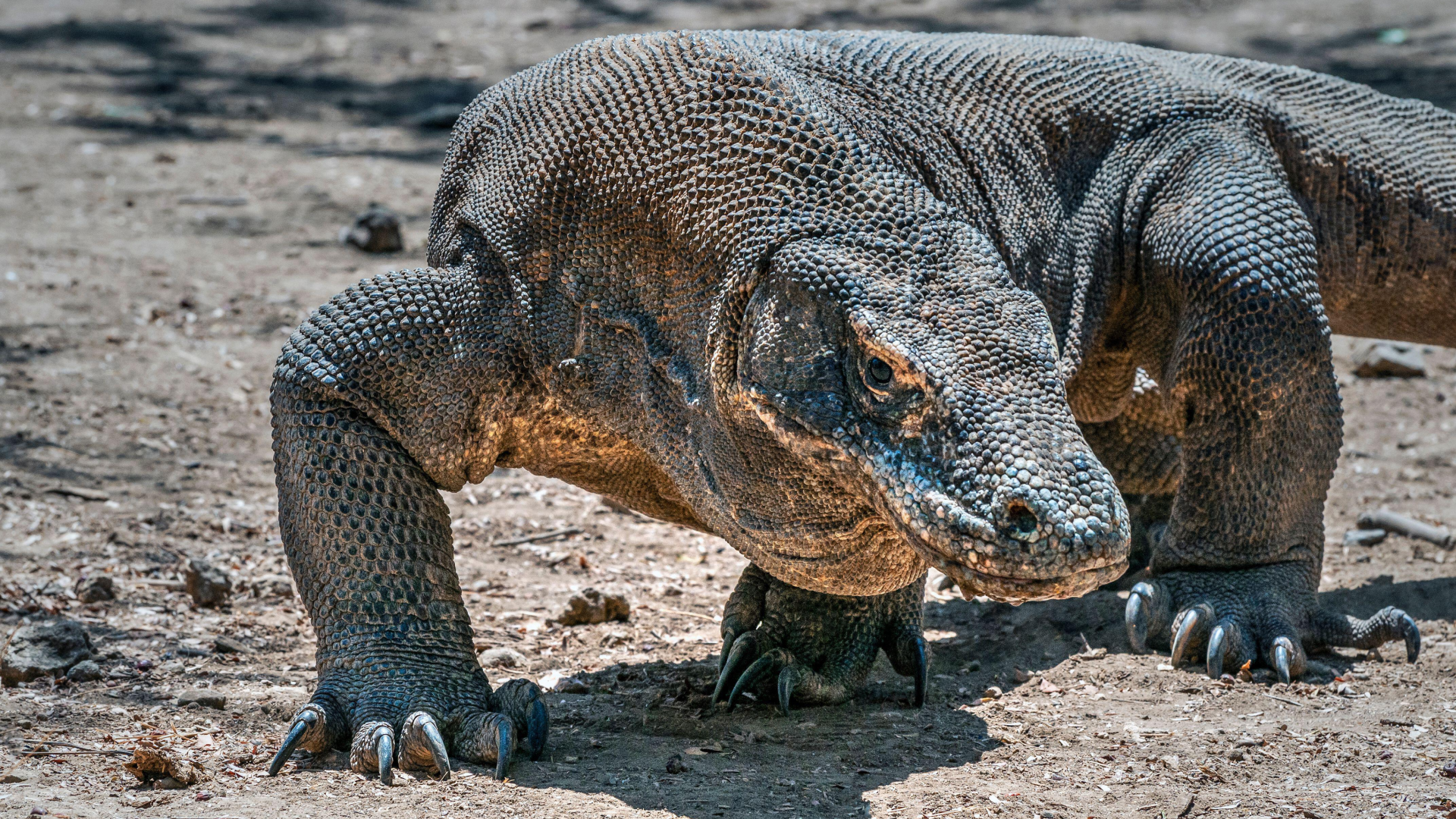
The researchers looked at fossil bones of Stegodon florensis insularis, an extinct dwarf species of elephant relative discovered at Liang Bua cave, where bones from H. floresiensis and stone tools have also been found, to determine whether the cut marks were from hunting Stegodon meat or from scavenging the remains of the feasts of the only other carnivore on the island: the Komodo dragons (Varanus komodensis).
To distinguish the hobbit cut marks from Komodo dragon tooth marks, the researchers first conducted an experiment, feeding a goat carcass to a captive Komodo dragon at Zoo Atlanta. Then, they recovered the goat skeleton and painstakingly documented all of the marks, pits, notches and furrows the Komodo dragon's teeth made in the bones. The tooth marks were concentrated in areas with substantial amounts of goat flesh, the researchers wrote in the study, suggesting the Komodo dragon had a preference for meaty areas.
An extinct species of dwarf elephant called Stegodon florensis insularis inhabited the Indonesian island of Flores. (Image credit: Alamy)
The researchers then investigated the ancient Stegodon bones for evidence of cut marks made by H. floresiensis' stone tools and tooth marks from Komodo dragons. They found 54 cut marks on the Stegodon bones and nearly twice as many Komodo dragon tooth marks. More importantly, they discovered that the Komodo dragon marks were focused on meaty areas, while the human cut marks were made primarily in areas without a lot of meat, suggesting H. floresiensis did not hunt and kill the Stegodon.
The overall patterns of cut marks and tooth marks suggest "a combination of mostly primary access by Komodo dragons and secondary access by H. floresiensis where both predators consumed Stegodon," the researchers wrote. And the hobbits likely ate this meat raw, according to the researchers, as they found no evidence on the Stegodon bones that they had been cooked. Nor did they find any evidence of burning on over 4,000 mouse bones from the site, suggesting the previous evidence of charring was actually natural manganese staining.
A lack of hunting and fire-making technology suggests that the hobbits were not as behaviorally sophisticated as previously thought and raises questions about their ancestry, the researchers said.
The Komodo dragon (Varanus komodoensis) lived on the island of Flores and was the only other carnivore along with Homo floresiensis. (Image credit: Alamy)
It's possible that the ancestor of H. floresiensis branched from the Homo genus before humans accomplished the control of fire and hunting, study first author E. Grace Veatch, a paleoanthropologist at the University of Tübingen in Germany, told Live Science in an email.
One hypothesis for the origin of the hobbits is island dwarfism, which occurs when a large species' average body size evolves to be smaller over generations due to the limited availability of natural resources. Another theory is that hobbits descended from an earlier Homo species that was already small-bodied.
"I think our study highlights the importance of considering behavior in these debates," Veatch said. "Our study suggests that H. floresiensis evolved from a hominin population that did not require these dietary strategies [of hunting and cooking], such as a form of early Homo."
But the new study has not entirely settled the debate about the hobbits' ancestry, because very little is known about the behavior of early hominins in Southeast Asia, such as Homo erectus on Java and other areas of Sunda or Sundaland, a landmass between the South China Sea and the Indian Ocean that has been exposed off and on over the past 2.6 million years.
If H. floresiensis really did branch off from H. erectus, that would suggest many evolutionary changes occurred.
"Taking place on an island that was cut off from contact with the Sunda mainland, this evolution from Homo erectus to Homo floresiensis may have involved not just profound anatomical transformations, such as reduced body size and brain volume, but also behavioural adaptations," Adam Brumm, an archaeologist at Griffith University in Australia who was not involved in the study, told Live Science in an email.
"Flores was clearly a wild card in the story of early human evolution, the sort of place where almost anything could have happened — including, potentially, the loss of deeply-rooted hominin behaviours, such as hunting and fire use," Brumm added.
Where H. floresiensis fits in with the rest of the Homo genus is still an open question, Veatch said. "Importantly, this study highlights the contribution of taphonomy [the study of what happens to organic remains after death] to speak to these larger questions about ancestry."
What do you know about early humans? Test your knowledge with our human origins quiz!
The enigmatic Scythians, a diverse group of nomadic tribes known for their ferocity in battle, were organized around elite dynasties of powerful men and women over 2,500 years ago, a new DNA study finds. The results reveal that social inequality arose in these nomadic groups around 900 B.C., during the Iron Age.
Most of what archaeologists know about the Scythians comes from ancient Greek and Roman accounts of the accomplished equestrians and from their large, mound-shaped tombs, called kurgans, that dot the Eurasian steppe grassland. The Scythians' tattooed mummies and intricate, animal-themed jewelry were as well-known in ancient times as their women warriors, who may have inspired the myth of the Amazons. But the Scythians left no written records of their own and were likely absorbed by other cultural groups after suffering several military defeats around 200 B.C.
In a study published Friday (July 3) in the journal Science Advances, researchers sequenced DNA from 85 Iron Age Scythians to better understand how these geographically spread-out groups were related and how their society was politically structured. They discovered that elite family dynasties ruled the nomadic groups from centralized locations, revealing the origin of social inequality among the Scythians.
The researchers generated genomes from the skeletons of 38 elite and 47 non-elite people buried in kurgan tombs across 20 archaeological sites between 900 and 200 B.C. The non-elite tombs were smaller than the elite tombs, and they lacked the impressive weapons and gold artifacts of the elite tombs.
Based on DNA, the researchers discovered that elite people were 11 times more likely to be related to each other than they were to be related to non-elite people, suggesting there was a powerful extended family group that ruled the steppe nomads.
Among the elite, they discovered two pairs of biological brothers, a brother and a sister, and a parent and child. In one case, the two brothers were buried at different sites some distance apart. They also found two elite grandfathers and grandsons buried in different cemeteries. But the elite people were still buried closer together than the non-elite people were.
One of the tombs, called a kurgan, prior to excavation. (Image credit: Rinat Zhumatayev)
"It is possible that this indicates some degree of geographic centralization of the elite burials being on average closer to each other," study co-author Ainash Childebayeva, a genetic anthropologist at the University of Texas at Austin, told Live Science in an email. "For example, in Siberia there is an area known as the 'Valley of the Kings' that contains many large mounds that are likely elite of the similar time period as in our study."
The researchers also investigated the historical claim by Greek authors such as Herodotus that women held high-status positions.
"An important observation from our study was the noticeable presence of elite women," study first author Ayshin Ghalichi, an archaeogeneticist at the Max Planck Institute for Evolutionary Anthropology in Germany, said in a statement. "Nearly half of the elite individuals in our dataset were female, indicating that women held high social status within Iron Age Scythian society."
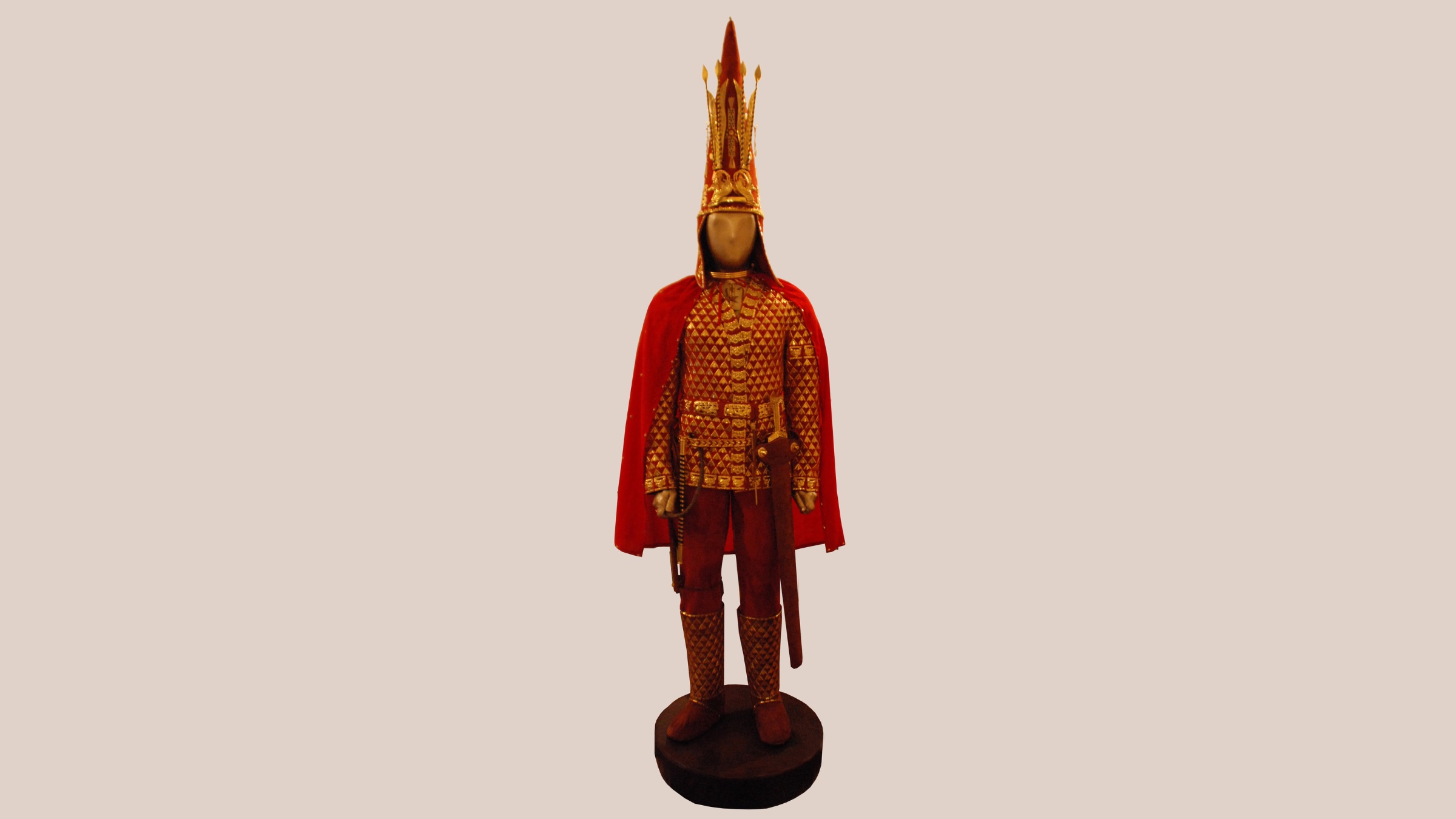
DNA evidence also solved a long-standing question about the "Golden Man." This skeleton of a teenager, discovered in 1969 in a kurgan in Kazakhstan, was found with more than 4,000 gold ornaments and a silver bowl with an inscription that has never been deciphered. Although the skeleton's sex could not be determined based on the bones, experts assumed the person was a powerful male warrior, even though women held nearly equal power among the Scythians.
"Although the data we were able to generate is low coverage, we found that the individual was a lot more likely to be genetically male than female," Childebayeva said, but "we did not identify any relatedness for the Golden Man."
The young age of the Golden Man – 17 based on his bones – and his elite burial status together provide clear evidence of elite dynastic rule, Childebayeva noted. An additional example that is "even more striking" comes from the pairing of a grandfather and his 1-year-old grandson, both buried in elite kurgans, Childebayeva said. These burials of elite children reinforce the conclusion that Iron Age steppe nomads inherited their social status.
"The results presented here further our understanding of the rise of social inequality and differentiation among ancient Eurasian nomadic groups and highlight the practices of the earliest nomadic groups of Central Eurasia in the first millennium BCE," the researchers wrote in the study.
Two brothers from the wealthy and powerful Medici family died of malaria and were not poisoned as a rumor had suggested, archaeologists have confirmed based on a DNA analysis of the brothers' skeletons. The analysis also revealed a unique, mutated strain of malaria that may hold the key to understanding the evolution of the disease in Europe.
The Medici family rose to power in the 15th century by creating the largest bank in Europe. The family used their extraordinary wealth to fund Renaissance artists and to start a political dynasty that eventually included numerous dukes, four popes and two queens of France.
In the 16th century, Cosimo I took over all of Tuscany as grand duke. But within a span of 25 years, at least five of his family members died from high fevers. This gave rise to a rumor that some of them had been poisoned with arsenic by another family member, although most people believed they died of malaria.
To get to the bottom of the 500-year-old Medici cold case, an international group of researchers tested the bones of two of Cosimo I's sons: Cardinal Giovanni de' Medici and Grand Duke Francesco I de' Medici, for the DNA of Plasmodium falciparum, the parasite that causes the deadliest form of malaria and that is transmitted by mosquitoes.
The researchers extracted ancient DNA from the bones of Cardinal Giovanni, who died in 1562 at age 19 in the same month as his mother and younger brother Garzia, and from Grand Duke Francesco I, who died at age 46 in 1587 along with his wife. The team's study was published online June 17 in the journal iScience.
Because of the almost simultaneous deaths of Grand Duke Francesco I and his wife, a rumor circulated that another brother had poisoned them over a long-standing feud. But the Medicis were known to have frequented their family villas in marshy and swampy areas of Tuscany, where malaria was prevalent well into the 20th century.
Researchers found evidence of P. falciparum in the bones of both Medici brothers, confirming reports from court physicians at the time that described the brothers as sick with "tertian fever," a type of high fever that returns every three days and is a hallmark of malaria. The medical reports also revealed the brothers were treated with bloodletting.
The name plate from the tomb of Grand Duke Francesco de' Medici, who died of malaria in 1587. (Image credit: Courtesy the University of Pisa)
"Now we can say with scientific certainty that malaria, not poisoning, killed Grand Duke Francesco de Medici," study co-author Valentina Giuffra, a medical historian at the University of Pisa, said in a statement.
But the ancient-DNA study held two additional surprises.
The Grand Duke's bones were positive not only for P. falciparum but also for Plasmodium malariae, a different parasite species that also causes malaria in humans, suggesting that both species contributed to the severe illness that killed him and his wife.
Cardinal Giovanni, on the other hand, had only P. falciparum, but the specific strain that infected him was previously unknown. The strain is similar to those found in ancient and early modern Europe, but with two mutations the researchers had never seen before, they wrote in the study.
"The study of ancient DNA offers us an opportunity not only to diagnose malaria in the remains of individuals from the past, but it also offers us a window for understanding the evolution of malaria species, Plasmodium falciparum in this case, which can help scientists better understand how the pathogen adapts over time," study first author Alexander Ochoa, an evolutionary biologist at Yale University, said in the statement.
Further analysis of the brothers' bones is needed to determine the evolutionary relationship between the strains of malaria they carried, the researchers wrote in the study.
What do you know about the bones in your body? Test your knowledge with our human skeleton quiz.

 Login