❌

Normal view

NASA’s Roman Telescope to Carry 1.35 Million Names to Deep Space

31 July 2026 at 15:11
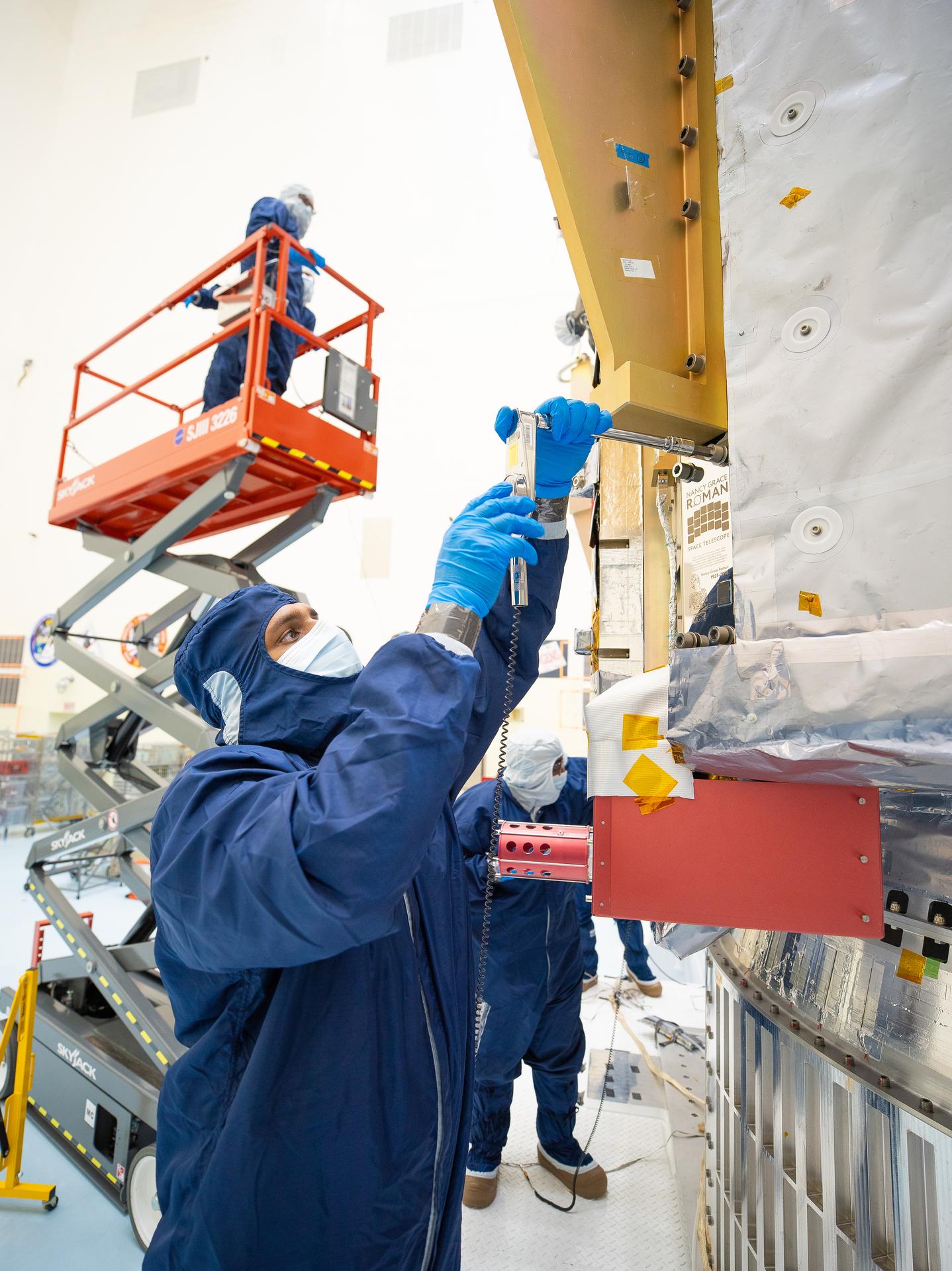
People in blue protective suits and a red cherry picker work in an industrial high bay.

On July 27, technicians at NASA’s Kennedy Space Center in Florida installed a memory card containing 1,350,144 names as part of a commemorative plaque on the Nancy Grace Roman Space Telescope. The names were submitted by people globally, including astronauts from Artemis II and Artemis III. The memory card will travel with the Roman observatory to the Sun-Earth Lagrange point 2, or L2, about one million miles from Earth, where the Sun’s and Earth’s gravity balance out.

Roman is named after Dr. Nancy Grace Roman, NASA’s first chief astronomer and one of the architects of the agency’s modern science program. Roman championed space-based observatories that could study the universe from above Earth’s hazy atmosphere while making their data broadly available to the scientific community.

NASA and SpaceX are targeting launch for no earlier than 7:26 a.m. EDT Sunday, Aug. 30 aboard a SpaceX Falcon Heavy from Launch Complex 39A at Kennedy.

To learn more about the Roman mission, visit:

https://www.nasa.gov/roman

Image credit: NASA/Jolearra Tshiteya

NASA Rescue Mission Spirals Into Crisis

29 July 2026 at 15:13

Last month, NASA announced that it was launching an unprecedented and risky mission to rescue its aging Swift observatory.

The telescope, which has spent over two decades in orbit studying the most powerful explosions in the universe, has seen its orbit decay over time. With the help of a specialized space tug developed by contractor Katalyst Space Technologies, the space agency was hoping to give Swift a much-needed push to a more stable orbit, prolonging its life.

But as it turns out, it’s not the observatory that ended up needing help. After launching its robotic spacecraft, dubbed LINK, on July 3, Katalyst Space watched in horror as it started tumbling out of control following a series of unfortunate events.

According to a new update, NASA admitted that the “spacecraft experienced issues with attitude control, causing the spacecraft to spin and resulting in sporadic communications.”

“Preliminary investigation shows that two of LINK’s three reaction wheels currently are not operable, and there is some loss of functionality in its cold gas thruster system,” the agency noted. Reaction wheels are motor-driven flywheels used by spacecraft for attitude control.

At least there’s a silver lining. LINK’s other subsystems are still functional, allowing the ground team to communicate with the spacecraft.

And not all is lost just yet. The Katalyst team is hoping to stop LINK from spinning before reevaluating how to go forward with the rescue mission, if at all.

But considering that a rapidly spinning spacecraft is the very last thing the Swift observatory needs in its vicinity, it’s clearly not the result the agency was hoping for.

And time is rapidly running out. Without a boost, the telescope is destined to burn up in the Earth’s atmosphere in the upcoming months.

While it has long outlived its originally intended lifetime at almost 22 years old, it’s currently the only orbital telescope that can detect gamma ray bursts, the most powerful explosions in the universe.

Fortunately, the space agency didn’t have to dig too deep into its own pockets. Its Katalyst contract was $30 million, which in the grand scheme of things is a drop in the bucket when considering the untold billions NASA is spending to return astronauts to the Moon.

Even before LINK launched and started spinning out of control, agency officials were content with NASA’s willingness to give it a shot.

“From a programmatics standpoint, I consider this a success already, just from the fact that we’re even going to try this,” NASA astrophysics director Shawn Domagal-Goldman told Ars Technica last month.

More on the mission: NASA Prepping to Launch Extremely Risky Rescue Mission

The post NASA Rescue Mission Spirals Into Crisis appeared first on Futurism.

Researchers May Have Solved a Two-Thousand-Year-Old Stellar Mystery Recorded by Ancient Astronomers

29 July 2026 at 15:13

For more than two millennia, astronomers have puzzled over a stellar mystery recorded by some of history’s greatest skywatchers. Hipparchus, Ptolemy, and the Persian astronomer al-Sufi—all separated by more than 1,000 years—each described Theta Eridani as one of the brightest stars in the night sky. Yet today, the previously celebrated star barely ranks among the more noticeable stars visible to the naked eye.

A new astronomical study published on arXiv suggests that those ancient observers may have unknowingly recorded an extraordinarily rare stellar event. The star system remained dramatically brighter than normal for roughly a millennium before fading back to its present appearance sometime between the 10th and 16th centuries.

If confirmed, the finding would be among the longest-lived stellar transients ever proposed, fusing modern astrophysics with historical astronomy to reconstruct an event spanning centuries rather than days or months.

The study combines historical star catalogs with state-of-the-art observations from the European Southern Observatory’s Very Large Telescope Interferometer (VLTI), high-definition spectroscopy, and NASA’s Transiting Exoplanet Survey Satellite (TESS).

Together, those observations allowed the researchers to reconstruct the architecture and evolutionary state of the Theta Eridani system and to propose a physical mechanism that could explain its mysterious ancient brilliance.

“The remarkable combination of orbital and stellar parameters hints that the historical brightening of Theta Eridani was due to a millenary transient phase,” researchers write. “This strengthens the case that the apparent brightening was real and not due to an error by three different ancient observers, as has been commonly claimed in the past.”

Today, Theta Eridani, also known by its traditional name Acamar, shines at approximately magnitude 2.9, making it a respectable but hardly spectacular star marking the end of the constellation Eridanus. Yet ancient records tell a very different story.

Hipparchus described it as an exceptionally bright star around 129 BC. Roughly 250 years later, Ptolemy ranked it among only fifteen first-magnitude stars in the Almagest, effectively placing it among the thirteen brightest stars visible in the night sky.

More than 800 years afterward, the Persian astronomer al-Sufi independently retained that same first-magnitude classification while revising the brightness estimates of many other stars toward values that closely match modern observations.

The sharp contrast between the historical accounts and Theta Eridani’s modest appearance today has made the star one of astronomy’s most enduring and compelling mysteries.

Researchers examined long-standing alternative explanations, including simple observational mistakes, copyist errors in ancient manuscripts, confusion with the much brighter star Achernar farther south, and even errors caused by atmospheric extinction near the horizon. One by one, they argue the evidence weighs against those explanations.

Theta Eridani would not even have been visible to the Greek and Arab astronomers because of Earth’s changing orientation over time. Likewise, statistical analyses of nearly 1,000 stars contained in the Almagest show that Theta Eridani represents the single largest discrepancy between ancient and modern brightness estimates, rather than part of a wider systematic mistake.

The historical trail eventually changes around the dawn of the Age of Exploration. By the late 1500s and early 1600s, after European navigators began mapping the southern skies, star catalogs consistently described Theta Eridani as only a third-magnitude star—essentially the same brightness observed today.

That suggests the bright phase had already ended.

To investigate whether Theta Eridani itself could plausibly have undergone such a transformation, the team turned to modern astronomical observations.

Rather than a single star, Theta Eridani consists of three stars. The primary component itself is a remarkably tight binary whose two stars orbit one another every 4.1077 days at a separation of just 0.083 astronomical units—roughly one-fifth the distance between Mercury and the Sun.

Using interferometric measurements from the VLTI, together with spectroscopy and precision photometry from TESS, the researchers determined that the two stars each contain just over twice the Sun’s mass and have swollen to approximately 4.3 and 4.0 solar radii.

Those enlarged sizes are significant because both stars have expanded to nearly 80 percent of the volume where gravity from one star begins pulling material toward the other, a region around a star in a binary system known as the Roche lobes. The close gravitational interaction also produces measurable ellipsoidal distortions that TESS detects as subtle, rhythmic brightness variations every orbit.

Researchers’ evolutionary modeling further revealed that the primary star occupies an unusually brief stage within stellar evolution, having only recently exhausted hydrogen in its core and begun transitioning into a subgiant. That evolutionary timing may be critical.

According to the researchers, Theta Eridani may once have possessed a much more elongated orbit. As the primary expanded, it could have begun overflowing its Roche lobe during each close approach, transferring material toward its companion and possibly generating an extended common envelope surrounding both stars.

Unlike the violent stellar explosions astronomers typically classify as transients, this proposed event would have evolved extraordinarily slowly. Instead of lasting weeks or years, the researchers suggest the envelope may have persisted for roughly a thousand years while gradually extracting orbital energy from the binary.

Because the surrounding envelope would have remained optically thick, it could have radiated from an area far larger than either star individually, making the entire system appear nearly ten times brighter than it does today.

Researchers’ calculations suggest that such an envelope could have reached roughly 20 times the Sun’s radius while needing only a tiny amount of encircling material, because that material would be continually replenished and slowly ejected over hundreds of thousands of orbits.

Importantly, researchers stress that this is still a proposed physical explanation rather than a demonstrated one. Modeling the detailed hydrodynamics of eccentric mass transfer and long-lived common envelopes remains beyond the scope of the current work.

Nevertheless, they argue that the unusual combination of orbital geometry, stellar evolution, and historical observations makes the scenario physically plausible.

The study of Theta Eridani also raises wider implications for time-based astronomy.

Modern astronomical surveys are exceptionally good at finding dramatic events that unfold over minutes, days, or years. A stellar brightening lasting centuries, or even a millennium, would be almost impossible to recognize within a human lifetime. Researchers suggest there may be other long-duration stellar transients hidden among ordinary-looking stars whose histories have been forgotten.

If their interpretation proves correct, some of humanity’s earliest astronomers may have unknowingly documented one of the most unusual stellar phenomena ever proposed—not an exploding star, but a binary system trapped in an exceptionally slow evolutionary episode which lit up the night sky for generations before quietly receding into obscurity.

“Although modern photometric surveys have had an observational coverage of a few years to a few decades rather than two millennia like Theta Eridani, they are sensitive to objects up to 14 magnitudes fainter than the naked eye limit,” researchers write. “Therefore, there could be unexplored or unexplained Theta Eridani-like transients that either brightened or faded in current data.”

The team’s new study, The Forgotten Bright Star: Theta Eridani as a Millenary Stellar Transient Observed by Hipparchus, Ptolemy and al-Sufi, is currently available on the arXiv.org preprint server.

Tim McMillan is a retired law enforcement executive, investigative reporter and co-founder of The Debrief. His writing typically focuses on defense, national security, the Intelligence Community and topics related to psychology. You can follow Tim on Twitter: @LtTimMcMillan.  Tim can be reached by email: tim@thedebrief.org or through encrypted email: LtTimMcMillan@protonmail.com 

NASA’s Swift Sees ‘Wandering’ Mega Black Hole Shredding Star

27 July 2026 at 17:06
An artist's concept of a tidal disruption event
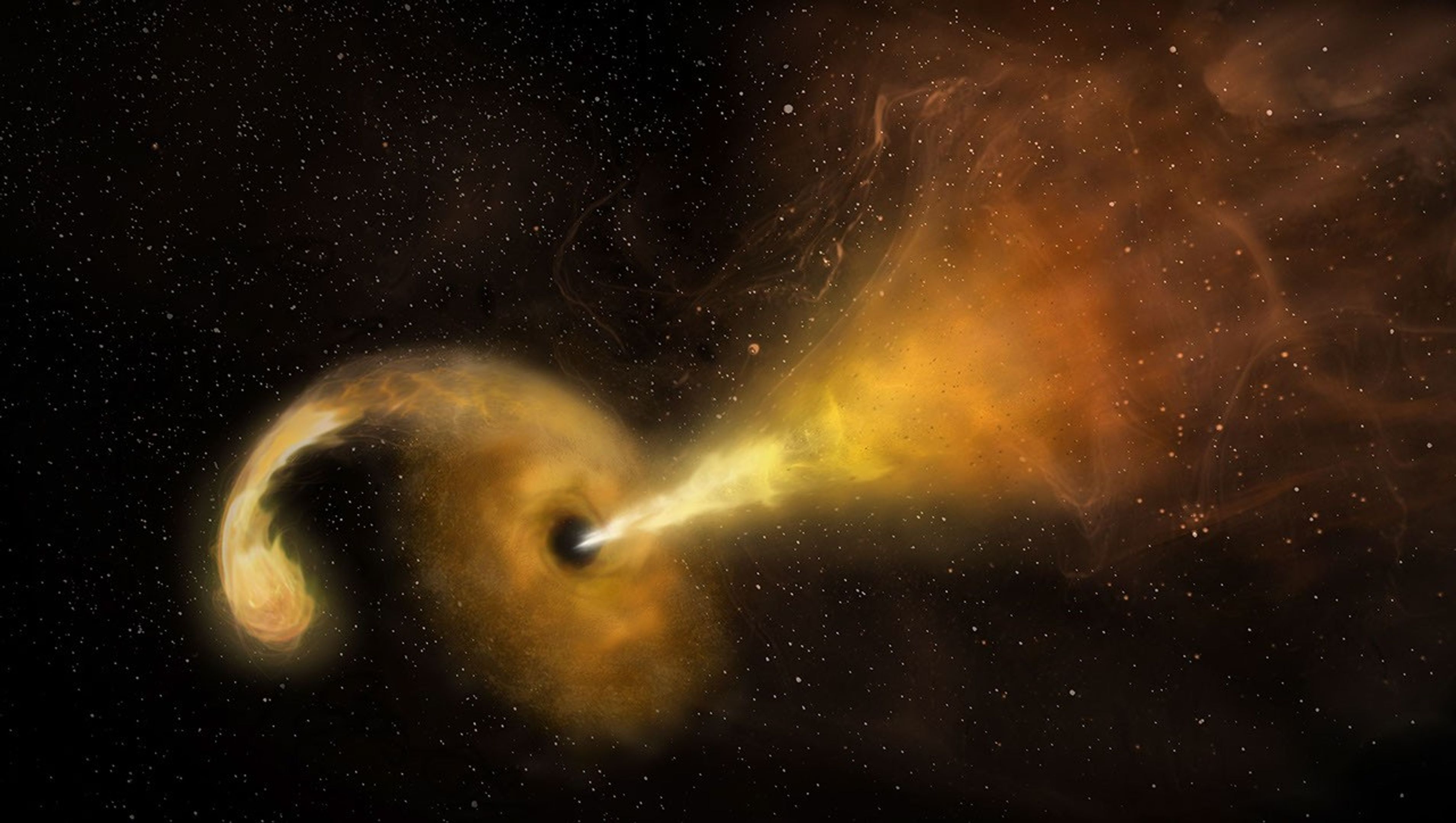
This artist’s concept depicts a tidal disruption event, which occurs when a star passes fatally close to a supermassive black hole. Crumbs of the splintering star heat up as they swirl around the black hole, creating a glow astronomers can see from far across the cosmos, and the black hole launches a relativistic jet into space.
NRAO/AUI/NSF/NASA

NASA’s Neil Gehrels Swift Observatory captured an “orphan” black hole lighting up as it devoured a star on the outskirts of a faraway galaxy. These phenomena are rare to begin with, and none had ever before been seen so far outside of a galaxy’s core.

“We were looking for these star-shredding events as a way to find otherwise invisible supermassive black holes wandering away from the galactic cores where they usually reside,” said Robert Stein, a research fellow at The University of Maryland, College Park and NASA’s Goddard Space Flight Center in Greenbelt, Maryland. “With this discovery, which is one of just a couple that have been confirmed so far, we’ve validated a new technique and can use it to hunt for more.”

A paper describing the results, led by Stein, was published Monday in The Astrophysical Journal Letters.

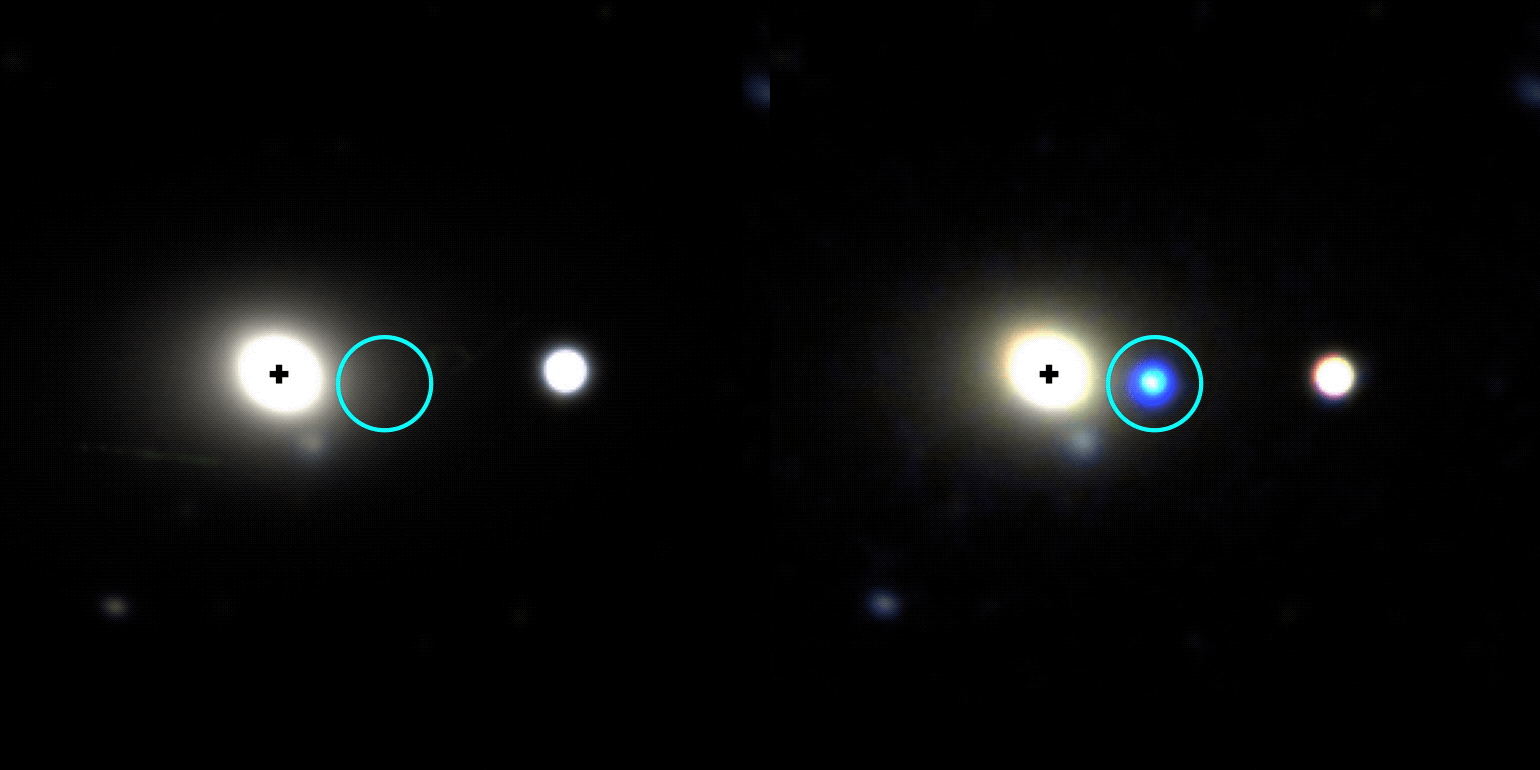
Researchers saw an ultrabright flare unleashed by a star being torn apart by extreme gravitational forces after drifting too close to a monster black hole — a phenomenon called a tidal disruption event. The black hole behind the blast weighs in at about a million times the Sun’s mass. Its existence was first flagged in November 2025 as an unusual brightening in a galaxy about 750 million light-years away by ZTF (Zwicky Transient Facility), a survey conducted by the Palomar Observatory in Southern California.

“Out of the half million flashes ZTF detects each night, our new artificial intelligence algorithm automatically recognized a flare that looked a lot like a tidal disruption event, despite its unusual location in the outskirts of a galaxy,” Stein said. For a few months, the tidal disruption event outshone its entire host galaxy in ultraviolet wavelengths, temporarily radiating with the light of about 10 billion suns.

Animated observation showing the appearance of a blue orb
This gif shows the galaxy WISEA J014656.04-152214.7, located about 750 million light-years away in the constellation Cetus, before and after a tidal disruption event was spotted on its outer edge in November 2025. The image at left was taken by the DESI (Dark Energy Spectroscopic Instrument) Legacy Survey and the one at right is from the Lowell Discovery Telescope.
Lowell Discovery Telescope/Legacy Survey/Robert Stein

Other telescopes, including the SOAR (Southern Astrophysical Research) telescope in Chile, followed up on the ZTF source to look at the event’s spectrum, which revealed features supporting that it was likely a tidal disruption event. Astronomers then used NASA’s Swift to look at wavelengths they can’t detect with ground-based telescopes to uncover new information. For example, Swift’s UVOT (Ultraviolet/Optical Telescope) took the blip’s temperature and found that it had quite a fever at about 54,000 degrees Fahrenheit (30,000 degrees Celsius).

“The combination of all this data helped us rule out other explanations and confidently say it’s a tidal disruption event, despite its strange location,” said Jonathan Carney, a doctoral student at the University of North Carolina at Chapel Hill, who took the first spectra that supported the flare’s interpretation as a tidal disruption event.

Hidden heavyweights

Nearly every galaxy in the universe is anchored by a supermassive black hole sitting right in the center. About once every 100,000 years, a star will drift too close to this invisible heavyweight and trigger a tidal disruption event.

While they’re rather rare in any given galaxy, scientists scour millions of galaxies for them. Each year, astronomical surveys typically spot about 30 tidal disruption events occurring somewhere in the universe.

Prior to 2024, they’d only been seen in galaxy cores. That’s partly because astronomers mainly looked for them there; after all, it’s where all the known supermassive black holes were, and you can’t get a tidal disruption event without one (the gravitational pull of lighter black holes isn’t strong enough).

Then scientists saw the telltale signs of a star being shredded 2,600 light-years from the center of its host galaxy. That inspired more astronomers to look beyond galaxy cores for similar events, and now a team has identified one more than 30,000 light-years away from a galaxy’s center.

This video visualizes a star approaching a supermassive black hole so closely that it’s stretched to a breaking point by the black hole’s strong gravity. Intense tidal forces crack the star open and hurl its gaseous guts outward. Stellar debris forms a spinning accretion disk as it continues to spiral into the black hole.
NASA, ESA, STScI, Ralf Crawford (STScI)

Oddball origin story

So how did the newfound black hole become so off-kilter?

“It must have originated in a galaxy’s center, but not the one it’s in the outskirts of now,” Stein said. “We think the host galaxy’s supermassive black hole is still at its core, but the one eating the star could have started off in a small galaxy that merged with the big one we see today.”

The researchers have outlined two possibilities. Three or more galaxies may have merged together, and the gravitational tug-of-war between their central supermassive black holes may have flung the lightest black hole out to the galaxy’s edge.

Or a dwarf galaxy could be midway through a merger. As the dwarf’s stars fell into the larger galaxy, one may have passed too close to the dwarf’s supermassive black hole.

“Further discoveries could reveal the origin of this apparent ‘orphan’ black hole,” Stein said. “The key science question we want to answer is: How common are wandering black holes?”

The answer may soon be within reach. “Pointed science observations with Swift’s UVOT and XRT (X-Ray Telescope) instruments are temporarily suspended as the mission awaits an orbit boost, which is planned for this summer,” said co-author S. Bradley Cenko, Swift’s principal investigator at NASA Goddard. The spacecraft, whose primary mission ran from 2004 to 2006, is slowly sinking toward Earth due to atmospheric drag after more than 20 years of observations of the changing universe. Nudging it to a higher orbit could extend its lifetime even longer. “Once it resumes normal operations, Swift could continue searching for more examples of out-of-place black holes.”

In the coming years, scientists will use the new technique to search for disintegrating stars in observations from the newly operational Vera C. Rubin Observatory, jointly funded by the U.S. Department of Energy and National Science Foundation, in Chile and NASA’s upcoming Nancy Grace Roman Space Telescope.

“Rubin’s wide, deep surveys will reveal a much larger sample of tidal disruption events than current observatories are capable of collecting, including ones that are off-center,” Carney said. “And Roman’s space-based surveys will extend the current search zone by seeing ones that are farther away, looking back through 9 billion years of cosmic history.” Adding their observations to Swift’s and those from ground-based observatories will bring astronomers closer than ever before to completing a census of the universe’s behemoth black holes.

To learn more about the Swift mission, visit:

https://nasa.gov/swift

By Ashley Balzer
NASA’s Goddard Space Flight Center, Greenbelt, Md.

Media contact:

Claire Andreoli
NASA’s Goddard Space Flight Center, Greenbelt, Md.
301-286-1940

NASA’s Hubble Shows Star Formation in Andromeda Galaxy Winding Down

27 July 2026 at 15:00
6 Min Read

NASA’s Hubble Shows Star Formation in Andromeda Galaxy Winding Down

The left half of the disk of the Andromeda galaxy, with a jagged outer edge at the top and bottom on a black background. At right, the galaxy’s center is a horizontal yellow oval extending across about a third of the image. Two crescent shaped clumpy, dark dust lanes with abundant stars throughout extend out from the center. The galaxy becomes bluer as you move outward. At top middle, the satellite galaxy M32 appears as a small, fuzzy yellow oval. Within the disk of Andromeda, two regions at upper right and lower middle are outlined in small white boxes labeled 1 and 2, respectively. At the left side of the image, those two regions are enlarged in pullouts. Both contain a dense, grainy-appearing field of thousands of stars. Region 1 is noticeably bluer than region 2 and contains blue star-forming clumps.
NASA Hubble’s view of part of the Andromeda galaxy.
Credits:
Image: NASA, ESA, Benjamin Williams (UWashington), Zhuo Chen (UWashington), L. Clifton Johnson (Northwestern); Image Processing: Joseph DePasquale (STScI)

A new study using data from NASA’s Hubble Space Telescope finds that star formation in the nearby Andromeda galaxy has undergone a 500-million-year decline, with an even steeper drop in the last 40 million years. Andromeda, a spiral galaxy comparable in size to our Milky Way, is close enough to be seen with the unaided eye from areas with dark skies. Located about 2.5 million light-years from Earth, practically our cosmic backyard, Andromeda offers an opportunity for astronomers to examine its stellar populations in detail, leading to better understanding of the past of galaxies like our own.

The results published Monday in The Astrophysical Journal.

To reach this conclusion, the researchers combined data from two Hubble surveys: the Panchromatic Hubble Andromeda Treasury and the Panchromatic Hubble Andromeda Southern Treasury. Together, these two surveys mapped two-thirds of the disk of Andromeda in ultra-sharp detail. In total, the team measured about 200 million individual stars across the galaxy, giving them a detailed picture of Andromeda’s past activity.

“We need to measure the individual stars because they are the fossil record of the galaxy’s formation. Hubble is the only telescope that can give you high enough spatial resolution over a large enough area to be able to do that in Andromeda,” said Ben Williams, astronomer at the University of Washington and a co-author on the study.

Massive stars are bluer and short-lived, while less massive stars are redder and longer-lived. As a result, areas that have experienced recent star formation tend to have a larger fraction of blue stars, while areas with less recent star formation typically have a redder population. The team divided the Andromeda images into thousands of squares, spanning 300 light-years on each side of the square, and determined the history of star formation within each parcel to gain a comprehensive view of the galaxy’s past.

NASA’s Hubble Space Telescope has provided a detailed view of millions of stars in the Andromeda galaxy. Regions that have experienced recent star formation (1) appear significantly bluer than regions with less recent star formation (2).
NASA, ESA, Benjamin Williams (UWashington), Zhuo Chen (UWashington), L. Clifton Johnson (Northwestern); Image Processing: Joseph DePasquale (STScI)

Steady decline

Previous research showed the Andromeda galaxy experienced a dramatic burst of star formation about 2 billion years ago, likely due to a past interaction or merger with another galaxy. Since that time, star formation has been steadily declining.

Astronomers measure the rate of star formation in terms of the mass, or amount of gas and dust, converted into stars per year. The researchers calculated that, 500 million years ago, Andromeda formed stars at a rate of about one solar mass per year. However, the formation rate dropped to about half that by 40 million years ago. The current rate has plummeted even farther, to about one-fifth the mass of our Sun per year.

The team also examined whether that decline was consistent across the galaxy or concentrated in certain areas. They found that much of the recent star formation has occurred in a star-forming ring located about 32,000 light-years from the galaxy’s center. As a result, much of the decline they measure is driven by decreasing activity within that ring.

Rather than being the result of reduced material from which new stars can form, the decline is more likely to be a natural winding down from its previous, more active state.

“It’s just like after running a marathon, sometimes you’ve got to take a bit of a breather,” said Tobin Wainer, lead author, University of Washington.

Likely suspect

The team also investigated whether there was any connection between the decrease of activity in Andromeda and its proximity to satellite galaxy M32 (Messier 32). The M32 galaxy is separated from Andromeda by about 16,000 light-years in the plane of the sky; however, its 3D location in space is uncertain. As a result, astronomers are unsure if or when it might have interacted with Andromeda in the past.

“One of the major motivations for this program was to probe potential interactions between M32 and Andromeda’s disk,” said Zhuo Chen, co-author, University of Washington.

Survey data from the Panchromatic Hubble Andromeda Southern Treasury allowed the team to study the history of star formation in Andromeda near M32. They found that this area showed signs of decreased star formation compared with other regions. The timing of this decrease, which this study finds began roughly 60 million years ago, could help constrain when the M32 galaxy interacted with Andromeda’s disk.

“We can’t explicitly say that we are seeing a decrease in star formation because of M32. But it’s right there, and it’s definitely the most likely suspect,” said Wainer.

This movie, created from an analysis of data from NASA’s Hubble Space Telescope, demonstrates how the rate of star formation in the Andromeda galaxy has declined over the past 500 million years. Brighter colors indicate where star formation was highest during a given time.
Visualization: Tobin Wainer (UWashington); Image Processing: Joseph DePasquale (STScI); Video: NASA, ESA, STScI, Gregory Bacon (STScI)

The team plans to continue analyzing the Hubble data and combine it with data from ground-based observatories to gain additional insights into the history of Andromeda.

“There’s a strong scientific value to this archival data. Andromeda is important because it’s a neighbor that is close enough that we can see it in great detail while also getting a global perspective,” said Raja GuhaThakurta, co-author, University of California Santa Cruz.

An even greater global perspective is likely to come from NASA’s Nancy Grace Roman Space Telescope after it launches as early as Sunday, Aug. 30. Roman’s gigantic field of view can cover at least 100 times as much area as Hubble at near-infrared wavelengths in a single observation. A newly approved Roman observing program will image the entirety of Andromeda’s disk and areas of its surrounding halo, allowing astronomers to measure hundreds of millions of stars and enabling groundbreaking new science.

The Hubble Space Telescope has been operating for more than three decades and continues to make ground-breaking discoveries that shape our fundamental understanding of the universe. Hubble is a project of international cooperation between NASA and ESA (European Space Agency). NASA’s Goddard Space Flight Center in Greenbelt, Maryland, manages the telescope and mission operations. Lockheed Martin Space also supports mission operations at Goddard. The Space Telescope Science Institute in Baltimore, which is operated by the Association of Universities for Research in Astronomy, conducts Hubble science operations for NASA.


Related Images & Videos

The left half of the disk of the Andromeda galaxy, with a jagged outer edge at the top and bottom on a black background. At right, the galaxyu2019s center is a horizontal yellow oval extending across about a third of the image. Two crescent shaped clumpy, dark dust lanes with abundant stars throughout extend out from the center. The galaxy becomes bluer as you move outward. At top middle, the satellite galaxy M32 appears as a small, fuzzy yellow oval. Within the disk of Andromeda, two regions at upper right and lower middle are outlined in small white boxes labeled 1 and 2, respectively. At the left side of the image, those two regions are enlarged in pullouts. Both contain a dense, grainy-appearing field of thousands of stars. Region 1 is noticeably bluer than region 2 and contains blue star-forming clumps.

Andromeda Galaxy

NASA’s Hubble Space Telescope has provided a detailed view of millions of stars in the Andromeda galaxy.

On a black background, a pixelated, partial ring of bright pink and purple extends from 8 ou2019clock clockwise to 3 ou2019clock. There is a black gap at the bottom of the ring as well as in the middle. Below the ring, a timeline labeled millions of years ago lists the numbers 500, 200, 100, 50, 25, 0. The numbers 500 and 200 are yellow with a yellow line between them, indicating that the image shows the rate of star formation that was occurring in that timeframe.

Star Formation Rate in Andromeda Over Time

This movie, created from an analysis of data from NASA’s Hubble Space Telescope, demonstrates how the rate of star formation in the Andromeda galaxy has declined over the past 500 million years.


Share

Details

Last Updated
Jul 27, 2026
Editor
Andrea Gianopoulos
Contact
Media

Claire Andreoli
NASA’s Goddard Space Flight Center
Greenbelt, Maryland
claire.andreoli@nasa.gov

Christine Pulliam
Space Telescope Science Institute
Baltimore, Maryland

Astronomers Detect an Atmosphere on a Potentially Earth-Like World

Artist’s Illustration of Exoplanet LHS 1140 BThis discovery marks a major milestone in the search for life on worlds beyond our solar system. A faint stream of helium escaping from a distant rocky world has revealed something astronomers had never clearly detected before: an atmosphere around an Earth-like planet in another star’s habitable zone. The result is the strongest evidence so [...]

Hubble Spies One-Sided Spiral

24 July 2026 at 12:11

3 min read

Hubble Spies One-Sided Spiral

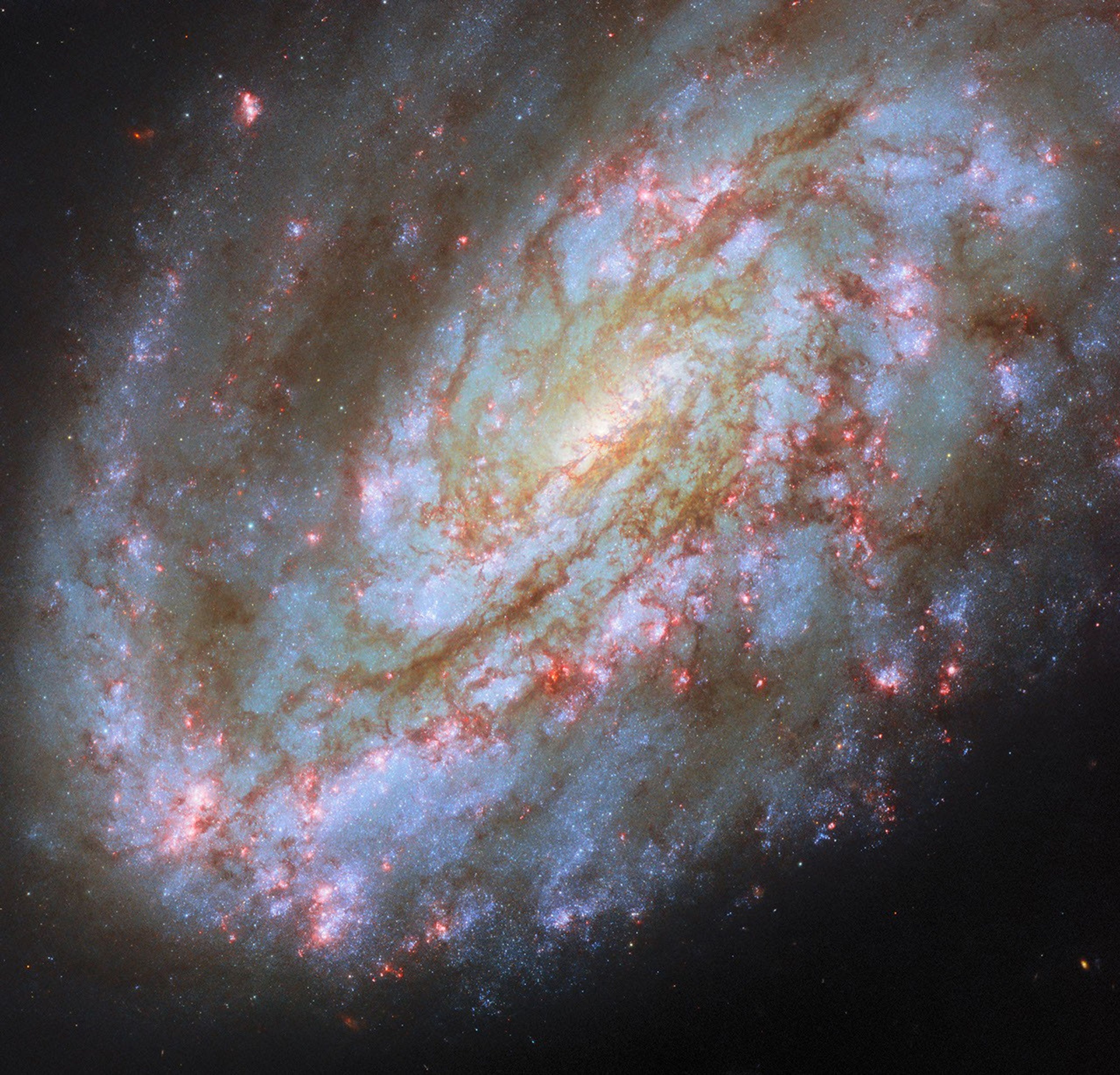
A spiral galaxy. It has a prominent spiral arm on one side (lower left) and a wide, glowing core. Dark brown filaments of dust swirl through its disk, while blue clusters of stars are visible mostly going out to its arm. On the opposite side of the arm (upper right), gas trails off from the disk, beyond the field of view in this image. A matching spiral arm is not visible on this side. The galaxy lies on a dark background.
This NASA/ESA Hubble Space Telescope image features the spiral galaxy NGC 4654, located 72 million light-years away in the constellation Virgo (the Maiden).
NASA, ESA/Hubble, D. Thilker, J. Lee, and the PHANGS-HST Team

The subject of this NASA/ESA Hubble Space Telescope image is a spiral galaxy struggling against titanic forces that appear on galactic scales in space. This is NGC 4654, an intermediate spiral galaxy in the constellation Virgo (the Maiden). It is classified as an “intermediate” because its overall shape lies between spiral galaxies that have a bar across their centers and those that don’t. NGC 4654 has a weak bar structure at its center and is located 72 million light-years from Earth in the Virgo Cluster, a particularly massive and populous galaxy cluster.

NGC 4654 is particularly asymmetric, with a rounded and clearly-defined edge on one side and a long tail of gas stretching out from the opposite side — outside the field of view captured in this image. This gaseous tail is the result of ram pressure stripping, a force that galaxies can experience as they plow through space. NGC 4654 moves with such high velocity that it sweeps up and rams through the hot, rarefied gas filling the space between the Virgo Cluster’s galaxies. This intracluster medium in turn exerts a “ram pressure” on the galaxy, compressing the galaxy’s leading edge and dragging its gas behind the galaxy, creating the elongated tail.

It’s not just the galaxy’s gas that is unevenly distributed: its stars are too, and this is more unusual for a spiral galaxy. While the spiral arm on its leading edge is rich with stars and gas, the opposite arm noticeably lacks stars, influencing the galaxy’s lopsided spiral shape. Astronomers think that ram pressure alone is unlikely to cause this effect. Rather, NGC 4654 was also subjected to the gravitational force of fellow Virgo Cluster galaxy NGC 4639. While the two galaxies are far apart now, it’s thought that a fly-by interaction between them around 500 million years ago ripped away NGC 4654’s gas along one side, limiting star formation there and creating the asymmetry in its shape.

Many galaxies that undergo ram pressure stripping suffer reduced star formation rates as the cold gas that collapses to form their stars is pulled away and lost. NGC 4654, however, is still forming nearly two Suns’ worth of stars every year, a rate comparable to other galaxies of similar size. The active star formation is visible in the latest Hubble data included in this image. The data picks up on a wavelength of red light emitted by the clouds of energized gas where newborn stars lurk. The bright pink bubbles that appear across NGC 4654 — from its forward spiral arm, to around its weak bar, and out to the edge of its disk — are areas where these newborn stars shine.

The data used in this image came from two observing programs (#15654, #17502) that aim to link the gas in galaxies with star formation. By observing many prominent galaxies in the vicinity of our own, researchers hope to better understand how gas moves in galaxies, where and when it collapses to form stars and star clusters, and what effect those new stars have on the gas around them.

Text Credit: ESA/Hubble

Media Contact:

Claire Andreoli
NASA’s Goddard Space Flight Center, Greenbelt, MD
claire.andreoli@nasa.gov

James Webb Telescope Discovers Hidden Giant Planet in Famous Star System

By: NASA
24 July 2026 at 11:44
Beta Pictoris System (Artist’s Concept)Webb found a hidden giant planet by detecting its atmospheric chemistry through a bright debris disk. For years, a third giant planet remained concealed within the bright dust surrounding Beta Pictoris, one of the most closely observed planetary systems in the Milky Way. NASA’s James Webb Space Telescope has now exposed the hidden world by [...]

A Powerful Cosmic Accelerator Has Been Confirmed in the Milky Way

23 July 2026 at 17:11
Extended Gamma Ray Source LHAASO J1912+1014uScientists have identified an accelerator that produces the highest-energy protons in our galaxy, a finding that could clarify the nature of the fast-moving particles filling the space between stars. Across the Milky Way, charged particles race through space with energies beyond the reach of even the most powerful accelerators built on Earth. Known as cosmic [...]

The Sun’s twin star may have tilted the planets’ orbits

23 July 2026 at 12:00

Around 4.6 billion years ago, an immense cloud of gas and dust in space collapsed in on itself. As it collapsed, gravity pulled most of the material toward several small points, one of which would eventually become our Sun. The other points formed other stars in what scientists call an open cluster. 

During this early stage of the Sun’s life, it was surrounded by a swirling disk of leftover material aligned with its equator, known as a protoplanetary disk. Eventually, this disk condensed to form the planets that make up our solar system. This process normally results in a system with a star at its center, and the planets orbiting the plane of the star’s equator. 

However, scientists have found that this scenario doesn’t quite hold for our solar system. The planets in our solar system orbit the Sun in a single plane offset from the Sun’s equator by approximately 6°. The fact that the planets are in the same orbital plane suggests that the protoplanetary disk model of solar system formation is correct, since the odds of the Sun capturing 8 rogue planets in this arrangement are astronomically low. So, what threw the planets in our solar system off-kilter?

The plane in which the solar system’s planets orbit the Sun is offset from the Sun’s equator by approximately 6°. Li simulated how the solar system tilted based on its 4 largest planets, from left to right: Neptune, Saturn, Jupiter, and Uranus.

The plane in which the solar system’s planets orbit the Sun is offset from the Sun’s equator by approximately 6°. Li simulated how the solar system tilted based on its 4 largest planets, from left to right: Neptune, Saturn, Jupiter, and Uranus. Illustration by Andrew Bizal.

To determine what caused the solar system to tilt, Daohai Li at Queen Mary University of London recently used the computer program NBODY6++ to model different versions of the open cluster from which the Sun came. In these simulations, he varied the number of stars in the cluster, from 500 to 2,000 to 8,000. He also varied the radius of the cluster, from 0.25 to 1 to 4 parsecs (8 to 30 to 100 trillion kilometers or 5 to 20 to 70 trillion miles). Finally, he varied the percentage of stars with a binary companion from 10% to 50% to 90%. Li assigned each star a randomly generated initial mass, starting position, and velocity, and simulated their interactions for 400 million years.

First, Li examined the simulations to identify stars with masses approximately equal to the Sun’s. From this group of solar-massed stars, Li found ones that left the cluster after 400 million years as a single star, after either forming alone or having lost a former companion star. He proposed that these stars were the most similar to the Sun and could thus host a simulated solar system.

Li then simulated the planets and their orbits as they would have formed on these potential host stars. To simplify this process, Li only simulated the 4 giant planets, Jupiter, Saturn, Uranus, and Neptune, which dominate planetary behavior in our solar system. He modeled these solar systems independently for 200 million years to ensure they would remain intact and used those that did for statistical analysis of the solar system’s past.

Overall, Li discovered 2 scenarios that could explain the solar system’s tilt. In the first, the primordial solar system was jostled by many distant neighboring stars in its cluster. This jostling tilts the planets’ orbits, but it does so randomly. Therefore, this scenario would make it unlikely for the planets to remain in the same orbital plane. It would also cause them to orbit the Sun faster and more chaotically than in our solar system.

In the second scenario, the Sun had a temporary companion star that it either formed with or briefly encountered before separating. When this occurred, the simulated planets’ orbits all tilted together. Stars that formed with a binary companion had a 10% chance of tilting their planets’ orbits by 6° or more, while stars that formed alone had a less than 0.1% chance. 

Li concluded that the solar system could have tilted as a result of interactions between the Sun and a temporary companion star within its parent cluster. However, he acknowledged that the model strongly depends on how closely a star passes by the Sun, since the closer a star passes, the more it disturbs the solar system. Despite this uncertainty, it’s possible that somewhere in space is the Sun’s twin or former neighbor that we haven’t seen in eons, and that’s what made our solar system crooked!

The post The Sun’s twin star may have tilted the planets’ orbits appeared first on Sciworthy.

New Black Hole Theory Solves a 50-Year-Old Problem

18 July 2026 at 12:39
Growing Black HoleScientists may have found a more realistic set of thermodynamic rules for black holes that never stop changing. Black holes are among the most extreme objects known in the universe. They compress enormous amounts of mass into remarkably small regions, creating gravitational fields so powerful that nothing, not even light, can escape once it crosses [...]

Breakthrough Study Uncovers New Evidence Connecting “Hidden” Dimensions to Mystery of Dark Matter

15 July 2026 at 19:53

New research is revealing possible links between one of the most enduring cosmic mysteries—dark matter—and the existence of a “hidden” fifth dimension.

Dark matter is widely believed to exist according to several leading cosmological theories, although this nonluminous material remains invisible through direct detection. However, its presence can be inferred through the gravitational influence this mysterious form of matter has on the surrounding universe.

Now, according to researchers at the University of Sheffield, one reason dark matter may have remained so elusive involves the possibility that it exists within a “hidden” dimension—a concept that has gained traction in past research.

The Sheffield team’s recent look at this possibility, detailed in a study published in Physical Review D, takes the concept one step further by introducing a new potential framework that could help reveal clues to the behavior of dark matter, as well as why astronomers have had such a hard time detecting it.

A Dark Secret Lurking in a Hidden Dimension?

In their new research, the Sheffield team says that dark matter may be lurking within a hidden dimension accompanied by dark photons, a variety of particles among those which physicists call “hidden sector particles,” and which are believed to represent potential force carriers for dark matter.

Due to the specific geometry present within this hidden dimension, a phenomenon known as dark matter resonance may occur, where dark photons align in specific arrangements.

“Dark matter resonance is already known to be a powerful idea,” according to Yu-Dai Tsai, Ph.D., a Royal Society Dorothy Hodgkin Senior Research Fellow at the University of Sheffield and one of the new paper’s coauthors.

Tsai adds that the concept has “the potential to change our understanding of how dark matter was produced in the early universe and how we search for it today,” although reconciling it with our current understanding of dark matter has presented issues for researchers in the past, which include questions about its specific origins.

“Many previous resonant dark matter models have treated the resonance as an assumption,” Tsai recently said in a statement. “[Our team’s] work gives a possible deeper origin for it: The resonance may come directly from the geometry of hidden dimensions.”

Unlocking Dark Matter Resonance

According to Tsai and his co-author, Taegyu Lee, understanding dark matter resonance more fully could hold significant implications for unlocking new clues about how matter behaved at early stages in our universe, and why that may differ significantly from what astrophysicists see occurring right now.

“This resonance can make dark matter interactions much stronger at crucial epochs in cosmic history,” Tsai says. “Crucially, the model allows for these strong interactions in the past while still explaining why dark matter appears so inert and hard to detect today.”

Although Tsai concedes that the concept of dark matter resonance has been explored in the past, unlike previous studies, the Sheffield duo’s new work suggests that dark matter may essentially be “in tune” with conditions in a hidden fifth dimension already, arising naturally from its innate mathematical structure.

Tsai says this approach toward understanding dark matter, if correct, “would represent a profound advance in humanity’s knowledge of the cosmos and what it is made of.”

A New Approach Toward Unraveling Dark Matter’s Mysteries 

Fundamentally, the team’s findings point to promising new ways physicists may be able to explore the underlying mysteries of both dark matter and the possibility of additional dimensions in which it may operate.

“Our research gives physicists clear new targets in the search for dark matter,” Tsai says, “while connecting two of the biggest ideas in fundamental physics: the mystery of dark matter and the existence of hidden dimensions.”

The recent study, “Naturally resonant dark matter from extra dimensions,” by Yu-Dai Tsai and Taegyu Lee, appeared in Physical Review D on July 8, 2026.

Micah Hanks is the Editor-in-Chief and Co-Founder of The Debrief. A longtime reporter on science, defense, and technology with a focus on space and astronomy, he can be reached at micah@thedebrief.org. Follow him on X @MicahHanks, and at micahhanks.com.

Mathematicians Explain The Universe’s Expansion Without Dark Matter

About 25 years ago, astrophysicists noticed that the universe’s expansion is accelerating. To account for this observation, physicists came up with a new type of energy – called dark energy – which supposedly makes up more than 75% of the universe, and also has negative pressure. In a new paper, mathematicians claim that dark energy isn’t needed to explain that accelerating expansion, and

A Jupiter-size planet that escaped its star's death

11 July 2026 at 13:00

WD 1856 b is the only confirmed case of a planet that survived the death of a Sun-like star. It’s a Jupiter-size world orbiting a white dwarf—the burned-out remnant of a Sun-like star. Now, a team of astronomers has used the James Webb Space Telescope to take a closer look at this planet for the first time, and what they found makes an already strange system even stranger.

A feeding frenzy

WD 1856 b was an accidental discovery. Astronomers pointed the TESS observatory at a sample of roughly 2,000 white dwarfs in 2020. These stars are the remains of a Sun-like star that have already gone through a red-giant phase, leaving behind an Earth-size body that’s primarily composed of elements like carbon and oxygen. The TESS team was searching for small objects like comets or asteroids that might transit across the face of these dead stars.

What they found in the WD 1856 system was a gas giant. “As soon as they looked at it, they said, okay, that’s weird,” said Christopher O’Connor, a theoretical astrophysicist at Cornell University and co-author of the recent Nature study on WD 1856 b.

Read full article

Comments

© NASA, ESA, CSA, R. Crawford

Scientists Test New Spacecraft Thruster That Uses No Fuel, Just Earth’s Magnetic Field, in Orbit

9 July 2026 at 17:48

Satellites perform a delicate dance to maintain their orbit, by locking themselves to a speed just fast enough to counteract the downward pull of gravity.

To stop their orbit from decaying too much, satellites use small in-space thrusters, which broadly speaking, fall into two categories: chemical or electric. The former uses a combustible fuel source that gets accelerated through a nozzle, while the latter uses electrical energy to convert propellant into kinetic energy.

Now, New Zealand space startup Zenno Astronautics says it’s tested an entirely new type of thruster that, unlike either of those conventional technologies, uses superconducting magnets to maintain a satellite’s orbit and orientation. As Space.com reports, the magnets convert solar energy directly into momentum, effectively harnessing the Earth’s magnetic field itself.

“Energy is the one thing that is abundant in space, and you can use it to energize the magnet to create a magnetic acceleration device,” Zenno Astronautics CEO and founder Max Arshavsky told the site. “It gives you acceleration without fuel.”

The company’s “Supertorquer” system, attached to a Mira satellite developed by Impulse Space, was launched into space as part of a SpaceX rideshare mission in November.

“It’s a technology that allows a spacecraft to not tumble violently in space and point in the right direction,” Arshavsky told Space.com.

When the spacecraft needs to move, superconducting coils draw energy from a solar powered battery.

“The unit has multiple superconducting magnets that are positioned in different axes,” Arshavsky added. “When we power up the magnets, they generate a magnetic field, which interacts with Earth’s magnetic field, and because we can control the magnetic field on the satellite, we can control the way in which it turns with respect to Earth.”

During its test last fall, the Supertorquer successfully altered the Mira satellite’s orientation on command, just as designed.

For superconducting magnets to work, they have to be cooled to extremely low temperatures. On Earth, that requires cryogenic liquids, which are ill-suited for a satellite. Even in space, the satellite is warmed up to around 68 degrees Fahrenheit by the Sun’s rays, which meant that Zenno had to get creative.

Using a heat pump, the extensively insulated magnet system expels heat to allow the coils to power up at temperatures as low as 77 kelvin, or -321 degrees Fahrenheit. Zenno claims its cooling system is highly efficient, drawing only up to 48 watts at peak.

The startup has some ambitious plans and is hoping to scale up the system to enable future spacecraft to perform docking maneuvers or even help propel them to the Moon or Mars by exclusively relying on solar power. How feasible those lofty plans will turn out to be remains to be seen, but the startup is optimistic.

Arshavsky even suggested that superconducting magnets could create “umbrellas of magnetic fields” that could “shield people in space” from harmful levels of radiation.

More on satellite thrusters: NASA Fires Up Futuristic Plasma Thruster Designed to Take Us to Mars

The post Scientists Test New Spacecraft Thruster That Uses No Fuel, Just Earth’s Magnetic Field, in Orbit appeared first on Futurism.

How many asteroids can we detect before they hit Earth?

6 July 2026 at 12:00

When you think of an asteroid impact, you’re probably imagining something like the cataclysmic event that nearly wiped out the dinosaurs. In an astonishingly rare event, a rock the size of the island of Manhattan could come hurtling from deep space towards Earth and destroy the world.

On the contrary, asteroids are generally leftover debris from the primordial solar system that didn’t become part of a larger body, like a planet or moon, and they’re not particularly rare. Scientists estimate that there are about 1 billion asteroids and comets classified as near-Earth objects, or NEOs. NEOs are generally much smaller than the asteroid that killed the dinosaurs. They range from weakly held-together piles of rubble 200 meters (700 feet) across, to the minuscule 2024 BX1, approximately 44 centimeters (17 inches) across. 

For several decades, astronomical surveys of the sky have looked for these asteroids. NASA’s Center for Near-Earth Object Studies (CNEOS) Fireball and Bolide Database has records of over 1,000 incidents of objects colliding with our planet since the mid-1990s. Among these is a set of 11 objects that scientists detected before they hit Earth, known as imminent impactors. Finding imminent impactors allows scientists unique opportunities to study the smallest building blocks of the solar system, enabling them to learn more about asteroid composition, structure, and history.

A team of scientists recently conducted a study on how the newly built Vera Rubin Observatory could detect more imminent impactors before they strike Earth. They examined the CNEOS Fireball and Bolide Database impact records spanning February 1, 1994, to January 1, 2026, for records of the asteroids’ coordinates, velocities, and the energy they released at the time of collision. 

They found that 343 NEOs met this criterion, including 5 known imminent impactors. Using these recorded data, they reconstructed the objects’ pre-impact characteristics. The team predicted the asteroids’ orbital paths from the recorded coordinates and velocity. Assuming the objects were spherical, they estimated the size from velocity and impact energy. From this information about the asteroids’ state before impact, the team could then simulate whether the Rubin Observatory would have detected them. 

When small asteroids hit Earth, they mostly burn up in the atmosphere, producing a bright flash that is relatively easy to spot compared to when they are in space. The Rubin Observatory can see objects up to 10 billion times dimmer than the brightest star in the night sky, Sirius. To predict if the Rubin Observatory can detect dim NEOs, the team used the solar system simulator SORCHA. SORCHA takes an observatory’s specifications and the physical properties of the NEOs and uses these to determine whether the observatory could detect them. It also estimates the measured sizes and speeds of the NEOs, and predicts when the observatory would have seen them. 

At the Rubin Observatory, an imminent impactor is considered discovered if it’s observed at least 3 separate times over 15 days before hitting Earth. So this team applied this same criterion to their simulation. They found that of their 343 impactors, SORCHA estimated that the Rubin Observatory would have discovered 14 of them before impact. 

They also found that SORCHA predicted 4 additional impactors that could have been observed at least once, potentially allowing scientists to search other telescope data for evidence of their existence in pre-collision images. Based on these results, the team estimated that the Rubin Observatory could find 4% of all objects longer than 1 meter (3 feet) before they hit Earth. This percentage of discovery translates to 1 to 2 imminent impactors detected every year, at least double their current discovery rate.

The ability to more consistently find imminent impactors would allow researchers to study the smallest pieces of the solar system in detail and to draw general conclusions about the properties of objects that could potentially collide with Earth. This would also allow scientists to more accurately calculate the orbits of imminent impactors, determine where more meteorites land to recover them, and keep tabs on the extremely rare but more hazardous large impactors for planetary defense initiatives. So, humanity can learn more about the ancient solar system, and hopefully avoid going the way of the dinosaurs while doing so!

The post How many asteroids can we detect before they hit Earth? appeared first on Sciworthy.

The Biggest Argument for Dark Matter Just Died

Physicists have been arguing about dark matter for almost a century, and now, after all this time, their most favourite evidence for dark matter – the Bullet Cluster – disappeared. This isn’t just an interesting development from a scientific perspective, it is also a good illustration for what is going wrong in this research area. I have a brief summary.

Controversy Erupts over Expansion of Universe: Nobel Prize Awarded in Error?

In 2011, three physicists won the Nobel Prize for showing that the expansion of the universe speeds up, which is usually attributed to aa mysterious type of energy called “dark energy”. But last year, though, a different group published research showing that universal expansion isn’t actually getting faster. Since then, the two groups have engaged in a whole bunch of back-and-forth refuting each

❌