A native Australian millet may carry the genetic fingerprints of thousands of years of Aboriginal harvesting, storage, and plant management. Seen from the air, Channel Country resembles a vibrant and vast tapestry, with a network of waterways crisscrossing the land. Spread across more than 280,000 square kilometers in outback Australia, it is one of the [...]
More than 1,000 years ago, two babies were tucked away in an abandoned Roman toilet channel. Yet, despite what the location suggests, they were cherished, not discarded.
More than 1,000 years ago, two babies were tucked away in an abandoned Roman toilet channel. Yet, despite what the location suggests, they were cherished, not discarded.
Scientists have uncovered new evidence that modern humans inherited DNA from two previously unknown ancient human relatives, revealing another surprising chapter in our evolutionary history. The discovery was made using a new genetic analysis method that can identify traces of long-extinct human groups even when no ancient DNA from them has ever been found. The […]
In the heart of the granite massif of the Landes de Lanvaux, in the French department of Morbihan, lies the Neolithic cemetery of Coëby, discovered in 1986. This site, preserved for centuries by the dense forest cover that shielded it from intensive agriculture, contains around 95 megalithic monuments from different periods, from the Neolithic to […]
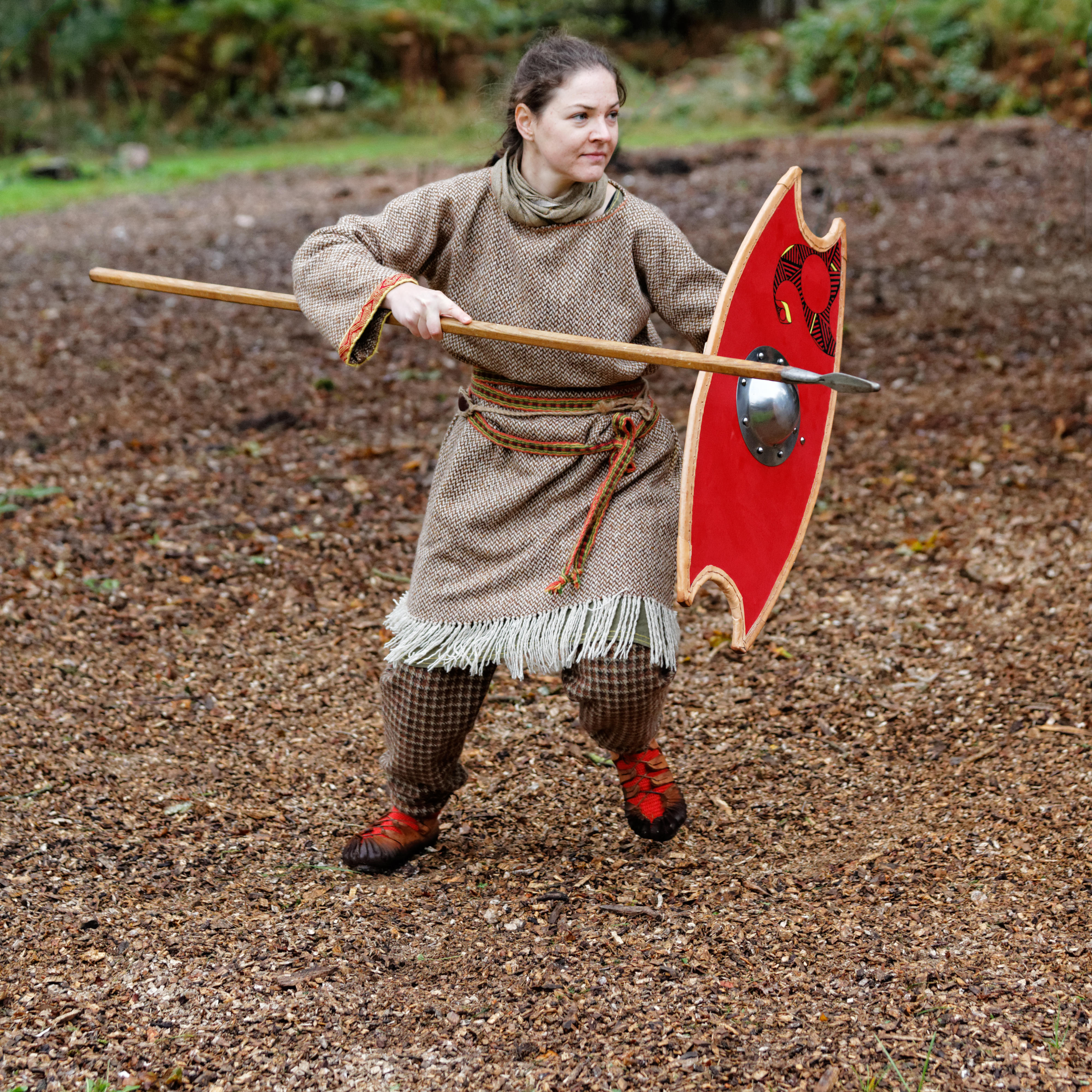
A modern-day re-creation of how a woman in Britain may have fought around the first century A.D. (Image credit: Alamy)
The ancientCelts thrived in Europe, earning a reputation as fierce warriors. They sacked Rome around 390 B.C. and, decades later, were received by Alexander the Great while he was conquering his empire.
It's no surprise, then, that archaeologists find many weapons in Celtic graves. However, over the decades, some of those weapons have been found in burials of women, hinting that they may have used these weapons. What's more, recent genetic studies suggest that elite Celts inherited power through maternal lines.
The Celts lived throughout Europe, from what is now Spain to Turkey. They shared a similar language and culture, and clues of female power have been found throughout their old lands and hinted at in ancient texts. This raises an interesting question: Did the Celts have women who fought in battle?
Opinions vary, but some experts Live Science interviewed thought it was possible that Celtic women could have fought in battle, although perhaps not regularly. One problem is that there is an ongoing debate among scholars as to whether the inhabitants of the British Isles around 2,000 years ago were, in fact, Celtic.
Genetic hints
Although it's not directly related to answering the question about Celtic women warriors, a few recent genetic studies have found that elite Celtic women held powerful roles. A 2024 study in the journal Nature Human Behaviour that looked at ancient DNA in several Celtic burials from Germany found a matrilineal inheritance of power, and a 2025 study of burials from Iron Age England revealed that men married into local, powerful female lineages.
This supports textual evidence that Celtic women had more power than many of their female counterparts across Europe. Women "of the Celts did generally enjoy more freedom and opportunity than their counterparts in the Greek and Roman world," Philip Freeman, a humanities professor at Pepperdine University, wrote in his book "War, Women and Druids: Eyewitness Reports and Early Accounts of the Celts" (University of Texas Press, 2002). "It is hard to imagine a Greek wife joining her husband on the battlefield or even leading an army, as did the British queen Boudicca."
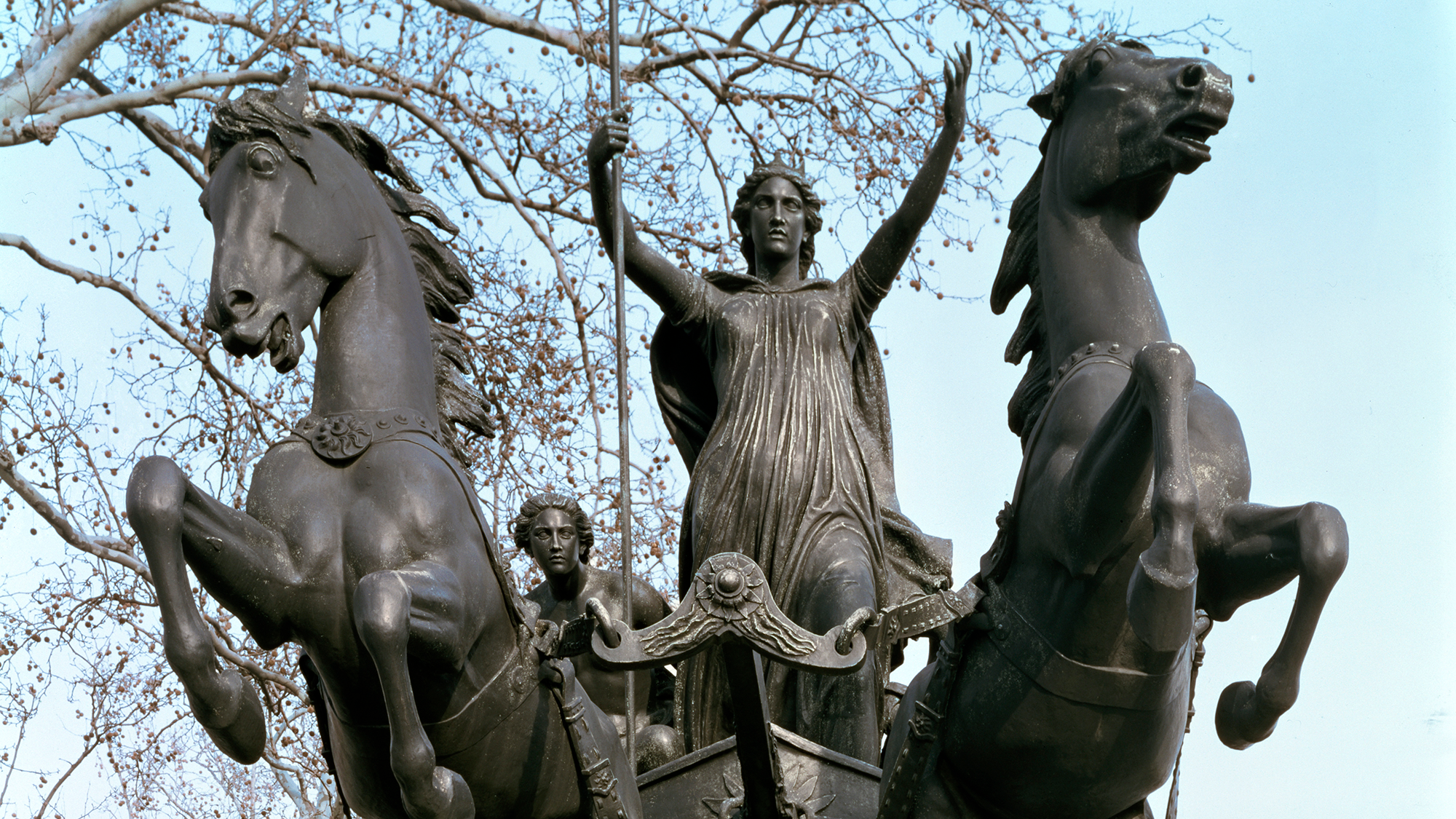
A statue depicting Queen Boudica, who led a revolt against Rome around A.D. 60. Whether she and her people can be considered Celtic is a matter of debate. (Image credit: Heritage Images via Getty Images)
"Flashing-eyed" women
Another piece of possible evidence is a particularly colorful ancient quote about the Gauls, a Celtic group that lived in what is now France.
The Roman soldier and historian Ammianus Marcellinus (who lived circa A.D. 330 to 395) wrote in his book "Res Gestae" ("Achievements") that "a whole group of foreigners cannot stand against one of them in a quarrel if he involves his wife, stronger than him by far and flashing-eyed — least of all when she swells her neck and gnashes her teeth and, swinging her vast, white arms, proceeds to rain down punches mixed with kicks, like shots discharged from the twisted cords of a catapult" (translation by Gavin Kelly).
In other words, don't mess with a Gallic wife.
But we have to be careful with the Ammianus quote as it refers to brawling rather than warfare, said Gavin Kelly, a professor of Latin literature and Roman history at the University of Edinburgh. We shouldn't take the quote to mean that Celtic women fought in battle, Kelly said. He doesn't know if Celtic women fought in battle but, if they did, Kelly suspects it was rare.
Rachel Pope, an archaeology professor at the University of Liverpool who has studied the Celts extensively, told Live Science in an email that "we have good evidence now across Europe that a small number of women were buried with weapons." In a 2021 Journal of Archaeological Research study, she mentioned cases in which women were buried with daggers or spears, including a 2,500-year-old cemetery in eastern France where some women were buried with daggers.
Some of the best evidence is from Britain, where "we have osteological evidence from three hillforts now that [some] women took part in combat," Pope said, noting that there "is evidence too for women fighters in northern Britain, where women are buried with chariots."
Simon Mays, a senior human skeletal biologist at Historic England who has studied a woman buried with weapons on the Isles of Scilly, off the southwest coast of Britain, said women in the region were probably involved in battle. There "is little doubt that violence was a routine part of Iron Age life, and [thus] female involvement is likely," Mays told Live Science in an email.
However, just because someone fought in battle doesn't make them a "warrior," Emmet Taylor, a lecturer at the School of Irish Learning at University College Cork, told Live Science in an email. Taylor noted that it "is important for us to think about martial identities complexly," and in ancient and early medieval Ireland, there is little evidence that women were allowed to join social groups that could be considered warriors.
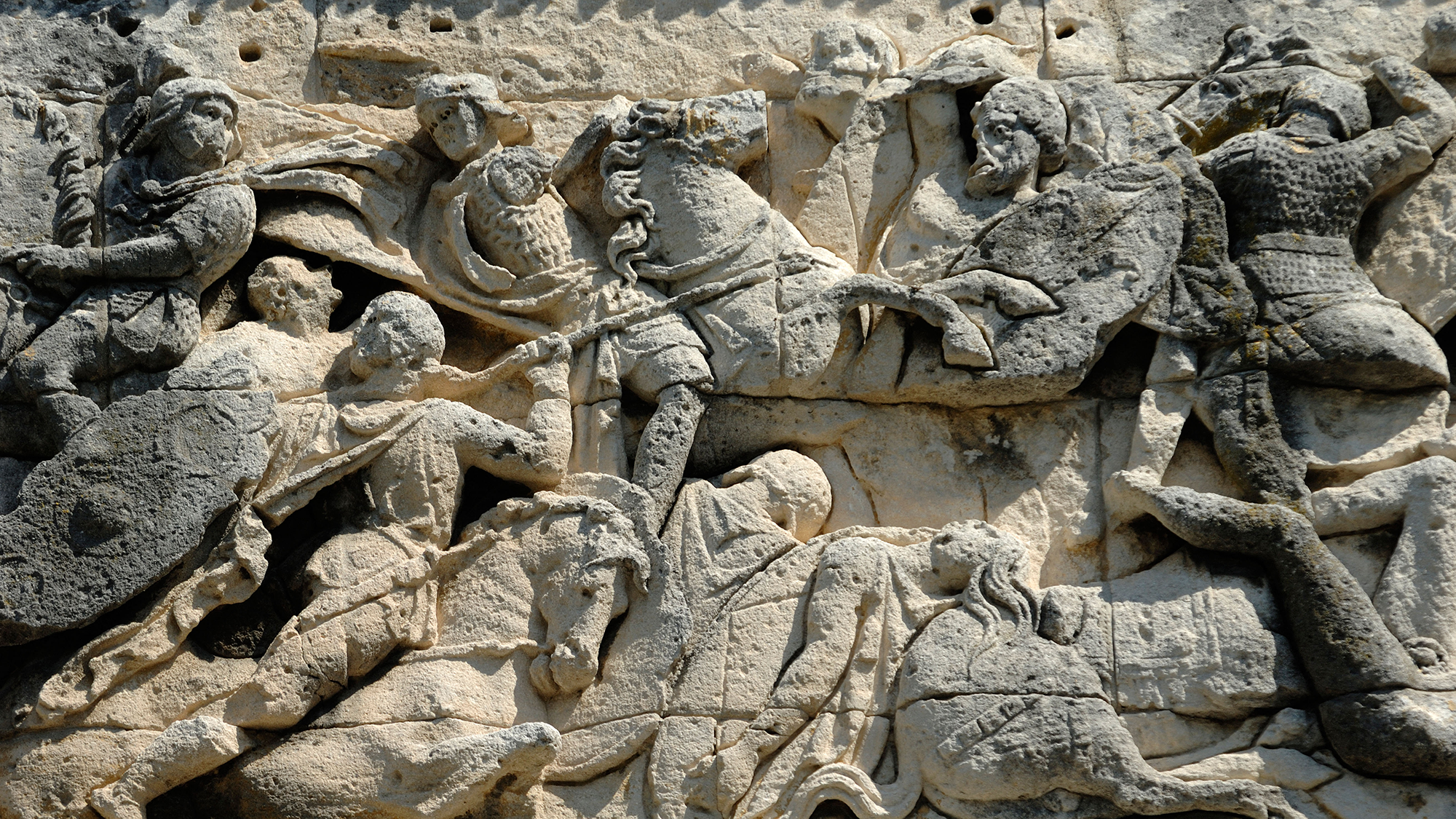
Roman and Gallic soldiers fight in a battle scene depicted on a Roman archway in France. It's debated whether Gallic women also fought in battle. (Image credit: Alamy)
Can ancient Britons be considered Celts?
Most famously, there isBoudica (sometimes spelled Boudicca), a queen of the Iceni (a people in England) who led a revolt against the Roman Empire around A.D. 60. She led her forces to several victories against the Romans before being defeated at the Battle of Watling Street in A.D. 61, after which she died — either by illness or by taking poison to avoid being captured by the Romans.
However, whether the Iceni or other ancient groups in Britain were Celtic is a matter of debate among scholars. The ancient geographer Strabo (who lived circa 64 B.C. to A.D. 24) actually "distinguished Britons from Celts," John Collis, a professor emeritus of archaeology at the University of Sheffield, wrote in his book "The Celts: Origins, Myths and Inventions" (Tempus, 2003).
Terms such as "Celt" and "Gaul" were "never used for the inhabitants of the British Isles except in the most general way for all the inhabitants of western Europe including non Indo-European speakers such as Basques," Collis wrote.
However, although ancient writers didn't refer to people in Britain as Celts, they did note their cultural and linguistic similarities, Freeman wrote. Following this line of thought, it's not too far-fetched to call Boudica a Celt.
Miranda Aldhouse-Green, a professor emeritus of archaeology at Cardiff University in the U.K., told Live Science in an email that she prefers "to refer to Boudica as British rather than Celtic" but noted that Boudica's rebellion is part of substantial evidence for warrior women in Britain.
"There is archaeological evidence for war-women in Britain in the form of Iron Age chariot [burials]," she said. For example, she noted the story of Cartimandua of the Brigantes in Yorkshire, who allied herself with Rome and fought against anti-Roman groups in the region.
"So yes, women did fight particularly in Britain," Aldhouse-Green said. But there is "less evidence" on the European continent for women fighting in battle, she noted.
In Britain the evidence for women in battle is very strong. "In the texts, we have Boudica, raising an army and razing three cities, and [the ancient writer] Tacitus tells us women commanding combat was not unusual," Pope said.
See how much you know about the celts with our Celtic quiz!
For archaeologists, the Coëby cemetery in Brittany, France, is a gold mine for research. It contains several prehistoric stone monuments and earth mounds. In a new study of two unusually large mounds, scientists may have stumbled upon a rare style of funerary monument.
For archaeologists, the Coëby cemetery in Brittany, France, is a gold mine for research. It contains several prehistoric stone monuments and earth mounds. In a new study of two unusually large mounds, scientists may have stumbled upon a rare style of funerary monument.
The ancient Egyptian god of the moon had two very different faces: a crescent-beaked white bird and a silver-coated baboon. Now, researchers think they may have found the common thread connecting them all.
The ancient Egyptian god of the moon had two very different faces: a crescent-beaked white bird and a silver-coated baboon. Now, researchers think they may have found the common thread connecting them all.
Koç University researchers have developed a conservation method that combines photogrammetry, digital modeling, 3D printing and embedded sensors to replace missing sections of archaeological amphorae. The customized fills can also monitor environmental and physical changes affecting the artifacts, offering a systematic approach to their conservation and long-term preservation.
New research has revealed the complex biological history preserved in DNA traces on the Shroud of Turin. Fibers taken from the Shroud of Turin nearly five decades ago still contain a complex record of biological material accumulated over centuries. In research published in Scientific Reports, scientists applied advanced genomic sequencing (rigorous PCR-free next-generation metagenomic sequencing) [...]
The Ephorate of Underwater Antiquities, under the Greek Ministry of Culture, has completed an official inspection at a point along the shoreline of the island of Andros following a report from a private individual who alerted authorities to the presence of archaeological remains on the seabed. The technical team, composed of an archaeologist, a conservator, […]
The construction of the new variant of the A8 highway in the area known as the Albaufstieg, south of Stuttgart (Germany), has uncovered a first-rate archaeological find: a segment of the ancient Roman road that, two millennia ago, structured defense and trade along the Empire’s frontier. The discovery reveals a stretch of approximately ninety meters […]
Ancient Rome's greatest threat to food security wasn't the weather but the challenge of getting grain to the capital, according to a new study. By comparing hundreds of years of historical records with reconstructions of past climate, researchers found that periods of unusual heat, cold, drought or heavy rainfall rarely lined up with reported food shortages.
A chance discovery in central Turkey is offering archaeologists a rare glimpse at the remarkable technical skills of one of the most influential civilizations of the ancient world.
The tiny bronze artifact, now on display at the Boğazköy Museum, is a small, seemingly simple figurine depicting an individual fitted with a long, pointed cap. But beyond its unassuming appearance is something far more complex, and which offers an unprecedented look at the advanced metalworking techniques and religious worldview of the Hittites.
Crafted nearly 3,500 years ago, archaeologists believe the figurine represents a Hittite storm god, displaying remarkable craftsmanship for its era. Uncovered by a resident in the Alaca district of Çorum Province, the figurine’s discovery site marks an area that once placed it in the heartland of the ancient Hittite Empire.
Fortunately, rather than being kept as a memento, the rare find was handed over to museum authorities, who have now placed it on display for the first time as one of the newest additions to the museum’s permanent collection.
The tiny figurine, cast from arsenical copper, is now on display at the Boğazköy Museum (Image Credit: IHA)
A Hittite Storm God of Small Proportions
At only around three inches tall, experts determined that the tiny figurine was cast from arsenical copper—a material that was widely implemented during the height of the Bronze Age, although it was rarely preserved in a form conveying such intricacy.
Finding a small artifact from this period that displays such remarkable craftsmanship conveys the level of sophistication of its creator, although that’s only one part of what makes the artifact so unique.
The figurine also displays advanced riveted assembly techniques—an invention of Hittite metalworkers from the era, as evidenced by mortise sockets and pinholes visible on the artifact’s shoulders and lower garment areas. This indicates that the arms and legs were crafted separately from the main torso and head and were later attached to the body, like how modern action figures and other toys are assembled.
For its time, this was a sophisticated method of construction, demonstrating a remarkable level of engineering precision at very small scales. The resulting artifact is now recognized as one of the smallest Hittite metal figurines ever discovered, displaying 3,500-year-old advanced manufacturing techniques at surprisingly small scales.
A Tiny Artifact Conveying Ancient Beliefs
Going beyond just the technical precision the ancient figurine represents, it also provides insights into the religious beliefs of the Hittites.
“In the Hittite religion, which was polytheistic, our colleagues have described [the artifact] as the Young Storm God,” said Ali Çalgan, current Governor of Çorum province in Turkey, at a recent ceremony that revealed the unique discovery.
According to their worldview, the storm god held one of the highest places in their pantheon of deities, given that these sorcerers of the elements could control rain, winds, and the coming of the seasons—elemental forces that were also associated with fertility and royal authority.
In ancient Anatolia, these storm deities were known by a variety of names, which included Taru, Tarhunza, Teshub, and Tarhuna. Often associated with animals like bulls, physical representations of storm gods were also conveyed in human form, as in the case of the pointy-capped example now on display at the Boğazköy Museum.
Given the artifact’s unique craftsmanship and state of preservation, which Çalgan called “one of the best examples of its kind,” the figurine represents more than merely a decorative object—it offers modern researchers a tangible connection to the ritual traditions and symbolic beliefs that shaped life in the Hittite Empire during the Late Bronze Age.
The Secret World of the Storm Gods
While the recent unveiling ceremony marks the artifact’s official public debut at the museum, archaeologists and art historians have already had an opportunity to examine the unique discovery, of which images were displayed as part of an international Hittite exhibition in South Korea, and later presented during the 8th Çorum Excavation and Research Symposium.
Officials at the Boğazköy Museum and regional authorities on the country’s antiquities say they hope the exhibition will help to further deepen the public’s interest in the rich archaeology and cultural heritage of the region. Significantly, Çorum Province is also home to nearby Hattusa, the ancient Hittite capital now recognized as a UNESCO World Heritage Site.
The young storm god now adds another example of the region’s ancient historical significance in terms of archaeological tourism in the region.
With the figurine’s discovery, we are reminded that often the smallest artifacts can have great significance and offer an unprecedented view of past human achievement. In this case, the young storm god tells a story of advanced metalworking and technological innovation, as well as artistic mastery and religious devotion in one of the ancient world’s most influential civilizations.
Micah Hanks is the Editor-in-Chief and Co-Founder of The Debrief. A longtime reporter on science, defense, and technology with a focus on space and astronomy, he can be reached atmicah@thedebrief.org. Follow him on X @MicahHanks, and at micahhanks.com.
The archaeological survey work carried out in the area of Carrarzu Iddia, in the municipality of Bortigali in central-western Sardinia, has culminated in the discovery of a new Giants’ Tomb that until now had remained completely hidden by the dense Mediterranean scrub. The monument is situated on the southern slope of Crastu Littu, an elevation […]
A team of archaeologists from the Landschaftsverband Westfalen-Lippe (LWL), in collaboration with a specialized company, has confirmed the existence of what is considered the first evidence of prehistoric occupation in the German municipality of Bochum. The discovery took place on a plot previously used for agriculture, located in the Linden neighborhood, where a real estate […]

 Login

 A native Australian millet may carry the genetic fingerprints of thousands of years of Aboriginal harvesting, storage, and plant management. Seen from the air, Channel Country resembles a vibrant and vast tapestry, with a network of waterways crisscrossing the land. Spread across more than 280,000 square kilometers in outback Australia, it is one of the [...]