Thought your older Intel Macs running on Lion all the way up through Mojave could no longer have a modern, functional web browser? Named after the “red leaves of autumn” in Japanese and based off of FireFox 140 ESR from June 2025, it’s quite an upgrade. It is a fork/successor to the FireFox-dynasty […]
A cada atualização anual do macOS, uma escolha da Apple em particular gera quase tanta curiosidade quanto as mudanças e os novos recursos do seu sistema operacional: o nome que acompanhará o update.
Hoje, faremos uma breve recapitulação das principais escolhas da Maçã sobre os nomes de cada versão do sistema operacional dos seus computadores, passando por décadas de codinomes felinos e, mais recentemente, paisagens californianas.
As (várias) mudanças do passado
Antes disso — no período do Mac OS Classic, que abrange os sistemas dos Macintoshes lançados entre 1984 e 2001 —, os nomes dos sistemas da Apple eram usados quase exclusivamente de forma interna. Publicamente, as versões recebiam denominações bastante protocolares, mas, nos bastidores, praticamente todas carregavam codinomes.
O System 6, por exemplo, teve versões conhecidas internamente como Antares (6.04), Big Deal (6.05), SixPack (6.06) e Terminator (6.08). Já o System 7 passou por uma verdadeira coleção de nomes, incluindo Blue, Beta Cheese, Cube-E, I Tripoli, Jirocho, Mozart, Capone, Danook, Thag e Marconi, entre outros. Também houve casos específicos, como Road Warrior, utilizado nos primeiros PowerBooks, além de Unity, Buster, Son of Buster, Harmony e Ides of Buster, empregados em versões posteriores do sistema.
A partir do Mac OS 8, os nomes foram predominantemente relacionados à teoria musical — é o caso do codinome Tempo no Mac OS 8, Allegro no Mac OS 8.5 e Sonata no Mac OS 8.7 (versão de desenvolvimento do que viria a ser o Mac OS 9). As exceções são o Mac OS 8.1 (intitulado Bride of Buster) e o Mac OS 8.6 (Veronica).
Essa só se tornou uma tradição marqueteira a partir do Mac OS X 10.2, quando Steve Jobs apresentou a nova versão do sistema operacional como Mac OS X Jaguar, levando um codinome ao público pela primeira vez — antes do Jaguar, a Apple utilizou os codinomes Kodiak para a versão beta, Cheetah para a 10.0 e Puma para a 10.1 —, inaugurando a era de nomes de grandes felinos.
Os animais ditaram os sistemas dos Macs por cerca de dez anos (de 2002 até 2012): foi o caso do Mac OS X 10.3 Panther, Mac OS X 10.4 Tiger, Mac OS X 10.5 Leopard, Mac OS X 10.6 Snow Leopard, Mac OS X 10.7 Lion e, por fim, OS X Mountain Lion 10.8 — que abandonou (temporariamente) o prefixo “Mac”.
OS X Mavericks 10.9: a alteração de rota rumo à Califórnia
A partir da décima versão do macOS (então OS X), a Apple adotou publicamente nomes com as regiões da Califórnia, tendência que segue em vigor até os dias de hoje.
A troca, aliás, andou em paralelo a uma mudança paradigmática do sistema: foi somente com o OS X Mavericks 10.9 que a Maçã deixou de cobrar pela atualização dos seus sistemas operacionais, permitindo que os seus usuários, a partir do Snow Leopard (na compilação 10.6.8), atualizassem as suas máquinas sem custos adicionais — uma realidade que permanece até os dias de hoje.
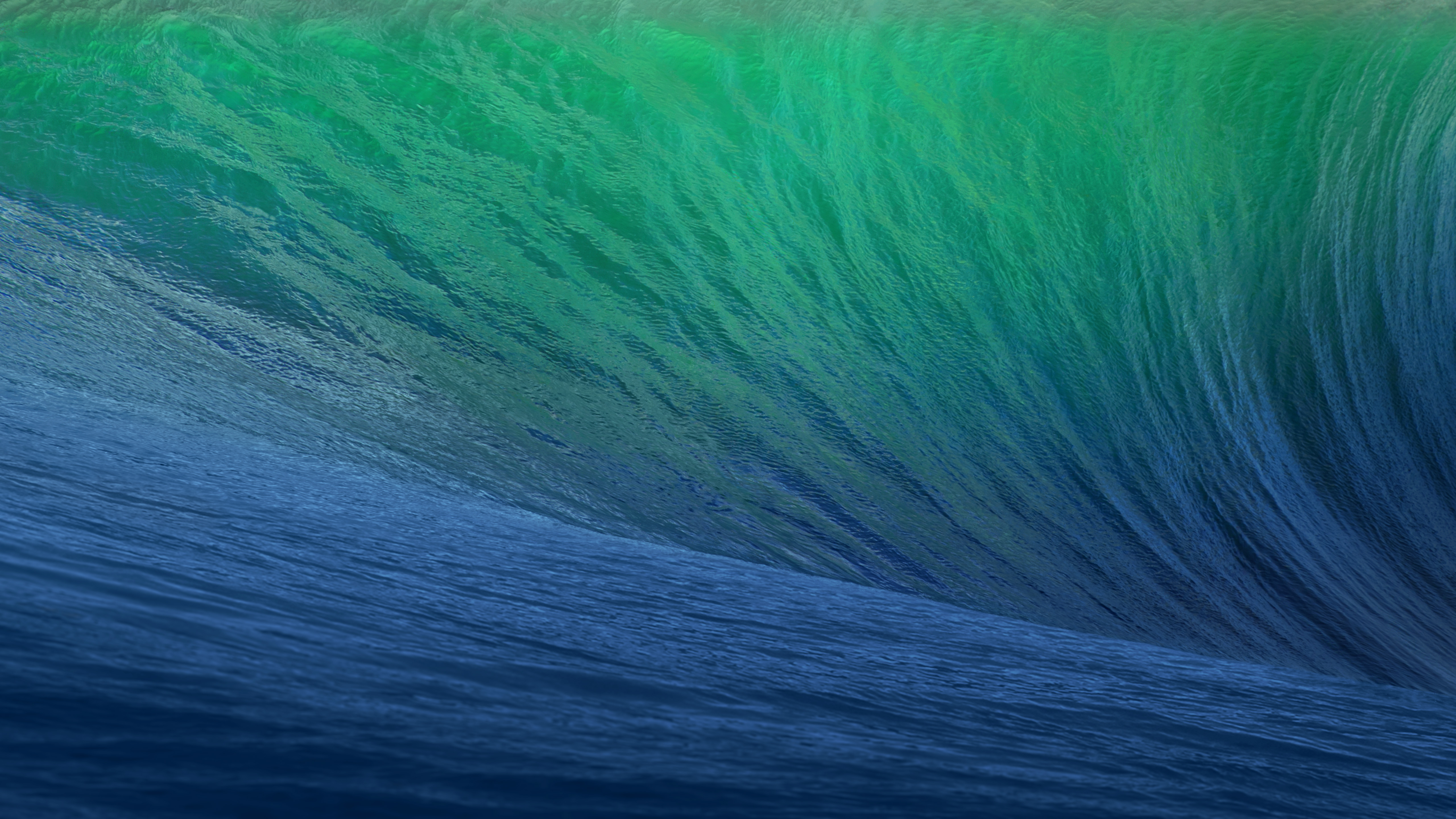
O primeiro destino geográfico escolhido pela Apple remete a uma região litorânea conhecida pelas altas ondas, propícias para a cena local do surfe. O papel de parede do OS X 10.9 dava destaque à curvatura de uma grande onda em tons de azul e turquesa, com clara inspiração na localização que deu nome ao update.
Em matéria de software, o OS X Mavericks ficou marcado pelo aprimoramento na gestão de performance, bateria e memória, aproveitando melhor o hardware dos computadores da Apple. Quanto aos recursos, o sistema trouxe os links compartilhados no Safari, respostas embutidas em notificações, abas e tags no Finder, melhor suporte ao uso de múltiplos monitores, além da introdução de novos aplicativos, como o Mapas e iBooks.
OS X Yosemite 10.10
Pouco mais de quatro horas adiante (ou 314km, para ser mais exato), encontramos o Parque Nacional de Yosemite. A área já era considerada tão importante para a preservação ambiental que Abraham Lincoln autorizou sua proteção e uso público em 1864, anos antes da criação de Yellowstone, reconhecido como o primeiro parque nacional do mundo. Outro grande entusiasta de Yosemite foi Theodore Roosevelt, que ajudou a consolidar a sua importância dentro do sistema de parques americanos.
Um dos maiores símbolos do parque — e também o destaque do wallpaper oficial do sistema — é o Half Dome, um monólito de granito com impressionantes 2.696 metros de altitude. Localizada no coração de Yosemite, a formação foi considerada inescalável por alguns geólogos do século XIX, até que George G. Anderson realizou a façanha em 1875, escalando-a descalço. Muito possivelmente, a foto usada pela Apple foi registrada com uma lente teleobjetiva nas proximidades da Ahwahnee Meadow.
O OS X Yosemite 10.10 foi um marco importante na trajetória do macOS. Muito lembrado pelas mudanças de design na interface — com elementos translúcidos e ícones de formas planas que definiriam a identidade visual do sistema por várias gerações —, ele também deixou como legado a introdução dos recursos de Continuidade (Continuity) entre o OS X e o iOS.
Inicialmente, a novidade englobava apenas o AirDrop, as chamadas telefônicas, o app Mensagens, o Handoff e o Instant Hotspot. Ainda assim, ela inaugurou um nível de interoperabilidade que ajudou a redefinir a forma como o mercado de tecnologia passou a enxergar ecossistemas compostos por diferentes produtos de uma mesma marca.
OS X El Capitan 10.11
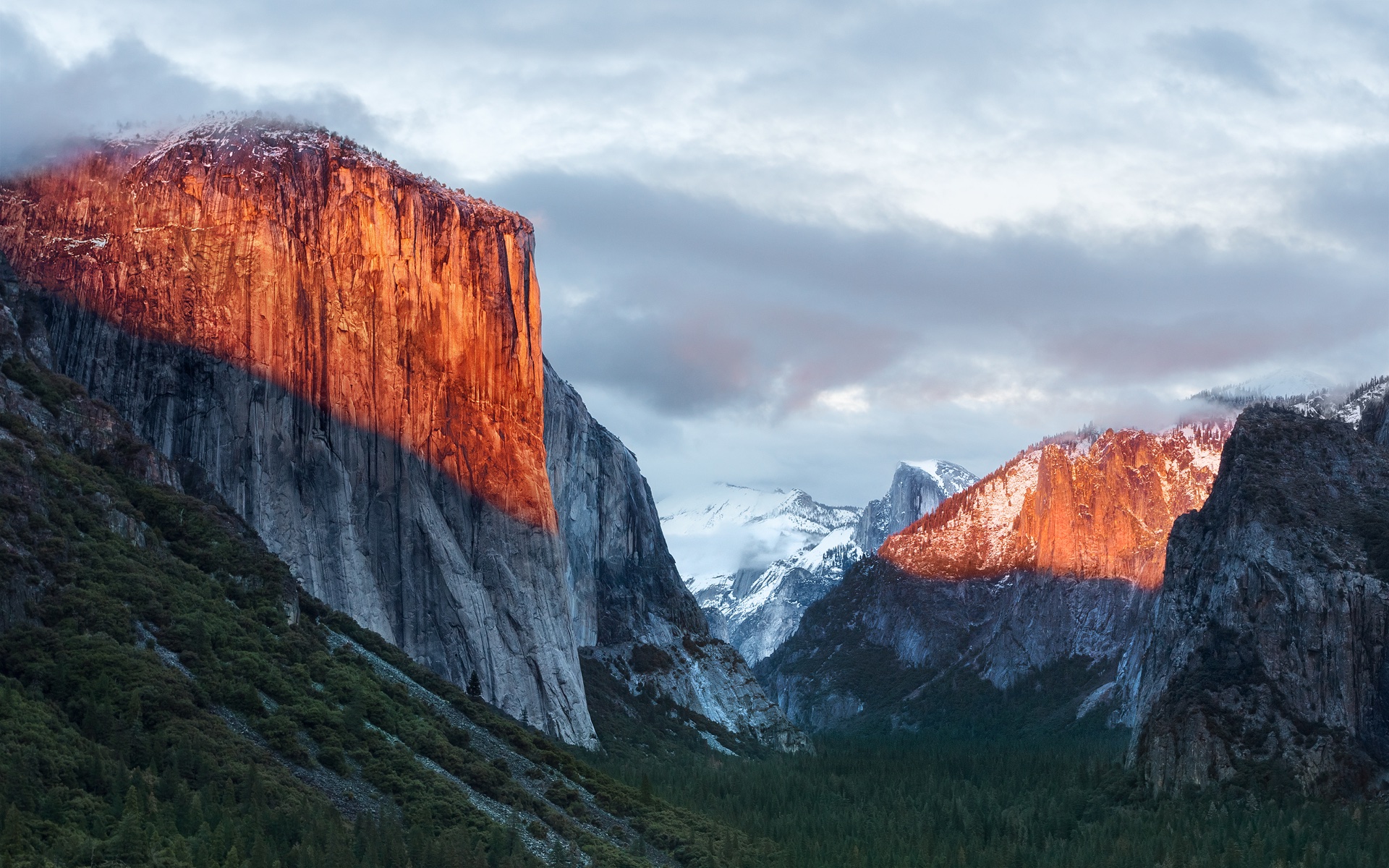
A apenas 20 minutos de distância do Ahwahnee Meadow, a próxima parada do Mac é outra atração turística presente dentro do Parque Nacional de Yosemite: o El Capitan é um monólito de granito de quase 900 metros que se ergue acima do vale do parque.
O papel de parede provavelmente foi fotografado a partir do mirante Tunnel View, de onde é possível avistar o El Capitan à esquerda do vale. Ao fundo, surge o Half Dome — um enquadramento que parece refletir o espírito da atualização. Diferentemente de Yosemite, o OS X El Capitan 10.11 deu menos ênfase à introdução de novos recursos e concentrou seus esforços em correções de bugs, otimizações de desempenho e refinamentos da experiência de uso. Entre as principais novidades, estavam um Spotlight aprimorado, a adição do Split View e diversas melhorias nos aplicativos nativos da Apple.
macOS Sierra 10.12
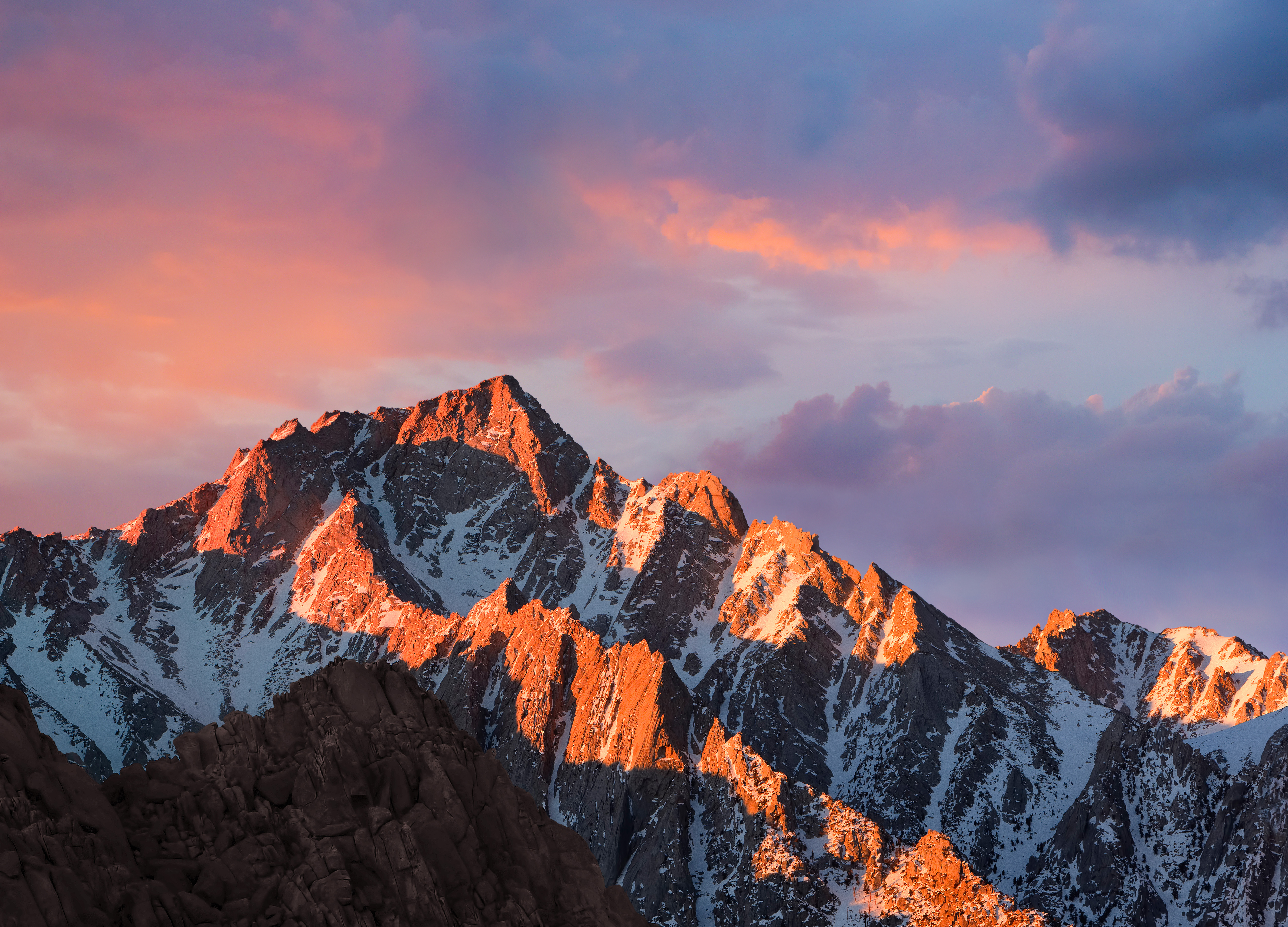
Cerca de 338km depois (aproximadamente quatro horas e meia) de Yosemite, passando pela cordilheira de Sierra Nevada (situada no leste da Califórnia, a oeste do Mount Whitney), temos o Lone Pine Peak, cenário da montanha que aparece no wallpaper do sistema.
Além da mudança de nomenclatura de OS X para macOS (colado e com o “m” minúsculo, como segue até os dias de hoje), a atualização é particularmente lembrada pela inclusão da Siri no Mac, o Desbloqueio Automático (Auto Unlock) com o Apple Watch e a Área de Transferência Universal (Universal Clipboard) entre Macs, iPhones e iPads.
macOS High Sierra 10.13
Uma rápida viagem de 80 minutos (129km) é capaz de nos levar ao próximo destino fotografado pela Apple: North Lake, localizada na pequena cidade de Bishop, entre as montanhas da cordilheira de Sierra Nevada. Ali, muito possivelmente em meio ao outono, o registro eternizado no papel de parede do sistema foi feito.
Quando falamos do sistema, aos moldes do próprio El Capitan e do Snow Leopard, o macOS High Sierra 10.13 focou muito mais no aprimoramento interno do macOS do que em novos recursos, mas vale mencionar a inclusão do novo sistema de arquivos da Maçã (o Apple File System, ou APFS), do suporte aos formatos audiovisuais HEVC e HEIF, bem como a chegada da segunda geração da tecnologia de desempenho gráfico Metal.
macOS Mojave 10.14
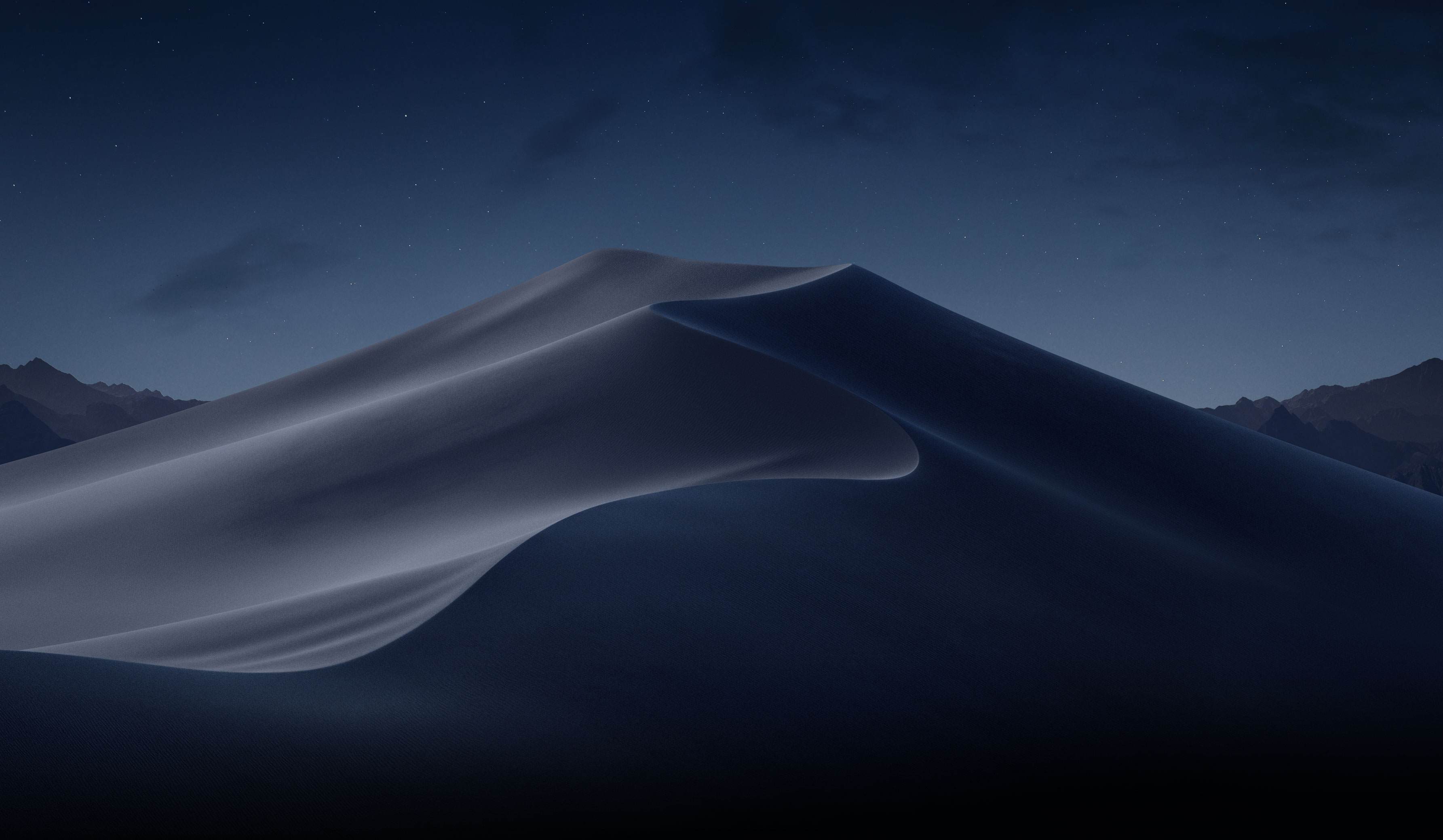
Depois das montanhas, que peculiarmente ficam na margem do wallpaper, vieram as dunas. Com uma distância de 253km (ou três horas de carro), o próximo destino é o Parque Nacional do Vale da Morte, o ponto mais quente do continente americano — onde se registrou a maior temperatura da história (56,7°C) em julho de 1913, e onde a foto do papel de parede do macOS Mojave 10.14 foi feita.
Já sobre as novidades do sistema, essa versão do macOS é particularmente conhecida pela introdução do Modo Escuro, a inclusão dos Conjuntos (Stacks) na Mesa (Desktop), além da estreia de apps já conhecidos dos usuários de iOS, como o Apple News, o Bolsa (Stocks), o Gravador de Voz (Voice Memo) e o Casa (Home).
macOS Catalina 10.15
A 428km adiante do Deserto de Mojave (cerca de cinco horas e meia de carro), nós temos a Ilha de Santa Catalina, destino paradisíaco — e remoto — da costa sul da Califórnia que deu nome à versão do macOS lançada em 2019. Pela posição da foto, o que se especula é que o registro oficial da Apple tenha sido feito com o auxílio de um drone ou helicóptero, sobrevoando as águas para capturar Catalina sob diferentes períodos e iluminações para fornecer o tema dinâmico disponível no sistema.
Essa atualização marcou o fim do iTunes, que foi segmentado em um catálogo de aplicativos separados (Apple TV, Música, Apple Podcasts), mas sua adição mais relevante muito possivelmente foi o recurso Sidecar, que possibilita o uso do iPad como um monitor externo do Mac.
macOS Big Sur 11
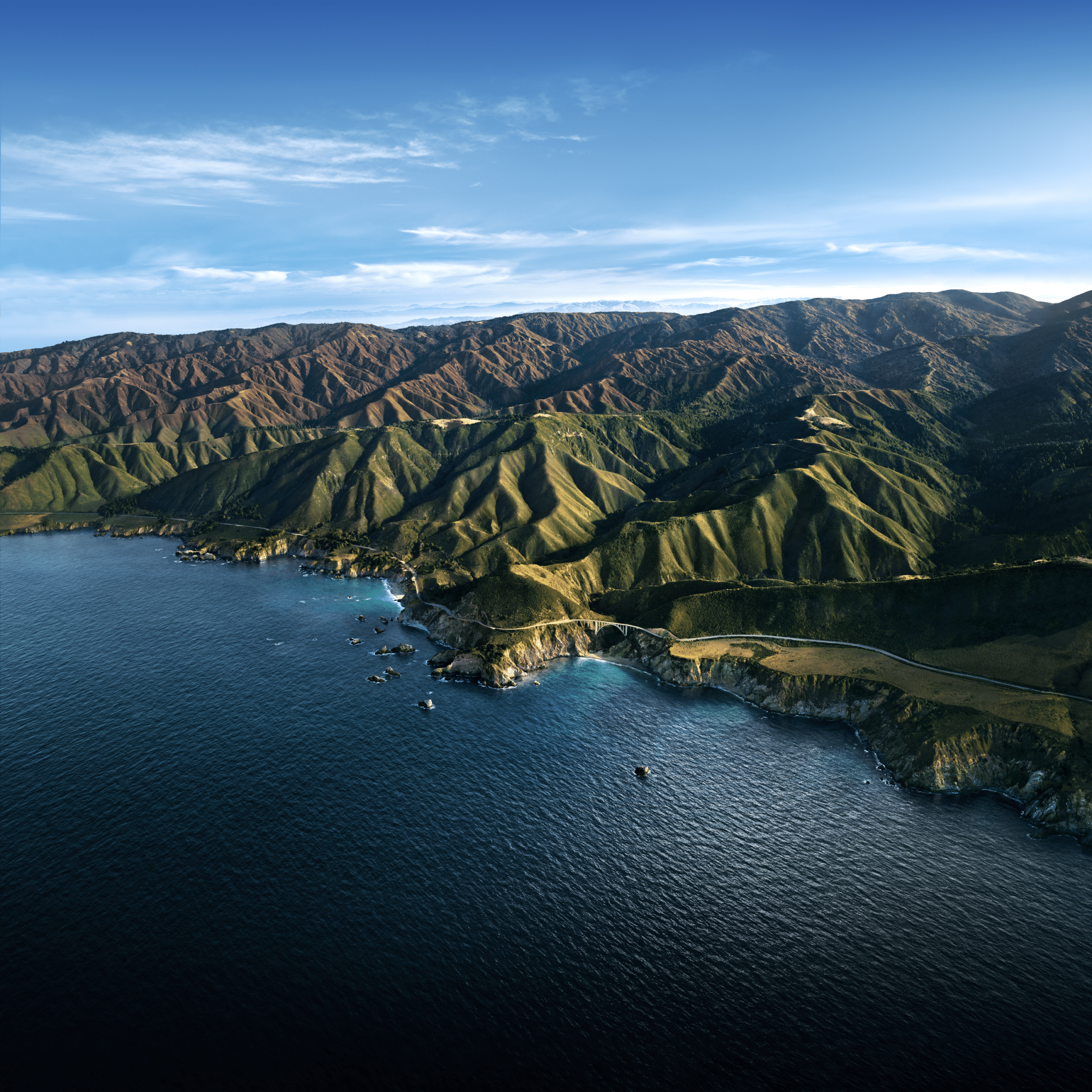
Com uma distância de 524km da Ilha de Catalina, a próxima parada é na Ponte Bixby Creek (inaugurada em 1932 e particularmente conhecida por suas estradas com curvas), localizada na costa central de Big Sur, que dá nome a essa versão do macOS — o papel de parede retrata também a parte litorânea do local.
Sobre o sistema, a versão marcou a transição dos processadores da Intel para o Apple Silicon com o lançamento do M1, trazendo novos ícones, materiais translúcidos, um novo Dock, Central de Controle e de Notificações.
Esta versão também foi um marco para o sistema operacional, pois, pela primeira vez em muitos anos, a Apple abandonou as sub-versões 10.x e passou para o número 11 — o que se manteve nos anos subsequentes.
macOS Monterey 12
Ainda na costa de Big Sur, o macOS Monterey 12 marcou a quebra de uma tradição: pela primeira vez em anos, a Apple optou por não incluir um registro fotográfico como possível papel de parede ou tela de descanso, mantendo apenas temas dinâmicos para ilustrar o sistema dos Macs naquela ocasião.
O Condado de Monterey, que inspirou o nome do sistema, é particularmente lembrado por ter abrigado a primeira capital da Califórnia, quando a região ainda era de domínio dos governos da Espanha e do México.
Em relação ao sistema, o grande destaque foi a introdução do Controle Universal (Universal Control), permitindo que um único conjunto de periféricos (como teclados e mouses) seja utilizado simultaneamente no Mac e no iPad.
macOS Ventura 13
Por volta de 450km de distância (quatro horas e meia de trajeto) depois, temos o Condado de Ventura, que inspirou essa versão do macOS. Emancipado do Condado de Santa Bárbara em 1873, ele abriga o píer mais antigo do estado da Califórnia. Mais uma vez, a Apple optou por não incluir um papel de parede fotográfico.
Quanto aos seus recursos, o macOS Ventura 13 se destacou pela adição do recurso Organizador Visual (Stage Manager) e melhorias no Spotlight, Safari, entre outros aplicativos nativos do sistema que ganharam reformulações.
macOS Sonoma 14
Do Condado de Ventura até Sonoma, são 748km (pouco mais de sete horas de trajeto) até a região norte de San Francisco, conhecida por abrigar centenas de vinícolas. O registro da Apple foi feito na vinícola Mazzocco Sonoma, no rancho de Warm Springs.
Depois de dois anos, a Apple enfim retornou com os papéis de parede fotográficos no macOS, funcionando também como protetores de tela (screensavers) dinâmicos que lentamente se tornam um wallpaper estático após o login.
A maior novidade do sistema foi a implementação dos widgets interativos na Mesa (Desktop), além de reformulações no modo Jogo, na relação do sistema com acessos remotos e no compartilhamento de conteúdos em videochamadas, com novidades também no Safari, na Siri e nos recursos de acessibilidade.
macOS Sequoia 15
Saindo de Sonoma, nosso próximo destino está localizado a quase sete horas de distância (mais ao sul da Califórnia, a exatos 547km de distância); trata-se do Parque Nacional da Sequoia, que abriga algumas das maiores árvores do planeta em termos de volume.
O registro do papel de parede é remoto o suficiente para não termos uma dimensão exata da sua localização geográfica (até porque a Apple nunca divulgou essa informação), mas é seguro afirmar que as imagens foram capturadas em algum dos bosques de sequoias da Sierra Nevada.
Além da estreia controversa dos recursos da Apple Intelligence devido à discrepância entre o que foi apresentado e as funcionalidades entregues, o macOS Sequoia 15 introduziu o Espelhamento do iPhone (iPhone Mirroring), a organização de janelas em mosaico e o aplicativo Senhas (Passwords).
macOS Tahoe 26
Do Parque Nacional de Sequoia, partimos rumo ao norte, até a fronteira entre a Califórnia e o estado do Nevada (uma distância de 330km, ou três horas e meia de trajeto). O próximo destino é o Lago Tahoe, também presente na cordilheira de Sierra Nevada. Ele é particularmente conhecido por ser o maior lago alpino da América do Norte em termos de altitude.
Conhecido por suas águas cristalinas, o lago é um destino frequente para esqui. O papel de parede do macOS Tahoe 26 exibe um ângulo baixo sobre o lago, com as rochas em primeiro plano, enquanto os pinheiros e as montanhas de Sierra Nevada aparecem ao fundo.
Quanto ao sistema, além da unificação da numeração com todo o ecossistema (iOS, iPadOS, watchOS, tvOS e visionOS) da Apple, essa versão foi especialmente marcada pelo redesign de interface com a estreia do Liquid Glass. Outras novidades incluem a adição das Atividades Ao Vivo (Live Activities) ao recurso Continuidade, além de revisões do Spotlight, Central de Controle e os recursos da Apple Intelligence.
macOS Golden Gate 27
E, enfim, chegamos à versão mais recente do macOS! Com uma distância de 330km (trajeto com cerca de três horas e meia), nosso próximo destino é o cartão postal da cidade de San Francisco: a Ponte Golden Gate.
Ela foi, até 1964, a maior ponte suspensa do mundo — caso seus cabos de sustentação fossem esticados, teriam tamanho o suficiente para dar três voltas no planeta.
Enquanto sistema, assim como o Snow Leopard ou o High Sierra, o macOS Golden Gate 27 é marcado por sua abordagem de priorização dos refinamentos, tanto relacionados ao visual Liquid Glass quanto aos recursos da Apple Intelligence e da Siri, que agora se torna Siri AI.
E você aí, usa o macOS desde que versão? Alguma, em especial, lhe marcou? Ou você (ainda) não é usuário de Mac, mas gostou de todas essas curiosidades? 😊
With the Space Race heating up, the Ranger program was developed as an answer to Sputnik: The U.S. would land spacecraft on the Moon. When President John F. Kennedy vowed in 1961 to put a man on the lunar surface, the project evolved. Instead of being purely scientific or exploratory, Ranger spacecraft would also beContinue reading "July 31, 1964: Ranger 7 returns the first close pictures of the Moon"
Impulse Space has unveiled its first electric propulsion system, designed to work in tandem with chemical rocket engines to extend the capabilities of spacecraft during long space missions.
On Tuesday, the California-based company revealed Electra, which complements traditional rocket propulsion, rather than replacing it, providing a new layer of efficiency for spaceflight aided by electric thrusters.
“As launch becomes more accessible, the next frontier is enabling spacecraft to do more once they arrive in orbit,” said Tom Mueller, founder, CEO, and chief technology officer of Impulse, in a statement.
The Future is Electric
While electric propulsion systems produce lower levels of thrust compared to chemical rockets, they also consume far less propellant during spaceflight. Because of this, they are an ideal candidate for certain tasks, such as station keeping—the process where a spacecraft’s assigned orbit is maintained over long periods of months, or even years.
Presently, as much as 50% of a conventional spacecraft’s chemical propellant can be required solely for maintaining its orbit for the duration of a mission. Assigning those duties to an electric propulsion system allows chemical fuel to be reallocated toward higher-value mission operations, which include rapid orbital transfers and time-sensitive maneuvers.
Rapid Pace for Development
Electra was developed entirely in-house and in under a year, the company said in a statement this week. Engineers required less than half that time to advance from initial design stages to completion of a functioning propulsion system.
Almost all major components, which include Electra’s thruster and supporting avionics systems, were designed, manufactured, and tested in-house.
“The best part of building Electra has been the opportunity to move fast and try new things,” said Charlie Kelly, Lead Electric Propulsion Engineer at Impulse.
“We get to turn ideas into plasma in a matter of weeks or months, not years,” Kelly added.
Advancing Future Space Propulsion
Presently, the company is rapidly developing its next-generation designs, and qualification is currently underway for Electra’s integration with Mira, Impulse’s orbital transfer vehicle.
An initial in-space demonstration is expected to take place aboard Impulse’s GEO Express 1 mission next year, as part of the Caravan 1 mission.
For Impulse, the new propulsion system represents another step toward building what it characterizes as a complete in-space mobility architecture—extending beyond launch itself to support satellite servicing, orbital transfers, cargo transportation, and future operations throughout cislunar space and beyond.
With an ever-increasing level of commercial activity in Earth orbit, such technologies will help to propel spacecraft for much longer periods, enabling long-duration space missions that reduce overall costs and fuel requirements.
“Our strategy has always been to develop the mobility technologies needed to support all missions after launch,” Mueller said this week, adding that “electric propulsion is an essential component of that strategy.”
Additional details about the company’s novel propulsion designs can be found at Impulse Space’s website.
Micah Hanks is the Editor-in-Chief and Co-Founder of The Debrief. A longtime reporter on science, defense, and technology with a focus on space and astronomy, he can be reached atmicah@thedebrief.org. Follow him on X @MicahHanks, and at micahhanks.com.
iOS 26.6 and iPadOS 26.6 include security fixes for the iPhone and iPad. The updates also optimize the Spotlight index in preparation for iOS 27 and iPadOS 27.
Yesterday’s iOS update fixed the battery problem that I’ve had for the past couple of months. My iPhone 16 Pro Max would not make it a full day on a single charge.
More light at the day’s end comes at a price: much later winter sunrises across much of the U.S. Scientists have documented consequences for public health and the economy.
A U.S.-Russian crew will return to Earth from the International Space Station early Sunday morning (July 26), and you can watch their homecoming live.
A Soyuz spacecraft carrying NASA astronaut Chris Williams and Sergey Kud-Sverchkov and Sergei Mikaev of the Russian space agency Roscosmos is scheduled to undock from the orbiting lab on Sunday at 3:02 a.m. EDT (0702 GMT).
The Soyuz, known as MS-28, will land on the steppe of Kazakhstan about 3.5 hours later, at 6:26 a.m. EDT (1026 GMT). You can watch these milestones here at Space.com, courtesy of NASA.
Russia's Soyuz MS-28 spacecraft is seen docked to the International Space Station shortly after its arrival on Nov. 27, 2026. (Image credit: NASA)
The coverage starts today (July 25) at 9:40 a.m. EDT (1340 GMT) ahead of a change-of-command ceremony aboard the International Space Station (ISS). Kud‑Sverchkov will hand over the reins of the orbiting lab to NASA astronaut Jessica Meir, part of the transition from ISS Expedition 74 to Expedition 75 (which officially begins when Soyuz MS‑28 undocks). You can watch that live via NASA.
NASA will resume its webcast tonight at 11:10 p.m. EDT (0310 GMT on July 26) to cover crew farewells and the closing of the hatches between the ISS and Soyuz MS-28, which is expected at 11:30 p.m. EDT (0330 GMT).
Undocking coverage begins Sunday at 2:30 a.m. EDT (0630 GMT). The stream will pick up again at 5:15 a.m. EDT (0915 GMT) for deorbit and landing activities. Touchdown will occur southeast of the Kazakh city of Dzhezkazgan, according to NASA.
The Soyuz MS-28 crew pose on Nov. 26, 2025, a day before their launch. From left: Chris Williams of NASA and Roscosmos cosmonauts Sergey Kud-Sverchkov and Sergei Mikaev. (Image credit: NASA/Bill Ingalls)
Soyuz MS-28 launched to the ISS on Nov. 27, which was Thanksgiving Day. That liftoff kicked off the first space mission for Williams and Mikaev and the second for Kud‑Sverchkov.
When it's all said and done, the trio will have spent 241 days in space on their current flight. They will have orbited Earth 3,856 times and traveled a total of more than 102 million miles (164 million kilometers).
After touchdown, the three spaceflyers "will fly by helicopter to Karaganda, Kazakhstan, where recovery teams are based," NASA officials wrote in a media advisory. "Williams then will return to NASA's Johnson Space Center in Houston, while Kud‑Sverchkov and Mikaev head back to their training base in Star City, Russia."
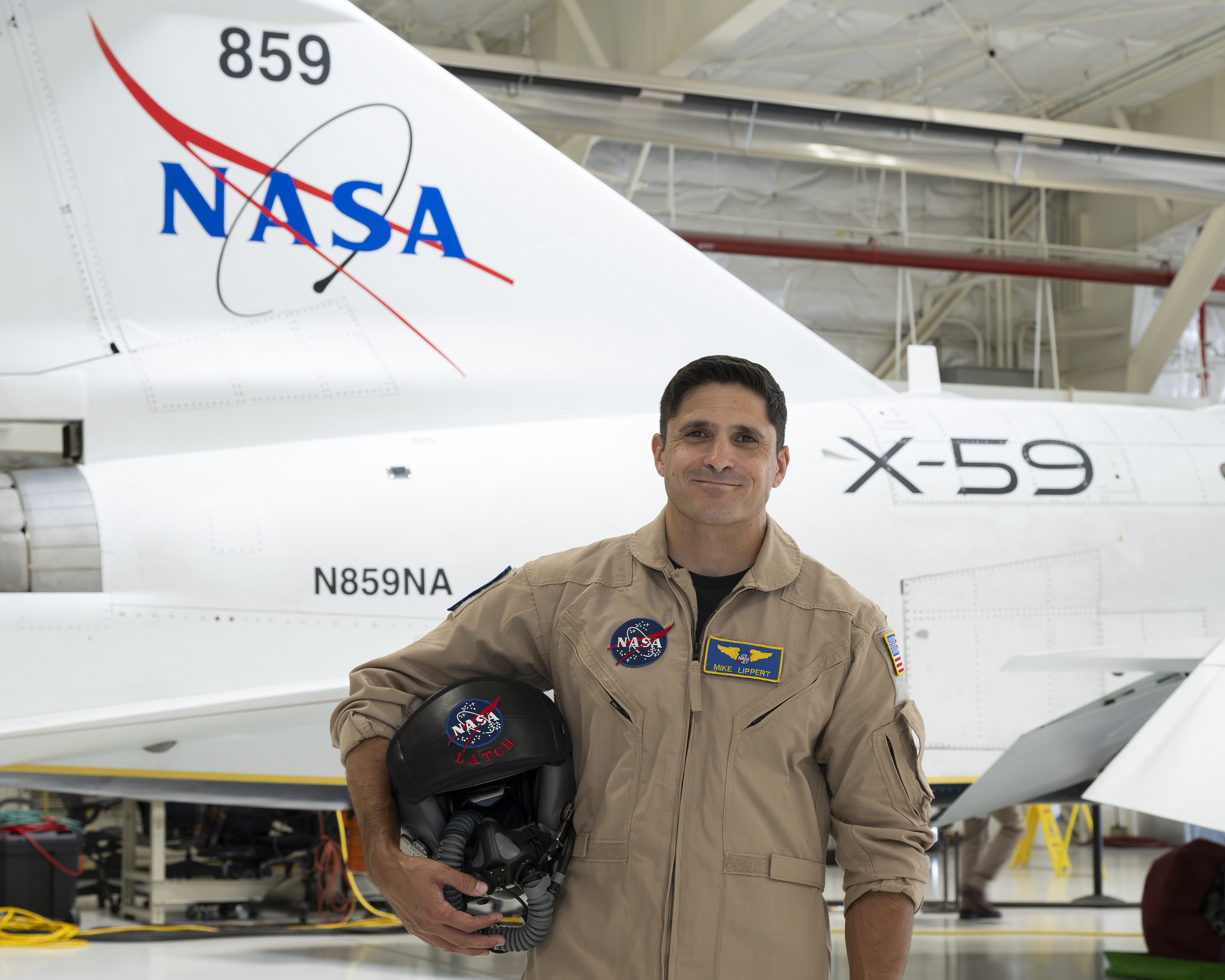
NASA’s X-59 test pilot Mike Lippert stands in front of the agency’s X-59 quiet supersonic research aircraft at NASA’s Armstrong Flight Research Center in Edwards, California, on Wednesday, June 24, 2026.
NASA/Carla Escamilla
NASA added a new X-59 test pilot to support the agency’s Quesst mission: Mike Lippert, a research test pilot based at NASA’s Armstrong Flight Research Center in Edwards, California.
“This fulfills a lifelong dream of conducting airborne research and experimental flight test for NASA in the high desert — contributing to humankind’s understanding of the science of flight and the nature of the world around us,” Lippert said.
Lippert will fly the X-59, along with the F-15 and F-18 support aircraft to monitor the quiet supersonic X-plane when it’s in the air. He joins Nils Larson and Jim “Clue” Less, who have been flying the X-59 since its first flight in October 2025.
A South Carolina native, Lippert served 20 years with the U.S. Marine Corps before retiring last year as a lieutenant colonel. Like his fellow test pilots, he boasts an impressive flight resume, including logging more than 2,600 hours of flight time in 60 different types of aircraft.
Lippert said he finds test pilot work especially rewarding.
“For me, the joy of taking part in experimental flight test and airborne research is the experience of discovery and learning something new every day,” he said. “It is incredibly rewarding to be part of a team solving complex problems and venturing into the unknown, together.”
Lippert spent the majority of his career flying the AV-8B Harrier operationally and serving as a test pilot in the F-35 program. He is also an aerospace engineer, earning a bachelor’s degree from the United States Naval Academy in Annapolis, Maryland, and a Master of Science in flight test engineering from the U.S. Air Force Test Pilot School at Edwards Air Force Base in California. Additionally, he earned a Master of Science in systems engineering from the Naval Postgraduate School in Monterey, California.
Lippert is currently pursuing a doctoral degree in aerospace engineering at the University of Alabama Graduate School in Tuscaloosa, where his research focuses on high-speed gas dynamics, including supersonic and hypersonic fluid mechanics — complementing his work on the Quesst mission.
Lippert is busy preparing for his role at NASA by flying training flights on support aircraft and spending time in the X-59 simulator. He is expected to begin flying the X-59 later this summer.
Having launched on July 16, 1969, and landed on the Moon on July 20, the Apollo 11 astronauts returned home and splashed down in the Pacific on July 24, 1969. In a historically momentous trip, Neil Armstrong and Buzz Aldrin had become the first people to step onto the Moon. (The third member of theirContinue reading "July 24, 1969: Apollo 11 returns home"
Após um período em desenvolvimento, o WhatsApp começou a liberar um novo design para as bolhas de mensagens para testadores e alguns usuários da versão estável do seu aplicativo para iOS.
Como mostra a comparação abaixo, divulgada pelo WABetaInfo, as bolhas agora contam com cantos mais arredondados em relação à interface anterior — o que dá a elas uma aparência bem mais moderna.
Imagem: WABetaInfo
Outra mudança pode ser vista especialmente nas mensagens de mídia trocadas em chats individuais, que deixaram de ter uma borda em volta de seu conteúdo e apresentam exclusivamente a foto ou o vídeo em questão.
Mensagens de mídia encaminhadas ou enviadas em grupo ainda mostram uma borda exclusivamente na parte superior — com o rótulo de encaminhamento ou a identificação de quem as enviou, respectivamente.
Links enviados com pré-visualização, por sua vez, apresentam a borda apenas na parte inferior, para abrigar o indicador de envio/recebimento/leitura.
Apesar de bem simples, essa será mais uma mudança que dará uma maior modernização à interface do app — especialmente nas bolhas das mensagens, que mantêm o mesmo estilo há muito tempo.
Earth’s orbit is getting crowded. About 16,000 satellites currently circle our planet, supporting everything from GPS navigation and weather forecasting to banking, emergency services and internet communications. Dozens more are launched every few weeks. Some estimates suggest the total number of satellites could exceed 100,000 within this decade, with more conservative estimates landing on up to 60,000 satellites byContinue reading "There are already 16,000 satellites in Earth’s orbit. How will we manage the next 100,000?"
A norte-americana Light apresentou o Light Flip, um telemóvel em formato de concha, inspirado nos antigos flip phones, sem aplicações de distração, ecrã tátil ou redes sociais. Já pode ser reservado por 299 dólares.
LOS ANGELES — Standing in the shadow of the space shuttle Endeavour, a group of retired NASA astronauts announced their plan to travel the country visiting colleges to try to inspire younger generations to get out and vote. This campaign comes as we lead up to the November midterm election.
This past year, a group of retired NASA astronauts teamed up for a single cause: to defend the U.S. constitution. They banded together as part of a non-profit, non-partisan activist organization called Astronauts for America. So far, they have been speaking out, using their astronaut expertise, platforms, cultural relevance and role model status to speak out in support of "science, evidence-based decision-making, public service and the rule of law," their website reads. Now, as the group announced at an event at the California Science Center's new air and space center — home to the shuttle Endeavour — they're hitting the road on a campaign tour of colleges called "Vote for Freedom."
"We have to do what we can to ensure that the country makes it through the challenges that we're dealing with here, and that is the message that we're going to be taking to colleges and universities," Apollo 9 astronaut Rusty Schweickart told Space.com. "And the agency that we have, the immediate agency, is to vote."
This tour will send astronauts from the group on a four-month jaunt across the country. Astronauts from the group's more than 100 members will visit state and community colleges, county fairs and even town halls, aiming to reach first-time voters and young people who might be new to voting.
"I'm really excited to look a bunch of younger Americans in the eye and make sure that they know that someone that they can trust said: ;Listen, you matter, because our country matters, and our country needs you,'" former NASA astronaut Cady Coleman told Space.com.
"It's with a uniquely American kind of freedom that we were able to go to the moon, and that same freedom launched the spaceship behind us 25 times into space. Now we see those freedoms under heavy threat," former NASA astronaut Steve Smith said during the event. "We're seeing chaos instead of community, violence instead of votes, lies instead of laws, and fear instead of fate. That's how democracy and freedom die."
"The mission is all that matters. Now, our country is the mission, and our message is simple: going to the polls is one small step for you, and one giant leap for our country," Smith added.
Former NASA astronaut Steve Smith speaks alongside other former astronauts in front of the space shuttle Endeavor at the California Science Center on July 20, 2026. (Image credit: Space.com/Chelsea Gohd)
This campaign leads up to the U.S. midterm elections this November. Midterm elections happen halfway through every four-year presidency. This election allows voters to decide what Congress looks like, and which political party controls Congress. This can ultimately have a major impact on what laws and decisions are passed moving forward, and whether Congress will reject or change actions by the president moving forward. And this group of astronauts is serious about the importance of getting people out to exercise their right to vote.
"I'm a child of the segregated South; I grew up in Columbia, South Carolina," former astronaut and NASA Administrator Charlie Bolden, who also serves as a steering committee member for Astronauts for America, said at the event. "I graduated in 1964. Anybody know what happened in 1964? The Voting Rights Act. So, as a person growing up in my hometown, it wasn't a guarantee that my mom and dad were going to be able to go out and vote. I look at what's going on today about people trying to restrict the ability of people to cast their ballot. That's not who we are. That's not America."
The group of astronauts recently spoke out about voting access after the U.S. Supreme Court ruled in favor of protecting the right to absentee voting, in response to attempts by the Trump administration to place restrictions on the current voting process. Especially leading up to the November midterms, each vote carries significant weight. And while this nonpartisan group isn't telling you who to vote for, they do think that everyone who can should vote.
"As astronauts, we signed an oath to our nation, and we are mission-oriented people. And our nation is now the mission," Coleman added. "We need to recognize that everyone's voice is important, and one of the voices that we don't hear very much is the young people. And we want them to understand that, even though sometimes change can seem daunting, their perspective is really important, and, you know, their voice is important."
On July 23, 1999, the Chandra X-Ray Observatory launched aboard the Space Shuttle Columbia; it would see first light a few weeks later, on Aug. 26. With resolution eight times greater than any previous scope, Chandra is the most powerful X-ray telescope ever built. The observatory is intended to help scientists understand the universe’s evolutionContinue reading "July 23, 1999: Chandra X-Ray Observatory launches"
I test a lot of apps, so I have strong opinions about TestFlight. However I usually keep those opinions to myself because despite the fact that it’s critical to my work, TestFlight wasn’t built for app reviewers. Most people haven’t accumulated hundreds of active and inactive betas in the app like I have, and for them, TestFlight is probably fine. However, for me, TestFlight is a constant sourceof frustration.
So, you can imagine my excitement when I read a post by Zac Hall at 9to5Mac that a search field had been added to TestFlight. “Finally,” I thought to myself. I stopped what I was doing and updated the app immediately. After all, search was my number one request for TestFlight back in 2024.
An apostrophe gets you the top spot in Apple’s new alphabetical TestFlight list.
That 2024 wishlist was published in the wake of a bad stretch the app had beginning in 2023. At the time, TestFlight was plagued by laggy performance if you were on a lot of betas. To Apple’s credit, they fixed the performance issues, though the issues have begun to creep back into recent releases. Still, the past couple of years as a TestFlight user have been fine despite all the ways the app could be made better for users.
When the TestFlight update finished installing, I eagerly opened it on my Mac and then my iPhone. Sure enough, there was the search field at long last. Lists practically beg for a search field, and finally someone at Apple added one, and to whoever built that feature, a huge thanks from me and the MacStories team.
Unfortunately, this story comes with one very big “but.” Previously, TestFlight betas were listed in reverse chronological order, which I liked. The newer beta releases were at the top of the list and the older ones that were on the verge of being replaced by an App Store release were at the bottom, along with expired betas, a list that I never really understood the purpose of.
Well, those expired betas are now scattered among the active TestFlight betas in an alphabetical list and it seems that the expired beta list has been expanded to include every single beta I’ve ever been a part of. I did a rough count and for me that’s nearly 800 app listings. As you can imagine, the active betas in that list are few and far between. Search helps, but scrolling is no longer an option.
The live betas are few and far between when mixed with betas gone by.
I get that this is a very “me and a few of my friends” problem, and search does help, but it’s not enough. The active to inactive beta ratio is so bad that few iPhone screens include more than two or three active betas. So here’s my proposal:
Add a toggle in TestFlight’s settings that hides inactive betas.
That’s it, that would make all the difference in the world. I’d love to have the reverse chronological ordering back, a performance tune-up, and the other things I wished for back in 2024, but I’ll live with hiding all the noise from my beta list.
The Milky Way galaxy's stunning arc is visible on moonless nights. Many of those stars are at vast distances, some over 50,000 light-years away. In Psalm 19 King David reflected on this cosmic splendour, interpreting the night sky as a declaration of God's creation. I explore its significance to the biblical creation worldview.
De todos os usos excêntricos dos AirPods, este é um forte candidato aos mais inusitados: um desenvolvedor utilizou os fones de ouvido da Apple como um monitor de estatísticas para discos de frisbee.
A façanha partiu de Paul Tracer, que compartilhou a descoberta no Reddit e apresentou o seu aplicativo, o Kinapod Disc, para detectar as características de cada arremesso.
Para que a mensuração funcione corretamente, é necessário instalar um AirPod no disco, fixando-o a um pequeno furo centralizado; já no iPhone, é preciso ativar a Detecção Automática de Ouvido dos AirPods. O AirPod instalado no disco também precisa ser definido como microfone, e só depois a sessão de arremessos deverá ser iniciada no Kinapod Disc.
O aplicativo é capaz de medir a taxa de rotações por segundo, a quantidade de giros completos realizados durante o voo, a velocidade estimada de lançamento, o tempo de voo, além de uma avaliação da quantidade e da consistência dos arremessos.
Tudo isso é possível graças aos sensores incluídos nos AirPods, como o giroscópio, além de recursos como o rastreamento da cabeça e outros elementos que auxiliam no funcionamento de recursos como o Áudio Espacial (Spatial Audio).
Segundo Tracer, o app é compatível com todos os AirPods (exceto os AirPods Max, obviamente) lançados a partir de 2019.
NOTA DE TRANSPARÊNCIA: O MacMagazine recebe uma pequena comissão sobre vendas concluídas por meio de links deste post, mas você, como consumidor, não paga nada mais pelos produtos/serviços usando os nossos links de afiliado.

 Login