❌

Normal view

Widespread Tropical Cyclones During the Late Paleozoic Ice Age

29 July 2026 at 14:26

A newly published study reports that tropical cyclones were far more common during the Late Paleozoic Ice Age than many climate reconstructions have suggested. Led by Yan, Macarewich, Jiang, and colleagues, the work appears in Nature Communications (2026) and reframes how Earth’s cold interval coexisted with warm-water storm systems.

The researchers investigated geological signatures linked to extreme marine events, combining stratigraphic evidence with climate-model constraints. Their goal was to distinguish ordinary seasonal variability from the kind of widespread, repeated disturbances that characterize tropical cyclone belts.

A key technical advance in the study is the integration of paleoclimate boundary conditions with storm-resolving dynamical reasoning. Instead of treating cyclone activity as a simple function of temperature alone, the team considered large-scale patterns that govern where warm oceans can persist long enough to power rotating storms.

The results point to an expanded region of conditions favorable for cyclogenesis. Even though the planet was globally in an ice-age mode, ocean–atmosphere coupling—driven by uneven heat storage, changing circulation, and shifting storm tracks—likely enabled tropical systems to form across parts of the tropics more frequently than expected.

The authors describe “widespread” activity, implying that cyclone impacts were not limited to rare episodes. This interpretation aligns with the idea that cooling did not fully suppress tropical cyclone energetics; rather, it altered the geography and intensity distribution of storm-prone environments.

Using the preserved sedimentary record, the study connects storm activity to repeated depositional pulses. Those pulses, they argue, reflect basin-scale disturbance rather than local weather anomalies, strengthening the case for frequent tropical cyclone events during this interval.

From a broader perspective, the findings have implications for how we understand resilience and feedbacks in past climates. If cyclones continued to thrive under ice-age background states, then tropical extremes may persist through major global reorganizations.

The study’s viral potential is clear: it challenges an intuitive narrative that “ice ages mean calm tropics,” and replaces it with a more nuanced picture in which warm-water dynamics and circulation shifts can sustain storminess despite global cooling.

Below are the details available from the provided text:

Subject of Research: Tropical cyclone activity during the Late Paleozoic Ice Age.

Article Title: Widespread tropical cyclone activity during the Late Paleozoic Ice Age.

Article References: Yan, Q., Macarewich, S., Jiang, N. et al. Widespread tropical cyclone activity during the Late Paleozoic Ice Age. Nat Commun (2026). https://doi.org/10.1038/s41467-026-75609-1

Image Credits: AI Generated

DOI: 10.1038/s41467-026-75609-1

Fractured and Fed Up, Teams Fully Competitive After Major Breakthrough

29 July 2026 at 13:46

A new UC Irvine–led poll released four months before Election Day suggests Orange County remains a rare political battleground, with the governor’s race hovering near statistical dead heat. In a June 9–12 field survey of 809 Orange County adults, likely-voter preferences put Republican Steve Hilton ahead of Democrat Xavier Becerra, 47% to 44%, well within a reported ±4.2 percentage-point margin of error.

The deeper story is turnout mechanics. Becerra performs best among groups that report lower voting certainty—Latino and Asian-American respondents, women, and Independents—while Republicans show higher levels of commitment. Only about half of Independents say they are absolutely certain to vote in November, compared with roughly three-quarters of Republicans and Democrats, raising the possibility that the election hinges more on who shows up than on who is preferred.

Orange County’s issue landscape narrows to a single dominant demand: housing costs. Sixty-one percent of residents name housing among the top problems facing California, and 37% identify it as the single most important issue—nearly double the next closest category. That cross-cutting salience persists despite demographic and partisan differences, making housing the campaign’s defining scalar variable.

The electorate also shows a structural shift. Independents now match Democrats as the county’s largest bloc, leaving Republicans virtually tied. The resulting near-perfect three-way split—34% Democrat, 34% Independent or other, 32% Republican—mirrors the March 2026 results and reinforces Orange County’s classification as a highly competitive electorate.

Generation appears to be the strongest cleavage dimension. Approval for President Donald Trump ranges from 14% among Gen Z to 53% among Baby Boomers, while voting certainty spans from 45% (Gen Z) to 87% (Boomers). Explanations for skipping the June primary cluster around forgetfulness, registration barriers, and skepticism about vote efficacy, especially among younger and Independent residents.

Racial and ethnic patterns complicate conventional realignment narratives. Although Latino and Asian-American groups are becoming more independent rather than simply shifting left or right, their head-to-head lean remains Democratic in candidate matchups. However, the turnout gap—about half of Latino residents and 59% of Asian-Americans reporting absolute voting certainty versus 82% for White respondents—may determine which coalition converts into votes.

Gender divides are consistent across the ballot. Men back Hilton by 14 points, while women support Becerra by 8 points, and approval of Trump and opposition to Governor Gavin Newsom track similarly by gender. Unlike generations, however, the gender gap does not translate into different turnout intentions, with roughly two-thirds of both men and women expressing absolute certainty to vote.

Finally, perceptions of institutional direction show persistent anxiety. Around two-thirds of respondents say the United States is headed in the wrong direction, while California fares only slightly better. Locally, optimism is more stable and surprisingly bipartisan, suggesting that residents may differentiate between county-level functioning and national or state governance.

Subject of Research:
Political science / Public opinion (elections; social surveys)

Article Title:
Orange County’s governor race remains a statistical toss-up as housing dominates public priorities

News Publication Date:
Today (June 9–12 field dates; exact publication date not specified)

Web References:
https://sites.uci.edu/ocpoll/

References:
UC Irvine School of Social Ecology “UCI-OC Poll” (fielded June 9–12 among 809 Orange County adults)

Image Credits:
Not provided

Keywords:
public opinion, elections, housing affordability, voter turnout certainty, political polarization, Independents, generational gap, gender gap, Orange County

Diagnostic dilemma: Rare 'spinal stroke' struck an 8-year-old and temporarily paralyzed her

29 July 2026 at 11:00

The patient: An 8-year-old girl in the U.S.

The symptoms: The girl arrived at an emergency department after waking up with sudden, severe pain in her upper back. Within hours of the pain emerging, she developed rapidly worsening weakness in all four limbs, making it impossible for her to stand or walk.

She also reported painful tingling and loss of sensation in her hands, and doctors discovered that she had diminished reflexes and sensory changes beginning at her upper chest and moving down her body. In multiple instances at the hospital, she lost control of her bladder and bowels.

The combination of acute paralysis, severe back pain and incontinence suggested damage to the spinal cord, but the cause wasn't immediately clear, her doctors wrote in a report of the case.

What happened next: The medical team launched an extensive search for the underlying cause. An MRI of her neck and torso showed evidence of extensive inflammation or injury that stretched from her lower neck to the middle of her back. The scan also showed a small tear in one of the disks in her lower neck, with a small amount of disk material pushing outward.

However, the girl and her parents did not report any recent falls or injuries, and the MRI alone couldn't determine what had caused this apparent damage.

The girl's medical team then performed blood tests, a spinal fluid analysis and more imaging to look for signs of infections, autoimmune diseases or other inflammatory conditions that can trigger acute paralysis in children. These tests all came back negative.

While clinicians continued investigating, the girl was treated with intravenous steroids and underwent a procedure called plasmapheresis, during which blood is drawn from the patient into a machine which separates blood plasma (the liquid portion of blood) from blood cells and then returns the blood cells to the patient mixed with fresh plasma from donors. This process helps to filter out harmful antibodies and abnormal proteins that can be present in people with autoimmune or blood disorders.

Over the following days, the girl gradually regained her ability to feel, walk and control her bladder. However, repeat MRI scans showed worsening inflammation, which didn't seem to match the girl's improving condition.

A close up of a hospital overhang with glowing red letters spelling the word

The cause of the girl's symptoms was not immediately clear when she arrived at the emergency department. (Image credit: Douglas Sacha via Getty Images)

The diagnosis: Throughout her hospital stay, the medical team suspected a diagnosis of transverse myelitis, which is a rare neurological disorder that involves swelling in the spinal cord. However, as infectious and autoimmune causes became increasingly unlikely, the physicians changed their minds.

They instead concluded that the girl had experienced a spinal cord infarction, or essentially a stroke affecting the spinal cord. This blood-flow blockage was most likely caused by an exceptionally rare condition called fibrocartilaginous embolism (FCE).

In FCE, a small piece of jelly-like material from the soft center of an intervertebral disk breaks off, enters the bloodstream and blocks one of the arteries supplying the spinal cord. The resulting loss of blood flow can cause sudden paralysis, sensory loss and bowel and bladder dysfunction.

It's unknown exactly how many people experience FCE, as it's difficult to diagnose and frequently underreported. One literature review found only 30 suspected cases and 41 confirmed cases of FCE that had been documented in the U.S.

The case study notes that FCE is most common in children and young adults ages 10 to 20, and that rate also jumps up later in adulthood, around ages 40 to 60. It is slightly more common among female patients than male. While slightly younger than the most commonly affected demographic, the 8-year-old patient in this case otherwise fit this description.

FCE is difficult to diagnose because there is no definitive laboratory or imaging test for it. Instead, physicians must rule out more common causes of spinal cord injury while looking for imaging findings and clinical signs and symptoms that might fit the diagnosis of FCE.

The treatment: There isn't a specific treatment for FCE; instead, care focuses on managing the symptoms caused by the spinal stroke.

The patient was treated with corticosteroids to reduce inflammation, medications to manage pain and plasmapheresis. After a few weeks, and with extensive rehabilitation therapy, the girl regained nearly all of her strength and functional abilities. Her only lingering symptom was weakness in her hands.

What makes the case unique: The case study notes that FCE is often linked to minor trauma to the spine, such as that caused by heavy lifting or other activities that briefly increase pressure inside the spinal disks. In this case, however, the medical team was unable to identify a clear triggering event, and the girl was otherwise healthy and had no reported history of physical trauma. The girl simply woke up with symptoms, which made the diagnosis even more unexpected.

The case also highlights that, although FCE is rare and often carries a poor prognosis — as many patients experience long-term disability and some may even die from complications — meaningful recovery is also possible. The case report authors concluded that, with early recognition and supportive treatment, patients with FCE may achieve improved outcomes and a return to their normal activities.

For more intriguing medical cases, check out our Diagnostic Dilemma archives.

This article is for informational purposes only and is not meant to offer medical advice.

Kakadiya, J., Lakhani, D. A., Gaddamanugu, S., Goncalves, F. G., & Mullen, A. J. (2026). Presumed fibrocartilaginous embolism causing spinal cord infarct in 8-year-old female: A case report. Radiology Case Reports. https://doi.org/10.1016/j.radcr.2026.03.047

Can you guess the diagnosis in these strange medical cases? Find out with our diagnostic dilemma quiz!

A Rare Geological Phenomenon Observed from Space: 1.4 Cubic Kilometers of Magma Moved 50 Kilometers Inside the Earth’s Crust

Satellite monitoring has allowed an international team of scientists to follow in real time the evolution of an extraordinarily rare geological process in the subsurface of Ethiopia. Between December 2024 and March 2025, a volume of 1.4 cubic kilometers of magma moved along approximately 50 kilometers inside the Earth’s crust, without erupting at the surface. […]

The discovery of footprints from a hominid that lived 1.4 million years ago by a Kenyan lake reveals it could reach 180 centimeters in height

An international team of researchers has documented a set of fossilized footprints that offer an exceptional snapshot of the behavior of a group of ancient human relatives who inhabited the shores of a lake in northern Kenya. The recently published study analyzes the imprints belonging to eight individuals of the species Paranthropus boisei, an extinct […]

The Secret of the Preservation of the Huashan Rock Paintings for 2000 Years: They Are Made with the Blood of Women Giving Birth

27 July 2026 at 10:27
The Huashan rock paintings, declared a UNESCO World Heritage Site in 2016, stretch over 260 kilometers along the Zuojiang River valley, in the Guangxi Zhuang Autonomous Region of southern China. More than 80 sites with human figures, animals, and bronze objects decorate cliffs that rise dozens of meters above the water. Created at least 2000 […]

Humans Can Learn To Echolocate In Just 10 Weeks, and It Rewires the Brain

By: BeauHD
24 July 2026 at 12:00
alternative_right shares a report from ScienceAlert: A study published in PLOS One in 2021 by researchers from Durham University in the UK showed that with 10 weeks of training, both blind and sighted people could learn to echolocate using verbal clicks. While the technique is already used by a number of people with impaired vision -- sometimes using the taps of a cane instead of clicks made by their mouth -- those findings suggest that many of us can learn the necessary techniques. Some of the same researchers who made that discovery are part of the team behind a follow-up study published in Cerebral Cortex, looking at how the 10 weeks of training that the 26 participants went through actually changed the physical structure of their brains. Specifically, the team analyzed brain scans of the V1 (the primary visual cortex, processing visuals), and the A1 (the primary auditory cortex, processing sounds). Strikingly, the scans showed that the V1s of both blind and sighted people had developed sensitivity to sound echoes during echolocation training.

Read more of this story at Slashdot.

Discovery of giant ‘exosatellite’ challenges our notion of what makes a moon

22 July 2026 at 16:05

A possible “exosatellite” has been discovered 73 light years away. Bizarrely, it is roughly the size of Jupiter and orbiting a failed star called a brown dwarf, which in turn is orbiting the red dwarf star CD-35 2722.

This huge alien “moon” was found by the Very Large Telescope’s CRIRES+ spectroscopic instrument, which measured the Doppler shift in the brown dwarf’s light as the exosatellite gravitationally tugged on it. This is the same method used to discover the first known exoplanet around a Sun-like star, namely 51 Pegasi b, in 1995.

Only a handful of exosatellite candidates have been discovered thus far, with none being particularly convincing. This newly detected satellite, reported in Nature, is possibly the best of the bunch. The brown dwarf, known as CD-35 2722b, has a mass about 37 times greater than Jupiter and its exosatellite has a minimum mass of 90% that of Jupiter.

Moon, satellite or planet?

Planetary mass objects around brown dwarfs have been discovered before. Take the example of 2M1207b, which is an object up to six times more massive than Jupiter orbiting a brown dwarf, discovered in 2005 by the Very Large Telescope. Such objects have not been referred to previously as moons or satellites, so why now?

“This system is meaningfully different from 2M1207 because of the mass ratios and separations involved in CD-35 2722,” says Kevin Hoy, a PhD candidate at the European Southern Observatory and the Instituto de Estudios Astrofísicos in Chile, who led the discovery.

Whereas 2M1207b is approximately a quarter of the mass of its host brown dwarf and on a very wide orbit, possibly as long as 20,000 years, CD-35 2722b’s satellite has about 2.5% of the mass of its host brown dwarf and is on a much closer 170-day orbit.

There’s also the hierarchy of the system to consider. In the 2M1207 system, the brown dwarf doesn’t orbit anything, but in CD-35 2722 the brown dwarf is on a 5000-year-long orbit around its companion star. The candidate exosatellite therefore orbits something that orbits a star, just as a given moon in our Solar System orbits a planet that orbits a star. Since our Solar System has nothing like this brown dwarf–satellite combination, the language that we use to describe such objects is seemingly inadequate.

Mary Anne Limbach of the University of Michigan, who was not involved in this study, agrees that our nomenclature is increasingly ill-suited to the bizarre objects that we are discovering beyond our Solar System.

“Most people in the astronomical community would probably hesitate to call this an exomoon,” she tells Physics World. “But I think ‘exosatellite’ is appropriate. The field needs language for companions that do not neatly fit into the traditional categories of planets and moons, and ‘satellite’ seems to be the broader term that the field is gravitating towards.”

Forming exosatellites

Definitions are important, adds Limbach, because they allow us to distinguish between how otherwise similar objects formed.

The moons in our Solar System formed from debris discs encircling their parent planets. Material in the discs clumped together, forming cores that were then able to sweep up the remainder of the material. Astronomers refer to this as core accretion formation.

“If I had to put money on it, I would doubt that the CD-35 2722b satellite formed via core accretion for several reasons,” says Hoy. These reasons include the size of the disc required to build such a massive satellite, the speed with which it would have done so (it is only 150 million years old) and its eccentric orbit. Moons born in situ around their parent typically adopt a more circular orbit.

Instead, Hoy suspects that the brown dwarf and its satellite collapsed directly out of a gas cloud in much the same way that stars do. “That would be my best guess,” he says.

The formation mechanism makes all the difference to Limbach, who opines that, “an object can reasonably be called a moon if it formed through a process analogous to the formation of the moons around the Solar System’s planets.”

Limbach cautions that since we only know the satellite’s minimum mass, we cannot yet rule out this being a binary system of two brown dwarfs. Either way, Limbach sees the system as being close to that of a binary giant planet. Our understanding of how giant planetary bodies and low-mass brown dwarfs form tells us that binary giant planets should be rare, “but the first emerging examples hint that they may not be,” says Limbach. These include about 40 pairs of rogue binary giant planets, called Jupiter Mass Binary Objects (JuMBOs), found by the James Webb Space Telescope in the Orion Nebula’s Trapezium star cluster.

Tip of the iceberg

Another unanswered question is how far down does CD-35 2722’s hierarchy go? Could the exosatellite have moons of its own?

“I think it’s definitely possible,” says Hoy, so long as they are on tight orbits so that gravitational tides cannot destabilize them. “Unfortunately such an object is likely impossible to detect with our current methods.”

However, our current methods could soon learn that CD-35 2722 is just the tip of the iceberg.

“Looking at directly imaged planets and brown dwarfs is the most likely way to yield more exosatellites,” says Hoy, while also citing astrometry (looking for deviations in the motion of a star through space) and microlensing (where the gravity of an otherwise unseen exosatellite creates a temporary gravitational lens) as key techniques that could bring dividends.

Meanwhile, it is hoped that the European Space Agency’s PLATO mission, which will discover exoplanets via transits, will detect significantly large terrestrial moons once the mission launches at the beginning of 2027. All in all, we could be on the cusp of a new era of exomoon and exosatellite discovery.

The post Discovery of giant ‘exosatellite’ challenges our notion of what makes a moon appeared first on Physics World.

Scientists discover sugar in interstellar space

21 July 2026 at 09:30

Sugars are a vital ingredient in the recipe for life, responsible for a range of biological processes and a key component of nucleic acids such as DNA and RNA. The question of how these essential biomolecules were produced on primitive Earth is a pressing concern for origin-of-life researchers, with laboratory experiments suggesting that primordial conditions would not yield sufficient quantities.

In a study led by Izaskun Jiménez-Serra at the Centro de Astrobiología (CAB, CSIC-INTA) in Spain, researchers have observed a four-carbon sugar, erythrulose, in the interstellar medium for the first time. Such sugar could have contributed to the resources available for early biological processes, providing insight into how life began on Earth.

Sugars in space

Based on studies of asteroid samples, researchers suggest that key building blocks for life may have had an extraterrestrial origin. Previous analysis of samples from the asteroid Bennu has demonstrated the presence of the sugar glucose, a primary energy source for biological processes, and ribose, a sugar that contributes to the development of nucleic acids.

The idea is that meteorites and comets containing these important chemical components impacted Earth and contributed to the resources available to develop life. This latest research looks backwards in this process to question whether these molecules may have formed in the clouds of dust and gas that parent these astronomical bodies.

Detailed in Nature Astronomy, this first observation of sugar in the interstellar medium suggests that the ingredients for life may indeed form in dust clouds as previously proposed.

Detecting erythrulose

To detect these molecules, Jiménez-Serra and colleagues used the Yebes 40 m and IRAM 30 m telescopes in Spain. Ultrasensitive, broadband spectral surveys allowed them to identify the signature of erythrulose inside G+0.693−0.027, a cloud of gas close to the centre of the Milky Way.

The team had to overcome various challenges, including the spectral signatures of different molecules overlapping and blending into one another. To ensure the validity of their observations, they identified over 180 molecular species to better understand any possible interference with the emission of erythrulose. This extensive characterization allowed the researchers to obtain very high levels of confidence in their observations, they say.

The team also analysed how the erythrulose may have been formed in the extreme low temperatures and vacuum conditions of interstellar space. The abundance of erythrulose is eight times that of three-carbon sugars which are currently undetected by these incredibly sensitive observations. This led the team to model the formation of erythrulose from simpler and more readily available two-carbon aldehydes and alcohols – a process that occurs on the surface of grains of dust in space, with the potential to then contribute to chemical systems on Earth.

Extraterrestrial building blocks

On Earth, erythrulose is found in fruits such as melons and raspberries. In aqueous environments, such as bodies of water on Earth, erythrulose easily changes its configuration into the sugar threose. Similar to ribose in RNA, threose appears in threose nucleic acid (TNA). One of the simplest nucleic acids, TNA may be one of the first involved in the early development of life.

According to Jiménez-Serra: “The discovery of erythrulose in the interstellar medium opens up the possibility for these key organic compounds to form in other molecular clouds in the Galaxy where stars and planets are forming”.

The team’s future plans include searching for larger sugars such as the five-carbon ribose found in RNA. “By combining astronomical observations with laboratory experiments and theoretical calculations, we will explore the chemistry of these sugars and of their related compounds, which could have played a key role in the origin of life,” shared Jiménez-Serra.

The work is being completed as part of the ERC consolidator grant OPENS. This highly interdisciplinary project draws from a range of research methods and scientific fields to approach the question of how life begun on earth. By continuing this research, the team hopes to learn more about the very earliest stage of our journey on this planet.

The post Scientists discover sugar in interstellar space appeared first on Physics World.

Beyond the data: art meets climate at the edge of the world

26 June 2026 at 15:00

“The most beautiful thing we can experience is the mysterious,” wrote Albert Einstein. “It is the source of all true art and science.” It is a reminder that wonder – particularly in the natural world – lies at the heart of both disciplines. When it comes to an issue as multifaceted and emotive as climate change, it feels only natural to turn to art as well as science to make sense of what is happening around us.

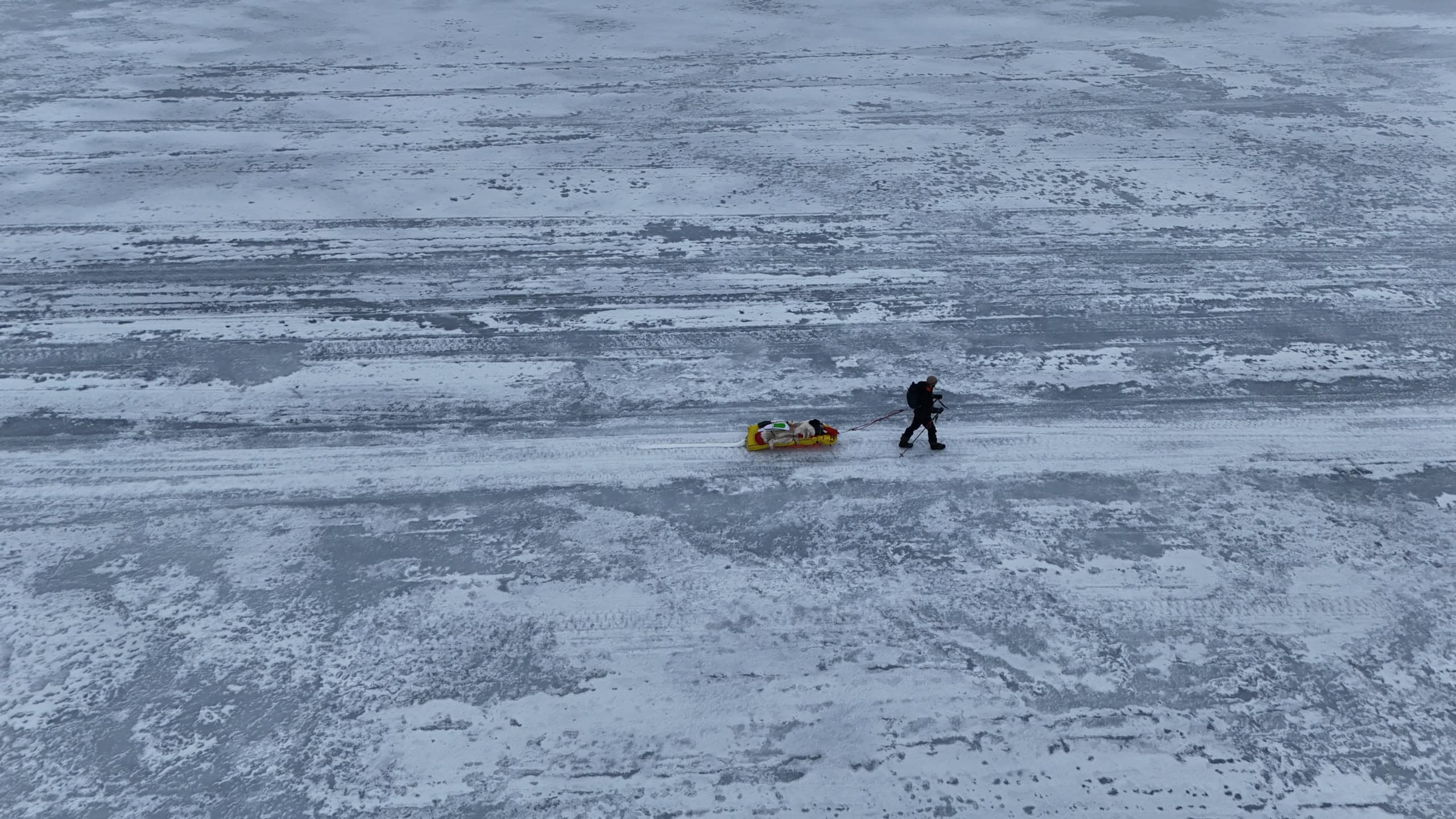
The latest episode of Physics World Stories brings together two artists doing exactly that. Host Andrew Glester speaks first with Tom Bailey, a performance and environmental artist from Bristol-based creative company Mechanimal. Bailey has recently returned from an extraordinary 600 kilometre journey through the Arctic borderlands — spanning Norway, Finland and Sweden — travelling by ski, sledge, foot and boat, and occasionally dressed as a reindeer.

Drone shot of artist Tom Bailey pulling a sled along an ice sheet in the Arctic
Arctic art Tom Bailey on his 600 km climate journey and performance tour in the Arctic borderlands. (Courtesy: Tom Bailey and Natasha Soonchild)

Travelling between festival performances, Bailey immersed himself in a region undergoing dramatic change: shifting weather patterns, transforming landscapes, and growing international interest in its mineral resources, raising urgent questions about governance and access. Central to his vision is a “more-than-human” perspective, advocating for nature to have formal representation in international decision-making, not merely as a resource to be managed, but as a presence with its own legitimate interests.

A climate video game with beautiful music

Composer Naomi Hart approaches the crisis from a different angle. After a conversation with her daughter about fears for the future left her saddened but resolute, she channelled that emotion into Save Progress – a short video game exploring how human connection can help us to think about the world and the choices ahead. In the podcast, Hart talks about her creative choices; the game combines an intentionally old-school design with specially composed synthesizer music. Save Progress takes around 10 minutes to play: give it a try.

  • To keep track of how physicists are investigating climate change and developing solutions, visit the Environment and Energy section of the Physics World website.

The post Beyond the data: art meets climate at the edge of the world appeared first on Physics World.

💾

Word wave puzzle no.5

18 June 2026 at 12:30

Here’s how the game works:

    1. Enter a word guess – in this game the word has six letters.
    2. After submitting your guess, each letter in the guessed word is coloured to provide feedback:
      • Green: The letter is correct and is in the correct position in the target word.
      • Yellow: The letter is correct but is in the wrong position in the target word.
      • Grey: The letter is not in the target word at all.
    3. Using this colour feedback, refine your next guess.
    4. Continue guessing until you correctly identify the hidden word(s) or run out of attempts.

If you want the answer, read the article here.

Fancy some more? Check out our puzzles page.

The post Word wave puzzle no.5 appeared first on Physics World.

Soviet institutes, Martian neighbours, Whovian science, stellar patterns and dystopian predictions: micro reviews of recent books

17 June 2026 at 11:00

Soviet Scientific Institutes
By Eric Lusito

Photos of research facilities in the former Soviet Union and its satellite nations might not seem the most promising subject matter for a coffee-table book. But French photographer Eric Lusito has done just that with Soviet Scientific Institutes, which contains more than 150 pictures from his travels across the former Soviet bloc. Unable to travel to Russia, Azerbaijan and Belarus, images from what Lusito calls the “authoritarian remnants” of the Soviet Union are absent. However, his photos across eight other countries depict the downfall of many once vibrant labs, from a rusty cosmic-ray telescope in Armenia to a defunct nuclear reactor in Georgia. The grim reality stands in contrast to the colourful 1970s mosaics in a Ukrainian cybernetics institute that seemed to herald a utopian future. Matin Durrani


Meet the Neighbours: Life on Mars and How to Find It
By Steven A Benner

In 1976 Viking 1 achieved two remarkable things: it performed the first successful landing on Mars and it sent home evidence for life on the red planet. Yet shortly after, Mars was again declared dead and for decades any scientist who suggested otherwise was ostracized. What happened? This is the story that astrobiochemist Steven Benner traces in his book Meet the Neighbours. He clearly explains the science and history, but most of all the machinations and philosophy of how science works. The work is a little polemical and very US-focused, but also extremely enlightening. Kate Gardner

  • 2026 Allen Lane


Amazing Worlds of Science Fiction and Science Fact
By Keith Cooper

Fans of the British TV show Doctor Who might recall the 10th Doctor visiting the stunning and terrifying planet “Midnight” – a diamond-encrusted place, bathed in extreme radiation, replete with a “sapphire waterfall”. While some aspects of this fictional world will remain in the realms of fantasy, as of 2011 astronomers believe that the supermassive exoplanet 55 Cancri Ae orbits so close to its parent star that it is indeed bathed in extreme radiation. And it is mainly made up of carbon, in the form of diamond and graphite. This is a perfect example of the symbiotic relationship that science fiction and fact can have with one another, as Keith Cooper outlines in his fascinating book Amazing Worlds of Science Fiction and Science Fact. From the many “strange new worlds” of Star Trek to the Dyson spheres of Ringworld and beyond, this book is a must for “hard sci-fi” aficionados and astronomers alike. Tushna Commissariat


An Anthology of Stargazing: a Collection of Constellations and Other Wonders in the Sky
By Abigail Beall, illustrated by Angela Rizza and Dilbag Singh

While the target audience of children will likely be immediately attracted to its beautiful cover and gold-edged pages, what makes An Anthology of Stargazing special is journalist Abigail Beall’s clear explanations alongside the artistic talents of Angela Rizza and Dilbag Singh. Despite covering everything from the history of stargazing and careers in the field, to the life of a star and the celestial sphere, Beall manages to tread that fine line of being informative while not losing the attention of young readers. There is a page devoted to each of the 88 recognized constellations, providing details on when and where you can see them, and a diagram of their configurations. These are accompanied by illustrations of the animals, people and objects astronomers saw in the patterns, and snippets of their myths and legends, helping the next generation of stargazers see the stories in the sky. Sarah Tesh

  • 2025 DK Children


Hum
By Helen Phillips

A mother loses her job to AI, so to make some cash she agrees to have her appearance altered to fool face-recognition technology. With this money she takes her family on a trip of a lifetime to the Botanical Garden – the only place to glimpse nature in their arid, dirty city. A treat only for the well-off, the children are amazed to see trees, swim in waterfalls and encounter wildlife. Hum by Helen Phillips has just won the Climate Fiction Prize 2026 for its view of a harsh world where nature is something you have to pay to see – but perhaps its real power is in Phillips’ portrayal of the future of day-to-day technology. This fabulous book will leave you with a lot to think about. It will likely make you put down your phone, too.  Kyla Rushman

  • 2024 Atlantic Books

The post Soviet institutes, Martian neighbours, Whovian science, stellar patterns and dystopian predictions: micro reviews of recent books appeared first on Physics World.

Asymmetric weather pattern reveals exoplanet’s true atmosphere

15 June 2026 at 15:00

Thanks to new “transit” observations of the hot Jupiter exoplanet WASP-94A b using the James Webb Space Telescope (JWST), researchers at Johns Hopkins University in the US have discovered a striking weather pattern on this distant world. Their work could help provide a clearer picture of the atmospheres on exoplanets, which has been very limited until now.

When an exoplanet passes in front of (or transits) its host star, some of the light from that star passes through the planet’s atmosphere. By detecting this light using telescopes, either ground-based or in space, astronomers are able to obtain the exoplanet’s atmospheric light spectrum.

A team led by Sagnick Mukherjee and David Sing has now analysed data on WASP-94A b from the space-based JWST and have found that the mornings on this exoplanet are extremely cloudy – with water absorption features in the spectrum – while its evenings are very clear. Clouds likely form on the planet’s colder, permanent nightside where temperatures are low enough for minerals to condense. Winds then carry those clouds towards the morning limb (the leading edge of the atmosphere), explains Mukherjee.

“As these cloud particles are dragged farther toward the hotter dayside, the clouds evaporate or sink deeper, leaving the evening side much clearer,” he says. “This is a clear discovery of a planet-wide cloud cycle in action on a distant exoplanet.”

Part of a broader survey

The researchers, who detail their findings in Science, decided to study WASP-94A b as part of a broader survey of exoplanet atmospheres with the JWST called the “Grand Tour Program”. The goal of this project, says Mukherjee, is to better understand the composition of these exoplanets and the physical processes at play in their atmospheres.

One of the main difficulties encountered during such observations is how small the signals that we are trying to look at are, he explains. However, in this case, the asymmetry between the morning and evening side of the planet was rather dramatic, which made it possible to separately probe the two.

Until now, researchers only had access to a single averaged spectrum of WASP-94A b – and indeed most other exoplanets studied over the last decade –from observations made by the Hubble telescope, for example. The chemical composition of the exoplanet’s atmosphere was therefore highly biased, says Mukherjee, and it was thought that the levels of oxygen and carbon there were hundreds of times higher than on the Sun. “This finding baffled us because this result could not be explained by planet formation theories. The new data show that WASP-94A b only contains only about five times as much oxygen and carbon.”

“Being able to resolve the cloudy morning and clear evening separately therefore gives us a much cleaner view of what the atmosphere is actually made of,” Mukherjee tells Physics World. “And this is not just relevant to hot-Jupiters like WASP-94A b, but might be extended to all exoplanet atmospheres that we are trying to understand using the transit method.”

“One of the most exciting aspects”

For Mukherjee, this is one of the most exciting aspects of the JWST era. “We are taking a step beyond simply detecting the atmospheres of distant planets and are now beginning to map their weather, chemistry, and three-dimensional structure in extraordinary detail.”

Indeed, using WASP-94A b as a benchmark, the Johns Hopkins team has already studied eight other hot gas giants and discovered the same distinctive cloud cycle on two other worlds: WASP-39 b and WASP-17 b. “Inspired by these observations, our collaboration, co-led by David Sing, myself and our colleague Guangwei Fu, is about to receive more than 180 hours of new JWST data to understand weather on diverse exoplanets and measure how their weather and cloud-coverage vary with planet temperature and gravity,” reveals Mukherjee.

The post Asymmetric weather pattern reveals exoplanet’s true atmosphere appeared first on Physics World.

❌