❌

Normal view

How to watch 'Shark Week' 2026 — schedule, dates & episodes

25 July 2026 at 12:00

Shark Week 2026 is here! This year's highlights include experiments testing great white intelligence, Molly Carlson's death-defying freefall dive into a reef shark feeding frenzy, and a deep-dive on the thresher’s tail strike. The 20-strong lineup of shows airs across seven nights, and Live Science is here with all the TV and streaming details.

How to watch "Shark Week" — Quick Guide

► Dates: Sunday, July 26 – Saturday, August 1

► TV: Discovery (US)

► US streams: YouTube TV / DirecTV / Hulu + Live TV / HBO Max

► Watch anywhere: Get 85% off Surfshark VPN

Shark Week still packages its science with ominous music and blockbuster titles, but its strongest moments challenge the familiar "mindless killer" myth, presenting sharks instead as intelligent, highly specialized predators whose decline could destabilize the world’s oceans.

Look out for a great study of the highly aggressive and erratic sharks in the waters off Marshall Islands, where the United States military detonated 67 nuclear bombs between 1946 and 1958.

And if you're a tech fan, there's plenty of new camera systems and tagging technology to discover.

Read on as we explain how to watch "Shark Week" 2026 from anywhere.

How to watch "Shark Week" 2026 in the U.S.

"Shark Week" 2026 comprises 20 brand-new TV specials that will air on Discovery from 8 p.m. ET/PT every evening from Sunday, July 26 to Saturday, Aug. 1.

If you don't have the Discovery channel on cable, it's available on a streaming basis from several cable alternatives. Best of all, many offer a free trial to new customers.

YouTube TV usually costs $82.99 per month but comes with a free trial and $15 off each of your first five months.

The DirecTV MyEntertainment genre pack costs $42.99 per month after a 5-day free trial, and Hulu + Live TV costs $89.99 per month after a 3-day free trial.

Alternatively, you can watch Shark Week 2026 on HBO Max (from $10.99 per month).

Can you watch "Shark Week" 2026 in the U.K.?

"Shark Week" programming typically airs on Discovery Plus in the U.K. at a later date.

At the time of publication, plans for the 2026 slate of specials are still firmly under wraps.

If you're currently in the U.K. for work or on vacation from the U.S., you can still catch "Shark Week" 2026 by using a VPN, such as Surfshark.

Watch "Shark Week" 2026 from anywhere

If you're traveling abroad you can access your usual streaming services from anywhere with a good VPN.

A VPN, or virtual private network, is a piece of internet security software that can alter your device's digital location, unlocking the geo-restrictions on most streaming platforms.

Our expert colleagues at TechRadar rate Surfshark as one of the best VPNs. Not only is it great for unblocking streaming services, it has top-level security features, a reasonable price tag and, right now, a big discount.

Save 85% off Surfshark VPN

Live Science x Surfshark Exclusive "Shark Week" Deal

Whether you're tuning into Discovery's Shark Week or diving deep into the web, privacy matters. Surfshark keeps your connection encrypted and your data out of sight – no matter what waters you're navigating.

Protect unlimited devices for just $2.39/mo + 4 Extra Months. Save 85%! Shark Week Special runs from July 26 to August 1, 2026.

🥇 From $2.39 per month
✅ Block ads, trackers, scams, and malware
🤝 30-day money-back guarantee
🏆 4 Extra monthsView Deal

"Shark Week" 2026 trailer

When is "Shark Week" 2026?

"Shark Week" 2026 runs from Sunday, July 26 to Saturday, Aug. 1 in the United States.

"Shark Week" 2026 episodes

Sunday, July 26

► 8 p.m. ET/PT – "K-Pop Shark Heroes"

After a recent series of shark encounters off the Korean Peninsula, actor and comedian Ken Jeong joins forces with Grammy-nominated singer and lifetime shark lover Rei Ami on a mission to reshape the perception of sharks across East Asia and around the globe, fueled by the power of K-pop.

► 9 p.m. ET/PT – "Air Jaws: Red, White and Breach"

A new phenomenon is emerging as great white sharks are captured on film breaching in California like never before. Filmmaker Jeff Kurr, marine biologist Alison Towner, and cinematographer Andy Casagrande set out to capture this unprecedented behavior and uncover the secrets behind the Great American Breach.

► 10 p.m. ET/PT – "Invasion of the Mega Sharks"

Shark researcher Neil Hammerschlag, joined by Shark Week expert Paul de Gelder, leads a team to track down Big Rose, a record-breaking great white believed to be one of largest predators in the North Atlantic. Using innovative tagging technology and daring field operations, they venture to a newly discovered shark hotspot off Nova Scotia aiming to transform our understanding of these ocean giants.

Monday, July 27

► 8 p.m. ET/PT – "Bull Shark Dinner Bell"

Shark attack survivor and advocate Paul De Gelder teams up with apex predator specialist Rosie Moore in Jupiter, Florida to investigate what triggers giant bull sharks to confront humans. The team tests how human behavior in the ocean, extreme weather events and prey preferences influence shark attacks.

► 9 p.m. ET/PT – "House of Sharks"

Off the coast of New Zealand lies a hidden shark battleground, where three distinct groups of great whites organize into competing "houses" and may be competing with one another to gain control of a major seal feeding ground. Marine biologist Tristan Guttridge and underwater cinematographer Kina Scollay venture into the middle of the action on an epic expedition. As they investigate, they uncover the possibility that these clans of great whites recognize their kin and return season after season to their ancestral territories, raising the theory that these predators aren't solitary hunters but rival dynasties at war.

► 10 p.m. ET/PT – "Biggest Mako on Earth"

For decades, rumors have swirled about massive, 15- to 20-foot-long (4 to 6 meters) mako sharks patrolling the deep waters off Southern California. Long dismissed as fishers' tales, new footage, along with a recently published photo capturing a mako that appears to stretch 15 feet, is now forcing scientists to rethink everything they know about these oceanic apex predators. Marine biologist Tristan Guttridge, alongside conservationist Kendyl Berna and shark tagger Keith Poe, go on an investigation to determine whether the world's biggest mako is real — and hunting in the coastal waters of Santa Catalina.

Tuesday, July 28

► 8 p.m. ET/PT – "Jurassic Sharks"

In a Shark Week first, revolutionary CGI resurrects the ocean's most bizarre Jurassic (201 million to 143 million years ago) sharks, bringing them to life like never before. Guided by the rare living sharks that once shared their seas, real-world expeditions seamlessly merge with cutting-edge visual effects to uncover stories from the deep and prehistoric seas in ways never before possible.

► 9 p.m. ET/PT – "Jaws vs Orca"

For millennia, the great white shark has reigned as the ocean's ultimate apex predator. But now, a new challenger is emerging: the orca. Around the world, sharks are washing ashore with their livers removed with chilling precision while in the Strait of Gibraltar, orcas are targeting sailboats — ramming hulls, crippling rudders and sinking vessels. To investigate this shift in behavior, Tristan Guttridge explores orcas' attacks on boats to reveal how these predators hunt and how they may be taking down great white sharks.

► 10 p.m. ET/PT – "Chum Island: Catching a Killer"

In this Shark Week whodunnit, a rare surge of highly aggressive shark attacks hit a tight-knit community off Australia’s southern coast, prompting marine biologist Riley Elliott to find and tag the oceanic suspects. But when he discovers this could be a new, elusive population of sharks, he builds the world's first "chum island" to lure them in and uncover if they are the ones responsible for the attacks.

Wednesday, July 29

► 8 p.m. ET/PT – "Expedition X: Atomic Sharks"

Phil Torres and Heather Amaro travel 5,000 miles (8,000 kilometers) west of the U.S. to the remote Marshall Islands, home to the world's largest shark sanctuary, where apex predators are exhibiting highly aggressive behaviors and erratic swimming patterns. Between 1946 and 1958, the United States military detonated 67 nuclear bombs around the island, raising questions about their lasting impact on marine life. Now, the team dives into these dangerous waters to investigate reports of "mutant" sharks and uncover whether atomic blasts could be to blame.

► 9 p.m. ET/PT – "Expedition Unknown: Shark Secrets"

Global explorer Josh Gates travels back in time and dives into the history behind some of the world’s most infamous shark encounters, from the earliest known shark attack to the mystery surrounding the shark feeding frenzy faced by sailors following the sinking of the USS Indianapolis. He also investigates the legendary "Stronsay Beast," a mysterious creature that washed ashore in Scotland in 1808.

► 10 p.m. ET/PT – "Alien Sharks: Untamed America"

In celebration of America’s 250th anniversary, wildlife biologist Forrest Galante embarks on a nationwide quest to find the nation’s most bizarre and dangerous "alien" sharks – from glowing swell sharks to elusive sawfish.

A Mount Rushmore spoof promoting Shark Week 2026

(Image credit: Discovery)

Thursday, July 30

► 8 p.m. ET/PT – "What Shark Attacked?"

Shark attacks are extremely rare, but when they happen, the first question is always the same: What kind of shark was it? Leading shark scientists Tom Hird and Rosie Moore, alongside conservationist Kinga Philipps, investigate mysterious attacks from around the world using cutting-edge forensic analysis – including bite pattern comparison, geographic profiling, video evidence, and eyewitness testimony – to identify the species responsible and uncover why these life-threatening encounters occur.

► 9 p.m. ET/PT – "How to Train a Great White"

Tristan Guttridge ventures into shark-infested waters off New Zealand to answer a provocative question: Can sharks be trained? Using techniques pioneered by the U.S. Navy to train dolphins in complex cognitive tasks, the team tests whether these apex predators can learn, solve problems and respond to cues. If successful, the experiment can potentially redefine shark intelligence and transform our understanding of one of the ocean's most misunderstood predators.

► 10 p.m. ET/PT – "Ultimate Shark Dive"

World-class Red Bull high diver Molly Carlson leaps from a helicopter hovering above the open ocean, targeting a narrow plexiglass cage surrounded by circling reef sharks, or risking a direct plunge into a chum-filled feeding frenzy. From concept to execution, Carlson pushes herself to the limit with a record-setting stunt that no high diver has ever attempted.

Friday, July 31

► 8 p.m. ET/PT – "Secrets of the Great White Kill"

For centuries, great whites were believed to simply stalk their prey. Now, groundbreaking science suggests that these alpha sharks are highly intelligent predators that adapt their hunting techniques in real time. In this program, the full range of great white hunting tactics is revealed, reinforcing the species' status as one of the ocean's top predators.

► 9 p.m. ET/PT – "Sharkzilla Takes New York"

After a wave of mauled marine life washes ashore in New York, conservation biologist Craig O'Connell launches an investigation to find the culprit. When it leads to an old nuclear dumping ground teaming with great whites and makos, he is left with the theory that the predator may be radioactive. A deeper dive reveals an unexpected hotspot for massive makos off the coast of the Hamptons, suggesting that these waters may be hiding something even bigger beneath the surface.

► 10 p.m. ET/PT – "My Strange Shark Addiction"

How far will people go to fuel their fascination with sharks? For four devoted shark "fin-atics," their obsession shapes every aspect of their lives. From a dentist who spends every spare moment searching for life-size shark replicas to a woman who insists she has a special connection with her shark "boyfriend," and a world-record holder covered in shark tattoos, this special explores how their daily routines, relationships and finances revolve entirely around sharks.

Saturday, August 1

► 8 p.m. ET/PT – "Great White Highway"

Great white sharks are pushing farther up the East coast than ever before and in far greater numbers, leading to close encounters and forcing beach closures. Now, a team of shark scientists races to install high-tech receivers and tag as many great whites as possible.

► 9 p.m. ET/PT – "Thresher Shark: Stun to Kill"

The physics behind the thresher shark’s devastating tail strike has long remained a mystery — until now. For the first time ever, the discovery of a shallow-water feeding ground has made observing this behavior possible. Now, shark scientist Craig O’Connell and marine biologist Aliah Banchik dive into the direct line of fire as they attempt to reveal exactly how these predators use their tails to stun and kill.

Is there a "Shark Week" 2026 host?

John Cena and Jason Momoa have hosted recent editions of "Shark Week", but the 2026 incarnation won't have a single overarching presenter stitching its constituent parts together.

We test and review VPN services in the context of legal recreational uses. For example: 1. Accessing a service from another country (subject to the terms and conditions of that service). 2. Protecting your online security and strengthening your online privacy when abroad. We do not support or condone the illegal or malicious use of VPN services. Consuming pirated content that is paid-for is neither endorsed nor approved by Future Publishing.

Cutting out the noise: How horseshoe bats adapt their echolocation behavior in colonies

24 July 2026 at 19:20
Imagine searching for a gemstone in a dark cave: You use a flashlight, looking for a rainbow-colored glint in the darkness. Now, imagine 10 other people in the cave with you, using different-colored flashlights at the same time. Suddenly, you can no longer tell which light is coming from your gemstone, which light is from another flashlight or which light is coming from a reflection off another unknown object. That is what echolocation with multiple, overlapping frequencies would be like. But now, imagine if every person in the cave were using a flashlight of the same color. The glint from the gemstone would be much easier to see.

Why and how birdsong differs across the world—and the eight motifs that tie them together

24 July 2026 at 17:50
Birdsong carries meaning across open space, helping birds attract mates, defend territory and communicate with rivals. While there has been much research into the use of birdsong across species, researchers have lacked a single global framework that explains birdsong complexity and how it differs from place to place. But now, in a study recently published in Science, a group of researchers in France have analyzed more than 116,000 bird songs from 3,160 passerine species around the world, allowing them to identify eight common motifs and explain differences in birdsong.

'We're trying this out of frustration': Marmots star in OnlyFans account as researchers desperately look for ways to raise funds amid US budget cuts

A team of UCLA scientists has resorted to posting content on OnlyFans to raise money for research amid huge federal funding cuts to U.S. science. But the videos aren't of themselves, they're exclusive recordings of marmots.

"I spend a lot of time waiting for marmots to do things and had the idea one slow morning," Daniel Blumstein, a professor of ecology and evolutionary biology at UCLA, who leads the project, told Live Science in an email. "When I came back with this idea, one of my graduate students immediately said we MUST do this! So here we are!"

Researchers at the Rocky Mountain Biological Laboratory (RMBL) have been studying yellow-bellied marmots (Marmota flaviventer) at a field station in the Rocky Mountains near Crested Butte, Colorado, since 1962. "The RMBL marmot study is the second oldest continuous study of individually marked mammals in the world," Blumstein said. "We have up to 65 years of data on population dynamics, social and anti-predator behavior and ask a lot of questions about how animals respond to a changing environment."

Yellow-bellied marmots are one of 15 marmot species, a group of cat-size ground squirrels that can be found throughout the Northern Hemisphere. This particular species is widely distributed throughout the Rocky Mountains and several mountain ranges in California. The species live in social groups and are active during the day, which makes them a great subject for long-term behavioral studies.

"Long-term research like ours is both very valuable to understand how and why things change over time, and our project has been very productive," Blumstein said.

However, collecting data over such long periods comes with a significant price tag. And with federal funding cuts draining research budgets across the country, Blumstein and his team have had to look for other methods to raise money for their research. Enter OnlyMarms.

On June 17, the RMBL Marmot Project announced on Instagram that "the state of funding is so bad we are turning to OnlyFans, or as we like to call it 'OnlyMarms'."

Two marmots on a rock

With federal funding cuts draining research budgets across the country, Blumstein and his team have had to look for other methods to raise money for their research. (Image credit: Daniel T. Blumstein, Professor Department of Ecology & Evolutionary Biology Institute of the Environment & Sustainability UCLA)

OnlyFans is a subscription platform that allows users to pay creators to see exclusive photos and videos. The platform has become popular with adult-only content creators, but it hosts others too, including musicians, athletes and celebrities — and now marmots.

"We’re trying this out of frustration with an extremely challenging funding environment," Blumstein said. "If we’re lucky, it can help raise money for supplies and some expenses. But unless we are very lucky, it won’t replace the federal funding that has driven discovery in the US since the 1950s."

However, for anyone hoping for spicy marmot content, you might be a bit disappointed. "[It's] almost all G-rated content of marmots playing, being cute, digging, bringing plants to their burrows…normal routine stuff for marmots," Blumstein said. "The occasional scuffle makes it PG rated."

Emily Renkey, who also works on the project, said the team hopes to add videos of marmot pups soon.

"Our 'Onlymarms' page has gotten a bit of engagement since we started it a bit over a month back," Renkey told Live Science. "We've gotten 735 page visits and have 44 fans."

But how much has OnlyMarms actually been able to raise? "Not much," Blumstein said. "We’re letting folks have free subscriptions and ask for tips. They [OnlyFans] take 20% and I have to pay taxes on the balance."

Even so, the team is hopeful that the page is helping to increase public engagement and interest in the project. "Overall I think this can be an amazing way to teach people more about animal social behavior, which can sometimes be hard to observe," Renkey said. "Even we are learning more about marmots through these up close glimpses the game cameras provide."

While it is difficult to get signed consent from the marmots to use this content online, Blumstein said that the funds raised would be used to help protect the creatures in a rapidly changing world. "We are using these funds to help continue the study which provides valuable information about them and how they’re responding to climate change," he said.

The OnlyFans account is just one way the team has tried to share its research with new audiences. "We work hard to translate our research findings to the public," Blumstein said. "Our lab’s running a Fat Marmot Week contest this summer. We're hoping this will let people learn more about these fascinating alpine critters!"

Watch orcas ram a sunfish so hard it explodes

23 July 2026 at 05:00
Credit: Kathryn Ayres

There have been numerous accounts in recent years of orcas ramming boats—and sometimes sinking them. Scientists believe this may be a form of culturally learned behavior passed down through generations. Now we have fresh examples: orcas in the Gulf of California were filmed teaming up to ram sunfish with so much force that the carcasses exploded into small fragments. While orcas have been known to use force to remove flesh from prey, this is something different, according to a new paper published in the journal Frontiers in Ethology.

“We think this may help younger orcas feed more easily, or it could also just be for fun," said co-author Kathryn Ayres of Beneath The Waves, a nonprofit organization promoting ocean health. "Orcas are known for playing with their food.”

Orcas engage in cooperative hunting strategies that can involve striking or killing animals—sometimes eating their prey, sometimes not—so the behavior could be described as social interaction, play, or practice as a mode of social learning. Orcas have been observed ramming whale sharks as another orca held the prey steady. Other cooperative strategies include herding mobile rays, blocking an escape path while hunting white sharks, and deliberately producing waves to bump penguins off ice floes.

Read full article

Comments

© Robert Pittman, NOAA/Public domain

'It was unlike anything I'd witnessed before': Orcas seen headbutting a sunfish so hard that it exploded

23 July 2026 at 05:00

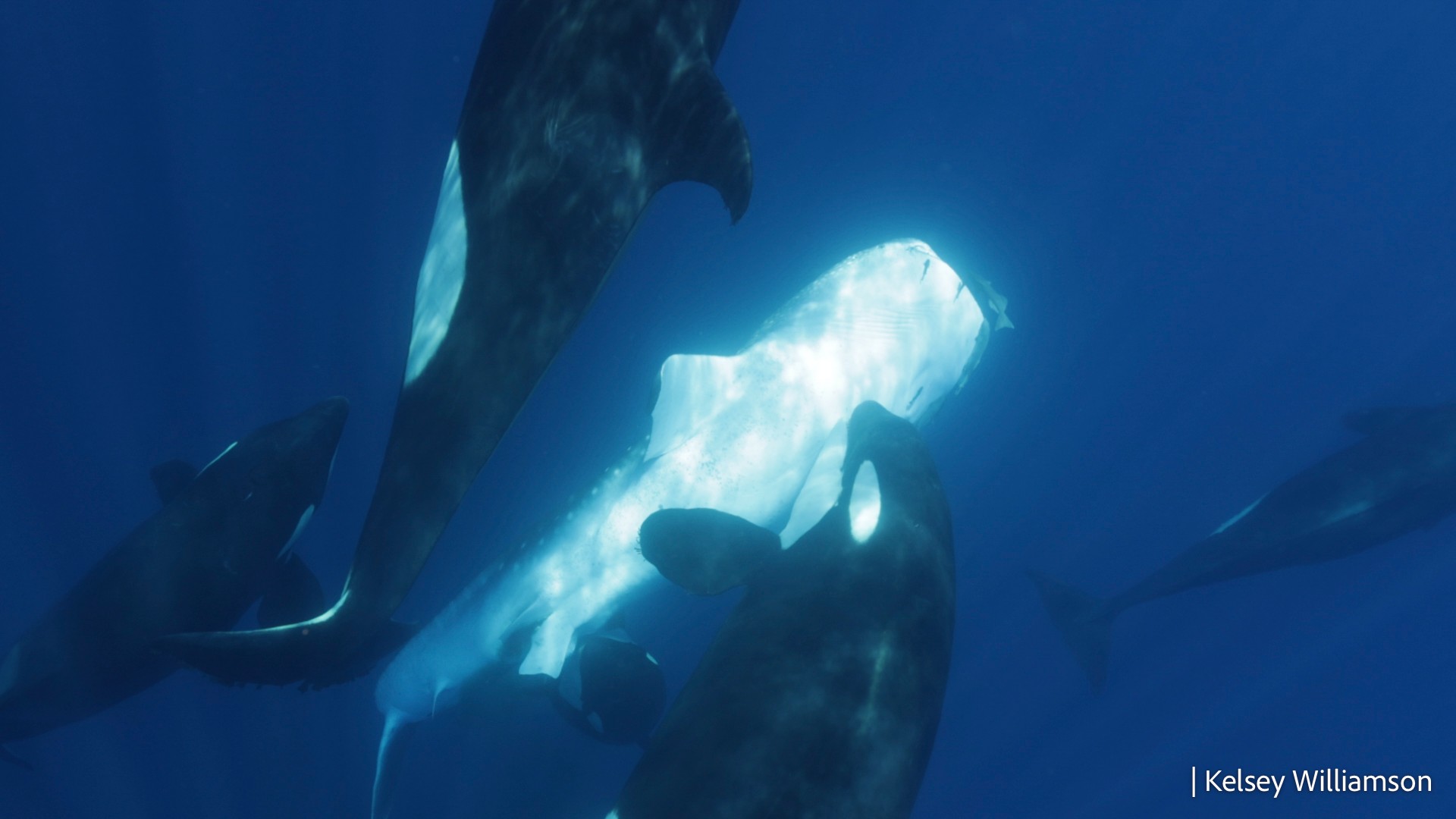
One of the ocean's most intelligent and aggressive predators has once again surprised scientists with a curious new behavior. In the Gulf of California, researchers witnessed orcas working together to smash dead sunfish into bits — a suspected food processing technique that makes it easier for younger whales to feed on the enormous bony fish that weigh up to 4,400 pounds (2,000 kilograms).

In two separate encounters, one orca gripped a sharp-tail sunfish (Masturus lanceolatus) while another orca charged toward the fish. The first whale released the carcass just before impact, allowing its companion to slam into the fish at high speed and scatter fragments of fish flesh throughout the water.

"It was unlike anything I'd witnessed before," Kathryn Ayres, a scientist at the conservation nonprofit Beneath the Waves told Live Science in an email. "As a scientist, moments like this are incredibly exciting because you realize you're observing something that may never have been documented in detail before — as you can tell in the video!"

Ayres and her colleagues dubbed the behavior "ram-to-fragment." Their observations, published July 23 in the journal Frontiers in Ethology, suggest the killer whales were not trying to kill the sunfish, which were already dead and appeared to have been disembowelled. Instead, the orcas may have been breaking down the bulky carcasses so members of the group, particularly younger animals, could feed more easily.

Hunting in action

The first encounter Ayres observed took place in July 2024 near an offshore seamount off Baja California Sur, Mexico. An adult female orca held a sharp-tail sunfish by its tail-like clavus, or rudder, while an adult male orca accelerated toward it, belly-up. The female released the fish an instant before the male struck.

The collision produced a loud noise and caused the sunfish's tissue to disintegrate. In the video, Ayres' shock is evident as she can be heard exclaiming, "Oh my god!"

A juvenile orca then swam into the cloud of suspended flesh and ate the smaller pieces, while the adults fed on what remained of the main carcass.

A second encounter, which the researchers credited diver Héctor Franz for filming in September 2025, followed much of the same sequence. One adult orca stabilized the sunfish, another rammed it and a calf later pulled tissue from the broken carcass.

Ayres had previously watched orcas hunt ocean sunfish (Mola mola), but this was different.

"I had also seen orcas ram their prey previously, but I had never witnessed an impact powerful enough to completely fragment the tissue like this," Ayres said. "That was what made this observation so remarkable."

The maneuver resembled coordinated attacks Ayres and her team had previously documented, in which orcas confronted whale sharks (Rhincodon typus) — the largest living fish — in the Gulf of California. In those hunts, some orcas took turns ramming it.

An orca hits the under side of a small whale shark, which has been flipped upside down for easier predation

Previous footage from diver Kelsey Williamson shows orcas flipping a whale shark upside down to have an easier time preying on it. (Image credit: Kelsey Williamson)

Why make fish confetti?

Ramming is not a new killer whale hunting technique, said Matt Hansen, a postdoctoral researcher at the Leibniz Institute of Freshwater Ecology and Inland Fisheries who was not involved in the study. However, the hold-and-release sequences and shattering of carcasses may be new, Hansen told Live Science in an email.

The researchers proposed several possible explanations for the behavior. The predominant assumption is that the adults were processing food for younger whales. Orcas frequently tear apart prey and share portions with calves and juveniles, and in both newly described encounters, young killer whales were present.

But two observations are not enough to show that the adults were deliberately feeding or teaching the youngsters, Heather Hill, a professor and chair of psychology at St. Mary's University in Texas who was not involved in the research, told Live Science in an email.

"Whether or not it represents parental investment, observational learning, or distribution of resources remains circumstantial in my opinion," she said.

The researchers also suggested that the behavior could have been playful. Orcas are highly intelligent and social, and they sometimes manipulate, toss or strike prey without immediately eating it. However, Hill said that the two encounters appeared more practical than playful.

"If it was for fun, I would have expected multiple attempts made with variations in speed, point of contact, force of impact, and initiators because the point of playing is to try different things and not destroy the toy too soon," she said. "Since it appears that these events were 'one and done' so to speak, probably less playful and more functional — to eat the fish and maybe to model a foraging technique and possibly to share resources with the younger animal."

The study authors also raise a more speculative possibility that dispersing the sunfish's microbe-rich skin and gelatinous tissue could somehow affect the surrounding water or expose the orcas to potentially beneficial microbes. But what that benefit might be is unclear.

"I don't see how dispersing the skin into the water column would have a different effect from eating it," Hansen said. "Unless the authors are suggesting [the orcas] are using it like a lotion on their own skin? Who knows, the world is weird and wonderful."

Orca quiz: Will you sink or swim?

Mice on 'godforsaken' frozen volcanoes eat toxic plants to survive conditions 'not remotely compatible with long-term human survival'

22 July 2026 at 18:54

Scientists have discovered how mice survive at extreme altitudes on the tips of icy dormant volcanoes in the Andes.

The area where the mice call home extends more than 1 mile (1.6 kilometers) above the world's highest human settlement. The air is thin, temperatures are blisteringly cold, and a desert ecosystem ensures water and vegetation are extremely scarce.

"As a mountain climber standing on the summit of these peaks, the idea that there could be animals living in these barren godforsaken environments is just really mind-boggling," Jay Storz, a professor of biological sciences at the University of Nebraska–Lincoln, told Live Science.

In 2020, Storz led a team of mountaineering scientists who recorded Andean leaf-eared mice (Phyllotis vaccarum) at a record-breaking altitude of 22,110 feet (6,739 meters). The mice were living on the summit of Llullaillaco, the world's highest historically active — now dormant — volcano, located on the border between Argentina and Chile.

Now, in a new study published July 9 in the journal Science, Storz and his colleagues have revealed the biological mechanisms behind the mice's extreme survival. It turns out that the species has evolved a variety of adaptations to survive at such high altitudes, including the ability to eat plants that would normally be toxic.

Before the discovery of the high-altitude mice, researchers had assumed that mammals could only survive up to around 18,000 feet (5,500 m) above sea level. But these hardy animals smashed that record, while also thriving at lower altitudes.

"One of the really notable things about this particular species is that it has such a broad elevational range, from sea level along the desert coastline of northern Chile, all the way up to the summits of some of the highest peaks in the Andes," Storz said.

To better understand these remarkable mice, the researchers studied members of the species at low, middle and high altitudes between 2020 and 2023. The work mixed mountain climbing and animal surveying techniques, with Storz and his team ascending the mountains and setting traps to catch and record the mice.

Storz said that a well-acclimatized mountain climber can tolerate these high elevations for a very short period, but that the conditions are "not remotely compatible with long-term human survival."

The expeditions can be dangerous even for experienced climbers: one of Storz's colleagues was evacuated during a separate expedition in Peru after they developed high-altitude pulmonary edema — a life-threatening form of altitude sickness that causes fluid to build up in a climber's lungs.

A photo of Storz and two of his colleagues on the summit of Hualca Hualca in the Central Andes.

Storz surveyed the mice with other experienced mountain climbers. Here he is pictured with Mario Pérez Mamani and Franz Checca on the summit of Hualca Hualca in Peru. (Image credit: Jay Storz)

The researchers sent some of their specimens to labs in Chile for further analysis. This included putting the mice into small chambers and measuring how they adapted to extreme cold and oxygen deprivation. The team also sequenced the Andean leaf-eared mouse genome, which revealed a variety of local adaptations to different altitudes. For example, the mice living at high elevations were better at maintaining their body heat and oxygen levels than those taken from lower altitudes, according to a statement released by the University of Nebraska-Lincoln.

Another change in the high-altitude mice's genes enabled them to digest food and detoxify plants that would otherwise be harmful to them, according to a statement released by McMaster University in Canada. This special adaptation helps the mice get enough food on the sparsely vegetated volcanoes.

The researchers also revealed that the high-altitude mice were much more active in the daytime, perhaps due to a lack of predators and warmer temperatures during those hours. However, despite local adaptations, the mice were still extremely similar genetically across their elevation range. All of the mouse populations overlapped, which prevented high-altitude individuals from becoming isolated or especially distinct from their low-altitude kin.

Not all of the mice survived the researchers' study. To fully understand the biology of the mice, researchers needed to euthanize them and study their tissues. They also wanted to preserve "voucher" specimens to act as permanent representatives of the species in museums, which researchers can keep returning to for further study. According to the study, the team collected 167 of these voucher specimens.

Storz noted that it's very valuable to have a biological record of specimens archived in museum collections for future generations. He added that their work was not having any impact on the viability of the mice populations, and that the animals were killed humanely, although he did not disclose any details.

"King of the mountains"

Study co-author Graham Scott, a professor of biology at McMaster University in Canada, said that the take-home message of the new research was how life can overcome such extreme environments, and not just survive but thrive. In this case, the mice did this by developing solutions for the cold, oxygen deprivation and food scarcity.

"It just shows the complex ways that evolution has made these animals the king of the mountains," Scott said.

Enduring harsh conditions high in the Andes likely comes with some benefits. Scott said that competition is probably the biggest reason for the mice living at such high elevations. The mice are also pretty much left to their own devices, and thus likely have less to fear from predators.

But this begs the question: Are there any animals living higher than the mice?

"Birds are always a bit hard to nail down because, of course, they can fly and there's certainly records of birds flying at higher elevations than that," Scott said. "But we think this is probably the highest-dwelling animal."

King cobras may be riding trains across India [COMIC]

21 July 2026 at 11:30

Dikansh S. Parmar rescued a snake for the first time in middle school. It happened at his karate class in Surat, India. Someone spotted a baby cobra among a nearby pile of construction materials and wanted to kill it. But Parmar stopped them. His dad had rescued snakes, and he had a rough idea what to do. He took a rod from the construction site and used it to coax the baby snake inside a water bottle.

Parmar was lucky. The snake didn’t harm him. And people without proper training shouldn’t approach snakes. But this encounter inspired him to become a trained snake rescuer as a teen. Parmar is now also a herpetologist who studies snakes. He works at the Leibniz Institute for the Analysis of Biodiversity Change in Bonn, Germany. Recently, Parmar combined his snake rescue and science knowledge to discover something curious about his favorite snakes: king cobras.

Western Ghats King Cobras (Ophiophagus kaalinga), his team found, might ride trains across the Indian state of Goa. Parmar and his colleagues shared their evidence for this January 26 in Biotropica.

illustrated text reads "Wild Things: A graphic tale" with animals drawn around the letters
Text: Snakes on a Train. Written by Maria Temming. Illustrated by JoAnna Wendel. Image: A woman sitting on a train looks up from her phone to side-eye the passenger sitting beside her — a snake that is reading a newspaper.
Text (above images): In 2023, Dikansh S. Parmar received a shocking late-night phone call from a friend. Image (left): A man in a forested area is on the phone. He says, “Guess who rescued a king cobra?!” Image (right): A man sits up in bed, holding a phone to his ear. He says, “What? No way!” Text (below images): Parmar and his friend are both trained snake rescuers. But it was very rare to catch a king cobra — the world’s longest venomous snake.
Text (above image): Western Ghats King Cobras are found in the Indian state of Goa, where Parmar’s friend lived. But these snakes are not known to live in his village of Chandor. Image: A map of India shows the state of Goa on the western coast. A map of Goa shows the village of Chandor slightly left to the center of the state. Text (below image): Parmar studies snakes at the Leibniz Institute for the Analysis of Biodiversity Change in Bonn, Germany. Intrigued by the rogue king cobra, he traveled to Chandor to see where it had been found.
Text (above image): Railway workers had spotted the king cobra below a train station platform. Image: Parmar stands with a notebook and pen with a group of railway workers. The group are standing in a grassy area below a train station platform. A sign beside the platform reads, “Chandor, Goa.” Railway Worker 1 says to Parmar: “It was terrifying! Your friend is a real hero!” Railway Worker 2 says: “I still think I could have taken it.” Railway Worker 3 says: “Uh, it was a 13-foot venomous snake.” Railway Worker 1 says: “Yeah, you asked me to kill a spider for you yesterday.” Text (below image): The scene reminded Parmar of another snake rescue he’d performed in 2017.
Text (above image): A train station employee in Surat, India, had called Parmar at midnight, insisting that he come catch a cobra loose on one of the trains. Image: Parmar grabs the tail of a snake sitting on the seat of a crowded train car. Parmar says: “Sorry buddy, you’re coming with me.” The snake says: “But it’s not my stop!” Text (below image): At the time, Parmar didn’t think much about the snake beyond getting it safely off the train and himself back to bed. Now, it made him wonder if the king cobra in Chandor was a railway stowaway, too — and if other king cobras ever rode trains.
Text (above image): Parmar and his colleagues made a map of where Western Ghats King Cobras had been rescued across Goa from 2002 to 2024. Almost all had been found near their preferred habitats: cool, rainy forests. Image: A map of Goa shows where the most suitable king cobra habitats exist in the state. The eastern half of the state contains more suitable habitats than the western half. Black lines show where rail lines cut across the state, and red dots near some of those lines show where king cobras have been rescued. Text (below image): But five king cobras had been found near Goa’s more arid western coast — all a short distance from railroad tracks.
Text (above image): Parmar’s team also found news reports and social media posts about other snakes, including a king cobra, that had been spotted on trains. Image: Parmar looks down at his phone and says, “Whoa.” A news report with a video is on the phone’s screen. The news headline reads: “Watch a 10-foot king cobra removed from a train!” A video accompanying the report shows a railway worker trying to take a snake off a train car. The snake says, “You human paparazzi are relentless!” Text (below image): This strengthened the scientists’ suspicion that Western Ghats King Cobras were accidentally riding trains across Goa.
Text (above image): Food left on board by passengers and leftovers thrown outside train windows onto tracks can attract rats, which attract snakes — including king cobras, which eat other snakes. Image: A train platform bustles with people. A railway worker yells, “All aboard!” Meanwhile, a snake slithers onto one of the cars of the train parked at the platform. The snake says, “Don’t mind if I do!” Text (below image): Snakes might also seek shelter inside trains during the heavy rains of monsoon season.
Text (above image): To test their hypothesis that king cobras catch trains, Parmar’s team could gather more data with cameras at railway stations or by outfitting snakes with tracking devices. Image: Parmar sets up a camera near railroad tracks. Two snakes are hiding in the grass nearby, watching. One snake says to the other, “You weren’t kidding about the human paparazzi.”
Text (above image): Parmar wouldn’t be surprised if snakes travel by train. He and his colleagues in Surat have rescued Eastern bronzeback tree snakes that most likely arrived in town on trucks. Image: A map of India shows a path from Darjeeling to Surat that spans 1,700 kilometers. Below the map, a truck driver waves to a man pushing a cart of sapling trees. Two snakes are hiding in the leaves of those trees. One snake says to the other, “Why do humans complain about roadtrips? This service is excellent!”
Text (above image): But the fewer Western Ghats King Cobras riding trains, the better. King cobra bites are deadly. Unfortunately, snakes can’t read ‘keep out’ signs. Image: A snake slithers up to railroad tracks. Beside the tracks is a sign. On the sign is a snake with a big red X through it. The snake says, “They say ‘X marks the spot!’ I must be in the right place!” Text (below image): So it’s up to human passengers to clean up leftovers — and minimize how much construction cuts through king cobras’ forest habitats — to avoid tempting the snakes on board.
All: J. Wendel

Chatty cats and talking dogs could one day ‘speak’ in our language 

20 July 2026 at 11:30

In the animated movie Up, a yellow, tail-wagging dog shows up wearing an electronic collar. The main character, a curious and cheerful 8-year-old boy named Russell, tells the dog to sit. The dog sits. Russell tells the dog to shake. The dog extends a paw. Russell then tells the dog to speak.  

“Hi there,” says the dog.  

To Russell’s amazement, the dog’s collar translates his doggy thoughts into actual human words. “My master made me this collar,” Dug the dog tells his new acquaintances. “He is a good and smart master, and he made me this collar so I may talk — SQUIRREL!” 

This is a common piece of technology in stories — a translator that can decode animals’ barks, squeaks, meows, clicks and such, into human language.  

Back here in the nonfiction world, anyone with a pet has probably wondered at some point what’s going on in that cute little animal head. Scientists can’t say. But there are reasons to think that an animal-human translator won’t stay a work of science fiction forever. “I think these things may be one day doable,” says Erich Jarvis. He’s a neurogeneticist at The Rockefeller University in New York City.

One day, pets may wear little devices like Dug’s collar. Or an app on a phone might translate pet sounds into words. This neat trick could finally let you learn the answer to why your cat is staring at that empty corner of the living room.

Learning languages 

Advances in computing power, artificial intelligence (AI) and fancy tools that measure sounds promise to bring people closer to conversing with other animals. These advances could turn animal chatter into bits of information that can be decoded by humans.  

Of course, some animals can already talk to us — in our preferred languages, too. Jarvis tells the story of a parrot that left its California home. It returned years later speaking Spanish, he says.  

Such language skills are rare. Thinking up a message and making intricate vocal sounds to convey it take special mental skills and a great flexibility of body systems. These traits are present in fewer than 1 percent of vertebrate species, says Michael Long. He’s a neuroscientist at New York University in New York City.  

Not all animals may be good conversationalists. Take vervet monkeys. “Their cognitive abilities are huge,” Long says. But they flounder when it comes to producing complex sounds. “So they have one of those requirements, but they need to get the other one,” Long says.  

And with rare exceptions, none really speak our language. But that gap can be overcome. It may just take a slight shift in what we consider talking. “Animals are speaking, often — to use speaking in a very loose way — more vibrantly than we had ever given them credit for,” Long says. 

A video still from the movie Up shows Carl, an older adult man, sitting on a porch with the golden retriever, Dug.
In the Pixar movie Up, a golden retriever named Dug wears a collar that translates his thoughts to speech. Dug’s collar translates all of his thoughts, even mid-sentence distractions like “SQUIRREL!”ALBUM/ALAMY

Understanding animals 

Like parrots, dolphins and whales may similarly make good conversation partners with people. In 2023, scientists used a decoded whale “hello” to enjoy a short conversation with an Alaskan humpback. This exchange consisted of a volley of whale whups, translated into English as “hello.” Still, both parties engaged in this interspecies chat. 

Another group of researchers has since discovered that whale language shares statistical properties with those spoken by humans. With these sorts of advances, perhaps we’ll soon be swapping krill recipes.

Some of Jarvis’ research includes mice that have been genetically changed to produce more complex sounds. He is part of a team that’s closely examining key genes that are active in good vocal learners. Mice with a human version of a protein called NOVA1, for instance, made more complex vocalizations. To be clear, this is not yet a talking mouse. But the research is moving fast.

Some animal messages are clear even without a fancy sci-fi gadget. “Animals are broadly expressive,” Long points out. Anguished yowls of a cat sitting by her unfilled food dish are no great mystery.  

Messages don’t even require a vocal tract. Mongolian gerbils, for instance, beat out messages by thumping the ground percussively. Dances, posture, color and even objects can all carry messages. Just think about it: You can probably figure out the message when a dog holds his leash in his mouth and sits by the front door. 

So while we wait for a gizmo that translates our pets’ thoughts into words, consider the wildly variable ways animals already communicate. Long’s formerly stray Brooklyn cats, for instance, have plenty to say. Their needs and wants are “very, very transparent,” he says.

Should a cat-human translator ever exist, Long’s message to one of his cats would be short, sweet and practical: “I would tell him not to sit too close to the stove when I’m cooking. I think that’s it.”  

'We were genuinely surprised': 'Superworms' can clean extremely delicate skeletons lickety-split, and that's a game changer for museums

20 July 2026 at 12:00

The skeleton of a wolf or bat you admire at the natural history museum may look pristine, but it wasn't always that way ‪—‬ there's a good chance flesh-eating beetles helped prepare those bones for display. For decades, many museums have relied on colonies of dermestid beetles to strip soft tissue, like skin and muscles, from skeletons. Unlike the harsh chemicals that would otherwise be used for bone preparation, these beetles can be gentler and clean hard-to-reach areas. But these colonies are a hassle to keep up, and escaped beetles can even be dangerous for valuable museum specimens that don't need their skin removed. Now, researchers may have found an even better biological cleanup crew.

In a new study published July 1 in the journal PLOS One, scientists found that superworms (Zophobas morio) — large beetle larvae commonly sold as pet food — can clean skeletons just as effectively while offering practical advantages. The larvae removed soft tissue from animals ranging from tiny bats to a 9-pound (4.2 kilograms) wolf without damaging even the most delicate bones.

Two of the paper's authors, Niloofar Alaei Kakhki, a postdoctoral researcher at the State Museum of Natural History Stuttgart in Germany, and Morteza Monfared, a researcher at the Ferdowsi University of Mashhad in Iran, answered our questions via email about what makes superworms unique and how they could be used in laboratories and museums.

Kenna Hughes-Castleberry: Why are these critters called "superworms?" What makes them different from other beetle larvae?

Niloofar Alaei Kakhki and Morteza Monfared: Compared with the larvae of many other beetles, Zophobas morio larvae are much larger, which is one of the reasons they are so effective at removing soft tissue from bones.

What makes them truly unique, however, is their life cycle. Most beetle larvae pupate automatically once they reach the appropriate size. In contrast, superworms require an additional trigger: They must be isolated individually before they will pupate and develop into adult beetles. As long as they remain together in crowded conditions, they stay in the larval stage for several months.

This characteristic provides a major advantage for skeleton preparation. Because the larvae remain larvae for an extended period, they can be used repeatedly for cleaning specimens without rapidly developing into adult beetles. After each cleaning cycle, they can simply be fed a vegetable-based diet, allowed to recover, and then used again.

This also makes them safer than beetles commonly used for skeleton preparation, such as Dermestes. Adult dermestid beetles can reproduce, and females may lay eggs on ‪—‬ or even inside ‪—‬ skeletal specimens. If eggs or larvae are accidentally introduced into museum collections, they can become a serious pest and damage valuable specimens. Since superworms do not develop into adults unless they are intentionally isolated, this risk is greatly reduced, making the method safer for museum collections.

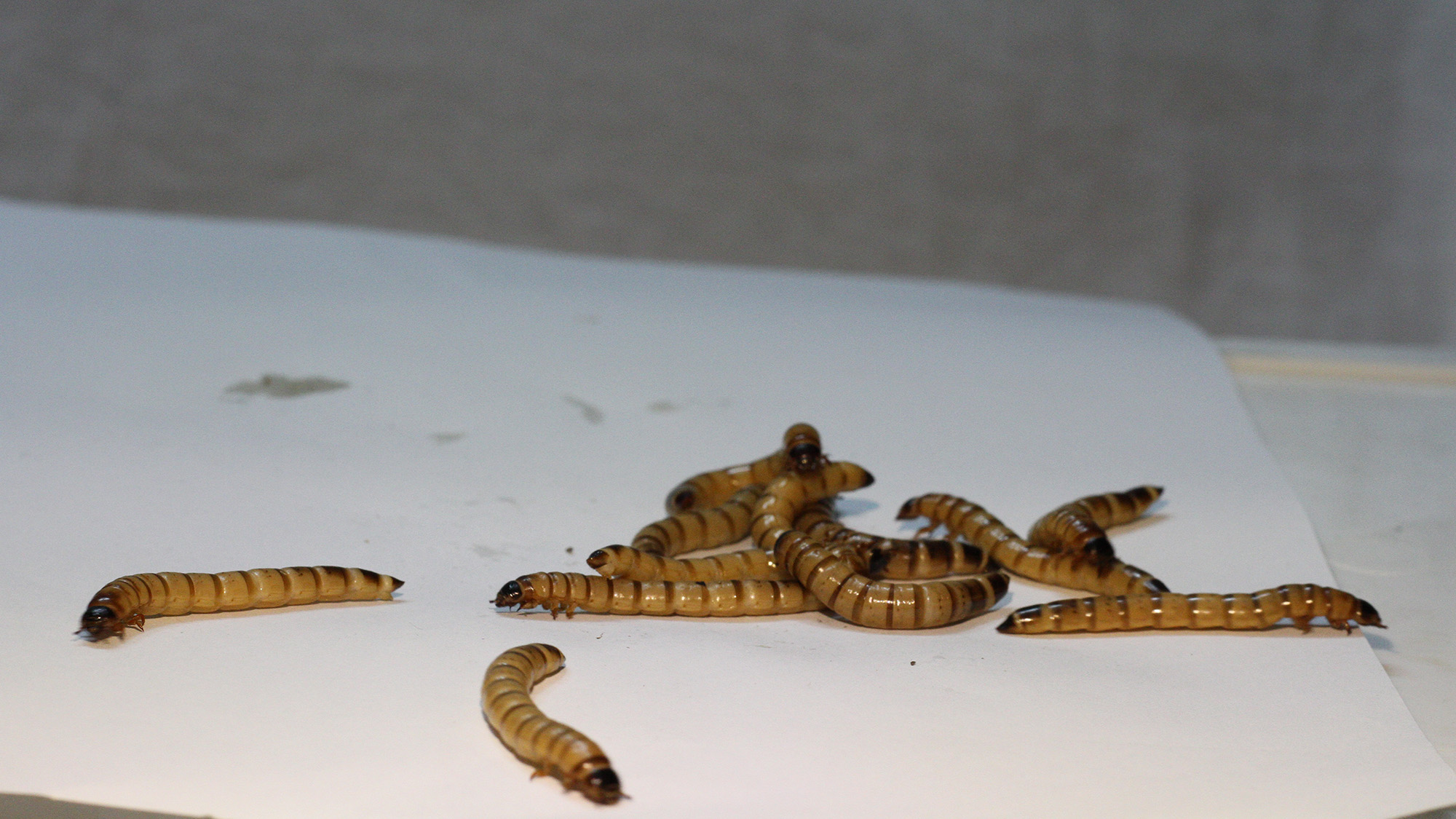
A close up of a series of brown worms on a white piece of paper.

A group of superworms in their larval stage. (Image credit: Niloofar Alaei Kakhki and Morteza Monfared)

KHC: How did you figure out that the worms could clean the skeletons? Was that surprising?

NAK and MM: Several years ago, we started keeping a colony of Zophobas morio larvae (superworm) as live food for birds. As bird-watchers, we were often asked to help care for injured wild birds, so maintaining our own colony was more practical than purchasing larvae repeatedly. We fed the larvae mainly with vegetable scraps, such as cucumber, potato and banana peels.

One day, we ran out of vegetable waste. After lunch, we placed a leftover chicken bone with a small amount of meat still attached into the colony. To our surprise, the larvae gathered around it almost immediately and removed the remaining tissue with remarkable speed. Watching hundreds of larvae work together so efficiently was fascinating, and it immediately made us wonder whether they could be useful for something beyond animal feed.

At the same time, we were volunteering at the Zoology Museum of Ferdowsi University (ZMFUM), where preparing skeletal specimens was one of our regular responsibilities. We had experience with conventional preparation methods, including manual cleaning, boiling and burial. Although effective, these methods were often time-consuming and carried the risk of damaging delicate bones or losing small skeletal elements.

After observing how efficiently the larvae cleaned the chicken bone, we decided to test whether they could also prepare skeletal specimens. The first trials were remarkably successful. Within only a few hours, the larvae removed the soft tissues while leaving even delicate bones intact. Seeing the quality of the cleaned specimens was genuinely surprising and convinced us that this approach had real potential.

From that point on, whenever suitable animal specimens became available, we continued testing the method under different conditions, gradually refining it and optimizing the protocol. Over the following years, these observations evolved into the standardized, efficient and safe skeleton preparation method presented in our study. Yes, we were genuinely surprised. We already knew that superworms could consume a wide variety of organic materials, but we did not expect them to clean skeletons so quickly, so thoroughly, and with so little damage to even the most delicate bones.

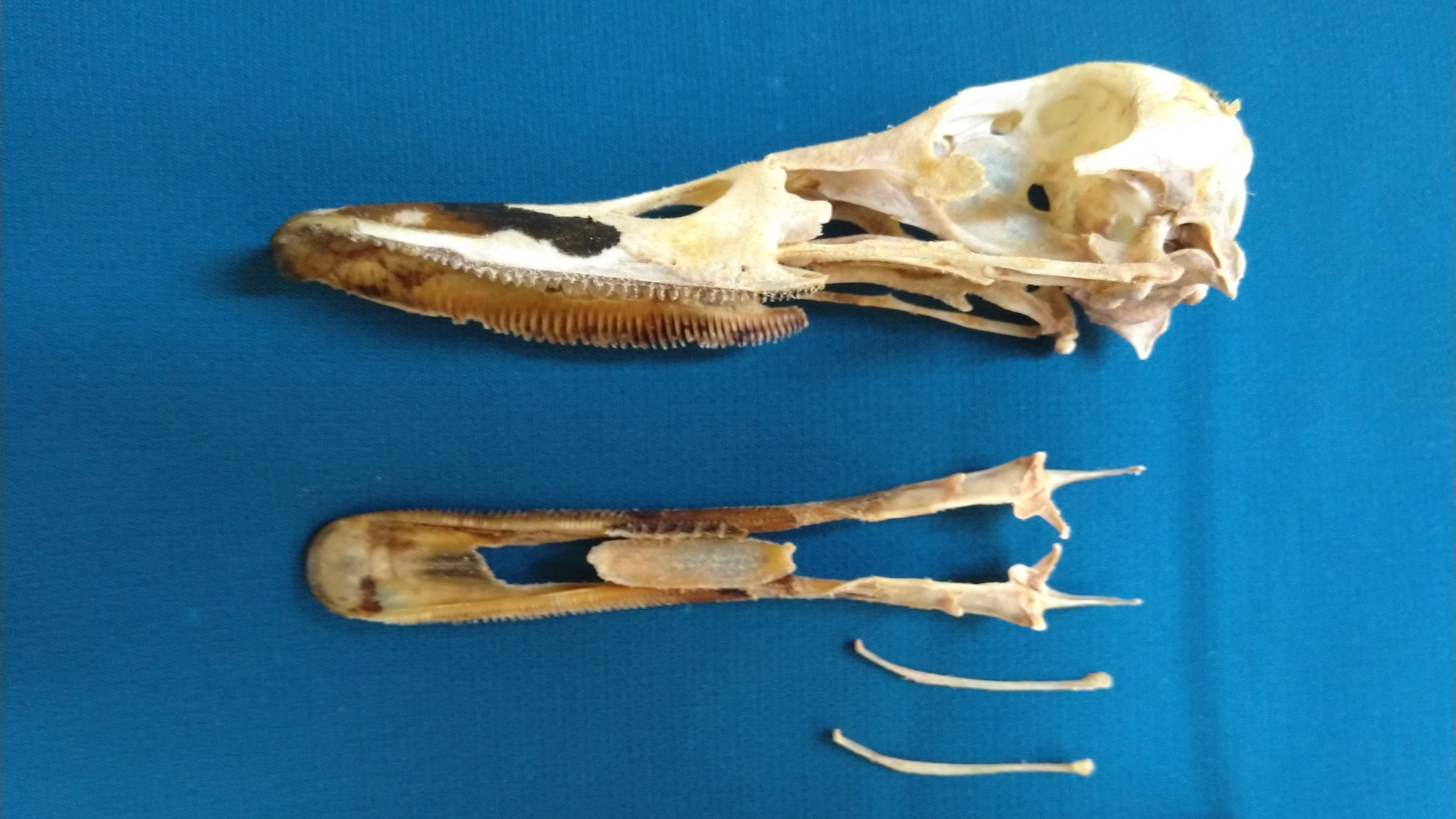
A close up of two halves of a bird skull with delicate white bones next to it against a blue background

A delicate bird skull after being cleaned by superworms. (Image credit: Niloofar Alaei Kakhki and Morteza Monfared)

KHC: How do these superworms compare to other skeleton-cleaning products, like chemical cleaners? Are the worms better or worse at this task?

NAK and MM: Based on our experience, superworms offer several important advantages over existing skeleton preparation methods.

Compared with dermestid beetles, one of the biggest advantages is colony management. Because superworms only pupate when they are isolated individually, their life cycle can be controlled much more easily. As long as they are kept together, they remain as larvae and continue cleaning specimens. This greatly reduces the risk of accidentally introducing adult beetles or their eggs into museum collections, which is a major concern when working with dermestid beetles.

Compared with traditional methods such as boiling, manual cleaning or burial, the larvae also save a great deal of time and effort. Manual cleaning, especially for delicate specimens, can take many hours and always carries the risk of breaking or losing small bones. In contrast, the larvae can remove soft tissues efficiently while preserving even fragile skeletal elements.

Every preparation method has its own strengths and limitations, and the best choice depends on the type of specimen and the goals of the researcher. However, based on our experience using a wide range of preparation techniques, we believe that superworms provide an efficient, safe and practical alternative for many museum and research applications.

Rather than replacing every existing method, we see this technique as a valuable new tool that museums, universities and research laboratories can adopt and adapt according to their own needs.

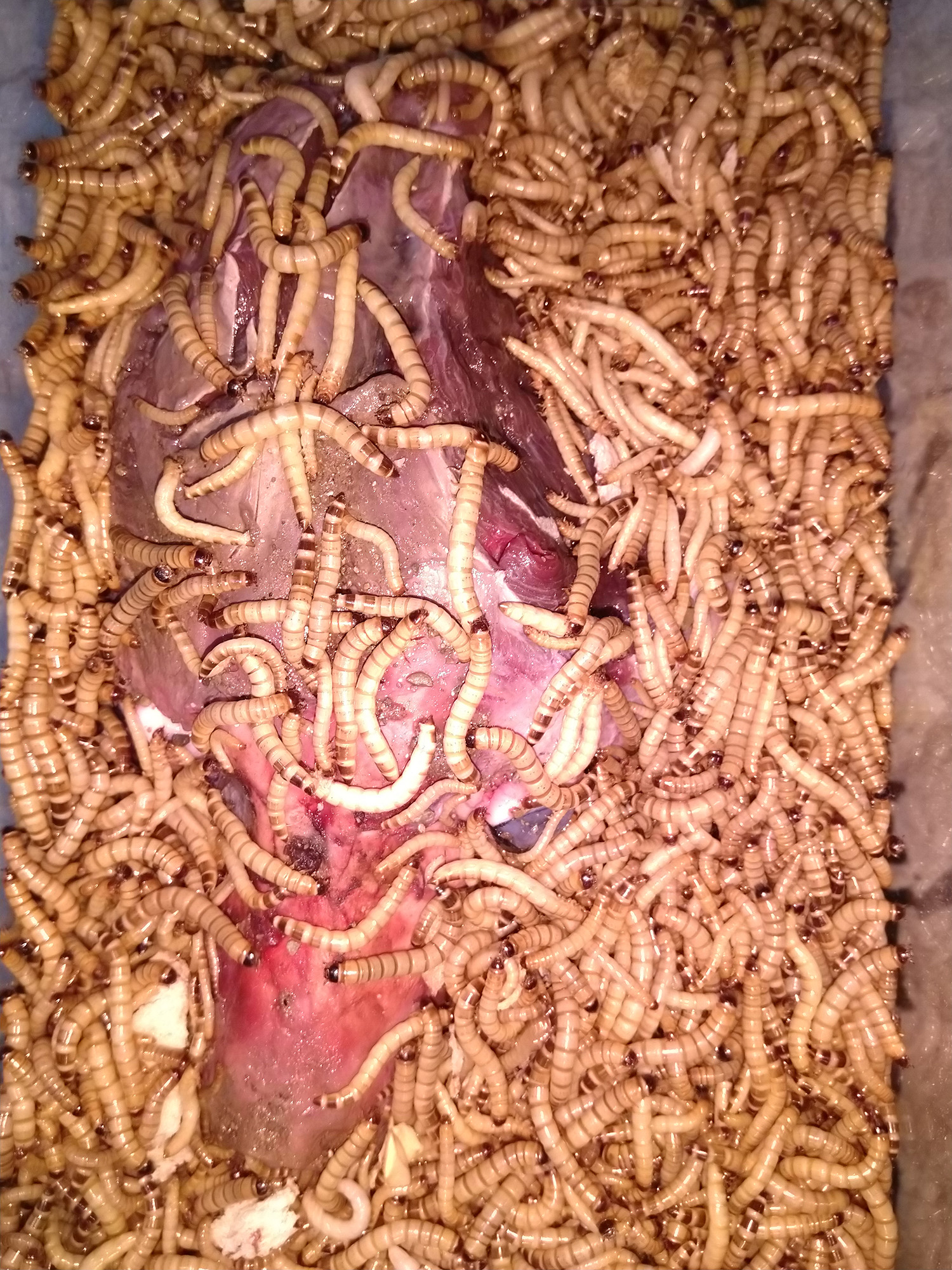
A red skull is half covered by brown worms.

A wolf skull being "cleaned" by superworms. (Image credit: Niloofar Alaei Kakhki and Morteza Monfared)

KHC: On average, how much does it cost to use the worms?

NAK and MM: It is difficult to estimate an average cost because prices vary considerably between countries and suppliers. Rather than the initial purchase price, the long-term maintenance cost is what makes this method attractive.

A colony can be established from a relatively small number of superworms. Once the larvae reach the appropriate stage, a portion of them can be isolated to pupate and develop into adult beetles. These adults reproduce and generate new larvae, allowing the colony to become self-sustaining over time.

The equipment required is also quite simple. The colony can be maintained in plastic or glass containers with wheat bran as the bedding, at approximately 25 degrees Celsius [77 degrees Fahrenheit]. Between skeleton preparation cycles, the larvae can be fed inexpensive vegetable scraps, allowing them to recover before being used again. Larvae can remain in the larval stage for several months, meaning the same colony can be used repeatedly.

Another advantage is that the colony size can easily be adjusted to meet the needs of different users. A museum or laboratory processing a large number of specimens can maintain a larger colony, while smaller collections can operate with far fewer larvae.

Overall, we find the method is relatively inexpensive to establish and maintain, especially when compared with the time, labor and specialized facilities often required for traditional skeleton preparation methods.

KHC: Do you envision museums and laboratories implementing these superworm cleaners in the future? Why or why not? Is the cost worth it?

NAK and MM: We believe this method has the potential to be adopted by many museums, universities and research laboratories, particularly those that regularly prepare skeletal specimens.

One of its greatest advantages is that it combines efficiency, safety and relatively low operating costs. Compared with some traditional approaches, it requires only basic equipment and does not rely on expensive chemicals or specialized enzymatic treatments. This makes it especially attractive for smaller museums and institutions with limited resources.

We also see advantages in terms of colony management. Because the life cycle of superworms can be controlled, the risk of introducing damaging museum pests is much lower than with some other biological cleaning methods. At the same time, the larvae can be reused repeatedly over several months, making the system practical for long-term use.

Ultimately, whether this method is worthwhile depends on the needs of each institution. However, based on our experience, we believe it offers an excellent balance between cost, efficiency, safety and specimen quality. Perhaps one of the most rewarding aspects of this approach is that it works with a natural biological process rather than against it. Instead of relying on harsh treatments, the soft tissues become a food source that supports the growth of another organism, creating a sustainable cycle while producing clean skeletal specimens. We believe this is one of the most appealing aspects of the method.

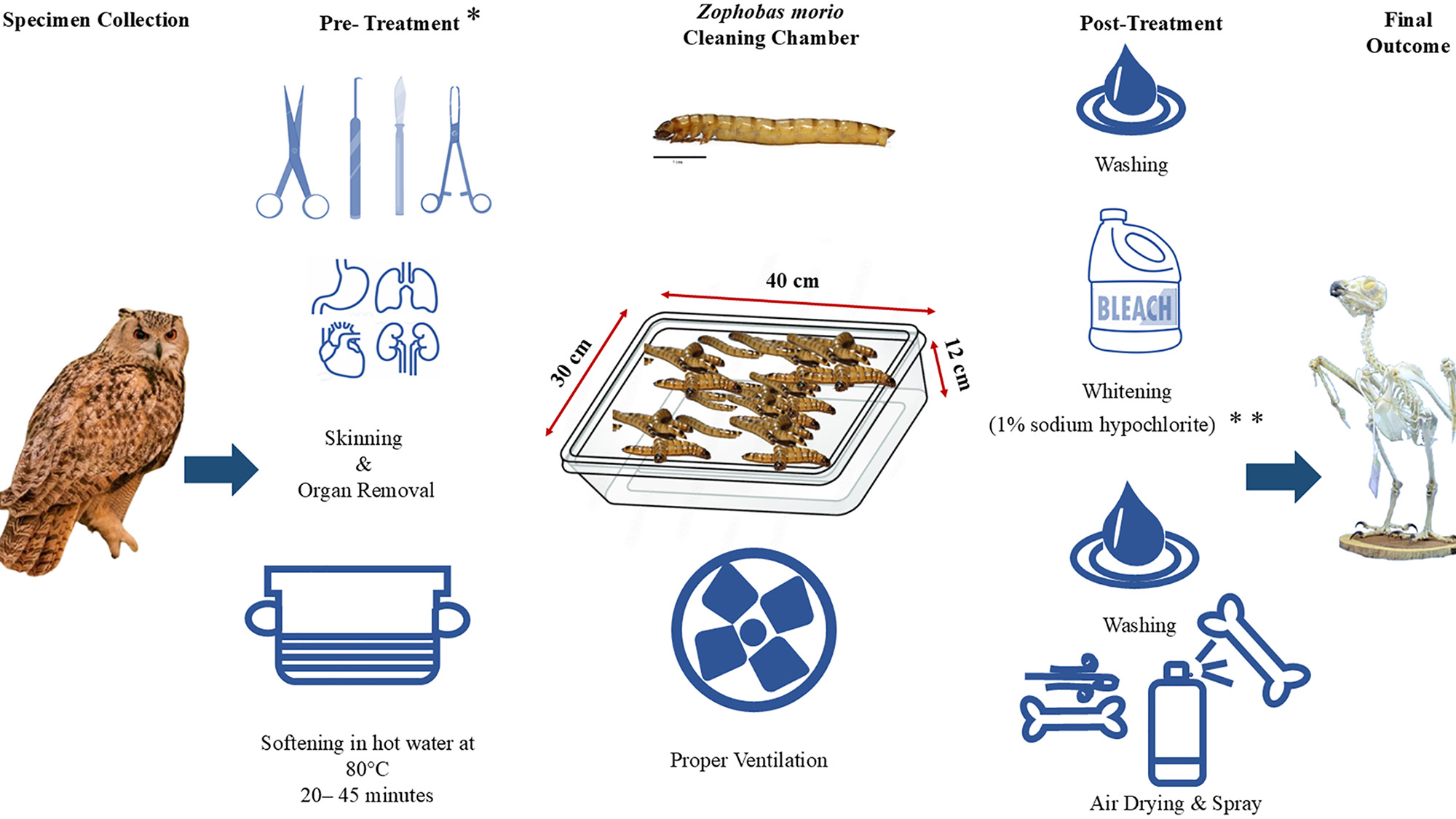
A diagram showing several steps for cleaning an owl skeleton.

A diagram showing how the worms could be implemented in skeleton preparations. (Image credit: Rastekar et al., 2026, PLOS One, CC-BY 4.0)

KHC: Are there any fun stories from your research you can share?

NAK and MM: We have collected quite a few memorable stories over the years!

One of the funniest happened while we were experimenting with burial as a skeleton preparation method. We buried the head of a Persian onager (Equus hemionus) on the university campus. Unfortunately, the specimen had already begun to decompose and had a very strong smell. Even after it was buried, we knew exactly where it was because that part of the campus still smelled terrible. We avoided walking past it whenever possible, but anyone who happened to pass by immediately noticed the odor. At one point, campus security even came over to ask what we were doing, probably wondering why we were digging a hole and burying something on university grounds!

Another memorable story involved our superworms colony itself. In the early days, we kept the larvae in our office at the Zoology Museum (ZMFUM). Almost everyone who entered the room was startled by the sight of thousands of large larvae constantly moving around in their containers. Many people kept their distance at first. But over time, as we explained their biology and demonstrated how useful they were for our research, people's reactions changed. Some visitors even became genuinely interested in the colony, and a few who were initially afraid eventually asked to hold the larvae themselves.

Those moments reminded us that science is not only about experiments and data; it can also change the way people think about animals that are often misunderstood.

KHC: If there's one thing you want our readers to take away from your work, what would it be?

NAK and MM: If there is one message we hope readers take away from our work, it is that nature often has far more to offer than we initially realize.

Many organisms are known for a single, well-established application. Zophobas morio, for example, is widely recognized as animal feed and, more recently, for its ability to consume certain plastics. Our work shows that the same species can also provide an entirely different and unexpected solution to a practical problem in museum science.

This reminds us that the first known application of an organism is not necessarily its most valuable one. Sometimes, its second or even third application can have an even greater impact. Discovering those possibilities begins with curiosity, careful observation and a willingness to ask new questions.

This interview has been edited for length and clarity.

❌