❌

Normal view

Cretaceous Bangong–Nujiang closure sustained Tibetan mountain growth through shortening

16 July 2026 at 13:25

A new study published in Communications Earth & Environment reports that central Tibet’s rugged mountain architecture was not built in a single burst. Instead, it was shaped by long-lived crustal shortening that persisted after a major ocean closed during the Cretaceous period—when the Bangong–Nujiang Ocean shut down and the surrounding plates collided.

The research team, led by Zhang, Liu, Lin, and colleagues, examines how tectonic forces transferred through the region during and after ocean closure. Their central finding is that shortening did not simply end when the ocean vanished. Rather, the continental collision continued to drive deformation well beyond the immediate collision event, helping sustain mountain growth over extended geological time.

To reach this conclusion, the authors combine regional tectonic constraints with structural observations that reflect how stress and strain were distributed through the Tibetan crust. They interpret the evolving patterns of deformation as evidence for sustained compression, including the way different crustal levels responded to continued convergence.

The study frames the Bangong–Nujiang Ocean closure as a pivotal tectonic switch: once the ocean disappeared, the mechanical coupling between continental blocks increased. That change allowed compression to remain effective, promoting ongoing uplift and crustal thickening in central Tibet.

Importantly, the paper links this sustained shortening to the broader development of Tibetan topography. Rather than treating uplift as a short-lived response to a single collisional moment, the results support a scenario in which post-closure tectonics kept feeding the mountain belt for millions of years.

By addressing the timing and persistence of shortening, the work helps refine how geologists explain the thick crust beneath Tibet and the coexistence of active deformation with long-term structural inheritance. The authors suggest that the region’s growth reflects both the closure of an ocean basin and the prolonged geodynamic consequences of that closure.

The findings also carry implications for how future modeling efforts should represent continental collisions. They highlight that plate-tectonic reorganizations can create enduring mechanical conditions, sustaining deformation even after the most dramatic phase of convergence has passed.

With the DOI link and citation tied to the 2026 publication, the study—understood through its title and approach—offers a clear, data-driven narrative: central Tibet’s rise reflects sustained shortening following Cretaceous ocean closure, shaping a mountain system that kept growing long after the ocean was gone.

Subject of Research: Tectonics and mountain growth in central Tibet following the Cretaceous closure of the Bangong–Nujiang Ocean

Article Title: Sustained shortening following Cretaceous Bangong–Nujiang Ocean closure shaped central Tibetan mountain growth.

Article References: Zhang, B., Liu, S., Lin, C. et al. Communications Earth & Environment (2026). https://doi.org/10.1038/s43247-026-03830-3

Image Credits: AI Generated

Judge: Trump can’t deport researchers just for working in content moderation

15 July 2026 at 22:26

This week, the Coalition for Independent Technology Research (CITR) won a key battle in its fight to reverse a visa-restriction policy that the Trump administration had used to attempt to revoke green cards and deport non-US citizens who work on misinformation, disinformation, fact-checking, content moderation, compliance, and trust and safety.

In an opinion published Tuesday, US District Judge James Boasberg granted a preliminary injunction blocking the State Department from enforcing the policy until the CITR’s lawsuit is resolved.

On its face, the policy does not require visa denials or deportations. Instead, it authorizes immigration investigations into individuals suspected of helping foreign adversaries attempt to manipulate public opinion by suppressing US speech.

Read full article

Comments

© UCG / Contributor | Universal Images Group

A cloud deal too good to be true

14 July 2026 at 10:00

The model of the forward deployed engineer is sweeping through enterprise IT like a gold rush, and I’m concerned that many companies don’t understand what they’re signing up for.

Let’s start with the headline numbers. AWS announced a $1 billion investment in a new Forward Deployed Engineering organization. Google Cloud committed $750 million to expand similar programs. Microsoft has been running Azure-focused embedded engineering teams for years, including partnerships with Accenture to scale forward deployed engineering practices. All three are pitching the same story: We’ll send engineers to work directly with your teams, help you deploy AI, and accelerate your digital transformation. You get top-tier technical talent for free, and we get to partner with you on your journey.

It sounds reasonable on the surface. It sounds collaborative, even generous. But I’ve been in this industry long enough to know that when a multi-billion-dollar company offers you something for free, they’re sure to get much more than they give.

What you actually get

The forward deployed engineer model isn’t new. The consulting industry has been doing some version of it for decades. What makes this different is the scale and the direct financial incentive behind it.

These engineers work for the cloud provider. They’re not your employees. They’re not independent consultants. They’re technically excellent professionals who are being paid to solve your immediate problems while simultaneously building relationships and architectures that favor their employer’s ecosystem. Think about it from their perspective. Those forward engineers are evaluated on whether customers succeed with their employer’s platform. They’re rewarded when enterprises adopt more services from that platform. Their career advancement depends on making AWS, Google Cloud, or Microsoft Azure the obvious choice for all of your technical decisions.

This isn’t a criticism of the individual engineers. Many of them are genuinely talented and genuinely want to help. But they’re operating within a system that rewards specific outcomes, and those outcomes align with the vendor’s financial interests, not necessarily yours.

The problem no one talks about

Here’s what I see happening at enterprises right now. A company decides they need help deploying AI. A cloud provider offers to embed engineers at no additional cost. Those engineers work alongside internal teams, make architectural recommendations, and help build out systems. Six months later, the company has a production AI system running on a single cloud platform, built by people with deep expertise in that specific platform.

The problem? Nobody evaluated whether that platform was actually the best choice for the business. Nobody looked at alternatives. Nobody asked whether a multicloud architecture or best-of-breed approach might deliver better results at lower cost.

The engineers embedded in these programs are not going to recommend that you split your workloads across providers. They’re not going to suggest you use open source tools where they make sense. They’re not going to point you toward a competitor when their employer’s solution will work well enough. That’s not how these programs are designed to function. What you’re getting is optimized architecture for a single cloud brand, not optimized architecture for your business.

The financial reality will hit

The bills are going to come due, and they’re going to be painful. I’ve watched this pattern play out before. When enterprises lock into a single cloud provider through these embedded engineering programs, they often discover two or three years later that they’re paying premiums that their more independent-thinking competitors avoided.

The reasons are straightforward. When you’re architecting systems around a single platform, you naturally fall into usage patterns that favor that platform’s pricing structures. You use their managed databases instead of portable alternatives. You adopt their AI services instead of evaluating third-party options. You build workflows that only work within their ecosystem. And when it comes time to renegotiate or benchmark against alternatives, you find that migrating would cost more than accepting whatever pricing they offer.

I’ve spent the past decade helping companies untangle from these situations. I’ve seen organizations with cloud bills 15 to 20 times higher than they should be, unable to migrate because their entire AI infrastructure is built on proprietary services that only work on one platform. The forward deployed engineer programs are accelerating this problem. They’re making it easier to get into these situations and harder to get out.

Think before you commit

Before you accept one of these programs, consider these three recommendations.

First, require independent architecture oversight from day one. Hire or engage architects who work for your company, not for your cloud provider. They should evaluate every recommendation made by embedded engineers against business requirements and compare options across providers. This isn’t about being suspicious of the engineers. It’s about ensuring that decisions are made with your interests in mind.

Second, demand a clear exit strategy before you begin. Ask the cloud provider to document which proprietary services you’re using, what migration paths exist, and what the cost would be to move to an alternative platform. If they can’t provide that information, or if the migration costs seem impossibly high, that’s a sign that you’re building technical debt that will be very expensive to service later.

Third, benchmark your costs continuously. Set up internal processes to compare your cloud spending against industry benchmarks and against what your competitors might be paying for similar workloads. Don’t wait until your contract renewal to discover that you’re paying premium prices. Monitor expenses from the beginning, and be willing to challenge your cloud provider if you’re not getting value that justifies the cost.

The bottom line

The forward deployed engineers are solving real problems. Enterprises genuinely struggle with AI deployment, and having experienced engineers available to help is valuable. I’m not suggesting these programs are fundamentally bad. However, they’re being marketed as neutral partnerships when they’re actually strategic sales programs designed to lock enterprises into specific platforms. The helpful engineers showing up at your office are building dependencies that will be very difficult to break. The “free” technical assistance is being funded by margins on services you’ll be buying for years.

Go in with your eyes open. Use these programs but add your own independent oversight. Build architectures that you could leave if you needed to. And don’t let the immediate satisfaction of having problems solved today blind you to the financial consequences that will arrive tomorrow.

Astronomers Probe Chemistry of Giant Exoplanet Beta Pictoris b

9 July 2026 at 16:02
This artist’s impression shows how the gas giant exoplanet inside the disc of Beta Pictoris may look. Image credit: L. Calçada / ESO.

Using the upgraded GRAVITY+ instrument on ESO’s Very Large Telescope Interferometer (VLTI), astronomers have measured the ratio of carbon isotopes in the atmosphere of the young exoplanet Beta Pictoris, offering new insights into how giant planets form.

The post Astronomers Probe Chemistry of Giant Exoplanet Beta Pictoris b appeared first on Sci.News: Breaking Science News.

Gaia Data Show That the Initial Mass Function Is Not Universal

8 July 2026 at 22:48

star-forming cloud OMC-2

Do all star-forming regions birth stars with the same distribution of masses? Theory suggests that they do not, but researchers often assume they do for simplicity. Now, ultra-precise observations from Gaia have demonstrated that the initial mass function varies across star clusters in the Milky Way.

A Universal Initial Mass Function?

JWST image of galaxies in the iconic Hubble Ultra Deep Field

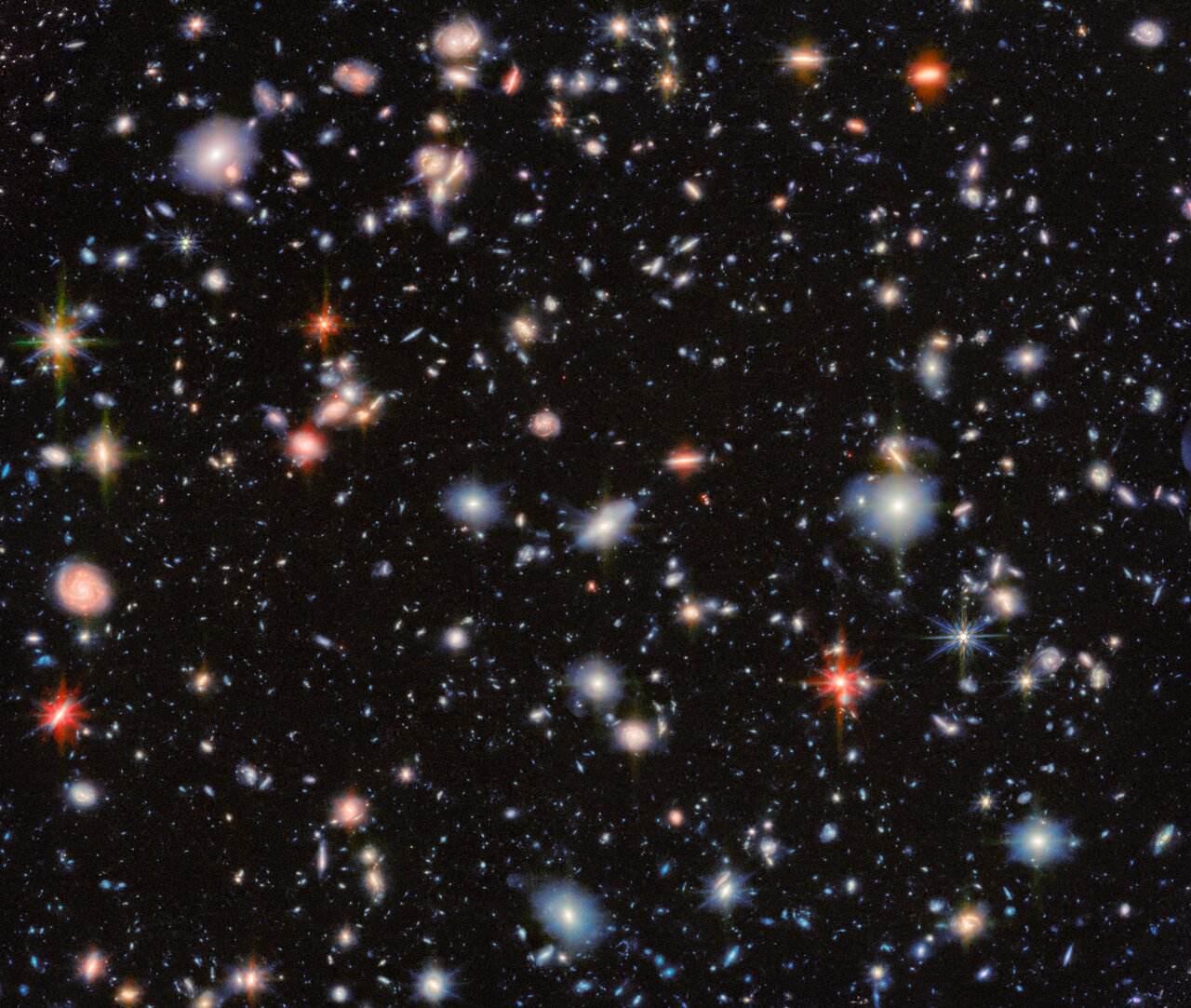
The light from distant galaxies is dominated by high-mass stars, requiring the use of the IMF to estimate the stellar mass of a galaxy. [ESA/Webb, NASA & CSA, G. Östlin, P. G. Perez-Gonzalez, J. Melinder, the JADES Collaboration, the MIDIS collaboration, M. Zamani (ESA/Webb); CC BY 4.0]

When a molecular cloud fragments, collapses, and births a star cluster, how many stars form, and what are their masses? The answer to that question is what astronomers term the initial mass function, or IMF: the distribution of masses of stars born in a cluster.

The IMF is important in many areas of astronomy, and it’s relied on especially heavily in studies of distant galaxies. The light from these galaxies is dominated by high-mass stars, with the emission from lower-mass stars lost in the glare, so astronomers must use the IMF to reconstruct the stellar populations of these far-off locales.

Though theory suggests that the IMF should vary with factors like temperature and metallicity, demonstrating these variations has been difficult, even within our own galaxy. Because of this, researchers often adopt a universal IMF drawn from observations of star clusters in the Milky Way. But is the IMF truly universal?

The More the Slope Changes, the More the Break Mass Stays the Same

Determining whether the IMF is universal is more complicated than simply comparing the stars in one cluster to those in another. That’s because what astronomers measure in present-day star clusters is not the initial mass function, but a version of the IMF that has been skewed by millions to billions of years of evolution; over time, high-mass stars die and low-mass stars get ejected, warping the shape of the mass function.

Plots of the stellar mass function

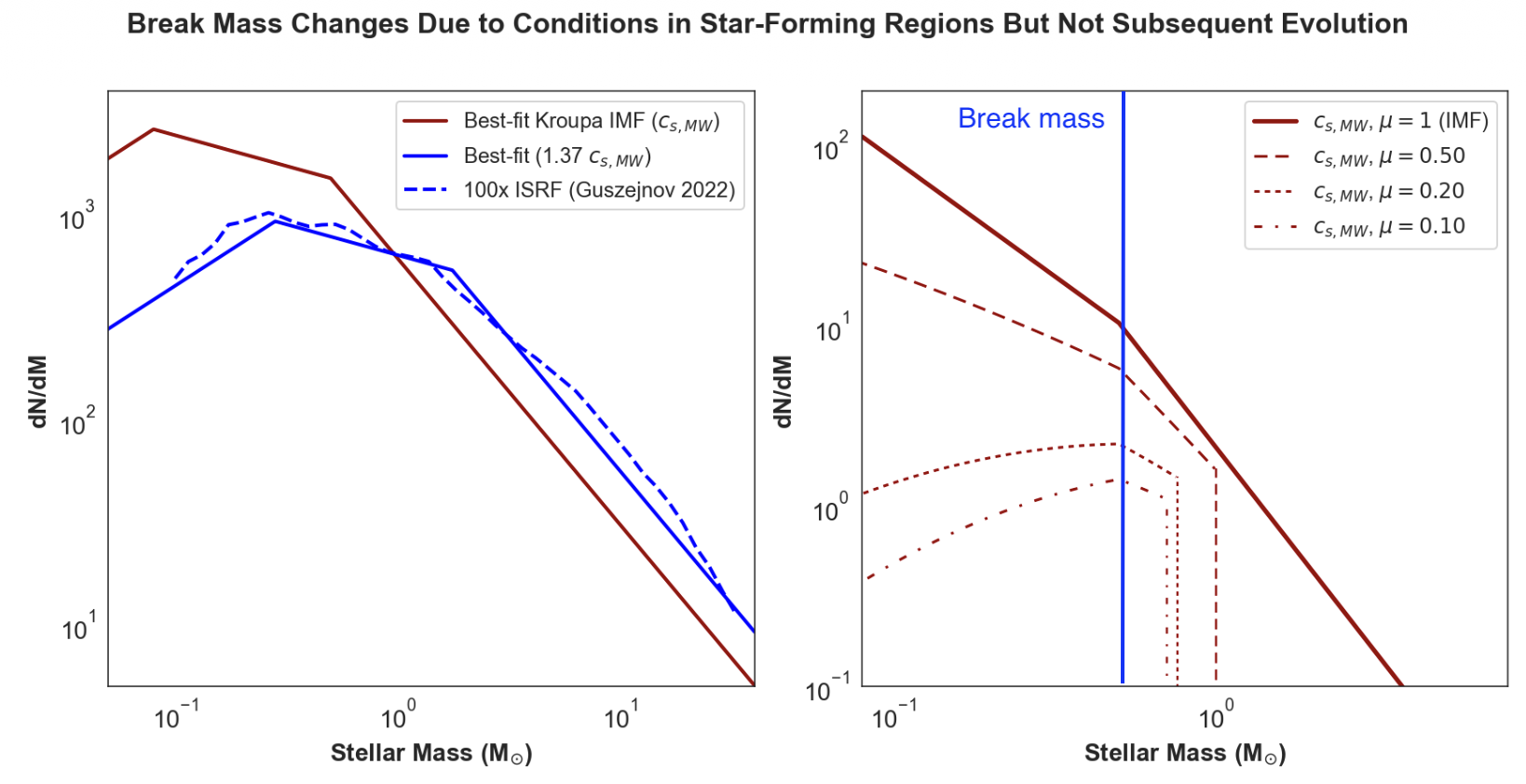
Left: Different break masses arise for different properties (here, the sound speed) of a given star-forming cloud. Right: Evolution of the mass function over time for a single star cluster. Over time, high-mass stars die and low-mass stars are ejected from the cluster, resulting in a decrease in the remaining mass fraction, μ, from 1 to 0.1. The slopes change, but the break mass does not. Click to enlarge. [Adapted from Steinhardt et al. 2026]

However, as demonstrated in a recent research article led by Charles L. Steinhardt (University of Missouri), certain aspects of the IMF may remain unchanged as clusters evolve. When the mass function of a star cluster is described using a broken power law (commonly called a “Kroupa-like” IMF in reference to work by Pavel Kroupa), the slopes of the power-law segments are affected by stellar evolution and dynamical interactions. Crucially, these effects appear not to alter the break mass — the mass at which the IMF transitions from one slope to another. Therefore, differences in the break mass from cluster to cluster reflect differences in the underlying IMF rather than the stellar and dynamical evolution of the clusters.

Insights from Gaia

Thanks to the Gaia spacecraft, which made precise observations of more than 2 billion stars in the Milky Way and beyond, it’s now possible to measure and compare the break masses of individual star clusters. Out of an initial catalog of 7,167 Milky Way clusters observed with Gaia, Steinhardt’s team selected just 110 that were of high enough quality and contained a sufficient number of stars to measure cluster break masses accurately.

Plot of stellar mass function for four Milky Way clusters

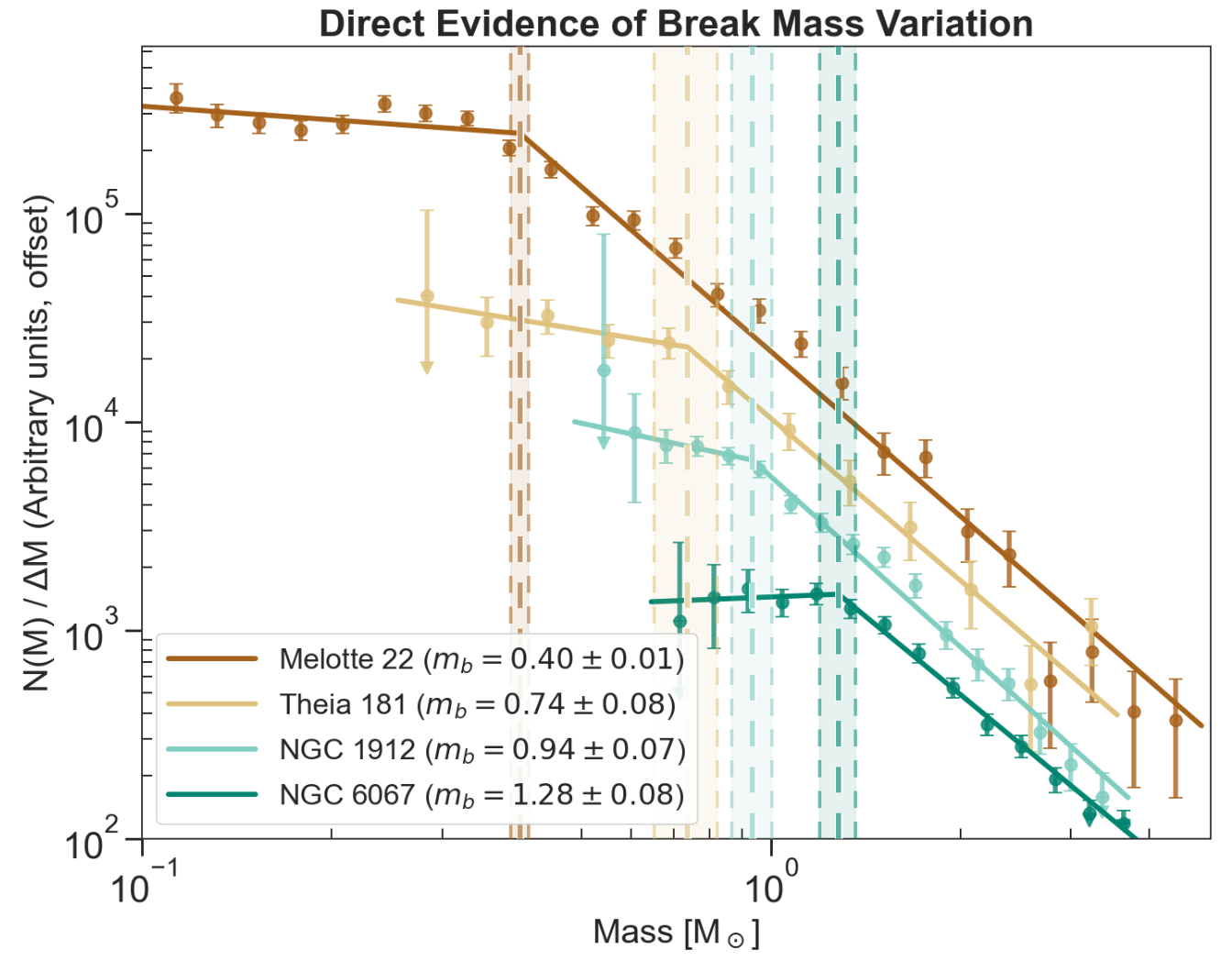
Observed mass functions of four Milky Way star clusters. The break masses are clearly different, showing that the IMF must vary from cluster to cluster. Click to enlarge. [Steinhardt et al. 2026]

The team found that the break mass differs considerably between the clusters in their sample, showing that the IMF is not universal. The observed variety of break masses appears to be linked to the age of the cluster, but instead of reflecting the impact of stellar and dynamical evolution — which have no effect on the break mass — these differences reflect the properties of the clouds in which the clusters were born. This implies that the properties of star-forming clouds in the Milky Way have, on average, changed over cosmic time. Thus, a star cluster that formed billions of years ago would have had a different IMF than one forming today.

This finding has implications for studies of high-redshift galaxies, where the properties of star-forming clouds are markedly different from those in the Milky Way. Going forward, Steinhardt and coauthors recommend developing a flexible parameterization of the IMF to capture how this critical function behaves in environments vastly different from our own.

Citation

“Direct Evidence for Stellar Initial Mass Function Variation in the Milky Way,” Charles L. Steinhardt et al 2026 ApJL 1005 L40. doi:10.3847/2041-8213/ae7444

The post Gaia Data Show That the Initial Mass Function Is Not Universal appeared first on AAS Nova.

Two More Thoughts on Little Red Dots

1 July 2026 at 03:54

little red dots seen with JWST

One of the biggest discoveries from JWST’s tenure is a population of compact reddish objects nicknamed “little red dots.” Numerous theories have been proposed to explain the small sizes, high luminosities, and characteristic “V”-shaped spectra of these objects, and today we’ll examine two recent research articles that have explored the identity of the universe’s most mysterious inhabitants.

Red Dot, Blue Dot

You can tell a lot about a person by looking at their friends — and the same might be true for little red dots. A team led by Josephine Baggen (Yale University) examined a sample of 83 little red dots imaged with JWST. They found that 43% of the little red dots in this sample had a little blue companion: an ultraviolet-bright object within a projected separation of 1,630–16,300 light-years. The brightest little red dots were even more likely to have a blue companion; 80% of the brightest objects in the sample were paired up.

Baggen’s team set out to test the hypothesis that these red–blue pairs are fundamentally linked rather than coincidental. Under this hypothesis, the ultraviolet-bright blue companions were assembled first. The ultraviolet radiation from these objects suppressed the cooling of molecular hydrogen in pristine gas clouds in the early universe, causing the gas to skip the usual star-forming process and instead form a massive compact object such as a black hole star, supermassive star, or quasi-star — which we see as a little red dot.

plot of Lyman-Werner radiation versus projected separation

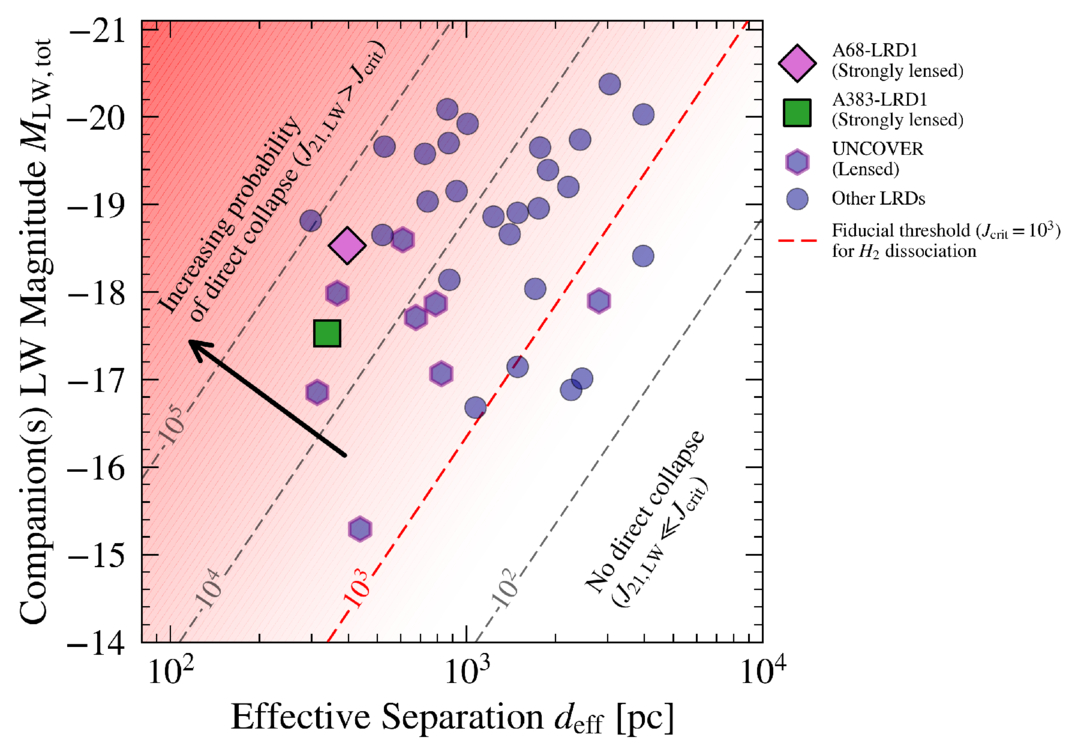
The companion’s mean flux density from 91.2 to 111 nm versus projected separation between the blue companion and the little red dot. The red dashed line shows the estimated values necessary for gas clouds to collapse. Click to enlarge. [Baggen et al. 2026]

Baggen and coauthors investigated whether the ultraviolet radiation from the blue companions is strong enough to have triggered this transformation. The team used spectral energy distribution modeling to determine the luminosities of the blue companions from 91.2 to 111 nanometers. This analysis showed that the radiation from the blue companions is equal to or greater than the threshold necessary to encourage the direct collapse of a gas cloud into a massive compact object.

If little red dots form thanks to their little blue companions, that would imply that every little red dot has or had such a companion. Though little blue companions weren’t so universal in the sample used in this work, the team noted that their analysis techniques, combined with observational limitations and other factors, likely yielded a smaller number of blue companions than are actually present. Further simulations exploring the collapse of pristine gas clouds into massive compact objects and high-resolution spectroscopic observations of little red dots can illuminate the potential link between these objects.

globular cluster NGC 1851

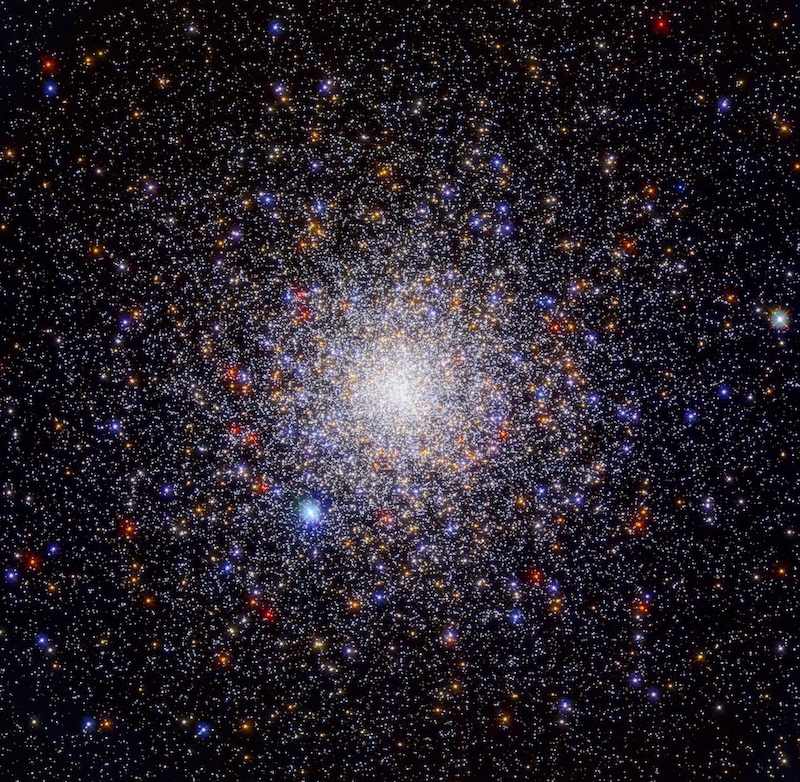
The densely packed globular cluster NGC 1851, as seen by the Hubble Space Telescope. [NASA, ESA, and G. Piotto (Università degli Studi di Padova); Processing: Gladys Kober (NASA/Catholic University of America)]

Little Red Dots as Young Globular Clusters

John Chisholm (The University of Texas at Austin) and collaborators hypothesized that little red dots represent a brief phase in the formation of globular clusters. In this hypothesis, the rest-frame ultraviolet emission of little red dots comes from the hot young stars of the newborn cluster, while the rest-frame optical emission comes from a single supermassive star at the cluster’s heart. Thus, in this framework, the little red dot phase lasts only as long as the fleeting lifespan of the supermassive star.

Chisholm’s team first showed that the spectrum of a young globular cluster with a supermassive star at its center is similar to the observed spectrum of a little red dot. But showing that the emission properties of globular clusters in formation and little red dots are similar is not enough — it’s also necessary to investigate whether the numbers and masses of these objects line up.

mass functions of little red dots and globular clusters

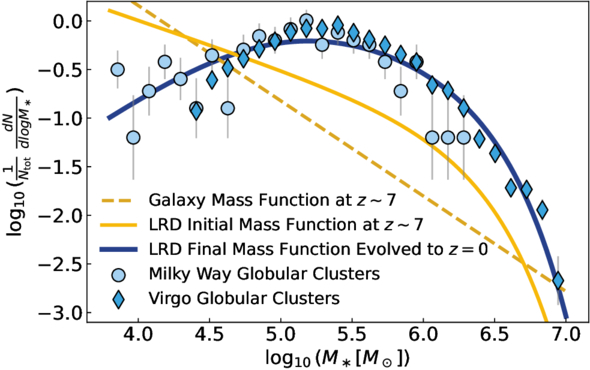
Comparison of the mass functions of little red dots evolved forward to the present day (blue line) and globular clusters in the Milky Way and Virgo (blue symbols). The results for both populations have been normalized to emphasize the shape of the distributions. Click to enlarge. [Chisholm et al. 2026]

To do this, the team propagated the observed mass function of little red dots at a redshift of z = 7 forward in time to z = 0. This process accounted for the rapid evolution of the supermassive star into a black hole, as well as the evolution of and feedback from the massive stars in the cluster. Comparing the resulting mass function to the population of present-day globular clusters, the team found that the mass functions had very similar shapes, and the number densities of little red dots and globular clusters in the present day are estimated to be of the same order of magnitude: 0.1–0.3 Mpc-3 and 0.8 Mpc-3, respectively.

In addition to describing how the properties of globular clusters in formation match those of little red dots, Chisholm’s team outlined some testable predictions for this scenario, including formation timescales and chemical abundance patterns. If this hypothesis withstands further scrutiny, little red dots may provide a valuable look at the early years of some of our universe’s oldest star clusters.

Citation

“Connecting the Dots: UV-Bright Companions of Little Red Dots as Lyman–Werner Sources Enabling Direct-Collapse Black Hole Formation,” Josephine F. W. Baggen et al 2026 ApJL 1002 L4. doi:10.3847/2041-8213/ae58a5

“Little Red Dots as Globular Clusters in Formation,” John Chisholm et al 2026 ApJL 1004 L4. doi:10.3847/2041-8213/ae6dae

The post Two More Thoughts on Little Red Dots appeared first on AAS Nova.

Sunscreen Misinformation Attracts High Engagement on TikTok, Study Finds

25 June 2026 at 13:55

New findings published in PLOS Digital Health highlight the challenges public health experts face in combating misleading health information on social media, particularly amid ongoing debates over whether sunscreen is truly beneficial.

To investigate how sunscreen is portrayed online, researchers at the University of Alberta analyzed 971 of the most-viewed TikTok videos associated with five popular sunscreen-related hashtags: #sunscreen, #sunscreenviral, #spf, #sunscreenreview, and #sunprotection.

The researchers examined how sunscreen was represented in the videos and measured audience engagement through views, likes, shares, and comments.

“Sunscreen misinformation may attract disproportionate attention,” says Alessandro Marcon of the University of Alberta, Canada, and colleagues in a statement.

The findings showed that most of the TikTok videos analyzed promoted sunscreen use, accounting for 86.8% of the content. Only 6% contained health-related criticism, including claims that sunscreen is harmful (1.5%) or that it interferes with the benefits of sun exposure, such as vitamin D production (1.2%). Despite representing only a small fraction of the content, these videos attracted disproportionately high levels of engagement, receiving more likes, shares, and comments on average than pro-sunscreen videos.

“Sunscreen misinformation on TikTok constitutes an area of concern not for the total sum of overarching influence in terms of content production but rather in how strongly some sunscreen misinformation ideas resonated among particular audiences,” adds Marcon.

The researchers suggest that the elevated engagement may be driven by the controversial and attention-grabbing nature of the content, which can help videos spread more widely on social media platforms.

They also found that even videos promoting sunscreen often omitted key public health messaging. Most focused on beauty and skincare benefits rather than health outcomes, with only 6% specifically mentioning sunscreen’s role in reducing skin cancer risk.

“Our analysis showed TikTok is not necessarily flooded with sunscreen misinformation, but TikToks that dangerously claim that sunscreen is harmful or unnecessary receive comparatively high levels of audience engagement. TikTok content creators commonly promoted sunscreen as part of skincare regimens where sunscreen benefits were more commonly related to beauty rather than health,” said Marcon.

“It was surprising to see so many TikToks promoting sunscreen use without specifically mentioning the important role it plays in cancer prevention. Only 6% of the TikToks analyzed explicitly mentioned the benefits of reducing the risk of skin cancer.”

The study suggests that misinformation can spread widely not because it is more common, but because it is often more controversial and attention-grabbing. It also highlights a broader communication gap, as many creators emphasize sunscreen’s cosmetic benefits while overlooking its well-established role in preventing skin cancer.

Chrissy Newton is a PR professional and the founder of VOCAB Communications. She currently appears on The Discovery Channel and Max and hosts the Rebelliously Curious podcast, which can be found on YouTube and on all audio podcast streaming platforms. Follow her on X: @ChrissyNewton, Instagram: @BeingChrissyNewton, and chrissynewton.com. To contact Chrissy with a story, please email chrissy @ thedebrief.org.

Newborn Brain Condition Linked to Genetic Factors Affecting Fluid Regulation

9 July 2026 at 06:11

A groundbreaking study from Mass General Brigham Neuroscience Institute has uncovered crucial genetic underpinnings of congenital cerebral ventriculomegaly (CCV), a disorder characterized by the abnormal swelling of fluid-filled brain ventricles in fetuses. Frequently observed alongside autism spectrum disorder and other neurodevelopmental conditions, CCV has long been a clinical challenge due to its complex origins and unpredictable outcomes.

By analyzing genetic data from approximately 2,700 children diagnosed with CCV and their parents, researchers identified rare, deleterious mutations affecting genes integral to early brain development. These genes regulate the growth and organization of neural cells critical to forming the cerebral cortex—the brain’s center for cognition, memory, and language. Notably, mouse models in which these genes were silenced exhibited enlarged ventricles, linking genetic abnormalities directly to functional and structural brain defects.

This pioneering work shifts the medical understanding of CCV from purely a cerebrospinal fluid circulation disorder to one deeply rooted in developmental brain pathology. It suggests that the ventricular system’s dysfunction reflects a broader impairment in neural circuit formation and brain architecture, potentially explaining why many infants with CCV experience developmental delays and an increased risk of autism.

The implications of these findings are profound. Prenatal neuroimaging combined with targeted genetic screening could enable earlier diagnosis of at-risk fetuses, opening the door to timely interventions before the onset of symptoms. Current neurosurgical treatments, while often lifesaving, do not consistently improve neurological outcomes and expose patients to risks such as infections and lifelong shunt dependency.

Kristopher T. Kahle, MD, PhD, Chief of Pediatric Neurosurgery at Mass General Brigham and senior author of the study, emphasizes the potential of genomic testing to revolutionize patient care. He anticipates that genetic profiling could refine clinical decisions, distinguishing patients who would benefit from surgery from those better served by alternative therapies.

The study’s integration of human genetic analysis with animal modeling represents a paradigm shift, enhancing our grasp of how genetic mutations disrupt cerebrospinal fluid dynamics and cerebral cortex development simultaneously. This dual perspective is poised to stimulate further research aimed at therapeutic innovations targeting the molecular roots of CCV.

Ultimately, this research underscores a critical nexus between developmental neurogenetics and pediatric neurosurgery, offering hope for improved diagnostic precision and personalized treatment strategies. With continued advancements, clinicians may one day prevent or mitigate the neurodevelopmental disabilities often associated with ventriculomegaly, improving quality of life for countless affected children.

Subject of Research: Human tissue samples
Article Title: Developmental genetic determinants of the human cerebrospinal fluid-ventricular system
News Publication Date: —
Web References: https://doi.org/10.1126/scitranslmed.aec4386
References: Allington G et al. Science Translational Medicine. DOI: 10.1126/scitranslmed.aec4386
Keywords: Hydrocephalus, Congenital cerebral ventriculomegaly, Neurodevelopmental disorders, Autism spectrum disorder, Pediatric neurosurgery, Genomic testing

Cytoskeletal Oscillator Drives Neuronal Polarity Formation Intrinsically

9 July 2026 at 05:07

A groundbreaking study unveils how the ARP2/3 complex orchestrates the dynamic behavior of neurites, providing fresh insights into neuronal growth and polarity. Researchers utilized advanced optogenetic tools to manipulate RAC1, an upstream regulator of ARP2/3, revealing spatially distinct roles of actin assembly in neuronal morphology.

By employing photoactivatable RAC1 (PA-RAC1), the team demonstrated that ARP2/3-mediated actin assembly at neurite tips promotes growth cone activation and neurite extension. Local activation of PA-RAC1 triggered robust growth cone dynamics, driving neurite elongation. Conversely, activation of a dominant-negative RAC1 mutant led to collapse of the growth cone and neurite retraction, underscoring ARP2/3’s role in sustaining neurite advancement.

Intriguingly, PA-RAC1 activation at the soma induced lamellipodia formation reminiscent of nascent actin waves, which were associated with neurite retraction events. This phenomenon mirrored intrinsic cellular behaviors where somatic actin waves correspond with retracting neurites. The study elegantly showed that the emergence of these waves reduced somatic actin patch intensity, indicating a tightly regulated cytoskeletal oscillator mechanism.

The authors further explored the effects of ARP2/3 inhibition using CK-666 perfusion at distinct cellular locales. When applied over the soma and proximal neurites, CK-666 induced neurite retraction, whereas neurites outside this region continued growing unabated. Notably, actin waves were initiated in neurites outside the inhibited zone, propagating retrogradely toward the soma but dissipating upon entering CK-666-exposed areas. This highlights a spatial dependence of ARP2/3 activity for wave initiation and propagation.

Remarkably, simultaneous activation of PA-RAC1 at multiple growth cones revealed competitive dynamics in actin assembly, with enhanced growth cone activity limited to one or two sites. This suggests an intrinsic cellular mechanism balancing cytoskeletal resources and neurite growth across the complex neuronal arborization.

Together, these findings articulate a dual role for ARP2/3: driving actin wave initiation at the soma that triggers neurite retraction, and supporting growth cone expansion at neurite tips to promote extension. This oscillatory interplay mediated by ARP2/3 and RAC1 underscores the cytoskeleton’s fundamental role in establishing neuronal polarity.

This study not only provides a mechanistic framework for how neurons spatially regulate growth and retraction but also suggests that intrinsic cytoskeletal oscillators underpin the dynamic remodeling necessary for proper neuronal circuit formation. These insights pave the way for future investigations into cytoskeletal dysregulation in neurodevelopmental disorders and neuronal regeneration strategies.

The precise spatial control of actin dynamics mediated by ARP2/3 complex activity advances our understanding of neuronal development, highlighting how local cytoskeletal modulators can dictate overall neuronal architecture through oscillatory growth behaviors.


Subject of Research: Neuronal cytoskeletal dynamics and polarity establishment

Article Title: An intrinsic cytoskeletal oscillator establishes neuronal polarity

Article References:
Lin, Tc., Coles, C.H., Alfadil, E. et al. An intrinsic cytoskeletal oscillator establishes neuronal polarity. Nature (2026). https://doi.org/10.1038/s41586-026-10755-6

Image Credits: AI Generated

DOI: https://doi.org/10.1038/s41586-026-10755-6

Missing a Night’s Sleep Has an Effect on Your Brain You May Not Believe

24 June 2026 at 13:00

Experiments exploring the effects of missing a night’s sleep on the human brain have found indications that a sleepless night actually increases connections between brain cells instead of impeding growth. However, the lack of sleep could also create brain “fatigue” and pressure, resulting in burnout.

The Forschungszentrum Jülich Institute of Neuroscience and Medicine team behind the discovery said that their findings might support the idea that sleep plays an important role in restoring the brain’s cellular balance.

Missing a Night’s Sleep Could Disrupt Cellular Balance

In a statement announcing the surprising discovery, study leader David Elmenhorst and colleagues note that scientists still are not in complete consensus about why humans and other animals need sleep. One proposal involves restoring synaptic connections between brain cells during certain stages of sleep, helping the brain maintain a form of cellular ‘homeostasis.’

For example, previous research has shown that synaptic connectivity increases during wakefulness. This increased activity also increases energy consumption, potentially resulting in problematic protein buildup. Conversely, scientists suspect that sleep helps restore baseline synaptic connections and protein levels, thereby maintaining a healthy cellular balance.

“Sleep is essential for synaptic homeostasis, a proposed mechanism whereby wake­fulness leads to synaptic potentiation, and sleep facilitates synaptic down-selection,” the research team explains in a recently published study.

Although previous studies suggest that missing a night’s sleep could disrupt this balance, the team notes that there is very little experimental data to support these conclusions.

Study Reveals Elevated Synaptic Activity After 28 Hours Awake

To explore the role of sleep in cellular homeostasis in the human brain, the researchers used an advanced brain-scanning technology called positron emission tomography (PET). According to the team’s statement, this tool can scan the human brain for signs of synaptic vesicle glycoprotein 2A (SV2A),  which they describe as a “marker” of brain synapses.

The team started by enlisting 40 study volunteers. Next, each volunteer was given a PET scan to establish baseline marker levels. After their first scan, 20 of the volunteers were told to get a normal night’s sleep. According to the study authors, the second half were assigned to “the sleep deprivation condition,” where they were told to miss a night’s sleep.

The next day, the team used the PET scan to search for telltale brain synapse markers. As hoped, the scans revealed a distinct difference between the two groups. Where the normal sleep group’s levels were within expected ranges, the synapse markers of the volunteers who had missed a night’s sleep were elevated.

A closer analysis found that once people passed 28 hours of continued wakefulness, their SV2A markers were higher “in several brain regions.” Notably, these increased markers were detected in the hippocampus, which plays an important role in memory, and in the thalamus, which is critical for information relay within the brain.

“Sleep deprivation led to significant increases in synaptic vesicle glycoprotein 2A binding in multiple brain regions, including the thalamus (+4.6%), hippocampus (+5.6%), and parietal cortex (+3.2%), whereas no changes were observed in controls,” the study authors write.

Sleep Deprivation Causes Fatigue and CHanges Neural COnnections

When discussing the study’s limitations, the authors note that the SV2A marker used is a “proxy” for connections between brain cells, not a direct measure. They also note that the observed changes after a missed night’s sleep “were relatively small.” Still, they add, the results in several regions across several study participants “suggest a biological connection between the need for sleep and the buildup of cell connections.”

“During sleep deprivation, the brain remains awake longer and continues to process stimuli and information,” they write. “Our study shows that after approximately 28.5 hours of wakefulness, a marker for synaptic density increases in several brain regions. This suggests that sleep deprivation not only causes fatigue but is also accompanied by measurable changes in neural connections.”

The study “Sleep deprivation increases levels of the synaptic density marker SV2A in the human brain” was published in PLOS Biology.

Christopher Plain is a Science Fiction and Fantasy novelist and Head Science Writer at The Debrief. Follow and connect with him on X, learn about his books at plainfiction.com, or email him directly at christopher@thedebrief.org.

Interstellar Visitor 3I/ATLAS Is Bursting With an Unexpected Chemical

Artist’s Impression of 3IATLAS Passing the SunAstronomers have found that interstellar comet 3I/ATLAS contains an unusually large amount of methanol. Every interstellar object that passes through our solar system offers a rare chance to sample material forged around another star. Now, new observations of comet 3I/ATLAS using the Atacama Large Millimeter/submillimeter Array (ALMA) have revealed a chemical surprise: the comet is [...]

Black Holes Reveal Their Seeds

23 June 2026 at 17:00

Illustration of an active galactic nucleus

Editor’s Note: Astrobites is a graduate-student-run organization that digests astrophysical literature for undergraduate students. As part of the partnership between the AAS and astrobites, we occasionally repost astrobites content here at AAS Nova. We hope you enjoy this post from astrobites; the original can be viewed at astrobites.org.

Title: A GLIMPSE of Intermediate Mass Black Holes in the Epoch of Reionization: Witnessing the Descendants of Direct Collapse?
Authors: Qinyue Fei et al.
First Author’s Institution: University of Toronto
Status: Published in ApJ

In the late 2010s, astronomers were getting hints of something strange going on in the early universe. Using the most powerful telescopes on the ground, we were able to find black holes in the centers of some of the most distant galaxies. The light from these active galactic nuclei (AGNs) was emitted over 12 billion years ago, revealing conditions close to the beginning of cosmic time.

To an astronomer, that’s the mundane part. I’m only half joking — thousands of AGNs had already been identified in the previous half century. However, the most distant of these sources were startling because their central black holes appeared much more massive than expected. To be specific, we know how much mass black holes can start with, and we can write down equations to predict how quickly they should grow. The AGNs we observed seemed to violate these predictions. This raised some serious questions and was highlighted as a major point of inquiry to focus on going into the 2020s.

Then JWST launched, and the mystery grew deeper. No matter where we looked, enormous black holes kept cropping up in astonishing numbers. Astronomers who model the universe with equations and computer simulations have tried to explain these results, but this has been a serious challenge. Some researchers have broken the emergency glass and reached for a highly theoretical tool: the direct-collapse black hole. Unlike the normal pathway for forming black holes (the deaths of massive stars), this model suggests that an enormous cloud of gas could directly collapse into a black hole without forming a star at all. The resulting black holes could have as much mass as a hundred thousand Suns put together — orders of magnitude more than a “normal” black hole. Although this pathway can explain the presence of huge black holes so early in the universe’s history, we’ve never directly seen this happen, so for now it remains just a theoretical possibility.

However, if direct-collapse black holes were widespread at early times, there is one indirect signature we might be able to detect: a large population of intermediate-mass black holes with masses between a hundred thousand and a million times that of the Sun. If we can find such a population, we’ll have strong evidence for the direct-collapse model. Let’s go looking!

Intermediate Mass, Impossible Difficulty

Identifying intermediate-mass black holes requires a tricky combination of spectral resolution and sensitivity. Light from an object must be examined very finely in order to detect the telltale features of an intermediate-mass black hole. However, these sources are already quite faint, so spreading their emission this thin means that any potential signal is very likely to get lost in the noise.

The authors of today’s article use an unprecedented set of observations to leap over this hurdle and directly probe intermediate-mass black holes. They not only use the most sensitive spectroscopic instrument (NIRSpec) on the most powerful space telescope (JWST), but they take advantage of a phenomenon known as gravitational lensing.

According to Einstein’s general theory of relativity, gravity is the result of matter curving spacetime. Areas with more concentrated matter will experience stronger curvature. When an object traveling in a completely straight line moves through curved space, its path appears bent. This same effect happens to light. Intriguingly, a large concentration of matter can redirect diverging rays of light to a focus, acting like an enormous magnifying glass.

Astronomers take advantage of gravitational lensing by pointing telescopes at massive clusters of galaxies. The intense gravity of these regions can magnify sources in the background by tens or even hundreds of times. Galaxies that would be impossibly faint to see under normal conditions can thus be observed if they are strongly lensed, making this a powerful technique to examine otherwise hidden objects.

Putting Faint AGNs Under a Lens

The Galactic Legacy Infrared Mid-Plane Survey Extraordinaire (GLIMPSE) program took extremely powerful observations of a galaxy cluster called Abell S1063 using JWST. The long exposure time, combined with the lensing power of the cluster, allows extremely faint sources in the background to be seen in unprecedented detail. The researchers scoured the data to search for signs of active black hole growth in the observed galaxies. Specifically, they carefully studied the emission lines in the spectrum of each object.

Normally, emission lines appear narrow. However, gas surrounding a massive black hole circulates at rapid speeds. A phenomenon known as the Doppler effect then comes into play. This is the same effect responsible for the characteristic rise and fall in the pitch of a siren from an emergency vehicle passing by. Emission from gas moving toward our line of sight appears bluer than it otherwise would, and gas moving away from us appears redshifted. The net effect is that a single emission line is widened, and we see characteristic “broad wings.” The width of the emission line can be used to estimate the mass of the central black hole, where broader wings imply a more massive black hole.

The researchers uncover 10 AGNs that display broadened Balmer series lines. Strikingly, they estimate that these galaxies have central black holes with masses as low as 400,000 times that of the Sun. While that might sound like a lot, it’s practically nothing compared to the monstrous 100-million-solar-mass black holes that JWST consistently turns up in other studies. Detecting such lightweight black holes, pushing into the realm of intermediate-mass black holes, is only possible due to the incredible sensitivity of these observations.

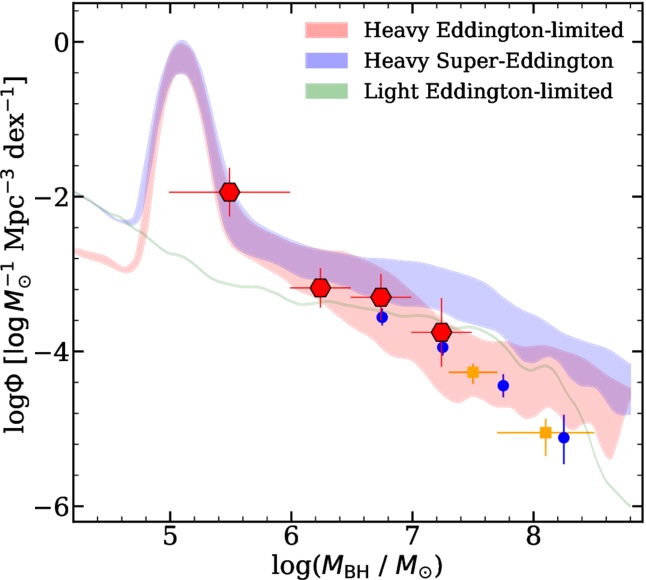
The researchers also compute what’s known as the black hole mass function. This is a measure of how many black holes exist at each mass. In other words, the black hole mass function measures how common lightweight black holes are compared to heavy ones. The mass function computed in this work and several other points of comparison are shown in Figure 1.

comparison of black hole mass functions

Figure 1: A comparison of black hole mass functions from various previous works and today’s article. The red hexagons are data points computed using the AGNs observed in this work, while blue circles and yellow squares are measurements computed using AGNs observed in previous articles. The red, green, and blue shaded areas represent the expected black hole mass function from various theoretical models. [Adapted from Fei et al. 2026]

Because the AGNs analyzed in today’s article host central black holes with much lower masses than any that have been observed in the past (at this early time in the universe), the authors are able to probe a completely new region of the black hole mass function. As seen in Figure 1, the leftmost red hexagon (lowest-mass data point) deviates from the roughly straight line traced by the other data points. This suggests that there are substantially more black holes with a few hundred thousand solar masses than previously expected.

Amazingly, this is exactly the measurement you would get if direct-collapse black holes (the hypothetical kind of massive black holes mentioned earlier in this article) were common in the early universe. If you scatter huge seeds across a large field, then you shouldn’t be surprised to see a sea of barely larger plants a few months later. Likewise, since these black holes start off so massive, they only need to grow a tiny bit to reach the threshold of that first red hexagon.

So is this proof that the early universe was filled with direct-collapse black holes, with this study probing the tip of an astonishing iceberg? It’s too early to tell for sure. While this is certainly an exciting result that sheds light on a previously unexplored population of objects, one can only do so much with a sample size of 10. More follow-up observations will be needed to measure the black hole mass function more precisely. Still, it’s amazing to think how much has changed in just a few years. JWST continues to provide unprecedented insight into some of the most breathtaking questions in all of astronomy.

Original astrobite edited by Tori Bonidie.

About the author, Ansh Gupta:

I’m an astronomy graduate student at the University of Texas at Austin working with Steven Finkelstein. I use data from JWST to study the formation and growth of the first galaxies and black holes in the universe. In my spare time, I enjoy playing piano, reading, and making YouTube videos.

The post Black Holes Reveal Their Seeds appeared first on AAS Nova.

❌