❌

Normal view

Tunas and other ocean predators may have evolved more slowly than previous research predicted

16 July 2026 at 12:00
Today, oceans host a large variety of fast, resilient marine predators, including tunas, mackerels and various other fish species. Many of these fish belong to a lineage known as Scombridae, whose members are characterized by fins supported by thin, bony structures known as rays.

Scientists May Have Finally Solved One of Human Evolution’s Biggest Mysteries: When Our Ancestors Grew Larger

16 July 2026 at 13:52

For decades, paleoanthropologists have largely agreed that somewhere along the evolutionary course from apelike ancestors to modern humans, our bodies got dramatically larger. However, one lingering mystery has been when this intense growth began.

Did our ancestors gradually grow bigger over millions of years? Did the shift coincide with the emergence of the genus Homo? Or did it occur later, after some of the earliest human species had already appeared?

A new study published in the Proceedings of the National Academy of Sciences (PNAS) argues that the answer is more complex than any single theory has suggested.

Rather than supporting a single long-standing hypothesis, researchers used a sophisticated statistical method to show that human body size likely followed two evolutionary courses simultaneously: a slow, steady increase spanning millions of years, punctuated by a much larger leap in later members of the genus Homo.

The findings help reconcile decades of conflicting research while offering one of the clearest pictures yet of how, and perhaps why, our ancestors evolved into larger-bodied humans.

“Despite its central role in hominin evolution, there is little consensus on how body size increased through time,” researchers write. “We provide strong evidence for a marked size increase in later-occurring Homo, alongside a moderate general increase over time among all hominins.”

Body size is one of the defining characteristics of an organism. In humans and our extinct relatives, it has been linked to everything from brain expansion and walking efficiency to metabolism, hunting behavior, and the ability to travel across increasingly large landscapes. Understanding when body size changed, therefore, helps researchers reconstruct not only what our ancestors looked like, but how they lived.

Yet despite decades of fossil findings, scientists have struggled to agree on the evolutionary pattern behind those changes.

Some previous studies suggested that hominins simply became larger over time. Some contended that body size remained relatively stable until the emergence of Homo. Still others have proposed that the real transformation arose only after early species such as Homo habilis, often regarded as one of the first members of our genus.

According to researchers, one reason for the disagreement is that earlier analyses typically examined these competing ideas independently. They also often failed to account for uncertainties inherent in the fossil record, including disagreements over species classification, differences in body mass estimation methods, and uncertainties in evolutionary relationships among fossil species.

To address those limitations, researchers compiled one of the largest hominin body-size datasets assembled to date, incorporating body mass assessments from 386 fossil specimens representing 21 different taxa.

They then analyzed the data using Bayesian phylogenetic generalized linear mixed models—a statistical approach that accounts for evolutionary relationships while encompassing multiple layers of uncertainty.

The team repeated its analyses across 1,000 different phylogenetic trees and 1,000 separate datasets, allowing them to test whether the overall pattern remained consistent despite uncertainties.

The results pointed to two simultaneous trends.

The first was a modest but persistent increase in body size across the hominin family as a whole. On average, body mass increased by roughly 2 pounds (0.9 kilograms) every million years, suggesting that larger bodies gradually became more common throughout human evolution.

However, the second trend proved far more dramatic.

Instead of all members of Homo becoming substantially larger, the researchers found the strongest evidence for a distinct jump in body size among later members of the genus, particularly species that appeared after Homo habilis. That pattern regularly emerged regardless of how the fossil data were analyzed.

In other words, early members of Homo may not have represented the major biological turning point scientists once assumed.

This finding disputes a common assumption that simply belonging to the genus Homo meant possessing a significantly larger body. Instead, the study suggests that some hallmark features traditionally associated with humans, including larger body size, may have evolved after the genus’s origin.

That interpretation also corresponds to broader changes that occurred later in human evolution.

Researchers note that this period coincides with evidence for more efficient upright walking, greater reliance on meat consumption, and expanding home ranges. Larger bodies may have been both a consequence of and a contributor to those behavioral and ecological shifts.

The study likewise reinforces another growing theme that evolution rarely follows a straight line.

Species such as Homo floresiensis, often nicknamed the “Hobbit” because of its diminutive stature, and Homo Naledi frequently appeared as outliers with unusually small body sizes despite belonging to relatively recent branches of the human family tree. Their existence demonstrates that body size did not simply increase in a uniform march toward modern humans.

Instead, evolution repeatedly experimented with different solutions depending on local environments and ecological constraints.

The researchers also argue that part of the longstanding disagreement over body-size evolution stems from the fossil record itself. Different studies have estimated fossil body masses using different skeletal elements, comparison populations, and statistical techniques, sometimes producing substantially different results for the same individual.

By expressly incorporating those uncertainties into their analysis, rather than treating them as fixed values, the new framework seeks to capture the range of plausible evolutionary scenarios rather than relying on a single interpretation.

Even so, researchers caution that important questions remain unresolved.

Improved fossil discoveries, more accurate body-mass estimation methods, and a better understanding of species relationships could all further refine the picture. The study also does not explicitly account for sexual size differences between males and females, which may have been greater in some early hominin species than in modern humans.

Nevertheless, the wider conclusion is intriguing.

Rather than choosing between competing theories, the evidence suggests both contain elements of the truth.

Body size did increase gradually across the hominin lineage. But the most considerable leap appears to have occurred later, after the earliest representatives of Homo had already evolved.

That conclusion may help settle one of paleoanthropology’s longest-running debates while showing how advances in statistical methods are transforming scientists’ ability to extract new insights from fossils that have often been studied for decades.

“Overall, these findings bring clarity to a fundamental question in human evolution and show how the application of rigorous phylogenetic comparative tools can unlock patterns previously hidden in the fossil record while accounting for multiple sources of uncertainty,” researchers write. “By reconciling conflicting findings within a single framework, our results clarify key evolutionary transitions and highlight the complex nature of body size change in human evolution.”

Tim McMillan is a retired law enforcement executive, investigative reporter and co-founder of The Debrief. His writing typically focuses on defense, national security, the Intelligence Community and topics related to psychology. You can follow Tim on Twitter: @LtTimMcMillan.  Tim can be reached by email: tim@thedebrief.org or through encrypted email: LtTimMcMillan@protonmail.com 

567-Million-Year-Old Fossils Suggest Animals Evolved Earlier Than We Thought

Deep Water PaleocommunityThe story of Earth’s first animals may need rewriting after ancient fossils revealed an earlier start to complex life. From butterflies to blue whales, corals, and worms, Earth is home to an incredible diversity of animals. How all of these animals evolved from earlier, simpler ancestors is one of the most exciting stories in the [...]

Scientists Discover a 5-Million-Year-Old Whale Graveyard Deep Beneath the Indian Ocean

14 July 2026 at 23:31
Whale Skeleton Dark Lava RockA deep ocean whale graveyard is revealing new clues about whale evolution and the ecosystems that form around their remains. When a whale dies, its body can become the beginning of an entire deep ocean ecosystem. For a time, the carcass may drift at the surface, drawing sharks and other predators. Eventually, after weathering and [...]

Scientists show that DNA can last for up to 50,000 years in Africa ‪—‬ much longer than previously thought

Researchers have extracted DNA from a 50,000-year-old tooth belonging to an African antelope, setting a record for the oldest DNA ever retrieved from sub-Saharan Africa, a new study reports.

The finding suggests that DNA preservation in sub-Saharan Africa is possible for tens of thousands of years. In most cases, the region's hot climate breaks down the molecule and prevents researchers from understanding the evolution of numerous species, including ancient human ancestors and relatives.

While some temperate regions are known for preserving ancient human DNA — for instance, the Sima de los Huesos ("Pit of Bones") in Spain preserved DNA from a mysterious relative of modern humans that lived around 400,000 years ago — the sub-Saharan African climate is less forgiving. The oldest human DNA from sub-Saharan Africa is about 18,000 years old and was discovered in bones found in a rock shelter in Tanzania. And the oldest sub-Saharan animal DNA is just 9,300 years old, from an extinct antelope in South Africa.

In the new study, researchers tested whether DNA could be successfully extracted from ancient skeletons even older than that. By analyzing more than 300 teeth from animals that lived in the past 110,000 years, they discovered that small amounts of DNA could be identified even in remains from the Late Pleistocene, the latter part of the last ice age.

a group of reedbucks gather in a grassy area

Researchers extracted the DNA from the 50,000-year-old tooth of a mountain reedbuck (Redunca fulvorufula), a species of antelope that still lives in Africa today. (Image credit: Getty Images)

In a study published online May 27 in the journal Quaternary Science Reviews, researchers extracted DNA from dozens of Holocene bovid specimens younger than 11,700 years old and from four Late Pleistocene bovid specimens between 12,000 and 50,000 years old. Although many of the teeth didn't yield DNA, a handful did. The oldest DNA the researchers found came from a partial molar from an African antelope called a mountain reedbuck (Redunca fulvorufula) discovered in Boomplaas Cave in southern South Africa. The other old DNA samples came from three extinct long-horned buffalos (Syncerus antiquus) ‪—‬ two that died 21,000 years ago and one that died 12,000 years ago.

"The 50,000-year-old DNA is exciting," study first author Deon de Jager, a paleogenomics expert at the University of Copenhagen, told Live Science in an email. "But I am myself skeptical of it, for two reasons."

The reedbuck DNA is significantly older than the next-oldest DNA the researchers retrieved, from the long-horned buffalo, de Jager explained, and the reedbuck specimen was contaminated with some human DNA, which they were able to remove. These two issues mean the 50,000-year-old antelope DNA result is not ironclad. However, since the publication of the study, the researchers have also sequenced the genome of a 42,000-year-old wildebeest from Ethiopia, suggesting DNA lasts a lot longer in Africa's climate than experts once thought.

"There is of course a limit to DNA preservation in Africa, but what it is, is not clear," de Jager said. "There are certainly parts of Africa where DNA will be preserved even better than from the sites we have surveyed. Deep caves with stable, low temperatures will certainly be good candidates, but also high-elevation sites where temperatures have been very low for a long time."

The Late Pleistocene teeth that de Jager and colleagues analyzed produced very low amounts of DNA, which is thought to have a half-life of about 521 years, meaning half of the DNA in a specimen disappears every 521 years until none is left. But the amount the researchers found is still useful, de Jager said.

The DNA is sufficient for identifying evolutionary lineages, de Jager added. If they can gather enough data, researchers might be able to compare gene flow and interbreeding among species and populations.

Although these results suggest that DNA analysis is possible for understanding the past 40,000 to 50,000 years of animal and human evolution in South Africa, we may never be able to extract DNA from ancient human relatives like Homo naledi, which went extinct around 240,000 years ago, or Paranthropus robustus, which died out around 1 million years ago.

"I think the chances of obtaining DNA from Homo naledi are very, very low, unfortunately," de Jager said. "One would have to get very lucky with an incredibly well-preserved skull with the petrous bone still present, which is the best bone for obtaining ancient DNA. To get DNA from something in Africa nearly 1 million years old would probably be impossible, as the conditions in Africa are just too harsh."

How much do you know about Earth's frosty past? Find out with our last ice age quiz!

Wisdom of the Wise is Foolishness with God

13 July 2026 at 01:26
The mystery of life's origin on Earth remains unsolved. With modern biochemistry tools scientists are no closer to synthesizing life from non-living chemicals despite advanced knowledge and technology, let alone understanding how it could have arisen abiogenetically. The rejection of the Creator has led to foolishness in the wise.

Flores Hobbits' eating habits offer clues about their evolutionary past

9 July 2026 at 23:29

Until about 60,000 years ago, diminutive hominin cousins, Homo floresiensis (affectionately nicknamed Hobbits for obvious reasons), shared the island of Flores with Komodo dragons, pygmy elephants, and giant rats.

Based on the presence of hominin and pygmy elephant bones in the same layers of cave sediment, it originally looked like the Hobbits had hunted and butchered dwarf elephants—an impressive feat for such a tiny hominin. But according to University of Tübingen anthropologist Elizabeth Veatch and her colleagues, it was the Komodo dragons that were the hunters, while the Hobbits only showed up to scavenge what was left.

If Veatch and her colleagues are right, their findings may challenge some of the assumptions we’ve made about Homo floresiensis—and about which hominin species was the first to venture into the wider world beyond Africa.

Read full article

Comments

© Zoo Atlanta

100,000 years ago, one of the earliest Homo sapiens outside Africa was stabbed in the face, analysis finds

Around 100,000 years ago, an early Homo sapiens man was probably stabbed in the face with a sharp stone tool and later buried in a cave in what is now Israel, archaeologists have determined. The Stone Age cold case appears to be the earliest evidence of this kind of interpersonal violence, according to the research team.

In a study published June 30 in the journal Scientific Reports, the international team of researchers closely examined the skull and lower jaw of a person who was deliberately buried in Qafzeh cave in Israel during the Middle Paleolithic period.

At least 27 people were buried in Qafzeh cave between about 145,000 and 92,000 years ago, making them some of the earliest members of our species to be found outside Africa. Previous analysis of the skeletons, which were excavated between the 1930s and 1970s, revealed that two people had head injuries resulting from blunt trauma.

But the new analysis, which employed microscopic and micro-CT scanning techniques, revealed that Qafzeh 25, an adult male, had a cut mark across his lower left jaw that affected one of his bicuspids and part of his upper jaw. The jawbone showed signs of healing, suggesting that the man lived for a significant amount of time after being injured, the researchers wrote in the study.

Archaeologists had previously identified only a few cases of trauma caused by sharp weapons or projectiles in Middle Paleolithic skeletons. Although these injuries could have resulted from hunting accidents, the researchers wrote, they have generally been interpreted as evidence of interpersonal violence.

The cut mark on the jaw of Qafzeh 25 was found on the left side of his face, lending further support to the idea that the injury was not an accident.

a close-up image of ancient teeth with a cut mark in the mandible bone

A close-up of the left side of the lower jaw, showing a cut mark near a bicuspid. (Image credit: Ana Pantoja et al.)

It's not clear what kind of tool made the cut mark, but stone tools found at Qafzeh included flint scrapers and sharp points that could have been fashioned into spear tips.

"Forensic studies of modern human populations have reported that craniofacial injuries resulting from blows are more frequently observed on the left side of the skull, a distribution commonly attributed to the predominance of right-handed assailants in face-to-face confrontations," the researchers wrote.

If the researchers' interpretation of the cut mark is correct, it "would represent the earliest documented case of sharp force trauma in the archaeological record," they wrote.

Qafzeh cave is already well known within archaeology for its clear evidence that early humans buried their dead. The new discovery confirms that the earliest human groups left Africa with a complex culture.

"These results provide new data to the debate on the origin of complex behaviors such as interpersonal violence, the care of injured or sick individuals and funeral practices," study first author Ana Pantoja Pérez, a paleoanthropologist at Spain's National Research Center for Human Evolution, said in a statement.

See how much you know about early humans with our human evolution quiz!

Distant Galaxies: Dead or in Disguise?

7 July 2026 at 17:00

distant starburst galaxies

Editor’s Note: Astrobites is a graduate-student-run organization that digests astrophysical literature for undergraduate students. As part of the partnership between the AAS and astrobites, we occasionally repost astrobites content here at AAS Nova. We hope you enjoy this post from astrobites; the original can be viewed at astrobites.org.

Title: MAGAZ3NE: Confirming Dust Deficiency and Quiescent Nature of Ultramassive Galaxies at 3 < z < 4 with ALMA Observations
Authors: Wenjun Chang et al.
First Author’s Institution: University of California, Riverside
Status: Published in ApJ

Distant galaxies offer a unique window into how stars, gas, and dust evolve over cosmic time. Tracing this evolution requires understanding not only how galaxies form, but also how and when they stop forming stars, a process known as quenching. Understanding how, when, and why galaxies quench is a fundamental question in astrophysics, and one that requires observations of star-forming, quenching, and fully quenched galaxies alike. Unfortunately, one complication is that identifying truly quenched galaxies is challenging: galaxies that appear “dead” may instead be actively forming stars, hidden behind a thick veil of dust.

In today’s article, the authors use observations from the Atacama Large Millimetre/submillimetre Array (ALMA) to investigate five ultramassive galaxies at redshifts, z, between 3 and 4, and ask a deceptively simple question: are these massive red galaxies genuinely quenched, or are they secretly forming stars behind the scenes?

Meet the Suspects: Ultramassive Galaxies at the Edge of Cosmic Noon

The five galaxies in this study are drawn from the Massive Ancient Galaxies at z > 3 NEar-infrared (MAGAZ3NE) survey, which targets some of the most massive galaxies known at early cosmic times. All five have stellar masses exceeding 100 billion solar masses and have been confirmed at z > 3. At these redshifts, we are observing the galaxies as they were when the universe was less than 2 billion years old. This is just before an epoch known as cosmic noon, when star formation across the universe reached its peak.

These galaxies also benefit from extensive multiwavelength observations from a range of observatories, including the ground-based Visible and Infrared Survey Telescope for Astronomy and the Spitzer Space Telescope. By combining imaging across wavelengths from the ultraviolet to the near-infrared, astronomers can measure the “colours” of galaxies and use these colours to infer the galaxies’ star-forming activity.

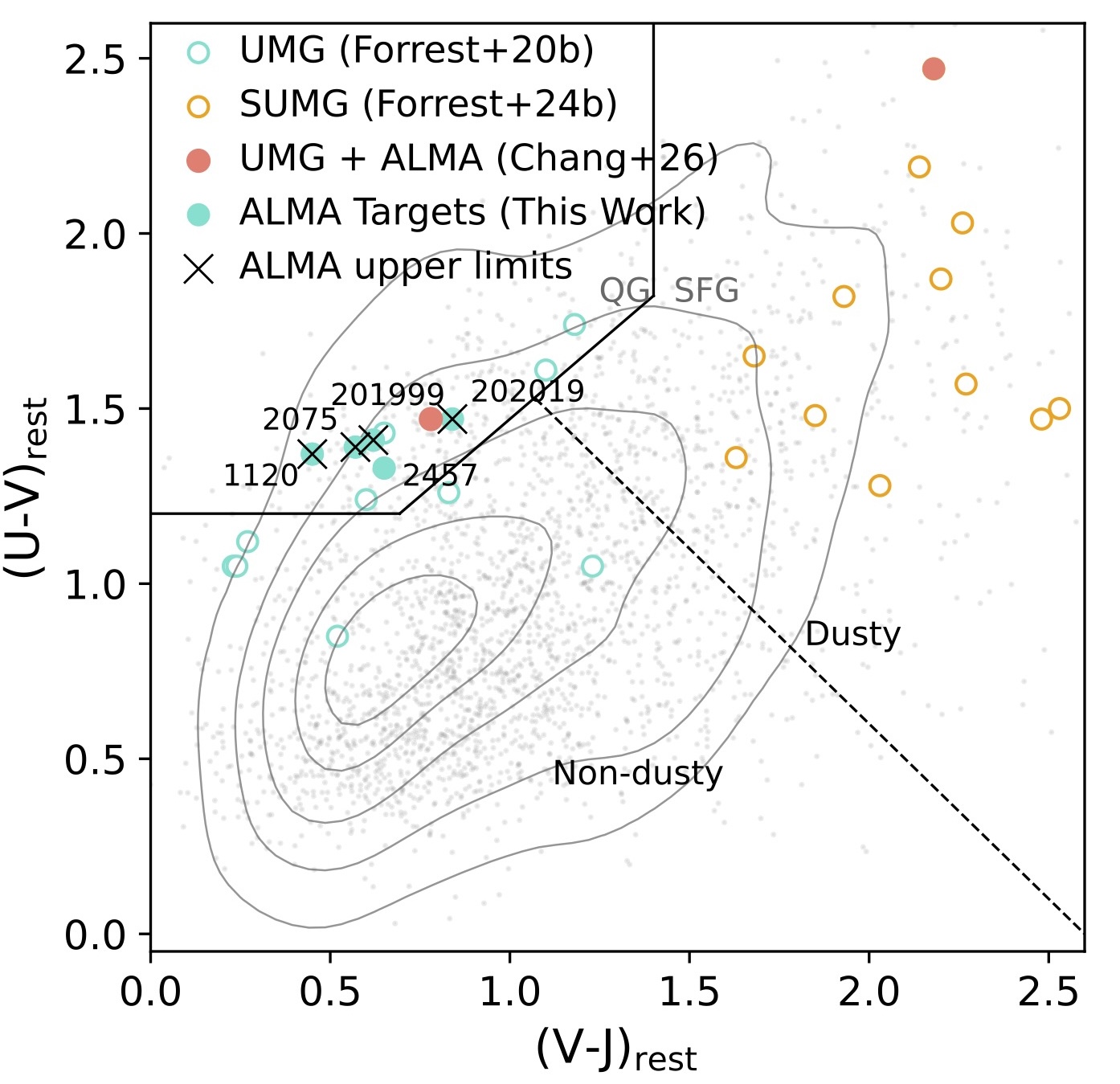
Galaxies that have quenched their star formation are dominated by older stellar populations, which makes them appear red (hence why they are often referred to as “red and dead” galaxies). However, dust can redden galaxies in a similar way by absorbing blue light and re-emitting it at longer wavelengths — meaning that a dusty, star-forming galaxy can easily masquerade as a quenched one. To uncover any hidden star formation, the authors turn to ALMA to search for far-infrared dust emission. The sample of galaxies investigated with ALMA is shown in Figure 1.

UVJ color–color diagram

Figure 1: UVJ colour–colour diagram, which uses galaxy colours in the ultraviolet (U), visible (V), and near-infrared (J) to identify quenched galaxies. The five ultramassive galaxies (UMGs) studied here (filled cyan circles) lie firmly in the quenched region (QG), consistent with a lack of ongoing star formation. Crosses indicate galaxies undetected in ALMA dust emission, while other massive galaxies at similar redshifts are shown in grey for comparison. [Chang et al. 2026]

ALMA on the Scene

ALMA observes light at sub-millimetre wavelengths, which at these redshifts traces emission from star-forming regions that are obscured by dust. Of the five ultramassive galaxies in this sample, only one is detected with ALMA. Even when the remaining four galaxies are stacked together, no dust emission is recovered, indicating that if any dust is present, it must be extremely faint.

To better quantify what these ALMA non-detections imply, the authors perform spectral energy distribution fitting (see a recent overview bite on spectral energy distribution fitting) using the Code Investigating GALaxy Emission, or CIGALE, a code that enforces energy balance between absorbed starlight and dust emission to estimate physical properties such as a galaxy’s star formation rate and dust content. With the ALMA constraints included, all five galaxies are found to lie more than 10 times below the star-forming main sequence. Even the single ALMA-detected galaxy remains formally quenched, showing only weak residual star formation.

In other words, these galaxies really are dead (or at least extremely dormant).

Extremely Dust-Poor Galaxies

The spectral energy distribution fitting also allows the authors to measure how much dust these galaxies contain relative to their stellar mass. This ratio provides a simple but powerful way to assess how much interstellar material remains in a galaxy — and therefore how much fuel is left for future star formation.

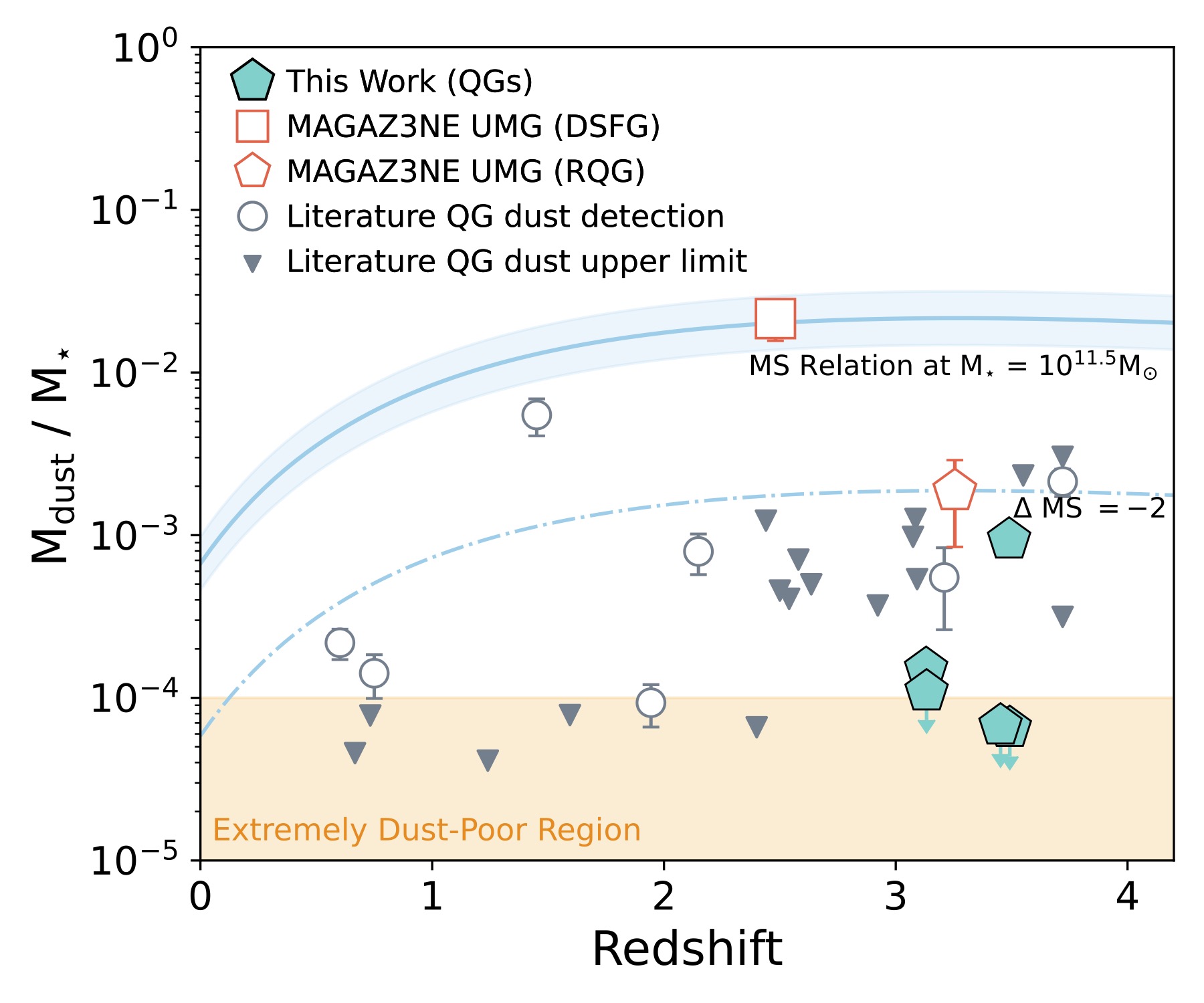
Three of the five ultramassive galaxies have ratios of Mdust/Mstar < 10-4 (Figure 2), placing them among the most dust-poor quenched galaxies confirmed at z > 3. The lone galaxy detected by ALMA contains slightly more dust, with Mdust/Mstar = 10-3, but even this is far below what would be expected for an actively star-forming galaxy. For comparison, typical star-forming galaxies at similar stellar masses host more than 100 times more dust.

Plot of dust-to-stellar mass ratio versus redshift

Figure 2: The ratio of dust mass to stellar mass versus redshift for massive quenched galaxies (QGs). This quantity measures how dust rich a galaxy is compared to its stellar mass. The ultramassive galaxies in this study (cyan pentagons) fall well below the dust content expected for star-forming galaxies (solid blue line), highlighting their extreme dust deficiency. [Adapted from Chang et al. 2026]

These results raise important questions about how galaxies can become ultramassive, quenched, and nearly dust-free within the first two billion years of cosmic history.

For now, ALMA has delivered a clear answer to the question of “dead or in disguise?”: at least some candidate ultramassive galaxies in the early universe really are quenched, and they are strikingly dust poor. By ruling out the dusty impostor scenario, this study shows that deep ALMA observations can cleanly distinguish genuinely quenched galaxies from dusty star-forming ones, even at the highest stellar masses and earliest cosmic times. How these galaxies lost their dust remains an open question, but one thing is clear: by the time cosmic noon arrived, some galaxies had already finished forming stars and quietly faded into dormancy.

Original astrobite edited by Viviana Cáceres.

About the author, Lucie Rowland:

I’m a fourth (and final!) year PhD student at Leiden Observatory in the Netherlands, studying massive, star forming galaxies in the early universe with ALMA and JWST. It’s a really exciting time to be interested in astronomy, so I hope to make groundbreaking new research more accessible!

The post Distant Galaxies: Dead or in Disguise? appeared first on AAS Nova.

A New Catalog of Stellar Rotation Periods for Over a Million Stars

1 July 2026 at 18:22

TESS in space

Stellar rotation is a crucial aspect of not only stellar evolution but also exoplanet science, and a recent study has built the largest catalog of stellar rotation periods to date.

Stellar Opportunities with TESS

Since its launch in 2018, the Transiting Exoplanet Survey Satellite (TESS) has scoured the sky, searching for the signature recurring dip in starlight caused by planetary companions. While the primary goal of TESS is to discover exoplanets, the satellite’s mapping of the entire sky has created a rich database of high-quality photometry for millions of stars. These observations offer ample opportunity for scientists to study stellar properties and behavior across the Milky Way.

In particular, stellar rotation is a key property that traces a star’s age, magnetic activity, and internal structure. For exoplanet science, stellar rotation is both a help and a hindrance: it allows us to study how exoplanets may evolve over time with their host stars, but stellar activity can mimic or drown out planet signals, making them harder to detect. A few studies have investigated stellar rotation periods with TESS, looking at specific star clusters and known planet hosts. To date, however, no existing study has produced a larger catalog of TESS rotation periods — a product that would provide a wealth of information for both exoplanet and stellar evolution science.

Creating a Catalog

TESS All-Sky Rotation Survey

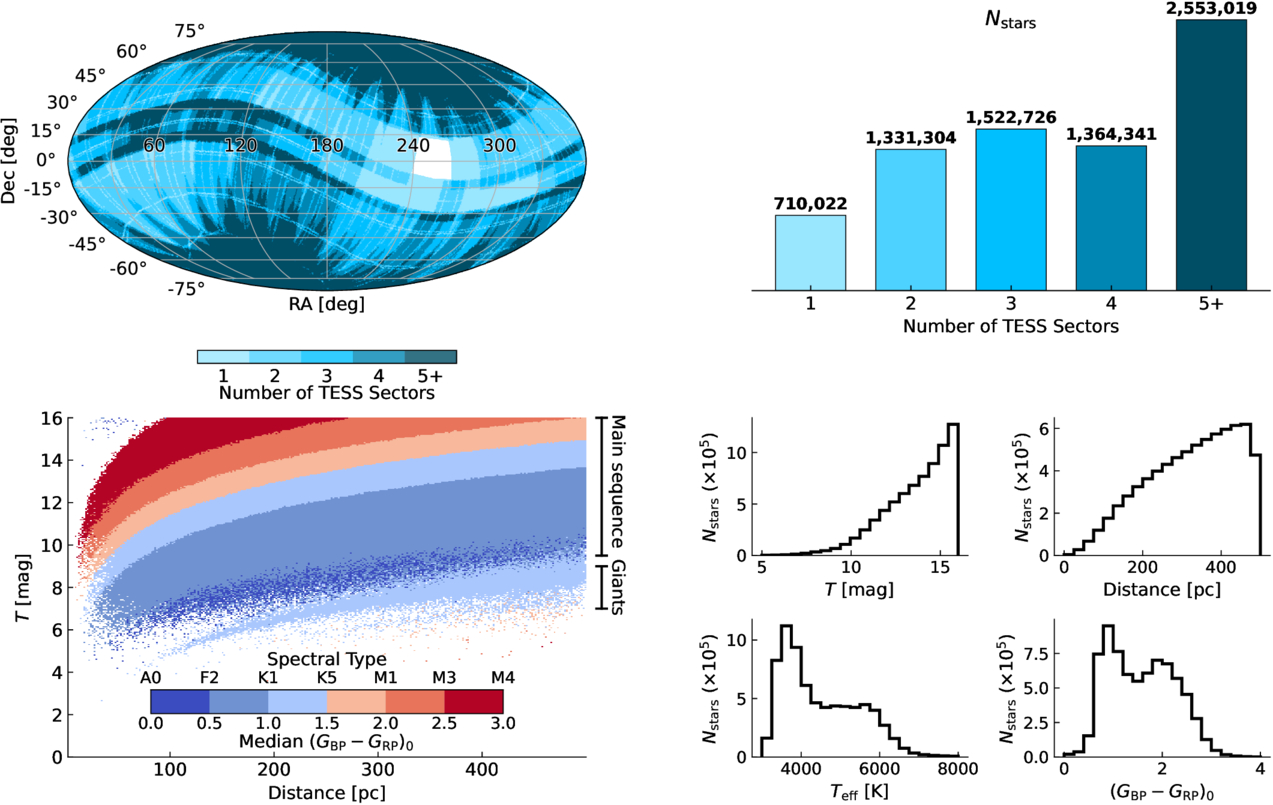
Target sample summary showing the TESS sky coverage (top left), histogram of number of TESS observations per star (top right), TESS magnitude as a function of distance to the star (bottom left), and histograms of magnitude, distance, temperature, and color across the sample (bottom right). Click to enlarge. [Boyle et al 2026]

Seeking to build a flux- and distance-limited catalog of TESS rotation periods, Andrew W. Boyle (The University of North Carolina at Chapel Hill) and collaborators used TESS full-frame images to survey the local neighborhood for stellar variability. To measure reliable stellar rotation periods for as large and diverse a sample as possible, the authors made selection cuts in brightness, distance, and data availability to build a target sample of 7,481,412 stars. They generated light curves for each observation of each star and searched them for periodicity, or repeated variation in brightness.

Not all brightness variations present in a star’s light curve are due to stellar variability — instrumental systematics and artifacts from the spacecraft’s orbital period can produce periodic variability. To combat this, the authors created a classification algorithm to select sources whose periodicity is most likely due to true stellar variability rather than instrumental or observational effects. Pairing this classification with some additional validation criteria, the authors built the TESS All-Sky Rotation Survey (TARS), a catalog of periods for 1,046,317 stars within about 1,600 light-years of our Sun.

Map of fast rotators in TARS sample

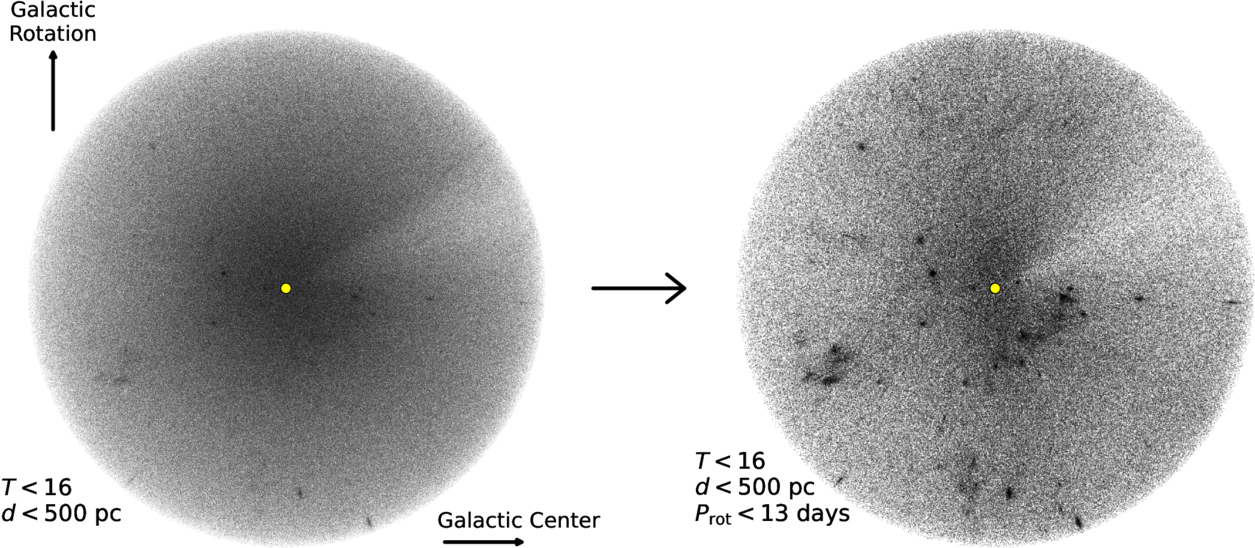
Map of all TARS stars within about 1,600 light-years of the Sun (left) and only the fast-rotating stars in the survey, highlighting clustered populations (right). Click to enlarge. [Boyle et al 2026]

Implications of TARS

Looking more finely at the TARS catalog, the authors provided additional quality cuts to remove other potential sources of stellar variability like binary companions or pulsations. The authors estimated that roughly 93% of their measured periods are due to stellar rotation, which expands the number of stars with known rotation periods by a factor of 2.3 within about 325 light-years and by a factor of 4.0 within about 1,600 light-years. As the largest homogeneous catalog of stellar rotation periods to date, TARS lays the groundwork for studies of stellar evolution, exoplanet discovery and evolution, and even Milky Way structure. For example, the authors found that when mapping the fast-rotating, typically younger stars in TARS, the location of young stellar associations in the local neighborhood became significantly clearer. This underscores the importance of this catalog for a range of science goals, and future work will only improve upon the data provided by TARS.

Citation

“The TESS All-Sky Rotation Survey: Periods for 1,046,317 Stars within 500 pc,” Andrew W. Boyle et al 2026 ApJS 284 75. doi:10.3847/1538-4365/ae6657

The post A New Catalog of Stellar Rotation Periods for Over a Million Stars appeared first on AAS Nova.

New Research Suggests Human Laughter May Hold a 15-Million-Year Old Secret

29 June 2026 at 13:04

Human laughter may hold a deeper connection to our primate ancestors than previously realized, preserving a 15-million-year-old evolutionary legacy. New research from the University of Warwick suggests the rhythm of laughter has remained largely unchanged across millions of years, offering surprising new insights into the origins of human speech.

Great apes are humanity’s closest living relatives, and species including chimpanzees, bonobos, gorillas, and orangutans all produce laughter-like vocalizations accompanied by smile-like facial expressions.

For years, scientists have wondered whether these vocal expressions share a common evolutionary origin. To investigate, researchers analyzed laughter recordings from 17 apes and humans representing five species: four orangutans, two gorillas, three bonobos, four chimpanzees, and four humans. Examining 140 laughter sequences, they found that every species produced laughter with evenly spaced rhythmic intervals between sounds—a pattern that appears to have been inherited from a common ancestor.

“It is impossible to assess the precursor forms of language directly from our extinct ancestors,” said Dr Adriano Lameria, an Associate Professor with the Department of Psychology at the University of Warwick and a researcher with its ApeTank, said in a statement. “Laughter, being evolutionarily older and having remained shared between all living great apes, provides a rare evolutionary window into the vocal transformations that unfolded across hominid evolution until the first humans appeared on scene.”

“Contrary to the classic notion that the first humans suddenly acquired vocal control capacities remarkably different from their predecessors, laughter evolution tells us that humans lay on a continuum, a prolongation of vocal control capacities that were already being cumulatively honed in for 15 million years,” Lameria added.

The discovery suggests that this rhythmic connection and foundation of laughter was already present around 15 million years ago and has persisted through millions of years of evolutionary change.

“How did humans evolve the remarkable ability to speak? Speech leaves no fossils, and complex language exists only in our own species. But we’ve found a 15-million-year-old clue in an unexpected place: our laughter,” said Dr. Chiara De Gregorio, Honorary Research Associate, Department of Psychology, University of Warwick. 

“Unlike speech, laughter is shared by all living great apes. By comparing how different species laugh, we can see that a basic rhythmic structure has remained unchanged since our last common ancestor. That’s extraordinary,” De Gregorio added.

Even though humans and apes share similarities—with ape vocalizations generally having a deeper resonance and tone—the underlying timing of laughter has remained remarkably stable over millions of years. What distinguishes humans is our greater voluntary control over laughter, allowing us to laugh intentionally in social situations in ways that our primate relatives cannot.

Scientists believe this increased vocal control may have played a key role in the evolution of speech. The human ability to precisely regulate vocal timing, tone, and expression is considered a fundamental component of producing complex spoken language.

The new findings challenge the idea that humans suddenly developed advanced speech abilities unlike those of earlier species. Instead, the research suggests that human communication evolved gradually, building upon vocal capacities that had already been developing in our ancient primate relatives.

Chrissy Newton is a PR professional and the founder of VOCAB Communications. She currently appears on The Discovery Channel and Max and hosts the Rebelliously Curious podcast, which can be found on YouTube and on all audio podcast streaming platforms. Follow her on X: @ChrissyNewton, Instagram: @BeingChrissyNewton, and chrissynewton.com. To contact Chrissy with a story, please email chrissy @ thedebrief.org.

A Slowly Aging Butterfly Could Help Scientists Understand Longevity

26 June 2026 at 13:25

A butterfly that survives for nearly a year, while its closest relatives live only two weeks, offers a potential model for studying how aging and lifespan can evolve in nature.

A University of Bristol-led study published in Nature Communications reports that some Heliconius butterflies have evolved both longer lifespans and slower physical decline, distinguishing them from most other butterfly species studied to date.

Heliconius butterflies inhabit the rainforests of Central and South America, where most adult butterflies live only a few weeks. In the study, Heliconius hewitsoni reached a maximum lifespan of 348 days, while a related species, Dione juno, only survived about 14 days under observed conditions. This represents a 25-fold difference in maximum lifespan between two closely related species.

Old Age Without the Decline

Heliconius butterflies not only live longer than their relatives, but also show slower physical decline with age. The team, in collaboration with the Smithsonian Tropical Research Institute in Panama, measured grip strength in aging butterflies to assess physical decline. Older Heliconius hecale performed as well as the younger individuals tested, showing no detectable age-related decline in grip strength.

The team combined butterfly house data, mark–recapture field studies, and controlled lab experiments. In these cases, Heliconius butterflies consistently showed longer lifespans, lower mortality rates, and slower rates of aging than closely related species that do not feed on pollen.

The Pollen Connection

One hypothesis for their extended lifespan focuses on their unusual adult diet. While most butterflies feed only on nectar, Heliconius also consumes pollen, which was thought to provide the nutritional basis for its extended lifespan.

To test this idea, researchers compared pollen-feeding Heliconius hecale with its non-pollen-feeding relative, Dryas iulia. H. hecale maintained body mass and muscle performance longer than D. iulia. Even without pollen in its diet, H. hecale still outlived its relative by a wide margin. This suggests that diet alone does not explain Heliconius’s extended lifespan.

Dr. Jessica Foley, the study’s lead author from the University of Bristol’s School of Biological Sciences, explained that insects already show a huge range of lifespans. Some, like mayflies, live only a few days, while ant and termite queens can survive for decades. “This represents a roughly 5,000-fold difference within the class, compared with around a 100-fold difference in lifespan observed in mammals.”

Heliconius butterflies are notable because they have evolved both longer lifespans and slower rates of aging, allowing them to outlive close relatives from which they diverged only recently in evolutionary history.

A New Model for an Old Problem

Most aging research uses a limited set of laboratory organisms, such as mice, worms, and fruit flies, to study biological aging mechanisms. The heliconius butterfly provides a unique opportunity to study a long-lived species closely related to short-lived species, allowing for direct comparison in a natural context. Foley noted that comparing these two groups “can help reveal how lifespan is extended, making them a highly promising new model for research into the biology of aging and longevity.”

If pollen feeding and longevity evolved together but are not entirely dependent on each other, the next step is to identify the genetic and physiological changes responsible for both traits. Understanding these mechanisms in Heliconius butterflies could provide insight into how aging evolves across species.

Austin Burgess is a writer and researcher with a background in sales, marketing, and data analytics. He holds an MBA, a Bachelor of Science in Business Administration, and a data analytics certification. His work focuses on breaking scientific developments, with an emphasis on emerging biology, cognitive neuroscience, and archaeological discoveries.

Why Did the US Government Brief Groups of Christian Pastors About UFOs and Aliens?

26 June 2026 at 03:43
In February 2026, President Trump directed the U.S. government to release documents on UFOs, UAPs, and alien life. Questions arise about the nature of these phenomena, ranging from interdimensional entities to possible deceptions involving spiritual beings, echoing long-standing debates on extraterrestrial existence and their implications for faith.

Do Million-Light-Year-Long Galactic Jets Disprove the Bible on the Age of the Universe?

25 June 2026 at 03:24
Do large galactic structures like bipolar jets emitted from active galactic nuclei disprove the YEC biblical chronology? The Anisotropic Synchrony Convention (ASC) model, as a framework for reconciling biblical timelines with observed cosmic features, asserts that these structures can exist within a creation time frame of under 10,000 years.

Sugar in interstellar space

14 July 2026 at 14:00

Sugars are key biomolecules in living organisms, as they form the backbone of DNA and RNA and play a fundamental role in metabolic processes. In theories of the origin of life, sugars are also essential for the synthesis of the first nucleic acids. Despite their importance, one of the major questions in origin-of-life research is how the first sugars formed on Earth, since laboratory experiments show that they do not form in enough quantities under prebiotic conditions. Sugars such as ribose and glucose have previously been detected in meteorite and asteroid samples, suggesting that some of these molecules may have originated in the primordial molecular cloud from which our Solar System formed. However, until now, no sugar had ever been directly detected in the interstellar medium.

sugar
Composite image of the Galactic Center. Green and yellow: 8 µm and 24 µm emission observed with Spitzer (Churchwell et al. 2009; Carey et al. 2009). Red: 20 cm emission imaged with MeerKAT (Heywood et al. 2019, 2022) and the Green Bank Telescope (GBT; Law et al. 2008). Image adapted from Henshaw et al. (2023; doi: 10.48550/arXiv.2203.11223) and Longmore et al. (2026; 10.48550/arXiv.2602.20340). Source: Ashley Barnes/Izaskun Jiménez-Serra/Juan García de la Concepción

An international team led by Centro de Astrobiología (CAB, CSIC-INTA) researcher Izaskun Jiménez-Serra has now identified 1 the first sugar in interstellar space: erythrulose. This molecule is the only possible four-carbon ketose, and on Earth it is commonly found in raspberries and sunless tanning products. Erythrulose was detected toward the molecular cloud G+0.693−0.027, located near the centre of our Galaxy, the Milky Way. The discovery was made possible by ultra-sensitive, broadband spectroscopic surveys carried out with the 40-m Yebes radio telescope and the 30-m telescope of the Institute for Radio Astronomy in the Millimeter Range (IRAM).

The team identified 12 spectral lines matching the laboratory spectrum of erythrulose measured at the University of the Basque Country. The study also shows that this sugar is at least eight times more abundant than similar three-carbon sugars, none of which were detected in the same region. “This finding was unexpected, as the prevailing view in astrochemistry is that interstellar molecules grow in size through the sequential addition of carbon atoms”, says Izaskun Jimenez-Serra.

Working in collaboration with chemists from the University of Extremadura and Radboud University (the Netherlands), the CAB team discovered that erythrulose can form within interstellar ices from simpler two-carbon alcohols and aldehydes.

Based on the abundance of erythrulose measured in the G+0.693−0.027 molecular cloud, the researchers estimate that between 0.5 and 50 million tonnes of this sugar could have reached Earth’s surface during the Late Heavy Bombardment, which occurred approximately 4.1 to 3.8 billion years ago. The presence of erythrulose in interstellar space therefore provides an alternative source of sugars that may have contributed to the emergence of the first metabolic and replication processes on the early Earth.

“The detection of erythrulose is very exciting because it opens up the possibility of discovering in space other sugars such as ribose, which is part of RNA, and other important molecules for the origin of life,” says Carlos Briones, co-author of the study.

References

  1. Jiménez-Serra, I., García de la Concepción, J., Cuppen, H.M. et al. (2026) Detection of a four-carbon sugar in interstellar space. Nat Astron doi: 10.1038/s41550-026-02905-7 ↩

The post Sugar in interstellar space appeared first on Mapping Ignorance.

Neanderthals and modern humans may have shared culture 59,000 years ago in Turkey, study finds

Deep in a limestone cave on Turkey's Mediterranean coast, archaeologists have uncovered evidence that Neanderthals and the modern humans who moved in later left behind surprisingly similar traces of their daily lives — evidence that they hunted the same animals, crafted the same stone tools and collected the same type of seashells.

The findings, published Monday (July 6) in the journal PNAS, feed into some of the biggest questions in human evolution: How similar were the cultures of Neanderthals and Homo sapiens, given that we're so closely related? And did we share information with one another?

A series of archaeological finds over the past few decades, including the new paper's finding that the two had similar cultural practices, suggests that Neanderthals and H. sapiens behaved far more similarly in the Middle East than once assumed.

The new evidence comes from Üçağızlı II Cave (pronounced Ooch-ah-UHZ'-luh), on a stretch of coastline just north of Syria that served as a prehistoric corridor between the Levant (an area of land east of the Mediterranean) and Eurasia. Although the team found only teeth and a partial jawbone within the cave, they were able to distinguish between the remains of Neanderthals and H. sapiens by analyzing the internal structure of the fossilized teeth. Meanwhile, they dated the sediment at the site using optically stimulated luminescence, a technique that reveals how long ago buried mineral grains last saw sunlight.

The team found that the Neanderthals had lived within the cave between approximately 77,000 and 59,000 years ago, while H. sapiens stayed there between about 59,000 and 47,000 years ago. Despite the different time periods, the layers from both of these periods show "substantially uniform hunting-gathering strategies and lithic technology," showing how similar the Neanderthals and H. sapiens were in their hunting-gathering strategies and stone-tool use, the team wrote in the study.

A group of archaeologists in a cave with tools.

The research team performs excavations at the Üçağızlı II cave site in 2024. (Image credit: KyotoU/Naoki Morimoto)

What's more, Neanderthals and H. sapiens got raw materials, such as flint, from the same local sources and hunted the same prey: wild goats (Capra aegagrus), fallow deer (Dama mesopotamica), roe deer (Capreolus capreolus) and wild boar (Sus scrofa). Layer after layer also turned up 29 shells of a small marine snail, Columbella rustica, carried into the cave not for food but seemingly as ornaments. Some were pierced as if meant to be strung, and one shell dating to the Neanderthal occupation showed signs of deliberate heating that altered its color.

"Our findings indicate a deep level of cultural interaction," study co-author Naoki Morimoto, paleoanthropologist at Kyoto University, said in a statement. "These two distinct but closely related human groups were not just adapting to the same environment: they were probably sharing symbolic preferences."

That pattern breaks from findings at Mandrin Cave in France, where Neanderthals and modern humans are thought to have alternated occupation in distinct pulses from about 56,800 and 41,500 years ago, but did not leave evidence of a continuous culture. Instead, it echoes evidence from Tinshemet Cave in Israel, where researchers recently reported similar signs of shared behavior between the two groups tens of thousands of years earlier, from about 130,000 to 80,000 years ago.

Turquoise waters surrounding rocky entrance to a cave in Turkey.

A view of Turkey's Üçağızlı II Cave, which housed Neanderthals and Homo sapiens at different times. (Image credit: KyotoU/Naoki Morimoto)

Üçağızlı II Cave in Turkey and Tinshemet Cave in Israel suggest that even though there was a "biological" turnover as the caves went from being occupied by Neanderthal groups to modern humans, there weren't major cultural turnovers, too.

"Rather, we hypothesize that the two human species that coexisted in the region were in contact and shared cultural aspects," the researchers wrote in the study.

"A fascinating region"

Sites like these are forcing a rethink of how these two types of human were culturally related to each other, April Nowell, a Paleolithic archaeologist at the University of Victoria in Canada who was not involved in the new study, told Live Science in an email. "By demonstrating cultural continuity and elevated levels of interaction, sites such as Tinshemet and Üçağızlı II are changing what we thought we knew about Neandertals, Homo sapiens and other contemporary Homo groups … a fascinating region just got even more so!" she said.

But that cultural continuity only heightens the mystery of how modern humans and Neanderthals interacted, with Neanderthals eventually going extinct around 40,000 years ago. Two types of human can't occupy the same ecological niche indefinitely, Nowell noted, and some research into Neanderthal cognition suggests Neanderthals were less-flexible thinkers than modern humans, with more limited capacity for language and less of the kind of self-awareness and creativity that may have given H. sapiens an edge. (However, there is pushback against the idea that Neanderthals weren't as cognitively complex as H. sapiens.)

If the archaeological record at sites like Üçağızlı II shows this much overlap in behavior, Nowell said, the real differences between the two may be ones the fossil record simply hasn't revealed yet.

The authors noted that many big questions remain, including when and where these shared cultural practices took place and whether these cultural similarities happened because modern humans mated with Neanderthals.

Ongoing and future excavations at sites like Üçağızlı II Cave may help to answer these questions and build a "more comprehensive picture of human evolution and cultural development during the Late Pleistocene," the team wrote in the study.

How much do you know about our closest relatives? Find out with our Neanderthal quiz!

Diminutive species 'the Hobbit' did not hunt or control fire, deepening the mystery of its ancestry, dwarf elephant bones reveal

The diminutive, now-extinct humans known as the "hobbits" were scavengers who dined on dwarf elephants after Komodo dragons took the best cuts, archaeologists have discovered. The finding upends the assumption that Homo floresiensis, a human species that arrived on the Indonesian island of Flores at least 700,000 years ago, hunted big game.

First discovered in 2003, H. floresiensis has been nicknamed the hobbit because of its small size, averaging around 3 feet, 6 inches (106 centimeters) tall, along with its small brain, large teeth and big feet. But archaeologists also found stone tools, animal bones with cut marks, and charred bones that seemed to add up to sophisticated behavior common within our genus, Homo. The hobbits disappeared around 50,000 years ago as Homo sapiens began spreading around Southeast Asia.

But in a study published Friday (July 3) in the journal Science Advances, an international team of researchers questions whether the behavior of H. floresiensis was really as advanced as previously assumed.

The researchers looked at fossil bones of Stegodon florensis insularis, an extinct dwarf species of elephant relative discovered at Liang Bua cave, where bones from H. floresiensis and stone tools have also been found, to determine whether the cut marks were from hunting Stegodon meat or from scavenging the remains of the feasts of the only other carnivore on the island: the Komodo dragons (Varanus komodensis).

To distinguish the hobbit cut marks from Komodo dragon tooth marks, the researchers first conducted an experiment, feeding a goat carcass to a captive Komodo dragon at Zoo Atlanta. Then, they recovered the goat skeleton and painstakingly documented all of the marks, pits, notches and furrows the Komodo dragon's teeth made in the bones. The tooth marks were concentrated in areas with substantial amounts of goat flesh, the researchers wrote in the study, suggesting the Komodo dragon had a preference for meaty areas.

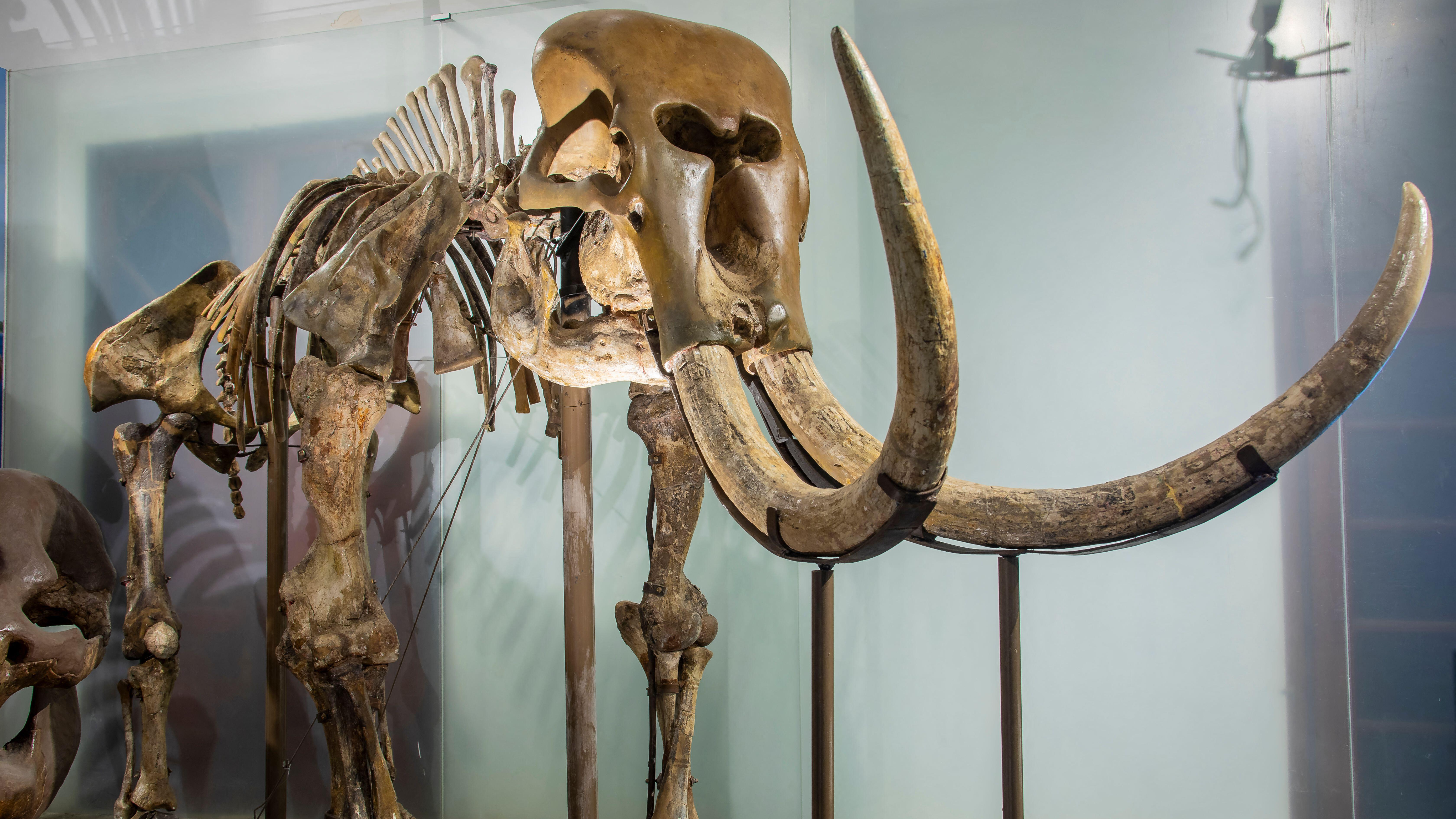
a Stegodon skeleton in a museum

An extinct species of dwarf elephant called Stegodon florensis insularis inhabited the Indonesian island of Flores. (Image credit: Alamy)

The researchers then investigated the ancient Stegodon bones for evidence of cut marks made by H. floresiensis' stone tools and tooth marks from Komodo dragons. They found 54 cut marks on the Stegodon bones and nearly twice as many Komodo dragon tooth marks. More importantly, they discovered that the Komodo dragon marks were focused on meaty areas, while the human cut marks were made primarily in areas without a lot of meat, suggesting H. floresiensis did not hunt and kill the Stegodon.

The overall patterns of cut marks and tooth marks suggest "a combination of mostly primary access by Komodo dragons and secondary access by H. floresiensis where both predators consumed Stegodon," the researchers wrote. And the hobbits likely ate this meat raw, according to the researchers, as they found no evidence on the Stegodon bones that they had been cooked. Nor did they find any evidence of burning on over 4,000 mouse bones from the site, suggesting the previous evidence of charring was actually natural manganese staining.

A lack of hunting and fire-making technology suggests that the hobbits were not as behaviorally sophisticated as previously thought and raises questions about their ancestry, the researchers said.

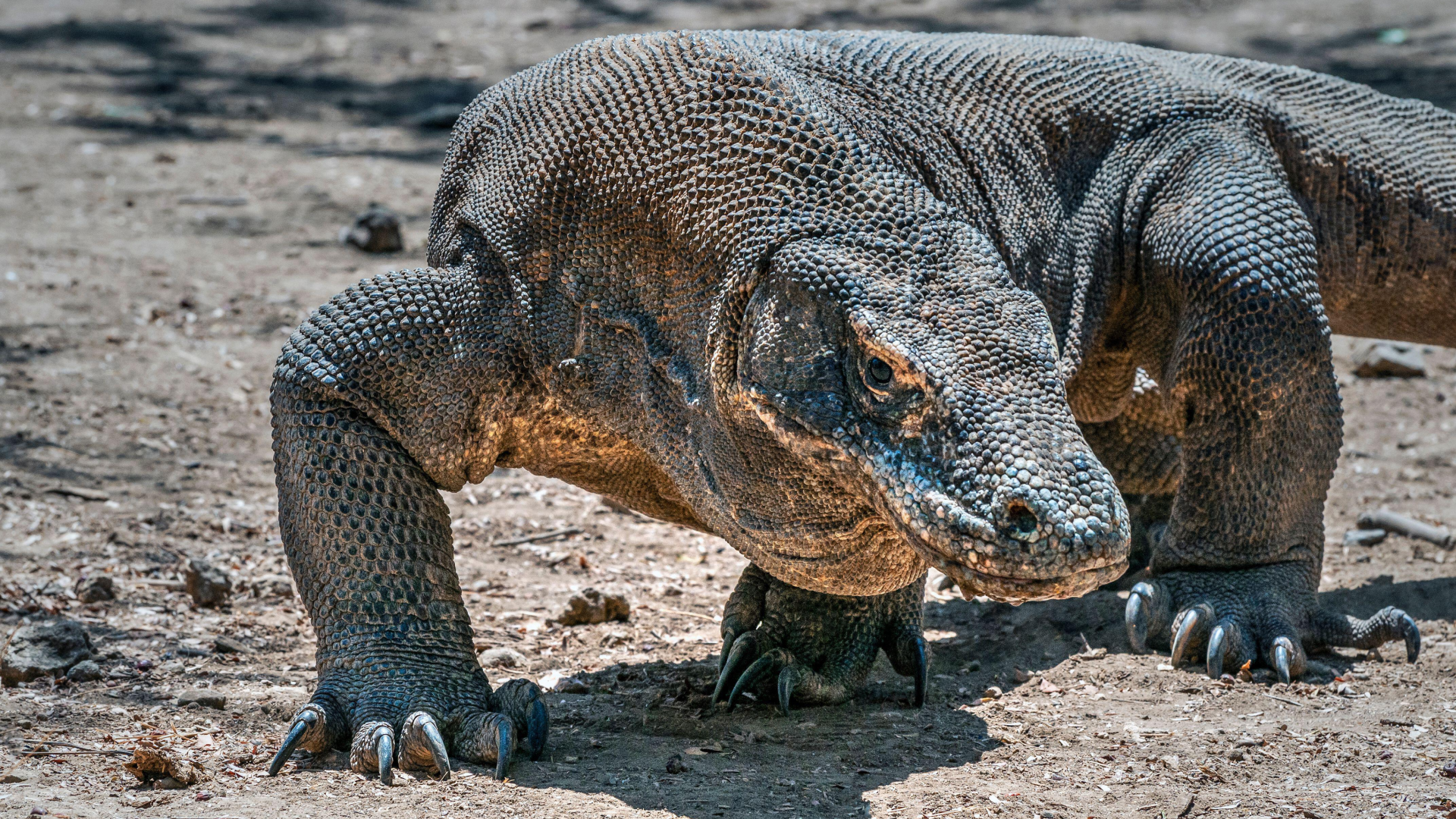
a komodo dragon looking super creepy

The Komodo dragon (Varanus komodoensis) lived on the island of Flores and was the only other carnivore along with Homo floresiensis. (Image credit: Alamy)

It's possible that the ancestor of H. floresiensis branched from the Homo genus before humans accomplished the control of fire and hunting, study first author E. Grace Veatch, a paleoanthropologist at the University of Tübingen in Germany, told Live Science in an email.

One hypothesis for the origin of the hobbits is island dwarfism, which occurs when a large species' average body size evolves to be smaller over generations due to the limited availability of natural resources. Another theory is that hobbits descended from an earlier Homo species that was already small-bodied.

"I think our study highlights the importance of considering behavior in these debates," Veatch said. "Our study suggests that H. floresiensis evolved from a hominin population that did not require these dietary strategies [of hunting and cooking], such as a form of early Homo."

But the new study has not entirely settled the debate about the hobbits' ancestry, because very little is known about the behavior of early hominins in Southeast Asia, such as Homo erectus on Java and other areas of Sunda or Sundaland, a landmass between the South China Sea and the Indian Ocean that has been exposed off and on over the past 2.6 million years.

If H. floresiensis really did branch off from H. erectus, that would suggest many evolutionary changes occurred.

"Taking place on an island that was cut off from contact with the Sunda mainland, this evolution from Homo erectus to Homo floresiensis may have involved not just profound anatomical transformations, such as reduced body size and brain volume, but also behavioural adaptations," Adam Brumm, an archaeologist at Griffith University in Australia who was not involved in the study, told Live Science in an email.

"Flores was clearly a wild card in the story of early human evolution, the sort of place where almost anything could have happened — including, potentially, the loss of deeply-rooted hominin behaviours, such as hunting and fire use," Brumm added.

Where H. floresiensis fits in with the rest of the Homo genus is still an open question, Veatch said. "Importantly, this study highlights the contribution of taphonomy [the study of what happens to organic remains after death] to speak to these larger questions about ancestry."

What do you know about early humans? Test your knowledge with our human origins quiz!

'A weird result from an already weird hominin': Archaeologists discover all Homo naledi skeletons found in South African cave are female

For the first time, archaeologists have analyzed the genetic material of Homo naledi, a mysterious 300,000-year-old relative of modern humans discovered deep in a South African cave system. What they found is unique in human evolution studies: Every skeleton known from the species is female.

"I think it is fair to say that they surprised us," Lee Berger, a National Geographic explorer-in-residence, told Live Science in an email, but H. naledi "has always been an enigmatic discovery."

Since 2013, Berger has headed the Rising Star project, which discovered nearly two dozen skeletons of small-brained, two-legged creatures, which the research team named H. naledi, within a cave system in South Africa's Cradle of Humankind.

Research over the past decade has revealed that H. naledi was unusual for having a small brain and upper body, similar to earlier australopithecines like Lucy, but a face, hands and lower limbs that were more human-like. In 2023, the Rising Star team suggested H. naledi may have used fire in the cave, and in 2025, they advanced the controversial claim that H. naledi buried their dead — a complex behavior unexpected for a human relative with such a small brain.

But a new study of H. naledi teeth published Wednesday (June 24) in the journal Cell may bolster the team's interpretation of the Rising Star cave as a burial site.

An international team of experts studied 20 teeth from H. naledi skeletons using proteomic analysis, a minimally destructive technique that sequences genetic material from ancient proteins. Proteomics is a burgeoning field, especially because these proteins can last longer than DNA. The team focused on amelogenin genes (AMEL), which code for proteins in dental enamel and vary by sex. While the gene variant called AMELX is found in both males and females, another one, AMELY, is found only in biological males.

In analyzing the H. naledi teeth, the team found no AMELY genes but plenty of AMELX ones, suggesting that all of the skeletons were from females. These included the nearly complete skeleton of Neo and DH1, the main representative of the species, both originally assumed to be male.

The result is surprising because there are no known ancient human cemeteries or collections of nonhuman primate skeletons that contain only females.

"The most likely reason for these robust results are, in my opinion, cultural selection after death for burial by sex and perhaps gender," Berger said. "There are many past human societies with sex-specific burial practices," study co-author John Hawks, a paleoanthropologist at the University of Wisconsin-Madison, said in a statement, but the H. naledi skeletons "are older than any known Neanderthal or modern human burial site, and it's remarkable to see that they may all be female."

ancient teeth in a jaw on the floor of a cave

A partial jawbone with teeth from Homo naledi lies was found in the Rising Star cave system. (Image credit: Mathew Berger / Rising Star Program)

"An already weird hominin"

The discovery that everything we know about H. naledi comes from female skeletons has surprised paleoanthropologists.

"The bottom line is this is a weird result from an already weird hominin," Elizabeth Sawchuk, curator of human evolution at the Cleveland Museum of Natural History, who was not involved in the study, told Live Science in an email. "The key thing to remember is that failure to detect evidence of AMELY does not mean there are no males in the sample — it just means that none were detected."

One possible reason for the lack of this gene in H. naledi skeletons is an AMELY gene deletion that is known to occur very rarely in some modern-human populations and that has been found in one Neanderthal male. If the AMELY gene doesn't exist in this H. naledi group, then the protein profiles of males would look identical to the profiles of females.

However, "it's very unlikely that this would be the case among even half of the 20 individuals we studied or for an entire population," study co-author Enrico Cappellini, a paleoproteomics professor at the University of Copenhagen in Denmark, said in the statement. "Either scenario, namely the absence of H. naledi males in the Rising Star cave system or a systematic deletion of their AMELY gene, is fascinating and would have deep implications for a better understanding of the biology and evolution of this species."

Studies of H. naledi, a species known from a single site, "continue to yield more questions than answers," Sawchuk said. "As the authors point out, this is a surprising result that requires more investigation."

Other hominins in South Africa

A second surprising result in the proteomic analysis was that H. naledi shares a gene variant with Paranthropus robustus, a human relative with a massive face and teeth that lived in South Africa around 1 million to 2 million years ago.

Proteomic analysis of four P. robustus skeletons in 2025 proved that limited genetic material could be recovered from ancient human relatives in Africa. The new study has revealed that some members of this species and H. naledi shared a gene variant related to collagen production, which is different from the genes found in modern humans, Neanderthals and Denisovans.

While H. naledi and P. robustus inhabited the same general geographic area, it is unclear if they lived there at the same time and overlapped or if they may have had an ancestor-descendant relationship.

"It is early days for sampling fossil hominins with ancient proteins, and until we build a better, bigger sample, we just don't know" what the shared genetic variant means, Berger said.

Building a larger database of ancient proteins from other human relatives that evolved in Africa, such as Australopithecus africanus and Homo erectus, may clarify where H. naledi fits into the picture of human evolution.

"Key data are missing from H. erectus and A. africanus that would help put this evidence into context," Sawchuk said. "For now, this is another curious finding that bears further investigation."

a scientist with dark skin and glasses wears white scrubs and blue gloves to test something

Study lead author Palesa Madupe has pioneered techniques to extract proteins from fossils. (Image credit: Alberto Taurozzi / Rising Star Program)

What does sex change?

In 2015, Berger and colleagues named the new hominin H. naledi and described what they presumed to be male and female variants of the species based on the skeletons' sizes. In many groups of human relatives and in modern humans, males are physically larger than females, on average. This assumption led the researchers to classify the presumed male individual DH1, discovered in the Dinaledi chamber of the cave, as the main representative of the new species.

But a 2024 study was the first to question the assumption that the H. naledi skeletons came from two sexes. In that study, researchers found variation in the teeth of H. naledi that was "so low that the possibility that one sex is represented by few or no individuals in the sample cannot be excluded," they wrote.

"Our study helps resolve the long-standing mystery of why Homo naledi lacked significant variation," study first author Palesa Madupe, a researcher at the Max Planck Institute for Evolutionary Anthropology in Germany, said in the statement. "It's probably because they could have all belonged to one sex."

If the proteomic sex analysis is correct and H. naledi does not have AMELY deletion issues, it means everything we know about the species comes from females. But this doesn't mean interpretations of the species are wrong.

"The only thing that has changed is that we have never seen a male!" Berger said. "When and if we do, we will have to extend the description to include male sex characters and the likely extension of certain aspects of variation."

The researchers hope their study paves the way for more proteomic analyses of human relatives in the future.

The new analysis proves that protein analysis of fossils from the Pleistocene (2.58 million years ago to 11,700 years ago) can be done in a minimally destructive way, Madupe said. "This means potentially opening the door to a whole new way of sustainably investigating the differences between sexes in groups of extinct hominins and other animals without causing visible damage to these priceless fossils."

What do you know about early humans? Test your knowledge with our human origins quiz!

❌