
❌

Normal view

The hantavirus outbreak is over, WHO declares

The hantavirus outbreak that struck a cruise ship in April, killing three people and sparking fears of further spread, is over, the World Health Organization (WHO) has announced.

"Today, the final contact of a person exposed to hantavirus on the cruise ship MV Hondius completed their quarantine period, tested negative and returned home. No further cases have been reported since the 25th of May," Tedros Adhanom Ghebreyesus, the WHO's director-general, said in his opening remarks at a news conference Thursday (July 2). "We are therefore very pleased to say that WHO considers the outbreak of hantavirus over."

The total number of cases linked to the outbreak was 13. All those affected were either passengers or crew on the ship.

The outbreak began aboard the Dutch-flagged cruise ship MV Hondius after it departed southern Argentina on April 1. It involved the Andes virus, the only known hantavirus that can spread between people.

Hantaviruses are rodent-borne viruses that are found in the Americas, Europe and Asia and spread to humans relatively rarely, usually via contact with the urine, droppings or saliva of infected rodents. The Andes virus, however, has sparked short chains of human-to-human transmission in the past.

Before public health authorities were informed of the cases on MV Hondius, several dozen people disembarked the vessel on the island of St. Helena. To find them, authorities launched an international contact-tracing operation, tracking down more than 650 contacts in total who were then followed by health authorities in 33 countries and territories, according to the WHO.

Additionally, health authorities coordinated the monitoring, care and transport of the remaining passengers and crew aboard MV Hondius.

Of these contacts, those considered at the highest risk of infection were then quarantined and monitored for up to 42 days, because sometimes, hantavirus symptoms don't show up until weeks after exposure to the virus. Depending on their jurisdiction and degree of exposure, some contacts quarantined at home while others stayed in specialized facilities.

The initial unchecked travel of some contacts, alongside the virus's long incubation period, prompted concern from the public that the cluster of cases could explode into an enormous outbreak, or even a global pandemic. Many infectious-disease experts emphasized that the Andes virus does not spread easily between people and that the containment effort was going well, so the risk of a large outbreak was low. Still, some experts raised concerns that the international travel of contacts could trigger pockets of the deadly disease, and some argued that the Andes virus does have "pandemic potential."

Now, with the final contact having completed their quarantine period and no further cases reported, the WHO has declared the outbreak over. All of the contacts who were repatriated to the U.S. completed their quarantine period by June 21.

"WHO will continue working with governments and partners to advance our understanding of this outbreak and of hantavirus more generally," Tedros said. "We are also coordinating a study involving 21 countries to understand how the disease develops, which will support the development of diagnostics, therapeutics and vaccines for future outbreaks."

Besides rigorous contact tracing, the WHO credited the coordinated actions of national public health bodies as being vital to preventing the further spread of the disease. These measures included the response of the Spanish government, which created a safe zone on the island of Tenerife for the ship's remaining passengers to disembark before they were repatriated under quarantine.

As the hantavirus outbreak concludes, there's an ongoing Ebola outbreak in the Democratic Republic of the Congo and an outbreak of the Marburg virus in Uganda. These and future outbreaks will require similarly robust international cooperation, the WHO emphasized.

"The outbreaks of hantavirus, Ebola and Marburg all show why there is no alternative to international cooperation in the face of international threats," Tedros said. "No country alone can fight."

This article is for informational purposes only and is not meant to offer medical advice.

11-year-old boy in Canada dies from rabies after waking up with a bat on his face

An 11-year-old boy in Ontario, Canada, has died after being bitten by a rabid bat that was resting on his face as he slept. The boy had no obvious bite or scratch marks and didn't show symptoms for the first 19 days after the incident, his doctors report.

While on vacation with his parents at a cottage in northern Ontario in 2024, the boy was woken up in the night by a bat on his nose and mouth, according to a report published in the Canadian Medical Association Journal on June 29. His father caught the bat in a cooking pot and released it outside, and because the child had no visible injuries and the bat did not seem to be particularly aggressive, his parents decided not to seek a medical assessment, the report noted.

A few weeks later, the child began to experience tingling, numbness and swelling on the right side of his face. When he was examined at his local hospital his vital signs appeared to be normal, aside from an elevated heart rate and white blood cell count.

The next day, the boy's symptoms worsened: he lost feeling in the right side of his face and his speech was beginning to slur. While waiting in hospital, he developed a fever, confusion, hallucinations and difficulty swallowing, followed by excessive production of saliva.

After four days in intensive care at McMaster Children's Hospital in Hamilton, Ontario, the child tested positive for rabies, and after five days his brain stem reflexes were absent, indicating a total loss of brain stem function. Seventeen days after admission, following a consultation between his family and medical experts, he was taken off life support and died.

Rabies is a viral disease that primarily affects the central nervous system, according to the CDC. It is mainly spread through bites and scratches from infected animals, with bats accounting for the majority of cases in North America, according to the boy's doctors.

"Bats pose a particular risk because bites or scratches may be small and are easily overlooked, and patients may not recollect or recognize a bat exposure," the medical team wrote in their report.

According to a report in the Journal of Virology in 2013, silver-haired bats (Lasionycteris noctivagans), are responsible for the majority of rabies cases in Canada. Skunks, foxes and raccoons also often carry the disease.

The rabies virus must travel to the brain before symptoms can occur, but once a patient develops symptoms the infection is almost 100% fatal, with most deaths occurring within one to two weeks of symptom development. However, prompt treatment after exposure β€” including wound cleaning, antibody administration and a series of vaccines β€” is nearly always effective at preventing the disease, according to the CDC.

Rabies in humans is very rare in North America, with fewer than 10 deaths reported in the U.S. every year, according to the CDC. In Canada, only 28 human fatalities have been reported since 1924, according to the Canadian Veterinary Medical Association. Even so, the boy's doctors have emphasized the importance of prompt medical attention following exposure to bats and other animals that could carry the disease.

"Early recognition of exposure and timely PEP [postexposure prophylaxis] remain the only effective means of rabies prevention," they wrote. "Any direct human contact with a bat, even in the absence of a visible bite or scratch, is an indication for PEP."

They added that rabid bats do not always display the classic symptoms commonly associated with rabies, such as aggressive behavior and frothing at the mouth. "Any direct human contact with [a] bat is considered high risk," they added.

This article is for informational purposes only and is not meant to offer medical advice.

Diagnostic dilemma: Viral infection caused woman not to recognize her own father

17 June 2026 at 11:00

The patient: A 28-year-old woman in New Hampshire

The symptoms: In March 2020, the woman developed a high fever, chest tightness, shortness of breath and diarrhea, and she lost her sense of smell and taste. She also experienced coughing fits so intense that they caused her to faint. Based on these symptoms, her primary care provider diagnosed her with COVID-19, although she was not formally tested for the illness due to the lack of diagnostic testing available at the time.

After her diagnosis, she did not seek further medical care due to concerns about out-of-pocket costs, according to a report of the case.

What happened next: Three weeks after her symptoms started, the patient felt well enough to work from home. However, four weeks after that, many of her symptoms returned. She also noticed new feelings of disorientation and felt that "something was off with faces." Her primary care doctor suggested she go to an emergency room, where a CT scan was taken of her brain. The scan didn't show any active bleeding, the report notes, and she was discharged.

In June 2020, the patient spent time with family for the first time since catching COVID-19 and found she could not recognize her father or visually distinguish him from her uncle. She still recognized people by their voices, though.

The patient worked part time as a portrait artist; she used to be able to check her reference photos every 15 to 30 minutes but found she now struggled to hold the details in her mind. She told doctors that "faces are like water in my head," according to the case report.

The patient also had trouble doing everyday tasks, such as navigating her local grocery store or finding her way back to her car in a parking lot. In November 2020, she also started having balance issues and frequent migraines.

The diagnosis: Based on her wide-ranging and relapsing symptoms and her suspected history of COVID-19, doctors diagnosed the patient with post-acute sequelae of COVID-19 (PASC), now known as long COVID. They diagnosed her difficulties with recognizing faces as "face blindness," or prosopagnosia.

Roughly 2.5% of the general population is thought to be born with some degree of face blindness, while others can acquire the condition later in life. The exact number of people with acquired prosopagnosia is unclear, but some estimates suggest roughly 1 in 30,000 people in the U.S. are affected.

Many people with acquired prosopagnosia also have issues navigating familiar spaces. That was also the case with this patient, likely due to the "proximity of brain regions critical for scene and face processing," the case report authors noted.

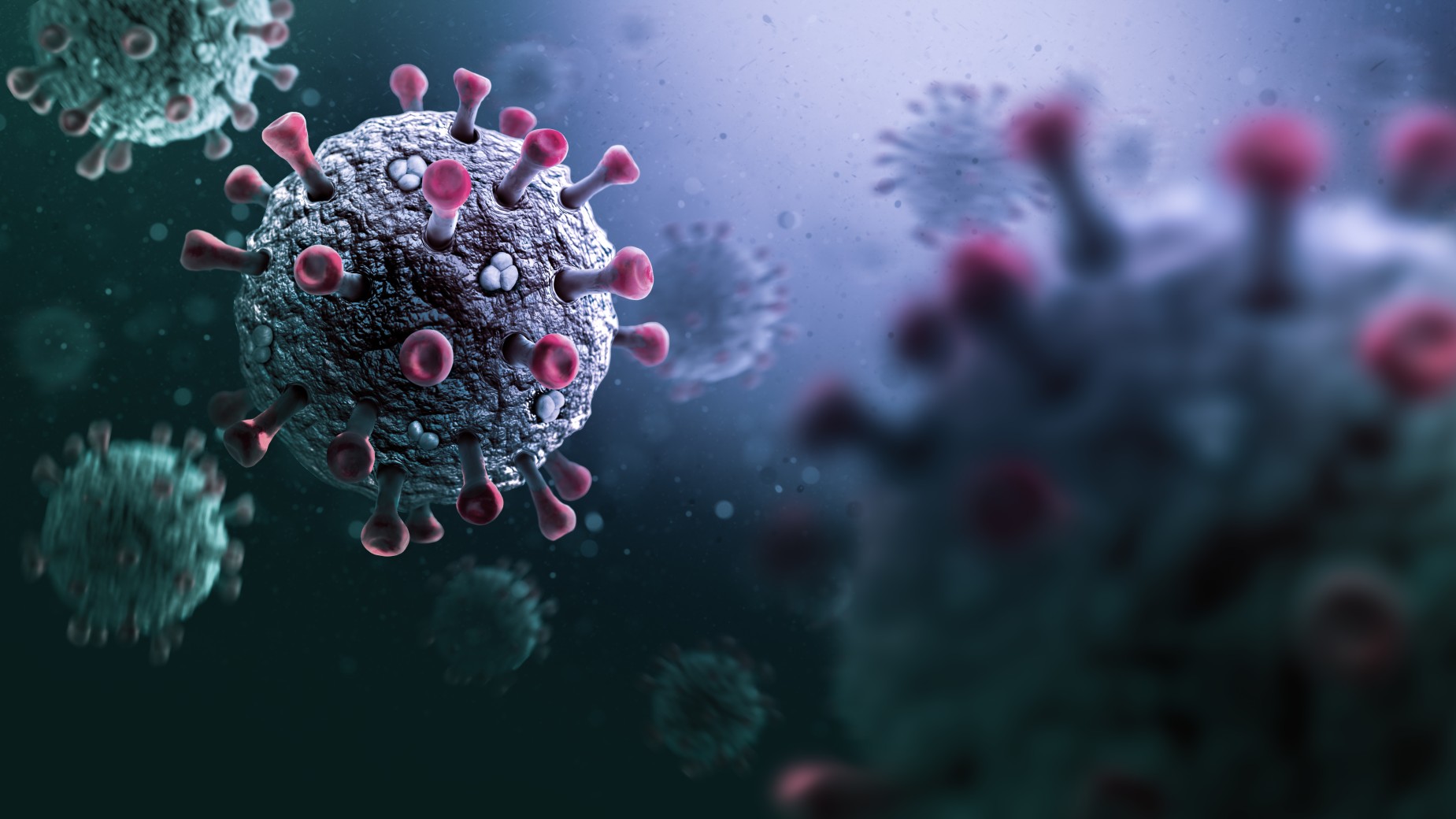
Medical illustration of the SARS-CoV-2 virus

SARS-CoV-2, the virus behind COVID-19, can trigger a wide range of neurological effects. (Image credit: loops7 via Getty Images)

To assess the extent of the patient's prosopagnosia, doctors had her complete several tests of facial memory, which asked her either to memorize strangers' faces or recognize celebrities' faces. The patient performed markedly worse on these tests than 10 women of similar age who were used as a comparison group.

However, she performed as well as the comparison group on other types of cognitive tests, suggesting her deficits were fairly specific to faces. She also got normal scores on tests of facial perception β€” the ability to recognize that a face is a face β€” so her face blindness seemed tied more to memory deficits for faces, the report authors said.

The treatment: The case report does not detail a specific course of treatment, and in general, few treatments exist for face blindness. If there's a clear cause for the deficit β€” such as a tumor in a key part of the brain for facial processing β€” addressing that underlying issue can help reverse acquired face blindness.

If the condition ends up being permanent, there are various strategies that can help patients cope. For instance, "perceptual training" can improve patients' ability to identify and remember the features of a person's face. Additional strategies include training people to use other cues, like voices and social context, to identify people.

What makes the case unique: In this patient's case, the report authors suspect that her COVID-19 infection triggered her face blindness either acutely or in the aftermath of the infection.

Various infections have been tied to face blindness; both bacterial meningitis and Whipple disease (caused by the bacterium Tropheryma whipplei) have been flagged as culprits, although such cases are uncommon. In a second known case involving COVID-19, a different person developed face blindness after an infection but had also had a stroke in the right hemisphere of their brain, a known cause of prosopagnosia.

The 28-year-old woman, by contrast, wasn't thought to have suffered a stroke, and it's unclear exactly how COVID-19 led to her facial processing issues.

The case report authors surveyed more than 50 other people with long COVID, to see if they also had signs of face blindness. While many showed general declines in visual recognition and navigational abilities, the group didn't have a specific problem with faces. So while long COVID is known to cause a range of neurological issues, it appears that face blindness is a rare consequence.

For more intriguing medical cases, check out our Diagnostic Dilemma archives.

This article is for informational purposes only and is not meant to offer medical advice.
Can you guess the diagnosis in these strange medical cases? Find out with our diagnostic dilemma quiz!

'A disease anywhere can be a disease everywhere tomorrow morning': Public health expert on Ebola and the threat of future outbreaks

8 June 2026 at 17:17
Live Science spoke with Dr. Ali S. Khan, an epidemiologist and former assistant surgeon general of the U.S. Public Health Service, about the ongoing Ebola epidemic and the U.S.'s preparedness for future outbreaks.

Google wants to release 64 million bacteria-riddled mosquitoes across California and Florida. Here's why scientists are enthusiastic.

3 June 2026 at 20:40
Google has applied for an experimental mosquito release permit to deploy millions of non-biting southern house mosquitoes that it has infected with the bacterium Wolbachia pipientis, in an effort to reduce mosquito-borne diseases like West Nile virus.

❌