❌

Normal view

Career Spotlight: Electrician (Ages 14-18)

24 June 2026 at 14:37
5 Min Read

Career Spotlight: Electrician (Ages 14-18)

What does an electrician do?

Electricity powers the world, and electricians are the ones who get it where it needs to go. An electrician is an expert who is trained to make sure electrical systems and equipment are installed safely and working correctly. Electricians are involved in a variety of systems, including power, lighting, communications, and more – anything that needs electricity to run.

While electricians ensure systems and equipment have the power they need, electrical technicians focus on building, modifying, or testing electronic devices.

What are some of the different types of work electricians and electrical technicians do at NASA?

At NASA, electricians keep the lights on and the power flowing for rocket launches, scientific research, and everything in between. Their skills support engineers and scientists in building and testing spacecraft, aircraft, satellites, telescopes, and the equipment that makes human spaceflight possible. Electricians make sure all facilities and equipment have the power and functionality they need to be safe and ready to support NASA’s missions.

Electrical technicians at the agency help bring big ideas to life. They might build and wire control systems, connect tiny sensors to circuit boards, or write the software to make a device work in a specific way. They also test instruments in conditions that mimic space – extreme temperatures, intense vibrations, and even a vacuum – to make sure they will survive and perform well during their missions. Technicians use specialized tools, earn certifications, and work with incredible precision.

Being an electrician or electrical technician at NASA is careful, hands‑on work carried out with expertise. Because space hardware is headed to places like low-Earth orbit, the Moon, or even Mars, every detail has to be perfect.

What are the different certification levels for electricians?

The information below is a general overview of the career path of an electrician. Specific guidelines for these roles vary from state to state. It’s important to look up the license requirements in your state.

  • Apprentice electrician: This four-year job training program provides an entry into the industry. An apprentice works as an assistant to an experienced supervisor, gaining vital hands-on experience to move ahead as an electrician.
  • Journeyman electrician: A journeyman is an electrician who has finished an apprenticeship, then passed a test. At this stage, the electrician is licensed and allowed to work without supervision.
  • Master electrician: This is the highest certification possible for an electrician. Typically, a master electrician is someone who has completed approximately 4,000 hours as a journeyman, then passed a licensing exam. These electricians are qualified to work on complicated projects. They can also serve as supervisors for apprentices or journeymen following in their footsteps.

How can I become an electrician?

There are many options that provide the training needed to get started as an electrician or electrical technician.

Many community colleges, trade schools, and technical institutes offer a two-year program leading to an associate degree in electrical technology. Additionally, trade unions and apprenticeship programs provide real-world experience in the field.

Additionally, all branches of the U.S. military offer electronics training that may be transferrable to college credits or civilian certifications.

How can I start preparing today to become an electrician?

It’s never too early to set the stage for an electrifying career! In high school, you can take courses in math, science, and technical education. At the same time, you can start learning about basic electrical concepts such as circuitry and safety.

Begin researching associate degree programs and apprenticeship opportunities so you can consider which pathway seems right for you. Weighing these options now will help you understand program requirements and ensure you’re ready to take the next step.

You can also gain useful experience through part-time work, or shadowing electricians on the job.

What skills will I need to be a successful electrician?

Technical skills focus on the basics – how electricity works, how to stay safe, and how to read schematics and wiring diagrams. Some jobs also call for special hands‑on abilities, like soldering tiny components, putting together cables, or even having some familiarity with chemistry.

Being curious, open‑minded, and a good communicator matters, too. Any time you’re building or improving a device, you must understand who will use it and what they need it to do. Asking questions, sharing ideas, and being able to take feedback are essential to consistently building systems and devices that work well.
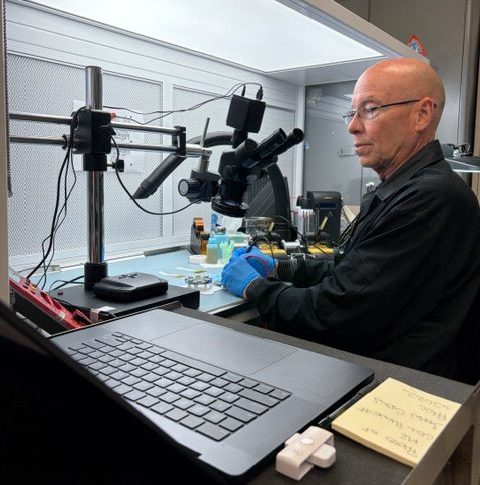
A person sitting at a desk operating equipment
David McClaeb, electronic technician, NASA’s Goddard Space Flight Center in Greenbelt, Maryland

Advice from NASA electricians and electronic technicians

“As an aerospace technician, you have the opportunity to make a big difference. You can make a really big impact.” – Christopher Johnson, aerospace electrical engineering technician, NASA’s Kennedy Space Center in Florida

“What I wish I knew in high school is how many opportunities there are for electricians. I didn’t realize how big of a scale it really was. Everything needs electricity, and the sky’s the limit on what you can do with it. NASA needs electricians for everything from their testing campaigns to keeping their facilities running.” – Levi James, electrician apprentice, NASA’s Glenn Research Center at Armstrong Test Facility in Sandusky, Ohio

“It’s so gratifying when somebody comes in and says, ‘Hey, we want to build this, but it looks really difficult,’ and we say, ‘Yeah, it looks difficult, but we can do it’ – and we build it and then we hand it over to them, and then we’re on to the next thing. It’s a challenge, and I’m telling you, it is just so fun.” – David McClaeb, electronic technician, NASA’s Goddard Space Flight Center in Greenbelt, Maryland

Additional resources

The post Career Spotlight: Electrician (Ages 14-18) appeared first on NASA Science.

Career Spotlight: Electrician (Ages 14-18)

24 June 2026 at 14:37
5 Min Read

Career Spotlight: Electrician (Ages 14-18)

What does an electrician do?

Electricity powers the world, and electricians are the ones who get it where it needs to go. An electrician is an expert who is trained to make sure electrical systems and equipment are installed safely and working correctly. Electricians are involved in a variety of systems, including power, lighting, communications, and more – anything that needs electricity to run.

While electricians ensure systems and equipment have the power they need, electrical technicians focus on building, modifying, or testing electronic devices.

What are some of the different types of work electricians and electrical technicians do at NASA?

At NASA, electricians keep the lights on and the power flowing for rocket launches, scientific research, and everything in between. Their skills support engineers and scientists in building and testing spacecraft, aircraft, satellites, telescopes, and the equipment that makes human spaceflight possible. Electricians make sure all facilities and equipment have the power and functionality they need to be safe and ready to support NASA’s missions.

Electrical technicians at the agency help bring big ideas to life. They might build and wire control systems, connect tiny sensors to circuit boards, or write the software to make a device work in a specific way. They also test instruments in conditions that mimic space – extreme temperatures, intense vibrations, and even a vacuum – to make sure they will survive and perform well during their missions. Technicians use specialized tools, earn certifications, and work with incredible precision.

Being an electrician or electrical technician at NASA is careful, hands‑on work carried out with expertise. Because space hardware is headed to places like low-Earth orbit, the Moon, or even Mars, every detail has to be perfect.

What are the different certification levels for electricians?

The information below is a general overview of the career path of an electrician. Specific guidelines for these roles vary from state to state. It’s important to look up the license requirements in your state.

  • Apprentice electrician: This four-year job training program provides an entry into the industry. An apprentice works as an assistant to an experienced supervisor, gaining vital hands-on experience to move ahead as an electrician.
  • Journeyman electrician: A journeyman is an electrician who has finished an apprenticeship, then passed a test. At this stage, the electrician is licensed and allowed to work without supervision.
  • Master electrician: This is the highest certification possible for an electrician. Typically, a master electrician is someone who has completed approximately 4,000 hours as a journeyman, then passed a licensing exam. These electricians are qualified to work on complicated projects. They can also serve as supervisors for apprentices or journeymen following in their footsteps.

How can I become an electrician?

There are many options that provide the training needed to get started as an electrician or electrical technician.

Many community colleges, trade schools, and technical institutes offer a two-year program leading to an associate degree in electrical technology. Additionally, trade unions and apprenticeship programs provide real-world experience in the field.

Additionally, all branches of the U.S. military offer electronics training that may be transferrable to college credits or civilian certifications.

How can I start preparing today to become an electrician?

It’s never too early to set the stage for an electrifying career! In high school, you can take courses in math, science, and technical education. At the same time, you can start learning about basic electrical concepts such as circuitry and safety.

Begin researching associate degree programs and apprenticeship opportunities so you can consider which pathway seems right for you. Weighing these options now will help you understand program requirements and ensure you’re ready to take the next step.

You can also gain useful experience through part-time work, or shadowing electricians on the job.

What skills will I need to be a successful electrician?

Technical skills focus on the basics – how electricity works, how to stay safe, and how to read schematics and wiring diagrams. Some jobs also call for special hands‑on abilities, like soldering tiny components, putting together cables, or even having some familiarity with chemistry.

Being curious, open‑minded, and a good communicator matters, too. Any time you’re building or improving a device, you must understand who will use it and what they need it to do. Asking questions, sharing ideas, and being able to take feedback are essential to consistently building systems and devices that work well.

A person sitting at a desk operating equipment
David McClaeb, electronic technician, NASA’s Goddard Space Flight Center in Greenbelt, Maryland

Advice from NASA electricians and electronic technicians

“As an aerospace technician, you have the opportunity to make a big difference. You can make a really big impact.” – Christopher Johnson, aerospace electrical engineering technician, NASA’s Kennedy Space Center in Florida

“What I wish I knew in high school is how many opportunities there are for electricians. I didn’t realize how big of a scale it really was. Everything needs electricity, and the sky’s the limit on what you can do with it. NASA needs electricians for everything from their testing campaigns to keeping their facilities running.” – Levi James, electrician apprentice, NASA’s Glenn Research Center at Armstrong Test Facility in Sandusky, Ohio

“It’s so gratifying when somebody comes in and says, ‘Hey, we want to build this, but it looks really difficult,’ and we say, ‘Yeah, it looks difficult, but we can do it’ – and we build it and then we hand it over to them, and then we’re on to the next thing. It’s a challenge, and I’m telling you, it is just so fun.” – David McClaeb, electronic technician, NASA’s Goddard Space Flight Center in Greenbelt, Maryland

Additional resources

💾

At NASA, electricians keep the lights on and the power flowing for rocket launches, scientific research, and everything in between. Their skills support engi...

Hanging in the Balance

23 June 2026 at 16:43
The Moon's rugged surface is on display in this image. Most of the Moon is visible, with the bottom of the sphere disappearing into the darkness. This line between light and dark is called the terminator. The terminator is lined with many craters.
The Moon’s rocky, uneven, and otherworldly surface features are highlighted by the terminator – the difference between light and darkness.
NASA

The Moon appears half-illuminated in this photo captured by the Artemis II crew on flight day 6. The terminator – the difference between light and darkness – provides a stark contrast and even greater perspective of the Moon’s rocky, uneven, and otherworldly surface features. The near side, which is what we can see from Earth, appears in the dark gray regions at the top of this image.

Revisit imagery from the Artemis II mission.

Image credit: NASA

I Am Artemis: Jason Peterson

23 June 2026 at 15:27
4 Min Read

I Am Artemis: Jason Peterson

NASA’s Jason Peterson is the range operations manager at NASA’s Stennis Space Center. For Artemis II, he supported the team responsible for delivering video and communication feeds for launch and splashdown.
Credits: NASA/Danny Nowlin

Jason Peterson’s responsibilities for NASA’s Artemis II mission went beyond his usual role as the range operations manager at NASA’s Stennis Space Center near Bay St. Louis, Mississippi.

For Peterson, working at NASA is a surreal full-circle moment.

“I grew up in DeLisle, Mississippi, right down the road from NASA,” said Peterson. “You would hear NASA testing, the windows would shake, and you knew they were out there. Not in a million years would I have ever dreamed I would work with NASA.”

His career journey took a few turns before reaching the space agency.

“I got out of school, welded, went to college and then to the Air Force. The path to NASA really started to develop from there,” said Peterson.

Peterson spent 24 years in the U.S. Air Force and Air National Guard, working in airfield and air-to-ground range operations, followed by a few years working as an aircraft dispatcher at Airbus Final Assembly Line.

Peterson credits his military experience with preparing him for the 12-to-16-hour workdays that helped bring the Artemis II test flight around the Moon and into view for audiences around the world.

He supported the team responsible for delivering video and communication feeds for the launch of NASA’s SLS (Space Launch System) rocket with the Artemis II crew aboard the Orion spacecraft, and then splashdown in the Pacific Ocean.

During the nearly 10-day mission, NASA astronauts Reid Wiseman, Victor Glover, Christina Koch, and CSA (Canadian Space Agency) astronaut Jeremy Hansen completed a record-setting lunar flyby, taking them 252,756 miles at their farthest distance from Earth.

Aboard the USS John P. Murtha, Peterson was the first on the ship to spot the capsule returning with the crew.

“The sonic boom was the moment it truly hit me. Even though I was tracking the capsule, it did not fully register until then. Chills went down my neck and back. You realize our astronauts are coming home. It was an incredible and emotional moment.”

JASON PETERSON

JASON PETERSON

Range Operations Manager for NASA Stennis

Jason Peterson, NASA Stennis range operations manager, is shown with the Orion spacecraft aboard the USS John P. Murtha on April 13, 2026. Peterson was the first to spot the capsule returning with the Artemis II crew as he supported the team responsible for delivering video and communication feeds during splashdown operations. Credits: NASA
NASA

Peterson operated one of six cameras providing live coverage by using a high‑resolution, multi‑sensor system with thermal capabilities. Using the ship’s heading and Orion’s predicted trajectory, he located the capsule within minutes and began tracking it.

Orion entered Earth’s atmosphere at about 400,000 feet above the planet’s surface, traveling nearly 35 times the speed of sound and about 1,956 statute miles from its splashdown point off the coast of California. Peterson tracked Orion from the release of the small parachutes that first slow and steady the capsule, through the main parachutes opening, and all the way to splashdown.

“You are fully locked in, keeping it centered, in focus, and steady,” said Peterson.

Peterson’s focus on the mission began weeks earlier at NASA’s Kennedy Space Center in Florida.

In the days leading to launch, Peterson worked with the team running full systems checks, staging communications gear, and preparing drones and fixed‑wing camera assets. He helped configure and operate the systems that ensured live video flowed from the launch pad, the crowds, and surrounding air and ground platforms.

On April 1, the launch day of Artemis II, the team unloaded and set up high‑resolution sensors, connection terminals, routers, monitors, fiber lines, and drone equipment. They flew drones to capture crowd scenes and aerial views before liftoff.

As the SLS rocket launched, Peterson’s full attention was on positioning the drone and maintaining the shot.

“There is not much time to step back and take in the moment, as you are concentrating on precision,” said Peterson.

As the mission got underway, Peterson and the team packed up, returned to the facility, and downloaded the day’s footage.

The Artemis II crew were more than halfway to the Moon as Peterson arrived in San Diego on April 4. In the days leading to splashdown, the team loaded and installed high‑fidelity cameras and supporting equipment, all to help the world witness a historic milestone when the Artemis II crew returned to Earth on April 10.

Next up will be Artemis III. NASA will launch four astronauts from NASA Kennedy aboard the Orion spacecraft on the SLS rocket. Building on the successful Artemis II crewed test flight in April, Artemis III will pave the way for future surface missions, with experts like Peterson helping every step of the way.

About the Author

Bo Black

Communications Strategist

Share

Details

Last Updated
Jun 23, 2026
Editor
Catherine Ragin Williams
Keep Exploring

Discover More Topics From NASA

NRSN2 Deficiency Disrupts Memory via NMDA Impairment

21 June 2026 at 03:39

In a groundbreaking study soon to redefine neuroscientific understanding of memory mechanisms, researchers have uncovered the pivotal role played by Neurensin-2 (NRSN2) in regulating hippocampal synaptic plasticity and memory functionality. This newly published research reveals how deficiency in NRSN2 leads to profound impairments in memory, traced back to disrupted excitatory synaptic transmission and weakened long-term potentiation (LTP) within the hippocampus, a brain region critically involved in memory formation and cognitive processing.

The hippocampus serves as the brain’s memory hub, integrating myriad neuronal signals to encode and retrieve information efficiently. Central to this integration is the function of excitatory synapses that employ glutamate receptors, especially the N-methyl-D-aspartate (NMDA) receptor, which plays an essential role in synaptic plasticity—the ability of synapses to strengthen or weaken over time. This plasticity underlies learning and memory. The study elucidates how NRSN2 exerts a regulatory influence on the expression of NMDA receptor subunits, with deficiency in NRSN2 tipping the balance unfavorably and compromising synaptic efficacy.

Utilizing advanced genetic models, the investigators engineered mice lacking NRSN2 to dissect its functional contributions. Behavioral assays showcased a marked decline in memory performance, particularly in spatial and recognition tasks reliant on hippocampal circuits. These deficits were not attributed to developmental anomalies but to disrupted synaptic physiology, signaling a direct role for NRSN2 in maintaining synaptic integrity and plasticity during adult cognition.

At the molecular scale, the absence of NRSN2 triggered a significant downregulation of key NMDA receptor subunits, notably NR1, NR2A, and NR2B. These subunits orchestrate receptor assembly and gating properties critical for calcium influx, a signal cascade necessary for potentiation of synaptic strength. The reduction in their expression correlated tightly with the inhibition of LTP induction, a process considered the cellular analog of memory encoding, confirming the hypothesis that NRSN2 deficiency impairs memory by hampering core synaptic mechanisms.

Electrophysiological recordings from hippocampal slices further substantiated the disrupted synaptic function. In control animals, robust LTP was readily induced by theta burst stimulation—a protocol mimicking physiological neuronal firing during learning. Conversely, hippocampi from NRSN2-deficient mice exhibited significantly weakened potentiation, underscoring the protein’s critical role in modulating synaptic responsiveness. This impairment was not a general defect of synaptic transmission but selectively impacted excitatory plasticity mediated through NMDA receptors.

Delving deeper, the team explored the intracellular cascades influenced by NRSN2, discovering that its absence perturbed the trafficking and surface expression of NMDA receptor complexes. NRSN2 appears to act as a chaperone or scaffold protein, ensuring proper receptor assembly and synaptic localization. Without it, receptor subunits fail to achieve adequate membrane insertion, resulting in diminished postsynaptic sensitivity to glutamate and compromised signal transduction.

This mechanistic insight offers a fresh perspective on how synaptic architecture and molecular composition govern cognition. The study’s integration of molecular biology, electrophysiology, and behavioral neuroscience draws a comprehensive picture of how a single protein’s deficit can destabilize the neural substrates of memory. Such findings not only enrich fundamental neuroscience but also hint at novel targets for cognitive-enhancing therapies.

Intriguingly, alterations in NRSN2 expression and NMDA receptor dysfunction have been implicated in various neuropsychiatric disorders, including schizophrenia and major depressive disorder. By illuminating this molecular nexus within the hippocampus, the research opens doors to understanding disease pathophysiology at a finer scale and may spur development of precision interventions aimed at restoring synaptic balance in affected individuals.

The investigators also examined compensatory mechanisms that might mitigate NRSN2 absence. While some plasticity-related proteins showed upregulation, these changes failed to rescue the deficits in NMDA receptor expression and synaptic potentiation. This highlights the non-redundant and indispensable nature of NRSN2 in maintaining synaptic homeostasis and cognitive function.

Beyond the laboratory findings, the study raises fascinating questions about how synaptic proteins coordinate to sustain the dynamic range of neural connectivity required for adaptive learning. The delicate equilibrium modulated by NRSN2 and NMDA receptors underscores the complexity of neuronal networks and their vulnerability when key molecular elements are compromised—insights that are pivotal as the field seeks to decode the neural basis of memory disorders.

Future research directions spawned by this work include investigating how NRSN2 interacts with other synaptic scaffold proteins and cytoskeletal elements, potentially shaping the three-dimensional organization of the postsynaptic density. Additionally, exploring the developmental timeline of NRSN2 expression could reveal critical periods during which intervention might prevent or reverse memory impairments.

From a translational perspective, the study’s revelations beckon the clinical neuroscience community to consider NRSN2 and its pathways as therapeutic candidates. Pharmacological strategies aimed at upregulating NRSN2 or mimicking its stabilizing effects on NMDA receptors could hold promise for enhancing cognition or slowing neurodegenerative progression in disorders marked by synaptic decline.

In sum, this landmark research defines NRSN2 as a vital regulator of excitatory synaptic plasticity and memory formation. Its deficiency causes a cascade of molecular disturbances culminating in impaired NMDA receptor expression and disrupted LTP, ultimately compromising hippocampal-dependent memory functions. This work not only advances our understanding of the molecular machinery underlying memory but also charts new territory in the quest to ameliorate cognitive dysfunction.

As neuroscience inches closer to mapping the intricate cellular and molecular landscape of cognition, findings such as these underscore the profound impact a single synaptic protein can have on brain function. The compelling evidence presented lays a robust foundation for future explorations into synaptic plasticity and memory, promising strides in both basic science and clinical applications that may soon transform lives burdened by memory loss.


Subject of Research: Impact of Neurensin-2 (NRSN2) deficiency on hippocampal memory functions and synaptic plasticity

Article Title: Impact of NRSN2 deficiency on memory: Altered excitatory synaptic plasticity associated with reduced expression of NMDA receptor subunits and impaired LTP in the hippocampus.

Article References:
Wei, J., Wu, Y., Yi, Y. et al. Impact of NRSN2 deficiency on memory: Altered excitatory synaptic plasticity associated with reduced expression of NMDA receptor subunits and impaired LTP in the hippocampus. Transl Psychiatry (2026). https://doi.org/10.1038/s41398-026-04163-7

Image Credits: AI Generated

DOI: https://doi.org/10.1038/s41398-026-04163-7

Conheça o Koenigsegg feito com 327.906 peças de Lego que envergonha alguns carros a sério

20 June 2026 at 15:05

Com 327.906 peças, mais de 9,400 horas de montagem e 111 km/h de velocidade máxima. Conheça o carro de Lego mais rápido de sempre, o Koenigsegg Sadair’s Spear, que foi construído à escala real, para celebrar o lançamento do novo conjunto 1/8 com 4.104 peças.

The post Conheça o Koenigsegg feito com 327.906 peças de Lego que envergonha alguns carros a sério appeared first on Tek Notícias.

PER2 Reprograms Cholesterol Synthesis to Block Oral Cancer

20 June 2026 at 13:49

In a groundbreaking discovery that could revolutionize the therapeutic approach to oral squamous cell carcinoma (OSCC), researchers have unveiled the intricate role of the circadian gene PER2 in modulating intracellular cholesterol synthesis. This novel mechanistic insight opens new avenues for chronotherapy, particularly enhancing the efficacy of simvastatin, a widely used cholesterol-lowering agent, in combating this aggressive form of cancer.

Oral squamous cell carcinoma remains a significant global health challenge, with limited advancements in effective treatment modalities over the past decades. The cancer’s high propensity for invasiveness and metastasis necessitates innovative strategies that go beyond conventional chemotherapy and radiotherapy. At the cellular level, the adaptation of metabolic pathways, including cholesterol biosynthesis, is increasingly recognized as a hallmark of cancer progression. Cholesterol not only supports membrane biogenesis in rapidly proliferating cancer cells but also acts as a precursor for vital signaling molecules that drive oncogenic pathways.

Central to this study is the circadian clock gene PER2 (Period Circadian Regulator 2), traditionally known for its role in maintaining the body’s biological rhythms. Beyond its canonical function in regulating sleep-wake cycles, PER2 has emerged as a multifaceted regulator of cellular metabolism and tumor suppression. The research team employed a combination of molecular biology techniques, transcriptomic analyses, and in vivo models to delineate how PER2 interfaces with the cholesterol synthesis machinery within cancer cells.

Their findings reveal that PER2 exerts a repressive effect on the mevalonate pathway, the critical metabolic cascade responsible for the generation of cholesterol. Specifically, PER2 downregulates key enzymatic nodes, including HMG-CoA reductase, thereby attenuating the flux of cholesterol precursors. This metabolic reprogramming is pivotal in depriving OSCC cells of essential lipid components required for their malignant behavior, effectively halting tumor growth and invasiveness.

Intriguingly, the study highlights that the endogenous oscillation of PER2 expression within cancer cells aligns with fluctuations in cholesterol synthesis activity. This temporal regulation suggests that the timing of therapeutic intervention could dramatically influence treatment outcomes. Leveraging this insight, the researchers investigated the concept of chronotherapy, administering simvastatin at specific circadian phases to synchronize drug action with the natural troughs in cholesterol biosynthesis dictated by PER2 rhythms.

Experimental paradigms demonstrated a pronounced enhancement in simvastatin’s anticancer efficacy when dosing corresponded with PER2-mediated suppression of cholesterol synthesis. This time-dependent treatment paradigm not only improved tumor regression in preclinical models but also minimized cytotoxic effects on healthy tissues, implying a superior therapeutic index for such chronomodulated regimens.

The implications of these findings extend beyond OSCC treatment, offering a proof-of-concept for integrating circadian biology with metabolic targeting in precision oncology. By harnessing the endogenous biological clock, it may be possible to optimize pharmacodynamics, reduce adverse effects, and overcome resistance mechanisms that have long hindered statin-based anticancer strategies.

Moreover, this research addresses a critical gap in understanding the interplay between clock genes and lipid metabolism in cancer biology. It proposes a cohesive framework where PER2 functions as a metabolic gatekeeper, orchestrating intracellular cholesterol synthesis in a temporally controlled manner that impacts tumorigenicity. The use of simvastatin, a clinically approved HMG-CoA reductase inhibitor, underscores the translational potential of this approach, facilitating rapid clinical adoption and testing in OSCC patients.

The study meticulously dissected the molecular circuitry underlying PER2’s regulatory role, identifying downstream effectors and transcriptional networks that culminate in cholesterol synthesis repression. Through chromatin immunoprecipitation and gene reporter assays, the team uncovered binding sites within promoters of key enzymes, confirming direct transcriptional control. This level of mechanistic detail enriches the conceptual landscape of circadian-metabolic interaction in cancer and provides novel biomarker candidates for therapeutic monitoring.

In vivo experiments employing xenograft models recapitulated the in vitro observations, demonstrating that modulation of PER2 expression modulates tumor growth trajectories. Mice receiving time-tailored simvastatin interventions showed significant tumor volume reduction and improved survival compared to conventional dosing schedules. These data illuminate the potential clinical benefits of integrating circadian timing in cancer drug administration protocols.

Beyond its immediate practical applications, this research invigorates the scientific dialogue around the circadian clock’s influence on cancer metabolism. It challenges researchers to rethink therapeutic strategies by factoring in the temporal dimension of tumor biology. Such chronotherapeutic interventions could ultimately lead to personalized, time-optimized cancer treatments that align with each patient’s molecular circadian profile.

Furthermore, the study invites exploration into combinatorial regimens where PER2 modulation and cholesterol pathway inhibitors act synergistically with immunotherapies or targeted agents. Understanding how circadian regulation interfaces with immune checkpoints and tumor microenvironment dynamics could unlock unprecedented multimodal approaches to OSCC management.

Given the clinical availability and well-characterized safety profile of statins, these findings carry significant translational momentum. Clinical trials designed to evaluate the chronotherapeutic efficacy of simvastatin in OSCC patients are a logical next step, potentially paving the way for novel treatment paradigms that leverage both metabolism and circadian biology.

In summary, this transformative work elucidates a critical metabolic checkpoint governed by the circadian gene PER2, fundamentally altering intracellular cholesterol synthesis and presenting a time-dependent vulnerability in oral squamous cell carcinoma. By aligning pharmacologic intervention with these biological rhythms, the efficacy of simvastatin is markedly enhanced, heralding a new era of chronobiology-informed oncology therapeutics.

As the scientific community continues to unravel the complexities of cancer metabolism and circadian regulation, studies like these underscore the paradigm-shifting potential of integrating diverse biological disciplines. The intersection of chronobiology and cancer metabolism exemplified by PER2’s role may well become a blueprint for future innovations aimed at conquering formidable malignancies such as OSCC.


Subject of Research: The role of the circadian gene PER2 in regulating intracellular cholesterol synthesis and enhancing the chronotherapeutic efficacy of simvastatin in oral squamous cell carcinoma.

Article Title: PER2 reprograms intracellular cholesterol synthesis to inhibit oral squamous cell carcinoma and the chronotherapeutic efficacy of simvastatin.

Article References:
Yin, S., Yang, F., Zhang, Z. et al. PER2 reprograms intracellular cholesterol synthesis to inhibit oral squamous cell carcinoma and the chronotherapeutic efficacy of simvastatin. Cell Death Discov. (2026). https://doi.org/10.1038/s41420-026-03209-5

Image Credits: AI Generated

DOI: https://doi.org/10.1038/s41420-026-03209-5

Could Humans Regrow Limbs? Scientists Are Closer Than Ever to Unlocking a Hidden Power of Regeneration

19 June 2026 at 14:48

Researchers at Texas A&M University report the successful regrowth of skeletal and connective tissues, in what they call a “critical step” toward one day enabling major tissue regeneration in humans.

Throughout time, the regenerative capabilities that, in some cases, can even restore entire lost limbs, have been viewed as an almost miraculous ability that only certain animals, such as salamanders, some reptiles, and other creatures, possess.

However, regenerative science is now unlocking the secrets of this capability, meaning that one day, even humans might be able to tap into one of nature’s most mysterious superpowers.

Awakening Humanity’s Dormant Regenerative Superpower

Current state-of-the-art research at the Texas A&M College of Veterinary Medicine and Biomedical Sciences is revealing a remarkable possibility: that regenerative abilities may not be absent in mammals after all—they may simply be dormant.

This remarkable possibility was detailed in a recent study published in Nature Communications, which details research led by Dr. Ken Muneoka with the school’s Department of Veterinary Physiology & Pharmacology (VTPP), who says he has devoted most of his career to unraveling this possibility.

Now, Muneoka and his team report a two-step treatment they developed, which successfully triggered the regeneration of bone, joint structures, ligaments, and other tissues following amputation—a significant advancement toward unlocking more powerful regenerative capabilities in humans.

“Why some animals can regenerate and others, particularly humans, can’t is a big question that has been asked since Aristotle,” Muneoka says.

Fibrolasts to the Fore

In their research, the team worked with cells that drive the healing processes and scar formation after wounds occur, which are known as fibroblasts.

In species like salamanders, similar cells go to work when injury or limb loss occurs, which begin to form into structures biologists call blastemas. These formative materials are the primary drivers behind the regrowth of tissues in such creatures.

However, unlike salamanders, mammalian cells need a bit more encouragement before they will begin to follow such regenerative pathways.

To help with this process, Muneoka and his team developed a new sequential treatment based on a pair of primary growth factors. Applying fibroblast growth factor 2 (FGF2) in an area where a wound had already healed stimulated the formation of blastema-like formations in mammal cells. Then, after several days, a bone morphogenetic protein 2 (BMP2) was applied, which similarly prompted bone cells to begin rebuilding their lost tissues.

“You first shift the cells away from scarring, and then you provide the signals that tell them what to build,” Muneoka said of this two-step process.

While the regenerated structures were not perfect replicas of the original anatomy, what Muneoka and his team achieved is still nothing short of remarkable: the team says they were able to successfully restore all major components that are typically lost when amputation occurs, including bone, tendons, ligaments, and joints.

“The Capacity is Not Absent”

Also of key significance is the fact that the team’s findings suggest that such hidden powers of regeneration might be accessible without the need for introducing external stem cells.

“You don’t have to actually get stem cells and put them back in,” Muneoka said. “They’re already there—you just need to learn how to get them to behave the way you want.”

Dr. Larry Suva, the recent study’s co-author, said the results challenge long-held assumptions about the limits of mammalian healing.

“The cells that we thought to be unprogrammable, in fact are,” Suva said. “The capacity is not absent—it’s just obscured.”

The Future of Regenerative Science

The team’s work is breaking new ground in the promising field of regenerative science, although what they have achieved so far is still in the earliest stages of what they believe may ultimately be possible.

Soon, such approaches may yield applications that could help significantly reduce scarring and may greatly help with tissue repair. Also, since BMP2 has already undergone the approval process for medical uses, and FGF2 is undergoing evaluation in clinical trials, Muneoka, Suva, and the Texas A&M team believe the path toward future medical applications may be more accessible than entirely new therapies.

“Regenerative failure in mammals can be rescued,” Muneoka said.

“Now we have a model to begin figuring out how,” he added.

The team’s recent study, “Digit regeneration in mice is stimulated by sequential treatment with FGF2 and BMP2,” was published in Nature Communications.

Micah Hanks is the Editor-in-Chief and Co-Founder of The Debrief. A longtime reporter on science, defense, and technology with a focus on space and astronomy, he can be reached at micah@thedebrief.org. Follow him on X @MicahHanks, and at micahhanks.com.

The first long-duration resident of the ISS, a cosmonaut, has died

18 June 2026 at 15:34

Russian cosmonaut Aleksandr Samokutyaev, who served twice as a crew member aboard the International Space Station (ISS), including during the final US space shuttle mission in 2011, has died at the age of 56.

With Samokutyaev's death on Wednesday, he becomes the first former ISS long-duration resident to die in the 26 years that the space station has been a home to 155 other cosmonauts and astronauts as expedition crew members. The cause of his death is unknown.

Portrait of cosmonaut Aleksandr Samokutyaev. Credit: Roscosmos

"The leadership and staff of the Roscosmos State Corporation extend their sincere condolences to the family and loved ones of Aleksandr Mikhailovich," officials with Russia's space agency said in a statement.

Read full article

Comments

© NASA

Lucid Cosmos design revealed in patent filing ahead of 2026 launch

17 June 2026 at 15:25

Lucid has registered the design of its upcoming Cosmos with the European Union Intellectual Property Office, giving us the clearest look yet at the sub-$50,000 crossover the automaker is betting its future on.

The filing, published last week, shows the production design of Lucid’s first mass-market EV from every angle, inside and out, months before its expected reveal this summer.

Look Up and Skynopy partner on automated satellite collision avoidance service

17 June 2026 at 12:23

Space surveillance venture Look Up plans to use Skynopy’s ground station network to help automate its proposed low Earth orbit collision avoidance service, the French startups announced June 17.

The post Look Up and Skynopy partner on automated satellite collision avoidance service appeared first on SpaceNews.

❌