The first dinosaur found in Antarctica belonged to a group that included the largest animals ever to walk the planet, a new study finds.
A backbone from the 82 million-year-old giant was discovered more than 40 years ago, but at the time, researchers assumed it came from an ancient marine reptile. Now a new study, published June 29 in the journal Acta Palaeontologica Polonica, has revealed that it was actually a titanosaur — the group of long-necked sauropods that included the largest land animals on record.
"At first glance this appears to be an unremarkable fossil, but it holds an important place in the history of Antarctic exploration as the first dinosaur fossil found on the continent," study first author Paul Barrett, a paleontologist at the Natural History Museum in London, said in a statement.
While this fossil now holds the record for the first dinosaur fossil found in Antarctica, other dinosaur fossils were identified on the continent after its discovery, so it's not the only known Antarctic dinosaur. In fact, researchers have identified a variety of dinosaurs on Antarctica, with another sauropod fossil identified as a titanosaur in 2011.
The newly identified dinosaur was around 20 to 23 feet (6 to 7 meters) long. That's very small compared with the largest-known titanosaurs, which could grow up to 123 feet (37.5 m) long. However, as the fossil is just a fragment of a vertebra, researchers are unable to narrow down which species the Antarctic titanosaur belonged to, and it's possible that the individual was only a juvenile when it died.
Mike Thomson, a British Antarctic Survey geologist, found the fossil during an expedition to James Ross Island in 1985. The island, which has been the site of multiple dinosaur discoveries, is located off the northeastern Antarctic Peninsula, south of the 600-mile-wide (965 kilometers) Drake Passage that separates South America from Antarctica.
Antarctica is well known for its icy landscapes, but when titanosaurs roamed Earth, the continent was still attached to South America and full of temperate forests. Antarctica's dinosaurs were so far south that they would have lived in constant twilight during the winter months, according to a news article published by the Natural History Museum.
The authors of the new study identified the dinosaur using high-resolution CT scans, which enabled them to look inside the fossil. Dating back to the Cretaceous period (143 million to 66 million years ago), the titanosaur lived in the last age of the non-avian dinosaurs, before an enormous asteroid hit what is now Mexico's Yucatan Peninsula 66 million years ago and wiped them out.
The Antarctic titanosaur helps researchers better understand how dinosaurs spread across Earth's southern continents, which at the time were combined into a supercontinent called Gondwana. The presence of titanosaurs on Antarctica suggests that they may have used Antarctica to travel from what is now South America to New Zealand.
Other dinosaurs identified on Antarctica include small herbivores, armored ankylosaurs and bipedal predators like Imperobator, which would have shared the forests with the newly identified titanosaur. While researchers are beginning to piece together Antarctica's ancient ecosystems, they still have a lot to learn about the dinosaurs that lived there.
"There are likely many more dinosaurs to be discovered on the continent," Barrett said. "As climate change causes ice to retreat we may indeed find further evidence of this past biodiversity."
An isolated population of sperm whales in the Mediterranean Sea are splitting into two distinct groups with different dialects, a new study reveals. This shift has likely been happening for thousands of years, as two groups split from an initial single population.
The sperm whales (Physeter macrocephalus) live in small social units of females and young, and they associate with other groups in the same area. They use social vocalizations called codas — shortpatterns of clicks — to communicate. Theparticular codas they use identify them as being part of the same cultural group.
Taylor Hersh, a researcher in the School of Biological Sciences at the University of Bristol in the U.K. and first author of the research, and her colleagues have analyzed codas recorded over almost 20 years in the Mediterranean, where there is a unique population ofa few thousand sperm whales, to see if they all use the same dialect.
Sperm whales entered the Mediterranean via the Strait of Gibraltar about 20,000 years ago, and they have spread throughout the area. The whales rarely leave the sea — even males, which normally migrate. Other sperm whales don't seem to enter often, either, so the Mediterranean ones are effectively isolated from other populations and are consideredan endangered subpopulation.
"The sperm whales in the Mediterranean are really cool," Hersh told Live Science. "I've always thought of them as the weirdos of the sperm whale world in that they don't leave through the Strait of Gibraltar even though they could. They are unique, and for a long time, they were also thought to be acoustically unique."
The thinking was that all the sperm whales in the Mediterranean belonged to the same clan, identified by their use of a single coda 90% of the time. This coda consists of three clicks and then a pause before the fourth and final click — a pattern called the three-plus-one type.
But the analysis by Hersh's team of 5,291 codas recorded between 2003 and 2021 revealed that sperm whales living in the eastern Mediterranean around the Hellenic Trench, off Greece, have a slightly different dialect from that used by animals in the western basin around Spain's Balearic Islands.
The eastern whales produce a distinct form of the three-plus-one coda. "It's a very similar pattern of clicks, but it's much, much faster," Hersh said.
Researchers found distinct dialects between the two populations, with the eastern population producing slower codas. (Image credit: Asociación Tursiops)
In some recordings, whales in the eastern Mediterranean produced the slower coda, showing they were familiar with both dialects.
"The western sperm whales religiously stick to their dialect, but there were four instances of eastern whales using the western dialect," Hersh said. "The question of why is still an open one. Their dialect seems to be a lot more diverse than we expected. They do occasionally make those slow three-plus-one codas, but they make a lot of other coda types, too."
Hersh hopes further recordings alongside records that tie individual whales to sounds and events might help elucidate why the whales switch between dialects.
"It's exciting to see this study showing different populations behaving closely, but also differently," saidGašper Beguš, linguistics lead at Project CETI, a nonprofit organization that aims to translate the communication of sperm whales.
The study paints a picture of sperm whales progressively occupying the Mediterranean from west to east, with the dialect of one group gradually changing. "The groups in the east clearly remember the western dialect because they have these 'throwback' days," Hersh said.
It's still a mystery how and why these dialects evolved.
"Every speech is a dialect; the question is how did they arise and why?" said Beguš, who wasn't involved in the new study. He said the historical change in habitat does help to show which dialect came first. "In the Mediterranean, maybe they're forming different groups, so that's why they're trying to distinguish themselves," he told Live Science, giving the parallel of young people who distinguish themselves from previous generations by coming up with new slang.
"It's possible that these two groups with repertoires that are very similar but still distinctive could represent a sort of midway phase,” Ellen Jacobs, a marine biologist at Aarhus University in Denmark who wasn't involved in the research, told Live Science via email.
"Changes in the rhythm might be a very feasible and meaningful way for coda signals to start to diverge," she said, like the way the English words "How do you do?" got mashed together until they morphed into "howdy."
The timescale on which a sperm whale dialect develops is uncertain, but it's likely a slow process, according to Hersh. "It's probably happening on the scale of hundreds and thousands of years, because sperm whales can live into their 60s and 70s. And this study is looking over 19 years of data, and that's just a snapshot of one animal's life," Hersh said.
This means the eastern whale dialect was conceivably emerging in the Mediterranean Sea as famous human civilizations were speaking different languages on the surrounding lands, including when theancient Greeks andRomans were rising and then falling.
"Maybe if we could leave them for another 10,000 years, we would come back to find the completely separated dialects of clans," Jacobs said.
Animals may have had a rich variety of complex body types far earlier than scientists had recently thought.
A crucial moment in the history of life on Earth was the Cambrian explosion. Starting some 539 million years ago, it marks when animals very quickly became much more diverse. How this “explosion” in diversity happened has been a mystery. But a trove of newfound fossils points to an answer.
“This paper is absolutely fascinating,” says Emily Mitchell. “It provides vital insights into [pre-Cambrian] life.” Mitchell is a paleontologist who did not take part in the research. She works at the University of Cambridge in England.
The time just before the Cambrian explosion is known as the late Ediacaran (Ee-dee-OCK-ur-ən) Period. It lasted from about 575 million to 539 million years ago. The earliest fossils that were clearly animals date to this time. But until now, they haven’t offered many details about the bodies of critters who lived back then.
What’s more, many animals seen in the Cambrian Period haven’t been found in the Ediacaran Period. This led researchers to suspect the Cambrian explosion started with very few species.
Newfound fossils unearthed in southwestern China now challenge that idea. They show that more than 539 million years ago, Earth’s oceans teemed with a zoo of weird creatures.
Soft, clarinet-shaped animals anchored themselves to the seafloor. They swayed alongside creatures that looked like worms or baskets. Those were just a few of the complex species thriving in pre-Cambrian seas.
Strange sea creatures
Paleontologist Gaorong Li led the new research. It all started in 2022. He and others were collecting fossils near Yuxi, China. Their team was on the hunt for remnants of Ediacaran algae. But that hunt turned up something odd: fossil fragments of species they couldn’t identify.
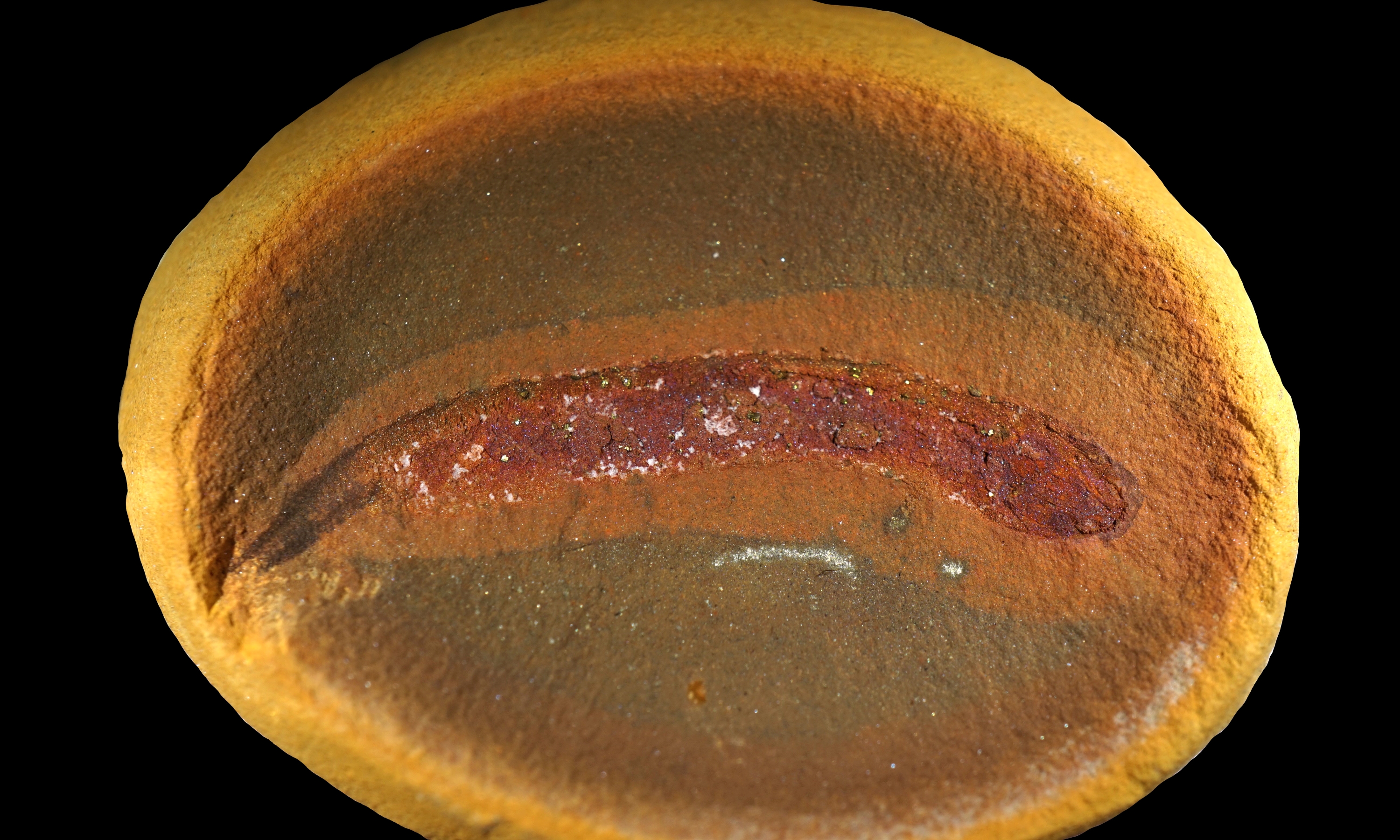
In 2023, the team discovered another surprise. They turned up fossils of bizarre, cylindrical animals several centimeters (inches) long. At one end, the critters had flat pads that could have gripped the ocean floor. At the other end were flag-shaped tentacles that appeared to extend from their mouths.
This early deuterostome (fossil at left, artist’s reconstruction at right) is related to animals like vertebrates and sea stars. It appears to have appendages on one end that may have been used in feeding. It’s also new, very early fossil evidence of animals with bilateral symmetry in the Ediacaran Period.Gaorong Li & Xiaodong Wang
Finding these “bugle worms” was a turning point, Li says. Back then, he worked at Yunnan University in Kunming, China. In 2024, his group joined forces with researchers at the University of Oxford in England. Together, they gathered roughly 700 late Ediacaran fossils.
They compared this haul to other Ediacaran fossils. They also compared the new fossils to those from the Cambrian Period.
Some of the new fossils looked like Haootia — an animal that lived some 560 million years ago. Haootia and these other fossils resembled martini glasses with tentacles on the rims. Like modern jellyfish, they had body parts that spread out from a central point. This is known as having radial symmetry.
The Haootia-like animal (fossil at left, artist’s illustration at right) may have been a relative of animals such as corals, anemones and jellies.Gaorong Li & Xiaodong Wang
Bilateral bodies
The freshly collected fossils included more eyebrow-raising finds. Some had bilateral symmetry. That is, they had similar features on the right and left sides of their bodies — as humans do.
It’s rare to find such early fossils with left-right symmetry. Until now, only four species from the Ediacaran Period had shown this feature. Li and his team found more than 180 bugle worms and other fossils with this type of symmetry. Some looked like sausages on skewers with feathery bits around their mouth ends.
The sheer number of fossils with bilateral symmetry that Li’s group found is striking, says Emmy Smith. She’s a paleontologist at Johns Hopkins University in Baltimore, Md. The diversity among these fossils amazed her.
Many had special structures for feeding, Smith notes. Clearly, the animals were quite physically complex. “That strengthens the view that [animals] were already diversifying before the Cambrian,” she says.
The Cambrian explosion, it seems, didn’t come out of nowhere, Li says. Instead, animal life had been getting more complex for millions of years before that.
Researchers have identified a new species of "walking shark," a rare group of small carpet sharks that use their fins to "walk" along shallow reefs.
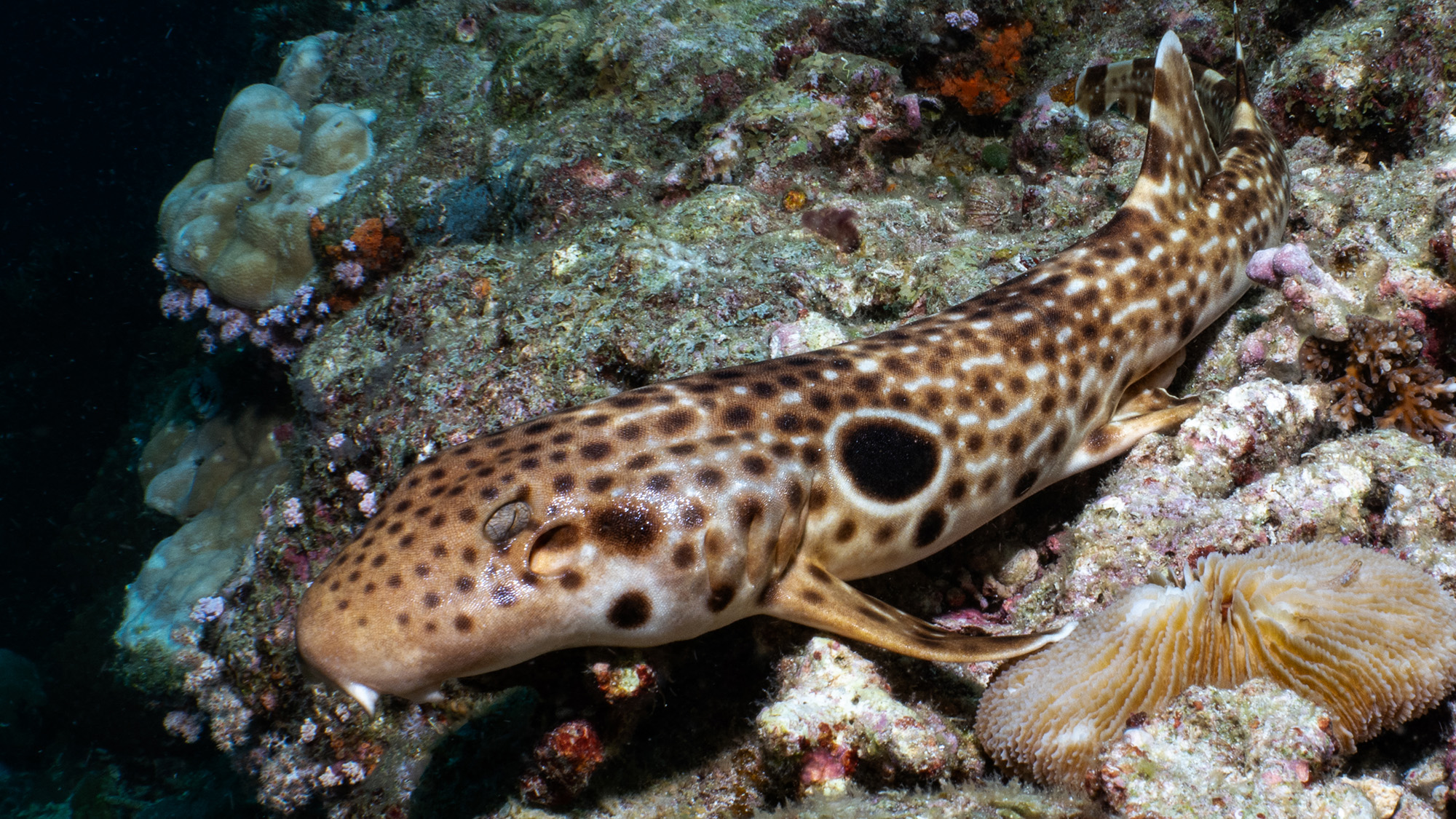
A team of divers spotted the newfound shark, which they named Hemiscyllium dudgeonae, in the dark waters around the reefs of southeastern Papua New Guinea. Gliding along the rocks was a small, brown-spotted shark that they didn't recognize.
"I was so excited. … I didn't look very closely at the pattern and quickly caught it and took it back to the boat," Christine Dudgeon, a senior research fellow at the University of the Sunshine Coast in Australia, told Live Science in an email.
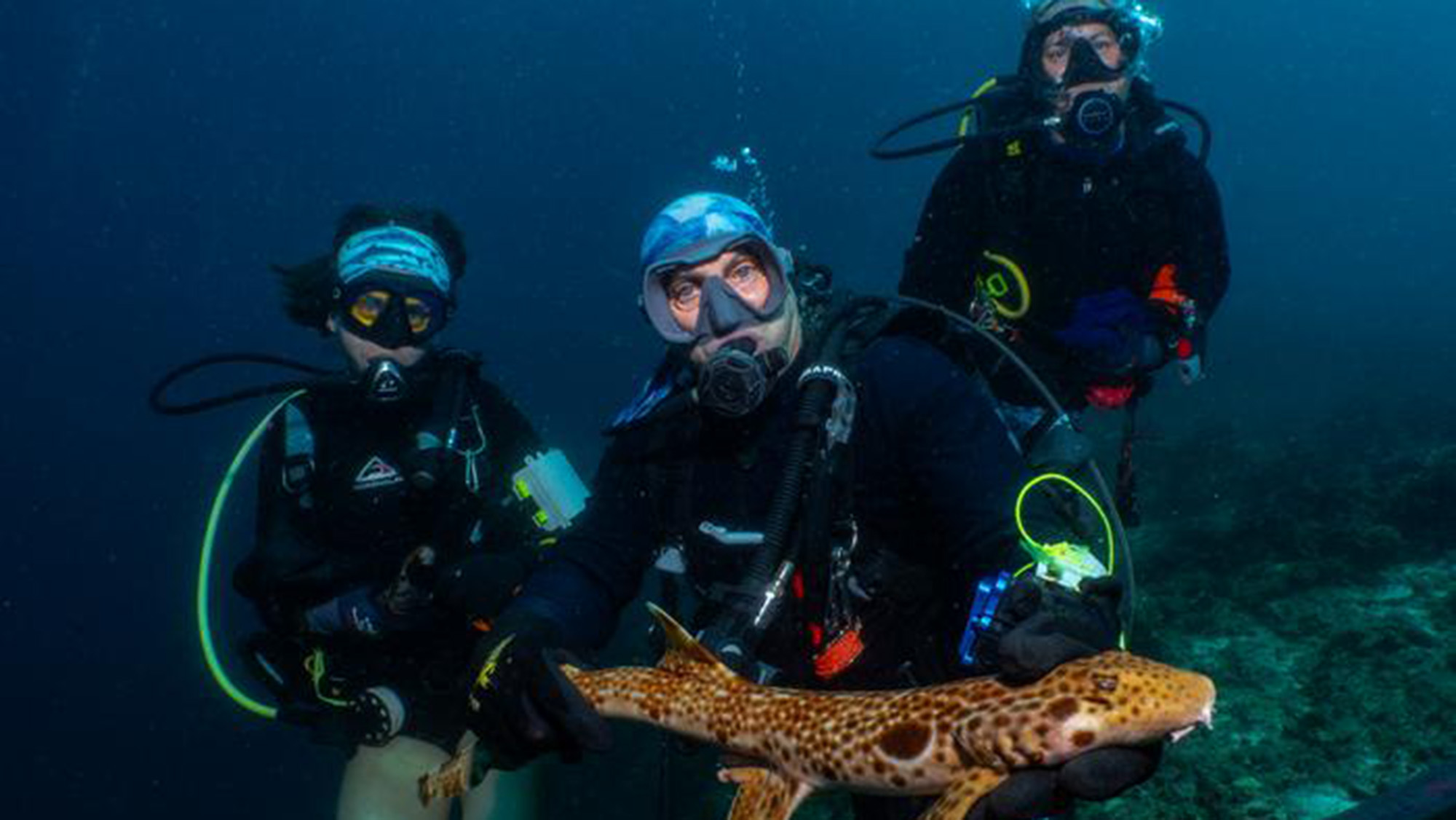
Dudgeon handed the shark to Jess Blakeway, a doctoral student and first author of a new study describing the shark. Blakeway "noticed that the shark had a different pattern to the one that we were looking for and called out to me: 'Chris, it's different.'"
The new shark is named the Dudgeon's walking shark after Dudgeon, in recognition of her 20 years of researching the Hemiscyllium genus.
The new find, described June 15 in the Journal of the Ocean Science Foundation, brings the number of known walking shark species to 10, each with their own unique body pattern.
"This discovery is exciting because a lot of new fishes, and in particular, new shark and ray species, tend to be deep sea, so finding something in very shallow [less than 3 feet, or 1 meter] of water is unusual and highlights that there is potentially a lot of biodiversity that we really don't know about," Dudgeon said.
Encountering a new species
The team had been searching for another walking shark species, called Michael's walking shark (Hemiscyllium michaeli), when they encountered the unusual shark.
"Michael's walking shark has leopard prints and Dudgeon's walking shark has small white dashes and brown dots all over its body," Dudgeon said. "But with only one specimen we were not sure if this was an anomaly or a true difference."
The researchers continued surveying nearby reefs, and within two days, they had located 11 additional Dudgeon's walking sharks across three sites. These included males and females, both juveniles and adults, with all displaying the distinctive body pattern. That consistency convinced the team that they were likely looking at an undescribed species.
Left to right: researchers Jess Blakeway, Mark Erdmann and Christine Dudgeon pose with the newly identified shark species H. dudgeonae.(Image credit: Nesha Ichida)
Dudgeon and Blakeway used genetic data to test this hypothesis at their laboratory in Australia. By comparing DNA from the newly discovered sharks with genetic samples from the other nine walking shark species, they confirmed that the population represented a new species.
Walking on land
Walking sharks are notable for their unusual biology. Unlike larger, open-ocean shark species, walking sharks spend their lives near coral reefs. Their ability to "walk" across the seafloor using their pectoral and pelvic fins is particularly useful during low tide, when parts of the reef become isolated from deeper waters. "Walking" helps the animals remain active when oxygen levels drop so that they can continue hunting prey across reef flats.
The new shark species H. dudgeonae was found in Watota, Milne Bay, off southeastern Papua New Guinea. (Image credit: Mark Erdmann)
Scientists think this ability evolved as a response to the challenging environment of tropical reef flats, where oxygen levels can shift dramatically as the tides rise and fall.
Studies indicate that some walking sharks can survive in low oxygen environments for hours, though more research is needed to understand how the sharks are able to do this, Dudgeon said.
So far, Dudgeon's walking shark has been documented at only three locations in Papua New Guinea. If future research confirms that the species has a highly restricted range, H. dudgeonae could be vulnerable to habitat degradation, climate change or overfishing.
Many walking shark species appear to stay close to the reefs where they were born, which limits their ability to recolonize damaged habitats. Species with small geographic ranges are often more susceptible to population declines because local disturbances can affect a larger portion of the total local population.
The discovery also shows how new shark species are still being found in regions that have received relatively little scientific attention. Dudgeon and her team plan to continue doing surveys in Papua New Guinea to study the new species in its home environment.
"I think many people are not aware of the wonderful diversity of sharks and their relatives, the rays, skates and chimeras," Dudgeon said. "Very few species are dangerous to humans and they are a wonderfully broad and eclectic group of animals. They continue to surprise and fascinate us."
How much of a shark fan are you? Find out with our shark quiz!
Detached tissues from the sea cucumber's tube feet and feeding tentacles survived for more than three years, a find that could shape the study of aging.
Pets form an important part of many people's lives, providing meaningful companionship. However, our pets can sometimes also be a source of unwelcome pathogens and diseases, particularly if they frequently roam outdoors.
We are ecologists and a veterinarian who study wildlife health and the movement of pathogens among wildlife, domestic animals and people. If you let your cat outdoors, or if outdoor cats visit your yard, our recent findings may be relevant.
Zoonotic pathogens are organisms that can infect both animals and humans. From a pathogen's perspective, humans are just another animal host. Wildlife is often emphasized as a source of emerging disease for humans because there are vastly more wild animal species than domestic animal species.
However, even if a pathogen is capable of infecting people, it needs a way to reach us. Humans share more zoonotic pathogens with domestic animals than with wildlife, because domestic animals live close to us. Pathogens benefit even further if they can infect a companion animal.
In our newly published research, we compiled data from more than 400 studies to investigate how a cat's lifestyle, whether they're mostly indoors, outdoor-roaming or feral, affects that cat's likelihood of carrying pathogens that can infect people.
Across this compilation, there were nearly 100 pathogens detected in cats that are considered zoonotic and capable of infecting humans. Familiar examples are rabies, Toxoplasma gondii, roundworms and Salmonella.
Our research
We found that outdoor-roaming pet cats had three to five times the odds of carrying a zoonotic pathogen compared with indoor-only cats. More surprisingly, cats allowed to roam outdoors had similar odds of carrying at least one zoonotic pathogen as feral cats. Outdoor-owned cats carried fewer types of pathogens than feral cats, but the same pathogens that infect feral cats can also infect owned cats.
These risks become a large-scale problem because pet cats that roam freely interact closely with people, wildlife and other domestic animals. Across the studies we reviewed, about 60 per cent of owned cats had unsupervised outdoor access; in some regions, that rate exceeded 90 per cent.
Roaming cats hunt, interact with wildlife or other domestic animals, and move through environments contaminated with pathogens and toxins. Research suggests that cat owners may underestimate hunting by around 80 per cent, meaning that many prey captures and animal contacts go unnoticed.
These interactions are not uncommon and not limited to so-called pest species. Single-country estimates of wildlife killed by cats run into the billions, with more than 2,000 wildlife species documented as prey for domestic cats.
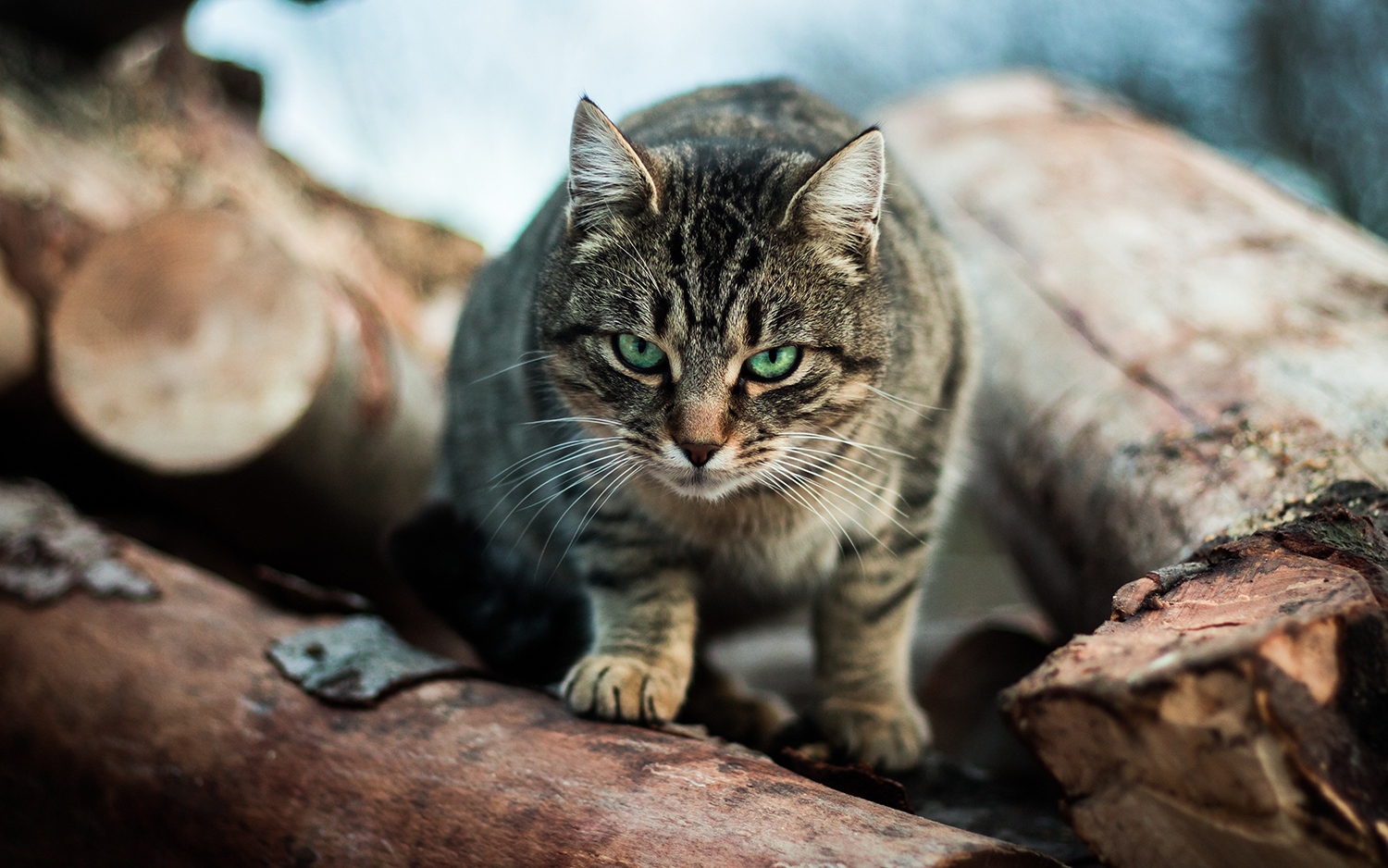
Cats hunt animals that can carry zoonotic pathogens, including rodents, birds and bats, many of which would otherwise have little direct contact with people. (Image credit: Anton Darius)
Cats hunt animals that can carry zoonotic pathogens, including rodents, birds and bats, many of which would otherwise have little direct contact with people. Owned cats might bring home rodents carrying viruses, and there are documented cases of cats bringing rabies-positive bats into homes. A cat returning home with prey can therefore create a pathway by which pathogens circulating in wildlife populations reach people.
Depending on the parasite, feces can contain hundreds to hundreds of thousands of parasite eggs that can persist in soil or water for months to years, which can infect people or other animals that come in contact with those eggs.
What cat owners can do
The most straightforward intervention is also the most economical and humane: prevent unsupervised roaming. That does not mean denying cats access to the outdoors. It can mean building "catios" or enclosures, leash walks, supervised time outside or other forms of contained outdoor access.
Using systems like "catios" or leash walks can help minimize pathogens for cats. (Image credit: Carlos G. Lopez)
Veterinary care still matters. Treating existing parasitic infections and vaccinating against diseases like rabies are essential precautions, even for indoor cats. Since neither vaccines nor anti-parasitic treatment cover the full spectrum of wildlife-associated pathogens, managing exposure remains the more comprehensive protective approach.
The free-roaming debate is often framed as a false choice: either cats roam freely, or they are deprived of a natural life. That framing is misleading and inconsistent with how we manage other companion animals.
We do not assume dogs need unrestricted access to roads, neighbors' yards or to hunt wildlife to have good welfare. Indoor cats and cats with supervised outdoor access can live healthy, enriched and longer lives.
Policies and strategies that address how and where owned cats roam outdoors can help safeguard biodiversity, feline and wildlife welfare and public health. That is the central insight of One Health, that the same choices that protect ecosystems can also protect the animals and people who share them.
This article was co-authored by David Lapen, who works for and receives research funding from Agriculture and Agri-Food Canada.
Goblin sharks (Mitsukurina owstoni) are mysterious, deepwater creatures that have not changed much since they first appeared on Earth 125 million years ago — making them "living fossils." But capturing a recording of the sharks in their deep habitats is exceptionally difficult, and they have previously been seen alive only after being hooked to the surface on fishing lines. Scientists recently filmed not one, but two goblin sharks: The first near Jarvis Island in the South Central Pacific, and the second 6,550 feet (1,997 meters) deep in the Tonga Trench.
If you like your elusive animals on the wilier (and certainly much cuter) side, we also reported on the first ever photographs of the dwarf fox, a species that was believed to be extinct but has been found near a highway in Cozumel, Mexico.
The next major Californian earthquake could be closer than we thought, according to an alarming new study.
The research, based on historical modeling of earthquake activity, found that Southern California's San Andreas and San Jacinto fault systems are at their highest levels of tectonic stress in more than 1,000 years; while also being connected by a "gate" system that could make them rupture together.
The exact odds of each event happening and the timing of a possible future rupture are unknown. But the scientists stress that understanding how much strain is building up inside the system could help to prepare for whatever comes next.
Our eyes are remarkably adaptable, switching from navigating under bright lights to the near pitch-black of a moonless night. But anyone who's stubbed a toe during this acclimation window — and that definitely includes me — may have once or twice asked themselves why it takes our eyes so long to adjust to the dark. Live Science shed a bit of light on the question.
What do you get if you split a photon? Anywhere from zero to an infinite number of more photons, physicists say.
That's the finding made by a new experiment that simulated a photon being sliced by a shutter under various circumstances, revealing the result was anywhere from zero to one to upwards of an infinite swarm of the tiny light particles. The probability of each of these states corresponded to how quickly the shutter cut the photon.
And the unexpected behavior has some truly profound implications for how we view fundamental particles.
China's response to the climate crisis continues to astonish. Over the past two decades, the world's industrial powerhouse has presided over the largest and fastest clean energy buildout in modern history, while also working to bring its carbon emissions to a peak before 2030.
If you're looking for things to keep you busy over the weekend, here are some of the best news analyses, crosswords, interviews, opinion pieces and quizzes published this week.
European bison (Bison bonasus) are typically considered to be a non-prey species — only being hunted by humans.
But rare and unexpected camera trap footage from Poland's Bialowieza Primeval Forest (the oldest and best-preserved temperate lowland forest in Europe) has called that into question.
In the video, a herd of bison is recorded rallying around a newborn calf to fend off an attack from five wolves (Canis lupus), successfully driving the predators away. It's a nerve wracking watch, and one that could become more common as wolf packs grow in size thanks to a late 1980s hunting ban across the region.
In a groundbreaking study poised to redefine our understanding of auditory perception across species, researchers have unveiled strikingly similar auditory perceptual maps in both humans and mice. This discovery not only bridges a crucial gap between animal models and human sensory processing but also offers predictive insight into how perceptual decisions are formed during auditory discrimination learning. The implications ripple across neuroscience, psychology, and artificial intelligence, promising new avenues for studying sensory perception and developing advanced hearing-related technologies.
Auditory perception—the way organisms interpret and make sense of sound stimuli—is a complex process that involves integrating multifaceted sound attributes such as frequency, intensity, and temporal patterns. While mouse models have long been foundational in auditory research due to their genetic malleability and experimental accessibility, skepticism has persisted about the extent to which their perceptual frameworks parallel those of humans. This novel research offers compelling evidence that these frameworks are not only comparable but also exhibit shared underlying structures.
The study employed a sophisticated experimental design in which both human participants and mice were exposed to a wide array of tonal stimuli varying systematically across multiple auditory dimensions. Using advanced computational modeling and neural decoding techniques, the researchers were able to construct perceptual maps—conceptual frameworks representing how different sounds are internally organized within the brain’s auditory space. These maps enabled a quantifiable comparison of perceptual similarity and distance between sounds for both species, revealing a remarkable congruence in their auditory representations.
What makes these findings particularly compelling is the demonstration that these perceptual maps are predictive of behavioral outcomes during discrimination tasks. In other words, the way an individual’s brain groups different sounds predicts how well that individual can distinguish between them in learning scenarios. This link between neural representation and perceptual decision-making underlines a fundamental cognitive mechanism shared across mammalian species, offering crucial insights into the principles guiding sensory learning processes.
Beyond the fundamental science, the implications for translational research are profound. Understanding shared auditory perceptual structures facilitates the development of more accurate animal models for studying hearing impairments and neurological disorders affecting auditory processing. It also guides the design of auditory prosthetics, such as cochlear implants, by informing the algorithms that mimic natural sound perception. By aligning animal and human perceptual frameworks, therapies can be tailored with greater precision and efficacy.
A key technical achievement of the study was the use of multidimensional scaling techniques combined with machine learning algorithms to decode auditory neural responses with unprecedented granularity. The researchers collected high-resolution neural data using electrophysiological recordings in mice and non-invasive neuroimaging in humans. This dual approach allowed cross-species alignment of perceptual space, overcoming previous methodological challenges that hindered direct comparisons between human and rodent sensory processing.
Moreover, the study explored dynamic aspects of perceptual learning by measuring how auditory maps evolve through repeated training sessions. The maps exhibited plasticity reflective of learning-induced changes, emphasizing the adaptive nature of auditory perception. This plasticity was mirrored across both species, suggesting an evolutionarily conserved mechanism for tuning sensory systems based on environmental demands and experience.
One of the study’s most innovative aspects lies in its predictive modeling of discrimination performance. By mapping perceptual distances within the auditory space, the researchers could forecast individual differences in learning speed and accuracy, an advancement that holds enormous promise for personalized auditory training protocols. Such protocols could optimize rehabilitation strategies for individuals with auditory processing deficits by targeting specific perceptual aspects most relevant to their unique neural patterns.
The shared structure of auditory perceptual maps also raises intriguing questions about the evolutionary trajectory of sensory systems. The findings suggest that despite divergent evolutionary paths, fundamental auditory processing architectures remain conserved, supporting efficient sound discrimination necessary for survival and communication. This conservation across species underpins the generalizability of animal research findings to human sensory neuroscience.
Furthermore, these insights pave the way for advancing artificial sensory systems, especially in the realm of auditory artificial intelligence. By modeling computational auditory perception after natural neural maps, engineers can design more sophisticated speech recognition systems and assistive devices that better emulate human-like sound processing. The study’s integrative framework thus acts as a blueprint for creating tonal perceptual algorithms with enhanced contextual understanding.
This research also contributes importantly to theoretical debates surrounding sensory representation. By empirically demonstrating a shared, structured perceptual space, the study challenges views that sensory maps are strictly idiosyncratic or species-specific. Instead, it supports a paradigm that sensory systems leverage common organizational principles, rooted perhaps in fundamental neural coding constraints and environmental pressures shaping auditory perception.
The study’s methodology and results were meticulously detailed in a recent publication, where the authors delineated the computational techniques, behavioral paradigms, and statistical analyses that underscored their conclusions. This transparency fosters reproducibility and invites further interdisciplinary collaboration between computational neuroscientists, experimentalists, and cognitive psychologists aiming to unravel the complexities of sensory perception.
Importantly, these findings hold societal relevance beyond academic circles. Hearing loss and auditory processing disorders affect millions worldwide, often hindering communication and quality of life. Technologies and therapies inspired by a unified perceptual mapping approach could revolutionize auditory rehabilitation, offering hope for more effective interventions grounded in a thorough understanding of perceptual neuroscience.
In conclusion, this pioneering work illuminates the common auditory perceptual code shared by humans and mice, demonstrating that the brain’s representation of sound is not merely a byproduct of species-specific adaptations but a fundamental, conserved neural language. This discovery not only furthers scientific knowledge but also catalyzes innovation in medicine and technology, underscoring the power of cross-species research in unraveling the mysteries of the sensory brain.
As this field develops, future investigations are likely to explore how these perceptual maps interact with other cognitive systems such as memory and attention, and how factors such as age, experience, and pathology modulate the structure and function of auditory perception. With burgeoning advances in neurotechnologies and computational methods, the confluence of cross-species neuroscience and perceptual science promises to unlock new dimensions of understanding sensory experience.
Ultimately, the revelation that humans and mice share auditory perceptual maps that predict learning efficacies serves as a testament to nature’s optimization strategies, propelling a unified framework for deciphering sensory perception. This convergence of biology, computation, and psychology heralds a new chapter in auditory neuroscience with far-reaching implications for science and society alike.
Subject of Research: Auditory perceptual maps and discrimination learning in humans and mice
Article Title: Auditory perceptual maps in humans and mice share common structures and predict perceptual decisions in discrimination learning
Article References:
Seiler, J.PH., Cazzetta, G., Ghobadi, A. et al. Auditory perceptual maps in humans and mice share common structures and predict perceptual decisions in discrimination learning. Commun Psychol 4, 98 (2026). https://doi.org/10.1038/s44271-026-00485-w
A camera trap in an ancient Polish forest has captured extremely rare and unexpected footage of wolves attacking a bison herd made up of adults, youngsters and a newborn calf, a new study shows.
The event took place on Sept. 15, 2025. Five wolves (Canis lupus) enter the camera frame, closely followed by three bison cows and the newborn calf. In the footage, the cows chase after the wolves, leaving the calf alone and exposed. The wolves then surround the calf, bite its neck and try to drag it away, but two cows come to its rescue. The wolves return and seize the calf a second time in the background of the video — however, this time the entire bison herd comes to its defense to end the attack.
The clip is from the Bialowieza Primeval Forest, the oldest and best-preserved temperate lowland forest in Europe, which hosts the world's biggest population of European bison (Bison bonasus). The forest covers 350,600 acres (141,900 hectares) on the border between Poland and Belarus. There are more than 870 bison on the Polish side, according to the new study, while the Belarussian side has roughly 730 bison.
Also known as "the king of the forest," the European bison is typically considered a non-prey species, meaning it has no predators except humans. But the footage calls this into question.
These still images from the video show (a) the wolves grabbing the newborn calf for the first time; (b) the wolves seizing the newborn calf for the second time; and (c) the bison herd forming a protective circle around the newborn calf after both attacks. (Image credit: Wijnands & Borowik, 2026. (CC BY 4.0). Mammal Research Institute, Polish Academy of Sciences.)
"To our knowledge, we present the first video-recorded evidence of wolves attacking a European bison herd in the Białowieża Primaeval Forest," researchers wrote in the study, published May 29 in the journal Ecology and Evolution. "Although the video did not capture a direct kill, it suggests that other attacks on European bison could potentially be successful."
Historical documents show that wolf attacks on European bison used to be more common, with about 8 kills recorded annually in the Bialowieza Primeval Forest between 1840 and 1849. The forest was a popular hunting ground for monarchs from the 14th century onward, explaining why such detailed records exist.
European bison went extinct in the wild in 1919, but they were reintroduced in the Bialowieza Primeval Forest in 1952. The first confirmed bison kill since then dates to the mid 1990s, and after that, it seems as though wolves stuck to a diet of roe deer (Capreolus capreolus), red deer (Cervus elaphus) and wild boar (Sus scrofa), likely because these are much easier prey than bison, the researchers wrote in the study.
But now, "our observation demonstrated that the European bison is in fact a potential prey for wolves," they wrote. "This raises questions about why predation attempts are so rare, whether the bison can still be described as a non-prey species, and what this could mean for conservation and management of the species."
An intriguing trend in the Bialowieza Primeval Forest is that wolf packs are growing in size, possibly thanks to a late 1980s hunting ban. This shift could increase wolf predation on bison in the future, because bigger packs can handle bigger prey.
"If predation on European bison, specifically young animals, occurs more frequently than previously assumed, wolves could play a small but potentially important role in the natural regulation of bison numbers," the researchers wrote in the study. "In turn, such regulation could possibly lead to mitigation of human-bison conflicts."
Never-before-seen fossils of newly hatched crocodile-like creatures are shining new light on how our aquatic ancestors conquered land.
Early four-limbed vertebrates (tetrapods), which would eventually give rise to humans, took their first steps on land in the Devonian period, some 419 million to 359 million years ago, marking one of the most important periods in the evolutionary history of animals.
Now, a new study published Thursday (June 18) in the journal Science has revealed that these early tetrapods were less like amphibians and more like us. Rather than having a tadpole phase in their development, as many amphibians do today, new evidence suggests that they were direct developers — growing from smaller to bigger versions of themselves, like their ancestors, humans and many other animals.
The study is an important contribution to our understanding of early tetrapods' reproductive developmental biology, said Tim Smithson, a visiting academic at the University of Cambridge who specializes in early tetrapods but was not involved in the study.
It suggests that the "earliest tetrapods that took those first steps on to land were able to rely on the successful reproductive and developmental strategies of their forebears," Smithson told Live Science in an email. "Direct development made life easier — one less thing to worry about!"
The new research was based partly on fossils from early land-dwelling predators called embolomeres. These animals looked like a cross between a crocodile and an eel and ruled river, lake and swamp habitats 350 million to 280 million years ago, during the Carboniferous and Permian periods. While these creatures could grow to more than 10 feet (3 meters) long as adults, the study unveils rare fossils from Mazon Creek, near Chicago, that preserved embolomeres as hatchlings that were days to a couple of weeks old.
"These are intimate details of the first moments of these animals' lives, and we've never seen that before for this entire part of the evolutionary tree," study co-author Jason Pardo, a postdoctoral fellow of evolutionary biology at Vilnius University in Lithuania and a research associate at the Field Museum in Chicago, told Live Science.
Researchers studied exceptionally well-preserved fossils from Mazon Creek, Illinois. (Image credit: Arjan Mann)
These fossils didn't show evidence of external gills and other tadpole-like features that the researchers would have expected from an early land dweller. The researchers then checked other fossils from before and during the "fin-to-limb transition" but found no evidence of an amphibian-like life cycle in those, either.
"For as long as we've understood evolution, we've assumed this story of how we made that transition from water to land," Pardo said. "We in fact have a completely different story."
Science upended?
A statement released by the Field Museum claimed that the study upends scientists' understanding of how animals conquered the land. However, the experts Live Science spoke to disagreed with this assertion.
"The Mazon Creek material is wonderful, the study is interesting and the interpretation of the fossils is sound, but I don't think the results are terribly surprising," Per Ahlberg, a professor of evolutionary organismal biology at Uppsala University in Sweden, told Live Science in an email.
Ahlberg, who was not involved in the new study, specializes in the early evolution of tetrapods. He noted that scientists knew some early tetrapods had a larval stage similar to that of modern salamanders — namely, those belonging to the group Temnospondyli, which he described as the ancestral stock of modern amphibians. However, he contends that this didn't mean scientists assumed every early tetrapod was the same.
"Nobody has been arguing in recent years that ALL early tetrapods had such a larval stage or that this was essential for enabling the transition to land," Ahlberg said. "I mean, I have been working right at the core of this research field for 40 years and I have never given it any thought."
In response, Pardo agreed that specialists in the field recognized that the data didn't support that early tetrapods had an amphibian-like development. However, he argued that even among specialists, assumptions were still made about metamorphosis — a major developmental transition, like a tadpole transforming into a frog — and amphibian-like bodies.
Young embolomeres, illustrated here, suggest that early tetrapods didn't undergo an amphibian-like metamorphosis. (Image credit: Berit Godring)
"Onto something big"
Study co-author Arjan Mann, an assistant curator of early tetrapods at the Field Museum, first saw the study's first baby embolomere fossil during a 2016 trip to the Field Museum while working on his doctorate. At the time, the fossil was a mystery.
Mann and Pardo mused over the fossil's identity for years before high-resolution scans with scanning electron microscopy at the Canadian Museum of Nature confirmed that the ancient creature was an embolomere, according to the museum's statement.
"I think Jason and I both knew we were onto something big, since fossils of this kind of animal and from this phase, and developmental state in early tetrapod evolution have never been found or studied before," Mann told Live Science in an email.
Along with the embolomeres, the researchers looked at megalichthyid fish from before the land transition and limbless, snake-like creatures known as aistopods from during the land transition. All showed signs of direct development, they said.
"I think the take home message of this study is that we should always challenge conventional wisdom in science, especially when these older ideas do not have substantial backing," Mann said.
Camera traps from inside the Chernobyl exclusion zone reveal how the occupation of Russian forces at the site in February and March 2022 altered the behavior of wildlife living in the area.
After the invasion, which involved significant armed conflict inside the exclusion zone, mammals like deer and horses became less active and spent less time moving around at night, a new study reports.
Researchers discovered the changes by comparing footage from camera traps collected during the early months of Russia's 2022 invasion with recordings from the same period a year earlier, before the conflict began. The findings, published Thursday (June 18) in the journal Science, offer a rare glimpse of how animals respond to the immediate disruption caused by warfare.
"I wish the opportunity to analyze how the unfolding invasion affected wildlife ha[d] never happened," Svitlana Kudrenko, who conducted the study as part of her PhD at the Albert Ludwig University of Freiburg in Germany, told Live Science in an email. "Unlike in preindustrial times, current interstate conflicts are highly detrimental for wildlife because of a long list of warfare, often operated remotely."
The study took place in the Chernobyl exclusion zone, a roughly 1,000-square-mile (2,600 square kilometers) area surrounding the site of the 1986 Chernobyl nuclear disaster. Following the reactor explosion, authorities evacuated the region and restricted most human activity. Over the decades, with little to no human activity, wildlife populations have flourished, turning the zone into a natural laboratory for scientists studying ecosystem recovery and animal behavior.
But in February 2022, Russian forces seized control of the region during the beginning stages of the invasion of Ukraine. Military vehicles, troop movements, weapons being fired and other wartime disturbances suddenly transformed one of Europe's most unusual wildlife refuges into an active war zone.
To investigate the impact, researchers analyzed data from camera traps already operating in the exclusion zone from 2020 to 2022. Studying the ecological effects of armed conflict is difficult because war zones are dangerous and often hard for researchers to access.
By using the existing network of automated cameras, the scientists captured wildlife responses that would have been impossible to record otherwise. In total, the team analyzed almost 2,000 photographs and videos from the exclusion zone to build a picture of behavioral changes in response to the conflict.
The images and footage revealed responses from 11 wild mammal species, showing that some animals changed their behavior during periods of heavier fighting.
Kudrenko et al (2026)Kateryna KorepanovaKateryna KorepanovaKateryna Korepanova
Several mammal species — including roe deer (Capreolus capreolus), red deer (Cervus elaphus), moose (Alces alces) and red foxes (Vulpes vulpes) — were less active during the occupation than before the conflict, especially at night, the team reported.
The findings suggest that the impact of conflict can ripple through entire ecosystems. While Russia no longer occupies the Chernobyl exclusion zone, the authors highlighted that this study still shows how animal behavior can adapt to warfare.
Camera traps could become a valuable tool for measuring the environmental costs of conflict and understanding how wildlife copes with sudden human disturbances across the globe, the researchers added.
"Our study highlights the need to develop and implement research and conservation strategies focusing on armed conflict impacts on wildlife and environment in general, especially in areas of conservation importance," Kudrenko said.
What do you know about the animal kingdom? Test your knowledge with our animal quiz!
These discoveries have raised a provocative question: How deep do the roots of mathematical thinking go? While modern humans are the only known species to develop formal mathematics, studies of crows, monkeys and other animals suggest that the cognitive building blocks of math may have evolved hundreds of millions of years before people began doing calculations.
Few researchers have done more to uncover these abilities than Andreas Nieder, a professor of animal physiology and the director of the Institute of Neurobiology at the University of Tübingen in Germany. By examining the neural activity of both monkeys and crows, Nieder has found evidence that very different animal brains can process numerical information in surprisingly similar ways. Live Science spoke with Nieder about how these findings may reveal that the origins of mathematics are far older than our species.
Kenna Hughes-Castleberry: How did you get into researching crows and primates?
Andreas Nieder: After studying the auditory and visual systems for several years as a student, I realized that I wanted to focus on the neuronal foundations of intelligence and cognitive control functions. How does the brain give rise to abstract concepts, working memory, or the ability to follow complex rules deliberately? Of course, to study intelligence, you need intelligence specialists. I therefore began working with primates — more specifically, rhesus monkeys, arguably among the most intelligent mammals. They are closely related to humans, possess relatively similar brains, and share many cognitive abilities with us.
However, as a trained biologist, I was always interested in a broader evolutionary question: Are sophisticated cognitive abilities unique to mammals, or can they emerge in very different brains? Crows provided an ideal comparative species. Birds diverged from mammals more than 360 million years ago — roughly six times longer ago than the extinction of the dinosaurs. Yet despite this immense evolutionary distance, corvids display remarkably flexible behavior; in many ways, they are the feathered primates of the air.
Some are reliable, highly motivated workers that perform consistently day after day. Others are sensitive divas who seem to require special treatment before they are willing to cooperate.
Andreas Nieder
KHC: Are crows difficult to study? Are they fun? Do they have personalities?
AN: Both primates and crows are demanding to study. Because they are highly intelligent, they require special housing and care. Since we investigate cognitive abilities under tightly controlled experimental conditions, they also require extensive behavioral training by skilled personnel. And, of course, the regulations governing research with these species are particularly strict.
At the same time, they are fascinating research subjects. Individual monkeys and crows differ noticeably in temperament and behavior. Some are curious and adventurous, others are cautious and reserved, and some learn new tasks much faster than others.
Their qualities can be quite striking. Some are reliable, highly motivated workers that perform consistently day after day. Others are sensitive divas who seem to require special treatment before they are willing to cooperate. Researchers generally avoid anthropomorphizing, but there is little doubt that individual animals exhibit stable behavioral traits that we would reasonably describe as distinct characters.
KHC: You've found that crows understand the concept of zero. How do we know this?
AN: We trained crows to recognize different numbers — sets containing one, two, three, four objects, and so forth. We then included trials in which no items appeared at all. The remarkable finding was that the birds treated an empty set as a quantity and as part of the numerical continuum. They behaved as though the empty set belonged before "one." Their error patterns were particularly revealing: They confused zero more often with one than with larger numbers, exactly as one would expect if zero were mentally represented as a numerical quantity next to one. In addition, recordings from neurons in the crow brain showed cells that responded selectively to empty sets. This suggests that zero is not merely a behavioral trick but is represented neurally as a meaningful numerical category.
KHC: To play devil's advocate, is the ability to recognize the difference between something and the lack of something really that surprising? Is it akin to the human concept of zero?
AN: That's an important question. Simply recognizing that nothing is present or absent is not surprising. Many animals can distinguish between the presence and absence of objects. The key issue is whether they treat "nothing" as a quantity that can be compared to other quantities.
Our experiments suggest that crows do more than detect absence. They position empty sets within an ordered numerical sequence, at the low end of the number line, and show distance effects similar to those observed with other numbers. For example, they find it easier to distinguish zero from two than zero from one.
That said, we should not claim that crows possess the full human mathematical concept of zero. Humans use symbolic zero in arithmetic, algebra, calculus and formal mathematics. What we have demonstrated is a foundational precursor: a nonsymbolic numerical representation of zero. This may represent an evolutionary building block from which more sophisticated human concepts eventually developed.
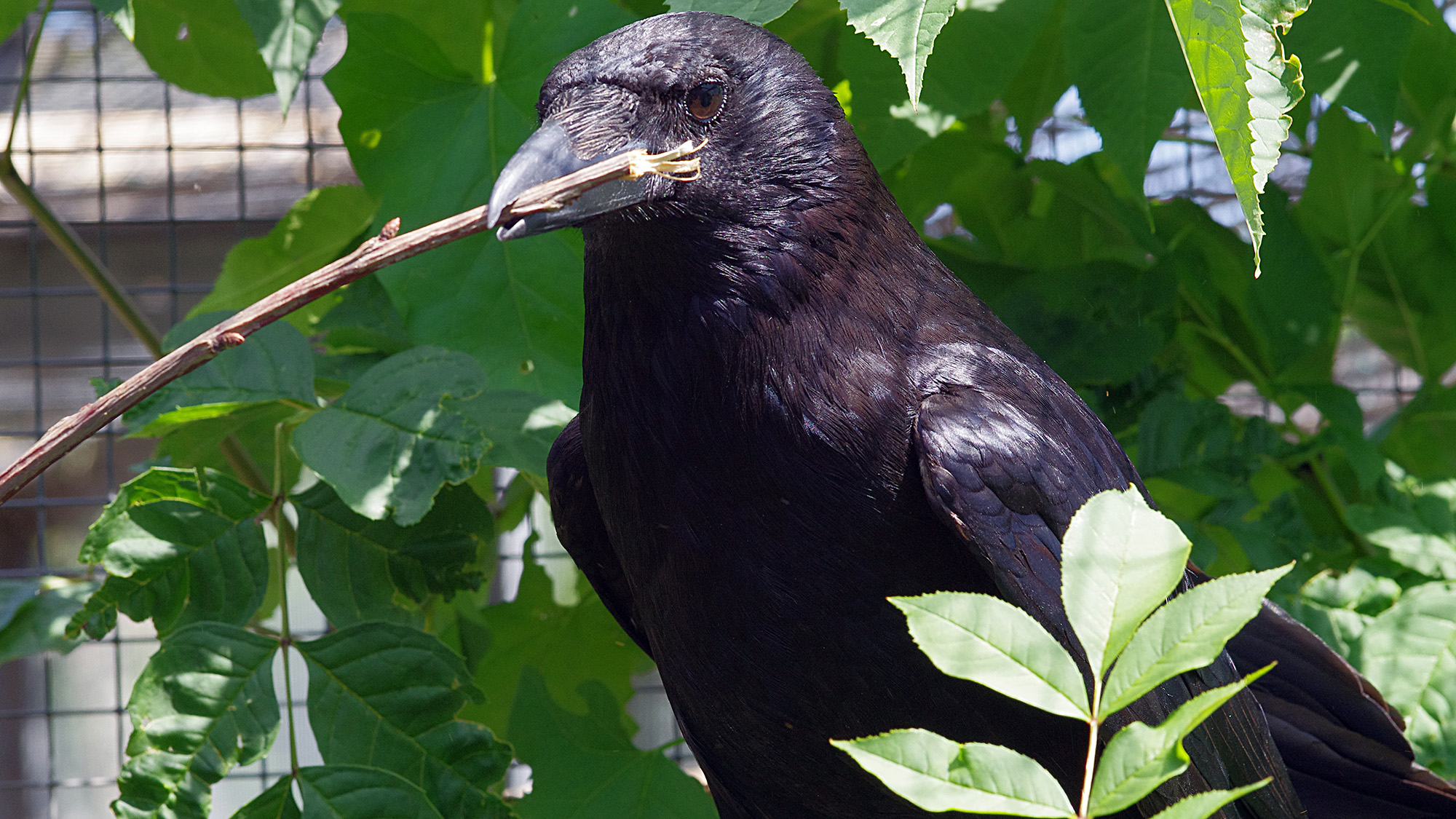
Crows use tools like tree branches to pick out bugs from hard-to-reach areas. (Image credit: Andreas Nieder)
KHC: You've also found that crows can perform statistical analysis. Tell me more about these findings and what you showed.
AN: We trained carrion crows [Corvus corone] to associate a series of arbitrary visual signs, colored geometric images displayed on a touch screen, with different reward probabilities. One sign might yield a food reward 90% of the time, another 70%, another 50%, and so on down to 10%. Importantly, the signs themselves carried no inherent meaning; the birds had to learn these probabilities through experience.
Once the birds had learned these sign-probability associations, we presented them with pairs of signs and asked them to choose one. To maximize their rewards, they should select the sign associated with the higher reward probability. The crows did exactly that. Even when confronted with many novel pairings, they reliably chose the statistically more favorable option.
This does not mean that crows perform formal statistics in the human sense. They are not calculating percentages or solving probability equations. However, the results show that they can extract probabilistic regularities from experience, store this information in memory, and use it flexibly to make reward-maximizing decisions under uncertainty. These are fundamental ingredients of statistical reasoning and are highly valuable in natural environments, where animals constantly have to make decisions based on incomplete information.
KHC: Have researchers tried similar tests on babies or young humans, and if so, how do we stack up?
AN: Yes. Developmental psychologists have conducted many related studies with infants and young children. Even before learning language, infants show sensitivity to quantities, numerical differences and simple probabilistic information. By around 4 years of age, children also display an intuitive understanding of empty sets.
What is striking is that the behavioral signatures observed in crows resemble those seen in preverbal human infants and nonhuman primates. Of course, human children eventually develop symbolic mathematics through language, education and culture, which takes them far beyond the abilities observed in animals.
KHC: Can these findings tell us anything about how the human understanding of math evolved?
AN: They suggest that some foundations of mathematics may predate humans by a very long evolutionary timescale. Humans did not invent numerical intuition from scratch. Rather, we appear to have inherited ancient cognitive systems that allow brains to estimate quantities, compare numbers, and represent concepts such as zero approximately.
The fact that crows and primates — two distantly related groups — show similar numerical abilities suggests that these capacities may emerge whenever evolution favors flexible intelligence. Human mathematics likely built upon these ancient cognitive foundations and then expanded dramatically through language, symbols and culture.
What is striking is that the behavioral signatures observed in crows resemble those seen in preverbal human infants and nonhuman primates.
Andreas Nieder
KHC: What's something a general audience might be surprised to learn about crows?
Many people are surprised to learn that crows are songbirds. Most people associate songbirds with melodic singers such as nightingales or blackbirds, not with the harsh cawing of a crow. Yet crows do learn a significant part of their vocal repertoire and are even known as apt imitators, even of human speech sounds — the internet is full of funny videos in which crows imitate human speech.
What makes this particularly interesting is that their vocalizations are not merely reflexive calls. In our experiments, we found that crows can exert volitional control over their vocal behavior. They can learn to produce vocalizations in response to arbitrary cues and withhold them when required, demonstrating a level of cognitive control over vocal output that is considered an important prerequisite for complex communication and, ultimately, language.
More recently, we showed that crows can even use their vocalizations to count. In a recent study published in [the journal] Science, we trained crows to produce a specific number of calls — between one and four — in response to visual or auditory cues. Remarkably, they not only generated the correct number of vocalizations but also appeared to prepare the intended number before they started calling. This suggests that they can represent numerical information and use it to guide a self-generated sequence of vocal actions.
Taken together, these findings show that crow vocalizations are far more sophisticated than most people assume. Their characteristic "caw" is not just a simple call — it can be brought under deliberate cognitive control and even used to express numerical information. For a bird, that is a remarkably advanced ability.
This interview has been edited for length and clarity.
A parrot missing half his beak has become top bird at New Zealand’s Willowbank Wildlife Reserve. Named Bruce, he wins every fight with other kea parrots. He also gets priority access to food.
This observation has made scientists question their ideas about disabilities in animal social groups. Bruce showed that a physical disadvantage doesn’t have to hold an animal back. Sometimes the right moves and a little creativity can make all the difference.
Researchers shared this finding April 20 in Current Biology.
Willowbank’s kea live in a large aviary with trees and a stream. Visitors who stop by often fail to notice the parrots snoozing among the leaves. But when they spot Bruce, they always make the same comment, says behavioral ecologist Alex Grabham: “Look at that poor bird.”
That pity is misguided, says Grabham. He’s part of a team studying kea at the University of Canterbury in Christchurch, New Zealand. That team tracked how Bruce interacted with his flock. (A group of kea is called a circus, reflecting the birds’ playful nature.) Like other parrots, kea have a social hierarchy. This is a ranking system where some birds are in charge; others follow the leader. Birds compete for the top spot by fighting, squawking or puffing up feathers.
Meet Bruce, the disabled kea parrot that managed to become the alpha male of his flock.
Grabham’s team spent four weeks recording 162 physical confrontations between the nine males in Bruce’s circus. Bruce won all 36 of his. Without a doubt, he was the top kea.
What’s more, he’s the first disabled animal to be recorded achieving top status within a group, at least without support from an able-bodied ally. (Faben was a dominant, or “alpha,” male chimpanzee living at Gombe National Park in Tanzania. He lost his top rank after polio paralyzed his arm. Faben’s brother took over his alpha status, but also became his ally. Faben then worked his way back to second place after perfecting a charging technique to bat away rivals.)
Parrot jousting
Also key to Bruce’s success: an unusual combat technique. Other kea tend to rely solely on kicking to repel other birds. Bruce supplemented his kicks with a unique jousting technique. He jabbed at rivals with his exposed lower beak.
Grabham’s team filmed 109 more confrontations between Bruce and the other birds. During these, Bruce kicked slightly more than he jousted. But jousting proved much more effective. Jousting drove off his opponent 73 percent of the time. When Bruce kicked, he drove them off just 48 percent of the time.
As another kea approaches, Bruce (seen here on the right) jabs with his half a beak. This fighting style has helped the disabled parrot win alpha status among his circus in New Zealand.Ximena Nelson
Bruce’s top spot comes with perks. Other male kea will preen Bruce, helping to clean parts of his beak that he cannot reach. This is highly unusual among kea. Normally, they only preen their mates. The lower another male’s rank, the more likely he was to preen Bruce. This behavior mimics hierarchical grooming seen in chimps.
Lower-ranked birds also gave Bruce first dibs on food. The birds’ food was spread mostly between four central feeders. Over the four weeks that Grabham’s team analyzed Bruce, he was the first to dine at those feeders 83 percent of the time. On four days, the other birds gave Bruce 15 minutes of alone time with all four feeders. Later, they ate his leftovers.
Another kea preens Bruce (left). This helps remove food that gets stuck in Bruce’s beak. Alex Grabham
In many animal societies, top status comes at a cost. “An animal that is high up in the dominance hierarchy has to defend that position constantly,” says Amalia Bastos. She’s a comparative psychologist at the University of St Andrews in Scotland who used to study Bruce. Alpha male baboons, for instance, show higher levels of stress hormones called glucocorticoids (Glu-ko-KOR-ti-koids).
Grabham’s team measured those hormones in the birds’ droppings. Bruce, it turns out, was the most chill kea in his circus. It isn’t yet clear why. But Grabham thinks that Bruce is so dominant that other kea don’t mount any serious challenges to his throne. “He isn’t going to be followed around and beaten up or bullied or chased,” Grabham says. And Bruce “knows that.”
It’s unclear whether Bruce would have thrived as well in a wild circus as he has at Willowbank. Bastos points out that with his damaged beak, Bruce might struggle with tougher foods during the winter. In the wild, most kea circuses don’t have a fixed hierarchy. Birds join and depart groups throughout the year, constantly changing the rankings. For now, in Willowbank’s strict hierarchy, Bruce is boss.
This isn’t the first study to show Bruce is capable of innovation. In 2021, researchers reported his self-preening technique. He uses pebbles to clean his feathers. “Bruce has now shown twice that being different is not necessarily disadvantageous,” Bastos says.
Bruce gained renown a few years ago for showing tool use. To groom himself, the parrot would select a pebble and hold it just so. This pebble “tool” overcame the lack of a part of his upper beak.

 Login